
Matthew 24 Explained: Signs, Trials, and Christ’s Return
Jesus' teaching on the Mount of Olives calls us to stay faithful through deception and trials, because His return is certain even though its timing is unknown.
Matthew 24 has been read in more than one way. We'll follow the chapter's flow carefully instead of forcing every detail into a modern headline, keeping Jesus' words and the Spirit-led faithfulness He calls for at the center. For a helpful starting point, see how to read the Olivet Discourse.
Let's begin with the temple's coming destruction and the disciples' questions on the Mount of Olives.
The Olive Mount Discourse: Signs of the Consummation
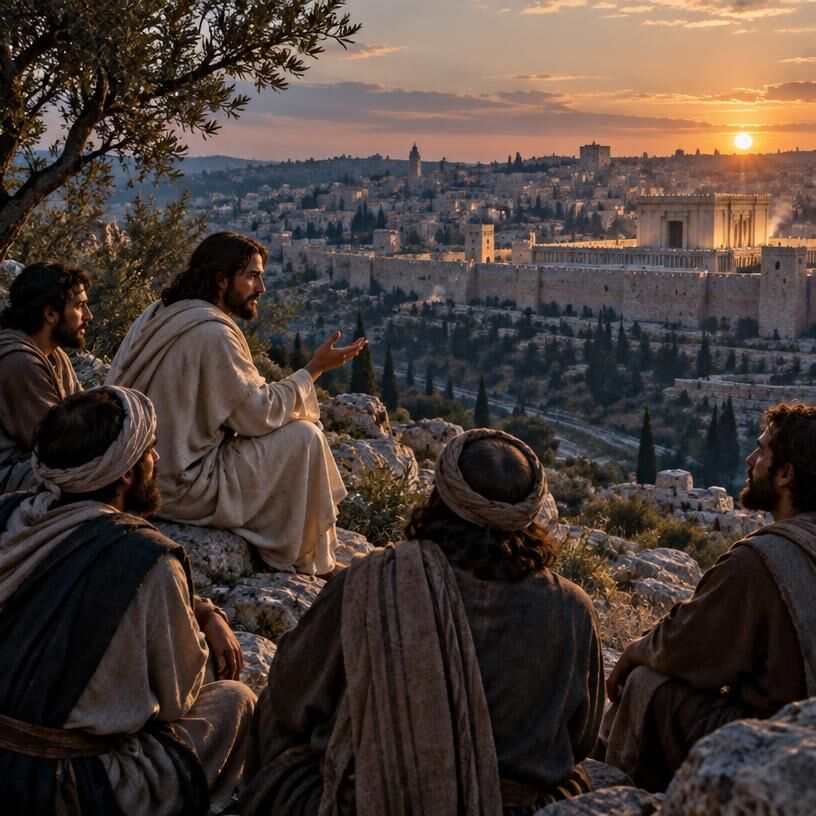
The setting matters. In Matthew 24, Jesus leaves the temple, and His disciples point out its buildings. He answers with a startling prediction: the temple will be thrown down, with not one stone left upon another. Later, on the Mount of Olives, the disciples ask Him when these things will happen and what sign will accompany His coming and the end of the age.
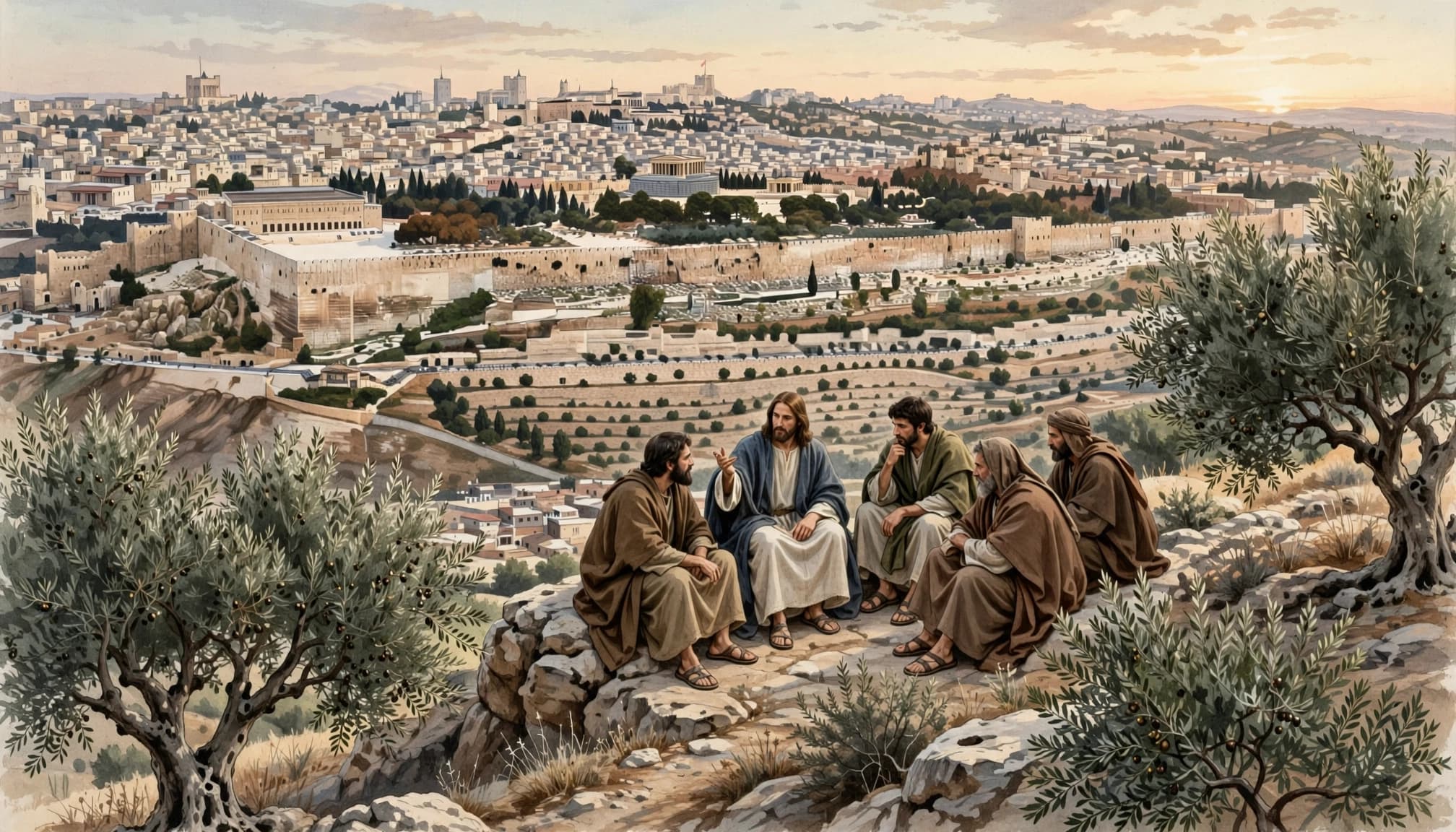
The questions connect Jerusalem's temple, Christ's coming, and the consummation, meaning the completion of God's purposes. Do the disciples assume these events share one timeline, or are they asking about related events that unfold at different times? The text leaves room for that question, so we shouldn't rush past it.
The disciples’ questions set the whole discussion in motion
Jesus does not answer with a detached list of predictions. His teaching moves through warnings about deception, upheaval, persecution, tribulation, and the Son of Man's coming. Later, He turns to the fig tree, the unknown day and hour, and the call to remain watchful. Each part belongs to the same discourse.
That connected flow matters. A verse about wars or false prophets can't be lifted out and treated as a countdown by itself. Jesus tells His disciples that such events do not mean the end has arrived. He also keeps bringing their attention back to faithfulness, endurance, and readiness. We should let His words guide how we read the signs, instead of turning every crisis into proof that we know the date.
Christians read the timing in different ways. Some understand much of the chapter through Jerusalem's destruction in 70 AD. Others see key events, including the great tribulation and the visible coming of Christ, as still future. A two-horizon reading connects the temple's fall with the first century while also looking ahead to Christ's return. We can recognize these differences without losing the central truth: Jesus' return is certain, but the hour is not ours to predict.
The temple warning also connects with Daniel's prophecy and the judgment on Jerusalem. For more on that connection, see Daniel 9 and the destruction of the temple.
Compare the parallel accounts without forcing them to match word for word
Matthew isn't the only Gospel that records this teaching. Mark gives a parallel account in Mark 13:1–4, and Luke does the same in Luke 21:5–7. Read together, the accounts help us see the disciples' questions and Jesus' warnings from more than one angle.
Mark names Peter, James, John, and Andrew as the questioners. Luke gives special attention to Jerusalem surrounded by armies later in the discourse. Those differences add detail; they don't make the accounts contradict each other. We can compare what each Gospel emphasizes while keeping the shared setting in view: Jesus has warned of the temple's destruction, and His followers want to know what comes next.
That's a good place for us to begin: Matthew 24 is one connected teaching, and its signs call for discernment, not date-setting.
How to Read the Signs Without Mistaking Them for the End
Jesus gives us signs to keep us alert, not to make us confident about a date. In Matthew 24:4-14, He warns about deception, conflict, persecution, and the worldwide witness of the Kingdom's gospel. But He also says, "the end is not yet." We need to hold both truths together.
False teachers and end-time claims require careful discernment
Jesus returns to the danger of deception throughout the chapter. False messiahs and false prophets will make claims that draw people away from the truth. That repetition matters. We should be especially cautious when someone sounds certain about a prophetic timeline, but cannot support the claim from Scripture and Christ's own teaching.
So how do we test a claim? We compare it with Scripture, pay attention to whether it agrees with Jesus' words, and look at the fruit of the person teaching it. Does the message lead people toward faithfulness, love, and obedience to God, or does it stir panic and dependence on the speaker? We can also keep in mind Scripture's tests for false prophets, rather than accepting a dramatic claim because it sounds urgent.
From our Pentecostal perspective, the Holy Spirit helps us discern and bear witness to Christ. That does not mean every strong impression is a guaranteed prophecy, or that every crisis confirms a particular end-time interpretation. We ask the Spirit for wisdom while remaining accountable to Scripture. We don't need to name a present-day person or event as a fulfillment unless the Biblical text gives us clear grounds to do so.
Persecution does not cancel the call to endure
Jesus also describes pressure that can fracture communities: His followers may face hatred, betrayal, and persecution. Some will turn away, while false prophets mislead many and lawlessness grows. These warnings are sober, but they do not mean God has abandoned His people. Jesus calls His followers to endure and remain faithful.
Wars, rumors of wars, famines, and earthquakes belong in this same careful reading. Jesus says these troubles are "the beginning of birth pains." They call for alert faith, but they do not give us permission to declare that the end has arrived. A crisis may be frightening and painful without proving that one specific prophecy has just been fulfilled.
And the witness continues. Jesus says the gospel of the Kingdom will be preached throughout the world before the end comes. We don't respond to hardship by retreating into fear or boasting that we have solved the timetable. We keep loving people, sharing the gospel, and trusting the Holy Spirit to help us speak faithfully.
The parallel passages in Mark's account and Luke's account also place Jesus' warning in the disciples' questions about the temple and what comes next. Read together, the accounts keep us grounded: signs matter, but they are not a shortcut to certainty about the hour.
The Abomination of Desolation and the Great Tribulation
In Matthew 24, Jesus connects Daniel's "abomination of desolation" with urgent danger, flight, and severe distress. The passage gives clear warnings, but it does not name a specific person or event as their fulfillment. That distinction matters when Christians read these verses differently.
Why sincere Christians differ about the passage’s timing
Jesus tells those in Judea to flee when they see the abomination of desolation. He describes a crisis so severe that people should not stop to gather belongings or return home. The warning is practical and urgent, even as the timing and fulfillment remain debated. Read Matthew 24:15-22 in its NKJV context, alongside Daniel 9's prophecy of the seventy weeks.
Many preterist interpreters connect Jesus' warning with Jerusalem's siege and destruction in 70 AD. They emphasize the first-century setting and the danger facing Judea. This view does not always mean that a person denies Christ's future return. Preterist interpretations vary, and many affirm that He will return.
Futurist interpreters understand the abomination and great tribulation as events still to come, often as part of a final end-time crisis. A two-horizon approach sees both a near historical setting in Jerusalem's destruction and a future horizon connected with Christ's return. Each view weighs the text's references to Judea, Daniel, tribulation, and the Son of Man differently.
Luke's parallel account explicitly describes Jerusalem surrounded by armies and tells those in Judea to flee. Comparing Luke 21 in the NKJV helps explain why many readers connect the warning with Jerusalem's fall. Still, Matthew does not identify one specific person or event as the fulfillment. We can take Jesus' call to heed His warning seriously without pretending every detail has been settled.
Deception can imitate spiritual authority
Jesus' warning does not end with the flight from Judea. He also cautions His disciples against claims that the Messiah has appeared secretly in a wilderness or hidden room. When people insist, "There He is," or "Here He is," Jesus tells His followers not to believe them.
Why? Because dramatic signs and wonders, by themselves, don't prove that a message is true. A claim can sound spiritual, attract attention, and still lead people away from Jesus. We test teaching against Scripture and the character of Christ, rather than letting fear or spectacle do the thinking for us.
As Spirit-filled Christians, we believe the Holy Spirit gives wisdom and discernment. That does not mean every striking event confirms someone's prophetic timetable. Jesus calls us to stay alert, hold fast to His words, and refuse claims that turn uncertainty into sensational certainty.
Cosmic Signs, the Son of Man, and the Fig Tree
Jesus moves from the distress He has described to cosmic signs, the coming of the Son of Man, and a lesson from a fig tree. We need to hold together what He says plainly and what readers infer about its timing. The signs call for attention, but Jesus does not give His followers a date.

What the fig-tree lesson teaches about recognizing the season
Jesus compares the budding fig tree to the events He has just described. When leaves appear, summer is near. In the same way, when His hearers see "all these things," they can recognize that the appointed time is near. Read Matthew 24:29-35 in the NKJV in context, and the point is clear: observable developments can tell us a season is approaching.
But recognizing a season is different from knowing its exact day or hour. Jesus later says that no one knows that day and hour. The fig tree gives us no permission to set dates, build a countdown, or treat every headline as a prophetic signal. We can pay attention without claiming more certainty than Jesus gives.
How the passage holds historical judgment and future hope together
Jesus describes the sun darkened, the moon without light, and the powers of the heavens shaken. Then the sign of the Son of Man appears, and the tribes of the earth mourn as they see Him coming with power and great glory. He sends His angels to gather the elect. These are direct statements in the passage; the debate is about how their imagery unfolds in history.
The title "Son of Man" connects with Daniel's vision of one like a Son of Man receiving dominion and an everlasting Kingdom. See Daniel 7:13-14 in the NKJV. Jesus' language draws on that vision, but Christians differ over whether Matthew's cosmic signs describe judgment on Jerusalem, Christ's final visible return, or a pattern with both historical and future meaning.
A preterist reading often connects the signs and "this generation" with Jerusalem's destruction in 70 CE. Futurist readers generally see the cosmic upheaval, the Son of Man's appearing, and the gathering of the elect as events still to come. A two-horizon interpretation reads the judgment on Jerusalem as a historical fulfillment while also looking ahead to Christ's return. Those are interpretive conclusions, not details Matthew settles for every reader.
"This generation" also has more than one reading. It may refer to Jesus' contemporaries, the generation that sees the predicted events, or the people of Israel across generations. The immediate wording matters, but it does not erase the different ways Christians understand "all these things." We can name the disagreement without losing the center of the passage: Jesus promises that His words will endure, and He will gather His people.
So we stay alert, but we do not claim to know what Jesus said remains unknown. The fig tree teaches discernment; the Son of Man's promised coming gives us hope.
Why No One Knows the Day or Hour
After describing signs and seasons, Jesus turns to what no sign can tell us: the day and hour of His coming. In Matthew 24 in the NKJV, His point is plain. The signs call for discernment, but His followers are not given a timetable. We stay ready by living faithfully, not by trying to calculate what Jesus says we cannot know.
Readiness means faithful living, not prediction charts
Jesus says that no one knows the day or hour, not even the angels in heaven. That statement puts a clear boundary around end-time speculation. We can study Matthew 24, compare interpretations, and pay attention to what Jesus taught. But we should not turn wars, disasters, or a confident online prediction into proof that we have found the date.
So what does watchfulness look like in ordinary life? We keep trusting Jesus when fear or confusion rises. We obey what Scripture teaches, pray for wisdom, serve people who need help, and share the gospel with compassion. As Spirit-filled Christians, we also ask the Holy Spirit to guide and strengthen our witness, while testing claims against Scripture rather than treating every impression as a certain prophecy.
Faithful service is part of readiness, too. We can care for a neighbor, encourage someone who is struggling, or help meet a practical need. These actions don't earn our place in God's Kingdom. They show the kind of faith that remains active while we wait. For a related look at serving faithfully as we await God's purposes, see faithful stewardship in God's Kingdom.
Jesus doesn't call us to live in constant fear of missing a hidden clue. He calls us to be faithful today. A prediction chart may offer the feeling of control, but it cannot give us the certainty Jesus says belongs to the Father. Our hope rests in Christ, and our response is steady trust and obedience.
The Noah comparison warns against careless confidence
Jesus compares the days before the flood to the time of His coming. People were eating, drinking, and marrying, carrying on with ordinary life until the flood came. The warning is about people living without regard for God, not about those everyday activities being sinful. Their routines continued, and judgment arrived before they expected it.
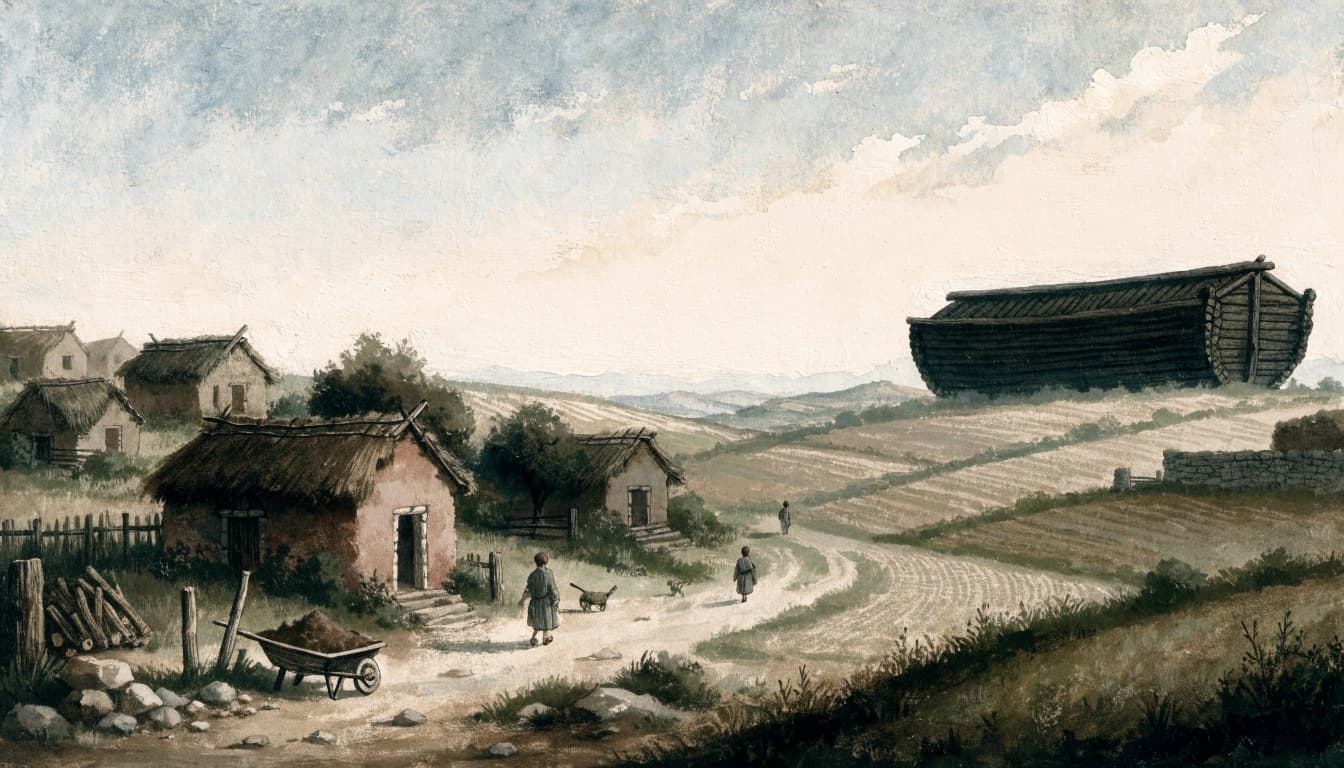
The comparison should make us careful, not speculative. Jesus doesn't tell us to identify a modern event as a repeat of Noah's days or to assign a precise timeline to the flood imagery. He warns against the confidence that says life will simply continue as usual, so there is no need to answer to God.
Then Jesus uses the image of a thief arriving at an unexpected hour. The point is suddenness, not that Christ is a thief or that His followers should panic. If a homeowner knew exactly when a thief would come, he would stay awake. Since the timing is unknown, Jesus tells His followers to be ready.
Readiness, then, is not a chart to complete or a rumor to repeat. We remain awake to God through prayer, faith, obedience, and service. We can live with hope, knowing Christ will come, while refusing to claim knowledge He has not given us.
The Faithful Servant Shows What Watchfulness Looks Like
Jesus closes this part of the discourse with a picture of two servants and one household. The difference between them is plain: one keeps caring for the people entrusted to him, while the other assumes the master will be gone for a long time. Read Matthew 24:45-51 in the NKJV, and the practical point comes into focus: readiness shows up in how we live while we wait.
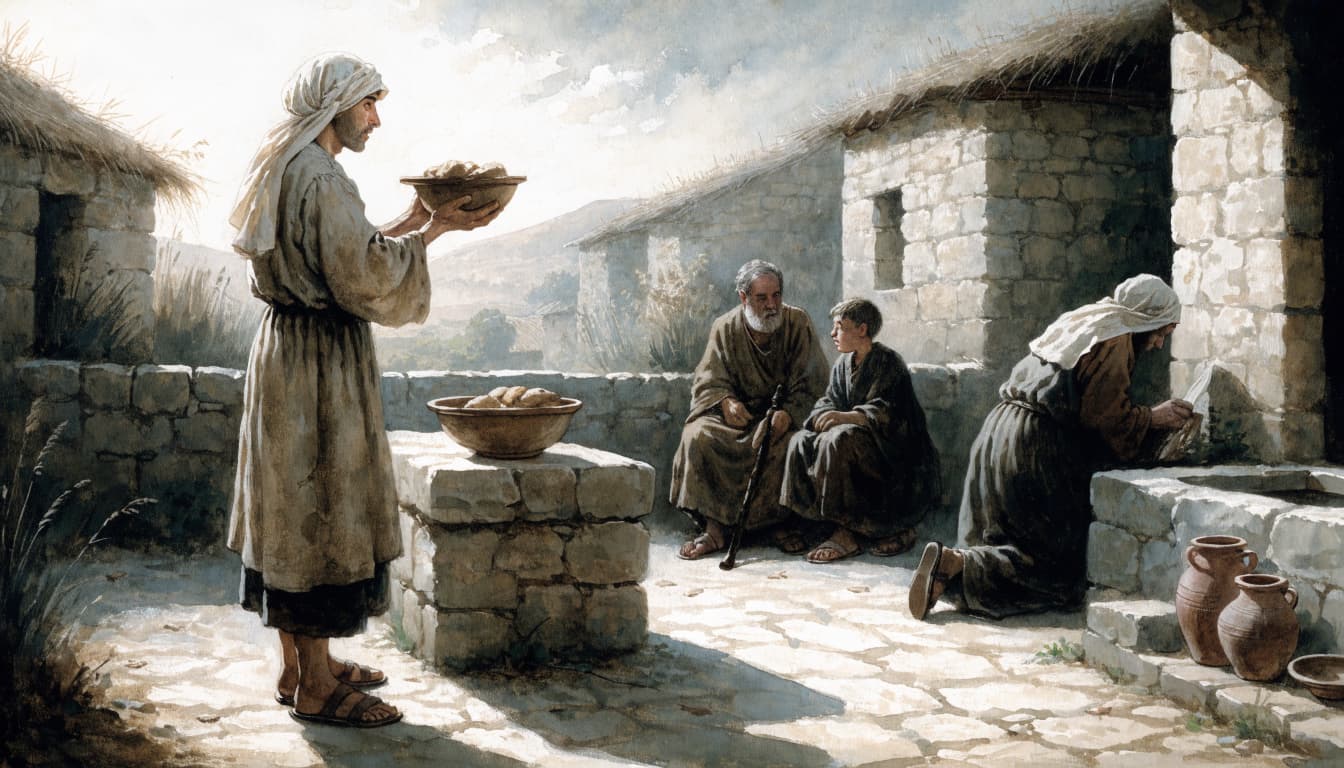
Faithful service is the clearest sign of a ready heart
The wise servant gives the household food at the proper time. His faithfulness is ordinary and active. He pays attention to what others need and takes responsibility for what his master placed in his care. Jesus says that servant is blessed when the master returns and finds him doing his work.
That picture reaches beyond church leaders. Pastors and ministry leaders carry real responsibility, but every believer has people and duties to care for. We may be raising children, keeping a promise, helping a neighbor, serving in a congregation, or using our gifts to strengthen someone else. These acts don't earn salvation. They are the fruit of living faith, shaped by love for God and for others.
From our Pentecostal perspective, the Holy Spirit empowers us to serve, but spiritual gifts never excuse pride or careless conduct. The Spirit forms humility, holiness, and love in us as we follow Jesus. We can serve others because Jesus reigns, whether our work is visible to a crowd or known only to God.
Delay is no excuse for neglect or spiritual pride
The wicked servant reasons that his master is delayed. Then he uses his authority to mistreat the other servants and indulge himself. His failure begins with an assumption about the master's absence, but it becomes harm to real people. When the master returns at an unexpected time, the servant faces judgment.
Jesus' warning speaks to complacency wherever it takes root. A leader who treats people as tools, uses authority to control them, or excuses cruelty has missed the heart of faithful service. But this passage is not only for clergy. Any believer can start acting as if accountability is far away, neglecting responsibilities or using influence for personal comfort.
There is another form of pride to watch for: claiming special certainty about the end while disregarding Jesus' clear call to faithfulness. Prophetic interest is no substitute for obedience. We can study the signs and ask the Holy Spirit for wisdom, but we must not use confident predictions to elevate ourselves or frighten others into following us.
The returning master finds each servant in the condition of his daily life. That is the point. We don't know the hour, so we keep loving, serving, and walking faithfully with God today.
Conclusion
Matthew 24 calls us to take deception and trials seriously, endure in faith, and keep proclaiming the gospel of the Kingdom. As we study the chapter alongside Mark 13 and Luke 21, we can hold disputed interpretations with humility and keep its central assurance in view: Christ will return, though we do not know the hour.
So we remain ready by living faithfully today, not by chasing predictions. We trust the Holy Spirit to strengthen us as we endure, serve, and bear witness to Jesus with hope.
The Questions Behind Matthew 24
After Jesus foretold the destruction of the temple, His disciples asked when it would happen, what sign would mark His coming, and how the end of the age would unfold. Seated on the Mount of Olives, Jesus answered by warning of deception, conflict, persecution, and the need to endure. He also described His return, directing His followers away from speculation and toward watchfulness. Bible Prophecy Ministries examines this passage in its Biblical setting, helping readers distinguish Jesus’ warnings from His promises and see how prophecy centers on Him.
Jesus’ Words on What Is to Come
Signs to Recognize, Not Dates to Predict
Deception and False Messiahs
Jesus warns that many will claim His authority and lead people astray. His followers must measure every claim against His words.
Wars and Reports of Wars
Conflict and alarming news will come, but Jesus says not to be frightened or mistake these events for the end itself.
Famines Across the World
Jesus names famines among the hardships that mark the beginning of sorrows, calling for endurance rather than speculation.
Earthquakes in Various Places
Earthquakes are another sign Jesus identifies, yet he cautions that these early troubles are not the final event.
The Gospel Reaches the Nations
Amid opposition, the Good News of the Kingdom will be proclaimed throughout the world as a witness to all nations.
Persecution and Perseverance
Jesus prepares His disciples for hatred, betrayal, and lawlessness while promising that those who endure to the end will be saved.
Following the Events Jesus Describes
Recognize the Beginning of Sorrows
Deception, wars, famines, and earthquakes come first. Jesus calls these the beginning of sorrows, not proof that the end has arrived.
Understand the Time of Tribulation
Jesus then describes intensified distress, persecution, and false claims. He urges his followers to heed his warnings and remain steadfast.
Look for the Son of Man’s Return
After the tribulation, Jesus describes signs in the heavens and his visible coming in power and glory, when he gathers his elect.
“Watch therefore: for ye know not what hour your Lord doth come.” — Matthew 24:42 (KJV)
Matthew 24: Common Questions, Biblical Answers
What is the main message of Matthew 24?
Jesus prepares His disciples for coming upheaval, calls them to persevere, and assures them that the Son of Man will return. His words invite watchfulness and faith rather than fear.
Who was Jesus speaking to in the Olivet Discourse?
Jesus spoke to His disciples after they asked about the temple and the sign of His coming. Reading their questions alongside His answers helps keep each warning in context.
Does Matthew 24 refer to Jerusalem’s fall, Christ’s return, or both?
Christ’s teaching begins with the temple’s destruction and also looks ahead to His glorious return. Christians differ on how particular verses relate to each event, so study the whole passage carefully.
Are wars and disasters proof that Jesus will return immediately?
Jesus mentions wars, famines, and earthquakes but says the end is not yet. These troubles remind believers to remain alert without claiming to know a date.
How can believers avoid deception in the last days?
Jesus repeatedly warns against false messiahs and misleading claims. Compare every message with Scripture, hold fast to His teaching, and do not follow sensational predictions.
What does Matthew 24 say about enduring persecution?
Jesus tells His followers to expect opposition and urges them to endure. His warning encourages steadfast faith, love that does not grow cold, and trust in Him through hardship.
What is the abomination of desolation?
Jesus points readers to the prophet Daniel and describes a grave desecration associated with urgent flight. Interpretations vary, making Daniel’s context and Jesus’ specific instructions important to study.
Can anyone know the day or hour of Christ’s return?
No. Jesus says the day and hour are unknown, so believers should reject date-setting and live ready to meet Him.
How should Matthew 24 shape everyday life?
Let Jesus’ promises inspire prayer, discernment, faithful service, and hope. The passage calls His followers to stay awake spiritually while trusting the One who will return.
Read Matthew 24. Keep Your Hope Fixed on Jesus.
Open Scripture and trace Jesus’ words about the signs, coming trials, and His promised return. Explore more Bible prophecy to see how its message points to Christ and strengthens hope.