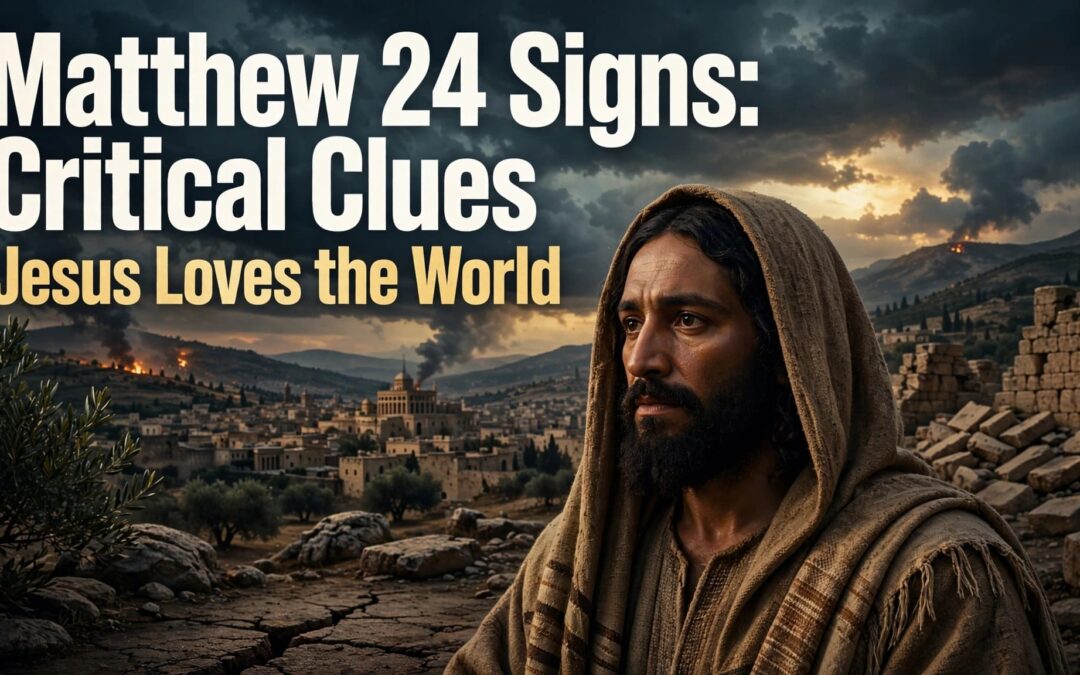
Matthew 24 Explained: The Temple, Jesus’ Coming, and the End
Jesus had just foretold that the Temple would be torn down, and His disciples wanted to know when it would happen. They connected that warning with His coming and the end of the age, then asked Jesus for the signs.
In Matthew 24, Jesus gives real warnings and promises, but He doesn't hand His followers a calendar for setting dates. As independent, Spirit-filled Pentecostal authors, we believe we should read His words in their Biblical context and keep our eyes on Him, not on speculation. You can also explore how to read the Olivet Discourse in context.
So, what did the disciples ask, and how did Jesus answer? Let's start where the conversation began: at the Temple.
The Questions Behind Matthew 24 Begin at the Temple
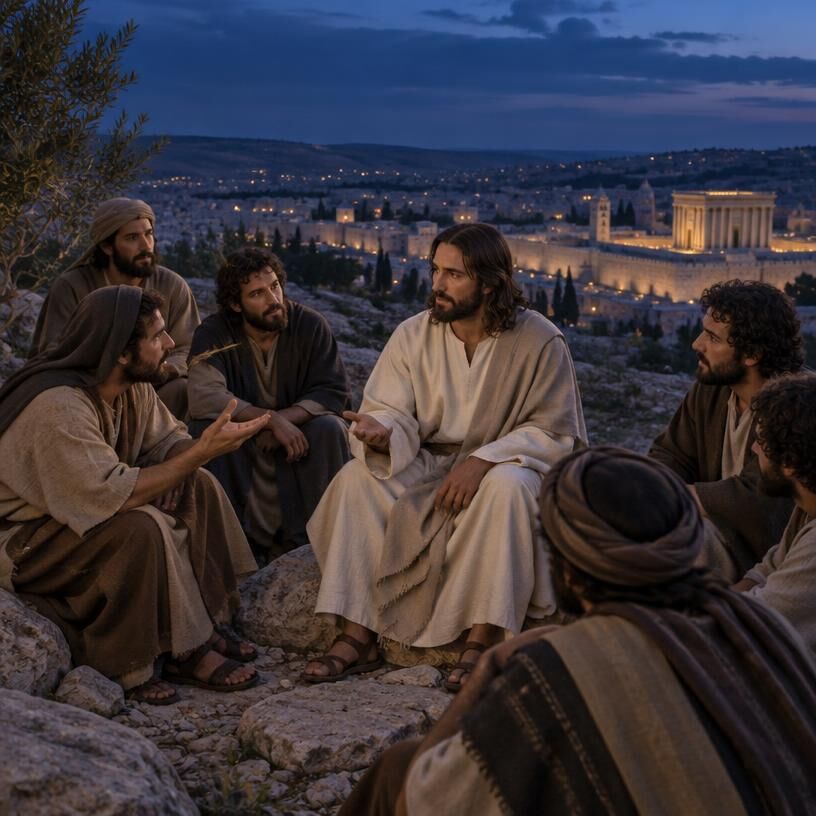
Matthew 24 opens with a striking change of scene. Jesus leaves the temple, His disciples point out its buildings, and He predicts that they will be torn down. Later, on the Mount of Olives, they ask Him when this will happen and what signs will accompany His coming and the end of the age (Matthew 24).
Those questions belong together because Jesus' temple prediction prompted them. But we should be careful not to assume the disciples understood every event or that Jesus' answer places everything on one timeline.
What the disciples asked, and what they may have assumed
In Matthew 24:3, the disciples ask about three subjects: when the temple's destruction will happen, what sign will mark Jesus' coming, and what sign will mark the end of the age. Their wording connects these matters, but it doesn't prove they expected them to happen at the same time. They may have assumed the temple's fall, Jesus' coming, and the end would arrive as one combined event. The wording alone doesn't settle that question.
The phrase "end of the age" also deserves care. It doesn't automatically mean the end of the physical planet. Matthew's wording points to the conclusion of an age or order, while the passage's full meaning must be read in context. We shouldn't make the phrase say more than it does, or turn it into a confident timeline before considering Jesus' whole answer.
The parallel accounts help us see what Matthew emphasizes. In Mark 13:1–4 and Luke 21:5–7, the disciples ask when "these things" will happen and what sign will show they are about to take place. Matthew explicitly includes "Your coming" and "the end of the age." That difference matters, but it doesn't give us permission to treat the accounts as though they contradict each other. Each Gospel frames the question in its own words.
Why the Mount of Olives setting matters
The setting keeps the temple prediction in view. Jesus had just said its buildings would be thrown down, and the disciples wanted to know when. When He sits on the Mount of Olives, their questions arise from that warning, not from a detached discussion about world events.
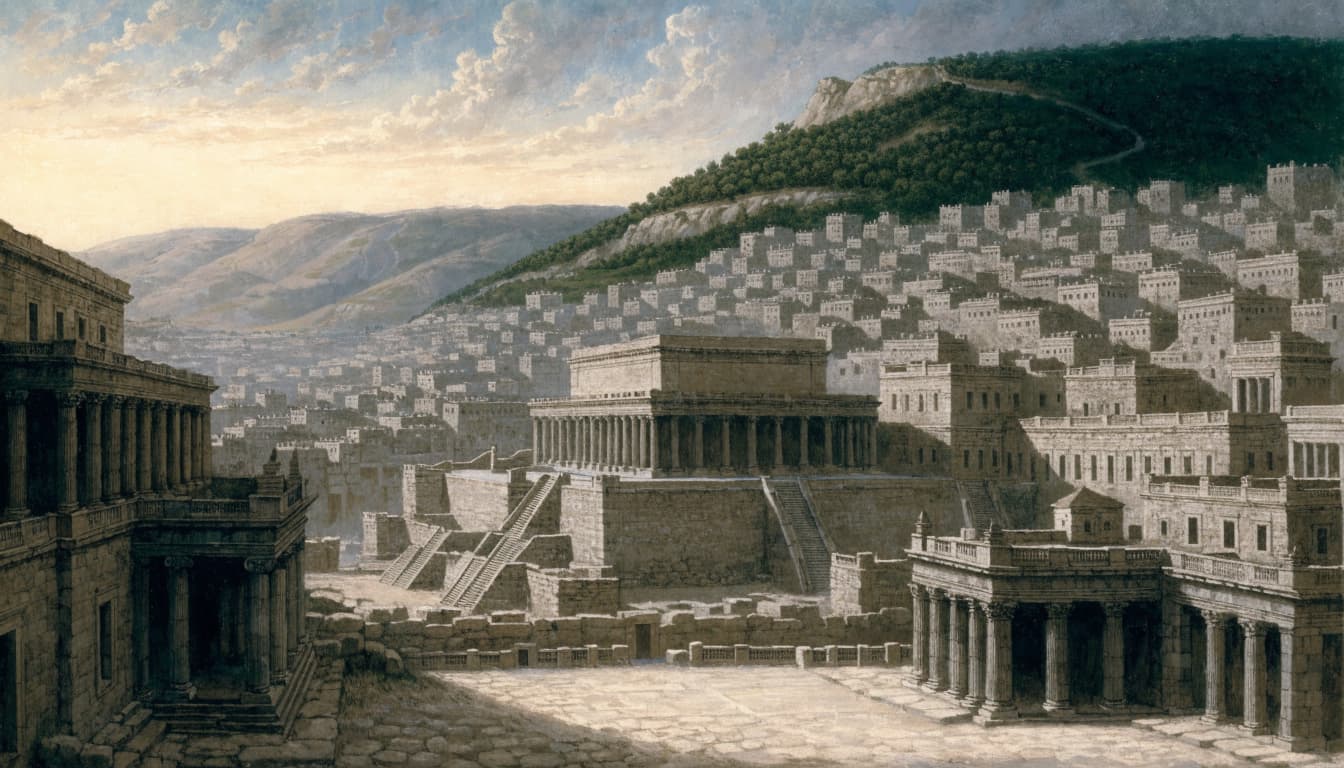
That's why the temple's fall belongs at the center of Matthew 24's Biblical context. If we skip it and jump straight to later signs, we can miss the concern that started the conversation. Jesus does address His coming and the end of the age, but we need to read those teachings alongside the specific prediction that brought His disciples to ask their questions.
Jesus' warning about the temple also connects with Daniel's prophecy, which readers often consider when studying this passage. We can explore Daniel 9 and the Olivet Discourse without treating that connection as a complete timeline. The temple prediction sets the scene; it doesn't, by itself, resolve every question about the timing of the events that follow.
Jesus Warns of Deception, Conflict, and the Need to Endure
After the disciples ask about the temple, Jesus turns first to the danger of being misled. He speaks about conflict and hardship, but He also tells His followers how to respond: stay alert, endure, and keep the Gospel of the Kingdom moving forward. We can read His words in Matthew 24:4-14 in the NKJV.
Why signs of trouble are not a prophetic countdown
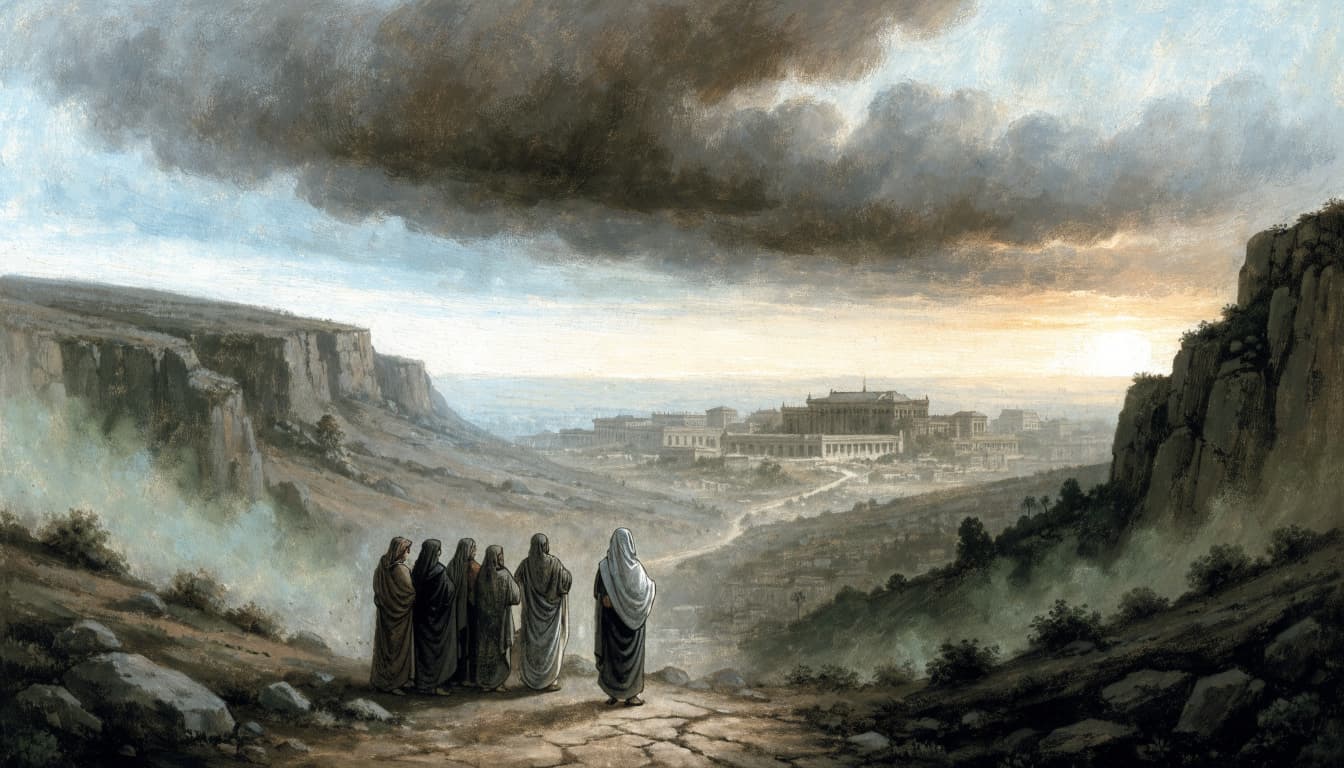
Jesus begins with a direct warning: "Take heed that no one deceives you." False messiahs will come, and people will claim to speak in His name. Wars, rumors of wars, famines, and earthquakes will follow. Yet Jesus tells His disciples not to panic, because these events are "the beginning of sorrows," not proof that the end has arrived.
That distinction matters. A war breaks out, a disaster dominates the news, or a leader claims special prophetic insight, and suddenly people start building a timetable. But Jesus doesn't give His followers permission to treat each headline as a countdown. He warns us against deception precisely because fear and certainty can make false claims sound convincing.
The events He names are serious. They bring real suffering, and they may tempt people to draw quick conclusions. Still, Jesus says the end is not yet. We should take His warning seriously without claiming that every crisis is a direct prophetic sign or assigning dates the chapter does not give.
Christians interpret later passages about tribulation in different ways. We can study those questions, including Jesus' warnings about trials and tribulation, while holding firmly to what He says here: don't be deceived, and don't confuse distress with a schedule.
How disciples endure while the Gospel goes forward
Jesus doesn't promise His disciples an easy path. He says they will face hatred, betrayal, and persecution because of His name. Some will stumble, and false prophets will deceive many. As lawlessness increases, love will grow cold. These are difficult words, but Jesus also gives a clear call: the one who endures to the end will be saved.
Endurance is more than waiting for trouble to pass. It means remaining faithful to Jesus when pressure rises, refusing to let hatred shape our witness, and continuing to trust Him when the future feels uncertain. We don't need to pretend hardship is easy. We do need to keep following Him through it.
Then Jesus gives this part of the passage a mission focus: the Gospel of the Kingdom will be preached throughout the world as a witness to all nations. The disciples' attention could have been fixed on conflict and catastrophe. Jesus points them toward the work still ahead.
As Spirit-filled Pentecostal believers, we affirm the continuing call to Spirit-empowered witness. The Holy Spirit equips the Church to testify about Jesus, even in difficult times. That doesn't mean every crisis is a prophetic marker. It means our response to trouble should include faithful witness, not speculation alone.
So when headlines stir fear or someone claims to know exactly what comes next, we can return to Jesus' words. He calls us to discernment, endurance, and Gospel proclamation.
The Abomination of Desolation and the Great Distress
Jesus moves from general warnings to a specific crisis in Judea. In Matthew 24:15-28, He recalls Daniel's prophecy, tells people what to do when danger arrives, and warns against false claims about His presence.
Why Jesus tells people in Judea to flee
Jesus refers to "the abomination of desolation" spoken of by Daniel (Daniel 9:27). He places it in a holy place and adds, "whoever reads, let him understand." Then His instructions become direct: those in Judea should flee to the mountains.
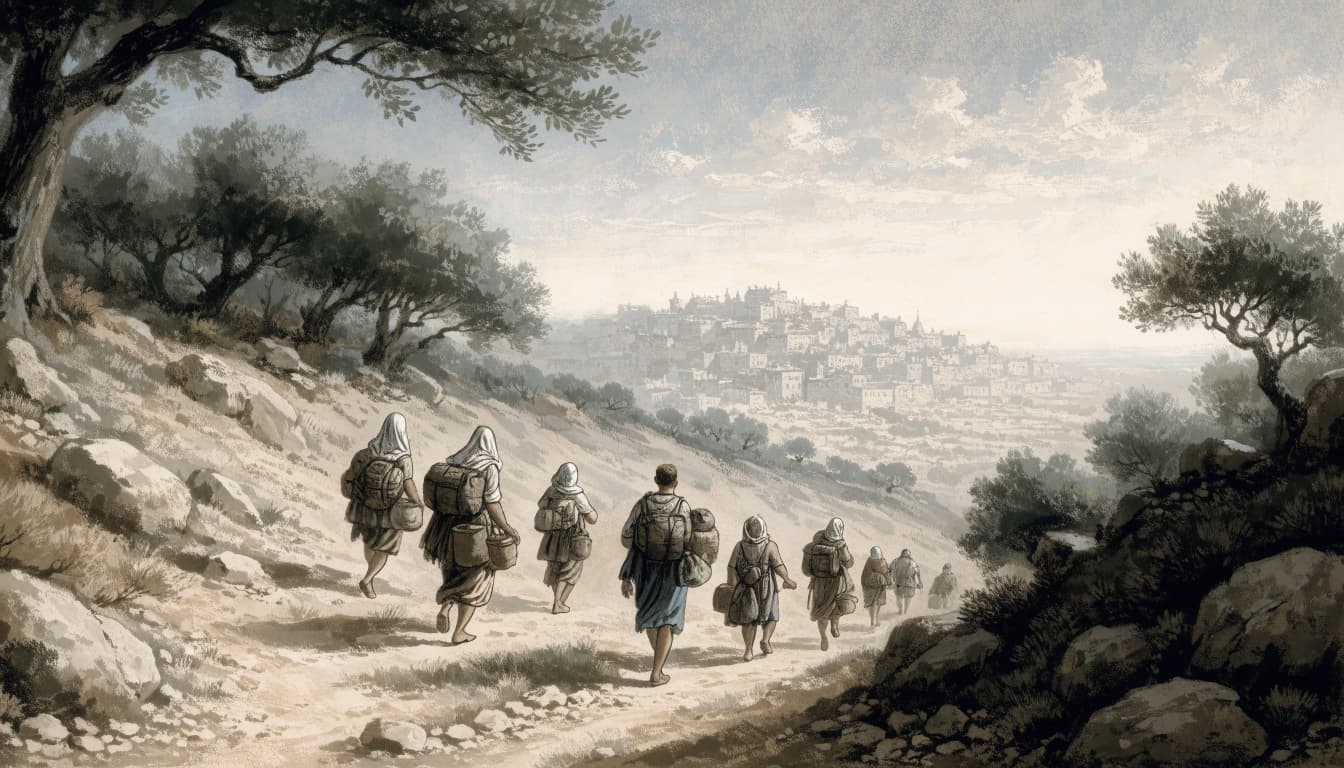
The urgency is plain. A person on the housetop shouldn't go back inside to gather belongings, and someone in the field shouldn't return for a cloak. Jesus even says to pray that the flight won't happen in winter or on the Sabbath. These details make the warning concrete: people facing danger need to act quickly, with real limits on travel and movement.
We shouldn't turn those instructions into an invitation to sensational speculation. Jesus is warning people about peril and telling them how to respond. The passage points readers toward alertness and obedience, not toward guessing dates from current events.
How to handle different readings of Daniel’s prophecy
Christians understand the abomination in different ways. Some connect it chiefly with first-century events surrounding Jerusalem's fall in AD 70. Others expect a future fulfillment, often involving a later desecration of a holy place. Still others see a historical event that also forms a pattern pointing toward a future crisis. A university discussion of Matthew 24 describes the connection between Jerusalem's destruction and Jesus' warning.
These are interpretations of the passage, not an explicit timeline laid out in Matthew 24. The chapter does not name the specific historical event, give a date for a future fulfillment, or state that the distress lasts seven years. We can compare interpretations, including questions about Daniel's final week and Jerusalem's desolation, without claiming that every detail has been settled.
Jesus calls what follows "great tribulation," a time of distress unlike any before it. He says the days will be shortened for the elect's sake. Then He warns His followers not to trust reports that the Christ is hiding in a particular place. False claims may sound urgent, but Jesus says His coming won't need secret directions or whispered announcements. Our task is to take His warning seriously and keep our confidence in Him.
The Son of Man, the Fig Tree, and the Meaning of the Signs
Jesus now describes cosmic signs, the coming of the Son of Man, and the gathering of the elect. These verses are vivid, but Christians differ on how they relate to Jerusalem's fall and Jesus' final return. Whatever interpretation we hold, Jesus places the certainty of His words at the center.
What Jesus promises about His coming
In Matthew 24:29-31, Jesus speaks of the sun being darkened, the moon losing its light, the stars falling, and the powers of the heavens being shaken. Then the sign of the Son of Man appears, the tribes of the earth mourn, and the Son of Man comes on the clouds with power and great glory. His angels gather the elect from the four winds.
This language draws on the prophetic imagery of Daniel 7:13-14, where one like a Son of Man comes with the clouds and receives dominion, glory, and an everlasting Kingdom. Jesus' words connect His coming with that vision of divine authority. Christians still debate whether Matthew 24:29-31 describes the visible final return, judgment connected with Jerusalem's fall, or a near event that foreshadows the final return. We should acknowledge those differences without making one debated reading sound settled.
What is clear is that Jesus is the center of the prophecy. The signs do not point us toward a clever date calculation or a hidden location. They direct our attention to the Son of Man, whose authority and promise stand firm. Jesus says that heaven and earth will pass away, but His words will not pass away (Matthew 24:32-35). That is the confidence we can hold, even when we disagree about the passage's timeline.

What the fig tree teaches about timing
Jesus compares these signs to a fig tree: when its branches become tender and put out leaves, you know summer is near. In the same way, when the things He describes take place, His followers can recognize that the time is near. The picture teaches discernment, not a way to calculate an exact date. Jesus later says that no one knows the day or hour, so we should resist turning signs into a prophetic calendar.
Then comes the phrase "this generation," which has prompted real disagreement. Some Christians understand it as the generation living when Jesus spoke, especially in connection with Jerusalem's destruction. Others read it as the generation that sees the future events He describes, or as a broader reference to a kind of people. The phrase "all these things" raises another question: does it include the whole sequence, the events surrounding Jerusalem, or the signs immediately before the Son of Man's coming?
We should read the fig-tree lesson alongside Jesus' assurance that His words will stand. We may not agree on every detail of "this generation," but the passage calls us to watch, trust Him, and take His teaching seriously.
Why Christians Read Matthew 24’s Timeline Differently
Jesus speaks with authority about judgment, His coming, and the faithfulness He expects from His followers. Christians agree on those central commitments, yet they disagree about how the events in Matthew 24 fit together. The difference often comes down to where readers place the chapter's turning points.
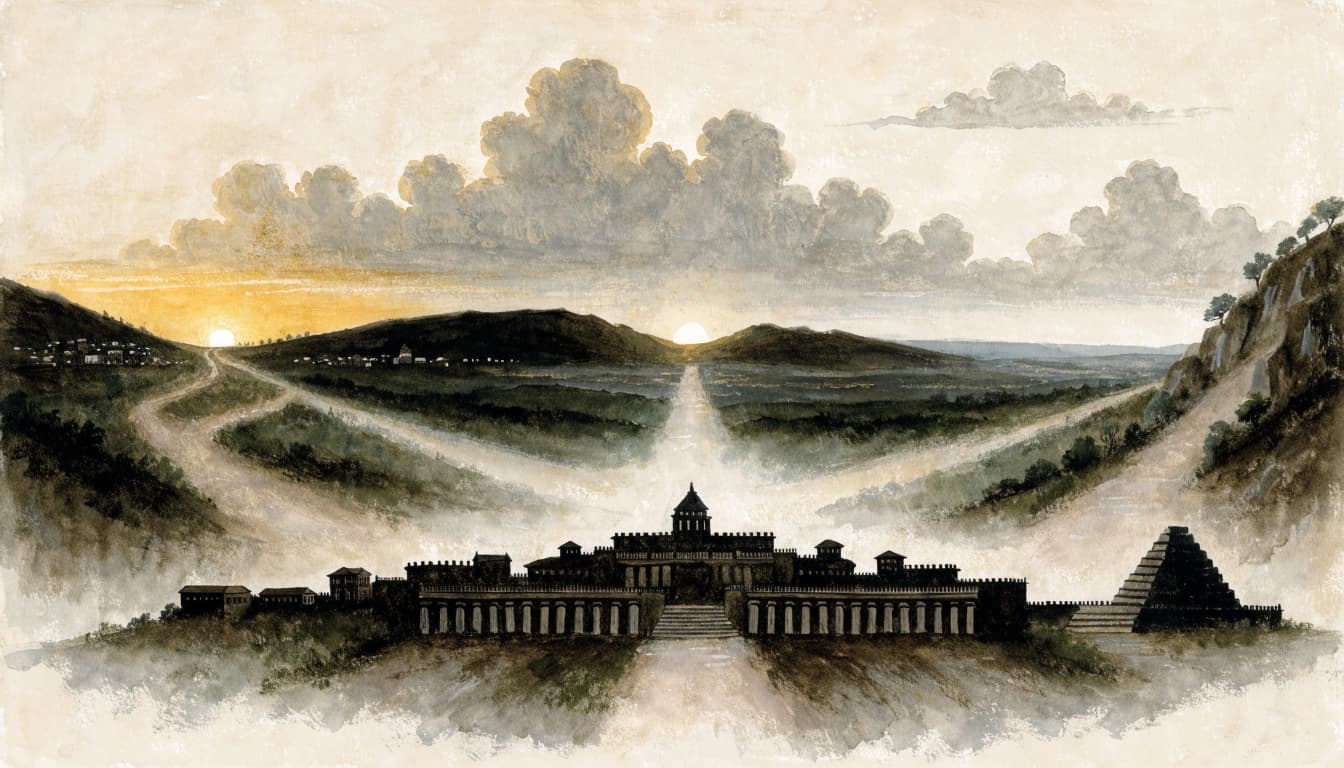
Where interpretations agree, and where they differ
The chapter begins with Jesus' prediction about the temple. Many Christians connect that prediction and parts of the following warnings with Jerusalem's destruction in AD 70. Readings often called preterist emphasize this first-century setting, though the label covers a range of views. Some see most of the chapter fulfilled in that crisis; others see the event as a real fulfillment that also points ahead. A discussion of Matthew 24 and Jerusalem's destruction offers one explanation of the first-century emphasis.
Other Christians, often called futurists, expect much of the chapter's tribulation and the abomination of desolation to occur before Jesus' future return. Some understand the passage as having both near and future horizons: Jerusalem's fall fulfills part of the warning, while the final coming remains ahead. These approaches also intersect with how readers understand Daniel's visions, including Daniel's 70 weeks and Jesus.
The text itself predicts the temple's destruction, describes distress and cosmic signs, and promises the Son of Man's coming (Matthew 24:1-35 in the NKJV). Interpreters differ over how much of that sequence belongs to the first century, how much lies in the future, and whether some events speak to both. They also debate the scope of "this generation" and whether the abomination refers chiefly to a past desecration, a future one, or a pattern with more than one horizon.
The same care applies to the shift around verse 36. Jesus says that no one knows the day or hour (Matthew 24:36 in the NKJV). Some readers take this as a clear transition from Jerusalem-related events to the final coming. Others read the chapter as one continuous account of end-time events. The transition is a debated interpretation, not a heading Jesus places in the text.
How to read disputed passages with care
We can start by following Matthew's sequence rather than pulling a striking phrase out of context. Then compare Mark 13:1-37 and Luke 21:5-36. Their accounts add detail and help us notice what each Gospel emphasizes.
It also helps to separate what Scripture says from what a particular timeline infers. Jesus says to watch and remain faithful because the hour is unknown (Matthew 24:36-51 in the NKJV). A proposed sequence connecting every sign to a specific modern event is an interpretation, not a direct quotation from Him.
As Spirit-filled Pentecostal believers, we take Jesus' warnings seriously and hold to His future return. We don't assume every Pentecostal shares one timeline, or that our own reading settles every question. We can disagree about chronology while keeping Jesus' authority, coming judgment, and call to faithfulness firmly in view.
The Unknown Day Calls for Watchfulness, Not Date-Setting
Jesus' teaching in Matthew 24 in the NKJV, especially verses 36-51, turns our attention from predicting the date to living faithfully. The day and hour are unknown, so His followers are called to stay ready. We can debate how the chapter's earlier events fit together, but Jesus' practical instruction here is clear: watch, serve, and obey.
How the examples of Noah and the watchful householder work
Jesus says that life carried on as usual in the days of Noah. People ate, drank, and married until the flood came. They weren't prepared for what was coming, and the suddenness of the judgment is the point of the comparison. Jesus is teaching that His coming will catch people by surprise, not giving us clues for calculating when it will happen. He makes that limit explicit: no one knows the day or hour.
The householder example makes the same point in a different way. If a homeowner knew when a thief would arrive, he would stay awake at that time. Since he doesn't know, he must remain watchful. Jesus uses this image to call His disciples to readiness at all times.
We should be careful not to build claims about salvation or judgment on the comparison of people being taken and left. Jesus' clear emphasis in these verses is the unexpected hour and the need to be ready. A date-setting claim may attract attention, but it goes beyond what Jesus says.
What faithful readiness looks like in daily life
Jesus follows these examples with a picture of a faithful and wise servant. The master leaves him in charge of the household and expects him to provide food at the proper time. When the master returns, the servant is found doing the work he was given. Readiness, then, is more than watching the sky or discussing signs. It means being faithful with the responsibilities Jesus has placed before us.
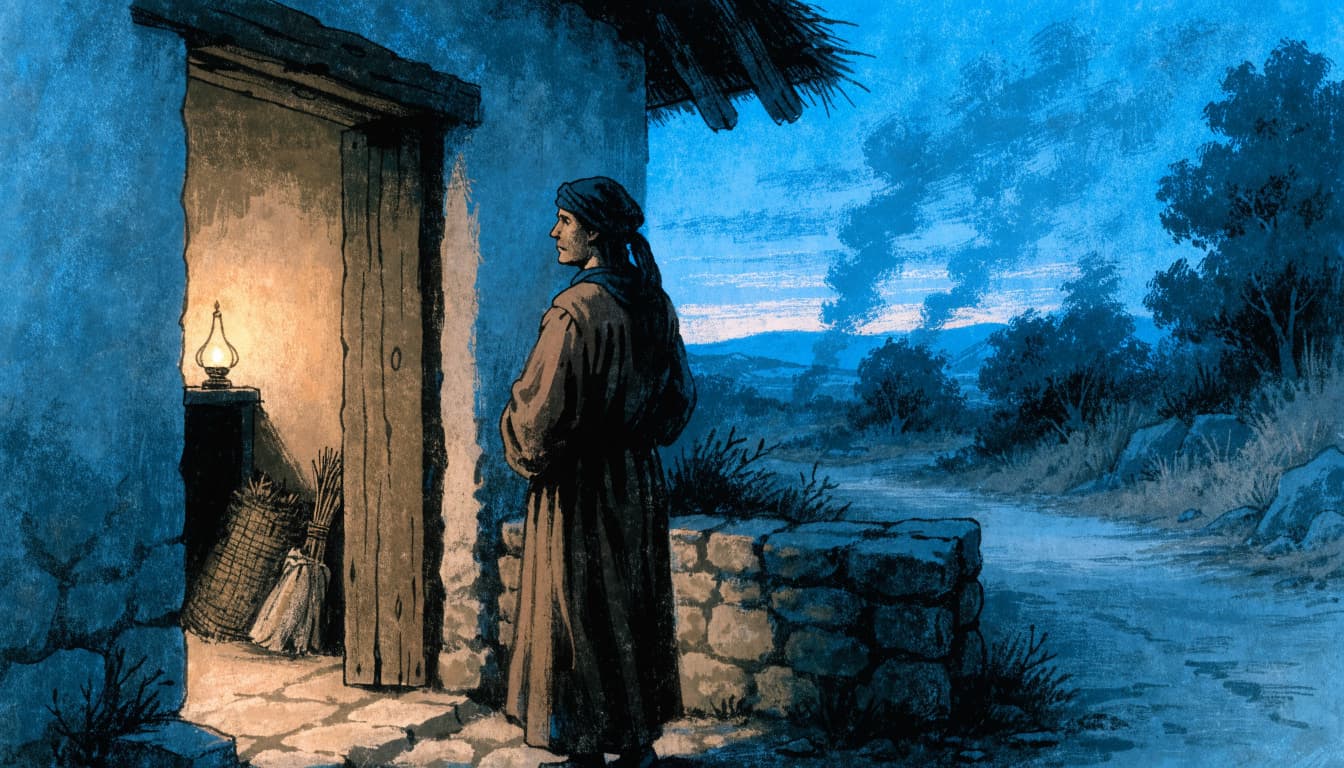
The wicked servant thinks the master is delayed and begins mistreating others. The master returns at an hour he doesn't expect, and the servant faces judgment. Jesus warns that delay is no excuse for disobedience. Our conduct matters while we wait.
As Spirit-filled Pentecostal believers, we connect readiness with watchfulness, endurance, and Spirit-led witness. The Holy Spirit empowers us to testify about Jesus and serve others faithfully. We don't need to turn every crisis into a timetable. We need to keep obeying Jesus, loving His people, and sharing the Gospel while we await His return.
Conclusion
Matthew 24 begins with Jesus' warning about the temple, then turns to signs, hardship, and the promise of the Son of Man's coming. Christians may differ on how the events fit together, but Jesus' commands remain clear: reject deception, endure, proclaim the Gospel of the Kingdom, and stay watchful.
We can take His promise seriously without trying to set a date. Our hope rests in Jesus, and faithful readiness means continuing to follow Him as we await His return. For more on Jesus' prophecy about Jerusalem's destruction, we can keep the temple warning in view as we read the chapter.
Why Matthew 24 Matters
In Matthew 24, Jesus answers His disciples’ questions about the temple, the sign of His coming, and the end of the age. His teaching brings together coming judgment, calls to endurance, and the hope of His return. Bible Prophecy Ministries explores passages like this to help readers distinguish what Scripture says has happened from what is still to come—and to see how every part of Bible prophecy points back to Jesus. This article examines the chapter in its context, follows Jesus’ words carefully, and invites readers to respond with watchfulness rather than speculation.
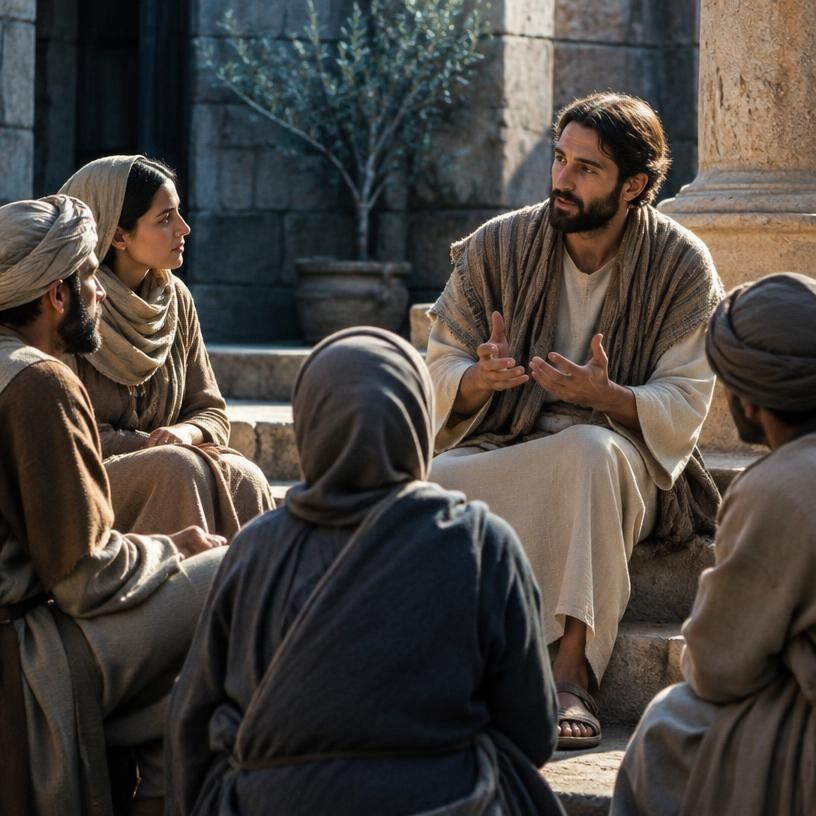
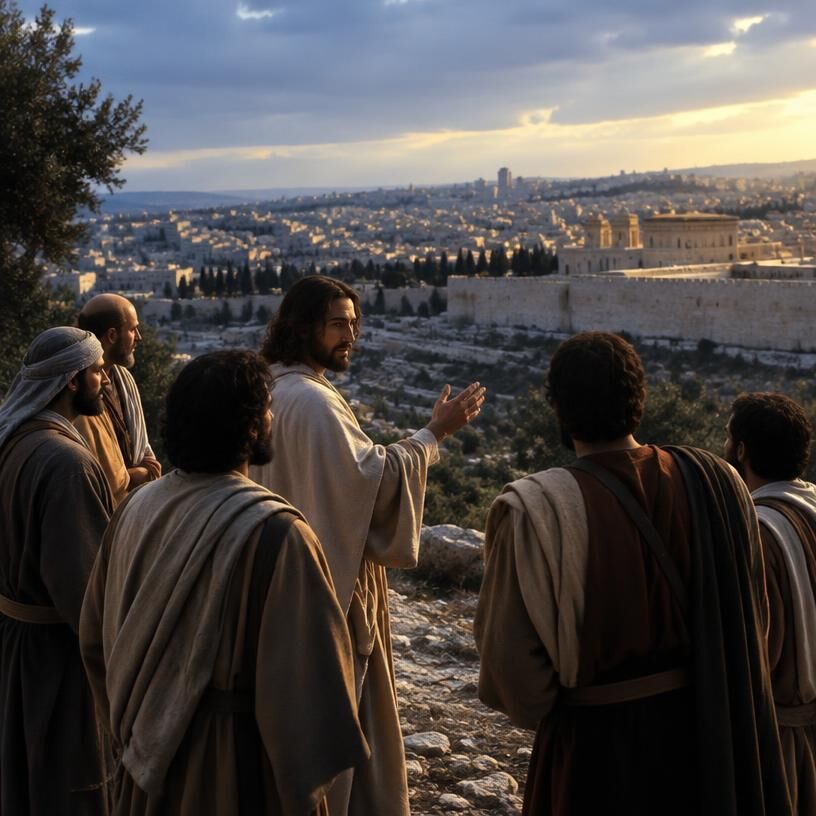
From the Temple to the Mount of Olives
Matthew 24 begins as Jesus leaves the temple in Jerusalem. When His disciples point out its impressive buildings, He gives a startling warning: not one stone will be left upon another. His words direct their attention away from the strength of the structure and toward the certainty of what He has said.
The Questions Behind the Prophecy
Later, while Jesus sits on the Mount of Olives, the disciples ask when the temple’s destruction will happen, what will signal His coming, and what will mark the end of the age. Keeping those questions in view helps us follow His answer without assuming every warning refers to the same moment. Bible Prophecy Ministries examines the passage in its setting, with Jesus—not a predicted date—at the center.
Four Themes to Watch in Matthew 24
Signs Without Date-Setting
Jesus mentions deception, wars, famines, and earthquakes, but cautions that such troubles do not mean the end has already arrived.
Tribulation and Endurance
His warnings prepare disciples for persecution, false prophets, and severe distress while calling them to faithful endurance.
The Coming of the Son of Man
Jesus describes His coming as unmistakable, not a secret appearance that requires someone to point Him out.
The Gathering of His People
After describing His appearing, Jesus speaks of angels gathering His elect, offering hope amid the passage’s sobering warnings.
Following the Passage, Not a Countdown
These markers follow the order of Jesus’ teaching in Matthew 24. They are passages to consider, not calendar predictions: Jesus warns His followers to stay alert rather than claim to know the day or hour.
Matthew 24:1–3
The Temple Warning and the Questions
Jesus foretells the temple’s destruction; on the Mount of Olives, the disciples ask about its timing, His coming, and the end of the age.
Matthew 24:4–8
Deception and the Beginning of Sorrows
False messiahs, conflict, famine, and earthquakes call for discernment. Jesus says these events are the beginning of birth pains, not proof that the end has come.
Matthew 24:9–14
Pressure, Perseverance, and Witness
Jesus warns of persecution and growing lawlessness, urges endurance, and says the Gospel of the kingdom will be proclaimed among the nations.
Matthew 24:15–28
Severe Distress and False Claims
Jesus describes an abomination associated with desolation, urgent flight, great tribulation, and misleading claims about where the Messiah can be found.
Matthew 24:29–31
The Son of Man Appears
After the tribulation described in the passage, Jesus speaks of cosmic signs, the visible coming of the Son of Man, and the gathering of His elect.
Matthew 24:32–51
Watchfulness, Not a Date
Through the fig tree and the call to faithful service, Jesus teaches readiness. He also says no one knows the day or hour, ruling out confident date-setting.
“Watch therefore, for ye know not what hour your Lord doth come.” — Matthew 24:42 (KJV)

Jesus Christ
Speaking to His disciples in the Olivet Discourse
Matthew 24: Common Questions
What did Jesus say would happen to the temple?
Jesus foretold that the temple’s stones would be thrown down (Matthew 24:1–2). The destruction of Jerusalem and its temple in AD 70 shows the seriousness of His warning and gives important historical context for reading the rest of the chapter.
Are wars, famines, and earthquakes proof that the end is here?
Jesus described these troubles as the beginning of sorrows, not a timetable for calculating the end (Matthew 24:6–8). He told His disciples not to be alarmed or misled by every crisis.
Why did Jesus warn about false messiahs?
Jesus warned that false christs and false prophets would deceive many (Matthew 24:4–5, 23–25). His words call readers to test claims against Scripture rather than follow sensational predictions.
Does Matthew 24 describe the temple’s fall or Jesus’ return?
The disciples asked about the temple and the sign of Jesus’ coming (Matthew 24:3). Christians differ on how particular passages relate to those events, but the chapter clearly calls for discernment, endurance, and readiness for the Son of Man.
How should we respond to Jesus’ teaching about the end?
Jesus calls His followers to stay watchful and faithful because the day of His coming is not theirs to calculate (Matthew 24:36, 42–46). The right response is steady trust and obedience, not fear or date-setting.
Keep Your Eyes on Jesus as You Study Prophecy
Continue through the Scriptures to see how prophecy points to Jesus. Study His words in context, consider what has happened and what is still to come, and find hope in His promise to return.