
Daniel’s 70 Weeks: What Has Already Happened?
Daniel's 70 weeks point to events Christians connect with Jesus' coming and death, Jerusalem's restoration, and the city and temple's later destruction, but Christians still disagree about the final week.
Daniel prayed while Israel was in exile and Jerusalem lay desolate. We see the prophecy as an answer that reaches beyond the return from Babylon, yet its historical weight doesn't settle every timeline question. Many Christians connect the "anointed one" with Jesus, as explored in Daniel's prophecy of the Messiah and restoration.
So, which parts have already happened, and where do interpretations differ? Let's begin with Daniel's prayer for Jerusalem. Watch a discussion of Daniel's 70 weeks.
Why Daniel Prayed for Jerusalem Before the 70 Weeks Were Revealed
Daniel 9 begins with a man reading Scripture, looking at a ruined city, and asking God to keep His promise. Daniel wasn't chasing a prophetic timetable for its own sake. He was praying for his people, Jerusalem, and the restoration God had promised.
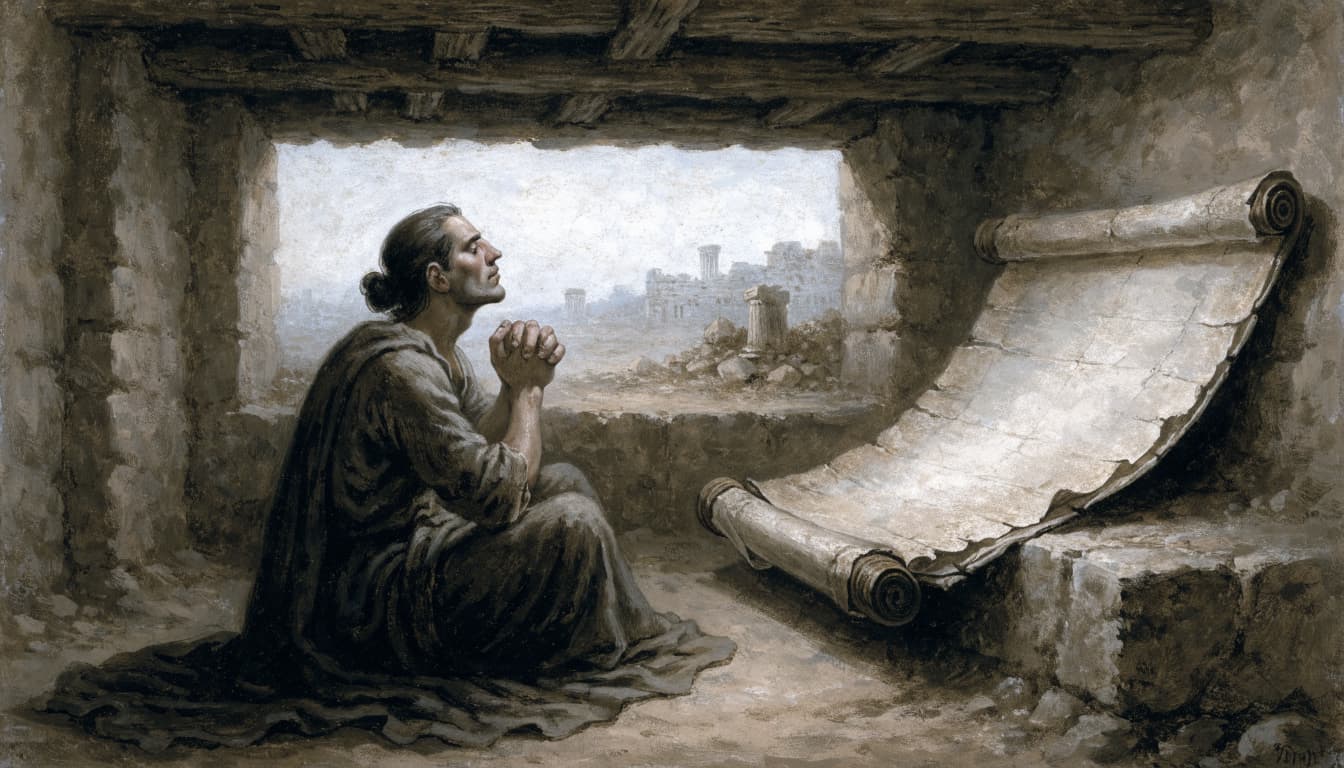
Daniel’s prayer looked back to Jeremiah’s 70 years
Daniel says he was reading Jeremiah and understood that Jerusalem's desolation would last seventy years (Daniel 9:2). That detail matters. Before Gabriel reveals the seventy weeks, Daniel is focused on Jeremiah's promise and the condition of Jerusalem.
The city had been devastated, and Daniel's prayer names the reason: Judah had sinned and rebelled against God. He confesses the people's failure, acknowledges God's justice, and pleads for mercy. The prayer is personal, but it's also about a whole community facing exile and the loss of its city and sanctuary. You can read the prayer and Gabriel's response in Daniel 9 in the NKJV.
The exact timing of Daniel's prayer is debated, as is the way Jeremiah's seventy years should be counted. Some chronologies connect the period with Babylon's rule; others focus on the years Jerusalem lay desolate or on the span between key events. We shouldn't pretend one calculation settles every question. Daniel's point is clear, though: he sees Jerusalem's condition in light of God's promised judgment and restoration.
And Daniel doesn't treat the promise as a reason to sit back and wait. He fasts, confesses, and asks God to act. The prophecy that follows begins in that posture of repentance and concern for a real people.
Gabriel’s answer widened the horizon beyond exile
Gabriel comes while Daniel is still praying and gives an answer concerning "your people" and "your holy city." The response moves beyond the immediate question of Jerusalem's return. Daniel 9:24–27 speaks of transgression, sin, atonement, everlasting righteousness, an anointed one, and the fate of the city and sanctuary.
Return and rebuilding still matter. Jerusalem's restoration was part of the hope Daniel sought, and the prophecy refers to a command to restore and rebuild the city. But Gabriel's message doesn't stop with repaired walls or the end of exile. Its language reaches toward the deeper problem Daniel confessed: sin, and the need for God's saving work.
Many Christians understand the "anointed one" as Jesus and connect His being "cut off" with His death. That reading brings the prophecy's language about atonement and righteousness into focus through Jesus. Yet Daniel's wording, the starting point for counting the weeks, and the placement of the final week remain disputed. Christians do not all read the timetable the same way.
The prophecy also speaks of the city and sanctuary being destroyed. Many Christian interpreters connect that language with Jerusalem's destruction by Rome in AD 70, a historical event distinct from the earlier Babylonian exile. You can read more about Jerusalem's destruction in 70 AD. Other interpretations connect the prophecy's crisis with a different period or see its time divisions in symbolic terms.
So the prayer gives us the starting point: Daniel asks God to remember Jerusalem and restore His people. Gabriel answers that concern, but the answer opens onto a much larger question of sin, atonement, the anointed one, and the city's future.
What Daniel’s 70 Weeks Point to Jesus: What Has Already Happened?
Daniel's seventy weeks connect Jerusalem's restoration with sin, atonement, and an anointed ruler. Many Christians see Jesus in that picture, especially in the prophecy's words about the anointed one being "cut off." The connection matters, but the timeline still raises honest questions.
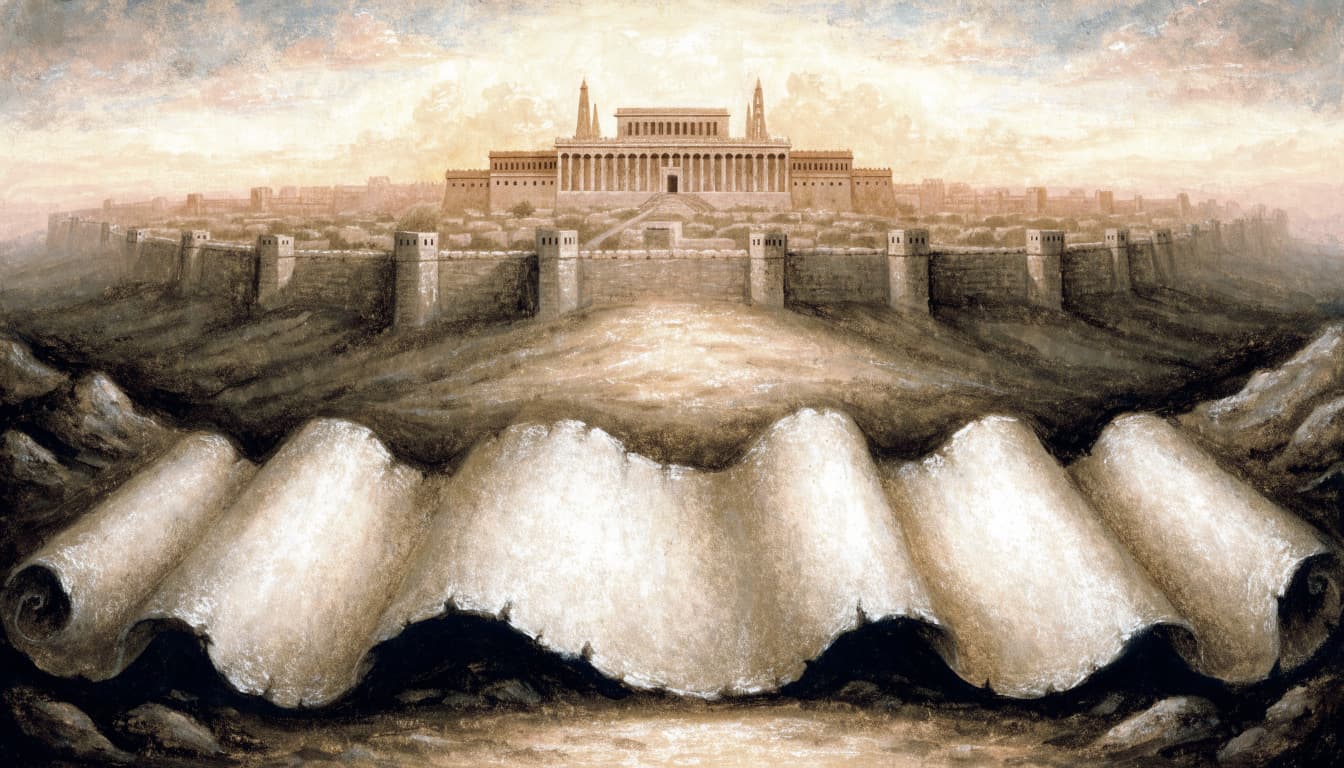
The 69 weeks describe a long wait for an anointed ruler
Daniel 9 divides the seventy weeks into seven weeks, sixty-two weeks, and one final week. On the common "weeks of years" reading, each week represents seven years. So the first seven plus the next sixty-two make 69 weeks, or 483 years. Daniel says this period begins with a word to restore and rebuild Jerusalem and leads to an anointed ruler (Daniel 9:25).
But which word or decree starts the count? Interpreters propose Cyrus's authorization for the exiles to return and rebuild the temple (Ezra 1:1–4, NKJV), Artaxerxes' authorization to Ezra (Ezra 7:11–26), or his later authorization to Nehemiah to rebuild Jerusalem (Nehemiah 2:1–9). Each proposal emphasizes a different feature of restoration.
The calculation also depends on how interpreters count the years. They disagree about the calendar, inclusive counting, and whether the prophecy uses ordinary solar years or another scheme. We shouldn't act as if one date settles every detail. For a look at the messianic reading and its chronology, see one Christian explanation of Daniel's 70 weeks.
Christians connect the anointed one’s death with Jesus’ crucifixion
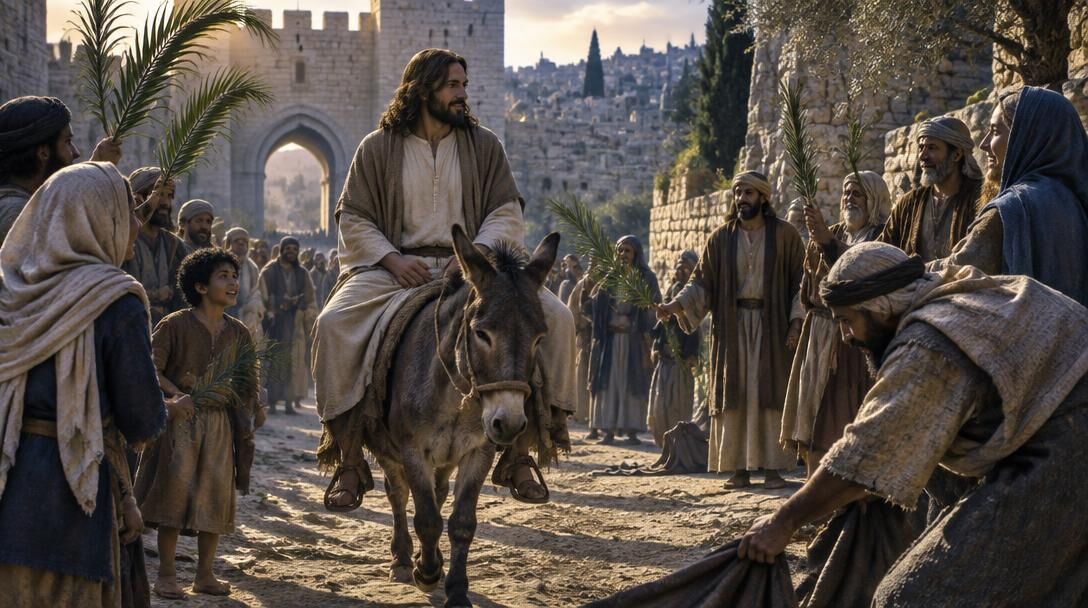
Daniel says an anointed one will be "cut off" (Daniel 9:26). Many Christians read this as pointing to Jesus' death. They also connect Daniel's language about ending sin and making atonement (Daniel 9:24) with the saving work Jesus accomplished through His death.
That is part of why we see the prophecy as more than a countdown to political events. It speaks to the sin Daniel confessed and the redemption Christians believe God brings through Jesus.
The New Testament gives this reading its wider Christian context. Jesus describes His life as a ransom for many (Mark 10:45), while Paul connects Jesus' sacrifice with God's work of atonement (Romans 3:21–26). Christians read these passages alongside Daniel, not as proof that every reader must accept one timeline. For more on why Christians center salvation on Jesus' death and resurrection, see the biblical case for Jesus as the saving Lord.
The exact year of the crucifixion is disputed, with AD 30, AD 31, and AD 33 among the dates proposed in different chronologies. Christians also disagree about the 70th week. Some read it as following the 69th week directly and connect its midpoint with Jesus' death. Others see a gap before a future final week. Daniel's text gives the divisions, but it doesn't explicitly explain a gap.
So we can say plainly that Christians connect Jesus' crucifixion with the anointed one being cut off and with Daniel's atonement language. The New Testament strengthens that reading for Christians. The specific dates and placement of the final week remain debated, and that distinction helps us hold the central claim without pretending every calculation is settled.
How Jerusalem’s Restoration Fits the Prophecy’s Historical Setting
Daniel's prayer came from exile, with Jerusalem still in ruins. The return from Babylon answered a real part of that prayer: the people came back, the temple was rebuilt, and Jerusalem began to recover. But Gabriel's answer reaches beyond the city's physical restoration.
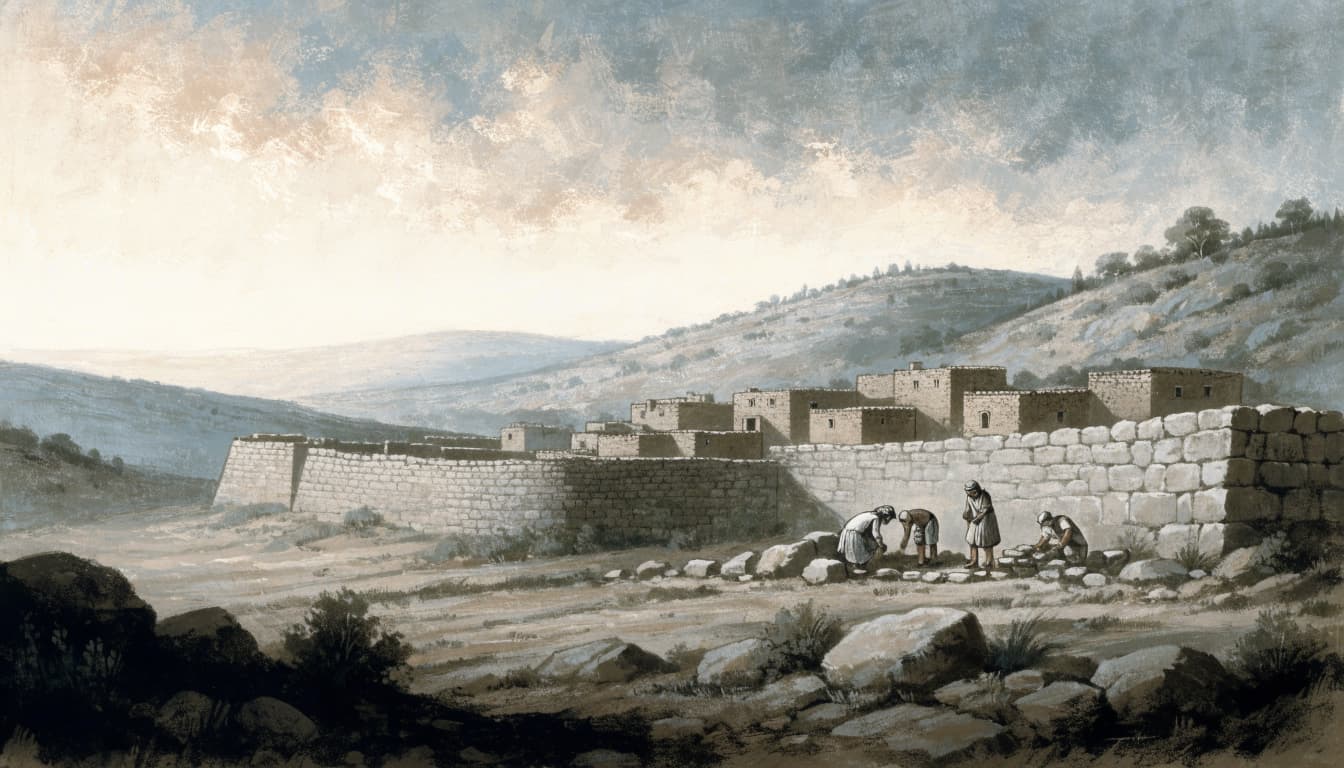
The return rebuilt a city, but did not settle every promise
The return under Persian rule was no small thing. Cyrus permitted Judean exiles to return and rebuild the temple (Ezra 1:1–4). Later, Nehemiah received permission to rebuild Jerusalem's walls (Nehemiah 2:1–9). The work faced opposition and hardship, just as Daniel's vision describes Jerusalem being rebuilt "in troublesome times" (Daniel 9:25).
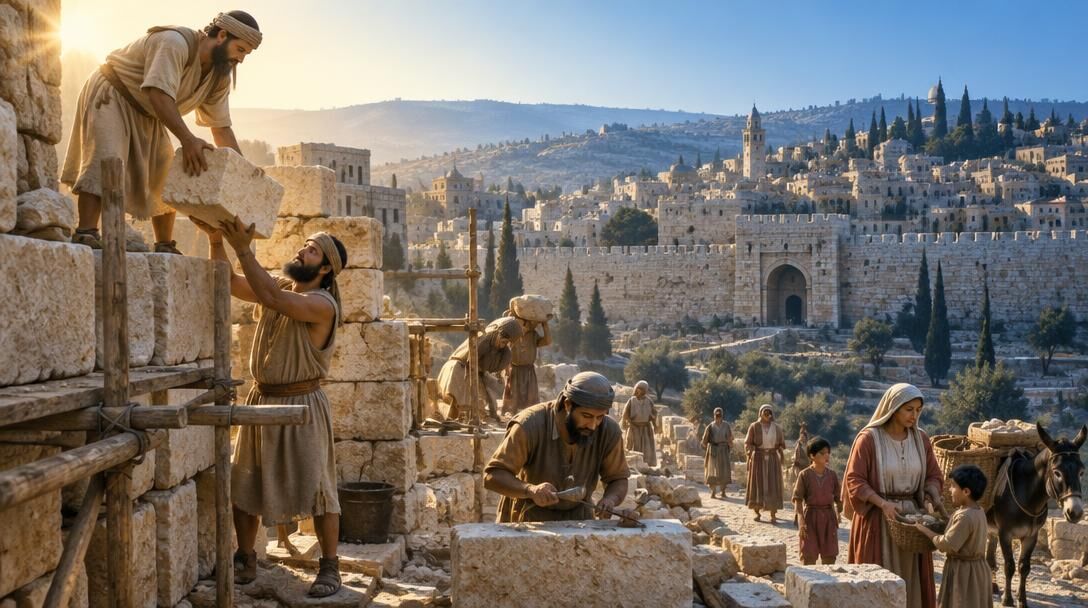
The city's restoration was a historical answer to the devastation Daniel mourned. People returned, worship resumed, and Jerusalem's defenses rose again. The return from the Babylonian exile belongs at the center of this history, not in a footnote.
Yet rebuilding walls and restoring a community did not erase Israel's sin or bring everlasting righteousness. Daniel 9:24 names those larger goals alongside the restoration of the holy city (Daniel 9:24). The return was real, but it did not complete every promise in that verse.
We should hold both truths together. Jerusalem's rebuilding mattered, and the prophecy's language asks us to look beyond repaired buildings. The books of Ezra and Nehemiah portray the postexilic period as a wider reconstruction of life in Judah, not simply a construction project (Cambridge's study of Ezra and Nehemiah).
The prophecy’s language reaches beyond a rebuilt Jerusalem
Daniel 9:24 brings several promises together: dealing with transgression and sin, atonement, everlasting righteousness, and the fulfillment of vision and prophecy. Jerusalem matters throughout the passage, but the goals are not limited to its buildings or political status. That wider language gives the prophecy a horizon beyond the first return from exile.
Christian readers see these themes fulfilled in Jesus. We connect His death with Daniel's words about the anointed one being "cut off," and we understand His saving work as God's answer to sin and the need for atonement (Daniel 9:26–27). That reading does not make the return from exile irrelevant. It places Jerusalem's restoration within a larger promise Christians believe reaches its fulfillment through Christ.
Here's where we need care: Daniel's prophecy joins Jerusalem's future to promises that reach beyond a city's walls, but Christians disagree about how the weeks fit together and when each promise is fulfilled. Some connect the prophecy's later references to Jerusalem and the sanctuary with events after Jesus' ministry; others understand the final week differently. We can affirm the historical return and the Christian hope centered on Jesus without claiming that the rebuilt city, by itself, fulfilled every phrase in Daniel 9:24.
What the Destruction of Jerusalem and the Temple in AD 70 Shows
Daniel 9 speaks of the city and sanctuary being destroyed after the anointed one is cut off. Many Christian readers connect those words with Jerusalem's fall under Rome. The event gives the prophecy a clear historical setting, but it doesn't answer every question about the 70 weeks.
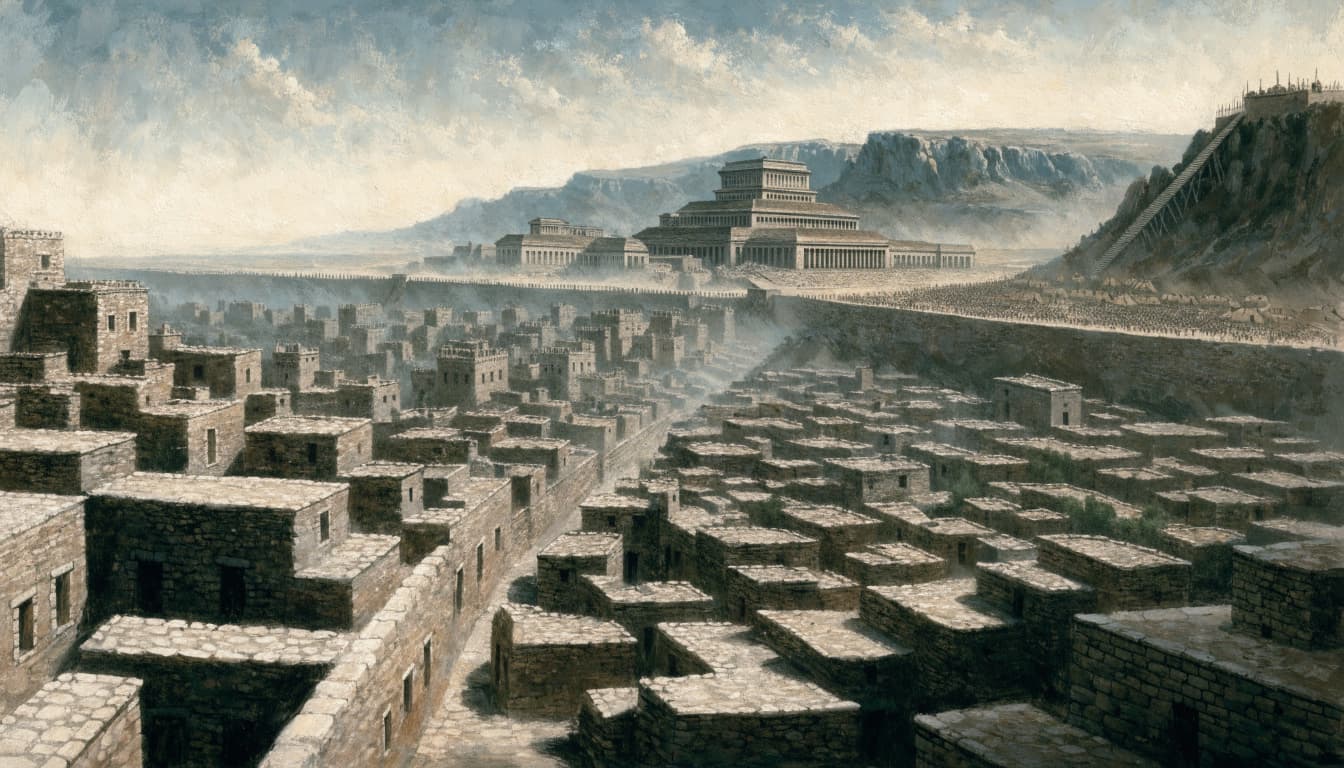
Daniel’s words about the city and sanctuary meet a real historical event
In AD 70, Roman forces under Titus captured Jerusalem and destroyed the Second Temple. The city endured a brutal siege, and the sanctuary that had stood at the center of Jewish worship was left in ruins. The first-century Jewish historian Josephus describes the Roman campaign in The Jewish War.
Daniel 9:26 says that after the anointed one is "cut off," the people of a coming prince will destroy "the city and the sanctuary" (Daniel 9:26). Since Rome destroyed Jerusalem and the Temple decades after Jesus' ministry, many Christian interpreters see AD 70 as a strong historical connection to that verse. We can recognize that connection without claiming it proves one complete timeline.
The timing is part of the debate. Some readers understand the destruction notice as an event that follows the 69 weeks and Jesus' death, while others place a gap before a future 70th week. The verse refers to the city's destruction, but the event alone doesn't tell us whether the final week is past or future.
We should also keep two Roman attacks separate. Titus's forces destroyed the Second Temple in AD 70. Around AD 135, Emperor Hadrian's forces suppressed the Bar Kokhba revolt, and Roman rule reshaped Jerusalem. That later crisis came decades after the Temple's destruction; it was not the event that brought the Second Temple down.
Jesus’ warning about the temple adds a New Testament connection
The Gospels connect the Temple's destruction with Jesus' own warning. When His disciples pointed out the Temple buildings, Jesus said that not one stone would be left on another (Matthew 24:1–2). In Luke, He also describes Jerusalem surrounded by armies and facing distress (Luke 21:20–24).
For Christians, the match between Jesus' warning and Rome's destruction of Jerusalem is striking. It also helps explain why readers place Daniel's city-and-sanctuary language beside the Gospel accounts. Both point toward judgment on Jerusalem and the loss of its Temple.
But Jesus' warning doesn't settle the interpretation of every phrase in Daniel 9. He identifies the coming destruction, yet He doesn't lay out a complete schedule for the 70 weeks or state whether the final week must follow the 69th immediately. We should let the historical connection carry its weight without making it answer questions the passage leaves open.
For a closer look at Jesus' warnings about Jerusalem's destruction, we can read the Gospel passages alongside Daniel while keeping those timeline questions in view.
Why Christians Disagree About the Final Week
Daniel gives us the shape of the prophecy: seventy weeks, divided into seven weeks, sixty-two weeks, and one final week. But the text doesn't answer every question readers bring to it. The starting decree, the people represented by its key figures, and the place of the final week all shape how Christians understand the timeline.

A continuous reading sees Jesus’ work within the final week
In a continuous messianic reading, the 70th week follows the 69th without a long gap. Readers who hold this view often identify the anointed one who is "cut off" with Jesus, then connect the phrase "in the middle of the week" with His death. The reference to sacrifice ceasing is understood through Jesus' offering of Himself, which Christians believe brings the temple's sacrificial system to its intended purpose. The wording appears in Daniel 9:24-27.
That reading fits the Christian belief that Jesus' death addresses sin, a central concern in Daniel's prayer. But interpreters still differ over what happens in the remaining half-week and how AD 70 fits.
Some connect the destruction of Jerusalem and the sanctuary with Rome's attack after Jesus' death; others see the passage's chronology differently. The verse says the city and sanctuary will be destroyed, but that event doesn't settle whether the 70th week is continuous.
A futurist reading places the final week ahead
Many futurist interpreters understand the first 69 weeks as leading to Jesus, then place a gap before a still-future seven-year period. In this view, a future ruler makes or confirms a covenant, and sacrifice resumes before that ruler brings it to an end midway through the week. The final events are often connected with a time of tribulation and desolation. This is a common futurist interpretation, not a detail Daniel explicitly states as a settled sequence.
The key point is the gap. Daniel divides the weeks, but doesn't directly say that an interval separates the 69th from the 70th. The identity of the coming prince and the person who confirms the covenant also remain interpretive questions. We can explain the futurist view without presenting its proposed ruler, renewed sacrifices, or seven-year timetable as facts every Christian must accept. For a more detailed example of this approach, see a futurist view of Daniel's final week and the rapture.
A careful Pentecostal reading separates Scripture from assumptions
Pentecostals don't share one single timeline for Daniel 9. Some are futurist; others read the weeks continuously, symbolically, or through a historicist framework. Historicist interpreters often apply the weeks across a long span of history, while symbolic readings focus on the prophecy's theological message rather than a precise 490-year calendar. Many historical-critical readings place the prophecy's central crisis under Antiochus IV in the second century BC, including the desecration of the Jerusalem temple. These approaches differ from Christian readings that identify Jesus as the prophecy's central anointed figure.
As independent, Spirit-filled Pentecostals, we want to take Scripture seriously without treating every timeline proposed by a teacher or chart as Scripture itself. Daniel names a decree to restore Jerusalem, an anointed one who is cut off, a coming prince, and the cessation of sacrifice amid desolation. Yet Christians disagree about the starting decree, who the anointed one and coming prince are, what the sacrifice language means, and whether the final week is past or future.
We should test dates and claims against the passage, not force the passage to endorse a preferred schedule. And as we compare interpretations, Jesus remains the center of Christian hope. The debate deserves careful reading and gracious conversation, especially when sincere believers reach different conclusions from the same words.
Conclusion
Daniel's prayer began in exile, with Jerusalem lying desolate and God's people longing for restoration. The prophecy reaches beyond the city's return and rebuilding. Christians connect its anointed one and its language of atonement with Jesus, the promised Messiah, and His crucifixion. The later destruction of Jerusalem and the Temple in AD 70 gives the passage further historical weight. You can read more about Jesus as the promised Messiah and the fall of Jerusalem in AD 70.
These events matter, but they don't settle the timing and details of Daniel's final week. As we read Scripture, we can hold firmly to what Christians see fulfilled in Jesus while approaching the debated parts with care. Daniel's prophecy points us back to God's promise of redemption, fulfilled in Jesus, without requiring us to claim more than the text says.
Why Daniel Received the Prophecy of the 70 Weeks
In Daniel 9, the prophet was studying Jeremiah’s promise that Jerusalem’s desolation would last seventy years. Recognizing the gravity of Israel’s sin, Daniel turned to God in prayer, confessing the nation’s unfaithfulness and pleading for mercy on Jerusalem and the sanctuary.
Before he finished praying, Gabriel arrived with a message that looked beyond the end of the Babylonian exile. 70 “weeks,” commonly understood as 70 sets of 7, were determined for Daniel’s people and holy city. The prophecy describes God’s purpose to address transgression, make an end of sins, bring in everlasting righteousness, and anoint what is most holy. It also points toward the coming of the Messiah, placing Jesus at the center of the question this article explores: which of these foretold events have already taken place?
Daniel’s Seventy Weeks: The Prophetic Sequence
Daniel 9:24–27 traces a sequence from the command to restore Jerusalem through the coming and cutting off of the Messiah. Interpretations differ on the final week, but the passage gives a clear framework for examining what has already happened.
Starting Point
The Decree to Restore Jerusalem
The count begins with a command to restore and rebuild Jerusalem after exile. The precise decree used as the starting point varies among interpreters.
7 Weeks
Jerusalem Rebuilt
The first seven weeks mark a period of restoration, when Jerusalem’s streets and defenses are rebuilt amid difficult times.
62 More Weeks
The Messiah Comes and Is Cut Off
After the following sixty-two weeks, Daniel says an anointed one will be cut off. Christians commonly connect this milestone with the death of Jesus.
Final Week
Covenant, Interruption, and Desolation
Daniel’s final week includes a covenant, the cessation of sacrifice midway through the week, and desolation. Christians differ on whether these events belong to the first century, a future period, or both.
What Has Already Happened?
Jerusalem’s restoration after the exile provides the historical setting for Daniel’s prophecy. The city was rebuilt despite opposition, matching the passage’s description of troubled times. Daniel then points toward an anointed one who would come and be cut off; Christians understand these words in light of Jesus’ arrival and crucifixion.
Daniel also foretells the destruction of the city and sanctuary, an event commonly associated with Rome’s destruction of Jerusalem and the temple in AD 70. These milestones help readers distinguish the events already witnessed in history from the debated details of the final week.
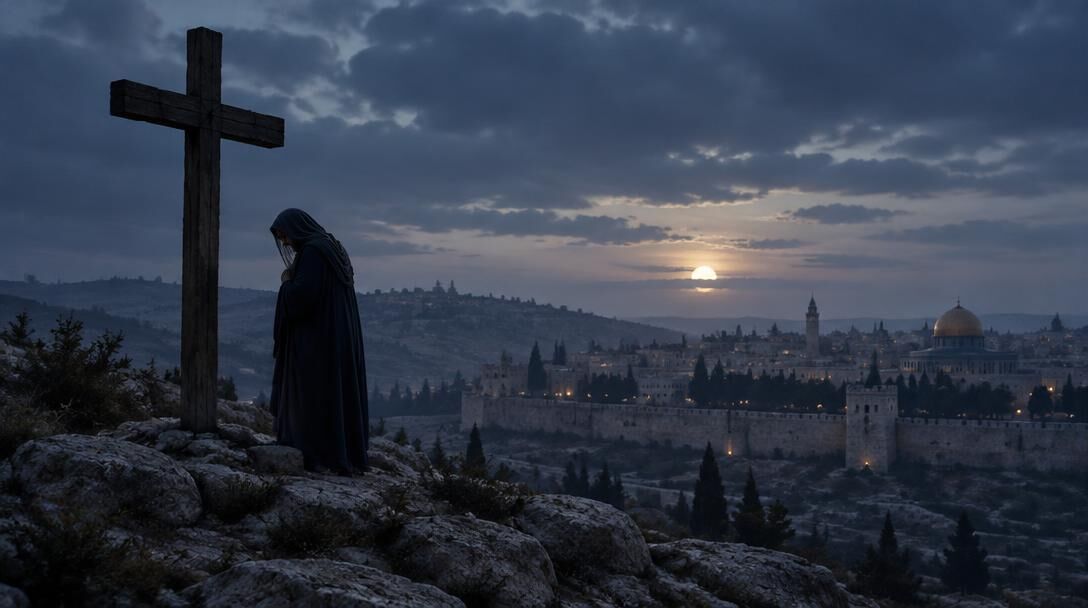

“And after threescore and two weeks shall Messiah be cut off, but not for himself.” — Daniel 9:26 (KJV)
Daniel 9:26, King James Version
Daniel’s 70 Weeks: Questions About What Has Happened
What does Daniel mean by “seventy weeks”?
Daniel 9:24 speaks of seventy “sevens,” commonly understood as seventy groups of seven years, or 490 years. This reading follows the passage’s focus on Jerusalem and its people rather than ordinary seven-day weeks.
How is the timeline of the seventy weeks calculated?
Daniel 9:25 starts the count with a decree to restore and rebuild Jerusalem. Interpreters then count seven weeks and sixty-two weeks—a total of sixty-nine weeks, or 483 years—toward the appearance of the Anointed One. The exact dates depend on which decree and calendar method are used.
Which decree begins the seventy weeks?
Several Persian decrees are discussed, especially those associated with Artaxerxes in Ezra 7 and Nehemiah 2. Because they address different aspects of Jerusalem’s restoration, Christians differ on which decree best matches Daniel 9:25.
Why are the first seven weeks separated from the next sixty-two?
Daniel 9:25 distinguishes the period of Jerusalem’s rebuilding from the longer period leading to the Anointed One. The text describes the city being rebuilt in troubled times, giving readers a way to recognize restoration as part of the prophecy.
Does the prophecy point to Jesus?
Many Christians understand the Anointed One in Daniel 9:25–26 to point to Jesus. They connect the prophecy’s reference to the Anointed One being “cut off” with His crucifixion, while acknowledging that interpretations of the timeline differ.
What events in Daniel’s seventy weeks have already happened?
Jerusalem’s restoration after exile and the coming and death of Jesus are widely treated by Christian interpreters as fulfilled events in the passage. The later destruction of Jerusalem and the temple in AD 70 is also often connected with Daniel 9:26.
What does it mean that the Anointed One is “cut off”?
Daniel 9:26 says the Anointed One will be cut off after the sixty-two weeks. Christians commonly read this as referring to Jesus’ death, a pivotal event that places the cross at the center of their understanding of the prophecy.
Has the seventieth week already been fulfilled?
Christians differ on this question. Some see the final week fulfilled through Jesus’ ministry and the events surrounding the early church; others understand it as a future period. Studying Daniel 9:27 alongside the preceding verses helps clarify each view.
Why do calculations of the sixty-nine weeks produce different dates?
Calculations vary according to the starting decree, how ancient calendars are handled, and whether a 360-day prophetic year or a solar year is used. These differences are worth examining carefully rather than treating one date as an undisputed conclusion.

Keep Exploring How Daniel’s Prophecy Points to Jesus
The seventy weeks connect Jerusalem’s history, the coming of the Anointed One, and questions about God’s unfolding plan. Continue studying the Scriptures and explore more Bible prophecy centered on Jesus.