
The Coming of the Son of Man: Why It Won’t Be Secret
Jesus makes it clear: His coming won't depend on a hidden appearance or a rumor that He's in one place. Like lightning across the sky, the coming of the Son of Man will be unmistakable.
His words about clouds, judgment, and the gathering of His people help us tell Biblical teaching from claims that pull us away from Scripture. Christians may interpret some details differently, but we can start with what Jesus plainly said. Let's look at His words about the visible coming of the Son of Man and why they give us hope.
What Jesus Means by the Coming of the Son of Man
When Jesus speaks about the coming of the Son of Man, He is talking about His own promised return. The phrase can sound mysterious, but His comparison makes the main point plain: His coming won't be a private appearance known only through a rumor or a person's claim. Let's look at what He actually says.
The title points to Jesus’ promised return
In Matthew 24, Jesus answers His disciples' questions about the future and the sign of His coming. He compares the coming of the Son of Man to lightning that flashes across the sky, visible from east to west. Then He says the Son of Man will appear in the clouds with power and great glory. You can read Matthew 24 in the NKJV.
Luke records the same lightning comparison: the Son of Man's day will be like lightning that lights up the sky. In these passages, "the Son of Man" is Jesus' own title for Himself. He uses it to speak about His coming, not to point His disciples toward a hidden figure they must find.
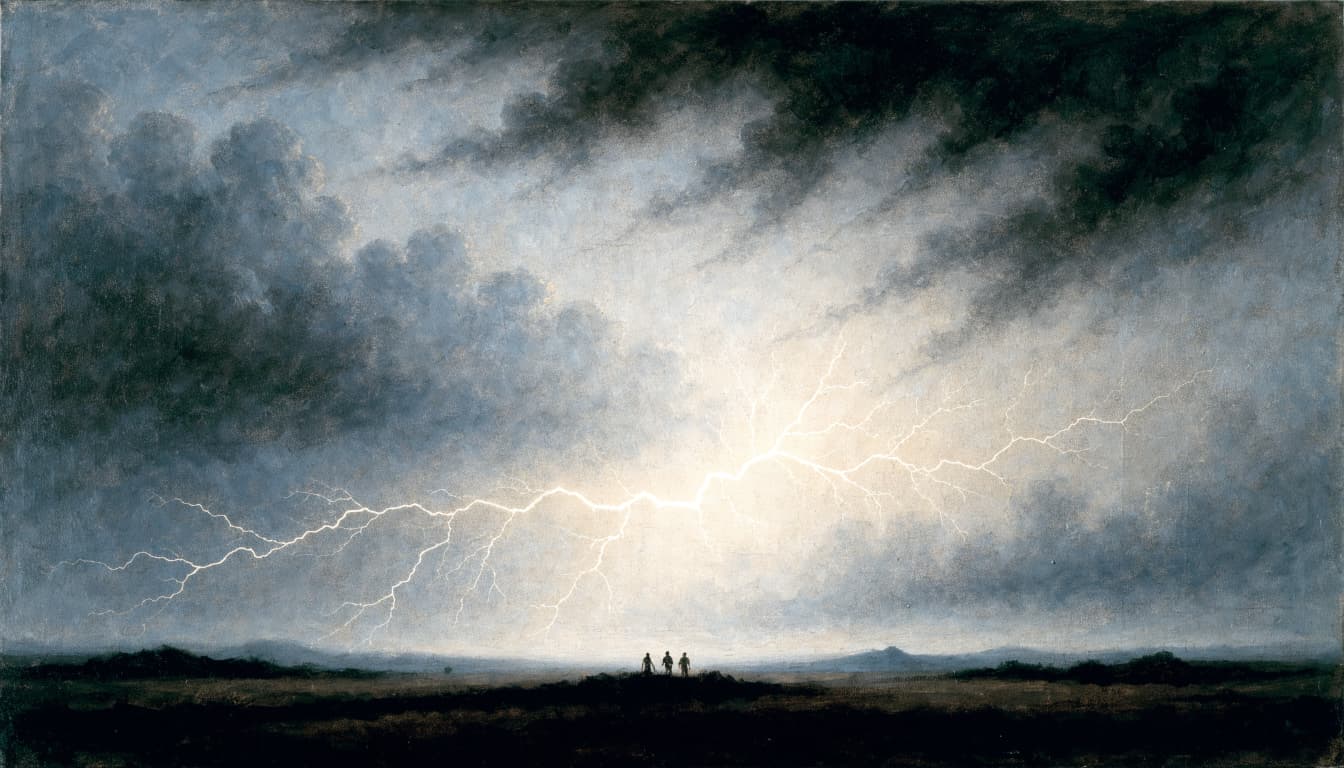
The lightning image gives us a clear picture: His coming will be evident, not confined to one secret location. Jesus also describes people seeing the Son of Man coming with power and glory. We should stay close to those words rather than adding details the verses don't give.
The setting helps explain the warning
In Matthew 24, the disciples ask Jesus about the destruction of the temple, the sign of His coming, and the end of the age. Jesus begins by warning them not to be deceived. He says people will claim that the Christ is here or there, and He tells them not to believe those claims.
Luke 17 gives a similar warning. Jesus tells His disciples that people may say, "Look here!" or "Look there!" They should not chase after such reports. He then compares the coming of the Son of Man to lightning across the sky. The warning comes before the image for a reason: claims of a localized, hidden appearance don't match what Jesus says about His coming.
We can read more about Jesus' warning about false claims of His return, and keep testing end-times claims against His words in Scripture.
The central point is clear even when Christians differ about the timing or order of some events: Jesus described His return as unmistakable. We don't need to settle every prophetic detail before taking His warning seriously. When someone claims Jesus has appeared secretly in a particular place, His own words tell us to be cautious.
Why Jesus Rejects Claims That He Is “Here” or “There”
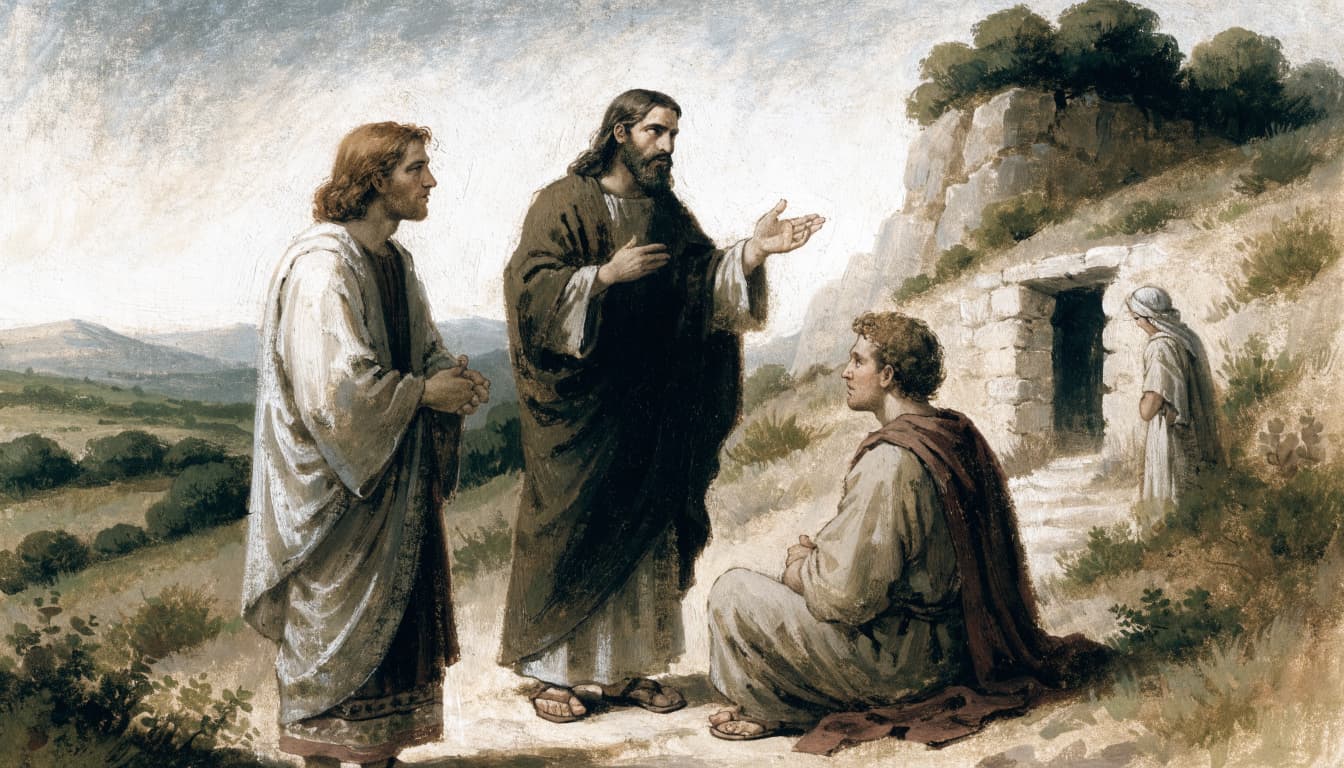
Jesus gives a direct warning about reports that the Messiah has appeared in a particular place. In Matthew 24:23-26, Mark 13:21-23, and Luke 17:22-23, His instruction is plain: don't believe the claim, and don't go chasing after it.
A rumor is not proof that Jesus has returned
Jesus names two kinds of reports in Matthew and Mark. Someone may say the Messiah is in the wilderness, or that He is hidden in an inner room. These are His examples, not a checklist of modern groups or people to accuse. The point is that a private message, a local report, or a confident speaker cannot make a hidden appearance the fulfillment of His promise.
Luke records the warning in words His disciples could recognize: "Look here!" or "Look there!" Jesus tells them not to go after such claims. A person may sincerely believe a report and still be mistaken. And a rumor repeated widely is still a rumor, not proof that Jesus has returned.
That distinction matters when a claim comes with urgency or an appeal to secret knowledge. We can take what someone says seriously enough to examine it, while refusing to treat the claim itself as evidence. Jesus directs His followers back to what He taught, not toward a location named by someone else.
Jesus warns His followers not to be led astray
The warning calls for discernment, not fear. Jesus tells His disciples not to be deceived, and He explains why: His coming will be like lightning that lights the sky. A localized report of a hidden appearance does not fit the picture He gives. We don't need to panic over every unusual event, or assume that a striking experience proves a prophecy has been fulfilled.
We can test a claim against Scripture without mocking the person who shared it. That means asking what the passage actually says, checking the surrounding context, and resisting pressure to accept a report simply because it sounds urgent or spiritual. As Spirit-filled Pentecostals, we believe the Holy Spirit still works among God's people. We also believe spiritual claims should be tested by Scripture.
A careful response leaves room for honesty and grace. Someone may have misunderstood an event, repeated what they heard, or made a sincere but mistaken interpretation. We don't have to label that person falsely to say the claim doesn't match Jesus' warning. For more on discernment about claims that Jesus has appeared, we can keep His words at the center and resist the pull of sensational predictions.
Jesus' instruction is steady: don't believe reports that He has appeared in a hidden place, and don't pursue them. We can remain watchful without letting rumor take the place of Scripture.
The Lightning Comparison Shows His Coming Will Be Unmistakable
Jesus' lightning comparison makes a clear contrast. Reports that He has appeared in one place call for people to seek Him out; lightning flashes across the sky for all to see. We should take that point seriously while staying close to what the passages actually say.
A flash across the sky cannot be confined to one place
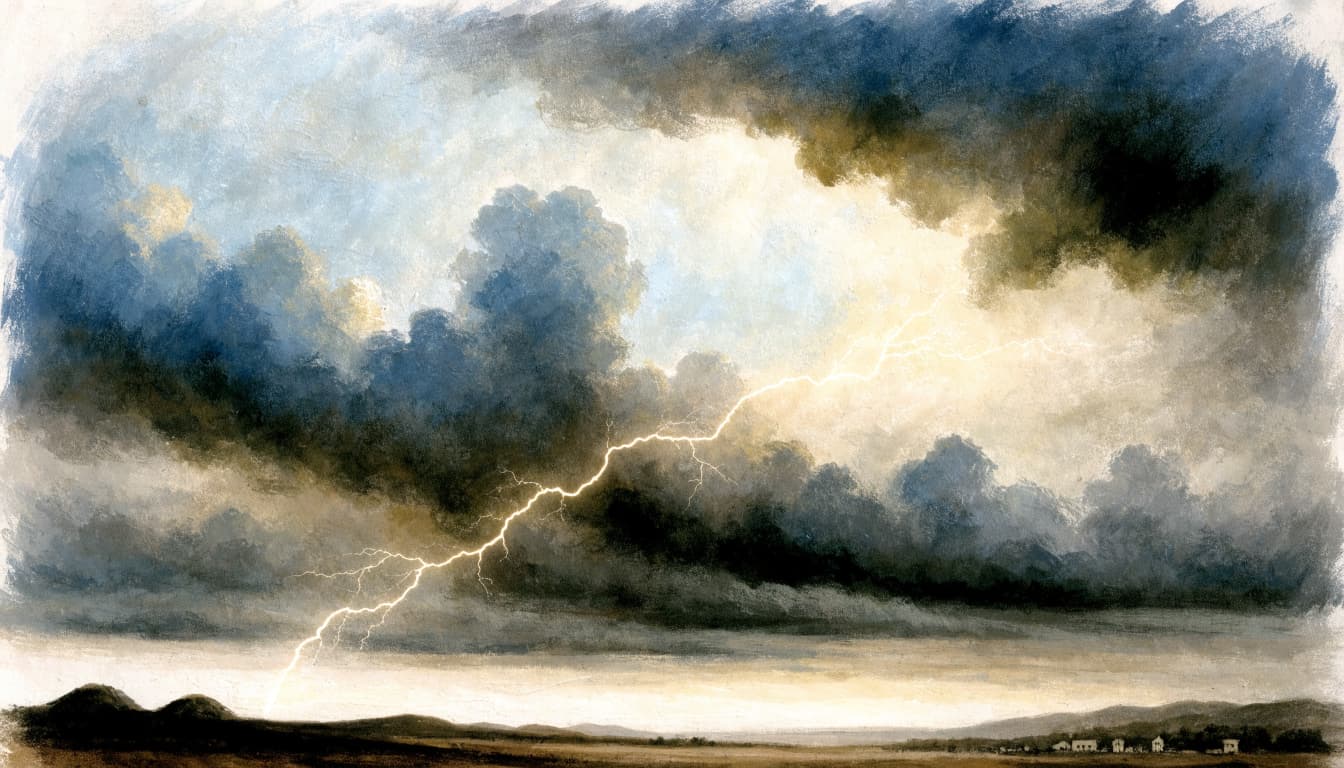
In Matthew 24, Jesus compares His coming to lightning that comes from the east and flashes to the west. Luke describes the same image: lightning flashing across the sky. The picture is easy to grasp. A flash stretches across the sky; it isn't hidden in a room or known only to a few people who pass along a private report.
Jesus uses the image to show the difference between a localized claim and the coming of the Son of Man. If someone says the Messiah has appeared in a particular place, that claim asks you to trust the person making it. Lightning, by contrast, is visible across the sky. Jesus' comparison makes His coming decisive and unmistakable, not a secret appearance that depends on finding the right group or location.
We should be careful not to press the image beyond its purpose. Jesus doesn't use it here to explain every detail of how each person will perceive His coming, or to settle every question about the sequence of end-times events. He gives a direct contrast: His coming won't match the hidden, localized reports He warns against.
Public visibility stands against secret-location claims
The warning immediately surrounding the comparison matters. In Matthew, Jesus says people may claim that the Christ is in the wilderness or in an inner room, and He tells His followers not to believe them. Luke records the warning as people saying, "Look here!" or "Look there!" Then Jesus gives the lightning image. The point isn't that every claim about Jesus' return will sound identical. It's that a report tied to one place does not fit the broad, visible comparison He chose.
That matters when someone says Jesus has appeared only to a chosen few in a specific location. A private testimony may be sincere, but sincerity alone doesn't make it the fulfillment of Jesus' promise. We can respond with care toward the person while still testing the claim against Scripture. The question is whether the claim agrees with what Jesus actually said, not how confidently someone repeats it.
As Spirit-filled Pentecostals, we believe God still works by His Spirit. That belief doesn't require us to accept every spiritual claim without discernment. Jesus Himself gives us a reason to resist secret-location reports and keep our hope fixed on His promised coming. We can also explore Jesus' return as the righteous King alongside these words, without adding a timeline the lightning image doesn't provide.
Matthew Describes the Son of Man Coming in Glory
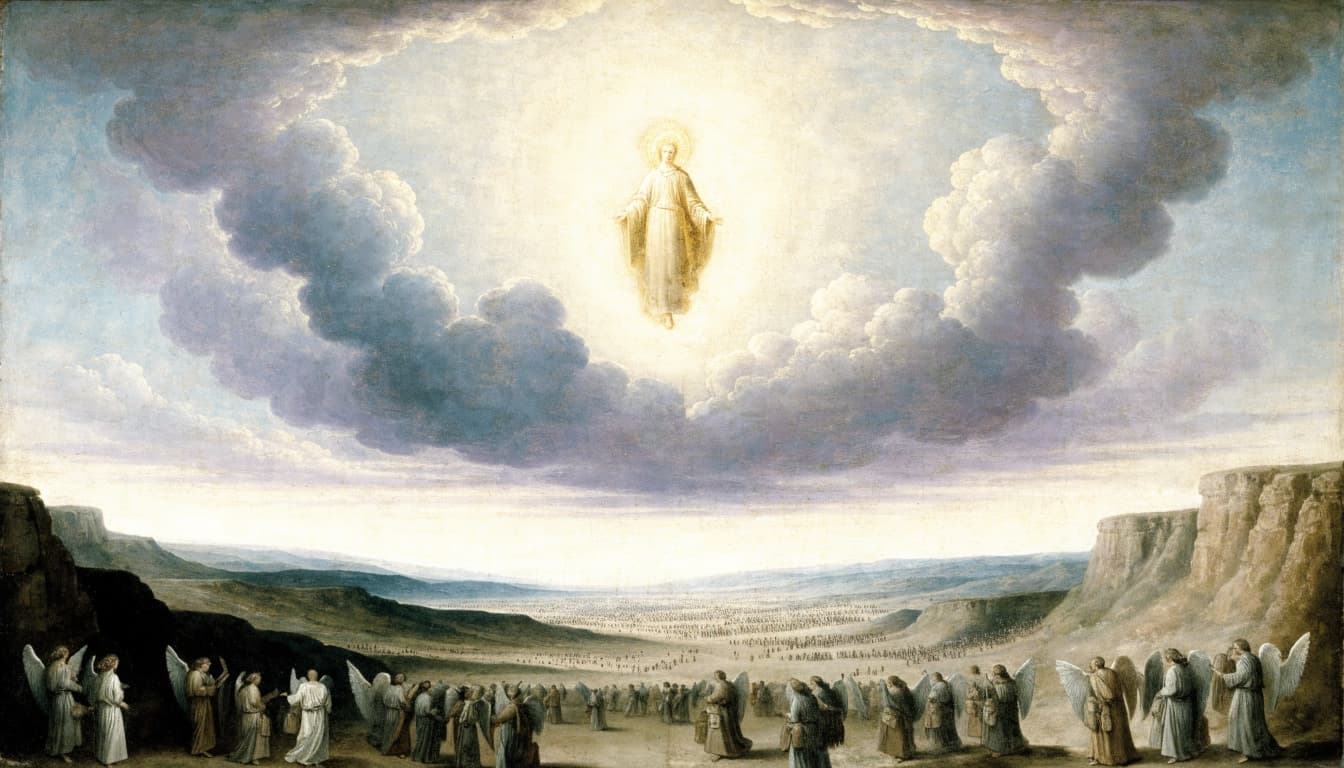
Matthew 24:29-31 moves through a clear sequence: signs in the heavens, the Son of Man appearing, the tribes of the earth mourning, and the angels gathering the elect. We can follow that order without treating every detail of prophetic chronology as settled. Jesus' words present a public event, not a hidden arrival known only through a private report.
The clouds and glory mark a public appearing
Jesus begins with signs in the heavens. He says the sun will be darkened, the moon will not give its light, the stars will fall, and the powers of the heavens will be shaken. We should stay with what Matthew records rather than adding details the passage does not give.
Then Jesus says, "the sign of the Son of Man will appear in heaven," and that the tribes of the earth will see Him coming on the clouds of heaven with power and great glory. The language is open and public: the Son of Man appears, and the tribes see Him. That stands in sharp contrast to claims that He has arrived secretly in a particular room or location.
The tribes mourn when they see Him. Matthew states their response, but this passage alone does not explain every reason for their mourning. We should distinguish what the text says from interpretations about the precise timing or meaning of each event. The passage's sequence is clear, even where Christians differ on how its details fit within a prophetic timeline. For broader context, we can consider Christian views on the tribulation and final judgment.
Read Matthew 24 in the NKJV, especially verses 29-30. Jesus describes a visible appearing with power and great glory. No one needs to locate Him through a whispered claim.
The angels gather the elect from every direction
Matthew 24:31 says Jesus will send His angels with a great sound of a trumpet, and they will gather His elect from the four winds, from one end of heaven to the other. The verse describes the gathering itself. It does not require us to settle every question about when it happens or how each Christian tradition understands the surrounding events.
Still, the care in this promise matters. Jesus' people are known to Him, and the angels gather them from every direction. The image is one of a complete gathering, not a few people finding their way to Jesus through secret information. We can take comfort in that assurance without claiming more than the verse tells us.
As Spirit-filled Pentecostals, we believe Jesus will fulfill His promise and gather His people. Matthew gives us reason for hope: the Son of Man appears in glory, and His elect are gathered by His angels. We can hold that promise firmly while remaining careful about interpretations the passage itself does not settle.
The Days of Noah and Lot Explain the Suddenness of His Coming
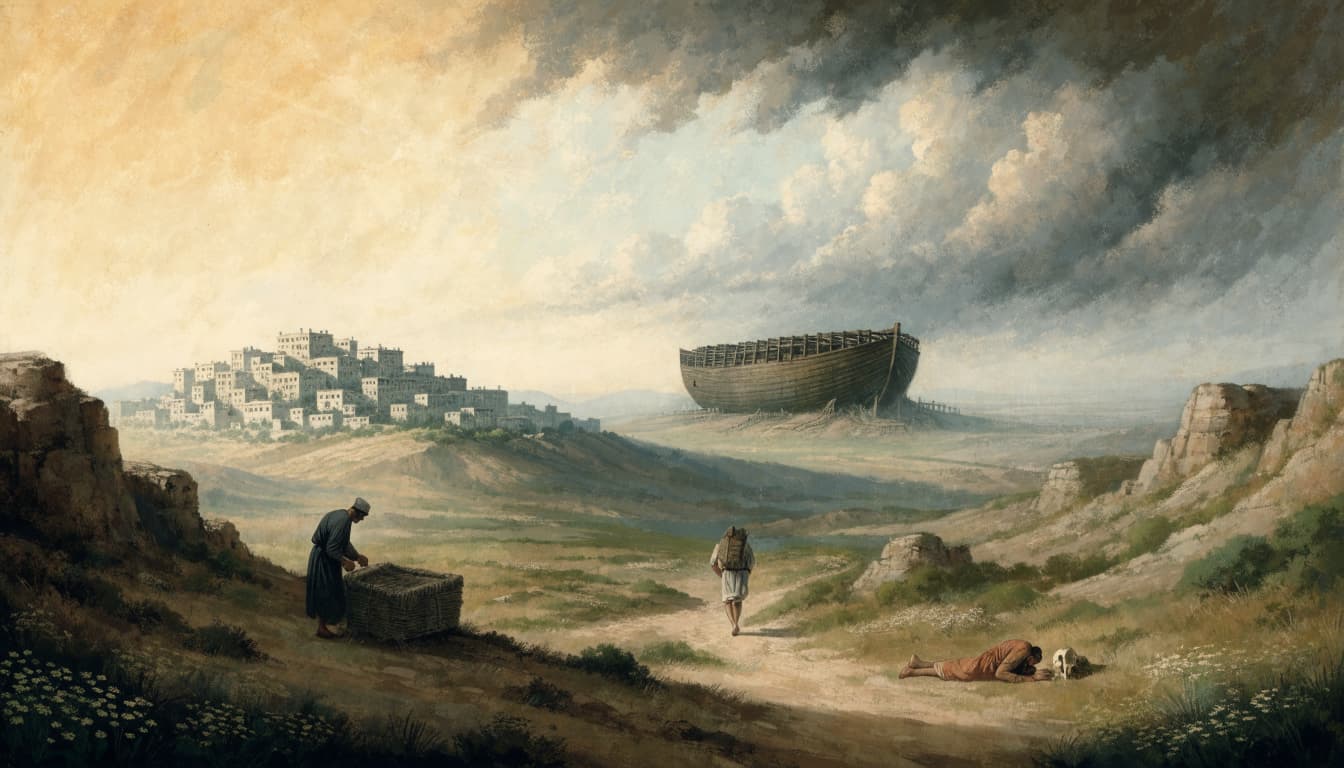
In Luke 17, Jesus compares the day the Son of Man is revealed to the days of Noah and Lot. The people around them carried on with ordinary life, right up until judgment came. That comparison is about how suddenly the day arrives and how unprepared people can be. It doesn't suggest that Jesus returns in secret, waiting for someone to find Him.
Ordinary routines continue until the decisive day
Jesus names familiar activities: people ate, drank, married, bought, sold, planted, and built. These details matter because they sound like life as usual. People were planning, working, and making homes, with no sense that judgment was about to come. In Noah's day, the flood came; in Lot's day, fire and brimstone fell after Lot left Sodom. Jesus says the Son of Man will be revealed in a similar way. We can read His full comparison in Luke 17:26-30 in the NKJV.
Eating, drinking, marrying, and building aren't sinful in themselves. Jesus isn't telling us to abandon daily responsibilities or treat ordinary life as a spiritual failure. The warning is that routine can absorb our attention until we stop taking God seriously. People can be busy with reasonable things and still be unready for the day that changes everything.
That distinction keeps the passage grounded. Jesus isn't condemning meals, weddings, work, or construction. He is showing how people may continue with their plans while missing the seriousness of the moment. We can live faithfully in the middle of ordinary life, but we shouldn't assume that familiar routines mean nothing decisive is near.
Sudden judgment is different from a hidden return
The suddenness in Noah's and Lot's histories describes the people caught unprepared when judgment arrived. It doesn't describe a private return that only a few people discover through a report. Jesus says the Son of Man will be revealed. In the verses just before this comparison, He warns His disciples against claims that He is in one place or another, then compares His day to lightning that flashes across the sky.
So when someone says Jesus has appeared in a hidden location, the Noah and Lot comparison doesn't support that claim. The emphasis is readiness, not searching for a secret place or following a rumor. Jesus' warning against localized claims fits the contrast He draws: people may be caught unaware, but His coming isn't presented as a hidden event that depends on a select group passing along the right information.
We can hold both points together without confusion. The day will arrive suddenly for those who aren't ready, and Jesus has already warned us not to chase after reports that He is "here" or "there." As we consider Jesus' call to watch without setting dates, we can stay alert and faithful without trying to predict the day or mistaking surprise for secrecy.
How to Stay Watchful Without Chasing Dates
Watchfulness can get tangled with prediction. Jesus calls us to stay ready, but He never tells us to calculate the day of His return. We can hold fast to His words, test claims by Scripture, and live faithfully while we wait.
Test claims by Scripture instead of excitement
When someone claims Jesus has appeared privately, we don't have to react in fear or spread the report. We can pause and ask a simple question: Does this claim agree with what Jesus actually said? In Matthew 24, He warns against reports that the Christ is here or there. His words give us a steady place to begin.
Excitement, confidence, or a dramatic testimony doesn't prove a claim is true. We can check the passage in context, seek sound Biblical teaching, and avoid passing along unverified reports. As Spirit-filled Pentecostals, we believe the Holy Spirit still works among God's people. We also believe spiritual claims must be tested by Scripture. The Spirit's gifts never give us permission to ignore Jesus' teaching.
We can respond with grace, too. Someone may be sincere and still be mistaken. We don't need to shame the person to reject a claim that conflicts with Scripture.
Readiness means faithful living, not date-setting
Jesus says that no one knows the day and hour of His return (Matthew 24:36). After His resurrection, the disciples asked about the timing of the Kingdom. Jesus told them the times and seasons were not theirs to know, then directed them toward their witness (Acts 1:7). The boundary is clear: we're called to be ready, not to announce a date.
So what does readiness look like? We pray, pursue holiness, love our neighbors, and serve faithfully in the work God has given us. The Holy Spirit helps us bear witness to Jesus and live in a way that honors Him. We don't need a timeline to know what faithfulness asks of us today.
The promise of His return brings hope to believers
Paul's words in 1 Thessalonians 4:13–18 comfort believers who grieve. He points them to the Lord's return, the resurrection of the dead in Christ, and the gathering of His people to be with Him. Paul ends by telling the church to comfort one another with this hope.
We should let that passage give the comfort Paul intended. It assures us that those who belong to Jesus are not forgotten, and that believers will be with the Lord. It doesn't spell out every detail of a prophetic timetable, so we shouldn't force it to answer questions it doesn't address.
The promise is enough to keep us watchful without chasing dates. Jesus will come, His people will be gathered to Him, and until then we can serve with hope.
Conclusion
Jesus warns us not to believe claims that He is secretly present in one place. He compares His coming to lightning across the sky and says the Son of Man will appear in glory. His words leave no need for someone to point you toward a hidden arrival.
We can stay watchful without chasing rumors or setting dates. As we hold fast to Scripture, we can look with hope toward Jesus, the Son of Man and coming King.
Why the Son of Man’s Coming Cannot Be Hidden
Jesus warned His disciples not to believe claims that the Messiah had appeared in a secret place: “If they say to you, ‘Look, he is in the wilderness,’ do not go out” (Matthew 24:26). Instead, He compared the coming of the Son of Man to lightning shining across the sky (Matthew 24:27). His point is clear: no one will need a whispered report to discover that He has come.
Jesus went on to say that “all the tribes of the earth” will see the Son of Man coming on the clouds of heaven with power and great glory (Matthew 24:30). Revelation 1:7 echoes that promise: “Every eye will see him.” These descriptions leave no room for an appearance known only to a select few.
Other passages add sound to the sight. At the Lord’s descent, there is a cry of command, the voice of an archangel, and the trumpet of God (1 Thessalonians 4:16). Paul also describes His appearing as a revelation from heaven with His mighty angels (2 Thessalonians 1:7). Scripture presents Christ’s return as a public act of divine power, not a hidden arrival.
At His ascension, the angels told the disciples that Jesus would come in the same way they had seen Him go into heaven (Acts 1:9–11). Together, these passages call us to reject rumors of a concealed Christ and remain ready for the unmistakable coming of the Son of Man.


Unexpected Timing, Not an Invisible Return
When Jesus says He will come “like a thief,” the comparison concerns surprise, not secrecy. A thief does not announce the hour of his arrival; likewise, Christ calls His followers to remain watchful rather than assume they can calculate the moment of His return. In Revelation 16:15, the warning to stay awake makes the point clear: readiness matters because the hour is unknown.
A Sudden Day the World Will See
Paul uses the same image when he says the day of the Lord will come like a thief in the night (1 Thessalonians 5:2). Yet he also describes that day with the Lord’s descent, a commanding cry, the voice of an archangel, and the trumpet of God (1 Thessalonians 4:16). Suddenness and public revelation belong together. The biblical call is not to search for a hidden arrival, but to live ready for the unmistakable coming of the Son of Man.


“For as the lightning comes from the east and shines as far as the west, so will be the coming of the Son of Man.” — Matthew 24:27 (ESV)
Jesus compares His coming to lightning across the sky, not an event confined to a secret location. His words give believers a clear reason to reject claims that He has returned unseen.
Frequently Asked Questions About the Son of Man’s Coming
Explore what Scripture says about the visibility, timing, and signs of Christ’s return.
Will the Son of Man return in secret?
Jesus says His coming will be like lightning visible across the sky (Matthew 24:27). He also warns against claims that He is hidden in a wilderness or an inner room (Matthew 24:26). His return should not be confused with rumors of a private appearance.
Why does Scripture say Jesus will come like a thief?
The image warns that the exact time will catch the unprepared by surprise (1 Thessalonians 5:2–6). It does not say His arrival will be invisible; the surrounding passages urge watchfulness for a decisive day.
Can anyone know the day or hour of His coming?
No. Jesus says that no one knows the day or hour (Matthew 24:36). Christians can take His warnings seriously without setting dates or claiming knowledge He has not given.
What signs does Jesus associate with His appearing?
In Matthew 24, Jesus speaks of deception, distress, cosmic signs, and the Son of Man appearing with power and great glory (Matthew 24:4–30). These passages call readers to discernment and endurance, not to speculation about a concealed return.

See What Scripture Says About His Coming
Read the passages cited in this article for yourself, then explore more Bible prophecy teachings that keep Jesus at the center of what is to come.