
Matthew 24:4–8: Deception, Birth Pains, and Why the End Has Not Yet Come
When war, disasters, or urgent claims about the end times fill the news, it's easy to wonder if the end has arrived. In Matthew 24:4-8, Jesus warns His disciples to stay alert, but He also says these events are the beginning of birth pains, not proof that the end has come.
We read this passage from an independent, Spirit-filled Pentecostal perspective, seeking to stay faithful to Scripture and open to the Holy Spirit. Let's look at the Olivet Discourse, Jesus' warnings about false messiahs and upheaval, and what His words call us to do: discern carefully, without panic.
What Jesus Was Answering in Matthew 24
Matthew 24 opens with a scene that can be easy to rush past. But Jesus' words about deception, conflict, and birth pains come in response to questions about a specific prediction, the temple's destruction. We need that setting before we connect His teaching to events in our own day.
The temple prediction and the disciples’ questions
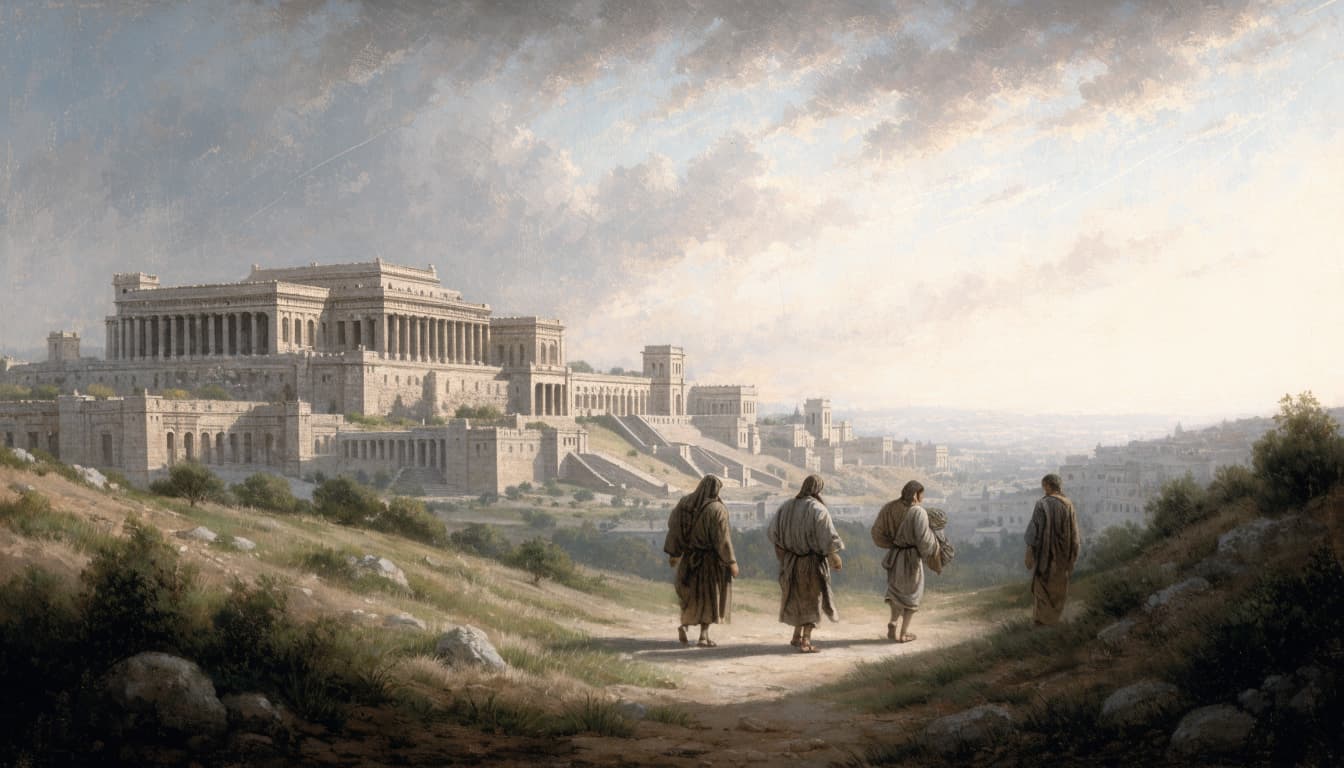
Jesus leaves the temple, and His disciples point out its buildings. He answers that the temple will be thrown down, with not one stone left on another. Later, on the Mount of Olives, they ask Him when these things will happen, and what sign will accompany His coming and the end of the age. Read Matthew 24:1-3 and 4-14 in the NKJV to see how the questions frame the teaching that follows.
The disciples' questions bring several things together: the temple's fate, Jesus' coming, and the end of the age. We shouldn't assume they already understood how those events related to one another. They were asking what Jesus' prediction meant and what they should watch for.
That matters when we read verses 4-8. Jesus names deception, wars, famines, and earthquakes, but He says these events are only the beginning of birth pains. He also warns them not to be alarmed, because the end has not yet come. We shouldn't turn every headline into a neat match for one detail in the passage. The Olivet Discourse and the disciples' questions give us the wider frame.
The temple's destruction belongs to the historical setting, not just to a modern end-times chart. The Romans destroyed Jerusalem and the temple in AD 70. Still, the disciples also asked about Jesus' coming and the end of the age, so we should let the full passage shape our reading rather than assume one question cancels out the others.
A warning within a longer teaching
Matthew 24:4-8 begins Jesus' answer, but it doesn't contain the whole Olivet Discourse. In verses 9-14, He goes on to speak about persecution, people turning away, false prophets, lawlessness, endurance, and the proclamation of the Kingdom. The passage moves beyond the first signs the disciples asked about.
That wider teaching helps us hear the warning in verses 4-8 clearly. Jesus is preparing His followers to face deception and turmoil without panic or misplaced certainty. He doesn't give them permission to declare that each war or disaster proves the end has arrived. Instead, He calls them to discern carefully, endure faithfully, and keep the Kingdom in view.
So when we read the opening signs, we're reading the start of a longer answer, not a complete timeline on its own.
Matthew 24:4-8: Deception and the Beginning of Sorrows
In Matthew 24:4-8 in the NKJV, Jesus moves from a warning about deception to the troubles His followers will hear about, then names what those events mean: the beginning of sorrows. The order matters. He doesn't invite us to turn frightening headlines into a timetable. He tells us to stay watchful, refuse panic, and hold fast to His words.
Why Jesus begins with a warning about deception
Jesus opens with a direct command: "Take heed that no one deceives you." Then He warns that many will come in His name, claiming to be the Christ and leading many astray. Deception isn't a side issue in this passage. It's the first danger He names.
That warning still matters when someone makes a dramatic claim about the end. A message can sound urgent, spiritual, and certain, but that doesn't make it true. As Pentecostals, we believe the Holy Spirit is at work today. We also believe spiritual claims must be tested against Scripture and the words of Jesus. Excitement alone is no proof.
After warning about false messiahs, Jesus names wars and rumors of wars, conflict among nations and kingdoms, famines, and earthquakes. He doesn't tell His followers to ignore these events. He tells them not to be alarmed by them. In Matthew 24:6, He says these things must happen, "but the end is not yet."
So we should take the events seriously without letting fear, or someone else's confident prediction, control how we read them. Jesus' warning against deception belongs alongside His warning about upheaval.
What the birth-pain image tells us, and what it does not
Jesus summarizes the events in verse 8 as "the beginning of sorrows" in the NKJV. Other translations say "birth pains," "birth pangs," or "labor pains." These are different English choices for the same childbirth image, not separate predictions. You can compare the wording in Matthew 24:8 across translations.

Labor begins before a baby is born. The image points to a process underway, but it doesn't tell us how long that process will last or when it will reach its end. Jesus gives no date, fixed interval, or formula for identifying one war or disaster as the final moment.
And He makes the caution plain in verse 6: the end is still to come. That's why we shouldn't claim that a present-day crisis settles the meaning of the prophecy. The events Jesus names are real signs of distress, but His birth-pain image doesn't turn them into a calendar. For a closer look at this phrase, see the beginning of sorrows in Matthew 24.
How to Recognize the Danger of False Messiahs
Jesus begins with a warning: many will come in His name, claim to be the Christ, and deceive many. The danger is real, but His words don't authorize us to accuse every mistaken teacher of being a false messiah. They call us to discern what someone claims and where that claim leads.

Test bold claims against Jesus’ words
When a teacher makes a dramatic claim about being the Messiah, receiving unique authority, or knowing exactly how the end will unfold, we should slow down. Jesus said that many would come in His name and deceive many (Matthew 24:5). A confident voice, a large following, or a claim of divine authority doesn't prove that the message is true.
So what should we test? Start with the Gospel witness. Does the claim agree with who Jesus is and what He taught, or does it ask you to set aside His words? Then look at the wider teaching of Scripture. A claimed revelation cannot outrank Scripture or give a teacher permission to control people through fear.
We also pay attention to the fruit. Does the teaching draw people toward truth, love, humility, and faithful obedience to God? Or does it make the speaker the center, demand unquestioning loyalty, and stir panic? Fruit isn't a shortcut that replaces careful Biblical judgment, but it can show us what a teaching is producing.
For a closer look at how to recognize false messiahs and prophets, we can compare Jesus' warning with the wider Biblical tests for spiritual claims.
Stay discerning without becoming suspicious of everyone
Testing a claim isn't the same as distrusting every pastor, prophecy, or spiritual impression. As Spirit-filled Pentecostals, we believe the Holy Spirit guides and empowers the church. We also believe His work won't contradict Scripture or draw attention away from Jesus.
John tells believers to test the spirits because false prophets have gone out into the world (1 John 4:1). That instruction calls for discernment, not fear. We can listen, pray, and ask for the Spirit's wisdom while also weighing what we hear against Scripture. A prophecy should not become unquestionable simply because someone says, "God told me."
That balance matters when end-times claims come wrapped in urgency or spectacle. We don't need to name a present-day person as a false messiah just because we disagree with a teaching. We can examine the claim, compare it with Jesus' words, and refuse to let fear replace sound judgment.
Wars, Famine, and Earthquakes Call for Steady Discernment
After warning His disciples about deception, Jesus names the upheaval they will hear about: wars, conflict between nations and kingdoms, famine, and earthquakes. These events are serious, but His instruction is clear. They are not permission to panic or announce that the end has arrived.
Do not mistake reports of war for a countdown
Jesus says His disciples will hear of wars and reports of wars. He also tells them not to be alarmed, because these things must happen, "but the end is not yet." Read Matthew 24:6-7 in the NKJV and notice how the warning about conflict sits beside the warning against fear.
Jesus gives no named wars, locations, dates, or numerical countdown. He says nation will rise against nation and kingdom against kingdom, but He doesn't identify particular conflicts or offer a formula for matching headlines to a prophetic schedule. We can take His words seriously without claiming that a modern war proves the end has come.
That distinction matters when reports of violence arrive with urgent predictions attached. We should test those claims against Scripture, not let fear do the interpreting for us. For a closer look at why Jesus says not to be alarmed by reports of wars, we can keep His warning in view: conflict will happen, but the end is still to come.
Understand famine and earthquakes without sensational claims
Jesus also names famine and earthquakes in various places. In the NKJV, the list includes pestilences; some other translations omit that word in this verse. We should be clear about which translation we're quoting rather than blend different versions into one list.

The passage gives no measure or threshold for these events. Jesus doesn't say how many earthquakes must occur, how severe a famine must become, or how many places must be affected before we can declare that the end has arrived. He names real forms of suffering, then calls them the beginning of birth pains.
So when people face hunger, displacement, or disaster, our first response should be compassion, prayer, and practical help. Their pain isn't a puzzle for us to solve or a headline to use as proof of a timetable. We can remain watchful and discerning while caring for those who suffer. That is a more faithful response to Jesus' words than speculation.
Why the Beginning of Birth Pains Is Not Proof the End Has Come
Jesus names deception, wars, conflict between nations, famines, and earthquakes. Then He gives His disciples an important limit: these things must happen, but the end is not yet. The phrase "beginning of sorrows" in the NKJV points to an onset, not a date or a countdown. We can take His warning seriously without claiming the passage tells us exactly when the end will come.
Separate what Jesus says from what people infer
In Matthew 24:4-8 in the NKJV, Jesus warns His disciples about deception and describes upheaval they will hear about. He says not to be alarmed by wars and reports of wars, because the end is still to come. He calls the events He has listed "the beginning of sorrows."
Those are the explicit statements. The passage does not give a date, name a modern conflict, or provide a formula for calculating how close the end is. It also doesn't say that every event must unfold in one strict, easily charted sequence. When someone connects today's headlines to a precise prophetic schedule, that connection is an interpretation, not a statement Jesus makes in these verses.
The word beginning matters. Birth pains signal that a process has started, but the start does not tell us when it will be complete. Jesus gives no interval between these events and the end. So we shouldn't turn a broad pattern of distress into a calendar, or treat a crisis as proof that the final moment has arrived. We can read more about the beginning of sorrows in Matthew 24 while keeping Jesus' own caution in view.
Hold conviction and humility together
Christians interpret the timing and scope of these events in different ways. Some understand them as a broad pattern across the period before Christ's return; others see them as part of a more specific future sequence. We don't need to pretend those differences don't exist. But neither view should erase what Jesus says plainly: His followers must not be deceived or alarmed, and these events alone do not prove the end has come.
As Spirit-filled Pentecostals, we believe the Holy Spirit still guides the church. We also believe spiritual conviction must stay accountable to Scripture. A confident prediction, even one delivered with urgency, doesn't become certain just because someone claims God revealed it. We test what we hear, pray for wisdom, and hold our conclusions with humility.
Jesus' warning isn't a call to shrug at suffering or ignore the signs He names. It calls us to stay awake without giving fear the final word. We can pray for those affected by war and disaster, help where we can, and remain faithful to Christ. That response takes His words seriously while refusing to claim more than He has revealed.
How to Respond With Faith, Wisdom, and Hope
Jesus' warning in Matthew 24 calls for steady faith, not fear-driven speculation. We can take His words seriously by reading them in context, testing claims carefully, and caring for people who are suffering.
Let Scripture shape discernment
If Matthew 24:4-8 is new to you, start by reading the passage in the NKJV, then continue into the verses that follow. Jesus is answering His disciples' questions about the temple, His coming, and the end of the age. The opening signs belong to a longer teaching, not a stand-alone code for interpreting every headline.
When you hear a confident claim about prophecy, pause before sharing it. Ask whether it agrees with Jesus' teaching and the wider witness of Scripture. Does it encourage watchfulness and faithfulness, or does it pressure people to accept a prediction as certain? We believe the Holy Spirit still guides and strengthens the church, but spiritual gifts don't give us a way to calculate the date of Christ's return.
Paul's instruction is simple: test all things and hold fast to what is good. We can pray for discernment, listen carefully, and remain open to correction. A dramatic claim doesn't become Biblical just because someone says, "God told me."
Choose compassion and faithful witness over fear
Jesus tells His followers not to be alarmed by wars and reports of wars. That doesn't mean we dismiss suffering. It means fear doesn't get to direct our response. When conflict or disaster harms people, we can pray for them, support trustworthy relief efforts, and offer practical help where we can.

Care is one way we bear faithful witness. We don't need to turn another person's pain into proof that our interpretation of the end times is right. We can respond with prayer, generosity, and presence, while continuing to share the hope of God's Kingdom.
That hope also shapes ordinary days. We keep loving our neighbors, serving our communities, worshiping, and telling others about Jesus. We can stay watchful without living on edge, and hold our convictions without treating every disagreement as a crisis. For a broader look at how Christians can respond to Matthew 24, we can keep returning to Jesus' own instruction: remain faithful, and don't be deceived.
Read the Passage Carefully Across Christian Interpretations
Christians agree that Jesus warns His disciples about deception and upheaval in Matthew 24:4-8. They differ on how those events fit into the period before His return. These readings are interpretive frameworks, not details the verses spell out on their own.

The broad-pattern reading
Some Christians understand wars, famines, earthquakes, and false messiahs as recurring features of the age before Christ returns. On this reading, Jesus describes the kinds of trouble His followers will face across history, rather than laying out one short sequence that can be matched to a particular set of headlines.
The birth-pain image fits this approach as a description of distress that marks the age, while leaving the timing of Christ's return unknown. Recurrence doesn't give us a way to calculate a date. Jesus' words still caution us against treating any one crisis as proof that the end has arrived.
The future-tribulation reading
Other Christians understand these events as an early stage of a specific future period of tribulation before Christ's return. In this view, the troubles Jesus names belong to a defined sequence of events that will unfold in the future.
We should describe this as an interpretation, not as a conclusion that verses 4-8 settle by themselves. The passage names events and calls them the beginning of birth pains, but it doesn't define a future period's length or provide a detailed timeline. Christians who hold this view read the verses alongside other passages and their understanding of the wider Olivet Discourse. For more on different interpretations of the tribulation in Matthew 24, we can compare how readers connect the chapter's warnings with the temple's destruction and Christ's return.
These approaches differ, but both must reckon with Jesus' plain warning: don't be deceived, and don't be alarmed as though the end has already come. The events He names matter. Yet, by themselves, they don't prove that the end has arrived. That shared textual point gives us a steady place to stand, even when Christians disagree about the timeline.
Conclusion
False messiahs, wars, famine, and earthquakes call for discernment. Jesus calls these events the beginning of birth pains, and He tells His followers not to be alarmed. They matter, but they do not prove that the end has come. We can keep Jesus' signs in Matthew 24 in view without turning them into a checklist for headlines.
As independent, Spirit-filled Pentecostals, we believe our response should stay grounded in Scripture, dependent on the Holy Spirit, and compassionate toward those who suffer. We can remain watchful without giving fear the final word, and keep our hope fixed on God's Kingdom.

Take Heed That No One Deceives You
Jesus begins His answer in Matthew 24:4–5 with a warning: “Take heed that no one deceives you.” Many would come in His name and claim to be the Christ, leading others astray. Before trying to interpret world events, His followers must learn to test bold claims against His words and remain faithful to the true Messiah.
The Beginning of Birth Pains
Jesus goes on to name wars and rumors of wars, famines, and earthquakes. These events are serious, but He says, “See that you are not troubled,” because “the end is not yet” (Matthew 24:6). He calls them “the beginning of birth pains”—distress that points forward without proving that the final moment has arrived. His warning calls for discernment and endurance, not panic or confident date-setting.

Matthew 24:4–8: The Beginning, Not the End
Bible Prophecy Ministries has built its teaching around a consistent mission: to examine what Scripture says has happened, what is yet to come, and how prophecy points to Jesus Christ. In Matthew 24, the disciples ask Jesus about His coming and the end of the age. His answer begins with a warning against deception: many will come in His name, claiming to be the Messiah. He then speaks of wars, rumors of wars, famines, and earthquakes.
These events are serious, but Jesus makes a vital distinction: “the end is not yet” (Matthew 24:6). He calls them “the beginning of sorrows” (Matthew 24:8), often described as birth pains. Read in the context of His answer, they are a call to discernment and steadfastness, not permission to treat every crisis as proof that the end has arrived. Our mission is to help readers follow that distinction carefully, keeping Jesus’ words—not alarming headlines—at the center of their understanding of prophecy.

“See that ye be not troubled: for all these things must come to pass, but the end is not yet.” — Matthew 24:6 (KJV)
Jesus calls His followers to remain steady amid unsettling events, trusting His words rather than surrendering to fear.
Questions About Matthew 24:4–8
Explore what Jesus says about deception, birth pains, and events that precede the end without being the end itself.
What are the “birth pains” in Matthew 24:8?
Jesus calls the troubles He has just described—the rise of false messiahs, wars, famines, and earthquakes—the “beginning of sorrows.” The image of birth pains marks them as a beginning, not the arrival of the end.
Why does Jesus warn about deception first?
Before naming wars or disasters, Jesus says, “Take heed that no man deceive you.” His first concern is that His followers recognize false claims made in His name rather than be led astray by them.
What does it mean when someone claims, “I am Christ”?
Jesus warns that people will come in His name and claim to be the Messiah, deceiving many. A confident claim or a moment of crisis does not establish that someone is Christ; His warning calls for careful discernment.
Do wars and rumors of wars mean the end has arrived?
No. Jesus explicitly says that such things must happen, “but the end is not yet” (Matthew 24:6). Reports of conflict should not be turned into a declaration that the end has already come.
How should believers respond to frightening news?
Jesus says, “See that ye be not troubled.” That does not ask His followers to ignore suffering; it directs them to face unsettling events without panic, grounded in what He has actually said.
Are famines and earthquakes signs in this passage?
Yes. Jesus includes famines and earthquakes in various places among the events He describes. He then calls these things the beginning of sorrows, so the passage does not present any one disaster as proof that the end is here.
Why does Jesus say, “the end is not yet”?
He distinguishes events that precede the end from the end itself. Even as His followers hear of wars and see widespread upheaval, they are not to confuse those events with the conclusion of His prophecy.
Does Matthew 24:4–8 give a date for the end?
No. These verses give warnings about deception and describe troubling events, but they do not provide a date. Jesus’ emphasis here is on recognizing what these events are—and what they are not.
How does this passage keep prophecy centered on Jesus?
Jesus is the one explaining the events and telling His followers how to respond. Reading Matthew 24:4–8 through His warnings keeps attention on His authority instead of on false messiahs, fear, or speculative timelines.