

Matthew 24:32–51: Watchfulness, Not Date-Setting
Jesus says we can recognize when His promised events are near, yet no one knows the day or hour. That tension in Matthew 24:32–51 turns our attention away from setting a date and toward living faithfully while we wait.
The fig tree points to signs of nearness, the days of Noah warn us not to grow careless, and the two servants show what readiness looks like in daily life. As we walk through Jesus' words, we'll see why watchfulness means steady service, not confident predictions. For more on Matthew 24 and the signs of Christ's return, let's begin with the passage's call to stay ready.
Matthew 24:32–51 Teaches Watchfulness, Not a Date
Jesus' teaching in Matthew 24:32–51 in the NKJV moves through three connected ideas: signs of nearness, the unknown timing, and faithful service. The fig tree helps us recognize a season, but it doesn't give us a calendar. Jesus' point is clear: we can pay attention to what He said without pretending we know the day He will return.
This passage belongs to Jesus' wider teaching about the temple, His coming, and the end of the age. The disciples had asked Him about these things, and He answered with warnings and instructions. As we consider the signs Jesus describes in Matthew 24, we should keep the distinction in view: recognizing that something is near is not the same as knowing its exact date.
How the fig tree helps explain signs of nearness
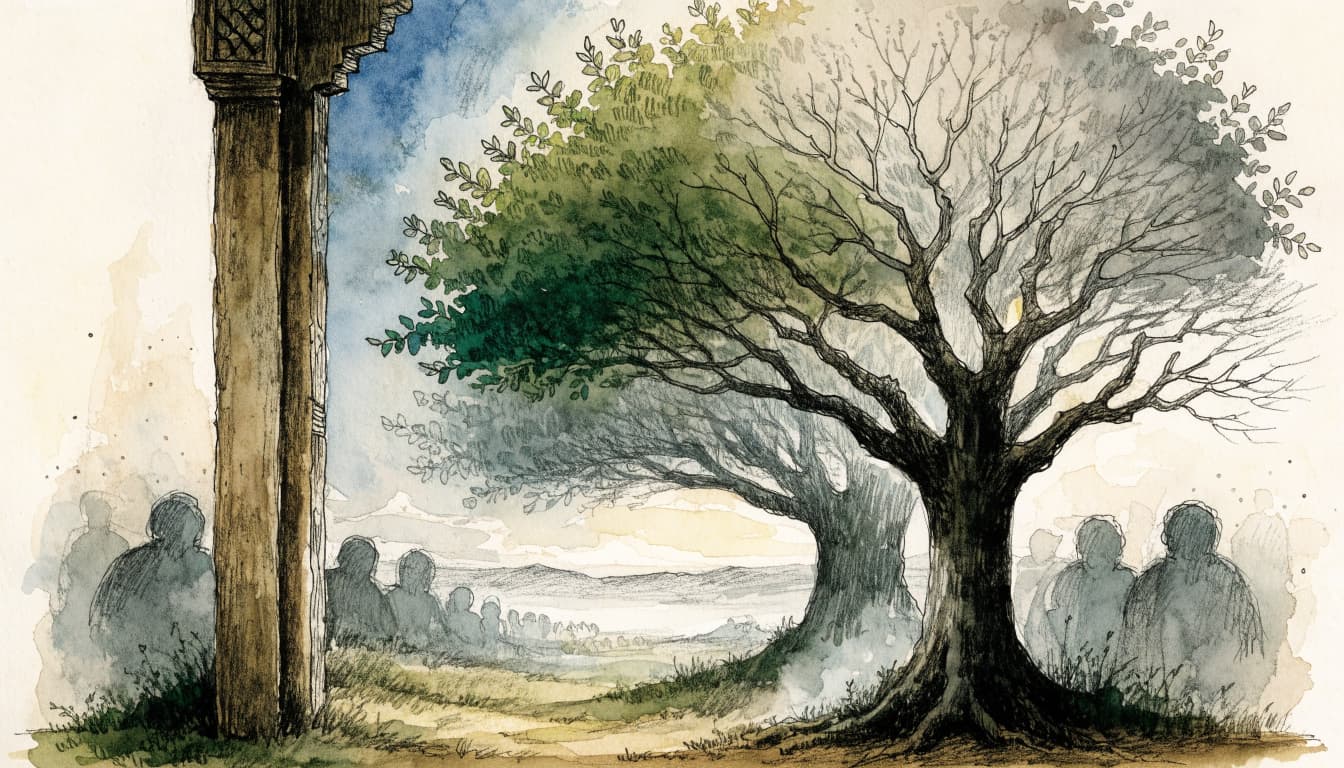
Jesus points to an ordinary sight: a fig tree's branch becomes tender, new leaves appear, and summer is near. The leaves don't tell us the day summer will begin. They help us recognize the season. Jesus says the events He has described should be understood in a similar way. When His listeners see "all these things," they can know that what He speaks of is near, "at the doors" (Matthew 24:32–33, NKJV).

That comparison gives us a way to read the signs, not permission to build a countdown. Christians may disagree about how particular events fit together, including what Jesus means by "this generation." But the fig tree itself makes a simple point: signs can tell us that summer is near without telling us the date. We can stay alert and take Jesus' words seriously without turning every headline into a prediction.
Why Jesus’ words remain more certain than any timetable
Then Jesus anchors the teaching in a promise: "Heaven and earth will pass away, but My words will by no means pass away" (Matthew 24:35, NKJV). The timing may be unknown to us, but Jesus' words are certain. We don't have to force a date from the signs to trust what He has said.
That trust should shape how we live. Jesus moves from the fig tree to the warning that no one knows the day or hour, then to the servants whose actions reveal whether they are ready. So watchfulness isn't frantic speculation or a fresh prediction every time the news changes. It means obeying Jesus, serving faithfully, and staying ready while we wait. The promise of His coming calls us to faithfulness, not date-setting.
What Does “This Generation” Mean in Matthew 24?
Jesus says, "this generation will by no means pass away till all these things take place" (Matthew 24:34, NKJV). The phrase sounds straightforward, but Christians differ over which generation He means and what events "all these things" includes. To read the verse carefully, we need to keep it within Jesus' full answer to the disciples' questions in Matthew 24.
The main ways Christians understand the phrase
One common view is that "this generation" means the people alive when Jesus spoke. This reading connects the phrase to His contemporaries, though interpreters differ on how the events in the preceding verses fit within their lifetime, especially if those events include His final coming.
Another view understands the phrase as the generation that sees the end-time signs. In this reading, Jesus is saying that the generation that sees those events begin will also see them reach their completion. The question is which signs He has in mind, and how closely the phrase connects with the signs described just before it.
Some Christians read "generation" as referring to the Jewish people or race, which they understand to endure until the events Jesus described take place. Others propose a recurring or morally defined group, such as people marked by unbelief or opposition to God. These are interpretations, not settled conclusions.
The phrase "all these things" matters just as much as "this generation." Does it refer to every event in the discourse, or to a particular set of signs? Christians answer differently, partly because they understand the scope of Jesus' words differently. The fig tree comparison tells His listeners to recognize nearness when the signs appear. It doesn't, by itself, resolve which interpretation of "generation" is right.
We should read the phrase in its place within the whole discourse, rather than isolating it from what comes before and after. Jesus speaks about signs, then draws a clear line between recognizing nearness and knowing the exact time. For a broader look at interpretations of Matthew 24 and this generation, we can consider the different views without claiming the debate is settled.
What the debate cannot establish about a return date
Whatever "this generation" means, no interpretation cancels Jesus' direct statement that no one knows the day and hour. In the same discourse, He compares His coming to the days of Noah and tells His disciples to stay ready (Matthew 24:36–44, NKJV). The timing remains unknown, even as Jesus tells His followers to pay attention to what He has said.
That distinction keeps us from turning the fig tree into a countdown. A current event may lead people to revisit the passage, but it cannot prove that a specific date is near. Jesus gives His disciples reason to watch, not permission to make confident predictions. We can take His words seriously, hold our interpretations with care, and keep doing the work He has given us.
Why No One Can Know the Day or Hour
Jesus draws a clear boundary between recognizing that His coming is near and claiming to know exactly when it will happen. In the NKJV, Matthew 24:36 says, "But of that day and hour no one knows, not even the angels of heaven, but My Father only." Translations differ in how they render this verse, so we'll stay with the NKJV wording here.

The difference between watching and date-setting
Watchfulness is alert faith. We pray, obey Jesus, serve others, and stay ready for His return. That kind of readiness shapes ordinary choices, not just our response to alarming headlines or a new prediction circulating online.
Jesus' words about the days of Noah make the point. People went about eating, drinking, and marrying until the flood came. Those ordinary activities weren't the problem. People were unprepared when judgment arrived. Jesus tells His disciples to stay ready because they don't know when their Lord will come.
So, what should prophetic interest do in us? It should lead to holy living and hope, not fear or certainty about a timetable. The signs Jesus described matter, but they don't cancel His stated limit on human knowledge. We can discuss prophecy, pray for discernment, and take Scripture seriously without treating every world event as a clue to a date.
As Spirit-filled believers, we welcome the Holy Spirit's work and take spiritual discernment seriously. But a spiritual impression is not secret knowledge that overrides what Jesus said. We test claims by Scripture, hold fast to what is good, and refuse to present a prediction as certain when the Bible says the day and hour are unknown. For a practical framework, see three anchors for studying Biblical prophecy.
How to respond when someone predicts a date
A date prediction can stir fear, excitement, or pressure to share it before anyone else does. We don't need to answer with ridicule or panic. We can calmly return to Jesus' words and ask whether the claim respects the limit He gave.
If a prediction is unsupported, we shouldn't spread it as fact. Sharing it can unsettle people and shift attention from faithful living to a timetable no one can verify. We can say plainly that Jesus calls His followers to watch, while also saying no one knows the day or hour. That response takes His warning seriously without turning disagreement into a fight.
Then we keep doing the work God has given us. We pray, care for people, worship, and serve faithfully. We don't have to solve the timing before we can obey Jesus today. That's the heart of Jesus' warning against setting a date for His return: stay alert, stay grounded in Scripture, and keep living in hope.
The days of Noah show why readiness matters
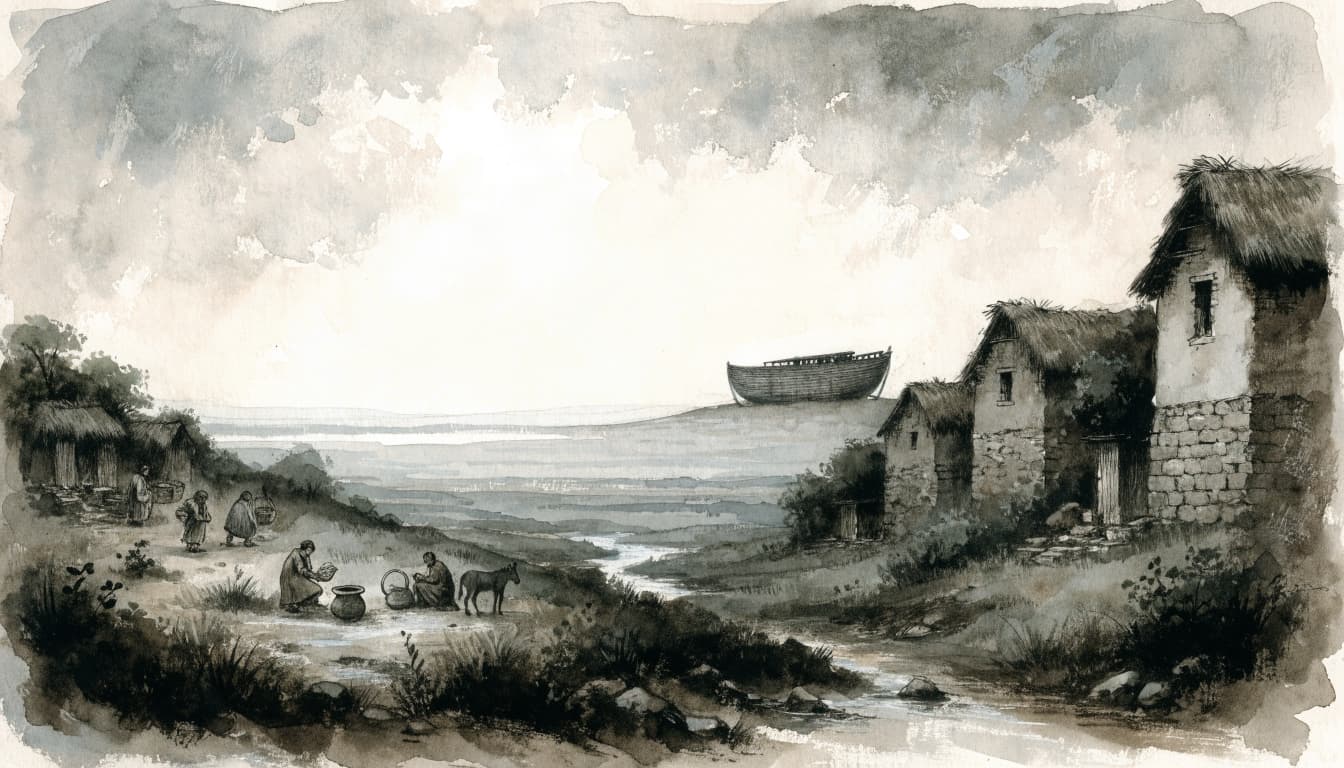
Jesus compares His coming to the days of Noah, when ordinary life continued until the flood arrived. The warning in Matthew 24 in the NKJV is about being unprepared, not about condemning work, meals, marriage, or celebration. People can keep up with daily routines and still ignore God and the reality of judgment.
Ordinary routines can hide spiritual carelessness
Jesus says people were eating and drinking, marrying and giving in marriage, until Noah entered the ark. Those are ordinary parts of life. The problem was that people carried on without heeding the warning or recognizing that judgment was coming. Their routines continued, but their hearts were inattentive to God.
That distinction matters. We shouldn't treat a family meal, a wedding, or a day's work as sinful just because Jesus mentions it here. The danger is living as though the present moment is all that matters, with no thought for God, His warning, or the account we will give to Him. Noah's generation did not expect the flood until it came. Then the change was sudden, and there was no time to make themselves ready.
The comparison asks us to look honestly at our own habits. We can be busy, responsible, and involved in good things while still pushing God to the edges of our lives. Daily responsibilities matter, but they can't become an excuse to ignore what Jesus has said. Watchfulness begins with taking His words seriously in the middle of ordinary life.
Being ready means living faithfully today
After describing Noah's generation, Jesus gives two examples: two people are in a field, and two women are grinding at a mill. One is taken and the other left. The examples show separation when the Son of Man comes, but Jesus doesn't explain every detail of how that separation unfolds. We shouldn't turn the scene into a timeline or claim more than He says.
What He does make clear is the response: "Watch therefore," because the disciples don't know when their Lord is coming. Then He says, "Therefore you also be ready." Readiness isn't a secret calculation. It is a life shaped by trust and obedience while the timing remains unknown.
So what does that look like today? We keep serving the people God has placed in our care. We worship, pray, show mercy, and stay faithful to the work Jesus has given us. We also take care not to confuse excitement about prophecy with readiness for Christ. A person can follow every prediction and still neglect the people and responsibilities right in front of them.
Jesus' warning calls us to be alert without becoming fearful. We don't know when He will come, but we do know how He calls us to live: faithfully, with our attention fixed on Him. Ordinary days are not a distraction from readiness. They are where readiness is practiced.
The faithful servant shows what readiness looks like
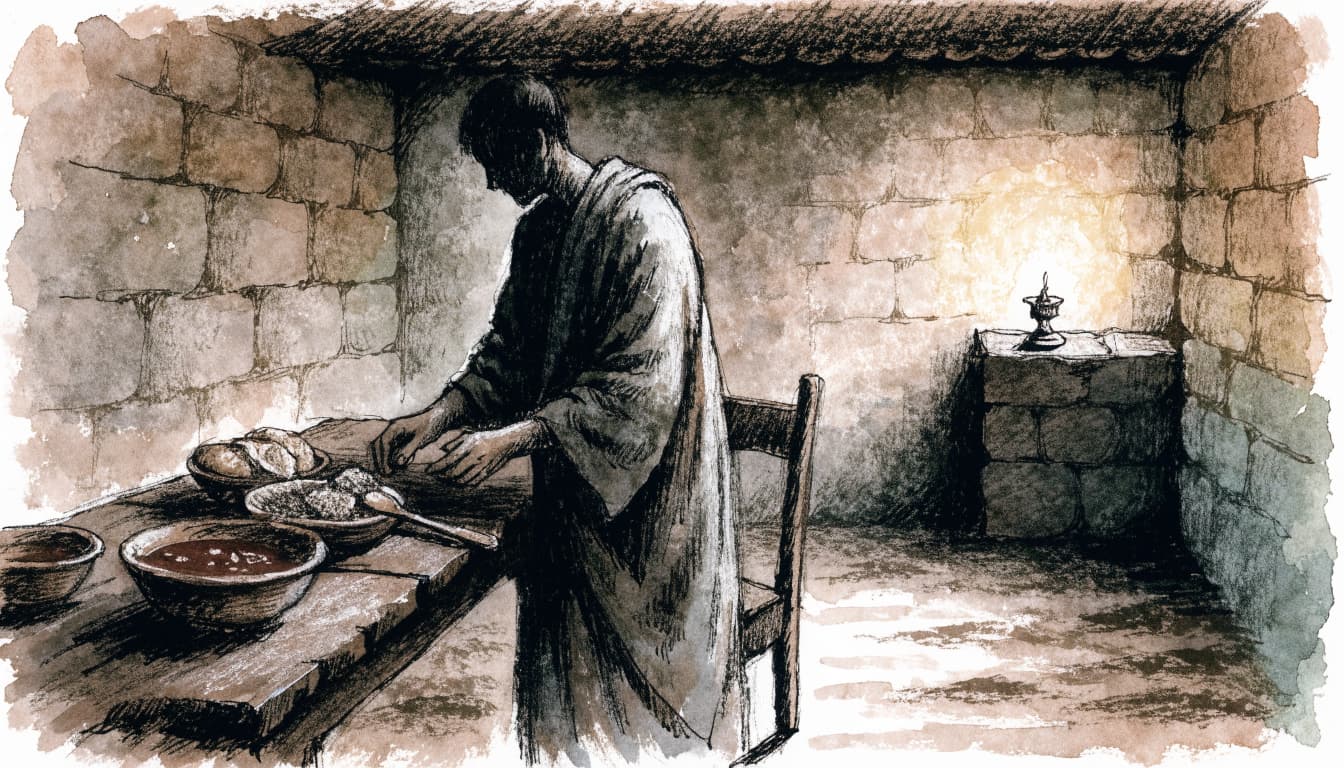
Jesus brings watchfulness down to household life. In Matthew 24:45–51, the master leaves a servant responsible for the people in his home. The servant's readiness becomes visible in what he does while the master is away. He gives the household food at the proper time. That steady care is the practical center of the passage.
Faithful service cares for the people in our charge
The faithful servant doesn't treat his responsibility as a title or a chance to serve himself. He makes sure the household receives what it needs, when it needs it. When the master returns and finds him doing that work, Jesus says the servant is blessed. The master then entrusts him with greater responsibility.
That picture speaks to more than a dramatic moment at the end of the age. Readiness takes shape in ordinary acts of care: keeping our word, noticing when someone needs help, and using our responsibilities to serve rather than control. In family life, that can mean showing patience and providing care even when nobody applauds. In church life, it means treating people with integrity and compassion, not as tools for our own plans.
Those entrusted with leadership should hear the warning and encouragement especially clearly. A role in the church is a responsibility to care for people, not permission to use them. This is an application of Jesus' household image, not a claim that the servant can only mean a church leader. The principle reaches anyone entrusted with another person's well-being. We can read more about faithful stewardship and accountability to God in that light.
The wicked servant turns delay into an excuse
The wicked servant makes a different choice. He tells himself that his master is taking a long time to return, then begins mistreating the other servants and indulging himself with drunkards. The delay becomes his excuse to act as though no one will hold him accountable. But the master arrives on a day the servant doesn't expect, and judgment follows.
The danger here isn't simply getting the timing wrong. Jesus has already said that no one knows the day or hour. The danger is using that uncertainty to justify cruelty, neglect, or self-indulgence. A person who claims to be ready while harming those in their care has misunderstood what readiness requires.
Jesus' judgment language is severe, and English translations phrase it differently. The NKJV says the master will "cut him in two," while the ESV says "cut him to pieces"; both describe a harsh judgment and place the servant with the hypocrites. A comparison of Matthew 24:45–51 across translations shows the difference in wording. We shouldn't soften Jesus' warning, but we also shouldn't turn it into a prediction about a date or a license to condemn others. It calls us to examine how we treat people entrusted to our care.
So, what does watchfulness look like while we wait? We keep doing the work Jesus has given us, with honesty, mercy, and responsibility. We don't know when the Master will return, but we know He cares how His servants treat the household.
How to Practice Biblical Watchfulness Without Fear
Biblical watchfulness is a steady way of life, not a state of constant alarm. In Matthew 24:32–51, Jesus tells His followers to recognize what He has said, stay ready, and keep serving while the timing remains unknown. We can hold hope in His return without letting predictions take over our attention.
Choose steady faithfulness over speculation
When we spend more time chasing predictions than obeying Jesus, watchfulness has lost its direction. Jesus points to a servant who gives the household food at the proper time. His readiness shows up in the work entrusted to him, not in a timetable he has figured out. We can read Matthew 24 in the NKJV with that practical picture in view.
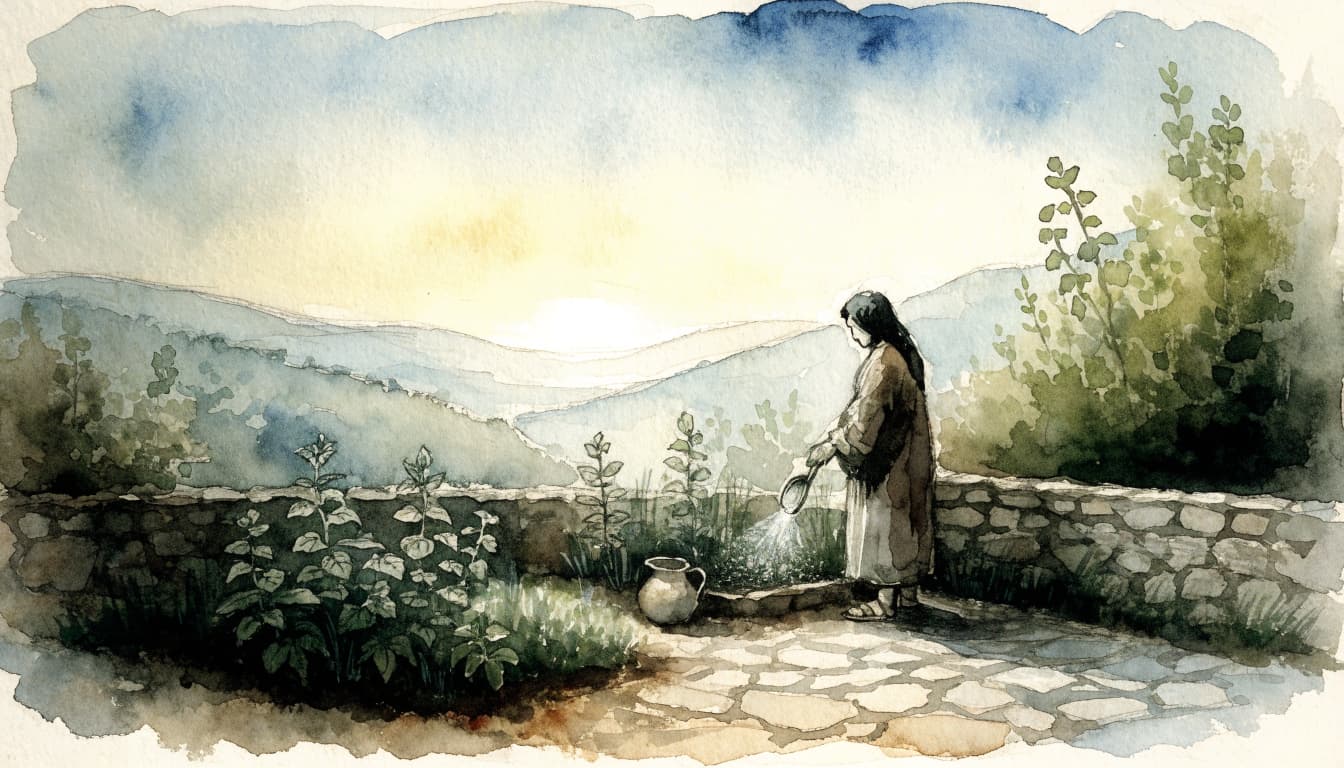
So we keep caring for people, carrying out our responsibilities, and treating others with patience and honesty. These ordinary acts matter. They are part of how we stay ready while we wait for Jesus.
Hope in His return can strengthen faithful service. We don't have to fear that doing today's work means we have forgotten His promise. The servant in Jesus' example is found doing his duty when the master returns. In the same way, our hope can give purpose to the work God has placed before us. For more on endurance and faith in Matthew 24, we can consider how watchfulness and perseverance belong together.
Use spiritual discernment with humility
As Spirit-filled believers, we value prayer and the Holy Spirit's guidance. We ask God for wisdom, remain attentive to His leading, and take spiritual impressions seriously. But an impression, a sign, or a striking world event doesn't prove a return date. Jesus has already set a limit on what we can claim to know.
That means we test what we hear against Scripture. A claim may sound urgent or come with confident spiritual language, but confidence alone doesn't make it true. We should be willing to pray, examine the passage in context, and speak carefully when Scripture doesn't give us certainty. Discernment isn't suspicion toward every spiritual experience. It's humility about our own conclusions and loyalty to what God has said.
When a prediction stirs fear, we can pause rather than pass it along. We can return to Jesus' teaching, seek the Holy Spirit's help, and continue serving the people in our care. Watchfulness keeps us attentive to God and responsible toward others. It lets us look for Jesus' return with hope, without pretending we know the day or hour.
Conclusion
Jesus gives us both a reason to watch and a clear limit: we can recognize what He has said, but no one knows the day or hour. The fig tree points to nearness, not a date we can confidently announce.
The faithful servant shows what readiness looks like. He keeps caring for the household and doing the work entrusted to him while the master is away. So we reject confident date-setting and live with hope, humility, and faithfulness, serving the people God has placed in our care. For more on Jesus' warning against setting a date for His return, we can return to the passage's simple call: stay ready by living faithfully today.
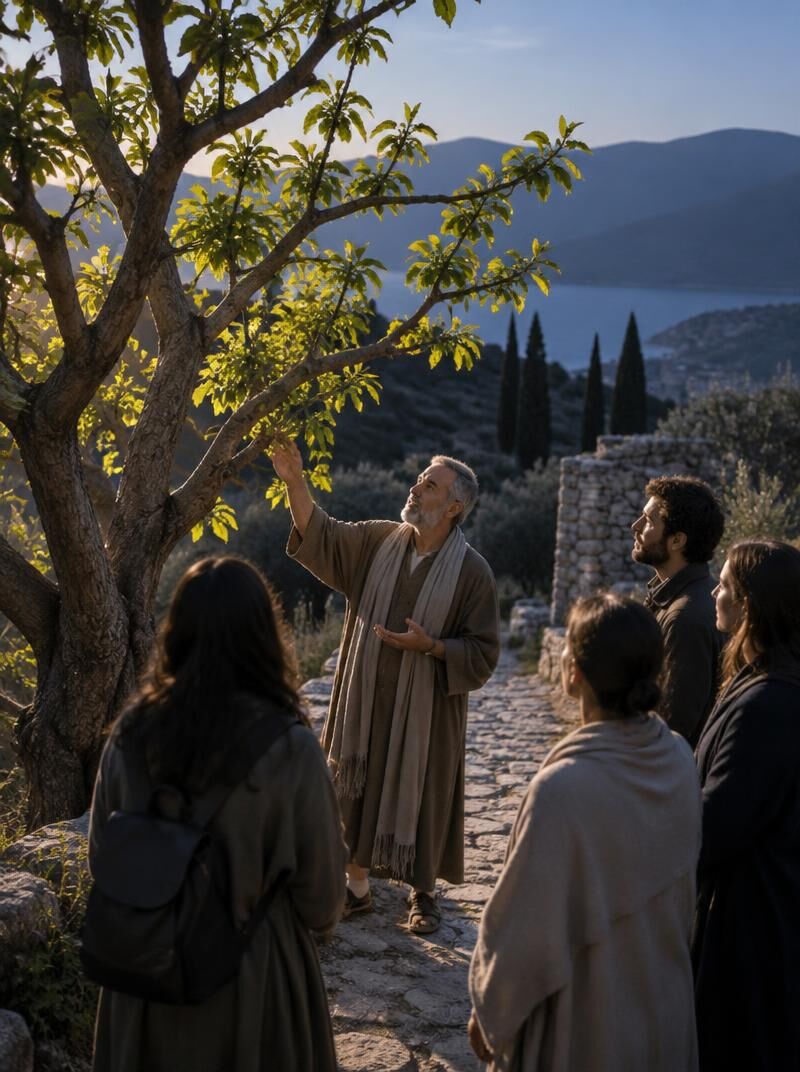
The Fig Tree and the Unknown Hour
Recognize the Signs. Remain Ready.
In Matthew 24:32–51, Jesus points to the fig tree: when its branches soften and leaves appear, summer is near. In the same way, His followers should pay attention to what He has foretold.
But recognizing that His coming draws near is not the same as knowing its date. Jesus says no one knows the day or hour, then calls His people to stay awake and serve faithfully. Prophecy invites watchfulness, not a countdown.
Eight Lessons on Readiness
Recognize the Signs
Like the fig tree signaling summer, Jesus’ words call us to discern what Scripture reveals without claiming to know a date.
Trust His Enduring Word
Heaven and earth will pass away, but Christ’s words will never pass away; our confidence rests in His promise.
Leave the Hour Unknown
Jesus says no one knows the day or hour of His return, so predictions cannot replace faithful readiness.
Remember Noah’s Generation
People carried on with ordinary life until the flood came; the danger was being unprepared, not daily work itself.
Stay Awake
Because the Lord’s coming will be unexpected, believers are called to remain attentive and ready.
Serve Those Entrusted to You
The faithful servant cares for the household and carries out the master’s instructions while he is away.
Reject Careless Delay
The unfaithful servant assumes the master is slow to return and uses that excuse to mistreat others.
Live Ready Today
Jesus’ warning invites honest stewardship now, not a last-minute response to a predicted date.
Why Watchfulness Is a Way of Life
Matthew 24:32–51 turns attention from calculating Christ’s return to living in light of it. Jesus uses the fig tree to teach discernment, then states plainly that the day and hour remain unknown. His comparison with Noah’s generation warns against becoming so absorbed in ordinary routines that we ignore God’s word.
The faithful servant shows what readiness looks like: tending to entrusted responsibilities and treating others well even when the master seems delayed. By contrast, the unfaithful servant mistakes delay for permission to act cruelly.
Bible Prophecy Ministries exists to help readers understand what Scripture says about prophecy, its fulfillment, and the hope ahead—all centered on Jesus. That mission calls for careful study and faithful living, not date-setting. We can prepare spiritually today through trust in Christ, prayer, obedience, and loving service.
“Therefore keep watch, because you do not know on what day your Lord will come.” — Matthew 24:42. For believers today, keeping watch means staying faithful and spiritually prepared, not predicting a date.
Matthew 24: Questions About Watching and Waiting
Jesus calls His followers to recognize the signs He described without claiming to know when He will return. These answers distinguish watchfulness from date-setting.
What does the fig tree teach in Matthew 24:32–33?
Just as new leaves show that summer is near, the signs Jesus described call His followers to pay attention to His words. The illustration does not give us a date for His return.
Can the signs in Matthew 24 tell us the exact day Jesus will return?
No. Jesus tells His disciples to learn from the signs, but He also says that no one knows the day or hour. Recognizing what He taught is different from calculating a date.
What did Jesus mean when He said no one knows the day or hour?
Jesus warned that the timing of His coming is not ours to know. His point is practical: stay ready rather than treating any prediction or schedule as certain.
Why does Jesus compare His return to the days of Noah?
In Matthew 24:37–39, people continued their ordinary routines until the flood came unexpectedly. Jesus uses that example to urge His followers to take His warning seriously amid everyday life.
What does it mean to keep watch if we cannot know the time?
Keeping watch means living in readiness through faithfulness, obedience, and attention to Jesus’ teaching. It does not require constant speculation about headlines or dates.
How should Christians respond to predictions about Jesus’ return?
Test such claims against Scripture and remember Jesus’ warning that the day and hour are unknown. Matthew 24:45–51 points us toward faithful service while we wait, not confident predictions about when He will come.
Read Matthew 24 With Your Eyes on Jesus
Read Matthew 24:32–51 for yourself, then explore more Bible prophecy teachings that keep Jesus and His call to faithful watchfulness at the center.