How Jesus Fulfills Biblical Prophecy
Biblical prophecy does more than tell us what may happen in the future. It reveals God's purposes and points to Jesus, the promised Messiah, whose identity, life, death, resurrection, and return bring the prophetic message into focus.
As we trace what Scripture says has been fulfilled and what remains ahead, we need to read each passage with care and keep Jesus at the center. Here's how biblical prophecy points to Jesus, and why that changes the way we understand its promises.
Jesus Is the Key to Biblical Prophecy
Biblical prophecy gives us more than clues about future events. It calls people to trust God, obey Him, and hold on to His promises, even when fulfillment seems far away. The New Testament reads Israel's Scriptures as the framework for understanding God's work through Jesus, but that doesn't mean every passage predicts a specific detail of His life.

Prophecy reveals God’s purpose, not just future events
The prophets spoke to people facing real choices. Their words warned against idolatry and injustice, called Israel back to covenant faithfulness, and gave hope when judgment or exile seemed overwhelming. Prophecy could speak about what lay ahead, but it also asked people to respond to God in the present.
Those prophetic hopes meet in Jesus: the promised Messiah, the King in David's line, and the One who brings God's Kingdom. In the New Testament, the apostles explain Jesus' death and resurrection through Israel's Scriptures, showing how God's promises reach their goal in Him (Acts 3:18-26). That reading keeps Jesus at the center without flattening every prophetic passage into a prediction. We can also trace how Jesus fits Israel's hope for the promised Kingdom of God.
How to recognize different kinds of fulfillment
Some prophecy is predictive: it points ahead to an event or person. Other passages work through patterns, images, and themes that gain fuller meaning in Christ. These connections are often called typological fulfillment. The earlier event is real in its own setting, while also preparing us to recognize a later work of God. A brief explanation of typological fulfillment helps clarify why the connection isn't always one-to-one.
Paul, for example, recalls Israel's exodus and wilderness history as a warning and instruction for the church (1 Corinthians 10:1-11). He calls Christ our Passover (1 Corinthians 5:7), drawing on the Passover's image of deliverance. In another comparison, Paul sets Adam's disobedience against Jesus' obedience and the life He gives (Romans 5:12-21).
These examples don't mean Moses, the Passover lamb, or Adam predicted every detail of Jesus' life. They show how Scripture's history, symbols, and themes prepare us to understand what God accomplishes through Him. We read each passage in its own context, then follow the New Testament's lead as it connects that passage to Jesus.
The Prophets Point to the Promised Messiah
Israel's prophets spoke of more than a future ruler. They held out hope for a faithful King, a shepherd who would care for God's people, and a servant who would bring healing and bear sin. The Gospel writers connect these hopes to Jesus, while each passage still deserves to be read in its original setting.
The Davidic King and God’s Kingdom
God's promise to David looked beyond the reign of one king. He promised to establish David's descendant and kingdom, giving Israel hope for a lasting ruler (2 Samuel 7:12-16). The prophets also pictured this ruler as a shepherd, one who would gather and care for God's people. That hope shapes the way the Gospels present Jesus: He is the King from David's line, and His ministry announces God's Kingdom.
Jesus preached that the Kingdom had drawn near (Mark 1:14-15). Then, after His resurrection, Peter explained how Jesus fits the promise to David. David died and was buried, Peter said, but he had spoken prophetically about a descendant who would rise. Peter proclaimed that God raised Jesus and made Him both Lord and Christ (Acts 2:29-36). The King's resurrection is central to Peter's message. Jesus is alive, and God's reign is already at work through Him.

The servant who brings healing and bears sin
Isaiah's servant passages add another part of the prophetic picture. The servant is chosen by God, acts with gentleness, and brings justice without crushing the weak. Matthew explicitly connects this servant's character with Jesus in (Matthew 12:17-21), quoting Isaiah 42:1-4. That connection helps us see Jesus' compassion as part of His mission, not a detour from it.
Matthew also links Jesus' healing ministry to Isaiah 53:4. After Jesus heals the sick, Matthew says this fulfilled the words about the servant bearing human infirmities (Matthew 8:17; Isaiah 53:4). Christians also read Isaiah 53 alongside Jesus' suffering and death, understanding His bearing of sin as part of the servant's work. That broader interpretation draws on the passage as a whole; Matthew's direct connection in 8:17 concerns Jesus' healings.
Reading these passages well means holding both things together: what Isaiah said to his own audience and how the Gospel writers connect that hope with Jesus. We can explore how prophecy should be read in its original context without losing sight of the New Testament's witness that the promised King and servant is Jesus.
How Jesus Fulfilled Prophecy Through His Life and Ministry
Fulfillment concerns more than Jesus' birth and final hours. The Gospels show how His early life, teaching, and actions fit God's revealed purpose. Sometimes they point to a direct prediction. Other times, they trace a pattern or theme through Scripture.
His birth and early life in the light of Scripture
Matthew connects Jesus' birth in Bethlehem with the ruler promised in Micah. The chief priests and scribes identify Bethlehem as the place where the Messiah would come (Matthew 2:1-6; Micah 5:2). Here, Matthew presents a clear messianic expectation tied to a specific place.
Matthew also says Jesus' family returned from Egypt after Herod's death, connecting the event with Hosea's words, "Out of Egypt I called My Son" (Matthew 2:15; Hosea 11:1). Hosea was recalling Israel's exodus, not predicting a future child in a straightforward way. Matthew sees Jesus reliving Israel's history and fulfilling its larger pattern. That distinction matters: not every Gospel connection works like a direct forecast.
The promise of Immanuel adds another layer. Matthew connects Jesus' birth with Isaiah's sign of a child called Immanuel, meaning "God with us" (Matthew 1:22-23). We can read this as Matthew showing how Jesus embodies God's presence with His people, while still recognizing the original setting of Isaiah's words.
His teaching, signs, and ministry among the people
Jesus' public ministry also fits the prophetic picture. Matthew links His work in Galilee with Isaiah's vision of light dawning in a region marked by darkness (Isaiah 9:1-2). Jesus brings the Kingdom of God near, and His presence gives that image its force. The light is not an abstract idea. People hear His teaching, see His works, and encounter God's mercy through Him.
In Nazareth, Jesus reads from Isaiah in the synagogue and applies the passage to His own mission: good news for the poor, freedom for captives, and sight for the blind (Luke 4:16-21). Then He heals the sick, and Matthew connects those acts with Isaiah's words about bearing human infirmities (Matthew 8:17). For Matthew, healing belongs to Jesus' messianic work. It reveals His compassion and points to the servant who carries human suffering. A study of Matthew's use of Isaiah offers further context for these connections.
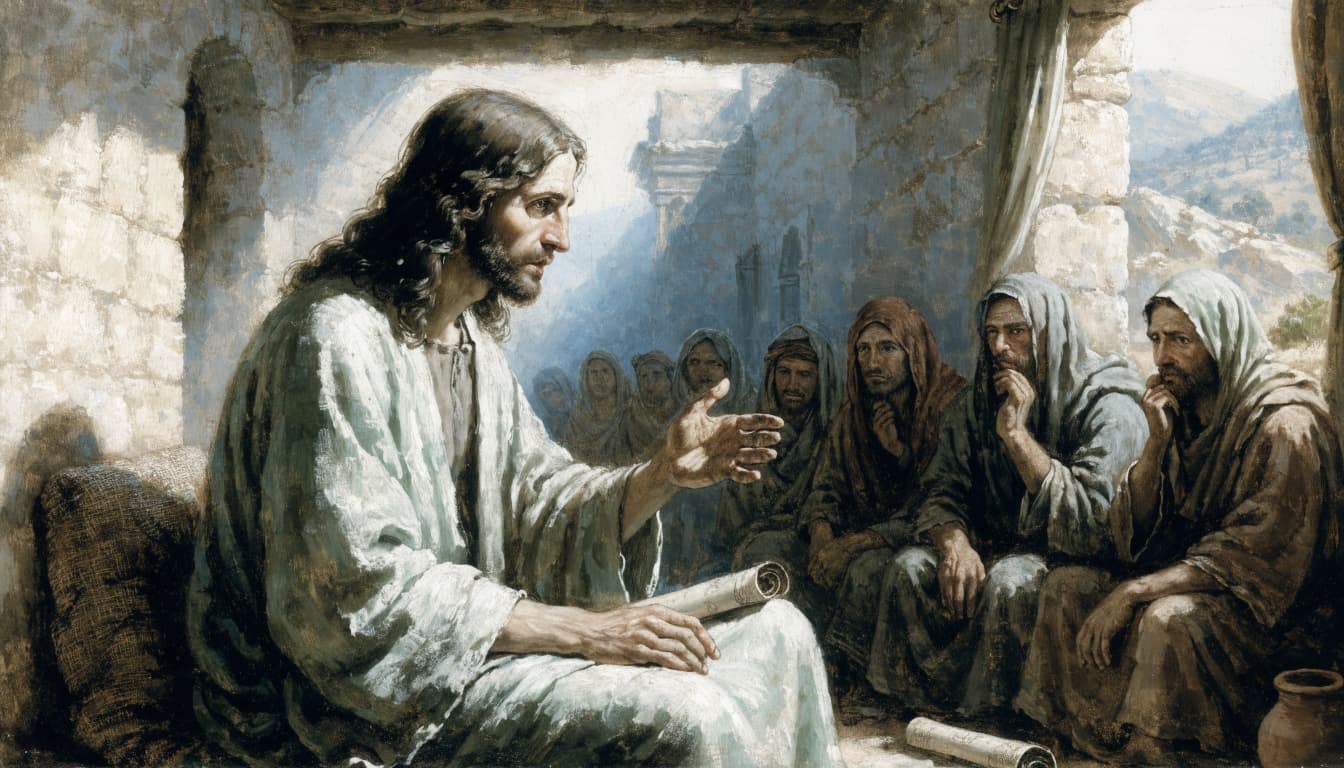
Taken together, these passages show that Jesus' identity is revealed not only through titles or predictions. His words and actions carry out the mission Scripture describes: announcing God's Kingdom, bringing light, and meeting people in their need.
The Cross and Resurrection Stand at the Heart of Prophetic Fulfillment
Jesus' suffering, death, and resurrection bring the prophetic message into focus. These events fulfill God's saving purpose, and they change what comes next for everyone who trusts in Him. The cross is central to salvation, not just one prediction among many.

Jesus’ suffering and death were part of God’s saving purpose
Jesus told His disciples that He would suffer, be rejected, be killed, and rise again (Mark 8:31). Later, as He and the disciples traveled toward Jerusalem, He said the prophets' words about the Son of Man would be fulfilled. He would be mocked, mistreated, killed, and raised on the third day (Luke 18:31-33). The disciples struggled to understand Him, but Jesus knew where His path led.
After His resurrection, Jesus explained to two followers that the Messiah had to suffer before entering His glory. He then interpreted the things written about Himself in Moses and the Prophets (Luke 24:25-27). We see that same scriptural connection in the Gospel accounts of the cross. For example, John links the soldiers' casting lots for Jesus' clothing to Scripture (John 19:23-24), while other details draw on distinct images and passages. We shouldn't flatten every event into the same kind of prediction. The Gospel writers show how Scripture illuminates Jesus' death, each connection in its own way.
And the cross means more than fulfilled words. Jesus gave His life to save sinners and reconcile us to God. Christians connect that saving work with Daniel's prophecy of atonement and everlasting righteousness in Daniel's 70 weeks and the prophecy of Jesus. The point is clear: Jesus' death is at the heart of God's plan, not a tragic interruption of it.
The resurrection confirms the promise and changes what comes next
The apostles preached Jesus' resurrection from Scripture. At Pentecost, Peter used David's words about God's Holy One not seeing corruption, then proclaimed that God had raised Jesus and made Him both Lord and Christ (Acts 2:25-36). The resurrection confirmed Jesus' identity and His victory over death.
Paul likewise summarized the message he had received and passed on: Christ died for our sins, was buried, and rose again on the third day, "according to the Scriptures" (1 Corinthians 15:3-4). This is the foundation of our hope. Because Jesus lives, death does not have the final word for those who belong to Him. God's promised Kingdom has begun through Christ, and we look ahead to its completion when He returns.
The Apostles Show Us How to Read Prophecy Through Jesus
Acts gives us a practical model for reading Biblical prophecy: start with Scripture, show how it points to Jesus, then call people to respond. Peter and Paul do this without pulling verses out of context. They connect Jesus to Israel's history, God's promises, and the resurrection, then urge their listeners to repent and believe.
Peter connects the prophets with Jesus’ death and resurrection
At Pentecost, Peter quotes David's words about God's Holy One not seeing corruption. David died and was buried, Peter explains, so the words point beyond David to Jesus, whom God raised from the dead (Acts 2:25-36). Peter then proclaims Jesus as both Lord and Christ. The resurrection is the center of his argument, not an afterthought.
The Holy Spirit had just empowered the disciples to testify publicly. Jesus had promised that they would receive power to be His witnesses (Acts 1:8), and at Pentecost the Spirit gave Peter boldness to proclaim what God had done. His sermon led people to ask what they should do. Peter called them to repent and be baptized in Jesus' name (Acts 2:37-41).
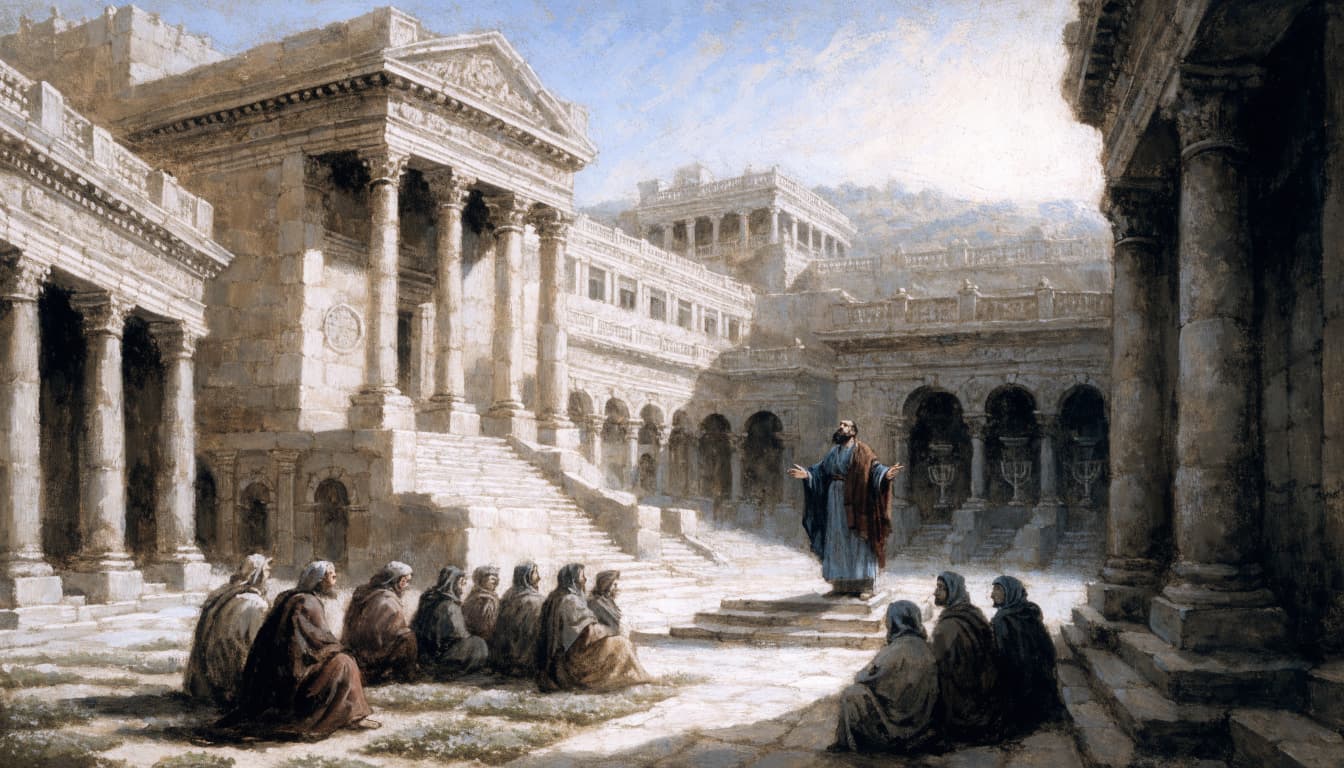
Peter follows the same pattern in the temple. He tells the crowd that Jesus' suffering fulfilled what God had announced through the prophets, then calls them to repent and turn to God (Acts 3:18-26). Scripture leads to Jesus, and the news about Jesus calls for a response.
Paul places Jesus within Israel’s history and promises
In the synagogue at Pisidian Antioch, Paul begins with Israel's history: God chose the people, brought them out of Egypt, and gave them David as king. From David's line, Paul says, God brought Israel a Savior, Jesus, just as He promised (Acts 13:16-41).
Paul then tells how Jerusalem's leaders condemned Jesus and how God raised Him from the dead. His point is the whole movement of God's promise reaching its fulfillment in the risen Jesus. Through Him, forgiveness of sins is proclaimed, and everyone who believes is offered justification. Paul also warns his listeners not to dismiss what God has done.
These sermons show how the apostles proclaimed Christ through Scripture. They don't give us permission to detach a verse from its setting and make it say whatever we want. The Holy Spirit empowers believers to witness and helps us understand and proclaim God's truth, while Scripture keeps our message grounded in God's revealed purposes.
What Biblical Prophecy Says About Jesus’ Return and the Kingdom
Jesus' first coming, death, and resurrection began the age the prophets anticipated. But God's Kingdom has not yet reached its full completion. That tension shapes Christian hope: we live under Jesus' reign now, while waiting for Him to return and renew all things.
The Kingdom has begun, but its full promise is still ahead
Jesus announced that the time was fulfilled and God's Kingdom had drawn near. His words in Mark 1:14-15 called people to repent and believe the good news. In Luke 11:20, He explained that His authority over demons showed God's Kingdom had come upon them. These were more than future promises. God's reign was already breaking into people's lives through Jesus' words and works. You can read Mark's opening chapter in the NKJV for the setting of His announcement.
Yet sickness, injustice, sin, and death remain. The Kingdom has begun, but its full promise is still ahead. Jesus' resurrection is the first sign of the coming victory, and His return will bring that victory to completion. We don't have to pretend the pain around us isn't real, or assume that everything promised has already happened.
This hope matters in ordinary life. We pray for God's will to be done, serve our neighbors, resist evil, and trust the Holy Spirit's work among us. We do these things because Jesus is King now, and because we long for the day when His reign is fully seen.
Jesus’ return calls for hope, readiness, and faithfulness
After Jesus' ascension, the angels told His disciples that He would return (Acts 1:6-11). The disciples had asked about the restoration of the Kingdom to Israel. Jesus redirected them toward their calling as witnesses, while leaving the timing in the Father's hands. That remains a wise boundary for us. Scripture promises His return, but it doesn't authorize date-setting or confident claims about details God has not made clear.
Paul addressed grieving believers with the promise that the dead in Christ will rise when the Lord comes. Those still alive will be gathered with them, and God's people will be with the Lord forever (1 Thessalonians 4:13-18). Christian hope is bodily resurrection, not escape from God's good creation. Scripture also says God will judge the world through Jesus (Acts 17:31), so our hope includes both justice and the end of evil.

Revelation describes the goal: a new heaven and a new earth, with God dwelling among His people. He will wipe away every tear, and death, sorrow, and pain will be no more (Revelation 21:1-5). This is the future renewal of creation, not a timeline we can calculate. As we consider Jesus' resurrection and promised return, we can hold fast to what Scripture makes clear: He will come, the dead in Christ will rise, and God will make all things new. Until then, we stay watchful, faithful, and full of hope.
A Christ-Centered Way to Study Biblical Prophecy
When we study Biblical prophecy, we want to see what God said, what the words meant to their first hearers, and how the New Testament connects them to Jesus. That takes patience. A verse can sound like a prediction when we lift it out of its chapter, but its original setting may point us in another direction.

Read the passage in its full Biblical setting
Start with the whole chapter, not just the line that caught your attention. Ask who first heard the prophecy, what was happening at the time, and what the prophet wanted that audience to understand. Notice the genre, too. A poem, a vision, and a direct promise may use very different language.
This simple step helps us avoid proof-texting, where we use a verse to support an idea without considering what it says in context. BibleProject offers a helpful guide to reading the Bible with attention to its literary design. Keep asking: what did this passage mean before we connected it to Jesus?
Keep Jesus central without forcing a fulfillment
The New Testament shows us how the apostles read Israel's Scriptures in light of Jesus. In Luke 24:25-27, Jesus explains how Moses and the Prophets spoke about Him. We should follow that witness, while still distinguishing a direct prediction from a pattern or theme that finds fuller meaning in Christ.
A practical check is to compare our proposed fulfillment with the New Testament's own use of the passage. What does the text state clearly? What are we inferring? Paul, for example, connects Israel's wilderness history with instruction for the church, not as a simple forecast of a later event (1 Corinthians 10:1-11). If our interpretation depends on ignoring the original setting or adding details Scripture never gives, we need to reconsider it. For a detailed example of careful interpretation, see Daniel 9 and the promised Anointed One.
Let prophetic hope shape faithful living
Prophecy should lead us toward worship, holiness, compassion, and witness. It reminds us that God keeps His promises, even when we don't yet see their full completion. The Holy Spirit empowers believers to testify about Jesus (Acts 1:8), but that doesn't give us license to make unsupported predictions or treat every impression as a word from God.
As we study, we can use a simple rhythm: read the passage in context, identify its first audience and purpose, note how the New Testament uses it, and ask whether it speaks through prediction, pattern, or theme. Then ask how it points to Jesus and calls us to faithful living. Pray for the Holy Spirit's help, and test each interpretation against Scripture. That keeps our hope anchored in what God has revealed, rather than in claims we cannot support.
Conclusion
Biblical prophecy unfolds God's purpose, with Jesus at its center. The prophets, the Gospels, and the apostles direct us to Him, revealing His identity and saving work, His resurrection, and the promise of His return.
As we study Scripture, we can read each passage carefully, trust God's promises, and live faithfully while we await the Kingdom's full completion. Jesus is the key that brings the prophetic message into focus.
From Ancient Promise to Risen Messiah
The prophets did more than anticipate a coming deliverer: they gave Israel reasons to recognize him. Micah named Bethlehem as the ruler’s birthplace (Micah 5:2), and Matthew identifies it as the town where Jesus was born (Matthew 2:1–6). Isaiah described a servant who would bring light to the nations (Isaiah 42:6); in his ministry, Jesus proclaimed the kingdom of God and welcomed those once considered far off.
The promises also reach through suffering to victory. Isaiah 53 portrays a servant who bears the sins of others, while Psalm 22 gives voice to anguish that echoes at the cross. The Gospels present Jesus’ death not as the collapse of his mission but as its costly fulfillment. Peter then points to Psalm 16 in explaining why the Messiah would not remain in the grave (Acts 2:25–32). Together, these passages invite us to see Jesus as the promised Messiah whose resurrection confirms the hope woven throughout Scripture.
“Behold, a virgin shall conceive, and bear a son, and shall call his name Immanuel.”

Isaiah 7:14 (KJV)
Fulfilled in Jesus Christ (Matthew 1:22–23)

The Promises That Point to Jesus
Born as Promised
Prophecies of the Messiah’s birth and lineage come into focus in the accounts of Jesus’ arrival.
The Suffering Servant
Isaiah’s portrait of one who bears our griefs illuminates Jesus’ sacrificial death.
The Risen King
From the hope of resurrection to the promise of an everlasting kingdom, Scripture points to Christ’s victory and reign.
Keep Discovering Jesus in Prophecy
Explore more Bible prophecy teachings and see how Scripture’s promises, from beginning to end, reveal Jesus.