Matthew 24:15-28: Great Tribulation and False Messiahs
A warning sign appears, and Jesus tells people in Judea to flee without delay. He describes severe suffering, then warns His followers not to believe claims that the Messiah has appeared in a hidden place.
In Matthew 24:15-28, Jesus' commands are direct, but the questions around their timing and fulfillment are debated. Christians connect His warning with Jerusalem's fall in AD 70, a future crisis, or a pattern that includes both. As independent, Spirit-filled Pentecostal Christians, we'll look closely at what the passage says and where interpretation begins.
Let's walk through the warning, the urgent call to flee, and Jesus' clear caution about false claims. Start with Jesus' warning about the abomination of desolation.
Matthew 24:15-28: Severe Distress and False Claims
Jesus moves from a warning sign to an urgent command: when the abomination of desolation stands in the holy place, people in Judea must flee. He then describes severe distress and warns His followers not to trust claims that the Messiah has appeared in a hidden location. You can read Matthew 24:15-28 in the NKJV. The passage points back to Daniel, but it doesn't settle every question about timing or fulfillment.
How Daniel’s prophecy frames Jesus’ warning
Jesus names Daniel the prophet, directing His listeners to earlier language about desecration and desolation. Key passages include Daniel 9:26-27, Daniel 11:31, and Daniel 12:11. Daniel 11 connects the abomination with the profaning of the sanctuary and the removal of the regular offering.
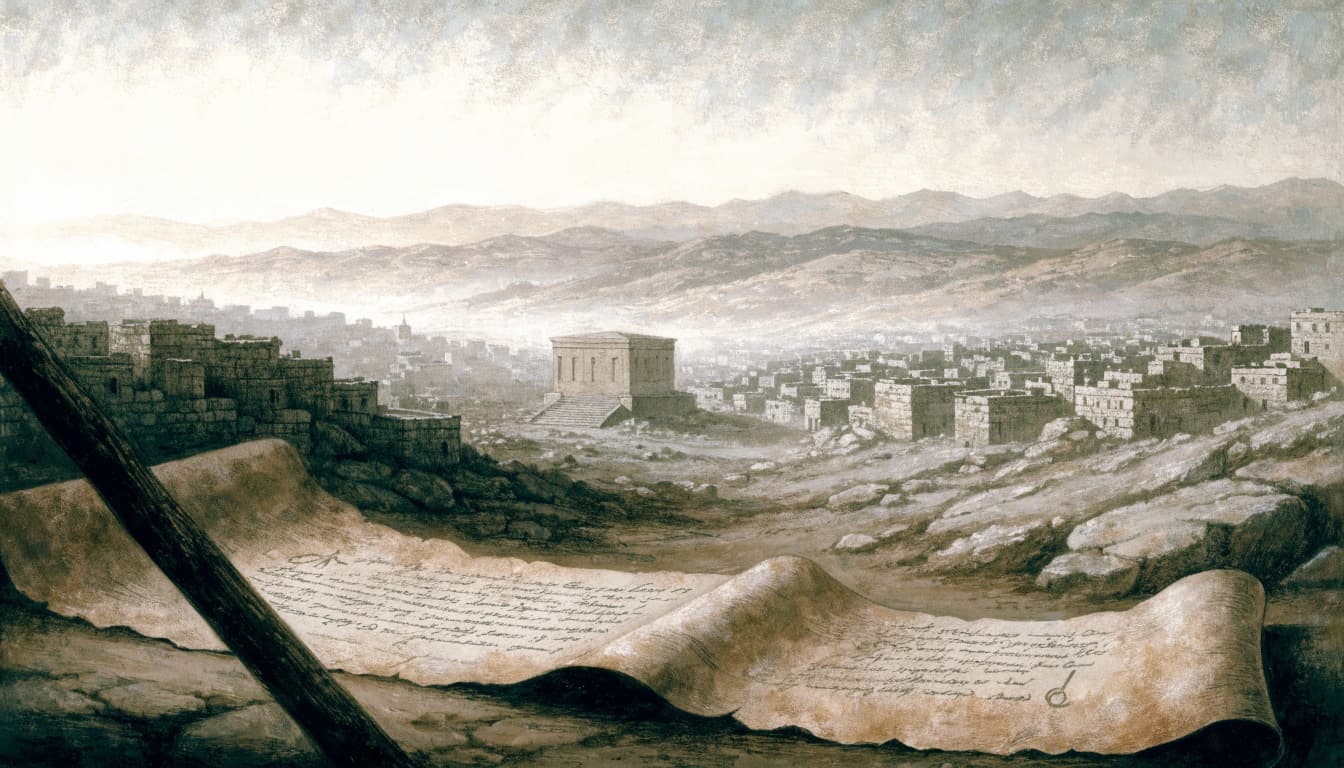
Daniel's language has a historical connection with the desecration of the Jerusalem sanctuary under Antiochus IV Epiphanes in the second century BC. Daniel 11's account of Antiochus IV offers helpful historical context. For a closer look at one major passage in the discussion, see Daniel's prophecy of the seventy weeks.
But Jesus applies Daniel's language to the warning He gives His disciples, and Christians disagree about how that application unfolds. Some connect it primarily with Jerusalem's destruction in AD 70; others expect a future desecration, while still others see a historical event that also points toward a future crisis. We should keep the distinction clear: the text names Daniel and gives a warning, while the precise timeline remains disputed.
What the abomination of desolation means in the passage
The Greek phrase to bdelygma tēs erēmōseōs carries the sense of a detestable or profaning act that brings desolation. Jesus says it will stand in the holy place, then adds, "let the reader understand." That phrase asks readers to pay close attention to Daniel's words and to the danger Jesus describes.
The wording echoes Daniel, but it doesn't identify one event beyond dispute. Jesus' next instructions are concrete: those in Judea should flee, and they shouldn't delay to collect belongings. What the abomination is, and whether its fulfillment belongs to the first century, the future, or both, is where interpretation begins.
Why Jesus Told People in Judea to Flee Without Delay
Jesus' warning in Matthew 24:16-20 is practical and urgent. He tells people in Judea to head for the mountains, leave belongings behind, and act when the danger appears. We should read these words as a specific warning, not as a command to panic or flee every time a crisis unfolds.
The details that make the warning urgent
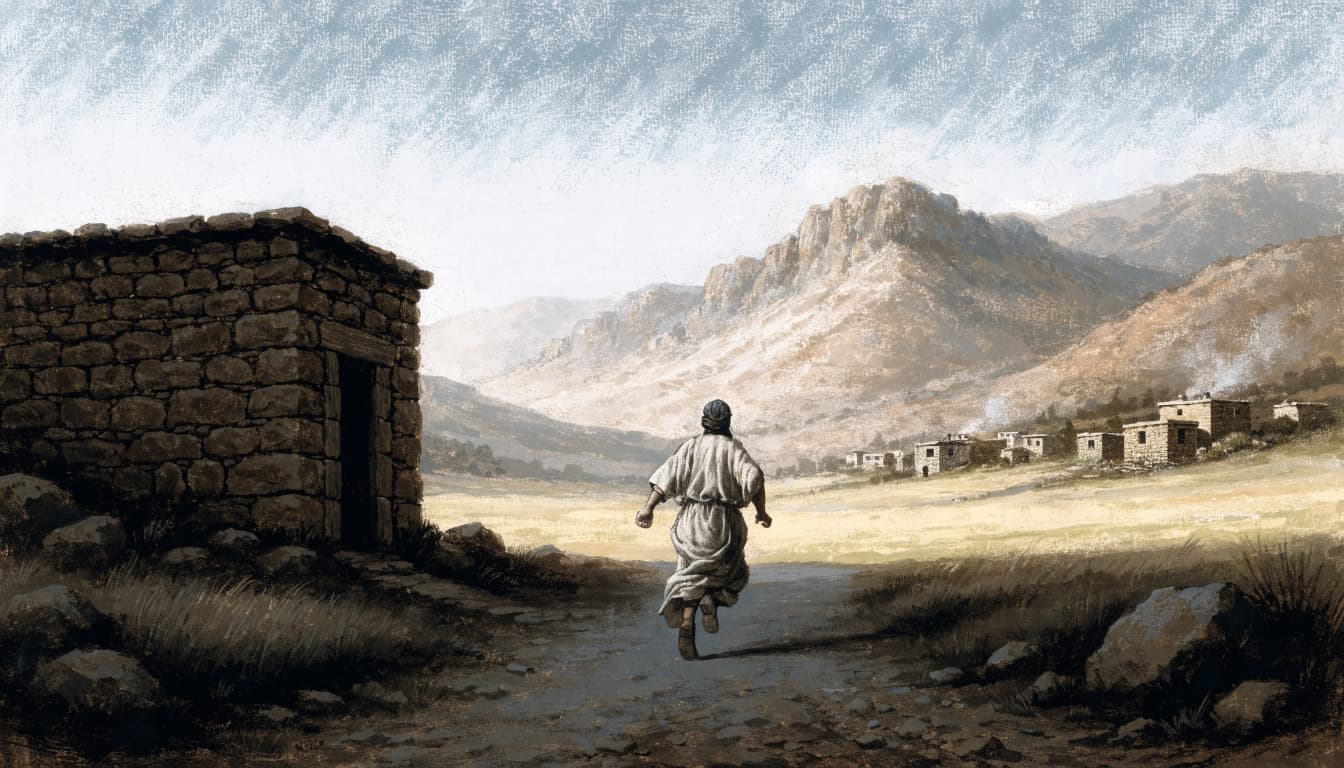
In Matthew 24:16-20 in the NKJV, Jesus says those in Judea must flee to the mountains. The Greek word pheugetōsan means "let them flee." It is a command, not a casual suggestion. BibleHub's Greek entry for Matthew 24:16 identifies the form and its meaning.
The instructions make the danger plain. Someone on a rooftop must not go down into the house to collect possessions, and someone in a field must not turn back for a cloak. Jesus describes people who need to move immediately, without packing or pausing to save what they own. The rooftop and field details place the warning in ordinary life, where a delay could cost precious time.
Then Jesus names conditions that would make escape harder. Pregnancy and nursing would make a hurried journey more difficult. Winter could bring cold, rain, or rough travel, while the Sabbath could restrict movement for those observing its limits. These details aren't a timetable or a separate sign. They show compassion for people who would face added hardship while trying to get away.
The commands also rule out date-setting as the point of this passage. Jesus tells His listeners what to do when the warning sign appears, not how to calculate when it will appear. We should take the urgency seriously without turning every frightening headline into a reason to declare that the prophecy has arrived.
Christians interpret the setting in different ways. Many who emphasize the first-century fulfillment connect the warning with Jerusalem's destruction by Rome in AD 70. Others understand the passage as pointing primarily to a future crisis, while some see the fall of Jerusalem as a historical event that also anticipates future distress. We should keep those readings distinct: the historical reading looks back to a specific danger in Judea, while the futurist reading expects a later fulfillment. Neither makes Jesus' command a general instruction for every emergency.
That distinction matters. His words address people in Judea who recognize the sign He described; they aren't a license for fear-driven decisions whenever trouble rises. As we consider Jesus' warning to flee when danger becomes clear, we should hold to what the passage says plainly: when that specific warning comes, don't delay.
What Jesus Means by the Great Tribulation
In Matthew 24:21-22, Jesus describes suffering on a scale unlike anything before it, then says its days will be shortened for the sake of the elect. We should take both parts seriously: the distress is severe, and God places a limit on it. The passage does not give us a detailed timeline, though, or settle whether Jesus is speaking of AD 70, a future crisis, or both.

The scale and limit of the suffering
Jesus calls this period thlipsis megalē, meaning "great distress" or "great tribulation." The phrase appears in Matthew 24:21-22 in the NKJV, where He says the suffering will be unequaled from the beginning of the world. The Greek text of Matthew 24:21 helps clarify the wording, but the phrase itself doesn't identify a date or name one event.
Christians connect Jesus' warning with Jerusalem's destruction in AD 70, a future time of intense distress, or a pattern that includes the first-century crisis and a later fulfillment. Each view reads the surrounding details differently. Jesus' words establish the scale of the suffering, but they don't settle the debate by themselves.
Then comes a detail we shouldn't overlook: the days are shortened for the sake of the elect. The text says the suffering has a limit. It doesn't explain how long the period lasts or provide a sequence of dates, so we shouldn't add a timeline that these verses don't give.
Who are the elect in Jesus’ warning?
The Greek word eklektoi means "chosen ones" or "elect." Jesus uses it while warning about severe distress, and again in the surrounding passage when He cautions that false christs and prophets will try to deceive people. The term points to those who belong to God, but it doesn't settle every question about who is included or how the gathering of the elect fits into the end times.
That distinction matters. Some Christians understand the elect here as believers generally; others connect the term with a particular group within their interpretation of the tribulation. We can discuss those views, but the word itself doesn't decide when the tribulation happens or define the nature of the gathering. For that, we need to consider the passage's full context, including Jesus' teaching about His return after the tribulation.
Jesus' warning joins two clear points: the suffering will be extraordinary, and its days will be limited for the sake of God's chosen ones. We can hold to what He says without claiming that these two verses answer every question about the timing.
How AD 70 and Future Interpretations Shape the Reading
Matthew 24:15-28 links a warning in Judea with severe tribulation and deceptive claims about the Messiah. The historical setting matters, but it doesn't answer every question about how far Jesus' words reach. Christians weigh the details differently, so let's look at the main readings without treating a debated timeline as settled.
The preterist reading and Jerusalem’s fall
Preterist and partial-preterist readings connect Jesus' commands to flee and His warning of tribulation mainly with the crisis that led to Jerusalem's destruction. The First Jewish Revolt against Rome began in AD 66. In AD 70, Roman forces under Titus besieged the city, and Jerusalem and the Second Temple were destroyed. The Siege of Jerusalem in AD 70 is a major event in the history behind this interpretation.
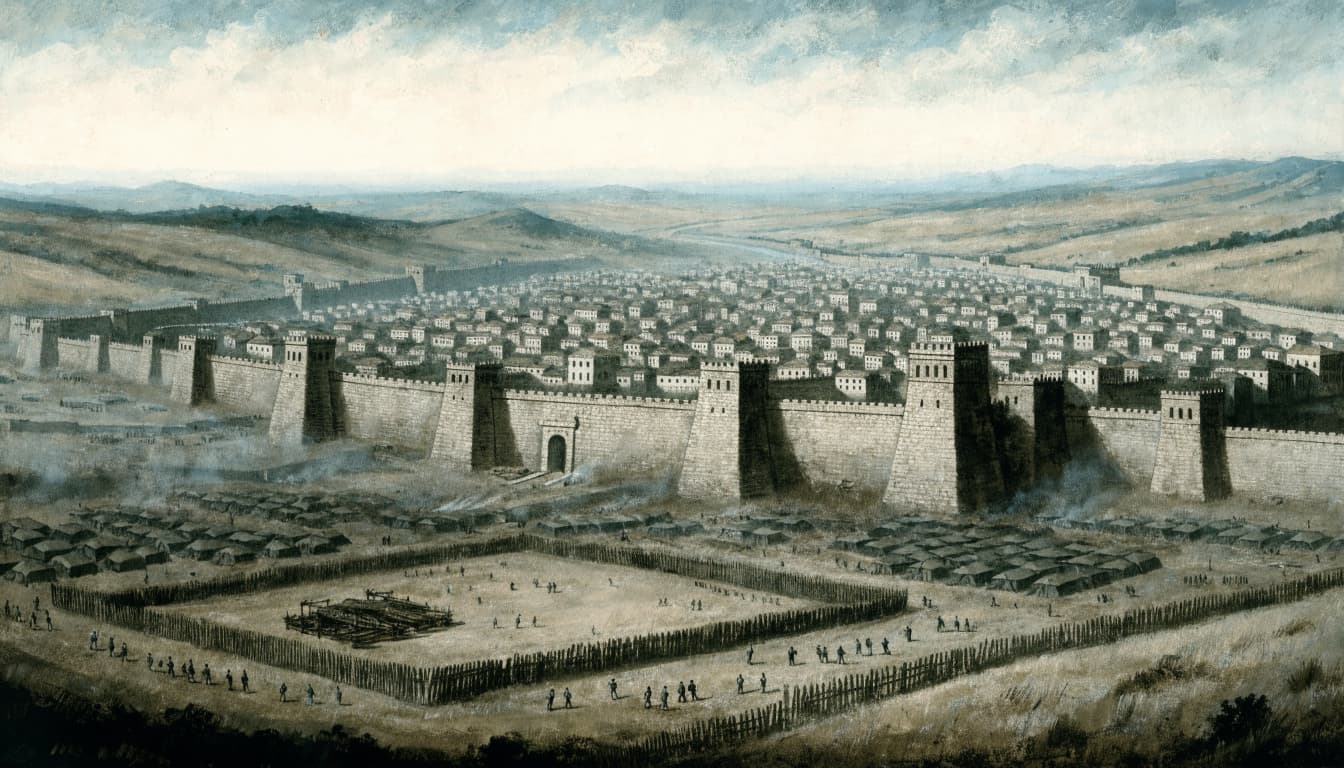
A detail often raised in this view appears in Luke 21:20, where Jesus describes Jerusalem surrounded by armies. That wording fits the Roman siege and helps explain why many readers connect the warning to events of the first century. But Luke's description doesn't, by itself, settle the full meaning of Matthew's language about the abomination, unparalleled tribulation, and the coming of the Son of Man.
Josephus, a Jewish historian who lived through the revolt, is an important surviving source for the siege. His account helps us understand the historical devastation, but it can't decide how every part of Jesus' prophecy should be interpreted. Later reports that Christians fled to Pella before Jerusalem fell are not certain proof that Matthew 24 was fulfilled in a particular way.
The futurist and near-far readings
Futurists understand the abomination of desolation and great tribulation primarily as future events before Christ's return. Many expect a future desecration of a holy place, followed by a period of severe distress. They read Jesus' warning as pointing beyond AD 70, while still accounting for the passage's immediate focus on Judea.
Near-far readings hold the first-century destruction and future hope together. In this approach, AD 70 is a real historical crisis that may also foreshadow a later tribulation or final judgment. Christians differ on which details apply to the first century, which point ahead, and how the events fit together.
These views help us see why Matthew 24 prompts serious discussion. The flight instructions and Judean setting carry historical weight; the language of great tribulation and Christ's coming also leads many Christians to look beyond that crisis. For a broader map of these positions, see our overview of Matthew 24 and the Olivet Discourse. We can hold firmly to Jesus' warning while admitting that the passage does not give every reader the same timeline.
How False Messiahs Use Signs and Secret Claims
Jesus turns from the tribulation to a warning about deceptive claims. In Matthew 24:23-28 in the NKJV, He tells His followers not to believe reports that the Christ is here or there. The danger is real: a claim can sound convincing, even when it points people away from Jesus.
Why signs alone cannot prove a message is true
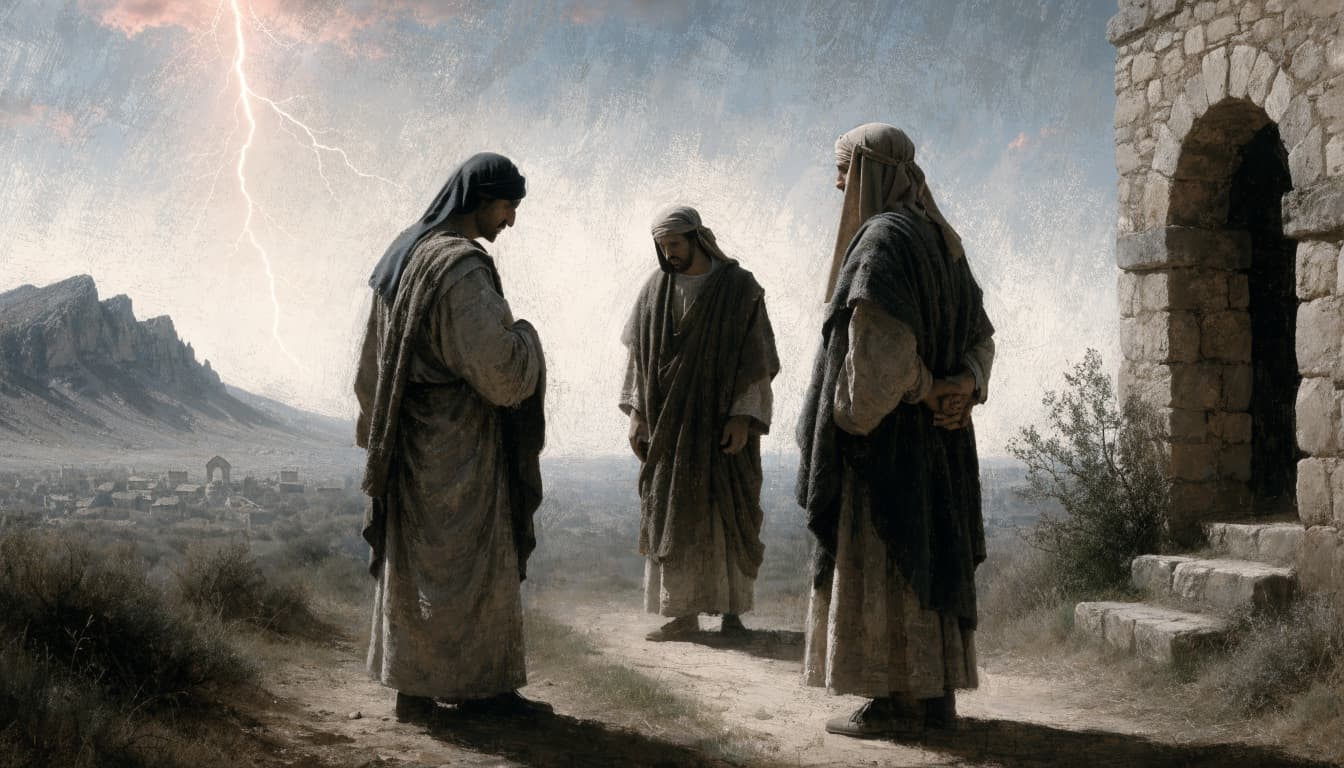
Jesus names pseudochristoi, meaning false christs, and pseudoprophētai, meaning false prophets. A false christ claims messianic authority; a false prophet claims to speak for God while leading people astray. Jesus says they will show great signs and wonders, and that these signs can deceive, if possible, even the elect.
That warning should sober us. A miracle or spiritual experience does not, by itself, prove that a message comes from God. A claimant might say, "The Christ is in the wilderness," or, "He is in the inner rooms." Jesus says not to believe those reports. The location may sound exclusive, the claim may come with dramatic signs, and the speaker may sound certain. None of that gives the claim authority.
As Spirit-filled Pentecostal Christians, we believe the Holy Spirit is active and that God still works among His people. We don't have to dismiss spiritual gifts to take Jesus' warning seriously. We test what we hear against Scripture and the character of Jesus. Does the message agree with what He taught? Does it direct people to Him, or make a claimant's special access the center? We can welcome the Spirit's work without treating every sign as proof. For more on this balance, see our guide to Jesus' warning about false messiahs and prophets.
The contrast between hidden claims and visible coming
Jesus answers secret-location reports with a vivid image: His coming will be like lightning visible across the sky, from east to west. The point is clear. His coming won't depend on a private announcement or a select group claiming they found Him in a hidden place. We shouldn't turn the image into a detailed timetable; Jesus uses it to contrast a visible coming with localized claims.
Then verse 28 offers a brief, stark saying about a corpse and gathered birds. The NKJV uses "eagles," while other translations use "vultures." The exact application is debated, and the verse doesn't identify a specific event or actor. We should be careful not to build a whole timeline from one compressed image.
Jesus' warning gives us a steady measure: don't follow a secret claim that the Messiah has appeared in a particular place, even if it comes with impressive signs. We hold spiritual experiences up to Scripture, keep Jesus at the center, and refuse pressure to believe what He told us not to believe.
What This Passage Teaches About Discernment and Readiness
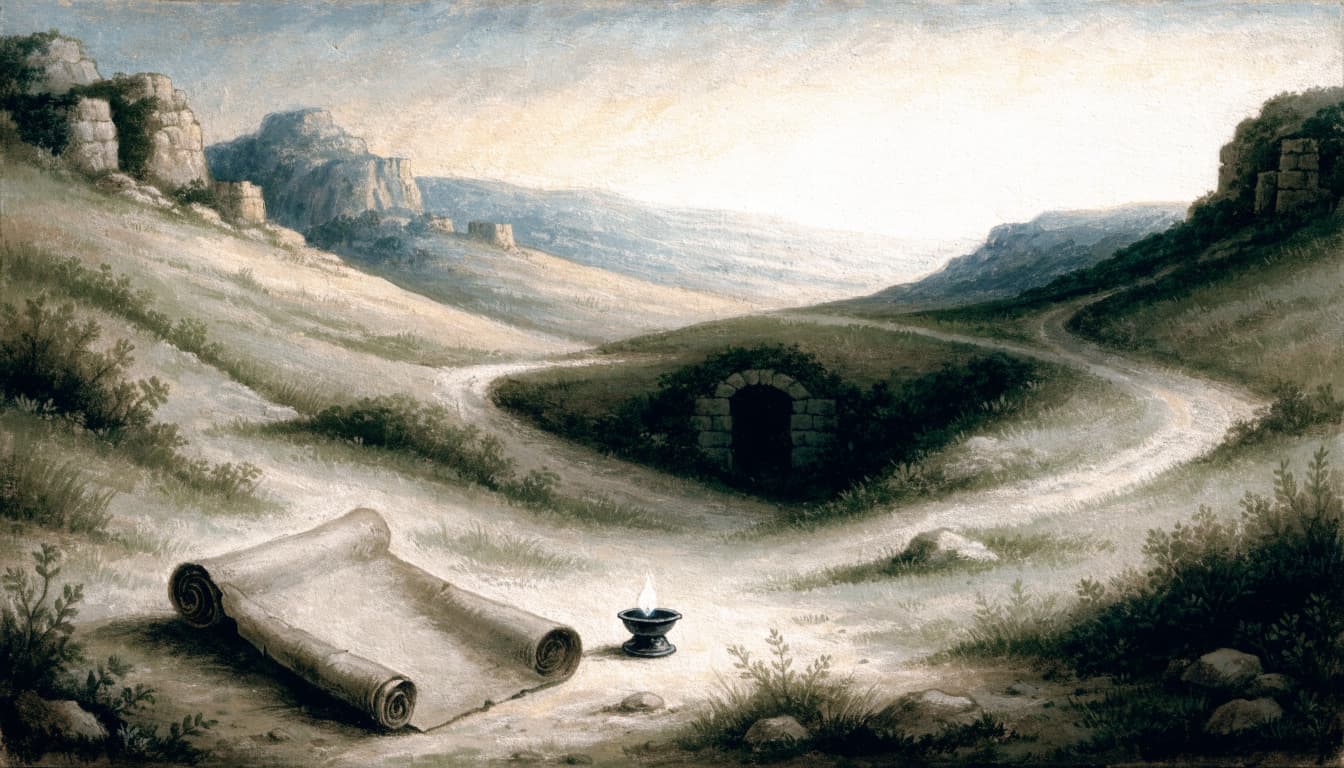
Matthew 24:15-28 calls for alertness, but it doesn't ask us to live in fear or treat every alarming claim as fulfillment. Jesus gives His followers a way to stay grounded: pay attention to what He actually says, test claims carefully, and keep our trust in Him.
Respond with wisdom rather than fear
First, observe the passage's order. Jesus describes a warning sign, gives people in Judea instructions to flee, speaks of great distress, and then cautions against false messiahs and prophets. Keeping that sequence in view helps us avoid pulling one vivid phrase out of context and turning it into a prediction about today's headlines.
Next, separate what the text says clearly from what we infer. Jesus warns against claims that the Christ has appeared in a hidden location. Christians differ on how the abomination of desolation and the tribulation relate to AD 70 and future events. We can take His warning seriously without pretending that every detail has one agreed interpretation.
Read the surrounding discourse in Matthew 24, and return to Daniel's context, especially the passages Jesus invokes. Scripture interprets Scripture, but that doesn't mean every connection answers every question. We should resist forcing a timeline onto the text when the passage itself doesn't give one.
And when a spiritual claim feels urgent, don't test it alone or in a rush. We believe the Holy Spirit is active, and we also believe prophetic words should be weighed. Paul tells believers to test all things and hold fast to what is good. Seek counsel from mature Christians who know Scripture and won't pressure you to accept a claim because it sounds dramatic. For more on this practice, see how Scripture teaches Christians to discern prophecy.
Readiness, then, means staying attentive and faithful, not chasing rumors or setting dates. If a message demands panic, secrecy, or unquestioning loyalty to a particular claimant, pause and bring it back to Jesus' words.
Hold fast to Jesus when claims compete
Jesus sets a clear contrast: false claims point people toward hidden places, but His coming will be unmistakable, like lightning visible across the sky. That image gives us a steady measure when someone insists they have exclusive information about where Christ is or when He has appeared.
We don't need to dismiss every spiritual experience, and we shouldn't treat signs as proof on their own. We can test what we hear against Scripture, seek wise counsel, and ask whether a message keeps Jesus at the center. Our confidence rests in Christ, not in spectacle or rumor.
Christians may continue to disagree about the timing and scope of the tribulation. We can acknowledge those differences without losing the main call of the passage: stay watchful, refuse deception, and trust God's care. When competing claims grow loud, hold fast to Jesus and the words He gave His followers.
Conclusion
Matthew 24:15-28 connects Daniel's warning with an urgent call to flee, a time of severe distress whose days are limited, and Jesus' clear caution against deceptive claims about where the Messiah can be found. Christians differ on how these events relate to Jerusalem's fall in AD 70 and to future events, so we should be careful not to treat one timeline as settled.
The passage's steady call is clear: remain faithful to Jesus, and test spiritual claims by Scripture. Impressive signs and confident voices don't replace His words. When rumors compete for our attention, we can hold fast to Christ and refuse deception. Explore Jesus' warning against end-times deception.
A Warning for Days of Distress
Why Jesus Foretold Tribulation and Deception
In Matthew 24:15–28, Jesus warns of a devastating crisis that begins when the “abomination of desolation” stands in a holy place. Those in Judea must flee without delay, for the suffering that follows will be severe. Yet physical danger is not His only concern: false messiahs and false prophets will claim authority and perform impressive signs to mislead people. Jesus prepares His followers to respond with urgency and discernment, trusting His warning rather than chasing reports of a hidden deliverer. His return will not depend on rumor; it will be unmistakable.
When the Desolating Sign Appears
Jesus points readers to Daniel’s prophecy when He speaks of the “abomination of desolation” standing in the holy place (Matthew 24:15). The image signals a grave desecration and a warning that the time for hesitation has passed. His instructions are strikingly practical: those in Judea should flee to the mountains, leaving possessions behind rather than returning from the rooftop or the field. He expresses particular concern for pregnant women and nursing mothers and tells His followers to pray that their flight will not occur in winter or on a Sabbath. Whatever questions remain about the prophecy’s full fulfillment, the passage makes Jesus’ immediate command clear: recognize the warning and act without delay.
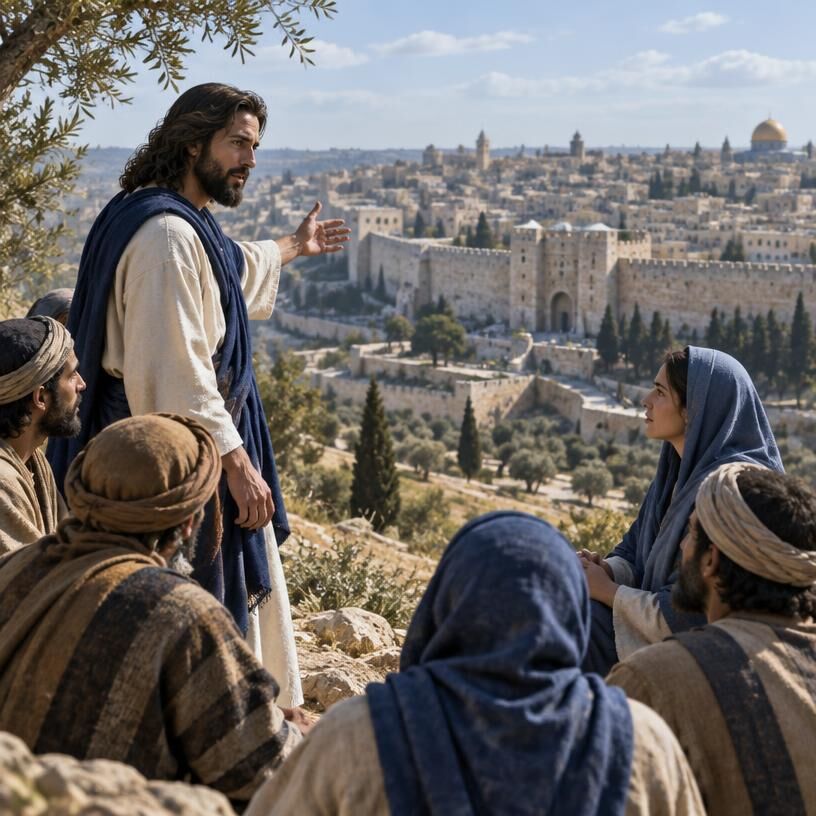

“For then shall be great tribulation, such as was not since the beginning of the world to this time, no, nor ever shall be. And except those days should be shortened, there should no flesh be saved: but for the elect’s sake those days shall be shortened.”
Jesus Christ, Matthew 24:21–22 (KJV)
Recognizing Deception in the Great Tribulation
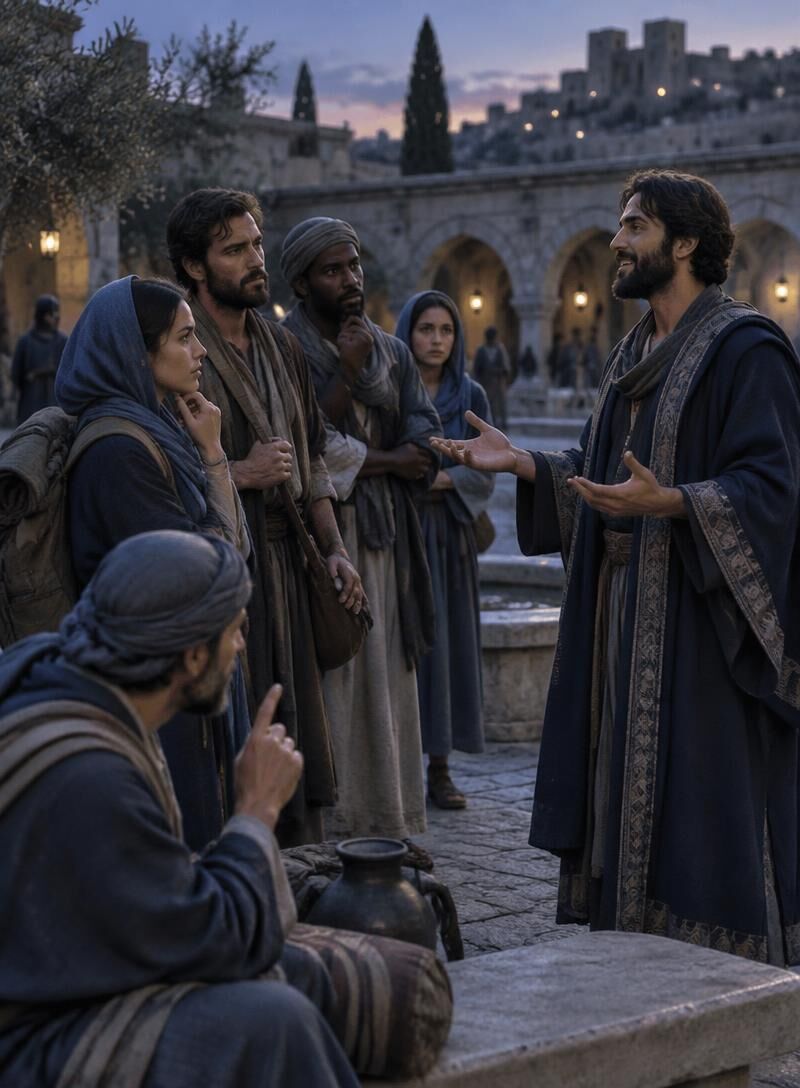
Claims of a Hidden Messiah
Jesus warns that claims of finding the Christ in the wilderness or in a secret chamber are not to be believed (Matthew 24:26).
Signs That Mislead
False messiahs and false prophets will perform great signs and wonders, seeking to deceive even the elect, if that were possible (Matthew 24:24).
The Unmistakable Coming of Christ
Jesus contrasts secret claims with His visible return, likening the coming of the Son of Man to lightning shining across the sky (Matthew 24:27).
The Great Tribulation in the Prophetic History
Bible Prophecy Ministries explores what Scripture says has happened, what is yet to come, and how it all centers on Jesus. In Matthew 24:15–28, Jesus points to the abomination of desolation spoken of by Daniel, warns those in Judea to flee, and describes a time of unparalleled tribulation. His warning about false messiahs and prophets prepares readers to reject deceptive claims while awaiting His unmistakable return. Read alongside Daniel’s prophecy and the wider New Testament witness, this passage connects the events of the great tribulation to the hope of Christ’s coming. Our mission is to help readers follow those connections carefully, keeping Jesus’ words—not speculation—at the center.
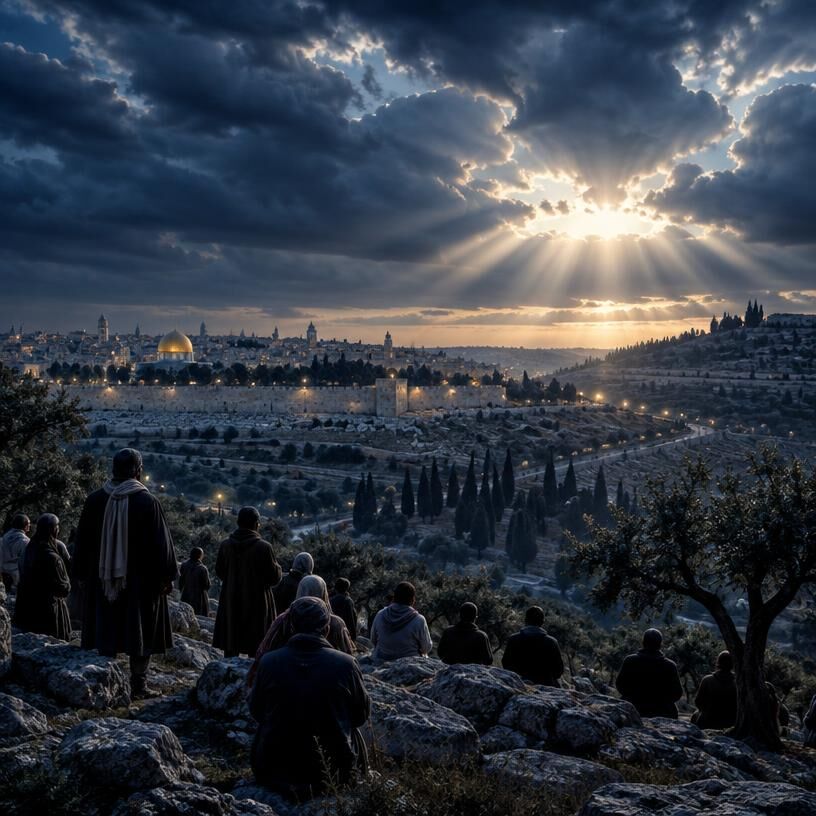
The Great Tribulation and Christ’s Unmistakable Return
In Matthew 24:15–28, Jesus warns His disciples that the appearance of the abomination of desolation will usher in a time of extraordinary distress. His instructions to flee convey the urgency of that hour, while His words about the days being shortened show God’s care for His people even amid suffering.
Jesus also warns that false messiahs and false prophets will perform impressive signs. Their claims may direct people to a secret place or a distant wilderness, but His followers need not chase such reports. The coming of the Son of Man will not depend on rumors or hidden revelations: it will be as unmistakable as lightning flashing across the sky. In a passage filled with danger and deception, Jesus calls His people to hold fast to His words and keep their hope fixed on Him.