
Bible Prophecy Ministries
The Testimony of Jesus is the Spirit of Prophecy
Prophetic Keystone • John 14:6
Prophecy
Reveals
Our
Messiah
In
Scripture
Every
Day
From the Torah’s covenants to Revelation’s fiery visions, all Biblical prophecy points to one person: Jesus, The PROMISED Messiah, revealed to Israel and the nations. He is the Way, the Truth, and the Life.
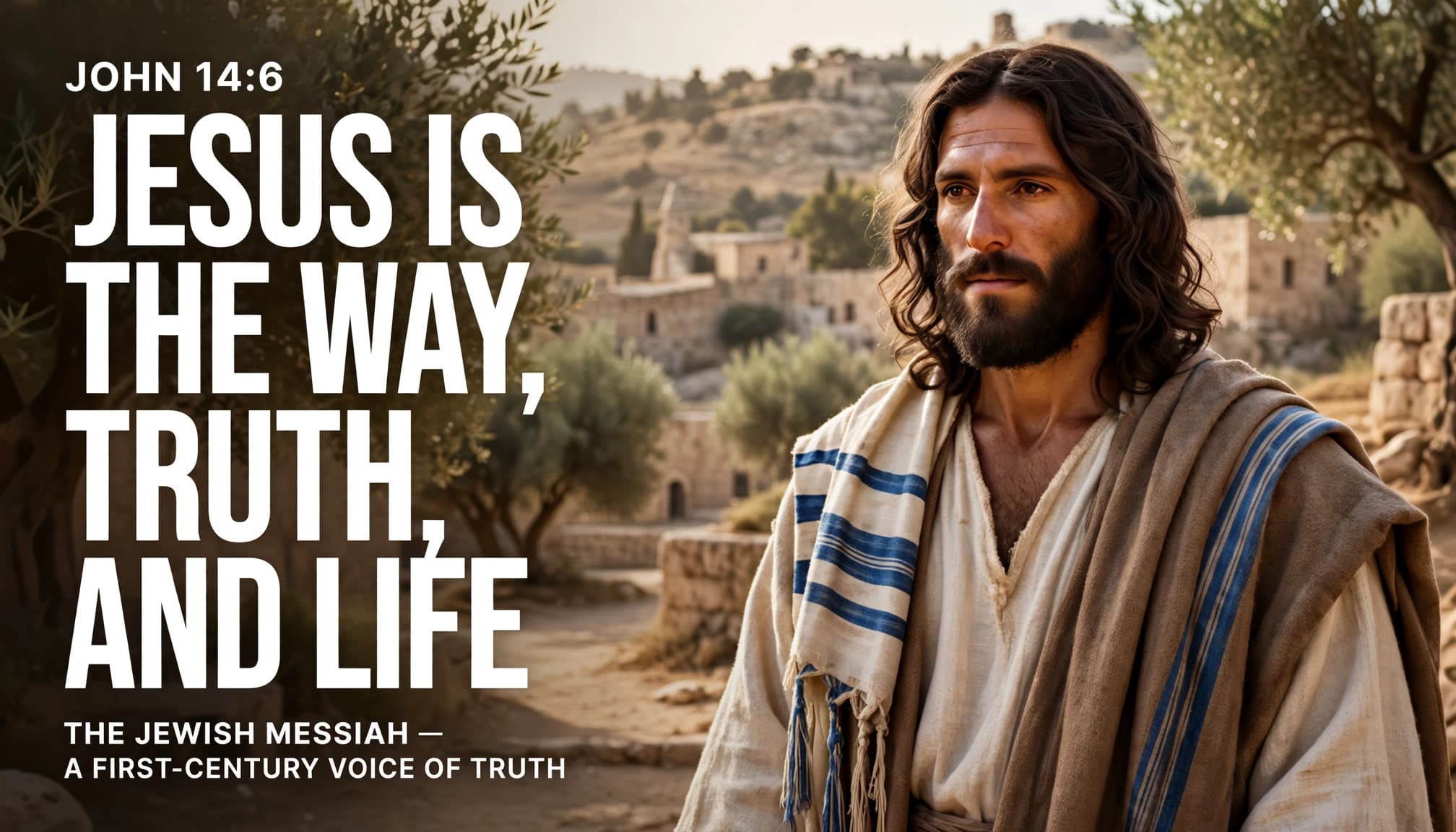
The Heart of Apocalyptic Revelation
The Testimony of Jesus is the Spirit of Prophecy
“At this I fell at his feet to worship him. But he said to me, ‘Don’t do that! I am a fellow servant with you and with your brothers and sisters who hold to the testimony of Jesus. Worship God! For it is the Spirit of prophecy who bears testimony to Jesus.’”
— Revelation 19:10
Faithful and True
The Rider on the white horse judges and wages war with perfect righteousness. Every prophetic warning in Scripture bears witness to His unchanging faithfulness.
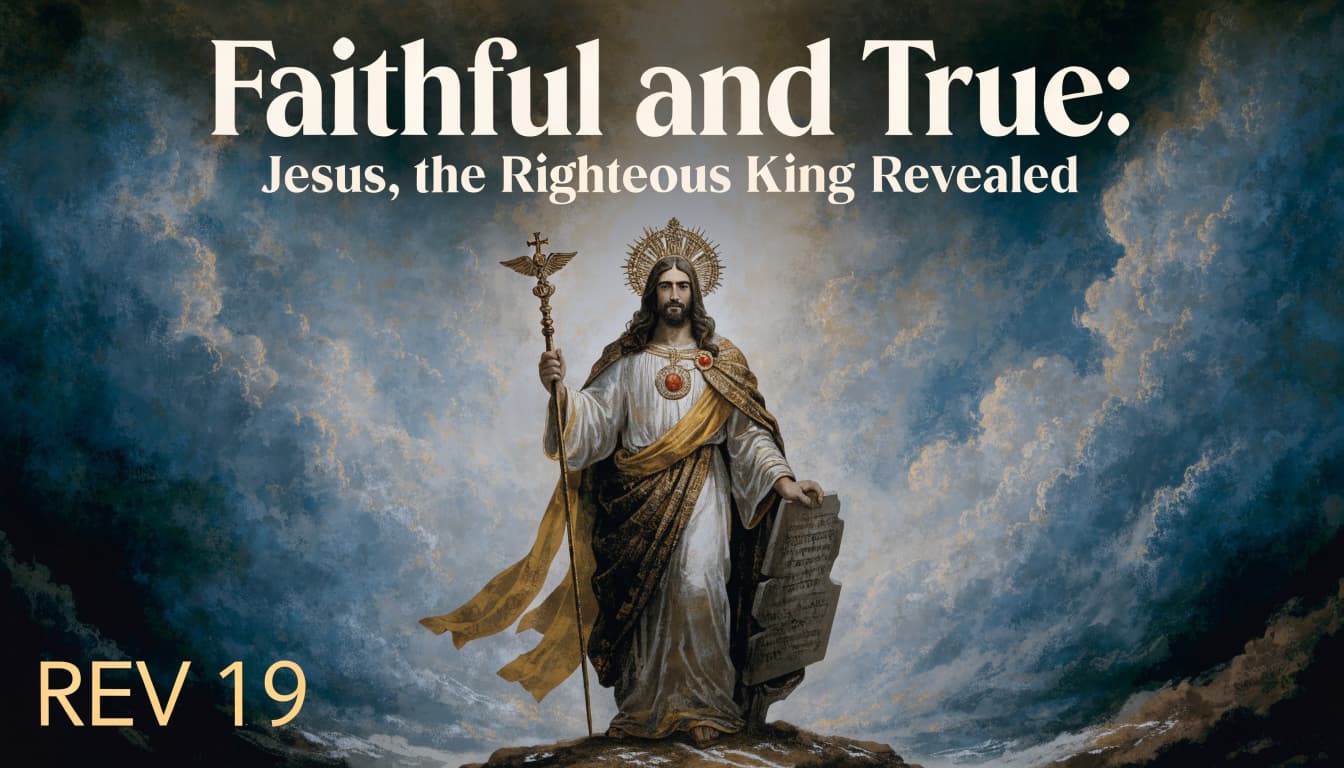
King of kings and Lord of lords
Earthly dynasties and empires foretold in prophecy will one day give way to the sovereign rule of the risen Christ. Human kingdoms rise and fall, but Christ’s reign endures forever.
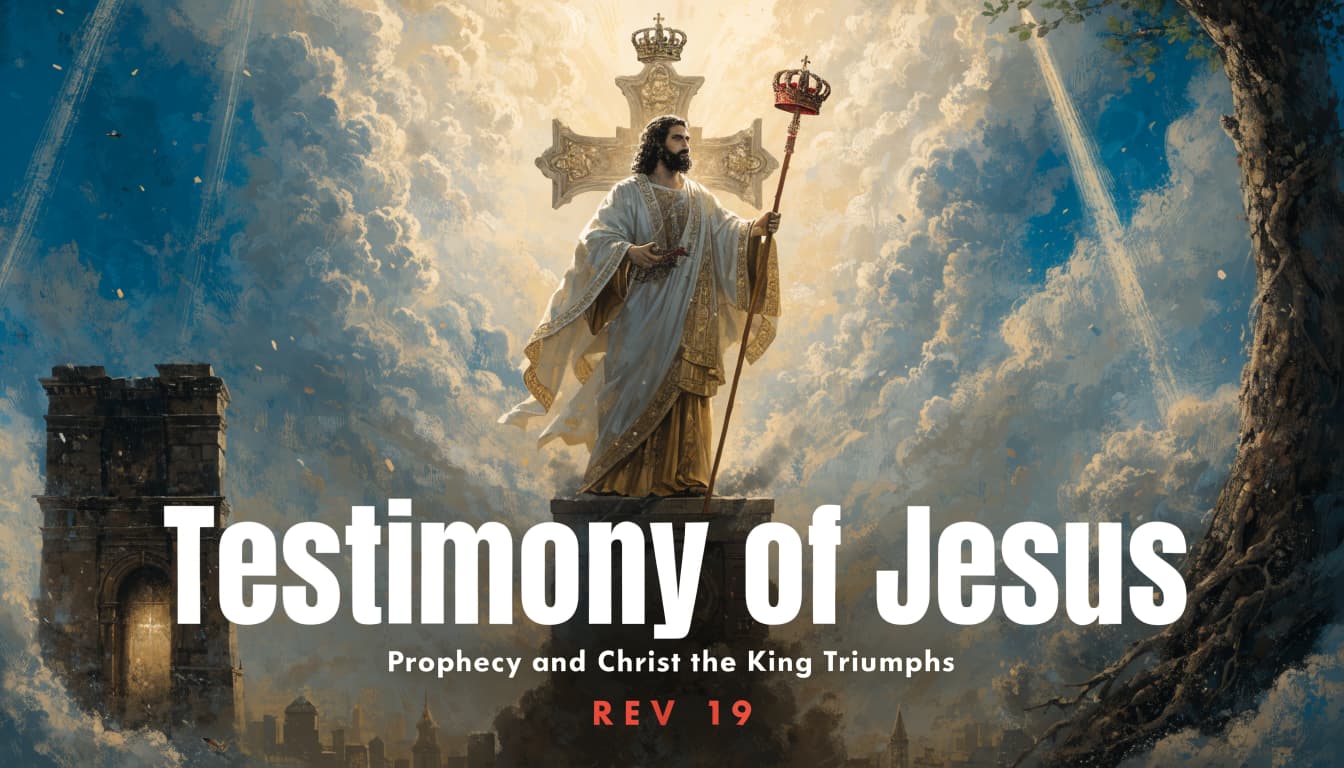
 Testimony of Jesus: Prophecy and Christ the King Triumphs – REV 19The Testimony of Jesus: Prophecy and the King of Kings
Earthly rulers and empires can look permanent, but Scripture points us to the risen Jesus as the true and lasting King. In Revelation 19, the angel’s words about “the testimony of Jesus” lead directly into John’s vision of Christ as “King of kings and Lord of lords.”
What does prophetic witness have to do with Christ’s rule? We’ll look at what Revelation 19:10 means, how Daniel and Revelation portray human kingdoms, and what this means for Spirit-filled believers today. Christians don’t agree on every detail of prophetic interpretation, but the central call is clear: worship God and bear witness to Jesus.
Let’s begin with the angel’s words and the testimony of Jesus in Revelation 19.
What “The Testimony of Jesus Is the Spirit of Prophecy” Means
Revelation 19:10 can sound like a puzzle, but John’s vision gives us a clear starting point. He falls before an angel, and the angel refuses the worship, telling him to worship God. The words about prophecy explain the shared witness of God’s servants, not a special status for angels or prophets.
Prophecy points worship toward God
John is overwhelmed by what he sees and hears. But the angel’s answer is direct: he is a fellow servant, and John must worship God. Prophetic ministry serves God. It does not invite worship of angels, prophets, or people with a public platform.
That matters today, too. A prophetic word may be striking, but the person delivering it is still a servant. If a message draws attention to human fame instead of Jesus, we should test it carefully. Revelation’s own pattern is plain: God receives worship, and prophetic witness leads us to Jesus.
Two ways to understand “the testimony of Jesus”
Christians commonly read the phrase in two related ways. “The testimony of Jesus” can mean the testimony Jesus bears, as the One who reveals God’s message. It can also mean testimony about Jesus, the witness that proclaims who He is. Revelation calls Jesus “the faithful witness” (Revelation 1:5), and its opening chapter introduces John’s witness to God’s word and Jesus’ testimony (read Revelation 1 in the NKJV).
These readings can overlap. Jesus gives the message, and the Spirit can empower His servants to bear witness to Him. Revelation 12:17 describes believers who hold the testimony of Jesus, while the closing vision repeats the angel’s correction: worship God, alongside the prophets who serve Him.
What “the spirit of prophecy” means
The phrase “spirit of prophecy” has more than one interpretation. Some Christians hear an emphasis on the Holy Spirit inspiring prophecy. Others understand it as prophetic activity, or as the witness centered on Jesus. We don’t need to settle a debated Greek reading to see the shared point: true prophecy belongs to God and bears witness to Jesus.
As Pentecostals, we believe the Holy Spirit gives gifts for the good of the Church and the glory of Jesus. Those gifts should build up believers, not make the messenger famous. We see that same purpose in the Holy Spirit’s testimony about Jesus: the Spirit’s work directs attention to Christ.
So when we read Revelation 19:10, we should keep both parts in view. Prophecy is a gift from God, and its witness belongs to Jesus. The messenger serves; God receives worship.
How Revelation Presents Jesus as King of Kings and Lord of Lords
After heaven celebrates Babylon’s judgment, John sees heaven open and Christ appear as a victorious rider. The vision shifts our attention from the collapse of corrupt power to the One whose reign is righteous and lasting. We can read Revelation 19 in the NKJV with that contrast in mind.
Christ is Faithful and True
John first calls the rider “Faithful and True.” Those names tell us we can trust His judgment. Earthly rulers may promise justice and fail to deliver, but Christ judges and makes war “in righteousness” (Revelation 19:11). His authority is never separated from what is right.
The rider is also called “The Word of God” (Revelation 19:13). John presents Christ as God’s revealed Word, whose judgment exposes evil rather than disguising it. The image of a sharp sword coming from His mouth makes that point vivid: the weapon comes from His word. Revelation’s vision describes divine judgment; it does not call Christians to pursue political power or physical violence.
Isaiah 11:1-5 also pictures God’s anointed ruler judging with righteousness. Psalm 2 describes the Lord’s anointed King confronting rebellious rulers, while Daniel 7:13-14 portrays one like a Son of Man receiving everlasting dominion. These passages echo themes in John’s vision, though we don’t need to claim that every detail comes from one source.
The Lamb outranks every earthly ruler
The words on the rider’s robe and thigh declare Him “King of kings, and Lord of lords” (Revelation 19:16). Revelation uses the same title in 17:14, where the Lamb overcomes kings allied with the beast. The repeated words leave no doubt about the outcome: rulers who oppose God may seem powerful, but their authority is temporary. Christ is supreme.
This is the wider contrast running through Revelation 17-19. Babylon and the beast picture power that opposes God, while the Lamb reigns with justice. Christians differ on how closely these images point to ancient Rome, recurring patterns of empire, or a future end-time power. But John’s central point remains clear: no human kingdom can outlast Christ’s rule.
We see a related picture in Daniel 7, where dominion is given to the Son of Man and His Kingdom will not pass away. That promise keeps our attention on Christ’s authority, not on speculation about dates or a timetable. As we consider Jesus’ victory in Revelation 19, we can hold fast to the hope John gives us: the risen Jesus judges evil in righteousness, and every rival power must yield to Him.
What Daniel’s Visions Reveal About Earthly Empires and God’s Kingdom
Daniel’s visions put earthly power in perspective. Kingdoms rise, dominate, and fall, but God’s Kingdom endures. We see that contrast in two striking images: a statue shattered by a stone, and beasts judged before the Ancient of Days.
Daniel 2: A statue and a stone
In Nebuchadnezzar’s dream, a great statue has a head of gold, chest and arms of silver, belly and thighs of bronze, legs of iron, and feet made partly of iron and partly of clay. Daniel explains that the materials picture successive kingdoms, though Christians differ over which empires each part represents. We can read the full vision in Daniel 2 in the NKJV.
Then a stone, “cut out without hands,” strikes the statue and breaks it apart. The stone grows into a great mountain that fills the earth. Daniel says God will establish a Kingdom that will never be destroyed and will outlast every human kingdom (Daniel 2:44-45).
The stone belongs to Daniel 2’s vision. We shouldn’t merge it with the figure in Daniel 7, even though both visions point to God’s rule over human powers.
Daniel 7: Beasts judged, dominion given
Daniel’s next vision is more unsettling. Four beasts rise from the sea, and the chapter interprets them as kings or kingdoms. Their fierce appearance shows what rule becomes when power turns oppressive. But the beasts do not rule forever. The Ancient of Days takes His seat in judgment, and their dominion is removed. The entire vision of Daniel 7 in the NKJV makes the contrast clear.
Daniel then sees “One like the Son of Man” coming with the clouds of heaven. He receives dominion, glory, and a Kingdom that will never pass away (Daniel 7:13). Unlike the stone in Daniel 2, this is a humanlike figure receiving authority from God. We Christians see this vision as pointing us to Jesus, the Son of Man and King whose reign does not end. For more on that connection, see Daniel’s visions of God’s lasting Kingdom.
Revelation carries Daniel’s contrast forward
Revelation draws on Daniel’s beast and Kingdom imagery. Its beasts embody power opposed to God, while its vision of Christ declares that oppressive rule will not have the final word. The pattern is familiar: kingdoms may look permanent from the ground, but God judges them, and His Kingdom remains.
Christians differ over how to identify Daniel’s kingdoms and how these visions relate to future events. Some connect the symbols to particular ancient empires; others see recurring patterns of oppressive rule, future fulfillment, or both. We don’t need an empire-by-empire chart to grasp Daniel’s central message: human power is temporary, and God’s Kingdom is everlasting.
How Babylon and the Beast Show the Limits of Worldly Power
Revelation 17–19 takes us through Babylon’s alliance with the beast, the city’s destruction, heaven’s response, and Christ’s victory. The movement is deliberate: what looks untouchable on earth cannot stand before God’s judgment.
Babylon’s influence reaches beyond armies
In Revelation 17, John sees a woman called Babylon seated on a scarlet beast. The vision joins the city’s influence to political rulers and their power. Yet Babylon’s reach is not only military. The imagery also points to idolatry, luxury, and influence over the kings of the earth. The beast eventually turns against the woman, exposing how unstable their alliance is.
Many interpreters see Rome as a strong historical candidate for Babylon’s first-century setting. The city ruled over kings, and John’s vision mentions seven mountains, details that fit the way ancient readers could understand Rome. Still, Christians interpret the symbols in different ways. Some see Rome as the immediate referent and Babylon as a recurring picture of corrupt power opposed to God. Others also expect a final end-time expression. These readings should remain distinct, and we should be careful about labeling a modern nation, leader, or institution as Babylon without clear support from the text.
The city’s wealth cannot save it
Revelation 18 turns our attention to Babylon’s economic power. Kings mourn the city’s fall, and merchants grieve because their market for luxury goods has disappeared. Seafarers watch the smoke rise from a distance. Their grief reveals what Babylon’s grandeur depended on: political alliances, profitable trade, and a lifestyle built on excess.
Then heaven responds with praise, while the merchants and rulers lament. That contrast matters. The people who benefited from Babylon see its judgment as disaster; heaven sees God’s justice. We can read Revelation 19 in the NKJV, where the celebration over Babylon’s fall leads into the marriage supper of the Lamb and the appearance of Christ as the victorious King.
The Lamb has the final word
Babylon’s rulers and merchants appear powerful while the city prospers. But the beast’s alliance breaks apart, and the city falls. Then Christ appears as “Faithful and True,” and the title “King of kings, and Lord of lords” makes the contrast unmistakable. His authority does not depend on wealth, political bargains, or forceful loyalty.
Revelation’s vision calls us to worship God, not to imitate Babylon’s hunger for influence. When a system demands the kind of ultimate loyalty that belongs to God, its power has limits, even if it looks secure for a time. The beast and false prophet are defeated in the vision, a judgment also described in Revelation’s account of the Antichrist’s defeat. The Lamb’s Kingdom endures, and no empire can take His place.
What Spirit-Filled Prophecy Should Produce in the Church
Revelation 19:10 gives us a clear test for prophetic ministry: its testimony belongs to Jesus, and worship belongs to God. In the Church, prophecy should help people see Christ more clearly and serve one another faithfully. A spiritual gift can encourage us, correct us, or strengthen our faith, but it never puts the messenger above Scripture or beyond correction.
Prophecy should honor God and exalt Jesus
The angel in Revelation 19:10 refuses John’s worship and points him to God. That moment sets a boundary for every prophetic ministry: no prophet, preacher, or person with a spiritual gift should receive the honor that belongs to God.
Prophecy also bears witness to Jesus. A message may include personal encouragement or direction, but it should never pull attention away from Christ or contradict what He has revealed in Scripture. We believe the Holy Spirit gives gifts to serve the Church, not to build a platform for the person who uses them. That is part of how the Spirit’s gifts strengthen the Church.
Prophecy should build up the Church
Paul teaches that the Spirit gives different gifts “for the profit of all.” His list includes wisdom, knowledge, faith, healing, prophecy, and discernment (1 Corinthians 12:7-11 in the NKJV). These gifts are not badges of spiritual rank. They are ways the Holy Spirit equips believers to serve one another.
So what should prophecy produce? Strength, encouragement, correction that draws us toward God, and a clearer witness to Jesus. We should welcome the Spirit’s work while remembering that gifted people remain human. They can misunderstand an impression, speak too quickly, or need correction. Humility belongs in the pulpit and in the pew.
Prophetic words must be tested
Paul does not tell the Church to dismiss prophecy, and he does not tell believers to accept every claim automatically. He says to test everything, hold fast to what is good, and abstain from evil (1 Thessalonians 5:19-22 in the NKJV). Testing is not unbelief. It is part of faithful discernment.
We can ask whether a prophetic word agrees with Scripture, honors Jesus, and serves the Church. A claim that demands unquestioning obedience, celebrates the messenger, or stirs fear deserves careful examination. Prophecy should not be used to predict political outcomes with certainty or pressure people through frightening claims. We depend on the Holy Spirit, remain accountable to Scripture, and leave room for the Church to weigh what is spoken.
That balance matters. We should neither despise prophecy nor surrender discernment. The Spirit’s gifts belong in a humble, Christ-centered Church, where believers can speak and serve while remaining open to correction.
How Christ’s Sovereignty Shapes Christian Hope and Daily Allegiance
Revelation’s vision of Christ’s victory and Daniel’s picture of an everlasting Kingdom give us hope when earthly powers seem overwhelming. That hope changes how we live now. We can resist the worship of power, wealth, and influence because our allegiance belongs to Jesus, the King of kings.
Christ’s reign gives us hope without denial
Daniel saw one like the Son of Man receive dominion and an everlasting Kingdom (Daniel 7:13-14 in the NKJV). Revelation carries that hope into its vision of Jesus, whose title, “King of kings and Lord of lords,” declares that no rival power has the final word. We can read Revelation 19 in the NKJV with that promise in view.
Trusting Christ’s sovereignty doesn’t mean pretending suffering is small or that every crisis has an obvious prophetic label. Christians may disagree about how Revelation’s images relate to Rome, recurring patterns of empire, or future events. We should be careful about claiming that a current conflict or leader fulfills a specific prophecy when Scripture doesn’t make that identification clear.
The promise of Christ’s reign steadies believers because injustice and grief do not get the final word. We can lament what is wrong, care for people who suffer, and keep looking to the King who judges in righteousness.
Allegiance to Jesus changes what we refuse
If Christ is Lord, then no ruler, institution, or public movement deserves the worship that belongs to God. That doesn’t mean every form of civic participation is idolatry. It means we must refuse demands that ask us to excuse evil, abandon truth, or treat political loyalty as ultimate.
Revelation portrays Babylon’s wealth and influence as temporary, while Daniel’s visions show human kingdoms giving way to God’s Kingdom. These images challenge our own appetites, too. Greed, status, and the desire to control others can claim our loyalty just as surely as a public ruler can. We follow Jesus’ commands and faithful obedience by loving God and our neighbor, even when that choice costs us approval or advantage.
Faithful witness keeps worship centered on God
John’s encounter with the angel brings the point close to home. The angel refuses worship and tells him to worship God, linking prophetic witness to service rather than personal glory (Revelation 19:10). The same call shapes our daily allegiance: we bear witness to Jesus without turning a preacher, political cause, or prophetic claim into an object of trust.
As we await God’s final justice, faithfulness can look ordinary: prayer, compassion, truthful speech, and integrity when no one is applauding. We don’t have to predict every detail of the future to live in hope. We can worship God, serve our neighbors, and testify to Jesus, confident that His Kingdom will endure.
Conclusion
Revelation brings prophetic witness and Christ’s kingship together: prophecy bears testimony to Jesus, and worship belongs to God. The angel’s words keep the messenger in the right place, while Daniel and Revelation remind us that corrupt rule will end and God’s Kingdom will endure.
As Spirit-filled believers, we can welcome the Holy Spirit’s gifts with humility, letting our words point people to Jesus rather than ourselves. Earthly powers rise and fall, but the risen Christ remains King of Kings and Lord of Lords. We can keep bearing faithful witness and trust Jesus’ coming Kingdom on earth.
! […]
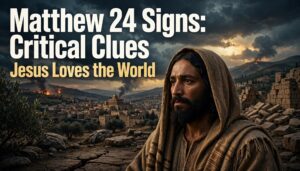 Matthew 24 Signs: Critical Clues Jesus Loves the WorldMatthew 24 Explained: The Temple, Jesus’ Coming, and the End
Jesus had just foretold that the Temple would be torn down, and His disciples wanted to know when it would happen. They connected that warning with His coming and the end of the age, then asked Jesus for the signs.
In Matthew 24, Jesus gives real warnings and promises, but He doesn’t hand His followers a calendar for setting dates. As independent, Spirit-filled Pentecostal authors, we believe we should read His words in their Biblical context and keep our eyes on Him, not on speculation. You can also explore how to read the Olivet Discourse in context.
So, what did the disciples ask, and how did Jesus answer? Let’s start where the conversation began: at the Temple.
The Questions Behind Matthew 24 Begin at the Temple
Matthew 24 opens with a striking change of scene. Jesus leaves the temple, His disciples point out its buildings, and He predicts that they will be torn down. Later, on the Mount of Olives, they ask Him when this will happen and what signs will accompany His coming and the end of the age (Matthew 24).
Those questions belong together because Jesus’ temple prediction prompted them. But we should be careful not to assume the disciples understood every event or that Jesus’ answer places everything on one timeline.
What the disciples asked, and what they may have assumed
In Matthew 24:3, the disciples ask about three subjects: when the temple’s destruction will happen, what sign will mark Jesus’ coming, and what sign will mark the end of the age. Their wording connects these matters, but it doesn’t prove they expected them to happen at the same time. They may have assumed the temple’s fall, Jesus’ coming, and the end would arrive as one combined event. The wording alone doesn’t settle that question.
The phrase “end of the age” also deserves care. It doesn’t automatically mean the end of the physical planet. Matthew’s wording points to the conclusion of an age or order, while the passage’s full meaning must be read in context. We shouldn’t make the phrase say more than it does, or turn it into a confident timeline before considering Jesus’ whole answer.
The parallel accounts help us see what Matthew emphasizes. In Mark 13:1–4 and Luke 21:5–7, the disciples ask when “these things” will happen and what sign will show they are about to take place. Matthew explicitly includes “Your coming” and “the end of the age.” That difference matters, but it doesn’t give us permission to treat the accounts as though they contradict each other. Each Gospel frames the question in its own words.
Why the Mount of Olives setting matters
The setting keeps the temple prediction in view. Jesus had just said its buildings would be thrown down, and the disciples wanted to know when. When He sits on the Mount of Olives, their questions arise from that warning, not from a detached discussion about world events.
That’s why the temple’s fall belongs at the center of Matthew 24’s Biblical context. If we skip it and jump straight to later signs, we can miss the concern that started the conversation. Jesus does address His coming and the end of the age, but we need to read those teachings alongside the specific prediction that brought His disciples to ask their questions.
Jesus’ warning about the temple also connects with Daniel’s prophecy, which readers often consider when studying this passage. We can explore Daniel 9 and the Olivet Discourse without treating that connection as a complete timeline. The temple prediction sets the scene; it doesn’t, by itself, resolve every question about the timing of the events that follow.
Jesus Warns of Deception, Conflict, and the Need to Endure
After the disciples ask about the temple, Jesus turns first to the danger of being misled. He speaks about conflict and hardship, but He also tells His followers how to respond: stay alert, endure, and keep the Gospel of the Kingdom moving forward. We can read His words in Matthew 24:4-14 in the NKJV.
Why signs of trouble are not a prophetic countdown
Jesus begins with a direct warning: “Take heed that no one deceives you.” False messiahs will come, and people will claim to speak in His name. Wars, rumors of wars, famines, and earthquakes will follow. Yet Jesus tells His disciples not to panic, because these events are “the beginning of sorrows,” not proof that the end has arrived.
That distinction matters. A war breaks out, a disaster dominates the news, or a leader claims special prophetic insight, and suddenly people start building a timetable. But Jesus doesn’t give His followers permission to treat each headline as a countdown. He warns us against deception precisely because fear and certainty can make false claims sound convincing.
The events He names are serious. They bring real suffering, and they may tempt people to draw quick conclusions. Still, Jesus says the end is not yet. We should take His warning seriously without claiming that every crisis is a direct prophetic sign or assigning dates the chapter does not give.
Christians interpret later passages about tribulation in different ways. We can study those questions, including Jesus’ warnings about trials and tribulation, while holding firmly to what He says here: don’t be deceived, and don’t confuse distress with a schedule.
How disciples endure while the Gospel goes forward
Jesus doesn’t promise His disciples an easy path. He says they will face hatred, betrayal, and persecution because of His name. Some will stumble, and false prophets will deceive many. As lawlessness increases, love will grow cold. These are difficult words, but Jesus also gives a clear call: the one who endures to the end will be saved.
Endurance is more than waiting for trouble to pass. It means remaining faithful to Jesus when pressure rises, refusing to let hatred shape our witness, and continuing to trust Him when the future feels uncertain. We don’t need to pretend hardship is easy. We do need to keep following Him through it.
Then Jesus gives this part of the passage a mission focus: the Gospel of the Kingdom will be preached throughout the world as a witness to all nations. The disciples’ attention could have been fixed on conflict and catastrophe. Jesus points them toward the work still ahead.
As Spirit-filled Pentecostal believers, we affirm the continuing call to Spirit-empowered witness. The Holy Spirit equips the Church to testify about Jesus, even in difficult times. That doesn’t mean every crisis is a prophetic marker. It means our response to trouble should include faithful witness, not speculation alone.
So when headlines stir fear or someone claims to know exactly what comes next, we can return to Jesus’ words. He calls us to discernment, endurance, and Gospel proclamation.
The Abomination of Desolation and the Great Distress
Jesus moves from general warnings to a specific crisis in Judea. In Matthew 24:15-28, He recalls Daniel’s prophecy, tells people what to do when danger arrives, and warns against false claims about His presence.
Why Jesus tells people in Judea to flee
Jesus refers to “the abomination of desolation” spoken of by Daniel (Daniel 9:27). He places it in a holy place and adds, “whoever reads, let him understand.” Then His instructions become direct: those in Judea should flee to the mountains.
The urgency is plain. A person on the housetop shouldn’t go back inside to gather belongings, and someone in the field shouldn’t return for a cloak. Jesus even says to pray that the flight won’t happen in winter or on the Sabbath. These details make the warning concrete: people facing danger need to act quickly, with real limits on travel and movement.
We shouldn’t turn those instructions into an invitation to sensational speculation. Jesus is warning people about peril and telling them how to respond. The passage points readers toward alertness and obedience, not toward guessing dates from current events.
How to handle different readings of Daniel’s prophecy
Christians understand the abomination in different ways. Some connect it chiefly with first-century events surrounding Jerusalem’s fall in AD 70. Others expect a future fulfillment, often involving a later desecration of a holy place. Still others see a historical event that also forms a pattern pointing toward a future crisis. A university discussion of Matthew 24 describes the connection between Jerusalem’s destruction and Jesus’ warning.
These are interpretations of the passage, not an explicit timeline laid out in Matthew 24. The chapter does not name the specific historical event, give a date for a future fulfillment, or state that the distress lasts seven years. We can compare interpretations, including questions about Daniel’s final week and Jerusalem’s desolation, without claiming that every detail has been settled.
Jesus calls what follows “great tribulation,” a time of distress unlike any before it. He says the days will be shortened for the elect’s sake. Then He warns His followers not to trust reports that the Christ is hiding in a particular place. False claims may sound urgent, but Jesus says His coming won’t need secret directions or whispered announcements. Our task is to take His warning seriously and keep our confidence in Him.
The Son of Man, the Fig Tree, and the Meaning of the Signs
Jesus now describes cosmic signs, the coming of the Son of Man, and the gathering of the elect. These verses are vivid, but Christians differ on how they relate to Jerusalem’s fall and Jesus’ final return. Whatever interpretation we hold, Jesus places the certainty of His words at the center.
What Jesus promises about His coming
In Matthew 24:29-31, Jesus speaks of the sun being darkened, the moon losing its light, the stars falling, and the powers of the heavens being shaken. Then the sign of the Son of Man appears, the tribes of the earth mourn, and the Son of Man comes on the clouds with power and great glory. His angels gather the elect from the four winds.
This language draws on the prophetic imagery of Daniel 7:13-14, where one like a Son of Man comes with the clouds and receives dominion, glory, and an everlasting Kingdom. Jesus’ words connect His coming with that vision of divine authority. Christians still debate whether Matthew 24:29-31 describes the visible final return, judgment connected with Jerusalem’s fall, or a near event that foreshadows the final return. We should acknowledge those differences without making one debated reading sound settled.
What is clear is that Jesus is the center of the prophecy. The signs do not point us toward a clever date calculation or a hidden location. They direct our attention to the Son of Man, whose authority and promise stand firm. Jesus says that heaven and earth will pass away, but His words will not pass away (Matthew 24:32-35). That is the confidence we can hold, even when we disagree about the passage’s timeline.
What the fig tree teaches about timing
Jesus compares these signs to a fig tree: when its branches become tender and put out leaves, you know summer is near. In the same way, when the things He describes take place, His followers can recognize that the time is near. The picture teaches discernment, not a way to calculate an exact date. Jesus later says that no one knows the day or hour, so we should resist turning signs into a prophetic calendar.
Then comes the phrase “this generation,” which has prompted real disagreement. Some Christians understand it as the generation living when Jesus spoke, especially in connection with Jerusalem’s destruction. Others read it as the generation that sees the future events He describes, or as a broader reference to a kind of people. The phrase “all these things” raises another question: does it include the whole sequence, the events surrounding Jerusalem, or the signs immediately before the Son of Man’s coming?
We should read the fig-tree lesson alongside Jesus’ assurance that His words will stand. We may not agree on every detail of “this generation,” but the passage calls us to watch, trust Him, and take His teaching seriously.
Why Christians Read Matthew 24’s Timeline Differently
Jesus speaks with authority about judgment, His coming, and the faithfulness He expects from His followers. Christians agree on those central commitments, yet they disagree about how the events in Matthew 24 fit together. The difference often comes down to where readers place the chapter’s turning points.
Where interpretations agree, and where they differ
The chapter begins with Jesus’ prediction about the temple. Many Christians connect that prediction and parts of the following warnings with Jerusalem’s destruction in AD 70. Readings often called preterist emphasize this first-century setting, though the label covers a range of views. Some see most of the chapter fulfilled in that crisis; others see the event as a real fulfillment that also points ahead. A discussion of Matthew 24 and Jerusalem’s destruction offers one explanation of the first-century emphasis.
Other Christians, often called futurists, expect much of the chapter’s tribulation and the abomination of desolation to occur before Jesus’ future return. Some understand the passage as having both near and future horizons: Jerusalem’s fall fulfills part of the warning, while the final coming remains ahead. These approaches also intersect with how readers understand Daniel’s visions, including Daniel’s 70 weeks and Jesus.
The text itself predicts the temple’s destruction, describes distress and cosmic signs, and promises the Son of Man’s coming (Matthew 24:1-35 in the NKJV). Interpreters differ over how much of that sequence belongs to the first century, how much lies in the future, and whether some events speak to both. They also debate the scope of “this generation” and whether the abomination refers chiefly to a past desecration, a future one, or a pattern with more than one horizon.
The same care applies to the shift around verse 36. Jesus says that no one knows the day or hour (Matthew 24:36 in the NKJV). Some readers take this as a clear transition from Jerusalem-related events to the final coming. Others read the chapter as one continuous account of end-time events. The transition is a debated interpretation, not a heading Jesus places in the text.
How to read disputed passages with care
We can start by following Matthew’s sequence rather than pulling a striking phrase out of context. Then compare Mark 13:1-37 and Luke 21:5-36. Their accounts add detail and help us notice what each Gospel emphasizes.
It also helps to separate what Scripture says from what a particular timeline infers. Jesus says to watch and remain faithful because the hour is unknown (Matthew 24:36-51 in the NKJV). A proposed sequence connecting every sign to a specific modern event is an interpretation, not a direct quotation from Him.
As Spirit-filled Pentecostal believers, we take Jesus’ warnings seriously and hold to His future return. We don’t assume every Pentecostal shares one timeline, or that our own reading settles every question. We can disagree about chronology while keeping Jesus’ authority, coming judgment, and call to faithfulness firmly in view.
The Unknown Day Calls for Watchfulness, Not Date-Setting
Jesus’ teaching in Matthew 24 in the NKJV, especially verses 36-51, turns our attention from predicting the date to living faithfully. The day and hour are unknown, so His followers are called to stay ready. We can debate how the chapter’s earlier events fit together, but Jesus’ practical instruction here is clear: watch, serve, and obey.
How the examples of Noah and the watchful householder work
Jesus says that life carried on as usual in the days of Noah. People ate, drank, and married until the flood came. They weren’t prepared for what was coming, and the suddenness of the judgment is the point of the comparison. Jesus is teaching that His coming will catch people by surprise, not giving us clues for calculating when it will happen. He makes that limit explicit: no one knows the day or hour.
The householder example makes the same point in a different way. If a homeowner knew when a thief would arrive, he would stay awake at that time. Since he doesn’t know, he must remain watchful. Jesus uses this image to call His disciples to readiness at all times.
We should be careful not to build claims about salvation or judgment on the comparison of people being taken and left. Jesus’ clear emphasis in these verses is the unexpected hour and the need to be ready. A date-setting claim may attract attention, but it goes beyond what Jesus says.
What faithful readiness looks like in daily life
Jesus follows these examples with a picture of a faithful and wise servant. The master leaves him in charge of the household and expects him to provide food at the proper time. When the master returns, the servant is found doing the work he was given. Readiness, then, is more than watching the sky or discussing signs. It means being faithful with the responsibilities Jesus has placed before us.
The wicked servant thinks the master is delayed and begins mistreating others. The master returns at an hour he doesn’t expect, and the servant faces judgment. Jesus warns that delay is no excuse for disobedience. Our conduct matters while we wait.
As Spirit-filled Pentecostal believers, we connect readiness with watchfulness, endurance, and Spirit-led witness. The Holy Spirit empowers us to testify about Jesus and serve others faithfully. We don’t need to turn every crisis into a timetable. We need to keep obeying Jesus, loving His people, and sharing the Gospel while we await His return.
Conclusion
Matthew 24 begins with Jesus’ warning about the temple, then turns to signs, hardship, and the promise of the Son of Man’s coming. Christians may differ on how the events fit together, but Jesus’ commands remain clear: reject deception, endure, proclaim the Gospel of the Kingdom, and stay watchful.
We can take His promise seriously without trying to set a date. Our hope rests in Jesus, and faithful readiness means continuing to follow Him as we await His return. For more on Jesus’ prophecy about Jerusalem’s destruction, we can keep the temple warning in view as we read the chapter.
! […]
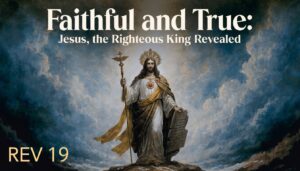 Faithful and True: Jesus, the Righteous King Revealed – REV 19Faithful and True: Jesus, the Righteous Rider of Revelation 19
When heaven opens in Revelation 19, the Rider on the white horse is called “Faithful and True.” His name carries a clear promise: Jesus is completely trustworthy, and He will judge and make war in righteousness. (Read Revelation 19 in the NKJV)
This vision warns of coming judgment, but it also gives hope to everyone who trusts Christ. We see how its prophetic roots point to God’s faithfulness, and why the promise of Jesus’ return calls us to live faithfully now.
Let’s look closely at the Rider and what His title means for us. For more on Jesus as the returning King in Revelation 19, we can keep the focus where the vision places it: on Christ.
Faithful and True: The Rider on the White Horse Judges in Righteousness
In Revelation 19:11-16, heaven opens, and the returning King appears. The vision gives us vivid images, but its central message is clear: Jesus is Faithful and True, and His judgment is righteous.
What Revelation 19 Shows About the Returning King
John sees heaven opened and a white horse. Its Rider is called “Faithful and True,” and He judges and makes war in righteousness. His eyes are like a flame of fire, and He wears many crowns. A name known only to Himself is written on Him, so we should leave that name undisclosed rather than guess at it.
His robe is dipped in blood, and He is called “The Word of God.” The image recalls prophetic language about divine judgment, not an ordinary battlefield report. A sharp sword comes from His mouth, and He rules the nations with a rod of iron. The vision points to the authority of His word and His power to defeat evil.
Behind Him, the armies of heaven follow on white horses, clothed in clean, white linen. The passage tells us they are there, but it does not name every member or explain exactly who is included. We can hold to what Scripture says without filling in what it leaves unstated.
The Rider’s title, “KING OF KINGS AND LORD OF LORDS,” makes His supreme authority plain. Taken together, these titles identify Him as Jesus Christ, the victorious King. For another look at Jesus returning as the righteous King, we can keep our attention on what Revelation actually emphasizes: His faithfulness, authority, and victory.
Why His Judgment and Warfare Are Perfectly Righteous
The verse says He judges and makes war “in righteousness.” That matters. Human judgment can be distorted by anger, fear, pride, or incomplete knowledge. Even when people mean well, our decisions can be partial and our attempts at justice can cause more harm.
Jesus does not judge that way. He is “Faithful and True,” and His judgment is grounded in truth. The vision presents His warfare as holy and purposeful, directed against evil and opposition to God. It does not portray Him as acting from cruelty or personal revenge.
That can be difficult to sit with. Revelation’s images are severe, and the judgment is real. But the passage does not invite us to celebrate violence or imitate it. It shows that the final word belongs to Christ, not to human power or injustice. We can trust His judgment precisely because He is faithful and true.
His victory also gives hope to those who trust Him. Evil will not have the last word, and the King who judges rightly is the same Jesus who is called Faithful and True. We look to Him with confidence, while leaving the hidden details of the vision in God’s hands.
How the Rider’s Titles Reveal Jesus’ Unchanging Faithfulness
Revelation gives Jesus titles that tell us who He is and why we can trust Him. His faithfulness is not separate from His authority: the King who judges rightly is the same Christ whose words and promises never fail.
Faithful and True Means His Word Can Be Trusted
The title “Faithful and True” echoes the way Revelation already describes Jesus. In Revelation 1:5, He is “the faithful witness,” and in Revelation 3:14, He is “the Faithful and True Witness.” He speaks truthfully because truth is part of His character. His promises, warnings, and judgments agree with who He is.
That matters when we read Revelation’s words about judgment. Jesus does not change His standards to suit the powerful, excuse evil, or forget those who trust Him. We can take His warnings seriously and still hold on to hope, because the One who warns is faithful to fulfill His promises, too.
John’s opening words help us see why. John 1:1 calls Jesus the Word, and John 1:1-14 in the NKJV tells us that the Word became flesh and lived among us. God’s truth is not an abstract message; Jesus reveals it in His life and speaks it with authority. The Rider is called “The Word of God” in Revelation 19:11-16, tying the vision to the same Jesus John proclaimed.
So when we read what Christ says about His return, we aren’t holding on to wishful thinking. We are trusting the faithful witness. His word gives believers hope now, and His promised return will bring that hope to completion.
The King of Kings Has Authority Over Every Power
The many crowns in the vision make the Rider’s kingship unmistakable. Then the inscription on His robe and thigh declares Him “KING OF KINGS AND LORD OF LORDS.” Earthly rulers may claim sweeping power, and hostile spiritual powers may appear to dominate for a time, but none can outrank Jesus. No kingdom or authority stands above Him.
This title also keeps us from mistaking human influence for ultimate authority. Political power rises and falls. Opposition to God can look overwhelming. Yet Revelation’s vision places every ruler and power beneath Christ’s rule. His victory is not earned through human approval; His authority belongs to Him.
That is why we can live faithfully while we wait. We don’t have to treat any ruler, system, or spiritual force as if it has the final word. Jesus does. His kingship gives us courage to obey Him, remain faithful under pressure, and look toward His return with confidence. We can also consider what the name of Jesus says about His authority, while keeping our hope fixed on the King Revelation reveals.
The Prophetic Warnings Behind Revelation’s Vision of Judgment
Revelation 19 does not introduce the Rider’s judgment as an isolated scene. Its images draw on earlier prophetic warnings about God confronting evil, judging rebellious nations, and establishing His righteous rule. We can read those connections without insisting that every symbol has only one possible detail-level interpretation.
Isaiah and Joel Explain the Winepress of Judgment
In Isaiah’s vision of the Lord in judgment, the prophet sees a figure coming from Edom, with garments stained red. The passage describes the Lord treading the winepress in anger against the nations. That imagery helps explain the blood-dipped robe and winepress in Revelation 19. The visions share a prophetic warning: God will act against evil, and His judgment will not be unjust.
Joel also pictures the nations gathered for judgment. In Joel’s warning about the nations, the harvest is ripe and the winepress is full. The language is vivid because the warning is serious: the nations will answer to God for their rebellion.
Revelation draws these prophetic images together when it describes the Rider treading “the winepress of the fierceness and wrath of Almighty God.” The connection does not require us to assign a separate meaning to every detail. It shows that Christ’s judgment belongs to the same Biblical witness found in Isaiah and Joel. God sees evil, and He will bring it to account.
Psalm 2 and Isaiah 11 Foretell the Righteous Ruler
The iron rod in Revelation 19 also reaches back to Psalm 2’s vision of God’s Anointed King. The psalm describes nations resisting the Lord and His Anointed, then declares that the King will rule them with a rod of iron. Revelation applies that royal image to Jesus, showing His authority over every power that opposes God.
Isaiah 11 fills out the character of this promised ruler. In Isaiah’s prophecy of the righteous Branch, the ruler judges the poor with righteousness and strikes the wicked with the rod of His mouth. His rule is not shaped by appearances or rumor. He judges with justice and faithfulness.
That image helps us understand the sword from the Rider’s mouth. His victory comes by the authority of His word, not by human power. We see the same hope in Jesus Christ, the promised Davidic King: the Messiah reigns with justice and defeats wickedness. Revelation 19 brings these prophetic threads together, presenting Jesus as the righteous King who judges evil and fulfills God’s promise to rule.
What Revelation 19 Says About Christ’s Return and Final Victory
Revelation 19 places Christ’s return in a clear sequence. Heaven praises God after Babylon’s fall, then John sees the Rider appear, and the beast and false prophet are defeated.
The Rider’s Appearance Follows the Fall of Babylon
The chapter first turns our attention to heaven’s response to Babylon’s judgment. In Revelation 19:1–10, the multitude praises God, and the Lamb’s marriage supper is announced. Then the scene changes: heaven opens, and the Rider appears. The praise after Babylon’s fall comes before Christ’s victory over the beast and false prophet.
John identifies the Rider through His titles and authority. In Revelation 19:11–16, He is called “Faithful and True,” “The Word of God,” and “KING OF KINGS AND LORD OF LORDS.” He judges and makes war in righteousness. The next scene, in verses 17–21, shows the beast and false prophet captured and thrown into the lake of fire. The order matters: Babylon has fallen, Christ appears as King, and the powers opposing Him face judgment.
This isn’t a picture of evil slowly fading away through human effort. Revelation presents Jesus returning with authority to judge evil and bring His enemies to account. The vision’s images are dramatic, but its central claim is plain: no beast, ruler, or false prophet can stand against Christ.
The New Testament Confirms the Promise of His Return
Revelation’s vision belongs with the wider Biblical promise that Jesus will return openly. In Matthew 24, Jesus compares His coming to lightning and speaks of the Son of Man appearing with power and great glory. He also describes His angels gathering His elect. The passage gives believers a promise to hold on to, not a date to calculate.
The disciples receive a similar assurance in Acts 1:9–11. After Jesus ascends, two messengers tell them He will return in the manner they saw Him go. Paul offers comfort to believers in 1 Thessalonians 4:13–18: the Lord will descend from heaven, the dead in Christ will rise, and believers will be gathered to Him. The point is hope in Christ, especially in the face of grief.
Paul also connects Jesus’ revelation from heaven with justice. In 2 Thessalonians 1:7–10, Christ’s coming brings relief to His afflicted people and judgment on those who reject God. We see the same pattern in Revelation 19: Jesus returns as King, gathers and vindicates His people, and judges evil.
These passages do not give us permission to set dates or claim details they do not state. They give us a sure hope: Jesus will return, His people will be gathered to Him, and His righteous rule will prevail. We can read more about Christ’s second coming to earth while keeping our confidence anchored in Scripture, not speculation.
How Prophetic Warnings Call Us to Live Ready and Faithful
Prophetic warnings are meant to turn us from sin, deception, and false worship toward truth, holy living, and hope in Christ. Revelation’s vision of Jesus as the righteous King calls us to pay attention, not panic.
Reject Deception and Hold Fast to the Truth
Paul’s warning in 2 Thessalonians 2:8-12 shows the danger of resisting truth. He describes deception surrounding the lawless one, then says people perish because they refused to love the truth. The warning reaches beyond identifying a future enemy. It asks what we do when God’s truth confronts our desires, assumptions, or loyalties.
So how do we tell truth from deception? We test teaching against Scripture, read passages in context, and refuse claims that contradict what God has revealed. We also depend on the Holy Spirit for wisdom and conviction. As Spirit-filled believers, we welcome His work, including spiritual gifts, while remembering that personal impressions must be tested. The Spirit guides us toward Jesus and never makes our impressions equal to Scripture.
This kind of discernment takes humility. A confident speaker, dramatic testimony, or claimed sign doesn’t prove a message is true. We can pray, seek Godly counsel, and compare the teaching with Scripture before accepting it. For more on testing spiritual claims against Scripture, we can keep Christ’s words at the center.
Let the Hope of His Coming Shape Daily Choices
The promise of Christ’s return isn’t an invitation to fear-driven speculation. Jesus warns against deception, but He also calls His people to remain faithful. We don’t need to guess at dates or turn every headline into a prophetic chart. We need to follow Him today.
That can look ordinary, and it still matters. We pray when anxiety rises, repent when the Holy Spirit exposes sin, and stand firm when pressure tempts us to compromise. We speak about the Gospel with compassion, not as a weapon or a threat. We care for people who are hurting, forgive where we can, and keep serving when faithfulness brings no applause.
The Spirit-filled life is not measured by how many alarming predictions we can repeat. We see the Spirit’s work in a life that bears Godly character and obeys Jesus. As we wait for the King, we can ask the Holy Spirit to make us bold without being harsh, watchful without being fearful, and ready without becoming distracted.
Jesus is Faithful and True. His return gives us hope, and His warnings help us stay close to Him. We can live ready by loving the truth, walking in repentance, and serving others with steady faith. For another look at staying faithful as we await Jesus’ return, readiness begins with the choices we make now.
Why God’s Warnings and Promises Prove He Remains Faithful
God does not change. The One who promises salvation in Christ is the same God who warns that evil and rebellion will face judgment. Revelation 19 brings both truths into view: the Rider judges in righteousness, and His name is “Faithful and True.” We can take comfort in His promises without treating His warnings as empty words.
God Keeps His Word About Justice and Salvation
When injustice seems to go unanswered, it can feel as though evil has the advantage. Revelation offers a different view. Jesus sees what people suffer, and He will judge with perfect knowledge and righteousness. His return means the oppressed are not forgotten, and cruelty does not get the final word.
That same faithfulness makes the warning serious. God does not call evil good or promise that rebellion has no consequences. The judgment in Revelation is real. We should not soften it until it loses its force, or use it to threaten people as though we were the Judge. Christ alone judges rightly.
Yet judgment is not the only word God has spoken. He offers salvation through Jesus, who died and rose again. In 2 Peter 3, Peter holds together the Lord’s patience, His desire that people come to repentance, and the certainty of the Day of the Lord. God’s patience gives people time to turn to Him; it does not mean His promise has failed.
This is why the Rider’s title brings both comfort and warning. Jesus is faithful to save those who trust Him, and faithful to judge evil. We can grieve over what is wrong without giving in to despair, because Christ will not abandon the people who belong to Him or leave evil in charge forever.
Respond to the Warning With Repentance and Hope
So how should we respond? We turn to Jesus, trust Him for forgiveness, and turn away from sin. Repentance is not a way to earn salvation or make ourselves worthy. We come because Christ saves, and our changed direction follows the mercy He gives. For a fuller explanation of salvation by grace through faith in Jesus, we can keep the focus on what He has done.
The warning also calls us to stop making peace with what God calls sin. We ask the Holy Spirit to search our hearts, receive His conviction, and obey Jesus in the choices before us. That response does not buy God’s favor. It grows from faith in the Savior who has already shown His love.
If you have resisted Jesus, His invitation is still open: trust Him, confess your sin, and receive the life He gives. And if you already belong to Him, keep holding fast as you wait. We do not know when He will return, but we know who is coming. The King is faithful, His promise is sure, and His righteous rule will prevail.
Conclusion
“Faithful and True” is more than a title. It tells us who Jesus is as He returns to judge in righteousness and defeat the powers opposed to Him. Revelation’s vision gives us confidence that His authority is sure and His word can be trusted.
The Rider will keep every promise made in Scripture. So we can trust Him, live faithfully, and hold fast to the hope of His return. For more on Revelation 19’s judgment of the beast, we can look to the same assurance: Jesus is Faithful and True.
Jesus Returns Revelation 19
! […]
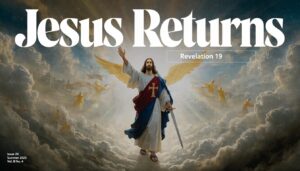 Victorious King: Jesus in Revelation 19: The Epic ReturnWhen Heaven Opens: The Rider Who Fulfills God’s Promises
Heaven opens, and John sees Jesus riding a white horse as the victorious King. Revelation 19:11–16 doesn’t reveal a different Jesus from the Savior we meet in the Gospels. It shows the same faithful Messiah in the fullness of His authority.
He is called “Faithful and True” and “The Word of God,” and His title, “King of Kings and Lord of Lords,” declares His reign. We see the promised Savior bring righteous judgment and fulfill God’s word. Let’s look at why this vision matters and how it fits the Bible’s prophetic witness to Jesus.
When Heaven Opens: The Rider Who Fulfills God’s Promises
Revelation 19 moves with purpose. Heaven first responds to God’s judgment with praise, then John sees Christ revealed as the victorious King. The shift matters: the scene begins with worship and ends with every eye directed toward the One who fulfills God’s promises.
What happens before the rider appears?
In Revelation 19:1-10, John hears a great multitude in heaven praising God. Their worship celebrates His salvation, glory, and righteous judgment. The passage also turns our attention to the marriage supper of the Lamb, a joyful image of Christ united with His people. Heaven’s praise is not background noise. It tells us who deserves honor before the King appears.
John is then told to write that those invited to the marriage supper are blessed. The vision moves from judgment to celebration, and from celebration toward the public unveiling of Jesus. We can read Revelation 19 as one chapter, keeping this movement in view. The Lamb who is praised is also the King who comes in victory.
Why the open heaven signals a decisive moment
When John sees heaven opened in Revelation 19:11-16, he is seeing a prophetic vision, not receiving a detailed military itinerary. The white horse, the heavenly armies, and the rider’s titles declare Christ’s authority and victory. John has already shown us the Lamb praised in heaven; now he shows us the King appearing in power.
The rider is called “Faithful and True,” and He judges and makes war in righteousness. Those words help us read the imagery clearly. His authority is not driven by human ambition or cruelty. He comes as the righteous Christ, whose judgment is true. We see why John names Him Jesus, the Faithful and True King.
His title, “The Word of God,” also points us to the Jesus revealed throughout Scripture. The sword that comes from His mouth portrays the force of His word and judgment, while “King of Kings and Lord of Lords” declares His rule over every earthly power. The images are vivid, but their central message is plain: Christ’s victory is decisive, and no ruler can rival His authority. The open heaven reveals the One heaven has praised, and the One whose promises God will fulfill.
How Revelation 19:11-16 Identifies Jesus as Faithful and True
John gives us several names and images for the rider, and each one adds a clue to His identity. One name is beyond human knowledge, but the titles John does reveal point us to Jesus: the divine Word, the righteous Judge, and the King above every ruler.
The Word of God is the promised Messiah
Revelation 19:13 calls the rider “The Word of God.” That title is more than a striking name. It connects John’s vision to the opening of his Gospel, where the Word is with God, is God, and becomes flesh. We can read John 1:1, 14 alongside Revelation and see why Christians identify the rider as Jesus. The One who appears in victory is the same divine Son who came among us in human flesh.
John also says the rider has a name that no one knows. We should let that detail remain what the passage says: an unknown name. It is distinct from “The Word of God” in verse 13 and from the royal title written on His robe and thigh in verse 16. These names and images work together, but John doesn’t say they are all the same title.
The wider passage reinforces the identification. The rider judges and makes war in righteousness, and a sharp sword comes from His mouth. The imagery presents authority exercised through His word and judgment, not human force. Read Revelation 19:11-16 with John’s Gospel in view, and the title “The Word of God” becomes a clear connection to Jesus.
Faithful and True describes His character
Before John names the Word of God, he calls the rider “Faithful and True.” Those words tell us what His rule is like. He keeps God’s promises, speaks truth, and judges without corruption. His judgment is not a sudden departure from His character. It is part of His righteous rule.
Revelation 17:14 gives us a related royal description. There, the Lamb is called “Lord of lords and King of kings,” and His companions are called, chosen, and faithful. Revelation 19:16 gives the rider the title “King of kings and Lord of lords.” The wording differs in order, and the scenes use their titles in their own contexts. Still, the shared royal language connects the Lamb’s victory with the rider’s supreme authority.
We can hold that connection without flattening every title into one interchangeable label. The Lamb and the rider are presented through distinct images, yet both passages point to Christ’s victory over the powers that oppose God. For another look at this royal hope, see Jesus as the promised King from David’s line.
So when John calls Jesus “Faithful and True,” he gives us more than a description of His temperament. We see the One who fulfills God’s word and judges rightly. His names reveal who He is, and His actions show that His promises can be trusted.
What the Rider’s Fiery Eyes, Many Crowns, and Bloodied Robe Mean
John’s description of the rider gives us more than a dramatic entrance. His eyes, crowns, and robe each add something to the vision of Christ’s judgment and victory. We should read these images carefully, keeping what the passage says distinct from what Christians may infer.
Eyes like fire reveal the King who sees clearly
John says the rider’s eyes are “like a flame of fire” (Revelation 19:12). This image connects with Revelation 1:14, where the Son of Man’s eyes are also described as a flame of fire. The repeated picture points to Christ’s penetrating sight. He sees what lies beneath appearances, including the motives and actions hidden from human judgment.
That matters because the rider judges and makes war in righteousness. His judgment isn’t based on rumor, influence, or a polished public image. We see a King who knows the truth and judges accordingly. The fiery eyes are a warning to those who oppose God, but they also reassure us that evil cannot hide from Him.
Many crowns declare authority over every ruler
The rider has many crowns on His head, and John places that image beside the title “King of kings and Lord of lords.” Together, they declare Christ’s supreme royal authority. No earthly ruler can claim a higher throne or lasting power over Him.
Revelation 13:1 also describes a beast with crowns. That comparison helps us see two opposing claims to power: the beast’s authority is set against God, while the rider’s rule is righteous and supreme. Still, John doesn’t give a number for the rider’s crowns or explain a separate meaning for each one. We shouldn’t add details the vision leaves unstated.
The title makes the central point plain. Christ’s authority surpasses every rival, and His victory is certain. We see this royal hope throughout Revelation’s vision of Jesus as the victorious rider.
The robe’s blood remains an image to handle with care
Translations describe the rider’s robe with slightly different wording, including “dipped” or “dabbled” in blood. The verse gives us the image, but it doesn’t clearly identify whose blood appears on the robe. We shouldn’t state as fact that it is Jesus’ own blood or the blood of His enemies.
Isaiah 63:1-6 offers a relevant prophetic parallel. Isaiah pictures a figure returning from judgment with garments stained red, and the passage connects that imagery with God’s judgment against His enemies. Some Christians read Revelation’s bloodied robe in a similar way, as a sign of victory over evil. Others connect it with Christ’s sacrifice. Both are interpretations, not an explanation John explicitly provides in Revelation 19:13.
So we can say what the passage shows: the rider comes in victory, with a robe marked by blood. The image fits the judgment and triumph surrounding Him, while the precise identity of the blood remains unstated.
How Revelation 19 Fulfills the Bible’s Promises About the Messiah
John’s vision doesn’t stand alone. The rider’s righteous judgment, authority, and victory draw together hopes voiced across the Hebrew Scriptures. As we read these passages side by side, we see Jesus revealed as the promised King who defeats evil and reigns under God’s authority.
Isaiah’s righteous ruler judges with His word
Isaiah describes a ruler from Jesse’s line who judges the poor with righteousness and strikes the earth with the rod of His mouth. Righteousness and faithfulness mark His character. We hear those same themes in Revelation, where the rider is called “Faithful and True” and judges in righteousness. Compare Isaiah 11:4–5 with Revelation 19:11, 15.
The images also meet in the ruler’s word. Isaiah pictures the wicked struck by the breath of the Messiah’s lips; John sees a sharp sword coming from the rider’s mouth. These are prophetic images of judgment, not a description of an ordinary weapon. The Messiah’s word exposes evil and brings God’s just verdict against it. Jesus fulfills Isaiah’s hope as the faithful ruler whose judgment is right.
Psalm 2 points to the King who rules the nations
Psalm 2 portrays God’s anointed King receiving the nations and ruling them with an iron rod. Revelation 19:15 uses that same image as the rider comes to strike the nations. Read Psalm 2:7–9 alongside John’s vision, and the royal connection is clear: the rider is the Messiah who brings opposition under God’s authority.
This rule is not a claim that human power or violence becomes holy. The passage presents Jesus as the appointed King, judging evil with righteousness. Nations may resist God, but their opposition does not overturn His purpose. We can also trace the Bible’s wider promise of an enduring royal line in God’s promise to David and its fulfillment in Jesus.
Daniel’s vision widens the hope of an everlasting Kingdom
Daniel sees “One like the Son of Man” receive dominion, glory, and a Kingdom that will not pass away. That vision gives us a broad thematic parallel with Revelation 19:11–16: both present a heavenly ruler whose authority surpasses earthly kingdoms and endures. Read Daniel 7:13–14 with Revelation’s victorious rider in view.
We should keep the connection precise. Revelation 19:11–16 does not directly quote Daniel 7:13–14, but Daniel’s vision expands the prophetic hope surrounding the Messiah. The rider’s victory is part of God’s lasting Kingdom, not a temporary triumph over one opponent. For us, that means Jesus’ authority is not threatened by the powers that resist Him. His reign endures.
Why Jesus Judges and Makes War in Righteousness
The language of judgment and war can trouble us, especially when human violence so often grows from injustice, pride, or revenge. But Revelation does not present Jesus as another ruler pursuing power. He comes as the righteous King, opposing evil and fulfilling God’s promise to set things right.
The sword from His mouth pictures the power of His word
John sees a sharp sword coming from the rider’s mouth (Revelation 19:15). That image points to Christ’s word of judgment, not a literal battle plan. His authority is expressed through the truth He speaks and the verdict He brings.
Isaiah gives us a close prophetic parallel. The ruler from Jesse’s line judges with righteousness and strikes the earth with the rod of His mouth (Isaiah 11:4). The picture is direct: the Messiah’s word exposes evil and brings the wicked under God’s judgment. In Revelation, the sword makes that authority vivid. We see the King speak, and His judgment stands.
Psalm 2 uses another royal image, saying God’s anointed King will rule the nations with an iron rod (Psalm 2:9). Revelation draws on that language to show the Messiah’s authority over powers that oppose God (Revelation 19:15). The iron rod is not permission for human rulers to harm others in God’s name. It pictures the King’s unchallenged rule and the certainty that evil will not have the final word.
So why does Jesus judge? Because God is against what destroys His creation and harms people. His judgment is not a burst of anger or personal payback. It is the righteous response of the King who sees the truth and promises justice.
The heavenly army follows the victorious King
John says the armies of heaven follow Jesus on white horses, clothed in fine linen (Revelation 19:14). The verse doesn’t settle who all these followers are. Interpreters have understood them as believers, martyrs, angels, or a heavenly host. We should leave room for those readings rather than claim more certainty than John gives us.
What the scene does make clear is who leads. The army follows the rider; Christ’s victory remains the center of the vision. The passage doesn’t describe a human campaign or offer a model for religious violence. It reveals Jesus as the King whose judgment is righteous and whose authority no enemy can overturn.
That distinction matters. Human violence often protects self-interest or answers injury with revenge. Jesus judges with perfect knowledge and justice. He confronts evil without becoming evil Himself, and His victory means God’s promise to make things right will stand.
What the Victorious King Means for Faith and Hope Today
Revelation 19 gives us more than a picture of Christ’s future victory. It gives us reason to trust Him now, even when evil persists, prayers seem unanswered, or the road ahead feels uncertain. Jesus is “Faithful and True.” His promised return assures us that injustice and suffering will not have the final word, though Scripture does not tell us when He will return or promise that every hardship will end quickly.
His victory gives hope without denying present suffering
Hope in Christ doesn’t require you to pretend that grief, illness, injustice, or fear aren’t real. The King John sees is faithful, and His righteous judgment means evil won’t escape God’s notice forever. But that promise is not a date on a calendar, and it doesn’t guarantee a quick resolution to what you’re facing today.
Peter writes to believers who know hardship, pointing them toward God’s care and the hope of restoration. His words don’t dismiss suffering or tell us to expect an immediate escape. They help us hold on to God while we wait (Peter’s counsel to believers facing suffering). We can grieve honestly, ask for help, pray for justice, and still trust that Jesus will fulfill His promises.
That is why the testimony of Jesus and the hope of His return matters in ordinary life. Christ’s victory gives us a future to trust, not a reason to ignore present pain. When the answer hasn’t come yet, we can keep bringing our needs to God and keep standing with those who suffer.
His authority calls believers to faithful living
If Jesus is King of kings, His authority reaches into the choices we make today. We trust Him, resist evil, and pursue holiness because He is Lord, not to earn salvation. Our obedience is a response to His grace and rule.
What does that look like when pressure rises? We refuse to answer cruelty with cruelty. We speak truth when a lie would be easier, act justly when injustice benefits us, and keep serving God when faithfulness costs us something. The Spirit empowers believers to live this way, not through self-reliance but through dependence on God.
John’s vision also challenges us to examine what we call strength. Jesus judges in righteousness; He doesn’t exploit the weak or excuse wrongdoing. So we can’t claim His authority to justify our own anger, domination, or revenge. We follow the King by standing against evil while treating others with truth, courage, and mercy.
The promised return of Jesus calls you to stay faithful without trying to predict its timing. Keep praying, keep doing what is right, and keep your hope fixed on the King who is faithful and true.
Conclusion
The rider John sees in Revelation 19 is Jesus, the same Savior who came to save and now appears as the victorious King. “Faithful and True,” “The Word of God,” and “King of kings and Lord of lords” reveal His righteous rule and the certainty of His Kingdom. His victory carries forward God’s promises to His people and the prophetic hope of Christ’s victorious return in Revelation 19.
So when we see evil and injustice persist, we can still trust the King who judges in righteousness. Jesus is faithful, and God’s promises are secure in Him.
A Clear Glimpse of Babylon to the Epic Victory of Christ – Rev 18-19by Bible Prophecy Ministries | Nov 1, 2026 | BabylonRevelation 18 and 19: Babylon Falls, Christ Reigns Revelation 19 answers the collapse of Babylon in Revelation 18 with Heaven’s praise, the Lamb’s wedding, and Christ’s victory. Where Babylon’s corruption leaves earthly rulers and merchants grieving what they’ve lost,…
Lamb’s Wedding Feast: The Joyful Meaning of the Bride – Revelation 19by Bible Prophecy Ministries | Nov 1, 2026 | Lamb's Wedding FeastThe Lamb’s Wedding Feast: Bride, Guests, and Prophecy in Revelation 19 In Revelation 19:6–10, heaven rejoices because God reigns, the Lamb is honored, and the wedding feast has come. This is the celebration of Christ’s victory and the fulfillment of God’s covenant…
The Righteous King Who Defeats Evil in Revelation 19by Bible Prophecy Ministries | Nov 1, 2026 | Righteous KingRevelation 19 Explained: Christ’s Victory as King of Kings Heaven opens, and John sees Jesus appear as the victorious Rider, the Righteous King, while the forces gathered against Him face judgment. The scene turns on one clear truth: no earthly power can stand against…
Supreme Authority Over Every Earthly Power: Jesus – Revelation 19:11–16by Bible Prophecy Ministries | Nov 1, 2026 | Faithful and TrueJesus Revealed in Revelation 19: Three Titles, One King Revelation 19:11–16 reveals Jesus through three powerful titles: “Faithful and True,” “the Word of God,” and “King of kings and Lord of lords.” Together, they show us the righteous Judge whose promises never…
Faithful and True King: Jesus in Revelation 19, Powerful Hopeby Bible Prophecy Ministries | Nov 1, 2026 | Faithful and TrueRevelation 19: Jesus, the Faithful and True King Heaven opens, and Jesus appears on a white horse, called Faithful and True. In Revelation 19, Biblical prophecy comes into focus: He is the righteous Judge and victorious King whose authority reaches over every nation…
Main Message Of Matthew 24: Resist Deception and Endureby Bible Prophecy Ministries | Oct 30, 2026 | Matthew 24What Is the Main Message of Matthew 24? Biblical Answers “Watch therefore: for ye know not what hour your Lord doth come.” (Matthew 24:42) Matthew 24 can raise big questions about upheaval, prophecy, and Jesus’ return. What’s the main message? Jesus prepares His…
Revelation 19: How Jesus Fulfills God’s Covenant Promisesby Bible Prophecy Ministries | Oct 28, 2026 | God's Covenant PromisesRevelation 19: How Jesus Fulfills God’s Covenant Promises Jesus first came in humility, fulfilling God’s covenant promises, born into an ordinary family and walking a path of suffering. Then John sees heaven open and Jesus revealed in royal victory, the Faithful and…
Faithful True and Righteous King Jesus: Our Hope – Revelation 19by Bible Prophecy Ministries | Oct 27, 2026 | Faithful and TrueRevelation 19: Jesus, the Faithful True King When heaven opens in Revelation 19, Jesus appears as the Faithful True Rider on the white horse, Faithful and True, who judges in righteousness. The chapter first fills heaven with praise for God’s just rule, then turns our…
Revelation 19: Jesus, the Victorious Rider’s Triumphby Bible Prophecy Ministries | Oct 26, 2026 | Revelation 19How God’s Promises Are Fulfilled in Jesus and Revelation 19 God’s promises unfold across Scripture and come into focus in Jesus, whose victory over evil reaches its full expression in Revelation’s vision of the Rider on the White Horse. The “3” in the supplied title…
White Horse Prophecies: The Powerful Biblical Connection – Psalm 2by Bible Prophecy Ministries | Oct 26, 2026 | White HorseRevelation 19’s Rider: The Earlier Prophecies Compared In Revelation 19:11–16, the Rider on the white horse is Jesus, the faithful King who judges and makes war in righteousness. How do earlier Scriptures help us understand Him? The clearest links are Psalm 2’s iron…
« Older Entries […]
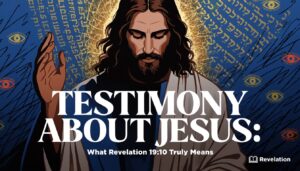 Testimony About Jesus: What Revelation 19:10 Truly MeansThe Testimony About Jesus: What Revelation 19:10 Means
Revelation 19:10 says that “the testimony of Jesus is the spirit of prophecy.” So how does prophecy testify about Jesus, and why does His reign matter? Scripture’s prophetic witness points to who He is and what God accomplishes through Him, while Revelation connects that witness with faithful service and worship of God.
The phrase can mean testimony about Jesus, testimony from Jesus, or both. We’ll look at the meaning of the testimony of Jesus and see why His reign gives us hope, courage, and reason to worship God.
What Does “The Testimony of Jesus” Mean in Revelation 19:10?
In Revelation 19:10, “the testimony of Jesus” is connected to “the spirit of prophecy.” The phrase can mean testimony about Jesus, testimony given by Jesus, or both. Christians differ on the precise grammar, so we should keep those readings open while paying attention to the scene around the words.
Why the angel tells John to worship God
The immediate scene is plain. After hearing the words about the marriage supper of the Lamb, John falls at the angel’s feet to worship him. The angel stops him: he is a fellow servant, and John must worship God. Read Revelation 19:9-10 in context, and the central point is hard to miss: the angel is a messenger, not an object of worship.
The angel calls himself a fellow servant alongside John and those who hold the testimony of Jesus. He does not claim a higher place because he has delivered a revelation. Instead, he points John back to God. The command to worship God is the direct point of the scene; the words about prophecy explain the shared servant role and the witness connected to Jesus.
That distinction matters. Revelation 19:10 directly rejects worship of the angel. Broader conclusions about the nature of prophecy come from reading this verse alongside other passages, not from turning the angel’s words into a claim that every prophetic message has one simple form.
How “testimony about Jesus” and “from Jesus” fit together
The phrase “testimony of Jesus” can be understood in two ways. On one reading, it means testimony about Jesus: prophetic witness points to Him. On another, it means testimony from Jesus: He gives or reveals the message through His servants. The wording allows both interpretations, and Christians do not agree that one grammatical reading settles the question.
Revelation itself brings these ideas close together. John describes his witness as the word of God and the testimony of Jesus in Revelation 1:2. Later, faithful believers are described as holding that testimony in Revelation 12:17. The book presents witness to Jesus as something His people hold and share, while also portraying revelation as a message that comes through Him.
We can see the broader Biblical pattern in other passages, too. Jesus explains how Moses and the Prophets point toward Him in Luke 24:25-27. Peter says the prophets bear witness to Jesus in Acts 10:43. These passages show that prophecy includes witness to God’s purposes in Jesus, not only predictions about future events.
So the two readings need not compete. A prophetic message may come from Jesus and point to Jesus. We can hold that possibility without pretending the grammar is beyond debate. For a closer look at how prophecy points to Jesus, keep the focus on the message and its source, rather than elevating the messenger. The angel’s words bring us back to the same clear direction: prophecy belongs in God’s service, and worship belongs to God.
How Scripture’s Prophetic Witness Points to Jesus
When we read that “the testimony of Jesus is the spirit of prophecy,” we shouldn’t turn every verse into a hidden prediction about the Messiah. Scripture gives us a wider pattern: God’s purposes unfold through history, and the prophetic witness reaches its fulfillment in Jesus. The focus is on what God does through Him, including His suffering, glory, and the forgiveness He brings.
Jesus connects the Law and the Prophets to His mission
After His resurrection, Jesus met two disciples walking to Emmaus. They were struggling to understand what had happened, so He showed them how the Scriptures spoke about the Messiah. In Luke 24:25–27, Jesus connects the Messiah’s suffering with His glory and explains what Moses and all the Prophets said concerning Him.
That matters because the cross was not a tragic detour from God’s plan. The Messiah had to suffer before entering His glory. Jesus helped His disciples see that His death and resurrection belonged to the purpose God had been revealing through Scripture.
We should follow Jesus’ lead without forcing every passage to say more than it does. Some Scriptures point directly to the Messiah; others contribute to the larger story of God’s promises and purposes. The New Testament helps us recognize their fulfillment in Jesus, while still allowing each passage to speak in its own setting. For a fuller look at this pattern, see how Scripture’s path leads to Jesus.
This also guards us against treating prophecy like a puzzle where every detail must conceal a forecast. Jesus showed His disciples how Scripture bears witness to God’s saving work. A careful discussion of Luke 24:27 considers the question of how broadly Jesus’ explanation applies to the Scriptures.
The prophets bear witness to forgiveness through Jesus
Jesus tells His opponents that the Scriptures testify about Him in John 5:39. In the surrounding passage, He challenges them because they search the Scriptures but refuse to come to Him for life. Their familiarity with the text had not led them to recognize the One to whom it pointed.
Peter makes the prophetic witness even clearer when he preaches to Cornelius and his household. In Acts 10:43, Peter says that all the prophets bear witness to Jesus, and that everyone who believes in Him receives forgiveness of sins through His name.
There’s the heart of the message. The prophets’ witness is not limited to predicting events; it also announces God’s purpose to save. Through Jesus, forgiveness is proclaimed and offered to those who believe. When we read Revelation 19:10 alongside these passages, we see why Jesus belongs at the center of prophecy: Scripture points to God’s work in Him, and the good news calls us to trust Him.
What Revelation Says About Those Who Hold Jesus’ Testimony
Revelation uses the phrase “the testimony of Jesus” for both a message and the people who remain faithful to it. John bears witness to what God revealed, while believers hold to Jesus’ testimony through obedience and endurance. The book keeps those ideas together without making every faithful Christian a prophet in the same sense.
Faithful witness can carry a real cost
John introduces himself as a brother who shares in persecution, the Kingdom, and patient endurance. He says he was on Patmos because of the word of God and the testimony of Jesus (Revelation 1:9). His exile gives those words weight. Witnessing to Jesus was more than repeating a belief; it could bring real consequences.
Revelation also describes believers who keep God’s commandments and hold the testimony of Jesus (Revelation 12:17). Later, John sees people who were killed because of their testimony to Jesus and the word of God (Revelation 20:4). Their witness involved both what they confessed and how they remained faithful under pressure.
We should be careful here. Revelation does not praise suffering for its own sake, or tell Christians to seek persecution. It honors faithfulness when obedience is costly. John names endurance alongside persecution and the Kingdom, reminding us that Christian witness may require courage, but suffering itself is never the goal.
The phrase also carries a message rooted in revelation. John says he testified to the word of God and the testimony of Jesus Christ, including what he saw (Revelation 1:2). So, “the testimony of Jesus” can describe the church’s witness about Him while also pointing to the message that comes through Jesus. Revelation brings these meanings close together; it does not settle the debated grammar beyond question. For more on what Revelation means by Jesus’ testimony, we can look at how the book uses the phrase across its visions.
Nor does this language prove that every believer holds the same prophetic office. In Revelation 22:9, the angel calls himself a fellow servant of John and of John’s brothers, the prophets. That connection matters, but it doesn’t erase the broader use of testimony for faithful believers in Revelation 12 and 20.
Prophecy is more than predicting the future
When we hear the word prophecy, we may think first of predictions. Revelation does speak about what is to come, but Biblical prophecy does more. It reveals God’s purposes, calls people to faithfulness, proclaims the Gospel, and gives hope to those who endure.
Paul describes prophecy as speech that builds up, encourages, and comforts the church (1 Corinthians 14:3). That helps us see why prophecy matters in the present, too. It can strengthen believers to obey God and keep bearing witness to Jesus, even when doing so costs them.
The Bible also presents prophecy as Spirit-inspired testimony, not private speculation. Peter writes that prophecy did not come by human will; people spoke from God as they were moved by the Holy Spirit (2 Peter 1:19-21). In Revelation 19:10, then, prophecy belongs to God’s work and points us toward Jesus, whether we emphasize the witness about Him or the testimony given through Him.
Future hope remains part of that witness. Revelation assures its readers that evil will not have the final word and that Jesus reigns. But prophecy also speaks to the choices believers face now: worship God, obey Him, and hold fast to the testimony of Jesus.
Why Jesus’ Reign Is the Hope at the Heart of Prophecy
Prophecy does more than tell us what lies ahead. It bears witness to Jesus, whose saving work and coming victory give believers hope when evil and suffering seem to have the upper hand. Revelation 19 brings that hope into focus: the Lamb is honored, His people are welcomed, and God’s purposes will prevail.
The Lamb’s victory brings hope and justice
The scene in Revelation 19 moves from heaven’s praise to the announcement of the marriage supper of the Lamb. The angel calls those invited to the supper blessed, then John falls at his feet. The angel stops him and directs him to worship God, because he is a fellow servant, not the focus of worship (Revelation 19:10).
The marriage supper is a picture of joyful welcome and belonging with the Lamb. This is the Jesus who gave Himself to save, and Revelation now shows Him honored in victory. The invitation points to a future in which those who belong to Him share in the joy of His Kingdom. For a closer look at Jesus as the promised King, we can trace how His reign fulfills God’s promises.
Revelation does not ask us to ignore suffering or pretend evil is harmless. It shows that evil will answer to God, and that Jesus reigns with authority to judge rightly (Revelation 19:11). That matters when injustice seems to go unanswered. Our hope rests in the Lamb, not in the idea that human effort alone will put everything right.
His reign shapes how believers live today
Jesus’ authority calls for more than agreement about the future. It calls us to worship God, remain loyal to Jesus, and obey Him now. Paul describes presenting our lives to God as an act of worship (Romans 12:1). In practical terms, our worship belongs in our choices, our relationships, and the way we treat people when doing what is right costs us.
A Pentecostal reading also takes the Holy Spirit’s work seriously. The Spirit gives power to witness, as Jesus promised His disciples (Acts 1:8). And when the Spirit gives a message, Paul says prophecy should strengthen, encourage, and comfort the church (1 Corinthians 14:3). Prophetic witness should point people toward Jesus and help the church remain faithful, not draw attention to a messenger.
That faithfulness includes courage. Jesus told His disciples that they would face trouble, but also that He had overcome the world (John 16:33). We can hold fast to that promise without claiming every hardship will end quickly or trying to map every detail of the end times. The Lamb’s victory gives us reason to keep worshiping and obeying while we wait.
So, the hope at the heart of prophecy is personal and practical: Jesus saves, Jesus reigns, and His people can trust Him. The marriage supper points toward the joy ahead; the command to worship God reminds us where our loyalty belongs today.
How to Recognize Prophecy That Truly Honors Jesus
Revelation 19:10 points us back to God, not toward a messenger’s status. That gives us a good place to begin when we hear a prophetic claim: Does it agree with Scripture, honor Jesus, and encourage faithful worship? We should welcome the Holy Spirit’s work while taking time to weigh what is spoken.
Test prophetic claims against Scripture and the character of Jesus
Scripture gives us the sure measure for evaluating spiritual claims. John tells believers to test the spirits, and Jesus teaches that we recognize a tree by its fruit (Matthew 7:16). Those are not shortcuts that remove the need for discernment. They help us ask better questions.
Does the message fit the whole Biblical witness, or does it ask us to ignore clear teaching? Does it honor Jesus as Scripture reveals Him, or use His name to give a speaker more authority? And what kind of fruit follows? A prophetic word should lead toward Godly worship, love, obedience, and faithful living. Fear, manipulation, pride, and pressure to follow a human leader deserve serious attention.
We also need humility. A message may sound spiritual and still be mistaken. Confidence, dramatic details, or a claim that “God told me” do not settle the matter. Paul instructs the church to let others weigh prophetic speech (1 Corinthians 14:29). That means you can take time, compare the words with Scripture, and seek wise counsel without dismissing the Holy Spirit.
For more on examining spiritual claims, see how to recognize false messiahs and prophets. A careful process protects the church from deception while leaving room for genuine encouragement.
Make room for the Holy Spirit while practicing discernment
A Spirit-filled approach does not treat prophecy as either unquestionable or unwelcome. Paul says prophecy can strengthen, encourage, and comfort the church (1 Corinthians 14:3). Those purposes matter. A timely word may help someone keep trusting God, obey Jesus, or find courage in a hard season. We should be grateful for that kind of ministry.
At the same time, prophetic encouragement does not have Scripture’s authority. Personal impressions must be tested by Scripture, not used to revise it or bind another person’s conscience. A word that directs someone toward a major decision should be handled with particular care. No one should be pressured to act quickly just because a speaker claims divine authority.
Paul’s instruction holds both sides together: do not despise prophecies, but test everything and hold fast to what is good (1 Thessalonians 5:21). In practice, that can mean listening prayerfully, checking the message against Scripture, and giving the church room to weigh it. This commentary on 1 Corinthians 14 also discusses prophecy’s purpose in building up the church.
We should not assume every believer will receive the same gift, or that every impression is a prophetic word. The Holy Spirit gives gifts as He wills (1 Corinthians 12:11). Our part is to remain open to His work without treating any person’s words as equal to Scripture. Prophecy that truly honors Jesus points people toward Him, strengthens the church, and leaves worship where Revelation places it: with God.
Conclusion
The testimony of Jesus may mean witness about Him, revelation from Him, or both. Scripture’s prophetic witness centers on who Jesus is and what God accomplishes through Him.
Revelation 19:10 brings that witness back to its proper focus: worship God. Jesus’ reign gives us hope as we wait, courage to remain faithful, and a reason to weigh prophetic claims by whether they honor Him. For a closer look at Jesus, the Faithful and True King, we can turn again to Revelation 19. […]
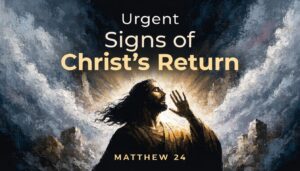 Matthew 24’s Urgent Signs of Christ’s ReturnMatthew 24 Explained: Signs, Trials, and Christ’s Return
Jesus’ teaching on the Mount of Olives calls us to stay faithful through deception and trials, because His return is certain even though its timing is unknown.
Matthew 24 has been read in more than one way. We’ll follow the chapter’s flow carefully instead of forcing every detail into a modern headline, keeping Jesus’ words and the Spirit-led faithfulness He calls for at the center. For a helpful starting point, see how to read the Olivet Discourse.
Let’s begin with the temple’s coming destruction and the disciples’ questions on the Mount of Olives.
The Olive Mount Discourse: Signs of the Consummation
The setting matters. In Matthew 24, Jesus leaves the temple, and His disciples point out its buildings. He answers with a startling prediction: the temple will be thrown down, with not one stone left upon another. Later, on the Mount of Olives, the disciples ask Him when these things will happen and what sign will accompany His coming and the end of the age.
The questions connect Jerusalem’s temple, Christ’s coming, and the consummation, meaning the completion of God’s purposes. Do the disciples assume these events share one timeline, or are they asking about related events that unfold at different times? The text leaves room for that question, so we shouldn’t rush past it.
The disciples’ questions set the whole discussion in motion
Jesus does not answer with a detached list of predictions. His teaching moves through warnings about deception, upheaval, persecution, tribulation, and the Son of Man’s coming. Later, He turns to the fig tree, the unknown day and hour, and the call to remain watchful. Each part belongs to the same discourse.
That connected flow matters. A verse about wars or false prophets can’t be lifted out and treated as a countdown by itself. Jesus tells His disciples that such events do not mean the end has arrived. He also keeps bringing their attention back to faithfulness, endurance, and readiness. We should let His words guide how we read the signs, instead of turning every crisis into proof that we know the date.
Christians read the timing in different ways. Some understand much of the chapter through Jerusalem’s destruction in 70 AD. Others see key events, including the great tribulation and the visible coming of Christ, as still future. A two-horizon reading connects the temple’s fall with the first century while also looking ahead to Christ’s return. We can recognize these differences without losing the central truth: Jesus’ return is certain, but the hour is not ours to predict.
The temple warning also connects with Daniel’s prophecy and the judgment on Jerusalem. For more on that connection, see Daniel 9 and the destruction of the temple.
Compare the parallel accounts without forcing them to match word for word
Matthew isn’t the only Gospel that records this teaching. Mark gives a parallel account in Mark 13:1–4, and Luke does the same in Luke 21:5–7. Read together, the accounts help us see the disciples’ questions and Jesus’ warnings from more than one angle.
Mark names Peter, James, John, and Andrew as the questioners. Luke gives special attention to Jerusalem surrounded by armies later in the discourse. Those differences add detail; they don’t make the accounts contradict each other. We can compare what each Gospel emphasizes while keeping the shared setting in view: Jesus has warned of the temple’s destruction, and His followers want to know what comes next.
That’s a good place for us to begin: Matthew 24 is one connected teaching, and its signs call for discernment, not date-setting.
How to Read the Signs Without Mistaking Them for the End
Jesus gives us signs to keep us alert, not to make us confident about a date. In Matthew 24:4-14, He warns about deception, conflict, persecution, and the worldwide witness of the Kingdom’s gospel. But He also says, “the end is not yet.” We need to hold both truths together.
False teachers and end-time claims require careful discernment
Jesus returns to the danger of deception throughout the chapter. False messiahs and false prophets will make claims that draw people away from the truth. That repetition matters. We should be especially cautious when someone sounds certain about a prophetic timeline, but cannot support the claim from Scripture and Christ’s own teaching.
So how do we test a claim? We compare it with Scripture, pay attention to whether it agrees with Jesus’ words, and look at the fruit of the person teaching it. Does the message lead people toward faithfulness, love, and obedience to God, or does it stir panic and dependence on the speaker? We can also keep in mind Scripture’s tests for false prophets, rather than accepting a dramatic claim because it sounds urgent.
From our Pentecostal perspective, the Holy Spirit helps us discern and bear witness to Christ. That does not mean every strong impression is a guaranteed prophecy, or that every crisis confirms a particular end-time interpretation. We ask the Spirit for wisdom while remaining accountable to Scripture. We don’t need to name a present-day person or event as a fulfillment unless the Biblical text gives us clear grounds to do so.
Persecution does not cancel the call to endure
Jesus also describes pressure that can fracture communities: His followers may face hatred, betrayal, and persecution. Some will turn away, while false prophets mislead many and lawlessness grows. These warnings are sober, but they do not mean God has abandoned His people. Jesus calls His followers to endure and remain faithful.
Wars, rumors of wars, famines, and earthquakes belong in this same careful reading. Jesus says these troubles are “the beginning of birth pains.” They call for alert faith, but they do not give us permission to declare that the end has arrived. A crisis may be frightening and painful without proving that one specific prophecy has just been fulfilled.
And the witness continues. Jesus says the gospel of the Kingdom will be preached throughout the world before the end comes. We don’t respond to hardship by retreating into fear or boasting that we have solved the timetable. We keep loving people, sharing the gospel, and trusting the Holy Spirit to help us speak faithfully.
The parallel passages in Mark’s account and Luke’s account also place Jesus’ warning in the disciples’ questions about the temple and what comes next. Read together, the accounts keep us grounded: signs matter, but they are not a shortcut to certainty about the hour.
The Abomination of Desolation and the Great Tribulation
In Matthew 24, Jesus connects Daniel’s “abomination of desolation” with urgent danger, flight, and severe distress. The passage gives clear warnings, but it does not name a specific person or event as their fulfillment. That distinction matters when Christians read these verses differently.
Why sincere Christians differ about the passage’s timing
Jesus tells those in Judea to flee when they see the abomination of desolation. He describes a crisis so severe that people should not stop to gather belongings or return home. The warning is practical and urgent, even as the timing and fulfillment remain debated. Read Matthew 24:15-22 in its NKJV context, alongside Daniel 9’s prophecy of the seventy weeks.
Many preterist interpreters connect Jesus’ warning with Jerusalem’s siege and destruction in 70 AD. They emphasize the first-century setting and the danger facing Judea. This view does not always mean that a person denies Christ’s future return. Preterist interpretations vary, and many affirm that He will return.
Futurist interpreters understand the abomination and great tribulation as events still to come, often as part of a final end-time crisis. A two-horizon approach sees both a near historical setting in Jerusalem’s destruction and a future horizon connected with Christ’s return. Each view weighs the text’s references to Judea, Daniel, tribulation, and the Son of Man differently.
Luke’s parallel account explicitly describes Jerusalem surrounded by armies and tells those in Judea to flee. Comparing Luke 21 in the NKJV helps explain why many readers connect the warning with Jerusalem’s fall. Still, Matthew does not identify one specific person or event as the fulfillment. We can take Jesus’ call to heed His warning seriously without pretending every detail has been settled.
Deception can imitate spiritual authority
Jesus’ warning does not end with the flight from Judea. He also cautions His disciples against claims that the Messiah has appeared secretly in a wilderness or hidden room. When people insist, “There He is,” or “Here He is,” Jesus tells His followers not to believe them.
Why? Because dramatic signs and wonders, by themselves, don’t prove that a message is true. A claim can sound spiritual, attract attention, and still lead people away from Jesus. We test teaching against Scripture and the character of Christ, rather than letting fear or spectacle do the thinking for us.
As Spirit-filled Christians, we believe the Holy Spirit gives wisdom and discernment. That does not mean every striking event confirms someone’s prophetic timetable. Jesus calls us to stay alert, hold fast to His words, and refuse claims that turn uncertainty into sensational certainty.
Cosmic Signs, the Son of Man, and the Fig Tree
Jesus moves from the distress He has described to cosmic signs, the coming of the Son of Man, and a lesson from a fig tree. We need to hold together what He says plainly and what readers infer about its timing. The signs call for attention, but Jesus does not give His followers a date.
What the fig-tree lesson teaches about recognizing the season
Jesus compares the budding fig tree to the events He has just described. When leaves appear, summer is near. In the same way, when His hearers see “all these things,” they can recognize that the appointed time is near. Read Matthew 24:29-35 in the NKJV in context, and the point is clear: observable developments can tell us a season is approaching.
But recognizing a season is different from knowing its exact day or hour. Jesus later says that no one knows that day and hour. The fig tree gives us no permission to set dates, build a countdown, or treat every headline as a prophetic signal. We can pay attention without claiming more certainty than Jesus gives.
How the passage holds historical judgment and future hope together
Jesus describes the sun darkened, the moon without light, and the powers of the heavens shaken. Then the sign of the Son of Man appears, and the tribes of the earth mourn as they see Him coming with power and great glory. He sends His angels to gather the elect. These are direct statements in the passage; the debate is about how their imagery unfolds in history.
The title “Son of Man” connects with Daniel’s vision of one like a Son of Man receiving dominion and an everlasting Kingdom. See Daniel 7:13-14 in the NKJV. Jesus’ language draws on that vision, but Christians differ over whether Matthew’s cosmic signs describe judgment on Jerusalem, Christ’s final visible return, or a pattern with both historical and future meaning.
A preterist reading often connects the signs and “this generation” with Jerusalem’s destruction in 70 CE. Futurist readers generally see the cosmic upheaval, the Son of Man’s appearing, and the gathering of the elect as events still to come. A two-horizon interpretation reads the judgment on Jerusalem as a historical fulfillment while also looking ahead to Christ’s return. Those are interpretive conclusions, not details Matthew settles for every reader.
“This generation” also has more than one reading. It may refer to Jesus’ contemporaries, the generation that sees the predicted events, or the people of Israel across generations. The immediate wording matters, but it does not erase the different ways Christians understand “all these things.” We can name the disagreement without losing the center of the passage: Jesus promises that His words will endure, and He will gather His people.
So we stay alert, but we do not claim to know what Jesus said remains unknown. The fig tree teaches discernment; the Son of Man’s promised coming gives us hope.
Why No One Knows the Day or Hour
After describing signs and seasons, Jesus turns to what no sign can tell us: the day and hour of His coming. In Matthew 24 in the NKJV, His point is plain. The signs call for discernment, but His followers are not given a timetable. We stay ready by living faithfully, not by trying to calculate what Jesus says we cannot know.
Readiness means faithful living, not prediction charts
Jesus says that no one knows the day or hour, not even the angels in heaven. That statement puts a clear boundary around end-time speculation. We can study Matthew 24, compare interpretations, and pay attention to what Jesus taught. But we should not turn wars, disasters, or a confident online prediction into proof that we have found the date.
So what does watchfulness look like in ordinary life? We keep trusting Jesus when fear or confusion rises. We obey what Scripture teaches, pray for wisdom, serve people who need help, and share the gospel with compassion. As Spirit-filled Christians, we also ask the Holy Spirit to guide and strengthen our witness, while testing claims against Scripture rather than treating every impression as a certain prophecy.
Faithful service is part of readiness, too. We can care for a neighbor, encourage someone who is struggling, or help meet a practical need. These actions don’t earn our place in God’s Kingdom. They show the kind of faith that remains active while we wait. For a related look at serving faithfully as we await God’s purposes, see faithful stewardship in God’s Kingdom.
Jesus doesn’t call us to live in constant fear of missing a hidden clue. He calls us to be faithful today. A prediction chart may offer the feeling of control, but it cannot give us the certainty Jesus says belongs to the Father. Our hope rests in Christ, and our response is steady trust and obedience.
The Noah comparison warns against careless confidence
Jesus compares the days before the flood to the time of His coming. People were eating, drinking, and marrying, carrying on with ordinary life until the flood came. The warning is about people living without regard for God, not about those everyday activities being sinful. Their routines continued, and judgment arrived before they expected it.
The comparison should make us careful, not speculative. Jesus doesn’t tell us to identify a modern event as a repeat of Noah’s days or to assign a precise timeline to the flood imagery. He warns against the confidence that says life will simply continue as usual, so there is no need to answer to God.
Then Jesus uses the image of a thief arriving at an unexpected hour. The point is suddenness, not that Christ is a thief or that His followers should panic. If a homeowner knew exactly when a thief would come, he would stay awake. Since the timing is unknown, Jesus tells His followers to be ready.
Readiness, then, is not a chart to complete or a rumor to repeat. We remain awake to God through prayer, faith, obedience, and service. We can live with hope, knowing Christ will come, while refusing to claim knowledge He has not given us.
The Faithful Servant Shows What Watchfulness Looks Like
Jesus closes this part of the discourse with a picture of two servants and one household. The difference between them is plain: one keeps caring for the people entrusted to him, while the other assumes the master will be gone for a long time. Read Matthew 24:45-51 in the NKJV, and the practical point comes into focus: readiness shows up in how we live while we wait.
Faithful service is the clearest sign of a ready heart
The wise servant gives the household food at the proper time. His faithfulness is ordinary and active. He pays attention to what others need and takes responsibility for what his master placed in his care. Jesus says that servant is blessed when the master returns and finds him doing his work.
That picture reaches beyond church leaders. Pastors and ministry leaders carry real responsibility, but every believer has people and duties to care for. We may be raising children, keeping a promise, helping a neighbor, serving in a congregation, or using our gifts to strengthen someone else. These acts don’t earn salvation. They are the fruit of living faith, shaped by love for God and for others.
From our Pentecostal perspective, the Holy Spirit empowers us to serve, but spiritual gifts never excuse pride or careless conduct. The Spirit forms humility, holiness, and love in us as we follow Jesus. We can serve others because Jesus reigns, whether our work is visible to a crowd or known only to God.
Delay is no excuse for neglect or spiritual pride
The wicked servant reasons that his master is delayed. Then he uses his authority to mistreat the other servants and indulge himself. His failure begins with an assumption about the master’s absence, but it becomes harm to real people. When the master returns at an unexpected time, the servant faces judgment.
Jesus’ warning speaks to complacency wherever it takes root. A leader who treats people as tools, uses authority to control them, or excuses cruelty has missed the heart of faithful service. But this passage is not only for clergy. Any believer can start acting as if accountability is far away, neglecting responsibilities or using influence for personal comfort.
There is another form of pride to watch for: claiming special certainty about the end while disregarding Jesus’ clear call to faithfulness. Prophetic interest is no substitute for obedience. We can study the signs and ask the Holy Spirit for wisdom, but we must not use confident predictions to elevate ourselves or frighten others into following us.
The returning master finds each servant in the condition of his daily life. That is the point. We don’t know the hour, so we keep loving, serving, and walking faithfully with God today.
Conclusion
Matthew 24 calls us to take deception and trials seriously, endure in faith, and keep proclaiming the gospel of the Kingdom. As we study the chapter alongside Mark 13 and Luke 21, we can hold disputed interpretations with humility and keep its central assurance in view: Christ will return, though we do not know the hour.
So we remain ready by living faithfully today, not by chasing predictions. We trust the Holy Spirit to strengthen us as we endure, serve, and bear witness to Jesus with hope.
! […]
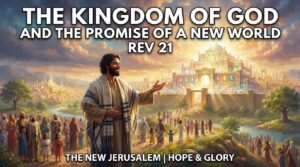 The Kingdom of God and the Promise of a New World – REV 21The Kingdom of God: From Promise to Jesus’ Return
God is bringing His reign to fullness through Jesus Christ, the promised King whose Kingdom will one day make all things new. The Kingdom is God’s rule over His creation and people, not merely a place or another name for the church.
The Biblical witness begins with creation and covenant promises, leads to Jesus’ ministry, and continues through the Spirit-empowered witness of believers as we await His return. Let’s follow that hope through Scripture, beginning with the first promises of the King’s Kingdom.
The King’s Kingdom Revealed in the Bible’s First Promises
The Bible opens with God creating the heavens and the earth, then placing humanity within His good creation. The Kingdom theme begins here: God is King, and He gives people a calling under His rule. Even after sin enters the world, His purpose does not collapse. The first promises point toward a Deliverer and a blessing that will reach every nation.
Creation, human rebellion, and the promised Deliverer
In Genesis 1, God creates humanity in His image and gives men and women responsibility to fill the earth and rule over its creatures (Genesis 1:26–28). People are called to represent His good rule throughout creation. That calling does not make humanity equal to God; it places us under the Creator’s authority, with real work to do in His world.
Then Adam and Eve disobey God, and sin brings shame, conflict, and death into human life. Yet in Genesis 3:15, God speaks of enmity between the serpent and the woman, and between their offspring. The woman’s offspring will strike the serpent’s head, while the serpent will strike His heel. Christians have long recognized this as the first promise of a coming Deliverer, one who will suffer but ultimately defeat evil.
That promise sets a direction for the Biblical history that follows. Evil will not have the final word, and God’s Kingdom purpose for creation will not be abandoned. As the Bible unfolds, we learn more about the One who will bring that victory. The promise is an early glimpse, not the whole picture.
Abraham’s covenant points toward blessing for every nation
God’s promise to Abraham gives that hope a family and a future. In Genesis 12:1–3, God calls Abraham to leave his country and promises to make him a great nation. He also promises to bless him and, through him, bless all the families of the earth. In Genesis 15:1–21, God speaks to Abraham about descendants and land, then confirms His covenant with him.
These promises matter together. Abraham’s descendants will become a people, and the land will be part of their life under God’s rule. But the promise does not stop with Abraham’s family. God intends blessing for all nations, and Israel’s calling belongs to that wider purpose.
So how does this connect with the promised Deliverer? The New Testament identifies Jesus as the One through whom Abraham’s blessing reaches the nations. Paul connects the promise to the good news proclaimed among the Gentiles, and identifies Christ as Abraham’s promised Seed. We can explore how Abraham and David’s promises point to Jesus as the Biblical account continues.
The Kingdom theme is already taking shape: God creates people to live under His reign, promises victory over evil, and calls Abraham’s family to carry blessing outward. The first promises keep our attention on God’s purpose for the whole earth, and on the King through whom He will fulfill it.
How Israel’s Covenant and David’s Throne Shaped the Kingdom Hope
Abraham’s family became a people with a particular calling. Through Israel, God showed what life under His rule could look like, then promised a King whose reign would reach beyond Israel’s earthly monarchy.
Israel is formed as a people under God’s rule
The Exodus brought Israel out of slavery in Egypt, but freedom was only the beginning. At Sinai, God made a covenant with the people He had rescued. He called them His special possession, “a kingdom of priests and a holy nation” (Exodus 19:4–6). Israel belonged to Him and was called to live by His ways.
That calling touched everyday life. God gave Israel commandments for worship, justice, and care for others. Their life together was meant to show the nations what it meant to live under the Lord’s rule. We can see more about Israel’s covenant role and mission to the nations in the larger Kingdom picture.
Israel’s history also makes clear that the people and their kings did not always remain faithful. The covenant exposed the gap between God’s good rule and human rebellion. So the hope of a restored people came to include the hope of a faithful king, one who would lead them in righteousness.
God promises David a kingdom that will endure
Israel’s monarchy gave that hope a royal line. In 2 Samuel 7:12–16, God promises David a house, a throne, and a kingdom established forever. David’s son would build a house for God’s name, and God would establish his throne. The promise reaches beyond David’s immediate successor: the royal line would endure.
Israel’s historical kingdom mattered. It gave God’s people a real king and a real place in their history. Yet no earthly king fully matched the promise. The prophets kept looking ahead to a righteous ruler from David’s line, one who would govern with justice and whose reign would bring peace. Isaiah describes a child who will reign on David’s throne and establish his Kingdom with justice (Isaiah 9:6–7).
Then Matthew opens his Gospel by identifying Jesus as “the Son of David, the Son of Abraham” (Matthew 1). That opening connects the promises directly: Jesus is heir to David’s throne, and through Him Abraham’s blessing reaches the nations. The hope is bigger than the restoration of an earthly monarchy. It points to the Messiah’s reign, in which God gathers a restored people and fulfills His Kingdom purpose.
The Prophets Picture a Righteous King and a Renewed People
The prophets spoke to people facing judgment, exile, and the loss of their land and king. Their words did not deny the pain of that moment. They pointed beyond it, toward God’s promise of a righteous ruler, a renewed people, and a Kingdom that would bring healing to the whole creation.
A promised ruler will bring justice and peace
Isaiah pictures a child who will reign on David’s throne with justice and righteousness, and whose rule will bring peace without end (Isaiah 9:1–7). Later, he describes a shoot growing from Jesse’s family line, a King empowered by the Spirit of the Lord. He will judge with righteousness, defend the poor, and bring a peace so complete that even the natural world is pictured as healed (Isaiah 11:1–10).
That vision speaks to more than political stability. Israel’s kings had failed to rule as God required, but the promised Davidic King would lead faithfully. The prophets give us reason to connect this hope with Jesus, whom Matthew names as the Son of David. We can follow how Acts connects Jesus to God’s promises, including the hope of the promised King.
The new covenant promises forgiveness and the Spirit
A righteous King would gather a people who could live under God’s rule. Jeremiah announced a new covenant in which God would write His law on His people’s hearts, forgive their sin, and make Himself known to them (Jeremiah 31:31–34). Ezekiel adds the promise of cleansing, a new heart, and God’s Spirit within His people, enabling them to walk in His ways (Ezekiel 36:24–28).
These promises are more than a return from exile. God promises forgiveness and inner renewal, not merely a change in circumstances. In the New Testament, Jesus identifies His blood with the new covenant. The Holy Spirit is given to God’s people now, but we still await the fullness of this renewal. Suffering and sin remain, and the prophets’ hope reaches its completion when Christ returns.
The nations and renewed creation belong in the prophetic hope
The Kingdom’s promise was never limited to Israel’s borders. Isaiah saw the nations coming to worship the Lord and learn His ways. They would turn weapons of war into tools for cultivation, as God brought peace among peoples (Isaiah’s vision in chapter 2).
Isaiah’s hope also includes a renewed creation: new heavens and a new earth, where people enjoy the work of their hands and life is no longer cut short as before (Isaiah 65:17–25). This is the same Kingdom hope as the coming King’s just rule and the Spirit’s work in God’s people. The prophets look toward a world healed under God’s reign, a promise we taste now but do not yet see in full.
Jesus Brings the Promised Kingdom Near
The promises to Abraham and David come together in Jesus. He is the promised King through whom blessing reaches the nations, and His ministry shows that God’s reign is drawing near. But how does His Kingdom arrive, and what are we still waiting to see?
Jesus announces God’s reign and demonstrates its power
Jesus begins His public ministry with a clear announcement: “The time is fulfilled, and the kingdom of God is at hand” (Mark 1:15). The Kingdom is near because the King is present. Jesus calls people to repent and believe, while His actions show what God’s rule means for people bound by sickness and evil.
In Mark, Jesus heals the sick and casts out demons (Mark 1:32–34). These signs and miracles are witnesses to the Kingdom, not performances or promises that every believer will be healed in this age. From our Pentecostal perspective, we pray for healing and expect the Holy Spirit to work, while trusting God when suffering remains. A helpful commentary on the opening of Mark also follows how Jesus’ ministry announces God’s reign.
Jesus’ healing and deliverance ministry shows God’s compassion and authority breaking into human life. The miracles point beyond themselves to the promised King’s rule, which will one day bring an end to sickness, evil, and death.
The cross and resurrection secure the Kingdom’s hope
Jesus’ kingship does not bypass the cross. His death brings forgiveness and establishes the new covenant: at the Last Supper, He speaks of His blood “shed for many” (Mark 14:24). The cross is central to His victory. Jesus gives Himself for sinners, fulfilling the promise of a restored relationship with God. We can read more about Jesus and the new covenant promise in the light of Biblical prophecy.
Then God raises Jesus from the dead. Paul calls Him “the firstfruits of those who have fallen asleep” (1 Corinthians 15:20–26). Firstfruits are the beginning of a greater harvest. Jesus’ resurrection is the first sign of the new creation God will bring, when death itself is defeated.
The Kingdom is present now, but its fullness is still coming
The Kingdom is present because Jesus has come, risen, and poured out the Holy Spirit. We see its work as people receive forgiveness, follow Christ, and bear witness to His reign. Yet the New Testament still points ahead to resurrection and the final defeat of death. We live between what Jesus has already begun and what He will complete when He returns.
The church belongs to this Kingdom and bears witness to it, but the church is not the Kingdom in its complete fullness. We still face suffering, sin, and death. So we pray and work for signs of God’s rule now, without claiming that the promise has reached its full expression. The King’s resurrection assures us that it will.
The Holy Spirit Empowers the Church to Witness to the King
Jesus rose from the dead and ascended to the Father, but His mission did not stop there. He gave His followers a calling, and the Holy Spirit empowers the church to carry it out while we wait for the King to return.
Pentecost equips believers to bear witness across the world
Before His ascension, Jesus told His disciples they would receive power when the Holy Spirit came upon them. They would be His witnesses in Jerusalem, Judea, Samaria, and “to the end of the earth” (Acts 1:8). The Spirit’s power had a purpose: to equip ordinary believers to testify about the risen King.
At Pentecost, the Spirit came upon the gathered disciples. They began speaking in other languages, and visitors from many regions heard them proclaim God’s works in words they understood (Acts 2:1–21). Peter explained that this outpouring fulfilled Joel’s prophecy: God would pour out His Spirit on all flesh. The Gospel would cross boundaries of language, culture, and nation.
This mission carries forward God’s promise to Abraham. God said that all the families of the earth would be blessed through him (Genesis 12:3). At Pentecost, the promise moves into public view: the Spirit empowers believers to proclaim Jesus among the nations. We can follow more of the Gospel’s mission to all nations as the church bears witness to the King.
Kingdom signs offer a foretaste, not the final fullness
The Spirit’s work is not limited to preaching. We pray for the sick, ask God for deliverance, and serve people with compassion because these acts point to the reign of Jesus. When healing or freedom comes, we give thanks. Such signs offer a foretaste of the coming age, when suffering and death will no longer remain.
We also need honesty. Faith in the Spirit’s power does not mean every prayer receives the answer we hope for now. Some people continue to suffer, and grief is real. We keep praying and serving, trusting God without claiming that the Kingdom has already reached its full expression.
The church reflects the King while awaiting His return
The church proclaims the Gospel and embodies Kingdom values through mercy, justice, holiness, and care for one another. The Spirit gives believers courage to testify and strength to serve, even when the work is difficult. Our unity also matters: people from different backgrounds belong together under the same King.
Still, the church is a witness to God’s reign, not its final form. We do not bring the Kingdom to completion through our efforts. Jesus will return, defeat every enemy, and finish the renewal He began. Until then, we remain faithful in the mission He gave us, holding together hope for the Spirit’s work now and confidence in the fullness still to come.
When the King Returns, His Kingdom Will Make All Things New
Jesus has begun His Kingdom through His life, death, and resurrection. When He returns, He will bring that Kingdom to completion: the dead will rise, evil will be defeated, and God will dwell with His people in a renewed creation. Christian hope is not an escape from the world God made. It is the promise that He will restore it under the rule of the King.
Jesus will return and death will be defeated
Paul calls Jesus “the firstfruits” of those who have died. His resurrection is the beginning of the harvest, and those who belong to Christ will be raised when He comes. Paul describes the order plainly: Christ first, then His people at His coming, and finally the defeat of every enemy. Death, the last enemy, will be destroyed (1 Corinthians 15:23–26).
That promise speaks to real grief. Paul tells believers not to mourn as though death has the final word. When the Lord descends, the dead in Christ will rise, and believers who are alive will be gathered with them to meet Him. “And thus we shall always be with the Lord,” he writes (1 Thessalonians 4:13–18). This is our confidence, not a timetable to decode. We can read more about Jesus’ return and the resurrection of believers, while keeping our attention on the promise Scripture actually gives.
God will renew creation and dwell with His people
John sees “a new heaven and a new earth,” and hears the promise that God’s dwelling will be with humanity. Death, sorrow, crying, and pain will be gone. God declares, “Behold, I make all things new” (Revelation 21:1–5).
The vision continues with the river of life flowing from God’s throne and the tree of life bearing fruit. There is no more curse, and God’s servants see His face and reign with Him (Revelation 22:1–5). The hope is not that God abandons creation, but that He heals what sin and death have broken. The King’s return brings His people into lasting life with Him.
Future hope shapes faithful living today
Because Jesus will return, we can persevere without pretending suffering is small. We grieve, pray for healing, and trust the Holy Spirit to work among us, while looking toward the day when death itself is gone. The hope of Christ’s return also calls us to holiness, compassion, and faithful witness. We live as people who belong to the coming Kingdom.
So we don’t need fear-driven predictions to stay ready. We keep following Jesus, serve our neighbors, and speak about the risen King. As Crossway’s overview of key Second Coming passages notes, Paul’s words to the Thessalonians offer reassurance about believers who have died. The promise is clear: Christ will come, His people will be raised, and we will always be with Him.
Conclusion
The Biblical witness begins with God’s promise to defeat evil and bless the nations, then leads through Abraham, David, the prophets, and the King they awaited. Jesus fulfills that hope through His ministry, death, and resurrection. The Holy Spirit now empowers us to bear witness while we wait for Jesus to fulfill the promises of Scripture in all their fullness.
That future is our hope: Christ will return, death will be defeated, and God will make all things new. So let’s trust Jesus, live faithfully by the Spirit today, and look forward to the day His Kingdom is fully revealed.
! […]
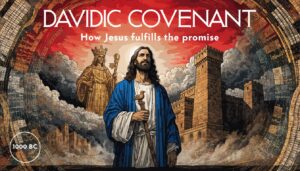 Davidic Covenant: How Jesus Fulfills the Promise, Revealed – 1000 BCGod’s Promise to David: The Throne Jesus Reigns From
Around 1000 BC, during David’s reign, God promised him an enduring royal house. That promise belongs to the Bible’s larger movement toward Jesus and His Kingdom, but it raises a hard question: how can an everlasting throne be promised when David’s kingdom later falls?
The promise’s meaning unfolds through Israel’s history, the Prophets, Jesus’ life and resurrection, and the hope of His return. From our independent, Spirit-filled Pentecostal perspective, we’ll follow that Biblical witness and see why the risen Jesus is at the heart of God’s promise.
Let’s begin with the promise God gave David, and the question of who would build whose house.
A Throne Promised to David Begins With God’s Initiative
The promise begins with a surprising reversal. David wants to build a house for God, but God tells him He will build a house for David. To see why that matters, we need to keep both meanings of “house” in view. Read the full chapter of 2 Samuel 7 in the NKJV.
The meaning of God’s promise to build David a house
David is settled in his palace, and the Lord has given him rest from his enemies. Seeing that he lives in a house of cedar while the ark of God remains in a tent, David tells Nathan the prophet that he wants to build a temple. Nathan initially approves, but God gives him a different message for the king.
The Hebrew word bayit can mean a physical house, a household, or a family line. That range of meaning drives the wordplay in the passage. David plans to build God a bayit, a temple. God promises to build David a bayit, a royal dynasty. The Hebrew meaning of bayit helps make the shift clear: the same word can describe a building or a family and its descendants.
God is not dismissing the temple. David’s son will build it. But the temple and the dynasty are distinct parts of the promise. David may have the plan, yet God is the One who starts the covenant and secures its future. He reminds David that He took him from tending sheep and made him ruler over Israel. The king’s throne rests on God’s initiative, not David’s ability to build something impressive.
That matters when we read the promise of an enduring throne. David does not earn it by offering God a house. God freely commits Himself to David’s line. For another look at the Davidic covenant and its place in Scripture, we can trace how this royal promise contributes to the Bible’s wider hope for a coming King.
Solomon fulfills the first part, but not the whole promise
Solomon is the immediate heir named in the promise. He succeeds David and builds the temple, fulfilling that part of what God declared. Yet the promise also speaks of a kingdom and throne established beyond the life of one king. Solomon’s reign cannot exhaust a commitment that reaches across generations.
God also warns that a descendant who does wrong will face discipline. That warning does not cancel the covenant. The passage distinguishes between a king’s consequences and God’s commitment to David’s house. God says He will discipline the sinful ruler, but He will not withdraw His covenant love as He did from Saul.
We shouldn’t read this as a claim that every Davidic king was faithful, or that the throne passed smoothly from one generation to the next. Israel’s monarchy later fractured, and David’s descendants did not rule without interruption. Still, the promise’s language stretches beyond Solomon.
The tension is right there: how can a throne be established forever when the historical kingdom falls? That question leads us to the later Biblical hope for a King whose reign does not end.
The Davidic Covenant Holds On Through Crisis and Exile
When Israel’s monarchy came under pressure, the promise to David did not disappear from worship. The Psalms kept bringing it before God, even when the throne looked lost. That kind of hope doesn’t pretend the crisis is small. It remembers God’s oath while asking how His promise can stand amid painful history.
Psalms remember both the oath and the apparent collapse
Psalm 89 begins by praising God’s mercy and faithfulness. It recalls His oath to David: his descendants and throne would endure. Then the psalm turns. The king has been rejected, his crown lies in the dust, and the nation’s defenses have been broken. The worshiper asks God how long this distress will last.
That tension matters. The psalm doesn’t tidy up the contradiction between God’s promise and what Israel sees. It gives the grief a place in prayer. Faithful worship can include both praise for God’s covenant and an honest cry when events seem to say otherwise.
Psalm 132 also calls on God’s oath, declaring that a descendant of David will sit on the throne. Its words keep the promise alive in Israel’s worship, even when the monarchy faces danger. We can read more about Psalm 89’s lament over David’s throne alongside the wider promise God made to David.
The Psalms preserve hope without denying the evidence of loss. They let Israel remember God’s oath and ask Him to act.
Exile turns the promise toward a future righteous king
When the historical monarchy ended and the people went into exile, the absence of a Davidic king raised a real question: had God’s promise failed? Jeremiah answers by looking ahead. He speaks of a righteous Branch from David’s line who will reign wisely and do what is just (Jeremiah 23:5–6).
In plain language, the hope is for a ruler unlike the kings whose injustice helped bring judgment. This future king would govern with righteousness and care for the people. Jeremiah’s words point beyond the failed rulers of Israel, but we should not claim that every prophetic detail had already come to pass.
The promise now carries the weight of both memory and expectation. Israel remembers the throne God pledged to David, mourns its absence, and looks for a faithful king. The New Testament later identifies Jesus as the promised heir, but the question raised by exile is not small: how does an enduring throne remain when no visible Davidic king sits upon it?
The Prophets Expand the Hope of David’s Everlasting Kingdom
The Psalms kept David’s promise alive through the monarchy’s collapse. The Prophets widen that hope. They describe a ruler whose justice, wisdom, and reign reach beyond what any ordinary succession of kings could secure.
Isaiah pictures a Davidic ruler whose reign brings justice and peace
Isaiah spoke amid a real crisis. Assyria threatened Israel and Judah, and the people faced fear, loss, and political upheaval. In that setting, Isaiah’s promise of a ruler from David’s line offered hope grounded in God’s faithfulness. Isaiah 9 in the NKJV speaks of a child who will reign on David’s throne, with a government marked by justice and righteousness. His reign and peace will have no end.
Isaiah 11 develops the picture. The prophet sees a shoot growing from Jesse’s stump, an image of new life rising from David’s family line. A tree cut down looks finished, but a fresh shoot says the line is not beyond renewal. The ruler who comes from it receives the Spirit of the LORD, with wisdom, understanding, counsel, and might. He judges with righteousness and gives particular care to the poor and meek.
That detail matters. The promised King’s authority is not measured by force or royal display. He sees beyond appearances and judges faithfully. Isaiah’s vision of peace, including the striking image of former enemies living without harm, stretches beyond the record of Israel’s kings.
We can read these prophecies in their historical setting and still see why they nourished later messianic hope. No ordinary king in David’s line brought an endless reign of justice and peace. Isaiah’s words point toward a ruler whose Spirit-given wisdom and lasting kingdom exceed the failures of the monarchy. For another look at Isaiah 11’s prophecy of the righteous ruler, we can follow how this hope appears in the Bible’s witness to Christ.
The coming King is a hope for more than Israel alone
Isaiah’s vision doesn’t stop with Israel. In Isaiah 11, the root of Jesse becomes a signal for the peoples, and the nations seek Him. The prophet also speaks of God’s scattered people being gathered. The promise to David still concerns God’s people, but its horizon now includes people beyond Israel’s borders.
Paul makes that connection plain. In Romans 15:11-12 in the NKJV, he quotes Isaiah’s promise of the root of Jesse and applies it to the nations’ hope in Christ. The New Testament welcomes Gentiles into the hope of God’s Kingdom through Jesus, the promised heir of David.
That doesn’t mean Isaiah is offering a prediction about modern political dominance. The emphasis is on God’s purpose: the nations come to hope in the King He appoints. His reign brings people under God’s righteous rule, not under a project of human conquest.
So the prophetic promise grows wider without losing its roots. The King comes from Jesse’s family, cares for God’s people, and draws the nations to hope in Him. Isaiah gives us a vision that reaches beyond the throne’s earthly history, toward Jesus and the Kingdom He reigns over.
Jesus Fulfills the Promise of David’s Throne
The Prophets kept Israel’s hope pointed toward a righteous King from David’s line. The New Testament names Jesus as that promised heir, then shows why His reign can endure: He has risen from the dead. His Kingdom is already present, yet its full completion is still ahead.
The Gospels identify Jesus as the promised Son of David
Matthew opens by identifying Jesus as the Son of David and the Son of Abraham (Matthew 1:1). The genealogy that follows is brief evidence of His place in Israel’s history and David’s royal line. Matthew’s opening title does more than introduce His ancestry. It tells us to read Jesus’ life in light of God’s promise to David.
“Son of David” was a royal and messianic title. It connected Jesus with Israel’s hope for a King who would reign under God’s authority. The Gospels use that title as people recognize Jesus’ authority and appeal to Him for mercy. Luke makes the connection especially direct. Gabriel tells Mary that Jesus will receive “the throne of His father David,” reign over Jacob’s house forever, and have a Kingdom without end (Luke 1:32–33 in the NKJV).
That announcement ties together David’s throne, Jesus’ kingship, and an everlasting reign. The promise is no longer only a hope for another generation of earthly rulers. Luke identifies Jesus Himself as the King whose Kingdom will not end. We can read more about Jesus as the promised Son of David in the Bible’s wider account of the Kingdom.
The resurrection shows that death cannot end His reign
Peter makes the connection between David’s oath and Jesus’ kingship in Acts 2:29–36 in the NKJV. David died and was buried, Peter says, so David’s words about a descendant whose body would not see corruption pointed beyond David himself. God raised Jesus, and Peter proclaims Him as both Lord and Christ.
Peter also recalls God’s oath that one of David’s descendants would sit on his throne. He connects that promise with Jesus’ resurrection and exaltation at God’s right hand. The promised King is alive, and death has not ended His reign. That is the center of Peter’s message: David’s throne promise finds its fulfillment in the risen Jesus, not in an unbroken chain of earthly kings.
Paul gives the same hope in a compact statement. Jesus was descended from David according to the flesh and declared to be the Son of God in power by His resurrection from the dead (Romans 1:3–4 in the NKJV). His human descent places Him within David’s line; His resurrection reveals His authority as the powerful Son of God. The promise rests on the living King, not on a dynasty that history had already interrupted.
Jesus’ Kingdom is present now and awaits its completion
Jesus’ ministry announced the Kingdom of God. Through His death, resurrection, and exaltation, that Kingdom has begun to take effect under His rule. We can say Jesus reigns now because He is risen and exalted. His authority is real, even when the world does not yet display the justice and peace pictured in the Prophets.
This is the already-and-not-yet hope of the New Testament. The Kingdom is already present through Jesus, but it has not yet reached its full completion. We still see suffering, injustice, and death. Those realities do not mean God has abandoned His promise; they remind us that the King’s reign awaits its final public fulfillment.
So we pray for God’s Kingdom to come, and we look for Jesus’ return. The Spirit empowers believers to bear witness to the risen King as we wait. We do not have to claim that every prophetic image has reached its final form. We can trust that God has fulfilled His promise in Jesus and still long for the day when His reign is fully seen.
The Holy Spirit Empowers Witness While We Await the King’s Return
Jesus’ resurrection confirms that God’s promise to David rests on a living King. But what does His reign mean for believers now, while we wait for the day everyone sees it? Acts gives us a clear answer: the risen Jesus sends His people to witness, and the Holy Spirit empowers them for that work.
The Spirit sends believers to witness to Jesus’ Kingdom
After Jesus rose from the dead, His disciples asked whether He would restore the Kingdom to Israel at that time. Jesus did not give them a date. He told them the timing belonged to the Father, then turned their attention to their calling: they would receive power when the Holy Spirit came upon them and become His witnesses in Jerusalem, Judea, Samaria, and to the ends of the earth (Acts 1:6-8 in the NKJV).
That response matters. Jesus didn’t tell them to stop caring about the Kingdom. He showed them what faithfulness looked like while they waited. Their task was to testify that Jesus is risen and reigns, carrying that message beyond the places they knew.
In Acts 2, the promised Spirit comes upon the gathered believers, and their witness becomes public. Peter speaks to the crowd about Jesus’ death, resurrection, and exaltation. The Spirit’s outpouring is a personal encounter with God, but the account doesn’t stop with private experience.
The Spirit gives power to proclaim Jesus and serve His purposes among people. From our Pentecostal perspective, that public witness remains central to the Spirit’s power for witness.
This is why we understand the baptism in the Holy Spirit as empowerment for witness and service, not as a badge of spiritual status. The Spirit equips believers to speak about Jesus with courage, serve others, and carry the good news where it hasn’t yet been heard. The risen King still sends His people, and the Spirit still equips them.
The promised return gives the Church a living hope
After Jesus ascended, two angels told His disciples that He would return (Acts 1:9-11 in the NKJV). They were not given a timetable to calculate. They were given a promise to trust. Paul calls this expectation our “blessed hope,” the appearing of Jesus Christ (Titus 2:13).
Revelation pictures Christ returning as the victorious King, then describes His reign and the faithful sharing in it (Revelation 19:11-20:6 in the NKJV). Christians agree that Jesus will return and His reign will be fully seen, but Pentecostals don’t all interpret the details or timing of end-time events the same way. We should hold firmly to what Scripture says while recognizing where faithful Christians differ.
The Assemblies of God, for example, states a premillennial view in its Statement of Fundamental Truths. That is the denomination’s stated teaching, not a position we should assign to every Pentecostal church.
Our hope in the King’s return doesn’t pull us away from the work Jesus gave us. It gives that work its direction. We bear witness to the risen Jesus, serve our neighbors, and trust that the Davidic promise will be fully visible when the King returns. For another look at how Acts 1 connects Jesus’ return with the call to witness, we can keep both parts of Jesus’ instruction in view: wait for His return, and tell the world who He is.
Conclusion
God promised David an enduring house and throne, and Israel’s worship and prophets kept that hope alive through crisis. The New Testament proclaims Jesus as the risen King whose Kingdom has no end. We can trace how Jesus fulfills God’s promise to David without losing sight of the hope still ahead.
Jesus reigns now, and we serve as Spirit-empowered witnesses while we await His return. The promise to David points us to the Kingdom that will be fully revealed when He comes.
! […]
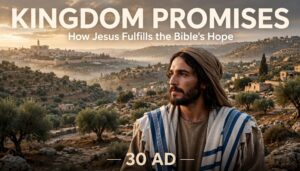 Kingdom Promises: How Jesus Fulfills the Bible’s Hope – 30 ADHow Jesus Fulfills the Bible’s Kingdom Promises
The Bible carries one connected witness: God’s promises begin in Genesis, take shape through Israel and the prophets, come into view in Jesus, and point toward His return. The Kingdom means God’s reign and rule, a reality Jesus made known through His words and works.
When the Bible’s promises can feel like separate passages, we can miss the hope that holds them together. We believe the Holy Spirit still helps us see Jesus at the center of Scripture and empowers us to live as witnesses to His Kingdom.
Let’s follow that witness from the first promises to the hope of final renewal, beginning where the Bible does: with creation and God’s promise of blessing. For more on how Jesus fulfills Biblical prophecy, keep that larger scriptural witness in view.
From Promise to Kingdom: The First Hope Begins in Genesis
Genesis opens with God creating a world and giving humanity a calling within it. The Kingdom theme begins to take shape through that relationship: God rules, people serve as His stewards, and His purposes reach beyond one family to bless the nations.
Creation, human calling, and the promise of victory
In Genesis 1:26–28, God creates humanity in His image and entrusts people with care and authority over other creatures. This is delegated rule, not permission to exploit the earth. Humanity is called to cultivate life under God’s authority, reflecting His good purposes in creation.
Then human rebellion fractures that calling. In Genesis 3:15, God speaks of enmity between the serpent and the woman, and between their offspring. The verse describes conflict and a wound to the serpent’s head and the woman’s offspring’s heel. It doesn’t spell out a full Kingdom timeline or name Jesus directly.
Still, Christians have often read this verse as an early promise that evil will ultimately be defeated. We read it alongside the wider witness of Scripture, which identifies Jesus as the One who conquers sin and death. That later Christian understanding matters, but we shouldn’t confuse it with the verse’s immediate wording.
Abraham’s covenant brings blessing to the nations
After the account of Babel, God calls Abram and gives the growing promise a particular family through which blessing will reach the whole earth. In Genesis 12, God promises Abram descendants, a great nation, and blessing for all the families of the earth. Genesis 15 develops the promises of descendants and land through God’s covenant with Abram. In Genesis 17, God renames him Abraham and promises that he will become the father of many nations. Genesis 22 renews the promise that blessing will reach the nations through Abraham’s offspring.
The covenant holds together people, land, and blessing. Those promises begin in Israel’s history, while their reach extends beyond Israel. We shouldn’t flatten that particular history into a vague prediction, or assume every Christian tradition understands Israel, the Church, and the land in the same way.
Paul connects Abraham’s blessing with Jesus in Galatians 3. He says the promise that the nations would be blessed reaches the Gentiles through faith in Christ, and he identifies Christ as the promised Seed. Those who belong to Jesus share in Abraham’s blessing and receive the promise of the Spirit. We see a clear New Testament connection here, while still recognizing that Christians differ on how these promises relate to Israel and the Church. For a closer look, see how Abraham’s covenant points to Jesus.
Genesis gives us the first movement of promise, not a complete Kingdom timeline. God’s purposes begin in creation, continue through Abraham’s family, and open toward blessing for all nations.
Israel’s Kings and Prophets Keep the Kingdom Hope Alive
Israel’s history develops the Kingdom theme through covenant, monarchy, exile, and prophetic hope. The kings never stood above God’s covenant, and their failures sharpened the hope for a righteous ruler who would lead God’s people in faithfulness.
Israel is called to live under God’s rule
At Sinai, God calls Israel His treasured possession and “a kingdom of priests and a holy nation” (Exodus 19:4–6). Israel’s calling was communal: live as God’s people and make His holiness known among the nations. Their national life was meant to show what it looked like to live under His rule.
That calling shaped the limits God placed on Israel’s king. The king was to read God’s law and obey it, without multiplying horses, wives, or wealth for himself (Deuteronomy 17:14–20). Israel could have a king, but he was still accountable to God. His authority was never a license to rule by his own standards.
When Israel asked for a king “like all the nations” (1 Samuel 8:4–9), Samuel warned them about the costs of royal power. The request revealed a desire to match neighboring nations, but it doesn’t explain the whole monarchy. Israel’s kings became part of its history, and God later made a covenant with David that promised an enduring royal line. We can read more about God’s covenant with David.
The monarchy still failed. Division, injustice, and idolatry led the kingdoms toward conquest and exile. Yet the prophets did not leave Israel with failure as the final word.
The prophets promise a righteous King and a renewed people
Isaiah looks ahead to a Davidic ruler whose government brings justice and peace (Isaiah 9:6–7). Later, Isaiah pictures a shoot from Jesse’s line ruling with righteousness (Isaiah 11:1–5). The hope is bigger than another king taking David’s throne. It is a ruler who judges rightly and leads under God’s Spirit.
Jeremiah adds a promise of a new covenant, with God’s instruction written on the people’s hearts and their sins forgiven (Jeremiah 31:31–34). Ezekiel joins that renewal to restoration, a new heart, and God’s Spirit within His people (Ezekiel 36:24–28). He also speaks of David’s descendant ruling as shepherd while God dwells among His people (Ezekiel 37:24–28).
Daniel sees “One like the Son of Man” receiving an everlasting dominion (Daniel 7:13–14). Joel promises that God will pour out His Spirit on all flesh (Joel 2:28–29). Together, these visions hold out hope for a righteous King, a renewed people, God’s presence, and the Spirit’s work. For a Pentecostal reading of God’s Kingdom as present through His activity yet awaiting its fullness, see the Assemblies of God position paper on the Kingdom.
Around AD 30, Jesus Announces God’s Kingdom and Makes It Visible
Around AD 30 is a common approximate date for the events at the center of Jesus’ public ministry. The Bible doesn’t give that calendar date, and scholars don’t all agree on the exact year. What the Gospels make clear is what Jesus proclaimed: God’s Kingdom had drawn near, and His ministry showed people what that meant.
Jesus fulfills the prophetic hope through His words and works
Mark says Jesus began preaching in Galilee after John was arrested. His message was direct: “The time is fulfilled, and the kingdom of God is at hand,” so people should repent and believe the good news (Mark 1:14–15). Jesus wasn’t announcing a distant hope with no connection to the present. He said God’s reign was near, and then demonstrated its power.
In Nazareth, Jesus read from Isaiah about good news for the poor, freedom for captives, sight for the blind, and liberty for the oppressed. He then said, “Today this Scripture is fulfilled in your hearing” (Luke 4:16–21). We see His claim plainly: the prophetic hope was being fulfilled through His Spirit-anointed mission. For more on Jesus’ Spirit-anointed Kingdom mission, we can look closely at the connection Luke draws between Isaiah and Jesus’ ministry.
Jesus pointed to His works when John the Baptist’s disciples asked whether He was the coming One. He told them to report what they had seen and heard: the blind received sight, the lame walked, people with leprosy were cleansed, the deaf heard, the dead were raised, and the poor heard good news (Luke 7:18–23). Healing and deliverance weren’t side notes. They were visible signs of God’s reign breaking into people’s lives.
When Jesus answered the accusation that He cast out demons by demonic power, He said that casting them out by God’s Spirit meant God’s Kingdom had come upon His hearers (Matthew 12:28). The Gospel accounts show the Kingdom at work through Jesus’ teaching, healing, deliverance, and good news for the poor.
The Kingdom is present, yet we still pray for its fullness
Jesus taught His disciples to pray, “Your kingdom come. Your will be done on earth as it is in heaven” (Matthew 6:9–10). That prayer holds two truths together. In Jesus’ ministry, God’s reign was already active; yet His followers were still to ask for its full expression on earth.
From a Pentecostal viewpoint, the Holy Spirit’s work is a real sign of God’s reign. We believe the Spirit still empowers witness, brings people to Jesus, and gives gifts for ministry. The Assemblies of God describes this same present-and-future shape in its position paper on the Kingdom of God. Still, present signs don’t mean every promise has reached completion. Sickness, oppression, and death remain, so we pray and serve with hope while awaiting the day God’s Kingdom comes in fullness.
The Cross and Resurrection Reveal the Victory of the King
Jesus’ suffering did not cancel His kingship. The Gospels show the King entering suffering willingly, and the apostles proclaim that God raised and exalted Him. The cross accomplishes salvation; the resurrection declares that death could not hold Him.
Jesus’ death places kingship at the heart of the cross
When Pilate questions Jesus, He speaks openly about His Kingdom and says His kingship is not from this world (John 18:33–37). That answer does not make His reign a mere symbol or private idea. Jesus explains that His Kingdom does not come from the world’s systems of power. His authority comes from God.
The charge against Jesus and the inscription above Him make the royal claim plain. Pilate asks, “Are You the King of the Jews?” and the inscription reads, “JESUS OF NAZARETH, THE KING OF THE JEWS” (John 19:1–22). Mark also records the soldiers mocking Him as “King of the Jews” (Mark 15:1–39). They treat His kingship as a joke. The Gospel accounts invite us to see the bitter irony: the King is rejected and crucified, yet He gives Himself to save.
The cross is more than a political symbol. Jesus’ death is the saving work through which He bears sin and opens the way to God. Even as He hangs on the cross, a repentant criminal asks Jesus to remember him when He comes into His Kingdom. Jesus answers with a promise of paradise (Luke 23:39–43). There, hope rests not on the criminal’s power or record, but on the mercy of the crucified King.
The resurrection confirms His lordship and points to the end of death
Peter’s Pentecost sermon connects Jesus’ resurrection and exaltation to God’s promise to David. David died, Peter explains, but he spoke of a descendant whose body would not remain in the grave. God raised Jesus and exalted Him, and Peter declares that God has made Him “both Lord and Christ” (Acts 2:22–36). We see the King’s suffering followed by God’s vindication. Jesus is alive and reigning.
Paul takes that hope further. Christ is “the firstfruits” of those who have died, the beginning of the resurrection harvest (1 Corinthians 15:20–28). His victory is already secured, but death has not yet been destroyed in its final sense. Christ reigns until every enemy is put under His feet, and the last enemy to be destroyed is death.
That is the hope we hold: Jesus reigns now, and His Kingdom will reach its fullness. For more on the risen Jesus as David’s promised King, we can follow Peter’s message back to God’s covenant promise.
Pentecost Sends the Church to Witness in the Spirit’s Power
The risen Jesus taught His disciples about the Kingdom, then sent them to bear witness in the Spirit’s power. Pentecost connects that mission to Joel’s promise and shows how God’s blessing begins reaching people beyond Israel.
Pentecost joins Joel’s promise to the risen Jesus
After His resurrection, Jesus spent time with His disciples and spoke about the Kingdom of God (Acts 1:3–8). They asked whether He would restore the Kingdom to Israel at that time. Jesus didn’t give them a timetable. He told them the Father held the times and seasons, then pointed them toward their calling: they would receive power when the Holy Spirit came upon them and become His witnesses to the ends of the earth.
That answer doesn’t make their question meaningless, or settle every debate about Israel’s future. It turns their attention to the mission immediately before them. The disciples were to proclaim the risen King, beginning in Jerusalem and reaching outward.
At Pentecost, the Spirit came upon the gathered disciples, and people from many nations heard them speaking in their own languages (Acts 2:1–21). Peter explained the event by quoting Joel’s promise that God would pour out His Spirit on all flesh. The promise was no longer only a distant prophetic hope. God was beginning to fulfill it among His people.
Peter’s message also centered on Jesus. God raised Him from the dead and exalted Him, and Peter declared that Jesus is both Lord and Christ (Acts 2:32–36). Pentecost, then, is more than a remarkable display of spiritual power. The Spirit empowers the Church to testify that the crucified Jesus is alive and reigns.
We believe the Spirit still empowers believers for witness and ministry. The Church participates in the Kingdom’s mission, but the Church is not simply identical to the Kingdom. God’s reign is greater than any institution or congregation, even as He uses His people to make the good news known. For more on the Church’s Kingdom mission after Pentecost, we can follow this connection through Acts.
The good news reaches people from every nation
The widening mission becomes clear when Peter visits Cornelius, a Gentile. As Peter speaks about Jesus, the Holy Spirit falls on Cornelius and those gathered with him (Acts 10:34–48). Peter recognizes that God has welcomed them, too. The Spirit’s gift makes that welcome unmistakable.
Paul connects Gentile inclusion with God’s promise to Abraham. Through Christ Jesus, the blessing of Abraham comes to the Gentiles, and those who belong to Christ become children of God through faith (Galatians 3:14; Galatians 3:26–29). The blessing promised through Abraham reaches the nations, just as Genesis anticipated.
This doesn’t settle every Christian debate about Israel and the Church. It does show that the Spirit gathers people from beyond Israel into the good news of Jesus. Our mission is to bear witness faithfully, trusting God to keep His promises as the Gospel reaches the nations.
Jesus’ Return Will Bring the Kingdom to Its Fullness
Jesus’ Kingdom is already at work, but the Bible points us toward a day when His victory will be complete. The New Testament promises His return, the resurrection of the dead, and the end of death. Christians differ on the timing and sequence of end-time events, but these shared hopes give us reason to live faithfully now.
The New Testament promises Christ’s return and the resurrection
After Jesus ascended, two messengers told His disciples that He would return (Acts 1:9-11). They gave no timetable. Their message was clear: the risen Jesus would come again.
Paul offers comfort to Christians grieving those who have died. When the Lord descends, the dead in Christ will rise, and believers will be gathered to meet Him (1 Thessalonians 4:13-18). Paul tells the Church to encourage one another with this hope. We aren’t asked to turn grief into certainty about every detail; we are reminded that death will not have the final word.
In 1 Corinthians 15:20-28, Paul calls Jesus the firstfruits of those who have died. His resurrection is the beginning of the harvest, and those who belong to Him will be raised. Christ reigns until every enemy is under His feet, and death, the last enemy, will be destroyed.
Christians read these passages alongside other prophetic texts in different ways. We may disagree about the millennium, tribulation timelines, or how promises concerning Israel relate to the Church. Those debates don’t erase the central hope: Jesus will return, the dead will be raised, and evil and death will be defeated. We can hold that confidence without pretending the Bible gives us one uncontested end-times schedule. For more on the risen Jesus and the hope of His return, we can keep the focus on what Scripture states plainly.
The new creation completes the hope begun in Genesis
The Bible’s final vision brings us back to its opening hope: God with humanity in a world made new. Revelation pictures a new heaven and a new earth, where God dwells with His people, wipes away every tear, and ends death, sorrow, and pain (Revelation 21:1-5). The vision answers the fracture of Genesis with restoration, not abandonment of creation.
Revelation’s closing image is a river of life flowing from God’s throne, with the tree of life bringing healing to the nations (Revelation 22:1-5). God’s servants see His face and serve Him. The images offer hope and assurance, not a detailed calendar for predicting each event.
So how do we live while we wait? We stay ready, worship God, and bear faithful witness to Jesus. We don’t need to settle every disputed timeline before we can trust His promise. God will dwell with His people, and His Kingdom will reach its fullness.
Conclusion
The Biblical witness begins with God’s purpose for creation and His promise to bless the nations through Abraham. Israel’s prophets kept hope alive for a righteous King, and Jesus brought that hope into view as He announced God’s Kingdom, gave His life, and rose again.
The Spirit now empowers the Church to bear witness to the risen King. As we trace Scripture’s promises to Jesus, we see the central hope: Jesus has begun the work of God’s Kingdom, and He will bring it to completion when He returns.
! […]
Expository Groundwork
Featured Prophetic Studies
Careful, text-centered studies of stewardship in God’s Kingdom, historical judgments, and Scripture’s lasting authority.
Kingdom of God
Foundational Study
Kingdom of God Clear Stewardship: Israel, Jesus, Church Acts 2
A closer look at God’s unfolding covenant plan, tracing Israel’s sacred calling, the Messiah’s arrival, and the commission given to the New Testament church in Acts 2.
Elisha
Historical Exposition
God’s Certain Wrath, Trials and Tribulation 2 Kings 2:23-25
A sobering look at God’s honor and accountability through Elisha’s prophetic calling, and how contempt for God’s Word leads to judgment and tribulation.
- Testimony of Jesus: Prophecy and Christ the King Triumphs – REV 19The Testimony of Jesus: Prophecy and the King of Kings
Earthly rulers and empires can look permanent, but Scripture points us to the risen Jesus as the true and lasting King. In Revelation 19, the angel’s words about “the testimony of Jesus” lead directly into John’s vision of Christ as “King of kings and Lord of lords.”
What does prophetic witness have to do with Christ’s rule? We’ll look at what Revelation 19:10 means, how Daniel and Revelation portray human kingdoms, and what this means for Spirit-filled believers today. Christians don’t agree on every detail of prophetic interpretation, but the central call is clear: worship God and bear witness to Jesus.
Let’s begin with the angel’s words and the testimony of Jesus in Revelation 19.
What “The Testimony of Jesus Is the Spirit of Prophecy” Means
Revelation 19:10 can sound like a puzzle, but John’s vision gives us a clear starting point. He falls before an angel, and the angel refuses the worship, telling him to worship God. The words about prophecy explain the shared witness of God’s servants, not a special status for angels or prophets.
Prophecy points worship toward God
John is overwhelmed by what he sees and hears. But the angel’s answer is direct: he is a fellow servant, and John must worship God. Prophetic ministry serves God. It does not invite worship of angels, prophets, or people with a public platform.
That matters today, too. A prophetic word may be striking, but the person delivering it is still a servant. If a message draws attention to human fame instead of Jesus, we should test it carefully. Revelation’s own pattern is plain: God receives worship, and prophetic witness leads us to Jesus.
Two ways to understand “the testimony of Jesus”
Christians commonly read the phrase in two related ways. “The testimony of Jesus” can mean the testimony Jesus bears, as the One who reveals God’s message. It can also mean testimony about Jesus, the witness that proclaims who He is. Revelation calls Jesus “the faithful witness” (Revelation 1:5), and its opening chapter introduces John’s witness to God’s word and Jesus’ testimony (read Revelation 1 in the NKJV).
These readings can overlap. Jesus gives the message, and the Spirit can empower His servants to bear witness to Him. Revelation 12:17 describes believers who hold the testimony of Jesus, while the closing vision repeats the angel’s correction: worship God, alongside the prophets who serve Him.
What “the spirit of prophecy” means
The phrase “spirit of prophecy” has more than one interpretation. Some Christians hear an emphasis on the Holy Spirit inspiring prophecy. Others understand it as prophetic activity, or as the witness centered on Jesus. We don’t need to settle a debated Greek reading to see the shared point: true prophecy belongs to God and bears witness to Jesus.
As Pentecostals, we believe the Holy Spirit gives gifts for the good of the Church and the glory of Jesus. Those gifts should build up believers, not make the messenger famous. We see that same purpose in the Holy Spirit’s testimony about Jesus: the Spirit’s work directs attention to Christ.
So when we read Revelation 19:10, we should keep both parts in view. Prophecy is a gift from God, and its witness belongs to Jesus. The messenger serves; God receives worship.
How Revelation Presents Jesus as King of Kings and Lord of Lords
After heaven celebrates Babylon’s judgment, John sees heaven open and Christ appear as a victorious rider. The vision shifts our attention from the collapse of corrupt power to the One whose reign is righteous and lasting. We can read Revelation 19 in the NKJV with that contrast in mind.
Christ is Faithful and True
John first calls the rider “Faithful and True.” Those names tell us we can trust His judgment. Earthly rulers may promise justice and fail to deliver, but Christ judges and makes war “in righteousness” (Revelation 19:11). His authority is never separated from what is right.
The rider is also called “The Word of God” (Revelation 19:13). John presents Christ as God’s revealed Word, whose judgment exposes evil rather than disguising it. The image of a sharp sword coming from His mouth makes that point vivid: the weapon comes from His word. Revelation’s vision describes divine judgment; it does not call Christians to pursue political power or physical violence.
Isaiah 11:1-5 also pictures God’s anointed ruler judging with righteousness. Psalm 2 describes the Lord’s anointed King confronting rebellious rulers, while Daniel 7:13-14 portrays one like a Son of Man receiving everlasting dominion. These passages echo themes in John’s vision, though we don’t need to claim that every detail comes from one source.
The Lamb outranks every earthly ruler
The words on the rider’s robe and thigh declare Him “King of kings, and Lord of lords” (Revelation 19:16). Revelation uses the same title in 17:14, where the Lamb overcomes kings allied with the beast. The repeated words leave no doubt about the outcome: rulers who oppose God may seem powerful, but their authority is temporary. Christ is supreme.
This is the wider contrast running through Revelation 17-19. Babylon and the beast picture power that opposes God, while the Lamb reigns with justice. Christians differ on how closely these images point to ancient Rome, recurring patterns of empire, or a future end-time power. But John’s central point remains clear: no human kingdom can outlast Christ’s rule.
We see a related picture in Daniel 7, where dominion is given to the Son of Man and His Kingdom will not pass away. That promise keeps our attention on Christ’s authority, not on speculation about dates or a timetable. As we consider Jesus’ victory in Revelation 19, we can hold fast to the hope John gives us: the risen Jesus judges evil in righteousness, and every rival power must yield to Him.
What Daniel’s Visions Reveal About Earthly Empires and God’s Kingdom
Daniel’s visions put earthly power in perspective. Kingdoms rise, dominate, and fall, but God’s Kingdom endures. We see that contrast in two striking images: a statue shattered by a stone, and beasts judged before the Ancient of Days.
Daniel 2: A statue and a stone
In Nebuchadnezzar’s dream, a great statue has a head of gold, chest and arms of silver, belly and thighs of bronze, legs of iron, and feet made partly of iron and partly of clay. Daniel explains that the materials picture successive kingdoms, though Christians differ over which empires each part represents. We can read the full vision in Daniel 2 in the NKJV.
Then a stone, “cut out without hands,” strikes the statue and breaks it apart. The stone grows into a great mountain that fills the earth. Daniel says God will establish a Kingdom that will never be destroyed and will outlast every human kingdom (Daniel 2:44-45).
The stone belongs to Daniel 2’s vision. We shouldn’t merge it with the figure in Daniel 7, even though both visions point to God’s rule over human powers.
Daniel 7: Beasts judged, dominion given
Daniel’s next vision is more unsettling. Four beasts rise from the sea, and the chapter interprets them as kings or kingdoms. Their fierce appearance shows what rule becomes when power turns oppressive. But the beasts do not rule forever. The Ancient of Days takes His seat in judgment, and their dominion is removed. The entire vision of Daniel 7 in the NKJV makes the contrast clear.
Daniel then sees “One like the Son of Man” coming with the clouds of heaven. He receives dominion, glory, and a Kingdom that will never pass away (Daniel 7:13). Unlike the stone in Daniel 2, this is a humanlike figure receiving authority from God. We Christians see this vision as pointing us to Jesus, the Son of Man and King whose reign does not end. For more on that connection, see Daniel’s visions of God’s lasting Kingdom.
Revelation carries Daniel’s contrast forward
Revelation draws on Daniel’s beast and Kingdom imagery. Its beasts embody power opposed to God, while its vision of Christ declares that oppressive rule will not have the final word. The pattern is familiar: kingdoms may look permanent from the ground, but God judges them, and His Kingdom remains.
Christians differ over how to identify Daniel’s kingdoms and how these visions relate to future events. Some connect the symbols to particular ancient empires; others see recurring patterns of oppressive rule, future fulfillment, or both. We don’t need an empire-by-empire chart to grasp Daniel’s central message: human power is temporary, and God’s Kingdom is everlasting.
How Babylon and the Beast Show the Limits of Worldly Power
Revelation 17–19 takes us through Babylon’s alliance with the beast, the city’s destruction, heaven’s response, and Christ’s victory. The movement is deliberate: what looks untouchable on earth cannot stand before God’s judgment.
Babylon’s influence reaches beyond armies
In Revelation 17, John sees a woman called Babylon seated on a scarlet beast. The vision joins the city’s influence to political rulers and their power. Yet Babylon’s reach is not only military. The imagery also points to idolatry, luxury, and influence over the kings of the earth. The beast eventually turns against the woman, exposing how unstable their alliance is.
Many interpreters see Rome as a strong historical candidate for Babylon’s first-century setting. The city ruled over kings, and John’s vision mentions seven mountains, details that fit the way ancient readers could understand Rome. Still, Christians interpret the symbols in different ways. Some see Rome as the immediate referent and Babylon as a recurring picture of corrupt power opposed to God. Others also expect a final end-time expression. These readings should remain distinct, and we should be careful about labeling a modern nation, leader, or institution as Babylon without clear support from the text.
The city’s wealth cannot save it
Revelation 18 turns our attention to Babylon’s economic power. Kings mourn the city’s fall, and merchants grieve because their market for luxury goods has disappeared. Seafarers watch the smoke rise from a distance. Their grief reveals what Babylon’s grandeur depended on: political alliances, profitable trade, and a lifestyle built on excess.
Then heaven responds with praise, while the merchants and rulers lament. That contrast matters. The people who benefited from Babylon see its judgment as disaster; heaven sees God’s justice. We can read Revelation 19 in the NKJV, where the celebration over Babylon’s fall leads into the marriage supper of the Lamb and the appearance of Christ as the victorious King.
The Lamb has the final word
Babylon’s rulers and merchants appear powerful while the city prospers. But the beast’s alliance breaks apart, and the city falls. Then Christ appears as “Faithful and True,” and the title “King of kings, and Lord of lords” makes the contrast unmistakable. His authority does not depend on wealth, political bargains, or forceful loyalty.
Revelation’s vision calls us to worship God, not to imitate Babylon’s hunger for influence. When a system demands the kind of ultimate loyalty that belongs to God, its power has limits, even if it looks secure for a time. The beast and false prophet are defeated in the vision, a judgment also described in Revelation’s account of the Antichrist’s defeat. The Lamb’s Kingdom endures, and no empire can take His place.
What Spirit-Filled Prophecy Should Produce in the Church
Revelation 19:10 gives us a clear test for prophetic ministry: its testimony belongs to Jesus, and worship belongs to God. In the Church, prophecy should help people see Christ more clearly and serve one another faithfully. A spiritual gift can encourage us, correct us, or strengthen our faith, but it never puts the messenger above Scripture or beyond correction.
Prophecy should honor God and exalt Jesus
The angel in Revelation 19:10 refuses John’s worship and points him to God. That moment sets a boundary for every prophetic ministry: no prophet, preacher, or person with a spiritual gift should receive the honor that belongs to God.
Prophecy also bears witness to Jesus. A message may include personal encouragement or direction, but it should never pull attention away from Christ or contradict what He has revealed in Scripture. We believe the Holy Spirit gives gifts to serve the Church, not to build a platform for the person who uses them. That is part of how the Spirit’s gifts strengthen the Church.
Prophecy should build up the Church
Paul teaches that the Spirit gives different gifts “for the profit of all.” His list includes wisdom, knowledge, faith, healing, prophecy, and discernment (1 Corinthians 12:7-11 in the NKJV). These gifts are not badges of spiritual rank. They are ways the Holy Spirit equips believers to serve one another.
So what should prophecy produce? Strength, encouragement, correction that draws us toward God, and a clearer witness to Jesus. We should welcome the Spirit’s work while remembering that gifted people remain human. They can misunderstand an impression, speak too quickly, or need correction. Humility belongs in the pulpit and in the pew.
Prophetic words must be tested
Paul does not tell the Church to dismiss prophecy, and he does not tell believers to accept every claim automatically. He says to test everything, hold fast to what is good, and abstain from evil (1 Thessalonians 5:19-22 in the NKJV). Testing is not unbelief. It is part of faithful discernment.
We can ask whether a prophetic word agrees with Scripture, honors Jesus, and serves the Church. A claim that demands unquestioning obedience, celebrates the messenger, or stirs fear deserves careful examination. Prophecy should not be used to predict political outcomes with certainty or pressure people through frightening claims. We depend on the Holy Spirit, remain accountable to Scripture, and leave room for the Church to weigh what is spoken.
That balance matters. We should neither despise prophecy nor surrender discernment. The Spirit’s gifts belong in a humble, Christ-centered Church, where believers can speak and serve while remaining open to correction.
How Christ’s Sovereignty Shapes Christian Hope and Daily Allegiance
Revelation’s vision of Christ’s victory and Daniel’s picture of an everlasting Kingdom give us hope when earthly powers seem overwhelming. That hope changes how we live now. We can resist the worship of power, wealth, and influence because our allegiance belongs to Jesus, the King of kings.
Christ’s reign gives us hope without denial
Daniel saw one like the Son of Man receive dominion and an everlasting Kingdom (Daniel 7:13-14 in the NKJV). Revelation carries that hope into its vision of Jesus, whose title, “King of kings and Lord of lords,” declares that no rival power has the final word. We can read Revelation 19 in the NKJV with that promise in view.
Trusting Christ’s sovereignty doesn’t mean pretending suffering is small or that every crisis has an obvious prophetic label. Christians may disagree about how Revelation’s images relate to Rome, recurring patterns of empire, or future events. We should be careful about claiming that a current conflict or leader fulfills a specific prophecy when Scripture doesn’t make that identification clear.
The promise of Christ’s reign steadies believers because injustice and grief do not get the final word. We can lament what is wrong, care for people who suffer, and keep looking to the King who judges in righteousness.
Allegiance to Jesus changes what we refuse
If Christ is Lord, then no ruler, institution, or public movement deserves the worship that belongs to God. That doesn’t mean every form of civic participation is idolatry. It means we must refuse demands that ask us to excuse evil, abandon truth, or treat political loyalty as ultimate.
Revelation portrays Babylon’s wealth and influence as temporary, while Daniel’s visions show human kingdoms giving way to God’s Kingdom. These images challenge our own appetites, too. Greed, status, and the desire to control others can claim our loyalty just as surely as a public ruler can. We follow Jesus’ commands and faithful obedience by loving God and our neighbor, even when that choice costs us approval or advantage.
Faithful witness keeps worship centered on God
John’s encounter with the angel brings the point close to home. The angel refuses worship and tells him to worship God, linking prophetic witness to service rather than personal glory (Revelation 19:10). The same call shapes our daily allegiance: we bear witness to Jesus without turning a preacher, political cause, or prophetic claim into an object of trust.
As we await God’s final justice, faithfulness can look ordinary: prayer, compassion, truthful speech, and integrity when no one is applauding. We don’t have to predict every detail of the future to live in hope. We can worship God, serve our neighbors, and testify to Jesus, confident that His Kingdom will endure.
Conclusion
Revelation brings prophetic witness and Christ’s kingship together: prophecy bears testimony to Jesus, and worship belongs to God. The angel’s words keep the messenger in the right place, while Daniel and Revelation remind us that corrupt rule will end and God’s Kingdom will endure.
As Spirit-filled believers, we can welcome the Holy Spirit’s gifts with humility, letting our words point people to Jesus rather than ourselves. Earthly powers rise and fall, but the risen Christ remains King of Kings and Lord of Lords. We can keep bearing faithful witness and trust Jesus’ coming Kingdom on earth.
! […]
- Matthew 24 Signs: Critical Clues Jesus Loves the WorldMatthew 24 Explained: The Temple, Jesus’ Coming, and the End
Jesus had just foretold that the Temple would be torn down, and His disciples wanted to know when it would happen. They connected that warning with His coming and the end of the age, then asked Jesus for the signs.
In Matthew 24, Jesus gives real warnings and promises, but He doesn’t hand His followers a calendar for setting dates. As independent, Spirit-filled Pentecostal authors, we believe we should read His words in their Biblical context and keep our eyes on Him, not on speculation. You can also explore how to read the Olivet Discourse in context.
So, what did the disciples ask, and how did Jesus answer? Let’s start where the conversation began: at the Temple.
The Questions Behind Matthew 24 Begin at the Temple
Matthew 24 opens with a striking change of scene. Jesus leaves the temple, His disciples point out its buildings, and He predicts that they will be torn down. Later, on the Mount of Olives, they ask Him when this will happen and what signs will accompany His coming and the end of the age (Matthew 24).
Those questions belong together because Jesus’ temple prediction prompted them. But we should be careful not to assume the disciples understood every event or that Jesus’ answer places everything on one timeline.
What the disciples asked, and what they may have assumed
In Matthew 24:3, the disciples ask about three subjects: when the temple’s destruction will happen, what sign will mark Jesus’ coming, and what sign will mark the end of the age. Their wording connects these matters, but it doesn’t prove they expected them to happen at the same time. They may have assumed the temple’s fall, Jesus’ coming, and the end would arrive as one combined event. The wording alone doesn’t settle that question.
The phrase “end of the age” also deserves care. It doesn’t automatically mean the end of the physical planet. Matthew’s wording points to the conclusion of an age or order, while the passage’s full meaning must be read in context. We shouldn’t make the phrase say more than it does, or turn it into a confident timeline before considering Jesus’ whole answer.
The parallel accounts help us see what Matthew emphasizes. In Mark 13:1–4 and Luke 21:5–7, the disciples ask when “these things” will happen and what sign will show they are about to take place. Matthew explicitly includes “Your coming” and “the end of the age.” That difference matters, but it doesn’t give us permission to treat the accounts as though they contradict each other. Each Gospel frames the question in its own words.
Why the Mount of Olives setting matters
The setting keeps the temple prediction in view. Jesus had just said its buildings would be thrown down, and the disciples wanted to know when. When He sits on the Mount of Olives, their questions arise from that warning, not from a detached discussion about world events.
That’s why the temple’s fall belongs at the center of Matthew 24’s Biblical context. If we skip it and jump straight to later signs, we can miss the concern that started the conversation. Jesus does address His coming and the end of the age, but we need to read those teachings alongside the specific prediction that brought His disciples to ask their questions.
Jesus’ warning about the temple also connects with Daniel’s prophecy, which readers often consider when studying this passage. We can explore Daniel 9 and the Olivet Discourse without treating that connection as a complete timeline. The temple prediction sets the scene; it doesn’t, by itself, resolve every question about the timing of the events that follow.
Jesus Warns of Deception, Conflict, and the Need to Endure
After the disciples ask about the temple, Jesus turns first to the danger of being misled. He speaks about conflict and hardship, but He also tells His followers how to respond: stay alert, endure, and keep the Gospel of the Kingdom moving forward. We can read His words in Matthew 24:4-14 in the NKJV.
Why signs of trouble are not a prophetic countdown
Jesus begins with a direct warning: “Take heed that no one deceives you.” False messiahs will come, and people will claim to speak in His name. Wars, rumors of wars, famines, and earthquakes will follow. Yet Jesus tells His disciples not to panic, because these events are “the beginning of sorrows,” not proof that the end has arrived.
That distinction matters. A war breaks out, a disaster dominates the news, or a leader claims special prophetic insight, and suddenly people start building a timetable. But Jesus doesn’t give His followers permission to treat each headline as a countdown. He warns us against deception precisely because fear and certainty can make false claims sound convincing.
The events He names are serious. They bring real suffering, and they may tempt people to draw quick conclusions. Still, Jesus says the end is not yet. We should take His warning seriously without claiming that every crisis is a direct prophetic sign or assigning dates the chapter does not give.
Christians interpret later passages about tribulation in different ways. We can study those questions, including Jesus’ warnings about trials and tribulation, while holding firmly to what He says here: don’t be deceived, and don’t confuse distress with a schedule.
How disciples endure while the Gospel goes forward
Jesus doesn’t promise His disciples an easy path. He says they will face hatred, betrayal, and persecution because of His name. Some will stumble, and false prophets will deceive many. As lawlessness increases, love will grow cold. These are difficult words, but Jesus also gives a clear call: the one who endures to the end will be saved.
Endurance is more than waiting for trouble to pass. It means remaining faithful to Jesus when pressure rises, refusing to let hatred shape our witness, and continuing to trust Him when the future feels uncertain. We don’t need to pretend hardship is easy. We do need to keep following Him through it.
Then Jesus gives this part of the passage a mission focus: the Gospel of the Kingdom will be preached throughout the world as a witness to all nations. The disciples’ attention could have been fixed on conflict and catastrophe. Jesus points them toward the work still ahead.
As Spirit-filled Pentecostal believers, we affirm the continuing call to Spirit-empowered witness. The Holy Spirit equips the Church to testify about Jesus, even in difficult times. That doesn’t mean every crisis is a prophetic marker. It means our response to trouble should include faithful witness, not speculation alone.
So when headlines stir fear or someone claims to know exactly what comes next, we can return to Jesus’ words. He calls us to discernment, endurance, and Gospel proclamation.
The Abomination of Desolation and the Great Distress
Jesus moves from general warnings to a specific crisis in Judea. In Matthew 24:15-28, He recalls Daniel’s prophecy, tells people what to do when danger arrives, and warns against false claims about His presence.
Why Jesus tells people in Judea to flee
Jesus refers to “the abomination of desolation” spoken of by Daniel (Daniel 9:27). He places it in a holy place and adds, “whoever reads, let him understand.” Then His instructions become direct: those in Judea should flee to the mountains.
The urgency is plain. A person on the housetop shouldn’t go back inside to gather belongings, and someone in the field shouldn’t return for a cloak. Jesus even says to pray that the flight won’t happen in winter or on the Sabbath. These details make the warning concrete: people facing danger need to act quickly, with real limits on travel and movement.
We shouldn’t turn those instructions into an invitation to sensational speculation. Jesus is warning people about peril and telling them how to respond. The passage points readers toward alertness and obedience, not toward guessing dates from current events.
How to handle different readings of Daniel’s prophecy
Christians understand the abomination in different ways. Some connect it chiefly with first-century events surrounding Jerusalem’s fall in AD 70. Others expect a future fulfillment, often involving a later desecration of a holy place. Still others see a historical event that also forms a pattern pointing toward a future crisis. A university discussion of Matthew 24 describes the connection between Jerusalem’s destruction and Jesus’ warning.
These are interpretations of the passage, not an explicit timeline laid out in Matthew 24. The chapter does not name the specific historical event, give a date for a future fulfillment, or state that the distress lasts seven years. We can compare interpretations, including questions about Daniel’s final week and Jerusalem’s desolation, without claiming that every detail has been settled.
Jesus calls what follows “great tribulation,” a time of distress unlike any before it. He says the days will be shortened for the elect’s sake. Then He warns His followers not to trust reports that the Christ is hiding in a particular place. False claims may sound urgent, but Jesus says His coming won’t need secret directions or whispered announcements. Our task is to take His warning seriously and keep our confidence in Him.
The Son of Man, the Fig Tree, and the Meaning of the Signs
Jesus now describes cosmic signs, the coming of the Son of Man, and the gathering of the elect. These verses are vivid, but Christians differ on how they relate to Jerusalem’s fall and Jesus’ final return. Whatever interpretation we hold, Jesus places the certainty of His words at the center.
What Jesus promises about His coming
In Matthew 24:29-31, Jesus speaks of the sun being darkened, the moon losing its light, the stars falling, and the powers of the heavens being shaken. Then the sign of the Son of Man appears, the tribes of the earth mourn, and the Son of Man comes on the clouds with power and great glory. His angels gather the elect from the four winds.
This language draws on the prophetic imagery of Daniel 7:13-14, where one like a Son of Man comes with the clouds and receives dominion, glory, and an everlasting Kingdom. Jesus’ words connect His coming with that vision of divine authority. Christians still debate whether Matthew 24:29-31 describes the visible final return, judgment connected with Jerusalem’s fall, or a near event that foreshadows the final return. We should acknowledge those differences without making one debated reading sound settled.
What is clear is that Jesus is the center of the prophecy. The signs do not point us toward a clever date calculation or a hidden location. They direct our attention to the Son of Man, whose authority and promise stand firm. Jesus says that heaven and earth will pass away, but His words will not pass away (Matthew 24:32-35). That is the confidence we can hold, even when we disagree about the passage’s timeline.
What the fig tree teaches about timing
Jesus compares these signs to a fig tree: when its branches become tender and put out leaves, you know summer is near. In the same way, when the things He describes take place, His followers can recognize that the time is near. The picture teaches discernment, not a way to calculate an exact date. Jesus later says that no one knows the day or hour, so we should resist turning signs into a prophetic calendar.
Then comes the phrase “this generation,” which has prompted real disagreement. Some Christians understand it as the generation living when Jesus spoke, especially in connection with Jerusalem’s destruction. Others read it as the generation that sees the future events He describes, or as a broader reference to a kind of people. The phrase “all these things” raises another question: does it include the whole sequence, the events surrounding Jerusalem, or the signs immediately before the Son of Man’s coming?
We should read the fig-tree lesson alongside Jesus’ assurance that His words will stand. We may not agree on every detail of “this generation,” but the passage calls us to watch, trust Him, and take His teaching seriously.
Why Christians Read Matthew 24’s Timeline Differently
Jesus speaks with authority about judgment, His coming, and the faithfulness He expects from His followers. Christians agree on those central commitments, yet they disagree about how the events in Matthew 24 fit together. The difference often comes down to where readers place the chapter’s turning points.
Where interpretations agree, and where they differ
The chapter begins with Jesus’ prediction about the temple. Many Christians connect that prediction and parts of the following warnings with Jerusalem’s destruction in AD 70. Readings often called preterist emphasize this first-century setting, though the label covers a range of views. Some see most of the chapter fulfilled in that crisis; others see the event as a real fulfillment that also points ahead. A discussion of Matthew 24 and Jerusalem’s destruction offers one explanation of the first-century emphasis.
Other Christians, often called futurists, expect much of the chapter’s tribulation and the abomination of desolation to occur before Jesus’ future return. Some understand the passage as having both near and future horizons: Jerusalem’s fall fulfills part of the warning, while the final coming remains ahead. These approaches also intersect with how readers understand Daniel’s visions, including Daniel’s 70 weeks and Jesus.
The text itself predicts the temple’s destruction, describes distress and cosmic signs, and promises the Son of Man’s coming (Matthew 24:1-35 in the NKJV). Interpreters differ over how much of that sequence belongs to the first century, how much lies in the future, and whether some events speak to both. They also debate the scope of “this generation” and whether the abomination refers chiefly to a past desecration, a future one, or a pattern with more than one horizon.
The same care applies to the shift around verse 36. Jesus says that no one knows the day or hour (Matthew 24:36 in the NKJV). Some readers take this as a clear transition from Jerusalem-related events to the final coming. Others read the chapter as one continuous account of end-time events. The transition is a debated interpretation, not a heading Jesus places in the text.
How to read disputed passages with care
We can start by following Matthew’s sequence rather than pulling a striking phrase out of context. Then compare Mark 13:1-37 and Luke 21:5-36. Their accounts add detail and help us notice what each Gospel emphasizes.
It also helps to separate what Scripture says from what a particular timeline infers. Jesus says to watch and remain faithful because the hour is unknown (Matthew 24:36-51 in the NKJV). A proposed sequence connecting every sign to a specific modern event is an interpretation, not a direct quotation from Him.
As Spirit-filled Pentecostal believers, we take Jesus’ warnings seriously and hold to His future return. We don’t assume every Pentecostal shares one timeline, or that our own reading settles every question. We can disagree about chronology while keeping Jesus’ authority, coming judgment, and call to faithfulness firmly in view.
The Unknown Day Calls for Watchfulness, Not Date-Setting
Jesus’ teaching in Matthew 24 in the NKJV, especially verses 36-51, turns our attention from predicting the date to living faithfully. The day and hour are unknown, so His followers are called to stay ready. We can debate how the chapter’s earlier events fit together, but Jesus’ practical instruction here is clear: watch, serve, and obey.
How the examples of Noah and the watchful householder work
Jesus says that life carried on as usual in the days of Noah. People ate, drank, and married until the flood came. They weren’t prepared for what was coming, and the suddenness of the judgment is the point of the comparison. Jesus is teaching that His coming will catch people by surprise, not giving us clues for calculating when it will happen. He makes that limit explicit: no one knows the day or hour.
The householder example makes the same point in a different way. If a homeowner knew when a thief would arrive, he would stay awake at that time. Since he doesn’t know, he must remain watchful. Jesus uses this image to call His disciples to readiness at all times.
We should be careful not to build claims about salvation or judgment on the comparison of people being taken and left. Jesus’ clear emphasis in these verses is the unexpected hour and the need to be ready. A date-setting claim may attract attention, but it goes beyond what Jesus says.
What faithful readiness looks like in daily life
Jesus follows these examples with a picture of a faithful and wise servant. The master leaves him in charge of the household and expects him to provide food at the proper time. When the master returns, the servant is found doing the work he was given. Readiness, then, is more than watching the sky or discussing signs. It means being faithful with the responsibilities Jesus has placed before us.
The wicked servant thinks the master is delayed and begins mistreating others. The master returns at an hour he doesn’t expect, and the servant faces judgment. Jesus warns that delay is no excuse for disobedience. Our conduct matters while we wait.
As Spirit-filled Pentecostal believers, we connect readiness with watchfulness, endurance, and Spirit-led witness. The Holy Spirit empowers us to testify about Jesus and serve others faithfully. We don’t need to turn every crisis into a timetable. We need to keep obeying Jesus, loving His people, and sharing the Gospel while we await His return.
Conclusion
Matthew 24 begins with Jesus’ warning about the temple, then turns to signs, hardship, and the promise of the Son of Man’s coming. Christians may differ on how the events fit together, but Jesus’ commands remain clear: reject deception, endure, proclaim the Gospel of the Kingdom, and stay watchful.
We can take His promise seriously without trying to set a date. Our hope rests in Jesus, and faithful readiness means continuing to follow Him as we await His return. For more on Jesus’ prophecy about Jerusalem’s destruction, we can keep the temple warning in view as we read the chapter.
! […]
- Faithful and True: Jesus, the Righteous King Revealed – REV 19Faithful and True: Jesus, the Righteous Rider of Revelation 19
When heaven opens in Revelation 19, the Rider on the white horse is called “Faithful and True.” His name carries a clear promise: Jesus is completely trustworthy, and He will judge and make war in righteousness. (Read Revelation 19 in the NKJV)
This vision warns of coming judgment, but it also gives hope to everyone who trusts Christ. We see how its prophetic roots point to God’s faithfulness, and why the promise of Jesus’ return calls us to live faithfully now.
Let’s look closely at the Rider and what His title means for us. For more on Jesus as the returning King in Revelation 19, we can keep the focus where the vision places it: on Christ.
Faithful and True: The Rider on the White Horse Judges in Righteousness
In Revelation 19:11-16, heaven opens, and the returning King appears. The vision gives us vivid images, but its central message is clear: Jesus is Faithful and True, and His judgment is righteous.
What Revelation 19 Shows About the Returning King
John sees heaven opened and a white horse. Its Rider is called “Faithful and True,” and He judges and makes war in righteousness. His eyes are like a flame of fire, and He wears many crowns. A name known only to Himself is written on Him, so we should leave that name undisclosed rather than guess at it.
His robe is dipped in blood, and He is called “The Word of God.” The image recalls prophetic language about divine judgment, not an ordinary battlefield report. A sharp sword comes from His mouth, and He rules the nations with a rod of iron. The vision points to the authority of His word and His power to defeat evil.
Behind Him, the armies of heaven follow on white horses, clothed in clean, white linen. The passage tells us they are there, but it does not name every member or explain exactly who is included. We can hold to what Scripture says without filling in what it leaves unstated.
The Rider’s title, “KING OF KINGS AND LORD OF LORDS,” makes His supreme authority plain. Taken together, these titles identify Him as Jesus Christ, the victorious King. For another look at Jesus returning as the righteous King, we can keep our attention on what Revelation actually emphasizes: His faithfulness, authority, and victory.
Why His Judgment and Warfare Are Perfectly Righteous
The verse says He judges and makes war “in righteousness.” That matters. Human judgment can be distorted by anger, fear, pride, or incomplete knowledge. Even when people mean well, our decisions can be partial and our attempts at justice can cause more harm.
Jesus does not judge that way. He is “Faithful and True,” and His judgment is grounded in truth. The vision presents His warfare as holy and purposeful, directed against evil and opposition to God. It does not portray Him as acting from cruelty or personal revenge.
That can be difficult to sit with. Revelation’s images are severe, and the judgment is real. But the passage does not invite us to celebrate violence or imitate it. It shows that the final word belongs to Christ, not to human power or injustice. We can trust His judgment precisely because He is faithful and true.
His victory also gives hope to those who trust Him. Evil will not have the last word, and the King who judges rightly is the same Jesus who is called Faithful and True. We look to Him with confidence, while leaving the hidden details of the vision in God’s hands.
How the Rider’s Titles Reveal Jesus’ Unchanging Faithfulness
Revelation gives Jesus titles that tell us who He is and why we can trust Him. His faithfulness is not separate from His authority: the King who judges rightly is the same Christ whose words and promises never fail.
Faithful and True Means His Word Can Be Trusted
The title “Faithful and True” echoes the way Revelation already describes Jesus. In Revelation 1:5, He is “the faithful witness,” and in Revelation 3:14, He is “the Faithful and True Witness.” He speaks truthfully because truth is part of His character. His promises, warnings, and judgments agree with who He is.
That matters when we read Revelation’s words about judgment. Jesus does not change His standards to suit the powerful, excuse evil, or forget those who trust Him. We can take His warnings seriously and still hold on to hope, because the One who warns is faithful to fulfill His promises, too.
John’s opening words help us see why. John 1:1 calls Jesus the Word, and John 1:1-14 in the NKJV tells us that the Word became flesh and lived among us. God’s truth is not an abstract message; Jesus reveals it in His life and speaks it with authority. The Rider is called “The Word of God” in Revelation 19:11-16, tying the vision to the same Jesus John proclaimed.
So when we read what Christ says about His return, we aren’t holding on to wishful thinking. We are trusting the faithful witness. His word gives believers hope now, and His promised return will bring that hope to completion.
The King of Kings Has Authority Over Every Power
The many crowns in the vision make the Rider’s kingship unmistakable. Then the inscription on His robe and thigh declares Him “KING OF KINGS AND LORD OF LORDS.” Earthly rulers may claim sweeping power, and hostile spiritual powers may appear to dominate for a time, but none can outrank Jesus. No kingdom or authority stands above Him.
This title also keeps us from mistaking human influence for ultimate authority. Political power rises and falls. Opposition to God can look overwhelming. Yet Revelation’s vision places every ruler and power beneath Christ’s rule. His victory is not earned through human approval; His authority belongs to Him.
That is why we can live faithfully while we wait. We don’t have to treat any ruler, system, or spiritual force as if it has the final word. Jesus does. His kingship gives us courage to obey Him, remain faithful under pressure, and look toward His return with confidence. We can also consider what the name of Jesus says about His authority, while keeping our hope fixed on the King Revelation reveals.
The Prophetic Warnings Behind Revelation’s Vision of Judgment
Revelation 19 does not introduce the Rider’s judgment as an isolated scene. Its images draw on earlier prophetic warnings about God confronting evil, judging rebellious nations, and establishing His righteous rule. We can read those connections without insisting that every symbol has only one possible detail-level interpretation.
Isaiah and Joel Explain the Winepress of Judgment
In Isaiah’s vision of the Lord in judgment, the prophet sees a figure coming from Edom, with garments stained red. The passage describes the Lord treading the winepress in anger against the nations. That imagery helps explain the blood-dipped robe and winepress in Revelation 19. The visions share a prophetic warning: God will act against evil, and His judgment will not be unjust.
Joel also pictures the nations gathered for judgment. In Joel’s warning about the nations, the harvest is ripe and the winepress is full. The language is vivid because the warning is serious: the nations will answer to God for their rebellion.
Revelation draws these prophetic images together when it describes the Rider treading “the winepress of the fierceness and wrath of Almighty God.” The connection does not require us to assign a separate meaning to every detail. It shows that Christ’s judgment belongs to the same Biblical witness found in Isaiah and Joel. God sees evil, and He will bring it to account.
Psalm 2 and Isaiah 11 Foretell the Righteous Ruler
The iron rod in Revelation 19 also reaches back to Psalm 2’s vision of God’s Anointed King. The psalm describes nations resisting the Lord and His Anointed, then declares that the King will rule them with a rod of iron. Revelation applies that royal image to Jesus, showing His authority over every power that opposes God.
Isaiah 11 fills out the character of this promised ruler. In Isaiah’s prophecy of the righteous Branch, the ruler judges the poor with righteousness and strikes the wicked with the rod of His mouth. His rule is not shaped by appearances or rumor. He judges with justice and faithfulness.
That image helps us understand the sword from the Rider’s mouth. His victory comes by the authority of His word, not by human power. We see the same hope in Jesus Christ, the promised Davidic King: the Messiah reigns with justice and defeats wickedness. Revelation 19 brings these prophetic threads together, presenting Jesus as the righteous King who judges evil and fulfills God’s promise to rule.
What Revelation 19 Says About Christ’s Return and Final Victory
Revelation 19 places Christ’s return in a clear sequence. Heaven praises God after Babylon’s fall, then John sees the Rider appear, and the beast and false prophet are defeated.
The Rider’s Appearance Follows the Fall of Babylon
The chapter first turns our attention to heaven’s response to Babylon’s judgment. In Revelation 19:1–10, the multitude praises God, and the Lamb’s marriage supper is announced. Then the scene changes: heaven opens, and the Rider appears. The praise after Babylon’s fall comes before Christ’s victory over the beast and false prophet.
John identifies the Rider through His titles and authority. In Revelation 19:11–16, He is called “Faithful and True,” “The Word of God,” and “KING OF KINGS AND LORD OF LORDS.” He judges and makes war in righteousness. The next scene, in verses 17–21, shows the beast and false prophet captured and thrown into the lake of fire. The order matters: Babylon has fallen, Christ appears as King, and the powers opposing Him face judgment.
This isn’t a picture of evil slowly fading away through human effort. Revelation presents Jesus returning with authority to judge evil and bring His enemies to account. The vision’s images are dramatic, but its central claim is plain: no beast, ruler, or false prophet can stand against Christ.
The New Testament Confirms the Promise of His Return
Revelation’s vision belongs with the wider Biblical promise that Jesus will return openly. In Matthew 24, Jesus compares His coming to lightning and speaks of the Son of Man appearing with power and great glory. He also describes His angels gathering His elect. The passage gives believers a promise to hold on to, not a date to calculate.
The disciples receive a similar assurance in Acts 1:9–11. After Jesus ascends, two messengers tell them He will return in the manner they saw Him go. Paul offers comfort to believers in 1 Thessalonians 4:13–18: the Lord will descend from heaven, the dead in Christ will rise, and believers will be gathered to Him. The point is hope in Christ, especially in the face of grief.
Paul also connects Jesus’ revelation from heaven with justice. In 2 Thessalonians 1:7–10, Christ’s coming brings relief to His afflicted people and judgment on those who reject God. We see the same pattern in Revelation 19: Jesus returns as King, gathers and vindicates His people, and judges evil.
These passages do not give us permission to set dates or claim details they do not state. They give us a sure hope: Jesus will return, His people will be gathered to Him, and His righteous rule will prevail. We can read more about Christ’s second coming to earth while keeping our confidence anchored in Scripture, not speculation.
How Prophetic Warnings Call Us to Live Ready and Faithful
Prophetic warnings are meant to turn us from sin, deception, and false worship toward truth, holy living, and hope in Christ. Revelation’s vision of Jesus as the righteous King calls us to pay attention, not panic.
Reject Deception and Hold Fast to the Truth
Paul’s warning in 2 Thessalonians 2:8-12 shows the danger of resisting truth. He describes deception surrounding the lawless one, then says people perish because they refused to love the truth. The warning reaches beyond identifying a future enemy. It asks what we do when God’s truth confronts our desires, assumptions, or loyalties.
So how do we tell truth from deception? We test teaching against Scripture, read passages in context, and refuse claims that contradict what God has revealed. We also depend on the Holy Spirit for wisdom and conviction. As Spirit-filled believers, we welcome His work, including spiritual gifts, while remembering that personal impressions must be tested. The Spirit guides us toward Jesus and never makes our impressions equal to Scripture.
This kind of discernment takes humility. A confident speaker, dramatic testimony, or claimed sign doesn’t prove a message is true. We can pray, seek Godly counsel, and compare the teaching with Scripture before accepting it. For more on testing spiritual claims against Scripture, we can keep Christ’s words at the center.
Let the Hope of His Coming Shape Daily Choices
The promise of Christ’s return isn’t an invitation to fear-driven speculation. Jesus warns against deception, but He also calls His people to remain faithful. We don’t need to guess at dates or turn every headline into a prophetic chart. We need to follow Him today.
That can look ordinary, and it still matters. We pray when anxiety rises, repent when the Holy Spirit exposes sin, and stand firm when pressure tempts us to compromise. We speak about the Gospel with compassion, not as a weapon or a threat. We care for people who are hurting, forgive where we can, and keep serving when faithfulness brings no applause.
The Spirit-filled life is not measured by how many alarming predictions we can repeat. We see the Spirit’s work in a life that bears Godly character and obeys Jesus. As we wait for the King, we can ask the Holy Spirit to make us bold without being harsh, watchful without being fearful, and ready without becoming distracted.
Jesus is Faithful and True. His return gives us hope, and His warnings help us stay close to Him. We can live ready by loving the truth, walking in repentance, and serving others with steady faith. For another look at staying faithful as we await Jesus’ return, readiness begins with the choices we make now.
Why God’s Warnings and Promises Prove He Remains Faithful
God does not change. The One who promises salvation in Christ is the same God who warns that evil and rebellion will face judgment. Revelation 19 brings both truths into view: the Rider judges in righteousness, and His name is “Faithful and True.” We can take comfort in His promises without treating His warnings as empty words.
God Keeps His Word About Justice and Salvation
When injustice seems to go unanswered, it can feel as though evil has the advantage. Revelation offers a different view. Jesus sees what people suffer, and He will judge with perfect knowledge and righteousness. His return means the oppressed are not forgotten, and cruelty does not get the final word.
That same faithfulness makes the warning serious. God does not call evil good or promise that rebellion has no consequences. The judgment in Revelation is real. We should not soften it until it loses its force, or use it to threaten people as though we were the Judge. Christ alone judges rightly.
Yet judgment is not the only word God has spoken. He offers salvation through Jesus, who died and rose again. In 2 Peter 3, Peter holds together the Lord’s patience, His desire that people come to repentance, and the certainty of the Day of the Lord. God’s patience gives people time to turn to Him; it does not mean His promise has failed.
This is why the Rider’s title brings both comfort and warning. Jesus is faithful to save those who trust Him, and faithful to judge evil. We can grieve over what is wrong without giving in to despair, because Christ will not abandon the people who belong to Him or leave evil in charge forever.
Respond to the Warning With Repentance and Hope
So how should we respond? We turn to Jesus, trust Him for forgiveness, and turn away from sin. Repentance is not a way to earn salvation or make ourselves worthy. We come because Christ saves, and our changed direction follows the mercy He gives. For a fuller explanation of salvation by grace through faith in Jesus, we can keep the focus on what He has done.
The warning also calls us to stop making peace with what God calls sin. We ask the Holy Spirit to search our hearts, receive His conviction, and obey Jesus in the choices before us. That response does not buy God’s favor. It grows from faith in the Savior who has already shown His love.
If you have resisted Jesus, His invitation is still open: trust Him, confess your sin, and receive the life He gives. And if you already belong to Him, keep holding fast as you wait. We do not know when He will return, but we know who is coming. The King is faithful, His promise is sure, and His righteous rule will prevail.
Conclusion
“Faithful and True” is more than a title. It tells us who Jesus is as He returns to judge in righteousness and defeat the powers opposed to Him. Revelation’s vision gives us confidence that His authority is sure and His word can be trusted.
The Rider will keep every promise made in Scripture. So we can trust Him, live faithfully, and hold fast to the hope of His return. For more on Revelation 19’s judgment of the beast, we can look to the same assurance: Jesus is Faithful and True.
Jesus Returns Revelation 19
! […]
- Victorious King: Jesus in Revelation 19: The Epic ReturnWhen Heaven Opens: The Rider Who Fulfills God’s Promises
Heaven opens, and John sees Jesus riding a white horse as the victorious King. Revelation 19:11–16 doesn’t reveal a different Jesus from the Savior we meet in the Gospels. It shows the same faithful Messiah in the fullness of His authority.
He is called “Faithful and True” and “The Word of God,” and His title, “King of Kings and Lord of Lords,” declares His reign. We see the promised Savior bring righteous judgment and fulfill God’s word. Let’s look at why this vision matters and how it fits the Bible’s prophetic witness to Jesus.
When Heaven Opens: The Rider Who Fulfills God’s Promises
Revelation 19 moves with purpose. Heaven first responds to God’s judgment with praise, then John sees Christ revealed as the victorious King. The shift matters: the scene begins with worship and ends with every eye directed toward the One who fulfills God’s promises.
What happens before the rider appears?
In Revelation 19:1-10, John hears a great multitude in heaven praising God. Their worship celebrates His salvation, glory, and righteous judgment. The passage also turns our attention to the marriage supper of the Lamb, a joyful image of Christ united with His people. Heaven’s praise is not background noise. It tells us who deserves honor before the King appears.
John is then told to write that those invited to the marriage supper are blessed. The vision moves from judgment to celebration, and from celebration toward the public unveiling of Jesus. We can read Revelation 19 as one chapter, keeping this movement in view. The Lamb who is praised is also the King who comes in victory.
Why the open heaven signals a decisive moment
When John sees heaven opened in Revelation 19:11-16, he is seeing a prophetic vision, not receiving a detailed military itinerary. The white horse, the heavenly armies, and the rider’s titles declare Christ’s authority and victory. John has already shown us the Lamb praised in heaven; now he shows us the King appearing in power.
The rider is called “Faithful and True,” and He judges and makes war in righteousness. Those words help us read the imagery clearly. His authority is not driven by human ambition or cruelty. He comes as the righteous Christ, whose judgment is true. We see why John names Him Jesus, the Faithful and True King.
His title, “The Word of God,” also points us to the Jesus revealed throughout Scripture. The sword that comes from His mouth portrays the force of His word and judgment, while “King of Kings and Lord of Lords” declares His rule over every earthly power. The images are vivid, but their central message is plain: Christ’s victory is decisive, and no ruler can rival His authority. The open heaven reveals the One heaven has praised, and the One whose promises God will fulfill.
How Revelation 19:11-16 Identifies Jesus as Faithful and True
John gives us several names and images for the rider, and each one adds a clue to His identity. One name is beyond human knowledge, but the titles John does reveal point us to Jesus: the divine Word, the righteous Judge, and the King above every ruler.
The Word of God is the promised Messiah
Revelation 19:13 calls the rider “The Word of God.” That title is more than a striking name. It connects John’s vision to the opening of his Gospel, where the Word is with God, is God, and becomes flesh. We can read John 1:1, 14 alongside Revelation and see why Christians identify the rider as Jesus. The One who appears in victory is the same divine Son who came among us in human flesh.
John also says the rider has a name that no one knows. We should let that detail remain what the passage says: an unknown name. It is distinct from “The Word of God” in verse 13 and from the royal title written on His robe and thigh in verse 16. These names and images work together, but John doesn’t say they are all the same title.
The wider passage reinforces the identification. The rider judges and makes war in righteousness, and a sharp sword comes from His mouth. The imagery presents authority exercised through His word and judgment, not human force. Read Revelation 19:11-16 with John’s Gospel in view, and the title “The Word of God” becomes a clear connection to Jesus.
Faithful and True describes His character
Before John names the Word of God, he calls the rider “Faithful and True.” Those words tell us what His rule is like. He keeps God’s promises, speaks truth, and judges without corruption. His judgment is not a sudden departure from His character. It is part of His righteous rule.
Revelation 17:14 gives us a related royal description. There, the Lamb is called “Lord of lords and King of kings,” and His companions are called, chosen, and faithful. Revelation 19:16 gives the rider the title “King of kings and Lord of lords.” The wording differs in order, and the scenes use their titles in their own contexts. Still, the shared royal language connects the Lamb’s victory with the rider’s supreme authority.
We can hold that connection without flattening every title into one interchangeable label. The Lamb and the rider are presented through distinct images, yet both passages point to Christ’s victory over the powers that oppose God. For another look at this royal hope, see Jesus as the promised King from David’s line.
So when John calls Jesus “Faithful and True,” he gives us more than a description of His temperament. We see the One who fulfills God’s word and judges rightly. His names reveal who He is, and His actions show that His promises can be trusted.
What the Rider’s Fiery Eyes, Many Crowns, and Bloodied Robe Mean
John’s description of the rider gives us more than a dramatic entrance. His eyes, crowns, and robe each add something to the vision of Christ’s judgment and victory. We should read these images carefully, keeping what the passage says distinct from what Christians may infer.
Eyes like fire reveal the King who sees clearly
John says the rider’s eyes are “like a flame of fire” (Revelation 19:12). This image connects with Revelation 1:14, where the Son of Man’s eyes are also described as a flame of fire. The repeated picture points to Christ’s penetrating sight. He sees what lies beneath appearances, including the motives and actions hidden from human judgment.
That matters because the rider judges and makes war in righteousness. His judgment isn’t based on rumor, influence, or a polished public image. We see a King who knows the truth and judges accordingly. The fiery eyes are a warning to those who oppose God, but they also reassure us that evil cannot hide from Him.
Many crowns declare authority over every ruler
The rider has many crowns on His head, and John places that image beside the title “King of kings and Lord of lords.” Together, they declare Christ’s supreme royal authority. No earthly ruler can claim a higher throne or lasting power over Him.
Revelation 13:1 also describes a beast with crowns. That comparison helps us see two opposing claims to power: the beast’s authority is set against God, while the rider’s rule is righteous and supreme. Still, John doesn’t give a number for the rider’s crowns or explain a separate meaning for each one. We shouldn’t add details the vision leaves unstated.
The title makes the central point plain. Christ’s authority surpasses every rival, and His victory is certain. We see this royal hope throughout Revelation’s vision of Jesus as the victorious rider.
The robe’s blood remains an image to handle with care
Translations describe the rider’s robe with slightly different wording, including “dipped” or “dabbled” in blood. The verse gives us the image, but it doesn’t clearly identify whose blood appears on the robe. We shouldn’t state as fact that it is Jesus’ own blood or the blood of His enemies.
Isaiah 63:1-6 offers a relevant prophetic parallel. Isaiah pictures a figure returning from judgment with garments stained red, and the passage connects that imagery with God’s judgment against His enemies. Some Christians read Revelation’s bloodied robe in a similar way, as a sign of victory over evil. Others connect it with Christ’s sacrifice. Both are interpretations, not an explanation John explicitly provides in Revelation 19:13.
So we can say what the passage shows: the rider comes in victory, with a robe marked by blood. The image fits the judgment and triumph surrounding Him, while the precise identity of the blood remains unstated.
How Revelation 19 Fulfills the Bible’s Promises About the Messiah
John’s vision doesn’t stand alone. The rider’s righteous judgment, authority, and victory draw together hopes voiced across the Hebrew Scriptures. As we read these passages side by side, we see Jesus revealed as the promised King who defeats evil and reigns under God’s authority.
Isaiah’s righteous ruler judges with His word
Isaiah describes a ruler from Jesse’s line who judges the poor with righteousness and strikes the earth with the rod of His mouth. Righteousness and faithfulness mark His character. We hear those same themes in Revelation, where the rider is called “Faithful and True” and judges in righteousness. Compare Isaiah 11:4–5 with Revelation 19:11, 15.
The images also meet in the ruler’s word. Isaiah pictures the wicked struck by the breath of the Messiah’s lips; John sees a sharp sword coming from the rider’s mouth. These are prophetic images of judgment, not a description of an ordinary weapon. The Messiah’s word exposes evil and brings God’s just verdict against it. Jesus fulfills Isaiah’s hope as the faithful ruler whose judgment is right.
Psalm 2 points to the King who rules the nations
Psalm 2 portrays God’s anointed King receiving the nations and ruling them with an iron rod. Revelation 19:15 uses that same image as the rider comes to strike the nations. Read Psalm 2:7–9 alongside John’s vision, and the royal connection is clear: the rider is the Messiah who brings opposition under God’s authority.
This rule is not a claim that human power or violence becomes holy. The passage presents Jesus as the appointed King, judging evil with righteousness. Nations may resist God, but their opposition does not overturn His purpose. We can also trace the Bible’s wider promise of an enduring royal line in God’s promise to David and its fulfillment in Jesus.
Daniel’s vision widens the hope of an everlasting Kingdom
Daniel sees “One like the Son of Man” receive dominion, glory, and a Kingdom that will not pass away. That vision gives us a broad thematic parallel with Revelation 19:11–16: both present a heavenly ruler whose authority surpasses earthly kingdoms and endures. Read Daniel 7:13–14 with Revelation’s victorious rider in view.
We should keep the connection precise. Revelation 19:11–16 does not directly quote Daniel 7:13–14, but Daniel’s vision expands the prophetic hope surrounding the Messiah. The rider’s victory is part of God’s lasting Kingdom, not a temporary triumph over one opponent. For us, that means Jesus’ authority is not threatened by the powers that resist Him. His reign endures.
Why Jesus Judges and Makes War in Righteousness
The language of judgment and war can trouble us, especially when human violence so often grows from injustice, pride, or revenge. But Revelation does not present Jesus as another ruler pursuing power. He comes as the righteous King, opposing evil and fulfilling God’s promise to set things right.
The sword from His mouth pictures the power of His word
John sees a sharp sword coming from the rider’s mouth (Revelation 19:15). That image points to Christ’s word of judgment, not a literal battle plan. His authority is expressed through the truth He speaks and the verdict He brings.
Isaiah gives us a close prophetic parallel. The ruler from Jesse’s line judges with righteousness and strikes the earth with the rod of His mouth (Isaiah 11:4). The picture is direct: the Messiah’s word exposes evil and brings the wicked under God’s judgment. In Revelation, the sword makes that authority vivid. We see the King speak, and His judgment stands.
Psalm 2 uses another royal image, saying God’s anointed King will rule the nations with an iron rod (Psalm 2:9). Revelation draws on that language to show the Messiah’s authority over powers that oppose God (Revelation 19:15). The iron rod is not permission for human rulers to harm others in God’s name. It pictures the King’s unchallenged rule and the certainty that evil will not have the final word.
So why does Jesus judge? Because God is against what destroys His creation and harms people. His judgment is not a burst of anger or personal payback. It is the righteous response of the King who sees the truth and promises justice.
The heavenly army follows the victorious King
John says the armies of heaven follow Jesus on white horses, clothed in fine linen (Revelation 19:14). The verse doesn’t settle who all these followers are. Interpreters have understood them as believers, martyrs, angels, or a heavenly host. We should leave room for those readings rather than claim more certainty than John gives us.
What the scene does make clear is who leads. The army follows the rider; Christ’s victory remains the center of the vision. The passage doesn’t describe a human campaign or offer a model for religious violence. It reveals Jesus as the King whose judgment is righteous and whose authority no enemy can overturn.
That distinction matters. Human violence often protects self-interest or answers injury with revenge. Jesus judges with perfect knowledge and justice. He confronts evil without becoming evil Himself, and His victory means God’s promise to make things right will stand.
What the Victorious King Means for Faith and Hope Today
Revelation 19 gives us more than a picture of Christ’s future victory. It gives us reason to trust Him now, even when evil persists, prayers seem unanswered, or the road ahead feels uncertain. Jesus is “Faithful and True.” His promised return assures us that injustice and suffering will not have the final word, though Scripture does not tell us when He will return or promise that every hardship will end quickly.
His victory gives hope without denying present suffering
Hope in Christ doesn’t require you to pretend that grief, illness, injustice, or fear aren’t real. The King John sees is faithful, and His righteous judgment means evil won’t escape God’s notice forever. But that promise is not a date on a calendar, and it doesn’t guarantee a quick resolution to what you’re facing today.
Peter writes to believers who know hardship, pointing them toward God’s care and the hope of restoration. His words don’t dismiss suffering or tell us to expect an immediate escape. They help us hold on to God while we wait (Peter’s counsel to believers facing suffering). We can grieve honestly, ask for help, pray for justice, and still trust that Jesus will fulfill His promises.
That is why the testimony of Jesus and the hope of His return matters in ordinary life. Christ’s victory gives us a future to trust, not a reason to ignore present pain. When the answer hasn’t come yet, we can keep bringing our needs to God and keep standing with those who suffer.
His authority calls believers to faithful living
If Jesus is King of kings, His authority reaches into the choices we make today. We trust Him, resist evil, and pursue holiness because He is Lord, not to earn salvation. Our obedience is a response to His grace and rule.
What does that look like when pressure rises? We refuse to answer cruelty with cruelty. We speak truth when a lie would be easier, act justly when injustice benefits us, and keep serving God when faithfulness costs us something. The Spirit empowers believers to live this way, not through self-reliance but through dependence on God.
John’s vision also challenges us to examine what we call strength. Jesus judges in righteousness; He doesn’t exploit the weak or excuse wrongdoing. So we can’t claim His authority to justify our own anger, domination, or revenge. We follow the King by standing against evil while treating others with truth, courage, and mercy.
The promised return of Jesus calls you to stay faithful without trying to predict its timing. Keep praying, keep doing what is right, and keep your hope fixed on the King who is faithful and true.
Conclusion
The rider John sees in Revelation 19 is Jesus, the same Savior who came to save and now appears as the victorious King. “Faithful and True,” “The Word of God,” and “King of kings and Lord of lords” reveal His righteous rule and the certainty of His Kingdom. His victory carries forward God’s promises to His people and the prophetic hope of Christ’s victorious return in Revelation 19.
So when we see evil and injustice persist, we can still trust the King who judges in righteousness. Jesus is faithful, and God’s promises are secure in Him.
A Clear Glimpse of Babylon to the Epic Victory of Christ – Rev 18-19by Bible Prophecy Ministries | Nov 1, 2026 | BabylonRevelation 18 and 19: Babylon Falls, Christ Reigns Revelation 19 answers the collapse of Babylon in Revelation 18 with Heaven’s praise, the Lamb’s wedding, and Christ’s victory. Where Babylon’s corruption leaves earthly rulers and merchants grieving what they’ve lost,…
Lamb’s Wedding Feast: The Joyful Meaning of the Bride – Revelation 19by Bible Prophecy Ministries | Nov 1, 2026 | Lamb's Wedding FeastThe Lamb’s Wedding Feast: Bride, Guests, and Prophecy in Revelation 19 In Revelation 19:6–10, heaven rejoices because God reigns, the Lamb is honored, and the wedding feast has come. This is the celebration of Christ’s victory and the fulfillment of God’s covenant…
The Righteous King Who Defeats Evil in Revelation 19by Bible Prophecy Ministries | Nov 1, 2026 | Righteous KingRevelation 19 Explained: Christ’s Victory as King of Kings Heaven opens, and John sees Jesus appear as the victorious Rider, the Righteous King, while the forces gathered against Him face judgment. The scene turns on one clear truth: no earthly power can stand against…
Supreme Authority Over Every Earthly Power: Jesus – Revelation 19:11–16by Bible Prophecy Ministries | Nov 1, 2026 | Faithful and TrueJesus Revealed in Revelation 19: Three Titles, One King Revelation 19:11–16 reveals Jesus through three powerful titles: “Faithful and True,” “the Word of God,” and “King of kings and Lord of lords.” Together, they show us the righteous Judge whose promises never…
Faithful and True King: Jesus in Revelation 19, Powerful Hopeby Bible Prophecy Ministries | Nov 1, 2026 | Faithful and TrueRevelation 19: Jesus, the Faithful and True King Heaven opens, and Jesus appears on a white horse, called Faithful and True. In Revelation 19, Biblical prophecy comes into focus: He is the righteous Judge and victorious King whose authority reaches over every nation…
Main Message Of Matthew 24: Resist Deception and Endureby Bible Prophecy Ministries | Oct 30, 2026 | Matthew 24What Is the Main Message of Matthew 24? Biblical Answers “Watch therefore: for ye know not what hour your Lord doth come.” (Matthew 24:42) Matthew 24 can raise big questions about upheaval, prophecy, and Jesus’ return. What’s the main message? Jesus prepares His…
Revelation 19: How Jesus Fulfills God’s Covenant Promisesby Bible Prophecy Ministries | Oct 28, 2026 | God's Covenant PromisesRevelation 19: How Jesus Fulfills God’s Covenant Promises Jesus first came in humility, fulfilling God’s covenant promises, born into an ordinary family and walking a path of suffering. Then John sees heaven open and Jesus revealed in royal victory, the Faithful and…
Faithful True and Righteous King Jesus: Our Hope – Revelation 19by Bible Prophecy Ministries | Oct 27, 2026 | Faithful and TrueRevelation 19: Jesus, the Faithful True King When heaven opens in Revelation 19, Jesus appears as the Faithful True Rider on the white horse, Faithful and True, who judges in righteousness. The chapter first fills heaven with praise for God’s just rule, then turns our…
Revelation 19: Jesus, the Victorious Rider’s Triumphby Bible Prophecy Ministries | Oct 26, 2026 | Revelation 19How God’s Promises Are Fulfilled in Jesus and Revelation 19 God’s promises unfold across Scripture and come into focus in Jesus, whose victory over evil reaches its full expression in Revelation’s vision of the Rider on the White Horse. The “3” in the supplied title…
White Horse Prophecies: The Powerful Biblical Connection – Psalm 2by Bible Prophecy Ministries | Oct 26, 2026 | White HorseRevelation 19’s Rider: The Earlier Prophecies Compared In Revelation 19:11–16, the Rider on the white horse is Jesus, the faithful King who judges and makes war in righteousness. How do earlier Scriptures help us understand Him? The clearest links are Psalm 2’s iron…
« Older Entries […]
- Testimony About Jesus: What Revelation 19:10 Truly MeansThe Testimony About Jesus: What Revelation 19:10 Means
Revelation 19:10 says that “the testimony of Jesus is the spirit of prophecy.” So how does prophecy testify about Jesus, and why does His reign matter? Scripture’s prophetic witness points to who He is and what God accomplishes through Him, while Revelation connects that witness with faithful service and worship of God.
The phrase can mean testimony about Jesus, testimony from Jesus, or both. We’ll look at the meaning of the testimony of Jesus and see why His reign gives us hope, courage, and reason to worship God.
What Does “The Testimony of Jesus” Mean in Revelation 19:10?
In Revelation 19:10, “the testimony of Jesus” is connected to “the spirit of prophecy.” The phrase can mean testimony about Jesus, testimony given by Jesus, or both. Christians differ on the precise grammar, so we should keep those readings open while paying attention to the scene around the words.
Why the angel tells John to worship God
The immediate scene is plain. After hearing the words about the marriage supper of the Lamb, John falls at the angel’s feet to worship him. The angel stops him: he is a fellow servant, and John must worship God. Read Revelation 19:9-10 in context, and the central point is hard to miss: the angel is a messenger, not an object of worship.
The angel calls himself a fellow servant alongside John and those who hold the testimony of Jesus. He does not claim a higher place because he has delivered a revelation. Instead, he points John back to God. The command to worship God is the direct point of the scene; the words about prophecy explain the shared servant role and the witness connected to Jesus.
That distinction matters. Revelation 19:10 directly rejects worship of the angel. Broader conclusions about the nature of prophecy come from reading this verse alongside other passages, not from turning the angel’s words into a claim that every prophetic message has one simple form.
How “testimony about Jesus” and “from Jesus” fit together
The phrase “testimony of Jesus” can be understood in two ways. On one reading, it means testimony about Jesus: prophetic witness points to Him. On another, it means testimony from Jesus: He gives or reveals the message through His servants. The wording allows both interpretations, and Christians do not agree that one grammatical reading settles the question.
Revelation itself brings these ideas close together. John describes his witness as the word of God and the testimony of Jesus in Revelation 1:2. Later, faithful believers are described as holding that testimony in Revelation 12:17. The book presents witness to Jesus as something His people hold and share, while also portraying revelation as a message that comes through Him.
We can see the broader Biblical pattern in other passages, too. Jesus explains how Moses and the Prophets point toward Him in Luke 24:25-27. Peter says the prophets bear witness to Jesus in Acts 10:43. These passages show that prophecy includes witness to God’s purposes in Jesus, not only predictions about future events.
So the two readings need not compete. A prophetic message may come from Jesus and point to Jesus. We can hold that possibility without pretending the grammar is beyond debate. For a closer look at how prophecy points to Jesus, keep the focus on the message and its source, rather than elevating the messenger. The angel’s words bring us back to the same clear direction: prophecy belongs in God’s service, and worship belongs to God.
How Scripture’s Prophetic Witness Points to Jesus
When we read that “the testimony of Jesus is the spirit of prophecy,” we shouldn’t turn every verse into a hidden prediction about the Messiah. Scripture gives us a wider pattern: God’s purposes unfold through history, and the prophetic witness reaches its fulfillment in Jesus. The focus is on what God does through Him, including His suffering, glory, and the forgiveness He brings.
Jesus connects the Law and the Prophets to His mission
After His resurrection, Jesus met two disciples walking to Emmaus. They were struggling to understand what had happened, so He showed them how the Scriptures spoke about the Messiah. In Luke 24:25–27, Jesus connects the Messiah’s suffering with His glory and explains what Moses and all the Prophets said concerning Him.
That matters because the cross was not a tragic detour from God’s plan. The Messiah had to suffer before entering His glory. Jesus helped His disciples see that His death and resurrection belonged to the purpose God had been revealing through Scripture.
We should follow Jesus’ lead without forcing every passage to say more than it does. Some Scriptures point directly to the Messiah; others contribute to the larger story of God’s promises and purposes. The New Testament helps us recognize their fulfillment in Jesus, while still allowing each passage to speak in its own setting. For a fuller look at this pattern, see how Scripture’s path leads to Jesus.
This also guards us against treating prophecy like a puzzle where every detail must conceal a forecast. Jesus showed His disciples how Scripture bears witness to God’s saving work. A careful discussion of Luke 24:27 considers the question of how broadly Jesus’ explanation applies to the Scriptures.
The prophets bear witness to forgiveness through Jesus
Jesus tells His opponents that the Scriptures testify about Him in John 5:39. In the surrounding passage, He challenges them because they search the Scriptures but refuse to come to Him for life. Their familiarity with the text had not led them to recognize the One to whom it pointed.
Peter makes the prophetic witness even clearer when he preaches to Cornelius and his household. In Acts 10:43, Peter says that all the prophets bear witness to Jesus, and that everyone who believes in Him receives forgiveness of sins through His name.
There’s the heart of the message. The prophets’ witness is not limited to predicting events; it also announces God’s purpose to save. Through Jesus, forgiveness is proclaimed and offered to those who believe. When we read Revelation 19:10 alongside these passages, we see why Jesus belongs at the center of prophecy: Scripture points to God’s work in Him, and the good news calls us to trust Him.
What Revelation Says About Those Who Hold Jesus’ Testimony
Revelation uses the phrase “the testimony of Jesus” for both a message and the people who remain faithful to it. John bears witness to what God revealed, while believers hold to Jesus’ testimony through obedience and endurance. The book keeps those ideas together without making every faithful Christian a prophet in the same sense.
Faithful witness can carry a real cost
John introduces himself as a brother who shares in persecution, the Kingdom, and patient endurance. He says he was on Patmos because of the word of God and the testimony of Jesus (Revelation 1:9). His exile gives those words weight. Witnessing to Jesus was more than repeating a belief; it could bring real consequences.
Revelation also describes believers who keep God’s commandments and hold the testimony of Jesus (Revelation 12:17). Later, John sees people who were killed because of their testimony to Jesus and the word of God (Revelation 20:4). Their witness involved both what they confessed and how they remained faithful under pressure.
We should be careful here. Revelation does not praise suffering for its own sake, or tell Christians to seek persecution. It honors faithfulness when obedience is costly. John names endurance alongside persecution and the Kingdom, reminding us that Christian witness may require courage, but suffering itself is never the goal.
The phrase also carries a message rooted in revelation. John says he testified to the word of God and the testimony of Jesus Christ, including what he saw (Revelation 1:2). So, “the testimony of Jesus” can describe the church’s witness about Him while also pointing to the message that comes through Jesus. Revelation brings these meanings close together; it does not settle the debated grammar beyond question. For more on what Revelation means by Jesus’ testimony, we can look at how the book uses the phrase across its visions.
Nor does this language prove that every believer holds the same prophetic office. In Revelation 22:9, the angel calls himself a fellow servant of John and of John’s brothers, the prophets. That connection matters, but it doesn’t erase the broader use of testimony for faithful believers in Revelation 12 and 20.
Prophecy is more than predicting the future
When we hear the word prophecy, we may think first of predictions. Revelation does speak about what is to come, but Biblical prophecy does more. It reveals God’s purposes, calls people to faithfulness, proclaims the Gospel, and gives hope to those who endure.
Paul describes prophecy as speech that builds up, encourages, and comforts the church (1 Corinthians 14:3). That helps us see why prophecy matters in the present, too. It can strengthen believers to obey God and keep bearing witness to Jesus, even when doing so costs them.
The Bible also presents prophecy as Spirit-inspired testimony, not private speculation. Peter writes that prophecy did not come by human will; people spoke from God as they were moved by the Holy Spirit (2 Peter 1:19-21). In Revelation 19:10, then, prophecy belongs to God’s work and points us toward Jesus, whether we emphasize the witness about Him or the testimony given through Him.
Future hope remains part of that witness. Revelation assures its readers that evil will not have the final word and that Jesus reigns. But prophecy also speaks to the choices believers face now: worship God, obey Him, and hold fast to the testimony of Jesus.
Why Jesus’ Reign Is the Hope at the Heart of Prophecy
Prophecy does more than tell us what lies ahead. It bears witness to Jesus, whose saving work and coming victory give believers hope when evil and suffering seem to have the upper hand. Revelation 19 brings that hope into focus: the Lamb is honored, His people are welcomed, and God’s purposes will prevail.
The Lamb’s victory brings hope and justice
The scene in Revelation 19 moves from heaven’s praise to the announcement of the marriage supper of the Lamb. The angel calls those invited to the supper blessed, then John falls at his feet. The angel stops him and directs him to worship God, because he is a fellow servant, not the focus of worship (Revelation 19:10).
The marriage supper is a picture of joyful welcome and belonging with the Lamb. This is the Jesus who gave Himself to save, and Revelation now shows Him honored in victory. The invitation points to a future in which those who belong to Him share in the joy of His Kingdom. For a closer look at Jesus as the promised King, we can trace how His reign fulfills God’s promises.
Revelation does not ask us to ignore suffering or pretend evil is harmless. It shows that evil will answer to God, and that Jesus reigns with authority to judge rightly (Revelation 19:11). That matters when injustice seems to go unanswered. Our hope rests in the Lamb, not in the idea that human effort alone will put everything right.
His reign shapes how believers live today
Jesus’ authority calls for more than agreement about the future. It calls us to worship God, remain loyal to Jesus, and obey Him now. Paul describes presenting our lives to God as an act of worship (Romans 12:1). In practical terms, our worship belongs in our choices, our relationships, and the way we treat people when doing what is right costs us.
A Pentecostal reading also takes the Holy Spirit’s work seriously. The Spirit gives power to witness, as Jesus promised His disciples (Acts 1:8). And when the Spirit gives a message, Paul says prophecy should strengthen, encourage, and comfort the church (1 Corinthians 14:3). Prophetic witness should point people toward Jesus and help the church remain faithful, not draw attention to a messenger.
That faithfulness includes courage. Jesus told His disciples that they would face trouble, but also that He had overcome the world (John 16:33). We can hold fast to that promise without claiming every hardship will end quickly or trying to map every detail of the end times. The Lamb’s victory gives us reason to keep worshiping and obeying while we wait.
So, the hope at the heart of prophecy is personal and practical: Jesus saves, Jesus reigns, and His people can trust Him. The marriage supper points toward the joy ahead; the command to worship God reminds us where our loyalty belongs today.
How to Recognize Prophecy That Truly Honors Jesus
Revelation 19:10 points us back to God, not toward a messenger’s status. That gives us a good place to begin when we hear a prophetic claim: Does it agree with Scripture, honor Jesus, and encourage faithful worship? We should welcome the Holy Spirit’s work while taking time to weigh what is spoken.
Test prophetic claims against Scripture and the character of Jesus
Scripture gives us the sure measure for evaluating spiritual claims. John tells believers to test the spirits, and Jesus teaches that we recognize a tree by its fruit (Matthew 7:16). Those are not shortcuts that remove the need for discernment. They help us ask better questions.
Does the message fit the whole Biblical witness, or does it ask us to ignore clear teaching? Does it honor Jesus as Scripture reveals Him, or use His name to give a speaker more authority? And what kind of fruit follows? A prophetic word should lead toward Godly worship, love, obedience, and faithful living. Fear, manipulation, pride, and pressure to follow a human leader deserve serious attention.
We also need humility. A message may sound spiritual and still be mistaken. Confidence, dramatic details, or a claim that “God told me” do not settle the matter. Paul instructs the church to let others weigh prophetic speech (1 Corinthians 14:29). That means you can take time, compare the words with Scripture, and seek wise counsel without dismissing the Holy Spirit.
For more on examining spiritual claims, see how to recognize false messiahs and prophets. A careful process protects the church from deception while leaving room for genuine encouragement.
Make room for the Holy Spirit while practicing discernment
A Spirit-filled approach does not treat prophecy as either unquestionable or unwelcome. Paul says prophecy can strengthen, encourage, and comfort the church (1 Corinthians 14:3). Those purposes matter. A timely word may help someone keep trusting God, obey Jesus, or find courage in a hard season. We should be grateful for that kind of ministry.
At the same time, prophetic encouragement does not have Scripture’s authority. Personal impressions must be tested by Scripture, not used to revise it or bind another person’s conscience. A word that directs someone toward a major decision should be handled with particular care. No one should be pressured to act quickly just because a speaker claims divine authority.
Paul’s instruction holds both sides together: do not despise prophecies, but test everything and hold fast to what is good (1 Thessalonians 5:21). In practice, that can mean listening prayerfully, checking the message against Scripture, and giving the church room to weigh it. This commentary on 1 Corinthians 14 also discusses prophecy’s purpose in building up the church.
We should not assume every believer will receive the same gift, or that every impression is a prophetic word. The Holy Spirit gives gifts as He wills (1 Corinthians 12:11). Our part is to remain open to His work without treating any person’s words as equal to Scripture. Prophecy that truly honors Jesus points people toward Him, strengthens the church, and leaves worship where Revelation places it: with God.
Conclusion
The testimony of Jesus may mean witness about Him, revelation from Him, or both. Scripture’s prophetic witness centers on who Jesus is and what God accomplishes through Him.
Revelation 19:10 brings that witness back to its proper focus: worship God. Jesus’ reign gives us hope as we wait, courage to remain faithful, and a reason to weigh prophetic claims by whether they honor Him. For a closer look at Jesus, the Faithful and True King, we can turn again to Revelation 19. […]
- Matthew 24’s Urgent Signs of Christ’s ReturnMatthew 24 Explained: Signs, Trials, and Christ’s Return
Jesus’ teaching on the Mount of Olives calls us to stay faithful through deception and trials, because His return is certain even though its timing is unknown.
Matthew 24 has been read in more than one way. We’ll follow the chapter’s flow carefully instead of forcing every detail into a modern headline, keeping Jesus’ words and the Spirit-led faithfulness He calls for at the center. For a helpful starting point, see how to read the Olivet Discourse.
Let’s begin with the temple’s coming destruction and the disciples’ questions on the Mount of Olives.
The Olive Mount Discourse: Signs of the Consummation
The setting matters. In Matthew 24, Jesus leaves the temple, and His disciples point out its buildings. He answers with a startling prediction: the temple will be thrown down, with not one stone left upon another. Later, on the Mount of Olives, the disciples ask Him when these things will happen and what sign will accompany His coming and the end of the age.
The questions connect Jerusalem’s temple, Christ’s coming, and the consummation, meaning the completion of God’s purposes. Do the disciples assume these events share one timeline, or are they asking about related events that unfold at different times? The text leaves room for that question, so we shouldn’t rush past it.
The disciples’ questions set the whole discussion in motion
Jesus does not answer with a detached list of predictions. His teaching moves through warnings about deception, upheaval, persecution, tribulation, and the Son of Man’s coming. Later, He turns to the fig tree, the unknown day and hour, and the call to remain watchful. Each part belongs to the same discourse.
That connected flow matters. A verse about wars or false prophets can’t be lifted out and treated as a countdown by itself. Jesus tells His disciples that such events do not mean the end has arrived. He also keeps bringing their attention back to faithfulness, endurance, and readiness. We should let His words guide how we read the signs, instead of turning every crisis into proof that we know the date.
Christians read the timing in different ways. Some understand much of the chapter through Jerusalem’s destruction in 70 AD. Others see key events, including the great tribulation and the visible coming of Christ, as still future. A two-horizon reading connects the temple’s fall with the first century while also looking ahead to Christ’s return. We can recognize these differences without losing the central truth: Jesus’ return is certain, but the hour is not ours to predict.
The temple warning also connects with Daniel’s prophecy and the judgment on Jerusalem. For more on that connection, see Daniel 9 and the destruction of the temple.
Compare the parallel accounts without forcing them to match word for word
Matthew isn’t the only Gospel that records this teaching. Mark gives a parallel account in Mark 13:1–4, and Luke does the same in Luke 21:5–7. Read together, the accounts help us see the disciples’ questions and Jesus’ warnings from more than one angle.
Mark names Peter, James, John, and Andrew as the questioners. Luke gives special attention to Jerusalem surrounded by armies later in the discourse. Those differences add detail; they don’t make the accounts contradict each other. We can compare what each Gospel emphasizes while keeping the shared setting in view: Jesus has warned of the temple’s destruction, and His followers want to know what comes next.
That’s a good place for us to begin: Matthew 24 is one connected teaching, and its signs call for discernment, not date-setting.
How to Read the Signs Without Mistaking Them for the End
Jesus gives us signs to keep us alert, not to make us confident about a date. In Matthew 24:4-14, He warns about deception, conflict, persecution, and the worldwide witness of the Kingdom’s gospel. But He also says, “the end is not yet.” We need to hold both truths together.
False teachers and end-time claims require careful discernment
Jesus returns to the danger of deception throughout the chapter. False messiahs and false prophets will make claims that draw people away from the truth. That repetition matters. We should be especially cautious when someone sounds certain about a prophetic timeline, but cannot support the claim from Scripture and Christ’s own teaching.
So how do we test a claim? We compare it with Scripture, pay attention to whether it agrees with Jesus’ words, and look at the fruit of the person teaching it. Does the message lead people toward faithfulness, love, and obedience to God, or does it stir panic and dependence on the speaker? We can also keep in mind Scripture’s tests for false prophets, rather than accepting a dramatic claim because it sounds urgent.
From our Pentecostal perspective, the Holy Spirit helps us discern and bear witness to Christ. That does not mean every strong impression is a guaranteed prophecy, or that every crisis confirms a particular end-time interpretation. We ask the Spirit for wisdom while remaining accountable to Scripture. We don’t need to name a present-day person or event as a fulfillment unless the Biblical text gives us clear grounds to do so.
Persecution does not cancel the call to endure
Jesus also describes pressure that can fracture communities: His followers may face hatred, betrayal, and persecution. Some will turn away, while false prophets mislead many and lawlessness grows. These warnings are sober, but they do not mean God has abandoned His people. Jesus calls His followers to endure and remain faithful.
Wars, rumors of wars, famines, and earthquakes belong in this same careful reading. Jesus says these troubles are “the beginning of birth pains.” They call for alert faith, but they do not give us permission to declare that the end has arrived. A crisis may be frightening and painful without proving that one specific prophecy has just been fulfilled.
And the witness continues. Jesus says the gospel of the Kingdom will be preached throughout the world before the end comes. We don’t respond to hardship by retreating into fear or boasting that we have solved the timetable. We keep loving people, sharing the gospel, and trusting the Holy Spirit to help us speak faithfully.
The parallel passages in Mark’s account and Luke’s account also place Jesus’ warning in the disciples’ questions about the temple and what comes next. Read together, the accounts keep us grounded: signs matter, but they are not a shortcut to certainty about the hour.
The Abomination of Desolation and the Great Tribulation
In Matthew 24, Jesus connects Daniel’s “abomination of desolation” with urgent danger, flight, and severe distress. The passage gives clear warnings, but it does not name a specific person or event as their fulfillment. That distinction matters when Christians read these verses differently.
Why sincere Christians differ about the passage’s timing
Jesus tells those in Judea to flee when they see the abomination of desolation. He describes a crisis so severe that people should not stop to gather belongings or return home. The warning is practical and urgent, even as the timing and fulfillment remain debated. Read Matthew 24:15-22 in its NKJV context, alongside Daniel 9’s prophecy of the seventy weeks.
Many preterist interpreters connect Jesus’ warning with Jerusalem’s siege and destruction in 70 AD. They emphasize the first-century setting and the danger facing Judea. This view does not always mean that a person denies Christ’s future return. Preterist interpretations vary, and many affirm that He will return.
Futurist interpreters understand the abomination and great tribulation as events still to come, often as part of a final end-time crisis. A two-horizon approach sees both a near historical setting in Jerusalem’s destruction and a future horizon connected with Christ’s return. Each view weighs the text’s references to Judea, Daniel, tribulation, and the Son of Man differently.
Luke’s parallel account explicitly describes Jerusalem surrounded by armies and tells those in Judea to flee. Comparing Luke 21 in the NKJV helps explain why many readers connect the warning with Jerusalem’s fall. Still, Matthew does not identify one specific person or event as the fulfillment. We can take Jesus’ call to heed His warning seriously without pretending every detail has been settled.
Deception can imitate spiritual authority
Jesus’ warning does not end with the flight from Judea. He also cautions His disciples against claims that the Messiah has appeared secretly in a wilderness or hidden room. When people insist, “There He is,” or “Here He is,” Jesus tells His followers not to believe them.
Why? Because dramatic signs and wonders, by themselves, don’t prove that a message is true. A claim can sound spiritual, attract attention, and still lead people away from Jesus. We test teaching against Scripture and the character of Christ, rather than letting fear or spectacle do the thinking for us.
As Spirit-filled Christians, we believe the Holy Spirit gives wisdom and discernment. That does not mean every striking event confirms someone’s prophetic timetable. Jesus calls us to stay alert, hold fast to His words, and refuse claims that turn uncertainty into sensational certainty.
Cosmic Signs, the Son of Man, and the Fig Tree
Jesus moves from the distress He has described to cosmic signs, the coming of the Son of Man, and a lesson from a fig tree. We need to hold together what He says plainly and what readers infer about its timing. The signs call for attention, but Jesus does not give His followers a date.
What the fig-tree lesson teaches about recognizing the season
Jesus compares the budding fig tree to the events He has just described. When leaves appear, summer is near. In the same way, when His hearers see “all these things,” they can recognize that the appointed time is near. Read Matthew 24:29-35 in the NKJV in context, and the point is clear: observable developments can tell us a season is approaching.
But recognizing a season is different from knowing its exact day or hour. Jesus later says that no one knows that day and hour. The fig tree gives us no permission to set dates, build a countdown, or treat every headline as a prophetic signal. We can pay attention without claiming more certainty than Jesus gives.
How the passage holds historical judgment and future hope together
Jesus describes the sun darkened, the moon without light, and the powers of the heavens shaken. Then the sign of the Son of Man appears, and the tribes of the earth mourn as they see Him coming with power and great glory. He sends His angels to gather the elect. These are direct statements in the passage; the debate is about how their imagery unfolds in history.
The title “Son of Man” connects with Daniel’s vision of one like a Son of Man receiving dominion and an everlasting Kingdom. See Daniel 7:13-14 in the NKJV. Jesus’ language draws on that vision, but Christians differ over whether Matthew’s cosmic signs describe judgment on Jerusalem, Christ’s final visible return, or a pattern with both historical and future meaning.
A preterist reading often connects the signs and “this generation” with Jerusalem’s destruction in 70 CE. Futurist readers generally see the cosmic upheaval, the Son of Man’s appearing, and the gathering of the elect as events still to come. A two-horizon interpretation reads the judgment on Jerusalem as a historical fulfillment while also looking ahead to Christ’s return. Those are interpretive conclusions, not details Matthew settles for every reader.
“This generation” also has more than one reading. It may refer to Jesus’ contemporaries, the generation that sees the predicted events, or the people of Israel across generations. The immediate wording matters, but it does not erase the different ways Christians understand “all these things.” We can name the disagreement without losing the center of the passage: Jesus promises that His words will endure, and He will gather His people.
So we stay alert, but we do not claim to know what Jesus said remains unknown. The fig tree teaches discernment; the Son of Man’s promised coming gives us hope.
Why No One Knows the Day or Hour
After describing signs and seasons, Jesus turns to what no sign can tell us: the day and hour of His coming. In Matthew 24 in the NKJV, His point is plain. The signs call for discernment, but His followers are not given a timetable. We stay ready by living faithfully, not by trying to calculate what Jesus says we cannot know.
Readiness means faithful living, not prediction charts
Jesus says that no one knows the day or hour, not even the angels in heaven. That statement puts a clear boundary around end-time speculation. We can study Matthew 24, compare interpretations, and pay attention to what Jesus taught. But we should not turn wars, disasters, or a confident online prediction into proof that we have found the date.
So what does watchfulness look like in ordinary life? We keep trusting Jesus when fear or confusion rises. We obey what Scripture teaches, pray for wisdom, serve people who need help, and share the gospel with compassion. As Spirit-filled Christians, we also ask the Holy Spirit to guide and strengthen our witness, while testing claims against Scripture rather than treating every impression as a certain prophecy.
Faithful service is part of readiness, too. We can care for a neighbor, encourage someone who is struggling, or help meet a practical need. These actions don’t earn our place in God’s Kingdom. They show the kind of faith that remains active while we wait. For a related look at serving faithfully as we await God’s purposes, see faithful stewardship in God’s Kingdom.
Jesus doesn’t call us to live in constant fear of missing a hidden clue. He calls us to be faithful today. A prediction chart may offer the feeling of control, but it cannot give us the certainty Jesus says belongs to the Father. Our hope rests in Christ, and our response is steady trust and obedience.
The Noah comparison warns against careless confidence
Jesus compares the days before the flood to the time of His coming. People were eating, drinking, and marrying, carrying on with ordinary life until the flood came. The warning is about people living without regard for God, not about those everyday activities being sinful. Their routines continued, and judgment arrived before they expected it.
The comparison should make us careful, not speculative. Jesus doesn’t tell us to identify a modern event as a repeat of Noah’s days or to assign a precise timeline to the flood imagery. He warns against the confidence that says life will simply continue as usual, so there is no need to answer to God.
Then Jesus uses the image of a thief arriving at an unexpected hour. The point is suddenness, not that Christ is a thief or that His followers should panic. If a homeowner knew exactly when a thief would come, he would stay awake. Since the timing is unknown, Jesus tells His followers to be ready.
Readiness, then, is not a chart to complete or a rumor to repeat. We remain awake to God through prayer, faith, obedience, and service. We can live with hope, knowing Christ will come, while refusing to claim knowledge He has not given us.
The Faithful Servant Shows What Watchfulness Looks Like
Jesus closes this part of the discourse with a picture of two servants and one household. The difference between them is plain: one keeps caring for the people entrusted to him, while the other assumes the master will be gone for a long time. Read Matthew 24:45-51 in the NKJV, and the practical point comes into focus: readiness shows up in how we live while we wait.
Faithful service is the clearest sign of a ready heart
The wise servant gives the household food at the proper time. His faithfulness is ordinary and active. He pays attention to what others need and takes responsibility for what his master placed in his care. Jesus says that servant is blessed when the master returns and finds him doing his work.
That picture reaches beyond church leaders. Pastors and ministry leaders carry real responsibility, but every believer has people and duties to care for. We may be raising children, keeping a promise, helping a neighbor, serving in a congregation, or using our gifts to strengthen someone else. These acts don’t earn salvation. They are the fruit of living faith, shaped by love for God and for others.
From our Pentecostal perspective, the Holy Spirit empowers us to serve, but spiritual gifts never excuse pride or careless conduct. The Spirit forms humility, holiness, and love in us as we follow Jesus. We can serve others because Jesus reigns, whether our work is visible to a crowd or known only to God.
Delay is no excuse for neglect or spiritual pride
The wicked servant reasons that his master is delayed. Then he uses his authority to mistreat the other servants and indulge himself. His failure begins with an assumption about the master’s absence, but it becomes harm to real people. When the master returns at an unexpected time, the servant faces judgment.
Jesus’ warning speaks to complacency wherever it takes root. A leader who treats people as tools, uses authority to control them, or excuses cruelty has missed the heart of faithful service. But this passage is not only for clergy. Any believer can start acting as if accountability is far away, neglecting responsibilities or using influence for personal comfort.
There is another form of pride to watch for: claiming special certainty about the end while disregarding Jesus’ clear call to faithfulness. Prophetic interest is no substitute for obedience. We can study the signs and ask the Holy Spirit for wisdom, but we must not use confident predictions to elevate ourselves or frighten others into following us.
The returning master finds each servant in the condition of his daily life. That is the point. We don’t know the hour, so we keep loving, serving, and walking faithfully with God today.
Conclusion
Matthew 24 calls us to take deception and trials seriously, endure in faith, and keep proclaiming the gospel of the Kingdom. As we study the chapter alongside Mark 13 and Luke 21, we can hold disputed interpretations with humility and keep its central assurance in view: Christ will return, though we do not know the hour.
So we remain ready by living faithfully today, not by chasing predictions. We trust the Holy Spirit to strengthen us as we endure, serve, and bear witness to Jesus with hope.
! […]
- The Kingdom of God and the Promise of a New World – REV 21The Kingdom of God: From Promise to Jesus’ Return
God is bringing His reign to fullness through Jesus Christ, the promised King whose Kingdom will one day make all things new. The Kingdom is God’s rule over His creation and people, not merely a place or another name for the church.
The Biblical witness begins with creation and covenant promises, leads to Jesus’ ministry, and continues through the Spirit-empowered witness of believers as we await His return. Let’s follow that hope through Scripture, beginning with the first promises of the King’s Kingdom.
The King’s Kingdom Revealed in the Bible’s First Promises
The Bible opens with God creating the heavens and the earth, then placing humanity within His good creation. The Kingdom theme begins here: God is King, and He gives people a calling under His rule. Even after sin enters the world, His purpose does not collapse. The first promises point toward a Deliverer and a blessing that will reach every nation.
Creation, human rebellion, and the promised Deliverer
In Genesis 1, God creates humanity in His image and gives men and women responsibility to fill the earth and rule over its creatures (Genesis 1:26–28). People are called to represent His good rule throughout creation. That calling does not make humanity equal to God; it places us under the Creator’s authority, with real work to do in His world.
Then Adam and Eve disobey God, and sin brings shame, conflict, and death into human life. Yet in Genesis 3:15, God speaks of enmity between the serpent and the woman, and between their offspring. The woman’s offspring will strike the serpent’s head, while the serpent will strike His heel. Christians have long recognized this as the first promise of a coming Deliverer, one who will suffer but ultimately defeat evil.
That promise sets a direction for the Biblical history that follows. Evil will not have the final word, and God’s Kingdom purpose for creation will not be abandoned. As the Bible unfolds, we learn more about the One who will bring that victory. The promise is an early glimpse, not the whole picture.
Abraham’s covenant points toward blessing for every nation
God’s promise to Abraham gives that hope a family and a future. In Genesis 12:1–3, God calls Abraham to leave his country and promises to make him a great nation. He also promises to bless him and, through him, bless all the families of the earth. In Genesis 15:1–21, God speaks to Abraham about descendants and land, then confirms His covenant with him.
These promises matter together. Abraham’s descendants will become a people, and the land will be part of their life under God’s rule. But the promise does not stop with Abraham’s family. God intends blessing for all nations, and Israel’s calling belongs to that wider purpose.
So how does this connect with the promised Deliverer? The New Testament identifies Jesus as the One through whom Abraham’s blessing reaches the nations. Paul connects the promise to the good news proclaimed among the Gentiles, and identifies Christ as Abraham’s promised Seed. We can explore how Abraham and David’s promises point to Jesus as the Biblical account continues.
The Kingdom theme is already taking shape: God creates people to live under His reign, promises victory over evil, and calls Abraham’s family to carry blessing outward. The first promises keep our attention on God’s purpose for the whole earth, and on the King through whom He will fulfill it.
How Israel’s Covenant and David’s Throne Shaped the Kingdom Hope
Abraham’s family became a people with a particular calling. Through Israel, God showed what life under His rule could look like, then promised a King whose reign would reach beyond Israel’s earthly monarchy.
Israel is formed as a people under God’s rule
The Exodus brought Israel out of slavery in Egypt, but freedom was only the beginning. At Sinai, God made a covenant with the people He had rescued. He called them His special possession, “a kingdom of priests and a holy nation” (Exodus 19:4–6). Israel belonged to Him and was called to live by His ways.
That calling touched everyday life. God gave Israel commandments for worship, justice, and care for others. Their life together was meant to show the nations what it meant to live under the Lord’s rule. We can see more about Israel’s covenant role and mission to the nations in the larger Kingdom picture.
Israel’s history also makes clear that the people and their kings did not always remain faithful. The covenant exposed the gap between God’s good rule and human rebellion. So the hope of a restored people came to include the hope of a faithful king, one who would lead them in righteousness.
God promises David a kingdom that will endure
Israel’s monarchy gave that hope a royal line. In 2 Samuel 7:12–16, God promises David a house, a throne, and a kingdom established forever. David’s son would build a house for God’s name, and God would establish his throne. The promise reaches beyond David’s immediate successor: the royal line would endure.
Israel’s historical kingdom mattered. It gave God’s people a real king and a real place in their history. Yet no earthly king fully matched the promise. The prophets kept looking ahead to a righteous ruler from David’s line, one who would govern with justice and whose reign would bring peace. Isaiah describes a child who will reign on David’s throne and establish his Kingdom with justice (Isaiah 9:6–7).
Then Matthew opens his Gospel by identifying Jesus as “the Son of David, the Son of Abraham” (Matthew 1). That opening connects the promises directly: Jesus is heir to David’s throne, and through Him Abraham’s blessing reaches the nations. The hope is bigger than the restoration of an earthly monarchy. It points to the Messiah’s reign, in which God gathers a restored people and fulfills His Kingdom purpose.
The Prophets Picture a Righteous King and a Renewed People
The prophets spoke to people facing judgment, exile, and the loss of their land and king. Their words did not deny the pain of that moment. They pointed beyond it, toward God’s promise of a righteous ruler, a renewed people, and a Kingdom that would bring healing to the whole creation.
A promised ruler will bring justice and peace
Isaiah pictures a child who will reign on David’s throne with justice and righteousness, and whose rule will bring peace without end (Isaiah 9:1–7). Later, he describes a shoot growing from Jesse’s family line, a King empowered by the Spirit of the Lord. He will judge with righteousness, defend the poor, and bring a peace so complete that even the natural world is pictured as healed (Isaiah 11:1–10).
That vision speaks to more than political stability. Israel’s kings had failed to rule as God required, but the promised Davidic King would lead faithfully. The prophets give us reason to connect this hope with Jesus, whom Matthew names as the Son of David. We can follow how Acts connects Jesus to God’s promises, including the hope of the promised King.
The new covenant promises forgiveness and the Spirit
A righteous King would gather a people who could live under God’s rule. Jeremiah announced a new covenant in which God would write His law on His people’s hearts, forgive their sin, and make Himself known to them (Jeremiah 31:31–34). Ezekiel adds the promise of cleansing, a new heart, and God’s Spirit within His people, enabling them to walk in His ways (Ezekiel 36:24–28).
These promises are more than a return from exile. God promises forgiveness and inner renewal, not merely a change in circumstances. In the New Testament, Jesus identifies His blood with the new covenant. The Holy Spirit is given to God’s people now, but we still await the fullness of this renewal. Suffering and sin remain, and the prophets’ hope reaches its completion when Christ returns.
The nations and renewed creation belong in the prophetic hope
The Kingdom’s promise was never limited to Israel’s borders. Isaiah saw the nations coming to worship the Lord and learn His ways. They would turn weapons of war into tools for cultivation, as God brought peace among peoples (Isaiah’s vision in chapter 2).
Isaiah’s hope also includes a renewed creation: new heavens and a new earth, where people enjoy the work of their hands and life is no longer cut short as before (Isaiah 65:17–25). This is the same Kingdom hope as the coming King’s just rule and the Spirit’s work in God’s people. The prophets look toward a world healed under God’s reign, a promise we taste now but do not yet see in full.
Jesus Brings the Promised Kingdom Near
The promises to Abraham and David come together in Jesus. He is the promised King through whom blessing reaches the nations, and His ministry shows that God’s reign is drawing near. But how does His Kingdom arrive, and what are we still waiting to see?
Jesus announces God’s reign and demonstrates its power
Jesus begins His public ministry with a clear announcement: “The time is fulfilled, and the kingdom of God is at hand” (Mark 1:15). The Kingdom is near because the King is present. Jesus calls people to repent and believe, while His actions show what God’s rule means for people bound by sickness and evil.
In Mark, Jesus heals the sick and casts out demons (Mark 1:32–34). These signs and miracles are witnesses to the Kingdom, not performances or promises that every believer will be healed in this age. From our Pentecostal perspective, we pray for healing and expect the Holy Spirit to work, while trusting God when suffering remains. A helpful commentary on the opening of Mark also follows how Jesus’ ministry announces God’s reign.
Jesus’ healing and deliverance ministry shows God’s compassion and authority breaking into human life. The miracles point beyond themselves to the promised King’s rule, which will one day bring an end to sickness, evil, and death.
The cross and resurrection secure the Kingdom’s hope
Jesus’ kingship does not bypass the cross. His death brings forgiveness and establishes the new covenant: at the Last Supper, He speaks of His blood “shed for many” (Mark 14:24). The cross is central to His victory. Jesus gives Himself for sinners, fulfilling the promise of a restored relationship with God. We can read more about Jesus and the new covenant promise in the light of Biblical prophecy.
Then God raises Jesus from the dead. Paul calls Him “the firstfruits of those who have fallen asleep” (1 Corinthians 15:20–26). Firstfruits are the beginning of a greater harvest. Jesus’ resurrection is the first sign of the new creation God will bring, when death itself is defeated.
The Kingdom is present now, but its fullness is still coming
The Kingdom is present because Jesus has come, risen, and poured out the Holy Spirit. We see its work as people receive forgiveness, follow Christ, and bear witness to His reign. Yet the New Testament still points ahead to resurrection and the final defeat of death. We live between what Jesus has already begun and what He will complete when He returns.
The church belongs to this Kingdom and bears witness to it, but the church is not the Kingdom in its complete fullness. We still face suffering, sin, and death. So we pray and work for signs of God’s rule now, without claiming that the promise has reached its full expression. The King’s resurrection assures us that it will.
The Holy Spirit Empowers the Church to Witness to the King
Jesus rose from the dead and ascended to the Father, but His mission did not stop there. He gave His followers a calling, and the Holy Spirit empowers the church to carry it out while we wait for the King to return.
Pentecost equips believers to bear witness across the world
Before His ascension, Jesus told His disciples they would receive power when the Holy Spirit came upon them. They would be His witnesses in Jerusalem, Judea, Samaria, and “to the end of the earth” (Acts 1:8). The Spirit’s power had a purpose: to equip ordinary believers to testify about the risen King.
At Pentecost, the Spirit came upon the gathered disciples. They began speaking in other languages, and visitors from many regions heard them proclaim God’s works in words they understood (Acts 2:1–21). Peter explained that this outpouring fulfilled Joel’s prophecy: God would pour out His Spirit on all flesh. The Gospel would cross boundaries of language, culture, and nation.
This mission carries forward God’s promise to Abraham. God said that all the families of the earth would be blessed through him (Genesis 12:3). At Pentecost, the promise moves into public view: the Spirit empowers believers to proclaim Jesus among the nations. We can follow more of the Gospel’s mission to all nations as the church bears witness to the King.
Kingdom signs offer a foretaste, not the final fullness
The Spirit’s work is not limited to preaching. We pray for the sick, ask God for deliverance, and serve people with compassion because these acts point to the reign of Jesus. When healing or freedom comes, we give thanks. Such signs offer a foretaste of the coming age, when suffering and death will no longer remain.
We also need honesty. Faith in the Spirit’s power does not mean every prayer receives the answer we hope for now. Some people continue to suffer, and grief is real. We keep praying and serving, trusting God without claiming that the Kingdom has already reached its full expression.
The church reflects the King while awaiting His return
The church proclaims the Gospel and embodies Kingdom values through mercy, justice, holiness, and care for one another. The Spirit gives believers courage to testify and strength to serve, even when the work is difficult. Our unity also matters: people from different backgrounds belong together under the same King.
Still, the church is a witness to God’s reign, not its final form. We do not bring the Kingdom to completion through our efforts. Jesus will return, defeat every enemy, and finish the renewal He began. Until then, we remain faithful in the mission He gave us, holding together hope for the Spirit’s work now and confidence in the fullness still to come.
When the King Returns, His Kingdom Will Make All Things New
Jesus has begun His Kingdom through His life, death, and resurrection. When He returns, He will bring that Kingdom to completion: the dead will rise, evil will be defeated, and God will dwell with His people in a renewed creation. Christian hope is not an escape from the world God made. It is the promise that He will restore it under the rule of the King.
Jesus will return and death will be defeated
Paul calls Jesus “the firstfruits” of those who have died. His resurrection is the beginning of the harvest, and those who belong to Christ will be raised when He comes. Paul describes the order plainly: Christ first, then His people at His coming, and finally the defeat of every enemy. Death, the last enemy, will be destroyed (1 Corinthians 15:23–26).
That promise speaks to real grief. Paul tells believers not to mourn as though death has the final word. When the Lord descends, the dead in Christ will rise, and believers who are alive will be gathered with them to meet Him. “And thus we shall always be with the Lord,” he writes (1 Thessalonians 4:13–18). This is our confidence, not a timetable to decode. We can read more about Jesus’ return and the resurrection of believers, while keeping our attention on the promise Scripture actually gives.
God will renew creation and dwell with His people
John sees “a new heaven and a new earth,” and hears the promise that God’s dwelling will be with humanity. Death, sorrow, crying, and pain will be gone. God declares, “Behold, I make all things new” (Revelation 21:1–5).
The vision continues with the river of life flowing from God’s throne and the tree of life bearing fruit. There is no more curse, and God’s servants see His face and reign with Him (Revelation 22:1–5). The hope is not that God abandons creation, but that He heals what sin and death have broken. The King’s return brings His people into lasting life with Him.
Future hope shapes faithful living today
Because Jesus will return, we can persevere without pretending suffering is small. We grieve, pray for healing, and trust the Holy Spirit to work among us, while looking toward the day when death itself is gone. The hope of Christ’s return also calls us to holiness, compassion, and faithful witness. We live as people who belong to the coming Kingdom.
So we don’t need fear-driven predictions to stay ready. We keep following Jesus, serve our neighbors, and speak about the risen King. As Crossway’s overview of key Second Coming passages notes, Paul’s words to the Thessalonians offer reassurance about believers who have died. The promise is clear: Christ will come, His people will be raised, and we will always be with Him.
Conclusion
The Biblical witness begins with God’s promise to defeat evil and bless the nations, then leads through Abraham, David, the prophets, and the King they awaited. Jesus fulfills that hope through His ministry, death, and resurrection. The Holy Spirit now empowers us to bear witness while we wait for Jesus to fulfill the promises of Scripture in all their fullness.
That future is our hope: Christ will return, death will be defeated, and God will make all things new. So let’s trust Jesus, live faithfully by the Spirit today, and look forward to the day His Kingdom is fully revealed.
! […]
- Davidic Covenant: How Jesus Fulfills the Promise, Revealed – 1000 BCGod’s Promise to David: The Throne Jesus Reigns From
Around 1000 BC, during David’s reign, God promised him an enduring royal house. That promise belongs to the Bible’s larger movement toward Jesus and His Kingdom, but it raises a hard question: how can an everlasting throne be promised when David’s kingdom later falls?
The promise’s meaning unfolds through Israel’s history, the Prophets, Jesus’ life and resurrection, and the hope of His return. From our independent, Spirit-filled Pentecostal perspective, we’ll follow that Biblical witness and see why the risen Jesus is at the heart of God’s promise.
Let’s begin with the promise God gave David, and the question of who would build whose house.
A Throne Promised to David Begins With God’s Initiative
The promise begins with a surprising reversal. David wants to build a house for God, but God tells him He will build a house for David. To see why that matters, we need to keep both meanings of “house” in view. Read the full chapter of 2 Samuel 7 in the NKJV.
The meaning of God’s promise to build David a house
David is settled in his palace, and the Lord has given him rest from his enemies. Seeing that he lives in a house of cedar while the ark of God remains in a tent, David tells Nathan the prophet that he wants to build a temple. Nathan initially approves, but God gives him a different message for the king.
The Hebrew word bayit can mean a physical house, a household, or a family line. That range of meaning drives the wordplay in the passage. David plans to build God a bayit, a temple. God promises to build David a bayit, a royal dynasty. The Hebrew meaning of bayit helps make the shift clear: the same word can describe a building or a family and its descendants.
God is not dismissing the temple. David’s son will build it. But the temple and the dynasty are distinct parts of the promise. David may have the plan, yet God is the One who starts the covenant and secures its future. He reminds David that He took him from tending sheep and made him ruler over Israel. The king’s throne rests on God’s initiative, not David’s ability to build something impressive.
That matters when we read the promise of an enduring throne. David does not earn it by offering God a house. God freely commits Himself to David’s line. For another look at the Davidic covenant and its place in Scripture, we can trace how this royal promise contributes to the Bible’s wider hope for a coming King.
Solomon fulfills the first part, but not the whole promise
Solomon is the immediate heir named in the promise. He succeeds David and builds the temple, fulfilling that part of what God declared. Yet the promise also speaks of a kingdom and throne established beyond the life of one king. Solomon’s reign cannot exhaust a commitment that reaches across generations.
God also warns that a descendant who does wrong will face discipline. That warning does not cancel the covenant. The passage distinguishes between a king’s consequences and God’s commitment to David’s house. God says He will discipline the sinful ruler, but He will not withdraw His covenant love as He did from Saul.
We shouldn’t read this as a claim that every Davidic king was faithful, or that the throne passed smoothly from one generation to the next. Israel’s monarchy later fractured, and David’s descendants did not rule without interruption. Still, the promise’s language stretches beyond Solomon.
The tension is right there: how can a throne be established forever when the historical kingdom falls? That question leads us to the later Biblical hope for a King whose reign does not end.
The Davidic Covenant Holds On Through Crisis and Exile
When Israel’s monarchy came under pressure, the promise to David did not disappear from worship. The Psalms kept bringing it before God, even when the throne looked lost. That kind of hope doesn’t pretend the crisis is small. It remembers God’s oath while asking how His promise can stand amid painful history.
Psalms remember both the oath and the apparent collapse
Psalm 89 begins by praising God’s mercy and faithfulness. It recalls His oath to David: his descendants and throne would endure. Then the psalm turns. The king has been rejected, his crown lies in the dust, and the nation’s defenses have been broken. The worshiper asks God how long this distress will last.
That tension matters. The psalm doesn’t tidy up the contradiction between God’s promise and what Israel sees. It gives the grief a place in prayer. Faithful worship can include both praise for God’s covenant and an honest cry when events seem to say otherwise.
Psalm 132 also calls on God’s oath, declaring that a descendant of David will sit on the throne. Its words keep the promise alive in Israel’s worship, even when the monarchy faces danger. We can read more about Psalm 89’s lament over David’s throne alongside the wider promise God made to David.
The Psalms preserve hope without denying the evidence of loss. They let Israel remember God’s oath and ask Him to act.
Exile turns the promise toward a future righteous king
When the historical monarchy ended and the people went into exile, the absence of a Davidic king raised a real question: had God’s promise failed? Jeremiah answers by looking ahead. He speaks of a righteous Branch from David’s line who will reign wisely and do what is just (Jeremiah 23:5–6).
In plain language, the hope is for a ruler unlike the kings whose injustice helped bring judgment. This future king would govern with righteousness and care for the people. Jeremiah’s words point beyond the failed rulers of Israel, but we should not claim that every prophetic detail had already come to pass.
The promise now carries the weight of both memory and expectation. Israel remembers the throne God pledged to David, mourns its absence, and looks for a faithful king. The New Testament later identifies Jesus as the promised heir, but the question raised by exile is not small: how does an enduring throne remain when no visible Davidic king sits upon it?
The Prophets Expand the Hope of David’s Everlasting Kingdom
The Psalms kept David’s promise alive through the monarchy’s collapse. The Prophets widen that hope. They describe a ruler whose justice, wisdom, and reign reach beyond what any ordinary succession of kings could secure.
Isaiah pictures a Davidic ruler whose reign brings justice and peace
Isaiah spoke amid a real crisis. Assyria threatened Israel and Judah, and the people faced fear, loss, and political upheaval. In that setting, Isaiah’s promise of a ruler from David’s line offered hope grounded in God’s faithfulness. Isaiah 9 in the NKJV speaks of a child who will reign on David’s throne, with a government marked by justice and righteousness. His reign and peace will have no end.
Isaiah 11 develops the picture. The prophet sees a shoot growing from Jesse’s stump, an image of new life rising from David’s family line. A tree cut down looks finished, but a fresh shoot says the line is not beyond renewal. The ruler who comes from it receives the Spirit of the LORD, with wisdom, understanding, counsel, and might. He judges with righteousness and gives particular care to the poor and meek.
That detail matters. The promised King’s authority is not measured by force or royal display. He sees beyond appearances and judges faithfully. Isaiah’s vision of peace, including the striking image of former enemies living without harm, stretches beyond the record of Israel’s kings.
We can read these prophecies in their historical setting and still see why they nourished later messianic hope. No ordinary king in David’s line brought an endless reign of justice and peace. Isaiah’s words point toward a ruler whose Spirit-given wisdom and lasting kingdom exceed the failures of the monarchy. For another look at Isaiah 11’s prophecy of the righteous ruler, we can follow how this hope appears in the Bible’s witness to Christ.
The coming King is a hope for more than Israel alone
Isaiah’s vision doesn’t stop with Israel. In Isaiah 11, the root of Jesse becomes a signal for the peoples, and the nations seek Him. The prophet also speaks of God’s scattered people being gathered. The promise to David still concerns God’s people, but its horizon now includes people beyond Israel’s borders.
Paul makes that connection plain. In Romans 15:11-12 in the NKJV, he quotes Isaiah’s promise of the root of Jesse and applies it to the nations’ hope in Christ. The New Testament welcomes Gentiles into the hope of God’s Kingdom through Jesus, the promised heir of David.
That doesn’t mean Isaiah is offering a prediction about modern political dominance. The emphasis is on God’s purpose: the nations come to hope in the King He appoints. His reign brings people under God’s righteous rule, not under a project of human conquest.
So the prophetic promise grows wider without losing its roots. The King comes from Jesse’s family, cares for God’s people, and draws the nations to hope in Him. Isaiah gives us a vision that reaches beyond the throne’s earthly history, toward Jesus and the Kingdom He reigns over.
Jesus Fulfills the Promise of David’s Throne
The Prophets kept Israel’s hope pointed toward a righteous King from David’s line. The New Testament names Jesus as that promised heir, then shows why His reign can endure: He has risen from the dead. His Kingdom is already present, yet its full completion is still ahead.
The Gospels identify Jesus as the promised Son of David
Matthew opens by identifying Jesus as the Son of David and the Son of Abraham (Matthew 1:1). The genealogy that follows is brief evidence of His place in Israel’s history and David’s royal line. Matthew’s opening title does more than introduce His ancestry. It tells us to read Jesus’ life in light of God’s promise to David.
“Son of David” was a royal and messianic title. It connected Jesus with Israel’s hope for a King who would reign under God’s authority. The Gospels use that title as people recognize Jesus’ authority and appeal to Him for mercy. Luke makes the connection especially direct. Gabriel tells Mary that Jesus will receive “the throne of His father David,” reign over Jacob’s house forever, and have a Kingdom without end (Luke 1:32–33 in the NKJV).
That announcement ties together David’s throne, Jesus’ kingship, and an everlasting reign. The promise is no longer only a hope for another generation of earthly rulers. Luke identifies Jesus Himself as the King whose Kingdom will not end. We can read more about Jesus as the promised Son of David in the Bible’s wider account of the Kingdom.
The resurrection shows that death cannot end His reign
Peter makes the connection between David’s oath and Jesus’ kingship in Acts 2:29–36 in the NKJV. David died and was buried, Peter says, so David’s words about a descendant whose body would not see corruption pointed beyond David himself. God raised Jesus, and Peter proclaims Him as both Lord and Christ.
Peter also recalls God’s oath that one of David’s descendants would sit on his throne. He connects that promise with Jesus’ resurrection and exaltation at God’s right hand. The promised King is alive, and death has not ended His reign. That is the center of Peter’s message: David’s throne promise finds its fulfillment in the risen Jesus, not in an unbroken chain of earthly kings.
Paul gives the same hope in a compact statement. Jesus was descended from David according to the flesh and declared to be the Son of God in power by His resurrection from the dead (Romans 1:3–4 in the NKJV). His human descent places Him within David’s line; His resurrection reveals His authority as the powerful Son of God. The promise rests on the living King, not on a dynasty that history had already interrupted.
Jesus’ Kingdom is present now and awaits its completion
Jesus’ ministry announced the Kingdom of God. Through His death, resurrection, and exaltation, that Kingdom has begun to take effect under His rule. We can say Jesus reigns now because He is risen and exalted. His authority is real, even when the world does not yet display the justice and peace pictured in the Prophets.
This is the already-and-not-yet hope of the New Testament. The Kingdom is already present through Jesus, but it has not yet reached its full completion. We still see suffering, injustice, and death. Those realities do not mean God has abandoned His promise; they remind us that the King’s reign awaits its final public fulfillment.
So we pray for God’s Kingdom to come, and we look for Jesus’ return. The Spirit empowers believers to bear witness to the risen King as we wait. We do not have to claim that every prophetic image has reached its final form. We can trust that God has fulfilled His promise in Jesus and still long for the day when His reign is fully seen.
The Holy Spirit Empowers Witness While We Await the King’s Return
Jesus’ resurrection confirms that God’s promise to David rests on a living King. But what does His reign mean for believers now, while we wait for the day everyone sees it? Acts gives us a clear answer: the risen Jesus sends His people to witness, and the Holy Spirit empowers them for that work.
The Spirit sends believers to witness to Jesus’ Kingdom
After Jesus rose from the dead, His disciples asked whether He would restore the Kingdom to Israel at that time. Jesus did not give them a date. He told them the timing belonged to the Father, then turned their attention to their calling: they would receive power when the Holy Spirit came upon them and become His witnesses in Jerusalem, Judea, Samaria, and to the ends of the earth (Acts 1:6-8 in the NKJV).
That response matters. Jesus didn’t tell them to stop caring about the Kingdom. He showed them what faithfulness looked like while they waited. Their task was to testify that Jesus is risen and reigns, carrying that message beyond the places they knew.
In Acts 2, the promised Spirit comes upon the gathered believers, and their witness becomes public. Peter speaks to the crowd about Jesus’ death, resurrection, and exaltation. The Spirit’s outpouring is a personal encounter with God, but the account doesn’t stop with private experience.
The Spirit gives power to proclaim Jesus and serve His purposes among people. From our Pentecostal perspective, that public witness remains central to the Spirit’s power for witness.
This is why we understand the baptism in the Holy Spirit as empowerment for witness and service, not as a badge of spiritual status. The Spirit equips believers to speak about Jesus with courage, serve others, and carry the good news where it hasn’t yet been heard. The risen King still sends His people, and the Spirit still equips them.
The promised return gives the Church a living hope
After Jesus ascended, two angels told His disciples that He would return (Acts 1:9-11 in the NKJV). They were not given a timetable to calculate. They were given a promise to trust. Paul calls this expectation our “blessed hope,” the appearing of Jesus Christ (Titus 2:13).
Revelation pictures Christ returning as the victorious King, then describes His reign and the faithful sharing in it (Revelation 19:11-20:6 in the NKJV). Christians agree that Jesus will return and His reign will be fully seen, but Pentecostals don’t all interpret the details or timing of end-time events the same way. We should hold firmly to what Scripture says while recognizing where faithful Christians differ.
The Assemblies of God, for example, states a premillennial view in its Statement of Fundamental Truths. That is the denomination’s stated teaching, not a position we should assign to every Pentecostal church.
Our hope in the King’s return doesn’t pull us away from the work Jesus gave us. It gives that work its direction. We bear witness to the risen Jesus, serve our neighbors, and trust that the Davidic promise will be fully visible when the King returns. For another look at how Acts 1 connects Jesus’ return with the call to witness, we can keep both parts of Jesus’ instruction in view: wait for His return, and tell the world who He is.
Conclusion
God promised David an enduring house and throne, and Israel’s worship and prophets kept that hope alive through crisis. The New Testament proclaims Jesus as the risen King whose Kingdom has no end. We can trace how Jesus fulfills God’s promise to David without losing sight of the hope still ahead.
Jesus reigns now, and we serve as Spirit-empowered witnesses while we await His return. The promise to David points us to the Kingdom that will be fully revealed when He comes.
! […]
- Kingdom Promises: How Jesus Fulfills the Bible’s Hope – 30 ADHow Jesus Fulfills the Bible’s Kingdom Promises
The Bible carries one connected witness: God’s promises begin in Genesis, take shape through Israel and the prophets, come into view in Jesus, and point toward His return. The Kingdom means God’s reign and rule, a reality Jesus made known through His words and works.
When the Bible’s promises can feel like separate passages, we can miss the hope that holds them together. We believe the Holy Spirit still helps us see Jesus at the center of Scripture and empowers us to live as witnesses to His Kingdom.
Let’s follow that witness from the first promises to the hope of final renewal, beginning where the Bible does: with creation and God’s promise of blessing. For more on how Jesus fulfills Biblical prophecy, keep that larger scriptural witness in view.
From Promise to Kingdom: The First Hope Begins in Genesis
Genesis opens with God creating a world and giving humanity a calling within it. The Kingdom theme begins to take shape through that relationship: God rules, people serve as His stewards, and His purposes reach beyond one family to bless the nations.
Creation, human calling, and the promise of victory
In Genesis 1:26–28, God creates humanity in His image and entrusts people with care and authority over other creatures. This is delegated rule, not permission to exploit the earth. Humanity is called to cultivate life under God’s authority, reflecting His good purposes in creation.
Then human rebellion fractures that calling. In Genesis 3:15, God speaks of enmity between the serpent and the woman, and between their offspring. The verse describes conflict and a wound to the serpent’s head and the woman’s offspring’s heel. It doesn’t spell out a full Kingdom timeline or name Jesus directly.
Still, Christians have often read this verse as an early promise that evil will ultimately be defeated. We read it alongside the wider witness of Scripture, which identifies Jesus as the One who conquers sin and death. That later Christian understanding matters, but we shouldn’t confuse it with the verse’s immediate wording.
Abraham’s covenant brings blessing to the nations
After the account of Babel, God calls Abram and gives the growing promise a particular family through which blessing will reach the whole earth. In Genesis 12, God promises Abram descendants, a great nation, and blessing for all the families of the earth. Genesis 15 develops the promises of descendants and land through God’s covenant with Abram. In Genesis 17, God renames him Abraham and promises that he will become the father of many nations. Genesis 22 renews the promise that blessing will reach the nations through Abraham’s offspring.
The covenant holds together people, land, and blessing. Those promises begin in Israel’s history, while their reach extends beyond Israel. We shouldn’t flatten that particular history into a vague prediction, or assume every Christian tradition understands Israel, the Church, and the land in the same way.
Paul connects Abraham’s blessing with Jesus in Galatians 3. He says the promise that the nations would be blessed reaches the Gentiles through faith in Christ, and he identifies Christ as the promised Seed. Those who belong to Jesus share in Abraham’s blessing and receive the promise of the Spirit. We see a clear New Testament connection here, while still recognizing that Christians differ on how these promises relate to Israel and the Church. For a closer look, see how Abraham’s covenant points to Jesus.
Genesis gives us the first movement of promise, not a complete Kingdom timeline. God’s purposes begin in creation, continue through Abraham’s family, and open toward blessing for all nations.
Israel’s Kings and Prophets Keep the Kingdom Hope Alive
Israel’s history develops the Kingdom theme through covenant, monarchy, exile, and prophetic hope. The kings never stood above God’s covenant, and their failures sharpened the hope for a righteous ruler who would lead God’s people in faithfulness.
Israel is called to live under God’s rule
At Sinai, God calls Israel His treasured possession and “a kingdom of priests and a holy nation” (Exodus 19:4–6). Israel’s calling was communal: live as God’s people and make His holiness known among the nations. Their national life was meant to show what it looked like to live under His rule.
That calling shaped the limits God placed on Israel’s king. The king was to read God’s law and obey it, without multiplying horses, wives, or wealth for himself (Deuteronomy 17:14–20). Israel could have a king, but he was still accountable to God. His authority was never a license to rule by his own standards.
When Israel asked for a king “like all the nations” (1 Samuel 8:4–9), Samuel warned them about the costs of royal power. The request revealed a desire to match neighboring nations, but it doesn’t explain the whole monarchy. Israel’s kings became part of its history, and God later made a covenant with David that promised an enduring royal line. We can read more about God’s covenant with David.
The monarchy still failed. Division, injustice, and idolatry led the kingdoms toward conquest and exile. Yet the prophets did not leave Israel with failure as the final word.
The prophets promise a righteous King and a renewed people
Isaiah looks ahead to a Davidic ruler whose government brings justice and peace (Isaiah 9:6–7). Later, Isaiah pictures a shoot from Jesse’s line ruling with righteousness (Isaiah 11:1–5). The hope is bigger than another king taking David’s throne. It is a ruler who judges rightly and leads under God’s Spirit.
Jeremiah adds a promise of a new covenant, with God’s instruction written on the people’s hearts and their sins forgiven (Jeremiah 31:31–34). Ezekiel joins that renewal to restoration, a new heart, and God’s Spirit within His people (Ezekiel 36:24–28). He also speaks of David’s descendant ruling as shepherd while God dwells among His people (Ezekiel 37:24–28).
Daniel sees “One like the Son of Man” receiving an everlasting dominion (Daniel 7:13–14). Joel promises that God will pour out His Spirit on all flesh (Joel 2:28–29). Together, these visions hold out hope for a righteous King, a renewed people, God’s presence, and the Spirit’s work. For a Pentecostal reading of God’s Kingdom as present through His activity yet awaiting its fullness, see the Assemblies of God position paper on the Kingdom.
Around AD 30, Jesus Announces God’s Kingdom and Makes It Visible
Around AD 30 is a common approximate date for the events at the center of Jesus’ public ministry. The Bible doesn’t give that calendar date, and scholars don’t all agree on the exact year. What the Gospels make clear is what Jesus proclaimed: God’s Kingdom had drawn near, and His ministry showed people what that meant.
Jesus fulfills the prophetic hope through His words and works
Mark says Jesus began preaching in Galilee after John was arrested. His message was direct: “The time is fulfilled, and the kingdom of God is at hand,” so people should repent and believe the good news (Mark 1:14–15). Jesus wasn’t announcing a distant hope with no connection to the present. He said God’s reign was near, and then demonstrated its power.
In Nazareth, Jesus read from Isaiah about good news for the poor, freedom for captives, sight for the blind, and liberty for the oppressed. He then said, “Today this Scripture is fulfilled in your hearing” (Luke 4:16–21). We see His claim plainly: the prophetic hope was being fulfilled through His Spirit-anointed mission. For more on Jesus’ Spirit-anointed Kingdom mission, we can look closely at the connection Luke draws between Isaiah and Jesus’ ministry.
Jesus pointed to His works when John the Baptist’s disciples asked whether He was the coming One. He told them to report what they had seen and heard: the blind received sight, the lame walked, people with leprosy were cleansed, the deaf heard, the dead were raised, and the poor heard good news (Luke 7:18–23). Healing and deliverance weren’t side notes. They were visible signs of God’s reign breaking into people’s lives.
When Jesus answered the accusation that He cast out demons by demonic power, He said that casting them out by God’s Spirit meant God’s Kingdom had come upon His hearers (Matthew 12:28). The Gospel accounts show the Kingdom at work through Jesus’ teaching, healing, deliverance, and good news for the poor.
The Kingdom is present, yet we still pray for its fullness
Jesus taught His disciples to pray, “Your kingdom come. Your will be done on earth as it is in heaven” (Matthew 6:9–10). That prayer holds two truths together. In Jesus’ ministry, God’s reign was already active; yet His followers were still to ask for its full expression on earth.
From a Pentecostal viewpoint, the Holy Spirit’s work is a real sign of God’s reign. We believe the Spirit still empowers witness, brings people to Jesus, and gives gifts for ministry. The Assemblies of God describes this same present-and-future shape in its position paper on the Kingdom of God. Still, present signs don’t mean every promise has reached completion. Sickness, oppression, and death remain, so we pray and serve with hope while awaiting the day God’s Kingdom comes in fullness.
The Cross and Resurrection Reveal the Victory of the King
Jesus’ suffering did not cancel His kingship. The Gospels show the King entering suffering willingly, and the apostles proclaim that God raised and exalted Him. The cross accomplishes salvation; the resurrection declares that death could not hold Him.
Jesus’ death places kingship at the heart of the cross
When Pilate questions Jesus, He speaks openly about His Kingdom and says His kingship is not from this world (John 18:33–37). That answer does not make His reign a mere symbol or private idea. Jesus explains that His Kingdom does not come from the world’s systems of power. His authority comes from God.
The charge against Jesus and the inscription above Him make the royal claim plain. Pilate asks, “Are You the King of the Jews?” and the inscription reads, “JESUS OF NAZARETH, THE KING OF THE JEWS” (John 19:1–22). Mark also records the soldiers mocking Him as “King of the Jews” (Mark 15:1–39). They treat His kingship as a joke. The Gospel accounts invite us to see the bitter irony: the King is rejected and crucified, yet He gives Himself to save.
The cross is more than a political symbol. Jesus’ death is the saving work through which He bears sin and opens the way to God. Even as He hangs on the cross, a repentant criminal asks Jesus to remember him when He comes into His Kingdom. Jesus answers with a promise of paradise (Luke 23:39–43). There, hope rests not on the criminal’s power or record, but on the mercy of the crucified King.
The resurrection confirms His lordship and points to the end of death
Peter’s Pentecost sermon connects Jesus’ resurrection and exaltation to God’s promise to David. David died, Peter explains, but he spoke of a descendant whose body would not remain in the grave. God raised Jesus and exalted Him, and Peter declares that God has made Him “both Lord and Christ” (Acts 2:22–36). We see the King’s suffering followed by God’s vindication. Jesus is alive and reigning.
Paul takes that hope further. Christ is “the firstfruits” of those who have died, the beginning of the resurrection harvest (1 Corinthians 15:20–28). His victory is already secured, but death has not yet been destroyed in its final sense. Christ reigns until every enemy is put under His feet, and the last enemy to be destroyed is death.
That is the hope we hold: Jesus reigns now, and His Kingdom will reach its fullness. For more on the risen Jesus as David’s promised King, we can follow Peter’s message back to God’s covenant promise.
Pentecost Sends the Church to Witness in the Spirit’s Power
The risen Jesus taught His disciples about the Kingdom, then sent them to bear witness in the Spirit’s power. Pentecost connects that mission to Joel’s promise and shows how God’s blessing begins reaching people beyond Israel.
Pentecost joins Joel’s promise to the risen Jesus
After His resurrection, Jesus spent time with His disciples and spoke about the Kingdom of God (Acts 1:3–8). They asked whether He would restore the Kingdom to Israel at that time. Jesus didn’t give them a timetable. He told them the Father held the times and seasons, then pointed them toward their calling: they would receive power when the Holy Spirit came upon them and become His witnesses to the ends of the earth.
That answer doesn’t make their question meaningless, or settle every debate about Israel’s future. It turns their attention to the mission immediately before them. The disciples were to proclaim the risen King, beginning in Jerusalem and reaching outward.
At Pentecost, the Spirit came upon the gathered disciples, and people from many nations heard them speaking in their own languages (Acts 2:1–21). Peter explained the event by quoting Joel’s promise that God would pour out His Spirit on all flesh. The promise was no longer only a distant prophetic hope. God was beginning to fulfill it among His people.
Peter’s message also centered on Jesus. God raised Him from the dead and exalted Him, and Peter declared that Jesus is both Lord and Christ (Acts 2:32–36). Pentecost, then, is more than a remarkable display of spiritual power. The Spirit empowers the Church to testify that the crucified Jesus is alive and reigns.
We believe the Spirit still empowers believers for witness and ministry. The Church participates in the Kingdom’s mission, but the Church is not simply identical to the Kingdom. God’s reign is greater than any institution or congregation, even as He uses His people to make the good news known. For more on the Church’s Kingdom mission after Pentecost, we can follow this connection through Acts.
The good news reaches people from every nation
The widening mission becomes clear when Peter visits Cornelius, a Gentile. As Peter speaks about Jesus, the Holy Spirit falls on Cornelius and those gathered with him (Acts 10:34–48). Peter recognizes that God has welcomed them, too. The Spirit’s gift makes that welcome unmistakable.
Paul connects Gentile inclusion with God’s promise to Abraham. Through Christ Jesus, the blessing of Abraham comes to the Gentiles, and those who belong to Christ become children of God through faith (Galatians 3:14; Galatians 3:26–29). The blessing promised through Abraham reaches the nations, just as Genesis anticipated.
This doesn’t settle every Christian debate about Israel and the Church. It does show that the Spirit gathers people from beyond Israel into the good news of Jesus. Our mission is to bear witness faithfully, trusting God to keep His promises as the Gospel reaches the nations.
Jesus’ Return Will Bring the Kingdom to Its Fullness
Jesus’ Kingdom is already at work, but the Bible points us toward a day when His victory will be complete. The New Testament promises His return, the resurrection of the dead, and the end of death. Christians differ on the timing and sequence of end-time events, but these shared hopes give us reason to live faithfully now.
The New Testament promises Christ’s return and the resurrection
After Jesus ascended, two messengers told His disciples that He would return (Acts 1:9-11). They gave no timetable. Their message was clear: the risen Jesus would come again.
Paul offers comfort to Christians grieving those who have died. When the Lord descends, the dead in Christ will rise, and believers will be gathered to meet Him (1 Thessalonians 4:13-18). Paul tells the Church to encourage one another with this hope. We aren’t asked to turn grief into certainty about every detail; we are reminded that death will not have the final word.
In 1 Corinthians 15:20-28, Paul calls Jesus the firstfruits of those who have died. His resurrection is the beginning of the harvest, and those who belong to Him will be raised. Christ reigns until every enemy is under His feet, and death, the last enemy, will be destroyed.
Christians read these passages alongside other prophetic texts in different ways. We may disagree about the millennium, tribulation timelines, or how promises concerning Israel relate to the Church. Those debates don’t erase the central hope: Jesus will return, the dead will be raised, and evil and death will be defeated. We can hold that confidence without pretending the Bible gives us one uncontested end-times schedule. For more on the risen Jesus and the hope of His return, we can keep the focus on what Scripture states plainly.
The new creation completes the hope begun in Genesis
The Bible’s final vision brings us back to its opening hope: God with humanity in a world made new. Revelation pictures a new heaven and a new earth, where God dwells with His people, wipes away every tear, and ends death, sorrow, and pain (Revelation 21:1-5). The vision answers the fracture of Genesis with restoration, not abandonment of creation.
Revelation’s closing image is a river of life flowing from God’s throne, with the tree of life bringing healing to the nations (Revelation 22:1-5). God’s servants see His face and serve Him. The images offer hope and assurance, not a detailed calendar for predicting each event.
So how do we live while we wait? We stay ready, worship God, and bear faithful witness to Jesus. We don’t need to settle every disputed timeline before we can trust His promise. God will dwell with His people, and His Kingdom will reach its fullness.
Conclusion
The Biblical witness begins with God’s purpose for creation and His promise to bless the nations through Abraham. Israel’s prophets kept hope alive for a righteous King, and Jesus brought that hope into view as He announced God’s Kingdom, gave His life, and rose again.
The Spirit now empowers the Church to bear witness to the risen King. As we trace Scripture’s promises to Jesus, we see the central hope: Jesus has begun the work of God’s Kingdom, and He will bring it to completion when He returns.
! […]
Expository Journal
Latest Prophetic Inquiries
Systematic, chapter-by-chapter studies unmasking modern confusion.

Scriptural Integrity
The Law and the Prophets: The Mosaic Seed of Redemption
Understanding how Genesis 3:15 and Deuteronomy 18 establish the blueprint for the coming King.

Eschatology
The Olive Mount Discourse: Signs of the Consummation
Christ’s prophetic instructions in Matthew 24 concerning trials, enduring vigilance, and His sudden return.

Apocalyptic Witness
The Consummation: Revelation and the New Jerusalem
From eternal covenants to the ultimate restoration of all creation under the reigning Lamb.
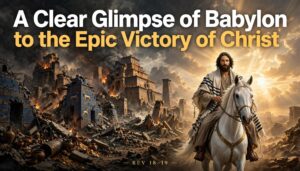 A Clear Glimpse of Babylon to the Epic Victory of Christ – Rev 18-19Revelation 18 and 19: Babylon Falls, Christ Reigns
Revelation 19 answers the collapse of Babylon in Revelation 18 with Heaven’s praise, the Lamb’s wedding, and Christ’s victory. Where Babylon’s corruption leaves earthly rulers and merchants grieving what they’ve lost, Heaven rejoices because God’s judgments are true and just.
But what does Babylon stand for, and how should we understand its warning today? We’ll separate what Scripture says from debated interpretations, then consider how its picture of corrupt power speaks to the world around us without pinning it on a single modern target.
Let’s begin with the contrast between the fall of Babylon and the triumph of Jesus.
Heaven Rejoices as Christ Triumphs in Revelation 19
Babylon’s judgment closes one scene, but Revelation 19 opens with Heaven’s response. Earthly rulers and merchants mourn the loss of power and wealth; Heaven praises God because His judgments are true and just. The chapter then moves through three clear scenes: hallelujahs in verses 1–6, the Lamb’s marriage in verses 7–10, and Christ’s victory in verses 11–21. You can read the full chapter of Revelation 19 to follow the whole movement.
Hallelujahs answer Babylon’s fall
John first hears a great multitude in Heaven praising God for salvation, glory, power, and righteous judgment. Their hallelujahs answer the grief of those who profited from Babylon. The contrast is hard to miss: Babylon’s allies mourn what they have lost, while Heaven rejoices that God has judged corruption and avenged His servants (Revelation 19:1–6).
This praise doesn’t ask us to celebrate suffering. It directs our attention to God’s justice, especially after Revelation 18 describes wealth built alongside deception, exploitation, and the blood of the faithful. We see why Heaven rejoices: evil doesn’t get the final word, and God does not ignore the harm done to His people.
The Lamb’s marriage brings celebration
The scene shifts from judgment to a wedding. The Lamb’s marriage has come, His bride is ready, and those invited to the marriage supper are called blessed (Revelation 19:7–10). The passage describes the bride’s fine linen as the righteous acts of the saints, while also saying that the linen was granted to her. The image holds both God-given grace and faithful living together.
The wedding picture offers a sharp contrast with Babylon’s corrupt alliances. Babylon draws rulers and nations into unfaithfulness; the Lamb welcomes His people into joyful fellowship. We should let the passage say what it says without forcing it to supply a detailed timeline. Its promise is clear: those who belong to Christ are invited to share in the Lamb’s celebration. For a closer look at the marriage supper of the Lamb, consider how the chapter connects this feast with the hope of God’s people.
Christ rides as the victorious King
Then heaven opens, and John sees a white horse and its Rider. He is called Faithful and True, and He judges and makes war in righteousness. The names given to Him, including the Word of God and King of kings and Lord of lords, reveal His authority. This is Christ’s victory, not an evenly matched battle: the beast and false prophet are captured, and the forces gathered against Him are defeated (Revelation 19:11–21).
Revelation gives this vision in bold, vivid images. We don’t need to turn every detail into a prediction beyond what the text states. The central truth is plain: Jesus is the righteous King, and no power gathered against Him can prevail. Babylon’s apparent strength has fallen; Christ reigns.
What Revelation 18 Says About Babylon and Her Fall
Revelation 18 shows Babylon’s collapse in four movements: an angel announces her fall, earthly powers mourn their lost profits, sailors grieve over the vanished market, and Heaven rejoices at God’s judgment. The chapter calls Babylon a great city, but its picture also reaches beyond one city to a corrupt order built on wealth, influence, deception, and violence. Christians differ on whether Babylon points chiefly to Rome, a recurring system of power, or a future city or system. The text gives us reason to take its warning seriously without forcing one identification as settled fact.
Babylon’s Luxury, Trade, and Treatment of Human Life
An angel announces that Babylon has fallen, then calls God’s people to leave her so they won’t share in her sins or receive her plagues (Revelation 18:1–8). The call is urgent. Babylon’s apparent strength won’t protect her from judgment, and God’s people must not confuse her prosperity with His approval.
The kings mourn because their alliance with Babylon has ended. Merchants mourn because no one buys their cargo anymore, and sailors grieve as they watch the smoke rise from the city (Revelation 18:9–19). Three times the chapter says Babylon’s judgment comes “in one hour.” Her collapse is sudden, despite the wealth and power that made her look secure.
The cargo list includes gold, silver, precious stones, fine cloth, spices, wine, oil, livestock, horses, and chariots. It ends with “bodies and souls of men” (Revelation 18:12–13). That phrase may point to enslaved people, the buying and selling of human lives, or the destruction of people through Babylon’s trade. We shouldn’t claim more than the text tells us. But the list makes one thing clear: Babylon’s appetite reaches beyond costly goods. It treats human life as part of the market.
Revelation isn’t condemning every possession or every form of trade. It condemns a wealthy order where luxury and profit sit beside exploitation, while people become commodities. That warning still presses us to ask what prosperity costs when the vulnerable bear the price.
Political Seduction, Spiritual Deception, and Persecution
Babylon’s “fornication” is prophetic language for spiritual unfaithfulness and corrupt allegiance. Kings join themselves to her, merchants grow rich through her excess, and nations are deceived by her sorcery (Revelation 18:3, 9, 23). The chapter also describes real moral corruption. The image isn’t an excuse to ignore the harm done to people; it shows how political compromise, spiritual deception, and economic gain can reinforce one another.
John’s vision charges Babylon with the blood of prophets and God’s people, then calls Heaven to rejoice because God has judged her (Revelation 18:20–24). Those who profited from Babylon mourn lost power and trade. Heaven sees the other side: God remembers the people she harmed. For more on the imagery of Babylon in Revelation 17–18, keep that distinction in view. We can recognize the chapter’s warning against corrupt power without claiming that it names a particular modern nation or institution.
How Babylon’s Pattern Can Help Us Discern the World Today
Revelation 18 doesn’t give us permission to point at a modern country, company, church, or market and declare, “That’s Babylon.” It gives us a pattern to recognize: wealth, political influence, deception, greed, and harm to people working together. That calls for prayerful discernment, not sensational predictions.
Look at what prosperity depends on
Babylon’s wealth isn’t the chapter’s central charge. Revelation condemns a self-glorifying order where luxury and influence are bound up with seduction, exploitation, deception, and violence. Its cargo list includes costly goods, then ends with “bodies and souls of men” (Revelation 18:12–13). People are treated as commodities. That detail keeps us from reducing the passage to a warning about having money or buying goods.
The vision asks harder questions. Who benefits when a system grows richer? Who bears the cost? Are human lives being treated as disposable so that others can protect their comfort or power? Scholars have read Revelation 18 as a critique of imperial Rome and the economic exploitation that sustained its wealth (a study of Revelation’s imperial critique). That historical reading helps explain the passage, but it doesn’t authorize us to identify a present-day institution as Babylon.
Notice when power and deception reinforce each other
Revelation connects Babylon’s influence over kings with merchants’ profit and the nations’ deception (Revelation 18:3, 9, 23). The language of fornication points to spiritual unfaithfulness and corrupt allegiance. In other words, Babylon doesn’t only offer wealth. She persuades people to trust, serve, and protect what opposes God.
That pattern can help us examine the messages we accept and the loyalties we give. Does a claim excuse greed or mistreatment? Does political influence demand the kind of allegiance that belongs to God? Are we tempted to call success God’s approval, even when people are harmed along the way? We don’t need to force a modern name onto Babylon to take those questions seriously.
Hear “come out of her” as a call to faithfulness
God’s command to “come out of her” (Revelation 18:4) is a call to reject sin and divided loyalty. It doesn’t tell God’s people to abandon every part of society. We live among people, work, buy what we need, and take part in our communities. But we must refuse participation in practices that deceive, exploit, or demand worshipful allegiance.
So we can ask the Holy Spirit for discernment, then examine our choices through Scripture. We should resist greed without condemning every form of wealth, and oppose injustice without turning prophetic language into a weapon against whoever we dislike. Revelation’s warning is searching enough when we let it test our own loyalties. For another perspective on worshiping God rather than Babylon, keep the contrast between Babylon’s demands and Christ’s authority in view.
Why Heaven Shouts Hallelujah Over God’s Just Judgment
The repeated “Hallelujah” in Revelation 19:1–6 is Heaven’s response to Babylon’s fall. The multitude praises God for salvation, glory, and power, then declares His judgments true and righteous. We should hear that praise in light of what Babylon has done, not as delight in suffering.
Hallelujah praises God’s character
John hears a great multitude praising God because salvation, glory, and power belong to Him. They praise Him as the One who judges with truth and righteousness, and who has answered Babylon’s corruption. The elders and living creatures join in worship, then a voice calls God’s servants, “small and great,” to praise Him too. The scene keeps our attention where it belongs: on God, whose authority no earthly power can rival (Revelation 19:1–6).
“Hallelujah” means “Praise the Lord.” Its repetition gives this scene the sound of a gathered people declaring that God has acted justly. The praise isn’t a demand that we enjoy another person’s pain. It is a confession that evil, violence, and deception will not escape God’s judgment forever.
The focus is also on God’s salvation. He doesn’t forget His servants or leave them under the rule of those who harm them. Revelation’s praise holds judgment and deliverance together: God confronts evil, and He vindicates those who suffered under it. We can grieve the harm Babylon caused while still rejoicing that God sees it and will set things right.
Heaven sees what Babylon’s mourners ignore
Revelation 18:20–24 calls Heaven, the apostles, and the prophets to rejoice because God has judged Babylon. The reason matters. Babylon is charged with corrupting the nations and shedding the blood of God’s servants. Heaven rejoices because God answers that evil, not because suffering itself is good.
On earth, the kings, merchants, and sailors mourn Babylon’s fall. Their grief centers on what they lost: influence, trade, and wealth. They watch the city collapse, but they don’t share Heaven’s praise. The contrast exposes what each side values. Babylon’s allies mourn the end of their profits; Heaven rejoices that God has heard the cry of the faithful (Revelation 18:20–24).
That distinction guards us from reading the passage as permission for revenge. God alone is the righteous Judge. His people can trust Him to judge corruption without taking pleasure in the pain of those caught in it. We don’t have to pretend injustice is harmless, either. The vision says God sees the bloodshed and answers it.
This is why God’s justice and care for His people belong together in Revelation 19. The hallelujahs proclaim that salvation and justice come from the same God. When Heaven praises His judgment, it honors His character and celebrates the vindication of His servants. For the full movement of the chapter, read Revelation 19.
What the Marriage Supper of the Lamb Means for Believers
Revelation 19:7–10 turns our attention from Babylon’s judgment to a celebration in Heaven. The Lamb’s marriage has come, the bride is ready, and those invited to the supper are called blessed. The passage gives believers a picture of hope: Christ will welcome His people into joyful fellowship, and their future belongs to Him.
The Lamb’s marriage is a promise of joyful union
John hears Heaven call God’s people to rejoice and give Him glory because the marriage of the Lamb has come (Revelation 19:7–10). A wedding is a fitting image for the joy, faithfulness, and closeness of Christ’s union with His people. The Lamb who was slain is also the Bridegroom who welcomes His own.
Christians differ on the bride’s precise identity. Some describe the bride as the Church, while others emphasize the wider company of God’s redeemed people. Believers also differ on where the supper belongs in end-times chronology. The passage itself doesn’t settle every question, so we should be careful not to make it carry a timeline it doesn’t give.
What it does make clear is worth holding onto: the Lamb’s people are not forgotten or left outside. Their future is with Christ, and Heaven responds with worship.
The bride is prepared, and her linen is granted
The bride has made herself ready, and she is given fine linen, which the passage identifies as the righteous deeds of the saints. That wording holds two truths together. The linen is granted to her, yet it is also connected with the faithful lives of God’s people.
So we shouldn’t treat righteous deeds as a way to earn a place at the feast. The image points to a people who belong to Christ and live in faithfulness to Him. Grace doesn’t make obedience meaningless; it shapes a life that honors the One who saves. We see the same connection between the bride’s readiness and the Lamb’s gift in this look at the bride’s readiness for the Lamb.
For believers, that gives the image a present meaning as well as a future hope. We wait for Christ while seeking to live faithfully now. Revelation doesn’t ask us to calculate the wedding date. It calls us to belong to the Lamb and remain true to Him.
Those invited to the supper are blessed
The angel declares blessed those who are invited to the marriage supper. That blessing centers on belonging: the invited are welcomed to share in the Lamb’s celebration. The passage doesn’t invite us to speculate about guest lists or turn the image into a chart. It gives us a reason to hope and a reason to worship.
Verse 10 adds an important reminder. When John falls before the angel, the angel tells him to worship God. Even this glorious scene points beyond itself to the One who deserves praise. The marriage supper is a celebration of Christ and His people, but our worship belongs to God alone. Revelation also presents a separate supper later in the chapter, a scene of judgment with a very different meaning (Revelation’s two great feasts).
The promise calls us to live with hope, keep faith with Christ, and give God the glory. We don’t need to settle every disputed detail before we can trust what the passage says: the Lamb’s people are blessed, His welcome is sure, and His coming brings joy.
How Jesus Defeats the Beast and False Prophet
The chapter’s final scene turns praise into a vision of judgment. Heaven opens, and Jesus appears as the conquering King. The beast and false prophet gather power against Him, but Revelation gives no hint of an evenly matched battle. Christ rules, judges, and wins.
The Rider is Faithful and True
John sees the Rider on a white horse, called Faithful and True. He judges and makes war in righteousness, a sharp contrast with the beast’s corrupt authority and the false prophet’s deception (Revelation 19:11–13). His eyes are like a flame of fire, and many crowns rest on His head. These images point to a King who sees clearly and possesses authority no earthly ruler can claim.
John also calls Him the Word of God. Later, the title King of kings and Lord of lords appears on His robe and thigh (Revelation 19:14–16). His names tell us who He is; His actions show what His rule means. Jesus doesn’t judge by deceit or self-interest. He brings righteous judgment, and no rival title can diminish His authority. For more on Jesus’ authority as King of Kings, keep that contrast in view.
The beast and false prophet face judgment
The beast, the kings of the earth, and their armies assemble against the Rider and His forces. The scene ends quickly: the beast is captured, along with the false prophet, whose signs had deceived those who received the beast’s mark and worshiped its image. Both are thrown alive into the lake of fire (Revelation 19:19–20).
That outcome matters. The beast and false prophet have wielded political power and spiritual deception, yet neither can withstand Christ. Evil doesn’t meet Jesus as an equal opponent. The text presents His victory as decisive, not uncertain or dependent on a prolonged struggle.
An angel’s summons and the birds gathering for the great supper add a stark image of defeat (Revelation 19:17–18). The remaining forces fall, and the Rider’s judgment is complete (Revelation 19:21). We shouldn’t turn this vision into permission for human vengeance. The judgment belongs to Christ, the righteous King.
Christians interpret some details of the battle imagery differently. Some read the scene as a future military event; others emphasize its symbolic portrayal of Christ’s triumph over anti-God power. We can acknowledge those differences without losing what the passage states plainly: Jesus defeats the beast and false prophet, and their rebellion ends in judgment. A commentary on Revelation 19 also discusses the capture of these two enemies and their sentence in the lake of fire.
Babylon’s influence has fallen, and every power gathered against Christ now faces His authority. Revelation 19 closes this scene with the assurance that the Word of God reigns, and the Kingdom belongs to Him.
Conclusion
Babylon’s fall exposes the cost of corrupt power, luxury built on exploitation, and loyalties that turn people from God. Its warning still calls us to resist those values without labeling a modern nation or institution as Babylon.
Heaven answers judgment with hallelujahs, then celebrates the Lamb’s marriage. Christ, the Faithful and True King, defeats the beast and false prophet. His righteous rule is our hope, and evil does not have the final word.
We can hold fast to Jesus, refuse Babylon’s corrupt values, and live faithfully as we await His victory.
! […]
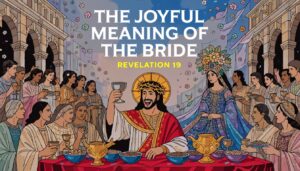 Lamb’s Wedding Feast: The Joyful Meaning of the Bride – Revelation 19The Lamb’s Wedding Feast: Bride, Guests, and Prophecy in Revelation 19
In Revelation 19:6–10, heaven rejoices because God reigns, the Lamb is honored, and the wedding feast has come. This is the celebration of Christ’s victory and the fulfillment of God’s covenant purposes.
But what does John mean by the bride’s readiness, the fine linen, and the blessing on those invited? We’ll follow the vision in order, look at its Greek language and Old Testament background, and separate what Scripture says from interpretations about the bride, the guests, and prophetic timing. The bride’s readiness is both a gift of grace and a call to faithful living. Let’s begin with Revelation 19 explained.
The Lamb’s Wedding Feast, Explained in Revelation 19
Before the wedding feast appears, Revelation 19 announces judgment on evil and celebrates God’s reign. The passage moves from heaven’s praise to the Lamb’s marriage, the bride’s readiness, and the blessing on those invited. We should follow that order and avoid assigning the feast a precise location or timetable that these verses do not give. Read Revelation 19:6-10 as one unfolding vision.
Heaven rejoices as the Lord God Almighty reigns
John hears a great multitude whose voice sounds like “many waters” and “mighty thunderings.” Their praise is clear: “Alleluia! For the Lord God Omnipotent reigns!” The sound is vast, but the message is direct. God reigns, and evil does not have the final word.
That announcement sets the meaning of the wedding feast. The marriage isn’t an isolated image dropped into the vision; it follows worship and God’s victory. The multitude rejoices because His reign brings the celebration into view. We can read more about Jesus, the King of Kings in Revelation 19.
The bride is ready, and the Lamb is honored
The multitude calls the people of God to rejoice because the marriage of the Lamb has come, and His bride has made herself ready. The Greek word gámos means “marriage” or “wedding.” The word arníon means “lamb,” a title Revelation repeatedly uses for Jesus.
That pairing matters. Wedding language speaks of covenant love and belonging, while the Lamb’s title recalls His sacrificial victory. The passage names the bride but does not identify her in detail here. Many Christians understand her as the redeemed people of God, drawing on bridal imagery elsewhere in Scripture. The main point in this scene is that the Lamb is honored, and the wedding has come.
Fine linen displays the saints’ righteous deeds
The bride is given bright, clean fine linen to wear. John then explains the image: the linen is “the righteous acts of the saints.” The Greek dikaiṓmata refers to righteous deeds or acts. The word edóthē means “was given” or “was granted.”
Both parts belong together. The bride has made herself ready, and the linen points to faithful deeds. Yet the garment is granted to her. We shouldn’t turn this verse into a claim that people earn salvation through their effort. The image holds readiness and grace together: God gives, and His people respond in faithful living.
The invitation leads to worship, not angel worship
An angel tells John to write a blessing for those invited to the marriage supper. The Greek word deîpnon means “supper” or “feast.” The passage distinguishes the bride from those invited, but it doesn’t explain exactly who the guests are. Nor does it specify the feast’s location or timing.
John then falls before the angel, who stops him and directs him to worship God. The angel calls himself a fellow servant of John and of those who hold to Jesus’ testimony. He adds that “the testimony of Jesus is the spirit of prophecy.” Prophecy points to Jesus and leads to worship of God, never worship of the messenger. Read Revelation 19:10 with that warning in view.
Old Testament wedding and feast promises behind the vision
Revelation’s wedding feast draws on a broad Biblical pattern: God is covenant Husband, King, Redeemer, and host of a final banquet. These Old Testament passages help us hear the vision’s echoes, but Revelation 19 does not identify them as direct quotations or say each promise is fulfilled there.
Isaiah’s banquet points toward victory over death
In Isaiah 25:6-9, the Lord prepares a rich feast for all peoples. The promise reaches beyond a meal: He removes the covering over the nations, swallows up death forever, wipes away tears, and saves His people. The banquet belongs to a vision of God’s victory and the joy of those He rescues.
That makes Isaiah a strong thematic parallel to the Lamb’s final celebration. Both passages bring God’s people into a joyful feast after His decisive victory. Still, Isaiah does not call its banquet a wedding feast, and Revelation 19 does not say it is quoting Isaiah. We can recognize the shared pattern without collapsing the passages into one. For a closer look at Isaiah’s feast and victory over death, see this commentary on Isaiah 25:6-9.
Hosea and Isaiah portray God as a faithful Husband
In Hosea 2:19-20, God promises to betroth Israel to Himself forever, in righteousness, justice, lovingkindness, mercy, and faithfulness. The marriage language speaks of covenant restoration after Israel’s unfaithfulness. God remains the One who calls His people back.
Isaiah uses a related image. In Isaiah 54:5-8, the Lord is Zion’s Maker and Husband. He compares Zion to a forsaken wife whom He calls back with compassion. These promises address Israel and Zion in their own setting. Their connection to the Lamb’s bride is thematic: they show a faithful God restoring His covenant people.
Revelation 19 does not directly quote either passage, but their language helps us understand the Biblical depth behind its wedding image. We can follow how Jesus fulfills God’s covenant promises without claiming the passages are identical.
Ezekiel and the royal wedding add covenant depth
In Ezekiel 16:8-14, God describes finding Jerusalem, caring for her, clothing her, adorning her, and making a covenant with her. The chapter then confronts Jerusalem’s unfaithfulness. Yet in Ezekiel 16:59-63, God remembers His covenant and promises restoration. The movement from care, to betrayal, to covenant remembrance adds weight to the image of a bride made ready for the Lamb.
Psalm 45 adds the sound of a royal wedding song, with a king, a bride, and celebration. Christians may read this royal imagery in light of Christ, the King. But that is a canonical reading, not an identification Revelation makes explicitly. Together, these passages give us a wide Biblical backdrop: God reigns, redeems, keeps covenant, and welcomes His people to celebration.
Who is the bride, from Abraham to God’s people today?
Revelation 19 announces that the Lamb’s bride is ready, but verse 7 does not define who she is. To follow the image, we need to trace the Bible’s covenant pattern carefully. God’s promise to Abraham, Israel’s place in Scripture, the church’s union with Christ, and the New Jerusalem vision all belong in view, without treating them as interchangeable.
The covenant promise begins with Abraham’s family
God called Abraham and promised to make him a great nation, bless him, and bless all the families of the earth through him (Genesis 12:1–3). In Genesis 17:1–8, He confirmed His covenant with Abraham and his descendants, promising them a lasting relationship and the land of Canaan.
That promise began with a particular family. Abraham’s descendants became Israel, a covenant people with a distinct place in Biblical history. Genesis does not call them the Lamb’s bride, so we should not read that title back into the passage.
Still, God’s promise to bless the nations through Abraham forms part of the larger history that leads to Christ. Paul’s explanation of how Abraham’s blessing reaches the nations helps connect those promises without erasing their beginning with Abraham’s family.
The New Testament connects Christ to His people as a bridegroom
Paul uses marriage to describe Christ’s love for the church. In Ephesians 5:25–32, Christ gives Himself for the church, making her holy and presenting her to Himself. This is more than a wedding metaphor. It calls the church to holiness and to love shaped by Christ’s own self-giving care.
Paul also says that those who belong to Christ are Abraham’s seed and heirs according to promise (Galatians 3:26–29). The blessing promised through Abraham reaches people of every nation through faith in Jesus. We can therefore understand the common Christian view of the bride as the redeemed people joined to Christ. But unity in Christ does not mean Israel’s place in Scripture disappears, or that every Biblical bride image refers to precisely the same group.
The bride appears again as the New Jerusalem
John sees the holy city, New Jerusalem, prepared “as a bride adorned for her husband” (Revelation 21:1–4). Later, an angel says, “Come, I will show you the bride, the Lamb’s wife,” then shows John the holy city (Revelation 21:9–10). Revelation uses both people and city imagery: the city is the dwelling place of God with His redeemed people, where He wipes away every tear. For more on this vision, see the new heaven and new earth.
So when we read the Lamb’s wedding announcement in Revelation 19, the wider Biblical pattern points us toward God’s redeemed people joined to Christ. The bride image gathers up covenant love, holiness, and God dwelling with His people, while Revelation 19:7 itself leaves her identity unstated.
Are the invited guests different from the bride?
Revelation names the bride in verse 7, then pronounces a blessing on those invited to the marriage supper in verse 9. That wording gives us two descriptions, but it doesn’t answer every question about how they relate. We should keep the distinction in the text clear without turning an open question into a settled doctrine.
What Revelation says, and what it leaves open
In Revelation 19:7–9, the bride has made herself ready, and she is given bright, clean linen. Then an angel tells John to write that those invited to the Lamb’s marriage supper are blessed. The passage calls one figure the bride and another group the invited ones.
Does that mean they must be separate groups? The verses don’t say. They never identify the invited guests, and they don’t explain whether the bride is also included among those celebrating. The wording distinguishes the images, but it doesn’t spell out their full relationship.
So we can say what John actually shows: the Lamb has a bride, and the invited guests receive a blessing. We can’t say from these verses alone that the guests are Israel, the church, Old Testament saints, or tribulation saints. Those are proposed identifications, not names Revelation 19 gives them.
This matters because wedding imagery can work in more than one way. A bride and invited guests are distinct roles in the picture, yet the passage doesn’t give us a diagram of every person at the feast. We should let the vision speak clearly where it does, and leave room where it doesn’t.
How Christian interpretations account for the guests
Some Christians read the bride and guests as distinct groups. In certain futurist interpretations, the bride is the church, while the guests may be Old Testament saints or believers who come to faith during the tribulation. Some of these systems also place the feast at a particular point in an end-times sequence.
These readings connect Revelation 19 to a larger prophetic framework, but the passage itself doesn’t identify those groups or set out that timetable. One dispensational reading of the marriage and supper offers an example of this approach.
Other Christians understand the bride and guests as complementary images of the redeemed. In that reading, the bride pictures God’s people joined to Christ, while the invitation emphasizes their welcome and joy at the feast. The images highlight different parts of the same celebration rather than dividing believers into separate classes.
Both approaches try to account for the passage’s wording and its place in the wider Biblical picture. We can recognize that the bride and invited ones are described differently without claiming Revelation settles whether they are entirely separate. For another look at who is invited to the Lamb’s marriage supper, we can keep that distinction in view while holding our conclusions with care.
How earlier prophecies can reach a fuller fulfillment in Christ
When we read Revelation’s wedding imagery alongside earlier prophecies, we need to keep two things in view: what those promises meant to their first hearers, and how the rest of Scripture develops their themes. Christ brings God’s promises to their goal, but that doesn’t erase the history in which those promises first spoke.
Read each prophecy first in its own historical setting
Hosea’s promise of marriage is addressed to Israel. In Hosea 2:19-20, God promises to betroth Israel to Himself forever, in righteousness, justice, lovingkindness, mercy, and faithfulness. The words answer a real crisis: Israel has been unfaithful, and God promises covenant restoration.
That first meaning matters. Hosea’s hearers could understand the promise as God’s pledge to restore His relationship with His people. We shouldn’t detach the image from Israel and immediately treat it as a direct prediction of the church or the Lamb’s wedding in Revelation 19.
So how can Hosea’s promise matter to Christians? The Bible carries covenant themes forward. Later Scripture presents Jesus as the One through whom God’s saving purpose reaches its intended completion.
Hosea’s words remain about God’s promise to Israel, while their language of faithful covenant love helps us understand the wider Biblical picture of God and His people. We can read prophecy in its context without flattening its first setting or shutting down what Scripture later reveals.
Recognize echoes, patterns, and final hope without overclaiming
A direct fulfillment is a claim that a text or a later Biblical writer supports plainly. A type or echo is a recurring pattern: an earlier person, event, or image has meaning in its own history, then helps us recognize a fuller expression of God’s work in Christ. For a concise discussion of typology in Biblical interpretation, the key is to respect both the earlier passage and its later use.
Revelation 19 draws together covenant, wedding, royal, and banquet images. Its announcement of the Lamb’s marriage gives these themes a final, Christ-centered horizon. But the passage doesn’t quote Hosea 2:19-20 or lay out a detailed theory of multiple fulfillment. Calling every similar image a second fulfillment would go further than the text does.
We can say that earlier covenant hopes find a fuller expression in Christ and the Kingdom, and that Scripture points toward God’s final renewal. We should also say when a connection is an interpretation rather than an explicit statement. Christians may differ about the timing and sequence of events surrounding Revelation’s feast; Revelation 19 itself doesn’t settle those details. Our confidence belongs in what Scripture says clearly, and our care belongs in how we describe the rest.
The Bridegroom arrives, and God’s people celebrate with hope
John’s vision moves from praise to a wedding feast. The great multitude announces that the Lord God Almighty reigns, then celebrates the marriage of the Lamb (Revelation 19:6–10). The order matters: God’s people rejoice because evil will not rule forever, and Christ will bring His people into lasting fellowship with Him.
The feast points to covenant fulfillment, welcome, and joy before the King. Christians differ about its exact chronology and location. Revelation 19:6–10 alone doesn’t settle whether the feast is in heaven, on earth, or connected to a particular millennial timeline.
We can hold those interpretations with care while holding firmly to the hope John does make clear: the Lamb is honored, His people are gathered, and God’s reign is cause for celebration. For another perspective on the passage, see this teaching on the marriage supper.
The feast promises union with Christ and joy before the King
A wedding supper is more than a meal. It pictures a covenant relationship brought to its joyful fulfillment, with the bridegroom and His people together. For believers, that promise means life with Christ, free from the power of evil and marked by the joy of being with God. The vision doesn’t invite us to guess at every detail of the banquet hall. It turns our eyes toward the One who welcomes His people.
That hope matters when faithfulness feels costly or the world seems to reward evil. Revelation’s celebration assures us that evil does not have the last word. The Lamb who gave Himself for His people will reign, and those who belong to Him will share in His joy. We don’t need to settle every prophetic timetable to receive that comfort. The promise itself gives us reason to worship, endure, and look ahead with hope.
Grace prepares the bride for faithful worship
The bride has made herself ready, yet the fine linen is granted to her. John explains that it represents the righteous deeds of the saints. Both truths belong together: God’s grace gives, and the Spirit forms a people whose lives show faithfulness. Our obedience isn’t the price of salvation. It is the fruit of belonging to Jesus, seen in everyday choices to tell the truth, serve others, and turn away from sin.
This is not a call to manufacture holiness by willpower alone. The Holy Spirit empowers believers to live in a way that honors God. Grace doesn’t make faithful action unimportant; it makes obedience a response of love rather than an attempt to earn a place at the feast. A sermon on the bride’s linen also explores how the passage holds readiness and God’s gift together.
Then John falls before the angel, but the angel directs him to worship God. The command brings the vision back to its center: prophecy must point to Jesus, and God’s servants must bear faithful witness to Him. We can read more about the testimony of Jesus in Revelation 19:10. The promised feast gives us hope, but the call in the passage is clear now: worship God and keep bearing witness to Jesus.
Conclusion
The Lamb’s wedding feast gathers the hope we’ve traced through Scripture: the Lamb is honored, His bride is made ready by grace, and God’s people are blessed to share in the celebration. The wording distinguishes the bride from those invited, but Revelation leaves their exact relationship open.
The Old Testament’s covenant and banquet imagery reaches toward God’s final joy with His people. As we await Christ, the angel’s command keeps our worship in the right place: worship God, bear witness to Jesus, and remain ready for the Bridegroom. […]
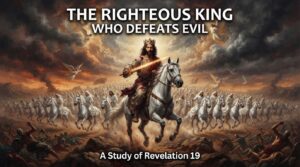 The Righteous King Who Defeats Evil in Revelation 19Revelation 19 Explained: Christ’s Victory as King of Kings
Heaven opens, and John sees Jesus appear as the victorious Rider, the Righteous King, while the forces gathered against Him face judgment. The scene turns on one clear truth: no earthly power can stand against Christ.
Revelation 19 moves through three striking moments: Christ arrives as “Faithful and True,” confronts the beast and the kings of the earth, and declares His reign as King of kings and Lord of lords. From a Spirit-filled Pentecostal perspective, we read this vision as a call to trust God’s Word and remain faithful to Jesus.
Let’s look closely at how Revelation 19 unfolds, beginning with the moment heaven opens.
The Vision Unfolds in Revelation 19, and the Judgment Scene Begins
Revelation 19:11-21 follows the praise and marriage supper in verses 1-10. Heaven has celebrated God’s judgment and the marriage of the Lamb; now John sees Christ appear as the righteous King, and the forces gathered against Him face judgment. You can read the full chapter in the NKJV and follow its movement in three scenes.
The Rider appears in verses 11-16
Heaven opens, and the Rider appears on a white horse. John calls Him “Faithful and True,” “The Word of God,” and “King of kings and Lord of lords.” These titles point to Jesus, whose judgment is righteous and whose authority stands above every earthly ruler. For a closer look at Jesus as the victorious Rider in Revelation 19, notice how the passage itself identifies Him through these names.
John also describes fiery eyes, many crowns, a blood-dipped robe, and a sword coming from the Rider’s mouth. The imagery is vivid, but we should distinguish what the text says from what readers infer. The passage names the robe’s color and the sword’s source; it doesn’t explain whose blood is on the robe or identify every member of the heavenly armies. The mouth-sword conveys Christ’s authority to judge, rather than an ordinary weapon in a drawn-out battle.
The angel announces God’s great supper in verses 17-18
An angel calls the birds to gather for “the great supper of God.” The stark image follows the joyful marriage supper just a few verses earlier. One scene celebrates the Lamb and His people; the other announces judgment on those who oppose Him. The contrast is hard to miss.
Revelation uses apocalyptic images, a form of writing that communicates through dramatic visions and symbols. We can take the judgment seriously without claiming that every image works like a literal field report. The text directly says the angel summons the birds and names those whose flesh they are to consume. Details beyond that call for careful interpretation, not certainty where Scripture is silent.
The beast and its forces are defeated in verses 19-21
The beast, the kings of the earth, and their armies gather against the Rider. The beast and false prophet are captured and thrown into the lake of fire; the remaining forces are killed by the Rider’s word. John describes the defeat as swift and decisive. The armies assemble, but they cannot overturn Christ’s authority.
Keep this scene distinct from Revelation 20. Here, the beast and false prophet meet judgment. The next chapter describes Satan’s later release, the gathering of Gog and Magog, and their defeat. We shouldn’t blend these events into one battle. Revelation 19 leaves us with the central truth: no gathered earthly power can overcome Jesus, the King of kings.
Heaven Opens, and Christ Appears as Faithful and True
Revelation 19:11-16 shifts the vision from heaven’s praise to Christ’s arrival as the victorious King. The opened heaven and the white horse announce a royal figure, but John doesn’t explain every symbol in the scene. We can hold to what the passage says without turning each detail into a certainty.
What the white horse and the Rider’s titles show
John sees heaven opened and a white horse appear. The image presents a victorious royal figure, though the verse itself doesn’t define the horse’s color or explain every part of the vision. The Rider is called “Faithful and True,” and John says He judges and makes war in righteousness. In plain language, Christ is trustworthy, and His judgments are just.
The other titles build that picture of authority. John calls Him “The Word of God,” then names Him “King of kings and Lord of lords.” Christians identify the Rider as Christ through these titles and His place in the vision. He is not one ruler among many. His authority surpasses every earthly power. You can read the full chapter of Revelation 19 and follow how the scene unfolds.
John also describes fiery eyes, many crowns, a blood-dipped robe, and a sword coming from the Rider’s mouth. These images are vivid, but the passage doesn’t explain every detail. It doesn’t tell us whose blood is on the robe, for example, so we shouldn’t state one interpretation as fact. The sword comes from His mouth, which keeps the image tied to the Rider’s word and authority. For more on this title, see Jesus Christ, Faithful and True. A commentary on Revelation 19:11 also focuses on the Rider’s appearance and just judgment.
Why the armies of heaven follow Him
John says the armies of heaven follow the Rider on white horses, dressed in clean white linen. The passage names them as the armies of heaven, but it doesn’t settle whether they are angels, saints, or both. We don’t need to force an answer the text doesn’t give.
What the vision does make clear is their place: they follow Christ. They aren’t presented as an independent force or as the source of victory. The Rider leads, and His authority brings the decisive outcome. That distinction matters when we read the scene. The focus stays on Christ, not on identifying every member of the heavenly host. We can explore the armies that follow Christ while keeping our attention on the central point: heaven’s forces follow their King.
The King Confronts Evil as Earthly Powers Gather Against Him
The vision now turns to the forces gathered against the Rider. John sees the beast, the kings of the earth, and their armies prepare for war. The contrast is stark: earthly rulers bring their combined strength, but Christ’s authority does not depend on numbers or weapons.
The beast and the kings gather against the Rider
In Revelation 19:19-21, John sees the beast, the kings of the earth, and their armies gathered to make war against the Rider and His army. The passage presents a united opposition to Christ, with rulers and their forces aligned against Him. Yet it gives no account of a prolonged campaign or a battle between evenly matched sides.
That detail matters. The armies gather, but their size does not make them a true match for the Rider. John has already called Him “King of kings and Lord of lords.” The gathered rulers may wield earthly power, but Christ’s authority is greater than theirs. We can read Jesus as King of Kings in Revelation 19 and keep that contrast in view: many kings stand together, yet they cannot overcome the King.
The sword from His mouth shows His authority
John describes a sharp sword coming from the Rider’s mouth. It’s a striking image, and the passage itself tells us how to understand its force: the Rider strikes the nations with it, and the remaining forces are killed by it. The sword comes from His mouth, not His hand. The picture ties judgment to His word.
In everyday terms, Christ speaks with authority, and His word accomplishes what He declares. The vision doesn’t describe Him fighting with an ordinary weapon or trading blows with an opposing army. His judgment is decisive. The battle ends by His authority, not through a contest of military strength.
This image also keeps our attention on the Rider Himself. The heavenly armies follow Him, but John does not present them as the source of victory. Christ leads; His word carries out the judgment. We don’t need to add battlefield details that Scripture doesn’t give.
The beast’s defeat is swift and final
The beast and the false prophet are captured and thrown into the lake of fire. John then says the rest are killed by the Rider’s sword, and the birds consume their flesh. The passage moves directly from the armies’ gathering to their defeat. It does not describe a long struggle or give the earthly forces a moment of success against Christ.
That sequence is sobering, but it also makes the vision clear. Evil can gather rulers, armies, and influence around itself, yet none of that overturns the authority of Jesus. In this scene, the earthly powers assemble for war, and Christ’s judgment brings their opposition to an end.
The Great Supper Shows the Cost of Defying God
After the joyful celebration of the Lamb’s marriage supper, Revelation turns to a far more sobering feast. In Revelation 19, an angel calls the birds to gather and consume the defeated. The image is severe, and we should let it speak plainly without adding details John never gives.
The angel calls the birds to a feast of judgment
John sees an angel standing in the sun, calling loudly to the birds flying overhead: “Come and gather together for the supper of the great God.” The invitation names kings, captains, mighty men, horses and riders, and people of every rank, “both free and slave, both small and great.” This is no private defeat of one ruler. The vision places the whole range of earthly power and status under God’s judgment.
The birds’ feast is a stark image of what follows the gathered forces’ opposition to Christ. It is disturbing by design. We don’t need to make it more graphic, or guess at details the passage leaves unstated, to recognize its warning: earthly rank and military strength cannot shield anyone from God’s judgment. The birds’ feast of judgment shows the outcome John’s vision announces.
Two suppers, two very different outcomes
Just a few verses earlier, heaven rejoices over the marriage supper of the Lamb. Those invited celebrate their belonging to Christ; then the angel’s call to the birds brings the vision sharply back to judgment. The same chapter places joy and warning side by side. We can read Revelation’s two great feasts with that contrast in view.
The difference matters. The marriage supper is a celebration of the Lamb and His people, while the great supper of God depicts the defeat of those gathered against Him. These scenes aren’t interchangeable, and the second isn’t presented as another celebration. One announces fellowship with Christ; the other confronts the cost of rejecting God’s authority.
That contrast keeps us from treating judgment as an abstract idea. Revelation 19 shows a real consequence for defying God, but it does not invite us to speculate beyond what John saw. The birds are summoned, the people and ranks are named, and the vision makes its warning clear.
The Beast and False Prophet Are Defeated by Christ
The final scene of Revelation 19 moves quickly. The beast, the false prophet, and the kings of the earth gather against Christ, but their combined power cannot resist Him. John describes a decisive judgment, not a prolonged battle.
The false prophet deceives people into worshiping the beast
John identifies the false prophet by what he does. He performs signs on behalf of the beast and uses them to deceive people who accept the beast’s mark and worship its image. The signs draw attention, but they lead people away from God and toward the beast’s authority.
That detail matters. The false prophet’s influence depends on deception, and his signs serve the beast’s demand for worship. We should not assume that a sign or display of spiritual power proves that its source is God. In a Spirit-filled Pentecostal understanding, spiritual gifts and signs must remain submitted to Scripture and point people to Jesus, not to a rival object of devotion.
The passage doesn’t pause to describe each sign or explain how every person is deceived. It does show the outcome: the false prophet helps direct people toward the beast’s worship. Revelation 19 makes that connection explicit in the full chapter.
Christ judges the gathered forces
The beast and the false prophet are captured and thrown alive into the lake of fire. John then says the rest of the gathered forces are killed by the sword that comes from the Rider’s mouth. The image returns us to Christ’s authority: His word brings judgment, and no earthly army can overturn His decree.
The order is clear. The beast and false prophet receive their judgment; the kings and armies who gathered against Christ are defeated. John gives no account of a drawn-out contest between equal opponents. The gathering ends when Christ acts.
We should also keep this scene distinct from what follows. Revelation 20 describes Satan being bound, later released, and finally defeated after another gathering against God’s people. The beast and false prophet’s judgment in Revelation 19 is not the same event as Satan’s later judgment. The chapters present these scenes in sequence, and we shouldn’t collapse them into one battle.
For us, the warning reaches beyond the image of armies on a plain. Deception can lead people to give their loyalty and worship to powers that oppose God. Yet Revelation 19 gives the last word to Christ: the beast’s influence ends, the false prophet’s deception ends, and the Rider remains King of kings and Lord of lords.
King of Kings and Lord of Lords Declares His Reign
The title on Christ’s robe and thigh is the high point of the vision. The beast, the kings of the earth, and their armies gather against Him, but their combined power cannot change who rules. John gives the reader the answer before the conflict reaches its end: Jesus is King of kings and Lord of lords.
Christ’s title stands above every earthly ruler
In Revelation 19:16, John records the title plainly. The gathered kings may command armies and claim authority, but none can rival Christ. The beast’s influence ends, while Jesus’ authority remains. That contrast is the heart of the scene.
The title doesn’t mean Jesus is one ruler in a lineup of powerful leaders. He is Lord over them all. In Revelation 19:11-16, the Rider judges in righteousness, and the sword from His mouth shows that His word carries authority. We don’t need to add details about a long battle to understand the outcome. Christ reigns, and the powers gathered against Him fall.
Christ’s reign gives believers hope
What does this mean when earthly powers seem loud, persuasive, or even frightening? Our hope doesn’t rest on the strength of human rulers or on our ability to control events. It rests on Jesus, whose authority is greater than every force that opposes Him. Revelation 19 doesn’t promise that believers will avoid hardship. It does show that evil won’t have the final word.
That hope also helps us read the vision without turning it into a calendar. John names Christ’s victory, but this passage doesn’t give a date for His return or invite us to predict one. We can hold confidently to the promise of His reign without claiming details Scripture doesn’t provide. For another look at Jesus as King of kings, keep the focus on His authority and the hope it gives His people.
God’s justice calls us to faithful witness
The scene is sobering because God’s judgment is real. The beast and false prophet face judgment, and the earthly forces gathered against Christ are defeated. God’s justice isn’t a human power play or a license for His people to seek revenge. The vision places judgment in Christ’s hands, and His judgments are righteous.
So how do we live while we await the full display of His reign? As Spirit-filled believers, we trust the Holy Spirit to empower our witness to Jesus. Acts 1:8 connects the Spirit’s power with being Christ’s witnesses, not with gaining status or control. Our calling is to speak truth, live faithfully, and refuse to give our worship to anything that takes God’s place.
The beast gathers rulers to oppose Christ. The church bears witness to Christ. Those are very different loyalties, and Revelation makes clear which King will prevail. We can remain faithful without fear, because the title on the Rider’s robe is not an empty claim. Jesus is King of kings and Lord of lords, and His reign is certain.
Conclusion
Revelation 19 moves from heaven opening to Christ’s confrontation with evil, then to the defeat of the beast and false prophet. The armies of heaven follow Him, but the victory belongs to the Rider called “Faithful and True.”
For us, the passage’s hope rests in this: earthly powers cannot overcome Jesus. He is King of kings and Lord of lords, and we can trust His authority when evil seems to gather strength. Learn more about why Jesus is called Faithful and True. […]
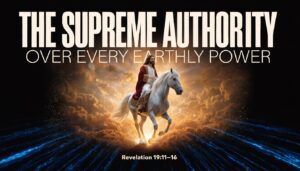 Supreme Authority Over Every Earthly Power: Jesus – Revelation 19:11–16Jesus Revealed in Revelation 19: Three Titles, One King
Revelation 19:11–16 reveals Jesus through three powerful titles: “Faithful and True,” “the Word of God,” and “King of kings and Lord of lords.” Together, they show us the righteous Judge whose promises never fail, whose Word carries God’s authority, and whose reign surpasses every earthly kingdom.
But who is the rider John sees, what do these titles tell us about Him, and why do His judgment and rule matter? As we read this vision, we’ll keep close to what Scripture says and approach its symbols with care.
The scene follows heaven’s praise and the announcement of the Lamb’s marriage, then leads into the defeat of the beast and the forces gathered against Jesus. Let’s look first at where this vision fits in Revelation 19 and why its titles point us to Jesus, the Faithful and True Rider.
Jesus Revealed in Revelation 19: The Scene and Its Context
Revelation 19:11–16 sits between heaven’s celebration and the defeat of the beast’s forces. That placement matters. John shows us the rider after praise for God’s judgment and the Lamb’s marriage announcement, then carries the vision toward the confrontation that follows. The full chapter of Revelation 19 lets us see how those scenes fit together.
Why John’s vision presents the rider as Jesus
John does not introduce the rider with the name Jesus, but the passage gives us strong reasons to identify Him as Jesus Christ. The rider is called “Faithful and True,” “The Word of God,” and “KING OF KINGS AND LORD OF LORDS.” His titles, royal authority, and actions belong together: He judges and makes war in righteousness, rules the nations, and defeats the powers gathered against Him.
The vision also echoes Biblical images of the Messiah’s rule. The rider carries many crowns, and an iron rod is associated with His authority over the nations. These details point to a King whose authority surpasses every earthly ruler. We can read more about Jesus as King of kings in Revelation 19 as we consider what that royal title declares.
Still, John leaves part of the rider’s identity beyond what the titles explain. He says the rider has a name known only to Himself. So we should hold both truths together: the passage identifies Him through His revealed names and deeds, while also telling us that His identity is not fully disclosed to us.
How the vision connects praise, judgment, and victory
The chapter opens with heavenly praise over God’s judgment of Babylon. Then comes the announcement of the Lamb’s marriage and the blessing of those invited to the marriage supper. After that celebration, heaven opens, and John sees the rider. The scene moves from praise to the appearance of the righteous King, then into the defeat of the beast and the kings and armies gathered against Him.
That sequence ties the rider’s victory to the judgment celebrated earlier in the chapter. The text presents Him as the one who judges rightly and overcomes the forces opposing God. The armies of heaven follow Him, but John does not identify every member of that host, so we should be careful not to claim more than the vision says.
Christians also differ on how literally to read the battle details. Some understand the scene as a future, physical confrontation; others read its military language as apocalyptic symbolism for Christ’s decisive judgment and victory. Many readers see both literal expectation and symbolic meaning in the imagery. Whatever view we take, John’s emphasis remains clear: Jesus reigns, His judgment is righteous, and the opposing powers do not prevail.
What “Faithful and True” Shows About Jesus as Judge
John calls the rider “Faithful and True,” then says He judges and makes war in righteousness (Revelation 19:11). Those words belong together. The title tells us what kind of Judge He is: His decisions agree with His character, and His authority is never corrupted by pride or self-interest.
His justice stands apart from human power
Earthly rulers can twist justice to protect their position, reward their allies, or punish those who threaten them. Even when leaders claim to defend what is right, human judgment remains limited. We can miss what happened, misunderstand a motive, or let our own interests shape a verdict.
John’s vision presents Jesus differently. He judges in righteousness, without deception or partiality. His judgment is not arbitrary, and it is not a display of human pride dressed up as authority. The title “Faithful and True” grounds His right to judge: He sees clearly, speaks truthfully, and acts with integrity.
“Faithful” points to His reliability. Jesus does not abandon what He has promised or turn away from His people when keeping His word becomes costly. “True” points to His truth and integrity. His words and actions agree; He does not judge by appearances or manipulate the truth to serve Himself. These are helpful ways to understand the title, not exhaustive definitions of the Greek words behind it.
The title also keeps us from treating judgment as an isolated act. The One who judges is the same Jesus whose character is faithful and true. We don’t have to approve of every earthly verdict or pretend every wrong has been made right already. We can trust that Christ sees what human courts and rulers may miss, and that His judgment is just.
His faithfulness gives believers a sure hope
What does the title mean for Christians facing uncertainty or hardship now? It gives us a reason to hold on to God’s promises, even when the answer does not come as quickly or clearly as we hope. Jesus’ faithfulness does not mean that following Him removes every painful circumstance. It means our hope rests on Someone whose character does not fail.
When suffering weighs on us, or when injustice seems to go unanswered, we may wonder whether God has forgotten what He promised. Revelation 19 points us back to Jesus Himself. His rule is righteous, and His word is trustworthy. We can bring our questions to God without pretending pain is easy, while continuing to trust that His promises remain sure.
That hope shapes how we live, too. We don’t need to repay evil with evil or take judgment into our own hands. We can seek justice, speak truth, and leave the final verdict with Jesus. The promise is not that every hardship will vanish now, but that the faithful Christ will not fail His people. We can read more about Christ’s faithfulness and God’s promises as we consider what this title means for our hope.
Why Jesus Is Called the Word of God
In Revelation 19, John gives the rider a title that reaches beyond the battle scene: “The Word of God.” What does that name tell us about Jesus? It connects Him with God’s self-expression and authority, while the rest of the vision shows His word bringing God’s purposes to pass.
The Word speaks with authority and fulfills God’s purpose
John calls the rider “The Word of God” in Revelation 19:13. The title points to Jesus as the One who reveals God and carries His authority. John’s Gospel helps explain this connection: John 1:1 describes the Word as with God and as God, and later says the Word became flesh. Revelation 19 does not quote that passage directly, but the shared title invites us to recognize the connection.
This name also fits what the rider does. His words are not empty claims or impressive language without effect. In the vision, He judges, defeats the forces gathered against Him, and rules the nations. His authority accomplishes God’s purpose. We can read more about Jesus as King of Kings in Revelation 19 alongside this title, while keeping the distinct details of John’s vision in view.
The bloodied robe and the sword from His mouth
John describes the rider’s robe as dipped in blood, then shows a sharp sword coming from His mouth. These are vivid images in a vision, and interpreters differ on their precise meaning. The blood may recall suffering, the defeat of enemies, or overlapping themes. The garment and winepress imagery closely resemble Isaiah 63:1–6, where a figure’s clothes are stained as He carries out judgment. That parallel helps us see the connection, but it does not settle what the robe means in Revelation.
The sword, meanwhile, comes from the rider’s mouth, not His hand (Revelation 19:15). The image portrays the power of His spoken judgment and decree. Christians differ on whether the sword points to the gospel, final judgment, or another aspect of the vision’s symbolism. The text’s emphasis is clear: His word carries authority, and His judgment takes effect.
John also says the rider rules the nations with a rod of iron, echoing Psalm 2:9. The image speaks of royal authority over the nations. Together, the sword and iron rod show Jesus exercising the rule given to Him, not merely claiming it. The vision presents the Word of God as the King whose decree is fulfilled.
How “King of Kings and Lord of Lords” Declares His Supremacy
The title on Jesus’ robe and thigh leaves no doubt about His rank. He is not one ruler among many, competing for influence. He is King of kings and Lord of lords, and every earthly throne stands beneath His authority. In John’s vision, that declaration brings hope because political power, however imposing, is never ultimate.
His reign is greater than every earthly throne
John has already shown Jesus wearing many crowns. Then he gives the rider a name that makes the meaning plain: Revelation 19:16 declares Him “KING OF KINGS AND LORD OF LORDS.” The crowns and the title work together. Jesus has authority over rulers, and He does not need their permission or approval to exercise it.
That matters when the world feels shaped by leaders, laws, and borders. We can take earthly power seriously without treating it as final. No ruler can limit Christ’s authority to one nation, and no political decision can remove Him from His throne. The vision does not promise that earthly powers will always act justly. It shows us who has the final authority over them.
The same title appears elsewhere in Scripture. Revelation 17 uses it as the Lamb goes to war against opposing kings, and 1 Timothy 6:15 calls God the blessed and only Sovereign, King of kings and Lord of lords. The wording is not unique to Revelation 19. Across these passages, the title points to supremacy that no human ruler can claim.
The title points to a final and decisive victory
The royal title also shapes how we read the conflict that follows. The chapter moves from Jesus’ appearance to the gathering of the beast, the kings of the earth, and their armies against Him. The full chapter of Revelation 19 describes the outcome: the beast and false prophet are captured, and the opposing forces are defeated.
John sets the earthly kings against the One whose name is written on His robe and thigh. Their gathering looks formidable, but it does not make the conflict equal. Jesus is already revealed as the supreme King. The passage does not ask us to identify every opposing force or settle every question about the timing of the vision. Its emphasis is clear: those who oppose Him do not overcome Him.
That is the hope in this title. We may see rulers rise and fall, or watch human powers act as if they answer to no one. Revelation 19 directs our attention beyond their claims. Jesus reigns, and His victory is decisive.
Old Testament Images That Deepen Revelation 19
Revelation’s images don’t appear in isolation. John draws on earlier Scripture to show us who the rider is and what His authority means. Psalm 2 helps explain His rule over the nations, while Isaiah 63 gives important background for the bloodied garment and winepress. These connections clarify the vision, even when they don’t answer every question it raises.
Psalm 2 pictures the Messiah’s rule over the nations
When John says the rider will rule the nations with a rod of iron, he echoes Psalm 2:9. Psalm 2 describes God’s anointed King receiving authority over the nations. Revelation applies that royal image to the rider, presenting Jesus as the Messiah whose rule reaches beyond every earthly power.
The iron rod can sound harsh if we picture only a ruler striking down His subjects. But Psalm 2’s wider setting is a warning to kings who resist God’s authority. The image makes the Messiah’s rule firm and decisive. The nations may oppose Him, but their resistance doesn’t undo His right to reign.
This connection also helps us read Revelation 19:15 alongside the rest of the vision. The rider’s authority is not simply military strength. He judges in righteousness and rules as God’s appointed King. You can compare the passages in Psalm 2 and Revelation 19:15, where the iron rod appears alongside the sword from His mouth and the winepress of God’s wrath. For another look at Psalm 2 and the iron rod in Revelation 19, we can keep the two passages in view together.
Isaiah’s winepress imagery highlights the seriousness of judgment
Isaiah 63:1–6 describes a figure whose garments are stained red after He treads the winepress of judgment. John’s vision uses closely related images: the rider’s robe is dipped in blood, and He treads the winepress of God’s wrath. Reading Isaiah 63:1–6 beside Revelation helps us understand the severity of the judgment John portrays.
A winepress crushes grapes, and Isaiah uses that forceful picture for judgment against evil. The stained garments make the image impossible to mistake for a peaceful scene. Revelation draws on the same prophetic language to show that the rider’s judgment is real and decisive.
Still, the connection doesn’t settle exactly whose blood stains the rider’s robe. Readers have understood it in different ways, including as an image of judgment on His enemies or as a reference to Christ’s suffering. We should be careful not to claim more than John says. Isaiah’s imagery helps us see the robe within a vision of divine judgment, while the exact meaning of its blood remains debated.
Daniel 7 also offers a useful cross-reference. Its vision of dominion over peoples and nations gives us another Old Testament picture of God’s Kingdom and authority. Taken together, these passages help us see Revelation 19’s rider as the promised King and righteous Judge.
What Revelation 19 Teaches Christians About Hope and Faithfulness
Revelation 19 brings three titles together to show us why Christians can keep trusting Jesus: He is faithful in character, speaks with God’s authority, and reigns above every earthly power. The vision doesn’t answer every personal question or promise easy circumstances. It does give us a King worthy of our worship and our continued faithfulness.
Trust His character when the outcome is not yet visible
John calls Jesus “Faithful and True” as He appears to judge in righteousness (Revelation 19:11). His character and His judgment belong together. We can trust Him not because we know how every situation will unfold, but because He is truthful and does not abandon His promises.
Waiting can be hard, especially when we pray and still don’t see the answer we hoped for. Revelation 19 doesn’t explain why every hardship continues or tell us when a particular circumstance will change. We shouldn’t force the passage to answer questions it doesn’t address. Instead, we hold to what it does reveal: Jesus is faithful, and His judgment is righteous.
That doesn’t mean faith leaves no room for grief or honest questions. We can bring both to God while continuing to trust Him. The promise here is not a life without pain; our hope rests in the character of Christ, even when the outcome is not yet visible.
Let His Word shape worship, witness, and obedience
John names the rider “The Word of God” (Revelation 19:13). This title points to Jesus’ divine authority. The sword comes from His mouth, and His word accomplishes His purpose. His authority is not a license for people to claim unchecked power in His name.
So what does that mean for us? We listen to Scripture, speak truth with care, and follow Jesus when His teaching challenges our preferences. Our witness should point people to Him, not elevate our own opinions as if they carried His authority. Christian obedience grows from hearing and trusting the Word of God.
Jesus also says that all authority in heaven and on earth has been given to Him (Matthew 28:18). That authority strengthens our call to make disciples and remain faithful. We can read more about Jesus’ authority over every power, while keeping our attention on what Scripture says about His rule.
Live with hope under the reign of the King
The title “King of kings and Lord of lords” declares Jesus’ supremacy (Revelation 19:16). Earthly powers may pressure Christians to compromise, but none stands above Him. This doesn’t give us grounds for partisan claims or predictions about dates. It calls us to live faithfully under Jesus’ reign now.
As Spirit-filled Christians, we believe Jesus has authority today and that the Holy Spirit empowers believers to serve Him. His rule should make us courageous without making us proud, and humble without making us passive. We can resist deception, speak truth, and keep serving even when faithfulness costs us.
The vision’s central hope is clear: Jesus reigns, and those who belong to Him have reason to remain faithful. For a closer look at Revelation 19’s call to hope and faithfulness, we can return to the chapter itself and keep our eyes on the King.
Conclusion
Revelation 19 reveals Jesus through three distinct titles. Faithful and True describes the righteous Judge, whose promises are sure and whose judgment is just. The Word of God names the living Word who speaks with authority and carries out God’s purposes. King of kings and Lord of lords declares that His authority surpasses every earthly ruler.
Together, these titles point us to Jesus, the victorious King. We can trust His character, listen to His Word, and remain faithful under His reign. Jesus as the Rider in Revelation 19 is the King whose rule gives us lasting hope.
! […]
 Faithful and True King: Jesus in Revelation 19, Powerful HopeRevelation 19: Jesus, the Faithful and True King
Heaven opens, and Jesus appears on a white horse, called Faithful and True. In Revelation 19, Biblical prophecy comes into focus: He is the righteous Judge and victorious King whose authority reaches over every nation and power.
What do His titles tell us about Him? Which earlier prophecies shape this vision, and how does Jesus defeat evil? We see the same Savior who first came in humility returning in victory, with the promise that evil will not have the final word.
Let’s look closely at Revelation 19 and Jesus as the Victorious King, then consider what His promised return means for our hope and faithfulness.
Prophecy Points to Jesus Faithful and True in Revelation 19
Revelation 19 moves from heaven’s praise to a vision of Christ’s return. The chapter opens with worship and the marriage supper of the Lamb, then John sees heaven opened and a white horse appear. Read Revelation 19 as one prophetic vision, while letting the passage speak for itself. Its images point to Jesus as the promised King, even as Christians differ on how the events fit into a prophetic timeline.
The vision moves from heaven’s praise to Christ’s return
In verses 1–10, heaven praises God for His judgment and celebrates the marriage supper of the Lamb. Then the scene shifts. John sees the heavens opened, a rider on a white horse, and heavenly armies following Him. The beast, the kings of the earth, and their armies gather to oppose the Rider. The contrast is stark: heaven rejoices, while the powers of the earth assemble against the King.
The passage describes the Rider’s appearance and the defeat of His enemies, but it doesn’t give us a simple schedule of every event surrounding His return. Christians read Revelation’s visions through different interpretive approaches, and we should be careful not to treat every symbol as a plainly stated timeline. What the text does state is clear: the Rider judges in righteousness, His authority surpasses the gathered powers, and the beast and false prophet are defeated.
If you want to follow the chapter’s imagery more closely, see our guide to Revelation 19 explained. Here, the key question is who John sees when heaven opens.
The rider’s titles identify the promised Messiah
John calls the Rider “Faithful and True,” “The Word of God,” and “King of kings and Lord of lords.” The passage doesn’t name Him “Jesus” in these verses, but its titles and actions identify Him as Christ. He judges with righteousness, rules the nations, and defeats the powers gathered against Him. This is no ordinary earthly ruler.
The vision also draws on earlier Biblical prophecies. Isaiah describes a Davidic ruler who judges with righteousness and strikes the earth with the rod of His mouth (Isaiah 11:4). Psalm 2 pictures God’s Anointed ruling the nations with an iron rod (Psalm 2:9). Revelation brings these royal images together in the Rider’s authority and victory.
We’ll look more closely at what each title tells us about Jesus next. For now, the central point is that Revelation presents the returning King as the promised Messiah, whose rule is faithful, true, and beyond the reach of every opposing power.
What Faithful and True Reveals About Jesus
The names and actions in Revelation 19 show us who Jesus is: the righteous Judge, the living Word, and the King above every power. John does not explain every detail in the vision, and we should not force every image into a precise interpretation. But the passage is clear about Christ’s character and authority. His victory rests on who He is.
His judgment is faithful, true, and righteous
John calls the Rider “Faithful and True” and says He judges and makes war “in righteousness” (Revelation 19:11-16). Those words belong together. Jesus is faithful to God’s truth, and His judgment reflects that truth without corruption or favoritism.
Earthly rulers can fail. They may act from pride, protect their own interests, or judge unfairly. Jesus does not. His authority is not a cover for human ambition, and His judgment is not driven by injustice. Revelation presents Him as the One who sees clearly and judges rightly.
That matters when evil seems to go unanswered. The vision assures us that Christ’s justice is neither careless nor compromised. We can trust the Judge because He is Faithful and True.
The Word of God rules by His command
John calls the Rider “The Word of God.” A sharp sword comes from His mouth, and the passage connects that image with His judgment of the nations. The sword is not a conventional weapon in His hand. It comes from His mouth, a picture of the authority of His spoken word.
Jesus does not need to rely on the weapons or force that earthly rulers use. His word carries the authority to judge and defeat opposition. The vision does not describe a drawn-out struggle in which the outcome remains uncertain. Christ speaks with sovereign authority, and His enemies cannot overturn His command.
We should be careful not to claim that every symbol has one obvious explanation. Still, the sword’s placement makes its central point plain: the King wins by the power of His word. His victory is certain because His authority cannot be resisted.
His royal titles declare authority over every power
The title “King of kings and Lord of lords” crowns the vision with a clear declaration. Jesus reigns above every earthly ruler, every nation, and every spiritual power. No authority stands higher than His, and no opposing force can claim the final word.
The title also gives us a needed perspective on human power. Nations and rulers may appear unstoppable for a time, but they remain under Christ’s authority. His Kingdom is not one power among many, competing for equal standing. He is the supreme King.
We can read more about Jesus, the Faithful and True King while keeping our focus on John’s central claim: the Rider’s justice is righteous, His word rules, and His reign has no rival.
Old Testament Prophecies Behind the Victorious King
Revelation 19 does not introduce a new picture of Jesus out of nowhere. John draws on Old Testament prophecies of a righteous ruler, God’s anointed King, and a divine warrior who judges evil. These connections help us see what His victory means.
Isaiah 11 foretells a righteous ruler who judges by His word
Isaiah pictures a shoot growing from Jesse’s family line, a promise of a ruler from the house of David. The Spirit rests on Him, and He judges with righteousness rather than appearances or hearsay. Isaiah says this ruler strikes the earth with the rod of His mouth and puts the wicked to death with the breath of His lips (Isaiah 11:1-5; read the full prophecy in Isaiah 11).
John’s Rider judges in righteousness, and a sharp sword comes from His mouth (Revelation 19:11-15). The images are not identical, but the echo is clear: the Messiah’s word carries the authority to judge. His victory does not depend on human weapons or a contest with an uncertain outcome.
Psalm 2 shows the Messiah ruling the nations
Psalm 2 describes rulers and nations resisting the Lord and His Anointed. God establishes His King and gives Him authority over the nations, who are ruled with an iron rod (Psalm 2:7-9). Revelation uses that same royal image for Jesus, who rules the nations with an iron rod (Revelation 19:15).
The connection adds a direct answer to the gathered rulers who oppose Christ: their power is real, but it is not ultimate. Psalm 2’s Anointed King is the Rider John sees, whose authority extends over hostile nations. We can explore how Revelation 19 fulfills God’s covenant promises for more on this royal promise.
Isaiah 63 and Daniel 7 deepen the vision of judgment and dominion
Isaiah 63 portrays the Lord as a divine warrior coming from Edom with garments stained after treading the winepress of judgment (Isaiah 63:1-6). Revelation draws on this imagery when the Rider’s robe is blood-marked and He treads the winepress of God’s wrath (Revelation 19:13-15). The text does not explain whose blood marks the robe, so we should avoid claiming more than the passage says. The shared images do make the judgment theme unmistakable.
Daniel sees one “like a Son of Man” receive dominion, glory, and an everlasting Kingdom. The vision also shows beastly powers judged and stripped of authority (Daniel 7:13-14, 21-27). Revelation’s beast and Christ’s victory fit that contrast: oppressive powers fall, while the Son of Man’s dominion endures. Christians differ on how to identify the specific beasts and how end-time events unfold. We can recognize Daniel’s themes of judgment and everlasting rule without treating one debated interpretation as settled fact.
How Jesus Defeats the Beast and Brings Evil to an End
Revelation 19:17-21 brings the conflict to its sharpest point. The beast, the false prophet, the kings of the earth, and their armies gather against Christ, but the scene does not describe a drawn-out battle between equal powers. Jesus judges with the authority of His word, and rebellion cannot stand before Him.
The beast and false prophet represent organized opposition to God
The beast and false prophet have already appeared in Revelation as powers that deceive and draw people into opposition to God. In chapter 13, the false prophet uses signs to direct worship toward the beast. By chapter 19, their influence has helped gather the kings of the earth and their forces against the Rider. John does not identify them with any modern person or nation, so we should not force the symbols onto today’s headlines.
The angel’s call to the birds introduces the grim outcome of this rebellion. They are summoned to feast on the bodies of the defeated, a stark image of judgment and disgrace. The forces gathered against Christ may appear formidable, but their numbers do not change who holds authority. We can read more about Jesus’ authority over the beast without turning the passage into a call for human beings to wage war.
Christ’s victory comes through the authority of His word
The Rider’s sword comes from His mouth, not His hand. That detail matters. The image points to judgment carried out by His command, not to an ordinary military battle in which Jesus fights with a physical weapon. His word is authoritative, and His enemies cannot resist its judgment.
Earlier in Revelation 19, the Rider is called “The Word of God” and is shown ruling the nations. Now the sword from His mouth strikes the gathered forces. The scene gives no account of a prolonged contest or an uncertain result. Jesus speaks with the authority of the righteous King, and the opposition falls.
This is a sober picture, not an invitation to speculate about current conflicts or name today’s political leaders as the beast. The text keeps our attention on Christ and His judgment. For a closer look at the passage’s details, see this verse-by-verse exposition of Revelation 19:17-21.
The final judgment assures believers that evil will not prevail
Revelation 19 gives distinct outcomes. The beast and false prophet are captured and thrown alive into the lake of fire burning with sulfur. The remaining forces are killed by the sword from the Rider’s mouth, and the birds consume their bodies. John does not say here that the gathered forces are thrown into the lake of fire, so we should preserve the distinction the passage makes.
The image is severe because rebellion against God is serious. The beast and false prophet have deceived others and gathered power against Christ; the kings and armies join that opposition. Yet none can overturn the King’s judgment. Evil’s apparent strength has a limit, and Christ brings this rebellion to an end.
For believers, this vision offers hope without making judgment seem light. We can trust that Jesus sees evil clearly and will not let it rule forever. Revelation 19 does not answer every question about the timing or nature of what follows, but it leaves no doubt about the outcome here: the beast, the false prophet, and the forces gathered against Christ do not prevail.
The Return of Christ and the Hope of His Everlasting Kingdom
Revelation 19 holds together two truths we can sometimes separate: Jesus came in humility, and He will return in glory. The same faithful Savior who gave Himself for us will reign over every power. That promise is central to Christian hope, even when believers differ on how Revelation’s visions fit the timeline of history.
The humble Savior returns as the conquering King
At His first coming, Jesus entered the world in humility. He took the form of a servant and gave Himself for others, as Philippians 2:6-11 describes. John says, “the Word became flesh” (John 1:14). His humility was never weakness or a lack of authority. It revealed the character of the Savior who came to serve and save.
In Revelation 19:11-16, John sees that same Jesus revealed as the righteous King. He comes to judge, defeat evil, and establish His rule. The contrast is striking, but there’s no contradiction. The One who bore suffering in faithfulness returns in victory, still true to who He is. His royal glory does not erase His humility; it shows the authority of the Savior who willingly gave Himself.
Christ’s reign stands above every earthly kingdom
“King of kings and Lord of lords” is more than a grand title. It declares that every earthly ruler remains beneath Christ’s authority. No nation, government, or spiritual power can claim the highest place or overturn His reign. We can explore the hope of Jesus’ everlasting Kingdom while keeping John’s claim in view: Jesus is supreme over all.
For us, Christ’s return is not simply a matter of arranging prophetic events in the right order. It is the hope that injustice, rebellion, and death will not have the final word. Jesus will complete His victory and reign without end. We don’t need to pretend that suffering is small or that earthly powers have no influence. We can face both with confidence in the King who judges righteously and keeps His promises.
Christian views differ on the vision’s timeline
Christians interpret Revelation’s visions in several ways. Futurists read much of the book as describing events still to come. Preterists understand many visions in relation to the first-century church and its conflicts. Historicists see Revelation as depicting events across the course of church history, while idealists emphasize recurring spiritual realities, including Christ’s victory over evil. These approaches are broad categories, and Christians within each one may disagree. This overview of Revelation’s interpretive approaches offers a brief introduction.
There’s also disagreement about the millennium in Revelation 20. Premillennial Christians generally understand Christ’s return in Revelation 19 as preceding the millennial reign. Amillennial Christians generally read the millennium symbolically and understand the vision as part of Revelation’s portrayal of Christ’s present reign and final victory. We can hold our convictions while speaking fairly about other believers who read the symbols differently.
These disagreements matter, but they don’t change the passage’s central promise. Jesus returns as the faithful King, evil is defeated, and His Kingdom endures.
What Revelation 19 Means for Faith Today
Revelation 19 gives us hope for daily life, not a reason to ignore the pain around us. Jesus is the righteous Judge, and His promised victory calls us to trust Him, resist evil, live holy lives, and keep sharing the Gospel. We don’t know the timing of His return, but we can remain faithful while we wait.
Trust Christ when injustice seems to go unanswered
When someone is harmed and justice seems slow, “Jesus will judge” should never become a way to silence them or excuse wrongdoing. Revelation presents Christ as the One who sees clearly and judges righteously. We can bring pain to God honestly, seek help and protection, and support efforts to hold wrongdoers accountable. Trusting Jesus with final judgment doesn’t mean standing aside when someone needs care.
Paul’s instruction in Romans 12:17-21 helps us hold justice and mercy together. We must not repay evil with evil, yet we are called to do what is right and overcome evil with good. That can mean telling the truth, standing with someone who has been mistreated, or seeking lawful accountability without feeding revenge.
There’s a difference between leaving final judgment to Jesus and pretending that harm doesn’t matter. We can pursue justice in Godly ways while refusing hatred and retaliation. For more on this balance, see Jesus as the righteous Judge.
Remain faithful while waiting for the King
The certainty of Christ’s victory gives us reason to persevere, but it doesn’t give us permission to set dates or label every crisis as a sign of the end. Revelation 19 keeps our attention on Jesus, not on fear-driven predictions. We wait by following Him today: choosing holiness, serving others, and speaking truth with compassion.
The Holy Spirit helps us live that witness. Jesus promised His followers power to be His witnesses in Acts 1:8. From a Spirit-filled Pentecostal perspective, that promise is for more than bold words. The Spirit gives us strength to testify about Jesus, wisdom to respond faithfully, and love for the people in front of us. His power points people to Christ, the King, rather than to our own importance.
We don’t have to know exactly when Jesus will return to share the Gospel faithfully. We can pray, serve our neighbors, and keep speaking about the hope we have in Him. That patient witness is part of the Gospel mission to all nations. Evil may seem loud for a season, but it will not have the final word. Jesus is Faithful and True, and we can remain faithful while we await Him.
Conclusion
Revelation 19 brings Biblical prophecy into focus through Jesus, the Rider called “Faithful and True.” He judges in righteousness, and His titles declare that no earthly power outranks Him. We see the promised Messiah as both righteous Judge and victorious King.
The vision is not an ordinary account of warfare. It points us to Christ’s authority and certain victory. We can read more about Jesus, the Faithful and True King and hold fast to the hope Revelation gives us: evil will not have the final word. Trust Him, and remain faithful while we await His reign.
! […]
 Main Message Of Matthew 24: Resist Deception and EndureWhat Is the Main Message of Matthew 24? Biblical Answers
“Watch therefore: for ye know not what hour your Lord doth come.” (Matthew 24:42)
Matthew 24 can raise big questions about upheaval, prophecy, and Jesus’ return. What’s the main message? Jesus prepares His disciples for trouble, calls them to remain faithful, and promises that the Son of Man will come.
We read this chapter from an independent, Spirit-filled Pentecostal perspective, with confidence in Scripture and dependence on the Holy Spirit. Jesus’ words call us to watchfulness, not fear, and to keep serving faithfully when the future feels uncertain. Let’s look first at what He says about the chapter’s purpose and the hope of His return.
What Is the Main Message of Matthew 24?
The main message of Matthew 24 is clear: Jesus warns His followers about deception and hardship, calls them to endure and share the Gospel, and promises that He will return. The chapter speaks about future events, but it also answers a pressing question: How should disciples live when they don’t know what comes next?
Jesus gives His teaching after predicting the temple’s destruction. As He sits on the Mount of Olives, His disciples ask when it will happen and what signs will accompany His coming and the end of the age. Their questions bring these events together, but Christians differ on how the temple’s fall relates to Jesus’ return and the final judgment. We should hold firmly to what the text says and be careful not to treat every interpretation as settled fact.
Jesus warns His followers about deception and trouble
Jesus begins with a warning: don’t be deceived. He speaks of false messiahs, wars, famines, earthquakes, persecution, and false prophets. But He also says that wars and disasters do not mean the end has arrived. They are described as the beginning of birth pains, not a date we can use to calculate when He will return.
That distinction matters when headlines turn frightening. Matthew 24 does not tell us to label each crisis as proof that the end is here. Jesus calls His followers to resist false claims, remain faithful under pressure, and keep their love from growing cold.
He also says the Gospel of the Kingdom will be preached among all nations before the end. So the chapter’s response to hardship includes witness. We keep sharing the Gospel, trusting the Holy Spirit to strengthen believers even when opposition rises. For a closer look at the chapter’s movement, see the Olivet Discourse explained.
The temple prediction and the disputed timeline
Jesus plainly predicts that the temple will be demolished. The disciples then ask about the timing and the signs, and His answer moves through tribulation, the coming of the Son of Man, and a call to be ready. The full chapter of Matthew 24 lets us read that teaching in its full context.
Some parts of the chapter point to a crisis in Judea and instructions to flee. Many Christians connect these warnings with Jerusalem’s destruction in AD 70. Other passages describe the Son of Man’s coming and the gathering of the elect, and interpreters disagree about how those events relate to the temple’s fall. The text gives us real details, but it does not resolve every question about sequence and fulfillment.
Readiness means faithful living
Jesus says no one knows the day or hour. His point is practical: stay ready, because the timing is not ours to control. The faithful servant keeps doing what the master entrusted to him instead of assuming there is plenty of time.
So, Matthew 24 is both a warning and a promise. Trouble and deception will come, yet Jesus calls His people to endure, proclaim the Gospel, and trust His promised return. We watch by living faithfully today, not by claiming certainty about a date.
How to Read the Signs in Matthew 24 Without Giving In to Fear
Jesus speaks plainly about deception and distress, but He never tells His followers to panic. In Matthew 24, He warns us to stay watchful, test what we hear, and keep serving faithfully. The signs matter, but they are not permission to turn every crisis into a prediction.
Why Jesus Warns About False Messiahs and Prophets
Jesus repeats the warning because deception is a central danger in this passage. Some will claim to be the Christ. Later, He warns that people may say He is in the wilderness or hidden in an inner room. We don’t have to chase every rumor or trust someone simply because they speak with confidence.
Jesus describes His coming as unmistakable, like lightning visible across the sky. His return won’t depend on a persuasive claim that He has appeared secretly in one place. That gives us a clear way to respond when a prediction or spiritual claim stirs fear: weigh it against Scripture and Jesus’ own words. A dramatic sign or urgent message does not prove that its speaker speaks for God.
We can also read more about Jesus’ warning against false messiahs. The point is not to become suspicious of everyone, but to refuse teachings that pull us away from Christ and the truth of Scripture.
What “the Beginning of Birth Pains” Means
Jesus names wars, rumors of wars, famines, and earthquakes, then says these troubles are not yet the end. He compares them to the beginning of birth pains: distress comes, but the image does not give us a timetable or let us identify a particular crisis as the final moment. As the meaning of birth pains in Matthew 24 makes clear, the comparison describes trouble that precedes what is coming, not a calendar formula.
The warning continues. Jesus speaks of persecution, betrayal, false prophets, lawlessness, and love growing cold. These are painful realities, and we shouldn’t shrug them off. But He calls His followers to endure, not to make confident predictions every time the news turns frightening. He also says the Gospel of the Kingdom will be proclaimed among all nations. That points us toward mission and faithfulness, not a countdown we can calculate.
So when another crisis comes, we can take suffering seriously, care for people who are hurting, and keep sharing the Gospel. We don’t need to assign every event a prophetic label. Jesus’ words give us a steadier response: resist deception, endure in faith, and remain faithful while we wait for Him.
What Is the Abomination of Desolation in Matthew 24?
Jesus connects the abomination of desolation with Daniel’s prophecy and a warning of immediate danger. The sign matters, but so does Jesus’ response: people in Judea must flee. Christians differ on how this prophecy applies, so we should separate what Matthew states from what readers infer.
How Daniel’s Prophecy Informs Jesus’ Warning
In Matthew 24:15, Jesus refers to the abomination of desolation spoken of by Daniel and tells the reader to understand. Daniel’s language appears in Daniel 9:27, Daniel 11:31, and Daniel 12:11. These passages describe the profaning of a holy place and the disruption of its worship.
Daniel’s words had historical background before Jesus spoke. In the second century BC, Antiochus IV Epiphanes desecrated the Jerusalem temple. His actions help explain the force of Daniel’s language, but they don’t settle how Jesus applies that prophecy. For more historical context, see this account of Antiochus IV and the temple’s desecration.
Matthew gives a clear instruction: when the sign appears, people in Judea should flee to the mountains. Those on rooftops shouldn’t go back inside for belongings, and those in fields shouldn’t return for their cloaks (Matthew 24:15-20). The warning is urgent and practical. Jesus isn’t inviting His hearers to pursue prophetic curiosity while ignoring danger.
Some Christians connect the warning chiefly with Jerusalem’s crisis in AD 70. Others expect a future end-time fulfillment, while still others see the historical crisis as one horizon that also points ahead. Matthew names Daniel and describes the sign, but he doesn’t identify a later ruler or lay out a complete prophetic timeline. We should be careful not to present a disputed interpretation as though the text states it directly. We discuss different interpretations of the abomination of desolation with that distinction in mind.
How the Temple’s Destruction Relates to the End Times
The warning comes after Jesus predicts that the temple will be demolished (Matthew 24:1-3). Jerusalem fell to Rome in AD 70, and the temple was destroyed. That history gives weight to the parts of Jesus’ warning focused on Judea, escape, and the danger of returning for possessions.
Yet some language in Matthew 24 reaches beyond the details of that regional crisis for many readers, especially the descriptions of tribulation and the coming of the Son of Man. Christians interpret how those statements relate to Jerusalem’s fall in different ways. Faithful interpretation recognizes the debate instead of forcing every verse into one timeline.
What remains plain is the call to respond faithfully. Jesus warns His hearers to act with urgency when danger comes, and He calls His followers to stay alert rather than let speculation take the place of obedience.
What Do the Fig Tree and “This Generation” Teach About Timing?
In Matthew 24:29–36, Jesus moves from the signs surrounding the tribulation to the coming of the Son of Man. He describes cosmic signs, His appearance in power and glory, and the gathering of the elect. Christians differ on how these events fit together, but Jesus is clear about two things: He will come, and we cannot name the day or hour.
Why the Exact Day and Hour Remain Unknown
Jesus compares the signs to a fig tree putting out leaves. When that happens, summer is near. In the same way, He says, His followers can recognize that the time is near when they see the things He describes. Recognizing nearness, though, is different from knowing an exact date.
Jesus then says that no one knows the day or hour, not the angels, but the Father alone (Matthew 24:36). That statement rules out confident date-setting. Wars, disasters, and other events may lead people to make predictions, but none gives us permission to claim knowledge Jesus says belongs to the Father.
We can pay attention to what Jesus said without turning the news into a countdown. The fig-tree comparison teaches discernment, while His words about the unknown hour call us to trust and readiness. We discuss why Matthew 24 is not a basis for setting a date with that distinction in mind.
Why Christians Interpret “This Generation” Differently
Jesus says, “This generation will by no means pass away till all these things take place.” Christians understand “this generation” in several ways. Some read it as the people living when Jesus spoke, often connecting the saying with Jerusalem’s destruction. Others understand it as a future generation that sees the signs He describes. Still others take it to mean a broader kind of people, such as those who oppose God or those who remain faithful.
The passage does not settle every question about how the temple’s fall, the signs, and the Son of Man’s coming relate. We should be careful not to treat one interpretation as universally agreed upon. As we consider the signs and timing in Matthew 24, we can hold to Jesus’ promise while admitting where Christians differ.
That debate doesn’t cancel the passage’s call to faithfulness. Jesus promises that He will come and gather the elect; He also tells His followers to stay ready. We don’t need to solve every detail of the timeline before we can trust Him, resist deception, and serve faithfully today.
What Does “Watch Therefore” Mean in Matthew 24:42?
“Watch therefore” means living ready for Jesus, even though we don’t know when He will return. In Matthew 24:42, watchfulness isn’t a call to panic or constantly scan the news for signs. Jesus explains it through Noah’s generation, a thief’s unexpected arrival, and two servants who respond very differently to their master’s absence.
How the Faithful Servant Shows Practical Readiness
Jesus says people in Noah’s generation were eating, drinking, and marrying before the flood came. Those ordinary activities weren’t the problem. The warning is that people carried on without recognizing the judgment that came upon them. In the same way, Jesus’ return will surprise those who assume life will continue as usual. The passage from Matthew 24:37–51 then compares His coming to a thief arriving when the homeowner doesn’t expect him.
That image explains the urgency behind “watch.” We don’t know the hour, so we stay spiritually ready in the life we’re already living. Jesus makes this practical with the faithful servant, who keeps doing the work entrusted to him and gives the household food at the proper time. Readiness means serving others, keeping faith, and treating people with care, whether Jesus’ return seems near or far away.
We don’t have to abandon ordinary responsibilities to prove we’re watchful. We pray, obey Scripture, love our neighbors, and carry out the duties God has placed before us. From our Spirit-filled Pentecostal perspective, we also depend on the Holy Spirit for strength and discernment. We test spiritual impressions against Scripture, rather than treating a personal impression as a replacement for God’s Word.
Why Watchfulness Is Not the Same as Date-Setting
Jesus’ warning about the unknown hour leaves no room for confident date predictions. The thief analogy doesn’t tell us to guess when the thief will come. It tells us to live ready because we cannot know. As we consider why no one knows the day or hour, we should keep that boundary clear: watchfulness is faithful living, not a timetable.
Jesus also contrasts the faithful servant with one who assumes the master is delayed. That servant mistreats the others in the household and lives for his own pleasure. His conduct exposes what he believes: that the master’s return doesn’t matter. But the faithful servant’s conduct shows steady trust. He keeps doing what is right, even when no one can tell him exactly when the master will return.
So we can pay attention to Scripture and ask the Holy Spirit for wisdom without giving in to fear or sensational claims. The unknown timing makes faithfulness more important, not less. We don’t need to predict a date to be ready. We need to keep trusting Jesus and caring for the people He has placed in our lives.
How Matthew 24 Calls Us to Persevere and Live in Hope
Matthew 24 speaks to believers who face pressure, confusion, and an uncertain future. Jesus doesn’t promise that hardship means we have failed, or that faith will make every painful circumstance disappear. He calls us to endure, keep loving, share the Gospel, and trust His promise to return. We can read His teaching in Matthew 24 without turning it into a reason for fear.
How to Stay Faithful When Trouble and Uncertainty Come
Jesus warns that lawlessness can increase and love can grow cold. We resist that pull through ordinary acts of faithfulness: we continue in prayer, test teaching against Scripture, and care for people who are hurting. When someone spreads a dramatic prophecy or claims special knowledge, we don’t have to accept it because it sounds urgent. We measure it against Jesus’ words and the rest of Scripture.
As Spirit-filled Pentecostals, we depend on the Holy Spirit for strength, wisdom, and discernment. Prayer isn’t a way to pretend everything is fine. It’s where we bring fear honestly before God and ask for help to obey Him. And when the pressure feels heavy, we can receive support from other believers instead of treating struggle as proof that our faith is weak. For more on Christian endurance through tribulation, we can look at how perseverance takes shape in daily choices.
Jesus also connects endurance with witness. We keep sharing the Gospel, serving our neighbors, and showing love when fear or hostility would make withdrawal feel easier. That doesn’t mean ignoring danger or refusing practical help. It means hardship doesn’t get to decide whether we remain faithful or compassionate.
How the Promise of Jesus’ Return Shapes Christian Hope
Jesus’ promised return gives believers a reason to endure. Our hope rests on His authority and His word, not on our ability to work out a date or match every crisis to a prophetic timetable. Jesus says the timing is unknown, so we don’t need sensational claims to keep us alert. We can trust that He will come and stay faithful in the work He has given us today.
Biblical hope doesn’t deny suffering or excuse passivity. We grieve, seek help, and take wise steps to protect those at risk. At the same time, we don’t let fear govern every decision. We pray, keep serving where we can, and ask the Holy Spirit to help us bear witness with courage and care.
That is the practical shape of hope in Matthew 24: we remain ready by living faithfully, not by trying to control the future. When uncertainty rises, we can keep our eyes on Jesus, care for one another, and continue proclaiming the Gospel while we wait for Him.
Conclusion
Matthew 24 prepares us for upheaval, calls us to persevere, and assures us that the Son of Man will return. Jesus’ words in Matthew 24:42 bring the message home: because we don’t know the hour, we stay ready by living faithfully today.
We can keep trusting Jesus, serving others, and sharing the Gospel while we wait. His promise gives us hope, and His call to watchfulness gives us a faithful way to live.
! […]
 Revelation 19: How Jesus Fulfills God’s Covenant PromisesRevelation 19: How Jesus Fulfills God’s Covenant Promises
Jesus first came in humility, fulfilling God’s covenant promises, born into an ordinary family and walking a path of suffering. Then John sees heaven open and Jesus revealed in royal victory, the Faithful and True King who judges in righteousness (Revelation 19:11–16).
That vision doesn’t begin a separate account. It brings Scripture’s history of God’s covenant faithfulness to its promised end in Christ. The ruler promised in David’s line, the prophets’ vision of a kingdom shaped by justice, and the suffering Savior all point to the same Messiah. We can trace the promise of David’s enduring throne and see how it connects to Jesus’ first coming and the hope of His return.
Let’s follow those promises through Scripture, from the King who came to suffer to the King who will complete His reign.
The Rider Who Brings God’s Promises to Completion
Revelation 19 shows Jesus as the promised Messiah, the same King who came in humility and will complete His reign when He returns. John’s vision is rich with prophetic imagery, so we don’t have to claim certainty about every detail to see its central message: Christ is faithful, judges in righteousness, and rules as King of kings.
Why John’s vision points back to earlier promises
Revelation draws on language and images that Scripture has already used. The rider’s authority over the nations and the iron rod echo the royal promise in Psalm 2:7–12. There, God appoints His Anointed King and gives Him the nations as His inheritance. John’s vision shows that promised authority in the Messiah’s victory.
The same connection appears in Revelation 17:14, where the Lamb overcomes His enemies because He is Lord of lords and King of kings. Psalm 2 and Revelation aren’t describing unrelated rulers. They point to the same King, whose victory comes through God’s authority and whose reign extends over the nations. David Guzik’s commentary on Psalm 2 also traces the psalm’s focus on God’s Anointed King.
This matters because Revelation isn’t a plain military report. John uses prophetic pictures to proclaim Christ’s righteous judgment and victory. We can read the imagery with care without softening its claim: Jesus is the King God promised. For a closer look at Revelation 19 and the promises of the coming King, the Old Testament echoes help bring the vision into focus.
What “Faithful and True” tells us about Jesus
John calls the rider “Faithful and True,” names that tell us who Jesus is and why His judgment is right. He does not judge by deception, corruption, or human pride. His verdict is trustworthy because His character is trustworthy. The vision identifies Him as the righteous Judge, not as a different Messiah from the Jesus revealed in the Gospels.
Then John calls Him “the Word of God.” That title connects with John 1:1–14, where the Word was with God, was God, and became flesh. The Jesus who came among us is the One John sees as the returning King. His identity has not changed; John reveals His glory and authority in a new vision.
The rider’s final title, King of kings and Lord of lords, gathers the promise into a clear declaration. Jesus fulfills God’s promises through His first coming, and He will bring His reign to completion at His return. We can hold that hope without pretending every prophetic image is easy to decode. The central truth is plain: the faithful Jesus reigns, and His judgment is righteous.
How Messianic Promises Lead from David to Jesus
The hope of a Messiah takes shape through Israel’s history, not in a single prediction detached from its setting. God’s promise to David establishes a royal family line, and later prophets describe the kind of King that line still awaits. Together, these passages show why Christians recognize Jesus as the promised Messiah.
The covenant promise of a lasting throne
In 2 Samuel 7:12–16, God tells David that a descendant will succeed him, build a house for God’s name, and receive an enduring kingdom. The promise speaks first to David’s royal family and the kings who would follow him. It also reaches beyond any one ruler: God promises that David’s house and throne will endure.
That promise is more than a prediction of a powerful king. It reveals God’s faithfulness to His covenant, even as Israel’s monarchy later faltered and the people faced exile. The throne could fall in Jerusalem’s history, but God’s promise kept hope alive for a faithful ruler from David’s line. The covenant promise to David gives this expectation its royal and family framework.
Luke makes the connection to Jesus explicit. In Luke 1:30–33, Gabriel tells Mary that her Son will receive the throne of His father David and reign over a Kingdom without end. We can read this as a Christian fulfillment of the promise, while still respecting its first setting in Israel’s royal history. For more on Jesus as the fulfillment of the Davidic covenant, the line from David to Christ is central.
The promised King brings justice, not just power
The prophets fill out this hope. Jeremiah describes a righteous Branch raised up for David, a King who reigns wisely and does what is just and right (Jeremiah 23:5–6). His rule means more than authority over a throne. God’s people are cared for, and the King’s character shapes the justice of His reign.
Micah adds another part of the picture. He points to Bethlehem, David’s town, as the place from which a ruler will come, and describes that ruler as shepherding His people in the strength of the Lord (Micah 5:2–5). The result is security and peace. The prophets don’t give us identical descriptions, as if every royal passage were predicting the same detail. They show complementary parts of the hope: Davidic lineage, wise justice, shepherding care, and peace.
When we read these passages together, Jesus’ identity comes into focus. He is presented as David’s promised heir, and His Kingship answers the prophets’ hope for a ruler who protects His people and judges rightly. Revelation 19’s victorious King, then, belongs to the same Scriptural hope.
Isaiah’s vision of a righteous kingdom under the Messiah
Isaiah’s promised King rules with wisdom, defends the vulnerable, and brings peace that reaches beyond Israel. The vision takes shape during a time of threat and distress, when God’s people needed more than another ruler who would fail them.
A ruler empowered to defend the poor
Isaiah 9 looks toward a child who will reign on David’s throne with justice and righteousness (Isaiah 9:6–7). The promise comes against the backdrop of danger and anguish in Judah. Isaiah’s first hearers knew political fear firsthand, so this hope of an enduring King spoke to a real need for deliverance.
Isaiah 11 develops the picture. A shoot will grow from Jesse’s line, and the Spirit of the Lord will rest upon Him, giving Him wisdom and understanding (Isaiah 11:1–10). Jesse was David’s father, so the image points to renewed leadership from David’s family. Yet this ruler’s authority differs from the self-serving power people often expect. He judges the poor with righteousness and gives the meek a fair hearing.
That concern for people easily overlooked fits the ministry of Jesus. He welcomed those pushed to the margins, cared for the suffering, and confronted leaders who placed burdens on others. Christians see Jesus as the ultimate fulfillment of Isaiah’s hope, the Spirit-endowed Messiah whose rule is marked by justice and care. We should still read each prophetic image with care. The passages build a picture of the promised King, but not every detail has only one possible interpretation.
For more on Isaiah’s prophecy of the Messiah, the connections between Jesse’s line, the Spirit, and righteous rule come into sharper focus.
Peace for creation and hope for the nations
Isaiah’s vision reaches beyond fair judgments in a human kingdom. The wolf and lamb, leopard and young goat, and lion and calf appear together in peace. A little child leads them, and nothing harms or destroys on God’s holy mountain. Christians understand this animal imagery in different ways. Some read it as a picture of literal future peace in creation; others emphasize its symbolic vision of the safety and harmony of God’s reign.
Either way, the image asks us to imagine peace made complete, not merely the absence of conflict between rulers. Isaiah also says the Root of Jesse will stand as a banner for the peoples, and the nations will seek Him. The promise is not confined to Israel.
Paul makes that outward hope explicit in Romans 15:8–12, quoting Isaiah’s promise that the Root of Jesse will rise to rule the Gentiles, who will hope in Him. For Paul, Jesus brings God’s promises to Israel and opens the way for Gentiles to praise God as well.
Christians differ on how much of this Kingdom is present now and how its future fullness will unfold. We can still hold to Isaiah’s central hope: the Messiah rules in righteousness, and His peace will reach the nations and all creation.
Jesus Fulfills the Promise Through Humble Suffering
The promised King is also the servant who suffers. That may seem unexpected if we picture a Messiah who arrives first to rule openly, but Isaiah’s vision holds suffering and victory together. Jesus’ humble first coming doesn’t cancel the hope of a righteous King. It shows how He carries out God’s saving purpose before His reign is revealed in glory.
The servant bears suffering and sin
Isaiah’s servant passage begins with the promise that the servant will be raised and exalted, then describes rejection, grief, and suffering (Isaiah 52:13–53:12). The servant is presented as innocent, yet He bears the wrongdoing of others. His suffering brings healing and peace, and the passage does not end with defeat. God vindicates the servant and honors His work.
Christians identify this servant with Jesus, whose suffering and death bring redemption. Peter makes the connection explicit: Jesus committed no sin, endured suffering without deceit, and bore our sins (1 Peter 2:21–25). Christians understand this passage as central to His redemptive work. At the same time, Isaiah uses poetic language; later theological labels can help explain how Christians understand the passage, but they should not be mistaken for Isaiah’s own wording.
The servant’s identity has also been read corporately, as Israel or a faithful remnant. That wider interpretive history deserves recognition, even as the New Testament presents Jesus as the servant who fulfills the passage. We can hold that Christian reading without claiming every line maps one-to-one onto a specific Gospel event. For more on Isaiah’s prophecy of the suffering servant, the whole passage’s movement from suffering to vindication matters.
The New Testament identifies Jesus with the servant
In Acts, Philip meets an Ethiopian official reading Isaiah’s description of a servant led like a lamb to slaughter. When the official asks whom the prophet means, Philip begins with that Scripture and tells him the good news about Jesus (Acts 8:30–35). The connection is direct: Philip reads Isaiah’s suffering servant in light of Jesus.
Jesus also applies the servant’s words to His own path. In Luke 22:35–38, He says that the Scripture about being “numbered with the transgressors” must be fulfilled in Him. He knows rejection and suffering lie ahead. Yet He goes willingly, faithful to the Father’s purpose.
This is how the humble first coming fits the wider promise. Jesus does not set aside the hope of a just ruler; He first bears sin and suffering, then is vindicated. Revelation 19 reveals the same Jesus as the victorious King. Isaiah’s servant and John’s rider are not competing pictures of the Messiah. Together, they show the King who suffers to save and will judge in righteousness. For a discussion of how readers have interpreted Isaiah’s servant, see this study of Isaiah’s suffering servant.
Revelation 19 reveals the returning King who judges in righteousness
John’s vision turns our attention to Jesus as the returning King. The One who came in humility now appears in royal authority, and His victory brings the Messiah’s work to its promised completion.
The Word of God rules with perfect authority
In Revelation 19:11-16, the rider is called “Faithful and True.” He judges and makes war in righteousness, a sharp contrast with human rulers who twist justice to protect their power. His eyes like a flame of fire show the searching authority of His judgment. He sees clearly, and His verdict is right.
John also sees many crowns on the rider’s head. The passage doesn’t explain each crown or invite us to decode hidden details. It does show His unmatched authority. He rules the nations with an iron rod, echoing the royal promise in Psalm 2:7-12. No earthly ruler stands above Him.
The name “The Word of God” points to the same Christ revealed earlier in John’s vision. In Revelation 1:12-18, Jesus appears exalted, with eyes like fire and authority over death. Revelation 19 doesn’t present a different Jesus with a different purpose. It reveals the glory and rule of the One who already conquered death.
The rider’s robe is dipped in blood. Isaiah 63:1-6 offers a prophetic image of a divine warrior whose garments are stained as He executes judgment. That passage may inform John’s imagery, but Revelation doesn’t identify whose blood is on the robe. We can recognize the theme of judgment without claiming more than the text tells us.
The final victory answers the hope of the prophets
The prophets looked ahead to a ruler whose reign would bring justice and peace. Isaiah 9:6-7 describes a King who reigns on David’s throne with justice and righteousness. Revelation 19 shows that promised authority in the returning Christ. His victory is not a departure from the Messiah’s work. It is the completion of what God promised.
Jesus first came to save, suffered, and rose again. At His return, He will confront evil and judge it rightly. The suffering Savior and victorious King are the same Person. We don’t need to force every apocalyptic image into a detailed timetable to trust the passage’s clear promise: evil will not have the final word.
Revelation’s images call us to trust Christ’s rule and await His return, not to set dates or make unsupported predictions. Christians differ on some details of how the events unfold, but the central hope remains firm. As we consider Revelation 19 and Jesus’ final victory, we see the faithful King who will bring injustice to an end and establish His righteous reign.
What the Fulfilled Promises Mean for Christian Hope Today
The promises of a Davidic ruler, a suffering servant, and a returning King come together in Jesus. His cross and resurrection reveal the saving work of the Messiah; Revelation 19 shows the same Jesus returning in victory. For Christians, that means hope rests in the faithfulness of God, not in guesses about when the Kingdom will come in its fullness.
One Messiah, a humble first coming, and a victorious return
Jesus’ suffering and victory belong to one account of God’s covenant faithfulness. The promised King came in humility, bore sin, and rose again. He will return as the righteous ruler John sees in Revelation 19. These are not competing pictures of the Messiah. They show the same Jesus carrying out God’s saving purpose and bringing His reign to completion.
That hope holds together what is already true and what we still await. Jesus saves and reigns now, and His Kingdom is already at work wherever people receive His grace and live under His lordship. Yet injustice, suffering, and death remain. The complete justice and peace promised in Scripture await His return. We can affirm both without pretending that every prophetic detail gives us a timetable.
Living faithfully while awaiting the Kingdom’s fullness
Because Jesus is Faithful and True, you can trust His character even when the world around you feels unsettled. That trust doesn’t call you to withdraw or to treat daily life as a distraction. It gives you reason to pursue justice, care for people in need, and serve others with patience while you wait.
Peter connects the promised new heavens and new earth with the way believers live now. He calls Christians to holy conduct and Godly lives as they look forward to what God has promised (2 Peter 3:10–13). Christian hope, then, is more than comfort about the future. It shapes our choices in the present.
We believe Jesus will keep His promises, even when we don’t know how or when every detail will unfold. You don’t need a political timeline or a confident prediction to remain faithful. You can follow Christ, do what is right, and serve the people God places before you. For a fuller picture of living faithfully while awaiting the Kingdom’s fullness, keep your attention on the King whose promises are sure.
Conclusion
The rider in Revelation 19 is Jesus, the promised King who brings God’s covenant promises to completion. God promised David an enduring throne, and the prophets described a King whose reign would be marked by justice. They also spoke of the suffering servant, a hope Christians see fulfilled in Jesus’ humble first coming.
John’s vision brings these promises into view together. The One who suffered is the same Faithful and True King who wins the final victory over evil. We can hold to that hope without turning prophetic images into a timetable. Jesus reigns in righteousness, and His return will complete what God promised.
As we keep tracing how Biblical prophecy centers on Christ, we see one consistent truth: God is faithful, and His Kingdom is secure. Explore Jesus as the Victorious King in Revelation 19 as you continue following the promises that lead to Him. […]
 Faithful True and Righteous King Jesus: Our Hope – Revelation 19Revelation 19: Jesus, the Faithful True King
When heaven opens in Revelation 19, Jesus appears as the Faithful True Rider on the white horse, Faithful and True, who judges in righteousness. The chapter first fills heaven with praise for God’s just rule, then turns our eyes to Christ’s victory over evil.
That vision gives us hope when injustice and suffering seem to have the last word. We can trust Jesus, the faithful King, without trying to settle every end-times question before we hear what the chapter says.
Let’s begin with the praise in heaven that prepares the way for the Rider’s appearance. We can also explore the meaning of Jesus’ title Faithful and True as we follow the vision.
Heaven Praises God Before the Rider Appears
Before the Rider appears, Revelation 19 turns our attention to heaven’s response to Babylon’s fall. The chapter moves from judgment to worship, then to the joy of the Lamb’s marriage. That order matters: evil does not get the final word, and heaven’s praise is rooted in God’s character.
The Hallelujahs proclaim God’s righteous judgment
John hears a great multitude praising God for salvation, glory, and power. They declare His judgments “true and righteous,” because He has judged Babylon, the power that corrupted the earth and shed the blood of God’s servants. Their praise is not delight in suffering. It is relief that God has seen evil and answered it justly.
That distinction matters when we read Revelation. The cries of God’s suffering servants run through the book, and heaven’s response shows that their pain has not been ignored. God’s justice is part of His promise to save and vindicate His people. We can grieve what evil has done while trusting that God does not confuse injustice with peace.
The elders and living creatures worship, too, and a voice from the throne calls all God’s servants to praise Him, “small and great.” The invitation widens the scene. Honor belongs to God, not Babylon or any earthly power that claims permanence. You can read the full chapter in Revelation 19, where praise and judgment lead into the vision of Christ’s victory.
The marriage supper points to joy and readiness
The praise rises like the sound of many waters and mighty thunder. Heaven announces that the Lord God Almighty reigns, and that the Lamb’s marriage has come. The bride has made herself ready, and she is given fine linen, described as the righteous deeds of the saints.
John does not use this moment to settle every question about the bride’s identity. The image points to the Lamb’s union with His people, while the linen connects their readiness with faithful living. Grace and faithful response belong together here: the bride is given the linen, and the passage also calls it the saints’ righteous deeds.
Then comes a blessing for those invited to the marriage supper. That joyful feast must be kept distinct from the battlefield feast later in the chapter, when birds are summoned to consume the defeated. The two scenes use supper imagery, but their meaning and guests are very different. One celebrates belonging to the Lamb; the other pictures the defeat of those gathered against Him.
John is told to worship God alone
After hearing the blessing, John falls at the angel’s feet to worship. The angel refuses. He is a fellow servant, and John must worship God alone. The moment is brief, but its lesson is clear: even a heavenly messenger must never take the place that belongs to God.
The angel also says that “the testimony of Jesus is the spirit of prophecy.” In plain terms, prophecy bears witness to Jesus. The phrase connects the angel, John, and those who hold Jesus’ testimony as fellow servants, though Christians explain its precise wording in different ways. The central point remains steady: prophetic words direct us toward Jesus and God, not toward the messenger delivering them. For a closer look at the testimony of Jesus in Revelation 19:10, we can keep that focus in view.
Then heaven’s praise gives way to the next vision. The chapter has turned our eyes from Babylon’s fall to God’s reign, from the Lamb’s wedding joy to the faithful King who appears.
Jesus, Faithful and True in Judgment
Heaven opens, and John sees a white horse with a Rider whose authority comes from who He is. Revelation 19:11-13 uses symbolic, Old Testament-rich images to show Jesus as the trustworthy King who saves His people and judges evil. We are looking at a vision of divine victory, not an ordinary report of warfare.
The opened heaven reveals the conquering Rider
John sees heaven opened and a white horse appear. The color suggests victory and royal authority, setting this Rider apart as a conquering King. But the vision does not ask us to focus on the horse alone. The Rider is called “Faithful and True,” and He judges and makes war in righteousness. (Revelation 19:11)
Those names tell us what kind of King He is. Jesus keeps His promises; His words and actions agree. His judgment is never corrupt or self-serving. Earthly powers can claim to defend what is right while protecting their own interests, but Jesus acts with complete integrity.
That is why we see Him as both Savior and Judge. The same King who rescues His people confronts the evil that harms them. His judgment is not a departure from His faithfulness. It is part of His righteous rule. We can explore Jesus as Faithful and True while keeping both sides of the vision in view.
His eyes, crowns, and names show royal authority
John describes the Rider’s eyes as a flame of fire. The image points to a gaze that sees through appearances and exposes what is hidden. No disguise, excuse, or public display of goodness can fool Him. His judgment is grounded in full knowledge, not rumor or partial evidence.
Many crowns rest on His head, a striking picture of royal authority. Earthly rulers may compete for power, but none can rival the authority of Christ. The vision places every crown beneath His reign.
Then John mentions a name known only to the Rider Himself. The passage leaves that name unexplained, and we should leave it there. It reminds us that Jesus is truly revealed, yet His identity is not exhausted by what we can understand. The vision gives us enough to trust His rule without pretending to know what Scripture keeps hidden.
The Word of God appears as the divine warrior
The Rider is also called “The Word of God.” John’s Gospel opens by describing the Word as with God and as God, then declares that the Word became flesh. Read together, these passages point to Jesus as God’s living self-revelation, not merely a messenger speaking on God’s behalf.
John also sees that the Rider’s robe is dipped in blood. Revelation 19:13 does not tell us whose blood it is, so we should be careful not to claim more than the verse says. Readers often connect the image with the divine warrior in Isaiah 63, where garments are stained in a scene of judgment. (Isaiah 63 and Revelation 19) Some understand the blood as that of the judged enemies; others connect it with Christ’s sacrifice. The allusion invites comparison, but the text itself does not settle the question.
The robe, the title, and the fiery eyes belong to the same apocalyptic vision. They show Jesus as the Word of God, whose righteous judgment exposes evil and whose victory fulfills God’s purposes. We don’t have to flatten these images into a literal battlefield report to hear their clear message: the King who comes to judge is faithful, true, and worthy of our trust.
How Christ Judges With Righteousness
Revelation 19:14-16 brings the vision to its central point: Christ comes with authority to judge evil and establish His rule. The images are vivid, but they don’t invite us to guess at details the passage leaves unstated. They show us that His victory is certain and His judgment is right.
The armies of heaven follow the King
John sees the armies of heaven following Jesus on white horses, dressed in fine, clean linen. The passage describes what they wear and where they are, but it doesn’t identify them explicitly. So we shouldn’t insist they are only angels or only redeemed believers.
There may be a connection between their linen and the bride’s clothing earlier in the chapter. In Revelation 19:8, the bride is given fine linen, which is associated with the righteous deeds of the saints. That echo may help us see the armies as connected with God’s people, but it doesn’t settle their identity. The vision keeps our attention on the Rider they follow.
The detail matters because John presents the King as the focus of the scene. The armies are with Him, but the passage gives no description of them fighting or acting independently. Their presence accompanies His victory; it doesn’t shift the authority away from Jesus.
The sword from His mouth pictures His effective word
John sees a sharp sword coming from the Rider’s mouth. That image points to the power of His word and judgment, not an ordinary weapon held in His hand. Jesus speaks, and His judgment is carried out. We don’t need to turn apocalyptic imagery into a literal battle report to understand what John is showing us.
The picture echoes the Messiah in Isaiah 11:4, where the ruler judges with righteousness and strikes the earth with the rod of His mouth. Revelation also draws on Psalm 2:9, where God’s anointed King receives authority over the nations. These echoes place Jesus within the Biblical portrait of the righteous Messiah, whose rule confronts evil with decisive authority.
We can read the images together without treating them as identical. The sword, the mouth, and the iron rod all point to the King’s authority, but John uses each image to build the vision. As we explore the Rider’s sword and authority in Revelation 19, the central point stays clear: no rival power can withstand Christ’s judgment.
The King of kings rules with justice and authority
The Rider rules the nations with an iron rod and treads the winepress of the fierceness of God’s wrath. The winepress recalls the prophetic image of grapes crushed beneath the weight of judgment. It is a severe picture, and Revelation uses it to show that God’s response to evil is real, not empty words.
The title written on the Rider’s robe and thigh declares, “KING OF KINGS AND LORD OF LORDS.” This is distinct from the other names in the vision. “Faithful and True” describes the Rider in verse 11; “The Word of God” names Him in verse 13; this title proclaims His supreme rule in verse 16. Each detail contributes to the vision without becoming interchangeable with the others.
Read the vision in Revelation 19:14-16. Jesus does not judge by rumor, status, or human power. He sees truly, rules with authority, and brings evil to account. That is why we can trust the certainty of His victory, even when injustice still seems to hold the upper hand.
The Reigning King Defeats the Beast and His Allies
The vision now turns from the armies following Jesus to the forces gathered against Him. Revelation 19:17-21 ends with stark images of judgment, but its message is clear: the beast’s rebellion cannot outlast the reign of Christ.
The great supper of God contrasts with the Lamb’s feast
An angel standing in the sun calls to the birds, summoning them to the “great supper of God.” The invitation names kings, captains, the mighty, and people of every rank. This is a battlefield image: the birds feast on the flesh of those defeated in judgment. The scene is meant to be severe. It shows the complete collapse of the forces that gathered against the Rider.
That feast is sharply different from the marriage supper announced earlier. In Revelation 19:6-9, the blessed guests celebrate their joy and belonging with the Lamb. Here, the birds are summoned to consume the defeated. The shared word supper links the scenes, but their meanings could hardly be further apart: one is a celebration for those invited to the Lamb, the other a picture of judgment on His enemies.
We shouldn’t blur the two feasts together. One points to the joy of life with Christ; the other warns that opposition to Him ends in defeat. The details of the vision are vivid, but the main point is plain: the King’s victory is complete. You can read Revelation 19:17-21 as John describes the summons and the defeat that follow.
The beast and false prophet cannot withstand Christ
The beast, the kings of the earth, and their armies gather to wage war against the Rider and His army. The beast and false prophet are captured. John says they are thrown alive into the lake of fire burning with sulfur. Their defeat is direct and final.
The remaining forces meet a different fate in this passage. They are killed by the sword that comes from the Rider’s mouth, and the birds consume their flesh. The text does not say that these forces are thrown into the lake of fire here. That distinction matters, especially when we read the passage closely instead of blending it with later scenes in Revelation.
The sword from Jesus’ mouth echoes the image already used in the vision. His word carries out His judgment; no earthly army can overturn it. The passage does not describe a prolonged contest between equal powers. The gathered rulers make war against Christ, but they cannot resist His authority. We can also consider Jesus as King of Kings in Revelation 19 and the authority His title declares.
The vision promises evil will not rule forever
For believers facing oppression, deception, or fear, this is a hard-edged promise: evil does not rule forever. The beast and false prophet may appear powerful, and the kings who follow them may look impossible to challenge. Yet their power has limits. Jesus remains Faithful and True, and His judgment brings their rebellion to an end.
That hope doesn’t give us permission to label people or current events as the beast whenever they trouble us. Revelation gives us a vision of Christ’s victory, not a license to make claims Scripture doesn’t support. We keep our attention on what the passage says clearly: Jesus defeats the powers gathered against Him.
The final supper scene is unsettling, but it serves a clear purpose. Those who belong to the Lamb are invited to His feast; the beast and its allies cannot keep their rule. When injustice or lies seem to dominate, we can hold fast to the King who judges righteously and whose victory no enemy can undo.
What Revelation 19 Means for Christian Hope Today
Revelation 19 brings the chapter’s themes together: heaven worships God, Jesus remains the center of prophecy, and no earthly power can overturn His righteous rule. We don’t have to solve every question about the end times to receive its clear call. Worship God, stay faithful to Jesus, and live with hope in His return.
The vision calls believers to worship and remain faithful
John falls before the angel, but the angel stops him and directs him to worship God alone. Then he says that “the testimony of Jesus is the spirit of prophecy” (Revelation 19:10). Prophecy must not become a way to draw attention to a messenger, a dramatic prediction, or our own interpretations. Its witness belongs to Jesus.
That gives us a practical test. Does a teaching lead us to honor God and bear faithful witness to Christ, or does it turn our attention toward the person delivering it? We believe the Holy Spirit empowers believers to speak about Jesus and live as His witnesses. You can read more about worshiping God rather than the messenger.
Faithfulness also shapes ordinary life. We obey Jesus because we belong to Him, not to earn salvation or prove that we deserve it. When pressure, fear, or competing voices make compromise seem easier, Revelation 19 calls us to keep our trust in the King who is Faithful and True.
Christ’s return gives hope without encouraging speculation
Christians read the relationship between Revelation 19 and 20 in different ways. Some understand the events as sequential: Jesus defeats the beast’s forces, and the events described in chapter 20 follow. Others read chapter 20 as revisiting the conflict and victory from a different angle, rather than continuing a strictly chronological sequence. Premillennial, amillennial, and postmillennial views include a range of interpretations, so none should be treated as uniform. These views of the millennium offer one overview of the main positions.
We can acknowledge those differences without making them the center of the chapter. Revelation 19 presents Jesus as the victorious King whose judgment is righteous. It doesn’t give us permission to match every symbol to a headline or claim a date for His return. Our hope rests in Christ Himself, not in a prediction that we may later have to defend.
That hope changes how we live now. We can pray, serve, and bear witness while we wait, trusting God to bring evil to account in His time. The Holy Spirit’s work in believers keeps our expectation active: we follow Jesus today because we believe His reign is real and His return is certain.
Read the symbols alongside the rest of Scripture
Revelation’s images echo earlier passages, and those connections help us read the vision with care. The righteous ruler in Isaiah 11:1-5 judges with righteousness. The divine warrior in Isaiah 63:1-6 appears with garments stained in judgment. And Psalm 2:7-9 pictures God’s anointed King ruling the nations. These passages help explain why Revelation uses images of the sword, the iron rod, and the winepress.
John’s title “The Word of God” also connects with the opening of John’s Gospel. Read John 1:1-14 alongside Revelation 19, and the Rider’s identity comes into sharper focus: the Word who was with God and was God became flesh. The vision is rooted in Scripture, not a collection of disconnected symbols.
As we compare passages, let’s keep a simple distinction in view: Revelation directly says the Rider’s robe is dipped in blood, but it doesn’t explain whose blood it is. Isaiah 63 gives readers a reason to connect the image with divine judgment, while other interpretations connect it with Christ’s sacrifice. We can weigh those connections without claiming the text says more than it does. That careful reading strengthens our hope: Jesus is King, evil will not prevail, and our calling is to worship God and remain faithful to Him.
Conclusion
Heaven opens, and Jesus appears as the Rider who is Faithful and True. Revelation 19 gives us hope because His judgment is righteous, and no evil power can overcome His rule. We can hold fast to Christ’s return as Faithful and True without needing to settle every question about the timing of future events.
The vision leaves our attention on Jesus, the reigning King. Let’s worship God, trust Jesus, and remain faithful as we wait for His victory.
!
!
!
! […]
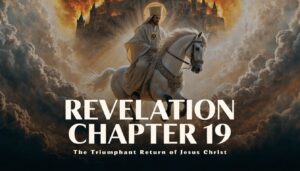 Revelation 19: Jesus, the Victorious Rider’s TriumphHow God’s Promises Are Fulfilled in Jesus and Revelation 19
God’s promises unfold across Scripture and come into focus in Jesus, whose victory over evil reaches its full expression in Revelation’s vision of the Rider on the White Horse. The “3” in the supplied title appears to be a series or editorial marker, not a claim about a Bible verse.
We’ll follow that promise through the Bible, from its early beginnings in Genesis to the hope of Christ’s return. Along the way, we’ll see how different covenants and prophetic passages point toward God’s saving work in Jesus, and why His promised victory gives believers hope today.
Let’s begin with the first promise and trace its path toward the victorious King. For more on how Jesus fulfills the Law and the Prophets, we’ll connect each passage with the wider witness of Scripture.
From Ancient Promise to the Rider on the White Horse
God’s promises unfold across Scripture, but they aren’t one identical promise repeated in every passage. Each covenant has its own setting and purpose. Christian readers see how those promises lead to Jesus by reading the Old Testament alongside the New Testament. That wider witness helps us follow the hope of victory in Genesis toward the triumphant Rider in Revelation 19.
The promise of victory begins in Genesis
After humanity’s rebellion, God speaks of hostility between the serpent and the woman, and between their offspring. The woman’s offspring will strike the serpent’s head, while the serpent strikes his heel (Genesis 3:15). The verse itself doesn’t name Jesus. Christians have understood it as an early foreshadowing of victory over evil when read in light of the New Testament.
That distinction matters. We don’t need to force the full New Testament meaning into one verse to see how Scripture develops the theme. Hebrews says Jesus shared in our humanity and, through His death, broke the devil’s power over death (Hebrews 2:14). First John says the Son of God appeared to destroy the devil’s works (1 John 3:8). Read together, these passages give Christians reason to see Jesus’ victory as the answer to the conflict first described in Genesis.
The connection carries us toward Revelation 19, where Jesus appears as the victorious Rider on the white horse. Genesis gives us an early glimpse of conflict and promised victory; the New Testament identifies Jesus as the One who defeats the devil. The promise takes shape across Scripture, not through a direct naming of Jesus in Genesis 3:15.
God’s promise to Abraham reaches the nations
The promise widens when God calls Abram. He promises to make him a great nation and bless all the families of the earth through him (Genesis 12:1–3). Later, God confirms that promise, declaring that Abraham’s offspring will bring blessing to the nations (Genesis 22:15–18). These words belong first to God’s covenant with Abraham and his descendants, but their reach extends beyond one family.
Paul connects Abraham’s blessing with the good news preached to the nations. In Galatians, he interprets the promised “Seed” in relation to Christ and says those who belong to Christ share in Abraham’s blessing (Galatians 3:8, 16, 29). That is Paul’s New Testament reading of the promise, not a claim that Genesis names Jesus directly.
So we can hold both parts together: God made a particular covenant with Abraham, and Scripture later shows how its blessing reaches the nations through Jesus. For a closer look at how Scripture’s promises unfold across the Bible, we can keep each passage in its own setting while following the wider Biblical witness.
How God’s promises fulfilled in Jesus shape the whole Biblical story
The promise to Abraham widened the hope of blessing to all nations. The prophets then gave that hope more shape, speaking of a coming King and a servant who would suffer. These passages have different settings and images, but the New Testament brings them together around Jesus. As we follow that pattern, we can see how His first coming began the fulfillment and why Christians still await its completion.
The promised King comes from David’s line
In 2 Samuel, David is established as king, and the prophet Nathan delivers God’s covenant promise: David’s offspring will have an enduring kingdom and throne (2 Samuel 7:12–16). The promise first concerns David’s royal line and the future of his kingdom. It also gives Israel hope for a ruler whose reign will not end.
Centuries later, Isaiah speaks of a child who will reign on David’s throne with justice and peace (Isaiah 9:6–7). Micah points to Bethlehem, David’s hometown, as the place associated with a coming ruler (Micah 5:2). Both prophets speak amid danger and uncertainty for Judah, though interpreters debate how some details relate to events in their own time and to the future Messiah.
The New Testament identifies Jesus with this royal hope. Gabriel tells Mary that Jesus will receive David’s throne and reign forever (Luke 1:32–33). Paul describes Him as descended from David according to the flesh and declared to be the Son of God in power through the resurrection (Romans 1:3–4). We can read more about how Jesus fulfills the Davidic covenant, while keeping each passage’s original setting in view.
The suffering Servant brings salvation
Isaiah’s portrait of the servant in Isaiah 52:13–53:12 adds another dimension to the hope for God’s chosen King. The servant is rejected, suffers, and bears the wrongdoing of others, yet God vindicates him. Christians read this passage in light of Jesus’ suffering and death. Jewish and Christian interpreters have understood the servant’s identity differently, so we should be clear about the New Testament’s reading without claiming every detail is beyond debate.
Acts describes an Ethiopian official reading Isaiah’s words. When he asks whom the prophet is describing, Philip explains the Scripture and tells him about Jesus (Acts 8:32–35). Peter also connects Jesus’ suffering with the servant’s bearing of sin and speaks of healing through His wounds (1 Peter 2:22–25). These passages help us see the cross as central to God’s saving work, not as the whole explanation of every part of Jesus’ mission.
Jesus also explained that His suffering and resurrection belonged within the witness of the Law, the Prophets, and the Psalms (Luke 24:25–27; Luke 24:44–47). Paul summarizes this hope by saying that God’s promises find their “Yes” in Christ (2 Corinthians 1:20). The fulfillment has begun: Jesus came, died, and rose again. Its completion awaits His return, when His victory will be fully revealed. We can explore Isaiah’s prophecy of the Messiah and suffering servant in light of both that first coming and the hope still ahead.
How the New Testament traces promise into fulfillment
The New Testament reads Israel’s Scriptures through what God did in Jesus. The Gospels connect His life, suffering, and resurrection with Israel’s hopes, while Acts and the letters proclaim Him as the risen King. That Christian reading draws on multiple passages; it doesn’t require us to claim that every detail was obvious to every Old Testament reader in advance.
Jesus explains the Scriptures after His resurrection
On the road to Emmaus, Jesus rebukes two disciples for being slow to believe what the prophets had spoken. He then explains how the Scriptures point to the Messiah’s suffering and glory (Luke 24:25–27). Later, He names the Law of Moses, the Prophets, and the Psalms, showing that His suffering, resurrection, and the call to repentance and forgiveness belong together (Luke 24:44–47).
Jesus’ point is the unified witness of Scripture. The disciples weren’t asked to pull one isolated prediction out of context. They needed to see how God’s purposes, expressed across Israel’s Scriptures, came into focus through what had happened to Him. The resurrection changed how they understood those passages, and it gave their message a clear direction: repentance and forgiveness of sins would be proclaimed to all nations in Jesus’ name.
The apostles proclaim the risen and exalted Christ
At Pentecost, Peter makes the claim public. He recounts Jesus’ death and resurrection, then turns to David’s words in the Psalms to explain why Jesus’ resurrection and exaltation fit Israel’s Scriptures (Acts 2:22–36). David was Israel’s king and prophet, Peter says, but he died and was buried. The promise Peter proclaims reaches its fulfillment in Jesus, whom God raised and exalted.
The word exalted means raised to a position of honor and authority. Peter’s argument is that Jesus is the promised Messiah and Lord, not merely a teacher whose message survived His death. His resurrection confirms His royal authority, and the Spirit’s outpouring gives public witness to His reign.
This is how the New Testament traces promise into fulfillment: Jesus opens the Scriptures, then the apostles proclaim what His death and resurrection reveal. We can follow the apostles’ interpretation of Old Testament Scripture without pretending the earlier passages had no meaning in their own settings. Their claim is that the risen Christ brings Israel’s hopes into focus, and that God’s saving purpose now calls people everywhere to repent and believe.
What Revelation 19 reveals about the Rider on the White Horse
Revelation 19:11–16 presents the Rider as Jesus through titles that leave little doubt about His identity. John sees heaven open and a white horse appear, but the vision’s force rests on who rides it: the One who judges righteously, bears the name “The Word of God,” and is declared “KING OF KINGS AND LORD OF LORDS.” (Revelation 19:11–16)
The Rider’s names identify Him as Christ
John calls the Rider “Faithful and True” and says He judges and makes war “in righteousness.” These titles describe the character and authority of the One who appears. Revelation later names Him “The Word of God,” a title that connects with John’s opening declaration that the Word was with God, was God, and became flesh (John 1:1–14). Read together, these passages identify the Rider with Jesus, the Word who came among us.
The title “KING OF KINGS AND LORD OF LORDS” makes His authority unmistakable. No earthly ruler outranks Him, and the vision places every opposing power beneath His reign. We can read more about Jesus as King of Kings in Revelation 19, while keeping our focus on the passage’s own declaration.
The white horse adds another layer. In this vision, it is victorious royal imagery, a picture of the conquering King. Revelation 6:2 also describes a rider on a white horse, but the text does not identify that rider in the same way. We shouldn’t assume the two riders are the same. Revelation 19 gives its Rider Christ-identifying titles; the identity of the Revelation 6 rider remains debated.
The images show righteous judgment and victory
The sword comes from the Rider’s mouth, not His hand. That image points to judgment by His authoritative word, rather than ordinary combat. The iron rod recalls the Messiah’s rule in Psalm 2:9, where the nations are placed under His authority. John’s vision draws on Scripture’s language to show that Christ’s judgment is decisive.
The winepress image also has a prophetic background. In Isaiah 63:1–6, the prophet depicts God coming in judgment, with imagery of garments stained as if from a winepress. Revelation uses a similar picture to portray the defeat of evil and the severity of divine judgment.
These are apocalyptic images, vivid symbols that communicate spiritual realities. We don’t need to treat the sword as literal equipment or the winepress as a scene of ordinary battle to take the passage seriously. Its point is clear: Christ judges evil with authority and wins.
The vision offers hope without settling every timeline
Revelation 19 directs our attention to Jesus’ victory over the powers that oppose God. Christians differ over some details of Revelation’s timeline, including how this scene relates to the events in chapter 20. Classical Pentecostal premillennial readers understand Christ’s return as preceding the millennial reign. That is one Christian interpretive framework, not the only view held by Christians.
We can acknowledge those differences without losing the passage’s central emphasis. The Rider is faithful, His judgment is righteous, and no rival authority can overcome Him. For us, the vision calls for trust in Christ and hope in His promised victory, even when we don’t agree on every detail of the timeline.
How Pentecostal faith follows the promise today
The promise of God’s victory reaches beyond the pages of Scripture. Jesus has been raised and exalted, the Holy Spirit empowers His people, and the church continues to bear witness while awaiting His return. For us as Spirit-filled Pentecostals, that means holding together what God has done in Christ and the faithful life He calls us to live today.
The Holy Spirit strengthens faithful witness
Peter’s Pentecost sermon connects Jesus’ resurrection and exaltation with the Spirit’s work. He declares that God raised Jesus and that Jesus, exalted at God’s right hand, poured out the promised Holy Spirit (Acts 2:32–36). This fulfills the promise Jesus gave His disciples: they would receive power when the Holy Spirit came upon them and become His witnesses (Acts 1:8).
The Spirit points us to Jesus. He doesn’t replace the Gospel or draw attention away from Christ. He equips believers to speak about Jesus, serve others, and remain faithful when sharing the good news feels difficult. That witness can happen in a church service, a conversation with a friend, or the ordinary choices that show what we believe.
We don’t need to promise that every believer will have the same experience or speak in the same way. The call is clear: rely on the Holy Spirit, know the Gospel, and be ready to share the hope we have in Jesus. We can read more about the church’s witness to Jesus in the Spirit’s power. Pentecost points us toward mission, not spiritual performance.
Hope in Christ’s return shapes daily life
Paul describes Jesus’ resurrection as the firstfruits of those who have died, then points to the day when Christ will bring His reign to completion and defeat death (1 Corinthians 15:20–28). This is Biblical hope: Jesus is alive, His Kingdom will prevail, and death will not have the final word.
What does that hope change today? It gives you reason to pray when answers seem delayed, persevere when faithfulness costs something, and practice Godly character when no one is watching. It also turns our attention outward. If Christ is coming as King and Judge, our neighbors matter, and our words and actions should reflect His mercy and truth.
We hold firmly to the authority of Scripture and salvation through Jesus, while recognizing that Christians differ on details of end-times chronology. Pentecostal believers also differ among themselves on some of those details. We don’t have to settle every timeline question to live in readiness. The Assemblies of God’s Statement of Fundamental Truths connects the Spirit’s work with holy living and Christian hope. So we keep praying, serving, and bearing witness, trusting the risen Jesus until He returns.
How to follow the promise through Scripture with care
When a passage is called a promise fulfilled in Jesus, we should ask how Scripture itself makes that connection. A careful reading lets us honor the first audience while following the New Testament’s witness. Context doesn’t weaken Christian interpretation; it gives our confidence a firm footing.
Read each promise in its original setting
Start with the people who first heard the words. Who received the promise? What pressures, hopes, or questions shaped that moment? Then read the full passage, not only the line that appears to point toward Jesus. The surrounding verses may clarify the promise’s immediate purpose, its conditions, or the kind of hope it offered.
A promise to a king, a nation, or a family may carry a wider Biblical meaning, but we shouldn’t skip its original audience. We can use historical and literary resources from Bible Odyssey to learn more about the Bible’s settings, then return to Scripture and check what the passage actually says.
As we read, we can ask:
Who is speaking, and to whom?
What happens before and after the promise?
Does the passage describe an immediate event, a future hope, or both?
For a focused guide, see how to read prophecy in its original context. That first step helps us avoid pulling a sentence out of its place and asking it to say more than it does.
Compare Scripture with Scripture and leave room for mystery
Next, look for how the New Testament uses the passage. Does it quote the words directly, echo their language, or make a broader theological connection? Those aren’t identical things. For example, Luke 24:25–27 shows Jesus teaching His disciples to read the Scriptures in light of His suffering and glory. Paul makes a particular argument about Abraham’s “Seed” in Galatians 3:16. We should describe each connection the way the New Testament presents it.
That distinction keeps our claims clear. We can say, “The New Testament applies this passage to Jesus,” when it does. When we’re drawing a connection from a broader Biblical pattern, we can say so plainly instead of presenting our interpretation as a direct quotation or an uncontested prediction.
The same care matters in Revelation. We can be confident that Jesus wins and reigns, while admitting that Christians disagree about some symbols and timelines. Confidence in Christ doesn’t require certainty about every detail. We read carefully, compare passages, and hold disputed conclusions with humility.
Conclusion
The promise of victory over evil takes shape across Scripture, through God’s covenant promises and prophetic hope, and comes into focus in Jesus. He came, died, and rose again. Revelation 19 points us ahead to His return as the victorious King, the One who judges righteously and reigns over all. We can read more about Jesus as the victorious King in Revelation 19.
As Spirit-filled believers, we hold fast to Scripture, trust the Holy Spirit to strengthen our witness, and look with hope for Christ’s return. Follow the promise through the Bible, and let it shape how we live: with faith, faithful witness, and hope in Jesus. […]
The Canonical Arc
Four Prophetic Pathways
Track the progression of redemption across the four grand divisions of the biblical witness.
1. The Torah
The Genesis foundation, Abrahamic covenants, and the tabernacle shadows identifying God’s chosen Redeemer.
Genesis • Exodus • Leviticus
2. The Prophets
Major and Minor Prophets detailing the suffering servant, the Day of the Lord, and the restoration of Israel.
Isaiah • Daniel • Zechariah
3. The Gospels
Messianic fulfillment in person: the incarnation, kingdom teachings, sacrificial cross, and glorious resurrection.
Matthew • Mark • Luke • John
4. Revelation
The unveiling of Jesus Christ as King over history, executing righteous judgment and reigning forever.
The Apocalypse of John
Expository Media Hub
Video Teaching Library
Structured video archive ready for chapter-by-chapter broadcast.
Video Library / Embed-Ready
Responsive video placeholder awaiting configured stream stream.
Teaching Series • Module 01
Daniel’s 70 Weeks and the Messiah
An extensive walk through Daniel chapter 9, clarifying biblical chronology and the decisive prophetic timeline.
Video Library / Embed-Ready
Responsive video placeholder awaiting configured stream stream.
Teaching Series • Module 02
Revelation 19: The Rider on the White Horse
Exegetical consideration of the King of kings returning to claim rightful sovereignty over the nations.
Continue the Journey
Search the Scriptures Daily
Prophecy is not given to satisfy speculative curiosity, but to anchor our confidence in the living Christ. Examine every doctrine against the inspired text.
© Bible Prophecy Ministries • Proclaiming Jesus Christ Through the Scriptures