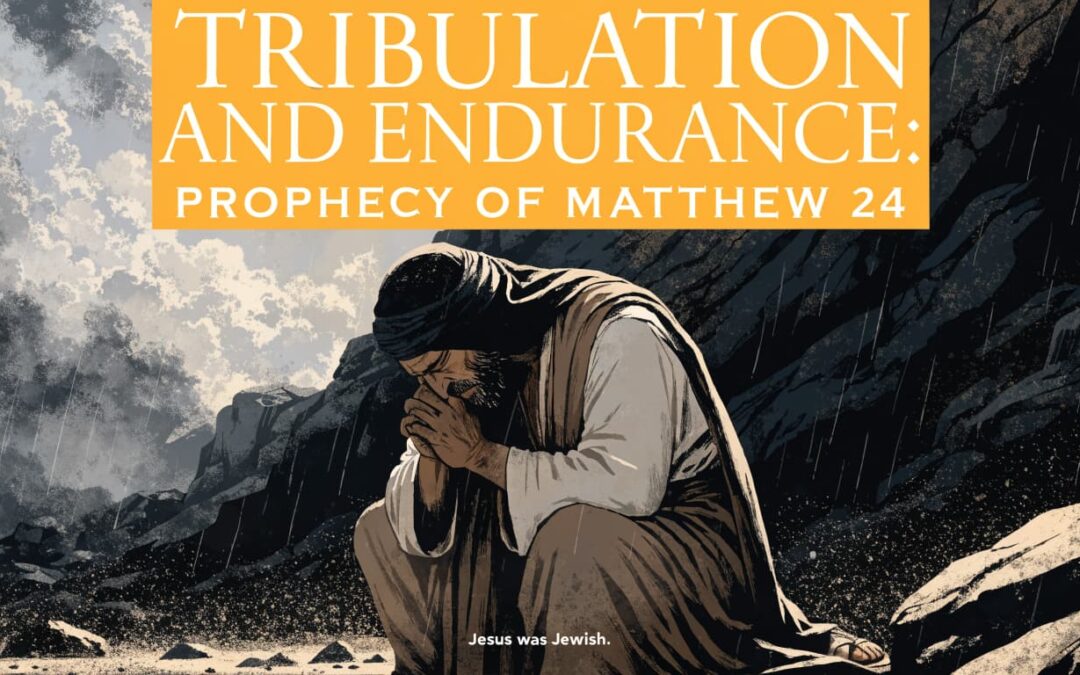
Tribulation and Endurance: How Disciples Remain Faithful Under Pressure
Jesus warned that His disciples would face persecution, deception, and severe distress, yet He called them to remain faithful. His words were honest about the cost of following Him, but they also gave His people a steady way forward: stay true to Jesus, bear witness, and endure.
So what do these warnings mean for disciples today? Christians differ on some details of end-times prophecy, but Jesus' calls to resist deception, depend on the Holy Spirit, and keep loving others are clear. We'll look at the setting and meaning of His words, beginning with Jesus' warnings in Matthew 24.
What Jesus Meant by Tribulation and Endurance
Jesus spoke about tribulation in a specific setting: the temple in Jerusalem, His disciples' questions, and the pressure they would face as His followers. His words were both a warning and a call to stay faithful. The details matter, especially because Matthew, Mark, and Luke share key themes while giving the discourse different emphases.

The temple, Jesus’ coming, and the disciples’ questions
As Jesus left the temple, His disciples drew His attention to its impressive buildings. He answered with a startling prediction: the temple would be destroyed. Later, on the Mount of Olives, they asked when this would happen and what signs would point to His coming and the end of the age. Matthew records those questions directly, while Mark and Luke shape the account around their own details. (Matthew 24:1-3, Mark 13:1-4, Luke 21:5-7)
This setting helps us hear Jesus clearly. The disciples were asking about real events, not building an abstract timeline. Yet Christians differ on how the temple's destruction, the distress Jesus describes, and His future coming fit together. We should take His warnings seriously without claiming that one timeline is the settled Biblical or Pentecostal view.
Shared warnings, distinct Gospel accounts
Across the three accounts, Jesus warns about deception, conflict, persecution, and the need to remain alert. False messiahs and reports of upheaval must not lead disciples into panic. Jesus also says that His followers will face hostility and have opportunities to testify. (Matthew 24:4-14, Mark 13:5-13, Luke 21:8-19)
Each Gospel gives the warning its own shape. Matthew speaks of lawlessness and love growing cold. Mark highlights the Holy Spirit's help when disciples are brought before authorities. Luke describes Jerusalem surrounded by armies and tells disciples to recognize the danger. Those differences deserve attention. They help us read the accounts together without flattening them into identical reports.
For a closer look at Jesus' warnings about deception, hardship, and faithful witness, see the tribulation teaching in Matthew 24.
Tribulation is real suffering; endurance is faithfulness
Tribulation means severe distress and pressure. In Jesus' teaching, it includes persecution and danger faced by people who belong to Him. We shouldn't soften that into ordinary inconvenience. Some disciples would suffer because they refused to deny Jesus.
Endurance means remaining faithful to Him through that pressure. It is not passive resignation, and it does not mean we can predict every event in advance. Jesus calls His followers to resist deception, bear witness, and keep their love from growing cold. For Spirit-filled believers, Mark's promise of the Holy Spirit's help in testimony is a source of hope, not an excuse to ignore the warning.
The point is clear: Jesus prepared His disciples for hardship, but He did not leave them without direction. We can hold firmly to His call to endure while allowing room for faithful Christians to differ about the timing and interpretation of prophetic events.
How to Resist False Prophets and Spiritual Deception
Jesus' warning about deception belongs beside His call to endure. We don't have to treat every crisis or spiritual claim as proof that the end has arrived. We can stay alert, test what we hear, and keep our love alive. (Matthew 24 in the NKJV)

Recognize deception without becoming fearful
Jesus begins with a direct warning: "Take heed that no one deceives you." He speaks of people claiming to be the Christ, false prophets misleading many, and reports of wars and upheaval. Then He tells His disciples not to be troubled. Those events would happen, but they did not, by themselves, mean the end had come.
That distinction matters. Alertness means we pay attention to Jesus' words and weigh claims carefully. Panic means we let a frightening headline or urgent prediction take over our judgment. When someone insists that a current crisis proves the end is here, we should compare that claim with what Jesus actually said, not let fear make the decision for us.
Jesus also warned that false prophets could appear convincing. A strong personality, a dramatic testimony, or a claim of special revelation doesn't prove that a message comes from God. We can take spiritual gifts seriously while still testing every claim against Scripture. For a closer look, see how to recognize false messiahs and prophets.
Hold fast to truth and keep loving others
Discernment takes more than spotting a mistaken prediction. We need to ask whether a teaching agrees with Jesus' words, whether it points people toward Him, and what kind of fruit it produces. Does it encourage humility, faithfulness, and compassion? Or does it make a leader untouchable, stir constant suspicion, or pressure people to act out of fear?
We also need prayer and the Holy Spirit's help. As Spirit-filled believers, we welcome the Spirit's work, but we don't treat every impression or prophecy as unquestionable. We bring it into the light of Scripture and weigh it with care. Confidence in our understanding of prophecy should never become an excuse to dismiss correction or divide from every Christian who reads a difficult passage differently.
Matthew connects deception with another danger: lawlessness can increase, and the love of many can grow cold. That warning reaches beyond prophetic charts. If our pursuit of Biblical truth makes us cruel, contemptuous, or indifferent to people who are hurting, something has gone wrong. We can hold firmly to what Scripture teaches and still speak with patience, protect the vulnerable, and make room for honest questions.
So keep watch, but don't let fear set the tone. Test teaching, stay rooted in Jesus' words, and ask the Holy Spirit to shape both your discernment and your character. Faithfulness means guarding the truth while continuing to love the people around us.
How Persecution Can Become a Time for Faithful Witness
Jesus warned His disciples that they could face rejection, arrest, and questioning because they belonged to Him. That warning is difficult, but it comes with a promise: persecution does not mean God has abandoned His people. Jesus says trials can become a time to testify, and the Holy Spirit helps His followers bear witness.

Depend on the Holy Spirit when you must speak
In Mark 13:9-13, Jesus describes disciples being brought before councils and rulers, and He tells them to testify. The setting is real pressure, not a comfortable moment to share a prepared message. Yet Jesus does not leave His followers to face it alone. He promises that the Holy Spirit will help them speak when they are handed over.
That promise is not a reason to neglect preparation or assume every personal impression comes from God. We still study Scripture, pray, and use sound judgment. But when pressure comes and words feel hard to find, we can trust the Spirit to help us speak truthfully and point to Jesus. For us as Pentecostal believers, the Holy Spirit's guidance is present and active. Christians may understand the end-time details in these passages differently, but Jesus' call to witness remains clear.
Mark 13:11 speaks directly to this moment: the Holy Spirit's help when disciples are brought before authorities. We can take courage from that promise without turning it into a guarantee that every response will feel effortless or that we will know exactly what to say in advance. The Spirit gives help for faithful witness, not permission to speak carelessly. We can also look to the disciples' public testimony after Pentecost, when the Holy Spirit empowered Peter to witness boldly.
Stay faithful when family and community turn against you
Jesus also warned that hostility could reach into the closest relationships. Mark records that family members would betray one another, and that disciples would be hated because of His name. Luke 21:12-19 describes arrest and questioning before authorities, while also framing those trials as an opportunity to testify.
Rejection by family or a faith community can hurt in a way public opposition does not. It can leave you grieving, confused, or tempted to answer every accusation with anger. Jesus does not ask us to pretend that betrayal is painless. He calls us to remain loyal to Him, and we can seek wise support from trustworthy believers who will listen, pray, and help us respond with care.
Faithfulness does not require us to be harsh or to assume every disagreement is persecution. We can speak with humility, own our mistakes, and make room for honest conversation. But we do not have to deny Jesus to keep everyone comfortable. When pressure rises, we can ask the Holy Spirit for courage, choose words that honor Christ, and keep walking with Him.
How to Understand Severe Distress and the Abomination of Desolation
Jesus' warning about severe distress can feel difficult to interpret, especially when we compare the Gospel accounts. Matthew, Mark, and Luke share the same serious call to stay alert, but they do not describe every detail in the same way.
Read the Gospel accounts together without flattening their differences
Matthew and Mark connect the danger in Judea with Daniel's "abomination of desolation." Matthew tells readers to pay attention to Daniel's prophecy, while Mark adds the phrase "standing where it ought not." Both accounts then warn people in Judea to flee to the mountains. (Matthew 24:15-20, Mark 13:14-18) Readers who want to compare the accounts alongside other prophetic passages can explore parallel Gospel accounts of Jesus' prophecy.
Luke describes the danger differently. He says Jerusalem will be surrounded by armies, and calls this its desolation. He then gives a practical warning to those in Judea: flee, and do not return to the city. (Luke 21:20-24)
That difference matters. Matthew and Mark use Daniel's prophetic language; Luke names the visible threat of armies around Jerusalem. Shared themes do not make these accounts interchangeable. We should read each Gospel carefully, then consider how the accounts speak to one another.

Separate clear commands from debated timelines
Many readers connect Luke's description of Jerusalem surrounded by armies with the Roman siege and destruction of Jerusalem in AD 70. That reading gives Luke's warning a concrete historical setting. Others understand the language in Matthew and Mark as pointing to a future act of desecration, or see the earlier destruction and a future time of distress as connected fulfillments. The exact identification of the abomination, and its relationship to future events, remain disputed. A discussion of Jesus and the future in the Olivet Discourse lays out some of the interpretive questions.
The same care applies to Jesus' words about "this generation." Christians differ over whether the phrase points to Jesus' contemporaries, a generation that sees future signs, or another scope within the discourse. (Matthew 24:34, Mark 13:30) We shouldn't make one chronology sound certain when the text leaves room for disagreement.
Still, Jesus' practical direction is unmistakable: when the danger He describes is present, flee. His warning is not an invitation to stand in harm's way while trying to solve every prophetic detail. He tells people in Judea to act quickly, even mentioning the added difficulty for those who are pregnant or nursing. (Matthew 24:16-20, Luke 21:21-23)
We can hold our interpretations with humility and still obey what Jesus says plainly. Resist deception. Recognize danger. Flee when flight is needed. And endure in faith rather than letting uncertain timelines distract us from Christ's direct commands.
What Faithful Endurance Looks Like in Daily Life
Endurance moves faith into ordinary choices. When fear rises, pressure builds, or hardship lasts longer than we hoped, we keep following Jesus one day at a time. That can mean praying honestly, staying close to Scripture, gathering with other believers, and doing the next faithful thing.

Keep faith through fear, pressure, and long seasons of hardship
Fear doesn't mean we have stopped trusting God. We can bring our fear to Him in prayer, name what troubles us, and ask for wisdom about what to do next. When a decision feels overwhelming, Scripture can steady us. So can a trusted pastor or mature believer who listens without shaming us.
Jesus said, "He who endures to the end shall be saved." Endurance doesn't ask us to deny pain or pretend every problem will resolve quickly. It means we keep turning toward Jesus, even when the answer takes time. We can worship when our feelings are mixed, ask for help when we need it, and take practical steps instead of letting fear make every decision.
And yes, asking for help is compatible with trusting God. We may need a friend to sit with us, a church community to provide meals, or professional support to help us face grief, illness, or anxiety. Gathering with other believers can remind us that we don't have to carry hardship alone. Hebrews calls the church to encourage one another and keep meeting together (Hebrews 10:24-25). As we consider Christian hope while awaiting God's justice, we can keep speaking truthfully about pain and asking for the care we need.
Pressure to compromise can also show up in small, everyday ways: hiding the truth to avoid conflict, joining in cruelty to fit in, or staying silent when someone vulnerable needs support. We can ask the Holy Spirit for courage, then choose the next honest and obedient step.
Let endurance strengthen love and service
Hardship can make us turn inward. Sometimes rest and quiet are necessary, but suffering can also move us to notice what others are carrying. We can check on a neighbor, help with a practical need, or make room for someone who feels alone. Scripture calls believers to bear one another's burdens (Galatians 6:2). Even a small act of care can remind someone that they haven't been forgotten.
Endurance can include forgiveness, but forgiveness doesn't mean excusing abuse, returning to danger, or giving someone continued access to harm us. We can release vengeance to God while setting firm boundaries, seeking safety, and contacting trustworthy support. Protecting yourself or someone in danger is not a failure of faith.
Hope also doesn't require us to promise that hardship will end soon. We can keep praying, serving where we have strength, and receiving help when we don't. As Paul writes, "rejoicing in hope, patient in tribulation, continuing steadfastly in prayer." That kind of endurance keeps love alive without pretending the pressure isn't real.
Why Jesus’ Warnings End With Hope, Not Panic
Jesus doesn't describe distress to leave His disciples frozen in fear. He points beyond it: toward His coming, the redemption of His people, and the Kingdom of God. His warnings prepare us to stay faithful, not to turn every crisis into a countdown.

Watch with hope instead of trying to predict dates
Jesus tells His disciples to watch and be ready, but He also says that no one knows the day or hour. (Matthew 24:36-44 in the NKJV) Readiness is not the same as predicting a date. It means living faithfully now, resisting deception, and continuing to serve Jesus when pressure rises.
That distinction matters. A chart or confident online prediction can make speculation feel like certainty, but Jesus didn't tell His followers to build a calendar from every unsettling event. He warned them against being deceived and troubled. We can pay attention to His words without treating every war, disaster, or viral claim as proof that we know what happens next.
So what does watchfulness look like? We keep our trust in Jesus, stay faithful in the work He has given us, and refuse sensational claims that push fear instead of Biblical hope. We can study prophecy and still admit where Christians disagree. For another look at staying faithful as we await Christ's return, keep the focus on Jesus Himself, the Faithful and True King.
Keep the promise of redemption in view
Jesus doesn't minimize distress. He speaks plainly about trouble and hardship. But Luke also records His encouragement to stand up and lift our heads because redemption is drawing near. (Luke 21:25-28 in the NKJV) The promise doesn't erase what disciples suffer. It gives us reason to face suffering without surrendering to despair. (Luke 21:28)
For us, this hope is tied to the coming of Jesus. He will gather His people, and His Kingdom will come in fullness. That promise gives courage to disciples who are grieving, facing opposition, or carrying hardship that has not lifted. We don't have to pretend pain is easy or claim that endurance means never feeling afraid. We can tell the truth about suffering and keep trusting the One who promised redemption.
Jesus' warning and His promise belong together. He calls us to endure, watch, and remain faithful, while directing our eyes beyond distress to His coming. Christians may differ about the order and timing of end-time events, but the call to trust Jesus and remain faithful is clear.
Conclusion
Jesus' warnings prepare us to face persecution, resist deception, and respond wisely when distress comes. He calls us to endure in faith, bear witness, stay close to Scripture, and depend on the Holy Spirit. As Jesus' warning about persecution and endurance reminds us, faithful endurance keeps following Him when pressure rises.
We don't need fear or date-setting to stay watchful. We can keep loving others, hold fast to Jesus, and let our hope rest in His promise of redemption. That is how we remain faithful, one day at a time.
The Call to Persevere
Tribulation and Endurance: How Disciples Remain Faithful Under Pressure
In Scripture, tribulation is the distress disciples face in a world that resists Christ. Jesus did not hide this reality: “In the world ye shall have tribulation,” He said, before assuring His followers that He had overcome the world (John 16:33). Biblical prophecy takes suffering seriously, but it never presents hardship as the end of the story. Endurance is the steadfast trust that holds to Jesus and obeys His word when faith becomes costly. It rests not on a disciple’s strength alone, but on the faithfulness of the risen Lord who sustains His people.
Faith Refined Under Pressure
Trials That Test, Strengthen, and Reveal Trust
Scripture describes pressure, suffering, and persecution as real tests of faith, not signs that God has abandoned His people. James urges believers to consider trials an occasion for joy because the testing of faith produces perseverance (James 1:2–4). Peter compares tested faith to gold refined by fire, pointing toward praise and honor at the revelation of Jesus Christ (1 Peter 1:6–7). When opposition rises, disciples can grieve honestly, pray continually, and stand together in obedience. These trials expose what we rely on and teach us to depend more deeply on Christ, whose promised return gives endurance its hope.
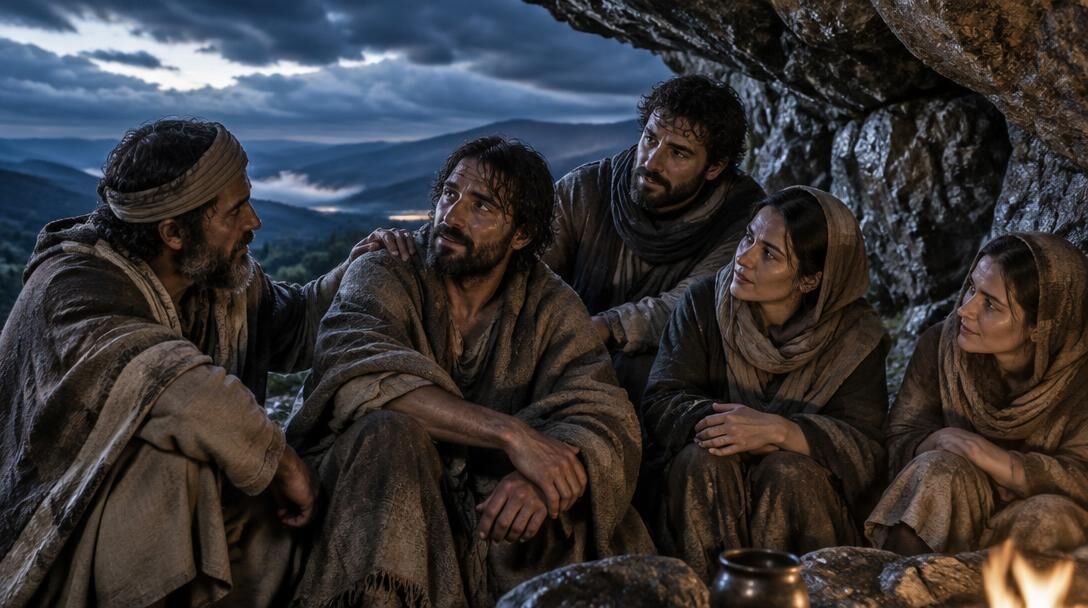

“In the world ye shall have tribulation: but be of good cheer; I have overcome the world.”
Jesus Christ, John 16:33 (KJV)—His victory gives disciples courage to remain faithful under pressure.
How to Stand Firm Under Pressure
Bring Every Burden to God
Pray with thanksgiving instead of letting fear rule your thoughts; God’s peace guards those who turn to Him (Philippians 4:6–7).
Trust His Word Together
Hold fast to God’s promises and encourage fellow believers to persevere, especially when gathering together takes effort (Hebrews 10:23–25).
Keep Christ’s Return in View
Set your hope on Jesus and remain steadfast in obedience, knowing your labor in Him is not in vain (1 Corinthians 15:58).
From Tribulation to Promised Hope
Scripture’s unfolding story shows hardship is real, but never beyond the reign of Christ or the future He promises His people.
First Century
Jesus Foretells Trouble
Christ warns His disciples that they will face hatred and distress, calling them to endure rather than be led astray (Matthew 24:9–13).
Apostolic Era
The Church Learns Perseverance
Early believers suffer trials yet strengthen one another with the assurance that God uses endurance to deepen hope (Romans 5:3–5).
The Present Age
Disciples Hold Fast
Followers of Jesus continue to pray, bear witness, and encourage one another while awaiting His promised return (Hebrews 10:23–25).
The Coming Fulfillment
God Makes All Things New
Revelation’s vision of a renewed creation anchors endurance in God’s promise to dwell with His people and wipe away every tear (Revelation 21:1–4).
Faithful Through Every Trial
Tribulation and Endurance: How Disciples Remain Faithful Under Pressure
Stand Firm in Jesus as God’s Promises Unfold
Explore Bible prophecy in Scripture, take courage in Christ, and remain steadfast as you await the fulfillment of God’s promises.