
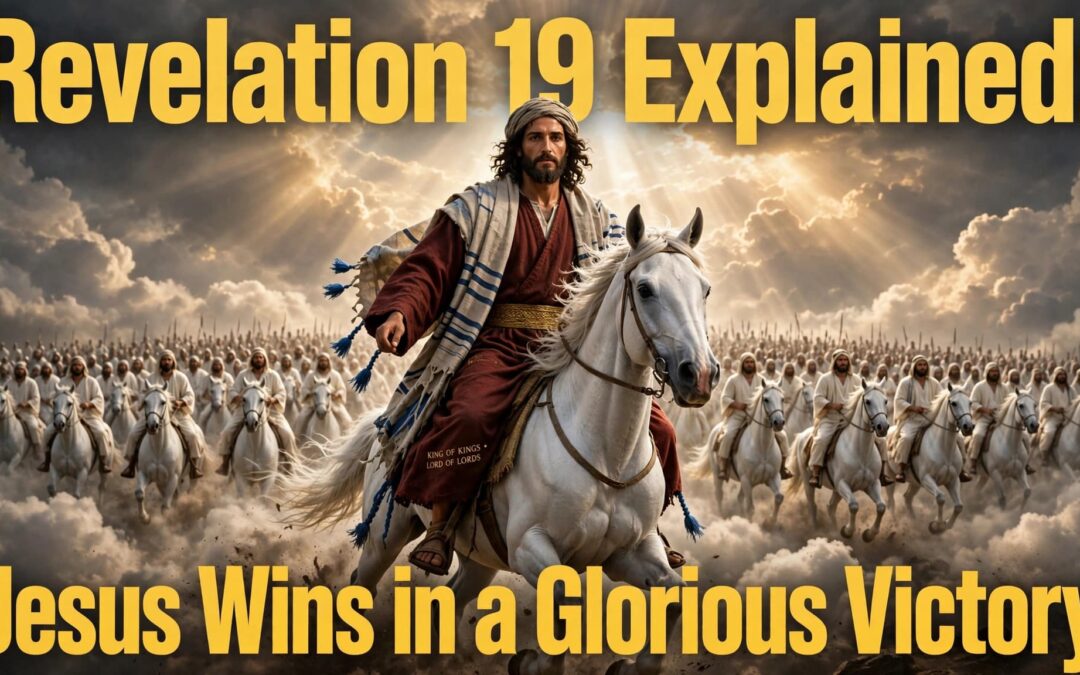
Revelation 19 Explained: The Promised King on the White Horse
Revelation 19 explained: it gives us a vision of worship, the Lamb's wedding, and Jesus' victory over evil. But its images can feel mysterious when we read them without the promises Scripture has already given.
As independent Spirit-filled Pentecostal authors, we'll follow the chapter in order and connect its vivid scenes to earlier Biblical promises. The chapter points us to the righteous King who defeats evil, and reminds us that worship belongs to God alone.
Let's begin with the chapter's place in Revelation, then walk through John's vision together.
Revelation 19 Explained: From Ancient Promise to the Rider on the White Horse
Revelation 19 follows the judgment of Babylon in Revelation 18. Its movement is striking: heaven praises God, the Lamb's marriage is announced, heaven opens, and the rider appears. The chapter ends with the beast and false prophet defeated. Read the full Revelation 19 to see how John holds these scenes together.
Revelation uses vivid symbols to reveal God's truth. John isn't giving us a conventional military account with a step-by-step description of troop movements. He's showing us who rules, what God judges, and where the conflict ends.
Heaven responds to Babylon’s judgment
The chapter opens with a great multitude praising God. Their words answer the devastation described in the previous chapter: Babylon's power has fallen, and God's judgments are true and just. The twenty-four elders and four living creatures join in worship, then a voice from the throne calls God's servants to praise Him.
That order matters. Revelation doesn't leave us staring at Babylon's collapse. It turns our attention to God, whose authority stands above every earthly power. The praise also carries the hope of vindication for God's servants who suffered under Babylon's rule.
The Lamb’s marriage is announced
Next, the praise grows like the sound of many waters and mighty thunder. The Lord God reigns, and the marriage of the Lamb has come. John describes the bride in fine linen and calls those invited to the marriage supper blessed.
The scene shifts the chapter from judgment to celebration, but John doesn't pause to give us a detailed timetable or describe a wedding ceremony. The focus is the Lamb and His people. Revelation's marriage image draws on promises already present in Scripture, where God's relationship with His people is described through covenant and marriage language. We can follow the promise without forcing details into the passage that John doesn't provide.
Heaven opens, and the rider appears
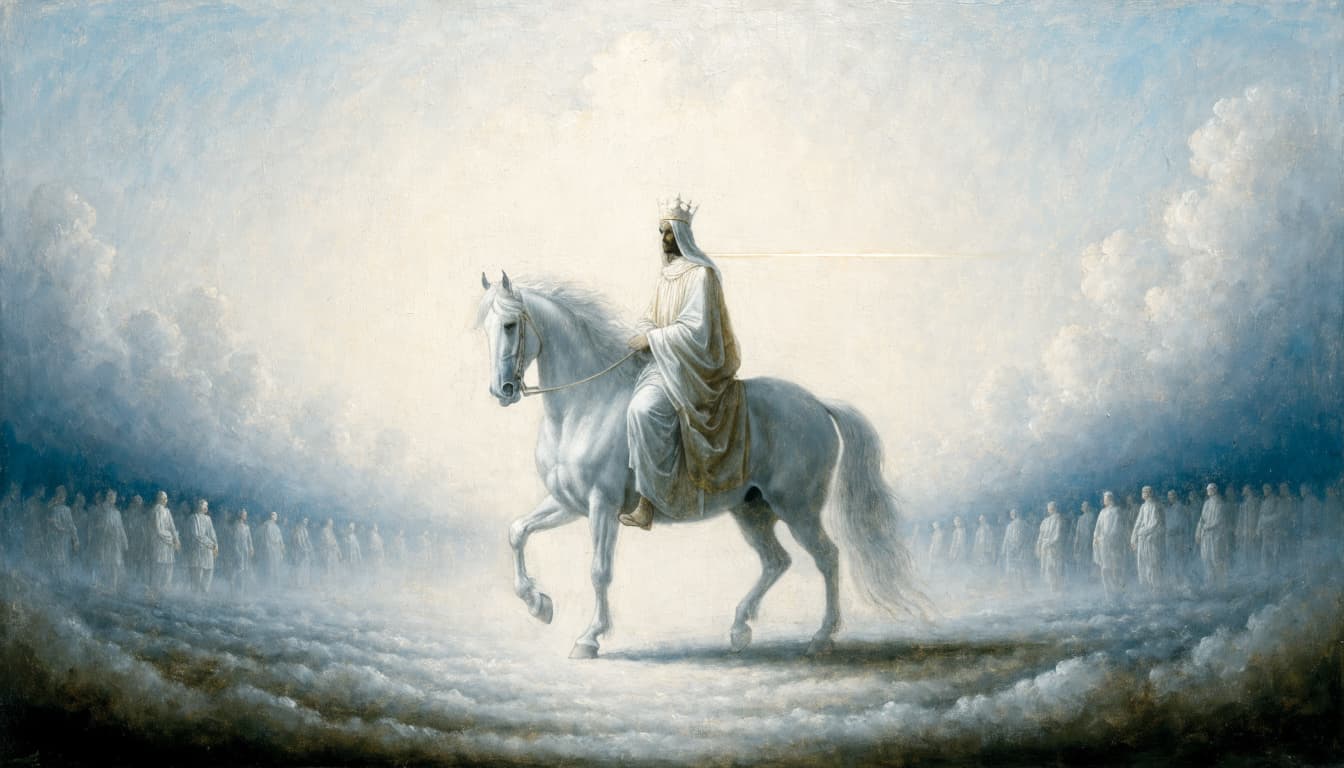
Then heaven opens, and John sees a white horse and its rider. The chapter names Him Faithful and True, the Word of God, and King of kings and Lord of lords. These titles connect the vision to Biblical promises of a King who rules with justice and receives authority over the nations. Revelation gathers those promises into one image: Jesus comes as the righteous King.
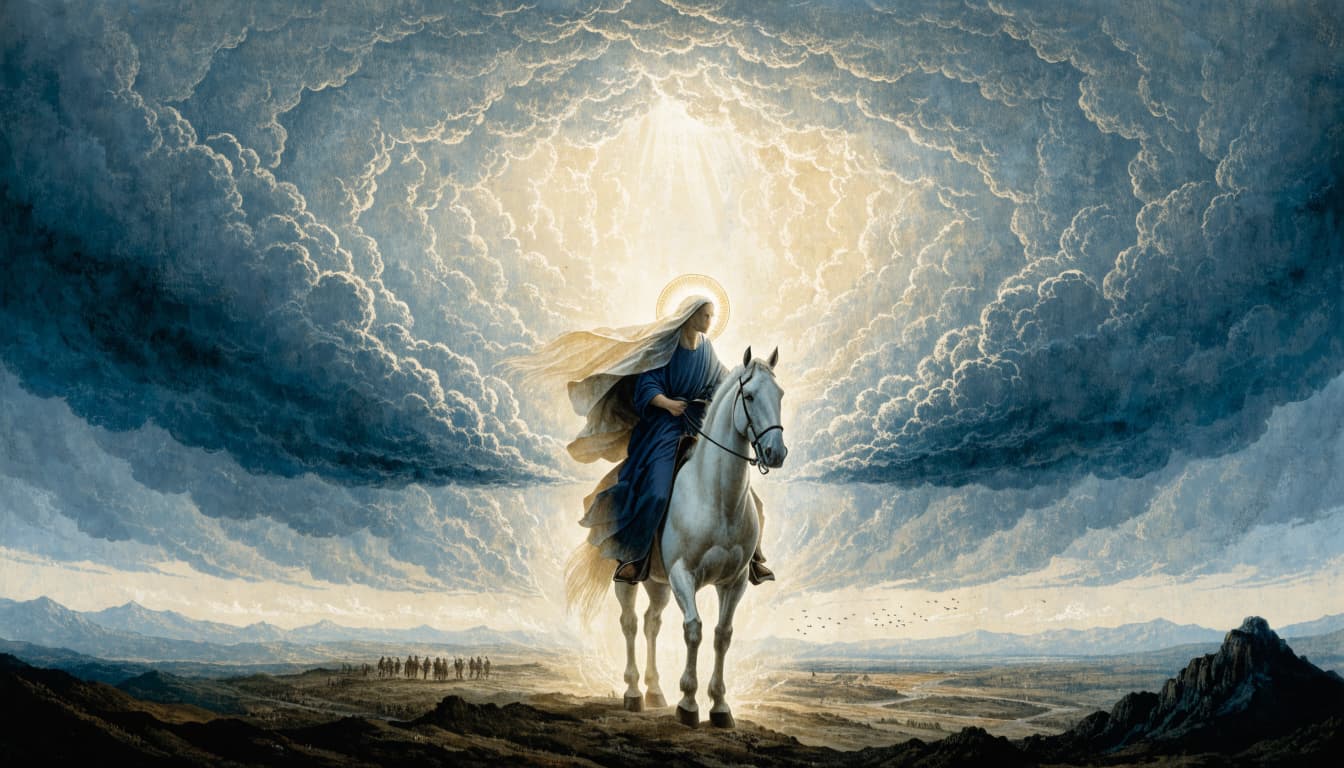
His victory also echoes the royal hope found throughout the prophets. The title King of kings in Revelation 19 makes the claim plain: no earthly ruler outranks Him.
The beast and false prophet are defeated
The final scene brings the beast, the false prophet, and the rulers allied with them into conflict with the rider. John describes their defeat in stark, symbolic language, then closes the chapter with the beast and false prophet thrown into the lake of fire.
Revelation 19 gives us the chapter's direction without explaining every detail of how the defeat unfolds. Praise follows Babylon's judgment; the Lamb's marriage is announced; the King appears; and the powers opposing God fall. The next chapter moves to the thousand years, a subject Christian traditions interpret differently.
Why heaven praises God after Babylon’s fall
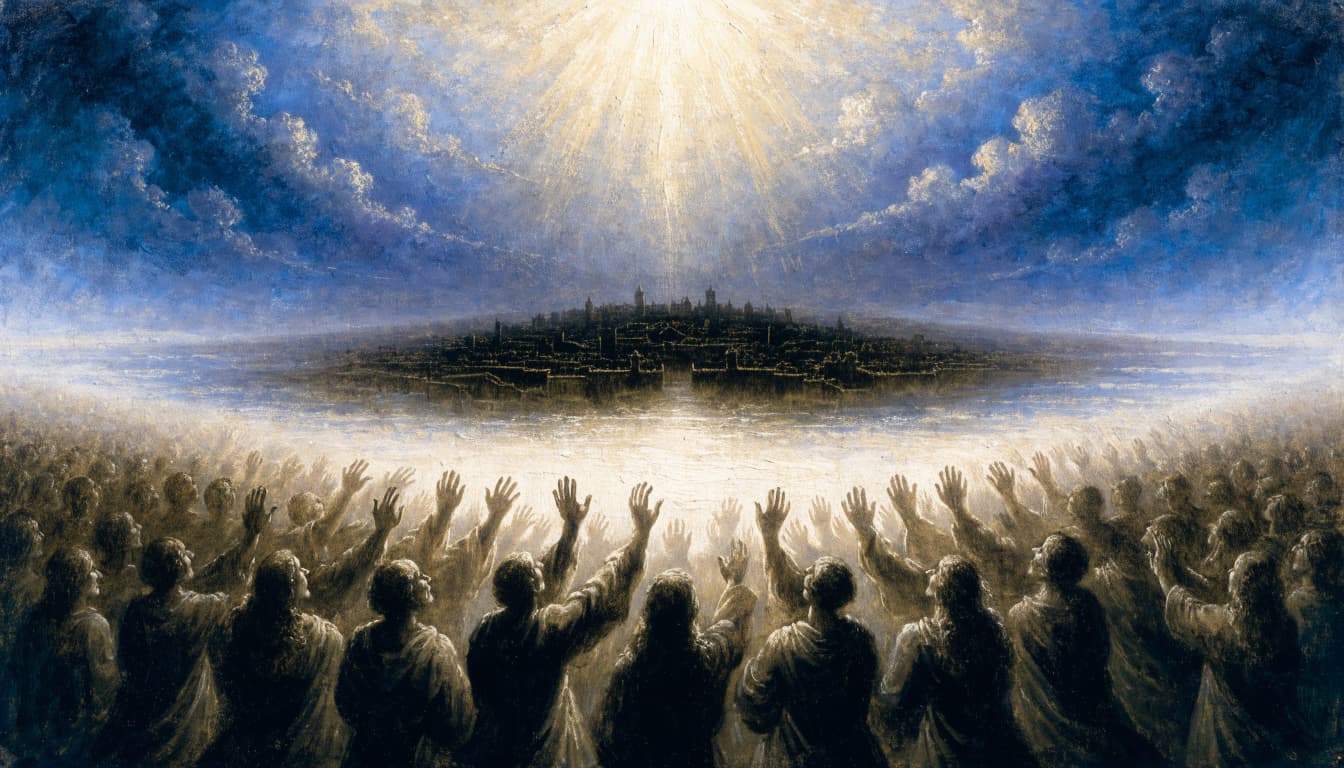
The opening verses of Revelation 19:1-5 show heaven responding to Babylon's fall with praise. The focus is God's salvation, glory, power, and justice. Heaven rejoices because evil has been judged and God has not forgotten His faithful people.
The hallelujahs point to God’s justice
The multitude praises God because His judgments are true and righteous. Babylon's fall means the power that persecuted God's servants has been brought to account. Their praise is not delight in suffering. It is relief and gratitude that injustice does not escape God's sight or have the final word.
That matters throughout Revelation, where God's people face pressure, deception, and death for their faith. The heavenly multitude remembers the blood of His servants and praises Him for judging their persecutors. Their suffering is neither invisible nor forgotten. God's justice answers the wrong done to them.
The heavenly perspective on Babylon's judgment helps us see why this response differs from the grief of those who profited from Babylon. They mourn the loss of power and wealth; heaven praises God because He has judged evil. We can read about Christ's triumph over Babylon's corrupt power with that contrast in view.
Worship belongs to God alone
After the multitude's praise, the twenty-four elders and four living creatures fall down and worship God, who sits on the throne. Their response is brief, but clear: all honor belongs to Him. Then a voice from the throne calls God's servants to praise Him, including those who fear Him, "small and great."
That call widens the circle. Praise is not reserved for the powerful, the prominent, or the people with public influence. Every servant of God is invited to honor Him. The passage moves from the heavenly multitude to the elders and living creatures, then to all God's servants. Every voice joins in worship.
We should keep that emphasis in view when judgment fills the scene. The spectacle of Babylon's fall can draw our attention, but the passage directs our eyes to the God who judges rightly and saves His people. Heaven's praise centers on who God is, not on punishment as entertainment. We can grieve the suffering caused by evil while still rejoicing that God sees, remembers, and acts.
What the Lamb’s marriage supper reveals about His people
John hears a sound like many waters and mighty thunder announcing that the Lord God reigns and the Lamb's marriage has come. The joy in this scene belongs to the Lamb and the people He has redeemed. Revelation points us toward their welcome and celebration, while leaving some questions about the event's timing unanswered. Read Revelation 19:6-10 with that focus in view.
The bride’s fine linen reflects faithful living
The bride is the redeemed people of God, gathered to the Lamb in covenant joy. John says she is granted fine linen, bright and clean, then explains what the linen represents: "the righteous acts of the saints." That detail matters. The passage connects the bride's clothing with the faithful lives of God's people.
Those acts are the fruit of faith, not a way to earn salvation. We belong to the Lamb because He has redeemed us; faithful obedience grows from that belonging. The linen is granted to the bride, and its meaning points to lives shaped by devotion to God. We shouldn't turn the image into a claim that people can buy their place at the wedding through good works.
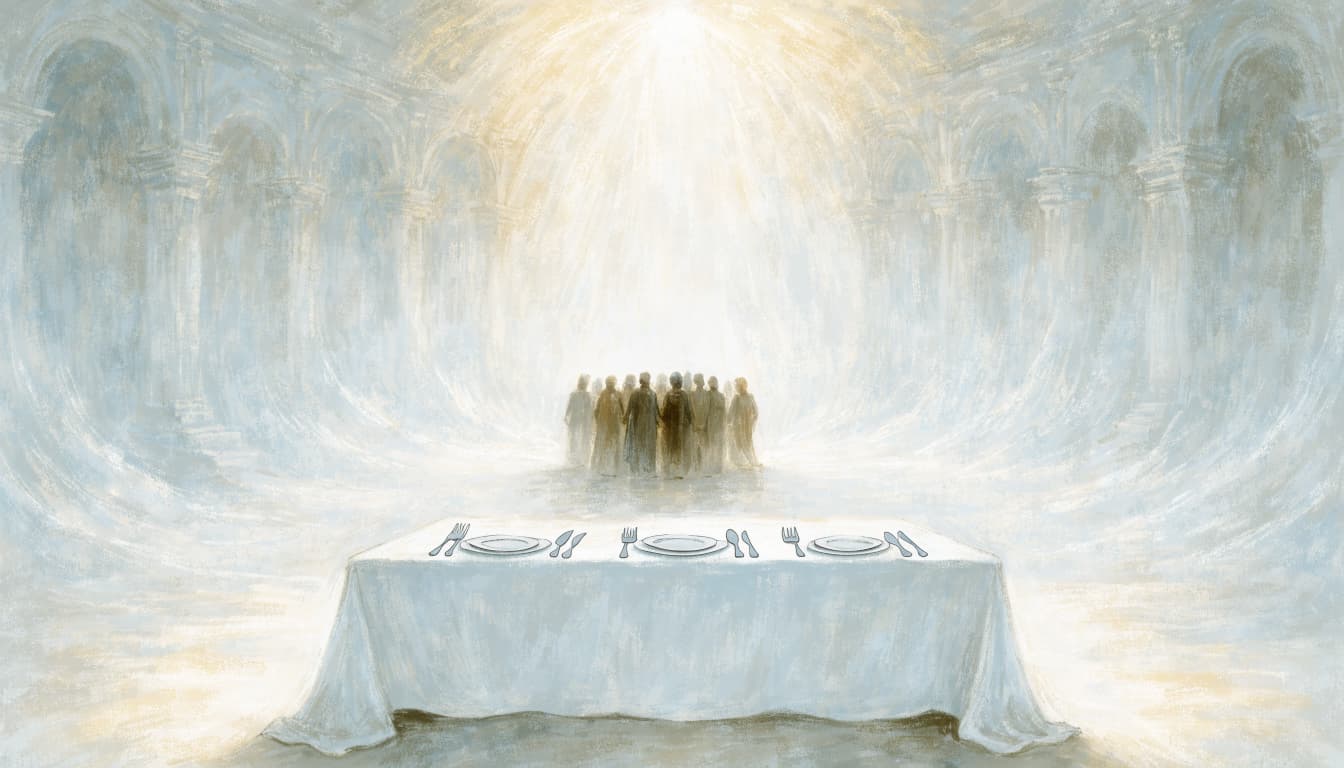
John also calls those invited to the marriage supper blessed. The bride and the invited guests both belong in this joyful picture, but the passage doesn't spell out every distinction between them. Christians differ about the supper's timing and who participates. Some connect it to Christ's return in a particular sequence; others understand the image differently. Revelation 19 announces the Lamb's wedding and blessing, but it doesn't settle every timeline question. We can hold firmly to the promise without claiming details the text leaves open. For a closer look at the Lamb's marriage supper and the testimony of Jesus, we can keep the chapter's central focus in view: the Lamb and His people.
The angel points John back to God
After hearing these words, John falls at the angel's feet to worship him. The angel refuses. He is a fellow servant, not the one who deserves worship, and he tells John to worship God. Even a messenger with a heavenly vision has no place at the center of our devotion.
Then the angel speaks of the "spirit of prophecy," connecting prophecy with the testimony of Jesus. The phrase points us back to Jesus: prophecy bears witness to Him. The angel's role is simply to deliver that witness and direct John's worship where it belongs. Revelation's vision is full of heavenly voices and signs, but the message leads us to God, and to the Lamb who brings His people into joy.
How ancient promises shape the vision of the coming King
Revelation 19 doesn't introduce a new kind of King. John's vision gathers promises already spoken through Israel's psalms and prophets, then identifies the rider as the One who fulfills them. We can read the scene with those promises in view and see Jesus as both the rightful King and the righteous Judge.
Psalm 2 and Daniel 7 promise a King with lasting rule
Psalm 2 pictures God's anointed King receiving the nations as His inheritance and ruling them with an iron rod. Revelation uses that same image for the rider: He strikes the nations and rules them with an iron rod (Psalm 2:8-9; Revelation 19:15-16). The connection is direct. The rider has royal authority over the nations, even when they resist Him.
Daniel's vision adds the promise of a Kingdom that will never end. One like the Son of Man receives dominion, glory, and a Kingdom, and all peoples and nations serve Him (Daniel 7:13-14). Revelation joins that everlasting authority to the rider's judgment of evil. He isn't simply a warrior who wins one battle. He is the promised King whose rule has no end. We can see how Old Testament prophecy points to Jesus through these royal promises.
Isaiah’s divine warrior helps explain the stained robe
John says the rider wears a robe dipped in blood, then describes Him treading the winepress of God's wrath. Isaiah gives us a powerful background for that image. The prophet sees a divine warrior coming from Edom with garments stained from treading the winepress, bringing judgment against the nations (Isaiah 63:1-6).
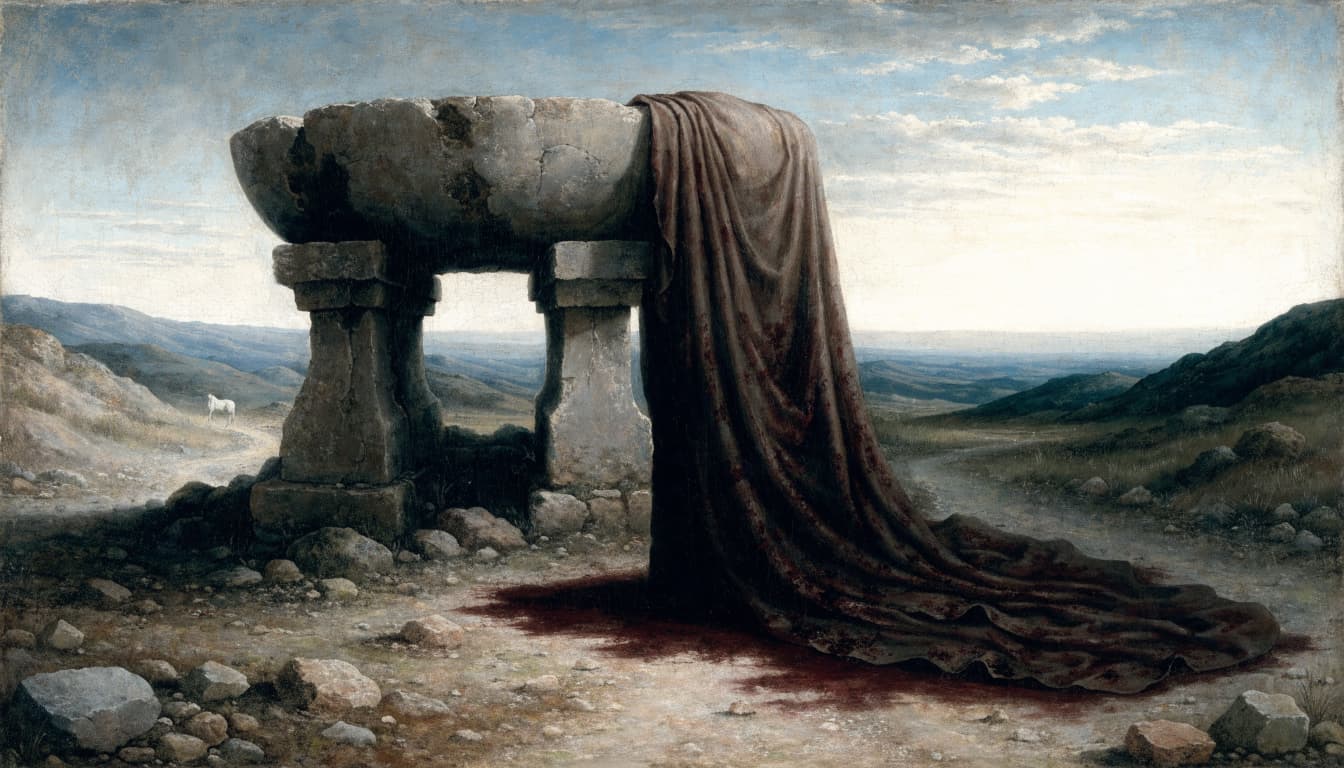
The shared picture is clear: God comes as Judge, and His enemies cannot stop His judgment. Still, Revelation doesn't explicitly identify whose blood stains the rider's robe. We shouldn't claim more than John tells us. The Isaiah connection helps explain the garment and winepress as images of divine judgment, without settling that unanswered question.
The scene also looks ahead to the birds gathered for a feast on the defeated armies. That grim image echoes Ezekiel's prophecy of a feast after the defeat of Gog (Ezekiel 39:17-20). We'll return to that connection when we look more closely at the battle. Together, these prophetic images show the rider as Jesus, the promised King who rules the nations and judges evil.
What the rider on the white horse shows about Jesus
John's vision in Revelation 19:11-16 presents Jesus as the promised King who judges evil with complete authority. The images are vivid, but their message is clear: His victory comes through truth and righteousness, not human aggression.
His names reveal truth, authority, and victory
Heaven opens, and the rider appears on a white horse. John calls Him Faithful and True. Those names directly contrast with the beast and false prophet, who deceive and make false claims. Jesus speaks and judges truthfully. He is the rider on the white horse, the King whose word can be trusted.
John also says the rider has a name known only to Himself. That does not make His other titles unclear. He is called the Word of God, and the name on His robe and thigh is King of kings and Lord of lords. We know His character and authority through these titles, even while one name remains His alone.
His eyes are like a flame of fire, and many crowns rest on His head. The fiery eyes portray His penetrating judgment; the crowns show His rule exceeds every earthly claim to power. The image echoes Psalm 2, where God's anointed King receives authority over the nations (Psalm 2:8-9). The armies of heaven follow Him, dressed in clean white linen. John gives us that detail, but does not identify every member of the army. We can stay with what the passage says.
The sword from His mouth represents His word
A sharp sword comes from the rider's mouth. The image points to His decisive word and authority, not to a weapon He carries in His hand. He judges the nations by the command of His mouth. The passage's language recalls the sharpness and force of God's word, and the battle ends without a drawn-out contest.
Jesus rules the nations with an iron rod, an image of firm, unchallenged authority. He also treads the winepress of God's fierce judgment. These pictures can feel severe, but John presents the rider's warfare as righteous judgment against evil, not an endorsement of human violence. His robe bears the title that makes His authority plain: King of kings and Lord of lords. For readers comparing the chapter's prophetic images, a commentary on Revelation offers another resource, while the passage itself keeps our focus on the rightful King.
How the beast and false prophet meet their end
Revelation 19:17-21 brings the chapter's visions of celebration and judgment into sharp contrast. One feast welcomes the Lamb's people; the other pictures the defeat of those who oppose God. The passage shows where allegiance leads, without giving us a detailed battle plan.
Two feasts set two different outcomes side by side
The first feast is the marriage supper of the Lamb, announced with joy earlier in the chapter. The second begins when an angel standing in the sun calls the birds to gather and eat the flesh of kings, commanders, mighty men, horses, riders, and people of every status. The contrast is hard to miss: the Lamb welcomes His people, while the birds feast on the defeated armies.
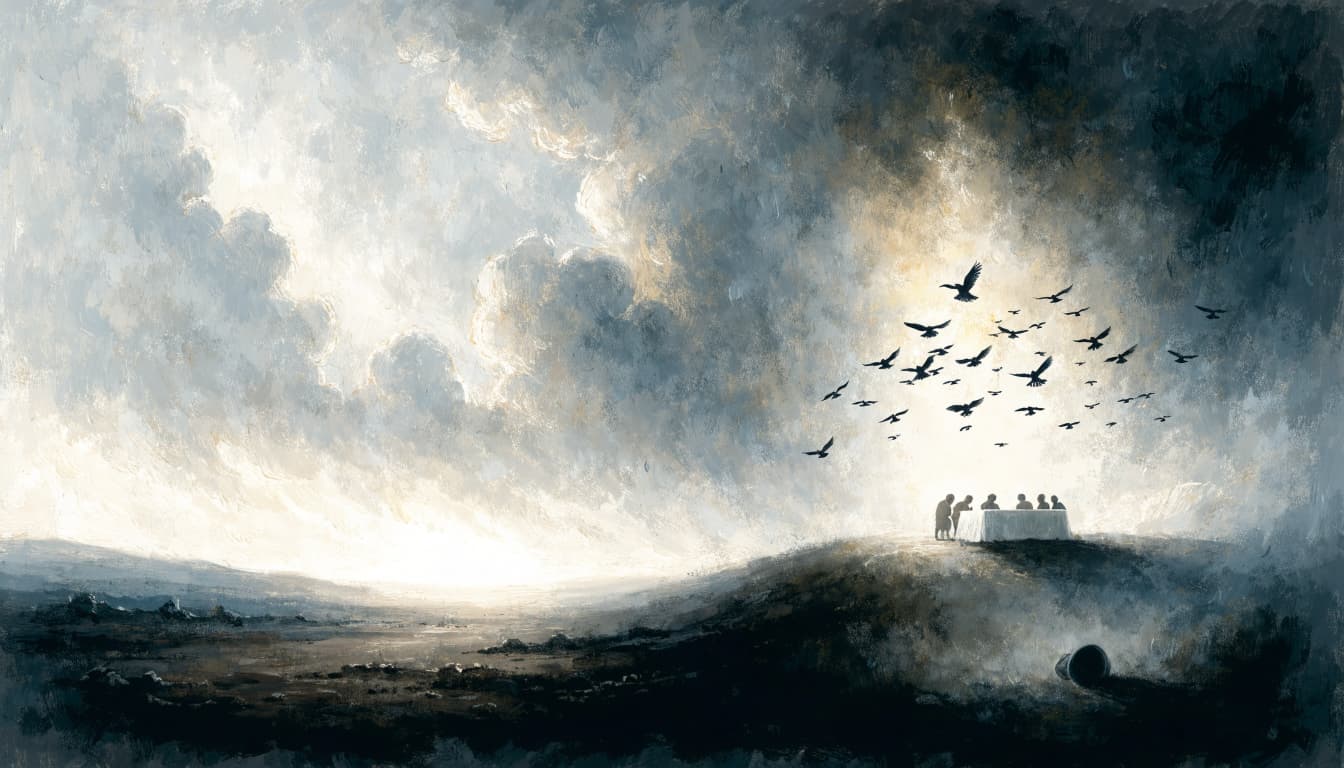
John's image recalls Ezekiel 39:17-20, where God summons birds and wild animals to a great feast after the defeat of Gog. In both passages, the feast shows that the enemy's power has ended. It is a stark image of judgment, not an invitation to take pleasure in violence.
These two feasts invite us to consider where we place our allegiance. Revelation presents lasting joy with the Lamb and judgment for those who gather against Him. The chapter's bird imagery also recalls Matthew 24's warning about the gathered birds, another passage where birds appear in a scene of judgment.
The rider defeats deception and opposition
John says the beast, the kings of the earth, and their armies gather to make war against the rider and His army. The false prophet is identified by the signs he performed in the beast's presence. Through those signs, he deceived people who received the beast's mark and worshiped its image. Deception draws people into false worship, but it cannot overturn Jesus' authority.
The outcome is brief and decisive. The beast and false prophet are captured and thrown alive into the lake of fire burning with sulfur. The rest are killed by the sword from the rider's mouth, and the birds gorge on their flesh. The sword recalls the rider's word and authority, already described earlier in the chapter. The beast and false prophet deceive through signs; Jesus judges with truth.
We should read the scene as John gives it. He doesn't describe troop movements or explain how the armies fight. The vision shows that the powers opposing God cannot resist the rider. Read Revelation 19:17-21 with that central point in view: deception and earthly power have an end, and Jesus is victorious.
What Revelation 19 means for faith, hope, and the Kingdom
Revelation 19 moves us from heaven's worship to the Lamb's victory. Its message for Christians today is clear: worship God, remain faithful to Jesus, and trust that evil will not have the final word.
Worship God and remain faithful
The heavenly praise in Revelation 19:1-5 reminds us that worship belongs to God, not to earthly powers or impressive spiritual messengers. The angel refuses John's worship and directs him to God. That matters when public voices, political power, or even religious personalities compete for our devotion. We keep our eyes on the One who saves and judges rightly.
The bride's fine linen is connected with the righteous acts of God's people. Our obedience doesn't purchase salvation, but it does grow from belonging to Jesus. As Spirit-filled Christians, we believe the Holy Spirit empowers us to live faithfully and bear witness to Christ. Revelation doesn't promise that faithfulness will make life easy. It calls us to keep following Jesus when deception and pressure make compromise seem simpler.
Trust Jesus’ judgment and hold to hope
The rider is called Faithful and True, and He judges in righteousness (Revelation 19:11-16). That gives us reason to trust His judgment, even when injustice seems to go unanswered now. We don't need to repay evil with evil or pretend that every wrong has already been set right. Jesus sees what is hidden, and His authority is greater than the powers arrayed against Him.
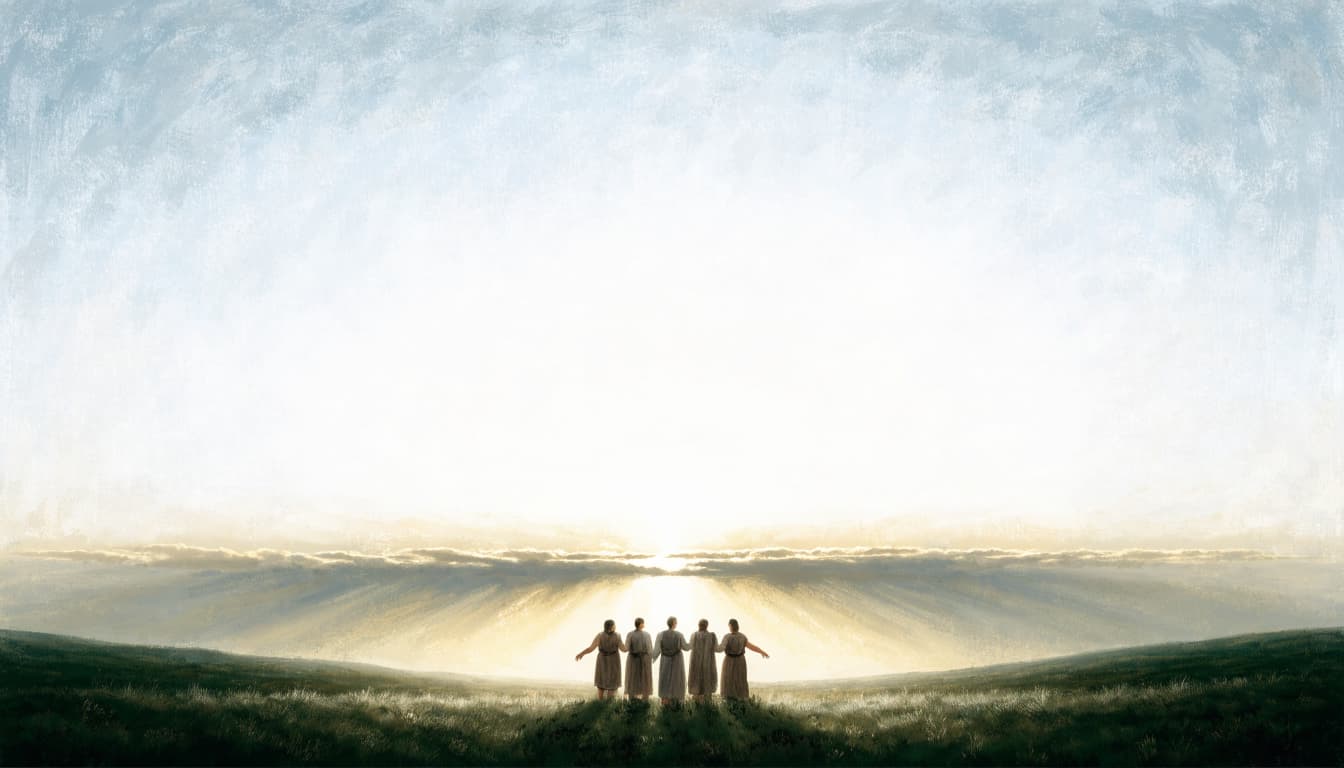
The chapter ends with the defeat of the beast and false prophet. Their deceptive power has an end; the King's victory does not. That is Christian hope, not a reason to celebrate human suffering. We can grieve evil and still trust that Jesus will judge it without error. His Kingdom is not threatened by the noise of the present age.
Revelation 20 and the millennium
Revelation 20:1-6 introduces the thousand-year reign, and Christians read its relation to Revelation 19 in different ways. Premillennial interpreters generally see Jesus' return and the beast's defeat followed by a future thousand-year reign. Amillennial interpreters generally understand the millennium as Christ's present reign during the church age, with Revelation 20 revisiting the final conflict from another angle. Postmillennial interpreters also place the millennium before Christ's return, but expect a period of Gospel flourishing before He comes. The three main views of the millennium help explain the differences.
The visions' sequence alone doesn't settle every timing question. We can hold our millennial views with conviction and humility, while keeping Revelation 19's main assurance in view: Jesus reigns, and His victory is sure.
Conclusion
Revelation 19 carries us from heaven's praise to the Lamb's wedding, then to the rider whose name is Faithful and True. The chapter keeps our focus on God's justice and Jesus' victory over the powers that oppose Him.
The angel's words to John are still a fitting close: worship God. We can trust Jesus, give God alone our worship, and remain faithful as we wait for the King whose victory is sure.
A Christ-Centered Guide to Scripture
How to Read Biblical Prophecy Through Christ
Discover how the promises of Scripture point to Jesus—and how reading prophecy in light of His life, death, resurrection, and return brings its message into focus.
See how prophecy finds its meaning in Jesus
Explore More Prophecies That Point to Jesus
See the Bigger Picture Through Christ
Keep tracing Scripture’s promises from the prophets to their fulfillment in Jesus. Explore more Bible Prophecy Ministries teachings to deepen your understanding of what God has done and what He has promised to do.