
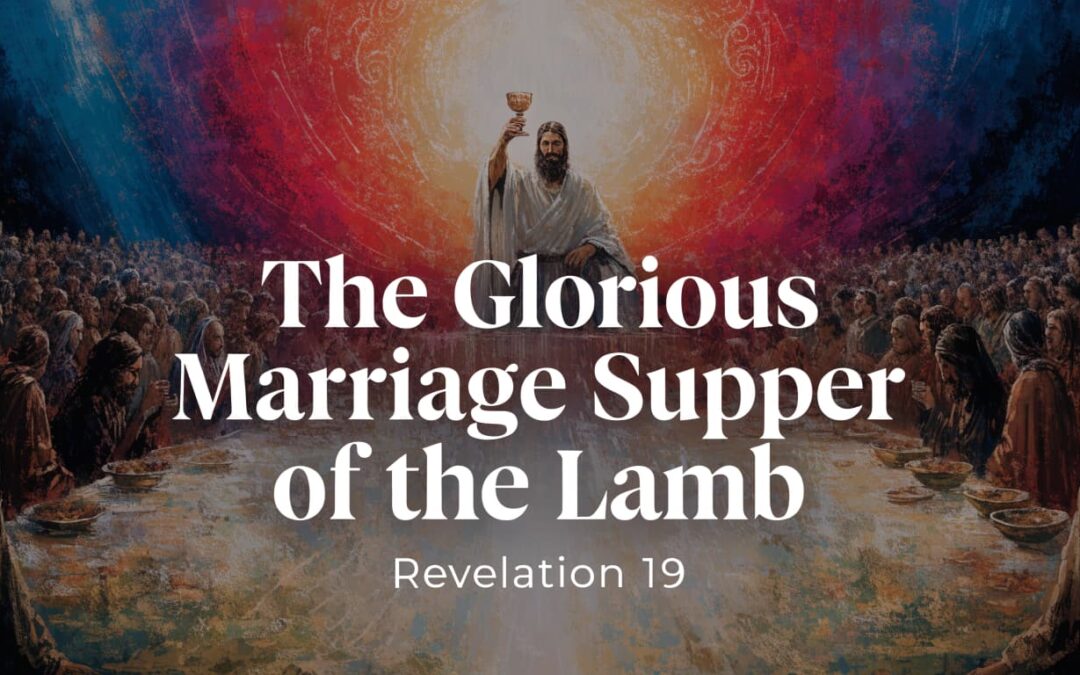
Revelation 19 Explained: Heaven’s Praise and Christ’s Victory
After Babylon falls and the earth mourns, Heaven answers with praise. Revelation 19 celebrates God's just judgment, announces the Lamb's marriage supper, and reveals Jesus returning as Faithful and True.
We'll read Revelation 19 from a Spirit-filled Pentecostal perspective, while recognizing that Christians differ on some end-times details. Let's follow the chapter's movement and see why its message points to the victory of Christ. We'll also look at Babylon's fall and Christ's victory.
Heaven Rejoices; Christ Returns in Revelation 19
Revelation 19 opens with praise in Heaven, then moves toward the Lamb's wedding and Christ's return as King. That first scene answers the sorrow of Revelation 18: Babylon's power has collapsed, but the chapter doesn't leave us focused on destruction. It turns our attention to God's salvation, justice, and authority.
Why Babylon’s fall leads to praise
In Revelation 18, Babylon is a corrupting power that draws people into rebellion and grows rich through injustice. The chapter also describes her persecution of God's people. Christians interpret Babylon's image in different ways. Some connect it chiefly with ancient Rome, while others see a recurring system of political, economic, and religious power, or a future end-time power.
When Heaven responds in Revelation 19:1-5, the multitude praises God because His judgments are true and righteous. The praise is about God saving and vindicating His servants, not about taking personal pleasure in anyone's suffering. We can grieve the harm evil causes and still rejoice that evil does not escape God's judgment.
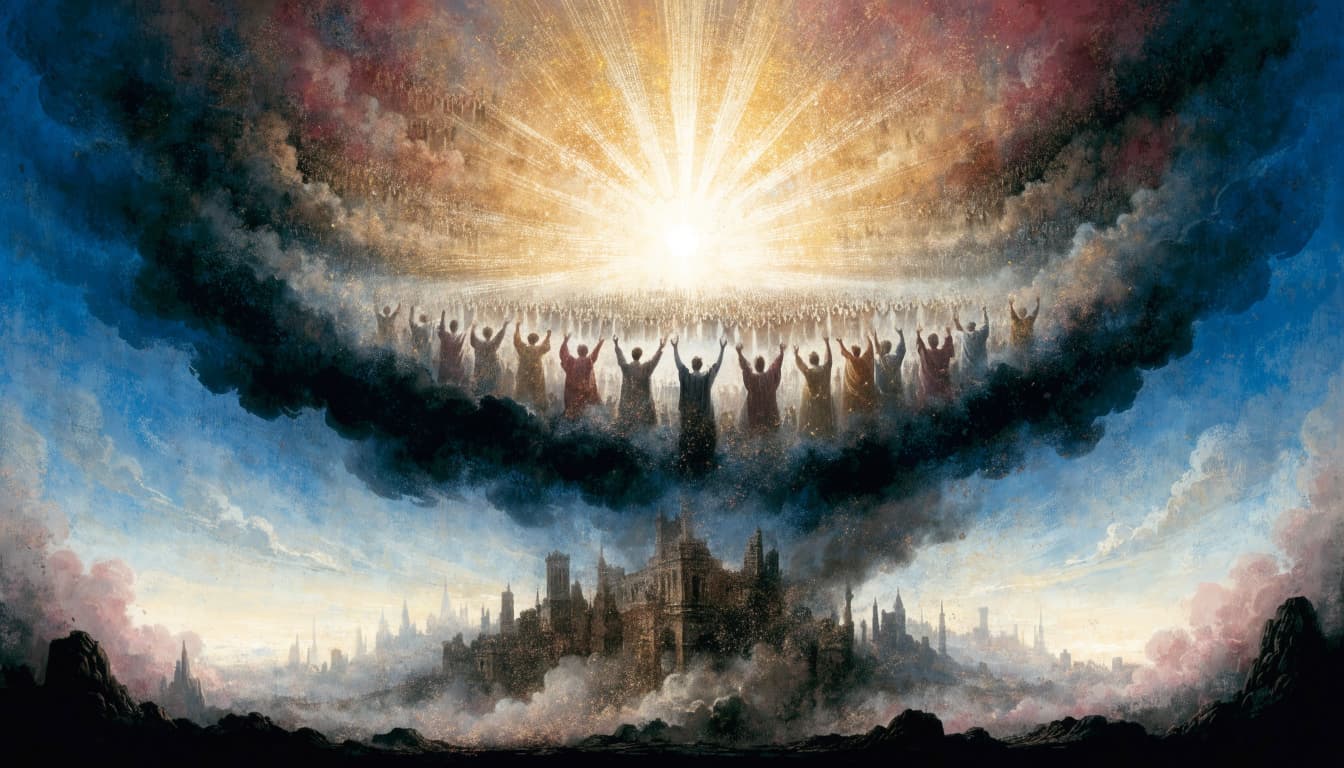
That distinction matters. The heavenly praise does not tell us to seek revenge; it tells us to trust God's justice. As Ligonier's reflection on Babylon's fall notes, the scene can be difficult to hear alongside Scripture's call to love. Revelation keeps the focus on God's righteous response to oppression, not on human vengeance. We see that same emphasis in God's judgment in Revelation 19.
Who joins the heavenly chorus?
John hears a great multitude praising God. Then the twenty-four elders and four living creatures fall down and worship Him. A voice from the throne calls for all God's servants to praise Him, "both small and great." The picture widens: no rank or earthly status puts anyone beyond God's call to worship.
The voices in this scene are different, but their focus is the same. They honor God's salvation, glory, power, and righteous rule. Babylon once appeared powerful, but its collapse makes clear that no earthly authority outranks God. In Revelation 19, Heaven's chorus points past the fallen empire and back to the One who reigns.
What Revelation 19 teaches about God’s just judgment
The praise in Heaven rests on more than Babylon's defeat. The worshipers declare that God's judgments are true and righteous because His character is holy, His power is unmatched, and He sees what evil does to His servants. Revelation 19:1-5 gives us the chapter's central claim: God judges evil without becoming unjust Himself.
Praise is rooted in God’s character
The heavenly multitude praises God as the One whose judgments are true and righteous. That matters because God's justice isn't a separate quality from His holiness or love. He opposes corruption because He is holy, and He brings oppression to account because He sees and cares for those who serve Him.
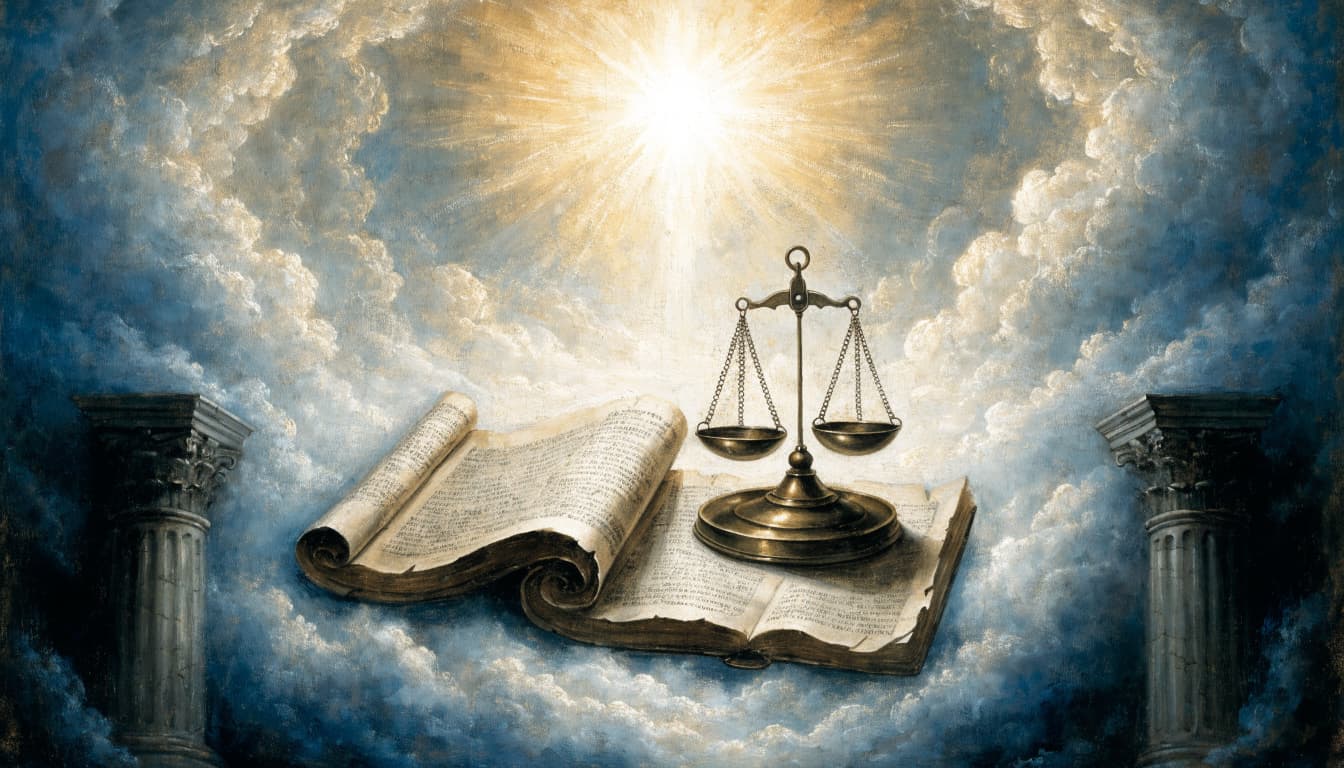
For believers who suffer under evil, vindication matters. Revelation doesn't treat their pain as invisible or unimportant. Babylon's power had corrupted the earth and shed the blood of God's servants; now Heaven praises God because that power does not escape His judgment. We can grieve what people have endured while trusting that God sees the wrong and will judge it rightly.
That trust doesn't mean we can explain every painful event or answer every question about why suffering lasts. Revelation gives us a promise about God's final judgment, not a simple explanation for every tragedy. And judgment belongs to God. We aren't called to take revenge or celebrate another person's suffering. As we consider God's justice and faithful witness, we see the passage directing our hope toward God's action, not human retaliation.
How to read the images without losing the main point
Revelation uses vivid apocalyptic images to reveal spiritual realities and announce God's victory. We should take those images seriously, but we also need to be careful not to claim more than the text tells us. Babylon is portrayed as a corrupting, persecuting power. Interpreters differ over whether she points chiefly to ancient Rome, a recurring system of power, or a future end-time power. The chapter's judgment remains clear even where her precise identity is debated.
The image of Babylon's smoke rising forever can be difficult to read. The passage uses it to portray the permanence and finality of her judgment. Christians debate how the image relates to the nature and scope of final punishment, but that debate doesn't give us permission to soften the text or use it to justify cruelty and hatred. God's judgment is His, and Revelation's worshipers praise His righteousness, not their own power to punish.
So we can hold two things together: evil will answer to God, and we must not claim His authority for ourselves. The passage calls us to trust the righteous Judge, remain faithful, and worship God alone.
The Marriage Supper of the Lamb Points to Lasting Hope
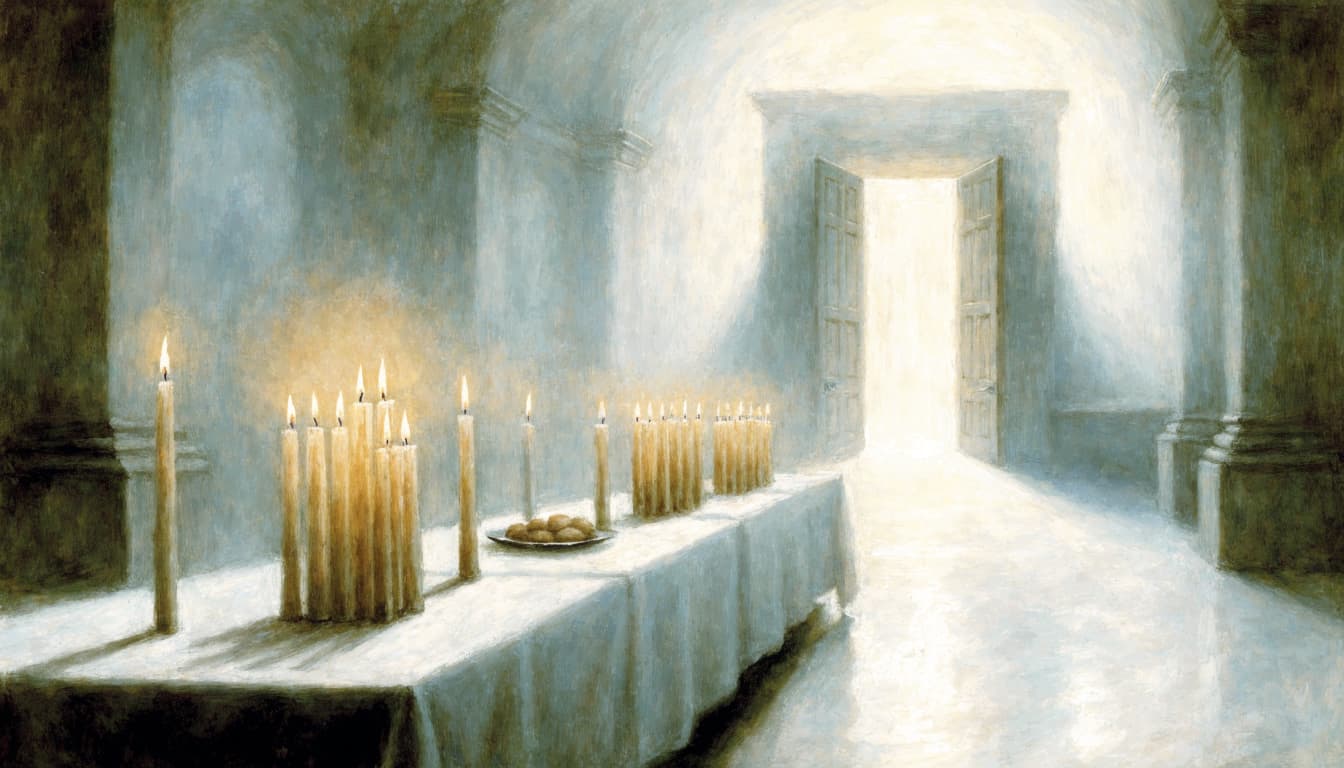
After Heaven praises God for His righteous judgment, the scene turns to a wedding feast. In Revelation 19:6-10, the multitude announces that the Lamb's marriage has come and His bride is ready. For Christians facing hardship or uncertainty, that announcement points to a future defined by belonging to Christ, not by the powers that oppose Him.
Who are the bride and the invited guests?
Christians commonly understand the bride as the people of God, joined to Christ in a covenant relationship. Paul uses the picture of marriage when he writes about Christ's love for the church in Ephesians 5:25-32. John the Baptist also describes himself as the friend of the bridegroom, not the bridegroom, in John 3:29. These passages help us see why wedding imagery can describe the joy and closeness of Christ and His people.
Revelation 19 also calls those invited to the marriage supper blessed. The text refers to the bride and the invited guests distinctly, but it doesn't explain every detail of how those images relate. Christians have offered different interpretations, so we should be careful not to turn one explanation into a certainty. The central promise is clear: God welcomes His people to share in the Lamb's victory and joy. We can hold on to that hope without settling every question about the wedding scene.
For another look at the bride's readiness and the saints' righteous deeds, we can keep both the wedding image and its promise in view.
What the wedding clothes say about faithful living
John says the bride is given clean, bright linen, then explains that the linen is "the righteous acts of the saints." The image brings God's grace and faithful living together. The bride is given her garment, yet the garment also points to the way God's people live.
Good works don't purchase salvation or earn a place with Christ. We belong to Him because of His grace, and faithful conduct grows from that relationship. In this passage, readiness isn't a claim that the saints have made themselves worthy apart from God. Their lives show the fruit of belonging to the Lamb.
That matters in a chapter filled with judgment and conflict. Revelation doesn't leave the faithful with fear alone. It pictures them prepared for the Lamb's celebration, and it reminds us that serving God now has meaning.
Why John is told to worship God alone
After the angel tells John that those invited to the supper are blessed, John falls at the angel's feet to worship him. The angel stops him at once: "Worship God!" He is a fellow servant, not someone who should receive the worship that belongs to God.
The correction is direct for a reason. Even a heavenly messenger must not take God's place. We honor Jesus as the Lamb and the victorious King, while keeping worship directed to God alone. John is also told that "the testimony of Jesus is the spirit of prophecy," which keeps the focus on Christ rather than the messenger.
The marriage supper offers lasting hope, and John's correction keeps that hope centered where it belongs: with God and the Lamb.
Faithful and True reveals who Jesus is
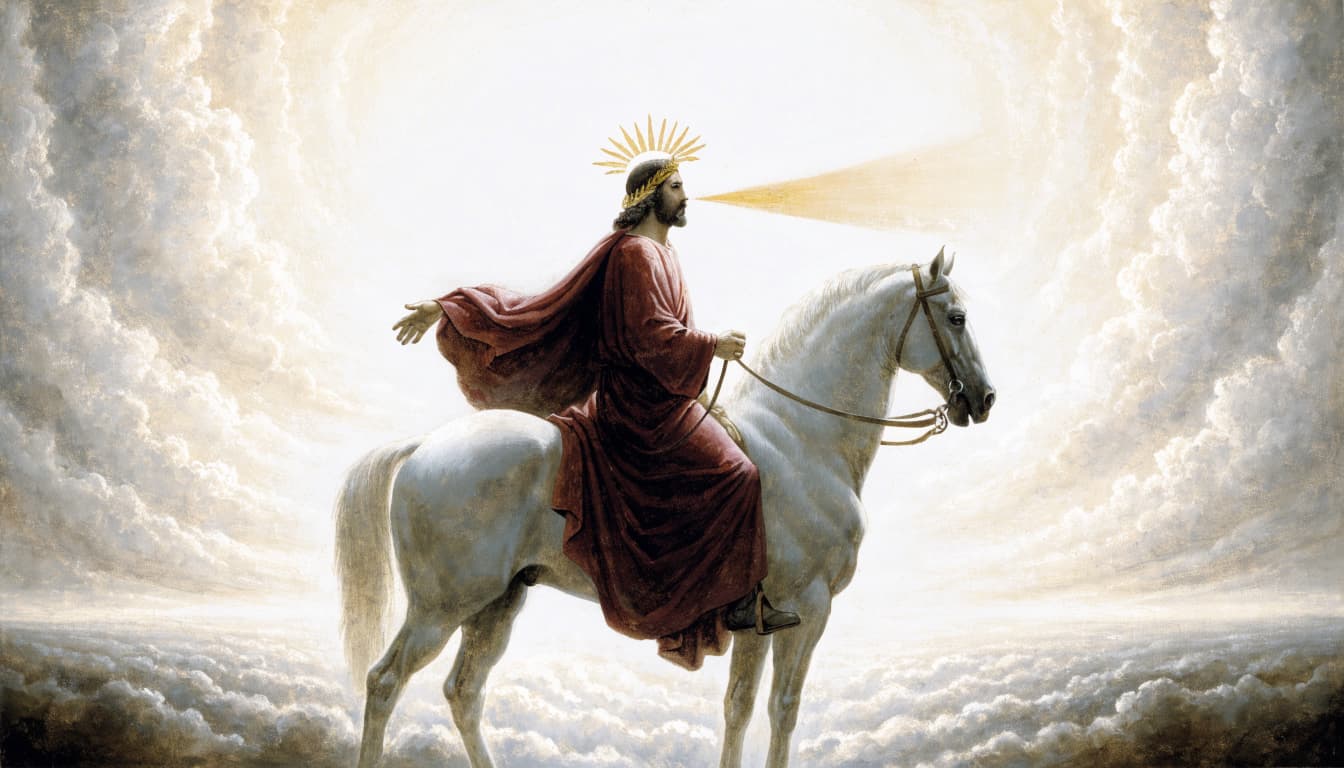
In Revelation 19:11-16, Heaven opens and John sees a rider on a white horse. The vision moves our attention from Babylon's defeat to the One who reigns over every power. His titles and images show us who He is: faithful, righteous, and fully authoritative.
The rider judges and makes war in righteousness
John calls the rider "Faithful and True" and says He judges and makes war in righteousness (Revelation 19:11). The title tells us His judgment matches His character. He does not act from corruption, pride, or a desire for personal gain. His return is a decisive act of divine authority, bringing the powers that oppose God to account.
The white horse and the scene of battle can prompt questions about how to read Revelation's imagery. Christians differ on the timing and details of Christ's return, and we should avoid treating every symbol as a prediction of a specific earthly event. The passage makes its central point plainly: Jesus will judge evil, and no opposing power can overturn His rule.
The names and symbols point to Christ’s authority
The rider wears many crowns, a picture of royal authority beyond the reach of earthly rulers. He also has a name known only to Himself. John doesn't explain that name, so we shouldn't claim to know more than the text reveals. The passage gives us other titles that make His identity and authority clear.
John calls Him "The Word of God." That title connects with John 1:1-14, where the Word is with God, is God, and becomes flesh. We understand the Rider as Jesus Christ, God's Word revealed in human life. His authority is not separate from God's character. He speaks and acts with divine authority.
A sword comes from the Rider's mouth. The image points to His word of judgment, not to a conventional picture of warfare. Jesus defeats His enemies by the authority of His word. The same vision says He rules the nations with an iron rod, echoing Psalm 2:7-9. The picture is of a King whose rule cannot be broken or resisted.
Isaiah also describes the promised ruler judging the poor with righteousness and striking the earth with the rod of His mouth (Isaiah 11:4). Revelation draws on that image to show that Christ's judgment is just, and His word carries the authority to bring it about. His final title leaves no room for rival sovereignty: "KING OF KINGS AND LORD OF LORDS." We can read more about Jesus' supreme authority in Revelation 19, while keeping our focus on the text's clear claim: Christ reigns above every earthly power.
Christ Defeats the Beast and Every Power Opposed to God
Revelation 19 now shows what happens when the King of Kings confronts the powers gathered against Him. In verses 17–21, John uses stark images to declare the end of their opposition. The scene is not a modern military strategy; it portrays the final defeat of evil by Christ's authority.
The great supper contrasts with the Lamb’s wedding feast
An angel standing in the sun summons the birds to gather for "the supper of the great God" (Revelation 19:17–18). The words echo the joyful marriage supper earlier in the chapter, but the two feasts point to very different outcomes. The Lamb's supper celebrates the joy of belonging to Christ. The birds' feast warns that those who persist in opposing God will face judgment.
John's image is disturbing, but we don't need to add graphic details to understand its force. The proud rulers who seemed untouchable are exposed as powerless before God. The warning is serious: earthly authority cannot protect anyone who sets themselves against Him.
The beast and false prophet cannot overcome Christ
John next sees the beast, the kings of the earth, and their armies gathered to make war against the Rider and His army. Revelation does not describe a balanced contest. The beast gathers earthly power, but it cannot rival Christ. Earlier, Revelation 16:13–16 describes the gathering of kings for battle, while Revelation 17:14 says the Lamb will overcome them. Revelation 19 brings that declaration into focus.
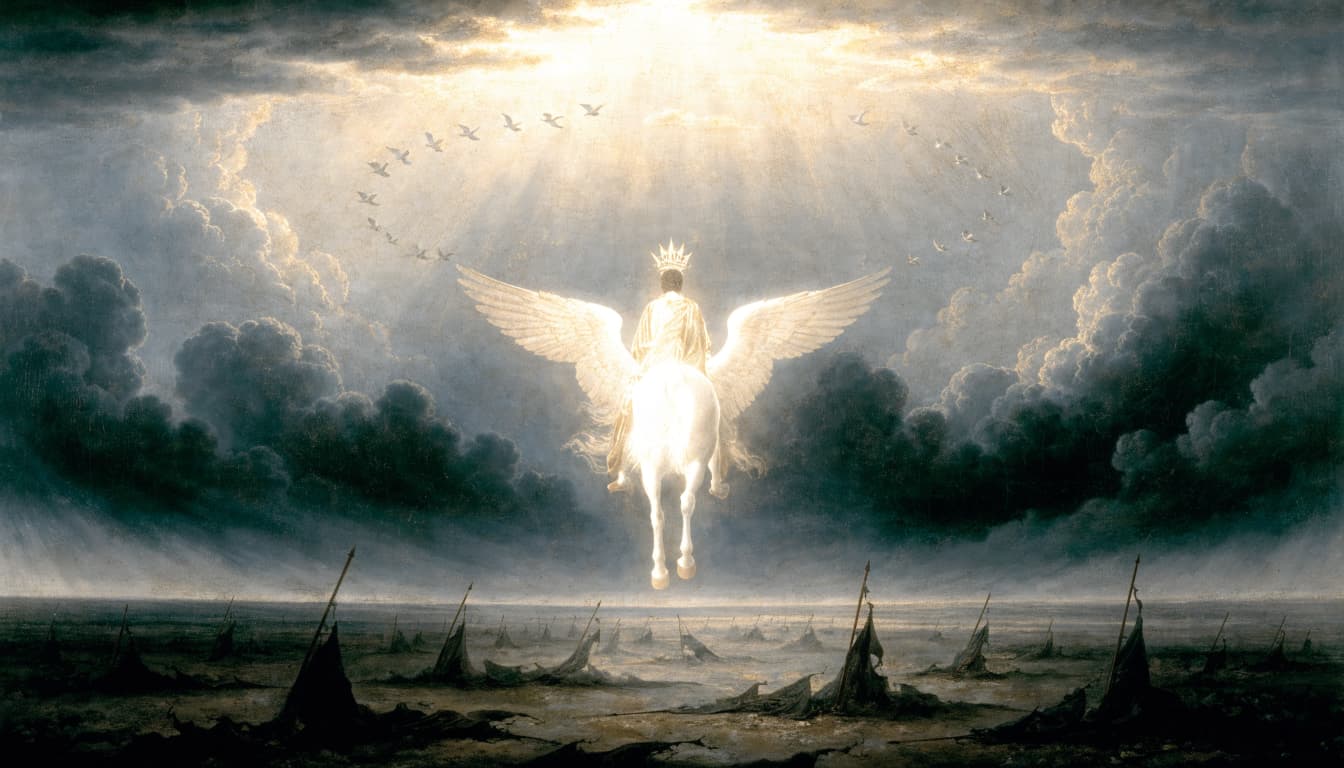
The beast and false prophet are captured. The false prophet had deceived people through signs and directed them toward the beast's image. Both are thrown alive into the lake of fire. Then the rest of the gathered forces are defeated by the sword from the Rider's mouth, the same image John used earlier for Christ's authoritative word.
That order matters. The beast and false prophet are captured first; their assembled forces cannot save them. Christ's victory is decisive, and the passage gives no hint that evil can regroup or reclaim its rule. We can read a further explanation of Christ's victory over the beast and false prophet, while keeping the focus here on John's clear point: every power opposed to God must answer to Christ.
Some Christians understand the battle's imagery in different ways, but Revelation's central claim is plain. The Rider judges righteously, and no earthly ruler can overturn His authority. As one commentary on Revelation 19:17–21 explains, the passage presents Christ's victory over the beast and its forces. The grim supper warns those who oppose God; the Lamb's marriage feast promises joy to those who belong to Him.
How Christians understand the prophecy and live in light of it
Revelation 19 gives Christians plenty to discuss about the timing and imagery of Christ's return. But we don't have to settle every end-times question to hear the chapter's clear message: Jesus wins, God judges justly, and His people are called to remain faithful.
Where interpretations differ and where the text is clear
Many evangelical premillennial readers understand Christ's appearance in Revelation 19:11-21 as His future, visible return. They place the battle before Christ's millennial reign, described in Revelation 20:1-6. Other evangelical readers understand parts of the battle imagery symbolically, as apocalyptic language for Christ's decisive victory over evil. Christians also differ within these broad approaches. Pentecostal believers don't all hold the same timeline.
These differences deserve honest discussion, but they shouldn't turn into a test of whether someone truly trusts Jesus. Christians who hold different views can still agree that the passage presents Christ as the righteous King and His opposition as unable to defeat Him. For an overview of the main views of the millennium, we can compare how readers understand the timing without losing sight of the chapter itself.
The text is clear about what matters most: Christ has authority, God brings evil to judgment, and the faithful are called to worship God alone. We can hold our interpretations with conviction while leaving room for humility where Scripture does not give every detail.
What this vision calls believers to do now
So, how should we live while we wait? Revelation points us toward worship, patient endurance, holy conduct, and hope in Christ's return. The vision doesn't invite us to become obsessed with guessing dates or identifying every headline as a prophetic sign. It turns our attention to Jesus, whose victory is certain even when the world around us looks unsettled.
Worship keeps our loyalty fixed on God. Patient endurance means staying faithful when following Jesus brings pressure, and holy conduct means our daily choices should fit the hope we confess. We don't need to answer hostility with revenge. Judgment belongs to Christ, so we can speak truth, show mercy, and keep bearing witness with courage.
We believe the Holy Spirit still empowers believers to testify about Jesus. That witness includes our words, but it also shows in how we treat people and resist the pull to compromise. As we consider Christ's faithful witness and promised return, we can let hope shape the way we live now. The King is coming, and until then, we worship God, remain faithful, and do good.
Conclusion
Revelation 19 turns mourning into praise. Heaven celebrates God's righteous judgment, the Lamb's marriage supper draws near, and Jesus appears as Faithful and True to defeat every power opposed to Him.
The chapter leaves us with steady hope: evil will not have the final word. We may differ on details of Christ's return, but we can worship God and remain faithful, trusting in the victory of Jesus, the Faithful and True King.
A Bible Prophecy Study
Revelation 19 Explained: Heaven’s Praise and Christ’s Victory
Follow heaven’s hallelujahs, the marriage supper of the Lamb, and the triumphant return of Jesus Christ in this Scripture-grounded guide to Revelation 19.
See why Heaven rejoices when the King of kings comes to reign
From Heaven’s Hallelujahs to the Rider on the White Horse
Revelation 19 opens with a great multitude in Heaven praising God because His judgments are true and just (Revelation 19:1–3). The fall of Babylon, described in Revelation 17–18, gives way to repeated cries of “Hallelujah!” as the twenty-four elders and living creatures worship before the throne. Their praise reaches a joyful announcement: the marriage of the Lamb has come, and His bride has made herself ready. Clothed in fine linen that represents the righteous deeds of the saints, she is invited to the marriage supper of the Lamb (Revelation 19:6–9). This celebration points to the enduring relationship between Christ and His people, anticipated in Ephesians 5:25–27.
The scene then shifts from celebration to victory. Heaven opens, and Jesus appears on a white horse, called Faithful and True. He judges and makes war in righteousness; His name is the Word of God, and on His robe and thigh is written “King of kings and Lord of lords” (Revelation 19:11–16). His title recalls John 1:1, while His rule fulfills the promised reign of the Messiah pictured in Psalm 2:7–9. The beast and the false prophet are defeated, and the armies gathered against Christ cannot stand before Him (Revelation 19:19–21). Revelation 19 therefore calls readers to more than speculation about future events: it directs their hope toward Jesus, whose return brings God’s righteous judgment and confirms His promised victory.
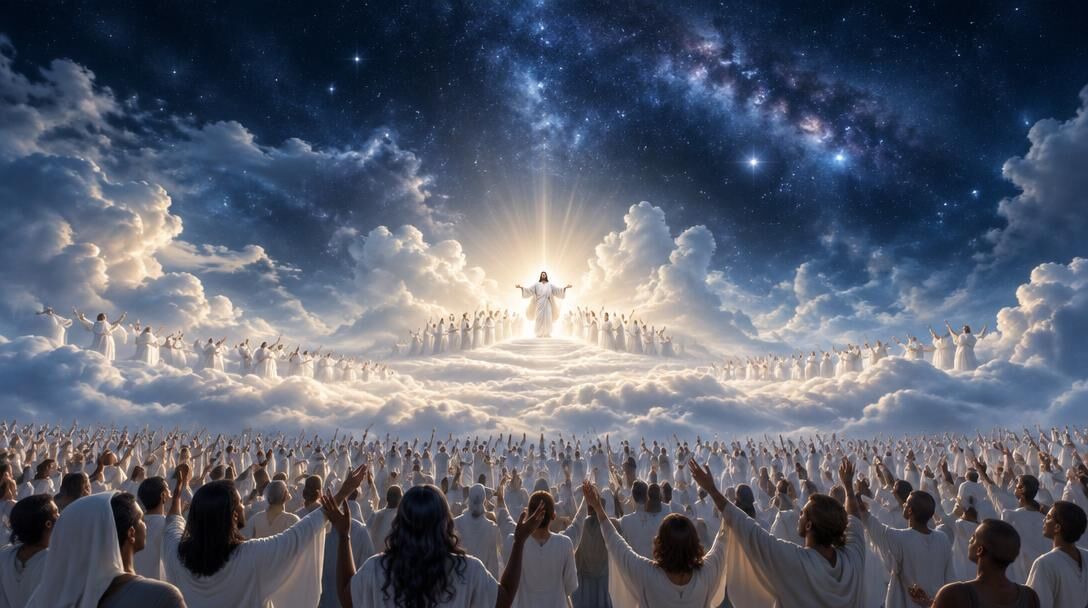
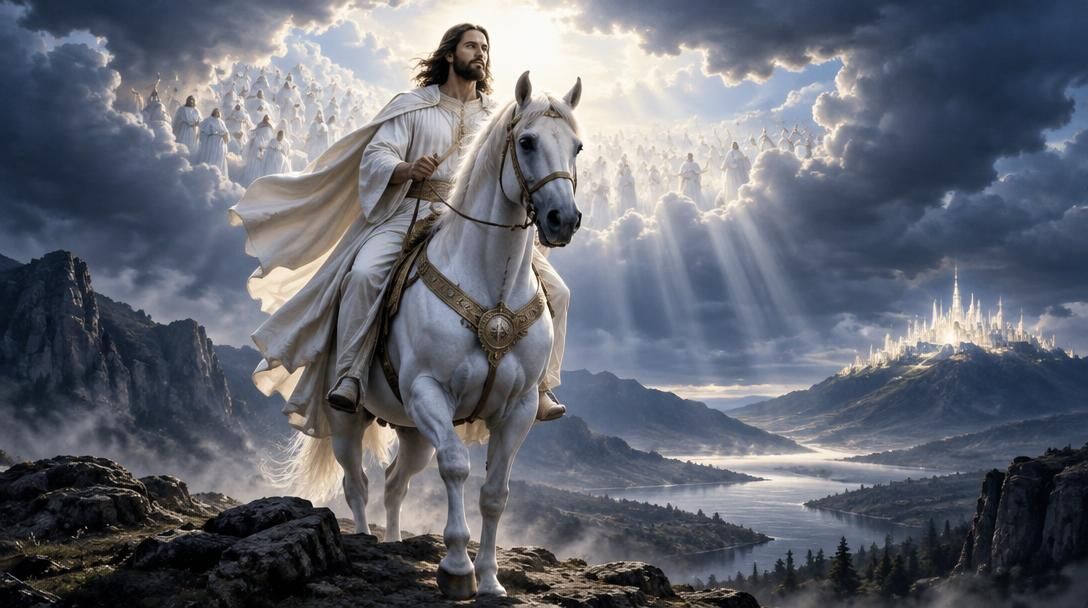
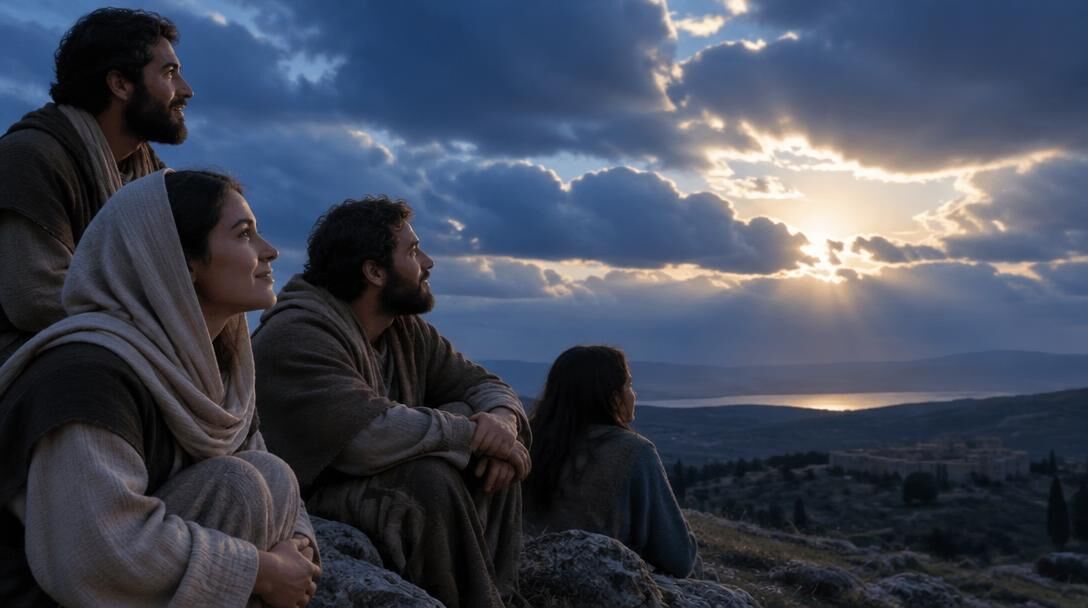
“Alleluia: for the Lord God omnipotent reigneth.” — Revelation 19:6 (KJV). Heaven’s praise announces the reign of God as Christ’s promised victory draws near.
Revelation 19: Praise, Promise, and Victory
- Heaven celebrates God’s righteous judgments
- The multitude cries, “Alleluia”
- God’s reign is proclaimed
- Worship directs all glory to God
- The testimony of Jesus is the spirit of prophecy
- God’s servants are called to praise Him
- The marriage of the Lamb has come
- His bride has made herself ready
- Fine linen represents the saints’ righteous deeds
- Guests are blessed at the marriage supper
- God’s promises to His people reach fulfillment
- Believers look forward to fellowship with Christ
- Heaven opens to reveal a white horse
- Its rider is called Faithful and True
- Christ judges and makes war in righteousness
- He is named the Word of God
- The beast and false prophet are defeated
- The King of kings triumphs over evil
Tracing Prophecy to Christ’s Victory
Bible Prophecy Ministries is devoted to exploring what Scripture says about prophecy—what has happened, what is still to come, and how it all revolves around Jesus. Through BibleProphecyMinistries.com, the ministry helps readers follow the Biblical history from earlier promises to their fulfillment in Christ. That mission shapes its study of Revelation 19: Heaven praises God, the Lamb’s marriage supper is announced, and Jesus appears as the victorious King.
Together, these scenes connect prophetic hope with the One who fulfills it. For believers, the chapter offers more than a picture of judgment over evil; it is an assurance that Christ is faithful, His people will share in His promised joy, and His righteous reign will prevail.
Revelation 19: Common Questions
Explore the chapter’s praise, prophetic imagery, and vision of Jesus Christ’s victory.
Why does heaven praise God at the start of Revelation 19?
Heaven praises God because His judgments are true and just. The celebration follows the fall of Babylon in Revelation 18 and points to the reign of the Lord.
What is the marriage supper of the Lamb?
It is the joyful celebration of the Lamb, Jesus Christ, and His bride. The image emphasizes the fulfillment of God’s promises and the joy of belonging to Christ.
Who is the rider on the white horse?
The rider is Jesus Christ, called Faithful and True, the Word of God, and King of Kings and Lord of Lords. He comes as the righteous judge and victorious king.
What does the sword from Christ’s mouth represent?
The sword portrays the power of Christ’s word and judgment. Revelation 19 depicts Him defeating His enemies by His authority, not by an ordinary weapon.
What happens to the beast and the false prophet?
They are seized and thrown into the lake of fire. Their defeat shows that opposition to Christ will not prevail against His reign.
Why does Revelation 19 matter for Bible prophecy today?
The chapter directs our attention to Jesus, the fulfillment of God’s promises and the ultimate victor over evil. It invites us to read prophecy with hope and faithfulness.
Keep Discovering the Promises That Point to Jesus
Continue reading Bible prophecy in the light of Scripture, and see how its promises and future hope center on Christ.