Revelation 18: Babylon Falls, God Calls His People Out
Revelation 18 shows a powerful world order (NWO) falling under God's judgment, with all its wealth and influence unable to save it. The chapter exposes spiritual unfaithfulness, greed, deception, and violence, then calls God's people to "come out of her" and remain faithful to Christ.
What does that call mean for you? We believe it's a call to reject Babylon's sins, not to live in fear or treat people as enemies. Let's walk through Revelation 18 and see how its warning leads us toward faithfulness and hope in Jesus. What Babylon represents in Revelation
Babylon Falls: A Call to Come Out
Revelation 18 gives us a clear sequence: an angel announces Babylon's fall, God warns His people, earthly powers mourn, and Heaven declares the judgment just. The images build toward one outcome. Babylon's wealth and influence cannot prevent her final ruin.
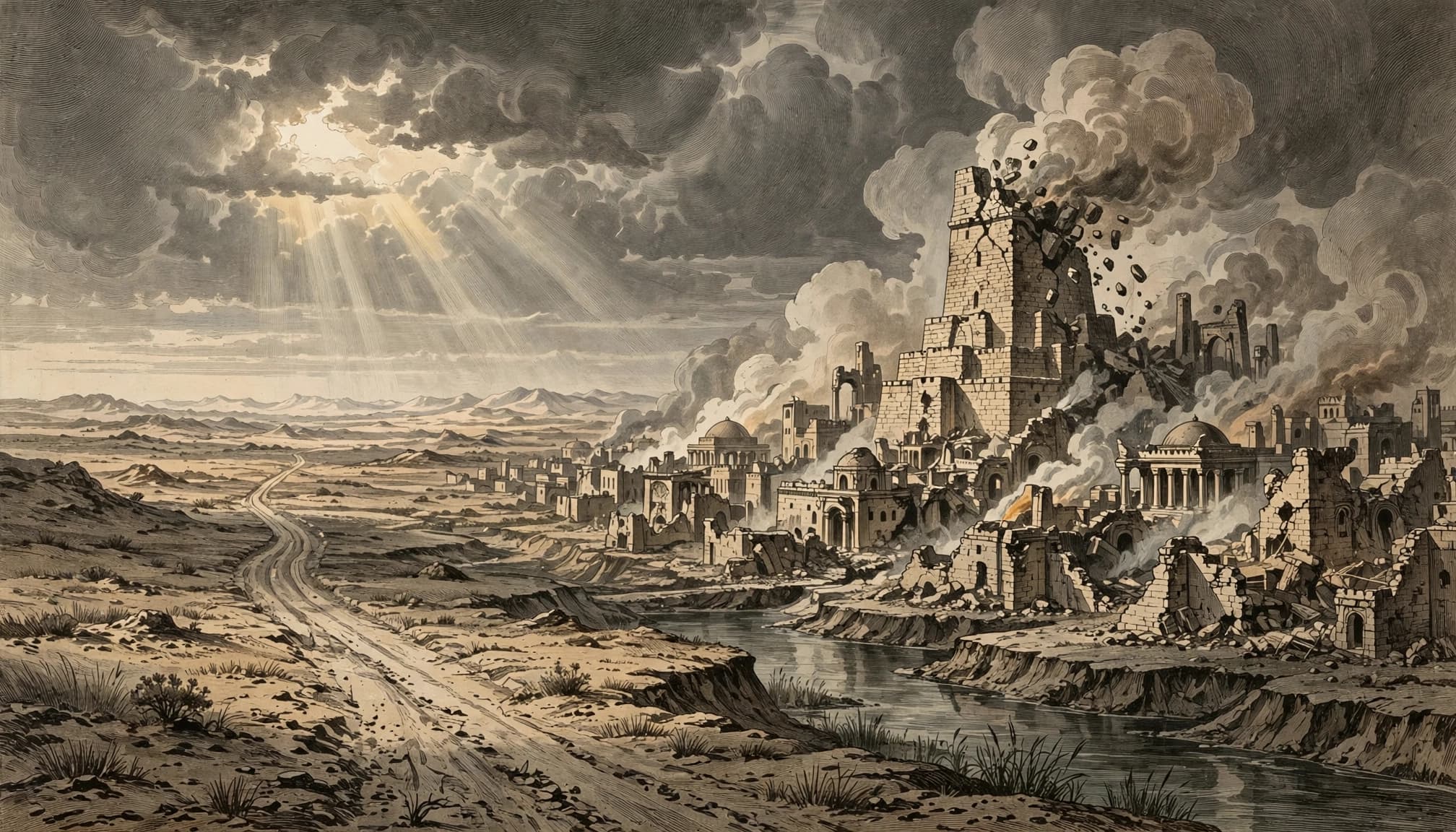
How Revelation 18 reveals Babylon’s fall
The chapter opens with an angel announcing that Babylon has fallen. Her influence has reached the nations, kings, and merchants, who have shared in her corruption and grown wealthy through her luxury. The announcement is stark: a city that seemed powerful is now condemned. You can follow the full chapter of Revelation 18.
Then, in verses 4–8, a voice from Heaven calls God's people to come out of her. The warning names the reason: they must not share in Babylon's sins or receive her plagues. The passage also declares that judgment will match her deeds, and that her destruction will come suddenly.
The focus shifts to three groups who mourn the city's fall: kings, merchants, and those who make their living at sea. They watch from a distance as the city burns. The merchants grieve because their market has vanished, and the list of goods ends with human lives treated as cargo. Their laments show how much they depended on Babylon's prosperity.
In verse 20, the scene turns. Heaven, God's people, apostles, and prophets are called to rejoice because God has judged the city. The final verses make the end unmistakable: an angel throws a stone into the sea as a sign that Babylon will be thrown down and disappear. The chapter closes by naming her violence and deception, including the blood of prophets and saints.
We can read this movement as more than a report of a city's collapse. It exposes the cost of a corrupt order and announces that God's judgment is certain. For more on the chapter's images and movement, see Revelation 18's warning about Babylon.
Why the call to leave comes before the judgment
God's warning comes before the destruction because He calls His people to refuse Babylon's sins. The command in Revelation 18:4 is about separation from complicity: His people must not take part in the wrongdoing that brings judgment.
This call echoes earlier prophetic warnings to leave ancient Babylon. Isaiah told the people to go out from Babylon, while Jeremiah urged them to flee so they would not share in its punishment. These passages are linked together in the prophetic calls to leave Babylon.
That pattern helps us understand Revelation 18 without turning it into an instruction to move to a particular place today. The passage does not name a modern location or tell every believer to withdraw from society. It warns us against sharing in Babylon's sins and calls us to stay faithful to God. When we hear "come out of her," we should take the moral warning seriously: refuse the corruption, exploitation, and divided loyalty that the chapter condemns.
What Babylon Represents in Revelation 18
Babylon in Revelation 18 is a prophetic image of power organized against God. The chapter portrays a wealthy city whose influence reaches kings, merchants, and seafarers. Its luxury depends on corruption, false worship, and the exploitation of human lives. So what does Babylon represent? The answer begins with the prophetic histories John draws on, then turns to the imperial world his first readers knew.

The connection to ancient Babylon and Tyre
The command to leave Babylon echoes earlier warnings to God's people. Isaiah called them to go out from Babylon, and Jeremiah urged them to flee before its judgment (Isaiah 48:20; Jeremiah 51:6, 45). When Revelation repeats that call in Revelation 18:4, it draws on a familiar prophetic pattern: God warns His people not to share in the sins of a condemned power.
Revelation's picture also recalls Tyre, the wealthy seaport whose merchants and trade came under prophetic judgment. Ezekiel describes Tyre's far-reaching commerce and the shipmasters mourning its fall (Ezekiel 27:12-13, 25-27). In Revelation, merchants and sailors likewise grieve when Babylon's market disappears. The list of goods even ends with enslaved people and human lives treated as cargo (Revelation 18:11-13).
These echoes deepen the warning. John is not simply retelling Babylon's exile or Tyre's downfall. He brings their prophetic images together to expose a corrupt order that grows rich through luxury, political influence, false worship, and harm to God's people.
Rome and the wider picture of corrupt power
Rome is a strong historical fit for Revelation's imperial trade imagery. The chapter describes a city tied to rulers, merchants, and maritime commerce, and its catalogue of luxury goods resembles trade associated with Rome. Craig Keener discusses the chapter's link between imperial commerce and exploitation in his analysis of suffering and exploitation in Revelation.
Still, we should separate the likely first-century setting from the chapter's wider theological meaning. Revelation names the city "Babylon," using a Biblical symbol already associated with proud power opposed to God. Rome may be the immediate imperial setting, but the symbol reaches beyond one city or moment. It describes political and economic power when it demands loyalty, rewards corruption, and treats people as expendable.
That distinction helps us read the warning without forcing the symbol onto a modern nation or institution. Christians interpret Babylon's later applications differently, and Revelation 18 does not settle every detail of those debates. We can say what the chapter makes clear: no empire's wealth or influence can shield it from God's judgment. For more on the related vision, see Babylon in Revelation 17 and 18.
Why Babylon’s wealth cannot shield it from judgment
Babylon's fall makes one thing clear: prosperity can impress the world without earning God's approval. Revelation does not condemn every possession or every successful trade. It exposes a system that grows rich through spiritual compromise, exploitation, and violence.
Luxury exposes the values of Babylon’s system
John's catalogue in Revelation 18:12-13 moves through gold, silver, precious stones, fine cloth, wood, ivory, spices, wine, grain, and livestock. Then come horses and chariots. The list sounds like a display of wealth, until it reaches its final cargo: enslaved people, described as "bodies and souls of men."
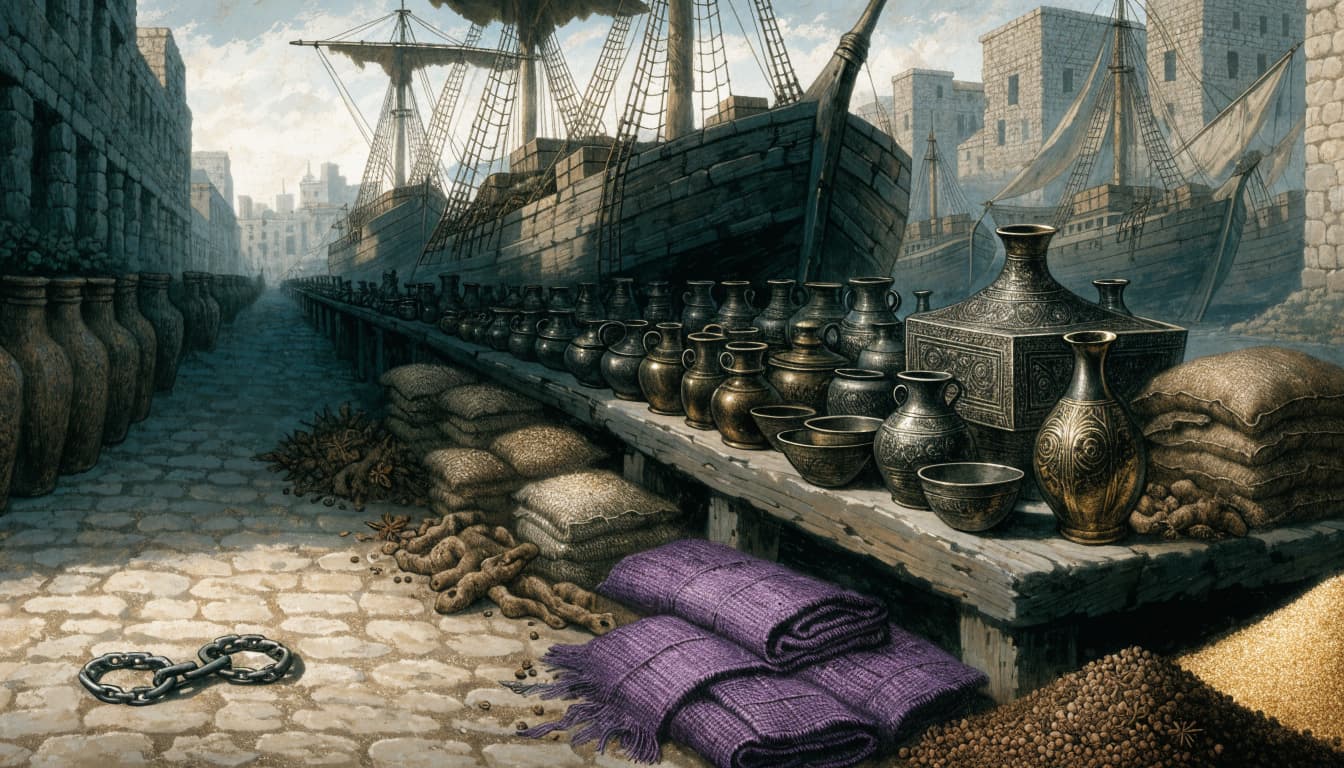
That ending changes how we read everything before it. Human beings appear alongside luxury goods, as if lives could be bought and sold like spices or horses. The horror is not simply that Babylon has expensive things. Her economy treats people as cargo and puts profit ahead of justice.
The merchants mourn because their market has vanished, not because the people they traded are free. That detail forces us to ask what prosperity costs when a system rewards those who exploit others. We should not confuse wealth with righteousness, or assume that success proves God approves of the way it was gained.
Spiritual unfaithfulness, deception, and violence bring judgment
Revelation names the deeper charge in 18:3: nations, kings, and merchants have shared in Babylon's corrupting influence and profited from her luxury. The image of spiritual unfaithfulness points to divided loyalty and false worship. Babylon draws people away from God while making participation attractive and profitable.
That seduction reaches beyond private belief. Kings join in, merchants grow rich, and the nations are swept into the same corrupt order. Babylon's influence makes wrongdoing look normal, even desirable. We see why God calls His people to come out of her: they must refuse the sins that sustain her power.
The chapter's final charge is even more sobering. In Revelation 18:23-24, Babylon's deception is tied to the nations, and the blood of prophets, saints, and others is found in her. Her wealth sits beside a record of violence against God's people. The judgment answers the whole pattern, not the mere presence of riches.
Babylon's prosperity is no measure of God's favor when it depends on deception, false worship, and human suffering.
This distinction matters for us. Scripture does not say that owning wealth automatically makes someone sinful. It asks what we serve, how we gain what we have, and whether our comfort depends on another person's harm. When wealth excuses injustice or draws people into unfaithfulness, it cannot protect the system that produced it. Heaven's response to Babylon's judgment comes into sharper focus in Revelation 19, where God's victory stands against the powers that profited from her.
Why kings, merchants, and sailors mourn Babylon’s fall
Revelation 18 gives the kings, merchants, and seafarers three chances to mourn Babylon's destruction. Their grief sounds like lament, but listen to what they grieve: lost luxury, influence, and trade. They aren't neutral observers. They benefited from Babylon's power, and now they watch it disappear. Revelation 18:9-20 shows how each group responds.
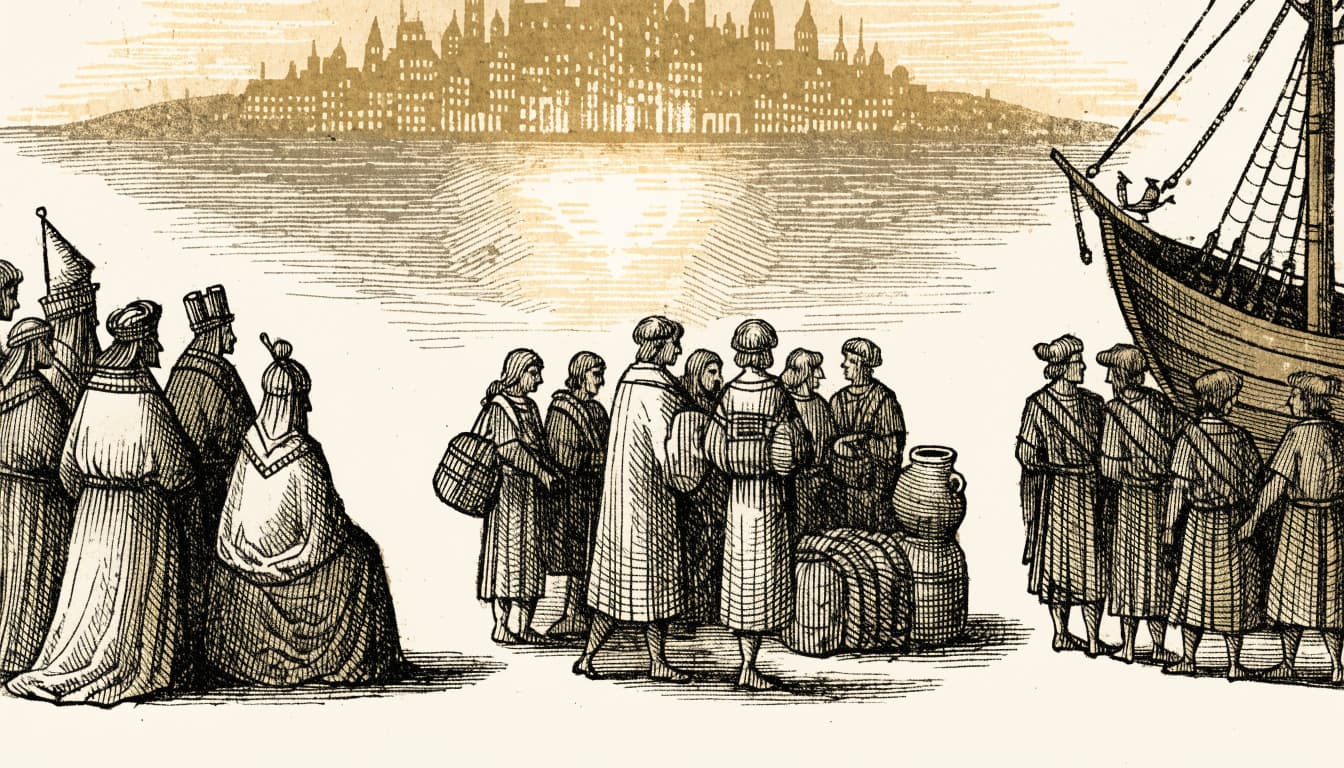
The mourners grieve what Babylon gave them
The kings mourn first. They had shared in Babylon's luxury and influence, so her burning means the end of a relationship that benefited them. They cry over the "great city," but their words reveal what matters most: the power and splendor they can no longer enjoy.
Notice where they stand. The kings watch from a distance because they fear Babylon's torment. The merchants do the same. Their distance suggests self-preservation, not compassion. They lament the city's fate while keeping clear of its danger.
Then the merchants mourn because no one buys their merchandise anymore. Revelation's catalogue runs through precious goods, food, livestock, and transport, ending with enslaved people and human lives treated as cargo. The market has collapsed, and with it the profits that tied these merchants to Babylon. Their lament doesn't focus on the people harmed by that trade. It focuses on the vanished buyers.
The seafarers complete the pattern. Shipmasters, sailors, and others who earn their living at sea see the smoke and cry out over Babylon's destruction. Their trade depended on the city's commerce, so its fall means their livelihood is gone too. Kings lose influence, merchants lose a market, and seafarers lose the trade that kept their ships moving.
Heaven’s verdict weighs justice above profit
The repeated laments help us see Babylon's reach. Her power drew in rulers, enriched merchants, and sustained maritime commerce. When she falls, these groups grieve because the benefits they shared with her have ended. Their words reveal a hard truth: people can mourn a corrupt system's collapse because they miss what it provided, even when that system harmed others.
Then the chapter turns. In verse 20, Heaven, God's people, apostles, and prophets are called to rejoice because God has judged Babylon. The contrast is sharp. Earthly powers cry over lost gain; Heaven rejoices over a verdict that answers the violence done to God's people.
That call to rejoice isn't delight in suffering for its own sake. Babylon's judgment exposes what her luxury concealed: deception, exploitation, and the blood of prophets and saints. Her success looked secure, but it could not shield her from God's justice. The heavenly response continues in Revelation 19's praise after Babylon's fall, where Heaven praises God for judging evil and revealing His victory.
What “come out of her” means for God’s people
The command in Revelation 18:4 tells God's people to leave Babylon so they won't share in her sins or face her judgment. The reason matters. This is a call to moral and spiritual faithfulness, not a command to abandon every society, institution, or marketplace.

Separation means refusing Babylon’s sins
We can live among people without adopting the values Revelation condemns. God's people work, trade, serve neighbors, and take part in ordinary community life. The question is whether our loyalty to Christ shapes how we do those things, or whether comfort and gain pull us toward Babylon's way.
Revelation 18 names a pattern of idolatry, greed, deception, exploitation, and violence. Babylon's wealth depends on people who share in her corruption and profit from her luxury. Her list of goods ends with human lives treated as cargo. That is the kind of complicity God's people must refuse.
So what might faithfulness look like in daily life? We worship God rather than treating money, status, or power as our security. We choose honesty even when deception seems profitable. We refuse to benefit from another person's suffering, and we don't excuse violence because it protects our interests.
This doesn't mean every purchase, workplace, or public institution is automatically Babylon. Revelation 18:4 doesn't tell believers to withdraw from every marketplace or separate from everyone who doesn't share their faith. It warns us not to participate in sin. We can remain present among people while refusing practices that deny Christ's authority and harm our neighbors.
Discernment keeps the warning rooted in Scripture
Babylon has inspired many interpretations, especially when people connect the image to current events. We should test those claims against Scripture as a whole instead of letting fear or speculation decide what the passage means. Revelation gives a clear reason for the call: God's people must not share in Babylon's sins.
That focus helps us ask better questions. Does a proposed interpretation fit the chapter's emphasis on false worship, greed, deception, exploitation, and violence? Does it agree with the wider witness of Scripture, which calls God's people to truth, justice, mercy, and faithfulness? Or does it use the warning to stir suspicion toward people who hold different views?
The call to come out does not give us permission to hate, threaten, or mistreat anyone. We can reject wrongdoing without treating people as enemies. Our witness should show the loyalty we claim: we speak truthfully, act with compassion, and keep our worship directed to God.
This is part of what it means to remain faithful to Jesus when compromise seems easier. We don't need to label every person or institution as Babylon to take Revelation 18 seriously. We need to examine our own worship, choices, money, truthfulness, and treatment of others, then ask whether they reflect Christ. For more on that call to faithfulness, see Jesus as the Faithful and True King.
How Revelation 18 calls us to hope and faithfulness
Revelation 18 leaves us with a choice: will we follow Babylon's appetite for wealth and power, or remain faithful to Jesus? The call to come out of her reaches into ordinary decisions, shaping how we worship, work, spend, and treat people. We don't have to give in to fear. God calls us to live faithfully now and trust His justice.

Choose Christ’s way in everyday decisions
Babylon makes greed and exploitation look profitable. Faithfulness asks us to see the people behind the choices we make. Revelation doesn't name modern products or institutions, but its warning gives us principles to bring to our own lives.
We can ask whether our worship belongs to God, or whether money, status, and influence have begun to claim our trust. At work, we can tell the truth even when a lie would bring an advantage. When a source of income depends on someone else's suffering, we can refuse to call profit a blessing. And when we meet people with little power or security, we can treat them as people made in God's image, not as obstacles or tools.
Possessions have a place, but they don't deserve our devotion. We can receive what we have with gratitude, share with people in need, and resist the pull to make comfort the measure of a good life. These choices won't make us perfect, but they show who we serve.
Trust God’s justice without giving in to fear
Babylon's fall points to the failure of evil, not the failure of God's Kingdom. The chapter's final judgment can feel frightening, especially when corrupt powers appear secure. Yet Revelation doesn't ask us to panic or guess which modern person or institution will fall next. It calls us to stay faithful to Jesus and trust God to judge rightly.
How do we keep that hope steady? We stay grounded in Scripture, pray for the Holy Spirit's help, and let Him shape our choices. Paul connects faithful living with walking by the Spirit in Galatians 5:16-18. The Spirit helps us resist self-indulgence, speak truth, care for vulnerable people, and keep worship centered on God.
We can also remember that hope in Christ is more than confidence that evil will end. It gives us reason to serve our neighbors while we wait, without putting our trust in worldly power. We don't need to control history to remain faithful today. We can honor God in our work, show mercy, and keep our loyalty with Jesus. For more on that hope, see God's sure promises and faithful Christian living.
Conclusion
Revelation 18 leaves no doubt: Babylon's wealth and influence cannot save her. God sees the harm done to His people, and the city's apparent success cannot hide its corruption or escape His judgment.
So what does "come out of her" mean for us? We hear it as a call to leave sin behind and stay faithful to Christ, not as a reason to panic or speculate about modern events. Babylon falls, but God's call remains clear: trust Him, refuse what draws us away from Him, and live faithfully in the hope of His Kingdom.
Revelation 18 Bible Prophecy
Babylon Falls. God Calls His People Out.
Revelation 18 announces the collapse of Babylon and a merciful call to leave her behind. Discover what this prophecy reveals about judgment, faithfulness, and hope in Jesus Christ.
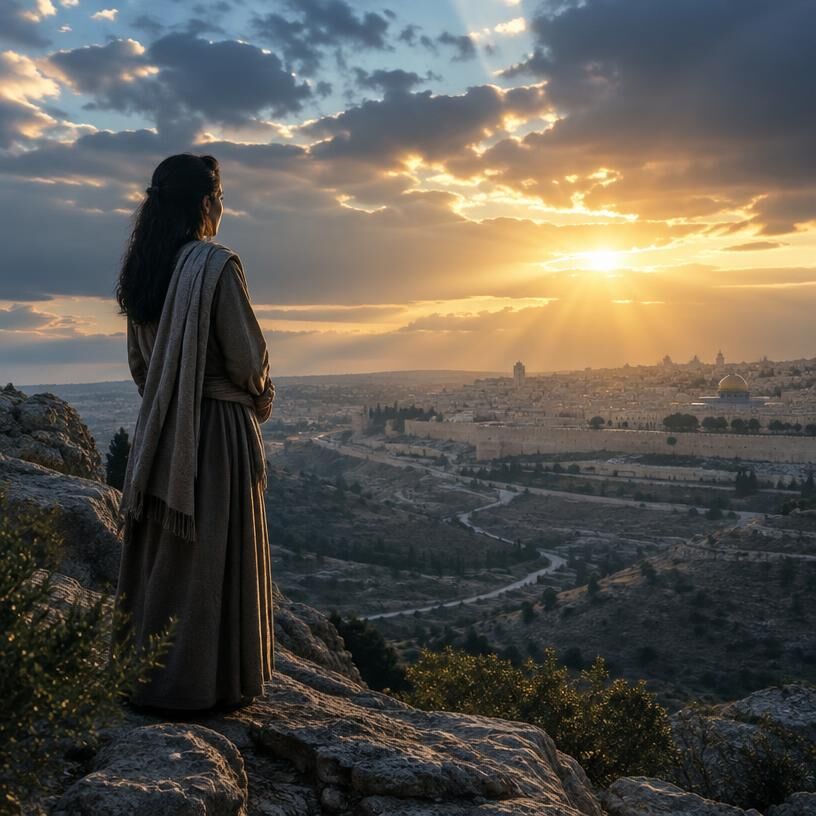
When Babylon Falls, a Call to Come Out Remains
Revelation 18 portrays Babylon as a powerful symbol of a world in rebellion against God. Her wealth and influence cannot prevent her downfall: Heaven declares that her sins have reached up to God, and her judgment is certain. Yet the chapter is more than a warning of destruction.
In its midst, God says, “Come out of her, my people,” calling those who belong to Him to turn away from her sins before sharing in her judgment. Read alongside the wider witness of Scripture, this prophecy invites us to examine where we place our trust and to remain faithful to Jesus Christ, whose kingdom will endure when earthly powers fall.

Babylon Falls: Judgment and the Call to Faithfulness
Bible Prophecy Ministries has long centered its teaching on Scripture’s account of what has happened, what is still to come, and how every prophecy points to Jesus. That mission shapes this study of Revelation 18.
Babylon represents a world system marked by spiritual unfaithfulness, seductive wealth, and injustice. Her apparent splendor cannot hide the corruption beneath it. Revelation announces that God has seen her sins and that her fall is certain.
This chapter is more than a warning about judgment: it invites readers to examine what commands their loyalty and to trust the Lord rather than the passing power of a rebellious world.
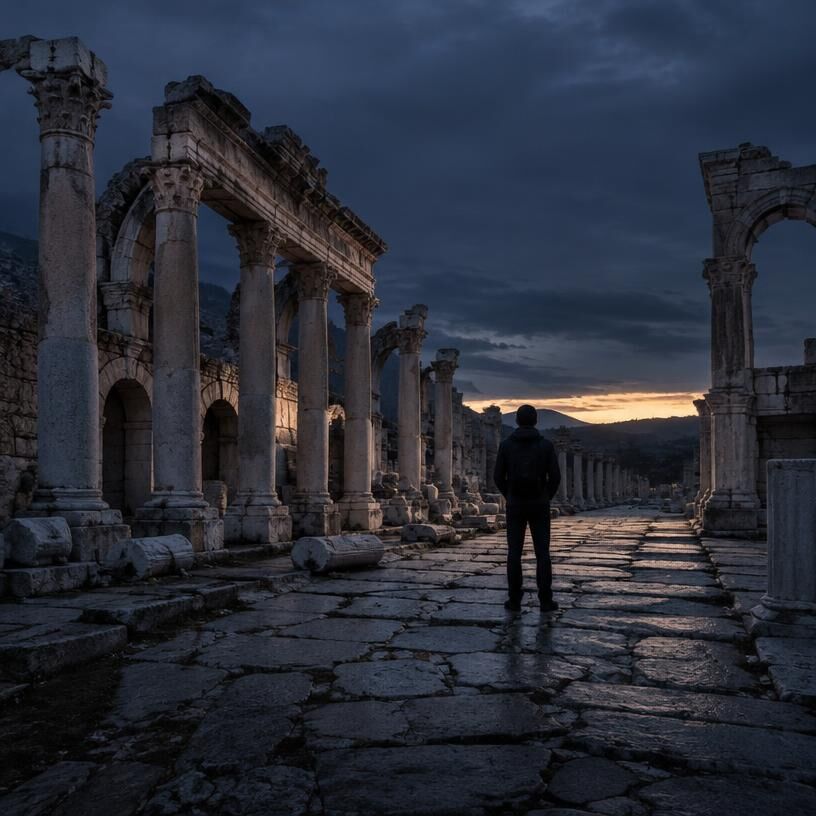
“Come out of her, my people, lest you take part in her sins, lest you share in her plagues.” — Revelation 18:4
John the Apostle
Recording heaven’s urgent call to God’s people
Babylon’s Fall in the Biblical Story
From Ancient Warnings to Christ’s Return

A Pattern of Human Rebellion
From Babel onward, Scripture portrays humanity’s temptation to build security and glory apart from God. Revelation’s Babylon brings that rebellion into sharp focus.
The Certainty of God’s Justice
Prophets warned that proud kingdoms would fall. Revelation 18 echoes those warnings, showing that oppression and spiritual corruption will not have the final word.
Jesus Calls for Faithful Allegiance
The command to leave Babylon is a call to reject its sins and remain loyal to Jesus, the Lamb whose victory gives His people hope amid a compromised world.
Hope in His Promised Return
Babylon’s fall clears the way for the rejoicing of Revelation 19 and the promised return of Christ. God’s people can endure because their future rests with Him.
Revelation 18: Questions and Answers
Explore what Babylon’s fall means, why God calls His people out, and how this prophecy directs our attention to Jesus.
What does Babylon represent in Revelation 18?
Babylon symbolizes a corrupt system opposed to God, marked by deception, idolatry, and worldly power. Christians differ on its precise historical and future identity, so the chapter is best read alongside the rest of Scripture.
Is Babylon a literal city or a symbol?
Revelation portrays Babylon as a city, but its imagery also points beyond one location to far-reaching spiritual and economic influence. Some readers expect a literal city; others understand the city as a symbol of a larger system.
What does it mean that Babylon falls?
Babylon’s fall is God’s judgment on a proud order that rejects His ways and exploits others. Revelation 18 emphasizes that its wealth and apparent security cannot save it when judgment comes.
Why does God say, “Come out of her, my people”?
In Revelation 18:4, God calls His people to separate from Babylon’s sins so they do not share in its judgment. The call urges faithful allegiance to Him rather than participation in deception and injustice.
Does coming out of Babylon mean leaving a particular place?
The passage does not give every reader an address to leave. Its enduring challenge is to turn away from practices that compromise faithfulness to God; how that applies to a particular place or circumstance requires prayerful discernment.
Why do merchants mourn Babylon’s destruction?
Revelation 18 describes merchants grieving because the trade that made them wealthy has ended. Their lament exposes how deeply profit and luxury can shape allegiance, even when a system is unjust.
How quickly does Babylon fall?
The chapter repeatedly describes Babylon’s judgment as arriving “in one hour.” That striking image underscores how suddenly power and prosperity can collapse under God’s judgment.
How does Revelation 18 connect to the Old Testament?
Its language echoes prophetic judgments against Babylon and other proud cities, including passages in Isaiah and Jeremiah. Those echoes help readers recognize Revelation’s themes of idolatry, oppression, and divine justice.
How does this prophecy point to Jesus?
Babylon’s fall contrasts passing worldly power with the lasting reign of Christ. Revelation invites readers to trust Jesus, the faithful Lord whose victory makes God’s final justice and the hope of His people certain.
Keep Exploring Prophecy Through the Lens of Jesus
Continue with more Bible prophecy articles to trace Scripture’s promises, examine its warnings, and see how the story points to Jesus.