
The Testimony of Jesus: Prophecy, Kingship, and Hope
When the world feels uncertain, how can Jesus' kingship steady you? Revelation 19:10 says, "the testimony of Jesus is the spirit of prophecy," pointing us toward the One Scripture reveals as King.
Christians understand the phrase in more than one way, but its setting is clear: the angel refuses John's worship and directs him to worship God. We'll look at what the phrase means, how Scripture's prophetic witness points to Jesus, and why His reign gives you reason to trust Him, live faithfully, and hold fast to hope. Let's start with John's vision in Revelation.
What Does “The Testimony of Jesus” Mean in Revelation?
To understand the phrase, we need to look at what John sees just before he writes it. The scene is startling, but the angel's answer is plain: worship belongs to God, and prophetic witness must point beyond the messenger.
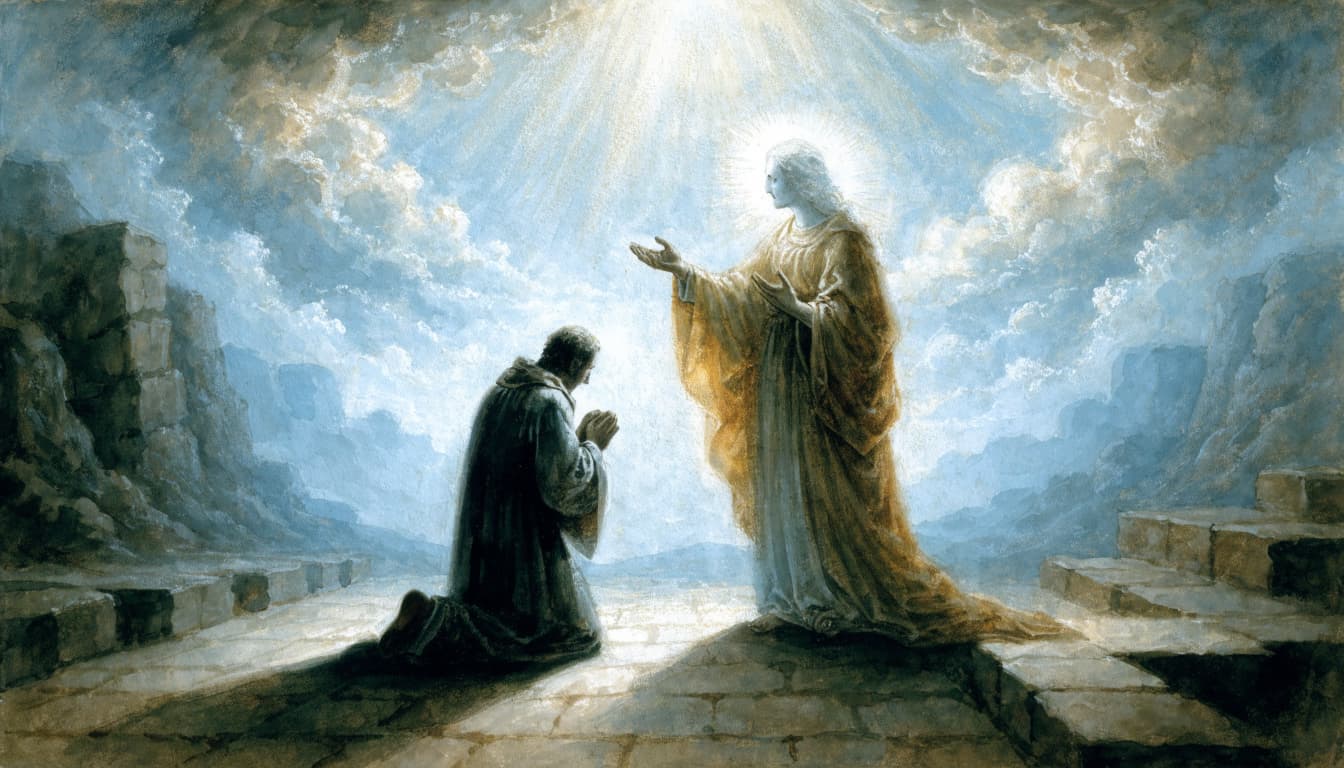
John falls before the angel
In Revelation 19:10, John falls at an angel's feet to worship him. The angel refuses. He calls himself a fellow servant of John and of the believers who hold the testimony of Jesus, then gives a direct command: "Worship God."
That matters. John is overwhelmed by a heavenly vision, but even a radiant angel is not worthy of worship. The messenger serves God; he doesn't take God's place. The verse's final line connects Jesus' testimony with prophecy, while the scene keeps worship centered where it belongs.
“The testimony of Jesus” can mean two related things
Christians understand this phrase in two closely related ways. It can mean the witness about Jesus, declaring who He is and what He has done. It can also mean the witness from Jesus, the message He gives through prophetic revelation. Those readings don't have to compete: Jesus reveals God's truth, and His people bear witness to Him.
The phrase "the spirit of prophecy" also has more than one interpretation. Some Christians understand it as prophecy's Christ-centered purpose: prophecy points to Jesus. Others emphasize the Spirit-inspired prophetic message or gift.
We shouldn't claim Revelation 19:10 settles every question about prophecy. The shared point is clear, though: prophecy and prophetic messengers direct us to God and Jesus, not to themselves. For another overview of these readings, see GotQuestions' explanation of the phrase.
Revelation connects testimony with faithful witness
The phrase appears within a larger pattern in Revelation. The opening chapter links the book's message with John's witness to God's Word and the testimony of Jesus. In Revelation 1, John also describes suffering because of God's Word and Jesus' testimony (1:9). Later, the believers who hold that testimony face the dragon's opposition (12:17), and those killed for their witness are pictured as reigning with Christ (20:4).
So this testimony is more than a private belief. It is faithful witness to Jesus, even when that witness brings pressure or loss. Revelation doesn't say every Christian's hardship is the same as martyrdom, but it does show that allegiance to Jesus can carry a cost.
Prophecy points to Jesus, the King
Revelation 19 places the angel's words in a vision that soon presents Jesus as "King of kings and Lord of lords." The verse itself doesn't define "the testimony of Jesus" as a technical title for kingship. Still, the surrounding vision makes the connection clear: prophecy bears witness to Jesus, and Revelation reveals Him as the victorious King.
When we read prophecy, we can ask a simple question: does this message honor God and direct attention to Jesus, or does it make the messenger the focus? That question keeps us close to the angel's instruction. We can explore how Biblical prophecy points to Jesus while keeping the passage's clear emphasis in view: God receives worship, and Jesus is at the heart of the prophetic witness.
How Does Scripture’s Prophetic Witness Point to Jesus?
When we read Israel's Scriptures alongside the New Testament, we see a connected witness to Jesus. Some passages describe a King from David's line; others picture a servant who suffers, or a ruler who arrives in humility. Christians read these promises through Jesus' life, death, and resurrection, while recognizing that Jewish and Christian traditions do not interpret every passage in the same way.
The promised King comes from David’s line
God's promise to David gives Israel hope for a royal line that will endure. In 2 Samuel 7:12-16, God promises to raise up a descendant after David and establish his throne. The promise takes on a wider horizon in Isaiah 9:1-7, where a child is given, and His government and peace have no end. Psalm 2:6-12 adds the image of God's anointed King, who rules under God's authority.
The New Testament makes the Christian connection direct. In Luke 1:32-33, Gabriel tells Mary that Jesus will receive David's throne and reign forever. Peter then points to Jesus' resurrection and exaltation in Acts 2:34-36, proclaiming Him as Lord and Messiah. The promise of a lasting ruler isn't detached from Israel's history; the apostles identify Jesus as its fulfillment.
We can read more about the Davidic promise and Jesus' everlasting reign. The New Testament's claim is clear: Jesus is the promised King, and death cannot end His reign.
The prophets also point to the suffering Messiah
The prophetic witness includes suffering as well as kingship. In Isaiah 52:13-53:12, the servant is rejected, bears the sins of others, and is finally vindicated. Christians have long read this passage in light of Jesus' suffering and death. Psalm 22:1 opens with a cry of abandonment, while Psalm 22:16-18 describes a sufferer's humiliation and the dividing of his garments. The Gospel accounts echo this Psalm in their descriptions of the crucifixion.
How does Jesus Himself read these Scriptures? In Luke 24:25-27, He explains to two disciples that the Messiah had to suffer before entering His glory. Later, He tells the gathered disciples that what was written about Him in the Law, Prophets, and Psalms had to be fulfilled (Luke 24:44-47). His resurrection is part of that witness, not an afterthought.
We should be careful here. Jewish and Christian readers don't agree on every interpretation of Isaiah's servant or the Psalms. Our point is that the New Testament reads these passages as a unified witness to Jesus' suffering and vindication.
Jesus fulfills the hope for a humble, victorious ruler
The prophetic picture of the Messiah also joins a specific birthplace with a surprising style of kingship. Micah 5:2 names Bethlehem as the place from which a ruler for Israel will come. When Herod asks where the Messiah is to be born, the chief priests and scribes cite this prophecy in Matthew 2:5-6. Matthew ties Jesus' arrival in Bethlehem to the promised ruler.
Later, Jesus enters Jerusalem on a donkey. Matthew connects that action with Zechariah 9:9, where Zion's King comes humble and riding on a donkey (Matthew 21:4-5). His humility doesn't cancel His authority. It shows the kind of King He is.
These passages don't all work in exactly the same way. Some name a place, some speak in royal imagery, and some describe an action the Gospel writers connect with Jesus. Together, they form a Biblical witness to the promised King, who comes humbly, suffers, rises, and reigns.
Why Does Jesus’ Kingship Matter in Revelation?
Revelation 19:10 comes just before John sees Jesus appear as the victorious King. That placement matters: prophecy and the testimony of Jesus point toward the One who defeats evil and reigns with God-given authority. Still, verse 10 itself is not a formal definition of kingship. We need to read it in the vision around it.
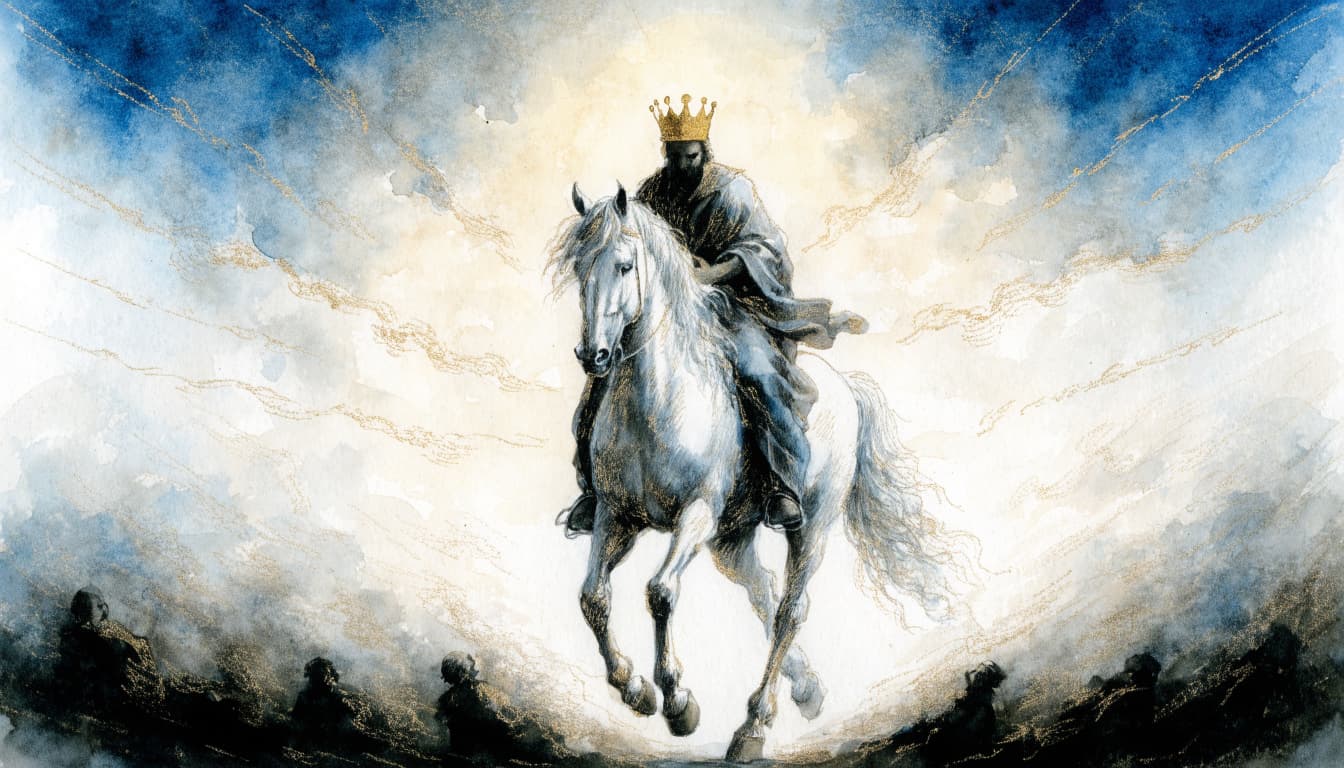
His authority is greater than every earthly power
In Revelation 19:11-16, John sees heaven opened and a rider called "Faithful and True." The vision presents Jesus as the One who judges righteously and defeats the forces gathered against Him. His robe bears the title "King of kings and Lord of lords." No earthly ruler holds authority above His.
This royal picture connects with Psalm 110:1-4, where the Lord seats the king at His right hand and gives him authority over his enemies. The psalm also calls this ruler a priest forever. Christians read this passage as pointing to Jesus, whose reign joins royal authority with God's purpose and victory.
That doesn't give us permission to turn Revelation's images into a timetable for current events. John's vision declares who will prevail, not which modern leader or headline fulfills each symbol. We can take its promise seriously without forcing every image into today's news.
For a closer look at Jesus' authority over every earthly power, we can stay with the vision's central claim: evil does not get the final word, and no human power can outrank Christ.
His victory gives faithful witness its purpose
Revelation connects testimony with real cost. John calls himself a companion in suffering because of God's Word and the testimony of Jesus (Revelation 1:9). Later, he sees those killed for their witness to Jesus and God's Word reigning with Christ (Revelation 20:4). Their suffering is not treated as trivial, and we shouldn't compare every hardship with the persecution they endured.
So why does their testimony matter? Because it bears witness to Jesus, the King who is victorious even when His people face loss. Their witness doesn't make them the center of the vision. It directs attention to Christ, whose reign gives their faithfulness its hope and meaning.
Revelation 19:10 belongs in that same frame. The angel says, "Worship God," then connects the testimony of Jesus with the spirit of prophecy (Revelation 19:10). The verse does not define kingship as a technical term. But in its setting, prophecy and testimony lead us toward the victorious King John sees moments later.
That gives us a clear way to read the passage. Prophetic witness should point to God and Jesus, not elevate a messenger or turn speculation into the main event. And when our witness costs us, Revelation reminds us that Jesus' victory is greater than the powers pressing against us.
What Does Jesus’ Kingship Mean for Believers Today?
Jesus' reign isn't an idea we leave in Revelation. It shapes how we face pain, treat people, worship God, and speak about Christ in everyday life. His kingship gives us a steady center, even when our circumstances or questions don't have easy answers.

Trust Him when circumstances are hard to understand
Following Jesus doesn't mean life will be free from grief, sickness, disappointment, or unanswered prayer. Jesus told His disciples plainly that they would face trouble, then pointed them toward His victory: John 16:33. His words don't minimize pain. They remind us that pain doesn't cancel His authority or make His promises unreliable.
So when the next step is unclear, we can bring our questions to Him without pretending everything feels fine. We trust His character, not our ability to explain every turn in life. That's part of what it means to live under the rule of a King who knows us and remains faithful.
This hope also shapes how we care for others. We can sit with someone in grief, pray without offering easy answers, and keep showing up. The Biblical call to endure hardship with faith doesn't ask us to deny sorrow. It gives us reason to remain faithful through it.
Live faithfully and speak truth about Jesus
In Revelation, the dragon makes war on those who keep God's commandments and hold the testimony of Jesus (Revelation 12:17). That picture points to allegiance that reaches beyond words. If Jesus is King, His way should shape how we speak, work, forgive, serve, and treat people who can do nothing for us.
We don't obey to earn salvation. We obey because we belong to Jesus, and His grace changes what we value. Faithfulness can look ordinary: telling the truth when a lie would be convenient, refusing to join in cruelty, serving when nobody applauds, or speaking about Jesus when silence feels safer.
Public witness doesn't require a microphone or a platform. Sometimes it means explaining why we have hope. Sometimes it means standing with someone who is being mistreated. The Holy Spirit gives believers power to bear witness to Jesus (Acts 1:8), and that witness should sound like the King we proclaim: truthful, courageous, and full of love.
Welcome the Spirit’s work while testing every claim
As Spirit-filled believers, we welcome the Holy Spirit's work and ask Him to equip us for service. Scripture doesn't tell the Church to despise prophecy, but it also doesn't tell us to accept every claim without question. Paul's instruction is clear: test everything, hold on to what is good, and reject evil (1 Thessalonians 5:19-22).
We can weigh a prophetic word against Scripture, consider whether it honors Jesus, and ask whether it encourages faithful obedience or puts pressure on people to follow a messenger. The New Testament teaching on prophecy also points to prophecy as Spirit-given speech for the good of God's people. Spiritual experiences can encourage us, but they don't outrank Scripture or make anyone worthy of worship.
Christians differ on what "the spirit of prophecy" means in Revelation 19:10. Some emphasize prophecy's witness about Jesus; others stress the Spirit's prophetic work. We don't need to pretend that one verse settles every debate about prophetic gifts. The passage still gives us a clear guardrail: worship God, keep Jesus at the center, and test what is spoken. For practical guidance, see how to test prophetic words with Scripture.
How Can Jesus’ Reign Help You Hold Fast to Hope?
Hope can feel hard to hold when grief changes the shape of a family, conflict keeps widening, or the future seems impossible to predict. Jesus' reign gives us reason to keep trusting God, but it doesn't require us to pretend that pain is small or that we know exactly what comes next. Christian hope rests in Christ's promised victory and God's renewal of all things.

Hope is rooted in Christ’s promised future
In Revelation 21, John sees a new heaven and a new earth. In verses 1-5, God makes His home with His people, wipes away every tear, and brings death, sorrow, and pain to an end. This vision doesn't ask us to call suffering good. It tells us suffering will not have the final word.
Paul offers a similar hope in Romans 8:18-25. Creation groans, and believers groan too as we wait for the redemption of our bodies. That language gives us room to be honest. We can mourn a death, ask why a conflict continues, or admit that change frightens us. Hope doesn't erase those feelings. It gives us a promise to hold while we wait.
Jesus' promised reign also keeps our hope from becoming a prediction game. Scripture calls us to expect His victory, but it doesn't give us permission to announce dates or claim that a political outcome must be God's plan. We don't need certainty about every headline to trust the King. The promise of a renewed world under Jesus' reign gives us a better horizon: God will make all things new, even when we cannot see how He will bring that renewal.
Endurance keeps hope active in daily life
So what does hope look like before that future arrives? Often, it looks like returning to simple practices that keep our attention on God and help us stay present to one another. Prayer gives us words for fear, gratitude, grief, and requests we don't know how to resolve. Worship reminds us that Jesus is King when circumstances seem to rule the day. Reading Scripture helps us remember God's promises without pretending every passage answers every question.
We also need other believers. Fellowship gives us people who can pray with us, sit beside us in grief, or help carry a practical burden. Sometimes the most faithful thing we can offer is a meal, a ride, a listening ear, or a steady presence. Acts of mercy don't make hardship disappear, but they show Christ's love in the middle of it.
These practices aren't formulas. Prayer doesn't guarantee that every crisis ends quickly, and worship isn't a way to silence sorrow. We can keep asking God for healing while admitting that someone we love is still sick. We can pray for peace while naming the harm conflict has caused. Faithful endurance means bringing the whole truth before God and continuing to love our neighbors.
When hope feels thin, we can start small: pray honestly, return to a passage of Scripture, reach out to someone in the church, or help a person who needs care today. We don't have to solve the future to remain faithful in the present. Christ reigns, and His promised renewal gives us reason to keep going.
Conclusion
Revelation 19:10 brings us back to the heart of the prophetic witness: it points to Jesus and directs worship to God. Scripture reveals Jesus as the promised King, and His reign gives us reason to trust Him even when the world feels uncertain. We can keep exploring how prophecy points to Jesus, with our eyes fixed on Him.
Because Jesus is King, we can live faithfully and hold fast to hope without pretending every hardship is easy or every question is settled. Worship God, keep Jesus at the center, and remain a faithful witness in uncertain times.
The Testimony of Jesus: What His Kingship Means for Believers
From the prophets’ promises to the risen Christ’s reign, discover how Scripture reveals Jesus as King and calls His people to faithful hope.
Prophecy Fulfilled
A Kingdom That Endures
Hope for His People

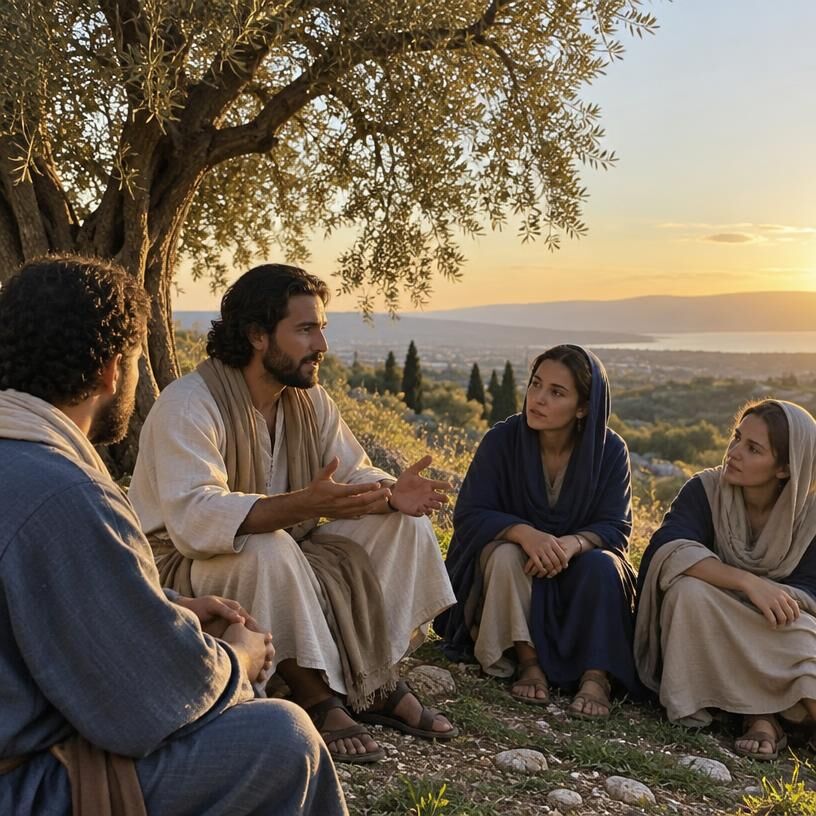
Jesus Christ: The King Promised in Scripture
The testimony of Jesus is Scripture’s witness to who He is and what He has done. Revelation 19:10 calls the testimony of Jesus the spirit of prophecy, pointing readers to the person at the heart of God’s promises. The prophets anticipated a ruler from David’s line whose kingdom would endure (2 Samuel 7:12–16; Isaiah 9:6–7).
The Gospels identify Jesus as that promised Son: born in David’s lineage, proclaimed as King, crucified under the title ‘King of the Jews,’ and raised from the dead. His crown was not won by earthly force; through His death and resurrection, He secured salvation for His people.
Bible Prophecy Ministries exists to help readers trace this witness across Scripture, recognize fulfilled prophecy, and look ahead to Christ’s return. For believers, His kingship means allegiance in the present, confidence amid uncertainty, and hope in the day when His reign will be openly seen.

The Promised Son of David
God promised David a descendant whose kingdom would endure forever (2 Samuel 7:12–16). The prophets carried that hope forward: Isaiah foretold a child who would reign on David’s throne with justice and peace (Isaiah 9:6–7), and Daniel saw the Son of Man receive an everlasting dominion (Daniel 7:13–14).
Jesus’ birth in David’s line and His announcement of the kingdom identify Him with these promises. His kingship is not an afterthought to prophecy; it is the fulfillment toward which Scripture points.
The Crucified and Risen King
Jesus entered Jerusalem as the promised King, yet His path to the throne led through the cross (Zechariah 9:9; John 19:19). By giving His life, He dealt with the sin that separates people from God.
His resurrection declared that death could not hold Him, and His ascension placed Him at the Father’s right hand (Acts 2:32–36). He reigns now, interceding for His people, while believers await the day His rule is openly revealed to every nation.

“You say that I am a king. For this purpose I was born and for this purpose I have come into the world—to bear witness to the truth. Everyone who is of the truth listens to my voice.”

Jesus Christ
John 18:37 (ESV)
What the King’s Reign Means for Believers

Authority That Calls for Faithfulness
Jesus has all authority in heaven and on earth (Matthew 28:18). Believers respond by listening to His words, obeying His commands, and bearing witness to Him in daily life.
Salvation That Gives Lasting Hope
Through His death and resurrection, Jesus welcomes those who trust Him into His kingdom (Colossians 1:13–14). His promised return gives them hope to persevere and live faithfully today.

Questions About the Testimony of Jesus and His Kingdom
Explore how Scripture connects prophecy, Jesus’ reign, and the hope believers hold today.
What does “the testimony of Jesus” mean in Bible prophecy?
Revelation 19:10 connects the testimony of Jesus with the spirit of prophecy. Prophecy bears witness to who He is and points readers toward His saving work and rightful reign.
How do Old Testament prophecies point to Jesus as King?
Passages such as 2 Samuel 7:12–16 and Isaiah 9:6–7 anticipate a lasting kingdom. The New Testament identifies Jesus as the promised Son of David whose kingship fulfills that hope.
Is Jesus reigning now, or is His kingdom still to come?
The New Testament presents Jesus as risen and exalted now, while also looking forward to the full unveiling of His reign. Believers can live under His authority today and await the completion of His promises.
What does Jesus’ kingship mean for everyday faith?
His kingship calls believers to trust His word, follow His ways, and remain hopeful amid uncertainty. Their confidence rests in the King who has overcome death.
Why are there different interpretations of kingdom prophecies?
Christians differ on the timing and imagery of certain prophetic passages. Reading each text in context and keeping Jesus at the center helps believers discuss those differences with humility.
How should believers study prophecy without becoming fearful?
Begin with Scripture, consider its historical and literary context, and measure every interpretation against the gospel. Prophecy is meant to strengthen faith in Jesus, not fuel speculation or fear.
Keep Discovering How Scripture Points to Jesus
Follow the promises of Scripture from the prophets to their fulfillment in Christ. Read more Bible prophecy articles and deepen your understanding of the King at the center of it all.