
The Testimony About Jesus: What Revelation 19:10 Means
Revelation 19:10 says that "the testimony of Jesus is the spirit of prophecy." So how does prophecy testify about Jesus, and why does His reign matter? Scripture's prophetic witness points to who He is and what God accomplishes through Him, while Revelation connects that witness with faithful service and worship of God.
The phrase can mean testimony about Jesus, testimony from Jesus, or both. We'll look at the meaning of the testimony of Jesus and see why His reign gives us hope, courage, and reason to worship God.
What Does “The Testimony of Jesus” Mean in Revelation 19:10?
In Revelation 19:10, "the testimony of Jesus" is connected to "the spirit of prophecy." The phrase can mean testimony about Jesus, testimony given by Jesus, or both. Christians differ on the precise grammar, so we should keep those readings open while paying attention to the scene around the words.
Why the angel tells John to worship God
The immediate scene is plain. After hearing the words about the marriage supper of the Lamb, John falls at the angel's feet to worship him. The angel stops him: he is a fellow servant, and John must worship God. Read Revelation 19:9-10 in context, and the central point is hard to miss: the angel is a messenger, not an object of worship.

The angel calls himself a fellow servant alongside John and those who hold the testimony of Jesus. He does not claim a higher place because he has delivered a revelation. Instead, he points John back to God. The command to worship God is the direct point of the scene; the words about prophecy explain the shared servant role and the witness connected to Jesus.
That distinction matters. Revelation 19:10 directly rejects worship of the angel. Broader conclusions about the nature of prophecy come from reading this verse alongside other passages, not from turning the angel's words into a claim that every prophetic message has one simple form.
How “testimony about Jesus” and “from Jesus” fit together
The phrase "testimony of Jesus" can be understood in two ways. On one reading, it means testimony about Jesus: prophetic witness points to Him. On another, it means testimony from Jesus: He gives or reveals the message through His servants. The wording allows both interpretations, and Christians do not agree that one grammatical reading settles the question.
Revelation itself brings these ideas close together. John describes his witness as the word of God and the testimony of Jesus in Revelation 1:2. Later, faithful believers are described as holding that testimony in Revelation 12:17. The book presents witness to Jesus as something His people hold and share, while also portraying revelation as a message that comes through Him.
We can see the broader Biblical pattern in other passages, too. Jesus explains how Moses and the Prophets point toward Him in Luke 24:25-27. Peter says the prophets bear witness to Jesus in Acts 10:43. These passages show that prophecy includes witness to God's purposes in Jesus, not only predictions about future events.
So the two readings need not compete. A prophetic message may come from Jesus and point to Jesus. We can hold that possibility without pretending the grammar is beyond debate. For a closer look at how prophecy points to Jesus, keep the focus on the message and its source, rather than elevating the messenger. The angel's words bring us back to the same clear direction: prophecy belongs in God's service, and worship belongs to God.
How Scripture’s Prophetic Witness Points to Jesus
When we read that "the testimony of Jesus is the spirit of prophecy," we shouldn't turn every verse into a hidden prediction about the Messiah. Scripture gives us a wider pattern: God's purposes unfold through history, and the prophetic witness reaches its fulfillment in Jesus. The focus is on what God does through Him, including His suffering, glory, and the forgiveness He brings.

Jesus connects the Law and the Prophets to His mission
After His resurrection, Jesus met two disciples walking to Emmaus. They were struggling to understand what had happened, so He showed them how the Scriptures spoke about the Messiah. In Luke 24:25–27, Jesus connects the Messiah's suffering with His glory and explains what Moses and all the Prophets said concerning Him.
That matters because the cross was not a tragic detour from God's plan. The Messiah had to suffer before entering His glory. Jesus helped His disciples see that His death and resurrection belonged to the purpose God had been revealing through Scripture.
We should follow Jesus' lead without forcing every passage to say more than it does. Some Scriptures point directly to the Messiah; others contribute to the larger story of God's promises and purposes. The New Testament helps us recognize their fulfillment in Jesus, while still allowing each passage to speak in its own setting. For a fuller look at this pattern, see how Scripture's path leads to Jesus.
This also guards us against treating prophecy like a puzzle where every detail must conceal a forecast. Jesus showed His disciples how Scripture bears witness to God's saving work. A careful discussion of Luke 24:27 considers the question of how broadly Jesus' explanation applies to the Scriptures.
The prophets bear witness to forgiveness through Jesus
Jesus tells His opponents that the Scriptures testify about Him in John 5:39. In the surrounding passage, He challenges them because they search the Scriptures but refuse to come to Him for life. Their familiarity with the text had not led them to recognize the One to whom it pointed.
Peter makes the prophetic witness even clearer when he preaches to Cornelius and his household. In Acts 10:43, Peter says that all the prophets bear witness to Jesus, and that everyone who believes in Him receives forgiveness of sins through His name.
There's the heart of the message. The prophets' witness is not limited to predicting events; it also announces God's purpose to save. Through Jesus, forgiveness is proclaimed and offered to those who believe. When we read Revelation 19:10 alongside these passages, we see why Jesus belongs at the center of prophecy: Scripture points to God's work in Him, and the good news calls us to trust Him.
What Revelation Says About Those Who Hold Jesus’ Testimony
Revelation uses the phrase "the testimony of Jesus" for both a message and the people who remain faithful to it. John bears witness to what God revealed, while believers hold to Jesus' testimony through obedience and endurance. The book keeps those ideas together without making every faithful Christian a prophet in the same sense.

Faithful witness can carry a real cost
John introduces himself as a brother who shares in persecution, the Kingdom, and patient endurance. He says he was on Patmos because of the word of God and the testimony of Jesus (Revelation 1:9). His exile gives those words weight. Witnessing to Jesus was more than repeating a belief; it could bring real consequences.
Revelation also describes believers who keep God's commandments and hold the testimony of Jesus (Revelation 12:17). Later, John sees people who were killed because of their testimony to Jesus and the word of God (Revelation 20:4). Their witness involved both what they confessed and how they remained faithful under pressure.
We should be careful here. Revelation does not praise suffering for its own sake, or tell Christians to seek persecution. It honors faithfulness when obedience is costly. John names endurance alongside persecution and the Kingdom, reminding us that Christian witness may require courage, but suffering itself is never the goal.
The phrase also carries a message rooted in revelation. John says he testified to the word of God and the testimony of Jesus Christ, including what he saw (Revelation 1:2). So, "the testimony of Jesus" can describe the church's witness about Him while also pointing to the message that comes through Jesus. Revelation brings these meanings close together; it does not settle the debated grammar beyond question. For more on what Revelation means by Jesus' testimony, we can look at how the book uses the phrase across its visions.
Nor does this language prove that every believer holds the same prophetic office. In Revelation 22:9, the angel calls himself a fellow servant of John and of John's brothers, the prophets. That connection matters, but it doesn't erase the broader use of testimony for faithful believers in Revelation 12 and 20.
Prophecy is more than predicting the future
When we hear the word prophecy, we may think first of predictions. Revelation does speak about what is to come, but Biblical prophecy does more. It reveals God's purposes, calls people to faithfulness, proclaims the Gospel, and gives hope to those who endure.
Paul describes prophecy as speech that builds up, encourages, and comforts the church (1 Corinthians 14:3). That helps us see why prophecy matters in the present, too. It can strengthen believers to obey God and keep bearing witness to Jesus, even when doing so costs them.
The Bible also presents prophecy as Spirit-inspired testimony, not private speculation. Peter writes that prophecy did not come by human will; people spoke from God as they were moved by the Holy Spirit (2 Peter 1:19-21). In Revelation 19:10, then, prophecy belongs to God's work and points us toward Jesus, whether we emphasize the witness about Him or the testimony given through Him.
Future hope remains part of that witness. Revelation assures its readers that evil will not have the final word and that Jesus reigns. But prophecy also speaks to the choices believers face now: worship God, obey Him, and hold fast to the testimony of Jesus.
Why Jesus’ Reign Is the Hope at the Heart of Prophecy
Prophecy does more than tell us what lies ahead. It bears witness to Jesus, whose saving work and coming victory give believers hope when evil and suffering seem to have the upper hand. Revelation 19 brings that hope into focus: the Lamb is honored, His people are welcomed, and God's purposes will prevail.
The Lamb’s victory brings hope and justice
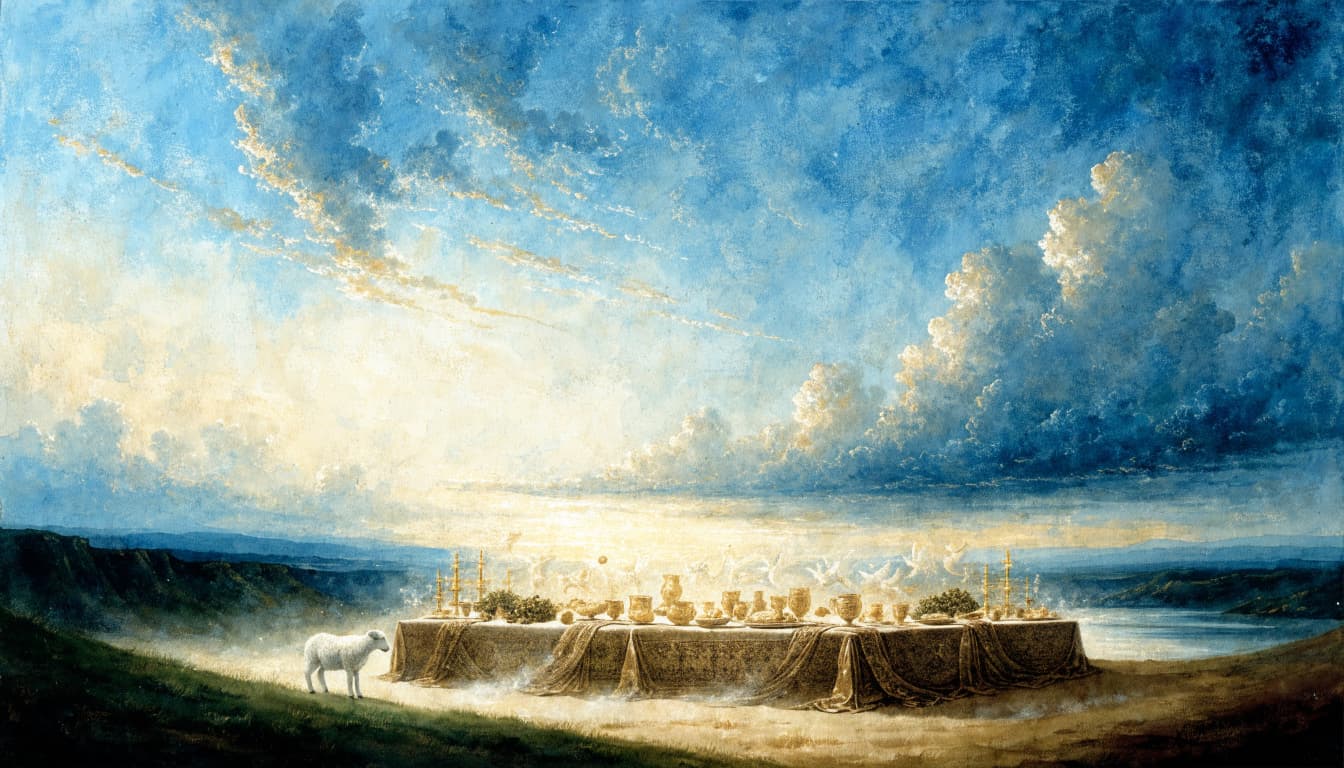
The scene in Revelation 19 moves from heaven's praise to the announcement of the marriage supper of the Lamb. The angel calls those invited to the supper blessed, then John falls at his feet. The angel stops him and directs him to worship God, because he is a fellow servant, not the focus of worship (Revelation 19:10).
The marriage supper is a picture of joyful welcome and belonging with the Lamb. This is the Jesus who gave Himself to save, and Revelation now shows Him honored in victory. The invitation points to a future in which those who belong to Him share in the joy of His Kingdom. For a closer look at Jesus as the promised King, we can trace how His reign fulfills God's promises.
Revelation does not ask us to ignore suffering or pretend evil is harmless. It shows that evil will answer to God, and that Jesus reigns with authority to judge rightly (Revelation 19:11). That matters when injustice seems to go unanswered. Our hope rests in the Lamb, not in the idea that human effort alone will put everything right.
His reign shapes how believers live today
Jesus' authority calls for more than agreement about the future. It calls us to worship God, remain loyal to Jesus, and obey Him now. Paul describes presenting our lives to God as an act of worship (Romans 12:1). In practical terms, our worship belongs in our choices, our relationships, and the way we treat people when doing what is right costs us.
A Pentecostal reading also takes the Holy Spirit's work seriously. The Spirit gives power to witness, as Jesus promised His disciples (Acts 1:8). And when the Spirit gives a message, Paul says prophecy should strengthen, encourage, and comfort the church (1 Corinthians 14:3). Prophetic witness should point people toward Jesus and help the church remain faithful, not draw attention to a messenger.
That faithfulness includes courage. Jesus told His disciples that they would face trouble, but also that He had overcome the world (John 16:33). We can hold fast to that promise without claiming every hardship will end quickly or trying to map every detail of the end times. The Lamb's victory gives us reason to keep worshiping and obeying while we wait.
So, the hope at the heart of prophecy is personal and practical: Jesus saves, Jesus reigns, and His people can trust Him. The marriage supper points toward the joy ahead; the command to worship God reminds us where our loyalty belongs today.
How to Recognize Prophecy That Truly Honors Jesus
Revelation 19:10 points us back to God, not toward a messenger's status. That gives us a good place to begin when we hear a prophetic claim: Does it agree with Scripture, honor Jesus, and encourage faithful worship? We should welcome the Holy Spirit's work while taking time to weigh what is spoken.
Test prophetic claims against Scripture and the character of Jesus
Scripture gives us the sure measure for evaluating spiritual claims. John tells believers to test the spirits, and Jesus teaches that we recognize a tree by its fruit (Matthew 7:16). Those are not shortcuts that remove the need for discernment. They help us ask better questions.
Does the message fit the whole Biblical witness, or does it ask us to ignore clear teaching? Does it honor Jesus as Scripture reveals Him, or use His name to give a speaker more authority? And what kind of fruit follows? A prophetic word should lead toward Godly worship, love, obedience, and faithful living. Fear, manipulation, pride, and pressure to follow a human leader deserve serious attention.
We also need humility. A message may sound spiritual and still be mistaken. Confidence, dramatic details, or a claim that "God told me" do not settle the matter. Paul instructs the church to let others weigh prophetic speech (1 Corinthians 14:29). That means you can take time, compare the words with Scripture, and seek wise counsel without dismissing the Holy Spirit.
For more on examining spiritual claims, see how to recognize false messiahs and prophets. A careful process protects the church from deception while leaving room for genuine encouragement.
Make room for the Holy Spirit while practicing discernment
A Spirit-filled approach does not treat prophecy as either unquestionable or unwelcome. Paul says prophecy can strengthen, encourage, and comfort the church (1 Corinthians 14:3). Those purposes matter. A timely word may help someone keep trusting God, obey Jesus, or find courage in a hard season. We should be grateful for that kind of ministry.
At the same time, prophetic encouragement does not have Scripture's authority. Personal impressions must be tested by Scripture, not used to revise it or bind another person's conscience. A word that directs someone toward a major decision should be handled with particular care. No one should be pressured to act quickly just because a speaker claims divine authority.
Paul's instruction holds both sides together: do not despise prophecies, but test everything and hold fast to what is good (1 Thessalonians 5:21). In practice, that can mean listening prayerfully, checking the message against Scripture, and giving the church room to weigh it. This commentary on 1 Corinthians 14 also discusses prophecy's purpose in building up the church.
We should not assume every believer will receive the same gift, or that every impression is a prophetic word. The Holy Spirit gives gifts as He wills (1 Corinthians 12:11). Our part is to remain open to His work without treating any person's words as equal to Scripture. Prophecy that truly honors Jesus points people toward Him, strengthens the church, and leaves worship where Revelation places it: with God.
Conclusion
The testimony of Jesus may mean witness about Him, revelation from Him, or both. Scripture's prophetic witness centers on who Jesus is and what God accomplishes through Him.
Revelation 19:10 brings that witness back to its proper focus: worship God. Jesus' reign gives us hope as we wait, courage to remain faithful, and a reason to weigh prophetic claims by whether they honor Him. For a closer look at Jesus, the Faithful and True King, we can turn again to Revelation 19.
Understanding Revelation 19:10
The Testimony of Jesus: The Spirit of Prophecy
Why did an angel tell John that the testimony of Jesus is the spirit of prophecy? Discover how this verse centers prophetic revelation on Christ.
John’s Vision
The Angel’s Correction
Worship God Alone
Prophecy Points to Jesus
Why the Angel Pointed John to Jesus


In Revelation 19:10, John falls at an angel’s feet to worship him. The angel immediately stops him, calling himself a fellow servant alongside John and those who hold to the testimony of Jesus. His command is direct: worship God. Then he explains, “the testimony of Jesus is the spirit of prophecy.”
The angel’s words keep both worship and prophecy in their proper place. Prophecy is not an invitation to exalt the messenger or become absorbed in predictions for their own sake. Its witness directs us to Jesus—who He is, what He has done, and the fulfillment of God’s purposes in Him. As we read Revelation, this verse calls us to listen to its prophetic message while keeping our worship fixed on God and our attention fixed on Christ.
What John’s Encounter Reveals
- John falls at the angel’s feet.
- His gesture is an act of worship.
- The angel immediately stops him.
- Even a heavenly messenger is a servant.
- John’s fellow believers share the testimony of Jesus.
- The encounter redirects attention to God.
- “Worship God” is the angel’s clear command.
- No created messenger deserves divine honor.
- Prophetic revelation must never eclipse its Giver.
- Faithful servants point beyond themselves.
- Revelation calls readers to discernment and devotion.
- God alone is worthy of worship.
- Jesus is the focus of the testimony.
- Prophecy bears witness to who He is.
- Its message reveals His redemptive work.
- Its promises anticipate His victory.
- Its fulfillment displays God’s faithfulness.
- Its purpose draws hearts toward Christ.
Reading Prophecy Through Revelation 19:10
The Testimony That Points to Jesus
Revelation 19:10 gives readers a compass for understanding biblical prophecy: its deepest purpose is to bear witness to Jesus Christ. The angel’s refusal of John’s worship keeps the messenger, the vision, and every striking detail in their proper place. God alone is to be worshiped, and the revelation He gives directs our attention to His Son.
From promises of redemption to the hope of Christ’s return, prophecy is more than a sequence of future events. It reveals the identity, work, and triumph of Jesus. Reading with Him at the center helps us approach prophetic passages with humility, recognize God’s faithfulness, and respond with worship rather than speculation.
“Worship God: for the testimony of Jesus is the spirit of prophecy.” — Revelation 19:10 (KJV)
After John falls before an angel, the angel corrects him and points him back to God. His words show that prophecy’s guiding witness is Jesus—not the messenger who delivers it.
Frequently Asked Questions About the Testimony of Jesus
Explore how Revelation 19:10 connects the testimony of Jesus, the spirit of prophecy, and the call to worship God.
What does “the testimony of Jesus” mean in Revelation 19:10?
It points to the witness concerning Jesus—who He is and what He has done. Revelation presents Him as the Lamb, the risen Lord, and the coming King.
What does “the spirit of prophecy” mean?
In this verse, the phrase connects true prophecy with the testimony of Jesus. Prophecy is not merely a way to predict events; it bears witness to God’s purposes in Christ.
Why does the angel tell John to worship God?
When John falls before the angel, the angel refuses his worship and redirects it to God. The moment reminds readers that even a messenger of prophecy must never become the focus of worship.
Does Revelation 19:10 mean every prophecy is only about Jesus?
Prophecy can address nations, judgment, and future events. Revelation 19:10 reminds us to read those themes within God’s larger plan, which centers on Jesus.
How should I read Revelation 19:10 in context?
Read the whole scene in Revelation 19: John hears of the marriage supper of the Lamb, then encounters the angel who tells him to worship God. That setting keeps the verse anchored in the Lamb’s victory and God’s glory.
How can I study Bible prophecy without losing sight of Jesus?
Start with the passage in its context, compare it with the rest of Scripture, and ask what it reveals about Christ. Let the text guide your understanding rather than building conclusions on speculation.
Keep Jesus at the Center of Prophecy
Continue exploring what Scripture says about prophecy—what has happened, what is still to come, and how it all points to Jesus. Read more Bible-based articles and follow the testimony of Jesus through God’s Word.