
Babylon in Revelation: Prophecy, Power, and Modern Society
In Revelation 18, Babylon falls in a moment, her kings and traders grieve over lost wealth, and Heaven calls God's people to come out of her corruption. That sharp contrast raises a hard question: what kind of city, and what kind of people, can look so powerful yet face such sudden judgment?
We'll trace Babylon from earlier Scripture through Revelation 17 and Revelation 18, then consider what its pride, influence, and exploitation can show us about modern societies. As independent, Spirit-filled Pentecostals, we take the warning seriously while recognizing that Christians disagree about Babylon's final identity. Let's begin with Babylon's meaning in Revelation 17–18.
Babylon’s Final Hour in Revelation 17 and 18
Revelation 17 and 18 give us two views of Babylon's end. First, we see a seductive woman tied to political power. Then the city's wealth and influence collapse, and those who profited from it mourn. Read Revelation 17 alongside Revelation 18, and the contrast is hard to miss: Babylon looks impressive to the world, but Heaven sees the corruption beneath its splendor.
The woman, the beast, and the kings who share power
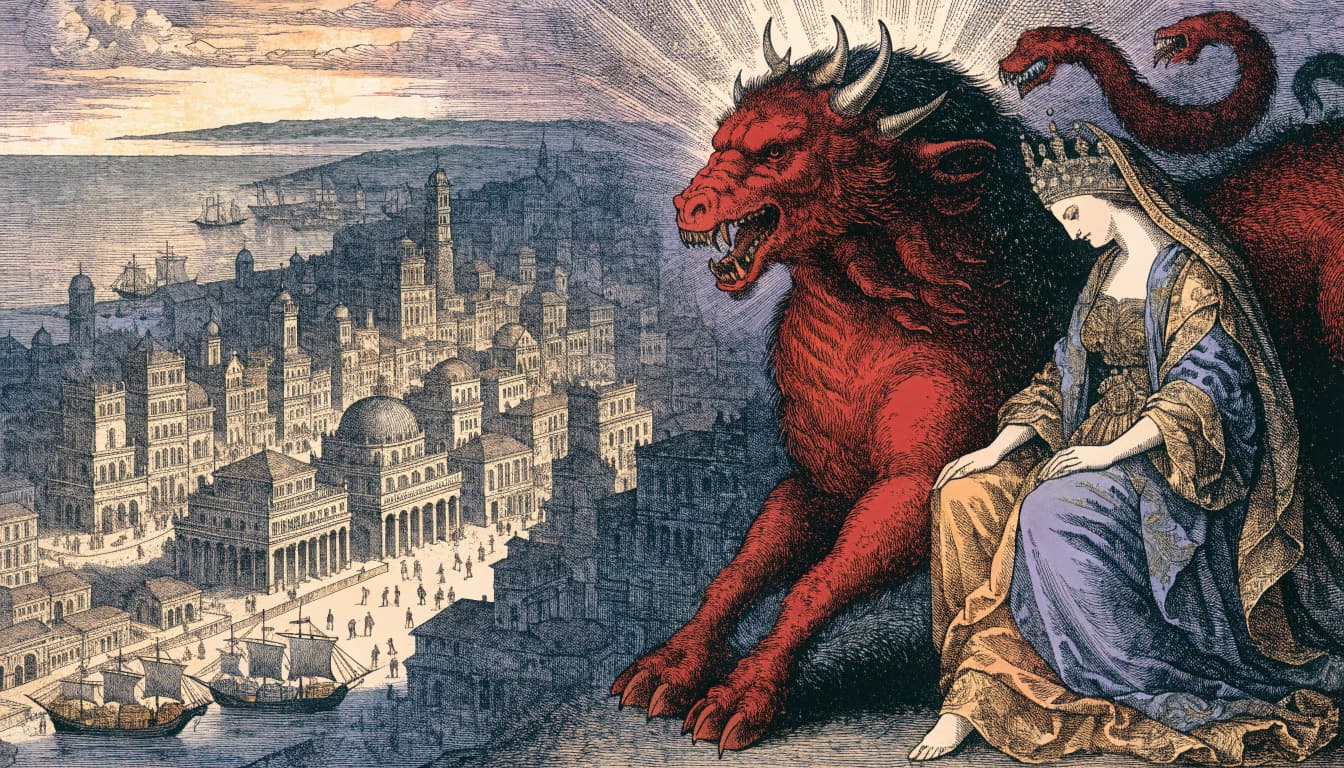
John sees a woman clothed in purple and scarlet, adorned with gold, jewels, and pearls. She holds a golden cup, but what's inside is described as abominations. Her name is Babylon the Great, and she is pictured as having influence over the kings of the earth. Her luxury is part of the warning: outward splendor can hide deep corruption.
The woman rides a scarlet beast with seven heads and ten horns. The angel explains that the heads are seven mountains and also seven kings; the ten horns are ten kings who receive authority for a brief time. They unite with the beast, then turn against the woman and bring her to ruin. The alliance is real, but it doesn't last. Corrupt power and political allies can strengthen one another, then destroy one another.
How should we identify these symbols? Christians interpret them in different ways. Some connect Babylon with Rome in John's time; others see a future power, a corrupt system, or a pattern that appears across history. We should take the chapter's warning seriously without claiming that one modern nation or institution is the settled answer.
Why merchants and sailors mourn Babylon’s collapse
Revelation 18 opens with an angel announcing Babylon's fall. The judgment is sudden, and the response exposes what each group valued. The kings mourn because the city's power and luxury are gone. Merchants weep because no one buys their cargo. Sailors and shipmasters watch from a distance, grieving as the city's wealth disappears.
Their sorrow centers on lost profit and comfort. Heaven sees something else: Babylon's corruption, violence, and deception. The chapter calls God's people to come out of her, so they will not share in her sins or judgment. That call is about refusing participation in the corruption the vision condemns, not guessing which modern place will fall next.
John's cargo list names gold, fine goods, spices, animals, and other costly merchandise. Then it reaches a chilling final item: human lives. People have become part of the trade, treated as goods instead of neighbors made in God's image. This detail keeps Babylon's wealth from looking harmless. A prosperous system can still be built on exploitation.
The three groups mourn the same collapse, but their grief shows different stakes: political prestige, commercial profit, and maritime trade. The next chapter turns toward the victory of Christ, not Babylon's former glory. We can follow that contrast in Revelation 19 and the triumph of Jesus.
How Earlier Scripture Builds the Picture of Babylon
Revelation doesn't introduce Babylon out of nowhere. Its picture draws on earlier Scripture, where Babel's pride, Babylon's violence, and a king's sudden judgment all help us recognize the warning. We should keep the connections clear: some are shared images or wording, while others are broader patterns.
Babel’s pride and the first picture of rebellion
Genesis 10 names Babel among the beginnings of Nimrod's kingdom. In Genesis 11, people gather to build a city and a tower, hoping to make a name for themselves and avoid being scattered across the earth. God had commanded humanity to fill the earth. Their unity, then, becomes a way to resist His command and center their future on their own ambition.
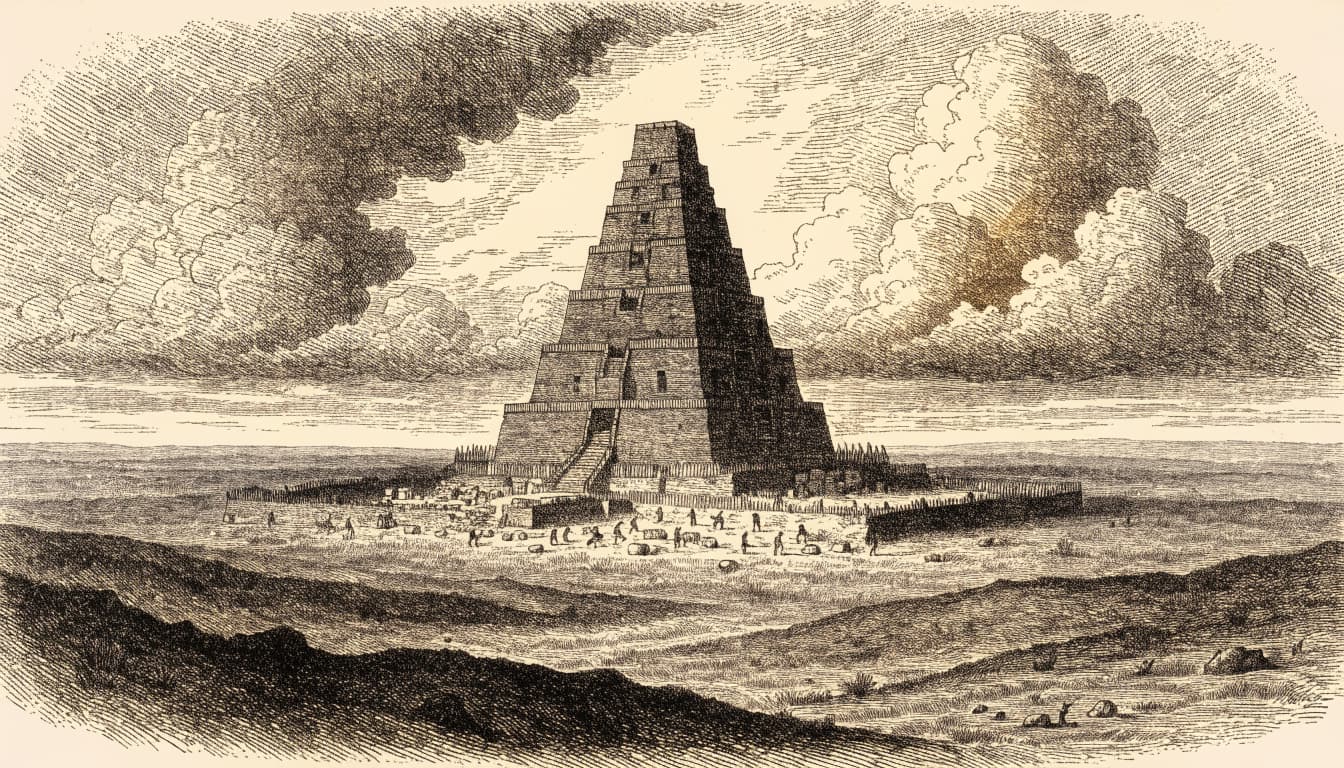
Babel gives us an early theme that later Scripture develops: human power can unite around pride and defiance. But Genesis 11 is not the later judgment of Babylon described by Isaiah, Jeremiah, or Revelation. It lays a thematic foundation, rather than telling the same episode twice.
Isaiah and Jeremiah announce Babylon’s fall
Isaiah 13–14 describes judgment against Babylon and its king. The city's strength cannot protect it, and its pride does not place it beyond God's reach. Isaiah 13 uses images of terror, darkness, and devastation. Isaiah 14 turns toward the downfall of a ruler who exalted himself. The point is plain: Babylon's power has an end.
Jeremiah 50–51 expands the indictment. Babylon is violent, idolatrous, and wealthy, yet its security will collapse. Jeremiah 51:8 describes its sudden fall; Revelation 18 also announces Babylon's fall and stresses how quickly its apparent strength disappears. The passages share a clear image of a proud city brought down, though not every detail in Revelation is a direct quotation. A comparison of Revelation 17–18 with Jeremiah 50–51 traces several of these textual connections.
Jeremiah also ends with a striking enacted sign: a stone is thrown into the Euphrates to show Babylon sinking and not rising again. Revelation 18:21 uses a related image of a millstone cast into the sea to picture the city's final ruin. We can call that a meaningful textual echo, while still recognizing that Revelation adapts the image.
Daniel 5 shows a proud court facing judgment
Daniel 5 brings Babylon's arrogance into a royal banquet hall. King Belshazzar uses the gold and silver vessels taken from the Temple in Jerusalem for a feast honoring his gods. The chapter says he and his guests drink from the vessels while praising idols made of gold, silver, bronze, iron, wood, and stone.
Then the celebration stops. A hand writes on the wall, Daniel interprets the message, and Belshazzar is judged that very night. Daniel says the king was weighed and found wanting; the chapter also records that Babylon fell and Darius received the kingdom.
Revelation does not repeat Daniel 5's circumstances. Still, we see a shared pattern: rulers trust their status, dishonor what belongs to God, and discover that human power cannot overrule His judgment. Reading these passages in context helps us distinguish principles for interpreting Biblical prophecy from guesses that go beyond the text.
What Babylon’s City and Its People Represent
Babylon in Revelation is more than a place on a map. John describes a city whose wealth, influence, and public splendor conceal a corrupt system. We should keep the ancient city's history distinct from Revelation's symbolic portrait, while noticing how the Biblical images connect.
A city defined by wealth, spectacle, and influence
Revelation 18 gives Babylon the scale and shine of a trading power. The merchants mourn because their cargo has lost its buyer: gold, silver, precious stones, fine linen, purple, silk, scarlet, costly wood, ivory, spices, and other luxuries. Ships and sailors share in the grief because the city's trade has enriched them. The list is meant to impress us, then unsettle us. Babylon's abundance looks magnificent, but the mourners focus on what they can no longer sell.
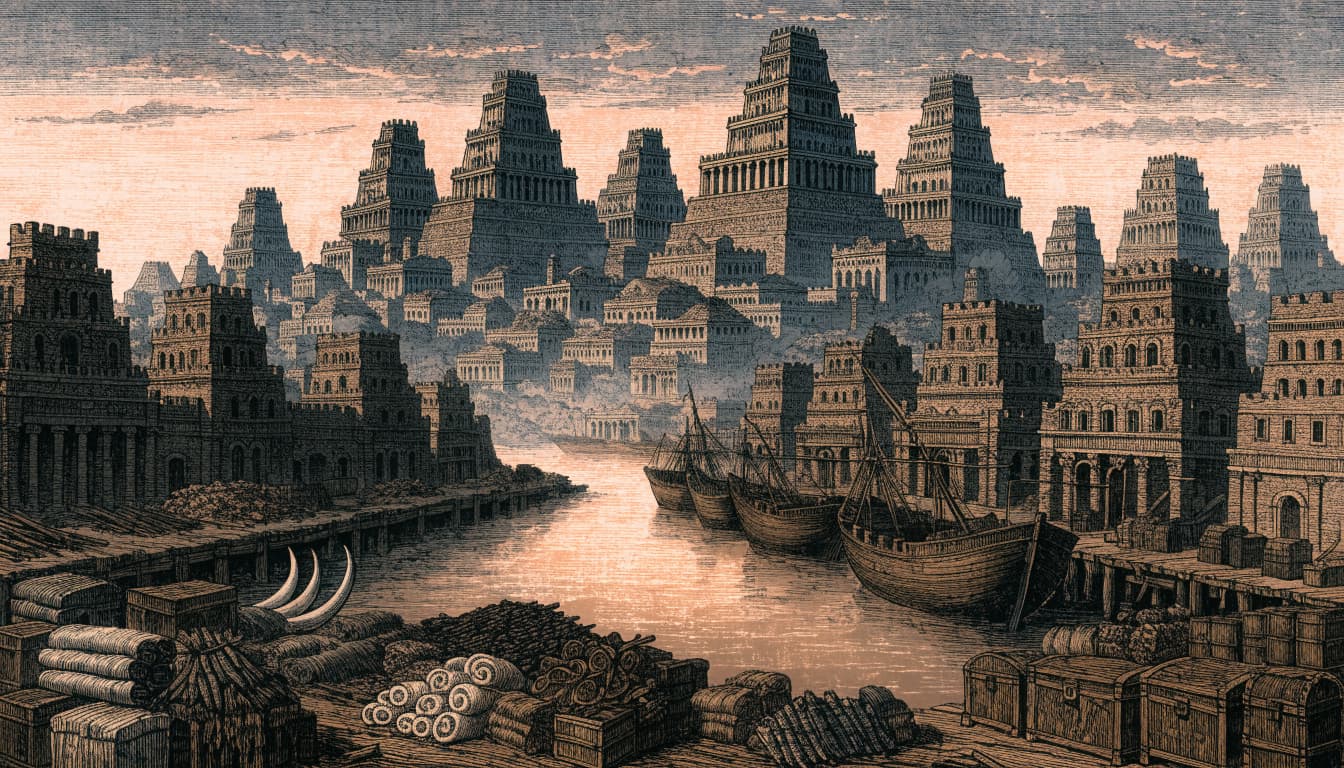
Jeremiah 51:13 also portrays Babylon as rich in treasures and associated with abundant commerce. That connection helps us see why Revelation's cargo list feels so pointed: wealth is not just decoration around the city. It is part of its power. Read Jeremiah 51 alongside Revelation 18, and the shared picture comes into focus: a prosperous city whose apparent security cannot keep it standing when God judges it.
We should be careful, though, not to turn John's vision into an unsupported description of every person who lived in ancient Babylon. Revelation uses the city as a symbol of wealth joined to influence and corruption. Its splendor tells us what the system values, not what every resident believed or did.
A culture that profits from people and resists God
The most chilling line in Babylon's cargo list comes at the end: "bodies and souls of men." Human lives have been treated as merchandise. The vision puts exploitation beside luxury, so we cannot admire Babylon's riches without asking who pays the price. The city's sin is not simply that it has wealth. It profits while people are reduced to goods.
Revelation also describes Babylon as seducing nations, kings, and merchants. Its influence makes corruption look desirable, even respectable. When public power rewards greed and idolatry, wrongdoing can start to feel normal. That is part of the warning: a society can celebrate success while pushing aside the God who calls people to justice and faithful worship.
Still, the judgment falls on Babylon's conduct and the system it embodies. It is not an invitation to despise every person connected to a city or society. The call for God's people to come out of Babylon is a call to refuse participation in its sins. We can take that seriously without turning the symbol into a license for contempt, or claiming that one modern nation has been conclusively identified as Babylon.
Who or What Is Babylon in Revelation?
John calls Babylon a city, but Revelation's images point beyond streets and buildings. The woman, beast, kings, and merchants invite readers to ask whether Babylon names one historical power, a future city, or a recurring pattern of rebellion against God. Christians weigh the same clues and reach different conclusions.
The main views and the clues readers weigh
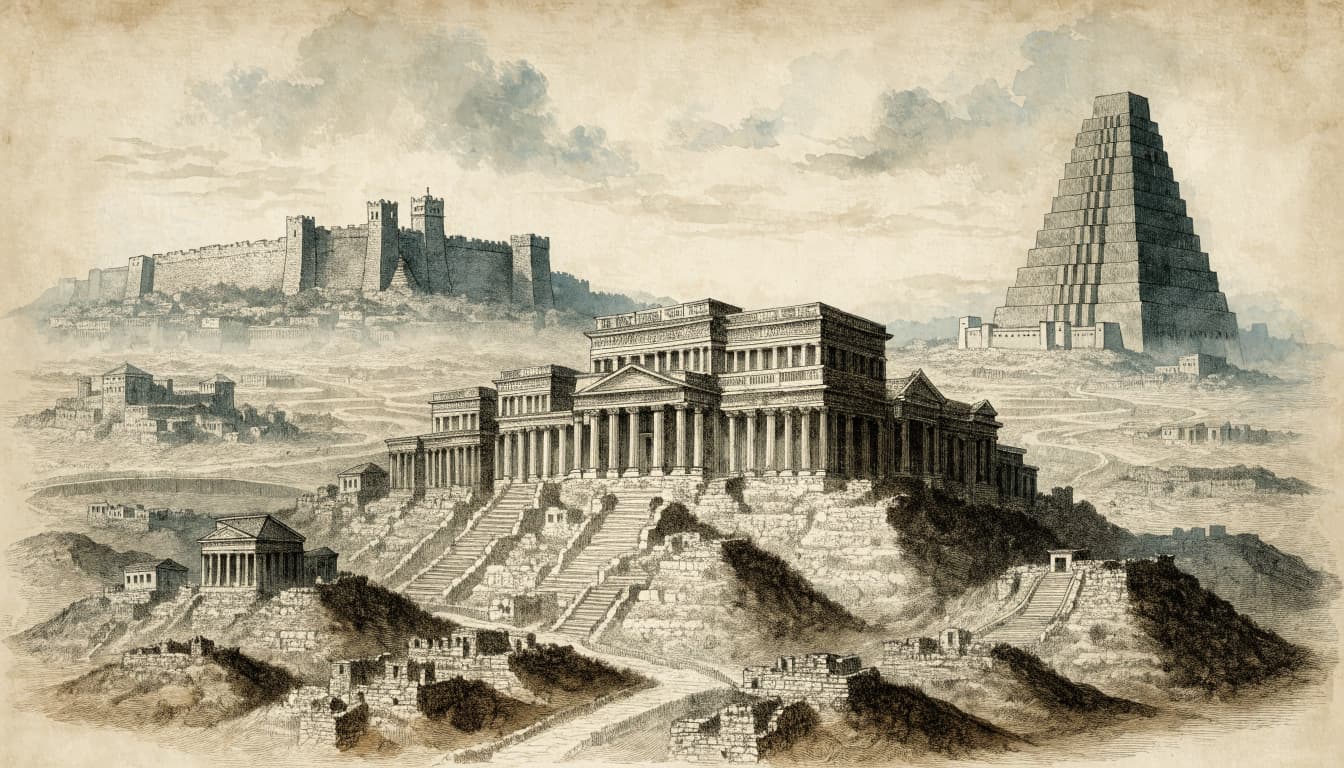
Rome is a common identification for John's first readers. The angel says the woman's seven heads are seven mountains, and Rome was famously associated with seven hills. The vision also describes a city with influence over kings and access to wealth, which fits Rome's imperial reach. Yet the seven mountains alone don't prove the identity. The angel also calls them seven kings, so readers must account for the whole explanation, not just one familiar clue. See the range of interpretations of Revelation's Babylon.
Some interpreters identify Babylon with Jerusalem, often connecting the vision to the city's judgment and its conflict with God's people. That reading gives weight to the religious language and the history of Jerusalem, but the text does not name Jerusalem directly. Others identify Babylon with papal Rome, especially in historicist readings that understand the vision as describing a corrupt religious power across later centuries. The seven hills have supported that interpretation too, but they cannot by themselves establish it.
Futurist interpreters may expect a literal Babylon to rise again as a major city or center of power. That view takes the place imagery seriously and reads the vision as describing a future event. Its challenge is showing why the name must refer to the ancient city's physical location rather than functioning symbolically, as it often does in apocalyptic writing.
Another reading sees Babylon as a recurring pattern: idolatrous, oppressive power that seduces rulers and profits from exploitation. Revelation's explanation of the woman as a great city (Revelation 17:18) can support a concrete political setting, but the image can also reach beyond one city. The interpretations need not all be mutually exclusive. Rome could have been the immediate reference for John's audience while Babylon also described a pattern that reappears.
As independent, Spirit-filled Pentecostals, we take the prophetic warning seriously, but we don't treat one modern identification as settled fact. The imagery speaks clearly about power joined to idolatry, corruption, and wealth gained at others' expense. Whether the final picture points to a future city, a wider system, or both remains a matter of interpretation.
How to read prophecy without forcing a modern match
When a headline seems to match Babylon, we can pause before naming a country, leader, or institution. Start with the whole passage. Notice who speaks, what the angel explains, and how the vision connects the woman, city, kings, and beast. For example, Revelation 17:9-10 gives more than the image of seven hills; it also mentions seven kings.
Next, compare the wording with earlier Scripture. Revelation draws on older images of proud cities and their judgment, so those passages help us recognize its language without assuming every detail means exactly the same thing. Then separate what the text states from what we infer. A resemblance may make an interpretation possible, but it does not make it certain.
Finally, make room for faithful disagreement. We can name the evidence for Rome, Jerusalem, papal Rome, a future literal Babylon, or a transhistorical system without pretending that every question has been answered. That kind of care doesn't weaken the warning. It keeps our attention on what John makes plain: God judges corrupt power, and His people must not share in its sins.
Babylon’s Judgment and Heaven’s Call to Come Out
Revelation 18 brings two messages together: Babylon's power will collapse, and God calls His people to leave its sins. The vision doesn't ask us to identify a modern city with certainty. It asks whether we recognize the pride, idolatry, and exploitation Babylon represents, and whether we will refuse to take part.
Why the collapse comes so suddenly
Babylon boasts that she is secure, saying she sits as a queen and will not see sorrow. Yet judgment comes in a single day. The contrast is sharp: what looks permanent to the powerful can fall quickly when God calls it to account. Wealth and political protection cannot make injustice last forever or place any society beyond God's reach.
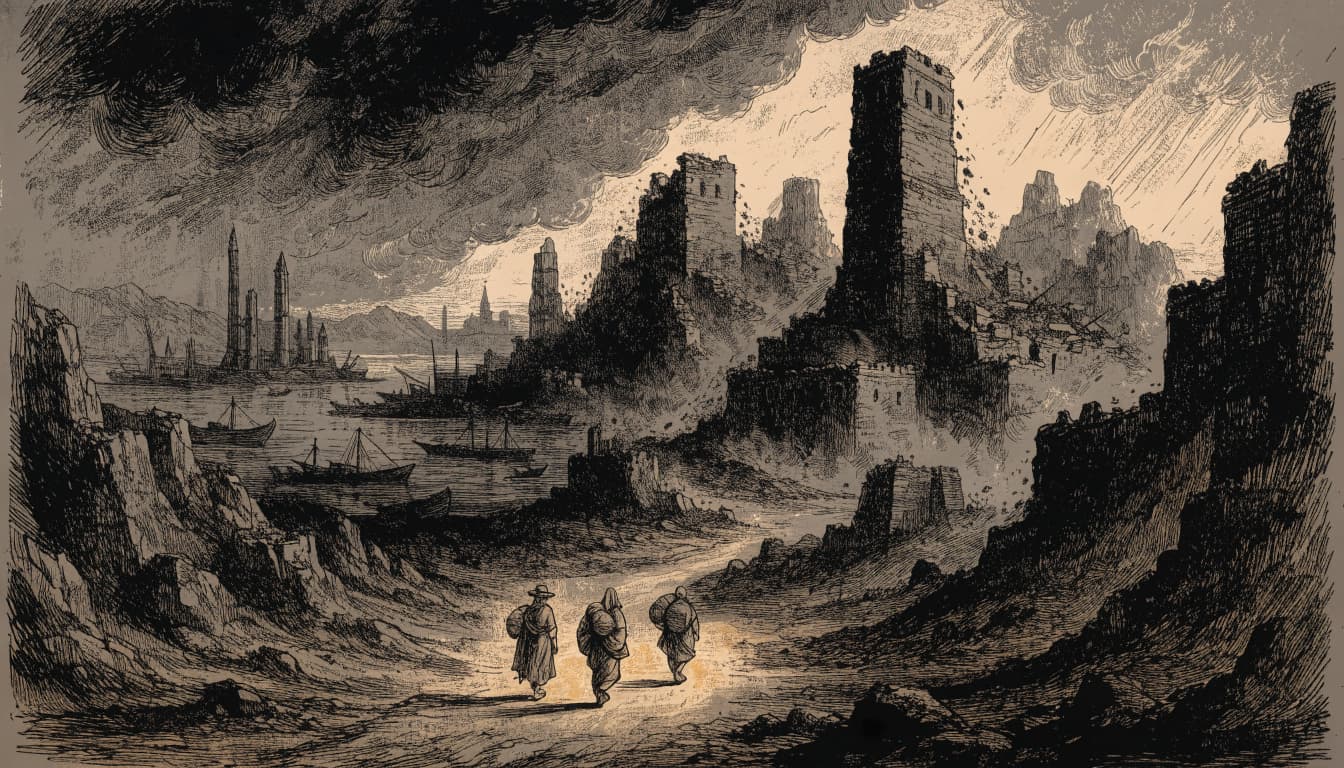
The kings and merchants mourn because they lose power, luxury, and profit. Heaven's response is different. Babylon's judgment answers the violence and corruption that enriched the city while treating human lives as merchandise. The call to rejoice in Heaven is not delight in suffering. It is a declaration that God sees the oppressed and will not let evil rule forever. We can read the judgment and mourning in Revelation 18.
What leaving Babylon means for God’s people
The command, "Come out of her, my people," means refusing complicity in Babylon's sins (Revelation 18:4). It is a call to separate from idolatry, greed, exploitation, and false worship. That separation is moral and spiritual. It does not automatically require abandoning every ordinary relationship or civic duty, or treating people with different beliefs as enemies.
So what might faithful separation look like in daily life? We refuse dishonest gain, resist worshiping wealth or status, speak truth when deception benefits us, and treat people as made in God's image rather than as tools for profit. We remain faithful to God even when a surrounding culture calls compromise normal.
As Spirit-filled Pentecostals, we believe the Holy Spirit empowers God's people to live with repentance, holiness, and discernment. This call should make us sober, not fear-driven. We don't need to panic or label every person who disagrees with us as Babylon. We do need to examine our own loyalties and ask whether our choices honor God.
Leaving Babylon starts with turning from sin and staying close to Jesus. The Holy Spirit helps us live faithfully, bear witness to truth, and love people without joining in what harms them. We can also keep our hope fixed on Jesus, Faithful and True, whose justice exposes corruption and whose Kingdom will not fall.
What Babylon’s Pattern Reveals About Modern Society
Babylon's warning reaches beyond one ancient city. It asks what happens when wealth, influence, and comfort matter more than truth and human dignity. We should recognize those values wherever they appear, without labeling an entire society as Babylon or treating current events as proof of prophecy.
Warning signs that echo Babylon’s values
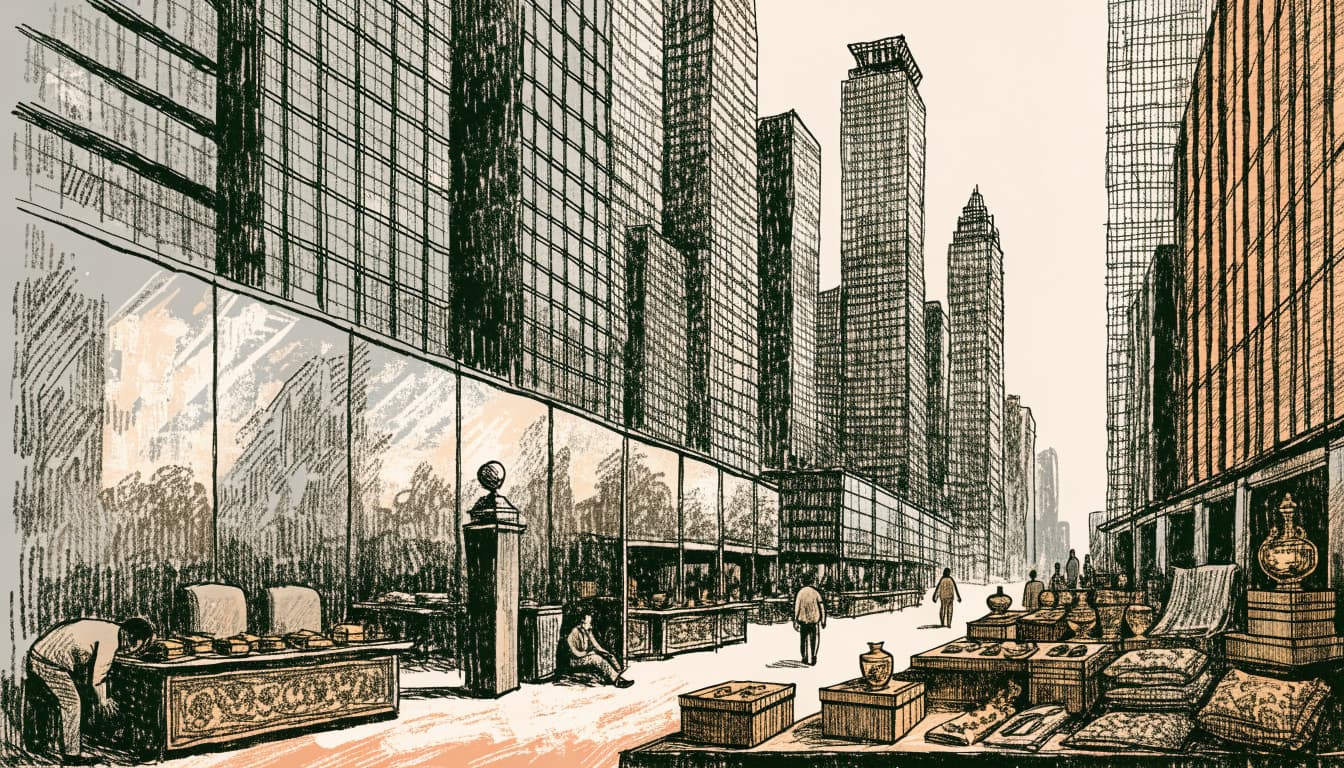
In Revelation 18, merchants grieve over lost trade, while human lives appear at the end of Babylon's cargo list. That image confronts us with a hard question: what does a society value when people become tools for someone else's profit?
We can see echoes of that attitude in familiar settings. A workplace may praise growth while treating exhausted workers as replaceable. A buyer may be encouraged to keep upgrading, even when the people who make those goods remain unseen. Public trust can also suffer when someone uses authority to secure private gain, or when dishonesty gets excused because the person involved is successful.
These examples don't prove that every business, leader, or consumer is corrupt. They do show how easily harmful choices can be dressed up as normal. When wealth becomes a measure of someone's worth, people with less money can be dismissed. When success is treated as evidence of good character, we may stop asking how that success was gained.
Babylon's pattern warns us not to confuse material prosperity with moral good. Wealth itself is not the sin. The danger comes when greed shapes our loyalties, exploitation becomes acceptable, and power protects the people who benefit.
Is the path fixed, or can people and societies change?
Scripture warns of judgment, but it also calls people to repent and obey God. Revelation's warning against sharing in Babylon's sins is a call to turn away from corruption, not a declaration that every society has crossed a point of no return. Current trends, however troubling, don't prove an irreversible downward spiral.
People and institutions still make choices. A business can deal honestly with workers and customers. A community can care for neighbors who have little influence or money. Leaders can use authority to serve the public rather than themselves. None of those choices makes a society perfect, but each rejects the idea that profit or status should rule every decision.
As Spirit-filled Pentecostals, we believe the Holy Spirit brings conviction, calls us to repentance, and empowers us to obey God. That begins with us, too. We can ask where greed has shaped our habits, where we have excused dishonesty, and whether we treat people as neighbors or as means to an end.
We shouldn't promise that every nation or institution will repent. We can say that God still calls people to turn toward Him, and that faithful choices remain possible. Our hope rests in Jesus, not in wealth or human power, and the Holy Spirit helps us live as witnesses to the righteous King who defeats evil.
Conclusion
From Babel's pride to the warnings of Isaiah and Jeremiah, Scripture shows that wealth, idolatry, and power built on exploitation cannot protect a city from God's judgment. In Revelation 17–18, Babylon's luxury draws kings, merchants, and sailors into her influence, yet her fall exposes what their prosperity depended on.
Christians differ over Babylon's precise identity, but the call to faithfulness is clear: we must examine our loyalties and refuse to take part in greed, deception, or the treatment of people as commodities. We don't need to panic over headlines or claim certainty where Scripture leaves room for interpretation; our hope rests in God, and Revelation's vision of Jesus' victory reminds us that corrupt power does not have the final word.
A Revelation Study
Babylon in Revelation: Prophecy, Power, and Modern Society
Explore how Revelation portrays Babylon’s spiritual deception, political influence, and seductive wealth—and why its warning still matters today.
PROMISED: Prophecy Reveals Our Messiah In Scripture, Every Detail
Who Is Babylon in Revelation?
Revelation depicts Babylon as both a city and a far-reaching system of rebellion against God. John sees “Babylon the great” as a woman allied with earthly rulers and intoxicated with the blood of the saints (Revelation 17:1–6). The angel explains that the woman represents “the great city” exercising dominion over the kings of the earth (Revelation 17:18). Her name also recalls ancient Babylon, whose pride and idolatry Scripture condemned (Isaiah 47:1–11; Jeremiah 50:1–3).
Revelation 18 expands the picture: merchants and rulers mourn Babylon’s fall because they profited from her luxury, while a voice from heaven calls God’s people to “come out of her” and avoid sharing in her sins (Revelation 18:3–4, 11–19). Christians differ on whether these visions point primarily to ancient Rome, a future center of power, or a recurring pattern of corrupt empire.
Whatever the historical identification, the passage warns against worship, wealth, and political influence joined in defiance of God. Babylon does not have the final word: her judgment gives way to rejoicing in Heaven and the reign of Christ (Revelation 19:1–6).
Babylon: An Ancient Name for Defiant Power
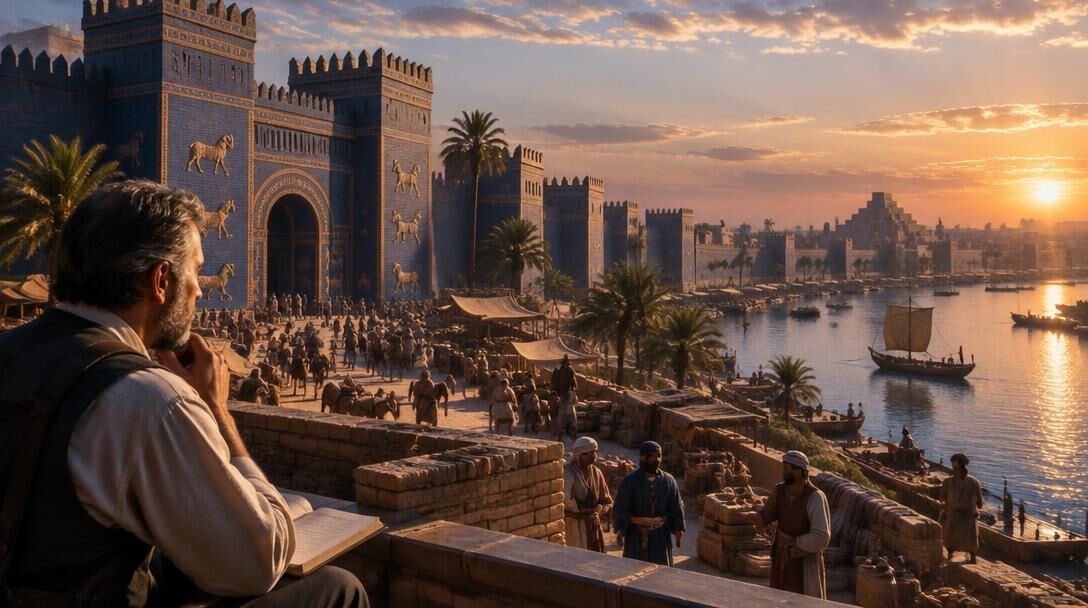
To Revelation’s first readers, Babylon recalled an empire that conquered Jerusalem and carried God’s people into exile. In John’s vision, the name also evokes the pressures of their own world: rulers who demanded loyalty, wealth built through exploitation, and public life shaped by idolatry. Babylon is more than a place on a map; it is a portrait of power that asks for the devotion owed to God alone.
The City’s Splendor and Its Fall
Revelation 17–18 portrays Babylon as dazzling, influential, and deeply entangled with the nations and their commerce. Yet its luxury cannot conceal the violence and corruption beneath it. By tracing the imagery back to the prophets and the experiences of early believers, we can hear the warning without forcing every symbol into a modern headline: worldly power may appear secure, but its claims are temporary before the reign of Christ.
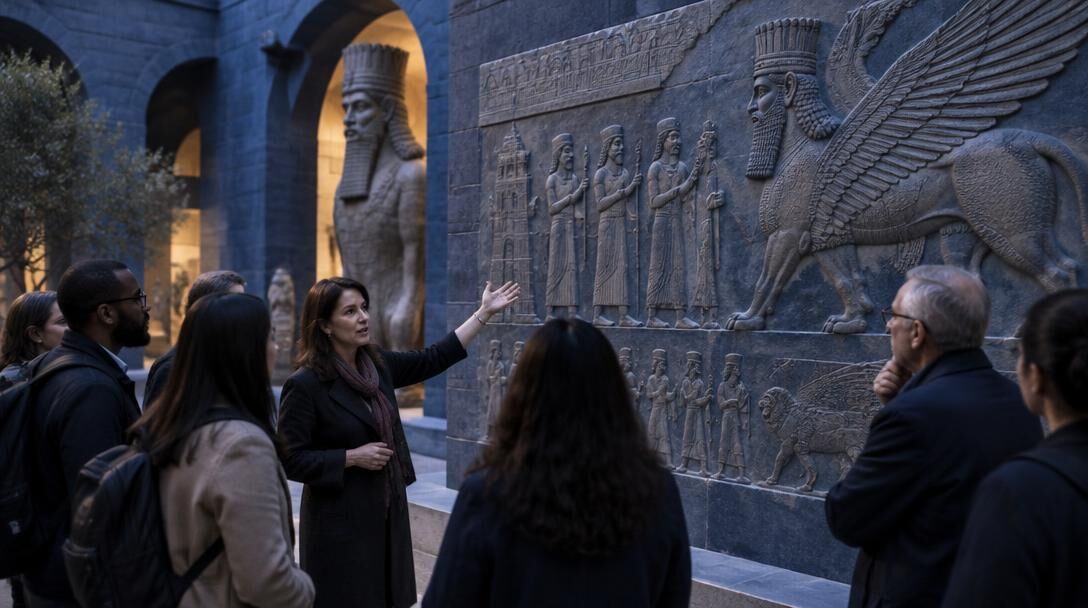
“Fallen, fallen is Babylon the great!” — Revelation 18:2
Revelation 18:2
What Babylon’s Vision Helps Us Discern
Revelation calls believers to examine the loyalties and desires that shape a society. These four guideposts connect its ancient imagery to present-day life while keeping the Biblical text ahead of speculation.
01
Power That Demands Allegiance
02
Prosperity Without Justice
03
Discernment Beyond Headlines
04
Faithfulness to Christ
Babylon in Revelation: Common Questions
Explore what Revelation says about Babylon, its prophetic significance, and why its message matters today.
What does Babylon symbolize in Revelation?
Babylon represents a system of spiritual deception and worldly power that opposes God. Revelation uses its name to evoke the pride, idolatry, and rebellion associated with ancient Babylon.
Is the Babylon of Revelation a literal city?
Christians differ on whether Babylon refers to a future city, a political and economic power, or a broader spiritual system. Revelation’s imagery calls readers to consider the influence of powers that turn people away from God.
What role does Babylon play in Bible prophecy?
Revelation portrays Babylon as influential but temporary. Its downfall reveals the limits of human power and sets it in contrast with the lasting reign of Jesus Christ.
Why does Babylon’s message matter today?
Babylon challenges readers to examine where they place their trust. Its story urges discernment amid materialism, injustice, and spiritual compromise—and points us toward faithfulness to Jesus.
Look Beyond Babylon to Jesus
Keep exploring Scripture to see how prophecy exposes false hope, reveals God’s purposes, and points to the enduring hope found in Jesus Christ.