
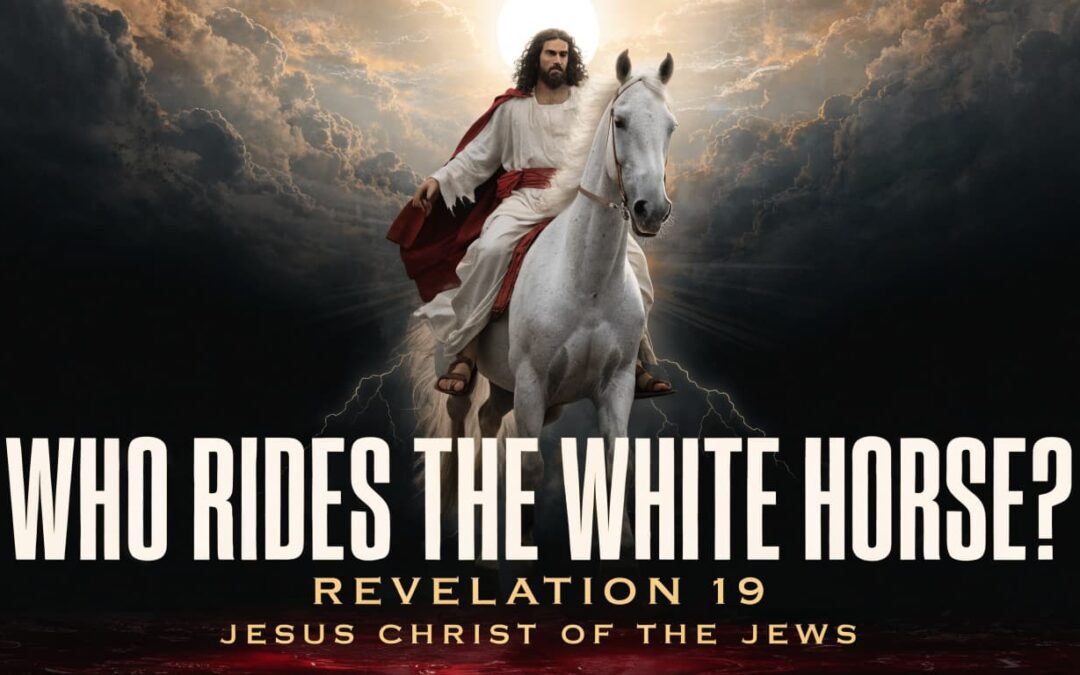
Revelation 19’s White Horse Rider: Jesus, the Righteous King
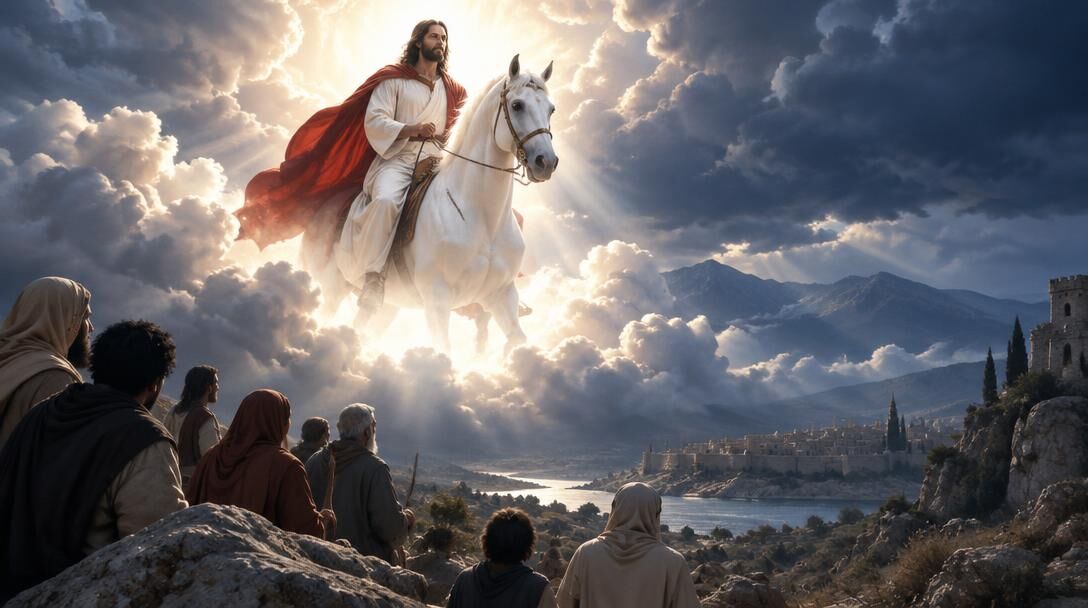
Heaven opens in Revelation 19:11, and a rider appears on a white horse. John sees Jesus as Faithful and True, the righteous Judge and King whose authority rises above every earthly ruler.
When injustice and deception seem to have the upper hand, this vision points us to the One whose judgment is right and whose reign cannot be overturned. We'll walk through the symbols, their place in Revelation, and the hope Christ's victory gives us, beginning with Jesus as the righteous King in Revelation 19.
What the White Horse and Its Crowned Rider Reveal in Revelation 19
The rider's appearance in Revelation 19 brings the chapter's praise and expectation into focus. John sees Heaven opened, a white horse, and a King whose names and authority identify Him as Jesus. The scene is vivid, but its purpose is clear: Christ comes to judge evil and establish His victory.
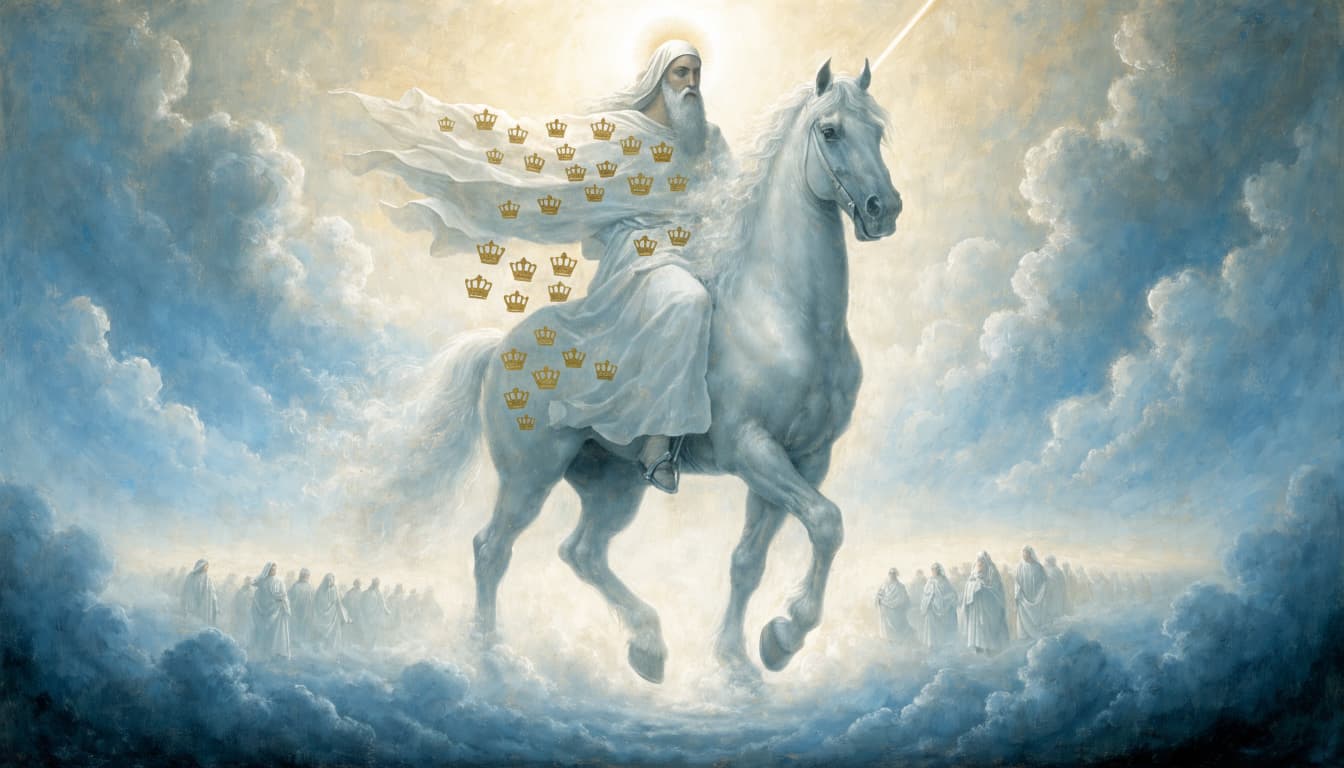
Why the white horse signals victory
In John's vision, the white horse announces a triumphant arrival. The rider comes from Heaven, wears many crowns, and is called "Faithful and True." He judges and makes war in righteousness, a description that separates His action from the corrupt violence of earthly rulers. The horse belongs to this royal scene. We should read its meaning here in the light of Revelation 19, rather than assume that every white horse in Scripture carries the same meaning.
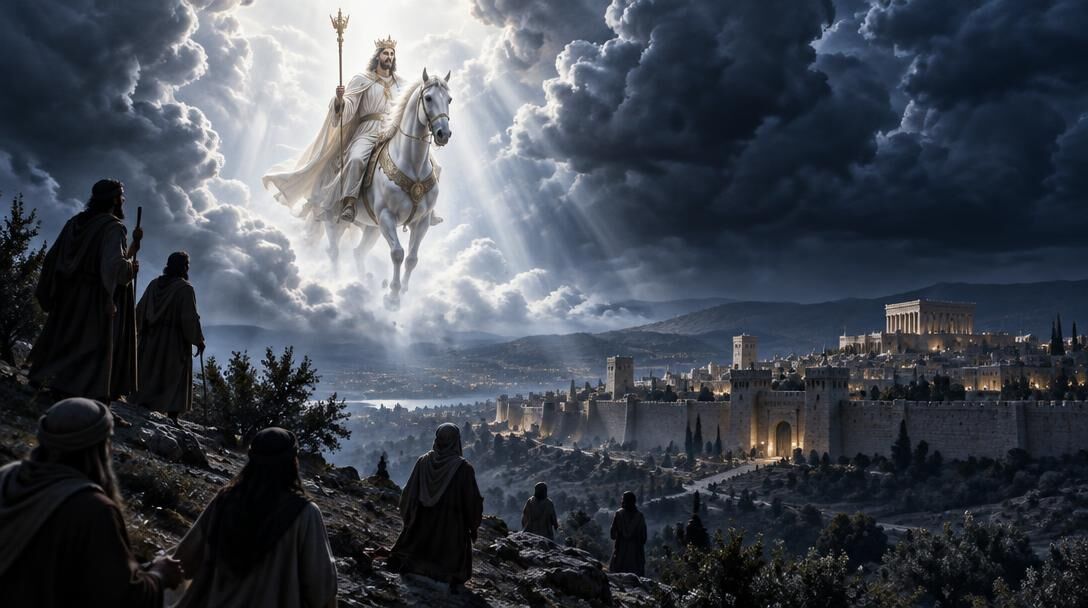
The rider's titles make His identity plain. John calls Him "The Word of God," and the name on His robe and thigh declares Him "King of kings and Lord of lords." His sword comes from His mouth, not from His hand, and His authority reaches the nations. This is a vision of divine judgment, not an ordinary human battle scene. The armies in Heaven follow Him, but John does not describe them fighting. The focus stays on the Rider and the authority He carries.
The white horse also helps distinguish this vision from the first horseman in Revelation 6. That rider also sits on a white horse, but John gives him different details and titles. Interpretations of that earlier figure differ, so we need not settle that debate here. In Revelation 19, the names "Faithful and True," "The Word of God," and "King of kings and Lord of lords" point to Jesus. For a closer look at how the passage identifies Him, see Revelation 19 explained.
How the surrounding verses frame the rider’s coming
The vision does not arrive without context. In Revelation 19:1-10, Heaven praises God for His righteous judgment and celebrates the marriage supper of the Lamb. The chapter then turns to the opened Heaven and the Rider's appearance. That movement matters: praise gives way to the sight of the King whose judgment is just. We are shown who deserves worship before we see the final defeat of the powers that oppose Him.
After the Rider appears, Revelation 19:17-21 describes the beast, the kings of the earth, and their armies gathered against Him. Their defeat follows, not a drawn-out contest between equal forces. The contrast sharpens the scene's meaning: human rulers may gather their power, but they cannot overturn Christ's reign.
So the horse signals victory, while the surrounding verses show what kind of victory John sees. Jesus comes as the righteous King, and the chapter places His arrival between Heaven's praise and evil's defeat. We can read the full chapter in the New King James Version of Revelation 19.
Why Jesus Is Called Faithful and True
The rider's name tells us how to understand His authority. Jesus does not win through deception, favoritism, or self-serving power. He judges as the King who is completely faithful to God's truth and whose actions match His character.
A name that shows His trustworthiness
John calls the rider "Faithful and True" in Revelation 19:11. These words describe more than a reputation. They tell us we can trust who Jesus is, what He says, and what He does. His promises are dependable because He does not change His word to suit Himself.
That matters in a book where false power and rebellion work hard to mislead the nations. Revelation portrays rulers and forces that oppose God, claim authority, and draw people away from the truth. Jesus stands in direct contrast. He does not disguise evil as good or use a false promise to gain loyalty. His rule is open, truthful, and grounded in God's authority.
The title also connects His character to His judgment. We can trust His verdict because the Judge is "Faithful and True." Human beings may miss facts, favor the powerful, or act from anger. Jesus' judgment is not corrupted by those failures. When He acts, His decisions agree with what is right.
For a closer look at how these titles describe Christ's rule, see Jesus as the Faithful and True King. The point is not simply that Jesus tells the truth. His whole reign is trustworthy.
Judgment and war carried out in righteousness
John says the rider judges and makes war "in righteousness." That phrase tells us His judgment is just. Jesus confronts evil with authority that belongs to God, not with the selfish ambition or injustice that often drives human rulers.
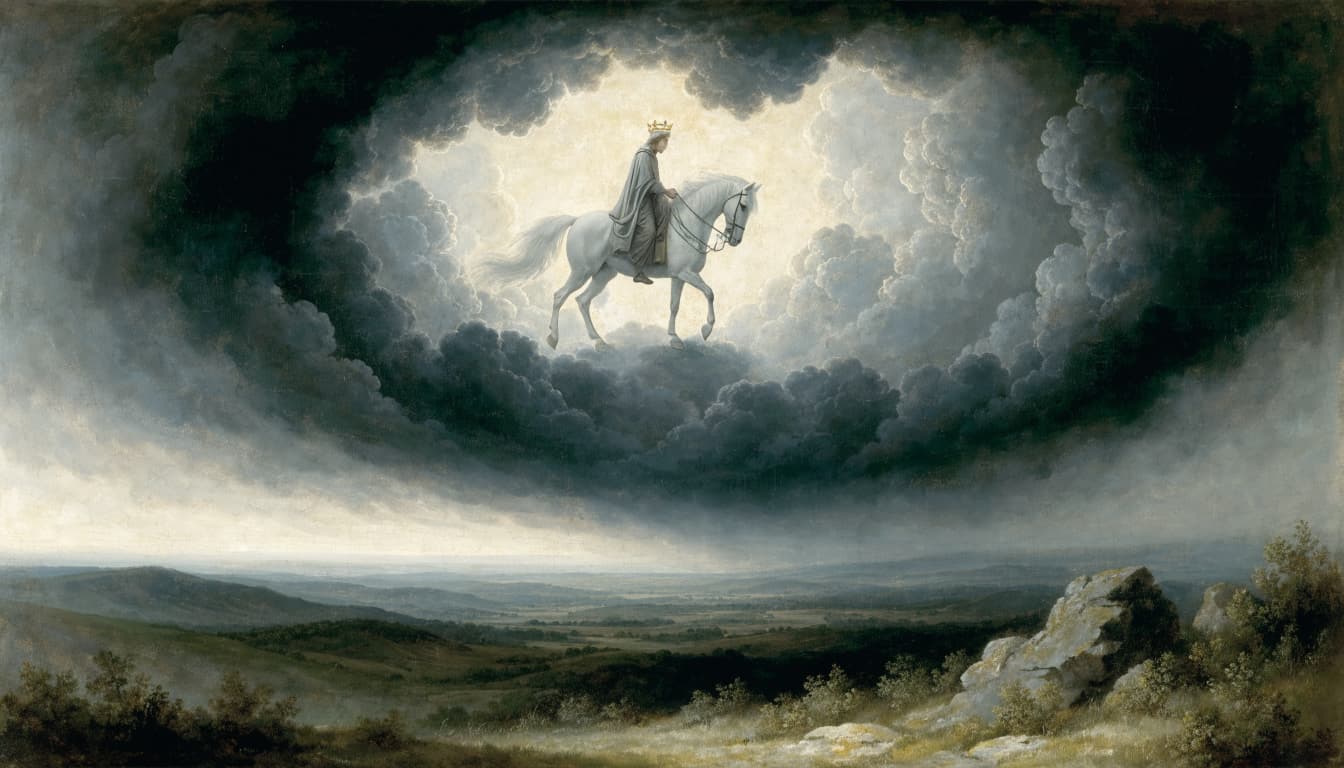
The word "war" can sound like a permission slip for violence, but Revelation 19 does not give human beings that permission. John describes a vision of Christ's divine judgment and the defeat of powers that rebel against God. The rider's authority is His alone. We cannot take His role as Judge and use it to excuse our own anger, domination, or attempts to force others into submission.
That distinction matters. Human power can claim to defend what is good while protecting its own interests. Jesus does not rule that way. His faithfulness means He does not lie about evil, and His righteousness means He does not judge unjustly. He confronts rebellion without becoming like the corrupt powers He defeats.
So when we read that Jesus makes war in righteousness, we should look to the character of the Rider, not turn the image into a model for human conquest. Revelation directs our hope toward the King who judges rightly. Evil will not have the final word, and no unjust ruler can claim Christ's authority for himself.
What the Rider’s Crowns Say About His Authority
The crowns on the rider's head show that His authority reaches beyond any throne on earth. John does not give us a number to decode or assign a separate meaning to each crown. The vision points us to a simpler truth: Jesus is the supreme King, and no rival power can outrank Him.
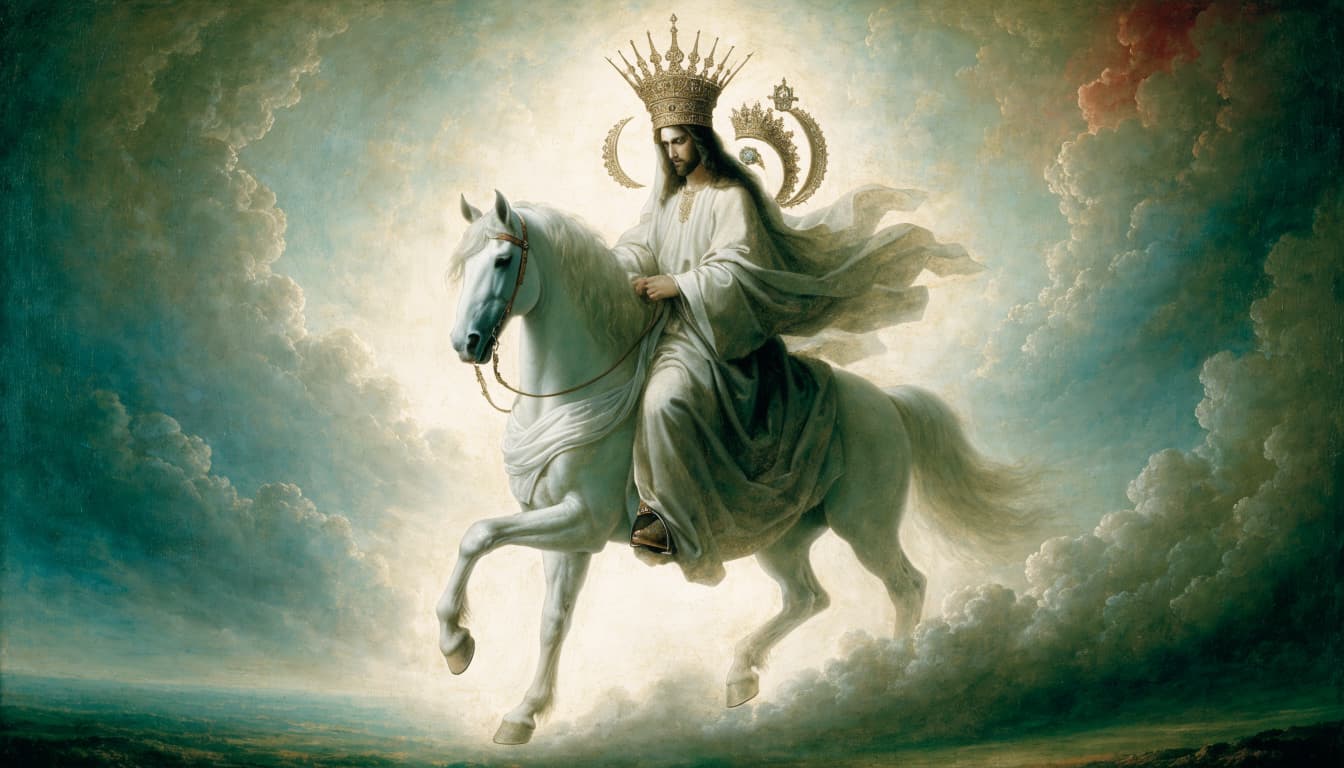
Many crowns and the title King of kings
Revelation describes many crowns, or diadems, on the rider's head. A diadem is a royal crown, so this image presents Jesus with kingly authority. The contrast matters. Earthly rulers hold power that is limited, and the beast's authority is opposed to God. Jesus does not share His rule with a higher power or answer to a rival throne.
John makes the point plain with the title written on the rider's robe and thigh: "King of kings and Lord of lords." The title places Jesus above every other ruler. Their authority may seem imposing, but it cannot overturn His reign or claim the highest place. As we read the vision, the crowns and title belong together: the crowns show royal authority, and the title tells us that no king stands above Him.
We don't need to count the crowns or turn them into a prediction about specific rulers. Revelation gives no such explanation. Its focus is Christ's supreme rule and the defeat of powers that oppose God. For more on the meaning of this royal title, see Jesus' authority as King of kings.
A hidden name and titles that reveal His identity
John also says the rider has a name written on Him that no one knows except Himself. That detail leaves part of the vision beyond our understanding. We should let the passage keep that mystery, rather than present a proposed secret name as fact.
At the same time, John gives the rider titles we can understand. He calls Him "The Word of God," then identifies Him as "King of kings and Lord of lords." These names fit the rider's actions and authority. He judges in righteousness, commands the nations, and defeats the forces gathered against Him. The vision does not leave us guessing about whether this is an ordinary earthly ruler.
So the unknown name doesn't cancel what the other titles reveal. It reminds us that Jesus is greater than the names and descriptions we can grasp, while His revealed titles show who He is in the vision. We see the promised King, whose authority belongs to Him and whose reign no human ruler can match.
How the Sword, Robe, and Iron Rod Picture Christ’s Judgment
Revelation 19 uses vivid images to show how Jesus judges evil and rules the nations. We should read them as prophetic signs of His authority, not as details of a human military campaign. The chapter's full vision is available in Revelation 19.
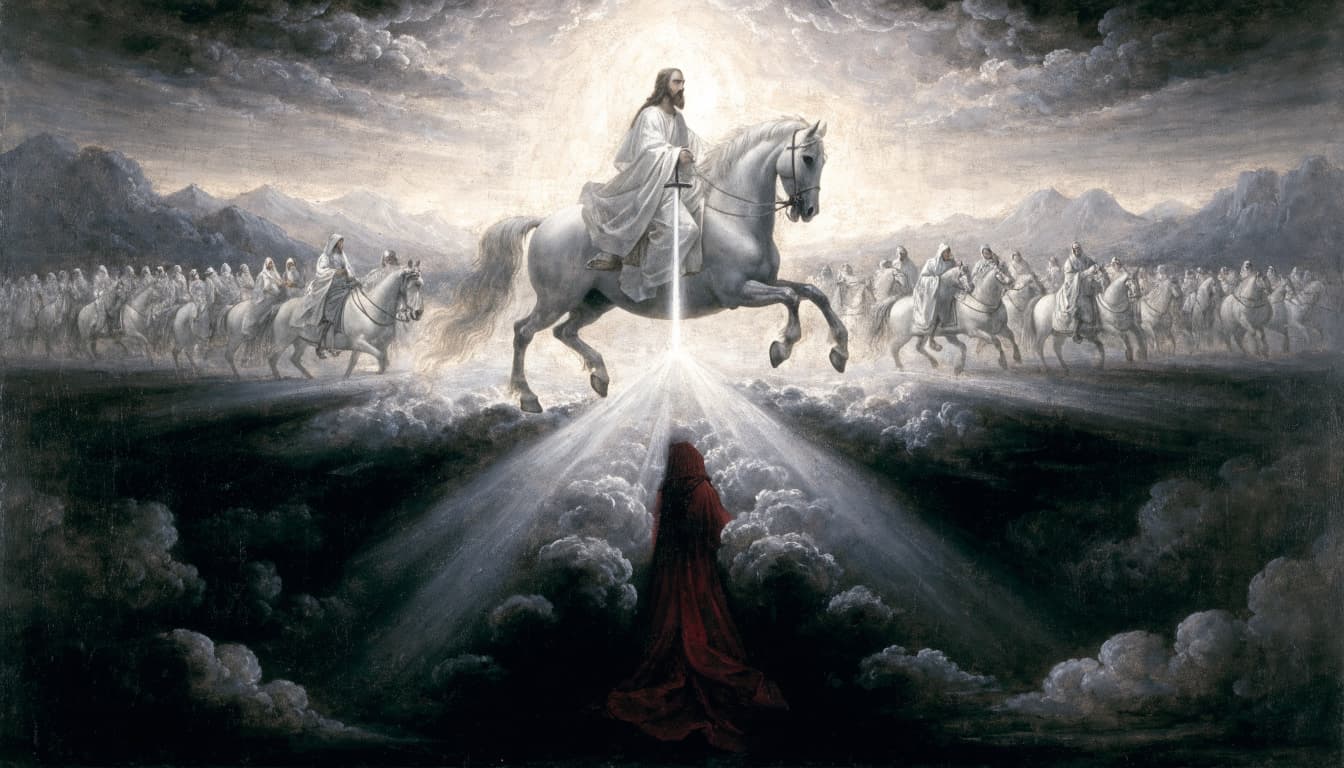
The sword from His mouth is a word of judgment
John sees a sharp sword coming from the Rider's mouth, not a weapon in His hand. That detail matters. The image connects Jesus' spoken word with decisive judgment: He speaks, and the nations face His righteous verdict. His authority doesn't depend on human armies or weapons.
This picture draws on prophetic language about God's word bringing judgment. Isaiah describes the Messiah striking the earth with the rod of His mouth, while Revelation shows the Rider's word reaching the nations. The vision isn't telling Christians to take up arms in Jesus' name. It shows that Christ has the authority to judge, and His judgment will be carried out.
The iron rod belongs to the same picture of authority. It echoes the royal promise of the Messiah ruling the nations, a theme also found in Psalm 2. The sword shows the force of His judgment; the rod shows His rule. We can read more about the mouth-sword and iron rod in Revelation 19.
The blood-dipped robe and the winepress image
John describes Jesus' robe as dipped in blood, then says He treads the winepress of God's wrath. The winepress is an image of judgment: grapes are crushed, and the picture conveys the certainty and severity of God's response to evil. Revelation uses winepress imagery elsewhere, and Isaiah pictures the Lord as a divine warrior whose garments are stained after judgment.
But we should be careful about what the passage actually says. Revelation 19 does not identify whose blood is on the robe. Some readers connect it with the blood of those judged; others see an echo of Christ's sacrifice. The imagery invites comparison with Isaiah and Revelation's other winepress scenes, but the verse itself doesn't settle the question. We can hold to what John states without claiming more than the text gives us. For a closer look at the winepress image, see Revelation 19:15.
The heavenly armies follow the victorious King
The armies of Heaven follow Jesus on white horses, dressed in clean, white linen. Their clothing and horses fit the vision's picture of purity and triumph. They belong to the King's victory, while the focus remains on His authority.
John doesn't say these armies fight, and he doesn't describe them carrying weapons. That restraint helps us avoid turning the scene into a literal battle report. Jesus is the One who judges the nations and rules with the iron rod. His followers accompany Him, but the text gives them no part in carrying out His judgment. The victory belongs to the King.
How Revelation 19’s White Horse Differs From the First Horseman
Two white horses appear in Revelation, and that shared image can make the riders seem like the same figure. But John gives them different details. When we compare the passages closely, the rider in Revelation 19 is identified by names and actions the first horseman does not receive.
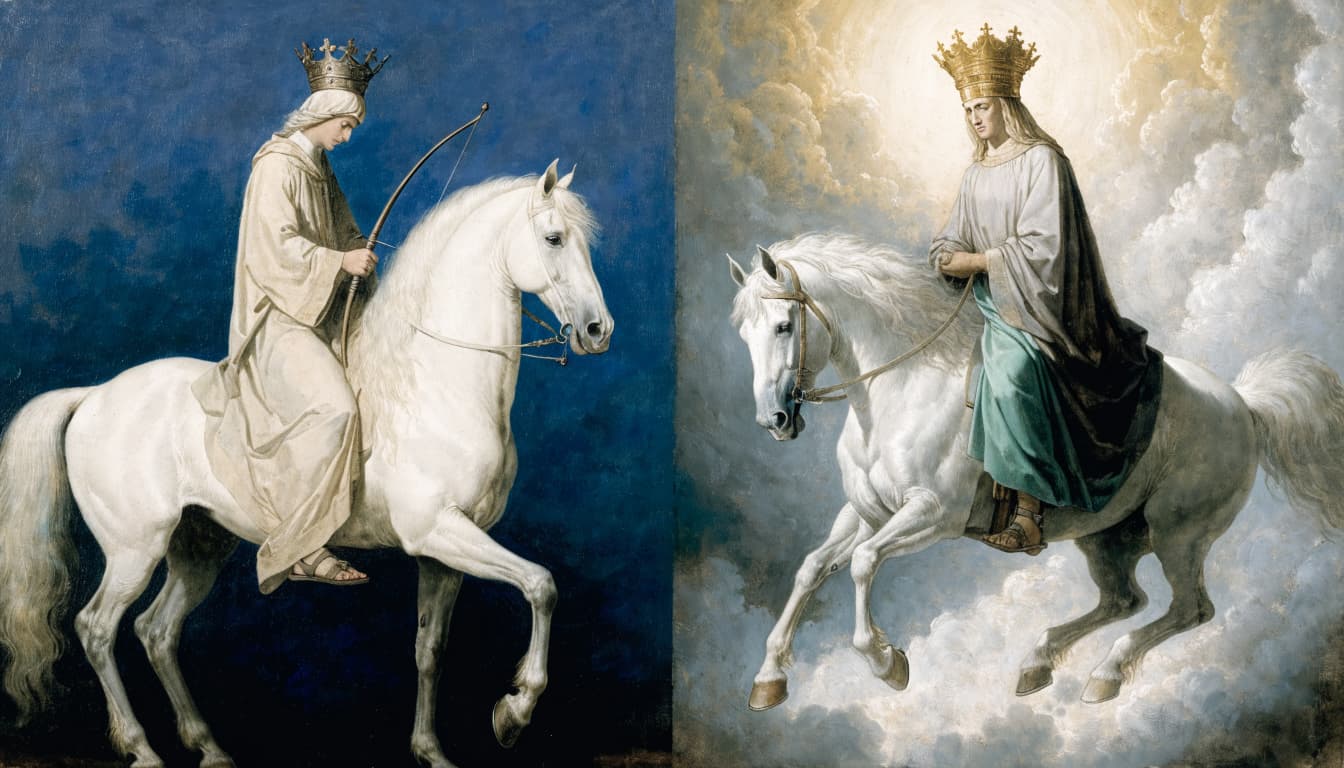
Two similar images with different details
In Revelation 6:1–2, the first horseman rides a white horse, carries a bow, receives a crown, and goes out conquering. That is the description John gives. He does not call this rider "Faithful and True" or give him a name identifying him as Jesus.
The rider in Revelation 19:11–16 also rides a white horse, but the similarities stop short of making the descriptions identical. John calls Him "Faithful and True," says He judges and makes war in righteousness, and describes many crowns on His head. He is also called "The Word of God" and "King of kings and Lord of lords."
The contrast is plain: the first horseman carries a bow and receives a crown; the rider in Revelation 19 bears many crowns and is named through titles that identify His authority. His role in righteous judgment is also explicit. We can compare the two visions without adding details John does not provide.
Why the distinction matters for reading Revelation
Does a white horse prove both riders are the same? No. Revelation uses vivid images, but one shared symbol alone cannot settle a rider's identity. We need to read the rest of each description, too.
Christians interpret the first horseman in different ways. Some see a picture of Christ or the Gospel's advance; others understand the rider as a force of conquest, deception, or earthly power. Since Revelation 6 does not name the rider, we shouldn't present one disputed interpretation as though the passage states it plainly.
Revelation 19 gives us stronger identifying details. Its rider is called "Faithful and True," "The Word of God," and "King of kings and Lord of lords." He judges in righteousness and rules the nations. Those titles and actions point to Jesus in the vision, while the first horseman's identity remains debated.
So we should let each passage speak for itself. The white horse is a point of comparison, not proof that the riders are one and the same. When you read Revelation, pay attention to the names, crowns, and actions John describes. They tell us far more than the color of the horses.
What Christ’s Decisive Victory Means for Our Hope
Revelation's vision of Jesus as the returning King gives hope a firm foundation: His character is trustworthy, His judgment is righteous, and His reign cannot be overturned. That doesn't promise an easy life or tell us exactly how every hardship will end. It points us to Christ, who will bring evil to account and make His victory complete.
Hope rests on Christ’s character and authority
John calls the Rider "Faithful and True" and names Him "King of kings and Lord of lords." Those titles matter when injustice seems to prevail or fear makes the future feel uncertain. Human rulers can deceive, abuse power, and fail to protect the vulnerable. Jesus does not rule that way. Revelation presents Him as the One who judges in righteousness, with authority no earthly power can match.
We don't have to pretend that pain is small or that injustice will disappear overnight. Our hope rests in the King who sees clearly and judges rightly. His return means evil will not keep the final word, even when we cannot see how or when a particular situation will change. Read the full chapter of Revelation 19 and notice how John's vision moves from praise in Heaven to the Rider's victory over the powers opposed to God.
That hope also keeps us from building confidence on predictions we cannot prove. We can affirm Jesus' return and trust what Revelation says without claiming a detailed timeline. The testimony of Jesus and the hope of His return keeps the focus where it belongs: on Christ Himself.
Living faithfully while awaiting His return
So what does hope look like before the King returns? We hold to truth when deception is easier, seek God's justice without becoming consumed by revenge, and remain faithful to Jesus when following Him costs us something. These are ordinary acts of obedience, but they matter. They show that our trust belongs to Christ's Kingdom, not to the powers that oppose Him.
Revelation 19 does not hand believers the role of avenger. Jesus is the righteous Judge; the vision gives that authority to Him. We can name evil honestly, pray for those who suffer, support people facing injustice, and pursue what is right. But we must not treat anger or retaliation as permission to take Christ's judgment into our own hands.
As Spirit-filled believers, we look for the Holy Spirit's help to live faithfully and bear witness while we wait. We don't know every detail of what lies ahead, but we know the King John describes. His truth is dependable, His return is our hope, and His victory over evil will stand.
Conclusion
Revelation 19 presents Jesus as the Faithful and True King. His many crowns and the title "King of kings and Lord of lords" point to an authority no earthly ruler can surpass. He judges in righteousness, and His victory is certain.
That vision gives us reason to trust Him when injustice seems to prevail. We can hold fast to Christ and remain faithful as we await Jesus' righteous judgment and promised victory.
Revelation 19’s White Horse Rider: Jesus, the Righteous King
Heaven opens, and the promised Messiah rides forth. Discover how Revelation 19 reveals Jesus returning to judge evil and reign in righteousness.
Who Rides the White Horse in Revelation 19?
Revelation 19:11–16 portrays heaven opened and a rider on a white horse called Faithful and True. He judges and makes war in righteousness, His name is the Word of God, and His robe bears the title King of kings and Lord of lords. These descriptions identify the rider as Jesus Christ: John calls Him the Word in his Gospel, and the Lamb receives the title King of kings and Lord of lords in Revelation 17:14.
Jesus does not return as a conqueror driven by ambition. His judgments are true, and His rule answers the injustice of a world in rebellion against God. The sharp sword from His mouth depicts the authority of His word, while the nations are brought under His reign. Revelation’s vision invites readers to look beyond earthly powers to the Messiah who comes to set things right.

Jesus, the Righteous King on the White Horse
Bible Prophecy Ministries has long centered its study of fulfilled and future prophecy on Jesus Christ. Its mission is to help readers follow Scripture’s unfolding account of His first coming, promised return, and final victory. Revelation 19:11–16 brings that mission into focus: heaven opens, and a rider appears on a white horse. The horse signals victory, while the rider’s titles reveal who wins it.
Called Faithful and True, Jesus fulfills God’s promises without fail. He judges and wages war in righteousness—not from human ambition, but with perfect justice. His many crowns declare supreme authority, and the name written on His robe and thigh identifies Him as King of kings and Lord of lords. This vision calls readers to see prophecy not merely as a sequence of future events, but as the revelation of the righteous King who will set things right.
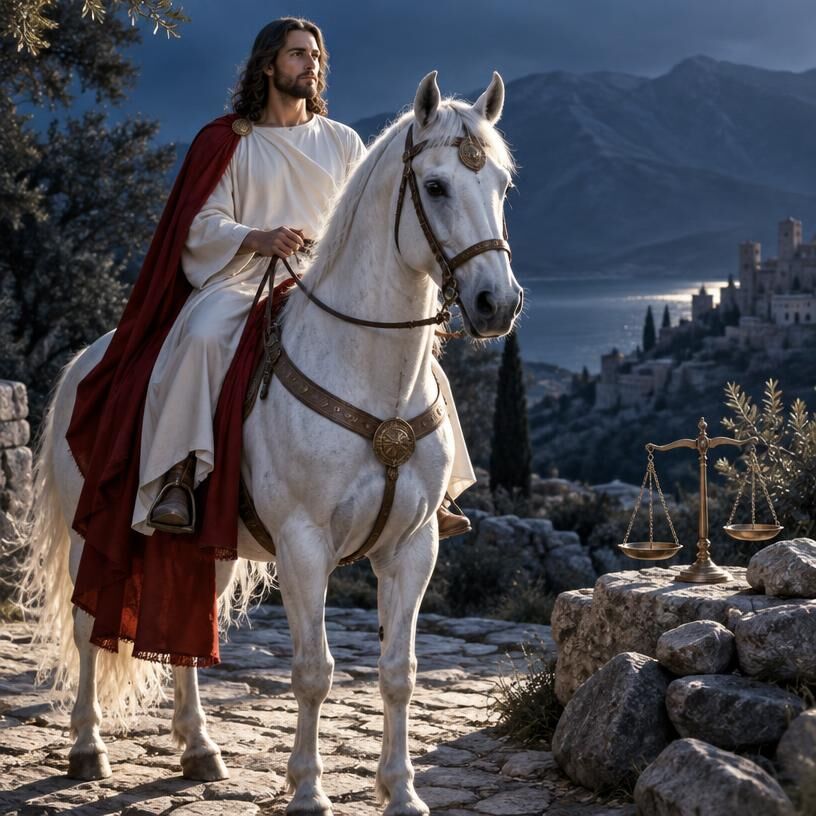
“And behold a white horse; and he that sat upon him was called Faithful and True, and in righteousness he doth judge and make war.” — Revelation 19:11 (KJV)
John the Apostle
Recording the vision of Christ’s return in Revelation 19
How Revelation 19 Identifies the Rider
Each detail in John’s vision points to Jesus and the authority of His return.
Faithful and True
His name in Revelation 19:11 declares His unwavering faithfulness to God’s promises and the truth of His judgment.
The Word of God
Revelation 19:13 names the rider the Word of God, identifying Him with the One through whom God makes Himself known.
King of Kings
Many crowns and the title on His robe proclaim authority above every earthly ruler (Revelation 19:12, 16).
Victory in Righteousness
He defeats the nations’ rebellion and establishes justice; the sword from His mouth pictures the power of His word (Revelation 19:15).
How Scripture Points to the White Horse Rider
Step 1
Begin with Revelation’s Vision
Read Revelation 19:11–16 and note the rider’s names, His righteous judgment, and His title: King of kings.
Step 2
Follow the Prophets’ Promises
Compare the vision with Daniel 7:13–14 and Isaiah 11:1–5, where the promised ruler receives dominion and judges with righteousness.
Step 3
Connect the Promise to His Return
Consider how Acts 1:11 and Matthew 24:30 point to Jesus’ return, then revisit Revelation 19 to see the King who fulfills these promises.
See the Righteous King Across Scripture
Keep exploring Bible prophecy articles to see how Scripture points to Jesus. Let Revelation’s portrait of the righteous King deepen your understanding of His promised return.