Matthew 24:29–31: The Son of Man Appears After the Tribulation
Jesus gives a clear sequence in Matthew 24:29–31: tribulation, signs in the heavens, the coming of the Son of Man, and the gathering of the elect. But do these events describe Jesus' future, visible return, or prophetic language for judgment in history?
Christians read the passage differently. We'll follow Jesus' words closely, compare the main interpretations fairly, and share our Spirit-filled Pentecostal perspective without claiming it's the only Christian view. Let's begin with the order Jesus gives.
What Happens in Matthew 24:29-31, Step by Step
Jesus gives us an order to follow: the tribulation, signs in the heavens, the appearance and coming of the Son of Man, mourning among the tribes of the earth, and the gathering of the elect. The details matter, but so does the sequence. Let's walk through what the passage says before deciding how it fits with the rest of Jesus' prophecy.
How the events follow the tribulation
Matthew 24 is part of the Olivet Discourse. Jesus predicts the temple's destruction, and His disciples ask about His coming and the end of the age. You can read the surrounding conversation in Matthew 24 in the NKJV.
The sequence in verses 29-31 begins with the words "immediately after the tribulation of those days." Jesus then describes disturbances in the sun, moon, stars, and heavenly powers. After those signs, the sign of the Son of Man appears, the tribes of the earth mourn, and people see Him coming on the clouds with power and great glory. Finally, He sends His angels with a great trumpet sound to gather His elect from the four winds.
That time marker deserves our attention. Jesus places the heavenly signs after the tribulation He has just described, then places His coming and the gathering of the elect after those signs. We shouldn't casually rearrange that order to fit a timeline we already favor.
Still, Christians don't all agree on how these verses fit with the earlier events in the discourse or with other end-time passages. Some read them as a sequence leading to Christ's future, visible return. Others see prophetic language for judgment connected with Jerusalem's fall, while some understand the passage to include both historical and future horizons.
We can take Jesus' wording seriously without pretending every timeline question is settled. This broader discussion of Matthew 24's signs and interpretations lays out some of those differences.
The signs in the sun, moon, and stars
Jesus says the sun will be darkened, the moon will not give its light, the stars will fall from heaven, and the powers of the heavens will be shaken. The language is vivid, and it's meant to turn our attention to a moment of great upheaval.

How should we understand those signs? They may describe literal cosmic events. They may also use prophetic imagery, language found in Scripture for a major act of divine judgment and the collapse of earthly powers. The wording alone doesn't settle which reading is right, so we should be careful not to treat either interpretation as unquestionable.
The signs lead into the next part of Jesus' description: the Son of Man appears, the tribes mourn, and He comes with power and great glory. The focus moves from the heavens to Him, then to the angels gathering the elect with a trumpet. That order is clear, even as Christians continue to debate how the imagery unfolds in history. For another overview of the chapter's setting, see David Guzik's Matthew 24 commentary.
Why the Cosmic Signs Echo Old Testament Judgment Language
The darkened sun and shaken heavens in Matthew 24 sound familiar because Israel's prophets used similar images when announcing God's judgment. That background helps us hear the weight of Jesus' words, but it doesn't settle whether the signs are physical, symbolic, or both. We need to read the imagery carefully without ruling out a literal fulfillment.
Prophetic images of upheaval and judgment
Isaiah describes the sun, moon, and stars losing their light while prophesying judgment against Babylon. Read Isaiah 13:10 in its setting: the language portrays the collapse of a proud nation under God's judgment. The heavens appear to fall into disorder because the earthly order people trusted is being brought down.
Joel uses similar language when he writes of the sun turning to darkness and the moon to blood before the Day of the Lord. You can read Joel 2:31. These images make divine judgment feel cosmic in scale. They tell us that no power on earth can stand secure when God acts.
So when Jesus speaks of the sun darkened, stars falling, and the powers of heaven shaken, His words echo the prophets. That echo gives us a reason to consider symbolic language for judgment and upheaval. But it does not prove the signs cannot involve actual changes in the heavens. The comparison helps us understand the Biblical imagery; it doesn't settle every question about how Matthew's prophecy will unfold. We can compare ways to interpret Biblical prophecy while keeping both possibilities in view.
Daniel’s vision and the Son of Man on the clouds
Jesus' words about the Son of Man coming on the clouds also draw readers back to Daniel. In Daniel 7:13-14, Daniel sees One like a Son of Man coming with the clouds to the Ancient of Days. He receives dominion, glory, and a Kingdom that will never pass away.
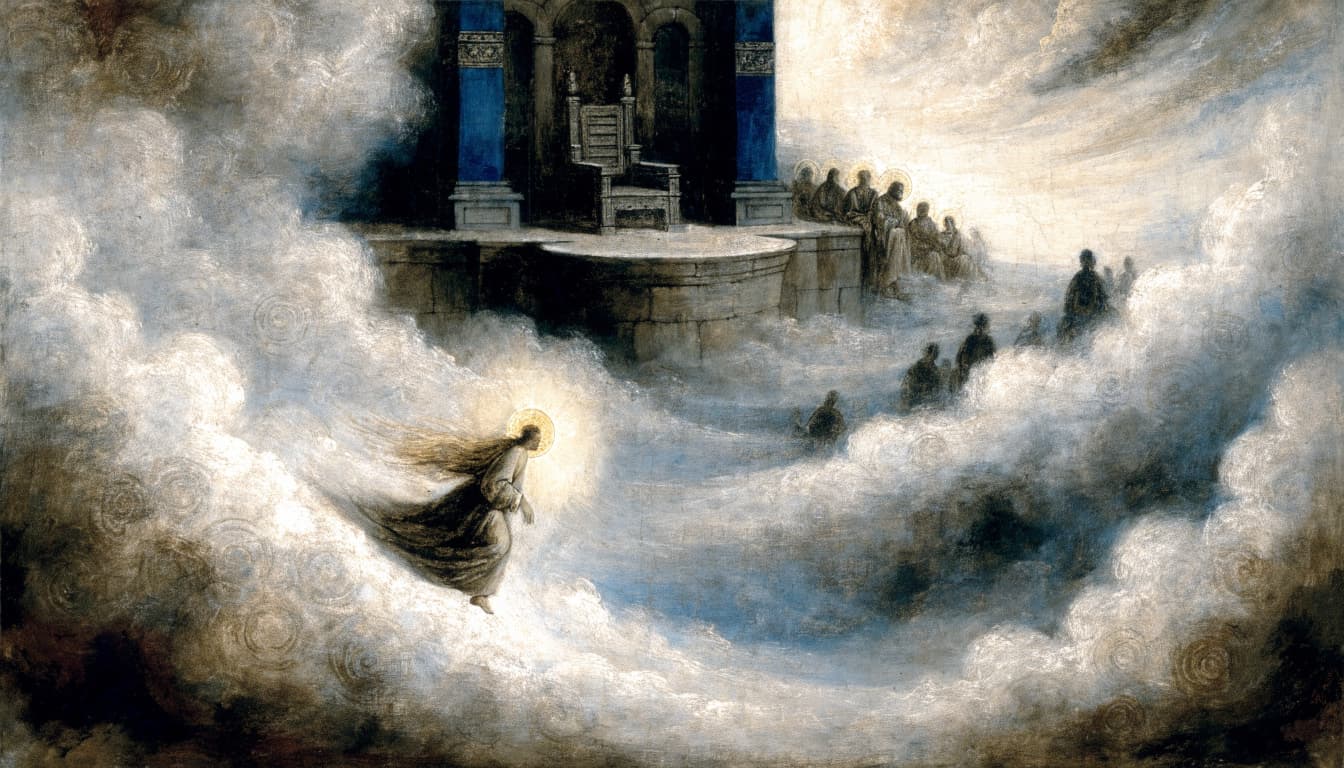
The detail matters: in Daniel's vision, the Son of Man approaches the Ancient of Days and receives authority. Jesus' reference to that vision in Matthew 24:30 connects His coming with royal authority and vindication. Christians differ, though, over how that connection shapes the passage. Some emphasize the Son of Man's vindication and authority in judgment; others read the clouds as His visible return to earth. Some understand the language to point to both.
We shouldn't claim Daniel settles the debate by itself. The vision gives us a strong Biblical background for Jesus' words, while Matthew's surrounding passage still needs to be read on its own terms. The question remains whether Jesus describes a visible return, judgment expressed through prophetic imagery, or events with both historical and future dimensions.
What Jesus’ Coming with Power and Great Glory Means
Jesus' words about the Son of Man move the passage from heavenly signs to a decisive appearance. The sign, the clouds, the mourning of the earth's tribes, and the angels gathering the elect all shape how we understand His coming. Christians differ on how these details unfold, but the futurist reading sees them pointing to Jesus' public return.
A visible return, not a hidden event
In Matthew 24:30, Jesus says the Son of Man will appear in heaven, the tribes of the earth will mourn, and people will see Him coming on the clouds with power and great glory. The language is open and public. The passage doesn't describe a private encounter known only to a few, but an appearance that draws the attention of the earth's tribes.
The mourning matters, too. It may express grief and fear before the arriving King, especially for those who have rejected Him. Then Jesus sends His angels with a great trumpet sound to gather His elect. Sign, visible coming, mourning, trumpet, gathering: the sequence presents an event with consequences that no one can mistake.
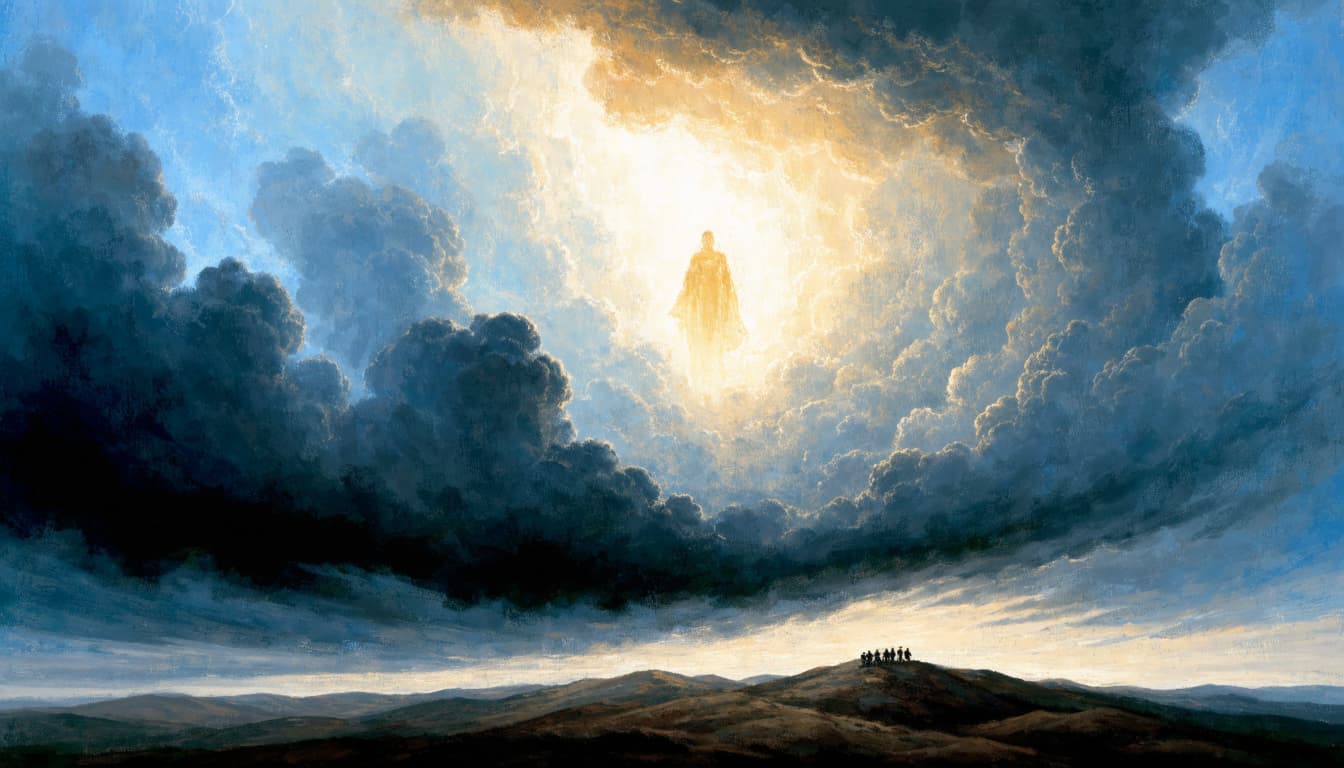
We can compare this with 1 Thessalonians 4:13-18 in the NKJV, where Paul describes the Lord's descent, a trumpet, and believers being gathered to Him. The shared images invite comparison, but they don't require us to say both passages describe the same moment in every detail. Each passage has its own setting and emphasis.
As Spirit-filled Pentecostals, we read Matthew's words as pointing to Jesus' future, visible return. This is our Biblical reading, not a claim that every Pentecostal interprets the passage the same way. We expect Him to come in glory, and we take the passage's call to readiness seriously. For a wider look at these differing readings, see Olivet Discourse interpretations.
How partial preterist readings understand the passage
Partial preterists read the cosmic signs as prophetic imagery for divine judgment, rather than necessarily as literal changes in the heavens. They connect Jesus' coming language with God's judgment on Jerusalem and the temple's destruction in 70 CE. In this view, the Son of Man's coming can describe His vindication and authority made evident through that historical judgment.
That reading takes the Olivet Discourse's first-century setting seriously. Yet partial preterism does not mean that Jesus' second coming was fully completed in 70 CE. Many partial preterists still affirm a future, final return of Christ, while understanding some parts of Matthew 24 as fulfilled in Jerusalem's fall.
The central question is how the passage's signs, visible appearance, and gathering fit together. We should let each view make its case, while holding firmly to the hope that Jesus will return and reign.
Who Are the Elect, and How Are They Gathered?
Jesus closes this passage with a promise: His people will be gathered to Him. The trumpet, the angels, and the four winds show the reach of that gathering. Christians still discuss who the elect includes and how this event relates to other passages about Christ's return, but the promise itself is clear.
The trumpet and the four winds
In Matthew 24:31, the trumpet announces the gathering. Jesus sends His angels to bring His elect together, and "the four winds" points to the gathering's breadth. God's people are called from across the earth, not from one place or one region.

The phrase "from one end of heaven to the other" widens the picture even further. No distance puts God's people beyond His reach. Jesus doesn't give a travel plan or a detailed schedule here. He gives assurance that His angels will gather those who belong to Him.
Interpreters differ over how broadly "the elect" applies in this passage. Many understand it as God's people generally; others connect it more particularly to faithful Israel or to those who endure the tribulation. Matthew 24:31 names the elect and promises their gathering, but it doesn't settle every question about who is included or how the event fits with other end-times passages.
We can compare Matthew 24:29–31 in the NKJV with Paul's description of believers gathered to the Lord in 1 Thessalonians 4:13–18, while allowing each passage to speak in its own setting.
A promise of gathering, rescue, and hope
Jesus speaks these words in a discourse about tribulation, fear, and uncertainty. His promise directs our attention to what He will do: He knows His people, and He will gather them. The passage doesn't ask believers to guess dates or build a detailed timetable from every image. It calls us to trust the King who sends His angels for His own.
For believers facing pressure, this matters. We may feel scattered, overlooked, or far from safety, but no distance can keep Christ from gathering His people. Our hope rests in Him, not in our ability to predict every detail of the event.
As Spirit-filled Pentecostals, we read this gathering in the context of Jesus' future return, while recognizing that Christians connect it with other passages in different ways. We hold to the assurance Jesus gives, and we can read more about Christ's return and the gathering of the elect without treating every timeline question as settled.
How Matthew 24:29-31 Fits the Wider Olivet Discourse
Matthew 24:29-31 is part of a longer conversation, not a stand-alone prophecy. Jesus speaks after predicting the temple's destruction and answering His disciples' questions about what lies ahead. The parallel accounts in Mark and Luke help us see what the Gospel writers share, and where Matthew adds detail.
Comparing Matthew with Mark and Luke
In Mark 13, Jesus also describes distress, darkened heavenly bodies, the Son of Man coming in clouds, and the gathering of the elect. Luke 21 includes signs in the sun, moon, and stars, distress among the nations, and the Son of Man coming in a cloud with power and great glory. The shared themes are clear: heavenly signs, the Son of Man, and God gathering His people.
Matthew gives us two details the other accounts do not state in the same way: the "sign of the Son of Man" and a loud trumpet call as the angels gather the elect. Those details sharpen Matthew's presentation, but they don't make the Gospels contradict one another. Each account emphasizes parts of the same discourse.

The setting matters, too. Jesus begins by speaking about the temple, and His disciples ask about its destruction, His coming, and the end of the age. Those questions sit close together, but Christians differ on whether Jesus answers them as one timeline or addresses events with more than one horizon. We can read Matthew 24 in the NKJV alongside the parallel accounts without assuming every detail must fit a single interpretation.
Why Christians place the events on different timelines
A key phrase comes later, when Jesus says, "this generation" will not pass away until all these things take place. The wording in Matthew 24:34 raises a real question: does "this generation" point to the people living in Jesus' day, a future generation that sees the signs, or something else? The answer affects how readers connect the temple's destruction with the events in verses 29-31.
A partial preterist reading sees some prophecies in the discourse fulfilled in Jerusalem's destruction in 70 CE, while still affirming Jesus' future return. A futurist reading sees the signs, coming, and gathering chiefly as events still ahead. Mixed readings understand the discourse to speak both to Jerusalem's fall and to a future return of Christ. These are interpretive positions, not settled facts.
The temple setting gives historical weight to the question, while "this generation" keeps readers asking how near and far events relate. We see why Christians divide the passage differently, even when they agree that Jesus spoke about judgment, His authority, and the gathering of God's people. For a closer look at Matthew 24's historical and future horizons, we can compare those readings without claiming every timeline question has been resolved.
What This Passage Calls Believers to Do Today
Matthew 24:29–31 gives believers a promise and a clear sequence: tribulation, signs, the Son of Man's coming, and the gathering of the elect. Jesus gives no date to calculate. He calls us to stay ready, remain faithful, and keep our hope centered on Him.
Stay watchful without trying to predict dates
It's easy to look at wars, disasters, or political turmoil and wonder whether a headline signals the end. But Jesus' words don't give us permission to turn current events into a countdown. The passage tells us what happens in its sequence; it doesn't tell us to name the day or claim that we've solved every detail.
Jesus makes that limit plain in Matthew 24:36: no one knows the day or hour. Then He calls His followers to watch. We can read Jesus' teaching about watchfulness in Matthew 24 alongside verses 29–31 and see the point: readiness means living faithfully while we wait, not building a timetable from every breaking-news alert.
As Spirit-filled Pentecostals, we believe Scripture is authoritative, and we look for Jesus' return with expectation. We also need the Holy Spirit's help to stay steady, discerning, and faithful. Watchfulness should draw us closer to Jesus, not make us fearful or certain about things He hasn't revealed. We can stay alert and endure faithfully without pretending to know more than Scripture says.
Hold fast to hope and live faithfully
Jesus doesn't leave His people with speculation. He promises that the Son of Man will come in glory and that His angels will gather the elect. For us, that promise gives hope when the world feels unstable. We may not know the timing or understand every prophetic detail, but we can trust the One who will come.

So what does faithful waiting look like today? We keep praying, care for people around us, serve our families and communities, and share our hope in Jesus. We don't use prophecy to stir panic or label every headline as proof that the end has arrived. We let Jesus' promise strengthen our faith and shape the way we treat others.
Our hope isn't a prediction about the next news cycle. It's Jesus Himself. We believe He will come, and until then, we can live with expectation, compassion, and steady trust.
Conclusion
Matthew 24:29–31 gives a clear sequence: after the tribulation come signs in the heavens, the glorious appearing of the Son of Man, and the gathering of His elect. Christians debate how to understand the timing and imagery, but Jesus' promise remains clear: He reigns, and He will gather His people.
We can read the passage in the context of Matthew 24 in the NKJV, then live with faith and readiness as we wait for Him.

Immediately After the Tribulation
In Matthew 24:29, Jesus places the darkening of the sun and moon and the shaking of the heavens “immediately after the tribulation of those days.” His words echo prophetic descriptions of the day of the Lord, including Isaiah 13:10 and Joel 2:31. The imagery signals a moment of divine intervention: the suffering Jesus has described will not have the final word.
The Son of Man Comes in Glory
Jesus then says that the sign of the Son of Man will appear and that all the tribes of the earth will see Him “coming on the clouds of heaven with power and great glory” (Matthew 24:30). This language recalls Daniel 7:13–14, where one like a son of man receives an everlasting kingdom. By applying that vision to His return, Jesus identifies Himself as the promised ruler whose authority extends over every nation.
A Trumpet and a Gathering
Matthew 24:31 concludes with angels sent at a loud trumpet call to gather Jesus’ elect from the four winds. The scene joins worldwide upheaval with a personal promise: Christ knows His people and will bring them together. Whatever questions readers bring to the timing of these events, the passage’s central claim is clear. The crucified and risen Jesus will appear in glory, and those who belong to Him will not be forgotten.

“Immediately after the tribulation of those days ... they shall see the Son of man coming in the clouds of heaven with power and great glory. And he shall send his angels ... and they shall gather together his elect.” — Matthew 24:29–31 (KJV)
Jesus promises that tribulation will not have the final word: the Son of Man will appear, and His people will be gathered.
After the Tribulation: The Son of Man Appears
In Matthew 24, Jesus answers His disciples’ questions about His coming and the end of the age. After warning of deception, persecution, and great tribulation, He describes darkened heavenly lights and shaken powers (Matthew 24:29). These signs lead into the visible appearance of the Son of Man, whom people will see coming on the clouds with power and great glory (Matthew 24:30).
His angels then gather His elect from the four winds (Matthew 24:31). Bible Prophecy Ministries exists to help readers trace this Christ-centered message through Scripture, considering both fulfilled prophecy and promises yet to come. In keeping with that mission, we read these verses alongside the rest of Jesus’ discourse: they offer hope in His promised return without granting anyone a date to calculate.
Questions About the Son of Man’s Coming
Explore what Jesus says about the timing, signs, and hope of His appearance in Matthew 24:29–31.
When does Jesus say these events occur?
Matthew 24:29 says the heavenly signs occur “immediately after the tribulation of those days.” Jesus then describes the appearance of the Son of Man and the gathering of His elect. The passage establishes this sequence but does not provide a calendar date.
What are the signs in the sun, moon, and stars?
Jesus speaks of the sun being darkened, the moon withholding its light, stars falling, and the powers of heaven being shaken. This prophetic language underscores the magnitude of His coming; interpreters differ on precisely how each image will be fulfilled.
Is the Son of Man’s coming visible?
Jesus says the peoples of the earth “shall see the Son of man coming in the clouds of heaven with power and great glory” (Matthew 24:30). His description directs attention to a manifest appearance, not a merely private claim that He has returned.
Who are the elect gathered by the angels?
Matthew 24:31 calls them “his elect” and says the angels gather them from the four winds. Christians differ on some details of this gathering, but the verse clearly presents them as people who belong to the Son of Man.
Can the signs tell us the exact day of His return?
No. Although Jesus gives His disciples signs to heed, He later says that no one knows the day or hour (Matthew 24:36). The appropriate response is watchfulness and faithfulness, not a prediction of a date.
Why is this passage a source of hope?
Tribulation is real in Jesus’ teaching, but it is not the end of the story. Matthew 24:29–31 points beyond distress to the Son of Man’s glory and His purposeful gathering of His people.