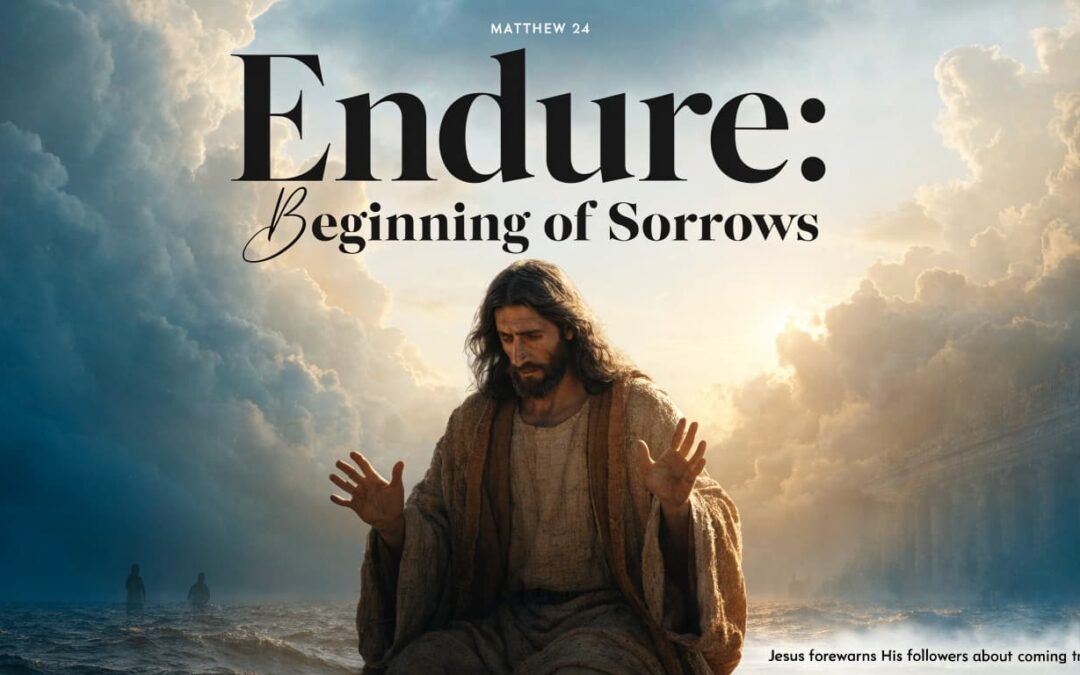
Why Matthew 24 Matters: Jesus’ Return and Watchfulness
Jesus warns of judgment and hardship in Matthew 24, yet He calls His followers to endure with hope and remain faithful. He answers their questions about the temple, His coming, and the end of the age, but He doesn't give them a date to circle on a calendar.
So why does Matthew 24 matter? The chapter calls us to read Jesus' words in context, distinguish what Scripture says from our interpretations, and keep our attention on Him rather than speculation. We can explore Matthew 24 and the signs of Christ's return with care, holding to what Jesus says clearly while recognizing where Christians disagree.
Let's begin with the setting of His teaching and why this chapter matters for understanding Bible prophecy.
Why Matthew 24 Matters for Understanding Bible Prophecy
Matthew 24 brings Jesus' warning about the temple together with His teaching on judgment, endurance, and His return. We read it as part of a larger conversation, not as a chart to decode or a prediction to fit to today's headlines.
The setting of the Olivet Discourse
Jesus had been teaching in the temple. As He left, His disciples pointed out its buildings, and He warned that not one stone would be left upon another. Later, on the Mount of Olives, they asked Him when this would happen and what sign would accompany His coming and the end of the age. The opening exchange is recorded in Matthew 24:1-3 in the NKJV.

This setting matters. Jesus connects the temple's coming destruction with questions about His return, but the chapter doesn't hand us a simple timeline. Christians interpret parts of the discourse differently, including how Jesus' words relate to Jerusalem's destruction in AD 70 and His future return. We do well to read the whole NKJV text of Matthew 24, paying attention to what Jesus says clearly and where interpretation begins.
Matthew 24 also continues into Matthew 25 as one larger teaching sequence. It comes after Jesus teaches in the temple and before His arrest and crucifixion. Judgment and hardship are real in His words, but so are endurance, faithful service, and the call to remain ready. Jesus says the day and hour are unknown, then points His followers toward watchfulness and faithfulness in their daily responsibilities.
Prophecy points back to Jesus
When we read Matthew 24, Jesus Himself is the center. Charts and modern predictions can draw attention, but they cannot replace His words or authority. He warns against deception, calls His disciples to endure, and teaches that His followers must stay faithful while they wait.
From our Spirit-filled Pentecostal viewpoint, that waiting includes the Holy Spirit's work in believers. Jesus gives His followers a mission, and He promises power for witness in Acts 1:8. The Spirit does not turn prophecy into an excuse for speculation; He empowers us to testify about Jesus and serve faithfully.
That's part of why this chapter matters for Christian faith. Prophecy reveals that Jesus has authority over judgment and the future, calls us to trust Him through hardship, and points toward God's purposes. We can study the signs and the different interpretations, while keeping our attention on the One who spoke them. For a wider framework, see our guide to Biblical prophecy through the lens of Jesus.
What the Disciples Asked Jesus on the Mount of Olives
Matthew 24 begins with a prediction that must have stunned the disciples. They had just pointed out the temple buildings, and Jesus told them they would be torn down. Their questions on the Mount of Olives grew directly out of that warning, but Matthew's wording leaves room for careful interpretation.
The temple’s destruction and the disciples’ first concern
The temple was central to Jewish worship and identity. So when Jesus said that not one stone would be left upon another, the disciples had reason to take His words seriously. They later came to Him privately on the Mount of Olives, across from Jerusalem, and asked when "these things" would happen. The full exchange appears in Matthew 24:1–3 in the NKJV.
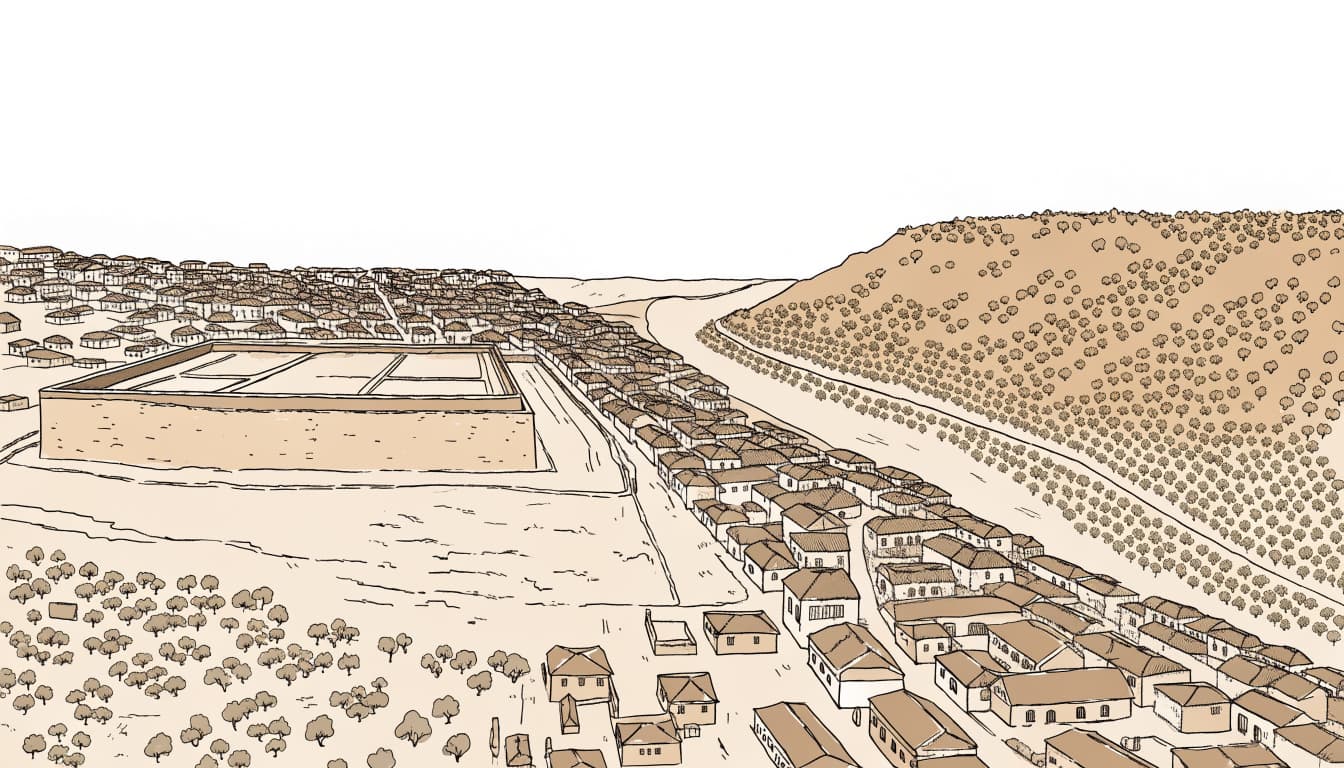
Matthew records two questions in verse 3: "When will these things be?" and "What will be the sign of Your coming, and of the end of the age?" Readers often parse those words as three concerns: the temple's destruction, the sign of Jesus' coming, and the end of the age. That's a useful way to follow the conversation, but Matthew doesn't number three separate questions for us.
The disciples may have connected the temple's fall with Jesus' coming and the end because such a devastating event seemed bound up with God's judgment and the close of an age. But we shouldn't assume they had a modern prophetic timeline in mind, or that Jesus' answer divides every event into neat, separate stages. The temple's destruction is commonly associated with Rome's destruction of Jerusalem in AD 70; readers still differ on how the rest of the discourse relates to that event. Jesus' warning also connects with Daniel's prophecy and the later history of Jerusalem, though that connection does not settle every timing question.
The meaning of Jesus’ coming and the end of the age
The phrase "Your coming" points to Jesus' return, but interpreters differ over how closely Matthew 24:3 links that coming with "the end of the age." Some read the two phrases as closely connected descriptions of one future climax. Others understand the disciples to be asking about related but distinguishable events, with Jesus' response addressing more than one horizon.
That difference matters when we read the rest of the chapter. If we treat every warning as referring to one moment, we may miss the way Jesus moves between the temple's judgment, hardship, and His return. If we split the passage too confidently, we may impose boundaries the text itself doesn't spell out. The Olivet Discourse interpretations summarized by Thirdmill show how Christians reach different conclusions about those connections.
We can hold to what Jesus says plainly while admitting where the passage leaves room for debate. The disciples ask about timing and signs; Jesus answers, but He doesn't hand them a simple chart. That's a helpful starting point for careful principles for studying Biblical prophecy, especially when we consider the temple's destruction alongside the hope of His return.
How Matthew 24 Moves from Warning to Hope
Matthew 24 moves through warnings about deception and suffering, then turns our attention to Jesus' coming and the call to remain faithful. We can read the full chapter in the NKJV and follow that movement without forcing every image into one timetable.
Deception, conflict, endurance, and the Gospel
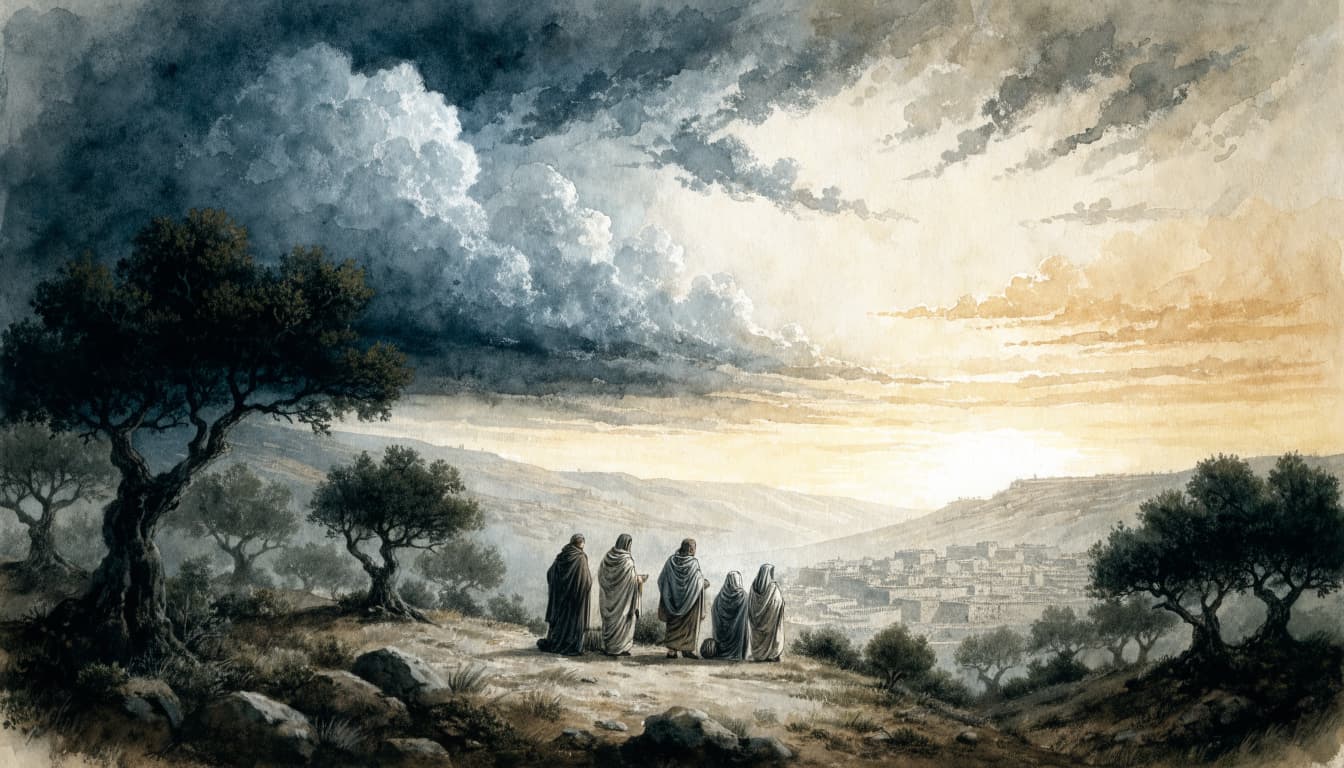
Jesus begins with a direct warning: "Take heed that no one deceives you." He speaks of false messiahs, wars and rumors of wars, famine, earthquakes, persecution, lawlessness, and love growing cold. These are serious troubles, but Jesus says they do not, by themselves, mean the end has arrived. They are the beginning of sorrows, and His followers must not mistake every crisis for proof of a specific prophetic schedule.
The warning does not end in fear. Jesus calls His disciples to endure, and He says the Gospel of the Kingdom will be preached throughout the world as a witness before the end comes. From our Spirit-filled Pentecostal perspective, that mission matters: hardship does not cancel the call to testify about Jesus. We can watch world events without turning them into a countdown or claiming certainty Jesus did not give.
Distress, the Son of Man, and the unknown day
The next part of the chapter describes the "abomination of desolation," urgent flight from Judea, and distress unlike anything before it. Jesus warns that false messiahs and false prophets will make claims designed to mislead people. His followers should not believe reports that the Messiah has appeared in a hidden place. When the Son of Man comes, Jesus says, His coming will be unmistakable.
Jesus then speaks of cosmic signs, the Son of Man coming on the clouds, and the lesson of the fig tree. Christians debate how these images connect with Jerusalem's destruction, the Roman siege in AD 70, and Jesus' future return. The meaning of "this generation" is also disputed. We should take Jesus' words seriously without pretending that every timing question has one agreed answer. His reference to Daniel's abomination links Matthew 24 with Daniel's prophecy and Jesus' warning, though that connection does not settle every detail.
Then Jesus makes the limit clear: no one knows the day or hour. He compares that sudden arrival to the days of Noah and tells His followers to stay watchful. Readiness means faithful living, not guessing dates. The faithful servant keeps doing the work entrusted to him; the unfaithful servant acts as though the master will never return.
Matthew 25 continues this wider teaching with examples about readiness, faithful service, and judgment. The chapter's movement is sobering, but it is not hopeless: Jesus warns His followers, promises His coming, and calls us to stay faithful while we wait.
What the Fall of Jerusalem in AD 70 Helps Us See
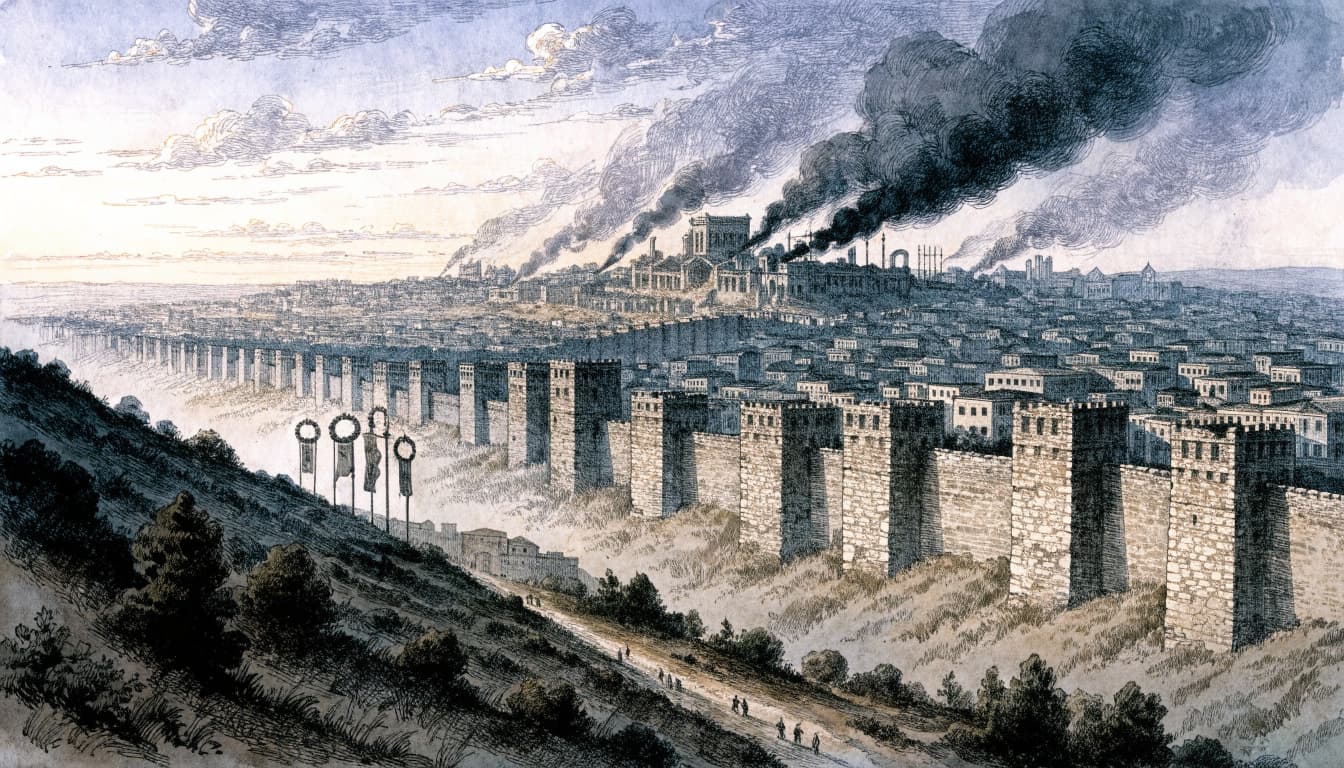
The destruction of Jerusalem gives Matthew 24 a concrete first-century setting. Roman forces captured the city and destroyed the temple in AD 70, an event commonly connected with Jesus' prediction that its buildings would be torn down (Matthew 24:1-2 in the NKJV). That history helps us take His warning seriously, while leaving room to ask how the rest of the chapter relates to Jerusalem and His return.
Reading the prophecy in its historical setting
Jesus spoke about the temple before its destruction. When we read His words alongside the events of AD 70, we see that His warning concerned a real city and a real sanctuary, not just a symbol detached from history. The Jewish historian Josephus describes the Roman siege and destruction in The War of the Jews. The event also has a connection many Christians draw with Daniel's words about Jerusalem and the sanctuary being destroyed (Daniel 9 and Jerusalem's destruction in AD 70).
Luke's parallel account gives us another detail to consider. Jesus says Jerusalem will be surrounded by armies, and He warns those in Judea to flee (Luke 21:20-24 in the NKJV). That wording makes the connection with a military siege especially clear. Comparing Luke with Matthew helps us read the warning in its first-century setting, but it doesn't settle every question about Matthew's images, including the abomination of desolation and the coming of the Son of Man.
So we should take both the history and the wording seriously. Jerusalem's fall shows that Jesus' words about the temple were not empty threats. It does not, by itself, prove that every later verse in Matthew 24 refers only to AD 70.
Where Christians differ about fulfillment
Christians interpret the relationship between Jerusalem's fall and the rest of Matthew 24 in several ways. These are interpretive approaches, not labels Jesus gives His readers in the passage, and people within each approach may differ.
Some partial preterists understand much of Matthew 24:1-35 as tied to Jerusalem's destruction, while seeing later portions as pointing to Jesus' future return. Futurists read key parts of the chapter as still future; some view AD 70 as a preview of later events. Others hold a combined reading, seeing the discourse address both the first-century crisis and Christ's future coming, though they may disagree about where one emphasis gives way to another.
Why do these readings differ? Matthew brings the temple's destruction, distress in Judea, cosmic imagery, and the Son of Man's coming into one discourse. The chapter does not mark every shift in reference with a clear boundary, so interpreters weigh its details differently. We can acknowledge those differences without treating every view as equally persuasive or claiming the passage answers questions it leaves open.
Our first anchor is what the text states plainly: Jesus warned of the temple's destruction, and Jerusalem fell under Roman attack. As we compare the Gospel accounts, we can also keep a careful distinction between that historical judgment and the passages Christians understand as pointing to His return.
How to Read Matthew 24’s Signs Without Speculation
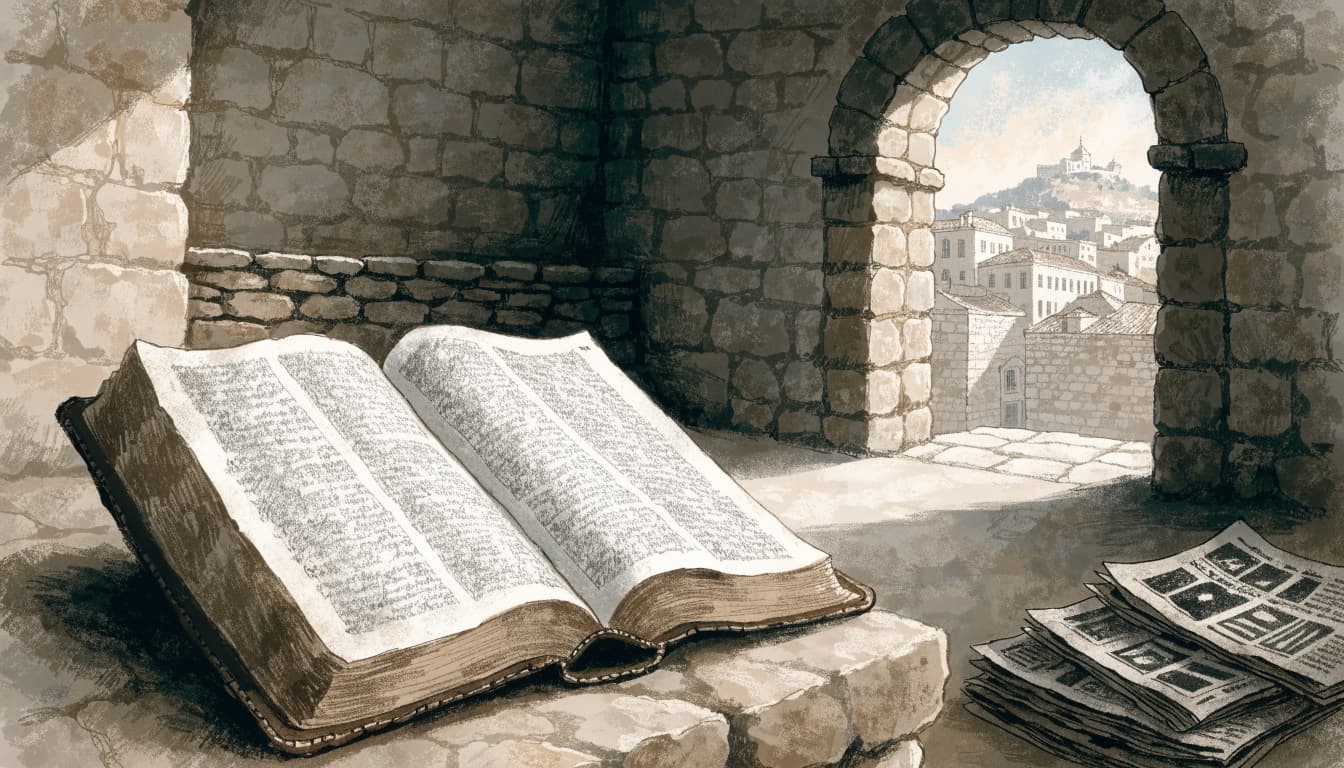
Wars, disasters, persecution, and shocking headlines can make Matthew 24 feel like today's news feed. But Jesus names real pressures while warning His followers not to be deceived or alarmed by every report. We read the chapter carefully, keeping His plain instructions in view and holding disputed details with humility.
Recognize the warning against false certainty
Jesus begins with a warning about people claiming to be the Messiah. He also speaks of wars, famines, and earthquakes, then tells His disciples that these events do not mean the end has arrived. Read Matthew 24 in the NKJV, and notice how Jesus places the warning against deception beside the troubles themselves.
That distinction matters when a dramatic event fills the news. Scripture warns us that false messiahs and false prophets will try to mislead people, even using signs and wonders. A headline, a prediction, or a confident online post cannot turn a present crisis into proof that a particular prophecy has been fulfilled. The warning is Biblical; a claim that this specific event confirms a date or timetable is an interpretation, and it may go beyond what Jesus said.
So what can you do when someone insists the latest conflict or disaster proves the end is here? Look at the surrounding verses. Ask what Jesus actually states, what the speaker is adding, and whether the claim asks you to trust Jesus or to follow someone's supposed secret knowledge. We can take world events seriously without letting them dictate our reading of Scripture.
Hold historical fulfillment and future hope together
Jesus spoke of the temple's destruction, and Jerusalem's fall in AD 70 gives that warning a real historical setting. Yet Christians differ over how later images in Matthew 24 relate to that destruction and to Jesus' return. We can acknowledge the history without claiming that it settles every question about the chapter.
Our Pentecostal faith holds fast to the living hope of Christ's return. We also believe the Holy Spirit empowers believers to witness, endure, and remain faithful while they wait. That hope gives us reason to stay watchful, not permission to add a timeline Jesus did not provide.
A practical way to read the signs is to separate what the passage says clearly from what remains debated. Jesus warns against deception, tells His followers not to be troubled by wars and rumors of wars, and calls them to readiness. The timing and the relationship between some events remain subjects of Christian interpretation. As we study, we can compare views without turning disagreement into certainty. Our guide to Jesus' call to watchfulness in Matthew 24 offers another look at why readiness means faithful living, not date-setting.
The future belongs to Jesus. We can trust Him, listen closely to His words, and keep doing the work He has given us.
Why Jesus Calls His Followers to Watchfulness, Not Date-Setting
Jesus does not give His followers a date to calculate. In Matthew 24:36-51 in the NKJV, He makes the timing clear, then shows what readiness looks like: alert, faithful service while we wait.
Readiness means faithful service in daily life
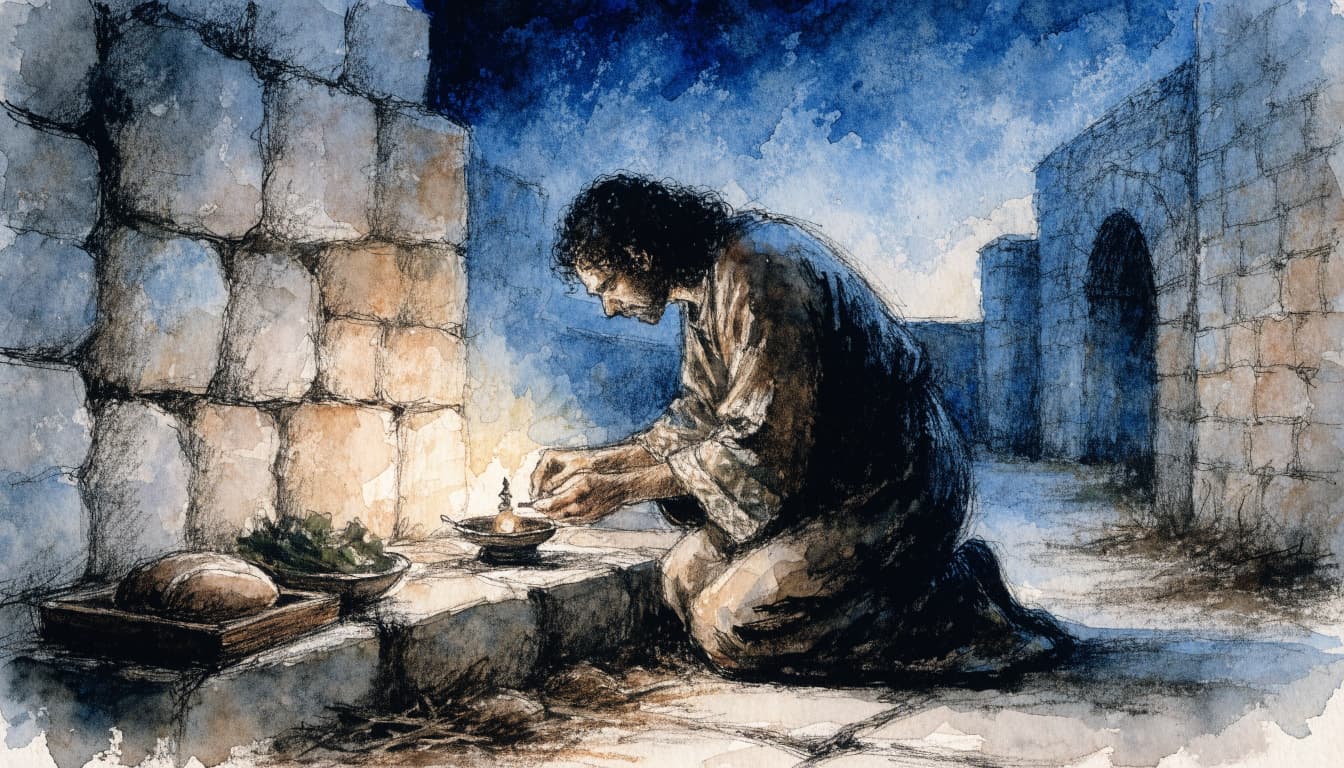
Jesus compares the unexpected day of His coming to the days of Noah. People carried on with ordinary life, unaware of the judgment ahead. The point isn't that daily responsibilities are wrong. The warning is that we can become so absorbed in them that we ignore God and live as if we will never answer to Him.
Then Jesus describes a faithful servant who keeps caring for the household while the master is away. That servant is ready because he is doing the work entrusted to him, not because he has guessed the master's return. The careless servant makes the opposite choice. He assumes there is plenty of time, mistreats others, and lives for himself.
What does that look like for us? Readiness means living with integrity when no one is watching, serving others with compassion, sharing the gospel, and carrying out the work God has placed before us. We don't have to decode every headline to know what faithfulness asks of us today.
We can study prophecy carefully, including how Daniel's 70 weeks point to Jesus, without turning interpretation into a date prediction. Jesus has given us a clear call, even when He has not given us a calendar date.
Hope keeps watchfulness from becoming fear
Jesus' warning is serious, but His return is also a promise. Watchfulness doesn't mean living in panic, treating every crisis as a countdown, or letting fear govern our choices. We can pray, depend on the Holy Spirit, and trust Jesus while remaining faithful through uncertainty.
That confidence doesn't mean believers will avoid hardship. Jesus warns His followers about suffering elsewhere in Matthew 24, and faithfulness is not a guarantee of an easy life. Our hope rests in Christ's authority and promise, not in our ability to predict what comes next.
The teaching continues in Matthew 25, where Jesus describes readiness, stewardship, and accountability. The parables call His followers to be prepared and faithful with what they have received. Read Matthew 25:1-46 in the NKJV, and notice how readiness takes shape in wise choices, responsible service, and care for others.
We don't know the day or hour. We do know the One who is coming, and we know the work He has given us. So we keep praying, serving, sharing the gospel, and holding fast to Jesus.
Conclusion
Matthew 24 matters because Jesus speaks plainly about judgment and trouble, calls His followers to endure, and gives hope in His return. The chapter's strongest call is clear: stay faithful while we wait for Him.
We read prophecy best when we keep Jesus at the center and distinguish His words from our interpretations. A careful approach to Scripture and prophecy helps us do that.
So let's read Scripture carefully, reject speculation, and live watchfully and faithfully.
Prophecy Spoken by Jesus
In Matthew 24, Jesus answers His disciples’ questions about the future. He describes turmoil and deception, urging His followers to understand what He has said without being led astray by every alarming claim.
The Promise of His Return
At the heart of the chapter is the return of the Son of Man. Jesus points beyond the troubles of the present age to His coming, giving believers a reason to anchor their hope in Him rather than in predictions about dates.
Watchful Faith for Today
Jesus says the day and hour are unknown, so His followers are to remain ready. Matthew 24 matters because its prophecy is not merely information about what lies ahead; it is a call to live faithfully while awaiting Him.
Matthew 24: The Questions Behind Jesus’ Prophecy
Matthew 24 begins during the final week of Jesus’ earthly ministry. After confronting religious leaders in Jerusalem, He left the temple, and His disciples drew His attention to its magnificent buildings. Jesus answered with a startling prediction: not one stone would be left upon another. For disciples who knew the temple as the center of Jewish worship, its destruction raised urgent questions about what lay ahead.
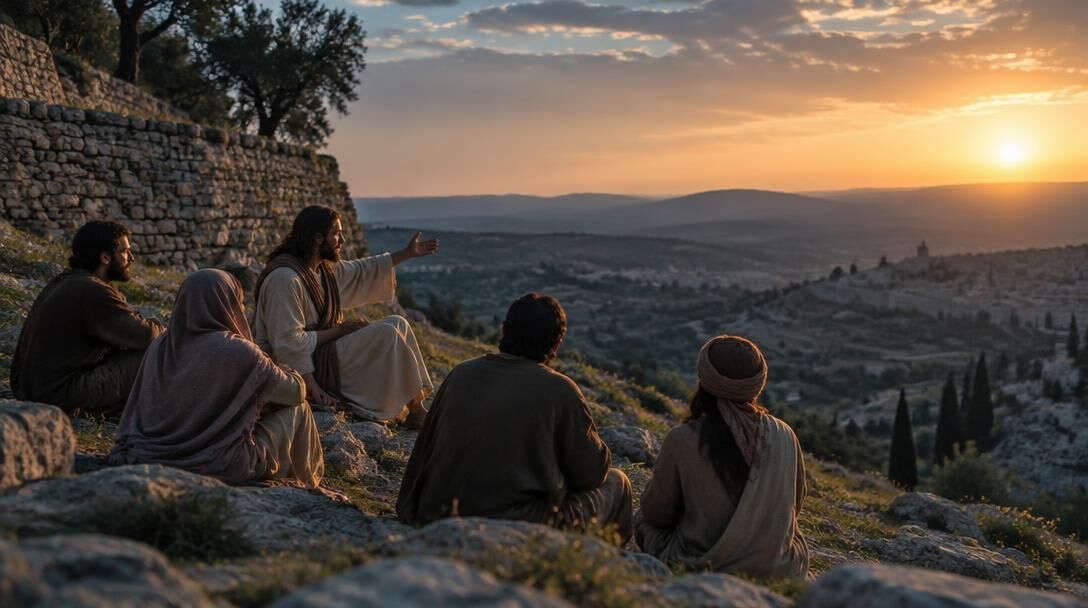
Later, as Jesus sat on the Mount of Olives overlooking Jerusalem, the disciples came to Him privately. They asked when the temple’s destruction would happen, what would signal His coming, and what would mark the end of the age. His answer addressed their concerns while teaching believers to discern turmoil without being deceived. At Bible Prophecy Ministries, we study this passage in its biblical setting so that its warnings and promises keep our attention on Jesus rather than on speculation.
Signs to Discern, a Savior to Await

Deception and Global Upheaval
Jesus warns of false messiahs, wars, famines, and earthquakes. These troubles are the beginning of birth pains, not permission to declare that the end has arrived.

Persecution and Endurance
Jesus says His followers will face hatred, betrayal, and false prophets, yet He calls them to endure. He also says the Gospel of the Kingdom will be proclaimed among the nations.

Distress and the Coming King
Jesus describes severe distress and unmistakable signs surrounding the coming of the Son of Man. Rather than chase secret claims, believers can trust His promise to gather His people.
“Watch therefore: for ye know not what hour your Lord doth come.” — Matthew 24:42 (KJV)

Jesus Christ
Speaking to His disciples on the Mount of Olives, Jesus calls His people to live ready and remain faithful while they await His return.
Matthew 24: Common Questions
Explore Jesus’ teaching on the signs of His return and the call to live ready.
What is Jesus describing in Matthew 24?
Jesus speaks about the coming destruction of the temple, times of trouble, and His future return. Read each passage in context, paying attention to the questions His disciples asked and the hope He gives them.
Are wars and disasters proof that Jesus will return soon?
Jesus says such events will occur, but He also warns that they do not by themselves mean the end has come. Their purpose is not to fuel panic but to remind believers to remain faithful.
What does it mean to watch for Jesus’ return?
Watchfulness means living with trust and obedience today, rather than trying to predict tomorrow. Jesus calls His followers to stay spiritually alert and serve faithfully while they wait.
Why should believers avoid setting a date for His return?
Jesus says no one knows the day or hour of His coming. Date-setting goes beyond what Scripture reveals and can distract from His clear command to be ready at all times.
How should I understand the signs in Matthew 24?
Read them alongside the whole chapter and other Biblical passages. Jesus warns against deception and urges endurance, so avoid treating any single headline as a complete fulfillment of prophecy.
Should Matthew 24 make Christians afraid?
Jesus prepares His followers for hardship without leaving them without hope. The chapter points beyond troubling events to His promised return and encourages steadfast faith.
Read Matthew 24 for Yourself
Open Matthew 24, compare it with related passages, and consider Jesus’ words in context. Keep exploring how Biblical prophecy points to Him and calls us to live faithfully today.