
Matthew 24:9–14: Enduring Persecution as the Gospel Reaches the Nations
Jesus speaks plainly in Matthew 24:9–14: His followers will face persecution, betrayal, and spiritual danger, yet the Gospel of the Kingdom will be proclaimed among the nations. The warning is serious, but so is the promise.
These verses answer the disciples' questions about the temple, Jesus' coming, and the end of the age. We'll read Matthew 24:9–14 in the NKJV with care, without treating one debated timeline as settled fact. From our Spirit-filled Pentecostal perspective, let's look at how Jesus calls His people to endure and bear witness, even under pressure.
Matthew 24:9-14: Pressure, Perseverance, and Witness
Jesus moves through a sobering sequence: persecution, betrayal, false prophets, growing lawlessness, endurance, and the proclamation of the Gospel among the nations. He prepares His followers for hardship, not a life without suffering. Yet pressure does not stop the witness. The Gospel of the Kingdom continues to be proclaimed, and Jesus calls His people to remain faithful.
Persecution comes because of Jesus’ name
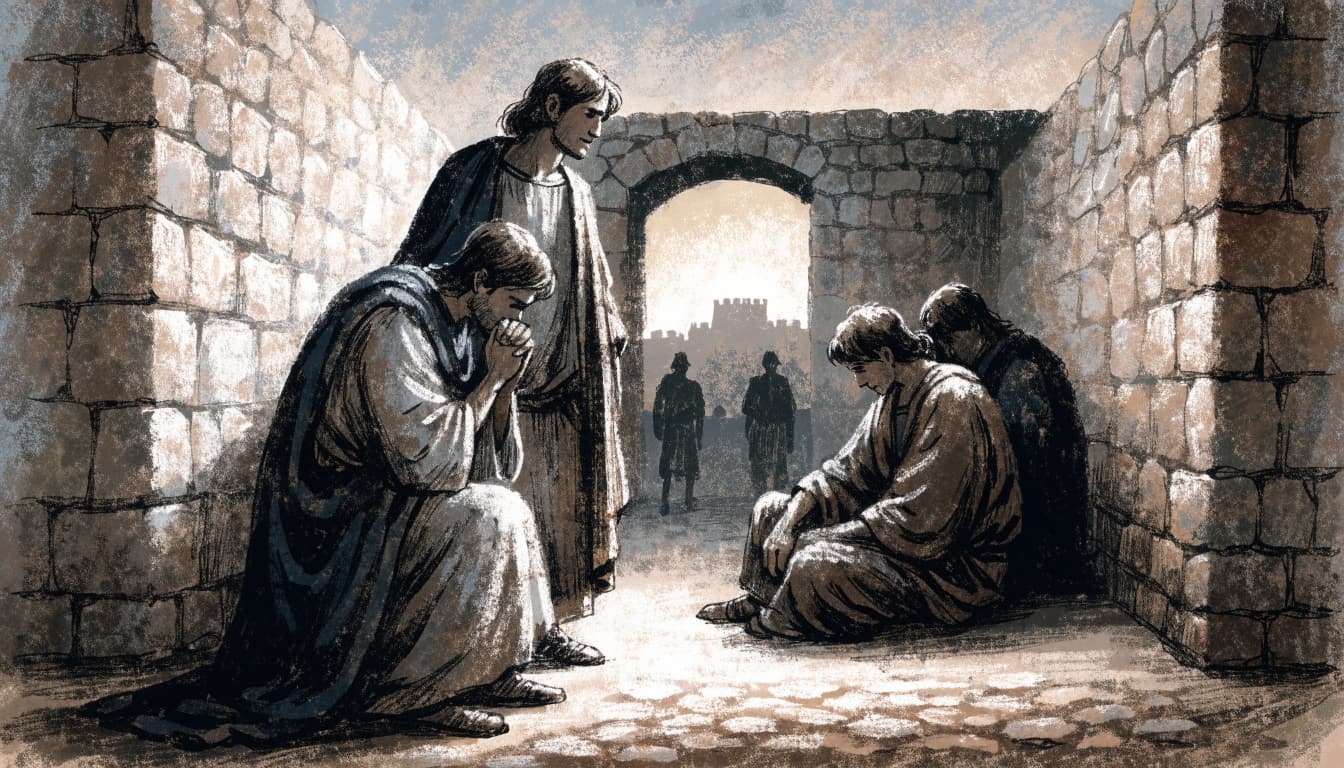
In Matthew 24:9, Jesus warns that His disciples will face hatred and persecution because they belong to Him. The reason matters. He isn't describing every hardship, public crisis, or period of social unrest. He is speaking about hostility directed at His followers because of their allegiance to Jesus.
That distinction keeps us from labeling every disagreement or painful season as persecution. Jesus' warning is serious, but it has a particular focus: people will oppose His disciples because they bear His name. Some will even be put to death.
There's also a striking connection in the passage. Jesus says His followers will be hated by all nations, then later says the Gospel of the Kingdom will be proclaimed as a witness to all nations. The same world that brings hostility will hear the message. Suffering doesn't make the witness easy, and it doesn't mean we should seek danger. But Jesus shows that opposition won't silence the Gospel. We can read more about the Gospel's mission to all nations as we follow that connection through Matthew 24.
Betrayal and deception test the community
Jesus turns from hostility outside the faith community to fracture within it. In Matthew 24:10-11 in the NKJV, He warns that many will fall away, betray one another, hate one another, and be misled by false prophets. Pressure can expose how fragile trust becomes when fear and deception take hold.
False prophets make hardship harder to bear because they distort the truth when people most need clarity. But Jesus' warning isn't permission to become suspicious of every person or group we disagree with. We test teaching against Scripture, look at its fruit, and stay close to what Jesus and the apostles taught.
The whole sequence belongs together. External persecution can strain a community, while betrayal and deception can weaken it from within. Jesus names both dangers, then calls His followers to endure. As Christians compare interpretations of this passage, Matthew commentary resources can help frame the discussion without replacing careful attention to the text.
How lawlessness makes love grow cold
Jesus connects two things in Matthew 24:12: lawlessness increases, and the love of many grows cold. The verse sits between His warnings about false prophets and His call to endure. That order matters. Deception and disregard for what is right can wear down the trust and care that hold a community together.
Lawlessness here isn't a label for one modern political movement or group. Jesus doesn't name one. He warns about a broader breakdown in loyalty to God and love for others, a condition that can take root wherever people excuse cruelty, betray one another, or treat truth as optional. We shouldn't use this verse to point fingers at a convenient target. We should let it examine our own hearts.

How growing lawlessness cools love
When wrongdoing becomes common, people can start to expect the worst from one another. Trust gives way to suspicion. Believers may pull back from serving, avoid honest conversations, or hesitate to stand with someone who is being mistreated. Under pressure, loyalty can fracture: people may protect themselves by betraying others, echoing the breakdown Jesus describes earlier in the passage.
Compassion can cool, too. If we see suffering often enough, or hear harshness defended as strength, we may become less willing to care. That doesn't mean every believer will respond this way. Jesus says the love of many will grow cold, a warning that makes room for faithful endurance even when others give up.
We can read more about Jesus' warning about lawlessness and love growing cold in the larger flow of Matthew 24. The point isn't to fuel fear about current events. It is to recognize how quickly a community can be shaped by the habits it tolerates.
What faithful love looks like under pressure
Love isn't just warm feeling or kind words. In a strained church community, it shows up in choices we can make today. We serve someone who cannot repay us. We speak truthfully, even when a rumor would be easier to repeat. We forgive without pretending that harm was harmless, and we seek wise help when trust needs repair.
Staying connected to a healthy church community matters, too. Isolation can leave fear and suspicion unchallenged. In fellowship, believers can pray together, bear one another's burdens, correct one another with grace, and keep serving their neighbors. We don't have to agree on every secondary issue to remain loyal to Jesus and treat one another with care.
Jesus' warning is sobering, but it isn't a command to become suspicious of everyone around us. As lawlessness grows, we can resist its pull through steady, visible acts of love. We keep telling the truth, showing mercy, forgiving, and staying faithful to the people God has placed near us.
What it means to endure to the end
Jesus' promise in Matthew 24:13 belongs with His warnings about persecution, betrayal, deception, and love growing cold. To endure is to keep trusting and following Him when hardship tests our faith. It doesn't mean we never feel afraid, grieve what we've lost, or need help from others.
Endurance is active faithfulness, not passive waiting
Faithful endurance takes shape in ordinary choices. We keep praying, even when our words feel small. We obey Jesus in the decisions right in front of us, gather with other believers instead of isolating ourselves, and receive wise care when the pressure becomes more than we can carry alone.
That care may come from a pastor, a trusted Christian friend, a counselor, or someone who can help us find safety. Seeking support isn't a failure of faith. And endurance doesn't mean staying in danger to prove our devotion. Jesus doesn't promise that His followers will escape persecution; He calls us to remain faithful through it.

We can also continue speaking about Christ with humility. That doesn't mean forcing a conversation or treating people harshly. It means being honest about our hope, answering questions with care, and refusing to repay hostility with hostility. As we've discussed in Jesus' call to persevere through trials, endurance is lived out in concrete acts of trust, love, and witness.
Christians differ on what "the end" means here. Some understand it as the end of the crisis Jesus described, others as the end of a believer's life, and still others as the final end. The verse doesn't give us a detailed timeline, so we should be careful not to claim more than it says.
The Holy Spirit strengthens believers under pressure
From our Spirit-filled Pentecostal perspective, endurance is not something we produce by sheer willpower. The Holy Spirit strengthens believers to bear witness to Jesus, comforts us in suffering, and gives wisdom when deception makes truth harder to recognize. We depend on Him as we pray, weigh teaching against Scripture, and seek Godly counsel.
The Spirit's help doesn't always look the same in every believer's life. Some may experience unusual boldness when speaking about Christ; others may receive comfort through prayer, a passage of Scripture, or the steady care of the church. We shouldn't turn one person's experience into a test everyone must pass. The promise is God's help, not a prescribed feeling or dramatic moment.
Nor does Spirit-given courage mean we never tremble. We can feel fear and still take the next faithful step. We can grieve and still trust Jesus. When pressure rises, we ask the Holy Spirit for courage to speak truthfully, wisdom to recognize deception, and strength to keep loving people without surrendering our faith.
The Gospel of the Kingdom will reach the nations
After warning that His followers will face hatred among the nations, Jesus promises that the Gospel will be proclaimed among them. In Matthew 24:14, the witness continues in the very places where opposition rises. That promise gives the passage a mission focus, while leaving room for care about exactly when and how it is fulfilled.
A testimony to every nation is not the same as universal belief
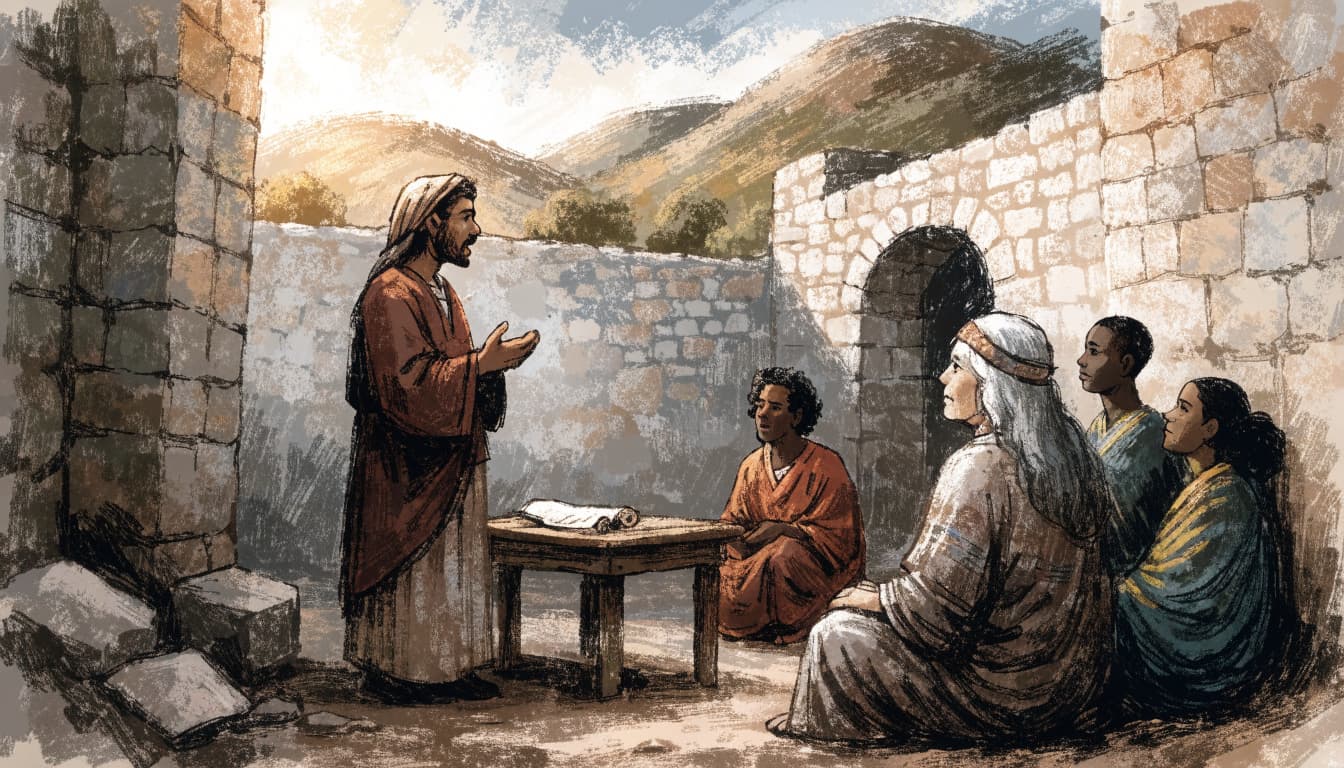
Jesus says the Gospel of the Kingdom will be proclaimed throughout the inhabited world as a testimony to all nations. The message reaches peoples and communities, but the verse does not say every person will believe or every nation will respond in the same way. A witness can be heard, considered, welcomed by some, and rejected by others.
That distinction matters. We shouldn't turn Jesus' words into a claim that every individual must convert before the end. Nor should we treat the verse as a detailed schedule for measuring how much evangelism remains. Christians differ on whether "the end" here points chiefly to Jerusalem's destruction, the end of the age, or a pattern that includes both. The passage itself does not settle every timeline question.
We can read the promise plainly without forcing it to answer what Jesus doesn't specify: the Gospel will be proclaimed among the nations as testimony. Our look at Matthew 24's signs and worldwide Gospel witness considers that promise within the wider passage. The witness matters, even when people respond differently.
Suffering and mission belong together
Verse 9 describes Jesus' followers being hated among the nations; verse 14 says the Gospel will be proclaimed among those nations. The two statements belong together. Opposition does not mean the mission has failed, and mission does not mean believers will be welcomed everywhere. Jesus prepares His disciples for both realities.
We see a related call in Matthew 28:19–20 in the NKJV, where Jesus commands His disciples to make disciples of all nations and teach them to obey Him. Many Christians connect that commission with Matthew 24:14: the church proclaims the Gospel while trusting Jesus' promise that it will reach the nations. Other interpreters understand verse 14 primarily as prophecy, rather than as a direct command to the church. We can acknowledge that difference without losing sight of our call to faithful witness.
That witness isn't a scorecard we use to boast about our success. We speak about Jesus with courage and humility, serve people in love, and trust the Holy Spirit with the response. The discussion of whether Gospel proclamation can hasten Christ's coming reflects one part of the debate, but our confidence rests in Jesus' words: opposition will not prevent the Gospel from being proclaimed.
How Christians interpret the timing of these warnings
Christians agree that Jesus warns His followers about persecution, deception, endurance, and Gospel witness. They differ on when the warnings reach their fullest meaning. The wording of Matthew 24:9–14 in the NKJV does not settle every timing question, so we should handle the passage with care and keep Jesus' direct calls in view.
The first-century setting matters
The conversation begins with the temple. Jesus leaves it, and His disciples point out its buildings. He predicts its destruction, prompting them to ask when it will happen and what sign will accompany His coming and the end of the age. We can read Matthew 24:1–3 in the NKJV to see the questions that shape the discussion.

Some interpreters understand "the end" in this part of the discourse as the end of Jerusalem's temple-centered order, culminating in the Roman destruction of the city and temple in 70 CE. On this first-century reading, Jesus' warnings address events His disciples and their generation would face. "The end" refers to the close of that historical order, not necessarily the end of the physical world.
That reading takes the temple setting seriously, but it is one interpretation, not the only Christian view. Matthew 24 also includes language about Jesus' coming and the end of the age, which Christians understand in different ways. We can explore the historical setting of the Olivet Discourse without assuming that one event explains every detail in the chapter.
A future hope keeps the church alert and faithful
A future-focused reading sees the warnings as pointing ahead to a period of tribulation and a final fulfillment before Christ returns. In this view, the worldwide proclamation of the Gospel precedes the final end. Christians who hold this position may understand the passage as describing events still to come, though they differ about how those events unfold.
A near-and-far reading holds that Jesus' words address the coming crisis in Jerusalem while also looking toward the final consummation. The temple's destruction belongs to the near historical horizon; Christ's return and the final end belong to the future horizon. These approaches are distinct, and no single one should be presented as the only Christian or Pentecostal position.
What remains clear across these readings? Jesus calls His followers to endure and bear witness. Christian hope in His return can keep us ready, shape holy living, and strengthen our mission. From our Spirit-filled Pentecostal perspective, we look to the Holy Spirit for courage and wisdom as we serve and speak about Jesus. That hope should not turn current events into a date-setting chart or make fear our guide. We stay faithful, keep proclaiming the Gospel, and trust Christ with the timing.
How to live out Matthew 24:9-14 today
Jesus' warnings call us to faithful action, not panic. We can stay rooted in Scripture, resist hatred, care for people under pressure, and speak about Jesus with courage and gentleness. None of that requires us to label every crisis a direct fulfillment of prophecy. We can take His words seriously without claiming more than the passage says.

Stay discerning without giving in to fear
Jesus warns about false prophets in Matthew 24:11. That warning calls for discernment, but discernment isn't suspicion toward everyone who sees things differently. We test a teaching carefully, then respond with humility.
A few steady habits can help:
- Compare claims with Scripture. Read the passage in context, not just the verse someone quotes in a video or post. Ask whether the teaching fits Jesus' words and the rest of the Bible.
- Seek wise counsel. Talk with mature believers who are willing to examine a claim honestly, rather than simply confirm what you already think.
- Refuse rumors and sensational claims. A dramatic prediction isn't trustworthy just because it sounds urgent. If a claim can't be checked, don't pass it along.
We can ask the Holy Spirit for wisdom while staying accountable to Scripture. From our Spirit-filled Pentecostal perspective, spiritual discernment matters, but no strong impression gives us permission to announce a prophecy as certain without Biblical grounds. For more on testing religious claims, see Biblical tests for false prophets. We can remain alert without letting fear set the terms.
Keep showing the love that lawlessness tries to cool
Jesus connects growing lawlessness with love growing cold in Matthew 24:12. We resist that pull through choices close at hand. At home, we listen before reacting, speak truth without cruelty, and keep showing up when a family member is struggling. In church, we refuse to spread gossip, make room for honest questions, and support believers facing pressure.
Love and truth belong together. Caring for someone doesn't mean pretending harmful behavior is harmless; speaking truth doesn't require contempt. We can set wise boundaries, seek help when someone is unsafe, and still refuse to treat people as enemies simply because they disagree with us.
In the wider community, love can look like bringing a meal, checking on a neighbor, or helping someone find practical support. We don't have to wait for a crisis headline to serve. And when we share the Gospel, we can speak plainly about Jesus while listening well and treating people with respect. A reflection on Matthew 24:9-14 and its call to faithful witness offers another way to consider that connection. Our witness includes the words we speak and the care we show, even when others don't agree.
Conclusion
Jesus doesn't soften His warning: persecution and deception are real, and lawlessness can cool the love that holds a community together. But He calls us to keep trusting Him and promises that the Gospel of the Kingdom will be proclaimed among the nations. We can hold fast to Scripture, rely on the Holy Spirit, and share Christ with love rather than fear.
That's the heart of Jesus' call to remain faithful amid persecution. Pressure may test our faith, but it doesn't have to silence our witness.

When Following Jesus Brings Opposition
In Matthew 24:9–14, Jesus warns His disciples that they will face persecution and hatred for His name. Betrayal, deception, and growing lawlessness will test many, yet He calls His people to endure. His words prepare believers to remain faithful rather than mistake hardship for the failure of God’s plan.
A Witness to Every Nation
Alongside that warning stands a remarkable promise: the gospel of the kingdom will be proclaimed throughout the world as a testimony to all nations, and then the end will come. Jesus connects steadfast faith under pressure with the continuing reach of His message, directing our attention not to a date but to His mission and His promised return.

When Faith Is Tested
In Matthew 24:9–14, Jesus warns that His followers will face persecution and hatred because of His name. The pressure will not come only from outside: some will fall away, betray one another, and be led astray by false prophets. As lawlessness increases, love will grow cold. Bible Prophecy Ministries examines what Scripture says has happened and what is yet to come, always pointing readers back to Jesus. In this passage, His warning calls believers to recognize these spiritual dangers and remain faithful when following Him becomes costly.


“Then they will deliver you up to tribulation and put you to death, and you will be hated by all nations for my name’s sake. And then many will fall away and betray one another and hate one another. And many false prophets will arise and lead many astray. And because lawlessness will be increased, the love of many will grow cold. But the one who endures to the end will be saved. And this gospel of the kingdom will be proclaimed throughout the whole world as a testimony to all nations, and then the end will come.” — Matthew 24:9–14 (ESV)
Jesus calls His followers to endure to the end.
From Opposition to a Worldwide Witness
Step 1
Step 1: Persecution comes, and followers of Jesus face hatred for His name. Some fall away and betray one another.
Step 2
Step 2: False prophets deceive many. As lawlessness increases and love grows cold, Jesus calls His followers to endure.
Step 3
Step 3: The Gospel of the Kingdom is proclaimed throughout the world as a testimony to all nations; then the end comes.
Steadfast Hope in Christ
Jesus’ words in Matthew 24:9–14 prepare His followers for opposition, betrayal, and the temptation to lose heart. Faithful endurance does not mean predicting every event or living in fear. It means holding fast to Christ, loving others when hostility grows, and trusting His promise that the Gospel of the Kingdom will be proclaimed throughout the world. Bible Prophecy Ministries keeps Jesus at the center of prophecy, helping readers approach difficult passages with careful attention to Scripture and confidence in the One who calls His people to remain faithful.
Questions About Endurance and the Nations
Jesus’ teaching calls for both careful reading and faithful living. These answers address persecution, worldwide Gospel witness, and the hope that sustains believers.
Does Matthew 24:9–14 say every Christian will face persecution?
Jesus warns His followers that they may face hatred and suffering because of His name. Experiences differ across times and places, but His warning calls all believers to stand with those who suffer and to remain loyal to Him when faith becomes costly.
What does it mean for the Gospel to reach all nations?
Jesus says the Gospel of the Kingdom will be proclaimed throughout the whole world as a testimony to all nations. The passage emphasizes the reach of the witness, not a timetable we can calculate. It invites believers to support the sharing of His message across peoples and places.
What does it mean to endure to the end?
Endurance is continuing to trust and follow Jesus despite pressure, deception, or discouragement. It is not a call to decode every headline. Our hope rests in Christ, whose words strengthen us to persevere in truth and love.

Study His Words. Hold Fast to His Hope.
Read Matthew 24:9–14 in its Scriptural context, pray for believers facing persecution, and take part in making the Gospel known. Explore more Bible prophecy resources to keep your attention on Jesus as His message reaches the nations.