
The Son of Man’s Return After the Tribulation
What did Jesus mean about the Son of Man's Return when He said the Son of Man would come after the tribulation? In Matthew 24:29–31, He gives a clear sequence: signs in the heavens, His visible coming in power and great glory, and the gathering of the elect. You can read Jesus' teaching in Matthew 24 in the context of the whole discourse.
Christians interpret some details differently, and we want to treat those views fairly while holding closely to what Jesus said. Let's look at His words and the order He gives.
The Son of Man’s Return: Jesus’ Sequence After the Tribulation
Jesus gives a sequence in Matthew 24:29–31, and its opening time marker is hard to miss. He places the signs in the heavens, His visible coming, and the gathering of the elect after the tribulation. We should take that order seriously while avoiding claims that these verses answer every question about the end times.
Why the words “after the tribulation” matter
The phrase "immediately after the tribulation" is central because it tells us when Jesus places the events He describes next. The sun and moon are darkened, the stars fall, and the powers of the heavens are shaken. Then the Son of Man appears, the tribes of the earth mourn, and the elect are gathered.
That sequence matters in discussions about Christ's return and the rapture. Some Christians read it as placing the gathering of believers after tribulation, at Jesus' visible return. Others build a wider end-times timeline from several passages and understand the timing differently. We can describe those conclusions fairly, but we should also be clear about what Jesus says here: "immediately after the tribulation."
The passage appears in the Olivet Discourse, where Jesus responds to questions about the temple, His coming, and the end of the age. He also teaches His disciples to watch and remain ready. If you want to explore the larger context, see Jesus' warning about tribulation. The surrounding teaching helps us hear these verses in context, but it doesn't make every detail of a complete end-times timeline explicit.

The main events Jesus names
Let's follow the order Jesus gives rather than jumping ahead to a timeline. First come the signs in the heavens: the sun is darkened, the moon gives no light, stars fall, and heavenly powers are shaken. Then the sign of the Son of Man appears, and He comes on the clouds with power and great glory.
Next, the tribes of the earth mourn as they see Him. Jesus then sends His angels with a great trumpet sound to gather His elect from the four winds, from one end of heaven to the other. The movement is clear: heavenly signs, the Son of Man's coming, mourning among the tribes, and the gathering of the elect.
Christians differ on how these details fit with other passages, including who "the elect" are and how this gathering relates to the rapture. We don't need to settle every debate to notice the order Matthew records. Jesus connects the gathering to His coming, after the tribulation He has just named.
What the Signs in the Heavens Mean in Matthew 24
The darkened sun, moon without light, falling stars, and shaken heavenly powers can sound like a detailed forecast of astronomical events. But prophetic Scripture also uses images in the heavens to describe God's judgment and upheaval. We should take Jesus' words seriously without claiming more certainty than He gives us.
How prophetic imagery shapes the passage
In Matthew 24:29–31, Jesus describes the sun going dark, the moon losing its light, stars falling, and the powers of the heavens being shaken. Those images echo prophetic language used when God brings judgment against nations and overturns the world as people know it. The imagery is vivid because the event is momentous.

That doesn't settle whether every sign should be read as a literal change in the sky, symbolic language for political and spiritual upheaval, or some combination of both. Jesus does not explain each image in detail here, so we shouldn't force a conclusion the passage itself doesn't state. Luke's parallel account also describes fear among the nations and people fainting from expectation of what is coming (Luke 21:26), connecting the heavenly signs with upheaval on earth.
When we read prophetic imagery, the surrounding passage matters. We can also compare how similar language functions elsewhere in Scripture before deciding how literally to understand it. For more help with interpreting prophetic imagery in Scripture, keep the passage's context in view and distinguish what the text says from what we infer.
Why we should avoid date-setting
Jesus gives signs and a sequence, not a calendar date. He places these heavenly signs after the tribulation, then speaks of the Son of Man's coming and the gathering of the elect. That order deserves our attention. It doesn't give us permission to attach a date to the return of Christ.
A war, an eclipse, a disaster, or a season of social unrest may prompt people to revisit prophecy. But a current crisis alone cannot prove that Jesus' return is happening on a specific schedule. The signs in Matthew 24 belong to Jesus' teaching, not to a modern prediction built around headlines.
We do well to study the passage, compare Scripture with Scripture, and stay watchful without turning uncertainty into certainty. Jesus calls His followers to readiness and faithfulness. Claims that announce a date or insist that one present-day event settles the timeline go beyond what He tells us. Jesus' teaching about the unknown day and hour is a good reminder to keep our confidence in His words, not in speculation.
How Mark 13 and Luke 21 Add to Jesus’ Teaching
Matthew gives us the sequence: the tribulation, signs in the heavens, the Son of Man's coming, and the gathering of the elect. Mark and Luke add details that help us see both the reach of that gathering and the human response to those events. Their accounts share the same central hope, but each emphasizes something different.
Mark highlights the far-reaching gathering
In Mark 13:24-27 in the NKJV, Jesus describes the same heavenly signs and the coming of the Son of Man in clouds with great power and glory. Mark then says the angels will gather the elect from the four winds, "from the farthest part of earth to the farthest part of heaven."
That wording gives the gathering a sweeping scope. The elect are not gathered from one nation or one corner of the world. Jesus' words reach across the earth and heaven, showing that no distance stands between His people and His call. Mark's account helps us hear the promise as a worldwide gathering, not a local event.
Luke pairs world distress with hope for disciples
Luke adds a striking picture of the world's response. In Luke 21:25-28 in the NKJV, Jesus speaks of distress and perplexity among nations, with the sea and waves roaring. People faint with fear as they face what is coming upon the earth. The signs in the heavens are not isolated from life below; nations are shaken, too.
Then Jesus turns directly to His followers. When these things begin to happen, He tells them to look up and lift their heads, because their redemption draws near. The contrast matters. The same moment that brings terror to the nations brings hope to those who belong to Christ. We aren't told to pretend the distress is small or ignore what is happening. Jesus tells His followers where to look, and why they can hold their heads high.
Matthew, Mark, and Luke each preserve important details without repeating every feature in the same way. Mark stresses the far-reaching gathering; Luke sets fear among the nations beside the hope of redemption. Together, these accounts keep both sides of Jesus' teaching in view: His coming brings judgment and upheaval, but His people can expect deliverance. For another picture of Jesus' return in power and glory, Revelation also directs our attention to the returning King.
What Jesus’ Visible Coming in Power and Glory Will Be Like
Jesus describes His return as an event the world will see, not a private spiritual experience hidden from view. Matthew, Mark, and Luke each connect His coming with heavenly signs, clouds, power, and glory, while giving us different details about how people respond.
Clouds, glory, and the authority of Jesus
In Matthew 24:29-31 (NKJV), Jesus says the tribes of the earth will see the Son of Man coming on the clouds of heaven "with power and great glory." Mark's parallel account also describes Him coming in clouds with great power and glory (Mark 13:24-27, NKJV). Clouds, glory, and authority belong together in these passages. Jesus comes openly as the Son of Man, with power no earthly ruler can claim.
That matters when we hear claims that His return is only an inward experience or a spiritual change people may or may not recognize. Jesus describes a visible coming after the signs in the heavens, followed by the angels gathering the elect. Mark adds that this gathering reaches "from the farthest part of earth to the farthest part of heaven." The scene is public and climactic. We can disagree about how every prophetic detail fits together, but the plain picture is of Jesus appearing in glory.
Why the nations mourn while believers lift their heads
Matthew says the tribes of the earth mourn when they see the Son of Man coming. He doesn't explain every person's reaction or identify each group in detail, so we should avoid filling in what He leaves unstated. The passage does show that His appearance will bring a serious response among the nations.
Luke gives us another side of the moment. He describes distress and perplexity among nations, then records Jesus' words to His disciples: when these things begin to happen, they can look up and lift their heads, because their redemption draws near (Luke 21:25-28, NKJV). Fear and hope appear side by side. Jesus doesn't say everyone will respond alike.
As Pentecostal believers, we affirm the promised return of Jesus and take His words seriously. His coming brings the culmination of what He has promised, and Luke's encouragement helps us face that expectation with faith. Mourning among the tribes and lifted heads among disciples are both part of the Biblical picture.
Who Are the Elect, and What Happens at the Trumpet Call?
Jesus says the angels will gather the elect after the tribulation, at the sound of a great trumpet. The image is direct and sweeping: God's people are gathered from every direction. Christians debate who "the elect" includes, and how this gathering fits with other passages about Christ's return. We should keep those questions open where Scripture leaves room for discussion.
The angels gather God’s people from every direction
In Matthew 24:31, Jesus says He will send His angels with a great trumpet sound to gather His elect from the four winds, "from one end of heaven to the other." The "four winds" is simple language for every direction. No region is excluded from the picture Jesus gives.
Mark describes the same wide-reaching gathering, saying the angels will bring the elect "from the farthest part of earth to the farthest part of heaven" (Mark 13:24–27, NKJV). The purpose is clear: Christ gathers His people. The passage does not give us a detailed map of how each person travels or explain every step of the event, so we should be careful not to add details Jesus does not state.
Who are "the elect"? Christians understand the term in different ways. Some read it as believers generally, while others understand it as faithful people identified with Israel, including those who endure the tribulation. Neither view is undisputed. Matthew 24:31 itself names the elect and describes their gathering, but it does not settle every part of the debate.
How the trumpet relates to other gathering passages
The trumpet in Matthew invites comparison with Paul's teaching about the Lord's return. In 1 Thessalonians 4:16–17, the Lord descends with a shout and the trumpet of God; the dead in Christ rise, and believers are caught up together to meet Him. In 1 Corinthians 15:52, Paul says the trumpet sounds, the dead are raised incorruptible, and believers are changed.
These passages share themes of a trumpet, resurrection, and God's people being gathered to Christ. That's why Christians often discuss them together when considering the rapture. Still, they are related passages, not identical descriptions. Matthew 24:31 does not use the word "rapture"; it speaks of angels gathering the elect after the tribulation. We can compare these texts while letting each one say what it says.
How Pentecostal Christians Read the Tribulation and the Rapture
Pentecostal Christians do not all read the rapture timeline the same way. We believe Jesus will return, but Christians who honor Scripture can reach different conclusions about how the gathering of believers relates to the tribulation and His public appearing.
The case for gathering believers after the tribulation
Post-tribulation readers begin with the order Jesus gives in Matthew 24:29–31 (NKJV). He says the heavenly signs come "immediately after the tribulation," then describes the Son of Man appearing in glory and the angels gathering the elect with a trumpet. The gathering follows the tribulation and is tied to Jesus' visible return.
That reading takes the sequence in Matthew seriously. Jesus does not describe a separate gathering before the events in these verses. Post-tribulation Christians then compare this passage with 1 Thessalonians 4:16–17 (NKJV) and 1 Corinthians 15:51–52 (NKJV), where Paul writes about resurrection, the trumpet, and believers being gathered to Christ. They understand these passages as describing the same return and gathering.
That conclusion comes from comparing several passages, not from Matthew 24:29–31 alone. Christians still differ over how the details fit together, including who Jesus means by "the elect."
Why some Pentecostal churches teach a pre-tribulation rapture
Some Pentecostal churches teach that Christ gathers believers before the tribulation, then returns publicly afterward. The Assemblies of God USA holds a pre-tribulation position, as explained in its statement on premillennial eschatology. This is one Pentecostal position, not a belief shared by every Pentecostal church.
Supporters build their case from a wider reading of Scripture. They distinguish the rapture described in 1 Thessalonians 4:16–17 (NKJV) from Christ's later public return in judgment and glory. They may also connect the tribulation timeline with Daniel's prophecy of the seventy weeks.
Matthew 24:29–31 does not lay out that pre-tribulation distinction. Supporters interpret it alongside other passages, while post-tribulation readers see the sequence in Matthew as evidence that the gathering happens after tribulation.
How to weigh different interpretations with care
Let's keep three things clear: what a passage states, what we infer by comparing it with other passages, and what a denomination teaches. A church's position can help you understand its interpretation, but it doesn't prove every Pentecostal agrees.
We hold that Jesus' words in Matthew place the gathering after the tribulation He describes. At the same time, we can explain why other Pentecostal Christians read the broader Biblical picture differently. Read each passage in context, compare Scripture with Scripture, and speak respectfully where Christians disagree.
How to Watch for Jesus’ Return With Hope and Faithfulness
Jesus' teaching about His return calls for a steady kind of readiness. We don't have to let frightening headlines or speculative timelines set the tone of our faith. Our hope rests in Christ, and our response is to trust Him and live faithfully while we wait.
Stay alert without giving in to fear
Luke records Jesus' words to His disciples: when these things begin to happen, they can "look up and lift up your heads," because their redemption draws near (Luke 21:25–28 in the NKJV). That command gives us a different posture from fear. We can face what Jesus says will come without losing sight of the hope He promises.

Watchfulness means trusting Jesus enough to keep following Him, even when the future feels uncertain. It doesn't mean trying to calculate the date of His return or treating every crisis as proof that a prediction is coming true. We can pay attention to Scripture without becoming captive to panic or sensational claims.
Live faithfully while waiting for the Kingdom
So what does readiness look like on an ordinary day? We hold to Scripture, serve the people God has placed around us, pray, and remain faithful to Jesus. These practices don't earn our hope. They shape a life that keeps looking to Him.
We can also ask the Holy Spirit to strengthen us for that daily faithfulness. As Spirit-filled Pentecostals, we believe the Spirit is at work in believers, helping us follow Jesus and serve others while we await His return. The Spirit's work points us toward Christ and faithful living, not fear-driven speculation. For help tracing how the Holy Spirit guides us through Scripture, keep Jesus at the center of what you read.
Waiting for the Kingdom doesn't mean stepping away from the needs in front of us. We can pray for someone who is hurting, offer practical help, and speak about Jesus with hope. We don't know the day or hour, but we know whom we're waiting for. Our confidence is in His promise to come, and our calling is to remain faithful until then.
Conclusion
Jesus gives us a clear sequence to hold onto: after the tribulation come signs in the heavens, His visible coming in power and great glory, and the gathering of the elect (Matthew 24:29–31, NKJV). Christians may differ on how this passage fits into the wider timeline, but we can keep our focus on what He says.
We can study related prophecies, including Daniel's 70 weeks and their connection to Jesus, without treating every detail as settled. The promise of His return gives us hope and calls us to stay ready and faithful.
When the heavens are shaken and the Son of Man appears, Jesus' words point us to the One we are waiting for. Our confidence rests in Him.
What Jesus Said About His Return
In Matthew 24:29–31, Jesus places the coming of the Son of Man “immediately after the tribulation.” He describes a darkened sun, a shaken heavens, and the Son of Man appearing with power and great glory. His angels then gather His elect. This article follows Jesus’ own words to consider the timing, signs, and promise of His return, keeping the focus on Christ rather than speculation.
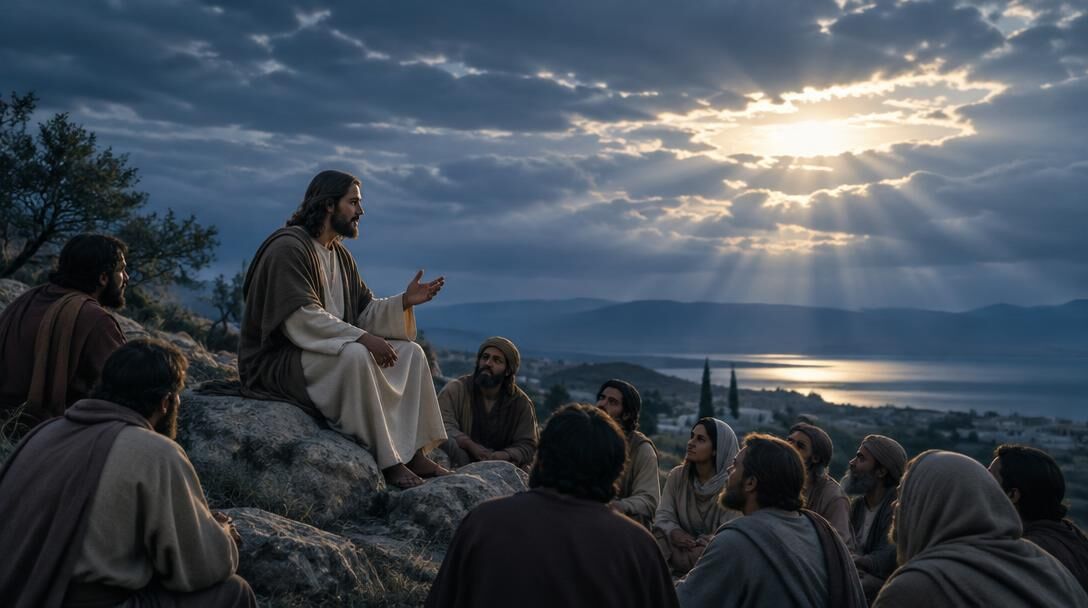
“Immediately after the tribulation of those days shall the sun be darkened, and the moon shall not give her light, and the stars shall fall from heaven, and the powers of the heavens shall be shaken: And then shall appear the sign of the Son of man in heaven ... and they shall see the Son of man coming in the clouds of heaven with power and great glory.” — Matthew 24:29–30 (KJV)
After the Tribulation
Jesus places these events in a clear sequence: immediately after the tribulation, the sun and moon are darkened, the stars fall, and the powers of heaven are shaken. Then the sign of the Son of Man appears, and the peoples of the earth see Him coming in the clouds with power and great glory (Matthew 24:29–30). The cosmic signs are not the return itself; in Jesus’ teaching, they precede His visible appearance. He then sends His angels with a great trumpet to gather His elect from the four winds (Matthew 24:31). While Jesus gives this order of events, He also warns that no one knows the day or hour (Matthew 24:36).
What Matthew 24 Reveals About His Return
The tribulation comes first
Cosmic signs follow immediately
The sun is darkened
The moon gives no light
Stars fall from heaven
The powers of heaven are shaken
The Son of Man’s sign appears
The peoples of the earth mourn
He comes in the clouds of heaven
His coming is seen
He comes with power
Great glory accompanies Him
Angels are sent forth
A great trumpet sounds
The elect are gathered
They are gathered from the four winds
The gathering reaches heaven’s farthest bounds
The day and hour remain unknown
The Son of Man’s Return: Common Questions
When does Jesus say the Son of Man will return?
In Matthew 24:29–30, Jesus says that after the tribulation, the sun and moon will be darkened and the sign of the Son of Man will appear. Mark 13:24–26 gives the same sequence. These passages describe the timing of his appearing without giving its exact day or hour (Matthew 24:36).
What does it mean that he will come on the clouds?
Jesus says people will see the Son of Man coming on the clouds with power and great glory (Matthew 24:30). The imagery recalls Daniel 7:13–14, where one like a son of man receives an everlasting Kingdom. Read together, these passages point to Jesus’ royal authority, not merely a change in the weather.
Will the Son of Man’s return be visible?
Matthew 24:27 compares his coming to lightning visible across the sky, and verse 30 says the tribes of the earth will see him. Jesus uses these descriptions while warning against claims that he has appeared secretly in a particular place (Matthew 24:23–26).
What happens when the angels gather the elect?
Matthew 24:31 says the Son of Man will send his angels with a loud trumpet call to gather his elect from the four winds. Mark 13:27 likewise describes a gathering from the ends of earth and heaven. Christians differ on how this relates to other end-times passages, so the details should be considered alongside the wider Biblical witness.
How should believers respond if no one knows the day?
Jesus says no one knows the day or hour and calls his followers to stay awake and be ready (Matthew 24:36, 42–44). Rather than setting dates, believers can study his words, remain faithful, and keep their hope centered on him.