How to Read Biblical Prophecy: 3 Anchors for Faithful Study
Reading prophecy faithfully means resisting the urge to force it into today's headlines while still taking seriously what it meant to its first hearers. We need both: the prophet's original setting and the hope Scripture reveals through Jesus.
Three anchors help us keep our footing: follow the Bible's unified history, look to Jesus for fulfillment, and honor the context of each prophetic word. We can stay open to the Holy Spirit without letting speculation outrun Scripture. Let's start with how prophecy fits within the Bible's unified history and a careful reading of prophecy in its original context.
Three Anchors for Reading Prophecy Faithfully
Biblical prophecy can include a warning, a word of hope, a symbolic action, or a promise about future events. In every case, God spoke to people in a real time and place. The prophet was addressing a particular audience, even when the message also pointed beyond that moment.
That matters because many prophetic words concerned the near future of Israel, Judah, or neighboring nations. We shouldn't assume every prophecy mainly predicts distant events, or treat every vivid image as a coded reference to today's headlines. We can ask what God was saying to the first hearers before we ask how the passage speaks to us.

These three anchors give us a practical framework for study, not a formula that replaces it. Prophetic passages still need careful reading, prayer, and attention to the words on the page. We also believe the Holy Spirit helps us understand Scripture, while Scripture keeps our impressions and expectations grounded.
Follow the Bible’s unified history
Prophecy belongs to the larger history of God's relationship with His people. A prophetic word can address a crisis, call people back to covenant faithfulness, or offer hope when judgment seems certain. When we read it as part of the Bible's unified history, we can see how its message fits within God's purposes instead of isolating a striking phrase.
This anchor also keeps us from treating prophecy as a collection of disconnected predictions. The Bible carries themes forward, and later passages may develop earlier promises in ways the first audience could not yet see. The New Testament, for example, connects the Spirit's outpouring with Joel's prophecy in Acts 2:16-21. That connection belongs within the larger history Scripture tells, not in a reading detached from it.
Look to Jesus for fulfillment
For Christians, Jesus is at the center of the Bible's witness. The New Testament shows how God's promises, patterns, and hopes find their fullest meaning in Him. This doesn't give us permission to make every prophetic image point directly to Jesus in the same way. It does give us a clear center as we trace how Scripture speaks about the Messiah and God's Kingdom.
Peter's reading of Joel at Pentecost gives us a helpful picture of this approach. In Acts 2:16-21, he connects the events unfolding before his listeners with the prophet's words. We can follow the apostles' example by looking for the connections Scripture itself makes. That way, a Christ-centered reading grows from the Bible's witness rather than from a resemblance we have noticed on our own.
Honor each prophecy’s context
A prophetic word had a setting, an audience, and a purpose. Its form matters, too. A warning, a promise, a poetic image, and an apocalyptic vision don't all communicate in the same way. Revelation, for instance, combines prophecy, apocalyptic vision, and the form of a letter, so its images need to be read with attention to the kind of writing John used. Third Millennium Ministries explains Revelation's literary forms, a useful reminder that genre shapes how we read.
Context helps us hear what the prophet meant before we draw conclusions about what the passage means today. It also guards against lifting one line out of its setting and building a whole theory around it. If you want a closer look at this first step, our guide to Biblical prophecy in its original context offers a practical place to begin.
Together, these anchors help us read with faith and care. We can welcome the Holy Spirit's guidance, take prophetic hope seriously, and still let the text set the limits of what we claim.
Read Prophecy Within Scripture’s Unified History
Biblical prophecy belongs to the Bible's larger movement: God creates, makes covenant, confronts sin, brings redemption through Jesus, and promises to renew creation. When we keep that whole picture in view, we can hear what a prophecy meant to its first audience and see how it fits within God's saving work.

Follow the path from covenant promises to restoration
God's promises to Abraham and David give prophecy a direction. He promised Abraham blessing that would reach the families of the earth (Genesis 12:1-3). Later, God promised David an enduring house and throne (2 Samuel 7:12-16). These promises were spoken into real histories, not detached from Israel's life and struggles.
That matters when we read about judgment, exile, and return. The prophets warned God's people about the consequences of unfaithfulness, yet they also spoke of mercy and restoration. Their words addressed the people facing those crises, while carrying hope that reached beyond a single return from exile. The New Testament identifies Jesus as the promised Son of David, whose Kingdom has no end (Luke 1:32-33). We can explore more of that connection in this discussion of Jesus and the Kingdom of God in Israel's covenant story.
Isaiah's vision stretches the hope further. He describes new heavens and a new earth, with peace and flourishing replacing grief and destruction (Isaiah 65:17-25). Revelation returns to that hope in its vision of a new heaven and new earth, where God makes all things new (Revelation 21:1-5). The New Testament helps us see the destination of these promises, but it doesn't erase what they meant to people who first heard them.
Notice patterns as well as direct predictions
Some prophecies point forward directly. Others use a person, event, or image as a pattern that takes on fuller meaning later. That difference helps us avoid treating every detail in the Old Testament as a direct prediction of Jesus.
Hosea recalls Israel's rescue from Egypt: "When Israel was a child, I loved him, and out of Egypt I called My son" (Hosea 11:1). In its setting, Hosea looks back at Israel's history and God's love for His people. Matthew then connects that history with Jesus, who returns from Egypt as a child (Matthew 2:13-15). Matthew presents Jesus as recapitulating Israel's path, not as though Hosea's original words were only a hidden forecast. For a helpful explanation of this connection, see how Hosea 11:1 relates to Jesus.
So when a New Testament writer connects an earlier passage with Jesus, we should follow the connection Scripture makes. We also need to read the earlier passage in its own setting. Holding both together lets us see Jesus at the center of Scripture's unified history without forcing every image into the same kind of fulfillment.
Look to Jesus for the Fulfillment of God’s Promises
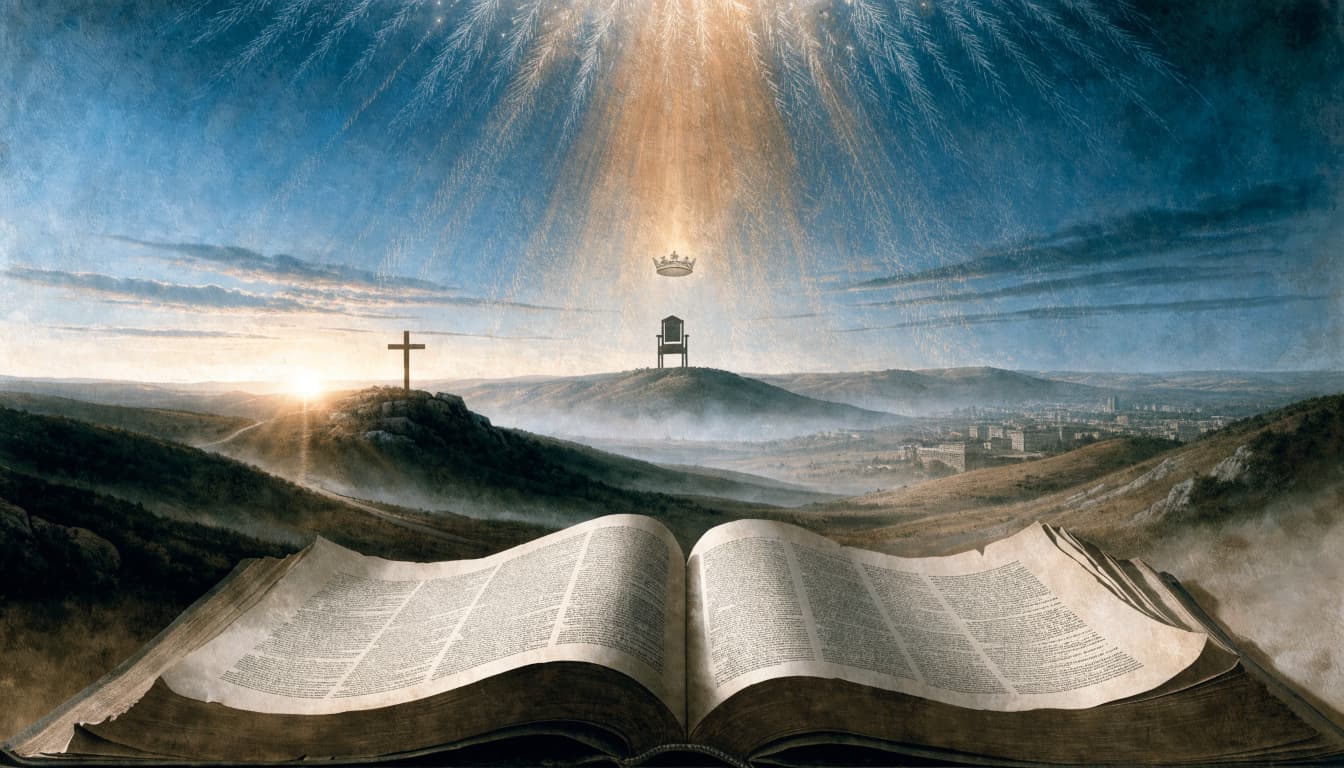
Jesus is the center of Christian reading of prophecy. His life, death, resurrection, exaltation, and promised return bring the Bible's promises into focus. As we trace those promises, we need to follow the connections the New Testament makes, rather than treating any resemblance as proof of fulfillment.
Trace how Jesus fulfills the prophets and the promises
Isaiah's passage about the suffering servant gives us a clear example. In Isaiah 52:13-53:12, the servant suffers, bears the sins of others, and is ultimately vindicated. In Acts 8:30-35, Philip meets an Ethiopian official reading this very passage. Asked who Isaiah is describing, Philip begins with that Scripture and tells him about Jesus.
That is more than a loose resemblance between an ancient poem and Jesus' suffering. Acts identifies the passage as the starting point for proclaiming Him. The connection takes shape through Jesus' suffering and saving work, and the resurrection confirms that suffering did not have the final word.
The promise of David's throne follows a different line. God's covenant with David gave Israel hope for an enduring royal house. In Luke 1:32-33, the angel tells Mary that Jesus will receive David's throne and reign over a Kingdom without end. Luke makes the connection directly: Jesus is the promised King, and His reign reaches beyond the rule of any earthly successor. We can also consider Jesus as the prophet like Moses as one strand in the New Testament's wider witness to Him.
These examples show why we should let Scripture guide our claims about fulfillment. Sometimes the New Testament names a passage and explains its connection to Jesus. At other times, an earlier event or image becomes a pattern that the New Testament applies to Him. We should not flatten these forms into one simple formula. The connection needs to come from the text, not merely from an image that happens to remind us of Jesus.
Hold present fulfillment and future hope together
Prophetic fulfillment can be underway without being complete. We see this in Peter's sermon at Pentecost. When the Holy Spirit is poured out, Peter says, "This is what was spoken by the prophet Joel." He connects the event with Joel 2:28-32 and Acts 2:16-21. God's promise is active in the present: the Spirit is poured out, and people call on the Lord for salvation.
Yet Joel's prophecy also speaks of signs and the day of the Lord. Peter's words don't require us to say every part has reached its final completion. Pentecost is a real fulfillment, while the passage's wider horizon still points ahead. This is a pattern we see throughout Scripture: God's promise is already at work, but its fullness is still coming. For a Pentecostal perspective on this connection, the Assemblies of God position paper on baptism in the Holy Spirit discusses Peter's use of Joel.
Paul gives us another picture of this hope in Romans 8:18-25. Believers have the Spirit's firstfruits, yet we still groan as we wait for the redemption of our bodies. Creation, too, waits for renewal. So we can welcome the Spirit's work now without claiming that suffering, death, or the brokenness of creation have already disappeared.
When we read prophecy through Jesus, we hold both truths together. The risen and exalted Christ has begun to fulfill God's promises, and He will return to bring them to completion.
Honor the Original Context Before Applying a Prophecy
A prophetic passage had real hearers facing real pressure. Before we ask what it means for us, we need to ask what the prophet said to them. That first setting keeps us from pulling a promise or warning out of place, while the wider Bible can still show us how its hope reaches its fullest meaning.
Ask who heard the prophecy and what was happening
When we open a prophetic passage, a few basic questions can keep our reading grounded:
- Who spoke, and who first heard the message?
- What political, covenant, or social crisis shaped the moment?
- What response did the prophet call for?
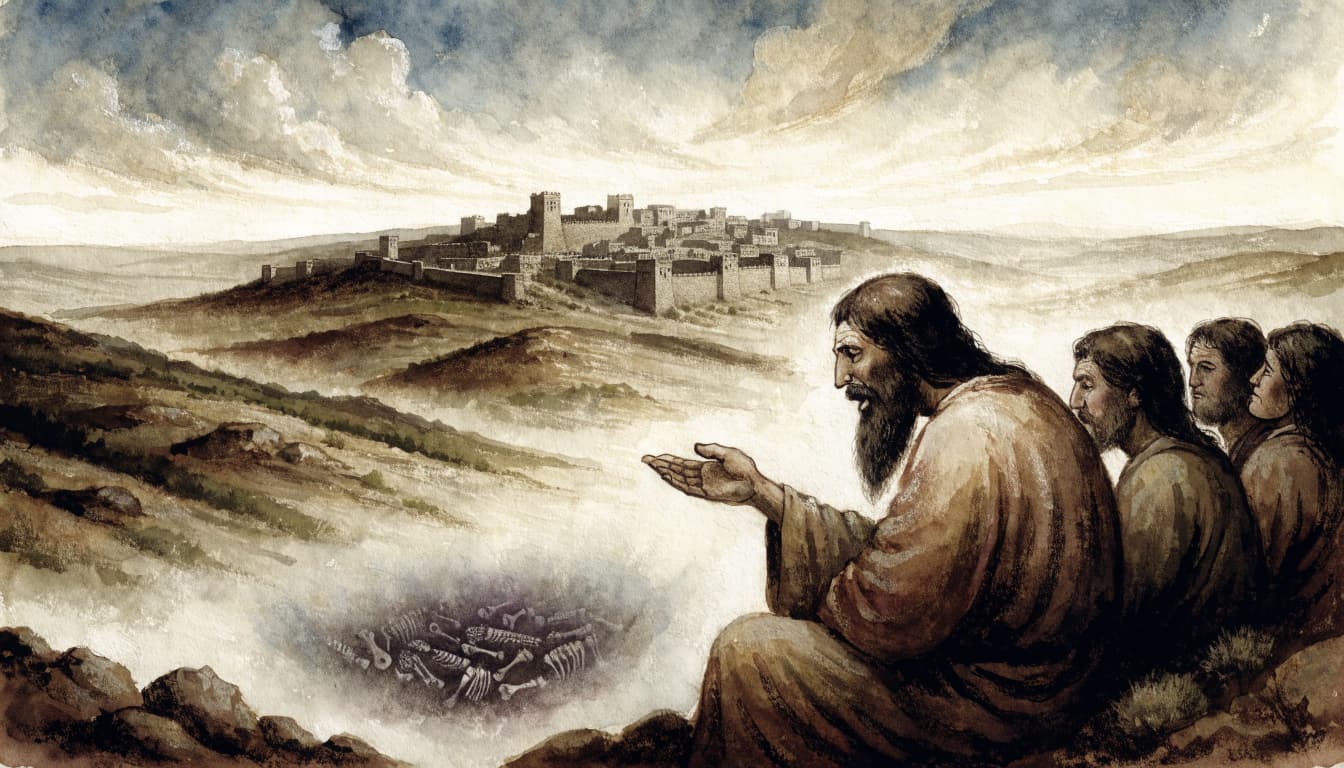
Isaiah's sign to Ahaz gives us a clear example. In Isaiah 7:1-17, Judah faces a military threat from Aram and Israel. Ahaz is afraid, and Isaiah brings him a message about the crisis and a sign involving Immanuel. We should read that exchange in Ahaz's setting before turning to Matthew 1:22-23, where Matthew connects Isaiah's words with Jesus. Matthew's use expands our understanding of the passage; it doesn't require us to pretend the first audience and its danger never existed.
Jeremiah 29 offers another needed reminder. Jeremiah 29:1-14 addresses Judeans already carried into exile in Babylon. The promise of a future and hope comes to a named audience living through displacement, and the passage gives a time frame for their return. When we lift one sentence away from that setting, we can turn a specific word of hope into a guarantee about our own plans. Reading the whole passage lets us receive its hope without claiming more than God promised there.
Let the passage’s genre guide how you read it
Prophecy doesn't come in just one form. The prophetic books include poetry, warnings, covenant lawsuits, symbolic actions, and visions. Each form communicates in its own way, so we should pay attention to the passage's language and structure before deciding what its images mean. Third Millennium's discussion of prophecy and apocalyptic writing offers a helpful overview of why genre matters.
In Ezekiel 37:1-14, Ezekiel sees a valley filled with dry bones. The passage itself explains the image: the bones are the whole house of Israel, and the vision speaks of restoration after devastation. We don't need to invent a separate meaning when the text gives us one. That explanation should guide our reading of the vision.
Daniel and Revelation also use symbolic visions. Beasts, horns, and other vivid images belong to the language of those passages, so we shouldn't turn each one into a literal description or a modern headline without strong support from Scripture. Christians may disagree about how particular details unfold, but we can still ask what the vision says in its own setting and how the rest of the Bible helps us understand it. That same care matters when we consider Daniel's prophecy of the Messiah: its historical setting and its New Testament significance both deserve attention.
Use These Anchors to Read Prophecy Without Speculation
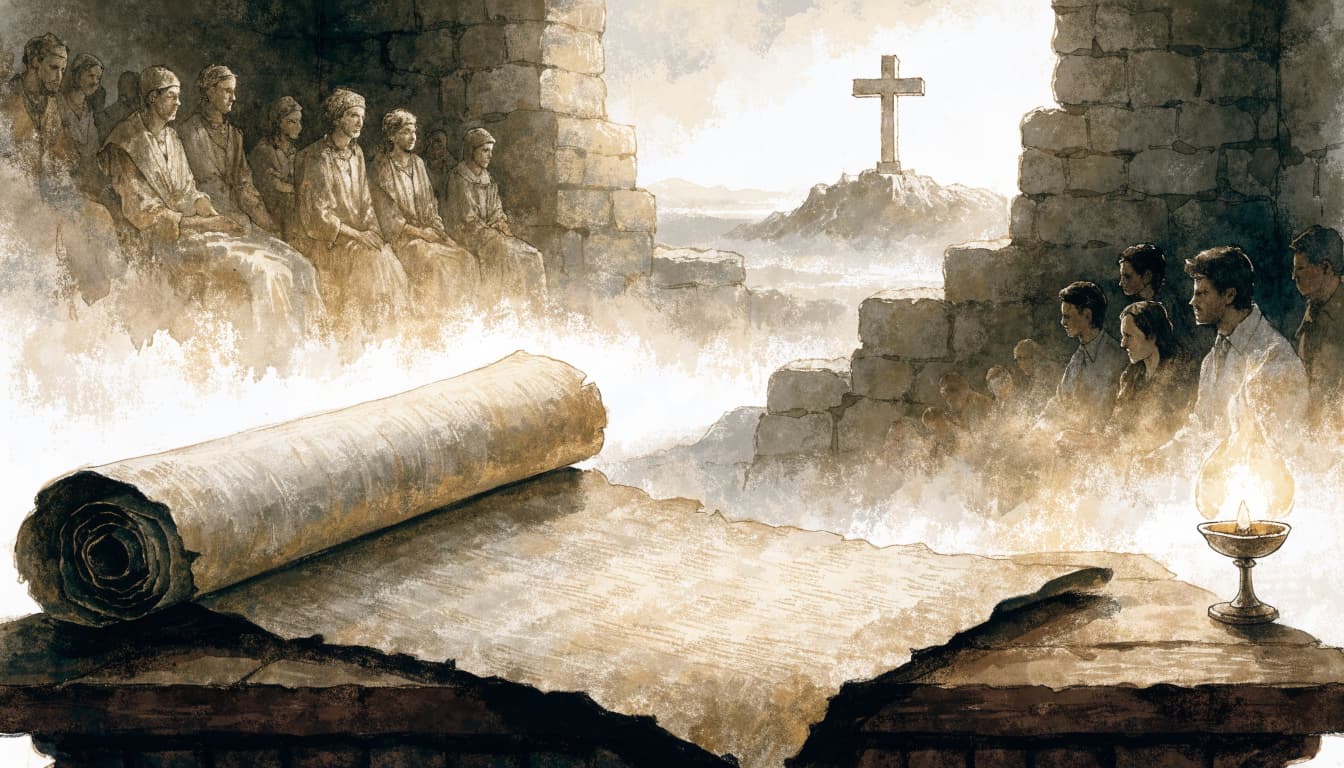
A faithful reading of prophecy moves in order: we listen to the passage in its original setting, follow its place in the whole Biblical account, trace how Scripture connects it to Jesus, and then consider how its truth speaks today. That sequence gives us room to hear the Holy Spirit without letting a strong impression or a striking headline take control of the text.
Move from the first meaning to a faithful application
When we study a prophetic passage, we can follow a simple sequence:
- Read the full passage, not just the memorable line. Notice repeated words, contrasts, and how the passage begins and ends.
- Identify the speaker, first audience, setting, and genre. Is this a warning, a promise, poetry, a symbolic action, or a vision?
- Summarize what the message meant to its first hearers. What crisis were they facing, and what response did God call for?
- Compare related passages across Scripture. Look for repeated themes and let clearer passages help us understand harder ones.
- Trace any New Testament use of the prophecy. When an apostle connects a passage with Jesus or the church, follow that connection while keeping the original setting in view.
- Ask how the passage's truth applies today. Let the application grow from what the text says, rather than replacing its original meaning.
That last step matters. A promise first given to people in exile can still teach us about God's faithfulness, but we shouldn't turn it into a guarantee that every personal plan will succeed. The original audience and historical setting shape what we can responsibly apply.
We also need to read Biblical narrative alongside passages that teach directly. A narrative may describe an event without presenting every detail as a command or pattern for every believer. The Assemblies of God resource on Pentecostal Biblical interpretation makes this distinction, encouraging readers to consider narrative and didactic passages together. That's especially helpful when a prophetic interpretation depends on treating one event as a rule for all times.
Test modern claims with Scripture, humility, and hope
Date-setting and sensational claims can make prophecy feel like a puzzle with a deadline. But Jesus said that no one knows the day or hour of His return (Matthew 24:36). A single symbol, political event, or news headline isn't enough to declare a prophecy fulfilled. Before accepting a claim, we need to examine the full Biblical context and ask whether Scripture itself supports the connection.
That caution doesn't mean we dismiss spiritual impressions. As Spirit-filled believers, we welcome the Holy Spirit's work and take prophecy seriously. We also test what is spoken. Paul instructs the church to weigh prophetic messages (1 Corinthians 14:29), and he tells believers to hold fast to what is good while rejecting evil (1 Thessalonians 5:19-22). Spiritual experience can prompt us to study and pray, but it doesn't overrule Scripture.
We should also ask whether a claim fits the character of Jesus. Does it lead toward truth, repentance, faithfulness, and hope, or does it feed fear and pride? The fruit of a claim cannot prove its interpretation by itself, but it can show us when something deserves closer examination. When people disagree, humility matters too. Christians have reached different conclusions about prophetic timelines, including Daniel's final week and its prophetic timeline. We can hold our convictions without claiming more certainty than the text gives us.
For personal study or a church discussion, try asking:
- What did this passage mean to its first hearers?
- Where does Scripture clarify or develop this theme?
- Does the New Testament connect it to Jesus, and how?
- What part of this interpretation comes from the text, and what part comes from my expectation?
- Does this claim lead us toward Christlike faithfulness and hope?
These questions keep our study open to the Spirit and anchored in Scripture.
Conclusion
These three anchors keep our reading of Biblical prophecy grounded: follow Scripture's unified history, look to Jesus for fulfillment, and honor the people who first heard each word. The seventy weeks in Daniel's prophecy remind us that prophetic hope finds its center in Jesus and His saving work.
We can study carefully, welcome the Holy Spirit's guidance, and hold fast to God's promised restoration without letting speculation outrun Scripture. When we keep the original setting and the whole of Scripture in view, prophecy leads us toward Christ and lasting hope.
Read Prophecy With Jesus at the Center
Biblical prophecy is more than a collection of predictions to decode. It is part of Scripture’s unfolding witness to God’s promises, fulfilled in Jesus Christ and pointing toward the hope of His return. Faithful study begins by asking what a passage meant to its original hearers, how it fits within the whole Bible, and what it reveals about God’s character and purposes.
These three anchors—context, Scripture’s larger history, and Christ-centered hope—help us approach prophetic texts with humility rather than speculation. Read the words around each passage, compare them with related Scriptures, and resist the urge to force today’s headlines into every image. Careful study draws us closer to Jesus and strengthens our trust in what God has promised.



Three Anchors for Faithful Prophecy Study
Read the Whole Passage
Notice the Historical Setting
Identify the First Audience
Recognize the Literary Form
Follow the Author’s Purpose
Trace the Surrounding Argument
Compare Related Passages
Let Clear Texts Guide You
Look for Biblical Patterns
Distinguish Promise from Speculation
Check New Testament Connections
Keep Jesus at the Center
Look for Christ’s Fulfillment
Trust God’s Faithfulness
Respond with Hope and Obedience
How to Study a Prophetic Passage
Move from the passage’s original setting to its place in the whole Bible, then consider its fulfillment and meaning in light of Jesus.
1
Begin with Context
Read the surrounding chapters. Note the speaker, audience, historical setting, and reason the prophecy was given.
2
Compare with Scripture
Trace shared themes and images through other biblical passages, allowing clearer texts to inform difficult ones.
3
Consider Fulfillment and Meaning
Ask what has been fulfilled, what remains future, and how the passage points to Christ and calls for faithful living.
“And we have the prophetic word more fully confirmed, to which you will do well to pay attention as to a lamp shining in a dark place.” — 2 Peter 1:19 (ESV)

The Apostle Peter
A reminder to study prophecy attentively, guided by Scripture and grounded in hope in Christ.
Questions About Reading Biblical Prophecy
Let Scripture guide your questions about symbols, fulfillment, and passages Christians understand differently.
How should I understand symbols in Biblical prophecy?
Begin with the passage’s context, then look for explanations and recurring imagery elsewhere in Scripture. Avoid assigning modern meanings to symbols before considering how the Bible uses them.
How can I tell whether a prophecy has been fulfilled?
Compare the prophecy with the Biblical account of its fulfillment, paying attention to details, timing, and the original audience. Where Scripture does not identify a fulfillment, hold conclusions with humility.
Why do Christians interpret some prophecies differently?
Readers may differ on a passage’s genre, timeline, or use of symbolism. Study the text carefully, consider other faithful readings, and keep clear Biblical truths about Jesus at the center.
Should I read every prophecy as a prediction of the future?
No. Prophetic books also call people to repentance, proclaim God’s promises, and speak to their first hearers. Read each passage in its setting before asking what it may reveal about future events.
Stay Anchored in Scripture and Centered on Jesus
Continue exploring Biblical prophecy with an open Bible, patient faith, and prayerful attention to Jesus. Let each passage deepen your trust in God rather than fuel speculation.