Beginning of Sorrows: Why These Signs Don’t Mean the End Has Arrived
When war, famine, earthquakes, or a new end-times claim makes the news, many Christians ask: Are these events proof that Jesus is about to return? Jesus called them the beginning of sorrows, or birth pains, and said the end had not yet arrived.
So how do we read His words without letting fear or speculation take over? In Matthew 24 and the parallel passages, Jesus gives a clear warning about deception and upheaval. We'll look at what He said, how to read it carefully, and how to respond with faith and compassion. For a closer look at the chapter, see a careful guide to Matthew 24.
What Jesus Meant by the Beginning of Sorrows
When Jesus spoke about the beginning of sorrows, He was answering questions about the temple, His coming, and the end of the age. The setting matters. If we read His warning as a prediction formula, we can miss what He actually told His disciples: upheaval would come, but it would not mean the end had arrived.
The questions that led to Jesus’ warning
Matthew 24 opens as Jesus leaves the temple. His disciples point out its buildings, and Jesus says that not one stone will be left on another. Later, on the Mount of Olives, they ask when this will happen and what sign will mark His coming and the end of the age. We can read the whole exchange in Matthew 24 in the NKJV.
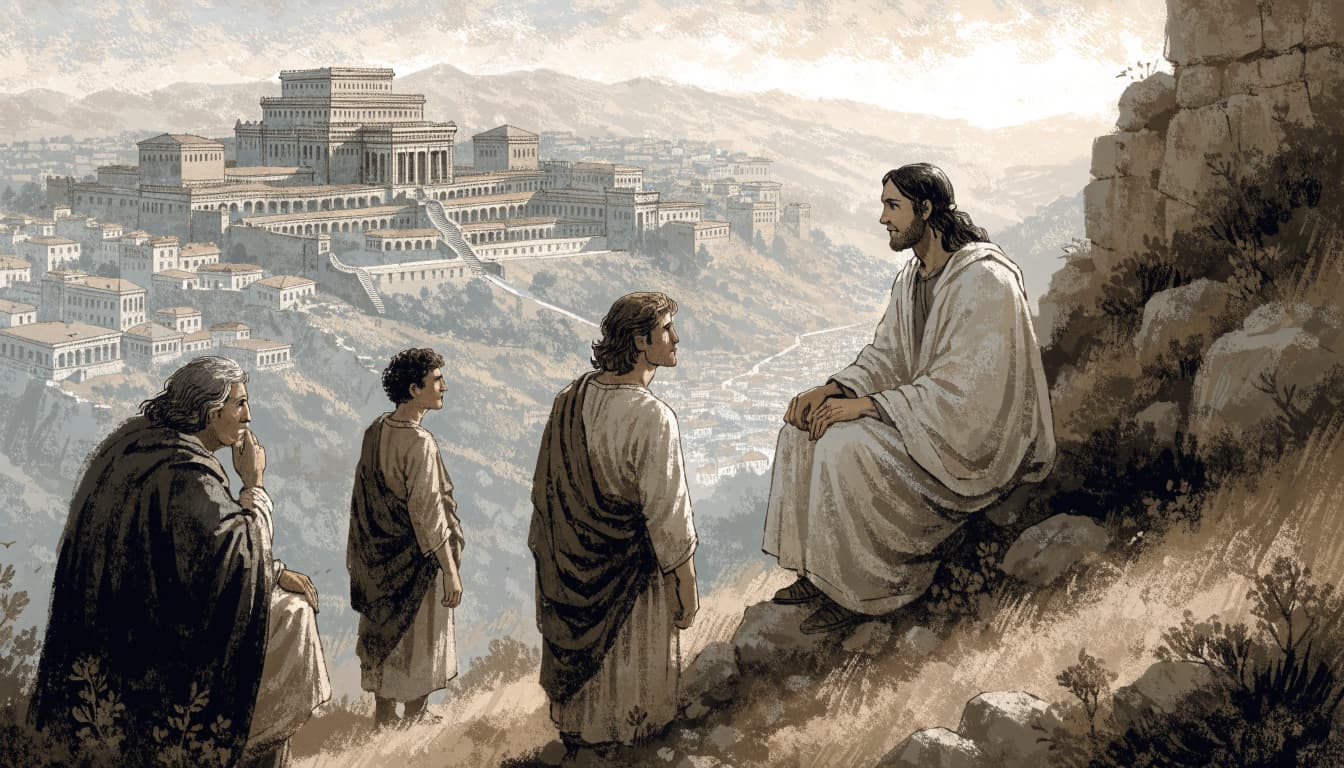
Those questions are connected, but Christians differ on how Jesus' words relate to Jerusalem's destruction and the final consummation. We shouldn't pretend every detail follows one uncontested timeline. The temple prediction is part of the immediate setting, and the disciples' questions raise more than one issue.
So what does Jesus emphasize first? He warns them not to be deceived by people claiming to come in His name. Then He speaks of wars, conflict between nations, famines, and earthquakes. His words call for alertness, not panic. For a broader look at reading prophecy in its setting, see Jesus' Olivet Discourse and the temple prophecy.
Why the birth-pain image matters
Older English translations often use "sorrows." The wording "birth pains" or "labor pains" makes Jesus' image easier to see. Matthew uses the Greek word ōdinōn, also used in Mark's parallel account. It describes the pains of labor.
That picture gives us a helpful distinction. Labor pains come before a birth, but their first appearance doesn't tell anyone the exact time of delivery. In the same way, Jesus calls the upheavals He names the beginning of birth pains. The image points to distress before what is to come, but it gives no countdown, timetable, or set of conditions for calculating the end.
Jesus makes that caution plain: wars and reports of wars must happen, but "the end is not yet." Famines and earthquakes do not cancel that warning. A current crisis may be frightening and deserves compassion, prayer, and practical care, but these verses don't say that one war or disaster proves the end has arrived.
We can take Jesus' warning seriously without turning every headline into a date-setting claim. He tells His disciples to watch out for deception and to keep their understanding of the signs in context.
How deception, wars, famine, and earthquakes fit the warning
Jesus begins with a warning about deception, then names wars and disasters. The order matters. He doesn't give His followers a news checklist for calculating the end; He tells them how to respond when troubling claims and events arise. We can read Matthew 24 in the NKJV with that caution in view.
Deception and false claims about the Messiah
Jesus' first words are direct: "Take heed that no one deceives you." He warns that people will come in His name, claiming to be the Christ and leading many astray. That warning reaches beyond someone openly claiming to be Jesus. A person can also speak with false authority, using His name to demand trust or promote a message that doesn't line up with Scripture.
So how do we test a claim? We compare it with Scripture rather than accepting it because a speaker sounds confident, predicts a dramatic event, or gathers a following. Godly discernment begins with what Jesus and the rest of Scripture actually teach, not with the excitement around a claim. We can look at a careful approach to interpreting prophecy when a prediction or interpretation seems compelling.
Luke makes the timing warning especially plain. Jesus cautions that people will say "the time has drawn near," then tells His followers not to go after them (Luke 21:8). A confident announcement that the end is close is not proof that it is. Jesus warns us not to be pulled along by claims that outrun His words.
Wars, international conflict, famine, and earthquakes
After warning about deception, Jesus names wars and reports of wars. He then speaks of nation rising against nation and kingdom against kingdom, followed by famines, pestilences, and earthquakes in various places. These are broad categories of upheaval, not a numbered sequence with a location, severity threshold, or news-based test.
Jesus tells His disciples not to be troubled when they hear reports of conflict. Such events must occur, He says, but "the end is not yet." That sentence guards us against treating a war, famine, or earthquake as conclusive proof that the end has arrived. The events are serious, and those suffering through them need compassion and practical help. But the passage doesn't say that every crisis is a unique fulfillment or that we can identify the end by counting disasters.
Jesus calls these events the beginning of birth pains. The image tells us that distress comes before what follows, but it gives no calendar or countdown. We can take His warning seriously, stay alert to deception, and refuse to let frightening headlines decide what Scripture says.
Why these signs do not prove the end has arrived
Jesus gave His disciples a clear safeguard when He spoke about wars and upheaval: these things must happen, but the end is not yet. We can take His words seriously without turning a current crisis into proof that the end has arrived.
Matthew, Mark, and Luke each preserve this caution in their accounts of Jesus' teaching: Matthew 24:6-8 in the NKJV, Mark 13:7-8 in the NKJV, and Luke 21:9-11 in the NKJV. Their wording is not identical, but the point is plain: wars and disasters do not mean the end has come.
Jesus said the end would not follow immediately
In Matthew, Jesus says wars and reports of wars "must come to pass," but adds, "the end is not yet" (Matthew 24:6). Mark records the same timing safeguard: "the end is not yet" (Mark 13:7). Luke makes the timing even more explicit, saying, "the end will not come immediately" (Luke 21:9).
That shared warning matters. Jesus doesn't tell His followers to hear of a war and conclude that the end has arrived. He says these things will happen, then directly cautions them against that conclusion. We can grieve for people caught in conflict, pray, and offer practical help without claiming that their suffering proves a prophetic timetable.
Luke also connects this warning with false claims about the timing. In the same passage, Jesus tells His followers not to follow people who announce that the time is near. Fear can make a confident prediction sound convincing, but confidence doesn't make it Biblical. Jesus' words call us to discernment, not panic.
The passage gives no date, count, or disaster threshold
Jesus doesn't give a schedule for counting down to the end. He names wars, earthquakes, and famines, but doesn't specify how many must occur, how severe they must be, or how current events should be ranked against past ones. The text gives no formula for deciding that a particular crisis crosses a prophetic threshold.
The phrase "beginning of sorrows," or "beginning of birth pains," points to an early stage. It doesn't describe the completion of everything Jesus spoke about, and it doesn't tell us how long that stage lasts. Birth pains come before birth, but the image isn't a calendar. We can't use it to calculate a date or claim certainty about how close the end is.
So when someone says a particular war, famine, or earthquake proves the end has arrived, that claim goes beyond these verses. The event may be devastating. The people affected deserve compassion and care. But Jesus' own safeguard remains: these things happen, and the end does not follow immediately. We should let His words steady our response instead of allowing headlines to set the meaning of Scripture.
What Matthew, Mark, and Luke each add
Matthew, Mark, and Luke preserve the same basic warning from Jesus, but they don't give identical details. Reading the accounts side by side helps us hear both parts: Jesus warns against deception, and He tells His disciples not to mistake upheaval for proof that the end has arrived.
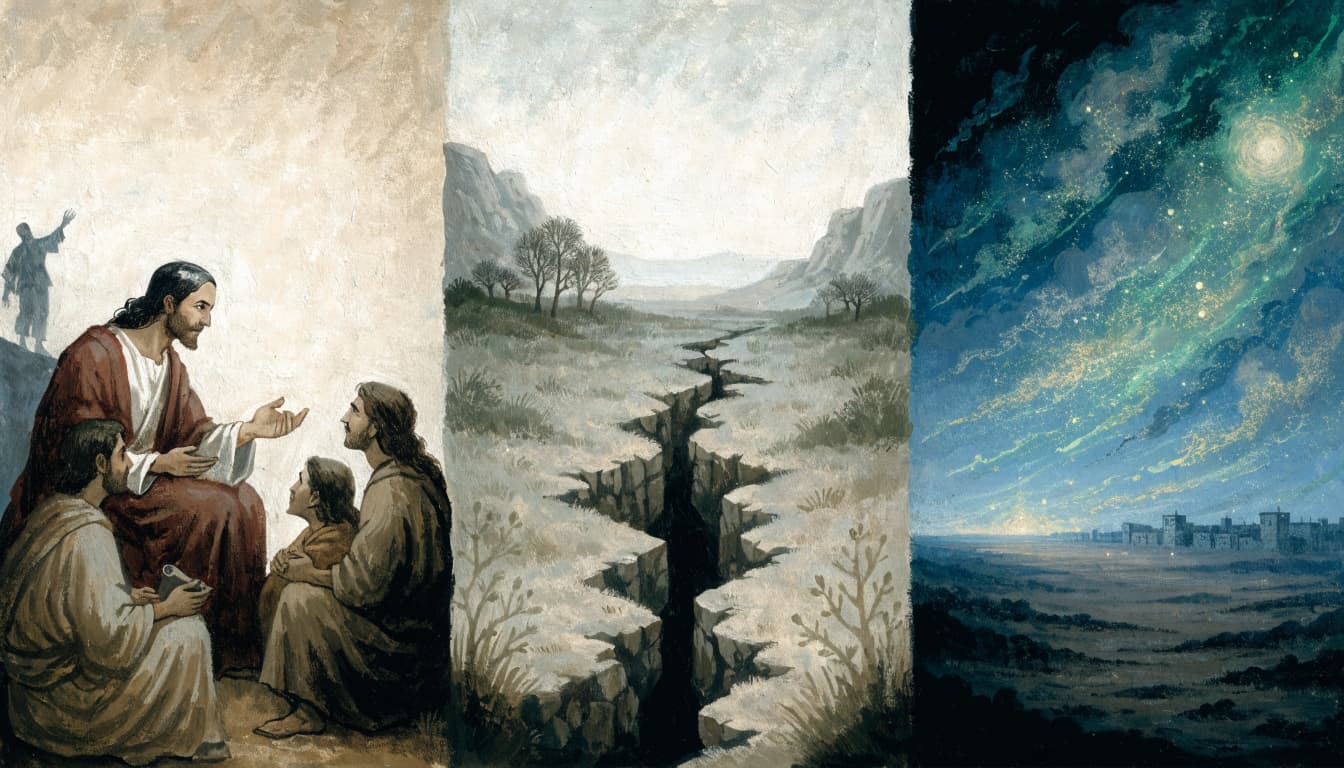
The shared warning against deception
All three accounts begin with Jesus warning His followers not to be led astray. Matthew records His words about people coming in His name and claiming to be the Christ (Matthew 24:4-5). Mark gives the same warning (Mark 13:5-6). Luke adds a specific caution against those who announce that the time is near (Luke 21:8).
That order matters. Jesus doesn't tell His disciples to start with the latest alarming report and work backward to a prophecy. He starts with discernment. Before we interpret wars, disasters, or predictions, we need to ask whether a claim agrees with His words and with Scripture. We can also consider biblical tests for false prophets rather than trusting someone simply because they sound certain.
Headlines can stir fear, and a confident end-times claim can spread fast. But Jesus' warning calls us to measure those voices carefully. Spiritual discernment begins with what Jesus said, not with panic or speculation about current events.
The details that differ across the accounts
Matthew and Mark both describe wars, conflict between nations, earthquakes, and famine, then call these events the beginning of birth pains (Matthew 24:6-8; Mark 13:7-8). The image of labor pains points to distress before what follows. It doesn't provide a calendar or tell us how to calculate when the end will come.
Luke's account names wars and uprisings, earthquakes, famines, plagues, and great signs from heaven (Luke 21:9-11). He doesn't use the birth-pain phrase in this passage. Instead, Luke records Jesus saying that the end will not follow immediately.
Those differences don't make the accounts contradictory. Each writer preserves details that help us hear Jesus' warning, and Luke's list gives us details Matthew and Mark don't include in this part of the discourse. We shouldn't force every account into identical wording, or import details from other prophetic passages as if Jesus named them here. Read each passage in its own context, and the shared call remains clear: stay alert, reject false claims, and don't declare that the end has arrived because wars or disasters have occurred.
How to read end-times signs without falling into speculation
We can read Jesus' warnings with seriousness and still resist the urge to turn every crisis into a prediction. A careful approach starts with the passage itself, compares the Gospel accounts, and keeps clear boundaries between what Scripture says and what we infer.

Keep the passage’s context in view
Before we ask what a sign means today, let's ask what prompted Jesus' answer. He had just predicted the temple's destruction. The disciples then asked when it would happen and what would mark His coming and the end of the age. Those questions shape the whole discussion, so we shouldn't lift one phrase out of the exchange and make it answer more than Jesus addressed.
Read the full chapter of Matthew 24 in the NKJV, not only the lines about wars or disasters. Notice the movement of the passage: Jesus warns against deception, speaks of upheaval, and tells His disciples not to be troubled or misled. Christians hold different views about how parts of the Olivet Discourse relate to Jerusalem's destruction and the final consummation. We can acknowledge those differences without treating every interpretation as equally clear or claiming certainty where the text leaves room for discussion.
Later, Jesus refers to Daniel's prophecy. That connection deserves attention, but it doesn't erase the need to read each passage in context. We can consider how Daniel's prophecy relates to the Olivet Discourse without assuming that one interpretive view resolves every detail.
Compare parallel accounts, then separate text from inference
Matthew isn't the only Gospel account of this teaching. Read Mark 13:5-8 in the NKJV alongside Luke 21:8-11 in the NKJV. The accounts share warnings about deception and upheaval, while Luke includes details such as plagues and signs from heaven. Comparing them helps us notice what Jesus repeats and what each account includes.
Then keep two questions separate: What does the passage state, and what are we concluding from it? Scripture names wars, famines, earthquakes, and other distressing events. Saying that a particular headline fulfills a specific prophecy, or proves the end is near, is an interpretation. It may be offered sincerely, but sincerity doesn't make it a direct Biblical statement.
That distinction doesn't minimize suffering. War and disaster bring real grief, and people living through them deserve compassion, prayer, and practical help. But news analysis should not be presented as prophetic certainty. A report can prompt us to pray and care for others without becoming proof of a timetable.
Finally, resist date-setting. Jesus' warnings don't give us a calendar or a formula for calculating the end. We can stay watchful, test confident claims against Scripture, and admit when we don't know. That's not a failure of faith; it's a way of taking Jesus' words seriously.
How believers can respond with discernment and hope
Jesus' words call us to pay attention, but fear is not the same as faithfulness. We can take prophecy seriously, trust what He said, and respond to the people affected by crisis with prayer and practical care.
Stay alert without being alarmed
When we hear about wars or upheaval, Jesus gives us a clear instruction: do not be troubled. He says these things must happen, but "the end is not yet" (Matthew 24:6-8 in the NKJV). That does not mean we ignore suffering or stop watching. It means we refuse to let alarming headlines or confident predictions overrule His words.
Watchfulness looks like prayer, sober judgment, and a willingness to test what we hear against Scripture. The Holy Spirit helps us discern, but spiritual language does not make every prediction true. If someone names a date, declares that one current event proves the end has arrived, or uses fear to demand trust, we should pause and examine the claim. Jesus warned His followers not to be deceived, and that warning still matters.
We can hold to the promise of Jesus' return without claiming to know its timing. For a related look at readiness and hope, see Daniel's vision and the hope of Jesus' return. Confidence in Christ steadies us; it doesn't require us to turn every crisis into a prophetic announcement.
Let compassion and faith shape the response
Prophetic expectation should make us more attentive to people in need, not less. When families face hunger, violence, displacement, or disaster, we can pray for them and ask what practical help is within reach. A meal, a donation to trustworthy relief work, a safe place to stay, or a caring conversation can put faith into action. James connects faith with meeting a brother or sister's physical needs (James 2:15-17 in the NKJV).
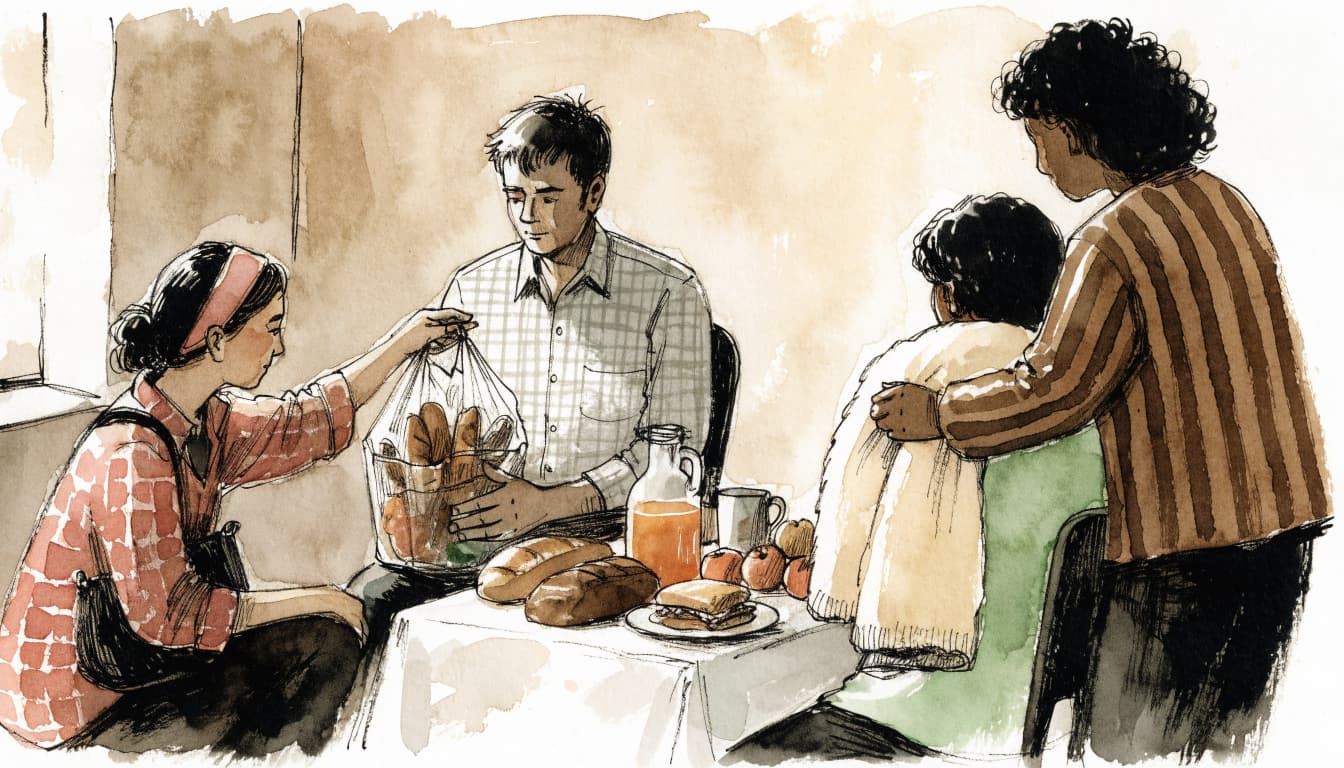
We should never use another person's suffering to frighten or shame them into belief. A disaster is not an opening for us to declare that we know exactly what God is doing or when the end will come. We can speak honestly about our hope in God's Kingdom while listening, serving, and treating people with dignity.
Paul's counsel offers a steady pattern for difficult days: rejoice, pray, give thanks, and test everything (1 Thessalonians 5:16-22 in the NKJV). So we remain watchful without fear, weigh teaching by Scripture, pray for people harmed by conflict and disaster, and care for neighbors in need. We hold fast to the hope of Jesus' return, while leaving its timing in God's hands.
Conclusion
Deception, wars, famines, and earthquakes are part of what Jesus called the beginning of sorrows. He also said these events come before the end, so they are no reason to claim that it has arrived. The birth-pain image points to distress ahead, not a timetable we can calculate.
So let's hold to Jesus' words, reject date-setting, and stay alert to claims that stir fear or promise certainty. We can respond with discernment, compassion for those facing hardship, and hope in Christ. The beginning of sorrows calls us to faithfulness, not panic.
What Jesus Meant by the Beginning of Sorrows
In Matthew 24:4–8, Jesus names deception, conflict, famine, and earthquakes, then calls these events “the beginning of sorrows.” The phrase evokes the first pains of childbirth: real and significant, but not the birth itself. His warning prepares disciples to recognize hardship without mistaking every crisis for the final moment.
Jesus is explicit: “All these things must come to pass, but the end is not yet.” Rather than giving believers a date to calculate, He calls them to discernment and endurance. Reading the signs in the order He gives them helps us take prophecy seriously while keeping our hope centered on Christ, not on alarming headlines.
Birth Pains Are a Beginning, Not a Finish Line
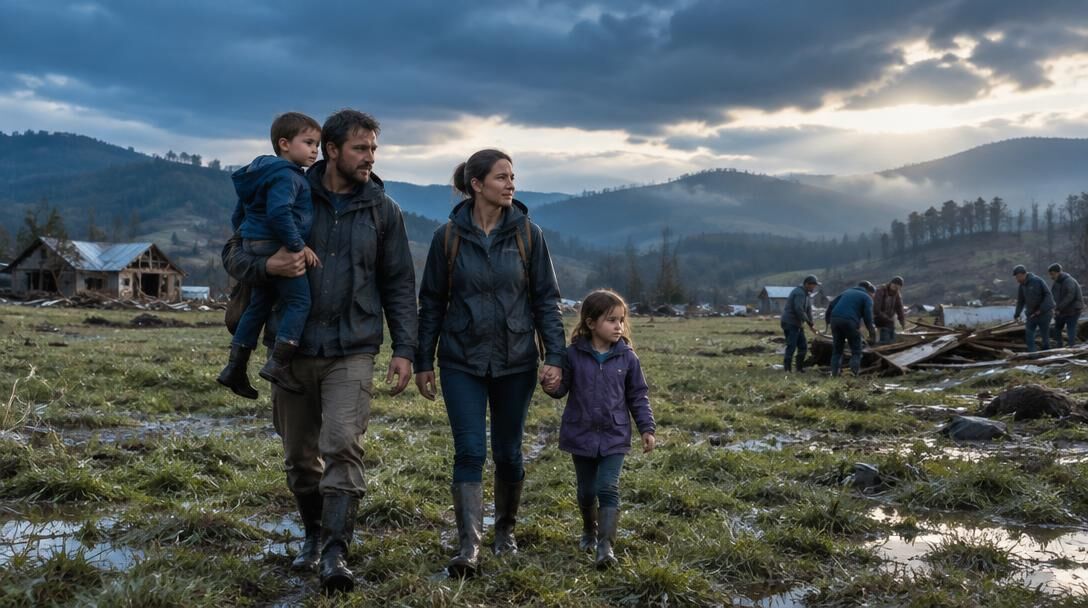
Wars and rumors of wars can unsettle nations, while famines and earthquakes bring suffering close to home. Jesus did not dismiss these realities; He placed them within a larger prophetic picture. In Matthew 24, such events are the beginning of birth pains, not proof that the end has already arrived. His counsel is therefore both sober and steady: do not be troubled, do not be deceived, and do not confuse the first signs of travail with the completion of God’s purposes. Understanding that distinction allows us to respond with compassion for those who suffer and steadfast faith in the Lord who spoke these words.
“See that ye be not troubled: for all these things must come to pass, but the end is not yet. … All these are the beginning of sorrows.”

Jesus Christ
Matthew 24:6, 8 (KJV)
Signs Jesus Named—and What They Do Not Mean
- Deception: Test claims of spiritual authority against Jesus’ words.
- False messiahs: Do not mistake a persuasive claimant for Christ.
- Wars: Conflict is serious, but Jesus said the end is not yet.
- Rumors of wars: Alarming reports call for discernment, not panic.
- Nation against nation: Widespread strife belongs to the beginning of sorrows.
- Kingdom against kingdom: Political upheaval alone cannot set an end-time date.
- Famines: Scarcity reflects a suffering world, not a timetable for Christ’s return.
- Pestilences: Disease calls for compassion rather than confident predictions.
- Earthquakes: Disasters in various places are among the signs Jesus described.
- Birth pains: The signs mark a beginning, not the completion of the story.
- Tribulation: Jesus also warned His followers to expect opposition.
- Endurance: Faithfulness matters more than guessing when the end will come.
- Read the context: Matthew 24 distinguishes early troubles from what follows.
- Refuse date-setting: Jesus’ warning does not authorize a countdown.
- Stay watchful: Awareness should deepen obedience, not feed fear.
- Care for neighbors: Respond to suffering with practical love.
- Hold to the Gospel: Jesus points beyond turmoil to the message of His Kingdom.
- Keep Christ central: Prophecy directs hope toward Him, not the headlines.
Prophecy Read in the Light of Jesus
Bible Prophecy Ministries explores what Scripture says about events that have happened, events still to come, and the place of Jesus in both. Through BibleProphecyMinistries.com, the ministry’s work is to help readers follow the Biblical text rather than build certainty from each new headline.
In Matthew 24, Jesus names deception, conflict, famine, and earthquakes, yet explicitly says, “the end is not yet.” That distinction shapes this article: the beginning of sorrows is a call to discernment and steadfast faith, not proof that the final moment has arrived. Across the wider history of prophecy, the ministry points readers back to Christ—His first coming, His teaching, and the hope of His promised return—so that watchfulness rests on His words rather than fear.
The Beginning of Sorrows
Stay Watchful Without Declaring the End Has Arrived
Jesus described wars, famines, earthquakes, and deception as the beginning of sorrows, not proof that the end had already come (Matthew 24:6–8). These signs call us to take His words seriously, but they do not give us permission to announce a date or turn every troubling headline into a final countdown.
Discernment begins by reading each passage in context and distinguishing what Scripture says from what we assume. When someone claims that a particular crisis proves the end is here, we can test that claim against Jesus’ warning: “See that ye be not troubled: for all these things must come to pass, but the end is not yet” (Matthew 24:6).
Our response is neither fear nor complacency. We can remain watchful, pray, resist deception, and share the hope found in Jesus Christ while admitting what God has not revealed. The beginning of sorrows reminds us to be faithful today—not to claim certainty about the hour of His return.