
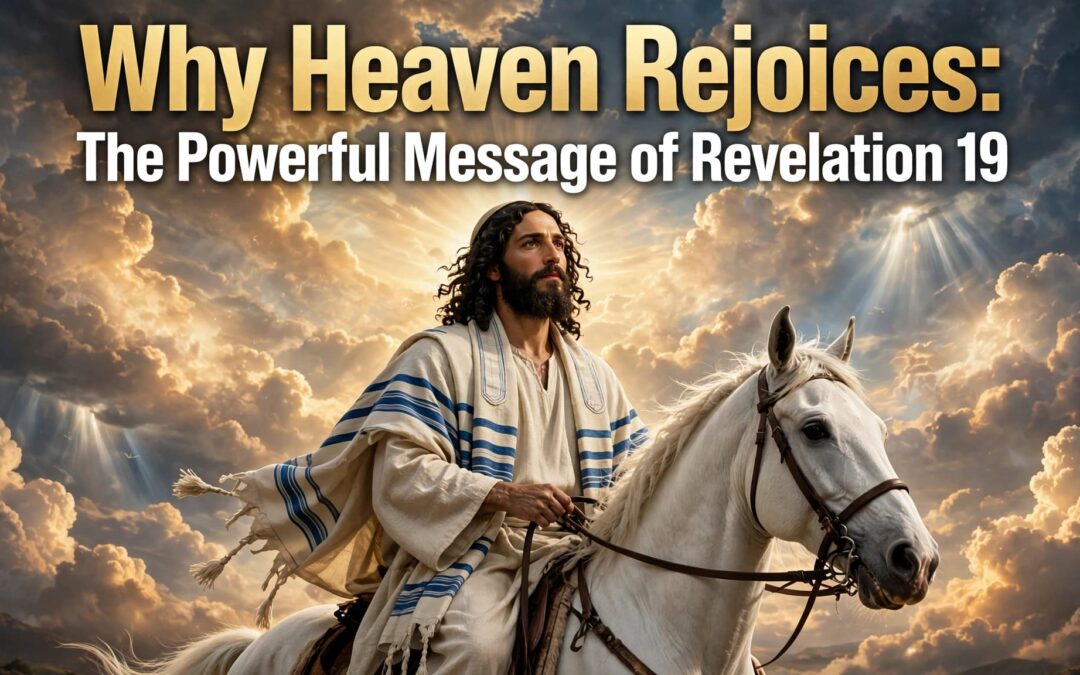
Revelation 19 Explained: Heaven’s Praise and the Lamb’s Marriage Supper
Babylon has fallen, but Heaven isn't mourning. In Revelation 19:1–10, God's people praise Him for His righteous judgment, rejoice that the Lamb's marriage has come, and hear the call to worship God alone.
The contrast matters: earthly powers grieve Babylon's fall, while Heaven declares that God reigns. Let's follow the passage's movement from judgment to rejoicing to worship, and see how Heaven responds to Babylon's collapse.
Babylon Falls, Christ Reigns, Heaven Rejoices
Revelation 19 opens with Heaven answering Babylon's fall, the judgment described in the chapter before it. On earth, kings, merchants, and seafarers mourn the loss of a power tied to wealth and corruption. In Heaven, God's people praise Him because His judgment is true and righteous. The contrast is sharp, and the passage tells us why it matters.
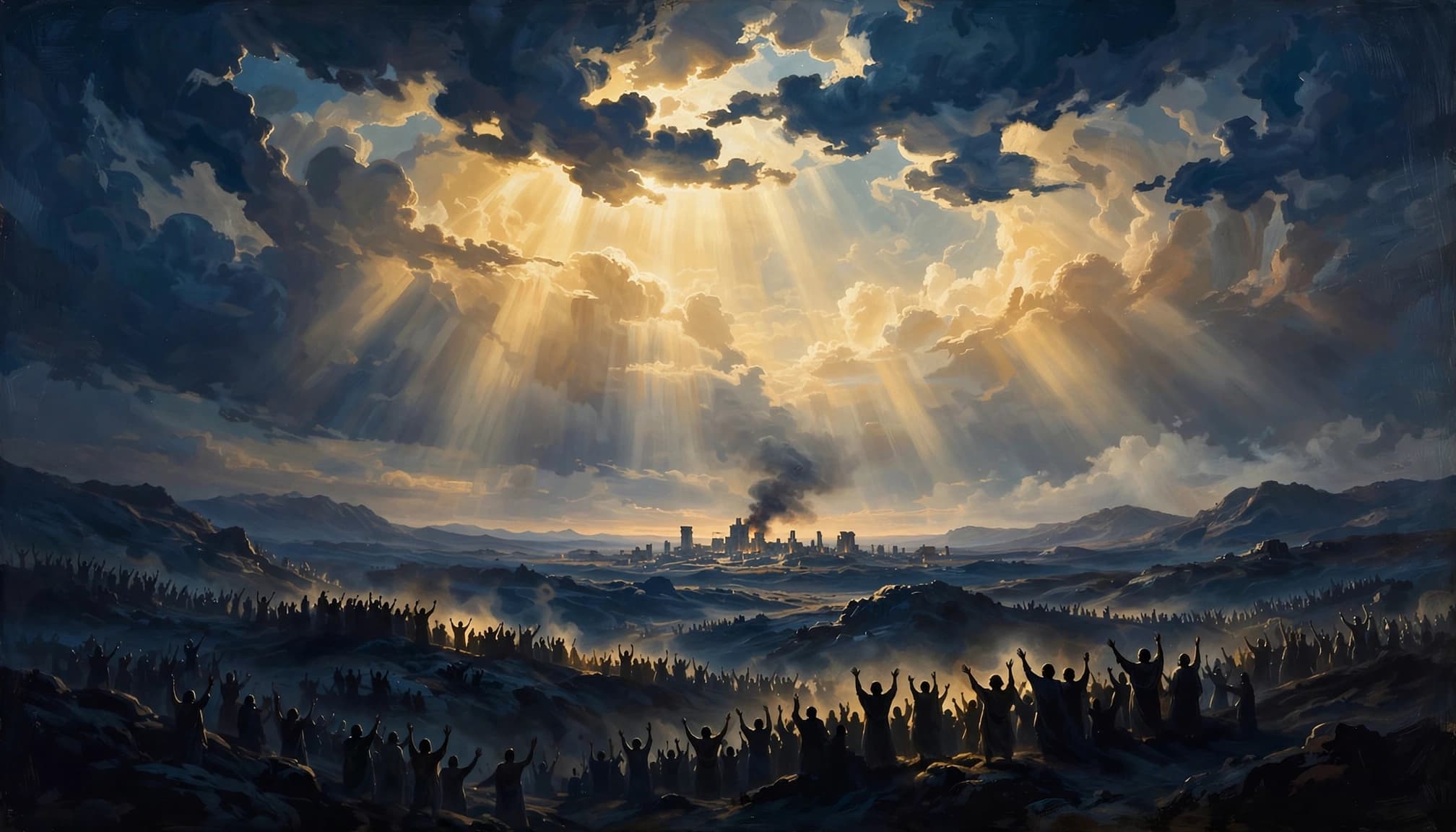
Why Heaven answers Babylon’s fall with praise
The first Hallelujah comes in Revelation 19:1–2. The great multitude praises God for His salvation, glory, and power, then declares His judgments true and righteous. The passage gives the reason: God judged the great prostitute who corrupted the earth, and He avenged the blood of His servants.
That judgment follows the charges made against Babylon in Revelation 18:20–24. Chapter 18 names the blood of prophets and saints among Babylon's crimes. Revelation 19 does not ask us to celebrate suffering for its own sake. Heaven praises God because He sees injustice and holds the corrupt power responsible.
There's another contrast here. The kings, merchants, and seafarers grieve Babylon's collapse because their wealth and influence were bound up with it. Heaven's praise centers on God's justice and the vindication of His servants. We should keep that distinction clear: the passage calls for trust in God's judgment, not personal revenge against people we believe are our enemies.
Readers understand Babylon's image in different ways. Some connect it with a historical power, while others see a broader or future system of corruption. Revelation 19's stated reason for praise remains clear across those interpretations: God's judgments are true and righteous. We can read more about Heaven's praise after Babylon falls without treating one disputed identification of Babylon as settled fact.
What Babylon’s lasting judgment tells us
The multitude gives a second Hallelujah in Revelation 19:3, declaring that Babylon's smoke rises forever and ever. The image conveys a judgment that is complete and irreversible. Babylon will not return to the power and place she held before.
We should read the image with care. Revelation uses vivid prophetic pictures, and this verse does not give us permission to add details beyond what it says. Its focus is the finality of Babylon's judgment, not a description of every feature of that judgment. A commentary on Revelation 19:1–3 also connects the rising smoke with the finality of Babylon's fall.
Heaven's response, then, is not delight in cruelty. It is praise to the God who saves, rules with power, and judges corruption justly. Babylon falls, but her injustice does not get the final word.
The Four Hallelujahs Show Why God’s Judgment Is Righteous
Revelation 19 moves through four Hallelujahs, and each voice widens the scene. The multitude praises God, the elders and living creatures answer, and then a voice from the throne calls every servant to worship. By verse 6, praise rises like rushing water and thunder. The focus has shifted to the One who reigns, preparing us for the Lamb's marriage.
The elders and living creatures worship the One on the throne
After the multitude's praise, the twenty-four elders and four living creatures fall down before God. Their words in Revelation 19:4, "Amen. Hallelujah!" are both agreement and praise. Amen affirms what has been declared; Hallelujah gives glory to God. Their response is brief, but it carries the weight of the scene: Heaven agrees that God's judgment is righteous.
We've seen these worshipers before. In Revelation 4–5, the elders and living creatures worship God as Creator and honor the Lamb. Here, they again direct worship to the One on the throne. The scene keeps our attention where it belongs, on God's authority, not on the fallen power that prompted the praise.
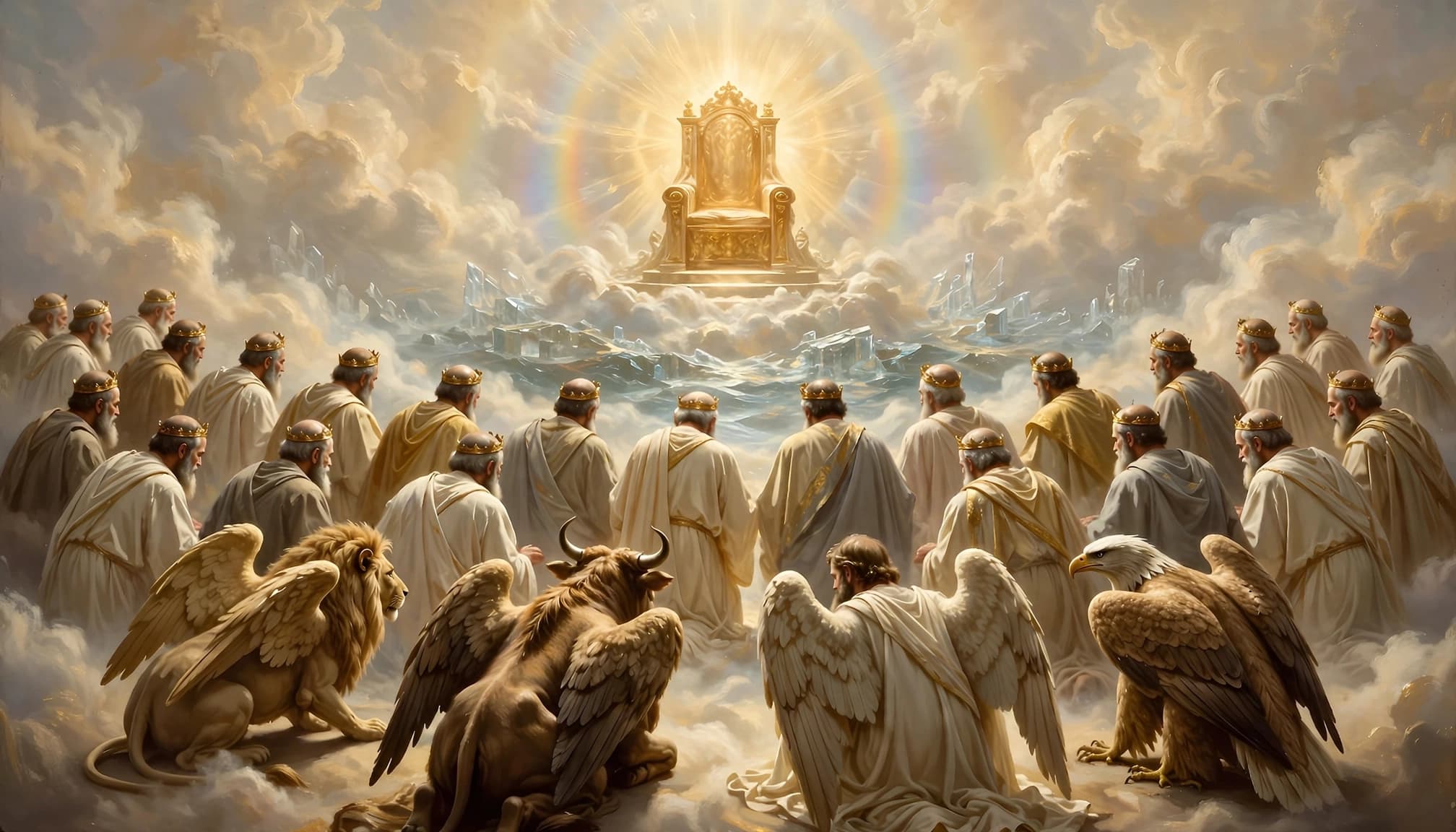
For a closer look at the heavenly worship in Revelation 19, notice how each response draws attention back to God. The elders and creatures do not add a new charge against Babylon. They agree with Heaven's praise and worship the King who judges rightly.
God calls every servant, small and great, to praise Him
Then a voice comes from the throne with a direct command: "Praise our God, all you His servants and those who fear Him, both small and great!" (Revelation 19:5). The call includes every servant of God. Praise is not reserved for people with influence, public roles, or earthly status. The text names the small and the great together.
The response in Revelation 19:6 sounds like many waters and mighty thunder. That image gives us the scale of the praise: a great multitude answering together. You can read the NKJV wording of the elders' response and the great sound alongside the passage's call for all God's servants to praise Him.
Then comes the turning point: "The Lord our God the Almighty reigns." Psalm 97:1 declares, "The Lord reigns," and Revelation 11:15–17 also connects God's reign with heavenly worship. Here, that declaration leads toward the Lamb's marriage. The One who judges in righteousness is also the Lord who brings His people into the joy of His victory.
The Marriage Supper of the Lamb Points to Joyful Union With Christ
After the praise over Babylon's fall, the scene shifts to celebration. In Revelation 19, Heaven rejoices because the marriage of the Lamb has come and His bride is ready. The image gives us a joyful promise: Christ will bring His redeemed people into lasting union with Him.
Who is the bride, and who is invited to the supper?
Christians commonly understand the bride as the redeemed people of God, often described as the church. Paul uses marriage to explain Christ's love for the church in Ephesians 5:25–32, and he compares the church to a chaste bride promised to Christ in 2 Corinthians 11:2. These passages help us understand the closeness and covenant commitment behind Revelation's wedding imagery.
The bride's clothing also matters. Revelation says she is given bright, clean fine linen, then identifies the linen as "the righteous acts of the saints." The wording holds together God's gift and His people's faithfulness: the bride has made herself ready, yet the fine linen is granted to her. We shouldn't turn that image into a claim that people earn salvation through their deeds. It pictures a people made ready for Christ, whose lives bear the fruit of belonging to Him.

Revelation also calls those "invited" to the marriage supper blessed. The text names the bride and the invited guests, but it doesn't explain exactly how those groups relate. Some readers understand the guests as another image for God's redeemed people; others see a distinction within the wedding scene. Since Revelation uses symbolic imagery, we should be careful not to force it into a literal seating plan. For more on the marriage supper of the Lamb, we can consider the different readings while keeping the passage's central promise in view.
Why the supper is a promise of blessing
The angel tells John to write, "Blessed are those who are called to the marriage supper of the Lamb!" Then he adds, "These are the true sayings of God." That blessing is more than a place at a feast. It speaks of welcome, joy, and belonging to Christ when God's saving purpose is complete.
The wedding-banquet parables in Matthew 22:1–14 and Matthew 25:1–13, along with the great banquet in Luke 14:15–24, share themes of invitation, readiness, and response. But they are not identical accounts of Revelation's marriage supper. Each passage makes its own point, so we shouldn't collapse them into one detailed timeline.
Revelation 19:9 does not spell out the supper's exact timing in relation to every end-times event. Christians differ on that question, and the verse itself doesn't settle it. What it does say plainly is that God's words are true, and those invited to the Lamb's supper are blessed. We can hold fast to that hope without claiming more certainty about the schedule than Scripture gives us.
The Bride’s Linen Holds Grace and Faithful Living Together
Revelation 19:7–8 brings two truths together: the bride has made herself ready, and God grants her the clothing she wears. The linen is more than wedding decoration. The passage itself tells us what it means.
What the bright, clean linen represents
The heavenly multitude rejoices because the Lamb's marriage has come and His bride is ready (Revelation 19:7). John then sees her clothed in fine linen, bright and clean. The explanation follows right away: "the fine linen is the righteous acts of the saints" (Revelation 19:8).
That definition should guide how we read the image. The garment shows readiness and purity, but Revelation does not leave its meaning open-ended. It connects the linen with the faithful actions of God's people. Their lives have been marked by loyalty to the Lamb, even in a world that opposes Him.
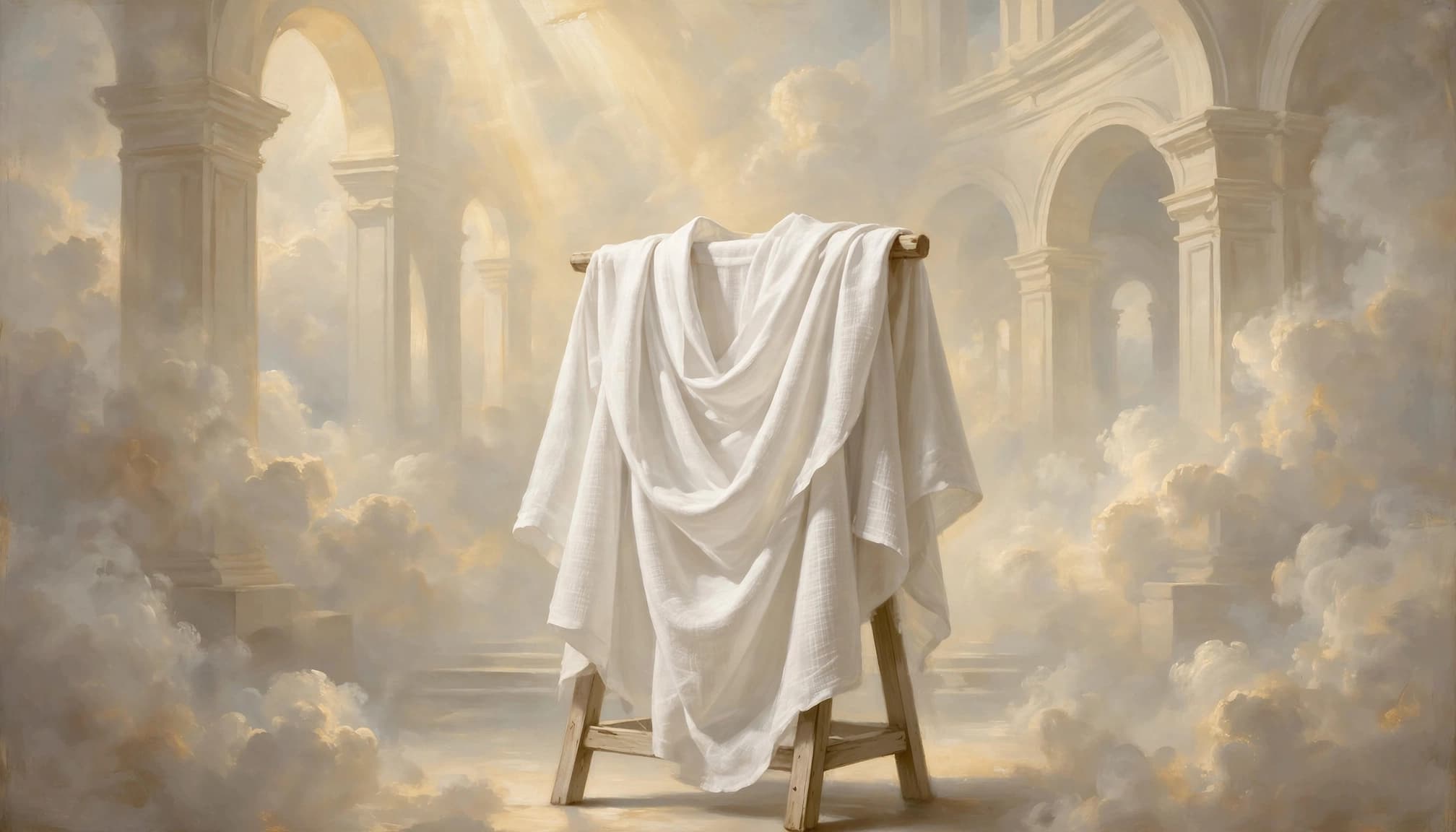
Other passages use clothing imagery to speak of God's saving work and the changed life that follows. For example, Ephesians 2:8–10 says salvation is by grace through faith, and that we are created in Christ Jesus for good works. That helps clarify the connection, but Revelation 19 gives its own explanation: the linen is the saints' righteous acts. A commentary on Revelation 19:8 also considers how the verse links the garment with the lives of the saints.
How God’s gift and the saints’ actions fit together
Now notice the wording. The bride "has made herself ready," yet it "was granted to her" to wear the fine linen. One phrase emphasizes her readiness; the other tells us the clothing is given. Revelation holds both together without treating them as opposites.
Faithful living, then, is not a way to purchase salvation or earn a place at the Lamb's supper. We receive God's grace, and our lives respond to His work. The saints' righteous acts are the visible fruit of belonging to Christ, not a substitute for His saving grace. We can see a similar pattern in how grace and faithful living belong together.
Christians differ on how this garment relates to grace, Christ's righteousness, and the saints' actions. Some interpretations stress the believers' righteous conduct; others emphasize that God grants the garment and connect it with righteousness received through Christ. Those readings should not erase the verse's plain wording or claim that every Christian tradition explains it in the same way.
We can keep the passage's balance in view: the bride is made ready, and her linen is granted. The Lamb's people do not boast in their own goodness, but neither is faithful living irrelevant. Their readiness appears in lives shaped by loyalty to Jesus.
John’s Encounter With the Angel Keeps Worship Focused on God
After the marriage supper is announced, John falls at the angel's feet. The angel's response is immediate and clear: worship belongs to God, not to the messenger delivering the vision.
Why the angel refuses John’s worship
In Revelation 19:10, John falls at the angel's feet, but the angel stops him: "See that you do not do that! I am your fellow servant." Then he gives the command that settles the matter: "Worship God!" The angel does not accept devotion or claim a special place because he has revealed Heaven's message. He is a servant of God, just as John and the faithful witnesses are.
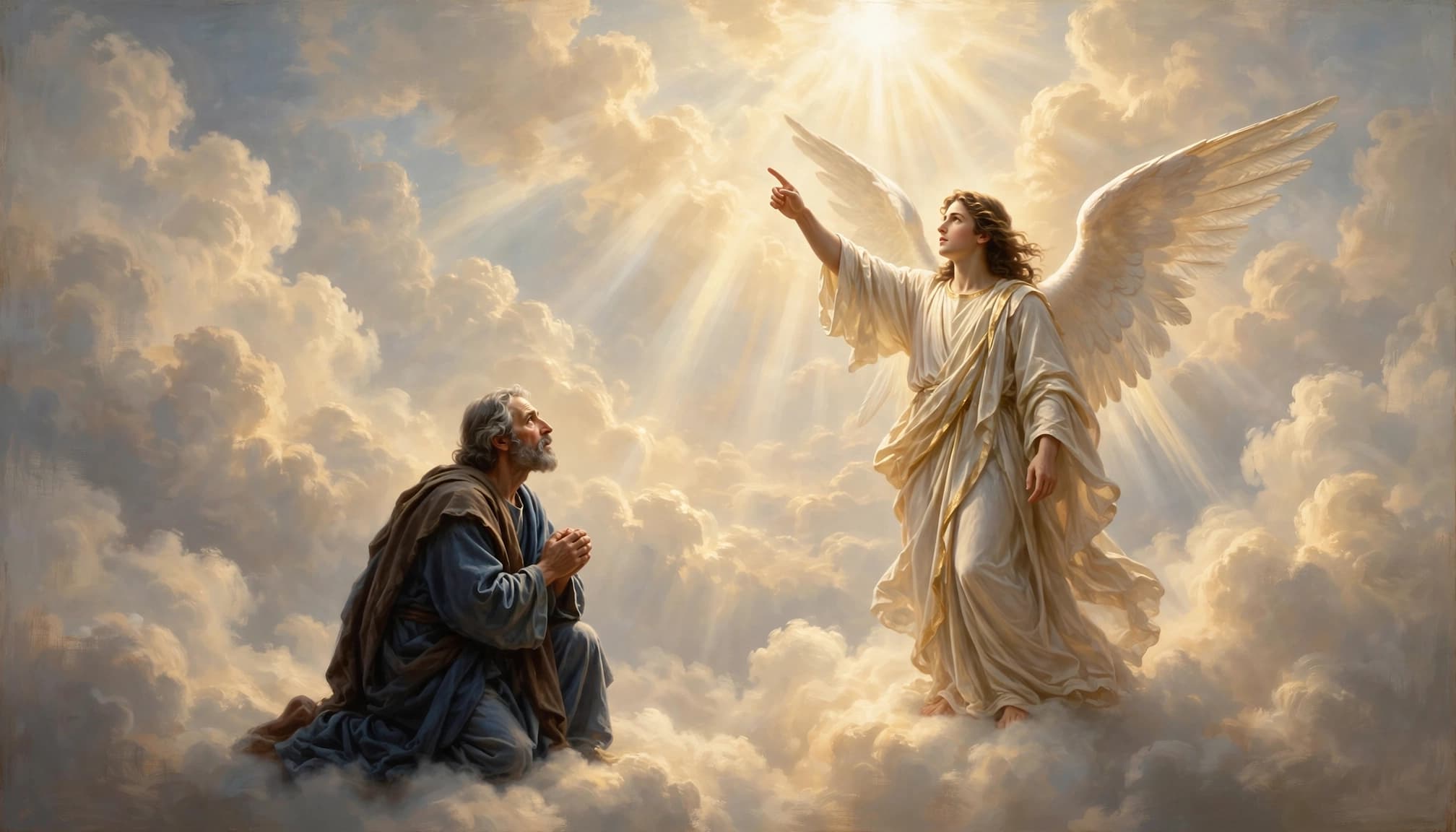
This fits the Bible's wider call to worship God alone. When Jesus answered Satan's temptation, He declared, "You shall worship the Lord your God, and Him only you shall serve" (Matthew 4:10). Respecting God's messengers is not the same as worshiping them. An angel may bring a true message, but the message points beyond the angel to God.
John's response also appears in Revelation 22:8–9. Again, John falls before the angel, and again the angel identifies himself as a fellow servant and says, "Worship God." That repeated correction leaves no room to treat an angel, prophet, or spiritual messenger as the proper focus of worship. We can honor faithful service while keeping our devotion where Scripture directs it. For a closer look at Revelation 19:10's warning against angel worship, notice how firmly the angel redirects John's attention.
How the testimony of Jesus shapes prophecy
The angel's final words are, "For the testimony of Jesus is the spirit of prophecy." The phrase connects prophecy with Jesus, but Christians explain its wording in more than one way. It may mean that prophecy bears witness to Jesus, or that Jesus' own testimony gives prophecy its life and direction. Both readings keep Him at the center, and the verse does not require us to treat either explanation as the only possible one.
The setting helps. The angel has just refused worship and called himself a fellow servant of those who hold to the testimony of Jesus. Prophecy does not give its messenger a higher place. Its purpose is tied to Jesus and the witness His servants carry. Revelation also describes John as bearing witness to the word of God and the testimony of Jesus in Revelation 1:2.
We should be careful not to make this phrase settle every question about prophecy or prophetic gifts. It does give us a clear center: whatever the precise reading, prophecy belongs in service to God and points toward Jesus. That is why the angel's command comes first and remains unmistakable: worship God.
How Revelation 19 Encourages Faithful Hope Today
Revelation 19 brings together truths we need to hold at the same time: God sees injustice, the Lamb will welcome His people, and worship belongs to God alone. That hope doesn't pull us away from the present. It shapes how we respond to suffering, how we live, and whom we serve while we wait.
Trust God’s justice without seeking revenge
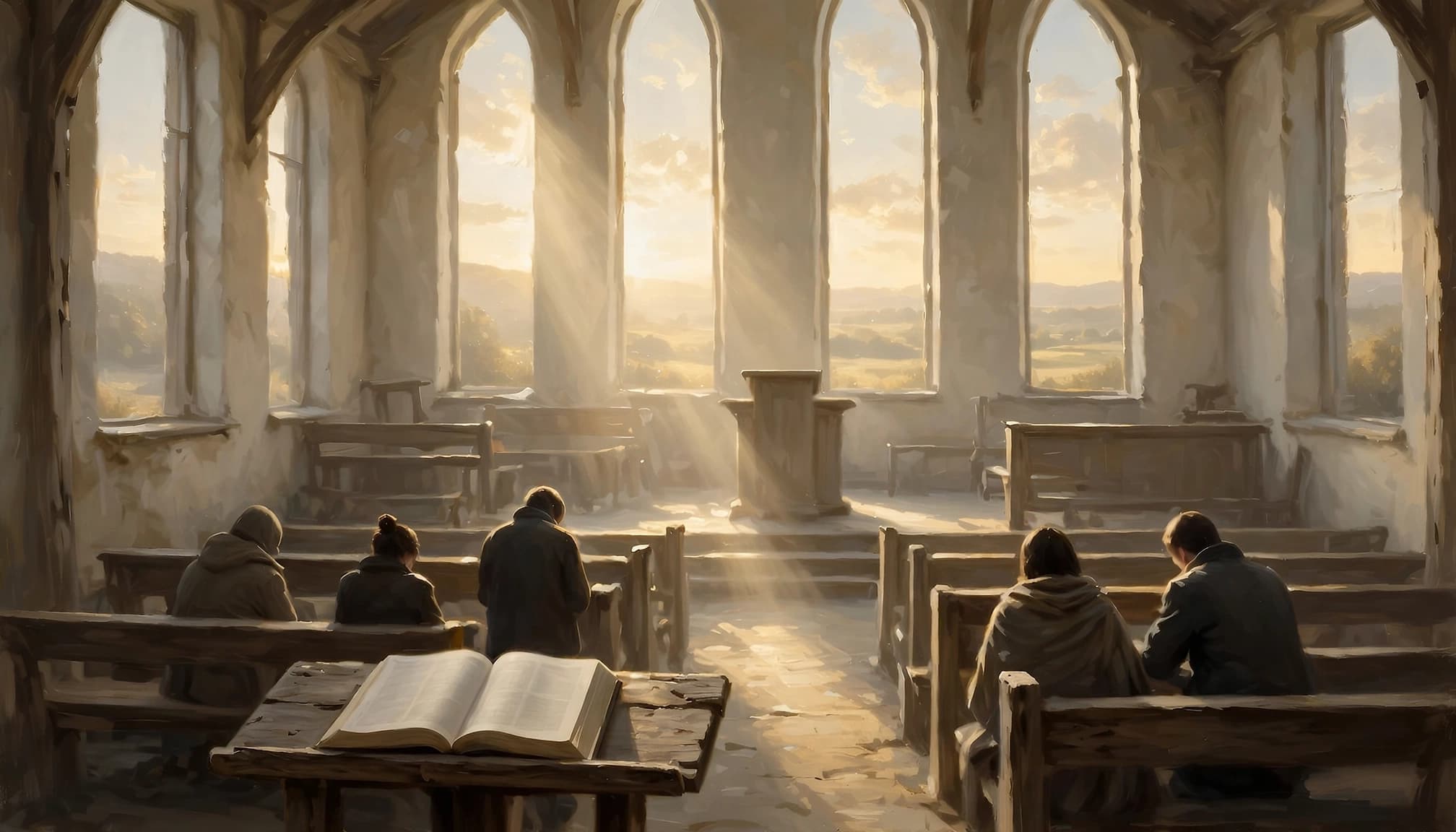
The praise in Revelation 19:2 comforts those who suffer because God does not overlook the blood of His servants. Injustice may seem to go unanswered for a time, but the passage declares that God's judgments are true and righteous. We can bring our grief and anger before Him without pretending the harm was small.
That confidence doesn't give us permission to repay evil with evil. Paul tells believers to refuse revenge and leave judgment to God in Romans 12:17–21. Trusting God's justice means we don't have to become judges in His place. We can seek what is right, protect those in danger, and still refuse hatred as our guide.
This is part of the comfort in Revelation 19: God's justice belongs to Him, not to the wounded person trying to settle the score. We can trust the righteous King who defeats evil without turning vengeance into our own calling. His victory gives us room to pursue peace and do what is right, even when justice feels delayed. We can look at Christ's righteous victory in Revelation 19 with that distinction in view.
Live as a faithful witness while waiting for Christ
The bride's readiness points to a life prepared for the Lamb. Revelation doesn't give us an end-times calendar here. It gives us a picture of belonging to Christ, and of a people whose lives show their loyalty to Him. The promise of the marriage supper means our future is not defined by Babylon's power or by the trouble we face now. Those invited to the supper are called blessed (Revelation 19:9).
So what does waiting look like today? We keep faith, practice Godly conduct, serve others, and bear witness to Jesus. For us as Spirit-filled believers, the Holy Spirit empowers that witness, as Jesus promised in Acts 1:8. The testimony of Jesus is not a reason to chase predictions. It calls us to make Christ known in what we say and how we live.
John's encounter with the angel brings the focus back to worship: "Worship God!" Revelation 19 directs our attention away from worldly power and created beings, and toward the Lord who reigns. We can worship with confidence, live faithfully in the present, and wait for Christ without claiming to know the timing of every event. That is how Christian hope shapes faithful living.
Conclusion
Babylon's fall answers the grief of those who trusted her with Heaven's praise. Revelation 19 declares that God judges rightly, and that the Lord God Almighty reigns.
Then the focus turns to the Lamb's marriage and the blessing promised to those invited to His supper. The chapter ends where it must: with worship directed to God alone. We can hold on to that hope while reading every detail with care and humility.
Heaven’s Praise and the Lamb’s Wedding
Revelation 19 Explained: Heaven’s Praise and the Lamb’s Marriage Supper
Discover why heaven rejoices at God’s righteous judgment, celebrates the reign of Jesus, and prepares for the marriage supper of the Lamb.
See How Heaven’s Worship Points to Christ’s Victory
Subheading
Long Heading
Why Heaven Rejoices in Revelation 19
Revelation 19 opens with a great multitude in heaven crying, “Hallelujah!” Their praise follows the fall of Babylon, the symbol of a corrupt world order that opposed God and harmed His people. Heaven rejoices because God’s judgments are true and just: He has answered evil, vindicated His servants, and shown that injustice will not have the final word.
The worship grows as the twenty-four elders and four living creatures bow before God, and a voice calls all His servants to praise Him. Then a sound like a vast crowd and mighty thunder declares that the Lord God Almighty reigns. This celebration turns toward the marriage supper of the Lamb, where the bride is prepared for Jesus. Revelation 19 presents heavenly praise not as delight in suffering, but as joy in God’s righteousness, Christ’s reign, and the promised union of the Lamb with His people.
The Marriage of the Lamb: A Bride Made Ready
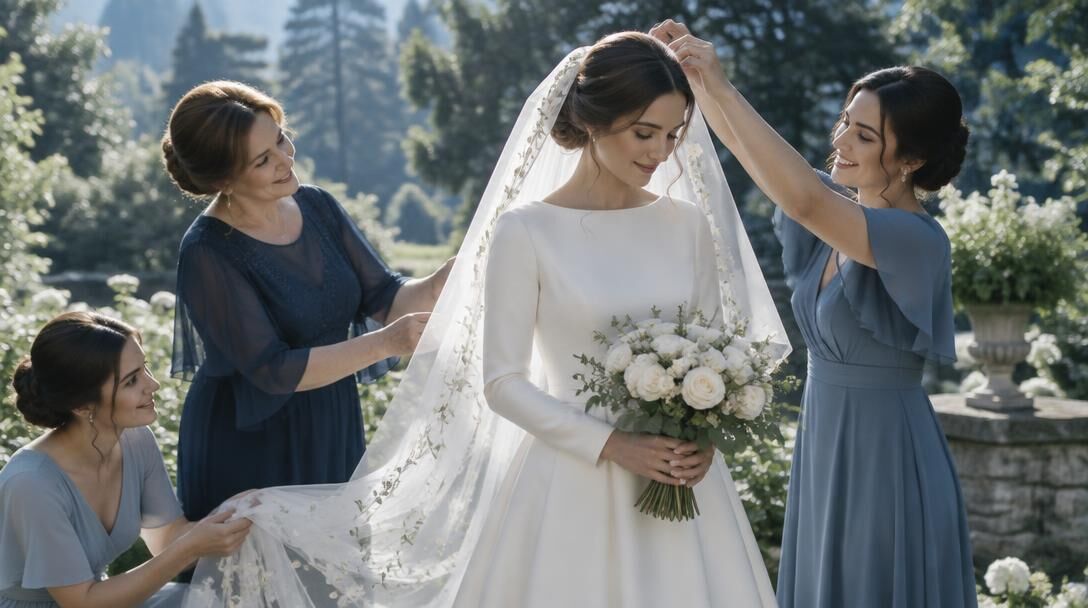
Revelation 19:7–9 pictures heaven rejoicing because the marriage of the Lamb has come and His bride has made herself ready. The Lamb is Jesus Christ, whose sacrifice secured His people for Himself. The bride represents those who belong to Him, welcomed into a lasting union marked by His faithfulness rather than their own achievement.
Her fine linen, bright and clean, is described as “the righteous deeds of the saints.” The image holds grace and faithful living together: the bride is given her clothing, yet she is also called to prepare. As prophecy turns from judgment to celebration, the marriage supper assures believers that Christ will gather His people and bring His promises to fulfillment.


From Heaven’s Hallelujahs to the King’s Return
- Heaven praises God for salvation, glory, and power.
- God’s judgments against Babylon are declared true and just.
- The elders and living creatures join in worship before the throne.
- A great multitude answers with resounding hallelujahs.
- The Lord God Almighty is celebrated as reigning.
- Worship directs every eye toward God’s final victory.
- The marriage of the Lamb announces a joyful union with His people.
- The bride’s readiness points to a life shaped by faithfulness.
- Bright, clean linen signifies the righteous deeds of the saints.
- An invitation blesses those called to the marriage supper.
- The angel affirms that these are the true words of God.
- Worship belongs to God alone, not to His messenger.
- Heaven opens, and Christ appears on a white horse.
- Faithful and True judges and makes war in righteousness.
- The Word of God leads the armies of heaven.
- His title declares Him King of kings and Lord of lords.
- The beast and false prophet face decisive judgment.
- Christ’s victory confirms the hope of all who trust Him.
“Let us be glad and rejoice, and give honour to him: for the marriage of the Lamb is come, and his wife hath made herself ready.”

Revelation 19:7 (KJV)
Heaven’s joy centers on the Lamb. His promised union with His people gives believers reason to worship now and hope for the day He brings them together.
Revelation 19: Frequently Asked Questions
Explore what heaven’s praise, the Lamb’s marriage supper, and Christ’s return reveal about God’s promises.
What is the marriage supper of the Lamb?
Revelation 19:7–9 pictures a joyful wedding feast celebrating the Lamb, Jesus Christ, and His bride. It points to the fulfillment of His promise to bring His people into lasting fellowship with Him.
Who is the bride in Revelation 19?
The bride represents God’s redeemed people united to Christ. Scripture also describes the church as Christ’s bride, emphasizing His faithful love and His people’s readiness to belong to Him.
What does the bride’s fine linen symbolize?
Revelation 19:8 identifies the bright, clean linen with the righteous deeds of the saints. The image highlights a people made ready for Christ whose lives reflect their relationship with Him.
Who is invited to the marriage supper?
Revelation 19:9 calls those invited to the Lamb’s marriage supper blessed. The invitation directs our attention to God’s grace and the joy awaiting those who belong to Jesus.
Why does heaven praise God at the start of Revelation 19?
Heaven celebrates God’s true and just judgments after the fall of Babylon. Its repeated “Hallelujah” declares that salvation and glory belong to God, whose purposes prevail over evil.
How does Revelation 19 point to Jesus’ return?
After the marriage supper, John sees heaven opened and Christ appearing as Faithful and True. The chapter moves from celebration to His victorious return, assuring readers that the Lamb is also the King who will reign in righteousness.
See How Prophecy Points to Jesus
Keep exploring Bible prophecy teachings to see how Scripture’s promises, from heaven’s praise to Christ’s return, center on Jesus.