
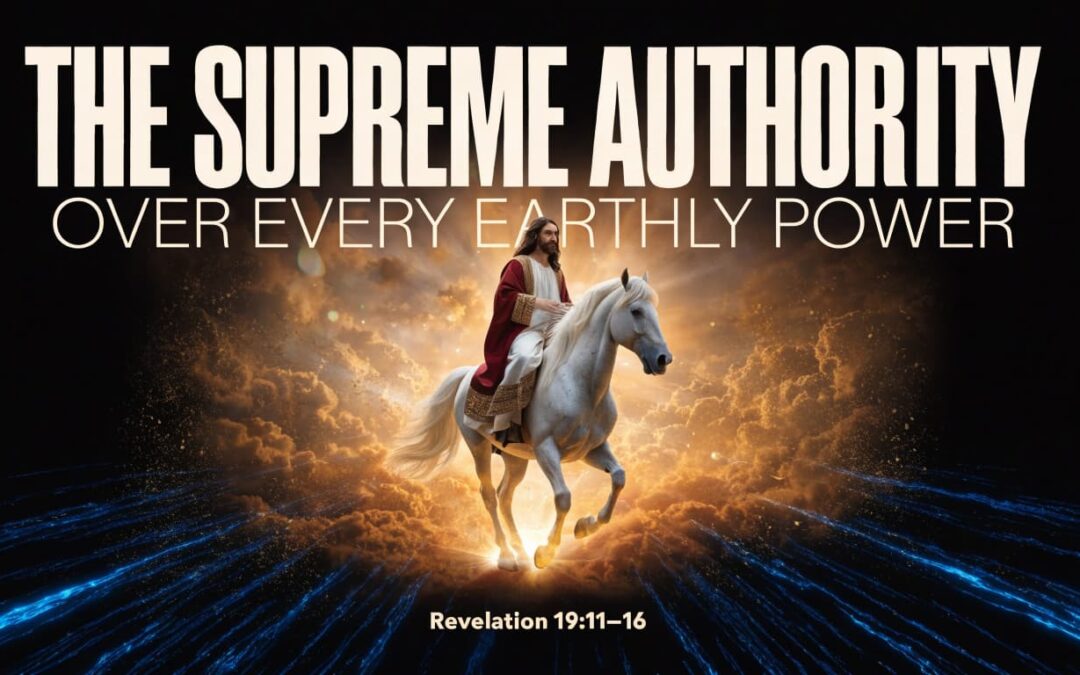
Jesus Revealed in Revelation 19: Three Titles, One King
Revelation 19:11–16 reveals Jesus through three powerful titles: "Faithful and True," "the Word of God," and "King of kings and Lord of lords." Together, they show us the righteous Judge whose promises never fail, whose Word carries God's authority, and whose reign surpasses every earthly kingdom.
But who is the rider John sees, what do these titles tell us about Him, and why do His judgment and rule matter? As we read this vision, we'll keep close to what Scripture says and approach its symbols with care.
The scene follows heaven's praise and the announcement of the Lamb's marriage, then leads into the defeat of the beast and the forces gathered against Jesus. Let's look first at where this vision fits in Revelation 19 and why its titles point us to Jesus, the Faithful and True Rider.
Jesus Revealed in Revelation 19: The Scene and Its Context
Revelation 19:11–16 sits between heaven's celebration and the defeat of the beast's forces. That placement matters. John shows us the rider after praise for God's judgment and the Lamb's marriage announcement, then carries the vision toward the confrontation that follows. The full chapter of Revelation 19 lets us see how those scenes fit together.
Why John’s vision presents the rider as Jesus
John does not introduce the rider with the name Jesus, but the passage gives us strong reasons to identify Him as Jesus Christ. The rider is called "Faithful and True," "The Word of God," and "KING OF KINGS AND LORD OF LORDS." His titles, royal authority, and actions belong together: He judges and makes war in righteousness, rules the nations, and defeats the powers gathered against Him.
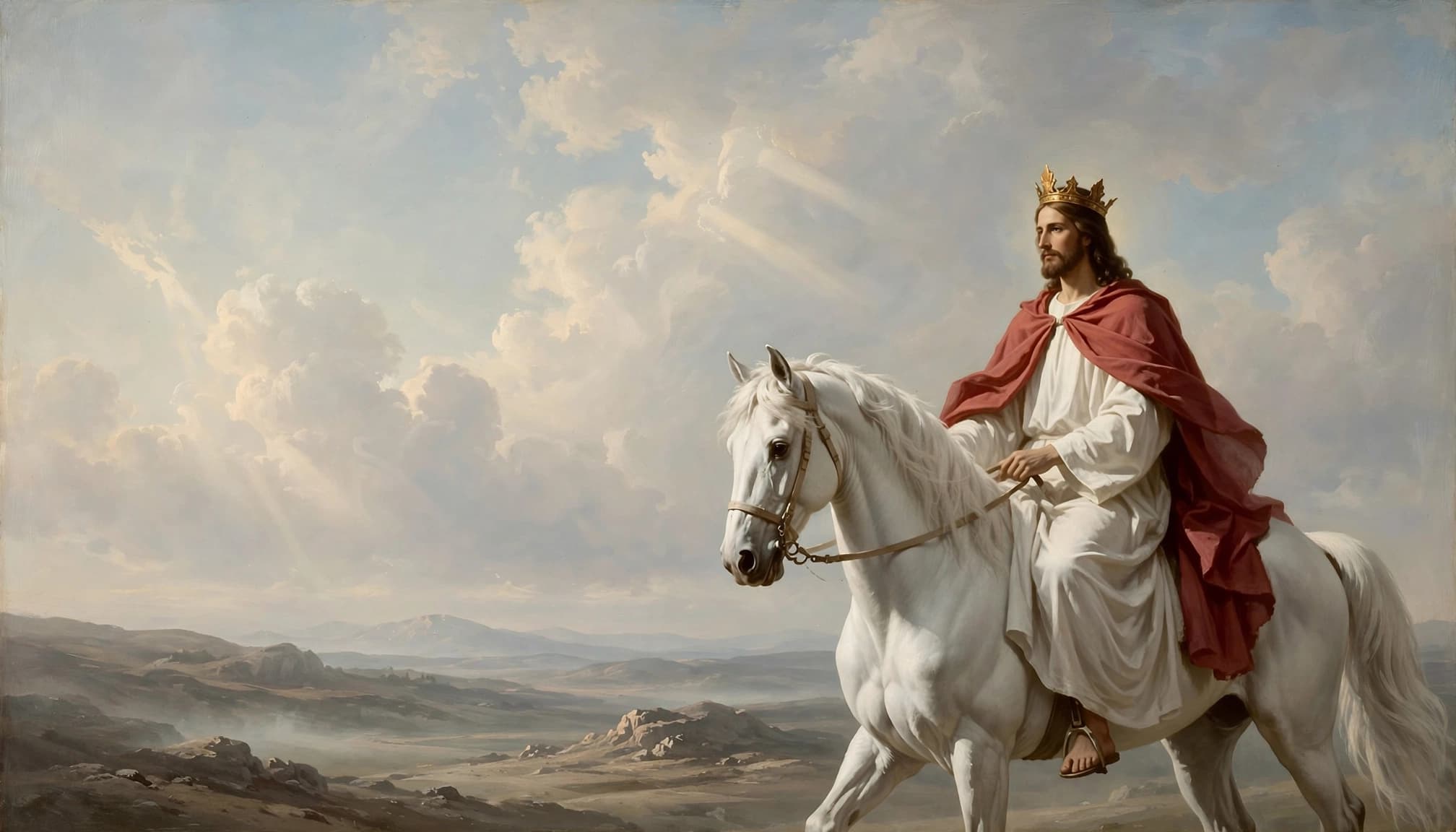
The vision also echoes Biblical images of the Messiah's rule. The rider carries many crowns, and an iron rod is associated with His authority over the nations. These details point to a King whose authority surpasses every earthly ruler. We can read more about Jesus as King of kings in Revelation 19 as we consider what that royal title declares.
Still, John leaves part of the rider's identity beyond what the titles explain. He says the rider has a name known only to Himself. So we should hold both truths together: the passage identifies Him through His revealed names and deeds, while also telling us that His identity is not fully disclosed to us.
How the vision connects praise, judgment, and victory
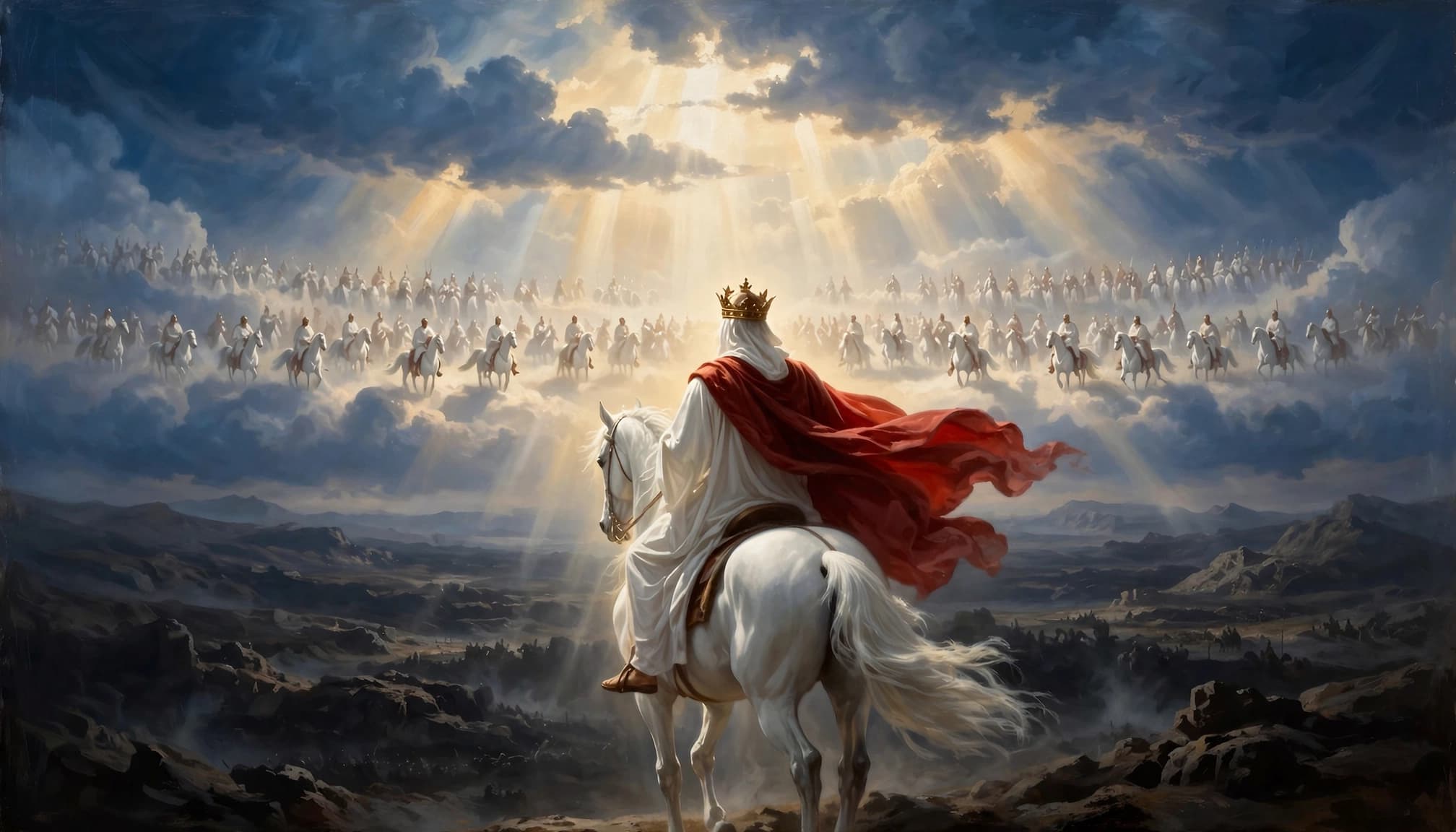
The chapter opens with heavenly praise over God's judgment of Babylon. Then comes the announcement of the Lamb's marriage and the blessing of those invited to the marriage supper. After that celebration, heaven opens, and John sees the rider. The scene moves from praise to the appearance of the righteous King, then into the defeat of the beast and the kings and armies gathered against Him.
That sequence ties the rider's victory to the judgment celebrated earlier in the chapter. The text presents Him as the one who judges rightly and overcomes the forces opposing God. The armies of heaven follow Him, but John does not identify every member of that host, so we should be careful not to claim more than the vision says.
Christians also differ on how literally to read the battle details. Some understand the scene as a future, physical confrontation; others read its military language as apocalyptic symbolism for Christ's decisive judgment and victory. Many readers see both literal expectation and symbolic meaning in the imagery. Whatever view we take, John's emphasis remains clear: Jesus reigns, His judgment is righteous, and the opposing powers do not prevail.
What “Faithful and True” Shows About Jesus as Judge
John calls the rider "Faithful and True," then says He judges and makes war in righteousness (Revelation 19:11). Those words belong together. The title tells us what kind of Judge He is: His decisions agree with His character, and His authority is never corrupted by pride or self-interest.
His justice stands apart from human power
Earthly rulers can twist justice to protect their position, reward their allies, or punish those who threaten them. Even when leaders claim to defend what is right, human judgment remains limited. We can miss what happened, misunderstand a motive, or let our own interests shape a verdict.
John's vision presents Jesus differently. He judges in righteousness, without deception or partiality. His judgment is not arbitrary, and it is not a display of human pride dressed up as authority. The title "Faithful and True" grounds His right to judge: He sees clearly, speaks truthfully, and acts with integrity.
"Faithful" points to His reliability. Jesus does not abandon what He has promised or turn away from His people when keeping His word becomes costly. "True" points to His truth and integrity. His words and actions agree; He does not judge by appearances or manipulate the truth to serve Himself. These are helpful ways to understand the title, not exhaustive definitions of the Greek words behind it.
The title also keeps us from treating judgment as an isolated act. The One who judges is the same Jesus whose character is faithful and true. We don't have to approve of every earthly verdict or pretend every wrong has been made right already. We can trust that Christ sees what human courts and rulers may miss, and that His judgment is just.
His faithfulness gives believers a sure hope
What does the title mean for Christians facing uncertainty or hardship now? It gives us a reason to hold on to God's promises, even when the answer does not come as quickly or clearly as we hope. Jesus' faithfulness does not mean that following Him removes every painful circumstance. It means our hope rests on Someone whose character does not fail.
When suffering weighs on us, or when injustice seems to go unanswered, we may wonder whether God has forgotten what He promised. Revelation 19 points us back to Jesus Himself. His rule is righteous, and His word is trustworthy. We can bring our questions to God without pretending pain is easy, while continuing to trust that His promises remain sure.
That hope shapes how we live, too. We don't need to repay evil with evil or take judgment into our own hands. We can seek justice, speak truth, and leave the final verdict with Jesus. The promise is not that every hardship will vanish now, but that the faithful Christ will not fail His people. We can read more about Christ's faithfulness and God's promises as we consider what this title means for our hope.
Why Jesus Is Called the Word of God
In Revelation 19, John gives the rider a title that reaches beyond the battle scene: "The Word of God." What does that name tell us about Jesus? It connects Him with God's self-expression and authority, while the rest of the vision shows His word bringing God's purposes to pass.
The Word speaks with authority and fulfills God’s purpose
John calls the rider "The Word of God" in Revelation 19:13. The title points to Jesus as the One who reveals God and carries His authority. John's Gospel helps explain this connection: John 1:1 describes the Word as with God and as God, and later says the Word became flesh. Revelation 19 does not quote that passage directly, but the shared title invites us to recognize the connection.
This name also fits what the rider does. His words are not empty claims or impressive language without effect. In the vision, He judges, defeats the forces gathered against Him, and rules the nations. His authority accomplishes God's purpose. We can read more about Jesus as King of Kings in Revelation 19 alongside this title, while keeping the distinct details of John's vision in view.
The bloodied robe and the sword from His mouth
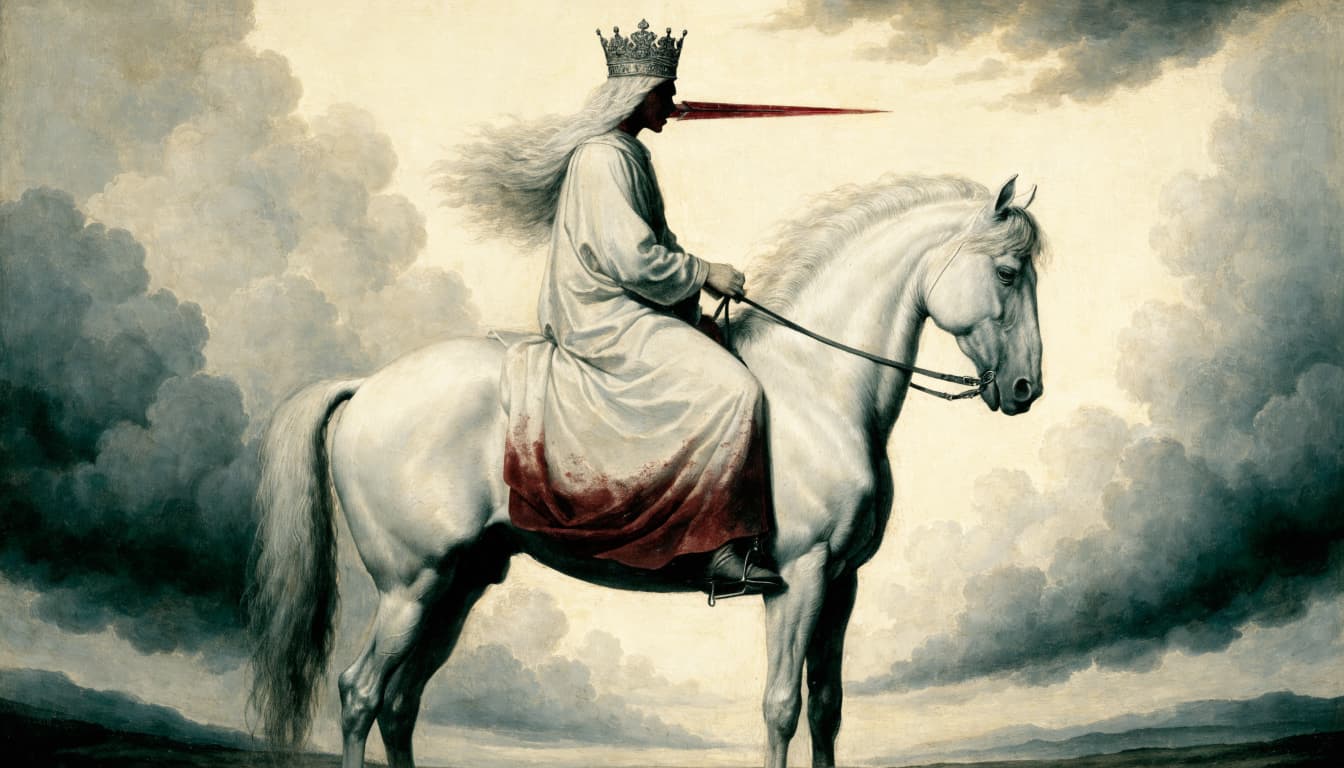
John describes the rider's robe as dipped in blood, then shows a sharp sword coming from His mouth. These are vivid images in a vision, and interpreters differ on their precise meaning. The blood may recall suffering, the defeat of enemies, or overlapping themes. The garment and winepress imagery closely resemble Isaiah 63:1–6, where a figure's clothes are stained as He carries out judgment. That parallel helps us see the connection, but it does not settle what the robe means in Revelation.
The sword, meanwhile, comes from the rider's mouth, not His hand (Revelation 19:15). The image portrays the power of His spoken judgment and decree. Christians differ on whether the sword points to the gospel, final judgment, or another aspect of the vision's symbolism. The text's emphasis is clear: His word carries authority, and His judgment takes effect.
John also says the rider rules the nations with a rod of iron, echoing Psalm 2:9. The image speaks of royal authority over the nations. Together, the sword and iron rod show Jesus exercising the rule given to Him, not merely claiming it. The vision presents the Word of God as the King whose decree is fulfilled.
How “King of Kings and Lord of Lords” Declares His Supremacy
The title on Jesus' robe and thigh leaves no doubt about His rank. He is not one ruler among many, competing for influence. He is King of kings and Lord of lords, and every earthly throne stands beneath His authority. In John's vision, that declaration brings hope because political power, however imposing, is never ultimate.
His reign is greater than every earthly throne
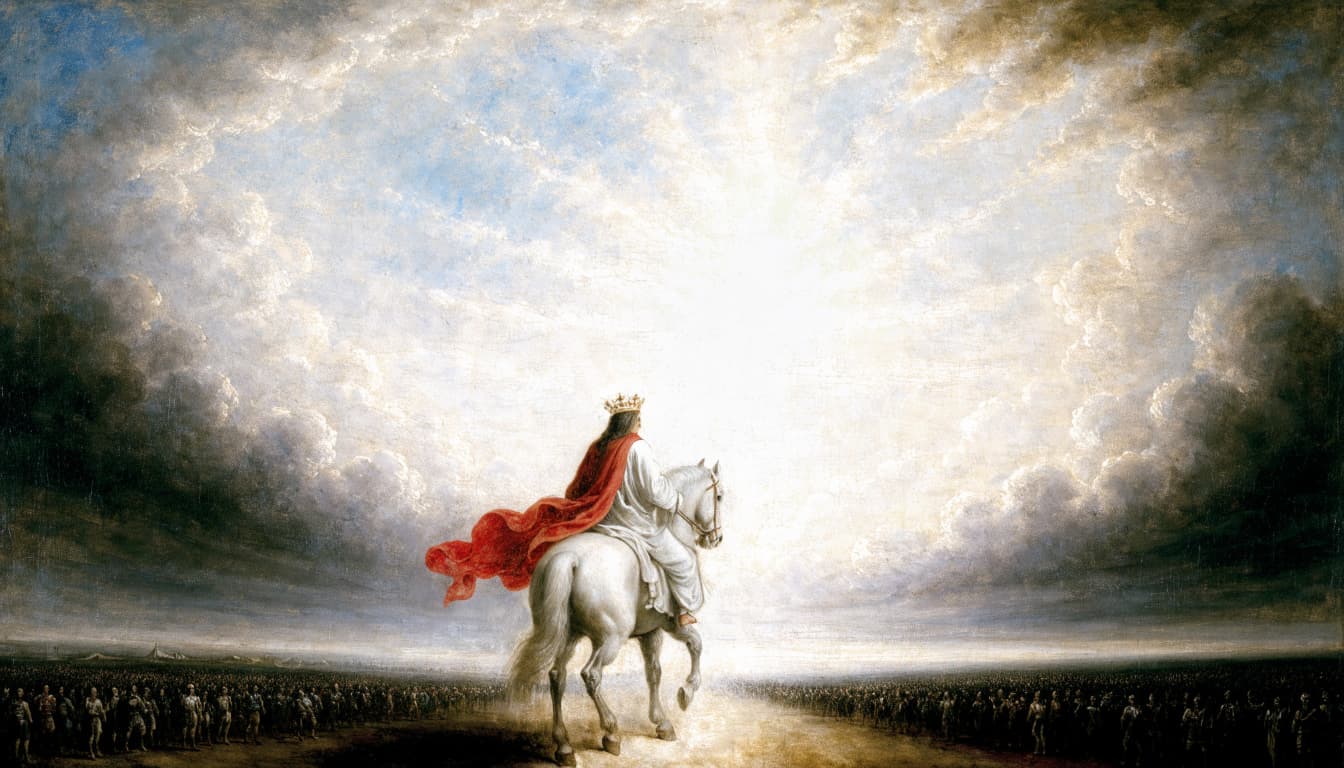
John has already shown Jesus wearing many crowns. Then he gives the rider a name that makes the meaning plain: Revelation 19:16 declares Him "KING OF KINGS AND LORD OF LORDS." The crowns and the title work together. Jesus has authority over rulers, and He does not need their permission or approval to exercise it.
That matters when the world feels shaped by leaders, laws, and borders. We can take earthly power seriously without treating it as final. No ruler can limit Christ's authority to one nation, and no political decision can remove Him from His throne. The vision does not promise that earthly powers will always act justly. It shows us who has the final authority over them.
The same title appears elsewhere in Scripture. Revelation 17 uses it as the Lamb goes to war against opposing kings, and 1 Timothy 6:15 calls God the blessed and only Sovereign, King of kings and Lord of lords. The wording is not unique to Revelation 19. Across these passages, the title points to supremacy that no human ruler can claim.
The title points to a final and decisive victory
The royal title also shapes how we read the conflict that follows. The chapter moves from Jesus' appearance to the gathering of the beast, the kings of the earth, and their armies against Him. The full chapter of Revelation 19 describes the outcome: the beast and false prophet are captured, and the opposing forces are defeated.
John sets the earthly kings against the One whose name is written on His robe and thigh. Their gathering looks formidable, but it does not make the conflict equal. Jesus is already revealed as the supreme King. The passage does not ask us to identify every opposing force or settle every question about the timing of the vision. Its emphasis is clear: those who oppose Him do not overcome Him.
That is the hope in this title. We may see rulers rise and fall, or watch human powers act as if they answer to no one. Revelation 19 directs our attention beyond their claims. Jesus reigns, and His victory is decisive.
Old Testament Images That Deepen Revelation 19
Revelation's images don't appear in isolation. John draws on earlier Scripture to show us who the rider is and what His authority means. Psalm 2 helps explain His rule over the nations, while Isaiah 63 gives important background for the bloodied garment and winepress. These connections clarify the vision, even when they don't answer every question it raises.
Psalm 2 pictures the Messiah’s rule over the nations
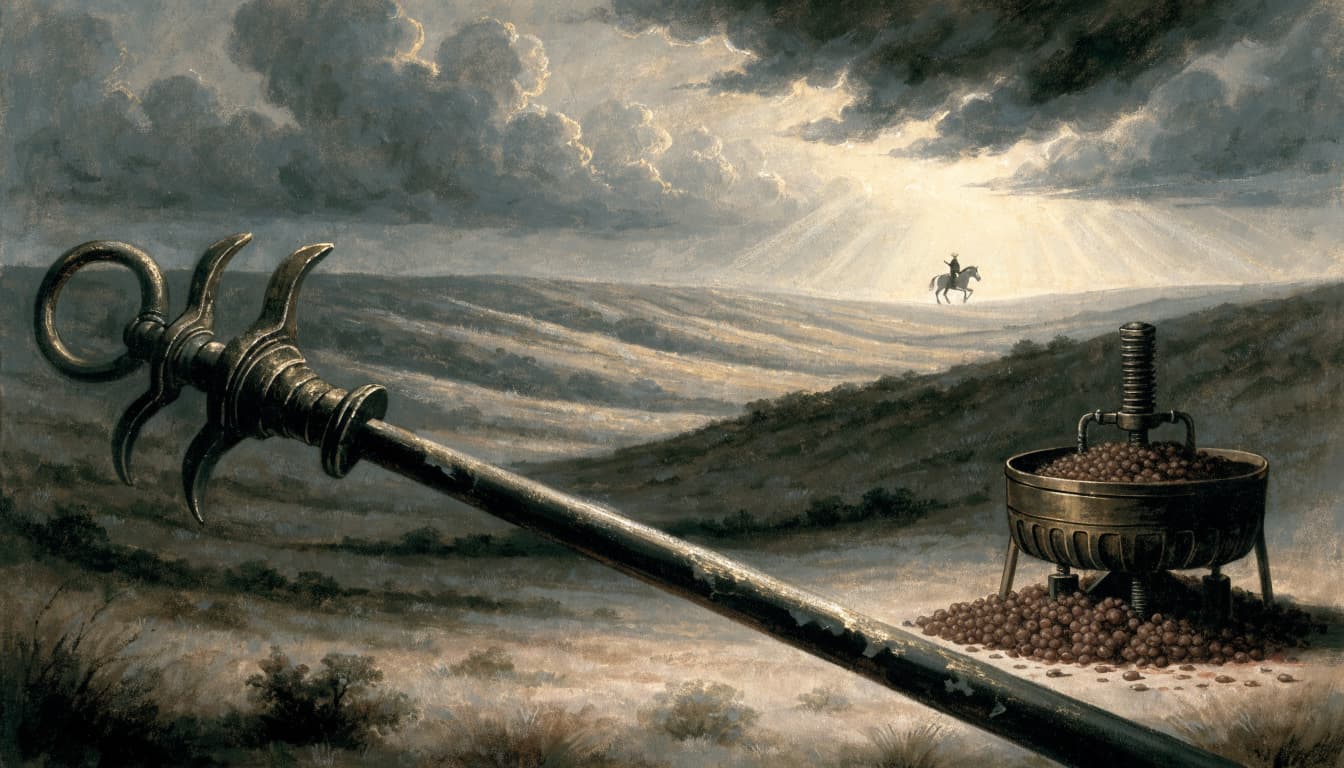
When John says the rider will rule the nations with a rod of iron, he echoes Psalm 2:9. Psalm 2 describes God's anointed King receiving authority over the nations. Revelation applies that royal image to the rider, presenting Jesus as the Messiah whose rule reaches beyond every earthly power.
The iron rod can sound harsh if we picture only a ruler striking down His subjects. But Psalm 2's wider setting is a warning to kings who resist God's authority. The image makes the Messiah's rule firm and decisive. The nations may oppose Him, but their resistance doesn't undo His right to reign.
This connection also helps us read Revelation 19:15 alongside the rest of the vision. The rider's authority is not simply military strength. He judges in righteousness and rules as God's appointed King. You can compare the passages in Psalm 2 and Revelation 19:15, where the iron rod appears alongside the sword from His mouth and the winepress of God's wrath. For another look at Psalm 2 and the iron rod in Revelation 19, we can keep the two passages in view together.
Isaiah’s winepress imagery highlights the seriousness of judgment
Isaiah 63:1–6 describes a figure whose garments are stained red after He treads the winepress of judgment. John's vision uses closely related images: the rider's robe is dipped in blood, and He treads the winepress of God's wrath. Reading Isaiah 63:1–6 beside Revelation helps us understand the severity of the judgment John portrays.
A winepress crushes grapes, and Isaiah uses that forceful picture for judgment against evil. The stained garments make the image impossible to mistake for a peaceful scene. Revelation draws on the same prophetic language to show that the rider's judgment is real and decisive.
Still, the connection doesn't settle exactly whose blood stains the rider's robe. Readers have understood it in different ways, including as an image of judgment on His enemies or as a reference to Christ's suffering. We should be careful not to claim more than John says. Isaiah's imagery helps us see the robe within a vision of divine judgment, while the exact meaning of its blood remains debated.
Daniel 7 also offers a useful cross-reference. Its vision of dominion over peoples and nations gives us another Old Testament picture of God's Kingdom and authority. Taken together, these passages help us see Revelation 19's rider as the promised King and righteous Judge.
What Revelation 19 Teaches Christians About Hope and Faithfulness
Revelation 19 brings three titles together to show us why Christians can keep trusting Jesus: He is faithful in character, speaks with God's authority, and reigns above every earthly power. The vision doesn't answer every personal question or promise easy circumstances. It does give us a King worthy of our worship and our continued faithfulness.

Trust His character when the outcome is not yet visible
John calls Jesus "Faithful and True" as He appears to judge in righteousness (Revelation 19:11). His character and His judgment belong together. We can trust Him not because we know how every situation will unfold, but because He is truthful and does not abandon His promises.
Waiting can be hard, especially when we pray and still don't see the answer we hoped for. Revelation 19 doesn't explain why every hardship continues or tell us when a particular circumstance will change. We shouldn't force the passage to answer questions it doesn't address. Instead, we hold to what it does reveal: Jesus is faithful, and His judgment is righteous.
That doesn't mean faith leaves no room for grief or honest questions. We can bring both to God while continuing to trust Him. The promise here is not a life without pain; our hope rests in the character of Christ, even when the outcome is not yet visible.
Let His Word shape worship, witness, and obedience
John names the rider "The Word of God" (Revelation 19:13). This title points to Jesus' divine authority. The sword comes from His mouth, and His word accomplishes His purpose. His authority is not a license for people to claim unchecked power in His name.
So what does that mean for us? We listen to Scripture, speak truth with care, and follow Jesus when His teaching challenges our preferences. Our witness should point people to Him, not elevate our own opinions as if they carried His authority. Christian obedience grows from hearing and trusting the Word of God.
Jesus also says that all authority in heaven and on earth has been given to Him (Matthew 28:18). That authority strengthens our call to make disciples and remain faithful. We can read more about Jesus' authority over every power, while keeping our attention on what Scripture says about His rule.
Live with hope under the reign of the King
The title "King of kings and Lord of lords" declares Jesus' supremacy (Revelation 19:16). Earthly powers may pressure Christians to compromise, but none stands above Him. This doesn't give us grounds for partisan claims or predictions about dates. It calls us to live faithfully under Jesus' reign now.
As Spirit-filled Christians, we believe Jesus has authority today and that the Holy Spirit empowers believers to serve Him. His rule should make us courageous without making us proud, and humble without making us passive. We can resist deception, speak truth, and keep serving even when faithfulness costs us.
The vision's central hope is clear: Jesus reigns, and those who belong to Him have reason to remain faithful. For a closer look at Revelation 19's call to hope and faithfulness, we can return to the chapter itself and keep our eyes on the King.
Conclusion
Revelation 19 reveals Jesus through three distinct titles. Faithful and True describes the righteous Judge, whose promises are sure and whose judgment is just. The Word of God names the living Word who speaks with authority and carries out God's purposes. King of kings and Lord of lords declares that His authority surpasses every earthly ruler.
Together, these titles point us to Jesus, the victorious King. We can trust His character, listen to His Word, and remain faithful under His reign. Jesus as the Rider in Revelation 19 is the King whose rule gives us lasting hope.
Jesus Revealed in Revelation 19: Three Titles, One King
See how the returning Christ fulfills prophecy as the faithful Judge, the living Word, and the sovereign King.
Faithful and True
His judgments keep every promise and reveal the righteousness of God.
The Word of God
The divine Word who came in flesh returns to bring God's purposes to completion.

Faithful and True, the Word of God, the King of Kings
Revelation 19:11–16 opens with heaven standing open and a rider on a white horse. This is not a portrait of three different rulers. John gives us three titles for the returning Jesus, each revealing a distinct truth about the one King who comes to judge evil and establish His righteous reign.
Faithful and True: The King Who Keeps His Word
John first calls the rider “Faithful and True” (Revelation 19:11). He judges and makes war in righteousness, unlike earthly rulers who break their promises or misuse their power. His name assures us that every word God has spoken concerning judgment and restoration can be trusted. The Savior who was faithful even unto death remains faithful when He comes in victory. His return is not a departure from His character; it is the public vindication of His truth.
The Word of God: The King Who Reveals God
Revelation 19:13 names Him “The Word of God.” John’s Gospel identifies Jesus as the Word who was with God, was God, and became flesh (John 1:1, 14). Revelation shows that same Jesus returning in glory. His robe is dipped in blood, and a sharp sword comes from His mouth (Revelation 19:13, 15). These images direct our attention to a King whose victory is bound to His person and whose spoken judgment carries divine authority. The One through whom God made Himself known will bring God’s declared purposes to their appointed end.
King of Kings and Lord of Lords: The King Above Every Power
On His robe and thigh is written “King of kings and Lord of lords” (Revelation 19:16). No empire, ruler, or rebellious power can rival Him. The armies of heaven follow, yet the emphasis remains on the authority of the rider Himself. His royal title confirms what the earlier names have shown: the faithful Judge and the divine Word are the sovereign Jesus Christ.
Three Titles, One Hope
Revelation 19 does more than announce the defeat of evil. It reveals who stands at the center of Bible prophecy. Jesus is faithful to God’s promises, the Word who makes God known, and the King whose rule surpasses every throne. For those who trust Him, His return is a call to steadfast hope: history is not moving toward uncertainty, but toward the rightful reign of one King.
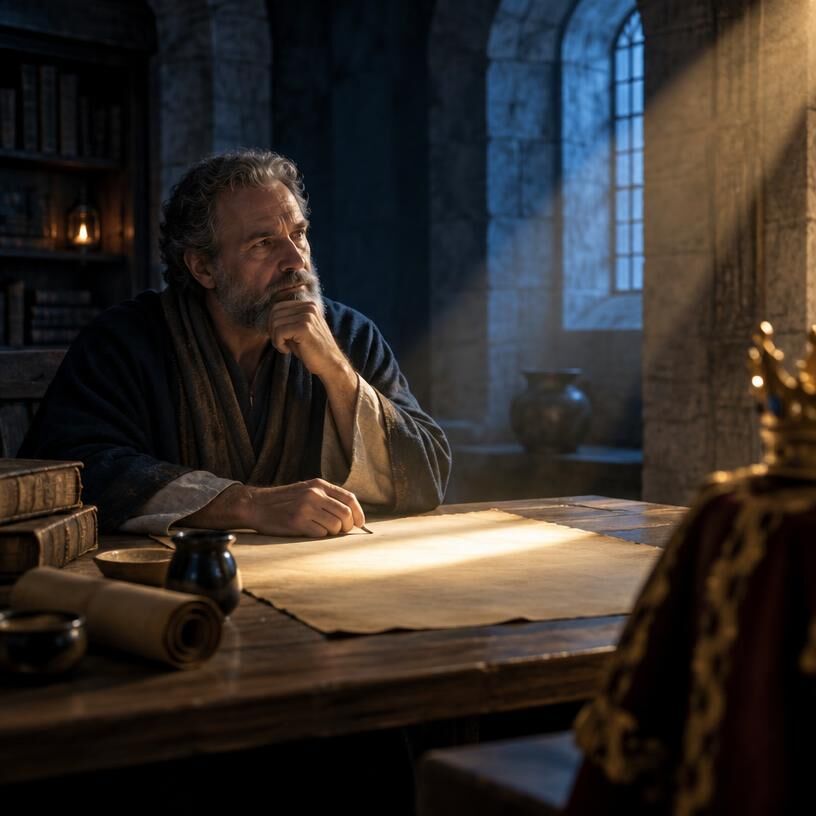
“And he hath on his vesture and on his thigh a name written, KING OF KINGS, AND LORD OF LORDS.” — Revelation 19:16 (KJV)

John the Apostle
John’s vision identifies Jesus as the supreme King: His authority exceeds every earthly ruler, and His promised victory is certain.
Revelation’s Promises Meet Their King
Revelation 19 follows heaven’s celebration of God’s just judgment and the marriage supper of the Lamb. Then heaven opens, and Jesus appears on a white horse. John calls Him Faithful and True, names Him the Word of God, and sees the title KING OF KINGS, AND LORD OF LORDS written on His robe and thigh. These are not three different figures, but three ways the vision reveals the same Savior: trustworthy in His promises, the living expression of God’s truth, and sovereign over every ruler.
Throughout Revelation, believers are called to remain faithful because Jesus has conquered and will set all things right. His appearance in chapter 19 brings that promise into focus. He judges with righteousness, defeats opposition to God, and shows that history moves toward the fulfillment of God’s word—not the triumph of evil.

Jesus’ Titles in Revelation 19: Questions and Answers
Each name in John’s vision reveals something about the returning Christ. Explore what these titles mean and why they matter for understanding Bible prophecy.
Why is Jesus called Faithful and True?
Revelation 19:11 uses these words to describe the rider on the white horse. Jesus keeps God’s promises and judges with complete justice; His return confirms that His word can be trusted.
What does “the Word of God” mean in this vision?
Revelation 19:13 calls the rider the Word of God. The title presents Jesus as the one who makes God’s truth known and carries out His declared purposes, connecting His return with the prophetic message of Scripture.
Why is Jesus named King of Kings and Lord of Lords?
The name in Revelation 19:16 declares His authority above every earthly power. No ruler or kingdom can overturn His reign; His victory establishes the supremacy promised throughout Revelation.
Are these three titles describing different people?
No. Faithful and True, the Word of God, and King of Kings and Lord of Lords all identify the same rider. Together, they reveal Jesus’ trustworthy character, His relationship to God’s word, and His universal kingship.
What does Jesus’ victory in Revelation 19 mean for believers?
His victory assures believers that evil will not have the final word. Because Jesus judges righteously and fulfills God’s promises, His people can remain faithful and hopeful even amid opposition.
Keep Exploring the King Revealed in Prophecy
See Jesus Throughout Bible Prophecy
Revelation 19 reveals one King through three powerful titles. Keep exploring the prophetic passages of Scripture to see how they point to Jesus—what He has fulfilled and what is still to come.