
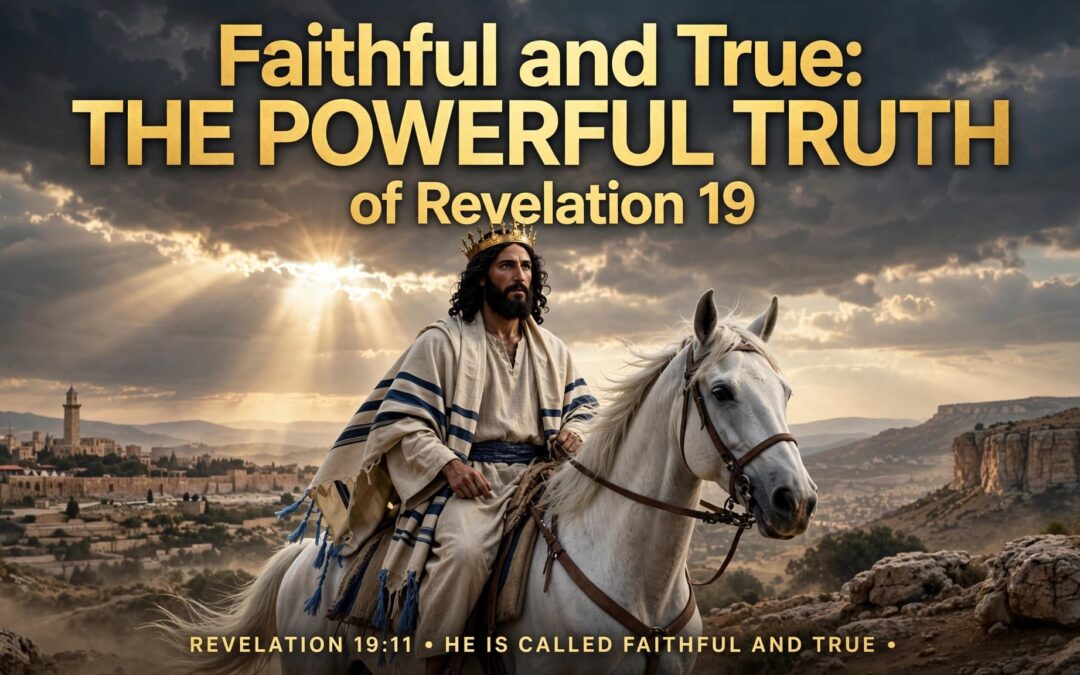
Revelation 19: Jesus, Faithful and True in Judgment
Heaven opens in Revelation 19, and a rider appears to judge with justice. John calls Him "Faithful and True," giving you reason to trust both His promises and His judgment.
The vision's striking symbols point to Christ's authority, while His title declares that He is trustworthy in all He promises and right in all He judges. We'll look at what this name means and why the rider's victory gives believers hope.
Let's begin with who John sees and how Revelation reveals Jesus as Faithful and True. Read more about Jesus as Faithful and True.
The Rider Revealed in Revelation 19: Who Is Faithful and True?
John's vision begins after heaven praises God and before the beast and false prophet meet defeat. A rider appears as heaven opens, and the titles surrounding Him point to Jesus. Christians commonly understand this scene as Christ's victorious return, though believers differ on its timing and fulfillment.
How the vision connects with the rest of Revelation
John calls the rider "Faithful and True" in Revelation 19:11-16. That title echoes Revelation 3:14, where Jesus is called the faithful and true witness. The connection matters: the One who judges is the same One whose words and testimony are trustworthy.
We also recognize the glorified Christ from Revelation 1:14, where His eyes are described as a flame of fire. Revelation uses vivid images like these to communicate spiritual truth about Jesus' authority, knowledge, and judgment. We shouldn't automatically treat each image as a literal description of His physical appearance.
The passage itself doesn't use the name Jesus in verses 11-16. Still, the title "the Word of God" and the declaration "King of kings and Lord of lords" identify the rider as Christ. Christians commonly read this as His victorious return, but interpretations differ on how and when the vision will be fulfilled. We can hold firmly to the central truth while recognizing that prophetic timelines remain disputed. For a related look at Christ's victory in Revelation, see Jesus as the Faithful and True rider.
Why the white horse does not tell the whole story
A white horse in this vision signals victory and royal authority. The rider comes with the power to judge and rule, and John's description makes clear that His judgment is righteous. The horse contributes to the picture, but the rider's titles and actions tell us much more about who He is.
Revelation also shows a white-horse rider in Revelation 6:2. It's tempting to assume the two riders must be the same because they share an image. But a shared symbol doesn't establish shared identity. In Revelation 19, the rider is called "Faithful and True" and "the Word of God," and He is named "King of kings and Lord of lords." Those details identify Him in a way the image of a white horse alone cannot. We should read each vision in its own context, rather than letting one striking detail settle the whole question.
What “Faithful and True” Tells Us About Jesus
"Faithful and True" tells us Jesus is dependable in what He promises and truthful in what He says. In Revelation 19, that character is bound to His judgment: He judges and wages war in righteousness. His reliability and His justice belong together.
His promises can be trusted even when they seem delayed
John's vision gives hope to believers facing suffering, uncertainty, or questions that remain unanswered. Jesus is called "Faithful and True" as He appears to judge evil and reign as King. The title reminds us that God's promises don't become unreliable just because we're still waiting to see them fulfilled.

That hope doesn't mean faith will prevent hardship or answer every question on our schedule. Revelation shows Jesus as the One who will set things right, even when injustice seems to last. We can hold to His promise of return without turning every crisis into a prediction about when it will happen. Jesus' promise to return points our hope toward Him, not toward a timetable we can't prove.
John's title also echoes Christ's words to the church in Laodicea. In Revelation 3:14, Jesus calls Himself "the Faithful and True Witness." His testimony can be trusted because His character is trustworthy. When He says He will come to judge, we have reason to believe Him, even through a long season of waiting.
His words and judgments are never false or corrupt
Human judgment can miss important facts, favor the powerful, or condemn someone unfairly. Jesus' judgment is different. John says He judges "in righteousness" in Revelation 19:11-16. The rider's title is directly tied to how He judges: His verdicts come from the One who is faithful and true.
Here, "true" means more than accurate speech. Jesus has complete integrity. He doesn't distort what He knows, bend His judgment to protect His interests, or speak one way while acting another. We don't need to guess at individual people's fate to see what the passage makes clear: the Judge is righteous, and His authority is not corrupt.
That picture fits the Biblical theme in Psalm 96:13, where the Lord judges the world with righteousness and the peoples with faithfulness. Revelation presents Jesus with that same standard of righteous judgment. For the wording in NKJV, you can also compare Revelation 19:11-16.
So when we read "Faithful and True," we're seeing more than a comforting name. We're seeing why Jesus can be trusted both to keep His promises and to judge rightly.
How the Rider’s Symbols Reveal His Authority
Revelation 19:11–16 gives us more than a striking picture of a rider on a white horse. Its symbols reveal who He is and why no rival power can match His authority. We should read them as a connected vision, not as a literal inventory of physical features.
Fiery eyes and many crowns point to perfect rule
John describes the rider's eyes as "a flame of fire." The image recalls Revelation 1:14, where the glorified Christ has eyes like a flame of fire. It also echoes Revelation 2:18–23, where Jesus says He searches minds and hearts and repays each person according to their works.
So what do fiery eyes tell us? Christ sees with perfect knowledge. His judgment isn't based on rumors, appearances, or incomplete evidence. He knows the truth about every heart, and His verdict is righteous.
The many crowns make another point: the rider's authority exceeds every competing power. The dragon wears seven crowns in Revelation 12:3, and the beast wears ten in Revelation 13:1. Their crowns suggest claims to rule, but their power remains limited. Christ's many crowns show His supreme authority, a truth made plain by His title, "King of kings and Lord of lords" (Revelation 19:16). We can also see Jesus' authority as Lord of Lords.
The unknown name should remain unknown
John says the rider has a name written that no one knows except Himself. Revelation doesn't reveal that name, and we shouldn't claim it is a particular hidden word or title. The text gives us a clear limit: the rider's identity and authority aren't fully grasped by those who behold Him.
That detail fits the rest of the vision. We know the rider as "Faithful and True," "the Word of God," and "King of kings and Lord of lords." These titles tell us who He is and what He does, even as the unknown name reminds us that human understanding has limits.
John's phrase "the Word of God" also connects the vision with John 1:1–18. There, the Word is with God, is God, and makes God known. Revelation presents the rider as God's living Word, whose authority and judgment reveal the truth of God.
His robe is dipped in blood, but interpreters differ about whose blood it represents. Some understand it as the blood of His enemies; others connect it with Christ's own sacrificial blood. We shouldn't force a certainty the passage doesn't provide. The central claim remains unmistakable: the rider comes with divine authority, and every rival power must answer to Him.
Why Jesus’ Judgment Is Perfectly Just
Revelation's vision of judgment can feel severe, especially when we picture the suffering behind it. But John does not present Jesus as acting in rage or settling a personal score. He shows the rightful King bringing evil to account with perfect justice.

Righteous judgment answers the harm evil causes
Cruelty can go unanswered for years. People with power may escape accountability, while those they hurt carry the consequences. When we see that happen, the promise of judgment matters. Revelation points us to a Judge who sees the truth and will not excuse evil or favor the powerful.
John writes that the rider judges and wages war in righteousness (Revelation 19:11). The wider vision describes this authority and victory in Revelation 19:11-16. The standard is not personal anger. Jesus' judgment is governed by what is right, and His title "Faithful and True" fits the work He does.
Psalm 96:13 says the Lord comes to judge the earth in righteousness and faithfulness (Psalm 96:13). Revelation echoes that hope: the world's injustice does not get the final word. We don't have to pretend the harm is small or that every case will be resolved in this life. We can trust Jesus to judge what human courts and authorities fail to address.
That trust also sets a boundary for us. The vision does not give believers permission to take revenge or punish people in Jesus' name. Final judgment belongs to Him. We can seek justice, protect people from harm, and tell the truth without claiming His authority for ourselves. Revelation's hope rests in Jesus' authority to judge rightly, not in our ability to settle every wrong.
The sword from His mouth is not an ordinary weapon
John says a sharp sword comes from the rider's mouth, and that He strikes the nations with it (Revelation 19:15). The image is stark, but the sword is not described as an ordinary weapon in His hand. It comes from His mouth, connecting His judgment with His word and authority.
That detail matters. Jesus does not need a human army or a weapon to establish His verdict. His word is decisive because He is the King with authority over every rival power. Revelation uses vivid imagery to show the certainty of His judgment, not to give us a physical sequence of events we can map in detail.
The picture is severe because evil causes real harm, and God's judgment takes that harm seriously. Yet the passage does not answer every question about when or how each judgment will unfold. We should hold to what John makes clear: Jesus judges in righteousness, and no injustice is beyond His reach. For those who suffer, that is a reason to hope. For those tempted to retaliate, it is a reason to leave final judgment with Him.
How Revelation 19 Shows God Keeping His Promises
Revelation 19 shows Christ coming to judge evil and reign as King. The vision also points beyond judgment: God will bring His people into the future He has promised. We can hold firmly to that hope without claiming Scripture settles every detail of the prophetic timeline.
The Word of God makes the Father known
John calls the rider "the Word of God" (Revelation 19:11-16). That title connects the vision to John's Gospel, where the Word was with God, was God, and became flesh. Jesus makes the Father known, so when we see Christ act with truth and justice, we see God's character on display (John 1:1-18).
That matters because Revelation's promises aren't detached from God's character. The One who comes to judge is the same Jesus who reveals the Father. His victory doesn't contradict God's mercy or faithfulness; it shows that evil will not have the final word. John's vision gives us reason to trust God's promise of a future where He dwells with His people and ends death and sorrow (Revelation 21:1-5). We can read more about Jesus fulfilling God's Kingdom promises.
Christ’s victory gives hope without settling every timeline
Revelation's churches faced pressure to compromise, and the book repeatedly calls believers to endurance and faithful witness. Its visions of worship turn our attention to God, while the rider's many crowns and royal title show that rival powers cannot rule forever. The beast and false prophet fall before Christ; their apparent authority is temporary. That is the promise at the heart of the scene.
Christians differ on how Revelation's events fit together. Some read this scene as Jesus' climactic return at the end of history; others understand it as a symbolic picture of His victory unfolding through the church age. We don't have to erase those differences, or let them weaken what the passage plainly declares: Jesus will triumph, judge evil in righteousness, and reign as King. Ligonier also discusses the passage as a vision of Jesus the conquering King (Jesus the Conquering King).
So we can worship and endure without turning hope into a date-setting exercise. The order of events remains disputed, but the promised King is not. Revelation calls us to trust His word, remain faithful, and look toward the future God has promised His people.
What the Vision Means for Faith and Life Today
Revelation 19 doesn't give us permission to set dates or predict exactly how every promise will unfold in our lives. It gives us something steadier: Jesus is faithful, He judges in righteousness, and His Kingdom will prevail.

Trust His character while waiting for His promises
Waiting can wear on us. You may be praying for change, asking God for direction, or hoping for justice after someone has caused real harm. Revelation's vision doesn't promise that every answer will come quickly, or that every personal outcome will match what we want. It points us to the character of Jesus while we wait.
John calls Him "Faithful and True" and says He judges in righteousness (Revelation 19:11-16). So we can hold to what Scripture says without turning uncertainty into predictions about dates, headlines, or our own future. We don't have to pretend waiting is easy. We can bring our questions to God and keep trusting Jesus when answers remain out of reach.
For us as Spirit-filled Pentecostal Christians, prayer and the Holy Spirit's help belong in that waiting. But an impression or a strong feeling is not a license to claim that God has revealed a date or guaranteed a particular outcome. We test what we hear against Scripture, remain open to correction, and keep our hope fixed on Christ. You can also explore how biblical prophecy points to Jesus.
Let hope shape worship, holiness, and witness
Jesus' kingship calls for more than agreement with a belief. It calls us to worship Him, live in a way that honors Him, and speak about Him with courage and compassion. The teaching in Romans 12 connects worship with offering our lives to God and refusing to be shaped by the patterns around us.
The expectation of Christ's judgment should also change how we respond to evil now. We can tell the truth, seek protection and justice for people who have been harmed, and refuse to make peace with cruelty. At the same time, final judgment belongs to Jesus. His return is no excuse for hostility, revenge, or treating other people as enemies to be condemned.
Jesus told His disciples that the Holy Spirit would empower them to be His witnesses (Acts 1:8). We believe that promise still matters. The Spirit helps us bear witness to the reigning King through our words and our conduct, especially when faithfulness costs us something. Revelation's hope doesn't call us to fear-driven speculation. It calls us to worship Christ, pursue holiness, care for people in pain, and keep sharing the good news as we wait for Him.
Conclusion
Revelation 19 gives us a steady hope: Jesus is Faithful and True. He keeps His promises, and He judges in righteousness. The rider's victory assures us that evil will not rule forever, even while some details of Revelation's timing and imagery remain open to interpretation.
We can trust the King who sees the truth and judges rightly. As we await His Kingdom, let's trust Christ and live faithfully as His witnesses. Learn more about Jesus as the promised King.
A Vision of Christ’s Return
Revelation 19: Jesus, Faithful and True in Judgment
Heaven opens, and the Rider on the white horse appears. Discover how Revelation 19 portrays Jesus as the faithful and true King who judges with righteousness.
The Opened Heaven
The Faithful Rider
Righteous Judgment
The Reigning King
The Rider Called Faithful and True
Revelation 19 turns from heaven’s rejoicing to a striking vision: heaven opens, and Jesus appears riding a white horse. John calls him “Faithful and True” and declares that “in righteousness he doth judge and make war” (Revelation 19:11). The names reveal the character behind the judgment. Jesus does not act on a whim or break his promises; he comes as the one whose words are trustworthy and whose verdict is just.
The vision names him the Word of God and shows him bearing the title “King of kings, and Lord of lords.” His eyes are like a flame of fire, and a sharp sword proceeds from his mouth. Together, these images present a ruler who sees clearly, speaks with authority, and confronts evil without injustice. At Bible Prophecy Ministries, we explore passages like this to show how Biblical prophecy centers on Jesus—His identity, His promises, and the future hope of His righteous reign.

The Rider Called Faithful and True
Revelation 19:11–16 opens with heaven standing open and Jesus appearing on a white horse. He is called “Faithful and True” because he keeps God’s promises and judges without injustice. His eyes like a flame of fire speak of perfect knowledge; the many crowns on his head declare authority above every earthly ruler. The name written that no one knows but himself reminds us that his glory exceeds our understanding, while “The Word of God” identifies the one who reveals and accomplishes the Father’s will.
His robe is dipped in blood, and a sharp sword proceeds from his mouth: the returning Christ conquers by the authority of his word, not by human force. The armies of heaven follow him, yet the judgment belongs to him alone. His robe and thigh bear the name “King of kings and Lord of lords,” leaving no doubt about who reigns when evil powers are finally confronted.
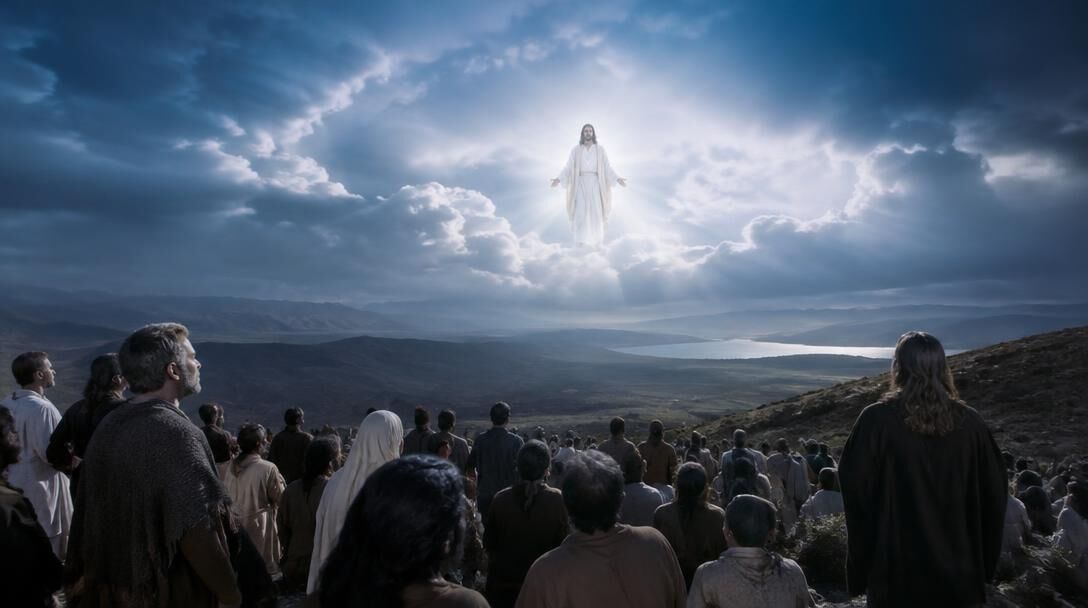
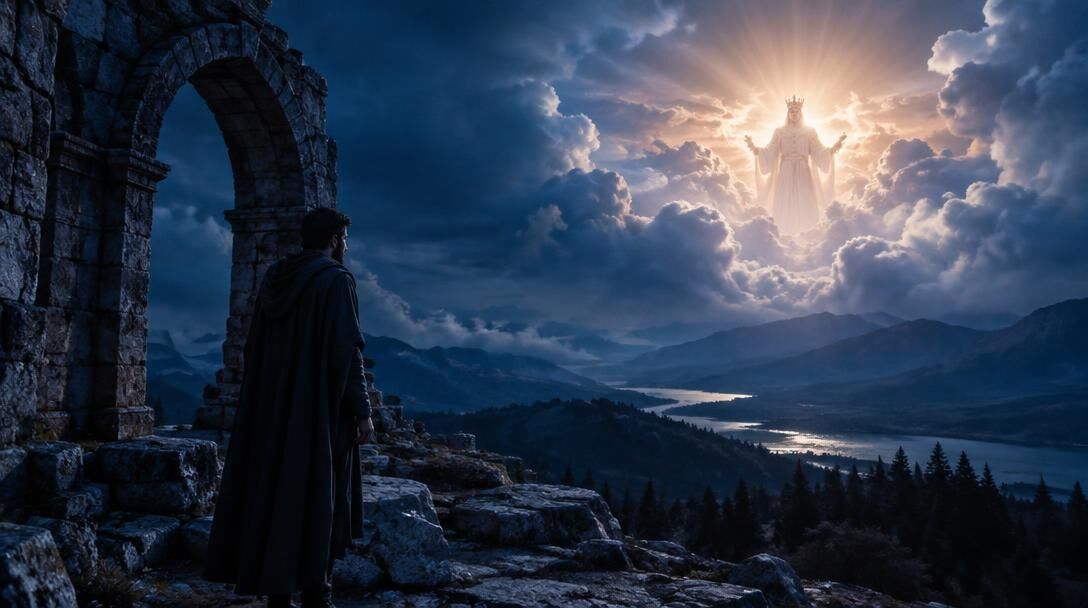

“And in righteousness he doth judge and make war.” — Revelation 19:11 (KJV)
This verse anchors the vision: Jesus returns as the faithful King whose judgment is just, never arbitrary.
What Revelation 19 Reveals

Christ Returns in Glory
Heaven opens, and the promised King appears—not as a suffering servant, but as the rightful ruler who brings history toward its appointed end.

Evil Meets Its End
The beast and the false prophet cannot withstand Christ. Their defeat shows that rebellion and deception will not have the final word.

God Keeps His Word
Every name and image points to the certainty of God’s promises: Jesus is Faithful and True, and His Kingdom will prevail.
Questions About Jesus, Faithful and True
Explore what Revelation 19 says about Christ’s return, His righteous judgment, and the fulfillment of Bible prophecy.
Who is the rider called Faithful and True?
The rider on the white horse is Jesus Christ. Revelation 19:11 calls Him Faithful and True because He judges with righteousness and fulfills God’s promises.
Why does Revelation 19 describe Jesus as a judge?
Jesus comes to confront evil and establish justice. His judgment shows that the same Lord who offers salvation will also hold the nations accountable.
What does the white horse symbolize?
The white horse presents Jesus as a victorious king. Unlike earthly conquerors, He comes in righteousness, and His victory is certain.
What is the sword from Jesus’ mouth?
The sword represents the power of His word. Revelation 19:15 portrays Christ defeating rebellion by His authoritative command.
Who are the armies following Jesus?
Revelation 19:14 depicts heavenly armies clothed in clean, white linen following Him. The passage centers their hope and victory on Jesus, not on their own strength.
How does Revelation 19 fit into Bible prophecy?
Following the celebration of Babylon’s fall, the chapter reveals Christ’s return and triumph over opposing powers. It points ahead to the completion of God’s just purposes.
Keep Discovering Jesus in Scripture
Revelation 19 is one part of Scripture’s unfolding witness to Christ. Explore related Bible prophecy teachings and follow the promises that reveal who Jesus is and what He will do.