
How Old Testament Prophecy Points to Jesus
Jesus' life, death, and resurrection bring the Hebrew Scriptures into focus, revealing God's saving work in Him. As Spirit-filled Christians, we see these passages inviting us to trust God's Word and the faithfulness He has shown through Jesus.
Still, tracing fulfillment takes care. Some passages point directly to the Messiah, while others establish patterns or themes that the New Testament connects to Him. We'll look at key examples, honoring each passage's original setting as we consider how to read prophecy in context.
Let's begin with the promises and patterns that help us see Jesus throughout Scripture.
How Prophecy Points to Jesus Through Promise and Pattern
Biblical prophecy is God's message through the prophets, often spoken into a real moment in Israel's history while also pointing toward what God would do later. Scripture fulfillment happens when the New Testament identifies Jesus' life, death, and resurrection as the completion of those promises, patterns, and themes.
That connection doesn't always work the same way. Some passages are read as direct predictions. Others recall an earlier event that finds a fuller expression in Jesus. Let's break down the difference.
Direct predictions, patterns, and scriptural echoes
A direct prediction points ahead to a future person or event. Christians often read Micah 5:2 as a messianic promise: a ruler for Israel will come from Bethlehem. In Matthew 2:5–6, the chief priests and scribes connect that passage with the place where the Messiah is to be born.
A pattern, sometimes called typology, works differently. An earlier person or event has meaning in its own history, then becomes a pattern that helps us understand Jesus. Hosea 11:1 looks back to God bringing Israel out of Egypt. When Matthew 2:14–15 applies that line to Jesus' return from Egypt, he presents Jesus as embodying Israel's history. Matthew's connection doesn't erase Hosea's original reference to Israel.
A scriptural echo is a broader connection through a recurring image, theme, or phrase. It may not predict one specific event, but it helps us recognize how the New Testament reads Israel's Scriptures in light of Jesus. These categories can overlap, so we shouldn't force every passage into a single box. For more on typological fulfillment and its connection to Jesus, we can follow the New Testament's own examples.
Why context matters when tracing fulfillment
Reading a passage in its historical and literary setting strengthens Christian interpretation. Take Isaiah 7:14. It first speaks into King Ahaz's crisis, when Judah faced a political threat (Isaiah 7:1–16). Matthew later connects the verse with Jesus' birth (Matthew 1:22–23). We can hold both settings in view: Isaiah addressed Ahaz's circumstances, and Matthew reads the passage as reaching a fuller fulfillment in Jesus.
Psalm 16 is a prayer of trust in God. In Acts, Peter interprets its words about God's Holy One not seeing corruption in light of Jesus' resurrection (Acts 2:25–32). The New Testament gives clear evidence of how the early Christians understood these Scriptures. At the same time, we should describe the original passage carefully rather than pretending its first setting didn't matter.
When we read this way, context doesn't weaken the Christian claim. It shows how the New Testament sees God's promises and Israel's history coming together in Jesus, without erasing what those passages first meant.
Scripture Fulfilled in Jesus’ Birth and Davidic Kingship
The Gospel writers connect Jesus' birth with Israel's hope for a ruler who would come from David's line and establish God's Kingdom. These passages fit together as part of God's long faithfulness, not as a detached checklist of predictions. And when the New Testament speaks of fulfillment, it can mean a direct promise, a pattern, or an earlier Scripture reaching fuller meaning in Jesus.
The promised ruler from Bethlehem
Micah's promise comes in a time of danger. The prophet speaks of conflict, judgment, and the hope of restoration, then points to a ruler who will come from small Bethlehem. The promise is more than a clue about a birthplace. It holds out hope for a shepherd-king who will gather and lead God's people.
Matthew makes the connection explicit. When Herod asks where the Messiah is to be born, the chief priests and scribes cite Micah 5:2 and identify Bethlehem as the place tied to Israel's promised ruler (Matthew 2:5–6). The Gospel presents Jesus as that ruler, born in Bethlehem and connected to Israel's royal hope. We can read more about Micah's promise and the wider context of prophecy.

Bethlehem also points us back to David. God's covenant with David promised that his descendant would have an enduring throne (2 Samuel 7:12–16). Luke draws on that promise when the angel tells Mary that Jesus will receive David's throne, reign over Jacob's house, and have a Kingdom without end (Luke 1:32–33). Jesus' identity as the promised King is tied to a Kingdom that will not pass away.
Immanuel, the sign, and the return from Egypt
Isaiah's sign first spoke to King Ahaz during a political crisis. Judah faced a threat from neighboring kings, and Isaiah told Ahaz that a child's birth would be a sign within that immediate setting (Isaiah 7:14). Matthew later quotes the verse as he describes Jesus' birth, naming Him Immanuel, "God with us" (Matthew 1:22–23). Christian interpretation sees a fuller fulfillment in Jesus, while still taking Isaiah's first audience and circumstances seriously. Both settings matter. You can explore Isaiah's Immanuel prophecy in its original context.
Matthew uses fulfillment language in another way when he describes Jesus' return from Egypt. Hosea's words, "Out of Egypt I called My son," look back to Israel's exodus, not plainly ahead to one future individual (Hosea 11:1). Matthew connects that history with Jesus' return from Egypt (Matthew 2:14–15). Jesus embodies Israel's history, and Matthew presents Him as God's Son who recapitulates that journey.
That distinction helps us read carefully. Micah points to a ruler from Bethlehem, Isaiah's sign speaks first into Ahaz's crisis, and Hosea recalls Israel's past. The Gospel writers connect each passage to Jesus in its own way, showing how Israel's promises and history come together in Him.
How Jesus’ Ministry Fulfills the Prophets’ Hope
The prophets spoke of more than a future ruler. They announced comfort for God's people, good news for the poor, healing, and restoration. The Gospels show Jesus carrying that hope into His public ministry, while presenting John the Baptist as the one who prepared the way.
John the Baptist prepares the way
Isaiah's words about a voice in the wilderness belong to a message of comfort and restoration for Israel. The prophet calls for a road to be prepared for the Lord as God promises to lead His people home (Isaiah 40:1–11). The familiar phrase, "The voice of one crying in the wilderness," appears in Isaiah 40:3. Malachi also speaks of a messenger who will prepare the way before the Lord (Malachi 3:1).
Mark brings these prophetic words together as he introduces John the Baptist (Mark 1:2–3). Matthew and Luke also connect Isaiah's wilderness voice with John's ministry (Matthew 3:1–3, Luke 3:4–6). John calls people to repentance and points beyond himself to the One who is coming after him. The Gospel writers present his ministry as preparation for Jesus, the Messiah through whom God's promised restoration comes.
That connection matters. John isn't the center of the prophetic hope; he announces that the Lord is near. The Gospels place Jesus at the heart of that arrival, and the Bible's promises about the Messiah give us a wider view of the hope surrounding His ministry.
Good news, healing, and the Spirit-anointed Messiah
Jesus makes the connection between prophecy and His ministry unmistakable in Nazareth. He reads from Isaiah, including the words about good news for the poor, freedom for the oppressed, and recovery of sight for the blind (Isaiah 61:1–2). Then He tells the people, "Today this Scripture is fulfilled in your hearing" (Luke 4:16–21). Jesus identifies His mission as the fulfillment of Isaiah's announcement.
Luke also makes the Holy Spirit's role plain. Jesus reads, "The Spirit of the Lord is upon Me, because He has anointed Me." His ministry is Spirit-anointed: He proclaims good news and brings God's care to people who are poor, burdened, and pushed aside. From a Pentecostal perspective, we can affirm what Luke's account says directly. The Spirit rests on Jesus for the work He announces, and Jesus carries out that mission in the power of the Spirit.
The hope of healing runs through the prophets, too. Isaiah describes the blind seeing and the deaf hearing as signs of God's coming restoration (Isaiah 35:5–6). When John the Baptist's messengers ask whether Jesus is the Coming One, Jesus points to what they can see and hear: the blind receive sight, the lame walk, and the poor hear good news (Matthew 11:2–6).
Jesus' answer echoes the prophets without reducing His ministry to a checklist. His teaching, healing, and welcome to the poor show God's promised restoration taking shape among the people. The Gospels invite us to see those works together: the Messiah announces good news, ministers in the Spirit, and brings hope to people who need it.
The Prophets’ Picture of Jesus’ Suffering and Death
The New Testament reads Jesus' death through the language of the suffering servant and the righteous sufferer. Some connections are stated directly by New Testament writers; others are scriptural echoes that help us understand the cross without turning every detail into a prediction.

The suffering servant bears the burden of sin
Isaiah's servant suffers rejection, bears the wrongdoing of others, and is vindicated after suffering (Isaiah 52:13–53:12). Christians have long read this passage in light of Jesus' suffering and death. Still, the servant's identity has been interpreted in different ways, including as Israel, an individual, or a figure representing the people. We can explain the Christian reading clearly without claiming every interpreter agrees.
The New Testament makes the connection explicit. In Acts 8:32–35, Philip meets an Ethiopian official reading Isaiah's words about the servant. When the man asks whom the prophet describes, Philip begins with that Scripture and tells him about Jesus. Peter also applies the servant's suffering to Jesus, saying He bore our sins and that His wounds bring healing (1 Peter 2:22–25).
For us, the heart of this connection is clear: Jesus' suffering was part of God's saving purpose. He carried sin's burden, and His vindication gives hope beyond death. We can read more about Isaiah's suffering servant prophecy and the way Christians connect it with Jesus.
Psalm 22 and the details of the crucifixion
Psalm 22 gives voice to a righteous sufferer who feels abandoned, faces mockery, and sees others divide his clothing (Psalm 22). The Gospels connect this language with Jesus' crucifixion. Matthew describes the soldiers dividing His garments and the people mocking Him; he also records Jesus' cry, "My God, My God, why have You forsaken Me?" (Matthew 27:35–46). Mark records the divided clothing and the same cry (Mark 15:24, 34).
These Gospel connections invite us to hear Psalm 22 behind the crucifixion account. Yet the wording of verse 16 raises textual and translation questions, and English Bibles may number the verses differently. The Psalm 22:16 textual debate is worth acknowledging, but the Christian reading does not need to rest on one disputed English rendering. The Gospels themselves point to the psalm through the cry, mockery, and divided garments.
The humble King and the betrayal of a close friend
The prophets also place Jesus' suffering within the arrival of Israel's King. Zechariah pictures a humble king coming to Jerusalem on a donkey (Zechariah 9:9). Matthew connects that image with Jesus' entry into the city (Matthew 21:4–5). The donkey-riding king brings a message of humility and peace, even as Jesus approaches the cross.
Other passages add scriptural echoes around betrayal. Psalm 41 speaks of a close companion turning against the sufferer (Psalm 41:9), and Jesus applies that language to His betrayal in John (John 13:18). Zechariah describes a payment of thirty pieces of silver (Zechariah 11:12–13), while Matthew reports Judas receiving silver for handing Jesus over (Matthew 26:14–16).
These links matter, but they aren't all simple one-to-one predictions. The New Testament draws on Israel's Scriptures to show how Jesus' suffering, betrayal, and kingship fit within God's saving purpose.
The Resurrection Shows the Full Reach of Scripture Fulfilled
The resurrection is central to the Christian reading of prophecy because it confirms that death did not defeat Jesus. It also gives the apostles' interpretation of Israel's Scriptures its focus: the Messiah suffered, rose again, and now sends His followers to proclaim repentance and forgiveness. The apostles didn't treat the resurrection as an idea detached from Scripture. They showed how God's promises came into view through what He did in Jesus.

Psalm 16 and the promise of life beyond the grave
In Psalm 16:8–11, David speaks of trusting God and expresses confidence that God will not abandon him to the grave or let His Holy One see corruption. Peter quotes this passage at Pentecost, then makes a careful distinction: David died, was buried, and his tomb remained known. The promise of not seeing decay, Peter argues, reaches its fulfillment in Jesus, whom God raised from the dead (Acts 2:25–32).
Paul makes a similar point in the synagogue at Pisidian Antioch. He contrasts David, who died and saw decay, with Jesus, whom God raised and who did not see corruption (Acts 13:35–37). The apostles don't dismiss the psalm's setting as David's prayer. They show why its hope reaches beyond David: Jesus has risen, and death no longer holds Him.
That's the center of their claim. The resurrection confirms Jesus' victory over death and gives the promise its fullest meaning. For another look at how Scripture's path points to Jesus, we can follow the same trail the apostles traced.
Jesus opens the Scriptures to His disciples
After His resurrection, Jesus meets two disciples on the road and challenges them for being slow to believe what the prophets had spoken. He explains that the Messiah had to suffer before entering His glory, then interprets what Moses and all the Prophets said about Him (Luke 24:25–27). Later, He points to the Law of Moses, the Prophets, and the Psalms, connecting them with His suffering, resurrection, and the proclamation of repentance to all nations (Luke 24:44–47).
Jesus doesn't offer a random collection of proof texts. He shows His disciples how the whole scriptural witness leads toward God's saving work, fulfilled through His death and resurrection. The risen Jesus then sends them to bear witness. Fulfillment leads to proclamation, not just private certainty.
John gives us another glimpse of this process. The disciples didn't understand the significance of Jesus' entry into Jerusalem at first, but after He was glorified, they remembered what had been written about Him (John 12:16). Sometimes a connection becomes clear only after God's work unfolds. That should make us attentive readers, not careless ones.
Luke's account of the resurrection and its Scriptural connections brings these themes together: Jesus fulfills Scripture, and His followers carry the message forward.
Fulfillment gives believers a reason to trust God’s Word
These passages give us a strong reason to trust God's faithfulness. Peter and Paul read Psalm 16 in light of Jesus' resurrection; Jesus Himself connects His suffering and rising with the Law, Prophets, and Psalms. Together, their witness places the resurrection at the heart of Biblical prophecy and Christian hope.
That doesn't mean prophecy removes every question or settles every interpretation beyond debate. We still need to compare passages, pay attention to each text's original context, and depend on the Holy Spirit for understanding. We don't need inflated counts of fulfilled prophecies to make the case. Our trust rests on God's faithfulness, revealed in Jesus, whom He raised from the dead.
So read with faith, but also with humility. Ask what a passage meant in its own setting, notice how the New Testament connects it to Jesus, and let the Scriptures guide your conclusions. The apostles' witness gives us a clear place to begin: Jesus is risen, and God has kept His promise.
Conclusion
Promises, patterns, and prophetic themes converge in Jesus. His birth and ministry bring Israel's hopes into view, while His death and resurrection show the full reach of God's saving purpose.
As we trace fulfillment, we should honor each passage's original setting and listen to the New Testament's witness to Jesus. That careful reading gives us reason to trust God's Word. Read with confidence in His faithfulness, and remain open to the Holy Spirit as Scripture points us to Jesus.
Promises and Fulfillment
Tracing the Messiah Through Scripture
Long before Jesus was born, Micah named Bethlehem as the birthplace of a coming ruler (Micah 5:2; Matthew 2:1–6), while Isaiah spoke of a child called Immanuel (Isaiah 7:14; Matthew 1:22–23). Zechariah pictured a king arriving humbly on a donkey (Zechariah 9:9; John 12:14–15). Isaiah also described a servant who would bear the sins of others, a passage the New Testament connects to Jesus’ suffering (Isaiah 53:4–6; 1 Peter 2:24). Even death would not have the final word: Peter applies Psalm 16:10 to Jesus’ resurrection in Acts 2:25–32. Together, these passages show why the first Christians recognized Jesus as the promised Messiah.
“But he was pierced for our transgressions; he was crushed for our iniquities; upon him was the chastisement that brought us peace, and with his wounds we are healed.” — Isaiah 53:5 (ESV)

Isaiah the Prophet
Isaiah’s portrait of the suffering servant anticipates the saving significance Christians see in Jesus’s crucifixion.
The Promises That Lead to Jesus
Old Testament prophecy points to Jesus through promises about a ruler, a servant, and a kingdom. Micah 5:2 names Bethlehem as the birthplace of a ruler from ancient days; Matthew 2:1 places Jesus’s birth there. Zechariah 9:9 pictures Zion’s king arriving humbly on a donkey; the Gospels recount Jesus entering Jerusalem in just that way. These connections invite us to read each passage in its original setting while considering how the New Testament presents its fulfillment.
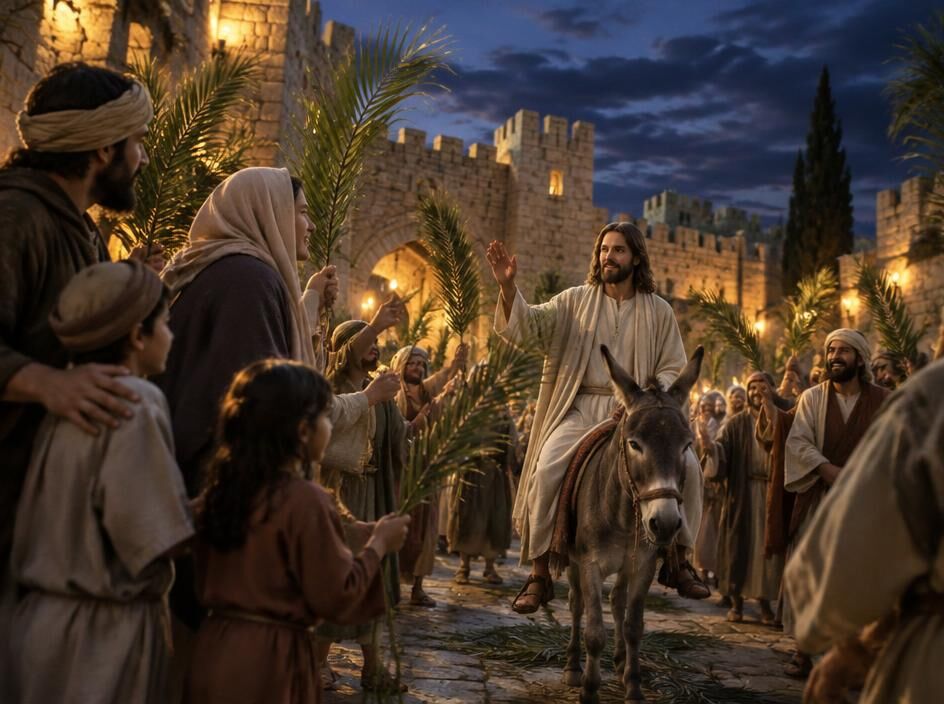
The King from Bethlehem
Micah 5:2 speaks to a people longing for faithful leadership. Its surprising detail is the ruler’s origin: little Bethlehem, David’s hometown. Matthew 2:4–6 cites this prophecy when Herod asks where the Messiah is to be born. Jesus’s birthplace thus connects the promised ruler to David’s line, while his ministry reveals a kingship marked by service rather than political conquest.
The Servant Who Bears Sin
Isaiah 52:13–53:12 describes a servant who is rejected, suffers for the sins of others, and is afterward vindicated. Christians recognize a striking correspondence with Jesus’s rejection, crucifixion, and resurrection. The passage does more than anticipate suffering: it gives that suffering a redemptive purpose, helping explain why the cross stands at the center of the gospel.
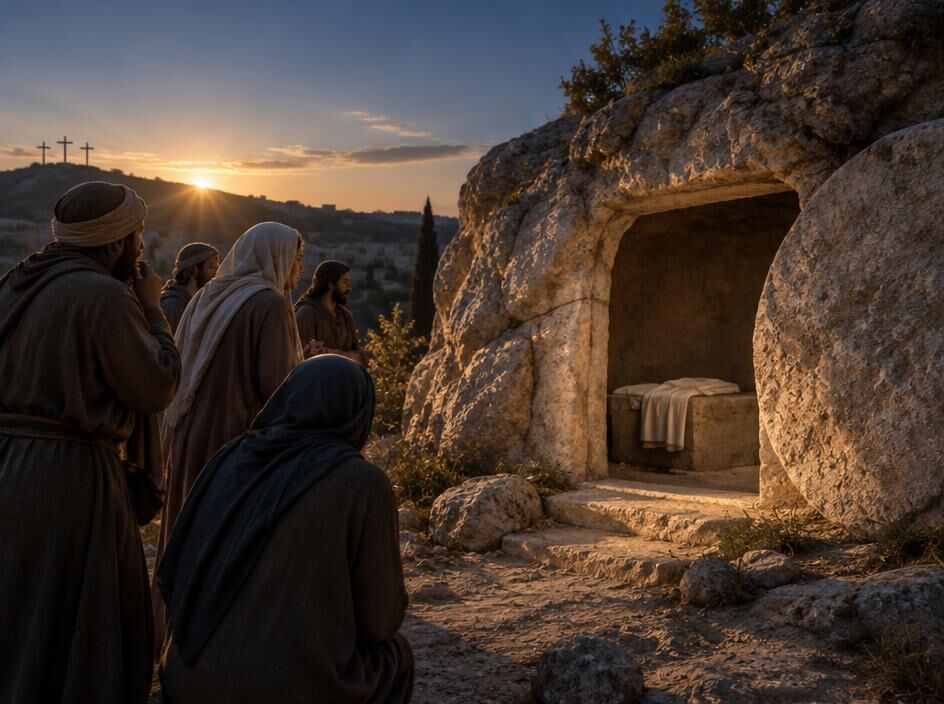
The Holy One and the Empty Tomb
Psalm 16:10 expresses confidence that God will not abandon his faithful one to the grave. In Acts 2:25–32, Peter reads David’s words in light of Jesus’s resurrection, arguing that their deepest fulfillment reaches beyond David’s own death. Read together, the psalm and Peter’s sermon connect Israel’s hope in God’s faithfulness to the risen Christ.
Questions About Prophecy and Jesus
Christians connect Old Testament promises to Jesus by reading the passages in their historical context and alongside the New Testament’s witness. These answers clarify what fulfillment means and where interpretation calls for care.
What makes a passage a messianic prophecy?
A passage is called messianic when it speaks of an anointed king, servant, or deliverer associated with God’s promised restoration. Christians identify its connection to Jesus by considering the passage’s original meaning and how the New Testament applies it to his life and work.
Did Old Testament writers name Jesus directly?
No. The writers spoke within their own times and did not use Jesus’s personal name. Christians believe their promises and patterns find their fullest expression in him, especially as the New Testament explains those connections.
Why does Bethlehem matter in the story of Jesus?
Micah 5:2 associates a future ruler with Bethlehem, the town of David. Matthew 2:1–6 connects that expectation to Jesus’s birth, presenting him as the promised ruler in David’s line.
How do Christians understand Isaiah 53?
Christians see the suffering servant’s rejection, bearing of sins, and vindication as corresponding to Jesus’s death and resurrection. They also recognize that readers differ over the servant’s identity, so the passage deserves attention in its wider context.
Is every Old Testament reference to Jesus a direct prediction?
No. Some passages contain specific promises; others establish themes or patterns that the New Testament sees brought to completion in Jesus. Distinguishing a direct prediction from a broader correspondence helps avoid forcing details onto a text.
What is the significance of Jesus riding a donkey into Jerusalem?
Zechariah 9:9 portrays Zion’s king coming humbly on a donkey. The Gospel accounts connect Jesus’s entry into Jerusalem with that image, presenting his kingship as humble rather than dependent on military power.
Does the Old Testament anticipate the resurrection?
Christians point to passages such as Psalm 16:10, which Peter interprets in Acts 2:25–32 as finding fulfillment in Jesus’s resurrection. The New Testament’s interpretation is central to this connection.
Why do the Gospel writers quote the Old Testament so often?
They use Israel’s Scriptures to explain who Jesus is and why his actions matter. Their quotations connect events in his life to earlier promises while inviting readers to examine those passages for themselves.
How can I study prophecy without overlooking its original context?
Read the surrounding chapter, ask what the passage meant to its first audience, and then compare the relevant New Testament passage. This approach respects the original text while exploring why Christians see Jesus as its fulfillment.
See How All Scripture Points to Jesus
Continue exploring Bible prophecy through articles that connect Old Testament promises, their fulfillment in Christ, and the hope of what is still to come.