
The Testimony of Jesus: Prophecy and His Return
God's fulfilled promises give us reason to trust what He has promised to complete. In Revelation 19:10, we read that "the testimony of Jesus is the spirit of prophecy," a reminder that prophecy points us back to Him.
When the future feels uncertain, you don't have to let fear or predictions pull your attention away from God's Word. We can look at how Biblical prophecy points to Jesus and find hope as we wait for the King of Kings. Let's look at what John's testimony means and why it matters.
A Testimony That Looks Ahead: Jesus at the Heart of Prophecy
Revelation 19:10 brings prophecy and the witness of Jesus together in a striking scene. John is overwhelmed by what he sees, but the angel's response keeps the focus where it belongs: on God, and on the message that bears witness to Jesus.
What “the testimony of Jesus” can mean
In Revelation 19:10, John says, "the testimony of Jesus is the spirit of prophecy." Christians commonly understand "the testimony of Jesus" in two related ways. It can mean testimony about Jesus, the witness that proclaims who He is. Or it can mean testimony from Jesus, the message He reveals.
Both readings keep Jesus at the heart of prophecy. In one, God's people testify about Christ; in the other, Jesus is the source of the prophetic message. These readings need not compete. Jesus reveals God's truth, and the Holy Spirit empowers believers to bear witness to Him.
The wording doesn't settle every debate about what "prophecy" means here. Prophecy can include foretelling what God will do, Spirit-inspired proclamation of His message, or both. We should be careful not to make one phrase answer questions it doesn't directly address. The shared point is clear: prophecy belongs to God's message and bears witness to Jesus. For another perspective on the two readings, see this discussion of the testimony of Jesus.
Why the angel’s correction matters
Before the angel speaks about prophecy, John falls at his feet to worship him. The angel stops him and says he is a fellow servant. John must worship God, not an angel or any human messenger. That order matters. Even a heavenly messenger refuses worship and points John back to God.

The correction gives us a needed guardrail when we hear prophetic claims today. A striking prediction or an impressive speaker doesn't deserve unquestioned devotion. We test what we hear against Scripture, and we pay attention to where the message directs our worship. Does it honor God and bear witness to Jesus, or does it make the messenger the center?
We believe the Holy Spirit still works through His people, including through prophetic gifts. But those gifts don't make any person the source of truth. The messenger serves; God receives worship. That humble posture fits the passage and helps us approach prophecy with faith, discernment, and our eyes on Christ.
We can hold both readings of "the testimony of Jesus" with care while staying firm on what Revelation makes plain: prophetic witness belongs to God and points us to Jesus. For a fuller look at what Revelation 19:10 teaches about prophecy, we can keep that central truth in view without pretending every interpretive question is settled.
How Fulfilled Prophecy Builds Trust in God’s Word
How do we know God's promises are worth trusting when fulfillment seems far away? Scripture gives us a pattern: God speaks, history moves, and His Word proves dependable. Fulfilled prophecy doesn't answer every interpretive question, but it gives us solid reason to trust what God has said.
God’s promise and the return from exile
Jeremiah delivered God's promise to people living in exile in Babylon. He said the exile would last seventy years, after which God would bring His people back to Jerusalem (Jeremiah 29 in the NKJV). That promise came while the people were far from home. They had to hold on to God's Word before they could see how He would act.
Then history moved. Second Chronicles 36:22–23 and Ezra 1:1–8 describe how Cyrus, king of Persia, issued a decree allowing the exiles to return and rebuild the temple. The people did not simply receive a hopeful message; they saw a ruler's decision open the way home.
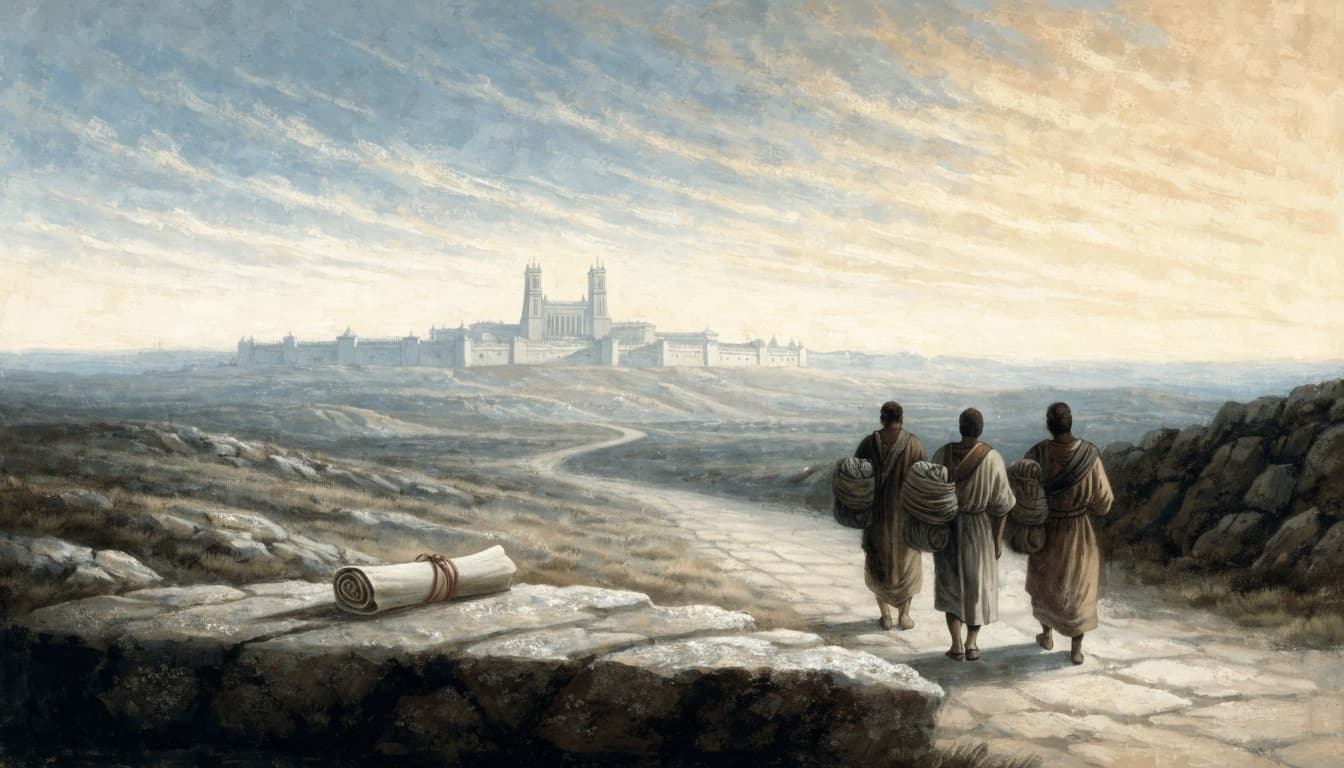
Here we see promise followed by historical action. God spoke through Jeremiah, and later events matched the promise. When fulfillment takes time, this history reminds us that delay doesn't mean God has forgotten His Word.
Prophecy fulfilled in Jesus and at Pentecost
The New Testament also connects Jesus' life and resurrection with Israel's Scriptures. Micah 5:2 points to Bethlehem as the place from which a ruler would come, and Matthew connects that passage to Jesus' birth. Isaiah 53 describes the suffering servant, a passage the New Testament applies to Jesus' suffering. Peter's sermon in Acts 2 draws on Psalm 16:10 to proclaim that God raised Jesus from the dead.
These connections are part of how the apostles testified to Jesus. They read Israel's Scriptures in light of His life, death, and resurrection, showing that God's work through Christ was rooted in promises already given. We should still read each passage in context. Christians don't agree on every detail of how a prophetic text applies, but the New Testament's witness is clear: Jesus fulfills God's purposes.
Peter makes another connection at Pentecost. In Acts 2:16–21, he identifies the outpouring of the Holy Spirit as the fulfillment of Joel's prophecy. The Spirit's coming was happening there, among the gathered believers. Yet Joel's words also reach toward the day of the Lord, so Peter's declaration holds present fulfillment alongside a future horizon.
That matters for us as we look toward Jesus' return. We can trust God's future promises because Scripture shows Him acting on what He has spoken, while we remain careful not to force every passage into one uncontested reading. For a helpful framework, see how to hold present fulfillment and future hope together.
Why God’s Past Faithfulness Gives Us Confidence for the Future
Fulfilled prophecy gives us examples of God keeping His Word. Those examples also point to something deeper: His character. God isn't fickle or careless with what He has promised, and our hope in Jesus rests on that steady faithfulness.

God keeps every good promise He has made
After Israel entered the land God had promised, Joshua looked back and declared that not one of the Lord's good promises had failed. Everything had come to pass (Joshua 21:45). Later, Solomon praised God for giving Israel rest and keeping every promise He had spoken through Moses (1 Kings 8:56). These weren't vague reassurances. They were reflections on God's faithfulness through real events in Israel's history.
That same confidence carries into the New Testament. Hebrews tells believers to hold fast to their hope, "for He who promised is faithful" (Hebrews 10:23). We don't trust God because we can see every step ahead. We trust Him because His character has proved dependable.
And the testimony of Jesus gives that confidence a clear center. Jesus' life, death, and resurrection show God fulfilling His purposes, while Jesus Himself promised to come again (John 14:3). His return is our hope because it rests on the word of the faithful King, not on our ability to predict what comes next. We can read more about Jesus as the faithful and true King.
Confidence without forced predictions
God's past faithfulness gives us solid reason to trust His future promises. It doesn't give us permission to turn every prophetic passage into a timetable or treat disputed calculations as settled truth. Christians who love Scripture can still interpret some details differently. We should be honest about that.
Jesus told His followers that no one knows the day or hour of His return (Matthew 24:36). That boundary doesn't weaken our hope. It helps keep our attention on what He has promised: He will return, and God's purposes will be fulfilled. The apostles called believers to watch and remain faithful, not to claim knowledge God hasn't given.
So when a passage is difficult, let's read it in context and distinguish what Scripture clearly says from what we infer. We can hold firmly to the promise of Jesus' return without pretending every timeline or sequence is beyond debate. God has kept His Word before, and we have good reason to trust Him while we wait for what is still ahead.
What Scripture Promises About the Return of Jesus
Christian hope rests on Jesus Himself. Scripture presents His return as a real promise, not simply a symbol of personal comfort or a prediction we build from current events. We can hold to what He said while staying humble about details the Bible leaves open.
Jesus will come again as He promised
On the night before His crucifixion, Jesus comforted His disciples with a promise: He would prepare a place for them, then come again and receive them to Himself (John 14:1–3, NKJV). His words point to a future reunion with Him. Our hope, then, isn't anchored in a chart or a news headline. It's anchored in the One who made the promise.
After Jesus ascended, two angels assured the disciples that He would return (Acts 1:9–11, NKJV). The apostles grounded Christian expectation in what they had witnessed and what Jesus had said. We don't need to turn every crisis into a countdown. We can trust His promise and remain faithful while we wait.

The promise includes resurrection and comfort
Some believers in Thessalonica were grieving Christians who had died. Paul didn't tell them to hide their sorrow. He reminded them that grief doesn't have the final word because Jesus died and rose again. At His coming, the dead in Christ will rise, and believers who remain will be gathered with them to meet the Lord (1 Thessalonians 4:13–18, NKJV).
Paul's focus is clear: the people who belong to Jesus will be with Him. That's why he tells the church to encourage one another with this hope. The promise offers comfort in grief, while keeping our eyes on resurrection and reunion with Christ. This passage is often read at funerals, and a commentary on its comfort for grieving people explores why.
Christians may differ on the prophetic timeline
Evangelical Christians, including Pentecostals, don't all interpret Revelation 20 or the sequence of end-time events the same way. Some understand the thousand years as a future earthly reign of Christ; others read the passage differently. These disagreements matter, but they don't cancel the shared confession that Jesus will return and God will bring His purposes to completion.
We can discuss prophetic timelines with care without making them the center of our hope. Jesus promised to come again, and the apostles taught that His coming will bring resurrection and gathering. For more on Jesus' promise to gather His people, we can keep the emphasis where Scripture places it: on Christ Himself.
How a Pentecostal View of Prophecy Keeps Jesus Central
A Pentecostal view of prophecy begins with the Holy Spirit, but it doesn't end with a dramatic message or an impressive messenger. The Spirit glorifies Jesus and strengthens His people. That gives us a clear way to think about prophetic gifts: they belong to God's purposes and should serve the good of His church.
The Holy Spirit points people to Jesus
The New Testament describes prophecy as more than predicting what lies ahead. It can include Spirit-inspired proclamation that strengthens, encourages, and comforts the church, as Paul explains in 1 Corinthians 14:1–3. At times, prophecy may also include insight about what is ahead. Either way, its purpose is to serve God, not to turn the messenger into the main attraction.
From our Pentecostal perspective, we believe the Holy Spirit still gives gifts to the church. But a gift never makes its recipient the center of attention. The Spirit points us to Jesus, and a prophetic message should strengthen the church's faith and help people follow Him. We can hold that conviction while recognizing that Christians interpret the phrase "the testimony of Jesus" in more than one way. The shared emphasis remains clear: prophecy belongs to God's purposes and bears witness to Christ.
The Assemblies of God position paper on modern-day prophecy also discusses the gift in light of Paul's teaching to the church. That's a helpful reminder that prophecy is meant to build up the gathered community, not create a following around one person.
Test prophetic claims by Scripture and their fruit
A prophetic claim can sound certain and still be wrong. Calling an impression "prophetic" doesn't make it equal to Scripture, and no prediction should override what God has already revealed. Paul tells believers to welcome the Spirit's work while testing what they hear in 1 Thessalonians 5:19–21. That means we can remain open to the Spirit and exercise discernment at the same time.
So what should we look for? We compare the message with Scripture, consider whether it honors Jesus, and pay attention to its fruit. Does it encourage faithfulness, love, and obedience to God? Or does it stir fear, excuse sin, or make people dependent on the messenger? A claim that uses Jesus' name still needs to be tested against His teaching and the whole counsel of Scripture. Our guide to testing prophetic claims offers more on that kind of discernment.
We also need humility and accountability. A personal impression may be sincere without being accurate, so we shouldn't present it as guaranteed simply because we believe the Holy Spirit prompted it. When a claim concerns the future, we should speak carefully and leave room for correction. That isn't a rejection of prophecy. It's part of treating God's Word with reverence and serving His people well.
How to Watch for the King of Kings With Hope
Waiting for Jesus to return should shape how we live, not turn every headline into a countdown. Scripture calls us to stay awake and faithful, while leaving the timing in the Father's hands. We can watch for the King of Kings with hope, without giving fear or date-setting the final word.
Stay ready without setting dates
Jesus says that no one knows the day or hour of His return. In Matthew 24:36-44, He compares watchfulness to a homeowner staying alert because a thief's arrival is unknown. His point is readiness, not a secret code for calculating a date. We can read the signs Jesus describes, but a war, disaster, viral prediction, or timeline doesn't prove that anyone has discovered the day.
Paul makes a similar point in 1 Thessalonians 5:1-11. Believers are children of the light, called to remain alert and self-controlled. That doesn't mean we need to live anxious or scan every news update for prophetic clues. We stay ready by trusting Jesus and living faithfully today.
We can study prophecy and talk about different interpretations. But when someone claims to know the date, we should remember the limit Jesus gave. See Matthew 24's call to readiness and watchfulness for a closer look at how discernment and faithful living belong together.
Let future hope shape faithful living now
So what does watchfulness look like on an ordinary Tuesday? We pray, serve the people God has placed in our lives, share the gospel, and pursue Godly conduct. We encourage fellow believers and ask the Holy Spirit to strengthen us for faithful witness. These actions don't earn salvation. They are a response to the hope we have in Jesus.

Hope also changes how we care for people who grieve. Paul speaks about the return of Jesus and the resurrection of believers in 1 Thessalonians 4:13-18, then tells the church to comfort one another with these words. We don't ask grieving people to pretend their loss doesn't hurt. We remind them that death is not the end for those who belong to Christ.
Jesus' return is not a reason to withdraw from daily responsibilities or treat the people around us as distractions. It gives our present faithfulness a clear direction. We keep loving, serving, praying, and sharing the gospel because the King we await is worthy of our trust.
Conclusion
The testimony of Jesus ties God's fulfilled promises to the hope still ahead. As we read Biblical prophecy through Christ, we see why understanding prophecy in its biblical context matters: it keeps our attention on Jesus, not on speculation or the messenger.
God has kept His Word, and Jesus has promised to come again. We can test prophetic claims against Scripture, stay ready without setting dates, and wait with hope for the King of Kings.
The Witness of Scripture
Prophecy Bears Witness to Jesus—and His Coming Return
From promises fulfilled in His first coming to the hope of His return, Biblical prophecy directs our attention to Jesus Christ.
Promises Fulfilled
Jesus Revealed
Hope Renewed
His Return Awaited
The Witness of Biblical Prophecy
The Testimony of Jesus: Prophecy and His Return
Biblical prophecy is more than a record of events to come; it is a witness to Jesus Christ. The Scriptures anticipate His birth, ministry, suffering, and resurrection, revealing God’s faithfulness across generations. Those fulfilled promises invite us to trust the promise still ahead: Jesus will return. As we read prophecy with Him at the center, its message becomes not speculation about dates but a call to hope, faithfulness, and readiness.

The Spirit of Prophecy Points to Jesus
Revelation 19:10 declares, “the testimony of Jesus is the spirit of prophecy.” This insight helps us read the whole of Scripture with its central witness in view. The prophets spoke of the Messiah who would suffer and reign; the Gospels show Jesus fulfilling God’s promises; and Revelation presents the risen Lord whose victory will be fully revealed at His return. Prophecy does not exist simply to satisfy curiosity about the future. It bears witness to who Jesus is, what He has accomplished, and why His people can await His coming with confidence.
The Testimony of Jesus in Fulfilled Prophecy
Bible Prophecy Ministries traces the promises of Scripture from the prophets to their fulfillment in Jesus Christ. Isaiah foretold a servant who would bear our sins (Isaiah 53), while Micah named Bethlehem as the birthplace of a ruler from ancient days (Micah 5:2). The New Testament presents Jesus’ birth in Bethlehem and His sacrificial death as part of this unfolding testimony.
Rooted in the long history of Biblical prophecy and the witness of the apostles, this ministry exists to help readers examine what God has already done, understand what He has promised to do, and see how every part of the history centers on Jesus. These fulfilled prophecies invite careful study and strengthen confidence in His identity as Messiah and His mission to save.

The Promise of His Return
A Certain Promise
Jesus told His disciples that He would come again and receive them to Himself (John 14:3). His return rests on His own word, giving believers a sure foundation for hope.
A Visible Coming
At the ascension, the angels declared that Jesus would return in the same way His disciples saw Him go (Acts 1:11). Scripture directs our expectation toward Christ Himself, not speculation about dates.
Hope Beyond Death
Paul connects the Lord’s return with resurrection and reunion, urging believers to encourage one another with these words (1 Thessalonians 4:16–18).
Lives Ready for Him
Because no one knows the day or hour, Jesus calls His followers to stay awake and faithful (Matthew 24:42–44). Readiness means living in trust, obedience, and love today.
“For the testimony of Jesus is the spirit of prophecy.” — Revelation 19:10
This verse places Jesus at the heart of prophecy: its witness points to who He is and helps us look toward His return with faith.