How to Read Prophecy Through Christ: Start With Context
Reading prophecy through Christ begins by asking what God was saying to the people who first heard it. Historical context doesn't weaken faith; it helps us hear Scripture clearly before tracing how it points to Jesus.
Isaiah 7:14 speaks into a real crisis faced by King Ahaz and Judah, so we'll start there before considering Matthew's use of the prophecy. With prayer and dependence on the Holy Spirit, we can read the passage carefully and follow its connection to Christ without losing its first setting. Let's begin with the historical context of Isaiah's Immanuel prophecy.
Reading Biblical prophecy through its original context
How to Read Prophecy Through Christ by Starting With Its Original Context
Before we ask how a prophecy points to Jesus, let's ask what its first hearers understood. Original context means the speaker, audience, circumstances, and meaning of the words in that moment. Those details give us a sound starting point for tracing the passage through Scripture.
Ask what the prophet communicated then
Isaiah spoke to King Ahaz and the house of David during a national crisis. Aram and Israel threatened Judah, and Ahaz had to decide whether to trust God or seek security through political alliances. Read Isaiah 7:13-17 in the NKJV as part of that conversation, not as an isolated prediction detached from its setting.
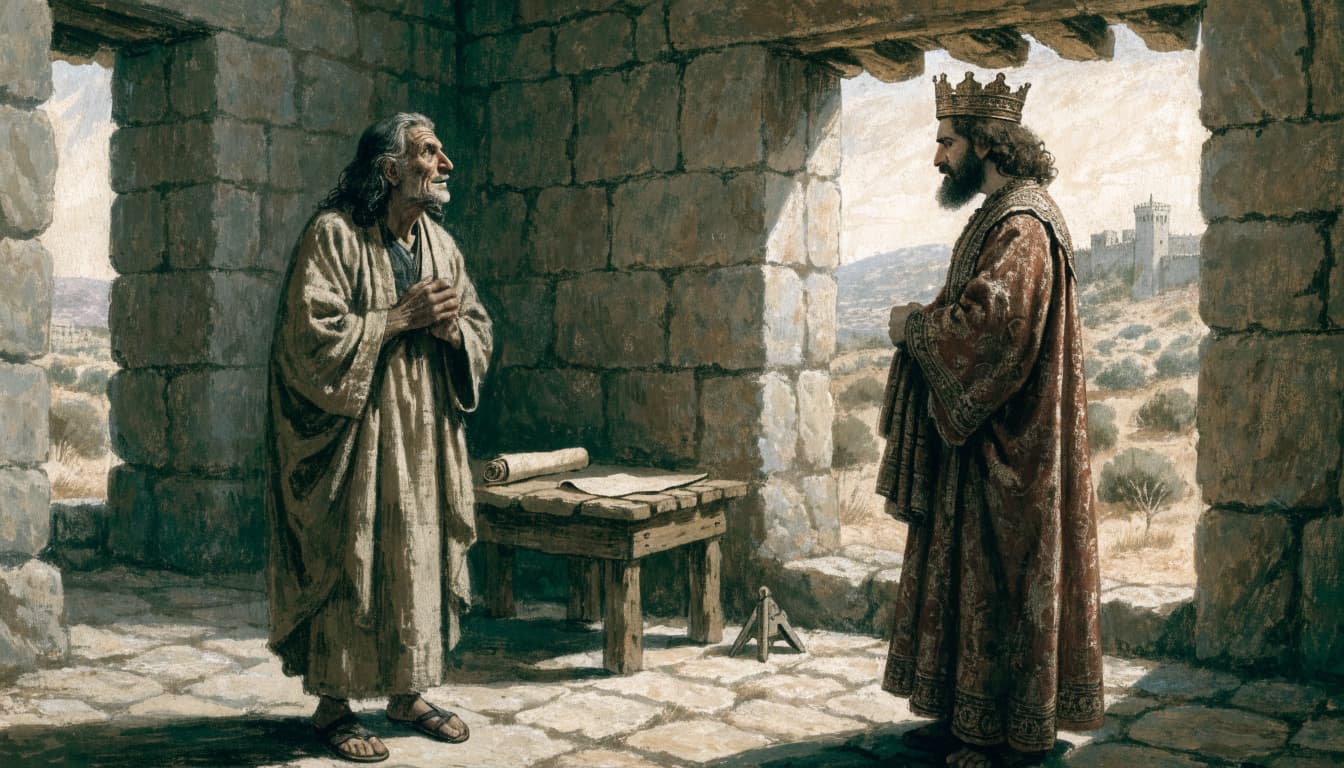
The sign of Immanuel addressed Ahaz's fear and the threat facing Judah. Isaiah connected the child's growth to the timing of the danger passing. In Isaiah 7:16, the child's development helps mark when the kings Ahaz feared would no longer threaten the land. That historical detail matters. It shows that the prophecy spoke into a real crisis with a time-bound message, even as Christians also recognize its connection to Jesus.
For a closer look at this setting, see Isaiah 7:14 and the virgin birth. Christians differ on how to describe the relationship between the sign in Ahaz's day and its fulfillment in Jesus. We can acknowledge that discussion without ignoring either Isaiah's audience or Matthew's use of the passage.
Build on the first meaning, then read canonically
We can ask two related questions. First, what did the prophet communicate to the original audience? Then, how does the passage relate to Jesus within the full witness of Scripture? The first question is historical. The second is canonical, meaning it considers how a text fits within the Bible as a whole.
A Christ-centered reading should build on the passage's first meaning, not replace it. Matthew applies Isaiah's Immanuel prophecy to Jesus in Matthew 1:22-23 in the NKJV. We should take that connection seriously while also reading Isaiah in its own setting. The two questions belong together.
Jesus Himself taught His disciples to read the Law, the Prophets, and the Psalms in relation to Him. In Luke 24:25-27 in the NKJV, He explained how the Scriptures pointed to the Messiah. He also spoke of what was written about Him in those same Scriptures in Luke 24:44.
These passages give us a strong Biblical reason to read Scripture with Christ in view. They don't settle the meaning of every prophecy by themselves, though. We still need to examine the words, setting, and audience before we draw a line to Jesus. That kind of care doesn't weaken faith. It helps us see why the connection matters.
Identify the Prophet, Audience, Crisis, and Timeframe
Before drawing conclusions about fulfillment, we need to gather the basic facts: who spoke, who heard the message, what danger they faced, and when the prophecy was expected to unfold. Isaiah 7 gives us a clear example. Its words speak into Judah's political crisis, and that first setting matters when we later consider how Matthew applies the Immanuel prophecy to Jesus.
Ask who spoke and who first heard the message
Isaiah delivered the message to King Ahaz, but he also addressed the house of David. That wider audience matters. The house of David included Judah's ruling line, so the prophecy spoke to more than one king's private fear. It addressed the future and security of David's dynasty, too. Read Isaiah 7:13-17 in the NKJV as a message given to real people facing a real threat.
Ahaz was king of Judah, and he had to decide how to respond as enemy forces pressed against his kingdom. Isaiah's words called him to trust God rather than let fear set the terms. The sign in Isaiah 7:14 belongs first in that conversation. We shouldn't pull it out of its setting before asking what it communicated to Ahaz and the house of David.
Name the real-world crisis behind the prophecy
Judah faced pressure from Rezin, king of Aram, and Pekah, king of Israel, also called Ephraim. Their threat unsettled Ahaz and the people. Knowing that political backdrop helps us see why Isaiah's message included a sign: Ahaz needed to know that the kingdoms he feared would not keep their power indefinitely.

This isn't just background detail. Without the crisis, we can miss what the sign meant to its first hearers and treat the prophecy as if it had no connection to Judah's immediate danger. The historical setting doesn't settle every question about fulfillment, but it gives us a solid place to begin.
Look for clues that set the prophecy’s timeframe
Prophetic passages can include clues about timing: events named in the text, a person's age or growth, or a change in political power. In Isaiah 7, the child's development helps establish a near-term horizon. Before the child could distinguish good from evil, the lands feared by Ahaz would be abandoned by their two kings, as the passage explains in Isaiah 7:15-17 in the NKJV.
That detail connects the sign to the decline of Aram and Israel. It gave Ahaz and Judah a timeframe they could understand in their own moment, even as Christians also read the passage alongside Matthew's application of Immanuel to Jesus. The child's exact identity is debated. Some interpreters have proposed a Davidic heir, possibly Hezekiah, but Scripture doesn't identify him clearly enough for us to present that view as settled fact.
So let's keep the pieces together: Isaiah spoke to Ahaz and the house of David, Judah faced a specific political threat, and the child's growth pointed to events within a near-term timeframe. Reading those details first helps us consider Christ's fulfillment without erasing the message's original setting.
Read Prophecy Within Its Literary Context
Historical setting gives us one part of the picture. We also need to read a prophecy where the prophet placed it: beside the verses that lead into it, the verses that follow, and the larger message of the book. Pulling one verse out of its chapter can hide who is being addressed, what problem the prophet is speaking to, or how soon the message was expected to unfold.

Read the verses before and after the prophecy
Isaiah 7:14 is often quoted on its own, but Isaiah's message does not begin or end there. Read Isaiah 7:13–17 in the NKJV as a connected passage. Isaiah addresses the house of David, speaks of the sign, and then describes the child's development alongside the fate of the two kings Judah fears.
That sequence matters. The verses around the sign tell us it speaks into Ahaz's crisis and includes a timeframe his generation could watch. If we stop at one verse, we can miss how the passage connects the child's growth with the decline of Aram and Israel.
Then keep reading. Isaiah 8:1–4 in the NKJV describes another child-sign, this time involving Isaiah's son, Maher-shalal-hash-baz. Before the child can say "My father" or "My mother," the wealth of Damascus and Samaria will be carried away by Assyria. That parallel helps us notice how Isaiah uses a child's early development to frame the timing of events.
The passages are related, but we shouldn't claim they identify the same child. Their connection gives us a literary clue: Isaiah 7 and 8 both link children, signs, and the political danger facing Judah. For a discussion of how interpreters connect these signs with Matthew's use of Isaiah, see "From King Ahaz's Sign to Christ Jesus".
Notice repeated words and the book’s larger message
As you read, look for words and ideas that return. In these chapters, watch for signs, children, names, fear, and trust. Repeated language can tie a prophecy to its surrounding passage, helping us see what the prophet emphasizes instead of building an interpretation on one phrase alone.
Next, ask how the passage fits the book's message. Isaiah repeatedly confronts Judah's fear and calls the people to trust God. The Immanuel sign belongs within that larger theme of God's presence with His people, even as Isaiah warns of judgment and political upheaval. For more on Isaiah's sign to Ahaz and Matthew's use of the verse, we can consider both the immediate setting and the later Christian reading.
This kind of close reading doesn't push Jesus out of the passage. It gives us a better basis for understanding Matthew's application of Immanuel to Him. We can read the prophecy in its chapter, follow its echoes into Isaiah 8, and then consider how Scripture presents its fulfillment in Christ.
Use Isaiah 7:14 to See How Context and Christ’s Fulfillment Fit Together
Isaiah 7:14 raises a question we can't answer by isolating one word or skipping straight to Matthew. Isaiah speaks during Ahaz's crisis, and the surrounding verses give the sign a near-term dimension. Matthew later connects that same prophecy to Jesus. Holding both points together helps us read with care.
Notice what the Hebrew word and the Greek quotation do, and do not, settle
In Isaiah 7:14, the Hebrew word translated "virgin" in many English Bibles is 'almāh. The ancient Greek Septuagint uses parthenos, the word Matthew quotes when he connects Isaiah's prophecy with Jesus' birth.
Readers debate how these terms should be understood in context. Some emphasize that 'almāh refers to a young woman, while others argue that the Septuagint's wording and Matthew's quotation support the traditional reading of "virgin." We should take the language seriously, but a word study alone doesn't settle the passage's full interpretation. The surrounding verses still matter: Isaiah speaks to the house of David during a real political crisis, and the child's development relates to the threat Ahaz faces.
So we need to keep the questions distinct. What might Isaiah's words have communicated in Judah at that moment? And how does Matthew use the prophecy when he tells of Jesus' birth? Both questions belong in a careful reading.
Explain the connection between the first sign and Jesus
Isaiah's sign addressed Ahaz and Judah, with a timeframe connected to the child's growth and the decline of the two threatening kings. Christians differ on how best to describe the link between that sign and Jesus. Some read Isaiah as predicting the Messiah directly. Others see typology, a double reference, or a near-term sign that reaches its fullest expression in Christ.
Matthew gives Christians clear reason to connect the prophecy with Jesus. In Matthew 1:22–23 in the NKJV, he applies Isaiah's Immanuel language to Jesus' birth and explains the name as "God with us." Jesus is the Davidic King, and in Him the promise of God's presence comes to its fullest expression. For another discussion of Isaiah's Immanuel prophecy and its fulfillment in Jesus, we can consider how the earlier sign and Matthew's application fit together.
That Christian reading doesn't require us to erase Ahaz's setting or claim that every detail about the first child is settled. Isaiah's audience faced a real danger, and the text connects the sign to events they could expect in their own time. Matthew then presents Jesus as fulfillment, not as an unrelated meaning imposed on the passage.
We can affirm Matthew's witness while recognizing that Christians describe the relationship in different ways. The key is to let Isaiah speak in its setting, then read Matthew's use as part of Scripture's larger testimony to Christ.
Follow a Simple Context-First Process for Any Prophecy
We can read prophecy with faith and care at the same time. The key is to let the passage speak in its own setting before we ask how it points to Christ. Prayer and dependence on the Holy Spirit belong in this process, but spiritual insight should never make us skip the words on the page.
Gather the passage’s basic facts before interpreting it
Before deciding what a prophecy means for us, take a few minutes to establish what it says. Read the whole section, not just the familiar line. Then write down the speaker, the audience, the historical setting, the immediate concern, and any clues about timing.
Isaiah 7 gives us a clear example. In Isaiah 7:13-17 in the NKJV, Isaiah addresses the house of David during Ahaz's crisis. Aram and Israel threaten Judah, and the child's growth helps frame when those kings will no longer pose the same danger.
Try writing down only what the text states before adding an interpretation. For this passage, your notes might say: Isaiah speaks to Ahaz and the house of David; Judah faces a political threat; the child's development gives a timeframe. That small pause keeps our first impressions from taking over.
Separate what the passage says from what interpreters infer
This step helps us stay honest about what is clear and what remains debated. We can mark direct details in one column and interpretive conclusions in another. The goal isn't to avoid conclusions, but to show how we reached them.
With Isaiah 7:14, the political crisis and timeframe are part of the surrounding passage. The identity of the child and the precise relationship between the sign in Ahaz's day and Jesus are questions interpreters answer differently. We shouldn't present a proposed identity as settled when the text doesn't name the child outright.
Matthew applies Isaiah's Immanuel language to Jesus in Matthew 1:22-23 in the NKJV. That is a clear New Testament connection. How that connection relates to the earlier sign is where Christians may describe fulfillment in different ways. Keeping those points distinct lets us affirm Matthew's use without pretending every historical question has been resolved.
Read the whole Bible’s witness without skipping the first meaning
Later Scripture can guide our Christian reading, while the earlier passage keeps its own setting. Jesus taught His disciples to read Moses and the Prophets in relation to Him in Luke 24:25-27 in the NKJV. That gives us reason to read the Old Testament with Christ in view, not permission to detach a prophecy from its first audience.
We can follow a clear chain: first, what did the passage say in its original setting? Next, how does the New Testament use it? Finally, what does that connection teach us about Jesus and faith today? See how the prophet like Moses points to Jesus as another example of reading a Biblical pattern alongside its particular setting.
As we pray and ask the Holy Spirit for understanding, we still read carefully. The Spirit leads us toward truth, not away from the words, setting, or shape of Scripture.
Avoid the Mistakes That Make Prophecy Harder to Understand
Prophecy can feel confusing when we rush to decode it before we understand what the prophet said. A few common mistakes can pull us away from the passage's meaning and turn careful interpretation into guesswork. Let's watch for them as we read.
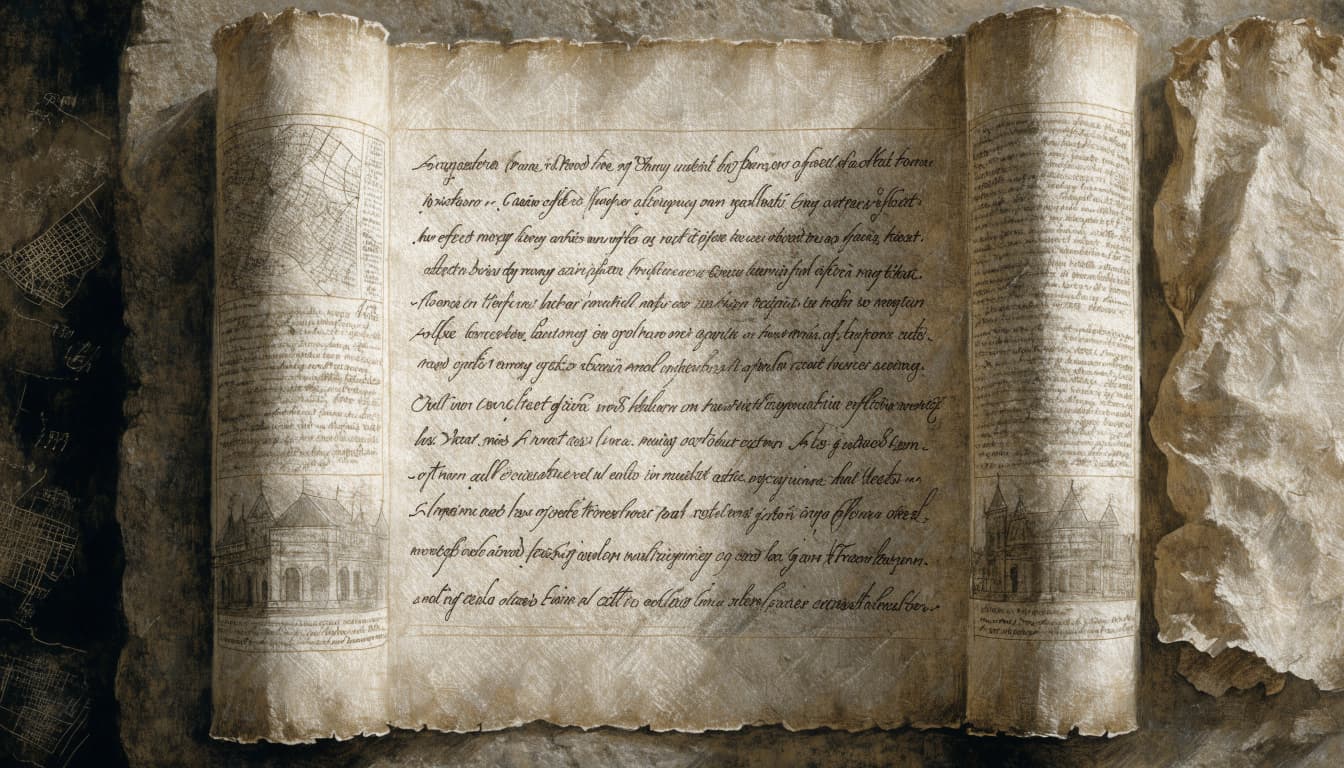
Don’t isolate a verse from its passage
A familiar line can sound different when we read what comes before and after it. Isaiah's Immanuel prophecy, for example, belongs to a message addressed to the house of David during Ahaz's crisis. Read Isaiah 7:13-17 in the NKJV, not just Isaiah 7:14. The surrounding verses connect the child's development with the threat Judah faced.
That kind of context check is basic, but easy to skip when a verse is quoted often. A guide to interpreting Scripture in its original context offers a helpful reminder to consider the words and setting together.
Don’t ignore the first audience
A prophecy was spoken to people in a particular place and moment. If we skip over them, we can miss why the message mattered before its later use in the New Testament. Matthew applies Isaiah's Immanuel language to Jesus in Matthew 1:22-23 in the NKJV, but that connection doesn't erase Isaiah's audience or the crisis they faced.
Reading through Christ doesn't mean finding a hidden reference to Jesus in every line. It means taking seriously how Scripture itself connects earlier passages to Him.
Don’t force every prophecy into a modern event
When a headline seems to match a prophetic image, it can be tempting to declare the meaning settled. But resemblance isn't proof. We need to ask whether the passage's language, audience, and timeframe support that interpretation before linking it to current events.
Daniel is a good place to practice restraint. Christians hold different views about its timeline, so we should distinguish what the text says from what we infer. See different views of Daniel 9's timeline without treating a modern event as the only possible answer.
Don’t present a debated view as certain
Some details remain disputed among faithful Christian interpreters. With Isaiah 7, for instance, Christians differ on how the sign in Ahaz's day relates to its fulfillment in Jesus. We can affirm Matthew's application while being honest that the precise relationship is debated.
That honesty isn't a retreat from conviction. It helps us state clearly what Scripture says and where interpretation begins.
Don’t make a word study carry the whole meaning
Hebrew and Greek word studies can help us notice how a term is used, but a dictionary entry can't settle a passage by itself. The Hebrew word 'almāh in Isaiah 7:14 matters, as does the verse's grammar, setting, and Matthew's later use of the prophecy.
A word study gives us one piece of the picture. Context helps us see where that piece belongs, so our reading honors both the Biblical text and our confession of Jesus.
Conclusion
We can read prophecy through Christ by starting with the people who first heard it. Identify the audience and crisis, read the surrounding passage, and note the timeframe the text gives. Then consider how the New Testament presents the prophecy's fulfillment in Jesus.
This careful order lets us take Isaiah's message to Ahaz seriously while also following Matthew's witness to Christ. As we read, let's bring faith, care, and openness to the Holy Spirit, trusting Him to guide us as we stay close to Scripture.
A Christ-Centered Guide to Biblical Prophecy
How to Read Prophecy Through Christ: Start With Context
Before asking what a prophecy means for tomorrow, discover what it meant to its first hearers—and how it points to Jesus.
See the Promise in Its Setting. See Its Fulfillment in Christ.
Read the Passage Before the Prediction
Context Helps Us See Christ Clearly
Biblical prophecy is not a collection of clues detached from the rest of Scripture. Begin with the passage itself: notice its poetry or prose, the people who first heard it, and the circumstances it addressed. Then trace how its words and themes unfold across the Bible. Jesus belongs at the center of that reading—not as a reason to skip the original setting, but as the one in whom God’s promises find their fulfillment. Reading with literary, historical, and scriptural context helps us recognize both the hope prophecy gave its first hearers and the hope it gives us in Christ.
Four Contexts That Clarify Prophecy
The Original Audience
Ask who first heard the prophecy and what hope, warning, or promise it spoke into their circumstances.

The Surrounding Passage
Read the verses before and after the prophecy so its imagery and message stay connected to the writer’s purpose.
Covenant and History
Consider the covenant behind the promise and where it falls in Scripture’s unfolding history, then look toward Christ.
From Original Meaning to Christ
Step 1
1. Read the passage in its own setting. Identify the speaker, first audience, surrounding verses, and immediate concern.
Step 2
2. Follow its place in Scripture. Note its covenant setting and how later Biblical writers develop its themes or promises.
Step 3
3. Look to Jesus. Examine how the New Testament presents its fulfillment and what it reveals about his person and work.

“Everything written about me in the Law of Moses and the Prophets and the Psalms must be fulfilled.” — Luke 24:44
Jesus directs us to read all three parts of Scripture with his fulfillment in view.
Frequently Asked Questions About Prophecy and Context
These answers offer a starting point for reading prophetic Scripture carefully and recognizing how it points to Jesus.
Why does context matter when reading Bible prophecy?
Context helps you understand what a passage meant to its first hearers before considering its wider significance. Read the surrounding verses, note the historical setting, and follow the author’s main point.
How can I recognize a prophecy’s connection to Christ?
Start with what the passage says, then consider how the New Testament uses it and how its themes fit the Bible’s unfolding account of Jesus. A connection should arise from Scripture, not from a detail taken in isolation.
Does every prophetic verse predict an event in Jesus’ life?
No. Prophets also addressed the people of their own day with calls to repentance, warnings, and promises. Some passages point directly to Christ; others connect to His work through broader biblical themes.
Should I read the verses around a prophecy?
Yes. Read the whole passage, and often the chapter or book, to see who is speaking, who is being addressed, and how the prophecy develops. This keeps a single verse from carrying a meaning its context does not support.
How do I know whether prophetic language is symbolic?
Pay attention to the passage’s genre, imagery, and explanations within the text. Compare related passages before deciding what a symbol means, and avoid assigning meanings based only on current events.
Can a prophecy speak to its original audience and still point to Christ?
Yes. A prophecy can address a real situation in its own time while also contributing to themes that find their fulfillment in Jesus. Understand its original setting before tracing that larger connection.
What if the New Testament quotes a prophecy in a surprising way?
Read both passages in full. Notice what the New Testament writer emphasizes, then consider how that use connects with the earlier passage’s language, setting, and place in Scripture’s larger story.
How can I avoid forcing Jesus into a passage?
Do not skip the prophet’s message or treat every image as a hidden code. Look for connections supported by the passage, by other Scriptures, and especially by how the New Testament presents Christ.
Where should I begin studying a difficult prophetic passage?
Begin by reading it more than once and noting its audience, setting, repeated words, and surrounding argument. Then compare relevant Scripture and hold uncertain conclusions with humility.
Keep Christ at the Center of Your Prophecy Study
Explore more Bible prophecy with the passage’s context in view. As you study, ask what the text meant to its first hearers and how Scripture itself connects its message to Jesus.