
Isaiah’s Messiah: The Promised King and Suffering Servant
How do Isaiah's promises of a child, a righteous King, and a suffering servant fit together? We read them as parts of the Biblical hope that God's promises to Abraham and David would reach their fulfillment in Jesus, though Christians don't all interpret every prophecy in the same way.
Isaiah spoke into Judah's real fears in the eighth century BC. His words point to a King who brings peace and a servant who bears the sins of many, themes the New Testament connects to Jesus and the hope of His return. As independent, Spirit-filled Pentecostal Christians, we'll follow that Biblical witness with care for each passage's setting.
Let's begin with the promises that prepare the way for Isaiah's vision of the Kingdom. How God's promises to Abraham and David point to Jesus.
How the Biblical promises build toward the Kingdom
Isaiah's vision of a coming King grows out of promises God had already made. The hope of the Messiah is tied to Israel's history, yet it reaches beyond Israel to the nations. We can trace that connection through God's promises to Abraham and David.
The promise to Abraham points beyond Israel
God called Abraham to leave his homeland and promised to make him a great nation. But the promise was never only about one family or one nation. In Genesis 12, especially verses 1-3, God says that all the families of the earth will be blessed through Abraham.
That promise gives the later hope of a Messiah a wider reach. Isaiah sees the nations drawn to the root of Jesse, a ruler from David's family who brings hope beyond Israel. The New Testament makes that connection explicit: Paul quotes Isaiah's vision and says the Gentiles will hope in Christ (Romans 15:12). Jesus welcomes the nations into God's promise, not as an afterthought, but as part of the blessing God announced to Abraham.
We can follow that promise through Scripture without flattening every passage into the same prediction. Each covenant speaks in its own setting, while the larger pattern leads toward Jesus and the Kingdom. For a closer look at that pattern, see how Scripture's promises point to Jesus.
David’s covenant gives the coming King a family line
God's covenant with David adds another part of the promise. He pledged to establish David's house and throne, with a descendant whose kingdom would endure. You can read the promise in 2 Samuel 7:12-16. Israel's kings did not fulfill that hope completely, but the promise kept the expectation of a lasting Davidic ruler alive.
Isaiah speaks into that expectation. His image of a shoot from Jesse's stump points to renewed life in David's family, while his vision of a righteous ruler looks toward justice, peace, and the gathering of the nations. The prophet addressed real fears and hopes in Judah's history; his words shouldn't be detached from that setting or reduced to a prediction with no context.
The New Testament identifies Jesus with this promised line. Gabriel tells Mary that God will give Jesus the throne of His father David, and that His Kingdom will have no end (Luke 1:32-33). For us, Isaiah's hope and David's covenant meet in Jesus: the promised King whose reign reaches the nations and awaits its fullness in God's Kingdom.
The Prophets Describe the Messiah in Isaiah’s Time
Isaiah's words about Immanuel began in a frightening moment for Judah. Before we consider how Christians connect the prophecy to Jesus, we need to hear what it meant to people who first heard it. Ahaz faced a real political crisis, and Isaiah called him to trust God rather than let fear set Judah's course.
Ahaz faces a choice between fear and trust
Around 735–733 BC, Rezin, king of Aram, and Pekah, king of Israel, threatened Jerusalem. They wanted Ahaz to join their resistance to Assyria, and they planned to replace him with another ruler. Isaiah describes the threat and his message to Ahaz in Isaiah 7:1–9. The broader danger came from Assyria, whose growing power pressed on the region.
Ahaz had reason to feel vulnerable. But Isaiah told him to stand firm and trust God, rather than treat the alliance between Aram and Israel as the final word. Ahaz instead appealed to Assyria for help, a choice that brought Judah under Assyrian power. We can read a helpful account of Isaiah's prophecy and Ahaz's political crisis alongside the Biblical text.
Isaiah offered Ahaz a sign: a child would be called Immanuel. The sign's timing connected it to the immediate crisis, since Isaiah said the threat from the two kings would pass before the child reached a certain age (Isaiah 7:14–16).
The details of the child's original identity are understood in different ways, so we shouldn't present one disputed explanation as settled. The historical setting still matters: Isaiah spoke to a king whose city faced danger, and his message declared that God had not abandoned Judah. For a fuller look at Isaiah 7:14 in its original context, we can keep that first audience in view.
Immanuel speaks to the crisis and to Christian hope
Immanuel means "God with us." In Isaiah's setting, the child's name carried a message of God's presence during political fear. Matthew later quotes Isaiah's sign and applies it to Jesus' conception and birth, explaining the name for his readers (Matthew 1:22–23).
Christians differ about the original referent of Isaiah 7:14 and how the near-term sign relates to Jesus. We can acknowledge that difference without blurring Matthew's claim: the New Testament clearly presents Jesus as Immanuel. Matthew sees in Him the fullest expression of God's presence with His people. That reading honors both the crisis Isaiah addressed and the hope Christians find fulfilled in Jesus.
Isaiah’s promised child brings light, peace, and Davidic rule
Isaiah 9:1–7 moves through a striking sequence: a people live under darkness and oppression, light appears, joy returns, and a child receives the authority to rule. The promise speaks to Judah's history, and the New Testament connects its hope to Jesus. We can hold both in view as we read Isaiah's promise of the child and His reign.
Light rises in a land marked by trouble
Isaiah names Zebulun and Naphtali, northern territories that had known humiliation and distress. The people there had reason to fear the next threat or the next invading army. Yet the prophet describes a great light reaching those who walked in darkness. The change is not subtle: grief gives way to joy, and the burden of oppression is broken.
Isaiah compares that deliverance to the harvest and the relief of sharing the spoils after victory. He also recalls how God broke Midian's power, pointing to a rescue that comes by God's hand. The image of light, then, is more than comfort for a hard day. It is hope that fear and oppression will not have the final word.
Matthew makes the connection to Jesus' ministry clear. When Jesus begins preaching in Galilee, Matthew quotes Isaiah's image of light shining in the region of Zebulun and Naphtali (Matthew 4:12–16). Jesus' presence and work bring Isaiah's hope into focus. The light reaches people in a region with a history of trouble, and His announcement of God's Kingdom begins the promised deliverance. We can read more about Isaiah's promise of light fulfilled in Jesus.
The child’s rule is marked by justice and peace
The light leads to a child, and the child is no ordinary ruler. Isaiah gives Him royal titles: "Wonderful, Counselor, Mighty God, Everlasting Father, Prince of Peace." Christians have discussed how each title should be understood, and we don't need to settle every question about their wording to see the passage's central claim. This King possesses wisdom and authority, and His reign brings peace rather than more oppression.
Isaiah says the child's government will rest on David's throne and will have no end. His rule is established with justice and righteousness, not the fear and self-interest that marked so many human rulers. The hope reaches beyond a temporary political rescue. It describes a lasting Kingdom, upheld by God's faithfulness.
Luke connects that Davidic promise directly to Jesus. The angel tells Mary that God will give Him the throne of His father David, and that His Kingdom will have no end (Luke 1:32–33).
For us, Jesus' first coming begins the fulfillment of Isaiah's promise: the King has come, and His Kingdom is at work. Yet we still await its complete realization, when His justice and peace fill the earth. Isaiah's vision gives us reason to hope in the King, even while we see the world still waiting for His reign in fullness.
The Shoot from Jesse Shows What a Spirit-Filled King Will Do
Isaiah 11 turns to a new branch growing from Jesse's cut-down family line. The image speaks of renewed Davidic leadership, but this King's authority comes with a clear mark: the Spirit of the Lord rests upon Him. We can read Isaiah 11:1–10 in the NKJV as a vision of a ruler whose justice reaches the poor and whose peace extends throughout creation.
The Spirit equips the ruler to judge with wisdom
Isaiah names the Spirit's gifts: wisdom and understanding, counsel and might, knowledge and the fear of the Lord. These qualities describe a ruler who sees clearly, gives sound direction, and has the strength to carry it out. His delight in the fear of the Lord means His rule honors God, rather than chasing status or pleasing powerful people.
That matters when Isaiah describes His judgments. The King does not decide by appearances or hearsay. He judges the poor with righteousness and gives justice to the meek. The passage presents Spirit-empowered leadership as wise, courageous, and attentive to people who are easily overlooked.
From our Spirit-filled Pentecostal perspective, the Spirit's work in the Messiah's ministry is central, not incidental. Isaiah's prophecy gives us a picture of the Spirit resting upon the coming ruler; the New Testament later identifies Jesus as the Messiah and presents His ministry in the power of the Spirit. We should keep those stages clear: Isaiah speaks to the hope of renewed Davidic rule, while Christians read that hope in light of Jesus. For more on Isaiah's prophecy of the righteous King, we can trace how this portrait connects with Christ.
Creation’s peace points toward the full Kingdom
Then Isaiah's picture widens. The wolf lives with the lamb, the leopard rests beside the young goat, and a child leads animals that would normally be dangerous. Even the lion eats straw like the ox. Isaiah is describing a peace that reaches beyond human politics and into creation itself.
The prophet grounds this vision in the knowledge of the Lord filling the earth. No one harms or destroys on God's holy mountain. We should resist the urge to claim that these conditions are already fully visible. Isaiah gives us a prophetic vision of God's future reign, where violence and fear no longer rule creation.

Isaiah closes by saying the nations will seek the root of Jesse, and His resting place will be glorious. Paul later quotes this promise in Romans 15:12, applying the nations' hope to Christ. For us, that connection brings Isaiah's vision into focus: Jesus is the promised King, and His Kingdom has begun, though creation still waits for the fullness of His peace.
The suffering servant bears sin and is vindicated
Isaiah 52:13–53:12 gives us a poem with a startling turn: the servant is rejected, suffers, and bears the wrongdoing of others, yet God vindicates Him. Christians see this pattern fulfilled in Jesus' death and resurrection. We should also read the poem in its own literary setting and recognize that Jewish and Christian readers understand the servant's identity differently.

The servant suffers on behalf of others
Isaiah describes a servant who carries grief and pain that belong to others. In Isaiah 53:4–6, the poem says He is wounded for transgressions and bears the iniquity of many. The image is direct: the servant takes on the burden of human wrongdoing, while others receive peace and healing.
Christians understand this as a picture of Jesus' atoning work. On the cross, Jesus suffered and died for sinners, taking upon Himself the consequence of sin. Atonement means that His death deals with sin and opens the way for people to be reconciled to God. We don't read this as the only possible interpretation of Isaiah's servant poem; Jewish readers have understood the servant in other ways, including as Israel. But the New Testament explicitly applies the passage to Jesus.
Matthew connects Isaiah's words about bearing sickness and pain with Jesus' healing ministry (Matthew 8:17). Later, Philip meets an Ethiopian official reading Isaiah and explains that the servant's suffering points to Jesus (Acts 8:32–35). Peter also echoes the poem, describing Jesus as sinless and saying that He bore our sins in His body on the cross (1 Peter 2:22–25). These connections are central to Isaiah's prophecy of the suffering servant.
Suffering gives way to vindication and life
The servant's suffering is severe. Isaiah describes rejection, oppression, and death, even though the servant has done no violence. Yet the poem doesn't end at the grave. Its closing verses speak of the servant's vindication, the success of God's purpose, and the servant bearing the sins of many (Isaiah 52:13–53:12). The movement matters: humiliation is followed by honor, and death does not have the final word.
For Christians, this pattern finds its fulfillment in Jesus. He was rejected and crucified, then raised from the dead. The New Testament presents His resurrection as God's vindication of Him and the confirmation that His saving work is complete (1 Corinthians 15:3–4). We can hold that Christian confession alongside the poem's original place in Isaiah: its first hearers encountered a portrait of a suffering servant, while the New Testament identifies Jesus as the one who fulfills that portrait.
Jesus fulfills Isaiah’s hope, and His return completes the Kingdom
Isaiah's promised child, Davidic King, and suffering servant come together in the New Testament's witness about Jesus. The apostles connect Isaiah's words to His birth, ministry, death, and resurrection, while also pointing ahead to the day His Kingdom fills creation. We should distinguish direct quotations from broader Christian connections, since Isaiah does not name Jesus explicitly.
The New Testament connects Isaiah’s promises to Jesus
Matthew directly quotes Isaiah in key moments of Jesus' life and ministry. He applies Isaiah's Immanuel prophecy to Jesus' birth (Matthew 1:22–23), then quotes Isaiah's promise of light in Galilee as Jesus begins preaching (Matthew 4:12–16). Matthew also quotes Isaiah's servant language about bearing sickness and pain in connection with Jesus' healings (Matthew 8:17).
Acts gives us another direct link. Philip explains Isaiah's suffering-servant passage to an Ethiopian official and tells him the Scripture points to Jesus (Acts 8:32–35). Paul, too, quotes Isaiah's vision of the root of Jesse, saying the nations will hope in Christ (Romans 15:12).
Luke makes a broader connection rather than quoting Isaiah directly. Gabriel tells Mary that Jesus will receive David's throne and reign over an everlasting Kingdom (Luke 1:32–33). That promise echoes Isaiah's vision of a Davidic ruler whose reign brings justice and peace. Put together, these passages show why Christians confess Jesus as the promised King and suffering servant. For more on how Jesus fulfills the Law and the Prophets, we can keep both Isaiah's original setting and the New Testament's claims in view.
The return of Jesus will reveal the Kingdom in fullness
Jesus' first coming inaugurated the Kingdom. He announced God's reign, healed the sick, bore sin on the cross, and rose from the dead. He reigns now, but we still see violence, injustice, and death. Isaiah's vision of lasting peace across creation has not yet reached its fullness.
The New Testament points us forward. At His ascension, the angels told the disciples that Jesus would return (Acts 1:11). Paul explains that Christ will raise those who belong to Him, defeat every enemy, and bring the Kingdom to its completion (1 Corinthians 15:23–28). Revelation's closing vision gives us the horizon: God makes all things new, death is gone, and His people live with Him (Revelation 21–22).
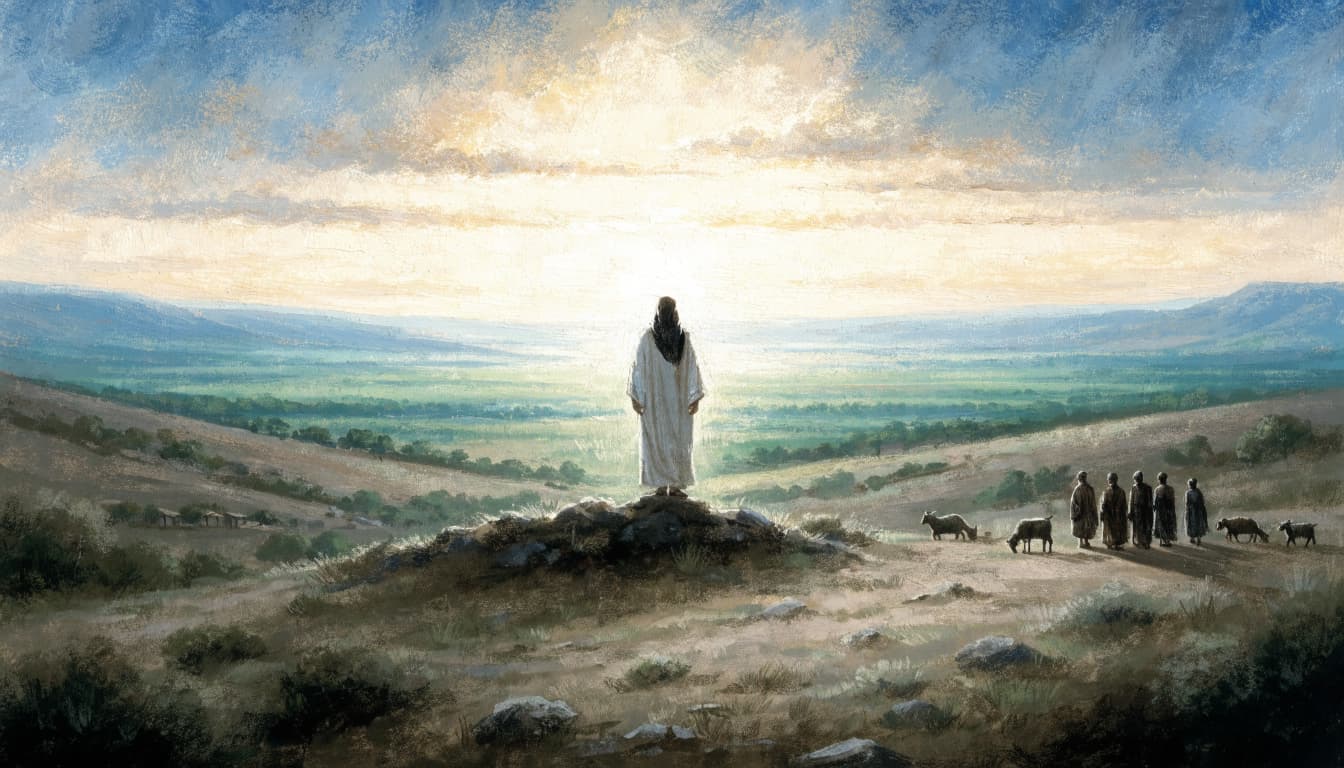
We don't know the date of Jesus' return, and Scripture gives us no reason to set one. Our Pentecostal conviction is that the Holy Spirit empowers believers to witness to Jesus and live in hope as we wait (Acts 1:8). The King has come and reigns; when He returns, His justice, resurrection life, and peace will be seen in full.
Conclusion
God's promises to Abraham and David gave Israel hope for blessing beyond its borders and a King whose reign would endure. Isaiah brought that hope into focus through the child who rules in peace and the servant who bears the sins of many. The New Testament identifies Jesus as their fulfillment, the promised King who suffers, rises, and reigns.
We hold that promise and hope together: Jesus has come, and His Kingdom is at work, yet its fullness is still ahead. His return will bring the completed Kingdom Isaiah's vision points toward. That is why the Old Testament's hope in the Messiah still gives us reason to trust God's promises and look forward with hope.
Two Portraits, One Messiah
Isaiah’s Promise Finds Its Fulfillment in Jesus
Isaiah announces a child who will reign on David’s throne with justice and peace (Isaiah 9:6–7). Yet the prophet also describes a Servant who is rejected, wounded for our transgressions, and ultimately vindicated (Isaiah 53).
These are not competing visions: together, they reveal the Messiah who saves through His suffering and will rule in righteousness. In Jesus, Isaiah’s promise of a coming King and his account of a suffering Servant come into focus.
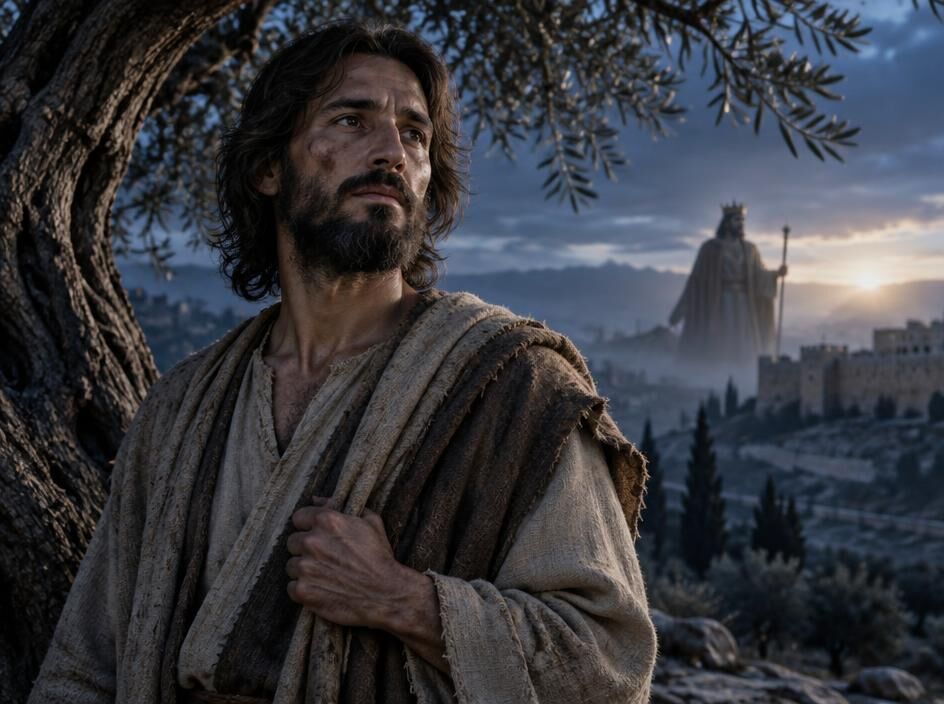
The Promised King in Isaiah
- Born from the line of David (Isaiah 11:1)
- Given as a sign through a virgin (Isaiah 7:14)
- Called Immanuel, “God with us” (Isaiah 7:14)
- A child given to carry the government (Isaiah 9:6)
- Endowed with the Spirit of the Lord (Isaiah 11:2)
- Delighting in reverence for the Lord (Isaiah 11:3)
- Wonderful Counselor, wise beyond measure (Isaiah 9:6)
- Mighty God, strong to save (Isaiah 9:6)
- Everlasting Father, steadfast in care (Isaiah 9:6)
- Prince of Peace, bringing lasting wholeness (Isaiah 9:6)
- Righteous Judge for the poor (Isaiah 11:4)
- Faithful ruler whose word defeats evil (Isaiah 11:4–5)
- David’s throne established with justice (Isaiah 9:7)
- A kingdom upheld with righteousness forever (Isaiah 9:7)
- Peace spreading without end (Isaiah 9:7)
- The nations seeking the root of Jesse (Isaiah 11:10)
- Creation pictured at rest from harm (Isaiah 11:6–9)
- The earth filled with knowledge of the Lord (Isaiah 11:9)
“For unto us a child is born, unto us a son is given: and the government shall be upon his shoulder: and his name shall be called Wonderful, Counsellor, The mighty God, The everlasting Father, The Prince of Peace.” — Isaiah 9:6 (KJV)
Isaiah’s promise of a royal child points Christians to Jesus, the Son of David whose reign brings the hope of enduring peace.
The Servant Who Bore Our Sin
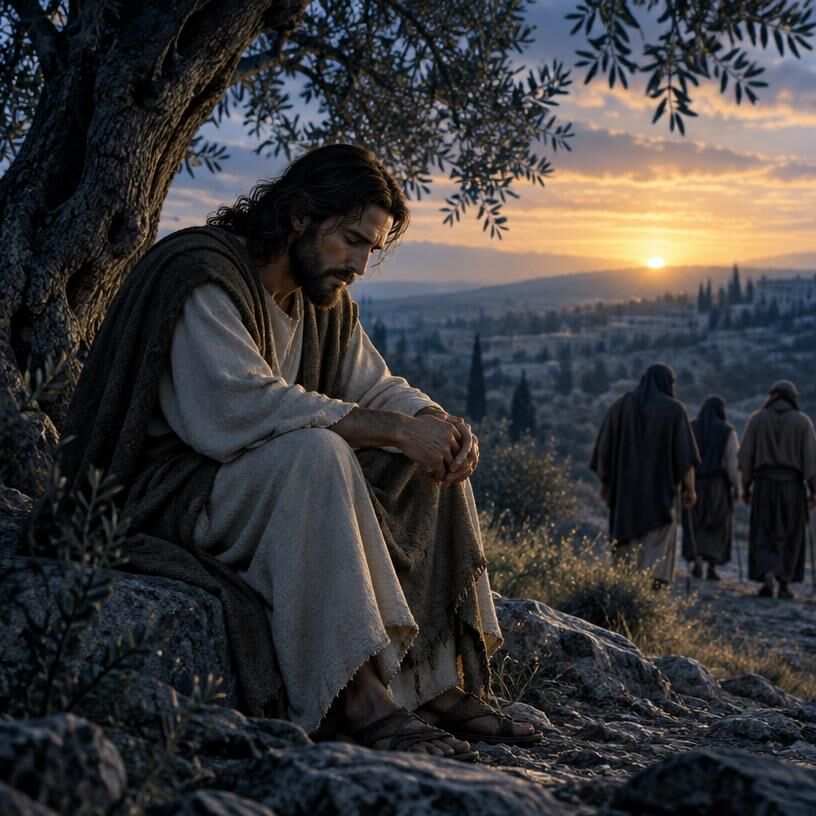
Isaiah’s promised Messiah is not only a King; he is also the suffering Servant. Isaiah 53 portrays him as despised and rejected, a man of sorrows who carries griefs that are not his own. Though innocent, he is wounded for the transgressions of others and bears the sin of many. Isaiah says his suffering brings healing and that the chastisement that brings peace falls upon him.
Christians see these words fulfilled in Jesus: rejected and crucified, he willingly gave his life for sinners and rose again. His sacrifice reveals how the promised King makes peace with God possible. Bible Prophecy Ministries examines passages like this to trace what Scripture foretold, how those promises center on Jesus, and what they mean for the hope still ahead.
One Messiah, Two Portraits in Isaiah
Isaiah’s Portrait
The Reigning King
The Suffering Servant
How They Fit Together
Where to Read
Mission
Establishes justice and lasting peace
Bears sin and brings healing
His sacrifice opens the way to His righteous reign
Isaiah 9:6–7; 53:4–6
Outcome
Rules on David’s throne forever
Is exalted after giving His life
His vindication leads to the promised kingdom
Isaiah 11:1–5; 52:13–53:12
Frequently Asked Questions About Isaiah’s Messiah
Explore how Isaiah’s promises about the King and the Servant point to Jesus and illuminate Bible prophecy.
Does Isaiah describe one Messiah or two?
Isaiah presents a royal descendant of David and a Servant who suffers for others. Christians understand these portraits as united in Jesus, whose first coming involved suffering and whose promised reign completes the royal picture.
Where does Isaiah call the Messiah a king?
Isaiah 9:6–7 speaks of a child whose government and peace will endure, while Isaiah 11:1–5 describes a ruler from Jesse’s line who judges with righteousness.
What does Isaiah 53 say about the Servant?
Isaiah 53 portrays the Servant as rejected, wounded for others’ transgressions, and ultimately vindicated. The New Testament connects this suffering with Jesus’ death and resurrection.
How can the suffering Servant also reign?
Isaiah’s visions describe both sacrifice and exaltation. Jesus’ suffering addresses sin; His resurrection and promised reign show that suffering was not the end of His mission.
Did Jesus fulfill every promise in Isaiah already?
Christians see Jesus’ life, death, and resurrection as fulfilling key promises about the Servant. They also look ahead to the full display of the justice and peace Isaiah associates with the King.
Why does Isaiah matter when studying Bible prophecy?
Isaiah connects the Messiah’s identity, saving work, and future kingdom. Reading these passages together helps place prophecy within Scripture’s larger account of God’s purposes in Jesus.