

How Prophecy Points to Jesus, the Promised Messiah, Through Abraham and David
God's promises to Abraham and David point to Jesus, the Messiah who brings blessing to the nations and inherits an everlasting Kingdom. Paul connects Abraham's promise with Christ in Galatians 3:16, while Gabriel announces that Jesus will reign on David's throne forever in Luke 1:32–33.
These promises carry distinct hopes: Abraham's family is called to bring blessing to all peoples, and David's royal line is promised an enduring throne. We'll look at how Scripture brings these promises together in Jesus, while respecting their original settings and the ways Christians differ on how they unfold. For another look at Jesus as Israel's promised Messiah and King, see our related discussion.
How Prophecy Points to Jesus Through God’s Promises
Biblical prophecy isn't a collection of predictions detached from history. It speaks into real circumstances, often giving God's people hope or direction in the moment. A covenant promise is God's commitment to act and remain faithful, even as its implications unfold across generations.
The New Testament identifies Jesus as the decisive fulfillment of God's promises. But we need to read each passage in its original setting first. Abraham's promise and David's promise belong together, yet they carry distinct hopes.
A promise unfolds across generations
When God called Abraham, He promised to make him a great nation and bring blessing to all the families of the earth through him (Genesis 12:1–3). For Abraham and his family, that promise spoke to their future as a people. Its blessing also reached beyond them, toward the nations.
Later, God repeated the promise that all nations would be blessed through Abraham's offspring (Genesis 22:18). Paul connects that promise with the good news reaching the Gentiles, and he identifies Christ as its promised "Seed" (Galatians 3:8; Galatians 3:16). That is a direct New Testament claim. It doesn't mean every passage about Abraham uses identical language or names Jesus plainly in its first setting.
We see a similar unfolding in the promise to David. In its immediate setting, God promises David a royal house, and David's son is to build the temple (2 Samuel 7:12–16). Solomon's reign gives that promise an early, historical expression. Yet the promise of an enduring throne reaches beyond one king's lifetime. The loss of the monarchy later raised a hard question: how would God keep His word?
Reading prophecy in context lets us hold both parts together: what the promise meant to its first hearers and how the New Testament connects it with Jesus. We can also explore how to read Biblical prophecy in context.
The two covenants carry distinct hopes
Abraham's promise centers on descendants and blessing for the nations. David's promise centers on a royal line, throne, and Kingdom. They aren't interchangeable, even though the New Testament brings them together in Jesus.
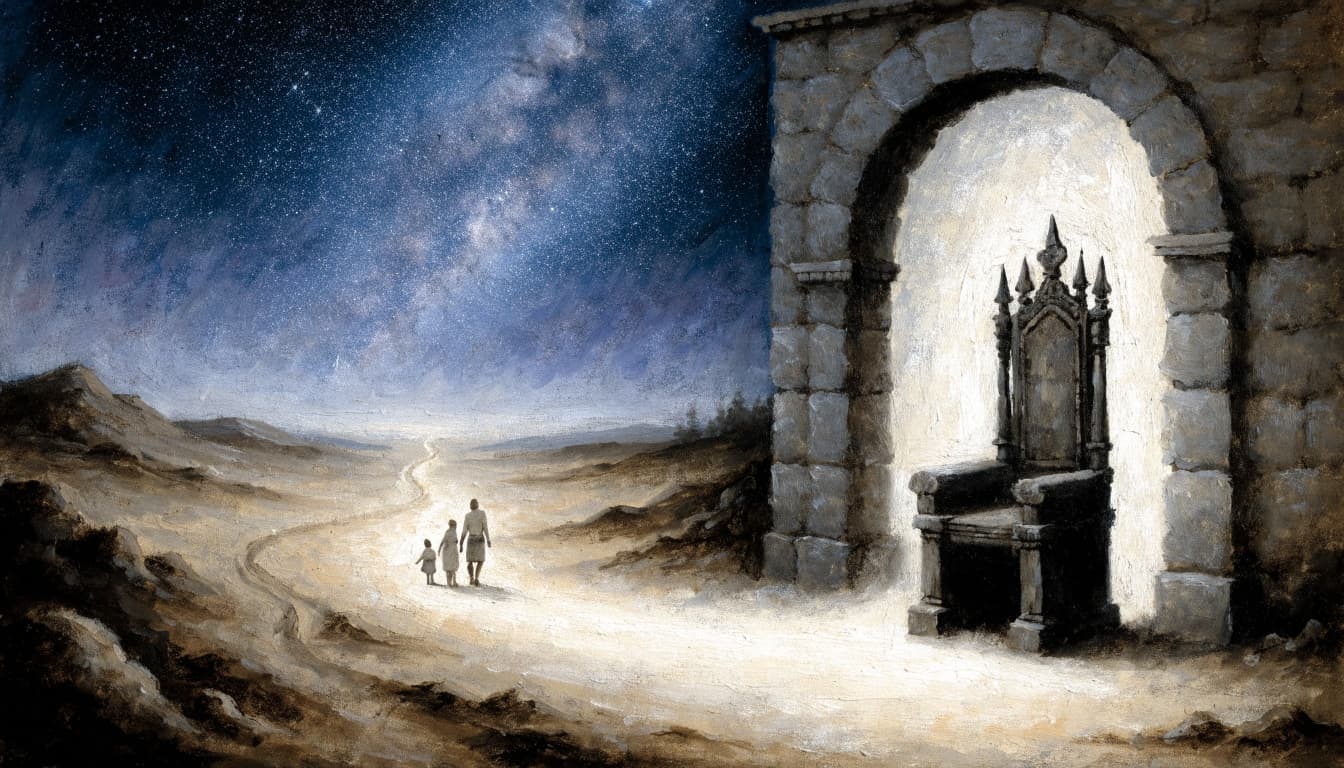
Paul's words in Galatians connect Jesus with Abraham's promised offspring and explain how the nations share in Abraham's blessing through faith. For a closer look at how Genesis develops its promises across several passages, see this discussion of Abraham's covenant.
The Davidic promise carries a different emphasis. Gabriel tells Mary that Jesus will receive David's throne and reign over Jacob's house forever, a direct New Testament declaration of Jesus' royal identity (Luke 1:32–33). Christians differ on how and when every aspect of that Kingdom promise will be fulfilled. We can affirm what Scripture states plainly while allowing room for disagreement about those further conclusions.
The Promise to Abraham Brings Blessing to Every Nation
God's promise to Abraham begins with one family in a specific place and opens toward every nation. The New Testament connects that promise with Jesus, while keeping Abraham's family and Israel's history in view. The promise was never merely abstract; it began with a people God called and gave a purpose.
Abraham’s family is called to bless the nations
God called Abram to leave his country, his relatives, and his father's household. He promised to make him a great nation, bless him, and make his name great. Then came the wider purpose: through him, all the families of the earth would be blessed (Genesis 12:1-3).
That order matters. God chose Abraham and his descendants as a particular family, not as a way to dismiss the nations. Their history would carry the promise outward. God later restated that worldwide purpose, saying that all nations would be blessed through Abraham's offspring (Genesis 22:18). The family and the global purpose belong together.

We can trace how Scripture carries these promises forward in the path from covenant promises to Jesus. Paul says Scripture announced the good news beforehand to Abraham: all nations would be blessed in him (Galatians 3:8). He sees the promise's reach beyond Israel as part of God's plan, while Israel's place in that history remains real.
Paul connects the promised Seed with Christ
Paul's argument in Galatians brings Abraham's promise to its focal fulfillment in Christ. He writes that the promises were spoken to Abraham and his Seed, then identifies that Seed as Christ (Galatians 3:16). This is Paul's theological reading within his wider argument, not a claim that the Hebrew word translated "seed" can only refer to one individual. In Genesis, it can refer to Abraham's descendants collectively; Paul shows how the promise reaches its goal in Jesus.
Paul then explains how people from the nations share Abraham's blessing. Through faith in Christ, they receive the promise of the Spirit (Galatians 3:14). Those who belong to Christ are Abraham's offspring and heirs according to promise (Galatians 3:26-29). The blessing includes forgiveness and belonging to God's people, and Paul specifically connects it with receiving the promised Spirit.
So Gentile believers share in Abraham's blessing through faith in Jesus. That doesn't erase Israel's history or mean Abraham's family no longer matters. The promise begins with that family, moves through Christ, and reaches people from every nation. We see the particular and worldwide purpose held together: God remains faithful to His promise, and the blessing extends to all who belong to Christ.
The Promise to David Points to an Everlasting Throne
The promise to David begins with a real king, a real dynasty, and a real kingdom. Its first fulfillment came through Solomon, but the language of an enduring throne raised a question that no single successor could answer.
God promises David a lasting royal line
David wanted to build a house, meaning a temple, for God. Instead, God promised to build a house for David: a royal dynasty. In 2 Samuel 7:12–16, God says David's descendant will succeed him, establish his kingdom, and build a house for God's name. That descendant was Solomon, who became king after David and built the temple in Jerusalem.

For David, this promise meant his family's rule would continue after his death. For Solomon, it gave his kingship a place in God's covenant purpose, while also making clear that he remained accountable to God. The promise includes correction if David's descendants do wrong, yet God says He will not take His mercy from them as He did from Saul. The throne would endure by God's faithfulness, not by every king's flawless obedience.
Solomon was the immediate heir, but he could not be the final answer to an everlasting throne. His reign ended, as did the reigns of the kings who followed him. Still, God had promised to establish David's house and kingdom forever. We can explore Jesus as the Davidic King who fulfills God's promise while keeping the original setting in view: the promise first spoke to David and his royal successors.
Psalm 89 gives voice to hope and crisis
Psalm 89 remembers God's covenant with David and repeats the promise that his line and throne would endure (Psalm 89:3–4; Psalm 89:28–37). The psalm speaks with confidence in God's faithfulness. Even when David's descendants fail, God says He will discipline them without abandoning His covenant.
Then the psalm turns sharply. The royal line appears humiliated, its defenses broken, and its king disgraced (Psalm 89:38–45). The singer brings that pain straight to God. How can the throne last forever when the monarchy seems to have fallen? Psalm 89 doesn't hide the tension or pretend the crisis is over.
That lament made hope for a future Messiah more urgent. If the promise still stood, then God's people could look for a Davidic King whose reign would answer the collapse of the earthly line. The New Testament makes that connection directly: Gabriel tells Mary that Jesus will receive David's throne and reign forever (Luke 1:32–33). Christians differ on how every part of the Kingdom promise unfolds, but Scripture identifies Jesus as the promised King.
Israel’s Prophets Keep the Hope of a Davidic Messiah Alive
The promise of a lasting Davidic throne did not disappear when David's own reign ended. Israel's prophets kept pointing toward a ruler whose justice and peace would outlast the failures of ordinary kings. Isaiah gives that hope a striking shape.
Isaiah describes a ruler whose kingdom will endure
Isaiah speaks into a time of political danger, when Judah faced threats and its people needed more than reassurance from a human alliance. In that setting, the prophet announces a royal child who will govern on David's throne. His rule will be established with justice and righteousness, and peace will increase without end (Isaiah 9:6–7).

That vision develops the earlier promise to David. The hope is no longer only that his royal house will continue. Isaiah pictures a ruler whose government brings what Israel's people longed for: justice that holds, peace that lasts, and a throne God establishes. The passage spoke to its own setting, yet its language reaches beyond any short-lived reign.
Christians see the prophecy's ultimate horizon in Jesus. Gabriel makes the Davidic connection explicit when he tells Mary that Jesus will receive David's throne and reign forever (Luke 1:32–33). That New Testament announcement lets us read Isaiah's royal hope in light of Jesus, without claiming the first hearers understood every detail as Christians later would. We can also consider Isaiah's prophecy in its original context, where its immediate setting matters alongside its later Christian meaning.
Exile makes the promise a pressing question
Then the monarchy fell. Jerusalem was conquered, the temple was destroyed, and the people went into exile. The Davidic throne that Isaiah's vision described no longer had a king seated on it. How could God's promise endure when the royal line seemed broken?
The prophets did not ask Israel to pretend that exile had not happened. They named the loss and its pain, while continuing to speak of God's faithfulness and future restoration. Their hope answered a real crisis; it did not erase Israel's history or turn the fall of the monarchy into a detail that did not matter.
That tension helps us hear the prophetic promise clearly. A future Davidic ruler would have to answer the failure of past kings and the apparent collapse of the throne. The New Testament identifies Jesus as that promised King, while Christians continue to differ about how the Kingdom promise unfolds. We can hold to what Scripture states plainly: God's promise was not forgotten, and Jesus is announced as the Son of David whose reign has no end.
The New Testament Presents Jesus as Abraham’s Seed and David’s Heir
The New Testament brings the promises to Abraham and David together in Jesus, but it doesn't blur their distinct purposes. Paul explains how the nations share Abraham's blessing through faith in Christ. Gabriel announces that Jesus will inherit David's throne and reign forever. Together, these passages present Jesus as both the source of blessing for the nations and the promised King.
Jesus brings Abraham’s blessing to the nations
Paul reads Abraham's promise with the nations in view. In Galatians, he says Scripture announced beforehand that God would justify the Gentiles by faith when it declared that all nations would be blessed through Abraham. The promise began with Abraham's family, but its reach was always wider (Galatians 3).
Paul then identifies Christ as Abraham's promised Seed. Through faith in Jesus, Gentile believers receive the blessing promised to Abraham, including the gift of the Spirit (Galatians 3:14). They don't enter that promise by becoming Abraham's biological descendants. They share in it because they belong to Christ, the One through whom the blessing comes.
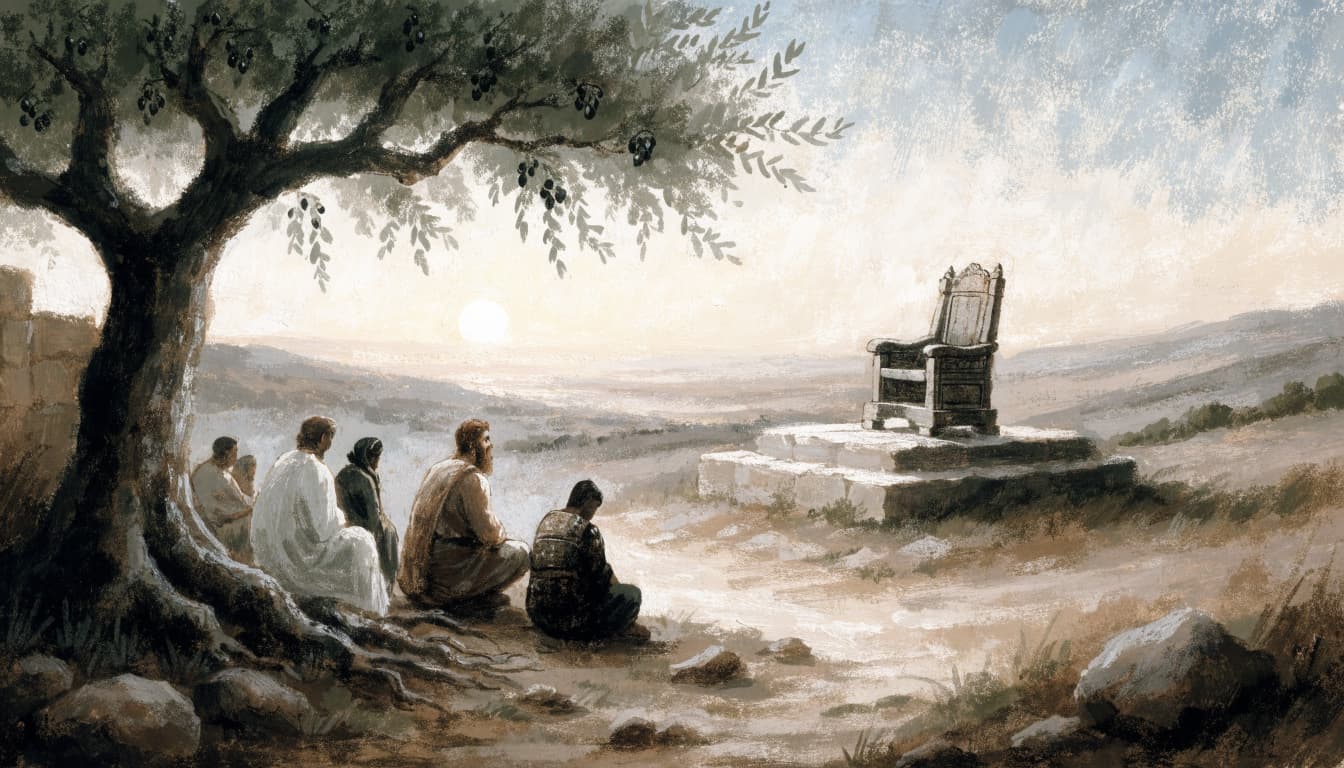
This matters because the promise is about more than individual salvation. God formed a people through Abraham, and through Christ, people from every nation can become heirs according to promise. Paul says those who belong to Christ are Abraham's offspring and heirs (Galatians 3:26–29). The New Testament shows us how the family promise opens outward without erasing the history through which God gave it.
Jesus receives David’s throne and reigns forever
Luke gives us a direct announcement of Jesus' Davidic identity. Gabriel tells Mary that her Son will be called the Son of the Highest, and that the Lord God will give Him the throne of His father David. He will reign over the house of Jacob forever, and His Kingdom will have no end (Luke 1:32–33).
That promise answers the question left open by Israel's history. David's royal house had fallen, and no later king had secured an everlasting throne. The prophets kept hope alive, but Gabriel's words make the New Testament claim unmistakable: Jesus is the promised Davidic King. His reign is not limited to the lifespan of one ruler or one generation.
The two promises meet in Him, but they remain distinct. Abraham's promise emphasizes blessing reaching the nations; David's promise emphasizes the King and His enduring Kingdom. We see both in Jesus: through Him, the nations share in God's promise, and as David's heir, He reigns forever. We can also trace how prophecy connects God's covenant promises with the hope fulfilled in Christ.
What the Promises Mean for Faith, the Spirit, and God’s Kingdom
The promises to Abraham and David speak to more than ancient history. In Jesus, we see the blessing reaching the nations, the promised Spirit given through faith, and a King whose reign shapes how we live now.
The promised Spirit is part of Abraham’s blessing
Paul connects Abraham's blessing with the gift of the Spirit. In Galatians 3:14, he says the blessing comes to the Gentiles in Christ Jesus so that believers may receive the promised Spirit through faith. The point is clear: people from the nations share in Abraham's blessing through Jesus, and the Spirit is part of that promised gift. We can read Paul's wider argument in Galatians 3.
For us as Spirit-filled Pentecostals, this promise speaks to the Spirit's active presence in the life of believers. The Spirit assures us that we belong to God and empowers us to live out our faith. Galatians 3:14 ties receiving the Spirit to faith in Christ; it does not, by itself, settle every Christian disagreement about the timing or outward expression of that gift. We should let Paul's words say what they say, without forcing one Pentecostal experience or explanation onto every believer.

Christ’s reign shapes life in God’s Kingdom
Jesus is the promised King, and His reign gives our hope a present shape. We trust Him when circumstances feel unsettled, because God's promise does not depend on the strength of human rulers. We also look ahead with hope, confident that Christ's Kingdom will not end.
That hope changes how we live. Faithful life under Jesus' kingship means honoring God, serving others, and seeking the justice and peace associated with His rule. We don't bring the Kingdom by our own strength, but we can bear witness to its King through the choices we make. For more on Christ's reign and future restoration, see our related discussion.
Christians differ on the timing and scope of fulfillment
Christians share the New Testament's identification of Jesus as the Messiah, the heir of David, and the One through whom Abraham's blessing reaches the nations. They differ on how some promises relate to Israel and the church, and on when particular aspects of the Kingdom will be fulfilled.
Some emphasize the church's participation in Christ and the way Gentile believers share Abraham's blessing through faith. Others affirm that Israel has a distinct place in God's purposes and expect certain promises to receive a future fulfillment for Israel. Christians also differ on how present and future dimensions of Christ's reign fit together.
We can hold those differences honestly without confusing them with the New Testament's clear claim about Jesus. He is the promised Messiah. The debate concerns how and when all the promises unfold, not whether Christ is central to them.
Conclusion
The promises to Abraham and David come together in Jesus. Through Him, Abraham's blessing reaches the nations, and David's promised throne points to an everlasting King. Paul connects Abraham's promise with Christ in Galatians 3:16, while the New Testament presents Jesus as the One in whom these promises meet.
We may still differ on how every part of God's promises unfolds. But we can trust His faithfulness and follow Jesus, the promised Messiah. For more on Jesus fulfilling God's promises to Abraham and David, we can keep tracing the Biblical witness to Christ.
Abraham’s Promised Offspring, a Blessing for All Nations
God promised Abraham that all nations would be blessed through his offspring (Genesis 22:18). That promise reaches beyond Abraham’s family: the New Testament identifies Jesus as the promised offspring through whom God extends His blessing to people of every nation (Galatians 3:16). Through Jesus’ death and resurrection, forgiveness and new life are offered to all who trust in Him. What began as a promise to Abraham points to the Messiah at the heart of God’s plan for the world.


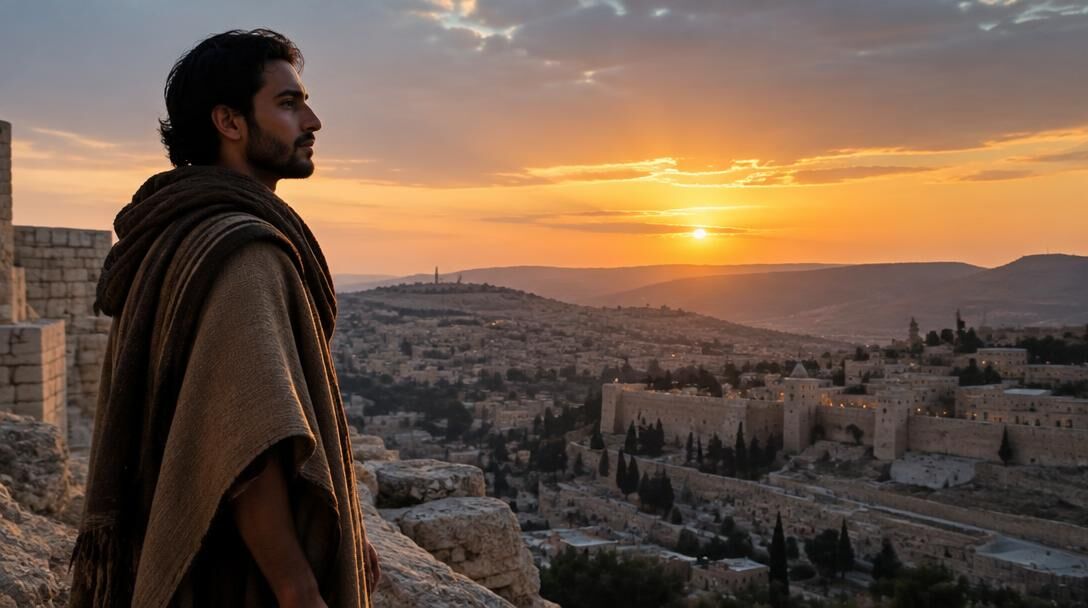
“In you all the families of the earth shall be blessed.” — Genesis 12:3

The Lord’s Promise to Abraham
God’s covenant with Abraham anticipated the Messiah, through whom blessing would reach every nation.
The King Promised to David
Generations after God promised Abraham a blessing for all nations, He made a covenant with David: David’s offspring would inherit a throne established forever (2 Samuel 7:12–16). David’s own reign would end, but the promise pointed beyond any ordinary successor to a King whose Kingdom would endure. Bible Prophecy Ministries traces these connected promises through Scripture to show how they find their fulfillment in Jesus, the descendant of Abraham and David. Our mission is to help readers see what God has promised, what He has fulfilled, and why Biblical prophecy centers on Christ.
How Jesus Fulfills the Promise
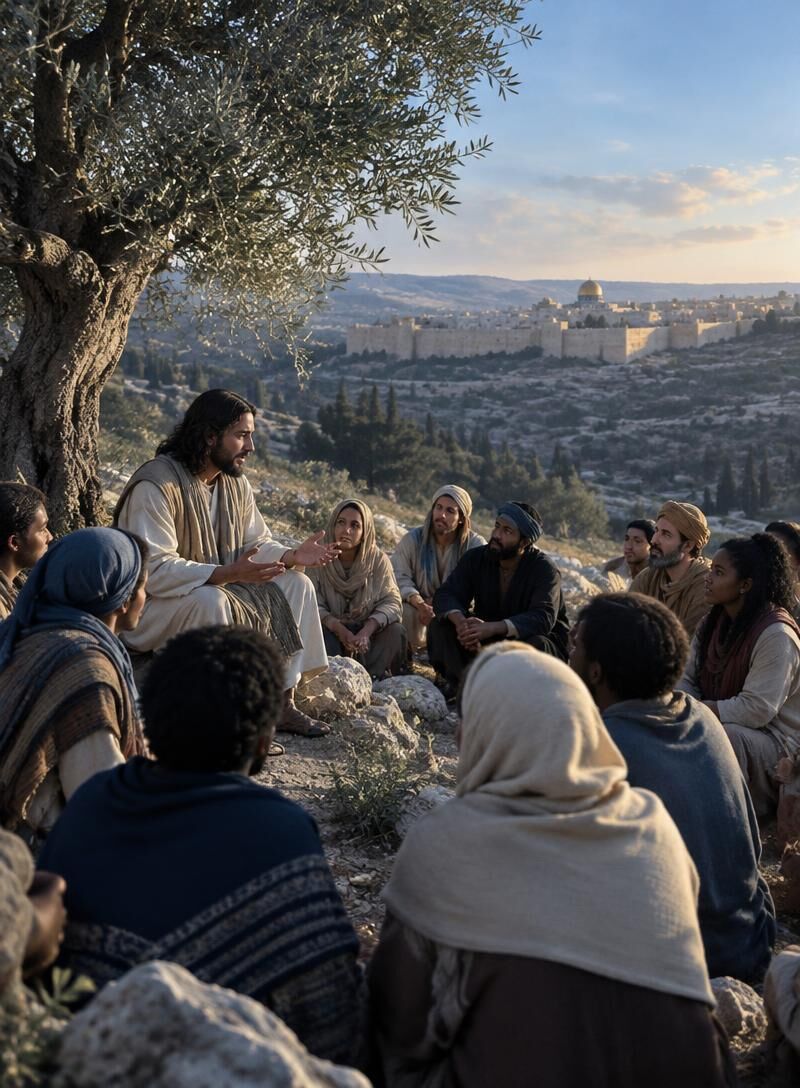
The Promised Lineage
Matthew opens with Jesus’ genealogy as “the son of David, the son of Abraham,” connecting Him to both covenant promises (Matthew 1:1).
The Everlasting Kingdom
Jesus is the heir to David’s throne, the King whose reign will have no end (Luke 1:32–33).
Blessing for Every Nation
Through Abraham’s descendant, Jesus Christ, the promised blessing reaches people of every nation who put their faith in Him (Galatians 3:8, 16).
Frequently Asked Questions About Abraham, David, and Jesus
What did God promise Abraham?
God promised Abraham descendants, a land, and blessing for all nations through his offspring (Genesis 12:1–3; 22:18). The New Testament identifies Jesus as the promised offspring through whom that blessing reaches the nations (Galatians 3:16).
What is the Davidic covenant?
God promised David that his royal line would endure and that his throne would be established forever (2 Samuel 7:12–16). Christians understand this promise to point to Jesus, the Son of David whose kingdom has no end (Luke 1:32–33).
How is Jesus connected to both Abraham and David?
Matthew opens his Gospel by calling Jesus the son of David and the son of Abraham (Matthew 1:1). These titles connect him to God's promises of blessing through Abraham's family and an enduring king from David's line.
Does the promise to Abraham include people from every nation?
Yes. God said all families of the earth would be blessed through Abraham (Genesis 12:3). Through faith in Christ, people from the nations share in the blessing promised to Abraham (Galatians 3:8–9).
Why do the Abrahamic and Davidic promises matter today?
Together, these promises reveal the scope of God's plan: blessing for the nations and a lasting Kingdom. They invite readers to see Jesus as the promised Messiah and to trust the faithfulness of the God who keeps His Word.
Follow the Promises to Jesus
From Abraham's promised offspring to David's enduring throne, Scripture tells a history centered on Christ. Explore more Bible prophecy and discover how God's promises point to Jesus.