
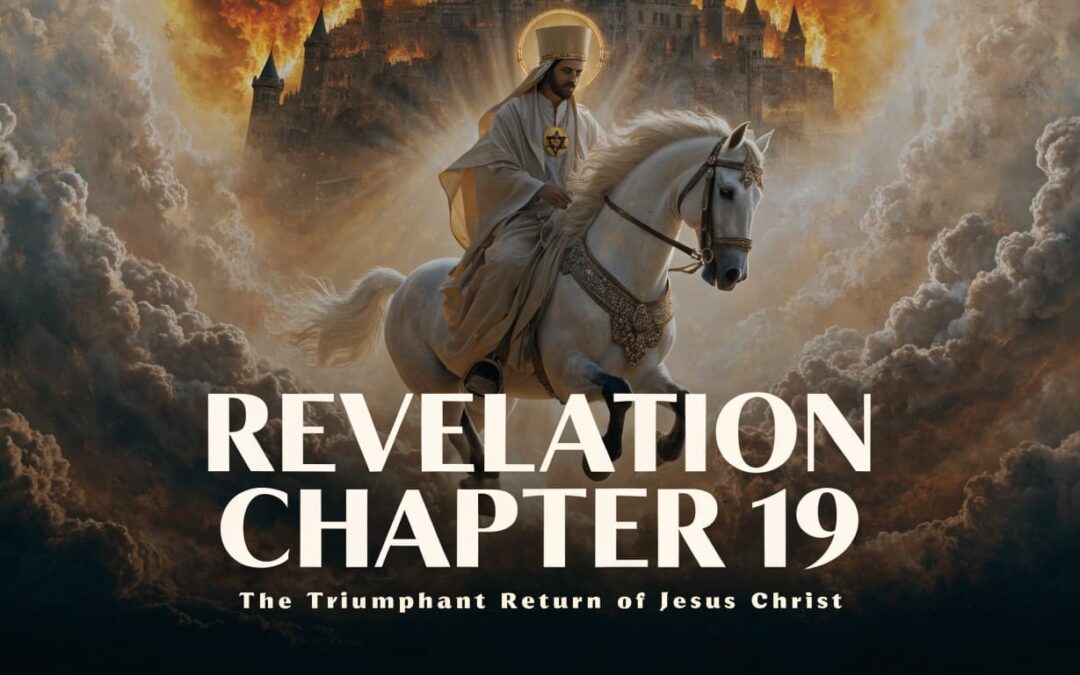
How God’s Promises Are Fulfilled in Jesus and Revelation 19
God's promises unfold across Scripture and come into focus in Jesus, whose victory over evil reaches its full expression in Revelation's vision of the Rider on the White Horse. The "3" in the supplied title appears to be a series or editorial marker, not a claim about a Bible verse.
We'll follow that promise through the Bible, from its early beginnings in Genesis to the hope of Christ's return. Along the way, we'll see how different covenants and prophetic passages point toward God's saving work in Jesus, and why His promised victory gives believers hope today.
Let's begin with the first promise and trace its path toward the victorious King. For more on how Jesus fulfills the Law and the Prophets, we'll connect each passage with the wider witness of Scripture.
From Ancient Promise to the Rider on the White Horse
God's promises unfold across Scripture, but they aren't one identical promise repeated in every passage. Each covenant has its own setting and purpose. Christian readers see how those promises lead to Jesus by reading the Old Testament alongside the New Testament. That wider witness helps us follow the hope of victory in Genesis toward the triumphant Rider in Revelation 19.
The promise of victory begins in Genesis
After humanity's rebellion, God speaks of hostility between the serpent and the woman, and between their offspring. The woman's offspring will strike the serpent's head, while the serpent strikes his heel (Genesis 3:15). The verse itself doesn't name Jesus. Christians have understood it as an early foreshadowing of victory over evil when read in light of the New Testament.
That distinction matters. We don't need to force the full New Testament meaning into one verse to see how Scripture develops the theme. Hebrews says Jesus shared in our humanity and, through His death, broke the devil's power over death (Hebrews 2:14). First John says the Son of God appeared to destroy the devil's works (1 John 3:8). Read together, these passages give Christians reason to see Jesus' victory as the answer to the conflict first described in Genesis.
The connection carries us toward Revelation 19, where Jesus appears as the victorious Rider on the white horse. Genesis gives us an early glimpse of conflict and promised victory; the New Testament identifies Jesus as the One who defeats the devil. The promise takes shape across Scripture, not through a direct naming of Jesus in Genesis 3:15.
God’s promise to Abraham reaches the nations
The promise widens when God calls Abram. He promises to make him a great nation and bless all the families of the earth through him (Genesis 12:1–3). Later, God confirms that promise, declaring that Abraham's offspring will bring blessing to the nations (Genesis 22:15–18). These words belong first to God's covenant with Abraham and his descendants, but their reach extends beyond one family.

Paul connects Abraham's blessing with the good news preached to the nations. In Galatians, he interprets the promised "Seed" in relation to Christ and says those who belong to Christ share in Abraham's blessing (Galatians 3:8, 16, 29). That is Paul's New Testament reading of the promise, not a claim that Genesis names Jesus directly.
So we can hold both parts together: God made a particular covenant with Abraham, and Scripture later shows how its blessing reaches the nations through Jesus. For a closer look at how Scripture's promises unfold across the Bible, we can keep each passage in its own setting while following the wider Biblical witness.
How God’s promises fulfilled in Jesus shape the whole Biblical story
The promise to Abraham widened the hope of blessing to all nations. The prophets then gave that hope more shape, speaking of a coming King and a servant who would suffer. These passages have different settings and images, but the New Testament brings them together around Jesus. As we follow that pattern, we can see how His first coming began the fulfillment and why Christians still await its completion.
The promised King comes from David’s line
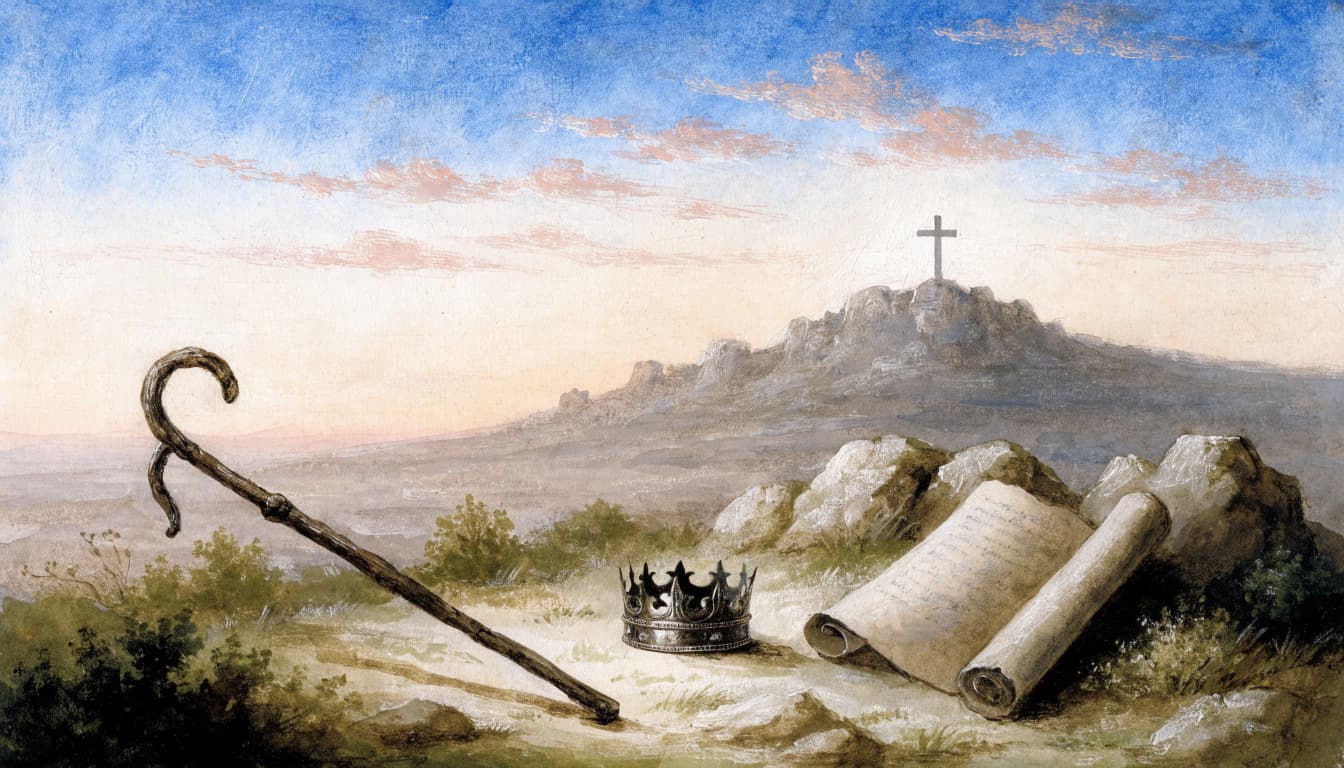
In 2 Samuel, David is established as king, and the prophet Nathan delivers God's covenant promise: David's offspring will have an enduring kingdom and throne (2 Samuel 7:12–16). The promise first concerns David's royal line and the future of his kingdom. It also gives Israel hope for a ruler whose reign will not end.
Centuries later, Isaiah speaks of a child who will reign on David's throne with justice and peace (Isaiah 9:6–7). Micah points to Bethlehem, David's hometown, as the place associated with a coming ruler (Micah 5:2). Both prophets speak amid danger and uncertainty for Judah, though interpreters debate how some details relate to events in their own time and to the future Messiah.
The New Testament identifies Jesus with this royal hope. Gabriel tells Mary that Jesus will receive David's throne and reign forever (Luke 1:32–33). Paul describes Him as descended from David according to the flesh and declared to be the Son of God in power through the resurrection (Romans 1:3–4). We can read more about how Jesus fulfills the Davidic covenant, while keeping each passage's original setting in view.
The suffering Servant brings salvation
Isaiah's portrait of the servant in Isaiah 52:13–53:12 adds another dimension to the hope for God's chosen King. The servant is rejected, suffers, and bears the wrongdoing of others, yet God vindicates him. Christians read this passage in light of Jesus' suffering and death. Jewish and Christian interpreters have understood the servant's identity differently, so we should be clear about the New Testament's reading without claiming every detail is beyond debate.
Acts describes an Ethiopian official reading Isaiah's words. When he asks whom the prophet is describing, Philip explains the Scripture and tells him about Jesus (Acts 8:32–35). Peter also connects Jesus' suffering with the servant's bearing of sin and speaks of healing through His wounds (1 Peter 2:22–25). These passages help us see the cross as central to God's saving work, not as the whole explanation of every part of Jesus' mission.
Jesus also explained that His suffering and resurrection belonged within the witness of the Law, the Prophets, and the Psalms (Luke 24:25–27; Luke 24:44–47). Paul summarizes this hope by saying that God's promises find their "Yes" in Christ (2 Corinthians 1:20). The fulfillment has begun: Jesus came, died, and rose again. Its completion awaits His return, when His victory will be fully revealed. We can explore Isaiah's prophecy of the Messiah and suffering servant in light of both that first coming and the hope still ahead.
How the New Testament traces promise into fulfillment
The New Testament reads Israel's Scriptures through what God did in Jesus. The Gospels connect His life, suffering, and resurrection with Israel's hopes, while Acts and the letters proclaim Him as the risen King. That Christian reading draws on multiple passages; it doesn't require us to claim that every detail was obvious to every Old Testament reader in advance.
Jesus explains the Scriptures after His resurrection
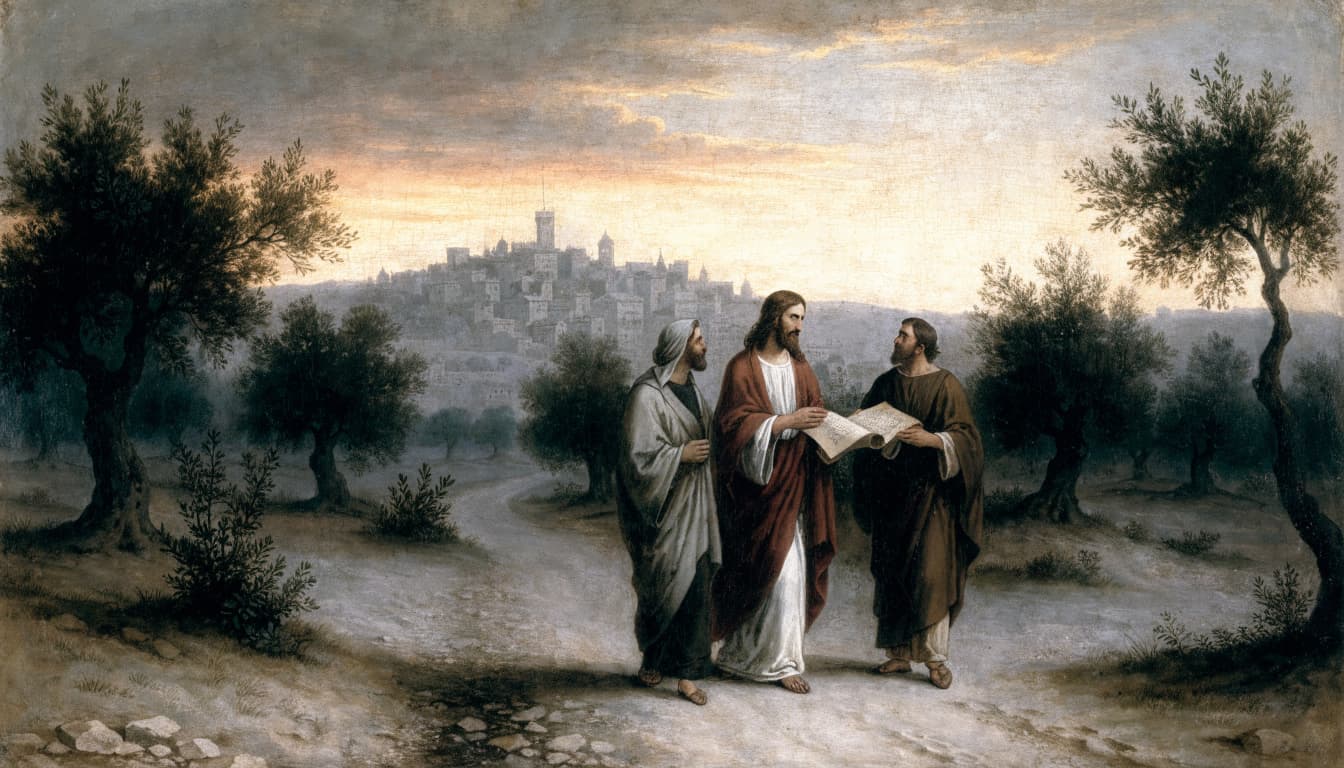
On the road to Emmaus, Jesus rebukes two disciples for being slow to believe what the prophets had spoken. He then explains how the Scriptures point to the Messiah's suffering and glory (Luke 24:25–27). Later, He names the Law of Moses, the Prophets, and the Psalms, showing that His suffering, resurrection, and the call to repentance and forgiveness belong together (Luke 24:44–47).
Jesus' point is the unified witness of Scripture. The disciples weren't asked to pull one isolated prediction out of context. They needed to see how God's purposes, expressed across Israel's Scriptures, came into focus through what had happened to Him. The resurrection changed how they understood those passages, and it gave their message a clear direction: repentance and forgiveness of sins would be proclaimed to all nations in Jesus' name.
The apostles proclaim the risen and exalted Christ
At Pentecost, Peter makes the claim public. He recounts Jesus' death and resurrection, then turns to David's words in the Psalms to explain why Jesus' resurrection and exaltation fit Israel's Scriptures (Acts 2:22–36). David was Israel's king and prophet, Peter says, but he died and was buried. The promise Peter proclaims reaches its fulfillment in Jesus, whom God raised and exalted.
The word exalted means raised to a position of honor and authority. Peter's argument is that Jesus is the promised Messiah and Lord, not merely a teacher whose message survived His death. His resurrection confirms His royal authority, and the Spirit's outpouring gives public witness to His reign.
This is how the New Testament traces promise into fulfillment: Jesus opens the Scriptures, then the apostles proclaim what His death and resurrection reveal. We can follow the apostles' interpretation of Old Testament Scripture without pretending the earlier passages had no meaning in their own settings. Their claim is that the risen Christ brings Israel's hopes into focus, and that God's saving purpose now calls people everywhere to repent and believe.
What Revelation 19 reveals about the Rider on the White Horse
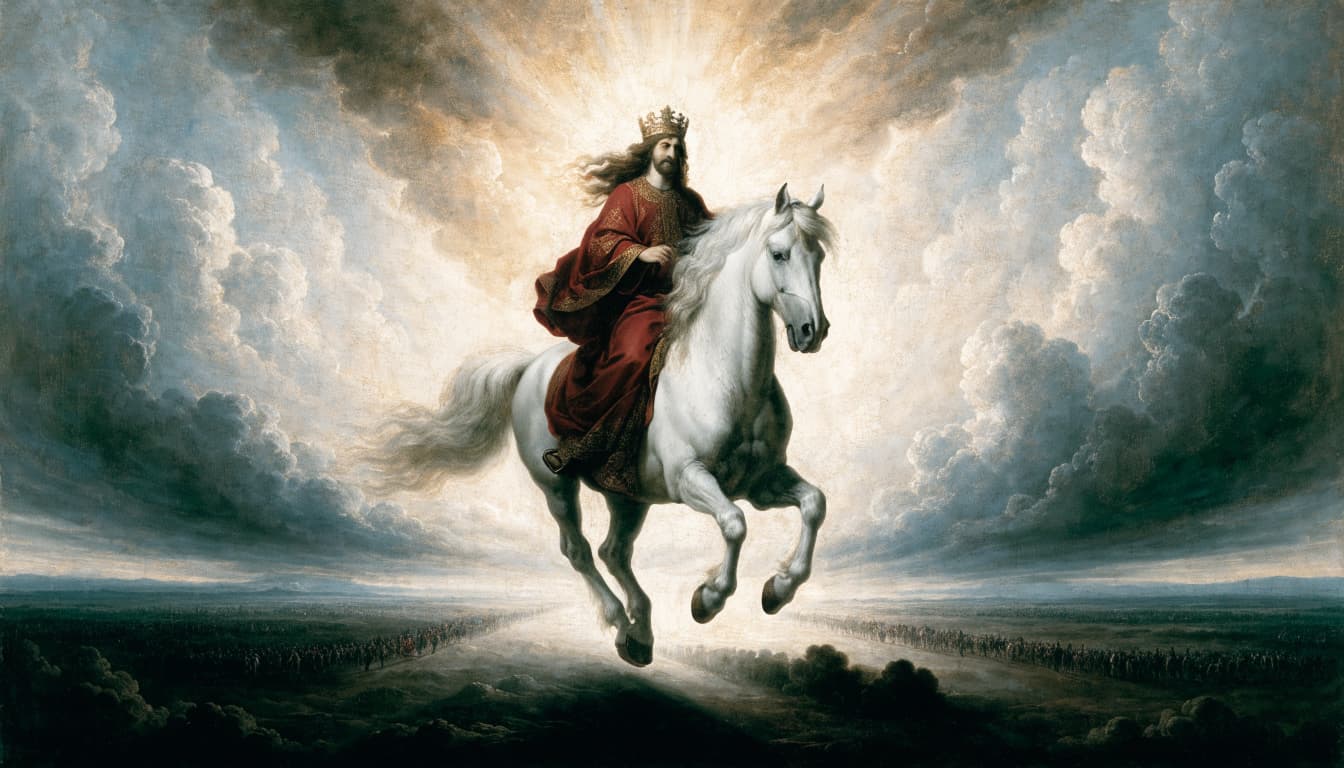
Revelation 19:11–16 presents the Rider as Jesus through titles that leave little doubt about His identity. John sees heaven open and a white horse appear, but the vision's force rests on who rides it: the One who judges righteously, bears the name "The Word of God," and is declared "KING OF KINGS AND LORD OF LORDS." (Revelation 19:11–16)
The Rider’s names identify Him as Christ
John calls the Rider "Faithful and True" and says He judges and makes war "in righteousness." These titles describe the character and authority of the One who appears. Revelation later names Him "The Word of God," a title that connects with John's opening declaration that the Word was with God, was God, and became flesh (John 1:1–14). Read together, these passages identify the Rider with Jesus, the Word who came among us.
The title "KING OF KINGS AND LORD OF LORDS" makes His authority unmistakable. No earthly ruler outranks Him, and the vision places every opposing power beneath His reign. We can read more about Jesus as King of Kings in Revelation 19, while keeping our focus on the passage's own declaration.
The white horse adds another layer. In this vision, it is victorious royal imagery, a picture of the conquering King. Revelation 6:2 also describes a rider on a white horse, but the text does not identify that rider in the same way. We shouldn't assume the two riders are the same. Revelation 19 gives its Rider Christ-identifying titles; the identity of the Revelation 6 rider remains debated.
The images show righteous judgment and victory
The sword comes from the Rider's mouth, not His hand. That image points to judgment by His authoritative word, rather than ordinary combat. The iron rod recalls the Messiah's rule in Psalm 2:9, where the nations are placed under His authority. John's vision draws on Scripture's language to show that Christ's judgment is decisive.
The winepress image also has a prophetic background. In Isaiah 63:1–6, the prophet depicts God coming in judgment, with imagery of garments stained as if from a winepress. Revelation uses a similar picture to portray the defeat of evil and the severity of divine judgment.
These are apocalyptic images, vivid symbols that communicate spiritual realities. We don't need to treat the sword as literal equipment or the winepress as a scene of ordinary battle to take the passage seriously. Its point is clear: Christ judges evil with authority and wins.
The vision offers hope without settling every timeline
Revelation 19 directs our attention to Jesus' victory over the powers that oppose God. Christians differ over some details of Revelation's timeline, including how this scene relates to the events in chapter 20. Classical Pentecostal premillennial readers understand Christ's return as preceding the millennial reign. That is one Christian interpretive framework, not the only view held by Christians.
We can acknowledge those differences without losing the passage's central emphasis. The Rider is faithful, His judgment is righteous, and no rival authority can overcome Him. For us, the vision calls for trust in Christ and hope in His promised victory, even when we don't agree on every detail of the timeline.
How Pentecostal faith follows the promise today
The promise of God's victory reaches beyond the pages of Scripture. Jesus has been raised and exalted, the Holy Spirit empowers His people, and the church continues to bear witness while awaiting His return. For us as Spirit-filled Pentecostals, that means holding together what God has done in Christ and the faithful life He calls us to live today.
The Holy Spirit strengthens faithful witness
Peter's Pentecost sermon connects Jesus' resurrection and exaltation with the Spirit's work. He declares that God raised Jesus and that Jesus, exalted at God's right hand, poured out the promised Holy Spirit (Acts 2:32–36). This fulfills the promise Jesus gave His disciples: they would receive power when the Holy Spirit came upon them and become His witnesses (Acts 1:8).
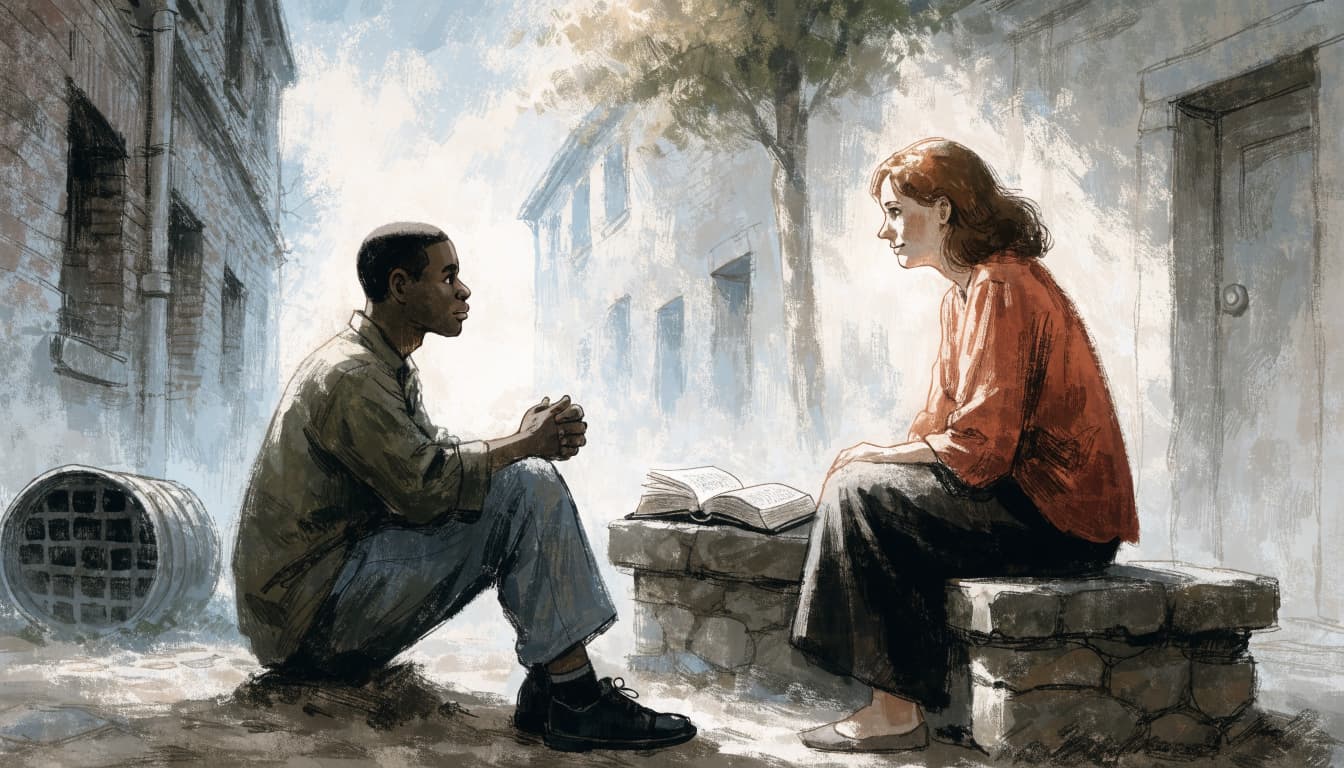
The Spirit points us to Jesus. He doesn't replace the Gospel or draw attention away from Christ. He equips believers to speak about Jesus, serve others, and remain faithful when sharing the good news feels difficult. That witness can happen in a church service, a conversation with a friend, or the ordinary choices that show what we believe.
We don't need to promise that every believer will have the same experience or speak in the same way. The call is clear: rely on the Holy Spirit, know the Gospel, and be ready to share the hope we have in Jesus. We can read more about the church's witness to Jesus in the Spirit's power. Pentecost points us toward mission, not spiritual performance.
Hope in Christ’s return shapes daily life
Paul describes Jesus' resurrection as the firstfruits of those who have died, then points to the day when Christ will bring His reign to completion and defeat death (1 Corinthians 15:20–28). This is Biblical hope: Jesus is alive, His Kingdom will prevail, and death will not have the final word.
What does that hope change today? It gives you reason to pray when answers seem delayed, persevere when faithfulness costs something, and practice Godly character when no one is watching. It also turns our attention outward. If Christ is coming as King and Judge, our neighbors matter, and our words and actions should reflect His mercy and truth.
We hold firmly to the authority of Scripture and salvation through Jesus, while recognizing that Christians differ on details of end-times chronology. Pentecostal believers also differ among themselves on some of those details. We don't have to settle every timeline question to live in readiness. The Assemblies of God's Statement of Fundamental Truths connects the Spirit's work with holy living and Christian hope. So we keep praying, serving, and bearing witness, trusting the risen Jesus until He returns.
How to follow the promise through Scripture with care
When a passage is called a promise fulfilled in Jesus, we should ask how Scripture itself makes that connection. A careful reading lets us honor the first audience while following the New Testament's witness. Context doesn't weaken Christian interpretation; it gives our confidence a firm footing.

Read each promise in its original setting
Start with the people who first heard the words. Who received the promise? What pressures, hopes, or questions shaped that moment? Then read the full passage, not only the line that appears to point toward Jesus. The surrounding verses may clarify the promise's immediate purpose, its conditions, or the kind of hope it offered.
A promise to a king, a nation, or a family may carry a wider Biblical meaning, but we shouldn't skip its original audience. We can use historical and literary resources from Bible Odyssey to learn more about the Bible's settings, then return to Scripture and check what the passage actually says.
As we read, we can ask:
- Who is speaking, and to whom?
- What happens before and after the promise?
- Does the passage describe an immediate event, a future hope, or both?
For a focused guide, see how to read prophecy in its original context. That first step helps us avoid pulling a sentence out of its place and asking it to say more than it does.
Compare Scripture with Scripture and leave room for mystery
Next, look for how the New Testament uses the passage. Does it quote the words directly, echo their language, or make a broader theological connection? Those aren't identical things. For example, Luke 24:25–27 shows Jesus teaching His disciples to read the Scriptures in light of His suffering and glory. Paul makes a particular argument about Abraham's "Seed" in Galatians 3:16. We should describe each connection the way the New Testament presents it.
That distinction keeps our claims clear. We can say, "The New Testament applies this passage to Jesus," when it does. When we're drawing a connection from a broader Biblical pattern, we can say so plainly instead of presenting our interpretation as a direct quotation or an uncontested prediction.
The same care matters in Revelation. We can be confident that Jesus wins and reigns, while admitting that Christians disagree about some symbols and timelines. Confidence in Christ doesn't require certainty about every detail. We read carefully, compare passages, and hold disputed conclusions with humility.
Conclusion
The promise of victory over evil takes shape across Scripture, through God's covenant promises and prophetic hope, and comes into focus in Jesus. He came, died, and rose again. Revelation 19 points us ahead to His return as the victorious King, the One who judges righteously and reigns over all. We can read more about Jesus as the victorious King in Revelation 19.
As Spirit-filled believers, we hold fast to Scripture, trust the Holy Spirit to strengthen our witness, and look with hope for Christ's return. Follow the promise through the Bible, and let it shape how we live: with faith, faithful witness, and hope in Jesus.
God’s Promises Fulfilled in Jesus: The Hope of Revelation 19
From the first promise of redemption to the triumphant Rider on the white horse, Scripture reveals God’s unwavering purpose in Jesus Christ.
One Savior. One Unfolding Promise.
See Where the History Leads
Trace the promises of Scripture to Christ’s victory and the hope revealed in Revelation 19.

The Promise Begins in Scripture
Every Promise Points to Jesus
God’s promises form a single unfolding story. From the promised offspring who would overcome evil to the descendant of David whose Kingdom would endure, the prophets direct our hope toward Jesus. His life, death, and resurrection confirm that God keeps His word. With that foundation, Revelation 19 invites us to recognize the returning King as the same faithful Savior Scripture has proclaimed all along.
The Promises That Point to Jesus
From His ancestry to His resurrection, Scripture reveals a consistent promise: God would send a Savior. These milestones show how Jesus fulfills what the prophets foretold.
01
David’s Heir and Bethlehem’s Child
02
Good News for the Broken
03
The Suffering Savior
04
Risen from the Dead

“And he was clothed with a vesture dipped in blood: and his name is called The Word of God.” — Revelation 19:13 (KJV)
Revelation 19:13, King James Version
The Promised Victory of Jesus in Revelation 19
Bible Prophecy Ministries traces the promises of Scripture to Jesus, helping readers understand what God has already fulfilled and what His Word says is still to come. The prophets foretold a Messiah from David’s line, born in Bethlehem, who would minister to the hurting, suffer for sin, and rise again. Revelation 19 carries that story forward: heaven opens, and Jesus appears as Faithful and True, the Word of God and King of kings. His return brings the promised defeat of evil into view and assures believers that God will finish what He began. By studying these passages together, we seek to keep prophecy centered on Christ rather than speculation.

Frequently Asked Questions About God’s Promises
Explore how Scripture connects God’s promises, Jesus’ fulfillment of prophecy, and the hope revealed in Revelation 19.
How does Jesus fulfill God’s promises in Scripture?
Jesus fulfills God’s promises as the promised Messiah. His life, death, and resurrection confirm God’s faithfulness, while the New Testament points to His return as the fulfillment of promises still to come.
What does Revelation 19 reveal about Jesus?
Revelation 19 portrays Jesus as Faithful and True, the victorious King who judges with justice. The chapter emphasizes that His return will make God’s promises visible to the world.
Are all biblical prophecies about Jesus already fulfilled?
No. Christians recognize prophecies fulfilled in Jesus’ first coming and look forward to others associated with His return. Revelation 19 focuses on that future hope.
Why is the marriage supper of the Lamb important?
The marriage supper of the Lamb pictures joyful fellowship between Christ and His people. In Revelation 19, it stands alongside the promise of His return, showing both the celebration and victory ahead.