
Revelation 19’s Rider: The Earlier Prophecies Compared
In Revelation 19:11–16, the Rider on the white horse is Jesus, the faithful King who judges and makes war in righteousness. How do earlier Scriptures help us understand Him? The clearest links are Psalm 2's iron rod, Isaiah 11's righteous ruler, and Isaiah 63's bloodied garments and winepress.
Other passages, including Genesis 3:15, Zechariah, and Daniel, add broader Biblical themes of victory and God's rule. As we compare them, we'll keep close textual echoes distinct from larger connections, and read each passage in its own context. We can begin with Jesus the Victorious King in Revelation 19.
From Ancient Promise to the Rider on the White Horse: Trace the Earlier Prophecies and Compare the Scriptures
Revelation 19:11–16 brings several Biblical images together in one vision. As we compare it with earlier Scripture, we can distinguish close textual echoes from wider connections without treating every resemblance as a direct quotation or stated fulfillment.
What Revelation 19 Says About the Rider
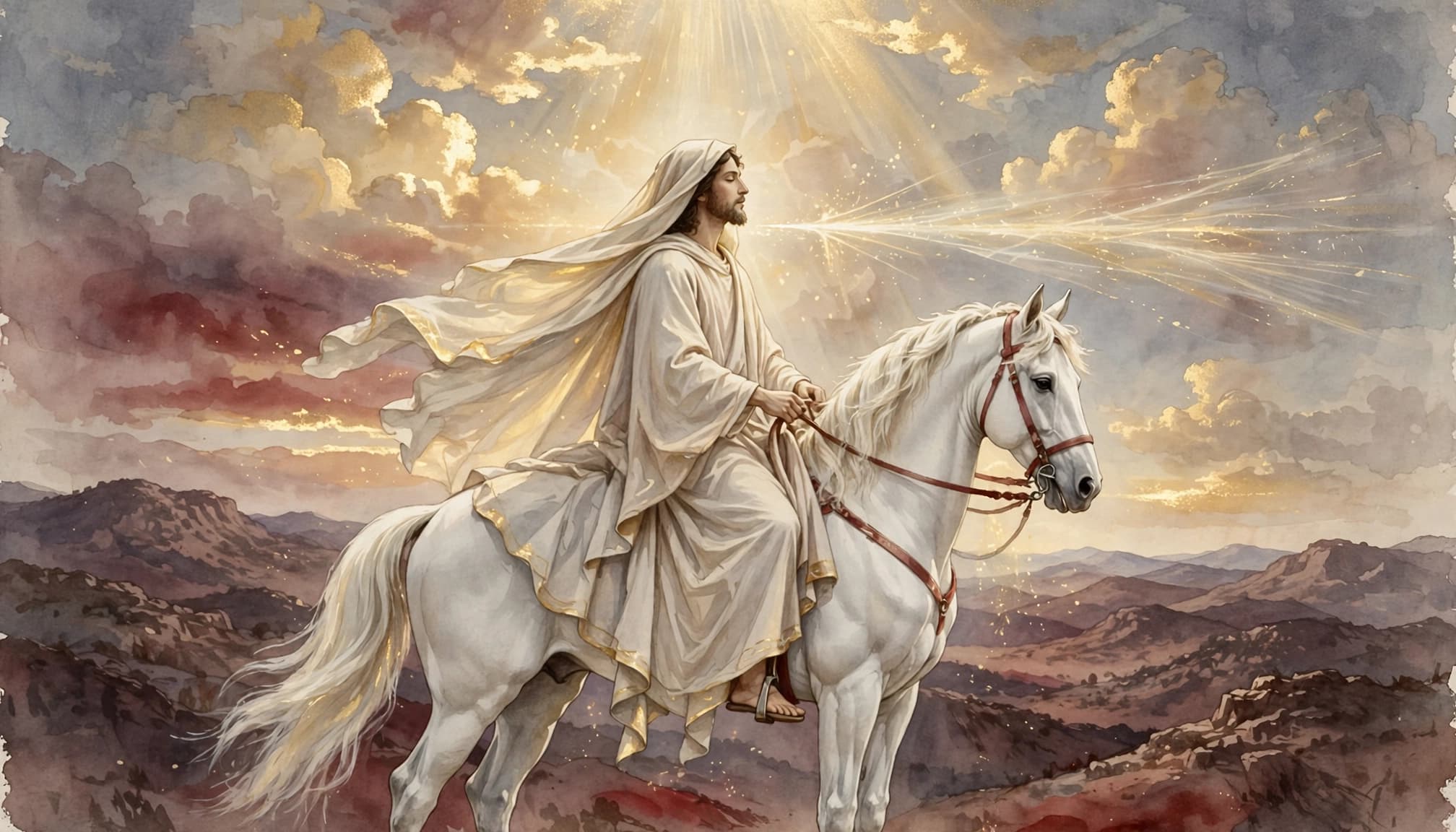
John sees heaven opened and a white horse carrying a rider called Faithful and True. He judges and makes war in righteousness. His eyes are like a flame of fire, and many crowns are on His head. The vision also gives Him a name known only to Himself, calls Him the Word of God, and names Him King of kings and Lord of lords. You can read the passage in Revelation 19's vision of the rider.
Those titles identify the Rider within the vision. They point us to Jesus as the righteous King, not simply to a symbolic figure whose identity depends on matching one detail to an earlier passage. For a closer look at these names, see Christ's titles in Revelation 19:11–16.
The earlier Scriptures add meaning to the vision's images. The iron rod, the sword from His mouth, and the bloodied robe each call to mind different passages. Together, they give us a fuller picture of His authority and judgment.
How to Tell a Direct Allusion from a Thematic Link
When we compare passages, three questions help: Do they share distinctive wording? Do they use similar images? Does the earlier passage's context fit the later one? A strong match across wording and imagery gives us good reason to call something a close allusion. A shared theme alone points to a broader connection.
Psalm 2:9 is a close textual parallel because Revelation 19 uses the image of an iron rod to describe the Rider's rule over the nations. Isaiah 11:4 also belongs in this group. It pictures God's righteous ruler judging the poor and striking the earth with the rod of His mouth. Revelation's righteous judgment and mouth imagery echo that portrait, even though the images are not identical. Isaiah 63:1–6 is another close connection: the divine warrior's blood-marked garments and trampling of the winepress help frame Revelation's bloodied robe and winepress imagery.
Other passages connect through larger Biblical themes. Genesis 3:15 introduces conflict between the serpent and the woman's offspring, a theme Christians often read in light of Jesus' victory. Zechariah 14 describes the day of the Lord and His kingship over all the earth. Daniel 7 shows a humanlike figure receiving dominion over the nations. These passages enrich our understanding, but Revelation 19 does not present each one as a direct quotation or explicitly call it a fulfillment.
That distinction matters. We can trace a meaningful line across Scripture while still reading each passage in its own setting. A close textual echo gives us one kind of evidence; a wider theological connection gives us another.
The Ancient Promise in Genesis and the King in Psalm 2
Genesis 3:15 and Psalm 2 both place God's purposes in the face of opposition, but they do so in different settings. One introduces conflict between the serpent and the woman's offspring; the other depicts nations resisting the LORD and His anointed King. Together, they help us trace a Biblical theme without treating every passage as a direct prophecy of Revelation 19.
Genesis 3:15 Begins a Biblical Theme of Conflict and Victory
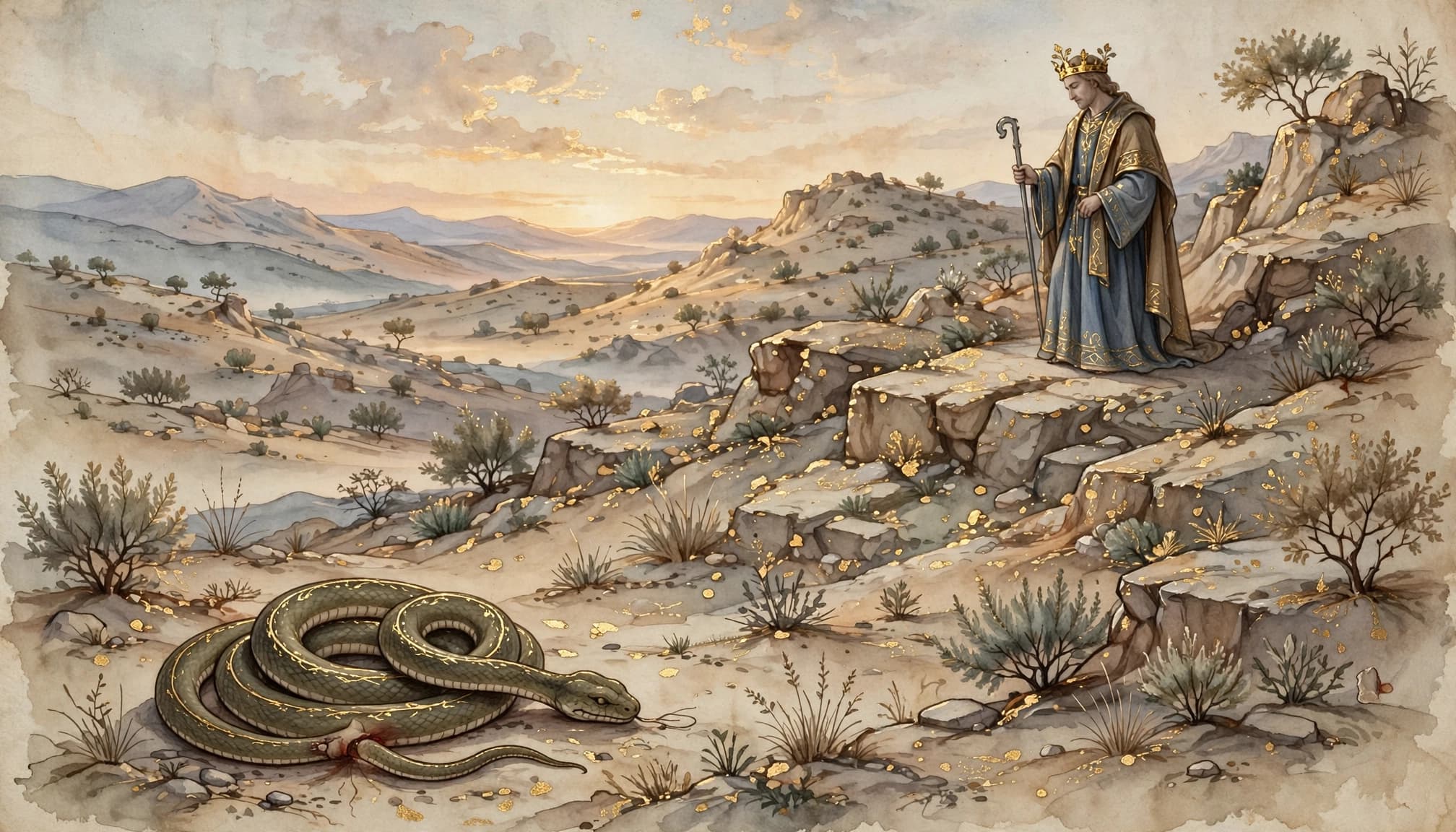
In Genesis 3:15, God declares enmity between the serpent and the woman, and between their offspring. The imagery is sharp: the serpent strikes the offspring's heel, while the offspring strikes the serpent's head. The verse sets out a conflict in which the serpent wounds, but also faces defeat.
The verse itself does not name Jesus or mention Revelation's Rider. Christians read it in light of the wider witness of Scripture, seeing an early promise of victory over evil that comes through suffering. We should keep that distinction clear: Genesis gives us the conflict and the wound, while the Christian reading connects the promise to Christ's victory. For a broader look at that connection, see the promise of victory in Genesis 3:15.
That makes Genesis a thematic connection, not a direct textual source for Revelation 19:11–16. John's vision does not quote the verse or name the serpent's offspring. Still, the earlier promise helps frame the Biblical arc: evil opposes God's purposes, but it does not have the final word.
Psalm 2 Connects the Anointed King with the Iron Rod
Psalm 2 shifts the focus to rulers and nations. They resist the LORD and His anointed, yet God establishes His King and grants Him authority over the nations. The psalm's iron-rod image describes the King's rule and the judgment of those who oppose Him.
Here the connection to Revelation is much closer. Revelation 19:15 uses the iron-rod image for the Rider's authority over the nations, closely echoing Psalm 2:9. English translations render the Hebrew image with words such as "break" or "rule." Those choices emphasize different aspects of the image, but the surrounding passage keeps our attention on God's authority and the King's judgment of opposition.
So we're looking at two related, but distinct, parts of the Biblical picture. Genesis introduces conflict and the promise of the serpent's defeat; Psalm 2 presents God's anointed King ruling over rebellious nations. Christians connect both themes to Jesus, while Psalm 2 provides the clearer textual echo behind Revelation 19's iron rod.
Isaiah 11 Shows a Spirit-Empowered King Who Judges Righteously
Isaiah gives us a portrait of the coming King before Revelation shows Him riding out as judge. He comes from Jesse's family line, carries the Spirit's wisdom, and judges with justice. That matters: His authority is not separated from His character.
A Branch from Jesse, Resting in the Spirit
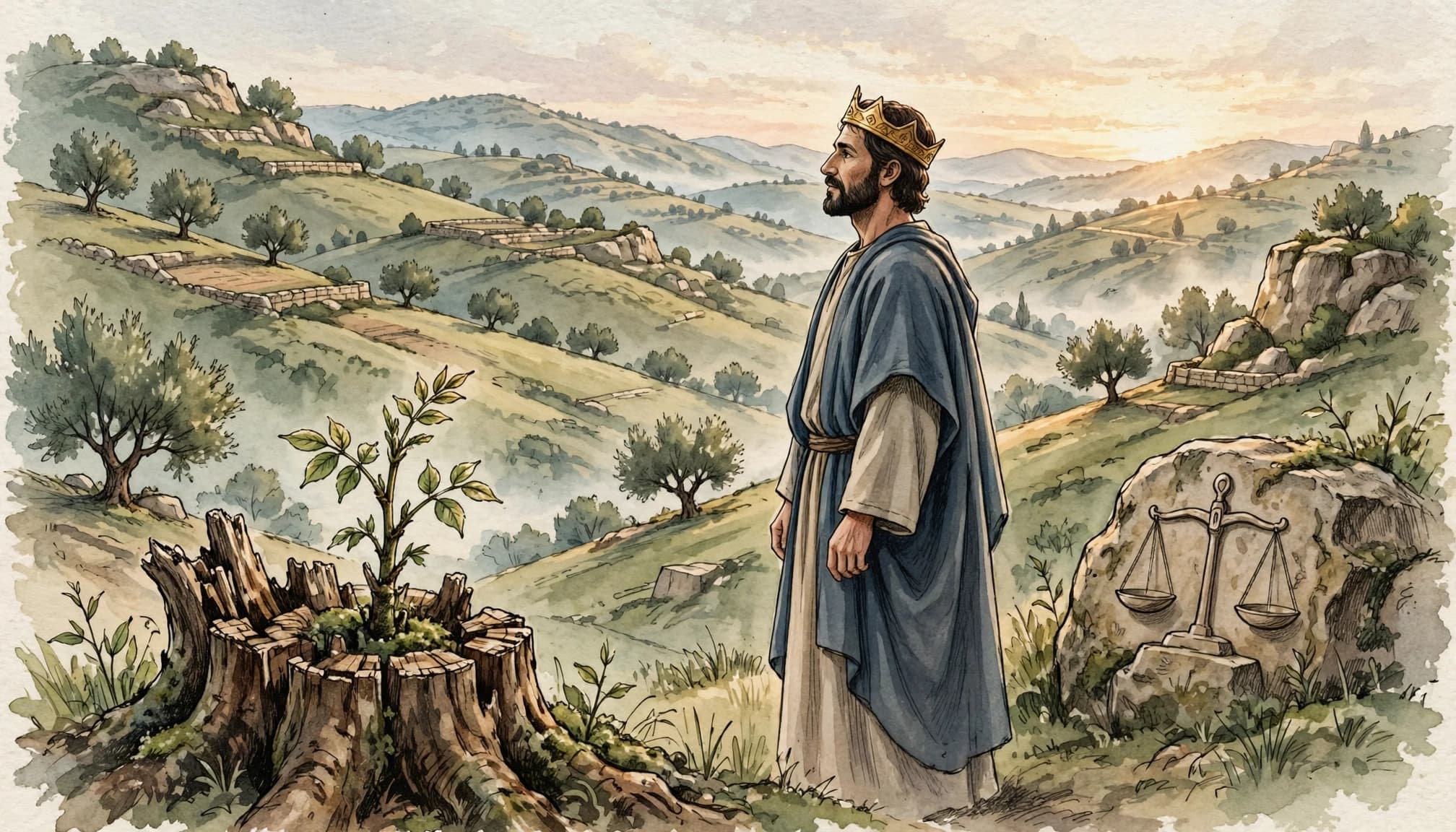
Isaiah's image begins with a shoot growing from Jesse's stump. Jesse was David's father, so the picture points to a ruler from David's line, even when that family's royal power appears cut down. The prophet then describes the Spirit of the Lord resting upon this ruler, giving Him wisdom and understanding, counsel and might, knowledge and reverence for God. We can read the whole portrait in Isaiah 11:1–5.
For Christians, Jesus is this promised Davidic King. Isaiah's vision also gives us a distinctly Spirit-filled portrait of His rule. The Spirit's presence is not a passing detail; it equips the Messiah to judge and lead according to God's will. We can explore Isaiah's prophecy of the Spirit-empowered Messiah for a closer look at this promise.
Justice for the Poor and Judgment for the Wicked
Isaiah says the ruler will judge the poor with righteousness and decide fairly for the meek. He does not judge by appearances or by what He hears from others. That is a striking contrast with human rulers, who can be swayed by status, rumor, or whoever speaks loudest. This King sees truly, and His justice reaches people who are easily ignored.
Then Isaiah's language becomes severe. The ruler strikes the earth with the rod of His mouth, and the breath of His lips puts the wicked to death. Revelation's Rider also judges in righteousness, and a sharp sword comes from His mouth. The images are not identical: Isaiah speaks of a rod and breath, while Revelation pictures a sword. Yet both present judgment as effective authority proceeding from the King's mouth.
So when we compare the passages, we should keep both the shared theme and the different images in view. The sword is not simply another name for Isaiah's rod or breath. Rather, John's vision recalls Isaiah's picture of a ruler whose word carries out judgment. The Rider's victory is the action of the righteous Messiah, not a human ruler claiming divine authority for himself. Isaiah's prophecy helps us see why the Rider judges: He is the Spirit-endowed King from Jesse's line, and His justice reaches both the poor and the wicked.
Isaiah 63 Explains the Bloodied Robe and the Winepress
Isaiah 63 gives us one of the clearest backgrounds for Revelation's bloodied robe and winepress. The connection is strong, but the meaning of the blood on Jesus' garment is still debated. Let's look at Isaiah's scene before deciding how far the comparison takes us.
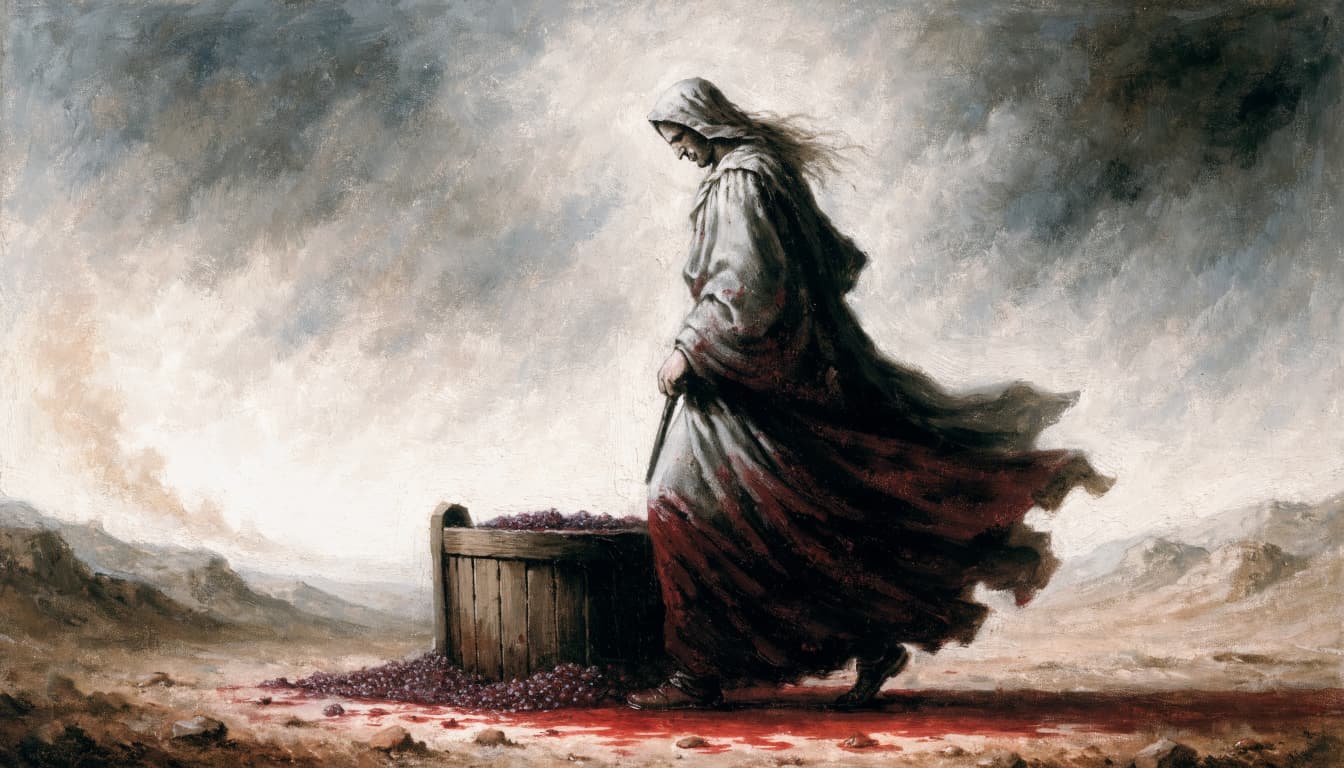
The Warrior Comes from Edom and Bozrah
In Isaiah 63:1-6, the prophet sees a figure coming from Edom, from Bozrah, with garments stained red. Someone asks why His clothing looks this way. The figure answers that He speaks in righteousness and is mighty to save. Then He explains the disturbing image: He has trodden the winepress alone, and the blood of the peoples has spattered His garments.
The setting matters. Isaiah is portraying the Lord as a divine warrior who judges the nations. The winepress is not a peaceful harvest image here. It pictures judgment, with the crushed grapes and their red juice recalling the blood of those who face God's wrath.
John brings that imagery into Revelation. The Rider's robe is described as dipped in blood in Revelation 19:13, and He treads the winepress of God's wrath in Revelation 19:15. The combination echoes Isaiah's warrior, stained garments, and winepress. For another look at Isaiah's warrior and Revelation's winepress, we can compare the passages side by side.
Whose Blood Stains the Robe?
Here's where we need to slow down. Isaiah 63 says the warrior's garments are stained by the blood of peoples, which strongly supports reading Revelation's robe as bearing the blood of God's enemies. That reading fits the winepress imagery and Revelation's scene of judgment.
But interpreters differ. Some understand the robe as stained with the enemies' blood; others see an allusion to Christ's own sacrificial blood. Some readers hold that both associations are present: the Rider is the slain Lamb who also comes in judgment. A discussion of whose blood stains the Rider's robe lays out the interpretive question, but Revelation does not directly explain the blood's identity.
So we should avoid treating one answer as settled beyond dispute. Isaiah makes the judgment connection unmistakable, while Revelation also identifies the Rider as the Word of God and the King of kings. The image holds together Christ's identity as Savior and Judge, even as readers debate how the robe's blood should be understood.
Zechariah and Daniel Add Context Without Replacing the Closer Parallels
Zechariah and Daniel help us see the Rider in the wider Biblical picture of God's King and His rule. But their visions differ from Revelation 19 in important ways. Let's keep those differences in view as we compare them.
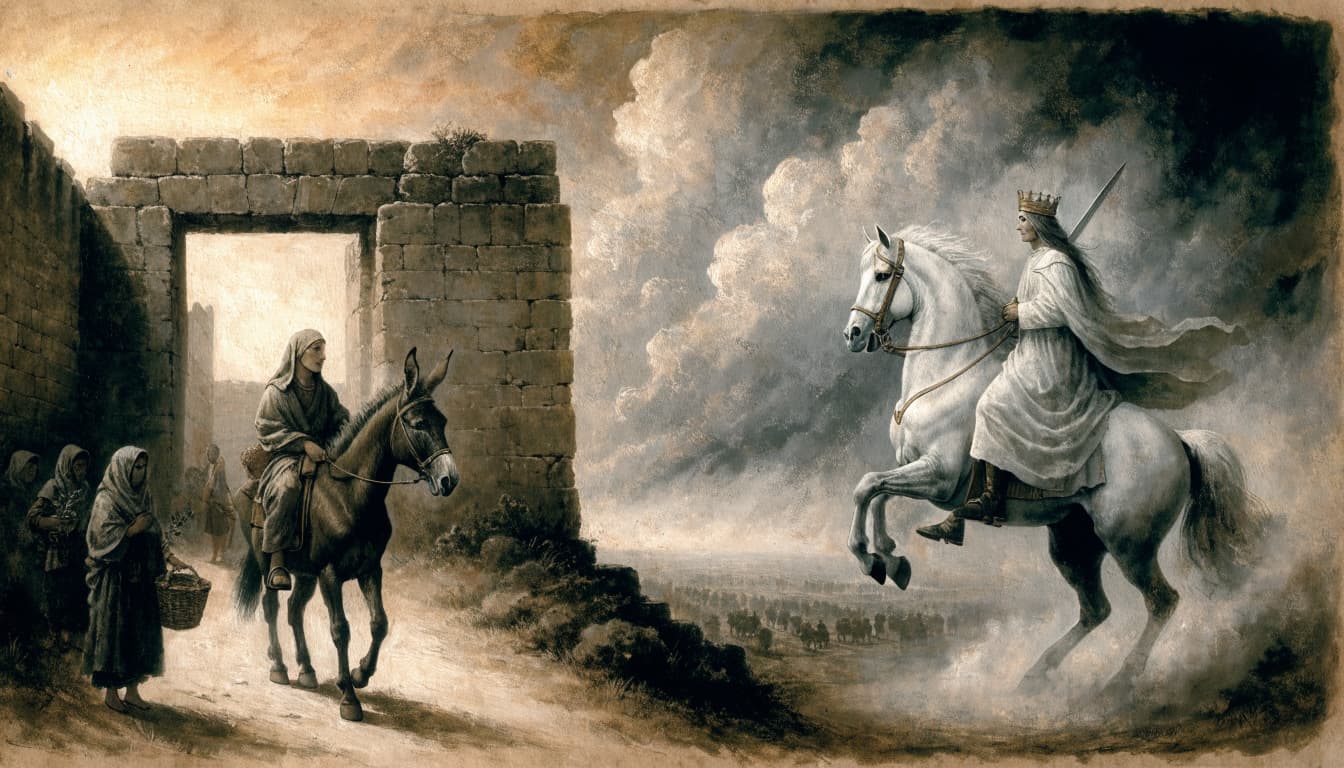
Zechariah Presents Both Peaceful Kingship and the Day of the LORD
In Zechariah 9, Zion's King comes humble, riding on a donkey. He removes the tools of war and proclaims peace to the nations. His rule reaches far beyond Israel, but the passage emphasizes peace, humility, and the end of warfare.
Revelation 19 gives us a different scene. The Rider comes on a white horse to judge and make war in righteousness. We can read these portraits together as complementary pictures of the King, but we shouldn't collapse them into one image. Zechariah's donkey and Revelation's white horse carry different emphases: peace-bringing kingship in one passage, judgment against evil in the other. Zechariah 9 does not supply Revelation's white horse.
Zechariah 14 adds another layer. It describes the day of the LORD, nations gathered against Jerusalem, the LORD's intervention, and His kingship over all the earth. Those themes give us helpful background for Revelation's picture of divine victory and universal rule. Still, Zechariah 14 has its own setting and details, including Jerusalem and the Mount of Olives. We should treat it as a thematic connection, not as a direct description of Revelation 19.
For more on Zechariah's humble King and the promise of peace, we can look at how that portrait fits the broader Biblical hope of Jesus' reign.
Daniel 7 Points to the Messiah’s Universal Dominion
Daniel sees "one like a son of man" coming with the clouds to the Ancient of Days. He receives dominion, glory, and a Kingdom, and peoples and nations serve Him. His dominion will not pass away. The vision's central image is coming with the clouds, not riding a horse.
That distinction matters when we compare Daniel with Revelation 19. Daniel gives us a strong background for the Rider's authority over the nations, but it does not explain the horse, the robe, or the Rider's weapon. Those details connect more closely with other prophetic passages. We can say the visions share the theme of the Messiah's universal rule without claiming that Daniel directly supplies Revelation's imagery.
Christians connect Daniel's Son of Man with Jesus, who receives the Kingdom and reigns over the nations. Revelation's Rider is named Faithful and True and King of kings and Lord of lords. Daniel adds context to that authority; he does not replace the closer parallels in Psalm 2, Isaiah 11, and Isaiah 63.
Revelation 6 and Revelation 19 Show Why the White Horse Needs Context
Two riders appear on white horses in Revelation, and both are linked with conquest. That overlap invites comparison, but it doesn't settle whether they are the same figure. We need to look at what each passage actually says, especially where their details differ.
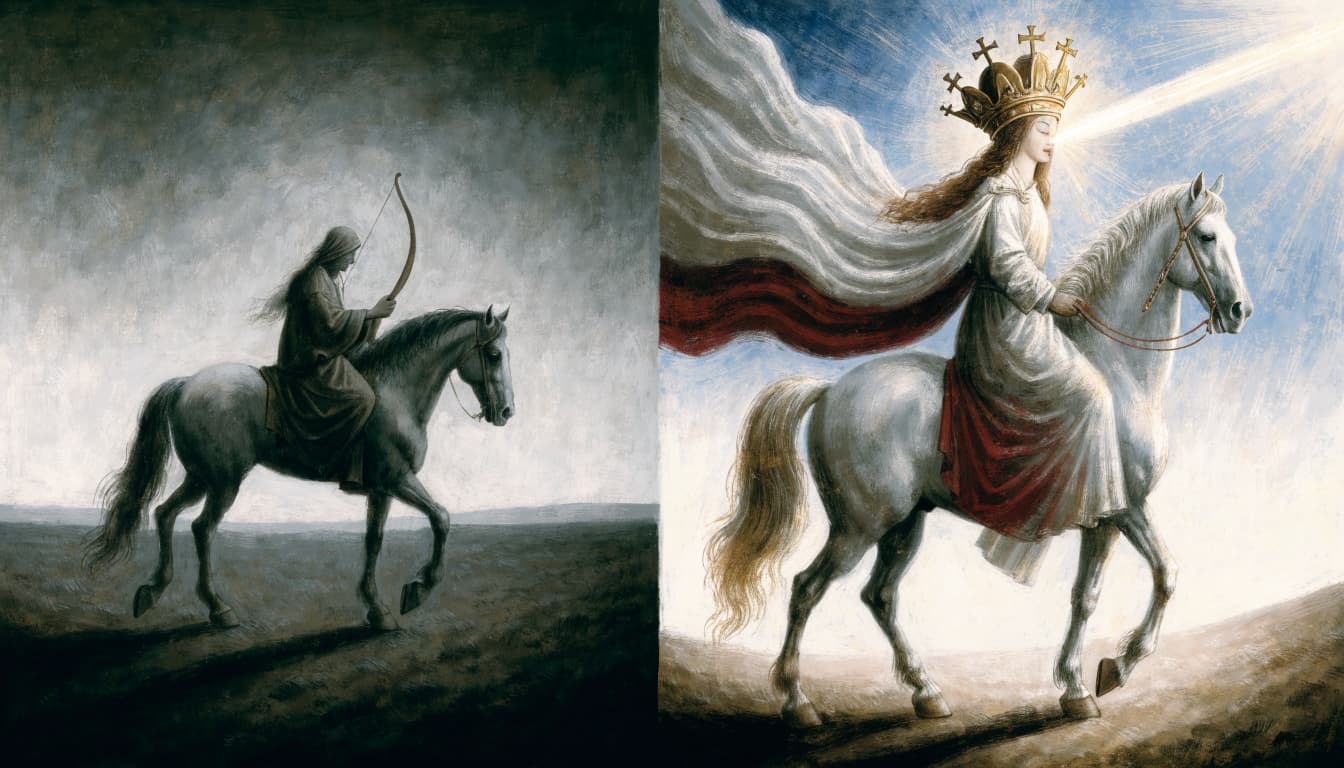
The First Horseman Is Not Identified by Name
At the opening of the first seal, John sees a white horse. Its rider carries a bow, receives a crown, and goes out conquering. The vision does not call him Jesus, the Word of God, or King of kings. You can read the details in Revelation 6:1–2.
So who is this horseman? Christians have offered different answers. Some understand him as Christ or the spread of the Gospel; others see conquest, imperial power, or a deceptive force that imitates rightful authority. The passage itself leaves his identity unstated, so we shouldn't treat any interpretation as though John named the rider. A commentary on Revelation 6:1 surveys the question and the range of views.
The crown and conquest imagery matter, but they don't answer the identity question by themselves. Revelation uses symbols in different ways, and a shared symbol does not automatically point to the same person every time.
Revelation 19 Gives Its Rider Clearer Titles
The later vision also shows a rider on a white horse, but John gives us more to work with. This Rider is called Faithful and True. He judges and makes war in righteousness, is called the Word of God, and bears the title King of kings and Lord of lords. Read the full description in Revelation 19:11–16.
Those names and titles identify Jesus within the vision. The white horse and victory imagery fit the scene, but the Rider's identity rests on more than the horse. We can look at Jesus' authority and titles in Revelation 19 for a closer look at how the passage identifies Him.
The differences are worth keeping in view. Revelation 6 gives its rider a bow and a single crown; Revelation 19 describes a sword from the Rider's mouth and many crowns. Most important, Revelation 19 names and titles its Rider, while Revelation 6 does not.
That doesn't prove the two riders must be different, but it does mean we should avoid assuming they are the same. Let each passage speak first. Compare the details, then weigh the interpretations; the white horse alone cannot settle the question.
A Careful Reading Keeps the Prophecies Together Without Forcing Them
The earlier passages do not all connect to Revelation 19 in the same way. Some share clear wording and images; others add a broader Biblical theme. Keeping that difference in view lets us see how the Rider's judgment, kingship, and saving purpose belong together.
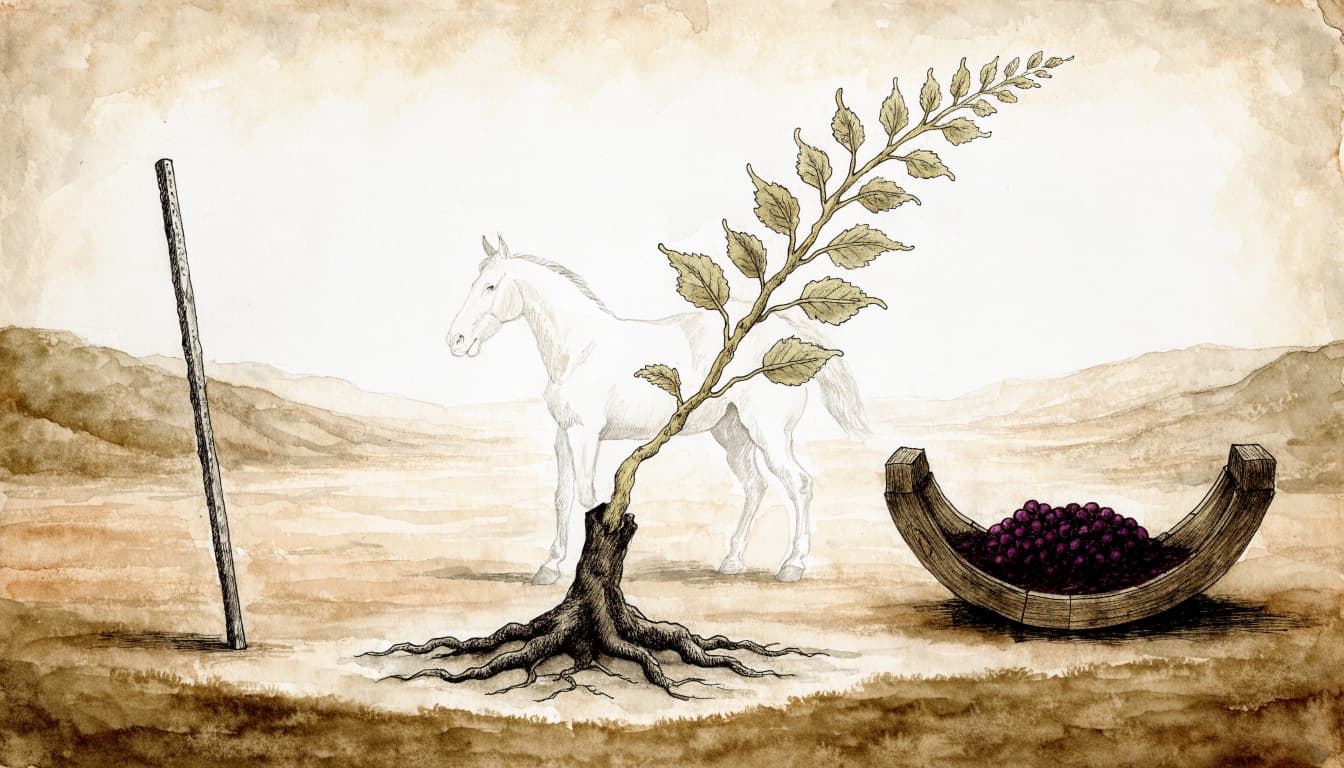
The Strongest Links Are Specific and Textual
The iron rod in Revelation 19:15 closely echoes the King's rule in Psalm 2:9. Isaiah's portrait of the righteous ruler also fits: Isaiah 11:4 describes judgment through the rod of His mouth and the breath of His lips. Revelation uses different mouth imagery, a sharp sword, but both passages show the King's word carrying out judgment.
The bloodied robe and winepress draw on Isaiah 63:1-6, where the divine warrior's garments are stained as He treads the winepress. Readers disagree about whether Revelation's robe carries the blood of Christ's enemies, His own blood, or both associations. The connection to judgment is strong, while the precise meaning of the blood remains open to interpretation. A study of Revelation's use of Old Testament imagery offers another perspective on these prophetic connections.
The Wider Themes Still Matter
Other passages enrich the picture without supplying the Rider's specific details. Genesis 3:15 introduces the conflict between the serpent and the woman's offspring, a theme Christians connect with Jesus' victory over evil. Daniel 7:13-14 adds the vision of a humanlike figure receiving lasting dominion over the nations. Zechariah's portraits of a peace-bringing King and the LORD's rule over all the earth offer further context, though they do not describe Revelation's white horse or bloodied robe.
We don't have to make every image a literal object or assign every detail a one-to-one match. The images carry real Biblical meaning: the iron rod speaks of royal authority, the sword from the mouth points to effective judgment, and the winepress depicts God's judgment against evil. Symbolic language can make a serious claim without requiring every feature to appear physically as pictured.
And the Rider is more than a figure of judgment. Revelation calls Him Faithful and True, and Isaiah describes the warrior as mighty to save. We can hold both truths together: Jesus judges righteously, and His victory belongs to God's saving purpose. The prophetic witness to Jesus as King brings those themes into focus.
Conclusion
Psalm 2's iron rod, Isaiah 11's Spirit-endowed and righteous ruler, and Isaiah 63's divine warrior and winepress most clearly illuminate Revelation 19. Together, they show Jesus as the King who judges righteously and rules with God-given authority. For a closer look at Psalm 2's rod of iron in Revelation 19, we can compare the passages side by side.
Genesis, Zechariah, and Daniel add wider Biblical themes of conflict, kingship, and God's rule over the nations. As we compare these Scriptures, context helps us distinguish direct textual links from broader theological connections.
Revelation 19’s Rider: Earlier Prophecies Compared
From the Psalms to the prophets, trace the promises that illuminate heaven’s victorious Rider.
The Promised King Revealed
See the Scriptures Converge
Follow the Biblical threads that identify the Rider and reveal the hope of His return.
A Vision Rooted in Scripture
Who Rides the White Horse?
Revelation 19:11–16 opens heaven to reveal a Rider on a white horse, called Faithful and True, who judges and makes war in righteousness. His appearance is not an isolated image: earlier passages speak of a righteous king, a divine warrior, and the Lord’s decisive reign. This article compares those promises with John’s vision, asking how each text helps us understand the Rider’s identity, His victory, and the future hope centered on Jesus.
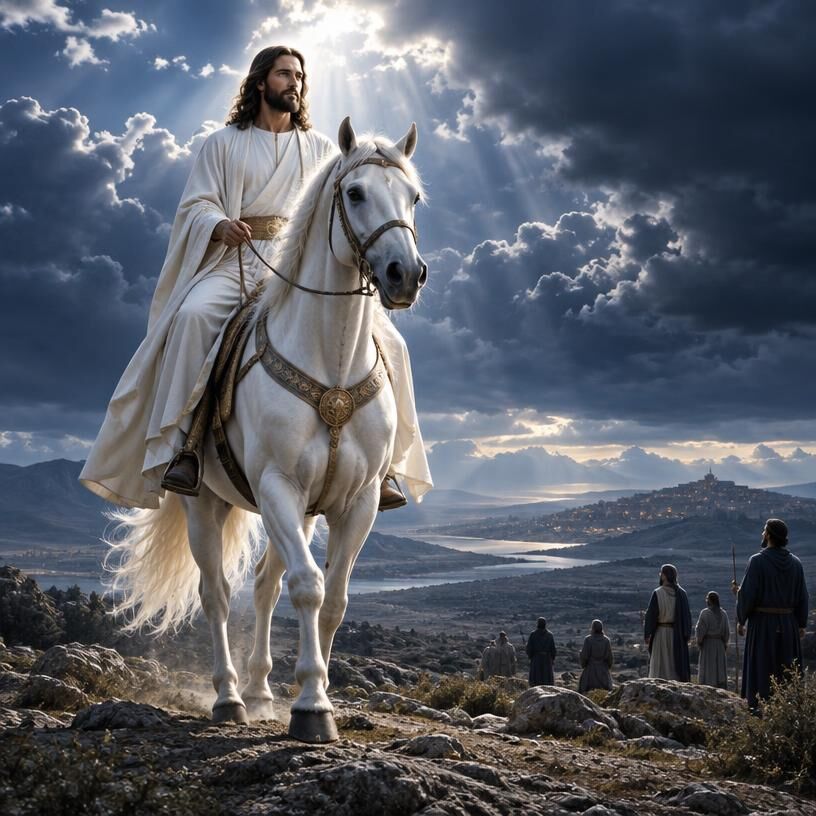
The Rider Is Jesus, the Victorious King
Revelation identifies the Rider through titles and actions that point to Jesus. He is called the Word of God and King of kings and Lord of lords; He wears many diadems, strikes the nations with the sword from His mouth, and rules with a rod of iron. These details echo the royal authority promised in Psalm 2 and the messianic judgment pictured in Isaiah 11.
The vision presents Christ not as a bystander to history, but as the faithful judge who brings God’s purposes to completion. Comparing the earlier prophecies helps us see why His return means both righteous judgment and enduring hope for those who belong to Him.
“And he was clothed with a vesture dipped in blood: and his name is called The Word of God. And he hath on his vesture and on his thigh a name written, KING OF KINGS, AND LORD OF LORDS.”
Revelation 19:13, 16 (KJV)
Earlier Prophecies That Illuminate the Rider
Genesis 3:15 — The promised seed defeats the serpent.
Genesis 49:10 — The scepter belongs to Judah.
Numbers 24:17 — A star and scepter rise from Jacob.
Psalm 2:7–9 — The anointed Son rules the nations.
Psalm 45:3–6 — The royal warrior rides for truth and righteousness.
Psalm 72:8–11 — The king receives the allegiance of nations.
Psalm 110:1–6 — The enthroned Lord judges earthly rulers.
Isaiah 11:1–5 — Jesse’s descendant judges with righteousness.
Isaiah 63:1–6 — The divine warrior’s garments bear the marks of judgment.
Daniel 2:44 — God’s kingdom outlasts every earthly kingdom.
Daniel 7:13–14 — The Son of Man receives everlasting dominion.
Micah 5:2–4 — Bethlehem’s ruler shepherds in the Lord’s strength.
Zechariah 9:9–10 — Zion’s king brings peace to the nations.
Zechariah 14:3–9 — The Lord fights and reigns over all the earth.
Malachi 4:1–3 — The day of the Lord overturns the wicked.
Matthew 24:29–31 — The Son of Man appears in power and glory.
2 Thessalonians 1:7–10 — Jesus is revealed as judge.
Jude 14–15 — The Lord comes with his holy ones to execute judgment.
The Rider and the Prophetic Portrait
Revelation 19 gathers earlier promises of a righteous king, victorious judge, and universal ruler into one vision of Jesus Christ.
Revelation 19:11–16
A white horse signals the Rider’s victorious arrival.
Called Faithful and True, he judges and makes war in righteousness.
A sharp sword comes from his mouth to strike the nations.
His robe is dipped in blood, and he treads the winepress of divine wrath.
His title declares him King of kings and Lord of lords.
Earlier Prophetic Passages
Psalm 45:3–5 portrays a royal warrior riding for truth.
Isaiah 11:4 foretells righteous judgment by the ruler from Jesse.
Isaiah 11:4 says he strikes the earth with the rod of his mouth.
Isaiah 63:1–6 depicts a bloodstained divine warrior and a winepress.
Daniel 7:13–14 grants the Son of Man dominion over all peoples.
Revelation 19’s Rider in the Light of Earlier Prophecy
Bible Prophecy Ministries traces the promises of Scripture across the prophets, the Gospels, and Revelation to show how their fulfillment centers on Jesus. The ministry’s ongoing work of comparing passages gives readers a way to study what God has already done and what Scripture says is still to come. That approach is especially valuable when reading Revelation 19: its rider appears as a victorious judge and king, but his identity becomes clearer when the vision is read alongside earlier prophecy.
Isaiah 11 describes a ruler who judges with righteousness; Psalm 2 speaks of the Messiah’s authority over the nations; and Daniel 7 portrays the Son of Man receiving an everlasting kingdom. Isaiah 63’s imagery of judgment also echoes in Revelation’s portrait. These passages do not tell separate histories about competing deliverers. Together, they illuminate the same Messiah: Jesus, faithful to God’s promises, just in judgment, and sovereign in victory.
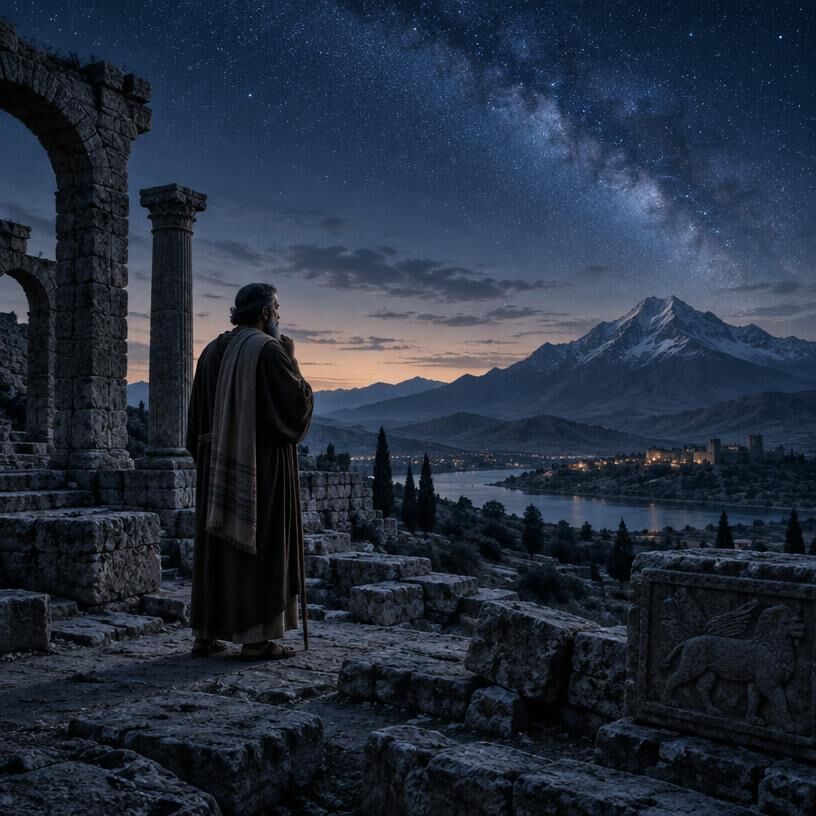
Why These Connections Matter
Revelation 19 becomes richer when its images are read in conversation with the Scriptures that came before it. The rider’s righteous judgment recalls Isaiah’s promised king, while his rule over the nations brings Psalm 2 into view. Daniel’s vision helps readers see that this victory belongs within God’s long-promised kingdom, not merely within a dramatic final scene.
For readers studying Bible prophecy, these connections encourage careful reading rather than speculation. They also reveal a consistent picture of Jesus: the Messiah who fulfills God’s promises is the king who will bring them to their appointed completion. Comparing the passages helps us recognize both the continuity of Scripture and the hope at the heart of its prophetic message.
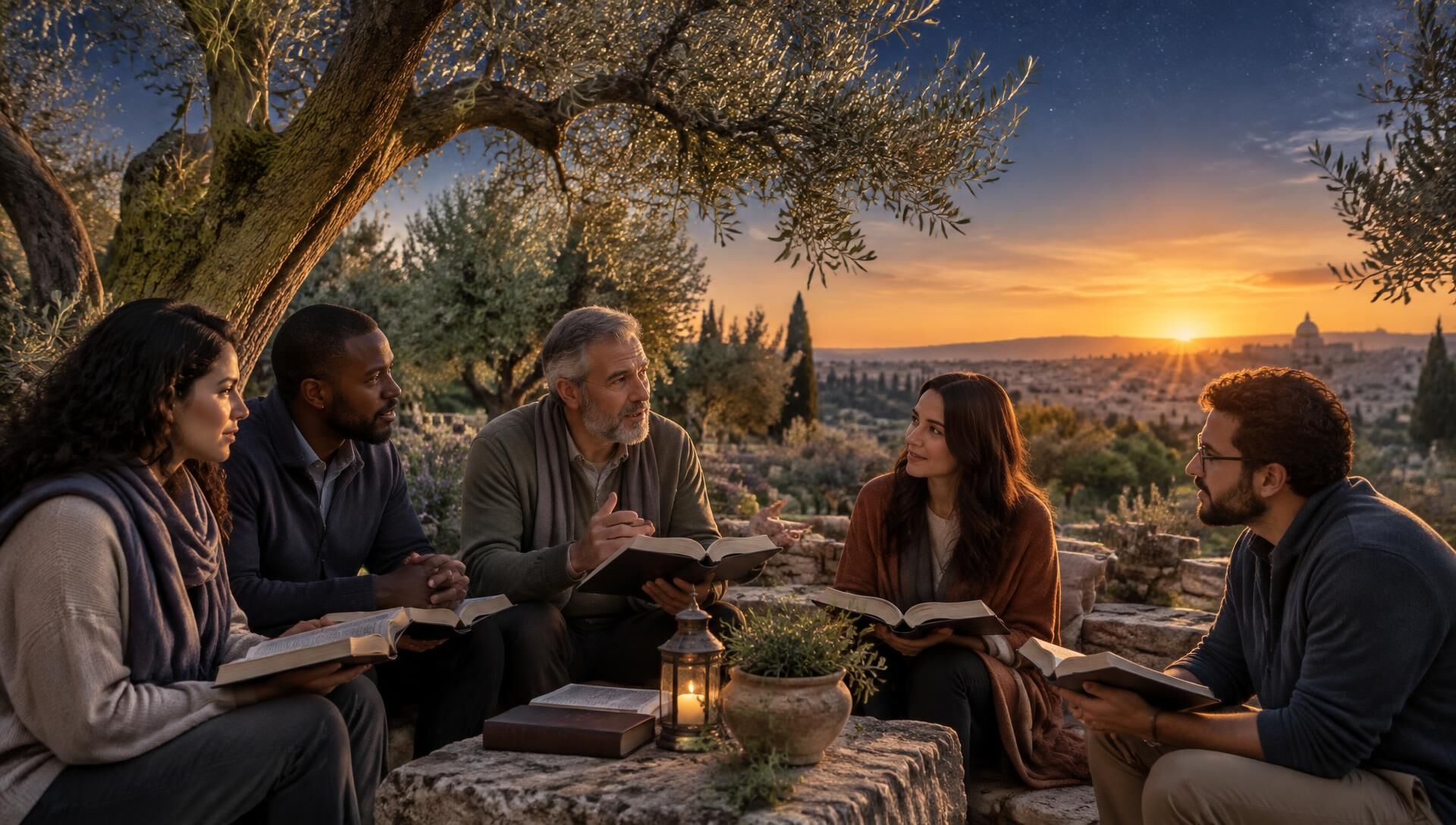
Keep Following the Promises to Jesus
Continue exploring Bible prophecy with Bible Prophecy Ministries. Compare the promises, examine their fulfillment, and discover how Scripture’s unfolding history points to Jesus—from the words of the prophets to the vision of Revelation 19.