
How Jesus Fulfills the Bible’s Kingdom Promises
The Bible carries one connected witness: God's promises begin in Genesis, take shape through Israel and the prophets, come into view in Jesus, and point toward His return. The Kingdom means God's reign and rule, a reality Jesus made known through His words and works.
When the Bible's promises can feel like separate passages, we can miss the hope that holds them together. We believe the Holy Spirit still helps us see Jesus at the center of Scripture and empowers us to live as witnesses to His Kingdom.
Let's follow that witness from the first promises to the hope of final renewal, beginning where the Bible does: with creation and God's promise of blessing. For more on how Jesus fulfills Biblical prophecy, keep that larger scriptural witness in view.
From Promise to Kingdom: The First Hope Begins in Genesis
Genesis opens with God creating a world and giving humanity a calling within it. The Kingdom theme begins to take shape through that relationship: God rules, people serve as His stewards, and His purposes reach beyond one family to bless the nations.
Creation, human calling, and the promise of victory
In Genesis 1:26–28, God creates humanity in His image and entrusts people with care and authority over other creatures. This is delegated rule, not permission to exploit the earth. Humanity is called to cultivate life under God's authority, reflecting His good purposes in creation.
Then human rebellion fractures that calling. In Genesis 3:15, God speaks of enmity between the serpent and the woman, and between their offspring. The verse describes conflict and a wound to the serpent's head and the woman's offspring's heel. It doesn't spell out a full Kingdom timeline or name Jesus directly.
Still, Christians have often read this verse as an early promise that evil will ultimately be defeated. We read it alongside the wider witness of Scripture, which identifies Jesus as the One who conquers sin and death. That later Christian understanding matters, but we shouldn't confuse it with the verse's immediate wording.
Abraham’s covenant brings blessing to the nations
After the account of Babel, God calls Abram and gives the growing promise a particular family through which blessing will reach the whole earth. In Genesis 12, God promises Abram descendants, a great nation, and blessing for all the families of the earth. Genesis 15 develops the promises of descendants and land through God's covenant with Abram. In Genesis 17, God renames him Abraham and promises that he will become the father of many nations. Genesis 22 renews the promise that blessing will reach the nations through Abraham's offspring.
The covenant holds together people, land, and blessing. Those promises begin in Israel's history, while their reach extends beyond Israel. We shouldn't flatten that particular history into a vague prediction, or assume every Christian tradition understands Israel, the Church, and the land in the same way.
Paul connects Abraham's blessing with Jesus in Galatians 3. He says the promise that the nations would be blessed reaches the Gentiles through faith in Christ, and he identifies Christ as the promised Seed. Those who belong to Jesus share in Abraham's blessing and receive the promise of the Spirit. We see a clear New Testament connection here, while still recognizing that Christians differ on how these promises relate to Israel and the Church. For a closer look, see how Abraham's covenant points to Jesus.
Genesis gives us the first movement of promise, not a complete Kingdom timeline. God's purposes begin in creation, continue through Abraham's family, and open toward blessing for all nations.
Israel’s Kings and Prophets Keep the Kingdom Hope Alive
Israel's history develops the Kingdom theme through covenant, monarchy, exile, and prophetic hope. The kings never stood above God's covenant, and their failures sharpened the hope for a righteous ruler who would lead God's people in faithfulness.
Israel is called to live under God’s rule
At Sinai, God calls Israel His treasured possession and "a kingdom of priests and a holy nation" (Exodus 19:4–6). Israel's calling was communal: live as God's people and make His holiness known among the nations. Their national life was meant to show what it looked like to live under His rule.
That calling shaped the limits God placed on Israel's king. The king was to read God's law and obey it, without multiplying horses, wives, or wealth for himself (Deuteronomy 17:14–20). Israel could have a king, but he was still accountable to God. His authority was never a license to rule by his own standards.
When Israel asked for a king "like all the nations" (1 Samuel 8:4–9), Samuel warned them about the costs of royal power. The request revealed a desire to match neighboring nations, but it doesn't explain the whole monarchy. Israel's kings became part of its history, and God later made a covenant with David that promised an enduring royal line. We can read more about God's covenant with David.
The monarchy still failed. Division, injustice, and idolatry led the kingdoms toward conquest and exile. Yet the prophets did not leave Israel with failure as the final word.
The prophets promise a righteous King and a renewed people
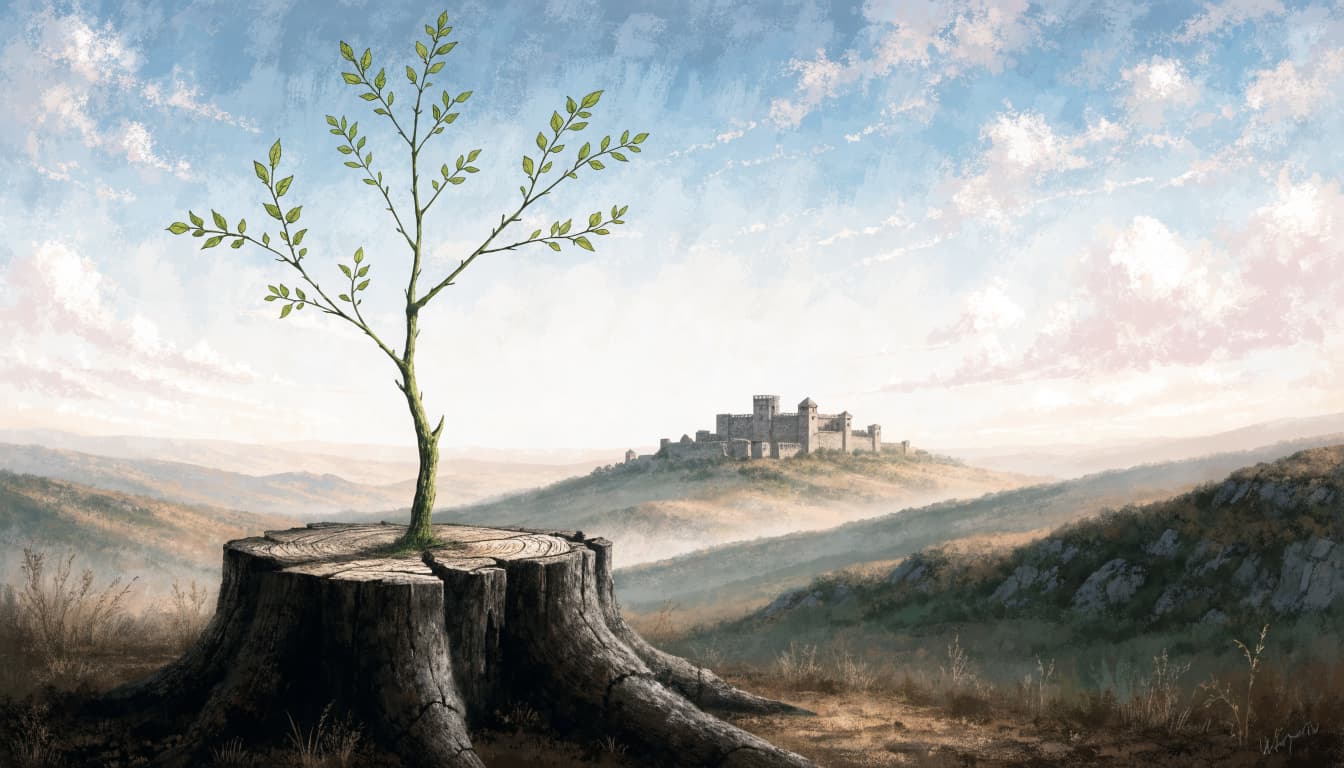
Isaiah looks ahead to a Davidic ruler whose government brings justice and peace (Isaiah 9:6–7). Later, Isaiah pictures a shoot from Jesse's line ruling with righteousness (Isaiah 11:1–5). The hope is bigger than another king taking David's throne. It is a ruler who judges rightly and leads under God's Spirit.
Jeremiah adds a promise of a new covenant, with God's instruction written on the people's hearts and their sins forgiven (Jeremiah 31:31–34). Ezekiel joins that renewal to restoration, a new heart, and God's Spirit within His people (Ezekiel 36:24–28). He also speaks of David's descendant ruling as shepherd while God dwells among His people (Ezekiel 37:24–28).
Daniel sees "One like the Son of Man" receiving an everlasting dominion (Daniel 7:13–14). Joel promises that God will pour out His Spirit on all flesh (Joel 2:28–29). Together, these visions hold out hope for a righteous King, a renewed people, God's presence, and the Spirit's work. For a Pentecostal reading of God's Kingdom as present through His activity yet awaiting its fullness, see the Assemblies of God position paper on the Kingdom.
Around AD 30, Jesus Announces God’s Kingdom and Makes It Visible
Around AD 30 is a common approximate date for the events at the center of Jesus' public ministry. The Bible doesn't give that calendar date, and scholars don't all agree on the exact year. What the Gospels make clear is what Jesus proclaimed: God's Kingdom had drawn near, and His ministry showed people what that meant.
Jesus fulfills the prophetic hope through His words and works
Mark says Jesus began preaching in Galilee after John was arrested. His message was direct: "The time is fulfilled, and the kingdom of God is at hand," so people should repent and believe the good news (Mark 1:14–15). Jesus wasn't announcing a distant hope with no connection to the present. He said God's reign was near, and then demonstrated its power.
In Nazareth, Jesus read from Isaiah about good news for the poor, freedom for captives, sight for the blind, and liberty for the oppressed. He then said, "Today this Scripture is fulfilled in your hearing" (Luke 4:16–21). We see His claim plainly: the prophetic hope was being fulfilled through His Spirit-anointed mission. For more on Jesus' Spirit-anointed Kingdom mission, we can look closely at the connection Luke draws between Isaiah and Jesus' ministry.
Jesus pointed to His works when John the Baptist's disciples asked whether He was the coming One. He told them to report what they had seen and heard: the blind received sight, the lame walked, people with leprosy were cleansed, the deaf heard, the dead were raised, and the poor heard good news (Luke 7:18–23). Healing and deliverance weren't side notes. They were visible signs of God's reign breaking into people's lives.
When Jesus answered the accusation that He cast out demons by demonic power, He said that casting them out by God's Spirit meant God's Kingdom had come upon His hearers (Matthew 12:28). The Gospel accounts show the Kingdom at work through Jesus' teaching, healing, deliverance, and good news for the poor.
The Kingdom is present, yet we still pray for its fullness
Jesus taught His disciples to pray, "Your kingdom come. Your will be done on earth as it is in heaven" (Matthew 6:9–10). That prayer holds two truths together. In Jesus' ministry, God's reign was already active; yet His followers were still to ask for its full expression on earth.
From a Pentecostal viewpoint, the Holy Spirit's work is a real sign of God's reign. We believe the Spirit still empowers witness, brings people to Jesus, and gives gifts for ministry. The Assemblies of God describes this same present-and-future shape in its position paper on the Kingdom of God. Still, present signs don't mean every promise has reached completion. Sickness, oppression, and death remain, so we pray and serve with hope while awaiting the day God's Kingdom comes in fullness.
The Cross and Resurrection Reveal the Victory of the King
Jesus' suffering did not cancel His kingship. The Gospels show the King entering suffering willingly, and the apostles proclaim that God raised and exalted Him. The cross accomplishes salvation; the resurrection declares that death could not hold Him.

Jesus’ death places kingship at the heart of the cross
When Pilate questions Jesus, He speaks openly about His Kingdom and says His kingship is not from this world (John 18:33–37). That answer does not make His reign a mere symbol or private idea. Jesus explains that His Kingdom does not come from the world's systems of power. His authority comes from God.
The charge against Jesus and the inscription above Him make the royal claim plain. Pilate asks, "Are You the King of the Jews?" and the inscription reads, "JESUS OF NAZARETH, THE KING OF THE JEWS" (John 19:1–22). Mark also records the soldiers mocking Him as "King of the Jews" (Mark 15:1–39). They treat His kingship as a joke. The Gospel accounts invite us to see the bitter irony: the King is rejected and crucified, yet He gives Himself to save.
The cross is more than a political symbol. Jesus' death is the saving work through which He bears sin and opens the way to God. Even as He hangs on the cross, a repentant criminal asks Jesus to remember him when He comes into His Kingdom. Jesus answers with a promise of paradise (Luke 23:39–43). There, hope rests not on the criminal's power or record, but on the mercy of the crucified King.
The resurrection confirms His lordship and points to the end of death
Peter's Pentecost sermon connects Jesus' resurrection and exaltation to God's promise to David. David died, Peter explains, but he spoke of a descendant whose body would not remain in the grave. God raised Jesus and exalted Him, and Peter declares that God has made Him "both Lord and Christ" (Acts 2:22–36). We see the King's suffering followed by God's vindication. Jesus is alive and reigning.
Paul takes that hope further. Christ is "the firstfruits" of those who have died, the beginning of the resurrection harvest (1 Corinthians 15:20–28). His victory is already secured, but death has not yet been destroyed in its final sense. Christ reigns until every enemy is put under His feet, and the last enemy to be destroyed is death.
That is the hope we hold: Jesus reigns now, and His Kingdom will reach its fullness. For more on the risen Jesus as David's promised King, we can follow Peter's message back to God's covenant promise.
Pentecost Sends the Church to Witness in the Spirit’s Power
The risen Jesus taught His disciples about the Kingdom, then sent them to bear witness in the Spirit's power. Pentecost connects that mission to Joel's promise and shows how God's blessing begins reaching people beyond Israel.
Pentecost joins Joel’s promise to the risen Jesus
After His resurrection, Jesus spent time with His disciples and spoke about the Kingdom of God (Acts 1:3–8). They asked whether He would restore the Kingdom to Israel at that time. Jesus didn't give them a timetable. He told them the Father held the times and seasons, then pointed them toward their calling: they would receive power when the Holy Spirit came upon them and become His witnesses to the ends of the earth.
That answer doesn't make their question meaningless, or settle every debate about Israel's future. It turns their attention to the mission immediately before them. The disciples were to proclaim the risen King, beginning in Jerusalem and reaching outward.
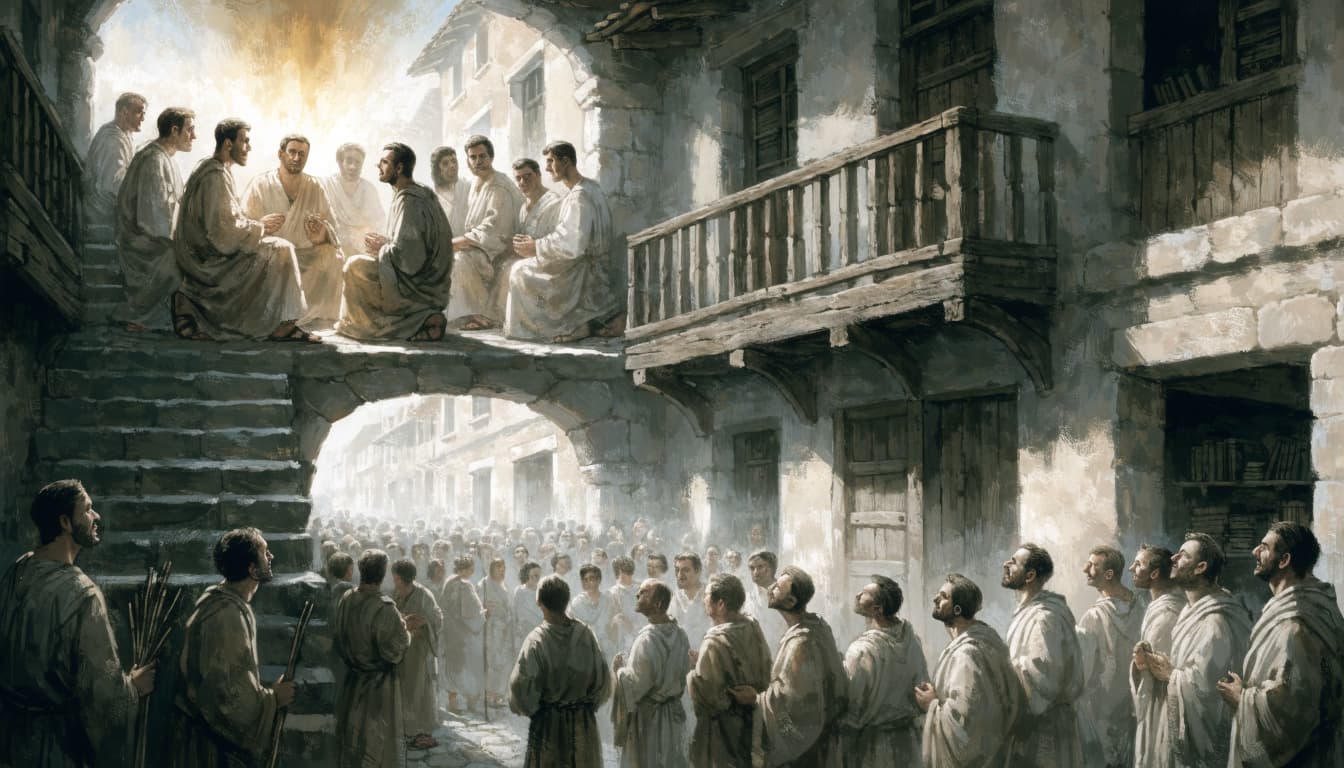
At Pentecost, the Spirit came upon the gathered disciples, and people from many nations heard them speaking in their own languages (Acts 2:1–21). Peter explained the event by quoting Joel's promise that God would pour out His Spirit on all flesh. The promise was no longer only a distant prophetic hope. God was beginning to fulfill it among His people.
Peter's message also centered on Jesus. God raised Him from the dead and exalted Him, and Peter declared that Jesus is both Lord and Christ (Acts 2:32–36). Pentecost, then, is more than a remarkable display of spiritual power. The Spirit empowers the Church to testify that the crucified Jesus is alive and reigns.
We believe the Spirit still empowers believers for witness and ministry. The Church participates in the Kingdom's mission, but the Church is not simply identical to the Kingdom. God's reign is greater than any institution or congregation, even as He uses His people to make the good news known. For more on the Church's Kingdom mission after Pentecost, we can follow this connection through Acts.
The good news reaches people from every nation
The widening mission becomes clear when Peter visits Cornelius, a Gentile. As Peter speaks about Jesus, the Holy Spirit falls on Cornelius and those gathered with him (Acts 10:34–48). Peter recognizes that God has welcomed them, too. The Spirit's gift makes that welcome unmistakable.
Paul connects Gentile inclusion with God's promise to Abraham. Through Christ Jesus, the blessing of Abraham comes to the Gentiles, and those who belong to Christ become children of God through faith (Galatians 3:14; Galatians 3:26–29). The blessing promised through Abraham reaches the nations, just as Genesis anticipated.
This doesn't settle every Christian debate about Israel and the Church. It does show that the Spirit gathers people from beyond Israel into the good news of Jesus. Our mission is to bear witness faithfully, trusting God to keep His promises as the Gospel reaches the nations.
Jesus’ Return Will Bring the Kingdom to Its Fullness
Jesus' Kingdom is already at work, but the Bible points us toward a day when His victory will be complete. The New Testament promises His return, the resurrection of the dead, and the end of death. Christians differ on the timing and sequence of end-time events, but these shared hopes give us reason to live faithfully now.
The New Testament promises Christ’s return and the resurrection
After Jesus ascended, two messengers told His disciples that He would return (Acts 1:9-11). They gave no timetable. Their message was clear: the risen Jesus would come again.
Paul offers comfort to Christians grieving those who have died. When the Lord descends, the dead in Christ will rise, and believers will be gathered to meet Him (1 Thessalonians 4:13-18). Paul tells the Church to encourage one another with this hope. We aren't asked to turn grief into certainty about every detail; we are reminded that death will not have the final word.
In 1 Corinthians 15:20-28, Paul calls Jesus the firstfruits of those who have died. His resurrection is the beginning of the harvest, and those who belong to Him will be raised. Christ reigns until every enemy is under His feet, and death, the last enemy, will be destroyed.
Christians read these passages alongside other prophetic texts in different ways. We may disagree about the millennium, tribulation timelines, or how promises concerning Israel relate to the Church. Those debates don't erase the central hope: Jesus will return, the dead will be raised, and evil and death will be defeated. We can hold that confidence without pretending the Bible gives us one uncontested end-times schedule. For more on the risen Jesus and the hope of His return, we can keep the focus on what Scripture states plainly.
The new creation completes the hope begun in Genesis
The Bible's final vision brings us back to its opening hope: God with humanity in a world made new. Revelation pictures a new heaven and a new earth, where God dwells with His people, wipes away every tear, and ends death, sorrow, and pain (Revelation 21:1-5). The vision answers the fracture of Genesis with restoration, not abandonment of creation.

Revelation's closing image is a river of life flowing from God's throne, with the tree of life bringing healing to the nations (Revelation 22:1-5). God's servants see His face and serve Him. The images offer hope and assurance, not a detailed calendar for predicting each event.
So how do we live while we wait? We stay ready, worship God, and bear faithful witness to Jesus. We don't need to settle every disputed timeline before we can trust His promise. God will dwell with His people, and His Kingdom will reach its fullness.
Conclusion
The Biblical witness begins with God's purpose for creation and His promise to bless the nations through Abraham. Israel's prophets kept hope alive for a righteous King, and Jesus brought that hope into view as He announced God's Kingdom, gave His life, and rose again.
The Spirit now empowers the Church to bear witness to the risen King. As we trace Scripture's promises to Jesus, we see the central hope: Jesus has begun the work of God's Kingdom, and He will bring it to completion when He returns.
How Jesus Fulfills the Bible’s Kingdom Promises

A Kingdom Promised Through Israel
God promised Abraham that his offspring would bless all nations, then promised David a royal descendant whose throne would endure forever. The prophets looked beyond Israel’s failures to a righteous king who would bring justice, peace, and the knowledge of God to the whole earth. Together, these promises point to a kingdom established by God, not sustained by human power.
The King Has Come
Jesus announced that the kingdom of God had drawn near. As the Son of David, he fulfilled the royal promise; through his teaching, healings, and welcome to the outcast, he showed what God’s reign looks like. His death dealt with sin, and his resurrection vindicated him as the promised King, opening the blessing of Abraham to people from every nation.
The Kingdom Still to Come
Jesus reigns now at the Father’s right hand, gathering a people who trust him and live under his rule. Yet Scripture also looks ahead to his return, when evil will be judged, creation renewed, and God’s dwelling with his people made complete. The Bible’s kingdom promises find their center in Jesus—and their final fulfillment in the future he will bring.
Kingdom Promises in the Old Testament
- A ruler will arise from Judah’s line (Genesis 49:10).
- David’s descendant will reign as king (2 Samuel 7:12–13).
- The promised son will establish justice and peace (Isaiah 9:6–7).
- A righteous Branch will spring from David (Jeremiah 23:5).
- Bethlehem will be the birthplace of Israel’s ruler (Micah 5:2).
- The Son of Man will receive royal authority (Daniel 7:13–14).
- David’s throne will be established forever (2 Samuel 7:16).
- The Messiah’s government will have no end (Isaiah 9:7).
- God’s kingdom will never be destroyed (Daniel 2:44).
- The Son of Man’s dominion will not pass away (Daniel 7:14).
- The Lord will rule over all the earth (Zechariah 14:9).
- Peace will mark the reign of the promised king (Psalm 72:7).
- All families of the earth will be blessed through Abraham (Genesis 12:3).
- The nations will seek the root of Jesse (Isaiah 11:10).
- God’s servant will be a light to the nations (Isaiah 49:6).
- All peoples will serve the Son of Man (Daniel 7:14).
- The nations will come to worship the Lord (Zechariah 14:16).
- The whole earth will be filled with God’s glory (Habakkuk 2:14).
How Jesus Fulfills the Kingdom Promises
Jesus stands at the center of the kingdom promises traced throughout the Old Testament. Born in Bethlehem and descended from David, he entered the story of Israel as the promised heir to David’s throne. In his teaching, he announced that the kingdom of God had drawn near, welcomed the overlooked, and showed what its justice and mercy look like in action. His miracles gave a glimpse of creation restored under God’s reign.
Jesus did not take his throne by force. In his death, he bore sin and opened the way for people of every nation to belong to God’s kingdom. In his resurrection, God vindicated him as Messiah and King, and his followers proclaimed that his reign would never end. Bible Prophecy Ministries examines these connections between promise and fulfillment to help readers see how Scripture’s account of the past—and its hope for the future—revolves around Jesus.

“He will reign over the house of Jacob forever, and of his kingdom there will be no end.”
Luke 1:33 (ESV)
Questions About Jesus and God’s Kingdom
Explore how the Bible describes God’s kingdom and why its promises center on Jesus.
What does the Bible mean by God’s kingdom?
God’s kingdom is His reign over creation. Scripture promises a king from David’s line who will rule with justice, bring peace, and make all things right.
How does Jesus fulfill the promise to David?
God promised David an enduring royal line. The New Testament identifies Jesus as David’s descendant and the Messiah whose reign has no end (2 Samuel 7:12–16; Luke 1:32–33).
Did God’s kingdom begin when Jesus came?
Yes. Jesus announced that the kingdom had drawn near and demonstrated its power through His ministry. His resurrection and exaltation confirm His authority, even as believers await the kingdom’s full realization.
Why hasn’t every kingdom promise been fulfilled yet?
The New Testament describes a kingdom already inaugurated by Jesus but not yet fully revealed. Christians await His return, when evil will be judged and God’s reign will be seen in its fullness.
Where should I start reading about these promises?
Start with God’s promise to David in 2 Samuel 7, the royal prophecies in Isaiah 9 and 11, Jesus’ announcement in Mark 1, and the vision of His reign in Revelation 21–22.
Keep Tracing the Kingdom Promise
Follow the Promises to Jesus
Keep studying the prophecies, covenants, and kingdom passages that point to Jesus. Explore related articles to see how Scripture connects God’s promises with the Messiah’s reign.