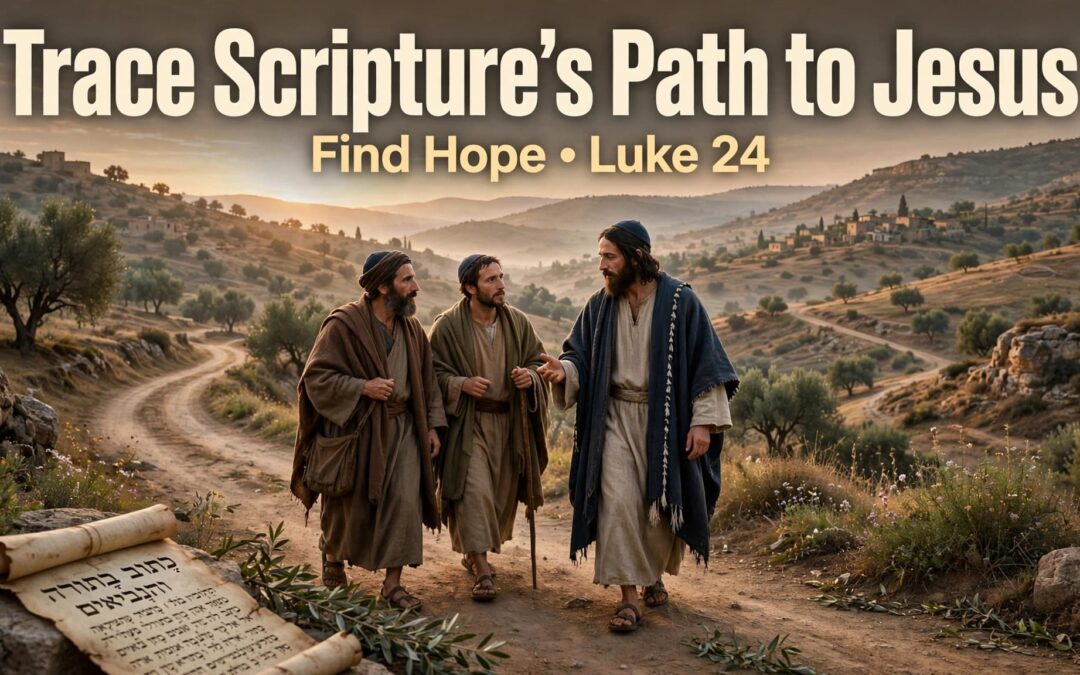
How to Trace Prophecy Through Scripture to Christ
A prophetic passage can't be understood well as an isolated prediction. To read prophecy through Christ, we need to trace where it sits in Scripture: what it meant in its original setting, how it fits the wider Biblical message, and how the New Testament connects it to Jesus.
This is the second step, and it takes patience. The Holy Spirit helps us understand Scripture and points us to Jesus, but He won't lead us away from what the text says. Let's trace those connections carefully, starting with the passage itself and interpreting prophecy in its original context.
Watch a Luke 24 Bible study.
How to Read Prophecy Through Christ by Tracing Its Place in Scripture
Reading prophecy through Christ takes more than spotting a phrase that sounds familiar. We need to follow the passage in its paragraph, its book, its Old Testament setting, and the Bible as a whole. That path helps us see how Scripture points to Jesus without forcing Him into every line or ignoring what the words meant to their first hearers.
Start with the passage, not a prediction chart
Before we look for a prediction, we ask what the passage actually says. Who is speaking? Who first heard the message? What was happening at the time, and what point is the prophet making? Those questions keep us from treating a verse like a detached headline.
A promise of rescue, for example, might address a real crisis facing Israel. If we pull one line out and immediately label it a prediction about Jesus, we can miss the prophet's message to that first audience. We can also turn a later connection into the passage's only meaning.
So, read the surrounding verses first. Notice whether the passage speaks of judgment, hope, a king, a covenant, or a return from exile. Then ask how its main point fits the rest of the book. Context doesn't shut down a Christ-centered reading; it gives that reading a solid place to stand.
Follow the passage from its book into the wider Bible
Next, widen the lens one step at a time. The immediate context shows what the passage says in its paragraph. The book's purpose helps explain why that message appears there. Then the Old Testament setting and the full canon show how the passage connects with the wider work of God.
These layers belong together, but they aren't interchangeable. A passage's later connection to Jesus doesn't erase its original setting. Sometimes the New Testament identifies a direct fulfillment. At other times, an earlier person or event establishes a pattern that reaches a fuller expression in Christ. We need to show that connection from Scripture, not build it from a similar-sounding phrase.
For example, when a prophet recalls Israel's exodus from Egypt, we first ask what that memory meant in its own setting. Only then do we consider why Matthew connects Jesus' return from Egypt with Israel's history. The earlier event remains real, and the Gospel shows how Jesus' life echoes and fulfills that pattern.
Jesus Himself points us toward this wider reading in Luke 24, where He explains how the Scriptures bear witness to Him. We can follow that pattern carefully: start with the words on the page, trace their place in the book and Israel's history, then consider how the New Testament connects them to Christ. For a focused example, see how Christians connect Daniel's prophecy of the anointed one to Jesus.
Find the prophecy’s original setting before tracing its fulfillment
Before we ask how a prophecy points to Christ, we need to hear what it said to the people who first received it. Historical context anchors interpretation. It helps us understand the promise or warning on its own terms, then gives us a sound basis for tracing how Scripture later uses it.
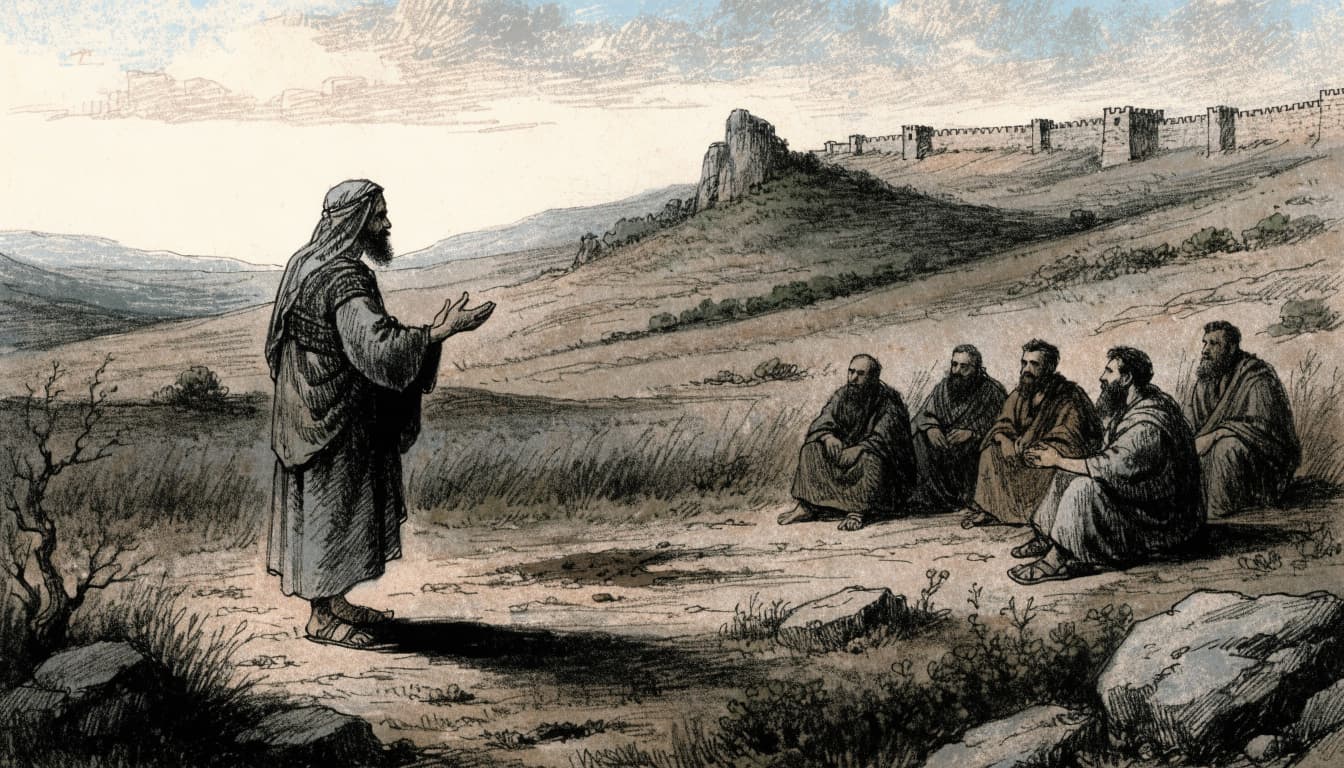
Identify the speaker, audience, and historical moment
Start with a few simple questions: Who is speaking? Who hears the message? What is happening around them? Look at the book's opening, the passage itself, and nearby chapters for names, places, rulers, conflicts, or signs of exile. Those details can show whether the prophet confronts injustice, warns of judgment, calls people back to God, or speaks hope into a crisis.
Then ask what the first hearers were expected to understand or do. Were they facing an invading army, corrupt leadership, idolatry, or the loss of their land? A promise of restoration would land differently for people in exile than for a nation enjoying peace. We don't have to guess at every detail, but we should let the details Scripture gives shape our reading.
And let's keep one point clear: not every prophecy was first spoken directly to people living centuries later. Some messages addressed an immediate need or a real event in Israel's history. That first meaning matters. Paying attention to it doesn't weaken a Christian reading; it keeps us from making a later connection say something the original passage never said.
Notice the passage’s form and purpose
Next, notice what kind of passage you're reading. Prophecy may include a warning, a promise, poetry, or symbolic language. A warning calls for a response. A promise gives hope about God's action. Poetry often uses vivid images and parallel lines, while symbolic visions may communicate through figures that need interpretation.
So, before deciding whether a passage describes a future event, a pattern, or both, ask what it is doing in its own setting. Is the prophet naming a danger, recalling God's past faithfulness, or promising a coming king? The answer can prevent us from treating every image as a literal forecast.
Hosea offers a clear example. In its original setting, Hosea 11:1 looks back to God calling Israel out of Egypt. Read the full chapter in the NKJV and the surrounding verses, and the focus is God's relationship with Israel, including the people's turning away. Matthew later applies this language to Jesus' return from Egypt. The earlier history remains intact; the Gospel shows how Israel's experience becomes a pattern fulfilled in Christ. We can follow that connection because we first listened to Hosea in its own context.
Trace how the prophecy works within its Biblical book
A prophecy belongs to a book with its own message, concerns, and history. So, before we ask how it points to Christ, we should ask why it appears there. What themes surround it, and how does it answer the needs of the people who first heard it?
Connect the prophecy to the book’s main themes
Look for ideas that return throughout the book: covenant, kingship, judgment, mercy, worship, and restoration. Those themes help us understand what a prophecy means within its own setting. A warning about judgment, for example, may confront Israel's unfaithfulness while also leaving room for God's mercy and a promise of restoration.
The nearby passages matter, too. Does the prophecy answer a crisis described in the previous chapter? Does it echo an earlier promise, or prepare readers for a later theme? These connections show how the message works within the book instead of turning it into a stand-alone prediction.
Hosea makes a helpful example. The prophet recalls God bringing Israel out of Egypt, then confronts Israel's unfaithfulness and speaks of God's continued compassion. Matthew later applies that language to Jesus. The connection makes sense when we first recognize Hosea's focus on Israel's history and relationship with God. Jesus embodies Israel's calling and brings its history toward fulfillment. The Gospel connection does not erase Hosea's original message.
That's why we should be careful with prophecy charts that treat each image as a separate forecast. A prophecy can address an immediate need and still contribute to a promise that unfolds across Scripture.
Look for the promise’s next steps in Israel’s history
A prophecy's first answer may appear during the prophet's lifetime or in a later event in Israel's history. Sometimes the promise takes shape gradually. A return from exile, a restored place of worship, or the rise of a king may fulfill part of what the prophet announced, while the book's larger hope remains ahead.
We shouldn't skip these events on the way to Christ. Israel's history gives the promise its shape. Without it, we can make a later fulfillment sound detached from the people and circumstances God addressed.
Consider how a promise of a faithful king would speak to people living under unjust rulers. It offers hope in their immediate situation, but the book may also describe a reign marked by justice and peace that no ordinary king fully establishes. Later Scripture can show how that hope reaches its fuller expression in Jesus, without claiming that every detail was a direct prediction.
Jesus teaches this kind of whole-Scripture reading when He explains how the Law, the Prophets, and the Psalms bear witness to Him. In Luke 24, His explanation follows the Scriptures' larger testimony, not a search for disconnected phrases. For another perspective on the passage, see this commentary on Jesus' teaching in Luke 24.
So, trace the promise through the book and Israel's history before drawing the line to Christ. We'll see more clearly what God first promised, what happened along the way, and why the New Testament identifies Jesus as the fulfillment.
Follow the prophecy’s path through the Old and New Testaments
Prophecy doesn't sit in Scripture like a set of unrelated predictions waiting to be matched. Promises develop as God works through Israel's history, and later passages build on what came before. We can trace that path by watching for clear textual connections, then asking how the New Testament identifies their fulfillment in Jesus.
Notice repeated promises and themes across Scripture
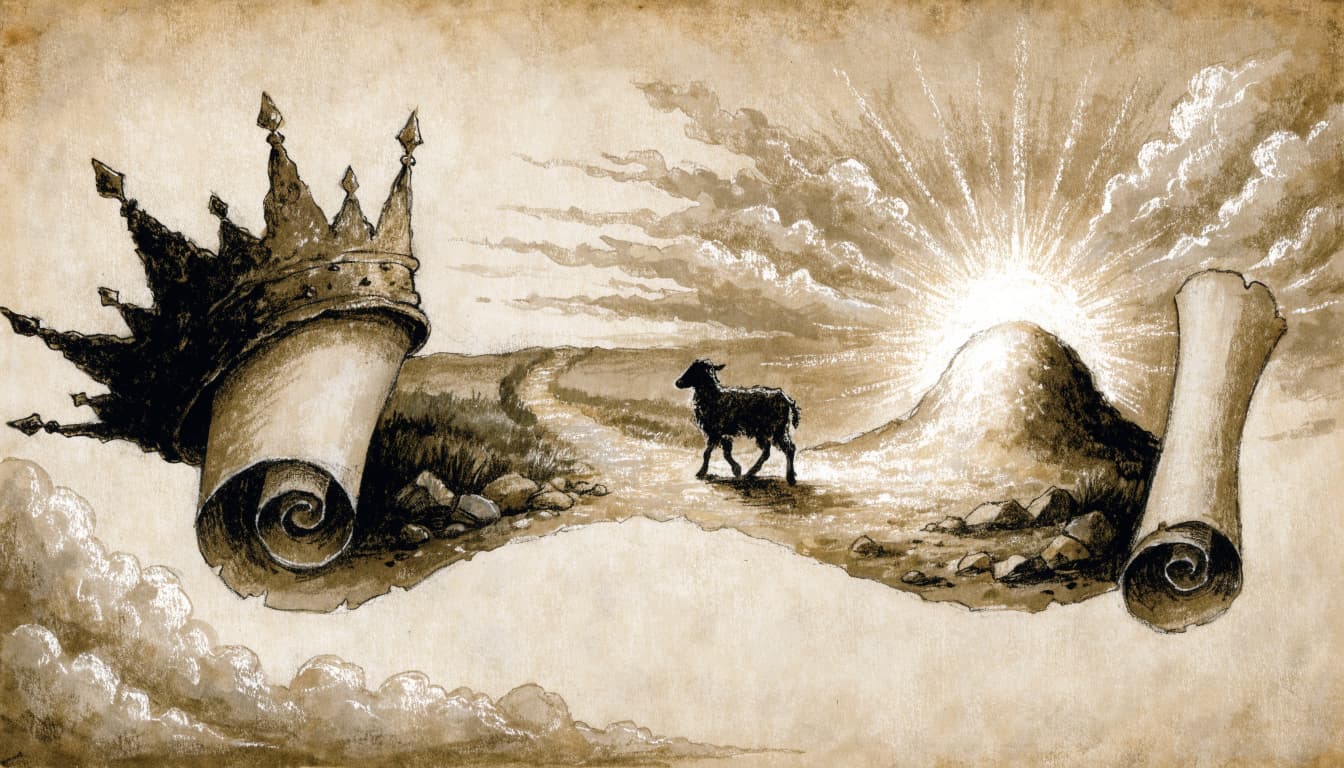
Look for promises that return and gather meaning as Scripture unfolds. God promises Abraham that all families of the earth will be blessed through him (Genesis 12:3). Later, God promises David an enduring royal line (2 Samuel 7:12-16). The hope of a promised King grows out of these particular covenants, not a vague resemblance between a later passage and a royal image.
Deliverance and God's presence also recur. The Exodus gives Israel a concrete history of rescue, while the tabernacle expresses God's desire to dwell among His people (Exodus 25:8). Prophetic passages later speak of a suffering servant who bears the sins of others (Isaiah 53:5-6). These themes belong together, but we shouldn't flatten them into one prediction. Ask what each passage meant in its own setting, then follow the words, promises, and patterns Scripture itself carries forward.
That is canonical reading: tracing a passage's development through the Bible instead of treating Scripture as a collection of disconnected verses. A real connection has roots in the text and its place in Israel's history.
Let the New Testament clarify the connection to Jesus
Jesus taught His disciples to read the Scriptures this way. On the road to Emmaus, He explained what Moses and the Prophets said about Him, including the Messiah's suffering and glory (Luke 24:25-27). Later, He pointed to the Law of Moses, the Prophets, and the Psalms, connecting them with His suffering, resurrection, and the proclamation of repentance and forgiveness (Luke 24:44-47).
The apostles follow that same path. In Acts, Peter reads David's words in Psalm 16 alongside Jesus' resurrection and reign, while still explaining the psalm's Davidic setting (Acts 2:25-36). Paul and his companions likewise proclaim that God's promise to Israel's ancestors has been fulfilled in raising Jesus (Acts 13:32-33).
The New Testament guides our Christian reading, but it doesn't ask us to erase the earlier passage's setting. We follow the original meaning, the promise's path through Scripture, and the apostles' explanation of its fulfillment in Christ. For a broader discussion, see how the Old and New Testaments relate.
Tell direct prophecy apart from typology and fulfillment
When we trace prophecy through Scripture to Christ, we need to name the kind of connection we see. Direct prophecy explicitly anticipates a future person or event. Typology begins with a real person, event, or institution in history that forms a pattern later brought to fuller expression in Christ. Fulfillment describes how God brings a promise or pattern to completion, sometimes through more than one historical stage.
These categories help us read carefully. A connection to Jesus matters, but we should be able to show it from the passage and Scripture's wider witness.
Recognize patterns without turning them into guesses
A Biblical type is grounded in real history and meaningful correspondence. It isn't free association, where any object or event can be made to symbolize Jesus, and it isn't allegory that ignores what happened in Israel's history.
Hebrews gives us a clear example. The tabernacle's priests served a copy and shadow of heavenly things (Hebrews 8:5–6). The law, too, had "a shadow of the good things to come" (Hebrews 10:1). The writer of Hebrews draws a connection between Israel's real worship and the greater work accomplished through Christ. We can follow that line because Scripture itself makes it.
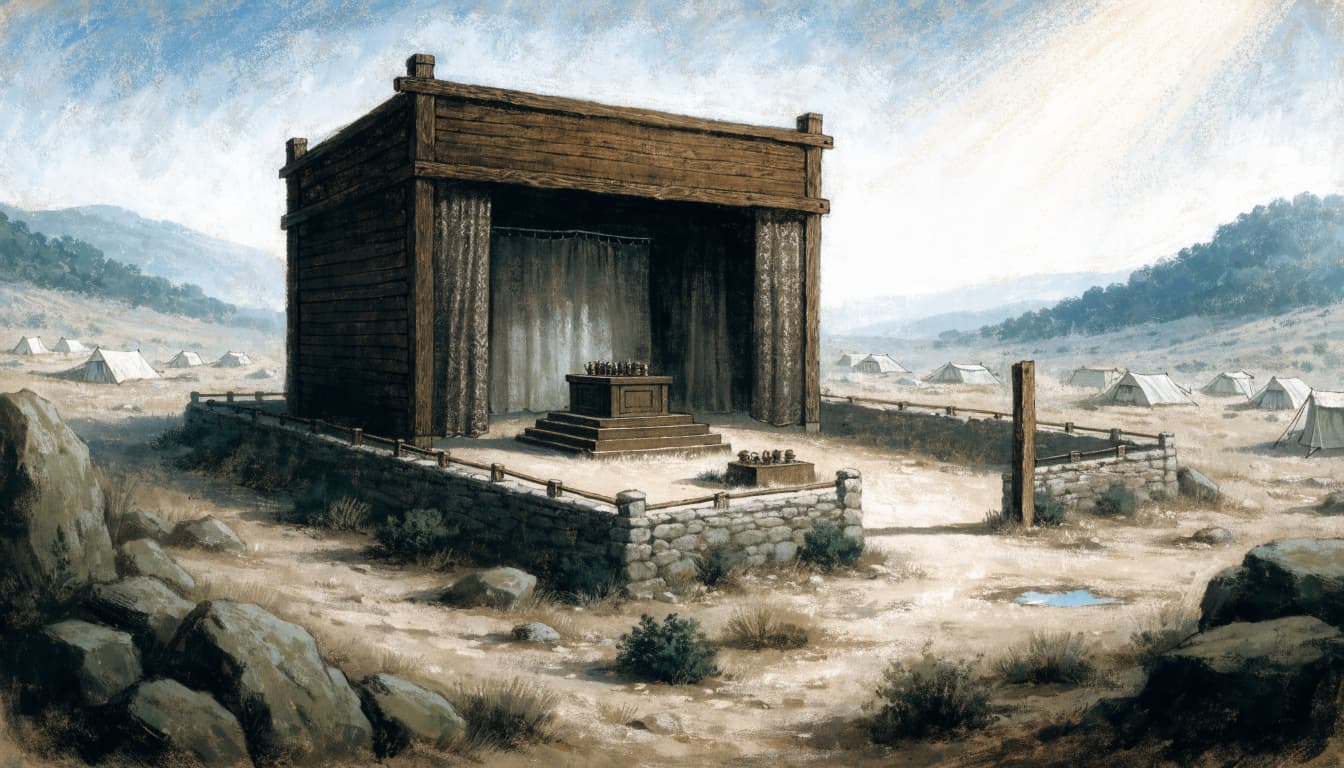
So, when we consider a possible type, ask: Did the earlier person, event, or institution have a real place in the Biblical record? Is there a meaningful connection, such as deliverance, priesthood, sacrifice, or kingship? And does Scripture support the later connection? A discussion of the tabernacle in Hebrews can help clarify how the passage describes this relationship.
Read Hosea’s words about Israel and Jesus with care
Hosea 11:1 recalls Israel's exodus: "Out of Egypt I called My son" (Hosea 11:1). In Hosea's setting, the words look back at God's past act of rescue. Matthew later applies them to Jesus' return from Egypt (Matthew 2:15).
That's typology, not a simple one-to-one prediction. Hosea's first audience heard a reminder of Israel's history, not an explicit forecast of a child who would leave Egypt centuries later. Matthew shows Jesus recapitulating Israel's experience: He passes through a part of Israel's history and brings its pattern to a fuller expression.
We should keep both parts in view. Hosea's words retain their meaning in Israel's history, while Matthew gives us the New Testament's warrant for seeing Jesus in that history. A fulfillment may include an earlier historical realization and a greater one in Christ, but we need Scripture to establish that progression. We shouldn't assume every resemblance is a prophecy.
Use a Christ-centered reading without forcing every detail
Reading all Scripture in light of Christ doesn't mean every image or phrase is a direct prediction about Him. Jesus taught His disciples to see how the Scriptures bear witness to Him, but that takes careful reading, not guesswork. We want to follow the path Scripture gives us, while letting each passage speak in its own setting.
Test each Christ connection against the text
Before we say a prophecy points to Christ, let's ask what supports that connection. Does the passage itself make the claim? Is there a recognizable pattern in Scripture, or does the New Testament connect the passage to Jesus? Does our reading preserve the original setting and make sense alongside the wider witness of Scripture?
Hosea recalls Israel's exodus when he writes, "Out of Egypt I called My son" (Hosea 11:1). Matthew later applies those words to Jesus' return from Egypt (Matthew 2:15). The connection holds because Matthew makes it, and because Jesus' experience echoes Israel's history. Hosea's original meaning still matters. We don't need to turn it into a direct prediction to recognize how the Gospel connects Israel's story with Christ.
We can also look to Jesus' own teaching. In Luke 24:27, He explains how Moses and the Prophets concern Him. That gives us a Christ-centered way to read Scripture, grounded in the full Biblical witness rather than a hunt for isolated phrases. For another discussion of this passage, see Luke 24 and the Christological reading of Scripture.
As Pentecostals, we believe the Holy Spirit illuminates Scripture and points us to Jesus. His guidance does not contradict the written Word or make a weak connection sound certain. We test what we sense against the passage, its context, and the rest of Scripture.
Avoid proof texts and unsupported end-times claims
A phrase can sound like a prediction when we lift it from its paragraph. A symbol can seem to match a current event when we assign it a meaning the text never gives. And an end-times interpretation can feel certain while Scripture itself leaves room for care.
So, compare passages in context before making a claim. Ask whether the New Testament draws the connection, or whether Scripture gives a clear pattern that supports it. If neither is present, we should be honest about what we know and what we don't. A Christ-centered reading honors Jesus by handling the words about Him faithfully.
Put the method into practice with a simple study plan
A repeatable process can keep our study focused without making it complicated. Choose one prophetic passage, read the full section around it, and work through the questions below before deciding how it connects to Christ.
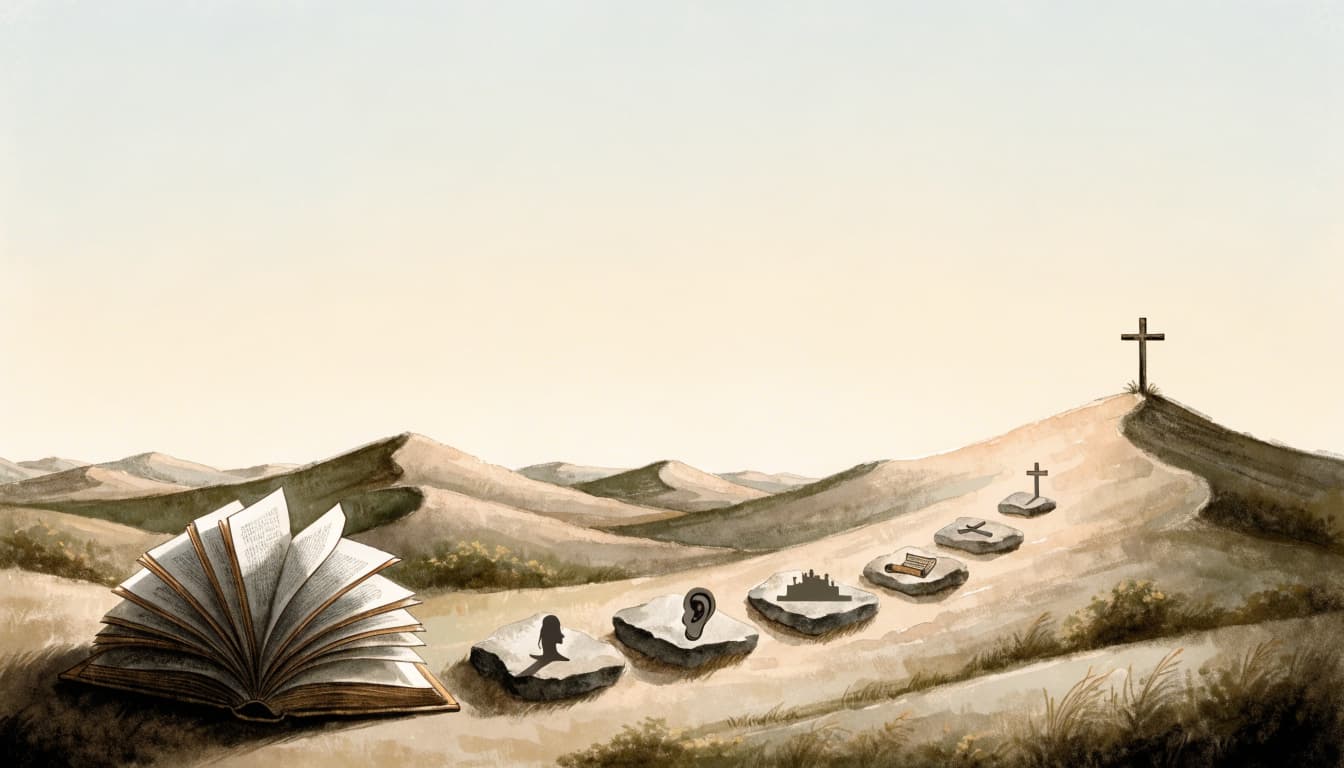
Ask six questions before drawing a conclusion
Keep a notebook nearby, and write a brief answer to each question. We don't need to solve every detail right away. The goal is to see what the passage says and where its connections lead.
- Who is speaking? Identify the prophet, poet, or other speaker, and notice whether the words come as a warning, promise, prayer, or vision.
- Who first hears the message? Look for the people or ruler addressed, and note what they were facing when they heard it.
- What happens in the surrounding passage? Read the whole section, not only the verse that sounds prophetic. Notice the problem, promise, response, and outcome.
- How does the passage function in its book? Ask what it contributes to the book's message and whether nearby chapters develop the same concern.
- Where do its themes appear elsewhere in Scripture? Trace repeated promises, images, or events, while checking that each passage makes a genuine connection.
- How does Scripture connect it to Christ? Look for a direct New Testament reference or a pattern the New Testament identifies. Jesus taught that the Law, the Prophets, and the Psalms spoke of Him (Luke 24:44-47 in the NKJV).
These questions give us a path to follow. They also help us tell the difference between a connection Scripture makes and one we may have assumed.
Record what is clear and what remains uncertain
As you study, divide your notes into two simple columns: what the passage says and what we infer. In the first, record details the text states plainly, such as the speaker, audience, setting, and repeated words. In the second, write possible explanations or connections that need more support.
This distinction matters when a passage uses poetic or symbolic language. We may recognize a possible link to Jesus without knowing whether the passage directly predicts Him or establishes a pattern that reaches fulfillment in Him. Name the connection carefully, and note what evidence supports it.
If the New Testament does not clearly explain a proposed link, don't rush to fill the gap. We can keep studying, compare related passages, and leave a question open. Humility in interpretation isn't weak faith. It shows respect for Scripture and keeps our conclusions honest.
Before you finish, pray for the Holy Spirit's understanding. Ask Him to help you hear the passage faithfully and see Christ where Scripture points to Him. Then return to your notes later. Clear Biblical evidence deserves confidence; an uncertain conclusion can wait.
Conclusion
When we read prophecy through Christ, we begin with the passage's setting, trace its place in its book and the full Bible, then follow the evidence that leads to Jesus. The Holy Spirit helps us understand and apply Scripture, but He doesn't lead us around its context.
We can practice this with one prophetic passage. Read it in its setting, follow its connections through Scripture, and see where the text leads. That careful path helps us recognize Christ without asking the passage to say more than it does.
From Promise to Fulfillment
Begin with a prophetic promise in its original context, then follow its recurring words and themes through the Law, the Prophets, and the Psalms. Notice how later passages deepen the promise without losing its earlier meaning. Finally, read how the Gospels and apostles identify its fulfillment in Jesus Christ. This approach reveals a connected story: the promised offspring, the faithful king, and the suffering servant are not isolated predictions but threads that converge in the Messiah.
Three Steps for Tracing Prophecy to Christ
Read the Promise in Context
Begin with the prophet’s audience, historical setting, and surrounding verses. Notice what God promises before considering how the passage reaches beyond its first hearers.
Follow Scripture’s Connections
Compare related passages across the Law, Prophets, Psalms, and Gospels. Let repeated themes and New Testament citations show how the biblical story develops.
Look to Jesus for Fulfillment
Ask how the promise connects to Jesus’ birth, ministry, suffering, resurrection, or reign. Distinguish what Scripture says directly from conclusions that require further study.

The Promised Son
God’s promises to Abraham and David establish a hope that runs through the Old Testament: blessing for the nations and a lasting kingdom. The Gospels present Jesus as Abraham’s descendant and David’s heir, placing his life within the story those promises began.
The Servant Who Suffers
Prophetic passages about a righteous servant and a coming deliverer take on deeper clarity in Jesus’ ministry and death. He announces God’s kingdom, welcomes the overlooked, and gives his life for others. Reading these passages alongside the Gospels helps us see both the cost of redemption and the mercy God promised.
Hope Beyond the Grave
The resurrection is central to how the apostles explain Scripture’s fulfillment. Jesus’ victory over death confirms that God’s promises do not end at the cross. It opens a living hope for his people and directs attention to the completion of his kingdom.
“These are the scriptures which testify of me.” — John 5:39 (KJV)

Jesus Christ
Speaking about the witness of Scripture
Tracing Prophecy to Christ: Common Questions
Explore how to read prophetic passages in context and recognize their connection to Jesus throughout Scripture.
Where should I begin tracing prophecy through Scripture?
Begin with God's promises in Genesis, then follow how the Law, Prophets, and Psalms develop the hope of a coming deliverer. Compare those passages with the Gospels and the apostles' explanations of Jesus.
How do I know whether a prophecy points to Jesus?
Read the passage in its original setting, notice its promises and patterns, and look for how the New Testament applies it to Christ. Let Scripture guide the connection rather than relying on a resemblance alone.
Why does the original context of a prophecy matter?
Context shows what the words meant to their first hearers and guards against pulling a verse out of its setting. It also helps reveal how God's promises unfold across the biblical story.
Did Jesus fulfill prophecies about the Messiah?
The New Testament presents Jesus' life, death, and resurrection as the fulfillment of messianic promises. Passages such as Luke 24 invite readers to see how the Scriptures testify to him.
Are all prophetic passages direct predictions of Jesus?
No. Some passages speak directly of a coming ruler or servant; others establish themes and patterns that find their fullest meaning in Christ. Distinguishing these helps us read carefully.
How should I approach prophecies that seem unfulfilled?
Consider the passage's context, its place in the whole biblical story, and what the New Testament says about Christ's return. Hold uncertain details with humility while trusting God's faithfulness to his promises.
Keep Following the Promise to Christ
From the first promise to the hope of Christ's return, Scripture's prophetic message invites deeper study. Explore more Bible prophecy articles and keep tracing how God's Word points to Jesus.