
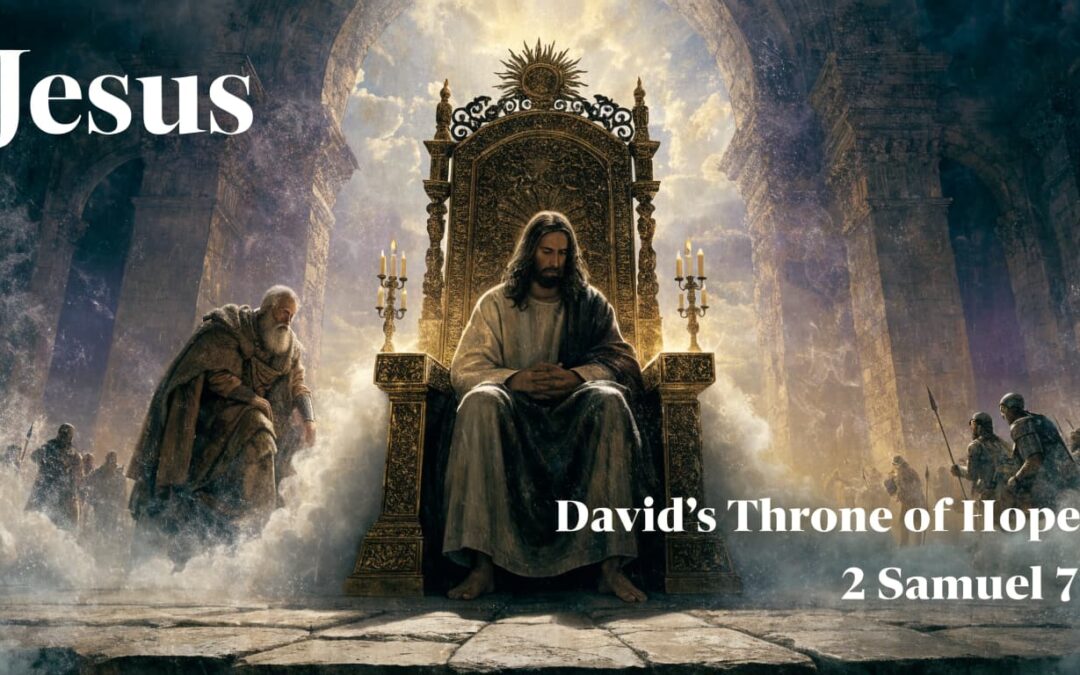
The King Revealed in Scripture: Jesus and David’s Throne
The Bible's hope is clear: God will raise up a King whose reign will never end. He promised David an enduring throne, and the prophets pictured a ruler who would bring justice and peace with humility and shepherd-like care.
We'll follow those promises across Scripture, seeing how they lead to Jesus, the Messiah who came in humility, reigns now, and will have the final victory. Let's begin with what the Bible means when it speaks of God's King and Kingdom. Jesus as the promised King from David's line
The King Revealed in Scripture: What the Bible’s Royal Hope Means
When Scripture speaks of God's King, it points to more than a leader with political power. The King protects God's people, judges with justice, and carries out God's purposes. That hope begins with God's promise, and it keeps unfolding through David's throne, the Messiah, and the everlasting Kingdom.
A promised ruler, not a human plan for power
God's promise to David in 2 Samuel 7:12-16 gives the royal hope its foundation. David's family would rule, and his throne would endure. Israel's history did not show an unbroken line of faithful kings, and the monarchy eventually fell. Still, the promise held out hope for a ruler whose reign would reflect God's justice and care. Read a closer look at the promise to David.
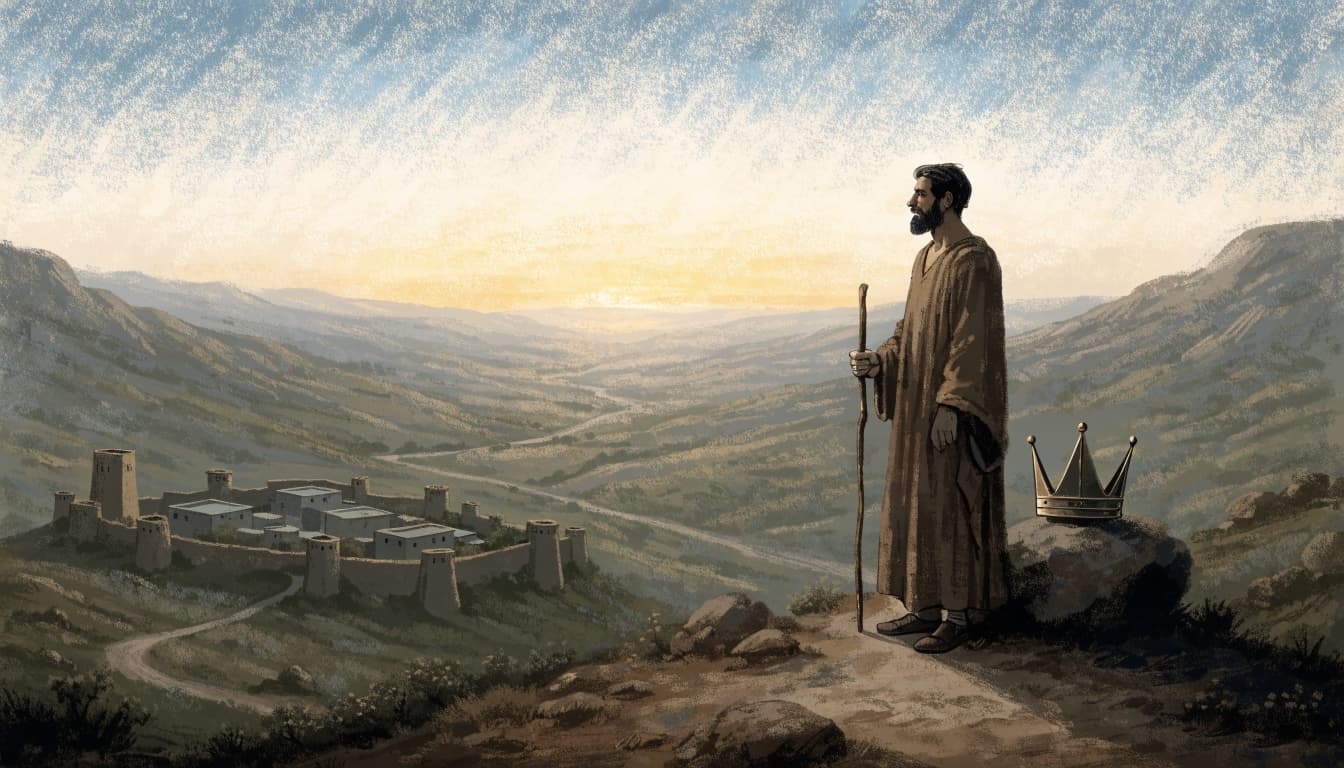
The prophets spoke into real moments of fear, conflict, and failed leadership in Israel's history. Their words gave people reason to hope for a King who would rule with righteousness, defend the vulnerable, and shepherd His people. That hope was not a plan for human beings to seize control in God's name. It rested on what God had promised and on His character.
The Kingdom, then, is more than an inward feeling, though God's rule changes the hearts of those who follow Him. It also cannot be reduced to a modern political program. Scripture describes God's authority expressed through His King, shaping the life of His people and bringing His purposes to pass. We can trace this hope through the Biblical path from David's covenant to Jesus.
How the Old and New Testaments connect
The Old Testament develops the hope of a lasting Davidic ruler across the Law, the Psalms, and the Prophets. Those passages have roots in Israel's own history, including the rise and collapse of its kings. Christians read them in light of Jesus, because the New Testament presents Him as the promised Messiah and heir to David's throne.
Luke 1:32-33 makes that connection direct: the angel tells Mary that God will give Jesus the throne of His father David, and that His Kingdom will have no end. The Gospels also connect Jesus with the royal hope through His identity, His ministry, and the way He enters Jerusalem. The apostles then proclaim His resurrection and exaltation as evidence that God has made Him Lord and Messiah.
That does not mean every part of the promised reign is already visible in the world around us. Scripture presents Jesus as reigning now, while also pointing toward the day when His victory will be fully revealed. As we move through the passages ahead, we'll see how the promise of David's throne, the prophets' picture of the Messiah, and the hope of the everlasting Kingdom come together in Jesus.
How God Promised David an Enduring Throne
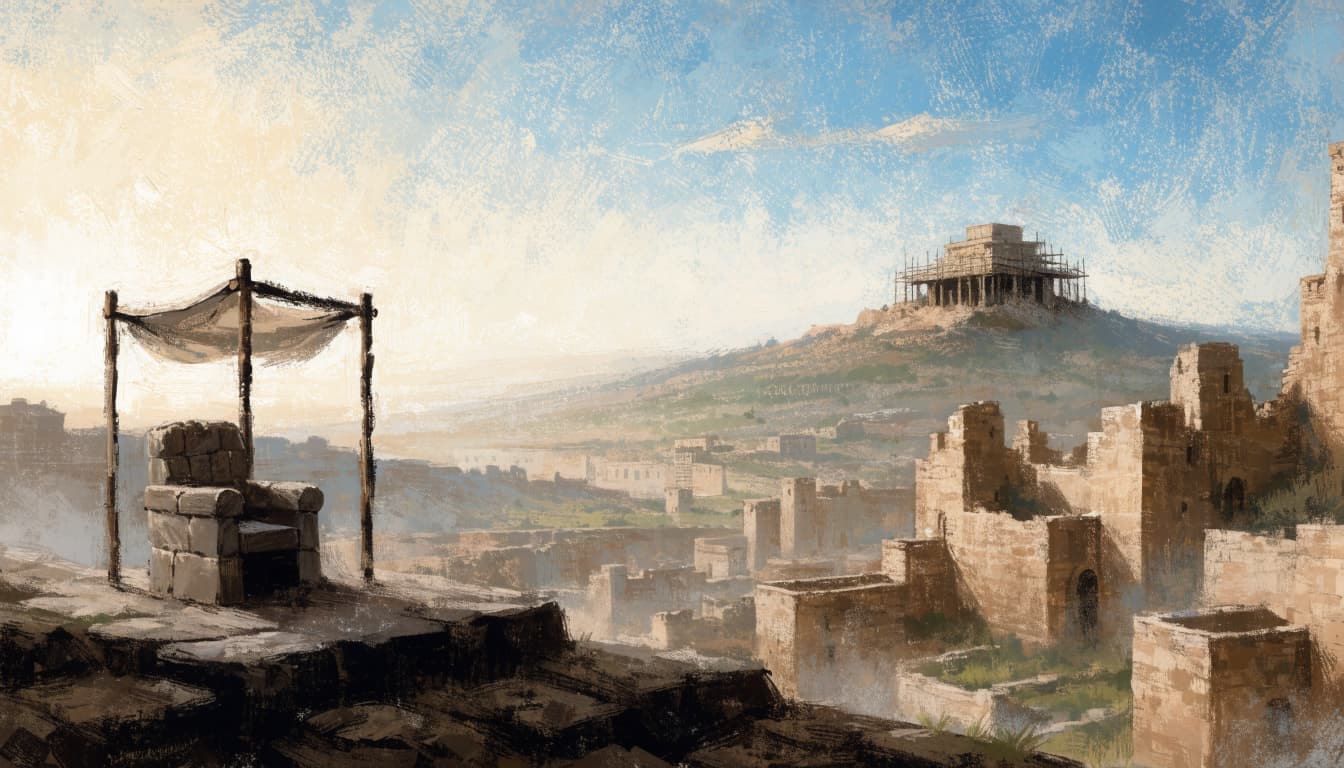
God's promise to David in 2 Samuel 7:8–16 grew out of a real moment in Israel's history. David was king, his enemies had been subdued, and he wanted to build a house for God. God answered by promising to build a house for David, a royal line that would continue beyond his own lifetime. (Read 2 Samuel 7:12–16 in the NKJV)
The covenant promise to David and his descendants
The word house carries two connected meanings here. David wanted to build a house, meaning a temple, for God's name. God promised instead to establish David's house, meaning his family line and royal dynasty. David's son Solomon would build the temple, while God's promise reached beyond Solomon to the continuing rule of David's descendants.
The terms kingdom and throne describe the authority and royal rule God would establish through that line. God promised David that his descendant would reign, and that the throne of his kingdom would endure. The promise also allowed for a king's wrongdoing and discipline, but God said His covenant love would not be taken away as it had been from Saul.
The monarchy did eventually fall, and the loss of a Davidic king was painful. Did that mean God had abandoned His covenant? Psalm 89 holds that question in its grief. It recalls God's oath to David, then laments the humiliation of the king and the apparent collapse of the royal line. The tension is real: Israel's history seemed to contradict the promise, yet the psalm still calls on God to remember His covenant.
Christians understand the promise as including David's historical dynasty and pointing forward to its fullest fulfillment in Jesus. This reading follows the New Testament's identification of Jesus as David's heir and the King whose Kingdom will have no end. We can also trace the Davidic covenant in its Biblical context.
The Psalms keep hope alive through hardship
Other royal psalms give shape to the hope that Psalm 89 mourns. Psalm 2 pictures God's anointed King ruling the nations, despite the resistance of earthly rulers. Psalm 72 describes the ideal king through justice, care for the poor, and a reign that reaches far beyond Israel. Together, these psalms picture royal authority exercised under God, for the good of the people.
Psalm 110 adds another image: the king sits at God's right hand, with his enemies placed beneath his feet. The psalm also uses priestly language, describing the king as a priest forever. Hebrews develops that priestly theme, while the psalm itself adds to the royal hope already heard in the others.
For Christians, Jesus brings these strands together. His reign is rooted in God's promise to David, and the Psalms' hope remains alive even when Israel's history makes the promise seem impossible.
How the prophets pictured a King of justice, peace, and humility
Israel's prophets spoke when fear, injustice, and failed leadership weighed heavily on the people. Their promised King would come through David's line, care for His people, and rule with justice. Christians see these prophetic hopes fulfilled in Jesus, while also reading them in the ancient settings where they were first spoken. How Biblical prophecy points to Jesus gives a wider view of those connections.
Isaiah’s child brings a reign of justice and peace
Isaiah spoke of darkness and distress as Judah faced political danger. His words name the regions of Zebulun and Naphtali, places associated with humiliation and hardship, then turn toward hope: light would come to those walking in darkness. In Isaiah 9:1–7, that hope takes the form of a child who will rule on David's throne.
The passage describes a reign built on justice and righteousness, not fear or oppression. Isaiah's first hearers could understand the promise against the threats and royal hopes of their own time. The language also reaches beyond any temporary relief: the ruler's government and peace will have no end. Christians read this as a promise fulfilled in Jesus, the Son of David whose Kingdom is everlasting. The promised peace is more than a brief pause in conflict. It belongs to the character of His reign.
Micah points to Bethlehem and a shepherd King
Micah spoke into a time of danger and injustice. His prophecy names Bethlehem Ephrathah, a small town tied to David's beginnings, as the place from which a ruler would come. The promise in Micah 5:2–5 connects the future ruler's origin with Israel's royal history, then describes Him as one who shepherds His people in the strength of the Lord.
That shepherd image matters. The ruler does not use His authority to serve Himself; He protects and cares for the people entrusted to Him. When Herod's advisers answer his question about the Messiah's birthplace, Matthew cites Micah's words in Matthew 2:5–6. The Gospel presents Jesus' birth in Bethlehem as fulfilling the prophecy. Its first setting remains part of the meaning, while the Christian reading sees Jesus as the promised Davidic ruler who gathers and guards His people.
Zechariah’s humble King enters Jerusalem
Zechariah's picture of a king carries a striking contrast. He is righteous and victorious, yet humble, riding on a donkey rather than arriving with the display of a military conqueror. In Zechariah 9:9–10, the next verse extends the vision: weapons of war are removed, and the king speaks peace to the nations.
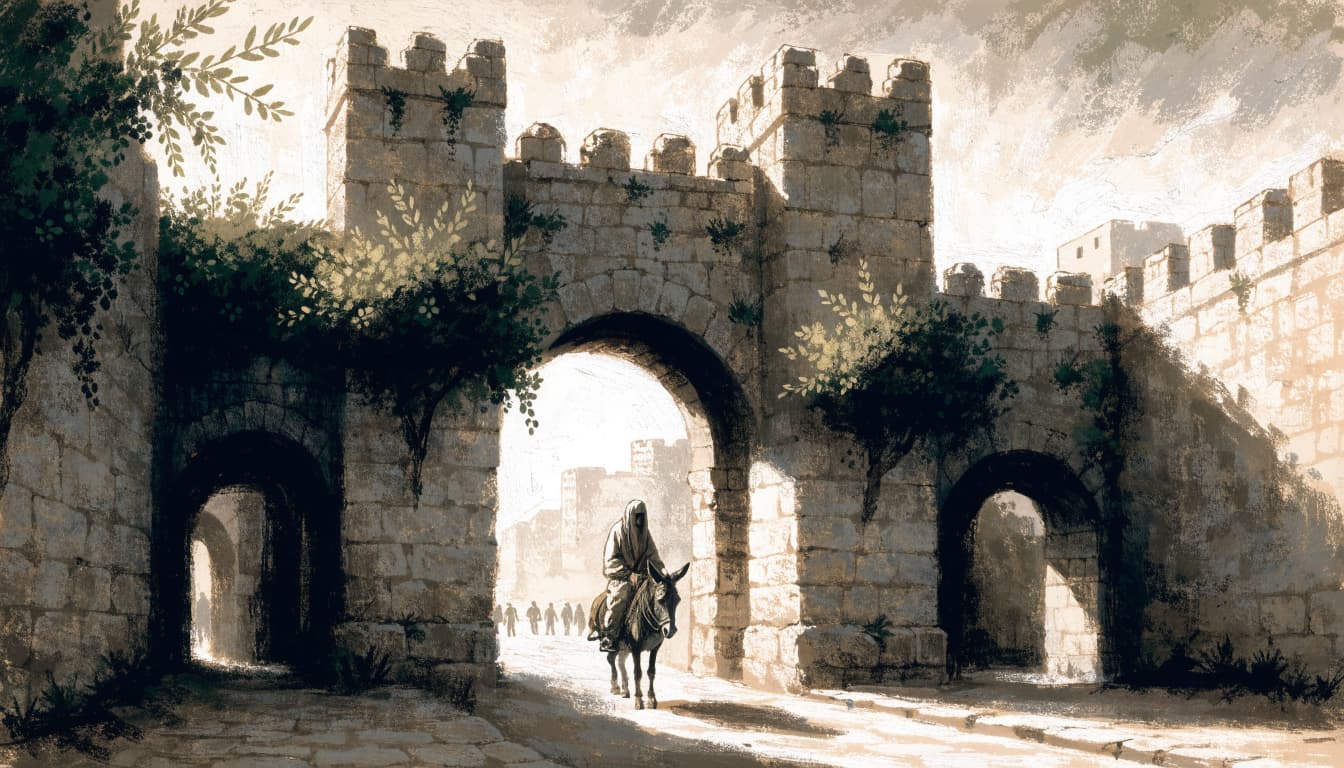
Matthew and John connect this image with Jesus' entry into Jerusalem. Matthew says Jesus' arrival fulfilled the words about Zion's humble King in Matthew 21:4–5, and John makes the same connection in John 12:14–15. Jesus enters as King, but the donkey shows what kind of King He is: He comes in humility, bringing God's peace rather than relying on force.
How Jesus Came as the Humble Messiah and Rightful King
The Gospels present Jesus as the promised King, but His way of ruling challenged what people expected from a king. He came with real authority, yet He served, suffered, and gave His life. His resurrection shows that humility did not weaken His kingship. It revealed the kind of King He is.
The Gospels identify Jesus as David’s heir
Matthew opens by calling Jesus "the Son of David, the Son of Abraham" (Matthew 1:1). That first line places Him in Israel's history and connects Him directly to the royal promise God made to David. Jesus is not presented as a king who appeared without roots or promise. He is David's heir.
Luke makes the connection even clearer. Gabriel tells Mary that her Son will be called the Son of the Most High, and that God will give Him "the throne of His father David." His reign over Jacob's house will have no end (Luke 1:26–33). The announcement ties Jesus' identity, David's throne, and the everlasting Kingdom together in plain terms.
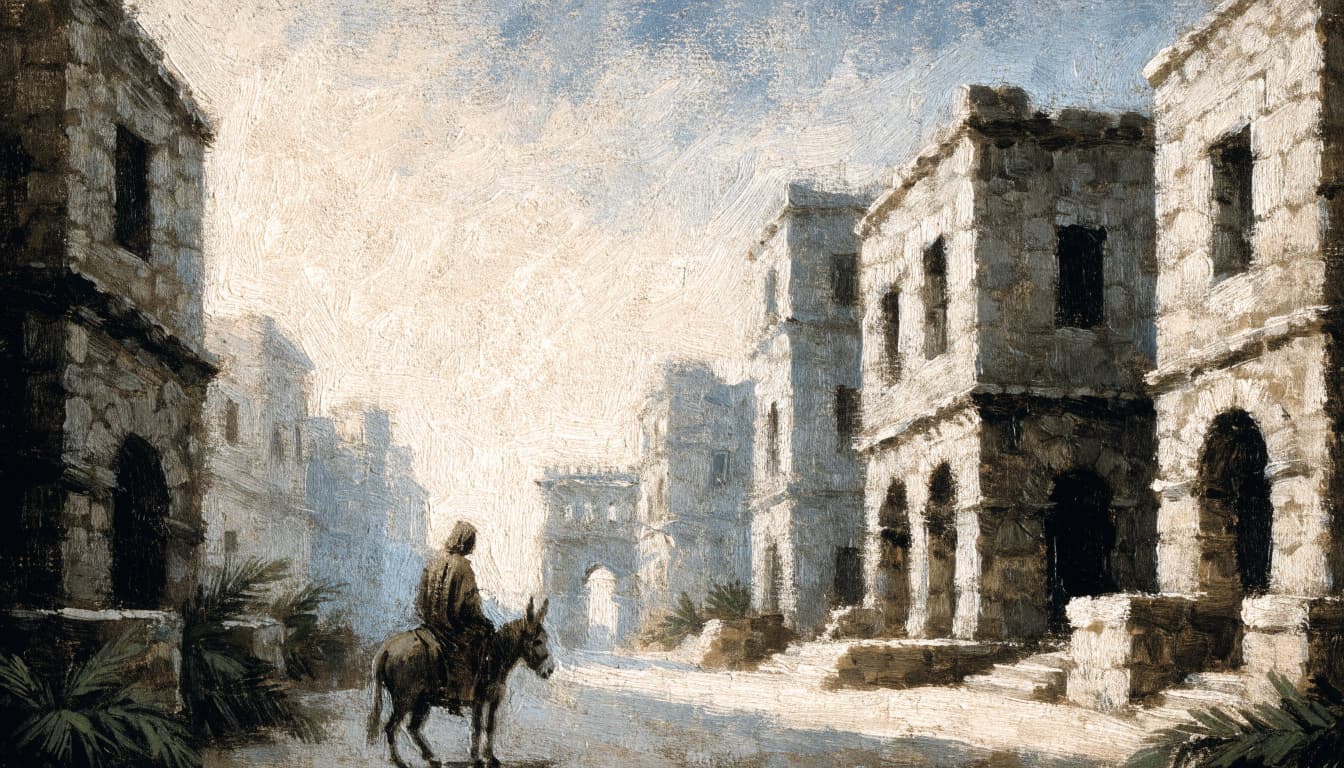
Then Jesus enters Jerusalem, not with the display of a ruler arriving to intimidate or impress, but riding on a donkey (Matthew 21:4–5). The crowd welcomes Him, yet His entry does not follow the pattern of worldly power. He comes as King, but He comes in humility.
The King serves, suffers, and rises in victory
Many expected a king to defeat enemies through force and secure His throne through visible strength. Jesus showed a different kind of royal power. He served people who were overlooked, welcomed those others pushed aside, and obeyed the Father even when obedience led to the cross. His suffering was not a loss of authority. He willingly gave Himself.
The cross can look like the defeat of a king. The resurrection tells us otherwise. Peter preached that Jesus was delivered up, crucified, and raised by God, then connected His resurrection with God's promise to David (Acts 2:22–36). Jesus' victory came through death, not around it. He rose, and His reign did not end at the tomb.
That matters when we think about what His Kingdom looks like. Jesus does not rule by copying the pride and coercion of earthly powers. His authority is joined to service, justice, and sacrificial love. We see the promise of David's throne in Him, and we see that the King who reigns forever is also the One who gave Himself for His people. For more on how Jesus' identity connects with Israel's hope, see Jesus as Israel's promised Messiah and King.
Why the risen Christ reigns now while we await the Kingdom’s fullness
Jesus' resurrection and exaltation show that God's promise to David has not failed. The King reigns now, even as we wait for the day when His victory is fully seen and every enemy is defeated.
Peter connects the resurrection to God’s oath to David
In Acts 2:29–36, Peter begins with David's death and burial, facts his hearers could verify. David was a prophet, Peter says, and knew God's oath that one of his descendants would sit on his throne. So David's words about the Holy One not being abandoned to the grave pointed beyond David himself.
Peter then declares that God raised Jesus from the dead. The apostles were witnesses, and Jesus' exaltation fulfilled what David had spoken. Peter brings in Psalm 110:1: the Lord says to David's Lord, "Sit at My right hand." His conclusion is direct: God has made Jesus both Lord and Messiah.
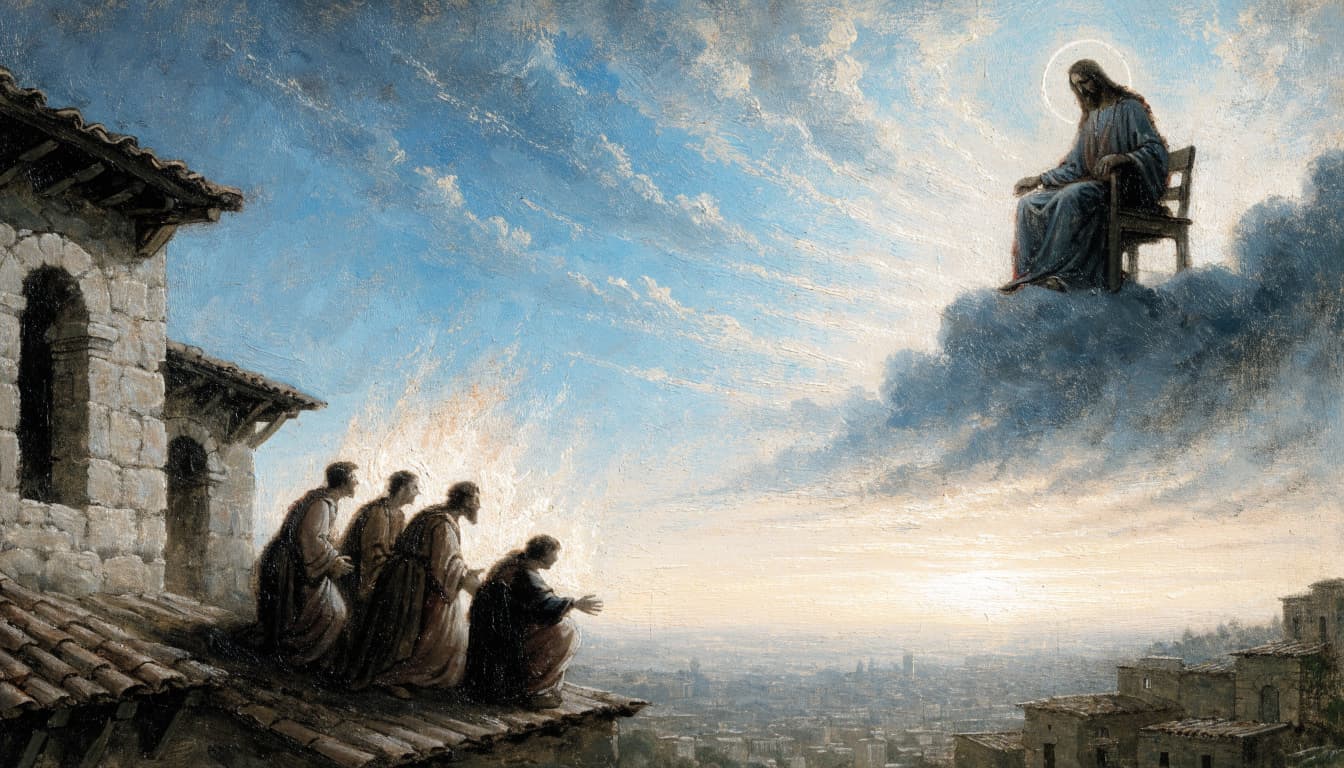
This is the heart of Peter's claim. Jesus is David's promised descendant, raised and enthroned by God. His reign is not waiting to begin; the risen King is already at God's right hand.
The Spirit empowers witness to the reigning King
Peter speaks on Pentecost after the Holy Spirit fills the believers, just as Jesus promised. The Spirit's coming does not replace Jesus' kingship or draw attention away from Him. The Spirit empowers the Church to proclaim what God has done through Jesus: He died, rose, and now reigns.
That pattern continues through Acts. The Spirit gives believers courage and words to bear witness, even when their message brings opposition. We see this as part of Christ's mission, not a separate work competing with His authority. The Spirit makes the reigning King known as the Church announces the Gospel and calls people to turn to Him.
We can see what Scripture teaches about the Kingdom of God: God's rule is active through Jesus now, and His people live under His authority. The Spirit equips that witness, but Jesus remains the King at its center.
The present reign does not mean every promise is complete
Hebrews also presents the Son as enthroned at God's right hand. In Hebrews 1:5–13, the writer draws on royal Scriptures, including Psalm 110, to show that the Son's position is higher than the angels. Jesus reigns with the authority God has given Him.
Still, we do not yet see every enemy brought to its final end. Evil continues, death still grieves us, and creation has not yet been made new. The New Testament holds these truths together: Christ reigns now, and His complete victory is still ahead.
Christian traditions differ on the timing and form of the Kingdom's future fullness. Some expect a distinct earthly reign before the final renewal; others understand the future reign differently. We can acknowledge those differences while holding to the shared hope: Jesus will bring His rule to completion, and death will not have the last word.
How Daniel and Revelation reveal a Kingdom that will never pass away
Daniel and Revelation look beyond the rise and fall of earthly rulers. Their visions point to God's lasting Kingdom, ruled by Jesus, and to the day when evil and death are finally gone.
Daniel sees the Son of Man receive everlasting dominion
In Daniel 7:9–14, Daniel sees earthly powers pictured as beasts. They rise from the sea, but none lasts. The Ancient of Days takes His seat in judgment, and the dominion of the beastly kingdoms is removed. Then one "like the Son of Man" comes with the clouds of heaven and receives glory, dominion, and a Kingdom that will never pass away.

Who is this figure? Daniel's vision is read in more than one way. Some understand him as an individual, others as a representative of the holy ones, and some see both ideas together. The chapter connects the Kingdom with God's people, yet the humanlike figure receives authority from God. In the New Testament, Jesus repeatedly calls Himself the Son of Man. Christians therefore see a distinct connection between Daniel's vision and Jesus, the King who receives everlasting dominion. Daniel's vision and Jesus' everlasting Kingdom develop that connection further.
Revelation names Jesus as David’s promised King
Revelation makes Jesus' authority clear. He is the ruler of the kings of the earth, and He is the Lion of the tribe of Judah, the promised heir whose victory fulfills Israel's royal hope. The book also looks ahead to the day when the Kingdom of this world becomes the Kingdom of the Lord and His Christ.
That future victory is pictured in Revelation 19:11–16, where Jesus appears as the faithful and true King who judges in righteousness. Revelation does not give us a calendar for predicting dates. It gives us confidence about who rules now and who will prevail. At the book's close, Jesus names Himself the Root and the Offspring of David, joining David's promised line to the King whose reign reaches its full victory.
The final hope is the defeat of evil and renewed creation
Revelation's hope reaches beyond the defeat of hostile rulers. Evil, death, and mourning will not remain. In Revelation 21:1–5, John sees a new heaven and a new earth. God dwells with His people, wipes away every tear, and makes all things new.
We do not need to turn these visions into guesses about dates to take them seriously. They call us to remain faithful to Jesus, worship Him as King, and trust that earthly powers cannot overturn God's promise. The Kingdom that Jesus received will not pass away, and His renewed creation is the hope toward which Scripture leads us.
Conclusion
God's promise to David gives Scripture's royal hope its foundation. The prophets picture a King who rules with justice and humility, and the Gospels reveal Jesus as that promised Son of David. He came to serve, He reigns now, and His Kingdom will have the final victory.
That hope shapes how we live today. We can trust Christ when earthly powers fail, and we can bear witness to His Kingdom through faithful, Spirit-led lives. The King who came in humility will reign in glory, and His rule will not pass away.
From David’s Covenant to Christ’s Kingdom
God promised David a descendant whose throne would be established forever (2 Samuel 7:12–16). The prophets developed that promise: Isaiah foretold a child who would reign on David’s throne with justice and righteousness (Isaiah 9:6–7), while Jeremiah spoke of a righteous Branch from David’s line who would reign wisely (Jeremiah 23:5–6). These passages gave Israel hope for a King greater than David.
The New Testament identifies Jesus as that promised heir. Matthew opens by calling Him the son of David (Matthew 1:1), and the angel Gabriel tells Mary that God will give her son “the throne of his father David” and that His Kingdom will have no end (Luke 1:32–33). Jesus’ resurrection confirms that death could not bring His reign to an end; Peter connects it directly to God’s oath to David (Acts 2:29–36).
At Bible Prophecy Ministries, we trace these connections to help readers see how prophecy centers on Jesus. The promise to David, the prophets’ vision of a righteous ruler, and the apostles’ witness together reveal the Messiah as the enduring King.
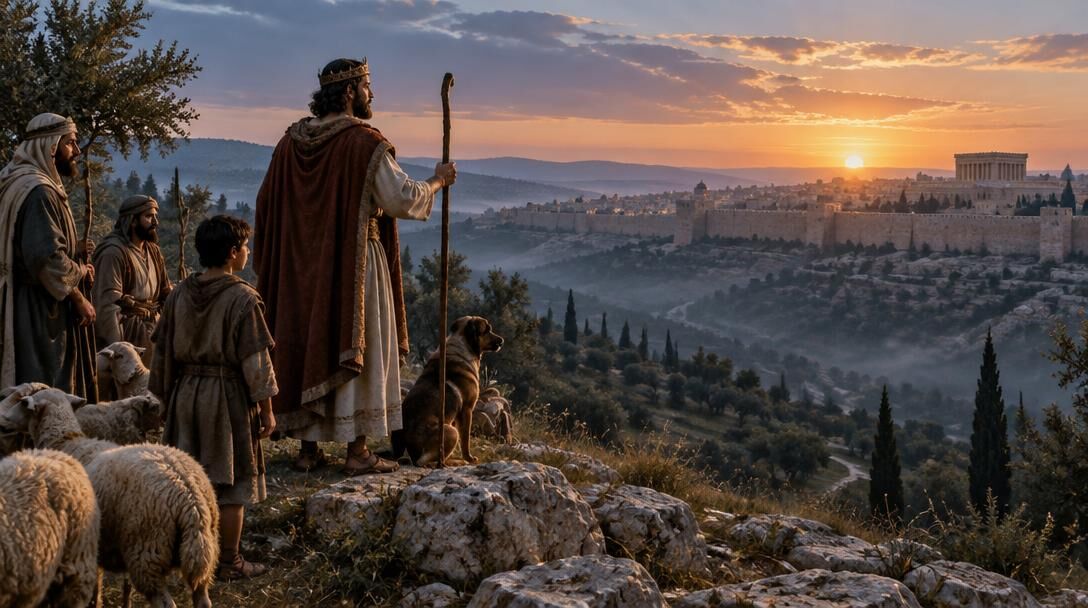
“I will raise up your offspring after you, who shall come from your body, and I will establish his kingdom. … And your house and your kingdom shall be made sure forever before me. Your throne shall be established forever.”
2 Samuel 7:12, 16 (ESV)
A Throne Promised Forever
In 2 Samuel 7, God promises David a royal descendant, a lasting dynasty, and a throne established forever. David’s son Solomon would succeed him and build the temple, but no earthly reign could fulfill the promise of an everlasting kingdom. The prophets carried that hope forward, foretelling a righteous king from David’s line. The New Testament identifies Jesus as that promised heir: born into David’s family, raised from the dead, and reigning as the Messiah whose Kingdom will never end.

From David’s Promise to Christ’s Reign
2 Samuel 7:12–16 — The Covenant
God pledges David an enduring house, kingdom, and throne, establishing the promise the prophets and apostles later connect to Jesus.
Psalm 89:3–4 — A Lasting Dynasty
The psalm recalls God’s oath to establish David’s offspring forever, emphasizing that the royal promise rests on divine faithfulness.
Isaiah 9:6–7 — The Promised Son
Isaiah announces a child who will rule on David’s throne with justice and righteousness, with no end to the increase of His Kingdom.
Jeremiah 23:5–6 — The Righteous Branch
Jeremiah foretells a descendant of David who will reign wisely and bring righteousness, pointing beyond flawed kings to the Messiah.
Luke 1:32–33 — Gabriel’s Announcement
Gabriel tells Mary that her son Jesus will receive David’s throne and reign forever, explicitly linking His birth to the ancient covenant.
Acts 2:29–36 — David’s Heir Raised
Peter explains that David foresaw the Messiah’s resurrection; Jesus’ exaltation confirms that death could not end the promised reign.
Romans 1:3–4 — David’s Descendant
Paul identifies Jesus as descended from David according to the flesh and declared Son of God in power through the resurrection.
Revelation 22:16 — The Root and Offspring
Jesus calls himself both the root and descendant of David, declaring that the promised king stands at the center of Scripture’s history.
Jesus and David’s Throne: Common Questions
Explore what Scripture says about the Son of David, the promises fulfilled in Jesus, and the reign that will never end.
Why is Jesus called the Son of David?
Jesus is called the Son of David because He comes from David’s royal line and fulfills God’s promise that a descendant of David would reign forever (2 Samuel 7:12–16; Luke 1:32–33).
Where did God promise David an enduring throne?
In 2 Samuel 7:12–16, God promised to establish David’s kingdom through his offspring and make his throne enduring. The prophets later looked ahead to a righteous king from David’s line.
How does the New Testament connect Jesus to David’s promise?
Matthew opens by identifying Jesus as the son of David, and Gabriel announces that God will give Him the throne of His father David (Matthew 1:1; Luke 1:32–33).
Did Jesus claim to be the promised king?
Jesus accepted the title Son of David and taught that the Messiah is greater than David: David himself called Him Lord (Matthew 21:9; 22:41–45).
What does it mean that Jesus’ kingdom will never end?
Unlike earthly rulers, Jesus will never be succeeded or overthrown. His resurrection confirms that death cannot end His reign (Luke 1:33; Acts 2:29–36).
Why does David’s throne matter to Bible prophecy?
David’s throne links God’s covenant promises to the identity of Jesus. Reading these passages together helps us see how Scripture points to the promised King.
Trace the Promises That Point to Jesus
Keep exploring Bible prophecy through articles that connect God’s promises, their fulfillment in Jesus, and the hope of His eternal reign.