The Testimony of Jesus: Prophecy and the King of Kings
Earthly rulers and empires can look permanent, but Scripture points us to the risen Jesus as the true and lasting King. In Revelation 19, the angel's words about "the testimony of Jesus" lead directly into John's vision of Christ as "King of kings and Lord of lords."
What does prophetic witness have to do with Christ's rule? We'll look at what Revelation 19:10 means, how Daniel and Revelation portray human kingdoms, and what this means for Spirit-filled believers today. Christians don't agree on every detail of prophetic interpretation, but the central call is clear: worship God and bear witness to Jesus.
Let's begin with the angel's words and the testimony of Jesus in Revelation 19.
What “The Testimony of Jesus Is the Spirit of Prophecy” Means
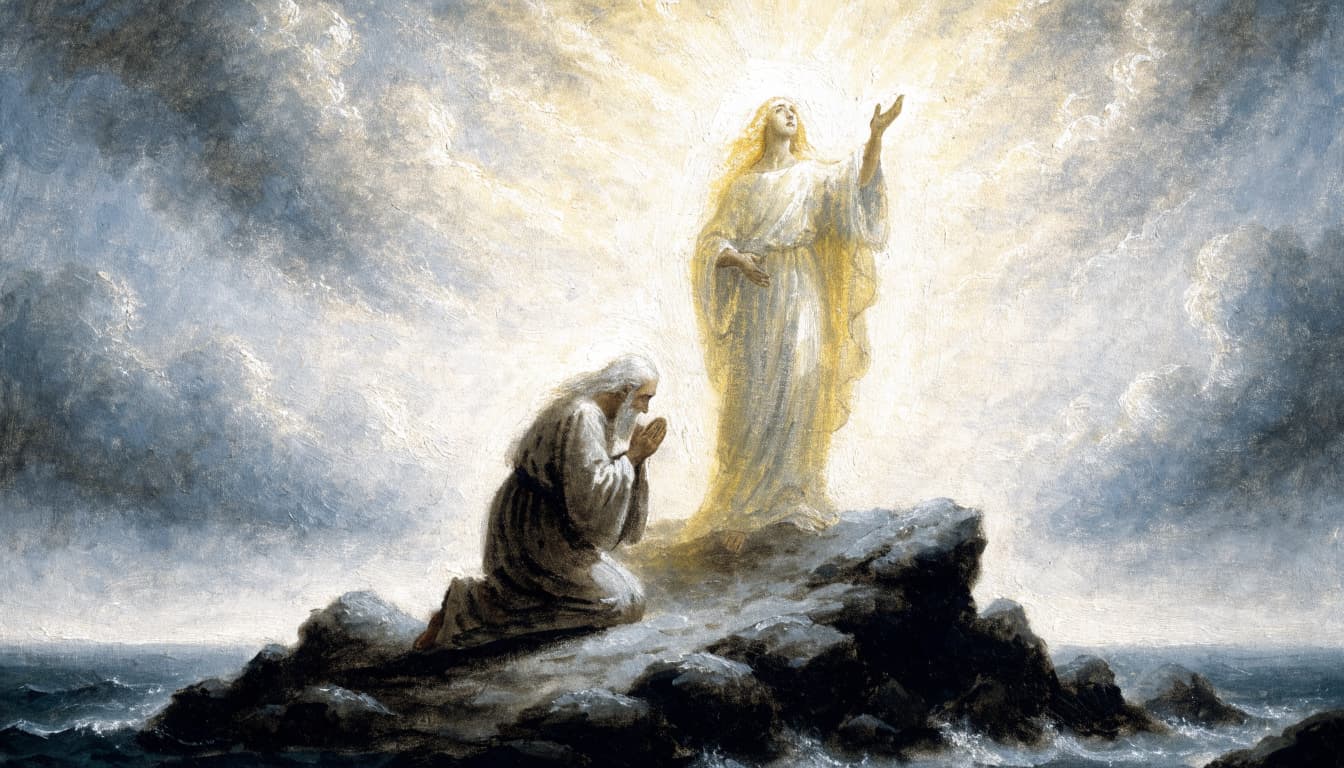
Revelation 19:10 can sound like a puzzle, but John's vision gives us a clear starting point. He falls before an angel, and the angel refuses the worship, telling him to worship God. The words about prophecy explain the shared witness of God's servants, not a special status for angels or prophets.
Prophecy points worship toward God
John is overwhelmed by what he sees and hears. But the angel's answer is direct: he is a fellow servant, and John must worship God. Prophetic ministry serves God. It does not invite worship of angels, prophets, or people with a public platform.
That matters today, too. A prophetic word may be striking, but the person delivering it is still a servant. If a message draws attention to human fame instead of Jesus, we should test it carefully. Revelation's own pattern is plain: God receives worship, and prophetic witness leads us to Jesus.
Two ways to understand “the testimony of Jesus”
Christians commonly read the phrase in two related ways. "The testimony of Jesus" can mean the testimony Jesus bears, as the One who reveals God's message. It can also mean testimony about Jesus, the witness that proclaims who He is. Revelation calls Jesus "the faithful witness" (Revelation 1:5), and its opening chapter introduces John's witness to God's word and Jesus' testimony (read Revelation 1 in the NKJV).
These readings can overlap. Jesus gives the message, and the Spirit can empower His servants to bear witness to Him. Revelation 12:17 describes believers who hold the testimony of Jesus, while the closing vision repeats the angel's correction: worship God, alongside the prophets who serve Him.
What “the spirit of prophecy” means
The phrase "spirit of prophecy" has more than one interpretation. Some Christians hear an emphasis on the Holy Spirit inspiring prophecy. Others understand it as prophetic activity, or as the witness centered on Jesus. We don't need to settle a debated Greek reading to see the shared point: true prophecy belongs to God and bears witness to Jesus.
As Pentecostals, we believe the Holy Spirit gives gifts for the good of the Church and the glory of Jesus. Those gifts should build up believers, not make the messenger famous. We see that same purpose in the Holy Spirit's testimony about Jesus: the Spirit's work directs attention to Christ.
So when we read Revelation 19:10, we should keep both parts in view. Prophecy is a gift from God, and its witness belongs to Jesus. The messenger serves; God receives worship.
How Revelation Presents Jesus as King of Kings and Lord of Lords
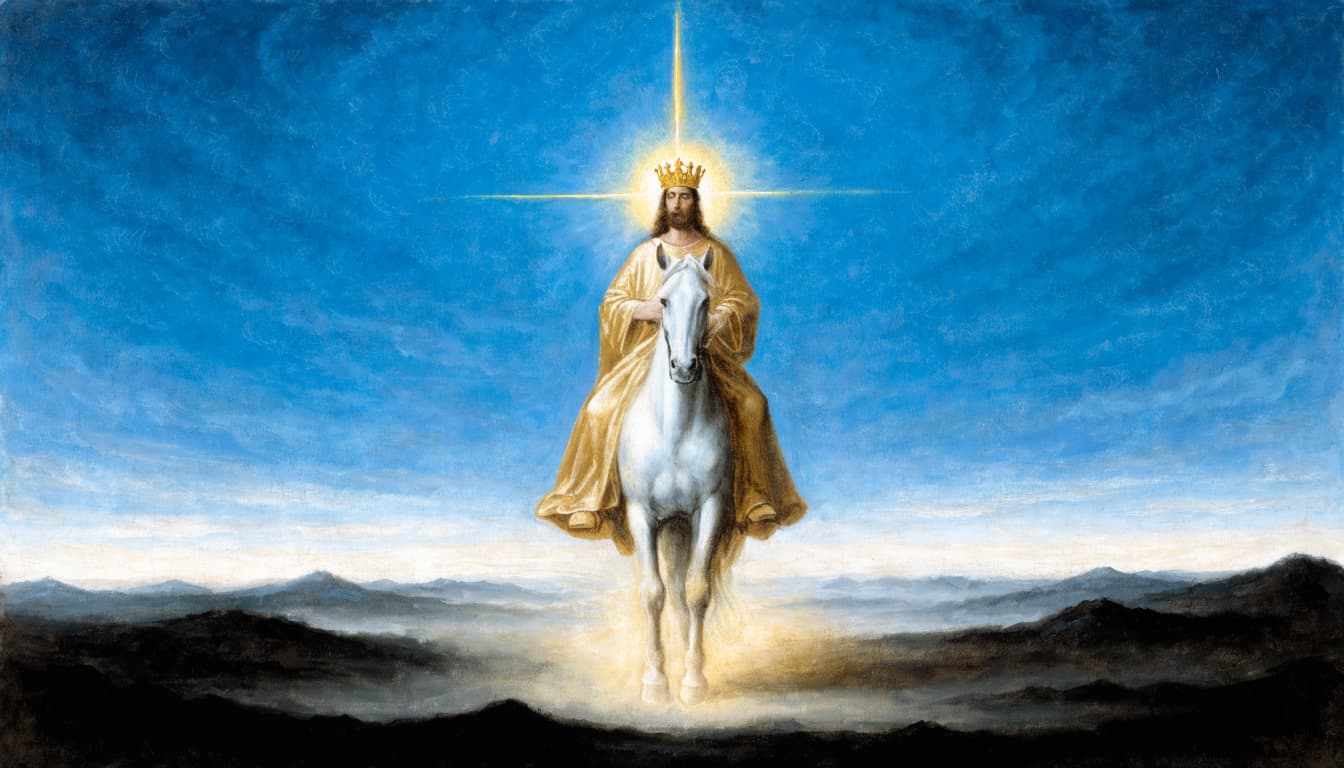
After heaven celebrates Babylon's judgment, John sees heaven open and Christ appear as a victorious rider. The vision shifts our attention from the collapse of corrupt power to the One whose reign is righteous and lasting. We can read Revelation 19 in the NKJV with that contrast in mind.
Christ is Faithful and True
John first calls the rider "Faithful and True." Those names tell us we can trust His judgment. Earthly rulers may promise justice and fail to deliver, but Christ judges and makes war "in righteousness" (Revelation 19:11). His authority is never separated from what is right.
The rider is also called "The Word of God" (Revelation 19:13). John presents Christ as God's revealed Word, whose judgment exposes evil rather than disguising it. The image of a sharp sword coming from His mouth makes that point vivid: the weapon comes from His word. Revelation's vision describes divine judgment; it does not call Christians to pursue political power or physical violence.
Isaiah 11:1-5 also pictures God's anointed ruler judging with righteousness. Psalm 2 describes the Lord's anointed King confronting rebellious rulers, while Daniel 7:13-14 portrays one like a Son of Man receiving everlasting dominion. These passages echo themes in John's vision, though we don't need to claim that every detail comes from one source.
The Lamb outranks every earthly ruler
The words on the rider's robe and thigh declare Him "King of kings, and Lord of lords" (Revelation 19:16). Revelation uses the same title in 17:14, where the Lamb overcomes kings allied with the beast. The repeated words leave no doubt about the outcome: rulers who oppose God may seem powerful, but their authority is temporary. Christ is supreme.
This is the wider contrast running through Revelation 17-19. Babylon and the beast picture power that opposes God, while the Lamb reigns with justice. Christians differ on how closely these images point to ancient Rome, recurring patterns of empire, or a future end-time power. But John's central point remains clear: no human kingdom can outlast Christ's rule.
We see a related picture in Daniel 7, where dominion is given to the Son of Man and His Kingdom will not pass away. That promise keeps our attention on Christ's authority, not on speculation about dates or a timetable. As we consider Jesus' victory in Revelation 19, we can hold fast to the hope John gives us: the risen Jesus judges evil in righteousness, and every rival power must yield to Him.
What Daniel’s Visions Reveal About Earthly Empires and God’s Kingdom
Daniel's visions put earthly power in perspective. Kingdoms rise, dominate, and fall, but God's Kingdom endures. We see that contrast in two striking images: a statue shattered by a stone, and beasts judged before the Ancient of Days.
Daniel 2: A statue and a stone
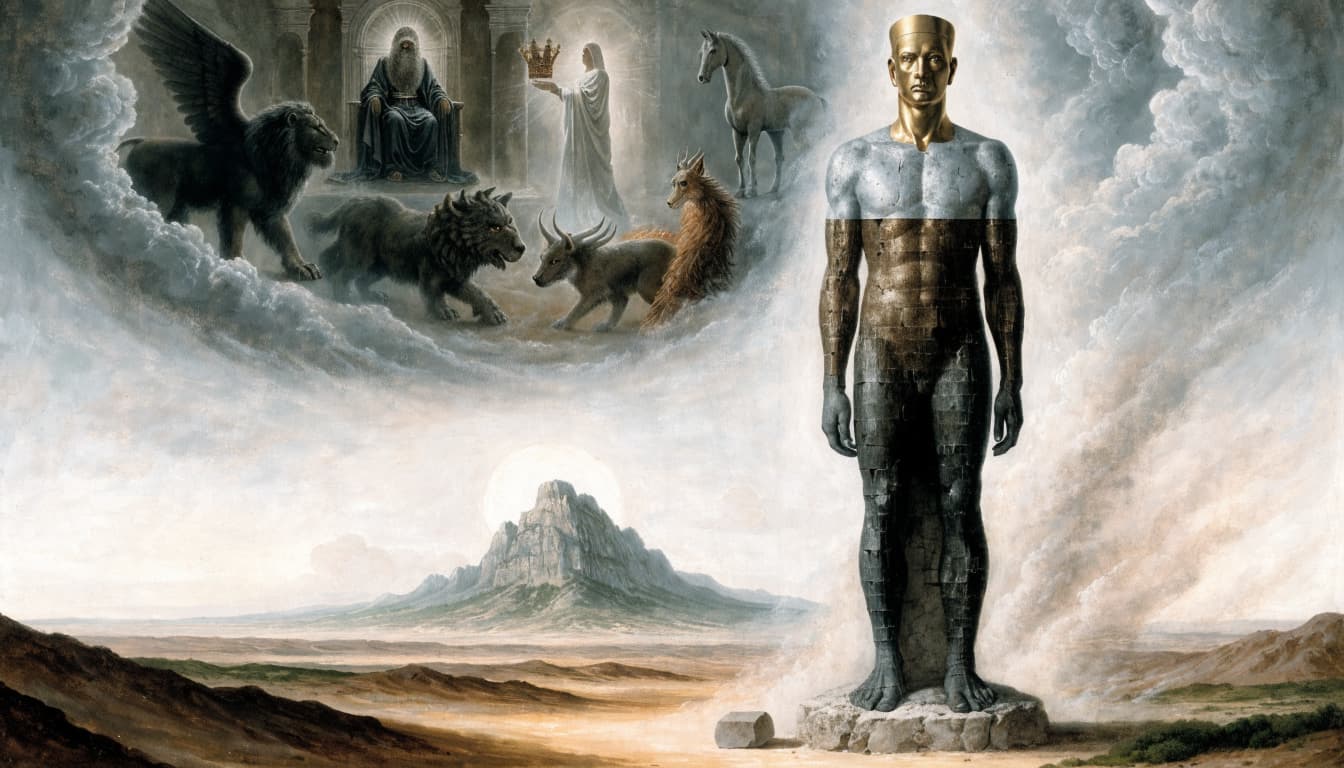
In Nebuchadnezzar's dream, a great statue has a head of gold, chest and arms of silver, belly and thighs of bronze, legs of iron, and feet made partly of iron and partly of clay. Daniel explains that the materials picture successive kingdoms, though Christians differ over which empires each part represents. We can read the full vision in Daniel 2 in the NKJV.
Then a stone, "cut out without hands," strikes the statue and breaks it apart. The stone grows into a great mountain that fills the earth. Daniel says God will establish a Kingdom that will never be destroyed and will outlast every human kingdom (Daniel 2:44-45).
The stone belongs to Daniel 2's vision. We shouldn't merge it with the figure in Daniel 7, even though both visions point to God's rule over human powers.
Daniel 7: Beasts judged, dominion given
Daniel's next vision is more unsettling. Four beasts rise from the sea, and the chapter interprets them as kings or kingdoms. Their fierce appearance shows what rule becomes when power turns oppressive. But the beasts do not rule forever. The Ancient of Days takes His seat in judgment, and their dominion is removed. The entire vision of Daniel 7 in the NKJV makes the contrast clear.
Daniel then sees "One like the Son of Man" coming with the clouds of heaven. He receives dominion, glory, and a Kingdom that will never pass away (Daniel 7:13). Unlike the stone in Daniel 2, this is a humanlike figure receiving authority from God. We Christians see this vision as pointing us to Jesus, the Son of Man and King whose reign does not end. For more on that connection, see Daniel's visions of God's lasting Kingdom.
Revelation carries Daniel’s contrast forward
Revelation draws on Daniel's beast and Kingdom imagery. Its beasts embody power opposed to God, while its vision of Christ declares that oppressive rule will not have the final word. The pattern is familiar: kingdoms may look permanent from the ground, but God judges them, and His Kingdom remains.
Christians differ over how to identify Daniel's kingdoms and how these visions relate to future events. Some connect the symbols to particular ancient empires; others see recurring patterns of oppressive rule, future fulfillment, or both. We don't need an empire-by-empire chart to grasp Daniel's central message: human power is temporary, and God's Kingdom is everlasting.
How Babylon and the Beast Show the Limits of Worldly Power
Revelation 17–19 takes us through Babylon's alliance with the beast, the city's destruction, heaven's response, and Christ's victory. The movement is deliberate: what looks untouchable on earth cannot stand before God's judgment.
Babylon’s influence reaches beyond armies
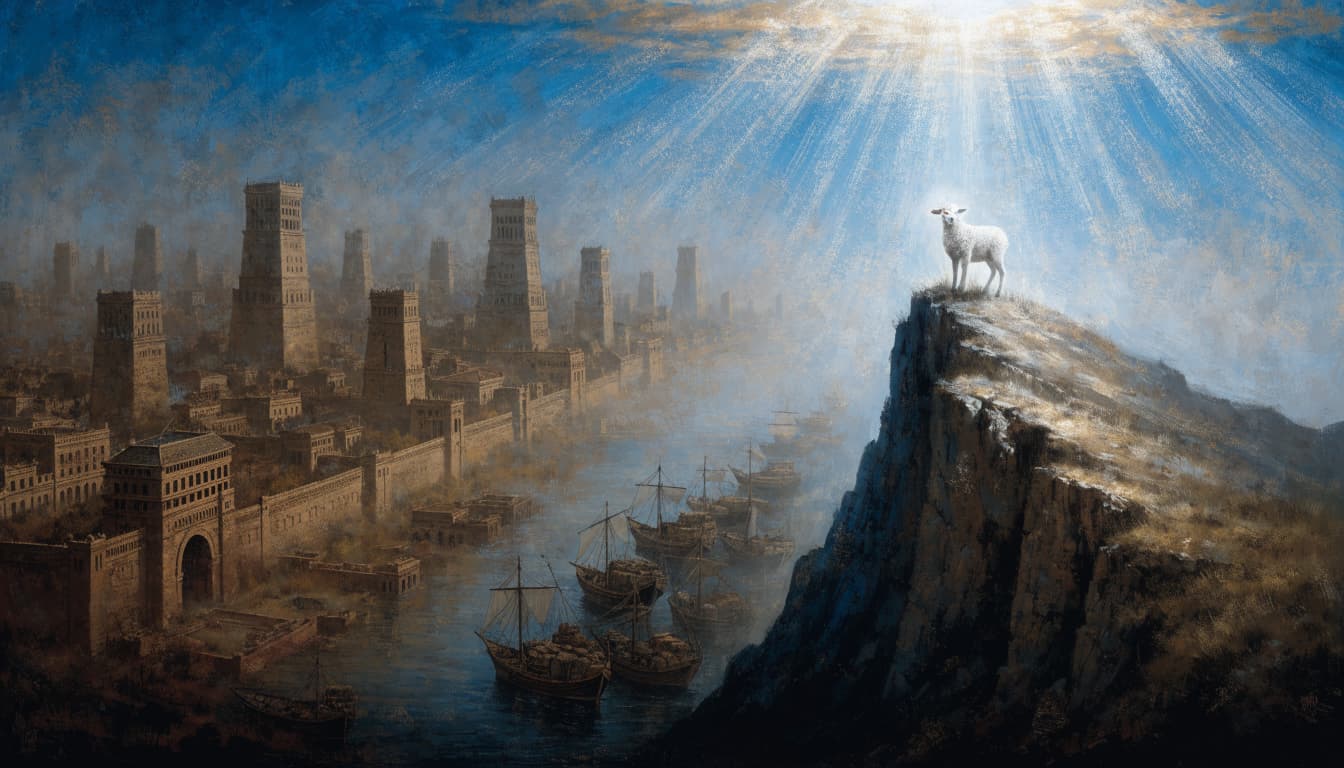
In Revelation 17, John sees a woman called Babylon seated on a scarlet beast. The vision joins the city's influence to political rulers and their power. Yet Babylon's reach is not only military. The imagery also points to idolatry, luxury, and influence over the kings of the earth. The beast eventually turns against the woman, exposing how unstable their alliance is.
Many interpreters see Rome as a strong historical candidate for Babylon's first-century setting. The city ruled over kings, and John's vision mentions seven mountains, details that fit the way ancient readers could understand Rome. Still, Christians interpret the symbols in different ways. Some see Rome as the immediate referent and Babylon as a recurring picture of corrupt power opposed to God. Others also expect a final end-time expression. These readings should remain distinct, and we should be careful about labeling a modern nation, leader, or institution as Babylon without clear support from the text.
The city’s wealth cannot save it
Revelation 18 turns our attention to Babylon's economic power. Kings mourn the city's fall, and merchants grieve because their market for luxury goods has disappeared. Seafarers watch the smoke rise from a distance. Their grief reveals what Babylon's grandeur depended on: political alliances, profitable trade, and a lifestyle built on excess.
Then heaven responds with praise, while the merchants and rulers lament. That contrast matters. The people who benefited from Babylon see its judgment as disaster; heaven sees God's justice. We can read Revelation 19 in the NKJV, where the celebration over Babylon's fall leads into the marriage supper of the Lamb and the appearance of Christ as the victorious King.
The Lamb has the final word
Babylon's rulers and merchants appear powerful while the city prospers. But the beast's alliance breaks apart, and the city falls. Then Christ appears as "Faithful and True," and the title "King of kings, and Lord of lords" makes the contrast unmistakable. His authority does not depend on wealth, political bargains, or forceful loyalty.
Revelation's vision calls us to worship God, not to imitate Babylon's hunger for influence. When a system demands the kind of ultimate loyalty that belongs to God, its power has limits, even if it looks secure for a time. The beast and false prophet are defeated in the vision, a judgment also described in Revelation's account of the Antichrist's defeat. The Lamb's Kingdom endures, and no empire can take His place.
What Spirit-Filled Prophecy Should Produce in the Church
Revelation 19:10 gives us a clear test for prophetic ministry: its testimony belongs to Jesus, and worship belongs to God. In the Church, prophecy should help people see Christ more clearly and serve one another faithfully. A spiritual gift can encourage us, correct us, or strengthen our faith, but it never puts the messenger above Scripture or beyond correction.
Prophecy should honor God and exalt Jesus
The angel in Revelation 19:10 refuses John's worship and points him to God. That moment sets a boundary for every prophetic ministry: no prophet, preacher, or person with a spiritual gift should receive the honor that belongs to God.
Prophecy also bears witness to Jesus. A message may include personal encouragement or direction, but it should never pull attention away from Christ or contradict what He has revealed in Scripture. We believe the Holy Spirit gives gifts to serve the Church, not to build a platform for the person who uses them. That is part of how the Spirit's gifts strengthen the Church.
Prophecy should build up the Church
Paul teaches that the Spirit gives different gifts "for the profit of all." His list includes wisdom, knowledge, faith, healing, prophecy, and discernment (1 Corinthians 12:7-11 in the NKJV). These gifts are not badges of spiritual rank. They are ways the Holy Spirit equips believers to serve one another.
So what should prophecy produce? Strength, encouragement, correction that draws us toward God, and a clearer witness to Jesus. We should welcome the Spirit's work while remembering that gifted people remain human. They can misunderstand an impression, speak too quickly, or need correction. Humility belongs in the pulpit and in the pew.
Prophetic words must be tested
Paul does not tell the Church to dismiss prophecy, and he does not tell believers to accept every claim automatically. He says to test everything, hold fast to what is good, and abstain from evil (1 Thessalonians 5:19-22 in the NKJV). Testing is not unbelief. It is part of faithful discernment.
We can ask whether a prophetic word agrees with Scripture, honors Jesus, and serves the Church. A claim that demands unquestioning obedience, celebrates the messenger, or stirs fear deserves careful examination. Prophecy should not be used to predict political outcomes with certainty or pressure people through frightening claims. We depend on the Holy Spirit, remain accountable to Scripture, and leave room for the Church to weigh what is spoken.
That balance matters. We should neither despise prophecy nor surrender discernment. The Spirit's gifts belong in a humble, Christ-centered Church, where believers can speak and serve while remaining open to correction.
How Christ’s Sovereignty Shapes Christian Hope and Daily Allegiance
Revelation's vision of Christ's victory and Daniel's picture of an everlasting Kingdom give us hope when earthly powers seem overwhelming. That hope changes how we live now. We can resist the worship of power, wealth, and influence because our allegiance belongs to Jesus, the King of kings.
Christ’s reign gives us hope without denial
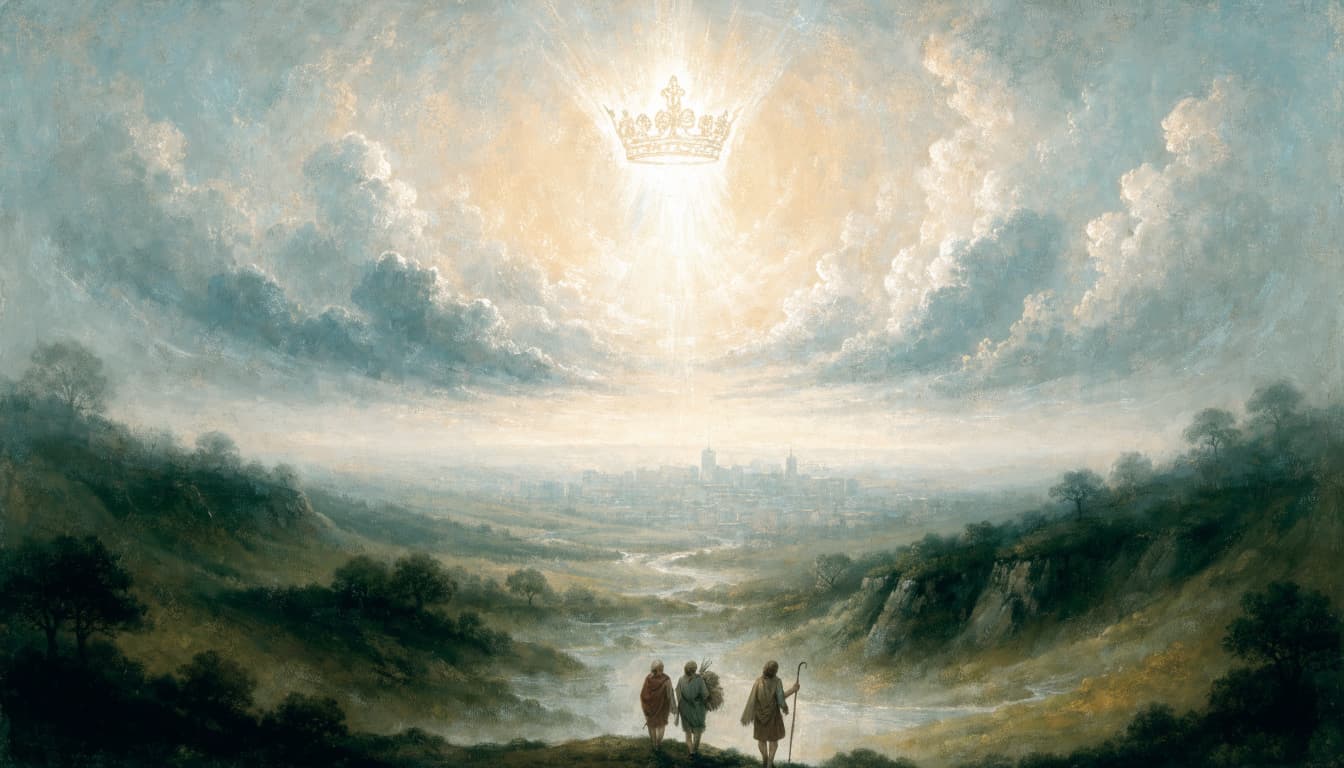
Daniel saw one like the Son of Man receive dominion and an everlasting Kingdom (Daniel 7:13-14 in the NKJV). Revelation carries that hope into its vision of Jesus, whose title, "King of kings and Lord of lords," declares that no rival power has the final word. We can read Revelation 19 in the NKJV with that promise in view.
Trusting Christ's sovereignty doesn't mean pretending suffering is small or that every crisis has an obvious prophetic label. Christians may disagree about how Revelation's images relate to Rome, recurring patterns of empire, or future events. We should be careful about claiming that a current conflict or leader fulfills a specific prophecy when Scripture doesn't make that identification clear.
The promise of Christ's reign steadies believers because injustice and grief do not get the final word. We can lament what is wrong, care for people who suffer, and keep looking to the King who judges in righteousness.
Allegiance to Jesus changes what we refuse
If Christ is Lord, then no ruler, institution, or public movement deserves the worship that belongs to God. That doesn't mean every form of civic participation is idolatry. It means we must refuse demands that ask us to excuse evil, abandon truth, or treat political loyalty as ultimate.
Revelation portrays Babylon's wealth and influence as temporary, while Daniel's visions show human kingdoms giving way to God's Kingdom. These images challenge our own appetites, too. Greed, status, and the desire to control others can claim our loyalty just as surely as a public ruler can. We follow Jesus' commands and faithful obedience by loving God and our neighbor, even when that choice costs us approval or advantage.
Faithful witness keeps worship centered on God
John's encounter with the angel brings the point close to home. The angel refuses worship and tells him to worship God, linking prophetic witness to service rather than personal glory (Revelation 19:10). The same call shapes our daily allegiance: we bear witness to Jesus without turning a preacher, political cause, or prophetic claim into an object of trust.
As we await God's final justice, faithfulness can look ordinary: prayer, compassion, truthful speech, and integrity when no one is applauding. We don't have to predict every detail of the future to live in hope. We can worship God, serve our neighbors, and testify to Jesus, confident that His Kingdom will endure.
Conclusion
Revelation brings prophetic witness and Christ's kingship together: prophecy bears testimony to Jesus, and worship belongs to God. The angel's words keep the messenger in the right place, while Daniel and Revelation remind us that corrupt rule will end and God's Kingdom will endure.
As Spirit-filled believers, we can welcome the Holy Spirit's gifts with humility, letting our words point people to Jesus rather than ourselves. Earthly powers rise and fall, but the risen Christ remains King of Kings and Lord of Lords. We can keep bearing faithful witness and trust Jesus' coming Kingdom on earth.
Prophecy Points to Jesus
Scripture’s prophetic promises are more than a timeline of future events. They testify to Jesus—the promised Messiah whose life, death, and resurrection give those promises their meaning.
The King Revealed in Scripture
From the hope of David’s enduring throne to visions of a kingdom that will not pass away, the Bible draws our eyes to Christ. Its prophecies reveal both the Savior who came in humility and the King who will reign in glory.
A Testimony That Looks Ahead
The testimony of Jesus connects what God has fulfilled with what He has promised to complete. As we study prophecy, we find reason to trust His Word and watch with hope for the return of the King of Kings.

“For the testimony of Jesus is the spirit of prophecy.”
Revelation 19:10 (KJV)
How Prophecy Points to Jesus
The Promised Messiah
God’s promises to Abraham and David point toward the Messiah who would bless the nations and inherit an everlasting throne.
The Suffering Servant
Isaiah foretold a servant who would bear the sins of many, revealing the saving purpose fulfilled in Jesus.
Scripture Fulfilled
Jesus’ life, death, and resurrection bring the prophetic Scriptures into focus and invite us to trust God’s word.
King of Kings
Prophecy looks beyond the cross to Christ’s reign, when His kingdom will stand and every nation will answer to Him.
From Promise to Kingdom
Follow the biblical witness from the earliest promises through Jesus’ fulfillment and toward the hope of His return.
c. 1000 BC
A Throne Promised to David
God promises David an enduring royal house, preparing the way for the Messiah’s everlasting reign.
c. 700 BC
The Prophets Describe the Messiah
Isaiah speaks of a child who will rule in peace and a servant who will bear the sins of many.
c. AD 30
Jesus Fulfills the Witness
Jesus announces God’s kingdom, gives His life, and rises again, bringing the Scriptures’ testimony into view.
Future
The King’s Kingdom Revealed
Believers await Christ’s return and the fullness of His reign, when the King of Kings will make all things new.
The Testimony of Jesus: Common Questions
Explore how Scripture’s prophetic witness points to Jesus and reveals why His reign matters.
What does “the testimony of Jesus” mean?
Revelation 19:10 says that the testimony of Jesus is the spirit of prophecy. Prophecy bears witness to who He is and what God accomplishes through Him.
How does Old Testament prophecy point to Jesus?
The Old Testament promises a coming Messiah, describes His suffering, and anticipates His reign. The New Testament presents Jesus as the fulfillment of these promises.
Is Bible prophecy only about future events?
No. Biblical prophecy also includes promises already fulfilled and calls to faithfulness. Studying both helps us see God’s plan unfold around Jesus.
Why is Jesus called the King of Kings?
The title declares His authority above every earthly ruler. Revelation 19:16 uses it to portray Jesus as the victorious King whose reign cannot be overturned.
What does Jesus’ kingship mean for believers today?
His kingship gives believers a reason to trust Him, live faithfully, and hold fast to hope even when the world feels uncertain.
Where should I begin studying prophecy about Jesus?
Start with Isaiah 53, Daniel 7, the Gospels, and Revelation 19. Read each passage in context and consider how it contributes to Scripture’s witness to Jesus.