
Daniel’s 70 Weeks Point to Jesus: The Anointed One Who Was Cut Off
Prophecy can turn into a hunt for dates and headlines, but Daniel's vision of the 70 weeks points us to Jesus, the Anointed One who was cut off. The New Testament proclaims that Jesus rose again and will return, so we keep Him at the center rather than letting disputed timelines take over.
That focus matters: Jesus leads us to repentance, gives us steady hope, and sends us to bear faithful witness. As we look at Daniel's 70 weeks and Jesus the Messiah, let's begin with the purpose God gives in the vision. For a video overview, see Amir Tsarfati on Daniel's 70 Weeks.
What Daniel’s 70 Weeks Say About God’s Purpose
Daniel's vision begins with a prayer for Jerusalem, but its answer reaches beyond the city's walls. The seventy weeks place restoration, sin, atonement, and righteousness at the center of God's purpose.
The vision begins with Jerusalem and a set time
Daniel was living in exile when he read Jeremiah's prophecy about Jerusalem's desolation and the appointed years of its punishment. He responded with fasting, confession, and prayer for his people and their city. While Daniel was still praying, the angel Gabriel came with an answer. You can read the full NKJV chapter of Daniel 9, including Daniel's prayer and the vision.
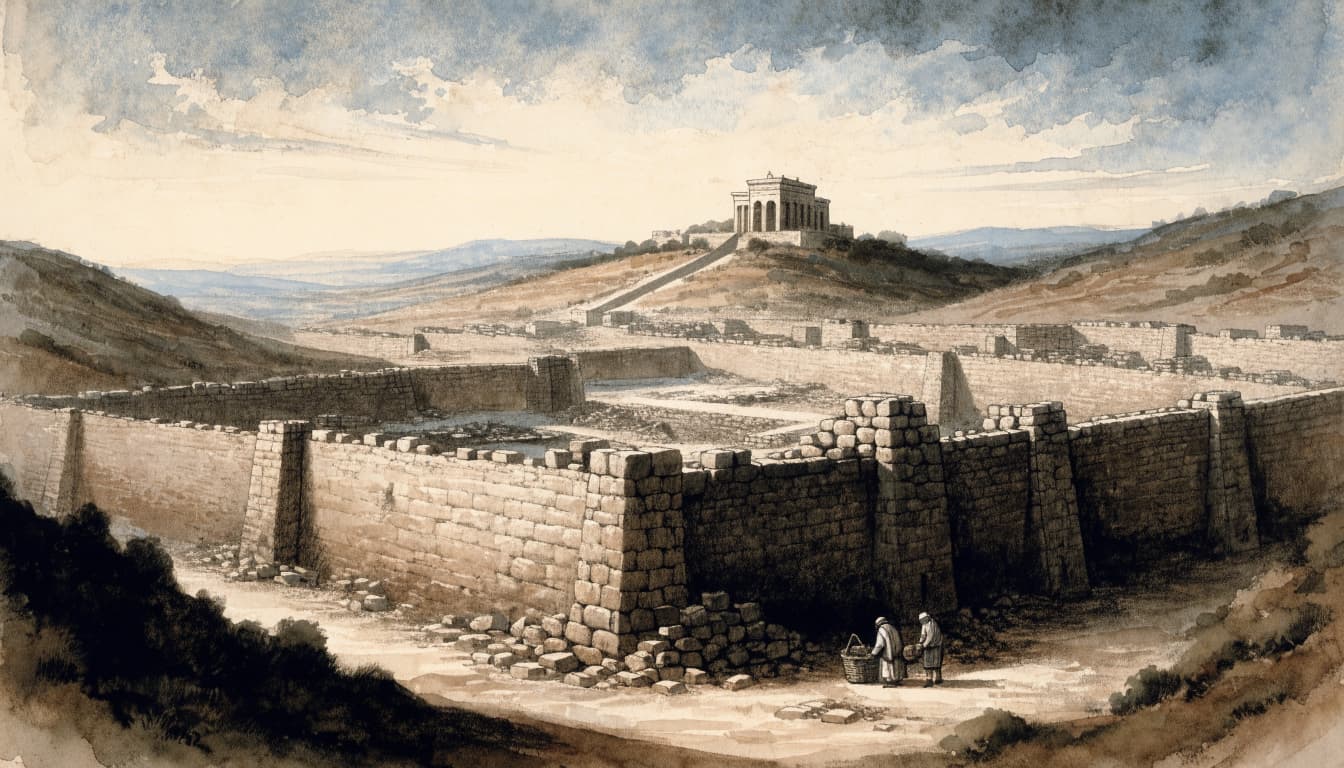
Gabriel says that "seventy weeks" are appointed for Daniel's people and Jerusalem. The word translated as "weeks" can also mean "sevens," and many Christian interpreters understand these as groups of seven years. That reading shapes the timeline, but it doesn't settle every question about dates or how the periods fit together.
Daniel 9:25 describes the sequence: a word goes out to restore and rebuild Jerusalem, then come seven weeks and sixty-two weeks, followed by the arrival of an Anointed One, a ruler. The city's restoration is the starting point of the vision, while the Anointed One is at its heart. Christians commonly connect Him with Jesus, though interpreters disagree about which decree begins the count and how the periods should be calculated.
The point here isn't to force every date into one timeline. The passage addresses Daniel's people and Jerusalem, and it directs our attention to God's promised work among them. For a broader look at Biblical prophecy through the lens of Jesus, we can keep the Messiah in view without treating disputed calculations as settled fact.
The six aims keep the focus on sin and restoration
Before Gabriel describes the weeks, he gives six aims for the appointed time. Daniel 9:24 speaks of finishing transgression, bringing sin to an end, making atonement for iniquity, bringing in everlasting righteousness, sealing vision and prophecy, and anointing the Most Holy. The wording has prompted different interpretations, but the center is plain: God addresses sin and brings His purpose toward completion.
For Christian readers, the language of atonement points to Jesus' death, through which He bore sin and opened the way to reconciliation with God. The promise of everlasting righteousness also fits the hope Christians find in Jesus, whose saving work is not a temporary repair. It is the foundation of new life and the coming Kingdom.
We shouldn't claim that every aim has one universally agreed timeline or that all six are fulfilled in precisely the same way. But we can see the direction of the prophecy. God's answer to Daniel's prayer isn't merely a timetable for Jerusalem's future; it announces His purpose to deal with sin, bring righteousness, and fulfill what He has spoken. That's why we read the vision with Jesus at the center, while leaving room for honest disagreement about its chronology.
Why Daniel’s 70 Weeks Point to Jesus
Daniel 9:25–26 moves from Jerusalem's restoration to the arrival of an Anointed One, then says He will be cut off. Christians commonly connect this figure with Jesus, while recognizing that interpreters disagree about the passage's chronology and the identity of the Anointed One. The Messianic reading centers on His suffering and death, then looks to the New Testament for the full proclamation of His resurrection.

The Anointed One is cut off, not crowned by earthly power
Daniel says the Anointed One will be "cut off, but not for Himself" (Daniel 9:26). In plain language, to be cut off is to be killed or removed. The verse does not give a complete account of the crucifixion, but Christians see its description of a suffering Anointed One as consistent with Jesus' death.
Isaiah 53:8 describes the Servant as being taken away and cut off from the land of the living (Isaiah 53:8). Jesus also explains that the Son of Man came to give His life as a ransom for many (Mark 10:45). Read together, these passages help us understand why Christians connect Daniel's words with Jesus: His death was not a failed bid for earthly power. It was part of God's saving plan.
We should keep the claim measured. Daniel 9 gives a brief prophetic description, not a step-by-step account of Jesus' arrest, crucifixion, and burial. Christians read the passage alongside the wider witness of Scripture, including Isaiah's description of suffering and Jesus' own words about giving His life.
The New Testament identifies Jesus through His death and resurrection
Daniel describes the Anointed One being cut off. The New Testament proclaims what Christians believe happened through Jesus: He died for our sins, was buried, and rose again. Paul names these events as central to the Gospel, then points to the witnesses who saw the risen Jesus (1 Corinthians 15:3–8, NKJV).
After His resurrection, Jesus explained to two disciples how the Scriptures pointed to His suffering and glory (Luke 24:25–27, NKJV). That helps us understand the Christian reading of Daniel, but we shouldn't say Daniel 9 explicitly narrates the resurrection. The resurrection is proclaimed in the New Testament, where it becomes the foundation of Christian hope.
So, when we read Daniel's seventy weeks as pointing to Jesus, we keep both parts in view: the prophecy's Anointed One is cut off, and the New Testament announces that Jesus is alive. The timing remains debated, but the Christian hope rests on the risen Christ, not on a date calculation.
How Christians Read the Seventy Weeks Without False Certainty
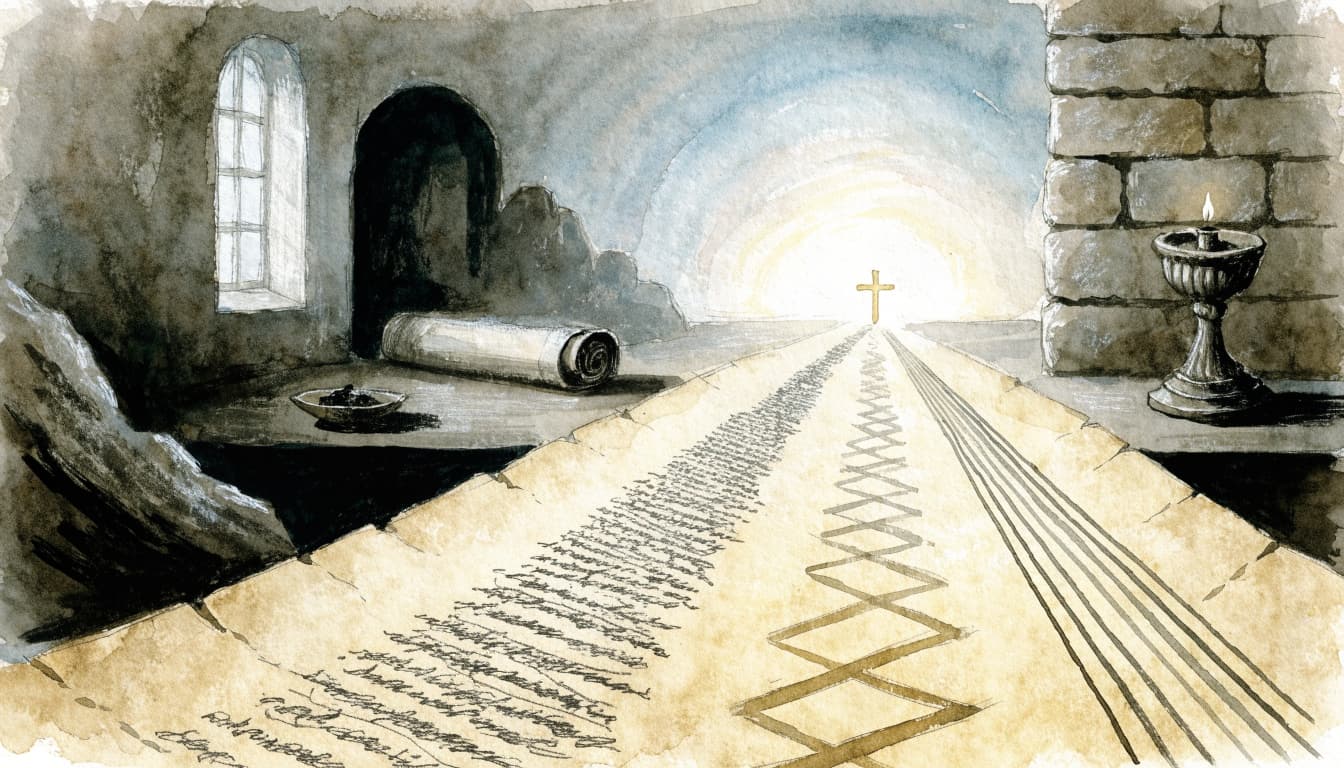
Daniel's vision gives us a clear center, but Christians don't agree on every part of its timeline. The debate concerns the starting decree, the relationship between the seven weeks and sixty-two weeks, and whether the final week follows immediately or comes after a gap. Those differences matter, but they don't require us to turn an interpretation into a certainty.
Why start dates and the final week remain debated
Daniel refers to a word or decree to restore Jerusalem, but interpreters don't all identify it with the same Persian-era order. Some begin the count with a decree associated with Cyrus, while many Christian calculations focus on decrees connected with Artaxerxes. The chosen starting point changes where a reader places the later events.
There is also a question about how the seven weeks relate to the sixty-two. Daniel presents them in sequence, but readers differ over whether to treat them as distinct periods or as one combined stretch leading to the Anointed One. Then comes the final week: does it follow the sixty-two weeks directly, or does a gap separate it from the earlier periods?
The Daniel 9:25-27 passage in the NKJV gives the text to examine, but it doesn't settle every chronological question for us. We should be careful about using elaborate calculations to announce the exact date of Jesus' ministry or death. The debate over a gap in Daniel 9 shows how sharply Christian readers can differ, even while taking the prophecy seriously.
Respectful differences do not erase the passage’s central hope
A continuous Messianic reading understands the weeks as leading to Jesus, the Anointed One who is cut off. Many futurist interpreters also connect the first sixty-nine weeks with Jesus, then see a gap before a future final week. In that view, the covenant-maker and desolator in Daniel 9:27 are often connected with end-time events. Readers who follow this approach may also compare the passage with Biblical prophecy about trials and tribulation.
A historical-critical reading places the vision's fulfillment in the Second Temple period, amid the crisis associated with Antiochus IV. It may identify the anointed one who is cut off with the high priest Onias III, rather than Jesus. Research on Daniel's influence also notes that the prophecy contributed to messianic expectation among some groups in the first century, a historical point that doesn't by itself prove one Christian timeline (study of Daniel's seventy weeks and first-century expectation).
We read Daniel as Christians, so we see Jesus in the cut-off Anointed One. Other readers do not share that conclusion, and some Christian readers differ about the covenant-maker, the desolator, and the final week. We can explain our reading without pretending every detail is beyond dispute. Careful study matters, but so does humility. The Gospel calls us to keep Jesus at the center, not to turn a debated chronology into a test of faith.
Jesus’ Resurrection and Return Give Prophecy Its Living Hope
Daniel 9 describes the Anointed One being cut off, but it does not spell out the resurrection. For that, we turn to the New Testament, where the Christian hope rests on Jesus' victory over death and His promised return.
The risen Jesus turns prophecy toward confident hope
Paul calls Jesus "the firstfruits of those who have fallen asleep" in 1 Corinthians 15:20–22. The image is simple: His resurrection is the first sign of the harvest to come. Because He lives, those who belong to Him have hope beyond death.
Luke gives this hope a bodily shape. In Luke 24:36–49, the risen Jesus appears among His disciples, shows them His hands and feet, and eats in their presence. He is no mere memory or vision. The disciples encounter Jesus alive, and He opens their understanding of the Scriptures and sends them to proclaim repentance and forgiveness.

This is where we keep the claims clear. Daniel 9 does not directly describe Jesus rising from the dead. Christians confess the resurrection because of the whole witness of Scripture, including the New Testament accounts and the apostles' preaching. We can connect Daniel's cut-off Anointed One with Jesus while recognizing that the resurrection is proclaimed elsewhere.
That hope also points to the Kingdom Jesus brings. We can read more about Jesus' resurrection and God's Kingdom without turning Daniel's debated chronology into the foundation of our faith.
The promise of His return calls for readiness, not date-setting
Jesus speaks of a coming time of distress in Matthew 24:15–22. Christians connect these verses with Daniel in different ways, and the same is true of 2 Thessalonians 2:1–12, where Paul addresses the coming of the Lord and events associated with it. For the wider passage, see Matthew 24 in the NKJV. These connections deserve careful study, but no single timetable has the agreement of all Christians.
Daniel's references to destruction and desolation also receive different interpretations. We shouldn't treat one reading as settled fact, or use current headlines to claim that a particular event proves the end has arrived. Jesus calls His followers to watchfulness, not confident date predictions.
What does readiness look like? It means living faithfully before God, holding fast to Jesus, and serving others while we wait. The promise of His return gives us reason for hope, but it also calls us to holy living. We can study prophecy with care and still admit where Christians disagree.
Our confidence rests in Jesus: the One who was cut off, the One whom the New Testament proclaims as risen, and the One who will return. Daniel's vision points us toward God's purposes, but we don't have to force every end-time detail into one timeline to trust Him.
Keeping Jesus at the Center Guards Us from Prophecy Speculation
Daniel's seventy weeks matter because they point to God's purposes, including the work of the Anointed One. A Christ-centered reading keeps prophecy tied to the Gospel and its call to turn to God. When timelines and headlines take over, we can lose sight of the One who gives prophecy its hope.

Read the passage in context instead of chasing headlines
A simple place to start is to read Daniel 9 in the NKJV as a whole. Notice Daniel's setting: he is praying about Jerusalem, confessing sin, and seeking God's mercy. Then notice the aims Gabriel gives in Daniel 9:24, including atonement for sin and everlasting righteousness. Those details help us keep the prophecy's purpose in view as we consider the Anointed One who is cut off.
Next, compare related passages, and keep their roles clear. Daniel 9 gives the vision; the New Testament proclaims Jesus' death and resurrection. As we connect the passages, we should also name what the text states plainly and what we infer from it. Christians differ about the timeline, so an interpretation should be presented as an interpretation, not as a settled fact.
That distinction matters when a headline seems to match a prophetic passage. A current event may prompt a question, but it does not prove that a particular timeline is unfolding. We should avoid setting dates or using fear to persuade people. Prophecy should direct people toward God, not pressure them with claims Scripture does not establish.
Let the Holy Spirit lead us toward truth and faithful witness
As Pentecostal believers, we affirm that the Holy Spirit helps us understand Scripture and bear witness to Jesus. We pray for His guidance, but personal impressions do not replace Scripture or settle disputed details. The Spirit leads us toward truth, godly discernment, courage, and a faithful witness.
Peter calls believers to heed the prophetic word, and he explains that prophecy did not come by human will; men spoke from God as they were moved by the Holy Spirit (2 Peter 1:19–21, NKJV). Paul also says that prophecy can bring edification, exhortation, and comfort (1 Corinthians 14:3). These passages offer broader teaching about prophecy. They are not direct explanations of Daniel 9.
So we study carefully, pray for the Spirit's help, and speak with courage without claiming more than Scripture says. Our witness should draw attention to Jesus and the hope of His Gospel. When Christians disagree about the weeks, we can hold our conclusions with humility and keep the risen Christ at the center.
How Daniel’s Vision Shapes Repentance, Hope, and Witness Today
Daniel's vision doesn't leave us staring at a timeline. It brings us back to God's concern with sin, atonement, and righteousness, then asks how we will respond. Because Jesus gave His life and rose again, we can turn to God with confidence, keep serving while we wait, and speak about the Gospel without fear-driven speculation.
Respond to God’s mercy with repentance and renewed faith
Daniel's prayer in Daniel 9:3-19 is a model of honest confession. He doesn't excuse his people's sin or blame someone else. He confesses their wrongdoing and appeals to God's mercy. Gabriel's vision then names the problem directly: transgression, sin, and iniquity, along with God's purpose to make atonement and bring everlasting righteousness (Daniel 9:24).
Repentance means turning away from sin and turning toward God. We don't repent to earn salvation, and studying prophecy can't earn it for us. We respond because God has shown mercy through Jesus, whose death Christians understand as the atonement Daniel's vision anticipates. When we confess our sin, we trust God to forgive and cleanse us, as 1 John 1:9 teaches.
That response reaches into ordinary choices. We ask God to expose what we need to change, seek forgiveness when we've wronged someone, and take practical steps to turn from the sin we've confessed. Repentance isn't a way to bargain for God's love. It's a renewed yes to the God who calls us back to Himself.
Hold fast to hope and serve while waiting for Jesus
The New Testament proclaims that Jesus rose from the dead and will return. That promise gives us reason to persevere, pursue holiness, and show compassion now. We don't need to know every detail of the prophetic timetable before we can be faithful. Our confidence rests in Jesus, and His promised return calls us to live with purpose while we wait (Hebrews 10:23-25).

Imagine hearing another alarming prediction about the end times. Instead of letting fear take over, we can pray, check what Scripture actually says, and refuse to repeat claims we can't support. Then we can bring a meal to someone who needs help, make peace with a neighbor, or tell someone why we trust Jesus. Those acts don't replace the Gospel; they give our witness a loving, practical shape.
Jesus sends His followers to make disciples (Matthew 28:19-20). As Spirit-filled believers, we can pray for the Holy Spirit's help to speak with courage and compassion. Hope in God's Kingdom doesn't pull us away from people around us. It sends us to serve them faithfully as we wait for Jesus.
Conclusion
Daniel's seventy weeks invite careful study, but the Christian message centers on Jesus, the Anointed One whom we understand as cut off for us. The New Testament proclaims that He rose again and will return, giving prophecy its living hope.
That hope calls us to repentance, steadfast faith, and faithful witness today. We don't need every timeline settled before we can trust Jesus or serve God well.
So let's study Scripture with humility, speak carefully where Christians disagree, and keep Jesus at the center.
A Prophecy Given in the Shadow of Exile
As Daniel prayed over Jerusalem’s desolation and the promised end of exile, the angel Gabriel brought him a vision of seventy weeks appointed for his people and the holy city. The prophecy looks beyond a return to Jerusalem: it speaks of dealing with sin, bringing in everlasting righteousness, and the coming of an Anointed One who would be cut off. These words invite us to see how God’s plan of redemption unfolds through Jesus.

From Jerusalem’s Restoration to the Messiah
Daniel 9:24–27 sets out seventy weeks, commonly understood as seventy groups of seven years. The prophecy begins with a word to restore and rebuild Jerusalem, traces seven weeks and sixty-two weeks toward the Anointed One, and then foretells that He will be cut off.
01
The Word to Rebuild Jerusalem
02
Seven Weeks of Restoration
03
Sixty-Two Weeks Toward Messiah
04
The Anointed One Cut Off
The Messiah Foretold in Daniel’s Seventy Weeks
Bible Prophecy Ministries explores Scripture to show how fulfilled prophecy points to Jesus and how the promises still to come center on Him. Daniel’s seventy weeks are central to that mission: the vision moves from Jerusalem’s rebuilding to the arrival of an Anointed One, then says He would be “cut off.” Christians understand this as pointing to Jesus the Messiah and His death on the cross. Rather than ending His mission, His death lies at the heart of the redemption the ministry seeks to illuminate through careful study of Bible prophecy.
“And after threescore and two weeks shall Messiah be cut off, but not for himself.” — Daniel 9:26 (KJV)

The Messiah at the Heart of Prophecy
Daniel’s Seventy Weeks Point to Jesus
Daniel 9:24–27 looks ahead to an Anointed One who would come and then be “cut off.” Christians see in this a striking witness to Jesus: His death was not the failure of God’s promise but the way He dealt with sin and opened the way to reconciliation. Daniel’s vision fits a pattern woven throughout Scripture—prophecy does more than anticipate events; it directs our attention to the Messiah and the saving work He would accomplish.
Questions About Daniel’s Seventy Weeks
Explore the passage, its timeline, and why Christians connect the Anointed One with Jesus.
What are the seventy weeks in Daniel 9?
Daniel 9:24–27 describes seventy “weeks,” commonly understood as seventy groups of seven years. The vision outlines a period in which God’s purposes for Jerusalem and His people unfold, including the coming of an Anointed One.
When does the seventy-weeks timeline begin?
Daniel ties the countdown to a decree to restore and rebuild Jerusalem. Interpreters differ over which historical decree marks the starting point, so proposed dates vary even among readers who understand the weeks as years.
Why do Christians identify the Anointed One as Jesus?
Daniel says an Anointed One will appear and then be cut off. Christians connect that description with Jesus’ arrival and crucifixion, reading His death alongside the passage’s promises concerning sin and righteousness.
Do all Christians interpret the final week the same way?
No. Some understand the seventy weeks as a continuous timeline centered on Jesus’ first coming, while others see a future final week. These approaches differ on the details, but both take Daniel’s vision seriously when studying God’s purposes in history.
Keep Discovering Jesus in Scripture
Daniel’s vision is one part of a larger Biblical history. Explore more Bible prophecy articles to trace what Scripture says has happened, what lies ahead, and how its message continually points to Jesus.