

Daniel’s 70 Weeks: How the Prophecy Points to Jesus
Daniel was troubled by Jerusalem's desolation, but the vision Gabriel gave him offered hope beyond the ruin: God had not abandoned His people or forgotten His promises. In Daniel 9:24–27, Christians see a prophecy that points to Jesus, though believers don't agree on every detail of its timeline.
So, what does Daniel's vision anticipate? It looks beyond judgment to God's purpose of dealing with sin and establishing everlasting righteousness. We'll consider the prophecy's purpose, its main time periods, how Christians connect the cut-off Anointed One with Jesus' death, and the hope that evil won't have the last word. You can also explore how Christians understand fulfilled prophecy.
Let's begin with Daniel's prayer and the hope Gabriel's answer brings. Watch: Daniel 9 and the 70 weeks prophecy.
How Daniel’s 70 Weeks Point to Jesus
Daniel's prophecy doesn't arrive out of nowhere. Gabriel's answer comes after Daniel confesses Israel's sin and asks God to remember Jerusalem. To see why the vision matters, we need to begin where Daniel did: with Jeremiah's promise about the city's seventy years of desolation.
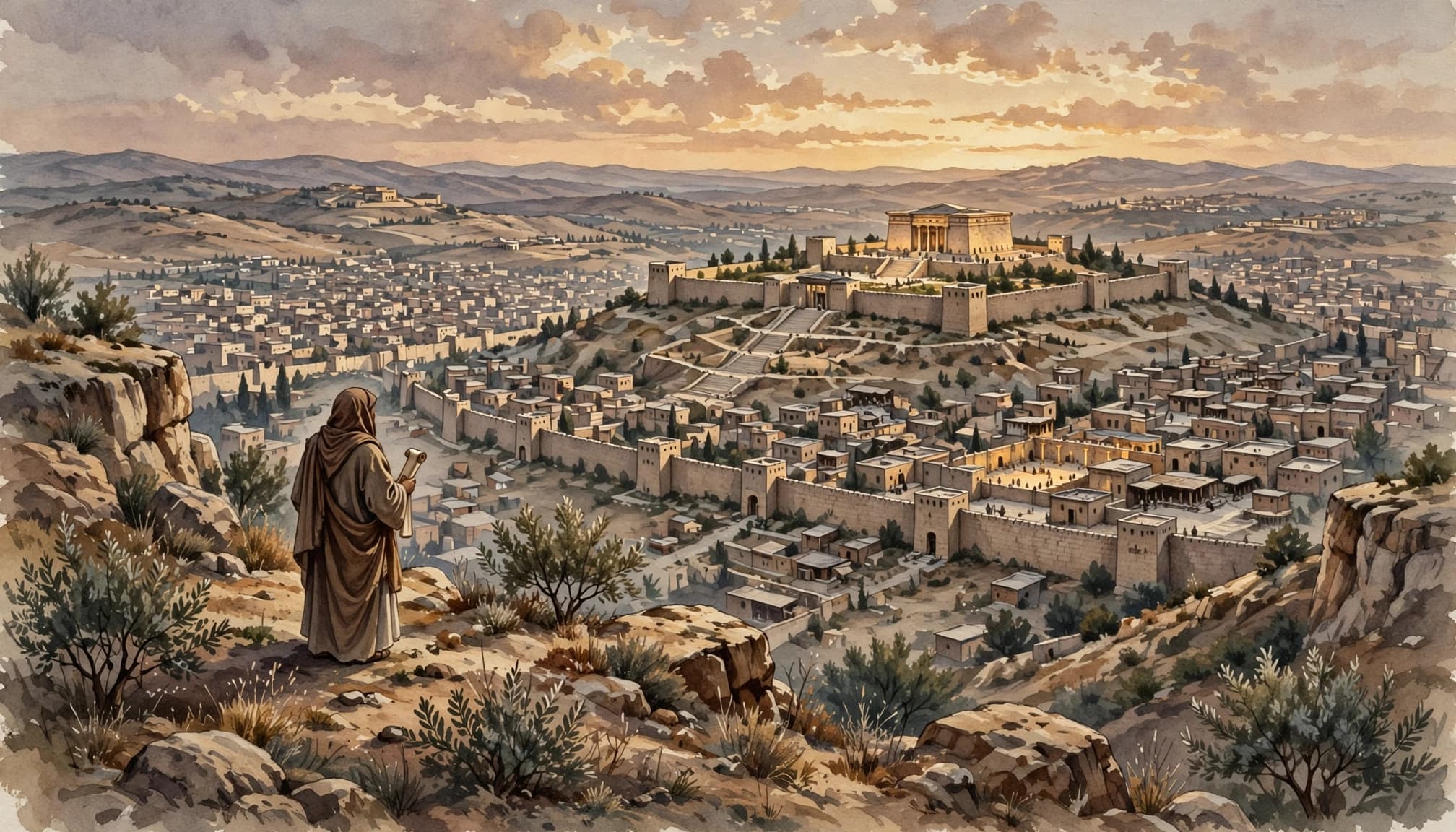
From Jeremiah’s seventy years to seventy sevens
Daniel had been reading Jeremiah's prophecy that Jerusalem's desolation would last seventy years (Jeremiah 25:11–12). That promise moved him to pray. He confessed the people's rebellion, pleaded for mercy, and asked God to restore Jerusalem (Daniel 9:1–23).
Gabriel's answer shifts the focus. Daniel is told that "seventy weeks" are determined for his people and holy city (Daniel 9:24–27). The Hebrew word translated "weeks," shabuim, refers to units of seven. The word itself doesn't tell us whether those units mean days or years. Because Gabriel's answer responds to Daniel's concern about Jeremiah's seventy years, many Christians understand the seventy sevens as 490 years. That year-based reading comes from context, not from the Hebrew word alone. (See the Hebrew term shabuim.)
Daniel 9:24 also gives six purposes for this period, including dealing with transgression and sin, making atonement for iniquity, and bringing in everlasting righteousness. Christians see these promises fulfilled through Jesus' work, especially His death and resurrection. Still, the verse sets out what God intends to accomplish; it doesn't provide a simple calendar that settles every question about when each purpose is fulfilled.
The cut-off Anointed One
After seven sevens and sixty-two sevens, Daniel says an "Anointed One" will be cut off. In Christian interpretation, that language points to Jesus: He is the Messiah, and His death brings atonement for sin. The passage's wording and timeline have been read in different ways, though, so we should distinguish the text's statement from our identification of the figure as Jesus.
Christians also disagree about how the final seven fits the timeline. Some read all seventy sevens as a continuous period. Others understand the first sixty-nine sevens as leading to Jesus, with a gap before the final week. Daniel doesn't explicitly state that there is a gap, so we shouldn't present one proposed chronology as settled fact. For a concise introduction to differing views, see an overview of Daniel's seventy sevens.
The final week includes a covenant, the stopping of sacrifice, and an abomination that brings desolation. Jesus later refers to Daniel's "abomination of desolation" (Matthew 24:15), connecting His warning to the prophecy without resolving every detail of its timing. For readers who understand the final week as future, Daniel 9:27 and the seven-year Tribulation offers a closer look at that interpretation.
What the Seventy Weeks Prophecy Says About Sin and Righteousness
Daniel 9:24 gives the prophecy its purpose. The seventy weeks concern Daniel's people and Jerusalem, but the goals reach beyond a timetable or a coming judgment. God intends to deal with sin, bring righteousness, and restore what has been broken. Read Daniel 9:24, and notice how all six aims fit together.
The prophecy names the problem of sin
The first three purposes address human rebellion: to finish transgression, make an end of sins, and make atonement for iniquity. These phrases overlap, but each points to the seriousness of sin and God's response to it. Transgression is rebellion against God's commands. Sin describes the guilt and harm that follow. Iniquity points to wrongdoing that needs atonement.
The prophecy doesn't treat sin as a small flaw that time can erase. God's people need forgiveness and cleansing, and Daniel's prayer has already acknowledged their guilt. Christians see the fullest answer in Jesus, who gave Himself for sinners. We connect His death with Daniel's promise of atonement, while recognizing that Christians interpret the timing and fulfillment of the six purposes in different ways. For more on this connection, see Jesus' atoning work and the forgiveness of sin.
Everlasting righteousness is more than a calendar date
The fourth purpose is to bring in everlasting righteousness. Daniel's vision looks beyond the end of a period of judgment toward a lasting order in which God's ways prevail. For Christians, Jesus' death and resurrection make this hope possible: He deals with sin and opens the way for people to be made right with God. We also look ahead to the full restoration of God's Kingdom, when righteousness will no longer be contested.
That hope keeps us from reducing the seventy weeks to date calculations. The timeline matters, and Christians continue to study it carefully. But Daniel 9:24 also asks what God is doing through the period: confronting rebellion, providing atonement, and establishing righteousness that lasts.
Vision, prophecy, and the most holy
The final two purposes are often translated as sealing up vision and prophecy, and anointing the Most Holy. To seal can suggest confirming or bringing something to its appointed fulfillment. It doesn't necessarily mean that God will stop speaking through prophecy. The verse places Daniel's vision within God's larger purpose, but interpreters differ on how and when that purpose is completed.
The last phrase also has more than one possible reading. Some translations say "the Most Holy," while others refer to a "most holy place" or thing. That difference matters: the phrase may point to something set apart for God, but the verse alone doesn't settle exactly what is being anointed.
Taken together, the six aims move Daniel's prophecy past dates and devastation. They show God dealing with sin and making His people right with Him. We see that hope centered in Jesus, even as we stay humble about details the passage doesn't make explicit.
Why the Starting Date and Timeline Remain Debated
Daniel says the seventy weeks begin with a word to restore and rebuild Jerusalem, but he doesn't name the Persian ruler or identify a calendar date (Daniel 9:25). That leaves interpreters with a real question: which decree starts the count?
Three proposed starting points
Cyrus's decree around 538 BCE is one option. It allowed the Jewish exiles to return and rebuild the Temple (Ezra 1:1–4). Some interpreters connect that decree with Daniel's restoration language, while others ask whether a command focused on the Temple also fits the rebuilding of Jerusalem itself. Ministry Magazine's discussion of the 457 BCE date also notes Cyrus's earlier decree.
A second proposal begins with Artaxerxes' decree to Ezra around 457 BCE. Ezra received authority to appoint officials and restore order according to the law of God (Ezra 7:11–26). Supporters see this as a significant step in restoring Jerusalem and its community. Adventist Biblical Research's case for 457 BCE explains how this date is used in one major interpretation.
A third proposal points to Artaxerxes' authorization for Nehemiah around 444 BCE. Nehemiah asked to rebuild the city, and the king granted permission and practical support (Nehemiah 2:1–8). For readers who emphasize the city's walls and streets, this decree may seem like the clearest match.
Why a few years change the calculation
The usual year-based reading understands the seventy sevens as 490 years. Daniel divides them into 7 weeks, 62 weeks, and 1 week: 49 years, 434 years, and 7 years. The first two periods total 69 weeks, or 483 years. But which decree begins those years? Starting in 538, 457, or 444 BCE produces a different endpoint, and interpreters also differ over how to count years and connect the endpoint with Jesus' public appearance or death.
Some Christians read the 69 weeks as leading to Jesus, then place the final week in the future, with a gap between the periods. Others read all seventy weeks as consecutive. Daniel gives the three-part division, but he doesn't explicitly say there is a gap. And the text doesn't settle every calendar detail.
That's why proposed dates and calculations belong in the category of interpretation, not undisputed history. We can see why Christians connect Daniel's Anointed One with Jesus, while still being honest about the questions that remain.
How Christians Understand the Anointed One Who Is Cut Off
Daniel's wording has drawn Christian readers toward Jesus for centuries. Yet we should be careful: the passage describes an anointed figure who is cut off, but that description alone does not settle his identity. The Christian reading comes from considering Daniel's words alongside the wider witness of Scripture.
What Daniel says about the anointed one
Daniel places the figure after seven weeks and sixty-two weeks, then says he will be "cut off" (Daniel 9:25–26). The phrase points to an anointed person, but it doesn't name Jesus or explain the figure's identity in isolation. Readers also have to consider the passage's chronology and the events around Jerusalem's destruction.
That's why interpreters reach different conclusions. Some identify the figure with Jesus, while others understand the language in relation to an anointed leader or priest in Daniel's ancient historical setting. Jewish interpretations also differ from Christian messianic readings; one Jewish interpretation of Daniel 9 offers a contrasting view.
The title itself can't carry the whole argument. We need to ask how Daniel's prophecy fits with the rest of the Bible, and what Christians mean when they connect the cut-off figure with Christ.
Why Christians see Jesus in the prophecy
For Christians, Jesus fits the passage because He is the promised Messiah, and His death came within God's purpose to deal with sin. Daniel 9:24 speaks of atonement for iniquity. The New Testament proclaims that Jesus gave Himself for sinners, making His death central to the hope Daniel's vision anticipates.
At the Last Supper, Jesus connected His own death with the covenant made through His blood (Luke 22:19–20). Hebrews also describes His self-offering as decisive in dealing with sin (Hebrews 9:26–28). These passages don't provide a timetable for Daniel's seventy weeks, but they help explain why Christians read the language of atonement through Jesus' death. For another Christian reading of that connection, see Daniel's prophecy and the atonement.
Holding conviction and care together
We can confess Jesus as the Anointed One without claiming that every reader must reach that conclusion from Daniel 9:25–26 alone. The identification depends on a broader Christian reading of prophecy, Jesus' life and death, and the New Testament's teaching about atonement.
That distinction matters. Daniel gives us the language of an anointed one who is cut off; Christians see that language fulfilled in Jesus, whose death brings hope of forgiveness and reconciliation with God. We can hold that conviction firmly while acknowledging that the passage's figure and timeline remain debated.
Why Interpretations of Daniel’s Final Week Differ
Daniel's final week brings several questions into focus: Who makes the covenant? Who stops the sacrifices? And when does the "abomination of desolation" occur? Christians answer these questions differently because Daniel describes the events without naming every person or fixing every detail of the timeline (Daniel 9:24–27).
The continuous reading keeps the weeks together
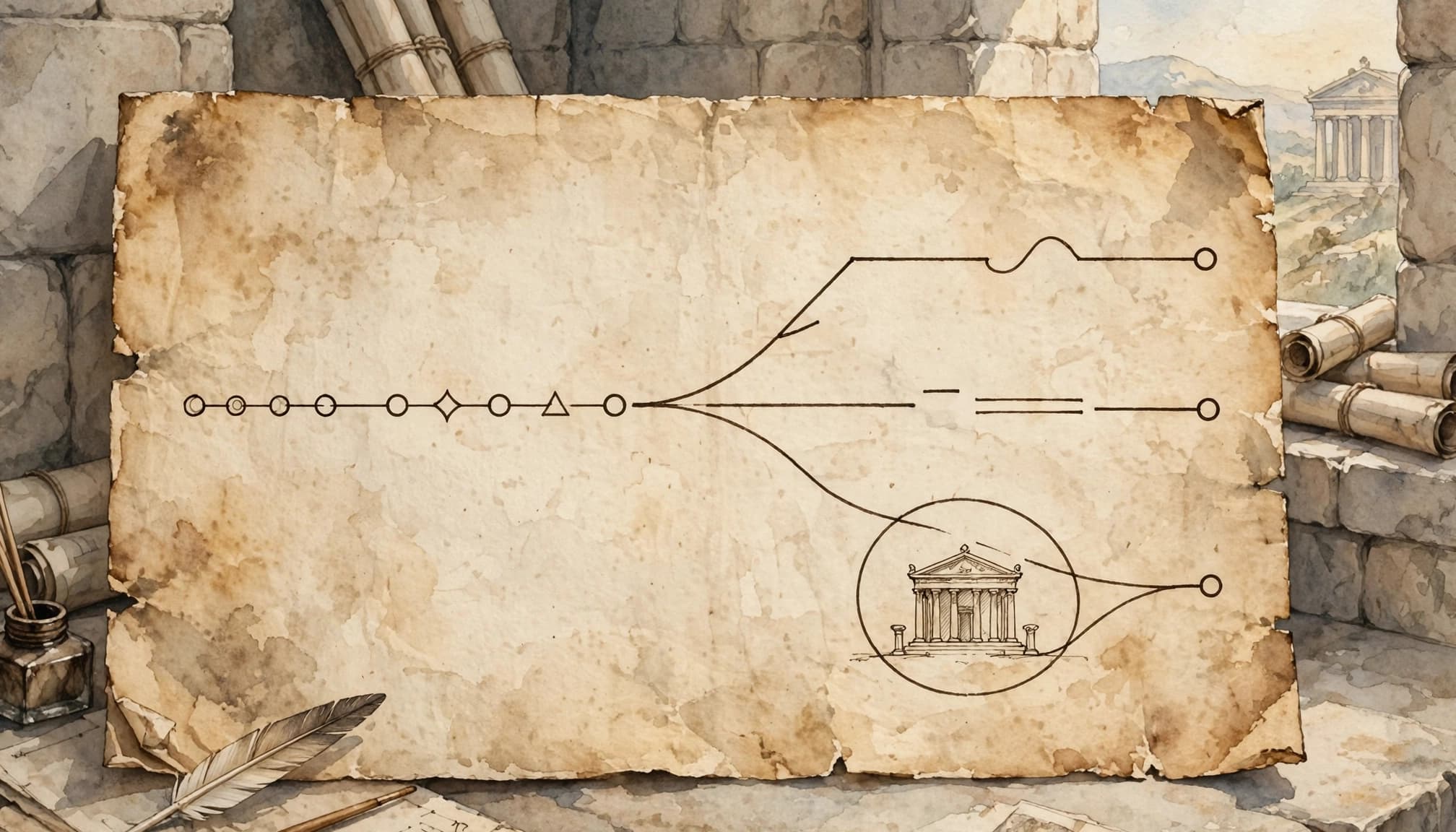
Some Christians understand all seventy weeks as one continuous sequence. On this reading, the final seven years follow the first sixty-nine without a long pause. The covenant, the interruption of sacrifice, and the desolation belong to the same broad historical progression Daniel describes.
This view takes seriously the way Gabriel presents the weeks as seven, sixty-two, and one. Daniel does not say that an interval separates the final week from the earlier periods. A continuous-week commentary on Daniel 9:27 discusses arguments for reading the periods together.
The futurist reading places the last week later
Other Christians, especially those with a futurist interpretation, understand the first sixty-nine weeks as leading to events connected with Jesus. They then see the final week as still future, with an interval between the sixty-ninth and seventieth weeks. In this reading, the ruler who makes the covenant and stops sacrifice is often identified with a future adversary.
The gap is an interpretation, not something Daniel explicitly states. Supporters connect it with the wider Biblical picture of events still to come, while others see the text's sequence as giving no reason to insert a pause. A futurist explanation of the final week outlines one version of this approach.
The covenant and desolation remain disputed
In Daniel 9:27, a figure makes a covenant with many, then sacrifice and offering cease halfway through the week. The verse also describes an abomination that brings desolation. But it does not plainly identify the covenant-maker or the desolator. Interpreters reach different conclusions because they read those details through different timelines.
Some historical and apocalyptic readings connect the language with an ancient crisis, particularly the persecution under Antiochus IV and the interruption of Temple sacrifice in the second century BCE. Futurist readers often connect the same language with a future ruler. Christians who see the final week fulfilled in an earlier period may identify the covenant or desolation differently again.
Jesus refers to Daniel's "abomination of desolation" in Matthew 24:15. That connection matters, but it does not settle the timing on its own. Jesus points His listeners to Daniel; Christians still debate how Daniel's words relate to the events He describes.
We can study the passage carefully without turning a disputed timeline into a test of faith. The text gives us real details to examine, but it does not answer every question directly. Let's hold our convictions with humility, keep Jesus at the center, and resist fear-driven certainty about what Daniel leaves open.
How the New Testament Connects Daniel’s Vision to Christian Hope
Daniel's vision reaches beyond questions about dates. The New Testament connects its language to Jesus, His sacrifice, and the hope that God will finish what He has promised. These connections strengthen the Christian reading of Daniel, but they don't settle every debate about the final week.
Jesus points directly to Daniel’s warning
When Jesus speaks about the "abomination of desolation," He directly refers to Daniel's prophecy. In Matthew 24:15, He tells His listeners to understand the warning spoken through Daniel. That link is clear: Jesus expects His followers to remember Daniel when they face the danger He describes.
But the reference doesn't answer every question readers bring to Daniel 9. It doesn't tell us whether the final week follows the first sixty-nine weeks without interruption, or whether it belongs to a future period. Nor does Matthew 24:15, by itself, settle the identity of the figure associated with the desolation. We should take Jesus' reference seriously without making it say more than it does.
That balance matters when Christians discuss prophecy. We can recognize a direct connection between Daniel and Jesus' teaching, while acknowledging that faithful readers interpret the timeline differently. For a broader look at Jesus, Israel, and restoration, see Jesus and the hope of restoration.
Hebrews connects atonement and sacrifice to Jesus
Daniel 9 concerns atonement for iniquity, and the final week includes the cessation of sacrifice. Hebrews helps us understand why Christians connect those themes with Jesus. It presents Him as the High Priest who offered Himself, rather than relying on repeated animal sacrifices. In Hebrews 9:11–13, the writer describes Christ's priestly work and His offering.
This is a Christian theological connection, not a direct explanation of Daniel's timeline. Hebrews doesn't map out the seventy weeks or tell us how to calculate the final seven years. It proclaims what Jesus' self-offering means: forgiveness and cleansing come through Him. We read Daniel's language of atonement and sacrifice in light of that New Testament teaching, while keeping the distinction between theological connection and chronological proof.
God’s promise gives the vision its hope
Daniel was praying over Jerusalem's ruin when Gabriel gave him the vision. The answer didn't erase the pain or provide an easy calendar. It assured Daniel that God had not forgotten His people, and that history remained in His hands. The vision's wider promise is that God governs the times and will bring His purposes to completion through Jesus.
As Spirit-filled Christians, we believe the Holy Spirit still works in and through the Church, and we look forward to Jesus' return with hope. That conviction doesn't require us to claim that all Pentecostals share one interpretation of Daniel's final week. We can differ on the timeline and still hold to the center: Jesus is our hope, His sacrifice deals with sin, and God keeps His promises.
So when we read Daniel 9:24–27 alongside the New Testament, we see more than a puzzle to solve. We see a God who acts in history, speaks through prophecy, and will complete His work in Christ.
Conclusion
Daniel's vision looks beyond Jerusalem's judgment to God's purpose: dealing with sin and bringing in everlasting righteousness. Christians see Jesus at the center of that redemptive work, even as we recognize that the sequence of the final week remains disputed.
We don't need to settle every timeline question to hold on to the prophecy's hope. Evil does not have the last word. God governs the times, keeps His promises, and will complete His work through Jesus Christ.
Why Daniel’s 70 Weeks Matter
In Daniel 9, the angel Gabriel gives Daniel a vision of seventy “weeks” appointed for his people and Jerusalem. The prophecy describes a period leading to the arrival of an anointed one and speaks of his being “cut off.” These details invite readers to examine how the promised Messiah fits within the unfolding story of Scripture.
Daniel’s timeline matters because it connects Israel’s hope for restoration with the life and death of Jesus. Reading the passage alongside the Gospels reveals why Christians see Jesus not as an afterthought to prophecy, but as central to God’s promise to confront sin and bring lasting righteousness.

Reading Daniel 9
How the Seventy Weeks Point to the Messiah
1
Begin with the Decree
Daniel’s timeline begins with a command to restore and rebuild Jerusalem. Many interpreters understand each prophetic “week” as seven years, making the seventy weeks a period of 490 years.
2
Follow the First Sixty-Nine Weeks
Daniel divides this span into seven weeks and sixty-two weeks. Together, these sixty-nine weeks lead from the rebuilding decree to the arrival of “Messiah the Prince.”
3
Consider the Messiah’s Death and the Final Week
After the sixty-nine weeks, Daniel says the Messiah will be “cut off.” The passage then describes a final week, whose timing and events Christians interpret in different ways.
The Messiah Daniel Foresaw
Daniel 9:24–27 links the promised Messiah to Jerusalem’s restoration and speaks of a time when he would be “cut off.” Christians see a connection to Jesus: he came to Israel, proclaimed the kingdom of God, and was crucified. Daniel’s vision also looks toward dealing with sin and bringing in everlasting righteousness—hopes Christians understand through Jesus’ death and resurrection. While believers differ on the precise dating of the seventy weeks and the interpretation of the final week, the passage invites readers to consider how Jesus stands at the center of God’s promised redemption.
“And after threescore and two weeks shall Messiah be cut off, but not for himself.”
Daniel 9:26 (KJV)
Questions About Daniel’s 70 Weeks
Explore the timeline, key interpretations, and ways this prophecy points to Jesus.
What are the 70 weeks in Daniel 9?
Daniel 9:24–27 describes seventy “weeks” decreed for Daniel’s people and Jerusalem. Many interpreters understand these as seventy groups of seven years, totaling 490 years.
When does the timeline begin?
Daniel 9:25 starts the count with a decree to restore and rebuild Jerusalem. Interpreters differ on which historical decree fits, so proposed starting dates vary.
Who is the Anointed One in the prophecy?
Many Christians identify the “Anointed One” in Daniel 9:25–26 with Jesus, seeing the passage as pointing ahead to His coming and death.
Why are 69 weeks often discussed separately?
Daniel 9:25–26 distinguishes seven weeks and sixty-two weeks before the Anointed One is cut off. Together, those periods total 69 weeks, leaving the final week for separate discussion.
How do Christians interpret the final week?
Some see the seventieth week as fulfilled in events surrounding Jesus and Jerusalem. Others understand it as a future period. Both approaches seek to account for Daniel 9:27 and the wider Biblical context.
How does this prophecy point to Jesus?
For many Christians, the promised Anointed One and the prophecy’s focus on dealing with sin find their fullest meaning in Jesus’ life, death, and saving work.
Keep Exploring the Promises That Point to Jesus
Daniel’s 70 weeks is one part of Scripture’s larger story. Continue exploring biblical prophecy to see how its promises and fulfillment direct our hope toward Jesus.