
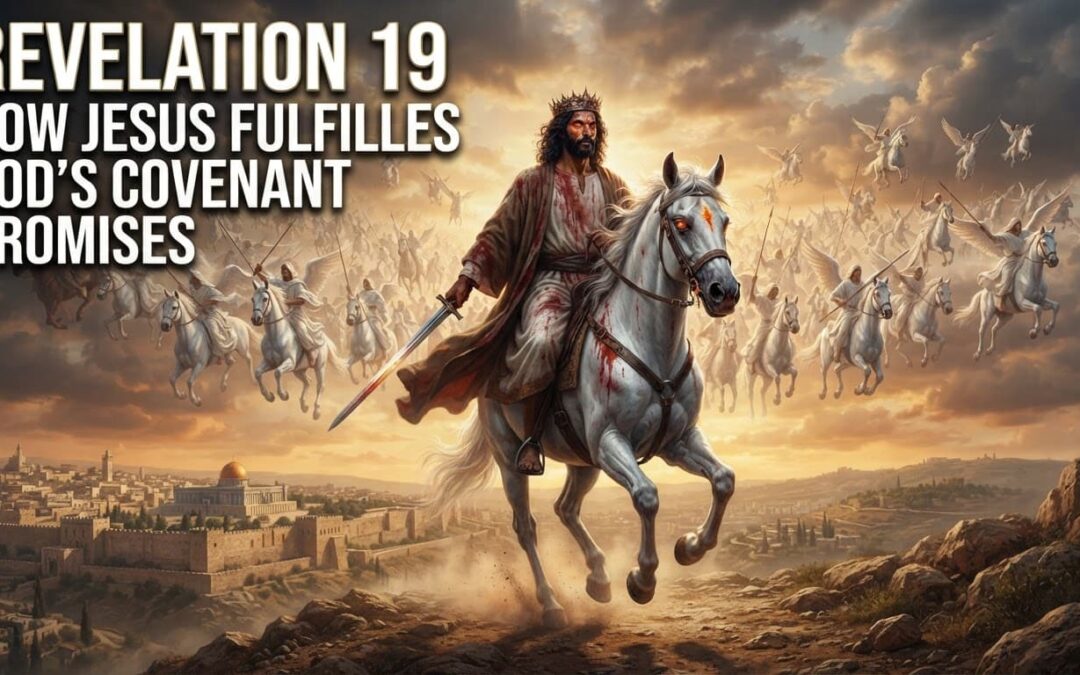
Revelation 19: How Jesus Fulfills God’s Covenant Promises
Jesus first came in humility, fulfilling God's covenant promises, born into an ordinary family and walking a path of suffering. Then John sees heaven open and Jesus revealed in royal victory, the Faithful and True King who judges in righteousness (Revelation 19:11–16).
That vision doesn't begin a separate account. It brings Scripture's history of God's covenant faithfulness to its promised end in Christ. The ruler promised in David's line, the prophets' vision of a kingdom shaped by justice, and the suffering Savior all point to the same Messiah. We can trace the promise of David's enduring throne and see how it connects to Jesus' first coming and the hope of His return.
Let's follow those promises through Scripture, from the King who came to suffer to the King who will complete His reign.
The Rider Who Brings God’s Promises to Completion
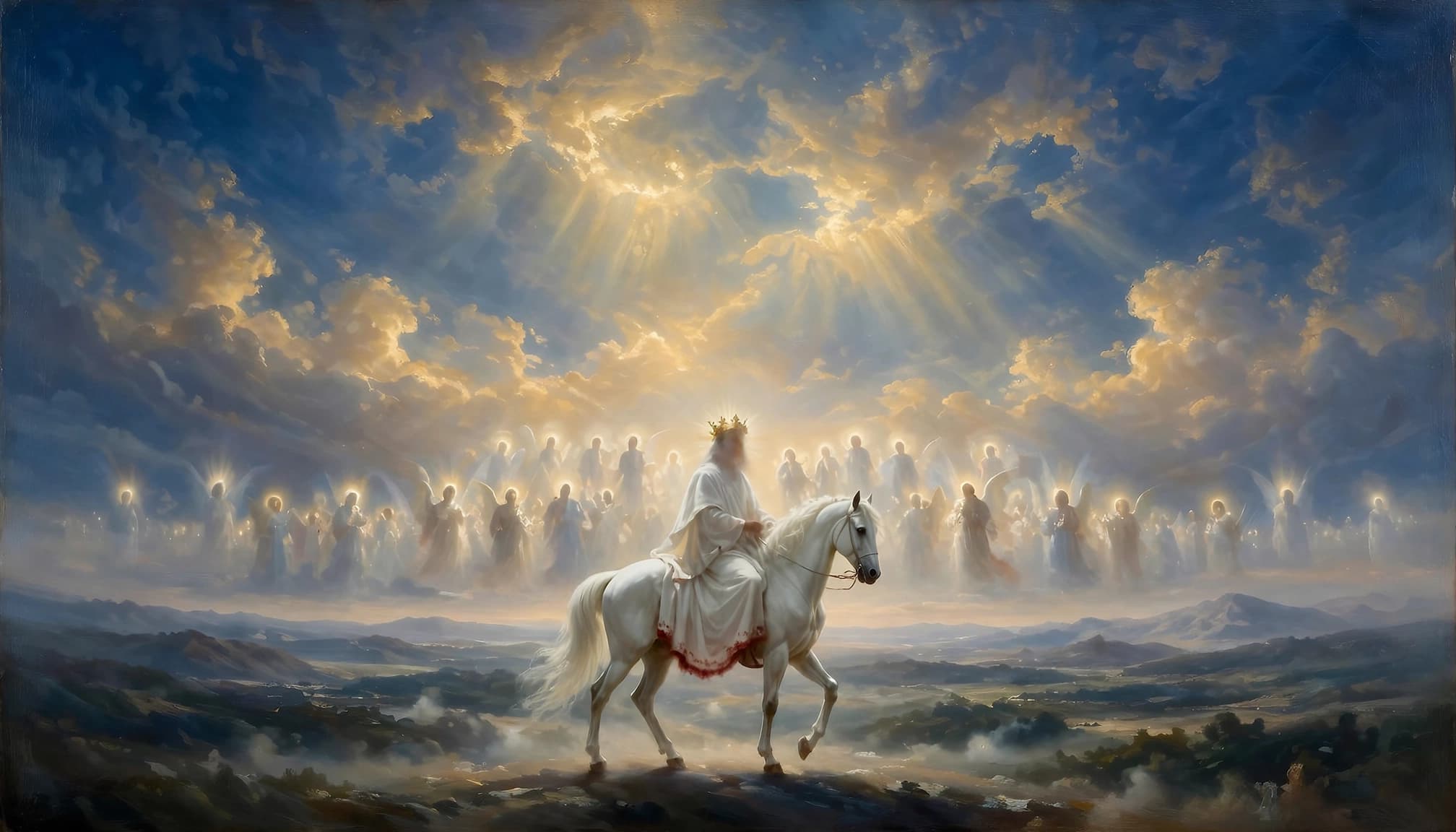
Revelation 19 shows Jesus as the promised Messiah, the same King who came in humility and will complete His reign when He returns. John's vision is rich with prophetic imagery, so we don't have to claim certainty about every detail to see its central message: Christ is faithful, judges in righteousness, and rules as King of kings.
Why John’s vision points back to earlier promises
Revelation draws on language and images that Scripture has already used. The rider's authority over the nations and the iron rod echo the royal promise in Psalm 2:7–12. There, God appoints His Anointed King and gives Him the nations as His inheritance. John's vision shows that promised authority in the Messiah's victory.
The same connection appears in Revelation 17:14, where the Lamb overcomes His enemies because He is Lord of lords and King of kings. Psalm 2 and Revelation aren't describing unrelated rulers. They point to the same King, whose victory comes through God's authority and whose reign extends over the nations. David Guzik's commentary on Psalm 2 also traces the psalm's focus on God's Anointed King.
This matters because Revelation isn't a plain military report. John uses prophetic pictures to proclaim Christ's righteous judgment and victory. We can read the imagery with care without softening its claim: Jesus is the King God promised. For a closer look at Revelation 19 and the promises of the coming King, the Old Testament echoes help bring the vision into focus.
What “Faithful and True” tells us about Jesus
John calls the rider "Faithful and True," names that tell us who Jesus is and why His judgment is right. He does not judge by deception, corruption, or human pride. His verdict is trustworthy because His character is trustworthy. The vision identifies Him as the righteous Judge, not as a different Messiah from the Jesus revealed in the Gospels.
Then John calls Him "the Word of God." That title connects with John 1:1–14, where the Word was with God, was God, and became flesh. The Jesus who came among us is the One John sees as the returning King. His identity has not changed; John reveals His glory and authority in a new vision.
The rider's final title, King of kings and Lord of lords, gathers the promise into a clear declaration. Jesus fulfills God's promises through His first coming, and He will bring His reign to completion at His return. We can hold that hope without pretending every prophetic image is easy to decode. The central truth is plain: the faithful Jesus reigns, and His judgment is righteous.
How Messianic Promises Lead from David to Jesus
The hope of a Messiah takes shape through Israel's history, not in a single prediction detached from its setting. God's promise to David establishes a royal family line, and later prophets describe the kind of King that line still awaits. Together, these passages show why Christians recognize Jesus as the promised Messiah.

The covenant promise of a lasting throne
In 2 Samuel 7:12–16, God tells David that a descendant will succeed him, build a house for God's name, and receive an enduring kingdom. The promise speaks first to David's royal family and the kings who would follow him. It also reaches beyond any one ruler: God promises that David's house and throne will endure.
That promise is more than a prediction of a powerful king. It reveals God's faithfulness to His covenant, even as Israel's monarchy later faltered and the people faced exile. The throne could fall in Jerusalem's history, but God's promise kept hope alive for a faithful ruler from David's line. The covenant promise to David gives this expectation its royal and family framework.
Luke makes the connection to Jesus explicit. In Luke 1:30–33, Gabriel tells Mary that her Son will receive the throne of His father David and reign over a Kingdom without end. We can read this as a Christian fulfillment of the promise, while still respecting its first setting in Israel's royal history. For more on Jesus as the fulfillment of the Davidic covenant, the line from David to Christ is central.
The promised King brings justice, not just power
The prophets fill out this hope. Jeremiah describes a righteous Branch raised up for David, a King who reigns wisely and does what is just and right (Jeremiah 23:5–6). His rule means more than authority over a throne. God's people are cared for, and the King's character shapes the justice of His reign.
Micah adds another part of the picture. He points to Bethlehem, David's town, as the place from which a ruler will come, and describes that ruler as shepherding His people in the strength of the Lord (Micah 5:2–5). The result is security and peace. The prophets don't give us identical descriptions, as if every royal passage were predicting the same detail. They show complementary parts of the hope: Davidic lineage, wise justice, shepherding care, and peace.
When we read these passages together, Jesus' identity comes into focus. He is presented as David's promised heir, and His Kingship answers the prophets' hope for a ruler who protects His people and judges rightly. Revelation 19's victorious King, then, belongs to the same Scriptural hope.
Isaiah’s vision of a righteous kingdom under the Messiah
Isaiah's promised King rules with wisdom, defends the vulnerable, and brings peace that reaches beyond Israel. The vision takes shape during a time of threat and distress, when God's people needed more than another ruler who would fail them.
A ruler empowered to defend the poor
Isaiah 9 looks toward a child who will reign on David's throne with justice and righteousness (Isaiah 9:6–7). The promise comes against the backdrop of danger and anguish in Judah. Isaiah's first hearers knew political fear firsthand, so this hope of an enduring King spoke to a real need for deliverance.
Isaiah 11 develops the picture. A shoot will grow from Jesse's line, and the Spirit of the Lord will rest upon Him, giving Him wisdom and understanding (Isaiah 11:1–10). Jesse was David's father, so the image points to renewed leadership from David's family. Yet this ruler's authority differs from the self-serving power people often expect. He judges the poor with righteousness and gives the meek a fair hearing.
That concern for people easily overlooked fits the ministry of Jesus. He welcomed those pushed to the margins, cared for the suffering, and confronted leaders who placed burdens on others. Christians see Jesus as the ultimate fulfillment of Isaiah's hope, the Spirit-endowed Messiah whose rule is marked by justice and care. We should still read each prophetic image with care. The passages build a picture of the promised King, but not every detail has only one possible interpretation.
For more on Isaiah's prophecy of the Messiah, the connections between Jesse's line, the Spirit, and righteous rule come into sharper focus.
Peace for creation and hope for the nations
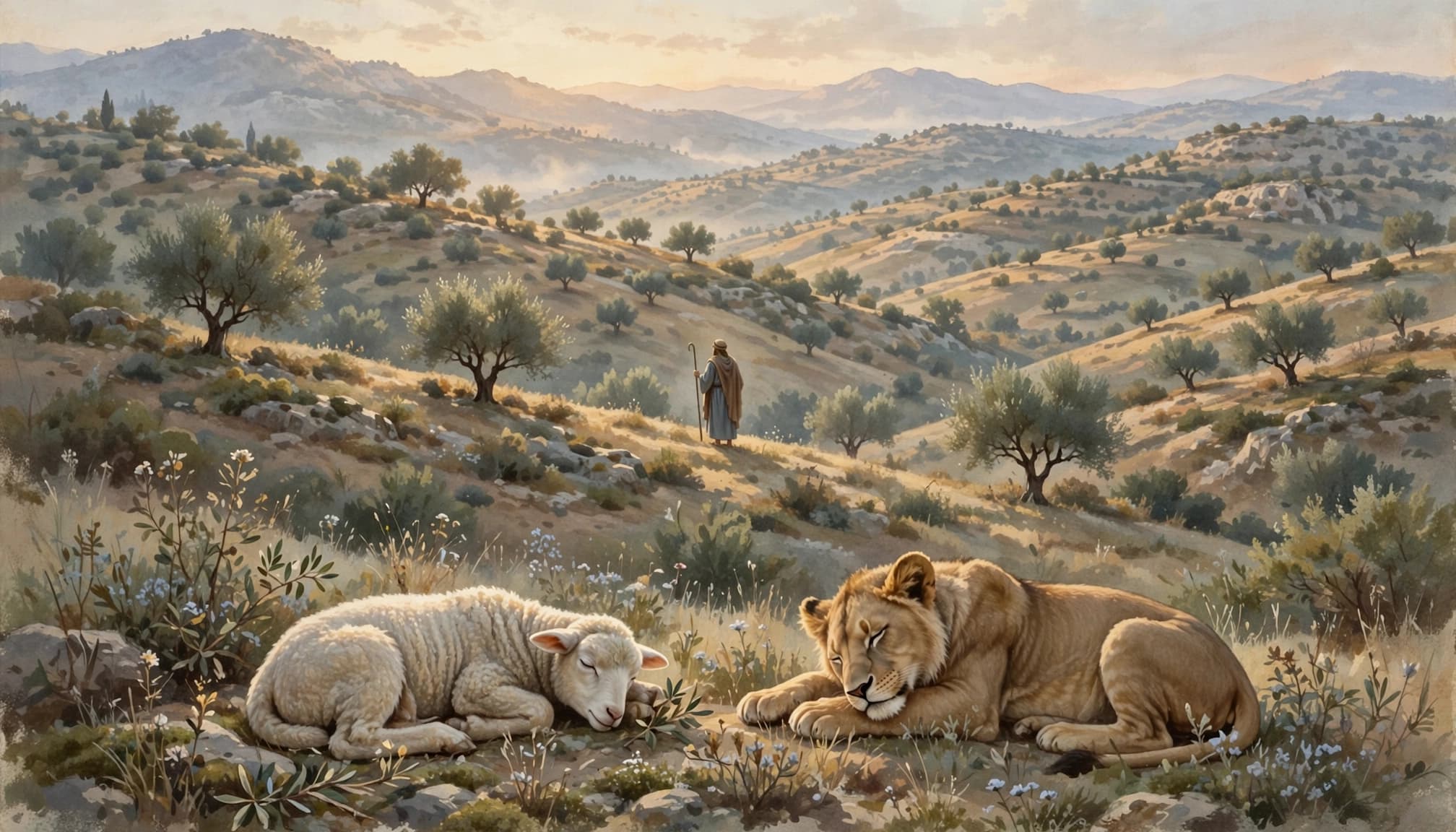
Isaiah's vision reaches beyond fair judgments in a human kingdom. The wolf and lamb, leopard and young goat, and lion and calf appear together in peace. A little child leads them, and nothing harms or destroys on God's holy mountain. Christians understand this animal imagery in different ways. Some read it as a picture of literal future peace in creation; others emphasize its symbolic vision of the safety and harmony of God's reign.
Either way, the image asks us to imagine peace made complete, not merely the absence of conflict between rulers. Isaiah also says the Root of Jesse will stand as a banner for the peoples, and the nations will seek Him. The promise is not confined to Israel.
Paul makes that outward hope explicit in Romans 15:8–12, quoting Isaiah's promise that the Root of Jesse will rise to rule the Gentiles, who will hope in Him. For Paul, Jesus brings God's promises to Israel and opens the way for Gentiles to praise God as well.
Christians differ on how much of this Kingdom is present now and how its future fullness will unfold. We can still hold to Isaiah's central hope: the Messiah rules in righteousness, and His peace will reach the nations and all creation.
Jesus Fulfills the Promise Through Humble Suffering
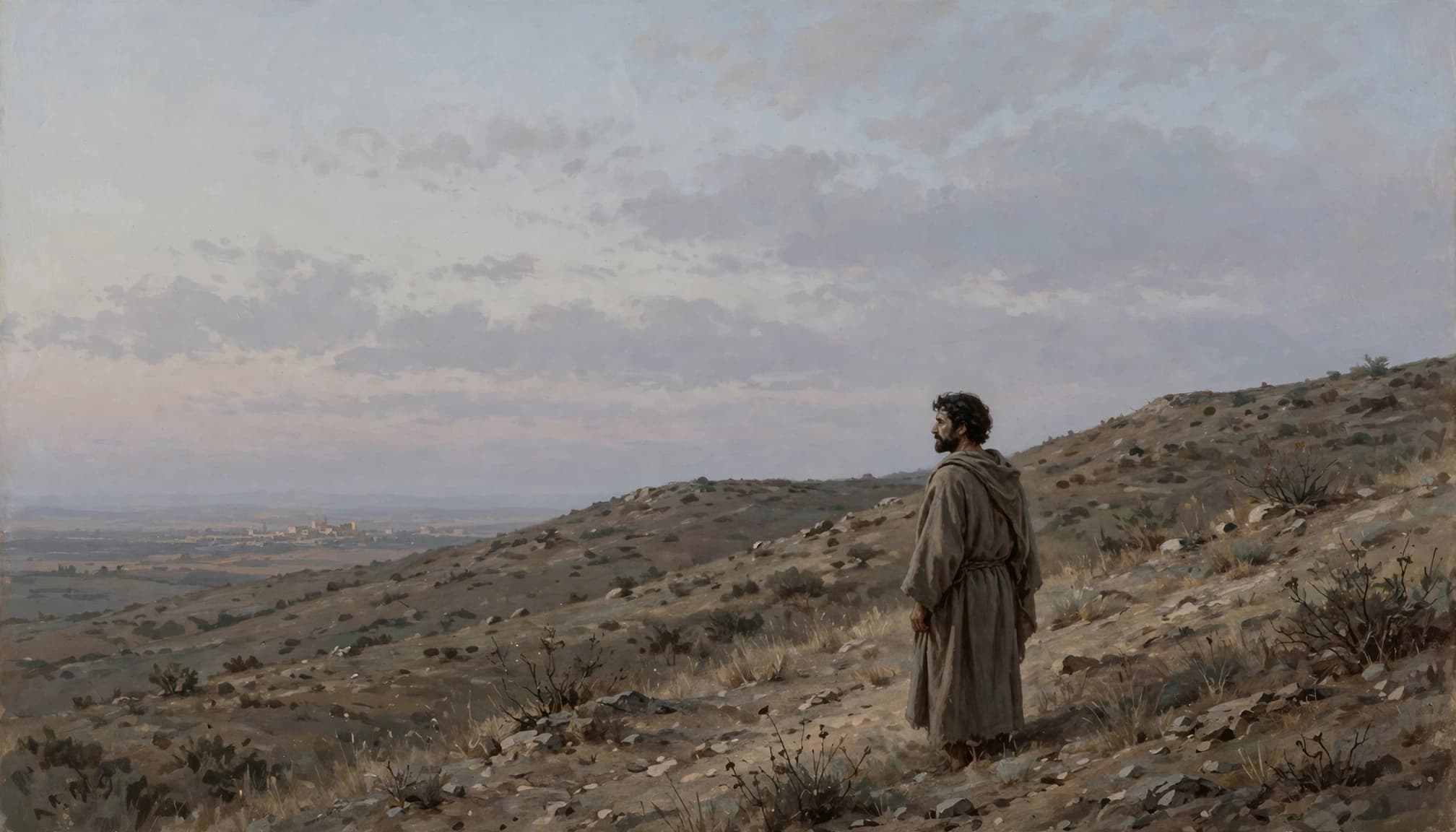
The promised King is also the servant who suffers. That may seem unexpected if we picture a Messiah who arrives first to rule openly, but Isaiah's vision holds suffering and victory together. Jesus' humble first coming doesn't cancel the hope of a righteous King. It shows how He carries out God's saving purpose before His reign is revealed in glory.
The servant bears suffering and sin
Isaiah's servant passage begins with the promise that the servant will be raised and exalted, then describes rejection, grief, and suffering (Isaiah 52:13–53:12). The servant is presented as innocent, yet He bears the wrongdoing of others. His suffering brings healing and peace, and the passage does not end with defeat. God vindicates the servant and honors His work.
Christians identify this servant with Jesus, whose suffering and death bring redemption. Peter makes the connection explicit: Jesus committed no sin, endured suffering without deceit, and bore our sins (1 Peter 2:21–25). Christians understand this passage as central to His redemptive work. At the same time, Isaiah uses poetic language; later theological labels can help explain how Christians understand the passage, but they should not be mistaken for Isaiah's own wording.
The servant's identity has also been read corporately, as Israel or a faithful remnant. That wider interpretive history deserves recognition, even as the New Testament presents Jesus as the servant who fulfills the passage. We can hold that Christian reading without claiming every line maps one-to-one onto a specific Gospel event. For more on Isaiah's prophecy of the suffering servant, the whole passage's movement from suffering to vindication matters.
The New Testament identifies Jesus with the servant
In Acts, Philip meets an Ethiopian official reading Isaiah's description of a servant led like a lamb to slaughter. When the official asks whom the prophet means, Philip begins with that Scripture and tells him the good news about Jesus (Acts 8:30–35). The connection is direct: Philip reads Isaiah's suffering servant in light of Jesus.
Jesus also applies the servant's words to His own path. In Luke 22:35–38, He says that the Scripture about being "numbered with the transgressors" must be fulfilled in Him. He knows rejection and suffering lie ahead. Yet He goes willingly, faithful to the Father's purpose.
This is how the humble first coming fits the wider promise. Jesus does not set aside the hope of a just ruler; He first bears sin and suffering, then is vindicated. Revelation 19 reveals the same Jesus as the victorious King. Isaiah's servant and John's rider are not competing pictures of the Messiah. Together, they show the King who suffers to save and will judge in righteousness. For a discussion of how readers have interpreted Isaiah's servant, see this study of Isaiah's suffering servant.
Revelation 19 reveals the returning King who judges in righteousness
John's vision turns our attention to Jesus as the returning King. The One who came in humility now appears in royal authority, and His victory brings the Messiah's work to its promised completion.
The Word of God rules with perfect authority
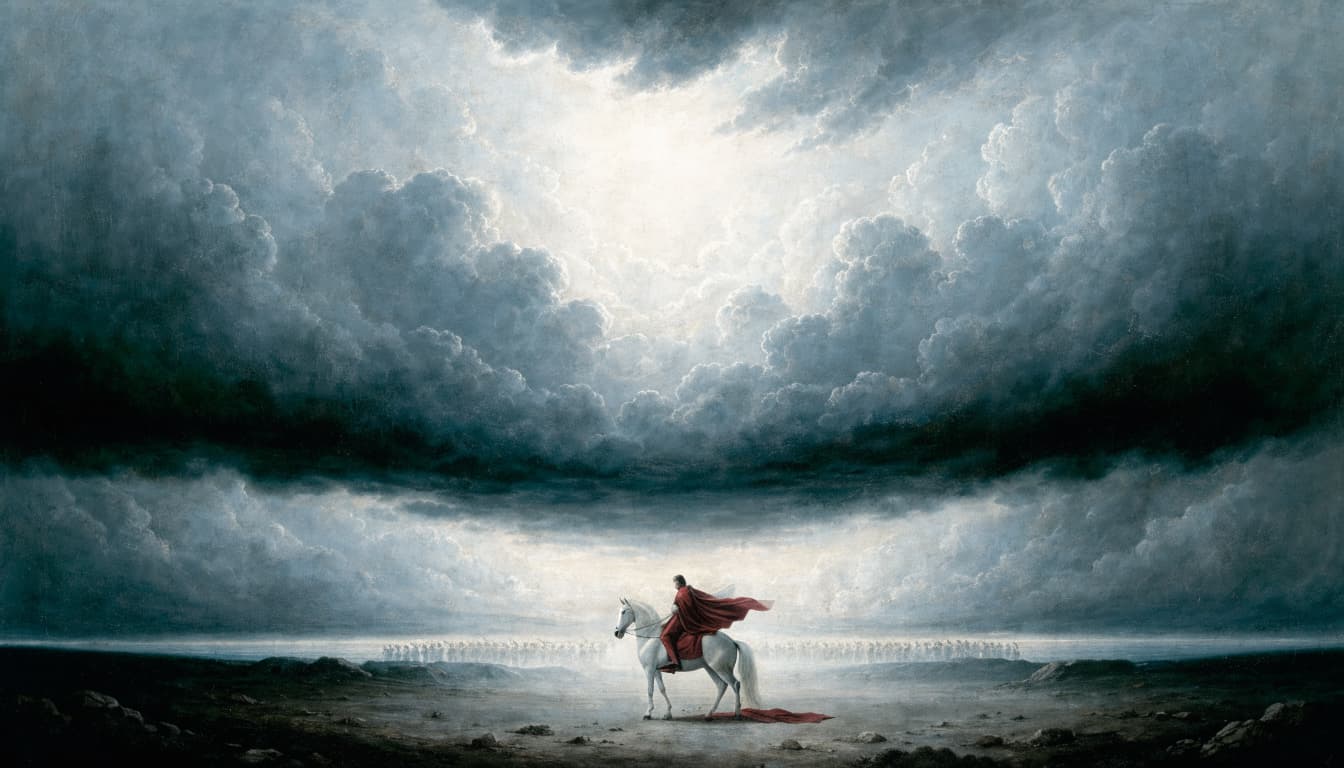
In Revelation 19:11-16, the rider is called "Faithful and True." He judges and makes war in righteousness, a sharp contrast with human rulers who twist justice to protect their power. His eyes like a flame of fire show the searching authority of His judgment. He sees clearly, and His verdict is right.
John also sees many crowns on the rider's head. The passage doesn't explain each crown or invite us to decode hidden details. It does show His unmatched authority. He rules the nations with an iron rod, echoing the royal promise in Psalm 2:7-12. No earthly ruler stands above Him.
The name "The Word of God" points to the same Christ revealed earlier in John's vision. In Revelation 1:12-18, Jesus appears exalted, with eyes like fire and authority over death. Revelation 19 doesn't present a different Jesus with a different purpose. It reveals the glory and rule of the One who already conquered death.
The rider's robe is dipped in blood. Isaiah 63:1-6 offers a prophetic image of a divine warrior whose garments are stained as He executes judgment. That passage may inform John's imagery, but Revelation doesn't identify whose blood is on the robe. We can recognize the theme of judgment without claiming more than the text tells us.
The final victory answers the hope of the prophets
The prophets looked ahead to a ruler whose reign would bring justice and peace. Isaiah 9:6-7 describes a King who reigns on David's throne with justice and righteousness. Revelation 19 shows that promised authority in the returning Christ. His victory is not a departure from the Messiah's work. It is the completion of what God promised.
Jesus first came to save, suffered, and rose again. At His return, He will confront evil and judge it rightly. The suffering Savior and victorious King are the same Person. We don't need to force every apocalyptic image into a detailed timetable to trust the passage's clear promise: evil will not have the final word.
Revelation's images call us to trust Christ's rule and await His return, not to set dates or make unsupported predictions. Christians differ on some details of how the events unfold, but the central hope remains firm. As we consider Revelation 19 and Jesus' final victory, we see the faithful King who will bring injustice to an end and establish His righteous reign.
What the Fulfilled Promises Mean for Christian Hope Today
The promises of a Davidic ruler, a suffering servant, and a returning King come together in Jesus. His cross and resurrection reveal the saving work of the Messiah; Revelation 19 shows the same Jesus returning in victory. For Christians, that means hope rests in the faithfulness of God, not in guesses about when the Kingdom will come in its fullness.

One Messiah, a humble first coming, and a victorious return
Jesus' suffering and victory belong to one account of God's covenant faithfulness. The promised King came in humility, bore sin, and rose again. He will return as the righteous ruler John sees in Revelation 19. These are not competing pictures of the Messiah. They show the same Jesus carrying out God's saving purpose and bringing His reign to completion.
That hope holds together what is already true and what we still await. Jesus saves and reigns now, and His Kingdom is already at work wherever people receive His grace and live under His lordship. Yet injustice, suffering, and death remain. The complete justice and peace promised in Scripture await His return. We can affirm both without pretending that every prophetic detail gives us a timetable.
Living faithfully while awaiting the Kingdom’s fullness
Because Jesus is Faithful and True, you can trust His character even when the world around you feels unsettled. That trust doesn't call you to withdraw or to treat daily life as a distraction. It gives you reason to pursue justice, care for people in need, and serve others with patience while you wait.
Peter connects the promised new heavens and new earth with the way believers live now. He calls Christians to holy conduct and Godly lives as they look forward to what God has promised (2 Peter 3:10–13). Christian hope, then, is more than comfort about the future. It shapes our choices in the present.
We believe Jesus will keep His promises, even when we don't know how or when every detail will unfold. You don't need a political timeline or a confident prediction to remain faithful. You can follow Christ, do what is right, and serve the people God places before you. For a fuller picture of living faithfully while awaiting the Kingdom's fullness, keep your attention on the King whose promises are sure.
Conclusion
The rider in Revelation 19 is Jesus, the promised King who brings God's covenant promises to completion. God promised David an enduring throne, and the prophets described a King whose reign would be marked by justice. They also spoke of the suffering servant, a hope Christians see fulfilled in Jesus' humble first coming.
John's vision brings these promises into view together. The One who suffered is the same Faithful and True King who wins the final victory over evil. We can hold to that hope without turning prophetic images into a timetable. Jesus reigns in righteousness, and His return will complete what God promised.
As we keep tracing how Biblical prophecy centers on Christ, we see one consistent truth: God is faithful, and His Kingdom is secure. Explore Jesus as the Victorious King in Revelation 19 as you continue following the promises that lead to Him.
The Promised Messiah Revealed
Revelation 19: How Jesus Fulfills God’s Messianic Promises
See how the returning King in Revelation 19 brings Scripture’s promises of justice, victory, and faithful rule into focus.
The Faithful and True King
Jesus appears as the righteous ruler whose word and judgment fulfill God’s promises.
The Victor Over Evil
His triumph points to the promised end of rebellion and the vindication of His people.
The Messiah’s Promised Victory in Revelation 19
Revelation 19 unveils Jesus as the rider on a white horse, called Faithful and True, who judges and makes war in righteousness. Heaven names Him the Word of God and King of kings and Lord of lords. This vision gathers together promises woven throughout Scripture: the promised son of David will reign, God’s anointed one will confront evil, and the Lord will establish justice.
The chapter also celebrates the marriage supper of the Lamb, portraying the joy of a people brought into fellowship with their Redeemer. Jesus fulfills these Messianic promises not merely by claiming a throne, but by returning as the righteous King whose victory answers the hopes of the prophets and whose faithfulness secures the future of His people.

The Messiah Revealed in Victory
Revelation 19 opens with heaven praising God for His just judgment and the arrival of the Lamb’s wedding feast. Then John sees heaven opened and Jesus riding a white horse, called Faithful and True. He judges with righteousness, defeats the powers that oppose God, and bears the title King of Kings and Lord of Lords.
The chapter brings together prophetic expectations of a just ruler, a victorious deliverer, and a Bridegroom united with His people. At Bible Prophecy Ministries, we read this vision alongside the rest of Scripture to see how God’s promises find their fulfillment in Jesus.
Promises Brought to Fulfillment
Six Portraits of Jesus in Revelation 19
The Righteous Judge
Called Faithful and True, Jesus judges with justice, fulfilling the hope that God will set wrongs right.
The Victorious King
He appears as King of Kings and Lord of Lords, reigning above every rival power.
The Promised Bridegroom
The marriage of the Lamb celebrates Christ’s enduring covenant bond with His people.
The Word of God
His name, the Word of God, reveals the authority of the One through whom God makes Himself known.
The Faithful Deliverer
He overcomes the beast and its armies, bringing the long-awaited victory of God’s Messiah.
The Lamb Who Reigns
The Lamb’s wedding feast joins the promise of redemption with the joy of His coming reign.
“On his robe and on his thigh he has a name written, King of kings and Lord of lords.” — Revelation 19:16 (ESV)

John’s Vision of Christ
Revelation 19:16
How Revelation 19 Reveals the Promised Messiah
Follow three steps to see how Scripture’s promises converge on Jesus in Revelation 19.
1
Begin With the Promises
Read the promises of a coming King and righteous ruler in the prophets, including Isaiah 11 and Daniel 7.
2
Read the Vision
Look closely at Revelation 19:11–16, where the rider called Faithful and True judges justly and bears the title King of Kings.
3
Connect the Promises to Jesus
Compare the passages to see how John’s vision presents Jesus as the promised Messiah who reigns in righteousness.
Frequently Asked Questions About Revelation 19
Explore what John’s vision says about Jesus and the promises made throughout Scripture.
Who is the rider on the white horse in Revelation 19?
The rider is identified as Faithful and True and as the Word of God. Christians understand this figure to be Jesus, revealed as the righteous judge and victorious King.
How does Revelation 19 connect to Old Testament prophecy?
Its picture of a ruler who judges justly and reigns over the nations echoes promises such as Isaiah 11:1–5 and Daniel 7:13–14, pointing to the Messiah’s kingdom.
What does the title “King of Kings and Lord of Lords” mean?
The title declares Jesus’ authority above every earthly ruler. In Revelation 19, it underscores the complete victory and reign promised to the Messiah.
What does Revelation 19 mean for readers today?
The chapter calls readers to place their hope in Jesus, whose faithfulness and justice bring Scripture’s promises into focus, even when the timing of future events remains debated.
Keep Following the Promises to Jesus
Continue exploring Bible prophecy and discover how passages across Scripture point to the promised Messiah and His reign.