
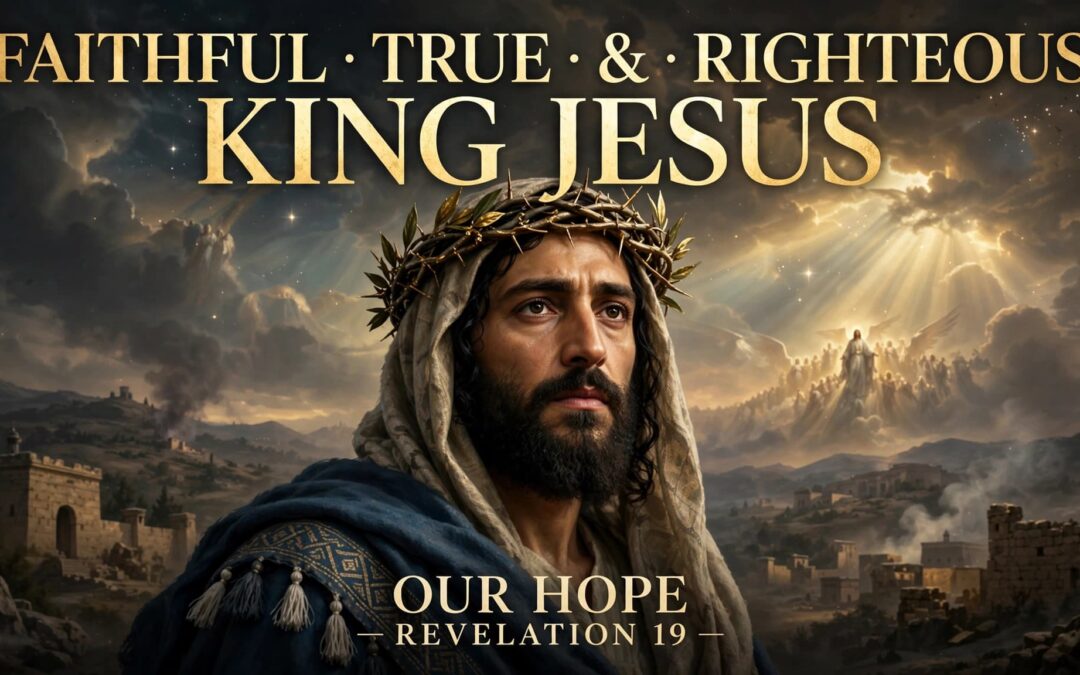
Revelation 19: Jesus, the Faithful True King
When heaven opens in Revelation 19, Jesus appears as the Faithful True Rider on the white horse, Faithful and True, who judges in righteousness. The chapter first fills heaven with praise for God's just rule, then turns our eyes to Christ's victory over evil.
That vision gives us hope when injustice and suffering seem to have the last word. We can trust Jesus, the faithful King, without trying to settle every end-times question before we hear what the chapter says.
Let's begin with the praise in heaven that prepares the way for the Rider's appearance. We can also explore the meaning of Jesus' title Faithful and True as we follow the vision.
Heaven Praises God Before the Rider Appears
Before the Rider appears, Revelation 19 turns our attention to heaven's response to Babylon's fall. The chapter moves from judgment to worship, then to the joy of the Lamb's marriage. That order matters: evil does not get the final word, and heaven's praise is rooted in God's character.
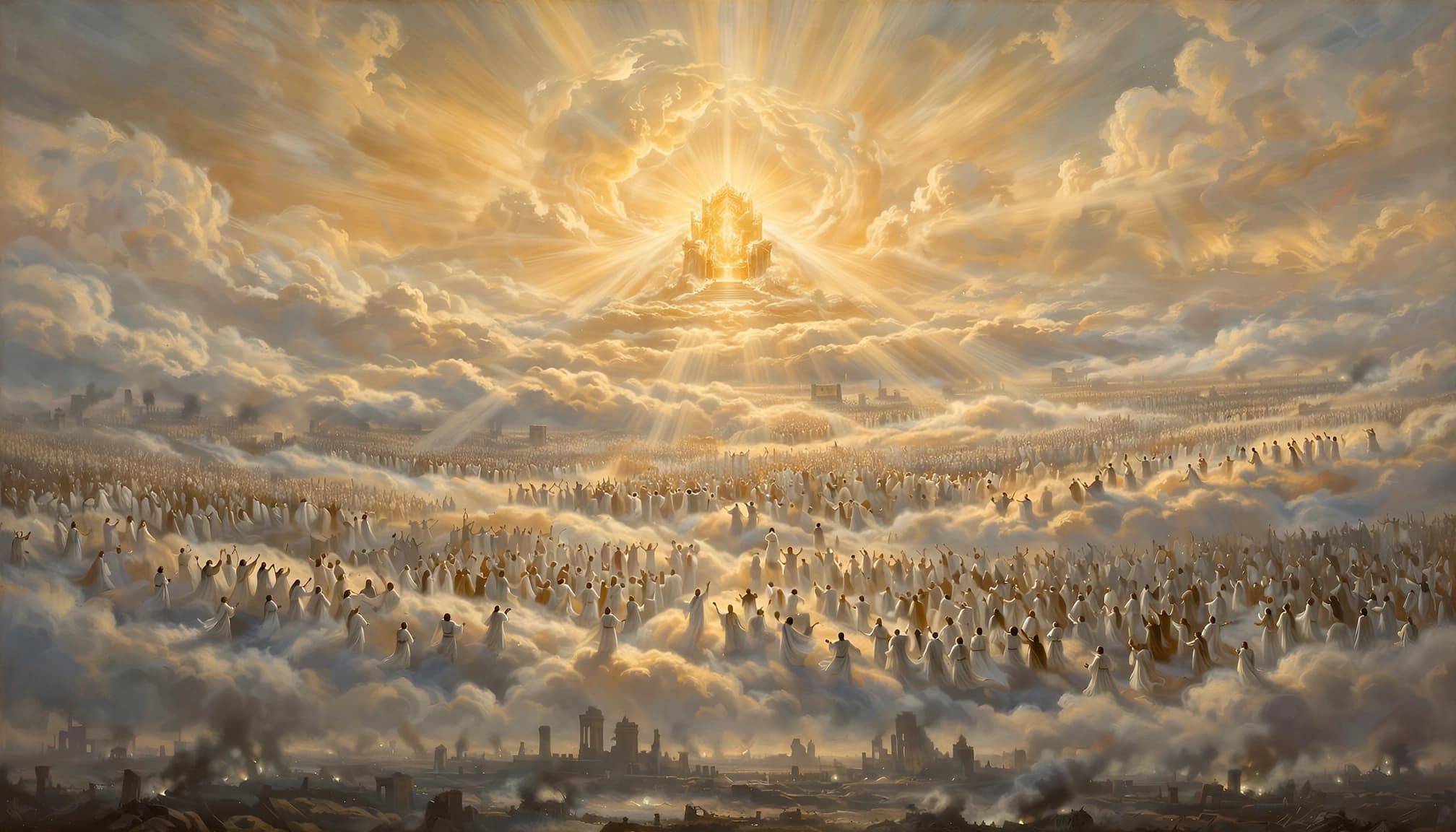
The Hallelujahs proclaim God’s righteous judgment
John hears a great multitude praising God for salvation, glory, and power. They declare His judgments "true and righteous," because He has judged Babylon, the power that corrupted the earth and shed the blood of God's servants. Their praise is not delight in suffering. It is relief that God has seen evil and answered it justly.
That distinction matters when we read Revelation. The cries of God's suffering servants run through the book, and heaven's response shows that their pain has not been ignored. God's justice is part of His promise to save and vindicate His people. We can grieve what evil has done while trusting that God does not confuse injustice with peace.
The elders and living creatures worship, too, and a voice from the throne calls all God's servants to praise Him, "small and great." The invitation widens the scene. Honor belongs to God, not Babylon or any earthly power that claims permanence. You can read the full chapter in Revelation 19, where praise and judgment lead into the vision of Christ's victory.
The marriage supper points to joy and readiness
The praise rises like the sound of many waters and mighty thunder. Heaven announces that the Lord God Almighty reigns, and that the Lamb's marriage has come. The bride has made herself ready, and she is given fine linen, described as the righteous deeds of the saints.
John does not use this moment to settle every question about the bride's identity. The image points to the Lamb's union with His people, while the linen connects their readiness with faithful living. Grace and faithful response belong together here: the bride is given the linen, and the passage also calls it the saints' righteous deeds.
Then comes a blessing for those invited to the marriage supper. That joyful feast must be kept distinct from the battlefield feast later in the chapter, when birds are summoned to consume the defeated. The two scenes use supper imagery, but their meaning and guests are very different. One celebrates belonging to the Lamb; the other pictures the defeat of those gathered against Him.
John is told to worship God alone
After hearing the blessing, John falls at the angel's feet to worship. The angel refuses. He is a fellow servant, and John must worship God alone. The moment is brief, but its lesson is clear: even a heavenly messenger must never take the place that belongs to God.
The angel also says that "the testimony of Jesus is the spirit of prophecy." In plain terms, prophecy bears witness to Jesus. The phrase connects the angel, John, and those who hold Jesus' testimony as fellow servants, though Christians explain its precise wording in different ways. The central point remains steady: prophetic words direct us toward Jesus and God, not toward the messenger delivering them. For a closer look at the testimony of Jesus in Revelation 19:10, we can keep that focus in view.
Then heaven's praise gives way to the next vision. The chapter has turned our eyes from Babylon's fall to God's reign, from the Lamb's wedding joy to the faithful King who appears.
Jesus, Faithful and True in Judgment
Heaven opens, and John sees a white horse with a Rider whose authority comes from who He is. Revelation 19:11-13 uses symbolic, Old Testament-rich images to show Jesus as the trustworthy King who saves His people and judges evil. We are looking at a vision of divine victory, not an ordinary report of warfare.
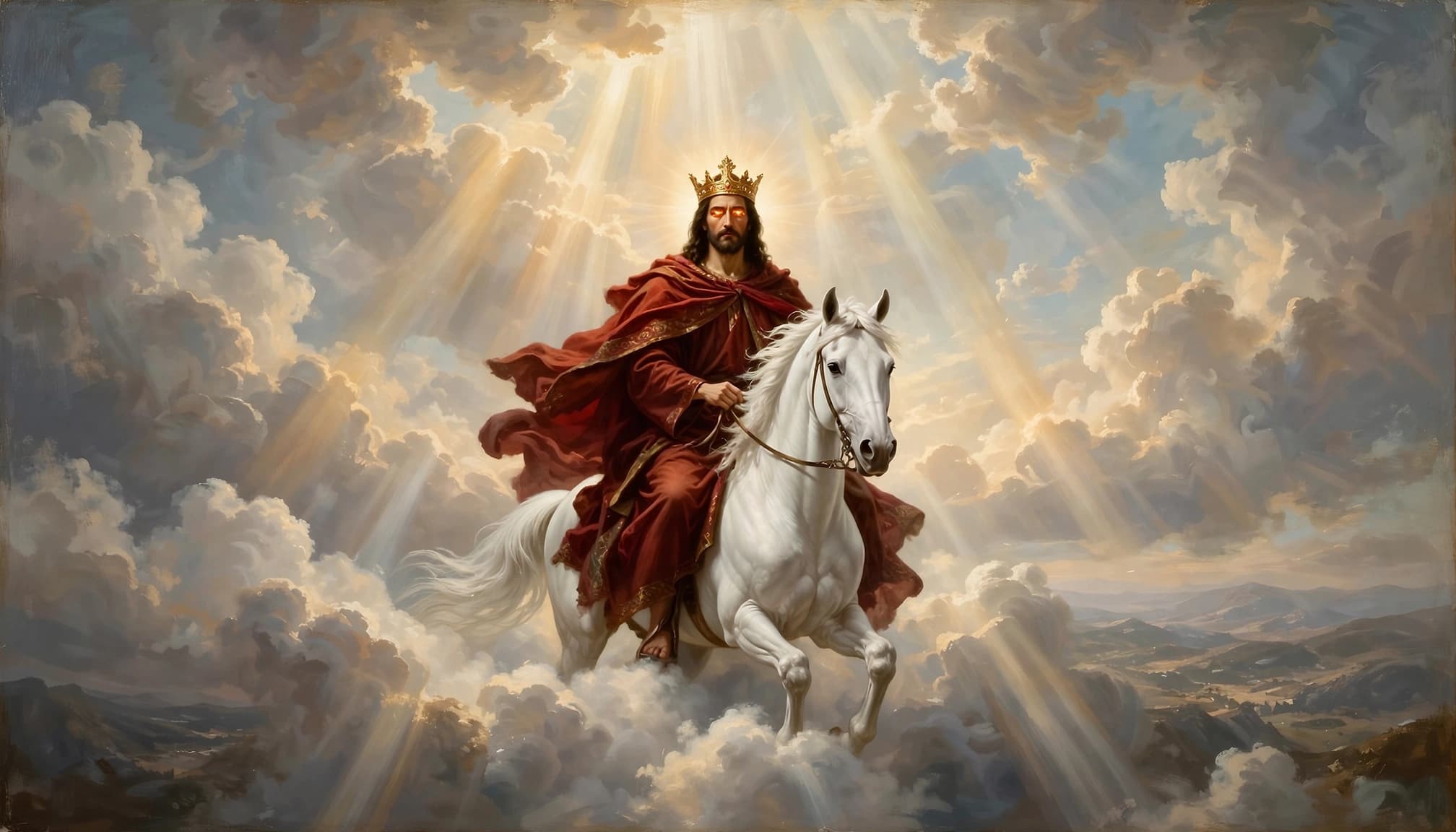
The opened heaven reveals the conquering Rider
John sees heaven opened and a white horse appear. The color suggests victory and royal authority, setting this Rider apart as a conquering King. But the vision does not ask us to focus on the horse alone. The Rider is called "Faithful and True," and He judges and makes war in righteousness. (Revelation 19:11)
Those names tell us what kind of King He is. Jesus keeps His promises; His words and actions agree. His judgment is never corrupt or self-serving. Earthly powers can claim to defend what is right while protecting their own interests, but Jesus acts with complete integrity.
That is why we see Him as both Savior and Judge. The same King who rescues His people confronts the evil that harms them. His judgment is not a departure from His faithfulness. It is part of His righteous rule. We can explore Jesus as Faithful and True while keeping both sides of the vision in view.
His eyes, crowns, and names show royal authority
John describes the Rider's eyes as a flame of fire. The image points to a gaze that sees through appearances and exposes what is hidden. No disguise, excuse, or public display of goodness can fool Him. His judgment is grounded in full knowledge, not rumor or partial evidence.
Many crowns rest on His head, a striking picture of royal authority. Earthly rulers may compete for power, but none can rival the authority of Christ. The vision places every crown beneath His reign.
Then John mentions a name known only to the Rider Himself. The passage leaves that name unexplained, and we should leave it there. It reminds us that Jesus is truly revealed, yet His identity is not exhausted by what we can understand. The vision gives us enough to trust His rule without pretending to know what Scripture keeps hidden.
The Word of God appears as the divine warrior
The Rider is also called "The Word of God." John's Gospel opens by describing the Word as with God and as God, then declares that the Word became flesh. Read together, these passages point to Jesus as God's living self-revelation, not merely a messenger speaking on God's behalf.
John also sees that the Rider's robe is dipped in blood. Revelation 19:13 does not tell us whose blood it is, so we should be careful not to claim more than the verse says. Readers often connect the image with the divine warrior in Isaiah 63, where garments are stained in a scene of judgment. (Isaiah 63 and Revelation 19) Some understand the blood as that of the judged enemies; others connect it with Christ's sacrifice. The allusion invites comparison, but the text itself does not settle the question.
The robe, the title, and the fiery eyes belong to the same apocalyptic vision. They show Jesus as the Word of God, whose righteous judgment exposes evil and whose victory fulfills God's purposes. We don't have to flatten these images into a literal battlefield report to hear their clear message: the King who comes to judge is faithful, true, and worthy of our trust.
How Christ Judges With Righteousness
Revelation 19:14-16 brings the vision to its central point: Christ comes with authority to judge evil and establish His rule. The images are vivid, but they don't invite us to guess at details the passage leaves unstated. They show us that His victory is certain and His judgment is right.
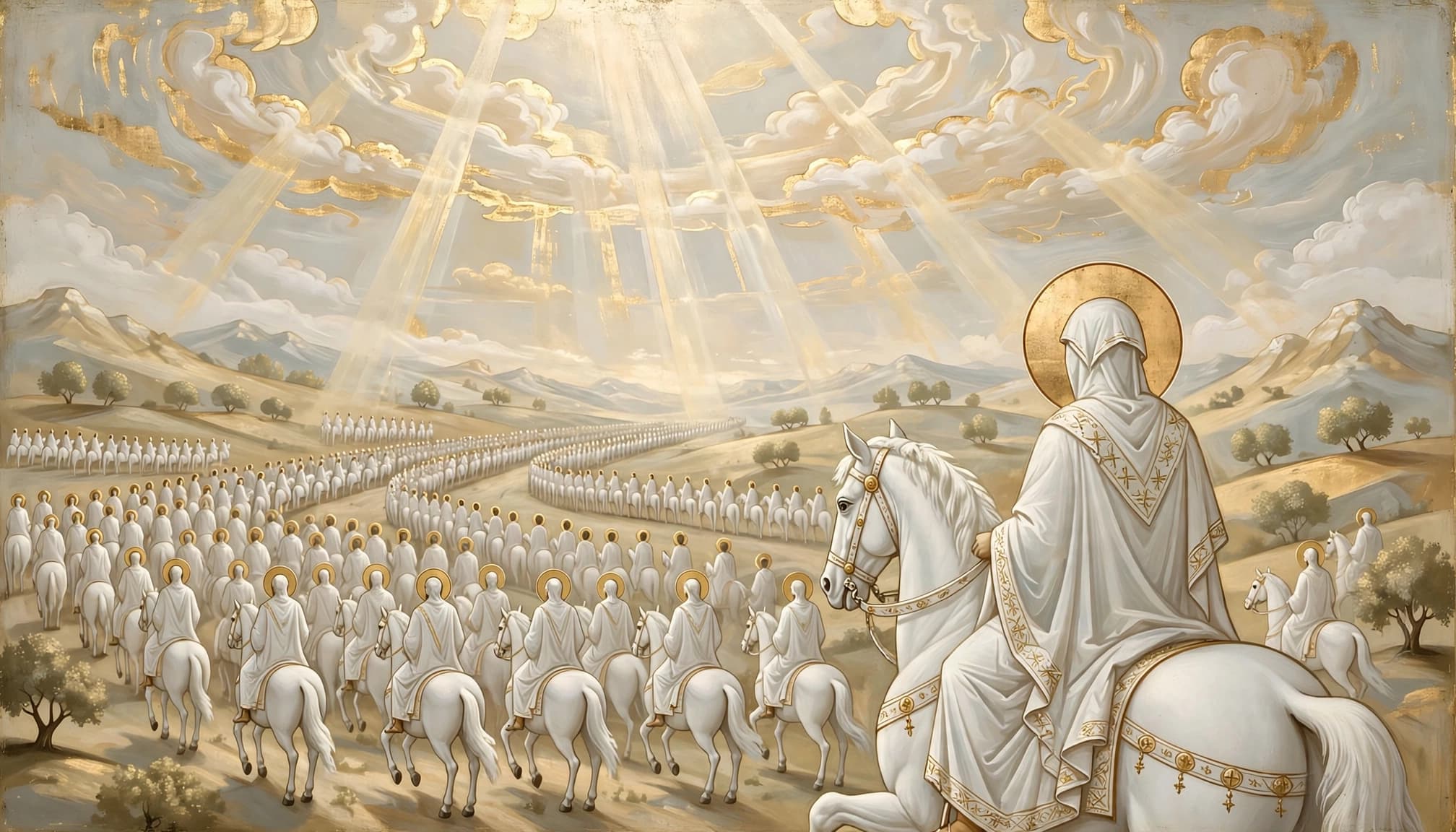
The armies of heaven follow the King
John sees the armies of heaven following Jesus on white horses, dressed in fine, clean linen. The passage describes what they wear and where they are, but it doesn't identify them explicitly. So we shouldn't insist they are only angels or only redeemed believers.
There may be a connection between their linen and the bride's clothing earlier in the chapter. In Revelation 19:8, the bride is given fine linen, which is associated with the righteous deeds of the saints. That echo may help us see the armies as connected with God's people, but it doesn't settle their identity. The vision keeps our attention on the Rider they follow.
The detail matters because John presents the King as the focus of the scene. The armies are with Him, but the passage gives no description of them fighting or acting independently. Their presence accompanies His victory; it doesn't shift the authority away from Jesus.
The sword from His mouth pictures His effective word
John sees a sharp sword coming from the Rider's mouth. That image points to the power of His word and judgment, not an ordinary weapon held in His hand. Jesus speaks, and His judgment is carried out. We don't need to turn apocalyptic imagery into a literal battle report to understand what John is showing us.
The picture echoes the Messiah in Isaiah 11:4, where the ruler judges with righteousness and strikes the earth with the rod of His mouth. Revelation also draws on Psalm 2:9, where God's anointed King receives authority over the nations. These echoes place Jesus within the Biblical portrait of the righteous Messiah, whose rule confronts evil with decisive authority.
We can read the images together without treating them as identical. The sword, the mouth, and the iron rod all point to the King's authority, but John uses each image to build the vision. As we explore the Rider's sword and authority in Revelation 19, the central point stays clear: no rival power can withstand Christ's judgment.
The King of kings rules with justice and authority
The Rider rules the nations with an iron rod and treads the winepress of the fierceness of God's wrath. The winepress recalls the prophetic image of grapes crushed beneath the weight of judgment. It is a severe picture, and Revelation uses it to show that God's response to evil is real, not empty words.
The title written on the Rider's robe and thigh declares, "KING OF KINGS AND LORD OF LORDS." This is distinct from the other names in the vision. "Faithful and True" describes the Rider in verse 11; "The Word of God" names Him in verse 13; this title proclaims His supreme rule in verse 16. Each detail contributes to the vision without becoming interchangeable with the others.
Read the vision in Revelation 19:14-16. Jesus does not judge by rumor, status, or human power. He sees truly, rules with authority, and brings evil to account. That is why we can trust the certainty of His victory, even when injustice still seems to hold the upper hand.
The Reigning King Defeats the Beast and His Allies
The vision now turns from the armies following Jesus to the forces gathered against Him. Revelation 19:17-21 ends with stark images of judgment, but its message is clear: the beast's rebellion cannot outlast the reign of Christ.
The great supper of God contrasts with the Lamb’s feast
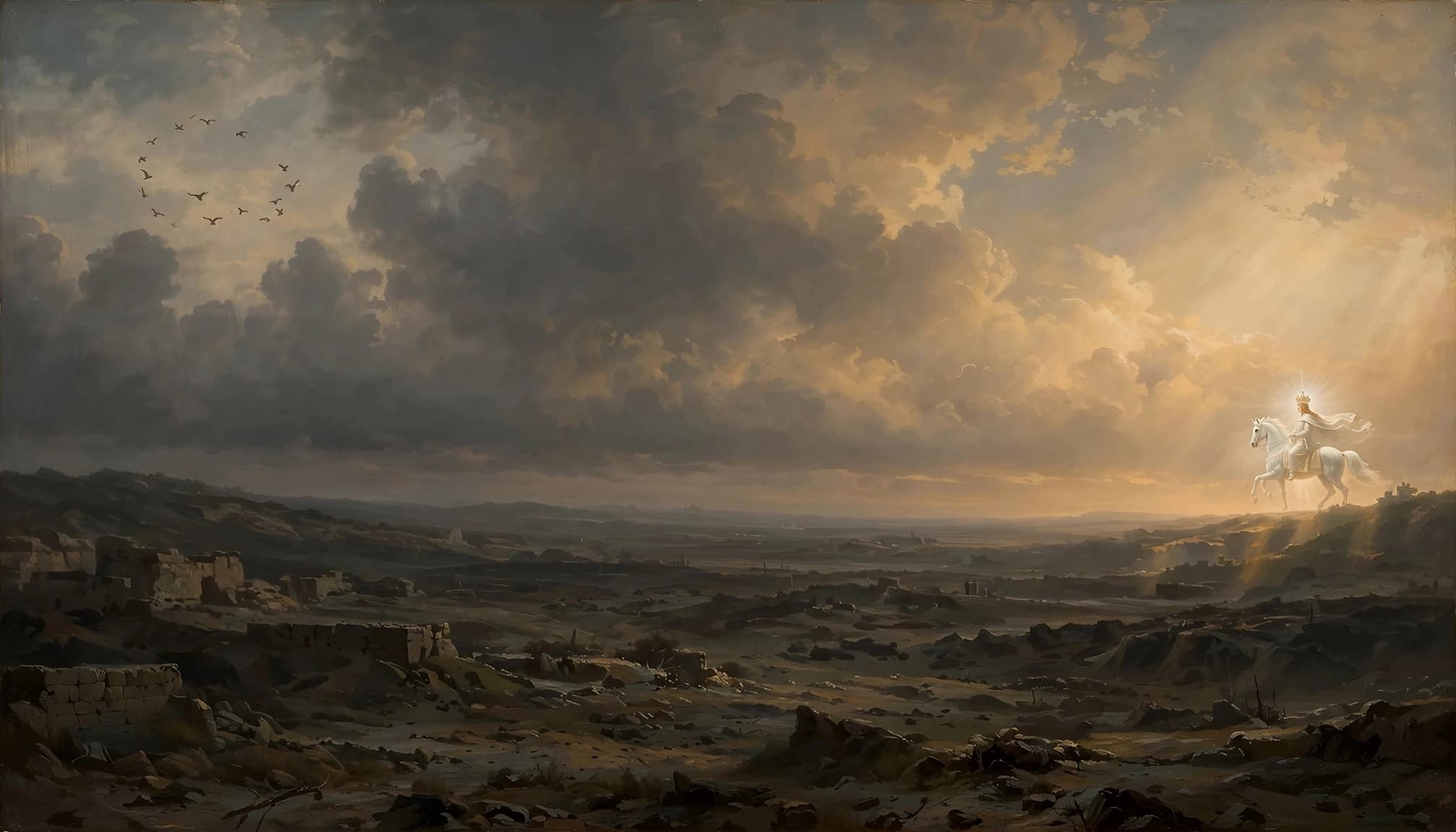
An angel standing in the sun calls to the birds, summoning them to the "great supper of God." The invitation names kings, captains, the mighty, and people of every rank. This is a battlefield image: the birds feast on the flesh of those defeated in judgment. The scene is meant to be severe. It shows the complete collapse of the forces that gathered against the Rider.
That feast is sharply different from the marriage supper announced earlier. In Revelation 19:6-9, the blessed guests celebrate their joy and belonging with the Lamb. Here, the birds are summoned to consume the defeated. The shared word supper links the scenes, but their meanings could hardly be further apart: one is a celebration for those invited to the Lamb, the other a picture of judgment on His enemies.
We shouldn't blur the two feasts together. One points to the joy of life with Christ; the other warns that opposition to Him ends in defeat. The details of the vision are vivid, but the main point is plain: the King's victory is complete. You can read Revelation 19:17-21 as John describes the summons and the defeat that follow.
The beast and false prophet cannot withstand Christ
The beast, the kings of the earth, and their armies gather to wage war against the Rider and His army. The beast and false prophet are captured. John says they are thrown alive into the lake of fire burning with sulfur. Their defeat is direct and final.
The remaining forces meet a different fate in this passage. They are killed by the sword that comes from the Rider's mouth, and the birds consume their flesh. The text does not say that these forces are thrown into the lake of fire here. That distinction matters, especially when we read the passage closely instead of blending it with later scenes in Revelation.
The sword from Jesus' mouth echoes the image already used in the vision. His word carries out His judgment; no earthly army can overturn it. The passage does not describe a prolonged contest between equal powers. The gathered rulers make war against Christ, but they cannot resist His authority. We can also consider Jesus as King of Kings in Revelation 19 and the authority His title declares.
The vision promises evil will not rule forever
For believers facing oppression, deception, or fear, this is a hard-edged promise: evil does not rule forever. The beast and false prophet may appear powerful, and the kings who follow them may look impossible to challenge. Yet their power has limits. Jesus remains Faithful and True, and His judgment brings their rebellion to an end.
That hope doesn't give us permission to label people or current events as the beast whenever they trouble us. Revelation gives us a vision of Christ's victory, not a license to make claims Scripture doesn't support. We keep our attention on what the passage says clearly: Jesus defeats the powers gathered against Him.
The final supper scene is unsettling, but it serves a clear purpose. Those who belong to the Lamb are invited to His feast; the beast and its allies cannot keep their rule. When injustice or lies seem to dominate, we can hold fast to the King who judges righteously and whose victory no enemy can undo.
What Revelation 19 Means for Christian Hope Today
Revelation 19 brings the chapter's themes together: heaven worships God, Jesus remains the center of prophecy, and no earthly power can overturn His righteous rule. We don't have to solve every question about the end times to receive its clear call. Worship God, stay faithful to Jesus, and live with hope in His return.
The vision calls believers to worship and remain faithful
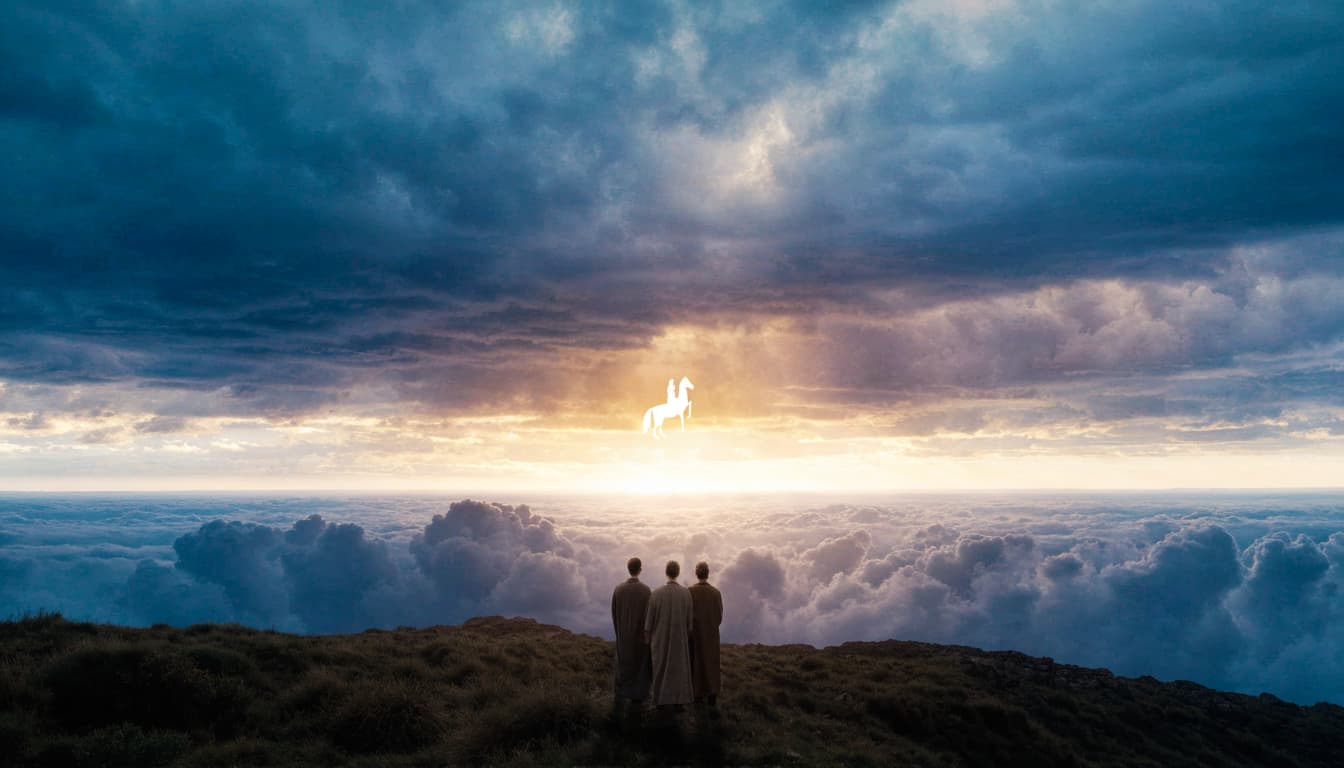
John falls before the angel, but the angel stops him and directs him to worship God alone. Then he says that "the testimony of Jesus is the spirit of prophecy" (Revelation 19:10). Prophecy must not become a way to draw attention to a messenger, a dramatic prediction, or our own interpretations. Its witness belongs to Jesus.
That gives us a practical test. Does a teaching lead us to honor God and bear faithful witness to Christ, or does it turn our attention toward the person delivering it? We believe the Holy Spirit empowers believers to speak about Jesus and live as His witnesses. You can read more about worshiping God rather than the messenger.
Faithfulness also shapes ordinary life. We obey Jesus because we belong to Him, not to earn salvation or prove that we deserve it. When pressure, fear, or competing voices make compromise seem easier, Revelation 19 calls us to keep our trust in the King who is Faithful and True.
Christ’s return gives hope without encouraging speculation
Christians read the relationship between Revelation 19 and 20 in different ways. Some understand the events as sequential: Jesus defeats the beast's forces, and the events described in chapter 20 follow. Others read chapter 20 as revisiting the conflict and victory from a different angle, rather than continuing a strictly chronological sequence. Premillennial, amillennial, and postmillennial views include a range of interpretations, so none should be treated as uniform. These views of the millennium offer one overview of the main positions.
We can acknowledge those differences without making them the center of the chapter. Revelation 19 presents Jesus as the victorious King whose judgment is righteous. It doesn't give us permission to match every symbol to a headline or claim a date for His return. Our hope rests in Christ Himself, not in a prediction that we may later have to defend.
That hope changes how we live now. We can pray, serve, and bear witness while we wait, trusting God to bring evil to account in His time. The Holy Spirit's work in believers keeps our expectation active: we follow Jesus today because we believe His reign is real and His return is certain.
Read the symbols alongside the rest of Scripture
Revelation's images echo earlier passages, and those connections help us read the vision with care. The righteous ruler in Isaiah 11:1-5 judges with righteousness. The divine warrior in Isaiah 63:1-6 appears with garments stained in judgment. And Psalm 2:7-9 pictures God's anointed King ruling the nations. These passages help explain why Revelation uses images of the sword, the iron rod, and the winepress.
John's title "The Word of God" also connects with the opening of John's Gospel. Read John 1:1-14 alongside Revelation 19, and the Rider's identity comes into sharper focus: the Word who was with God and was God became flesh. The vision is rooted in Scripture, not a collection of disconnected symbols.
As we compare passages, let's keep a simple distinction in view: Revelation directly says the Rider's robe is dipped in blood, but it doesn't explain whose blood it is. Isaiah 63 gives readers a reason to connect the image with divine judgment, while other interpretations connect it with Christ's sacrifice. We can weigh those connections without claiming the text says more than it does. That careful reading strengthens our hope: Jesus is King, evil will not prevail, and our calling is to worship God and remain faithful to Him.
Conclusion
Heaven opens, and Jesus appears as the Rider who is Faithful and True. Revelation 19 gives us hope because His judgment is righteous, and no evil power can overcome His rule. We can hold fast to Christ's return as Faithful and True without needing to settle every question about the timing of future events.
The vision leaves our attention on Jesus, the reigning King. Let's worship God, trust Jesus, and remain faithful as we wait for His victory.
Revelation 19: Jesus, the Faithful and True King
Behold the King Who Comes in Righteousness
Revelation’s vision of heaven opened reveals Jesus returning to judge evil, fulfill God’s promises, and reign as King of kings.
Heaven Opens to Reveal the Rider
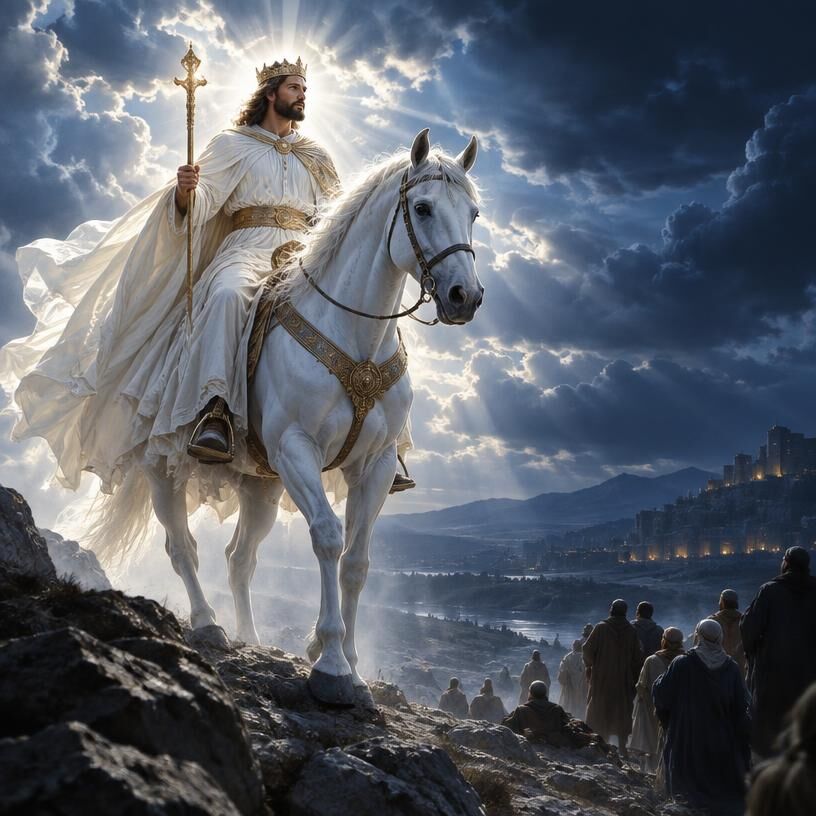
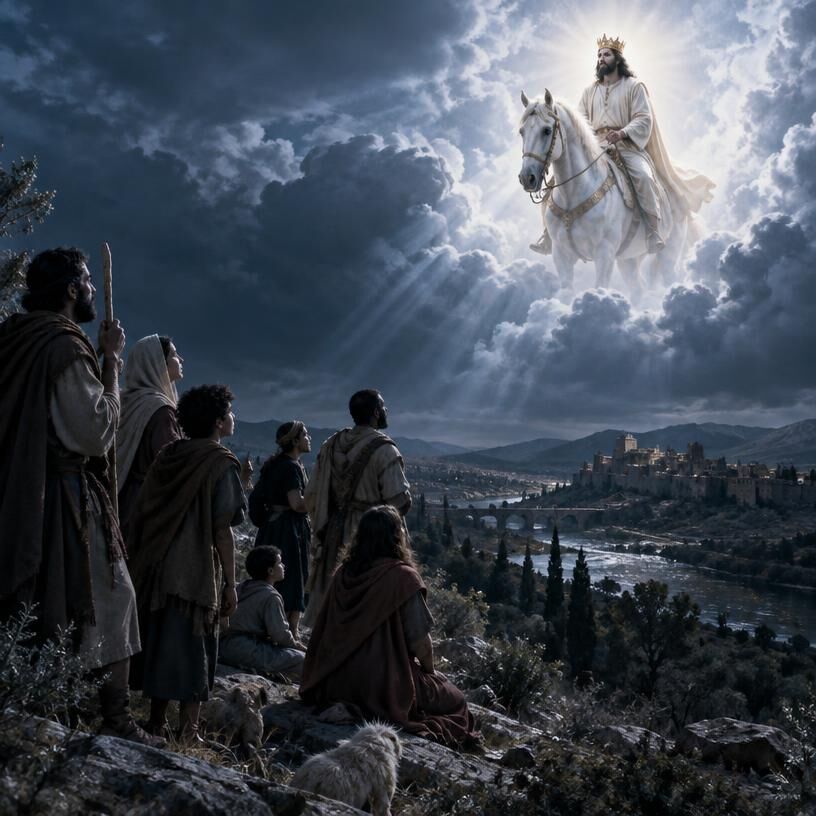
In Revelation 19:11–16, John sees heaven opened and a rider on a white horse. He is called Faithful and True because His words never fail and His judgment is perfectly just. The vision turns our eyes from the turmoil of earthly kingdoms to the certainty of Christ’s return.
King of Kings and Lord of Lords
Jesus appears with many crowns, followed by the armies of heaven. The title written on His robe and thigh—King of kings and Lord of lords—declares His authority over every power. Revelation 19 portrays His victory not as a possibility, but as the promised conclusion of God’s plan.
The Names and Deeds of Jesus in Revelation 19
Faithful and True — He fulfills every promise.
Righteous Judge — His judgments are just.
He Makes War — He confronts evil.
Rider on a White Horse — He comes in victory.
Eyes Like a Flame of Fire — Nothing escapes His sight.
Many Diadems — His authority surpasses every throne.
A Name Known Only to Him — His glory exceeds our understanding.
Robe Dipped in Blood — His return bears a solemn sign of judgment.
The Word of God — He reveals the Father’s truth.
Leader of Heaven’s Armies — The hosts of heaven follow Him.
The Sword from His Mouth — His word carries authority.
Shepherd with an Iron Rod — His rule cannot be overturned.
Treader of the Winepress — He brings God’s judgment against wickedness.
King of kings — Every earthly ruler answers to Him.
Lord of lords — No power stands above Him.
The Coming Conqueror — His victory ends evil’s defiance.
The Promised Messiah — Prophecy finds its fulfillment in Him.
The Reigning Savior — His kingdom rests on truth and justice.
When the Faithful King Comes to Judge
Revelation 19 portrays Jesus returning not as a distant observer, but as the Faithful and True King who judges and makes war in righteousness. His justice is neither uncertain nor corrupt: He sees evil clearly and acts against it. The sword from His mouth points to the authority of His word, while the armies of heaven follow His lead. For those who trust Him, this vision offers hope that cruelty and rebellion will not have the final word.
Bible Prophecy Ministries explores what Scripture says has happened, what is still to come, and how every part of prophecy centers on Jesus. In that mission, Revelation 19 is more than a picture of future conflict. It is a declaration that the promised Messiah will confront evil, uphold what is right, and reign as King of kings and Lord of lords.

How Revelation 19 Brings Prophecy to Fulfillment
Step 1
Begin With God’s Promises
Read the prophets’ promises of a righteous ruler, then notice how Revelation 19 presents Jesus as the King who judges with justice.
Step 2
See the King Return
Follow the vision of heaven opened and the rider called Faithful and True, whose return reveals His authority over every nation.
Step 3
Recognize the Final Victory
See evil defeated and God’s promises vindicated, giving believers confidence that Christ will bring His purposes to completion.
Frequently Asked Questions About the Faithful and True King
Explore key details of this chapter and what its vision of Christ’s victory means for those who trust Him.
Who is the rider called Faithful and True?
He is Jesus Christ. Revelation 19 names Him the Word of God and King of kings, portraying Him as the righteous judge who keeps His promises.
What does Revelation 19 say about Christ’s return?
The chapter depicts heaven opened and Christ appearing in power to judge evil and establish His rightful rule.
Why is Jesus shown defeating the beast?
The beast’s defeat shows that opposition to God will not prevail. The authority of Christ, not the power of evil, has the final word.
What hope does this chapter offer believers?
It assures believers that Jesus is faithful, justice will come, and God’s promises will be fulfilled. That hope calls for steadfast trust in Him.

Look to the King Who Is Coming
Revelation 19 points to Jesus as the Faithful and True King. Explore more Bible prophecy and discover how Scripture’s promises deepen our hope in His return.