
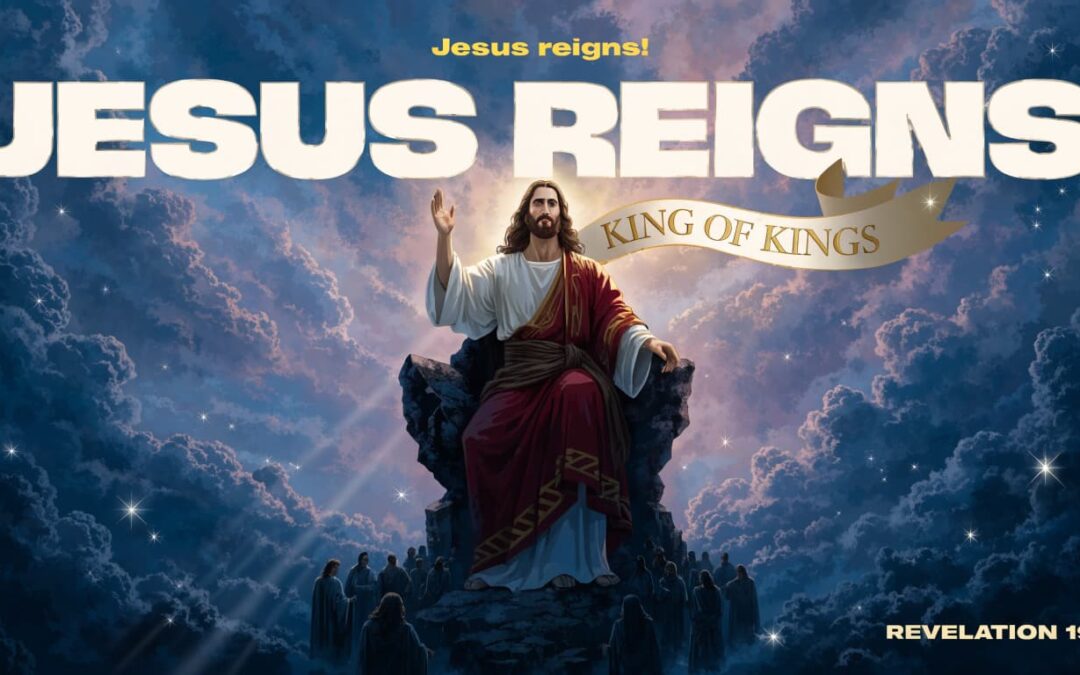
Revelation 19: Jesus, King of Kings and Righteous Judge
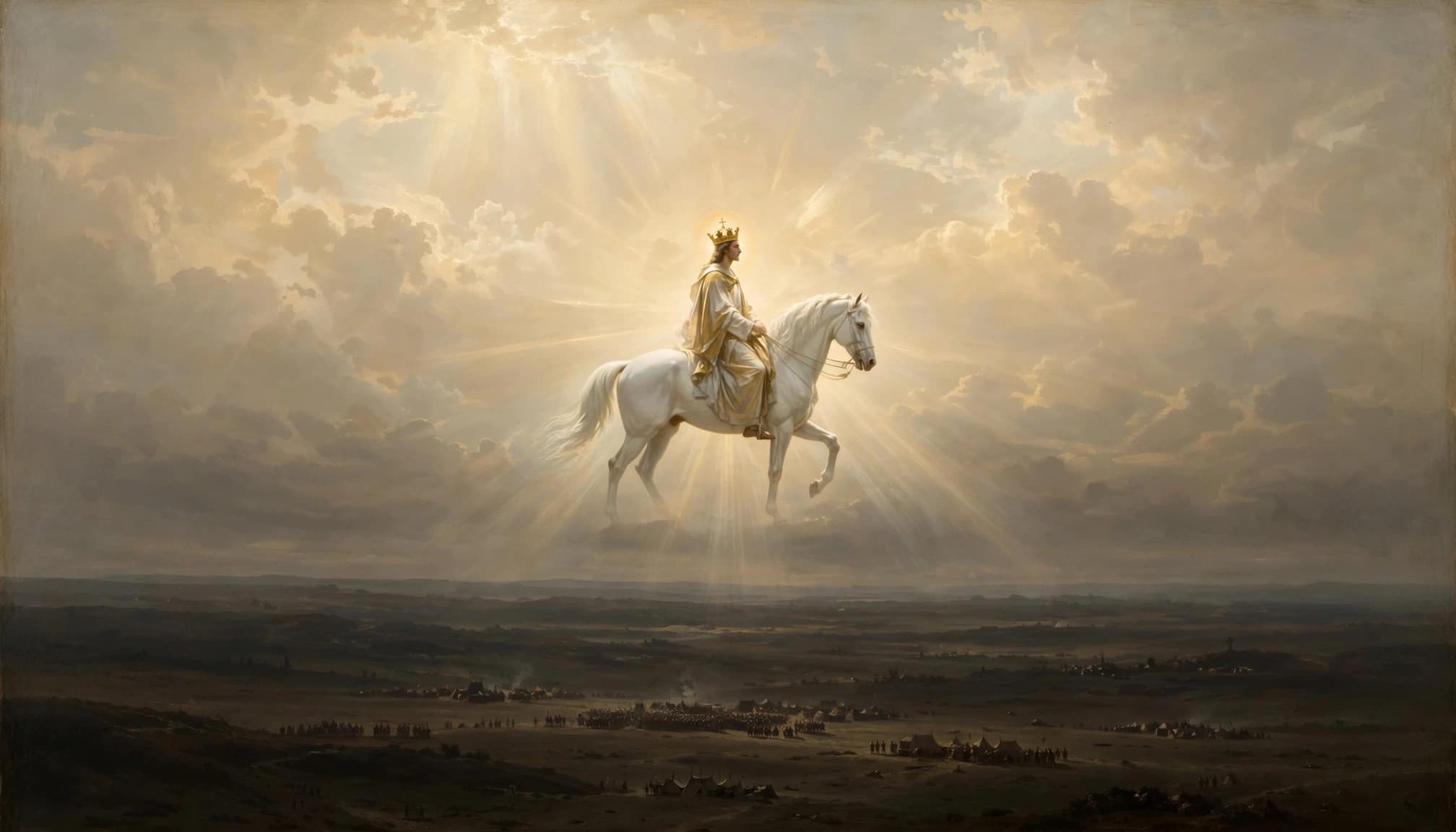
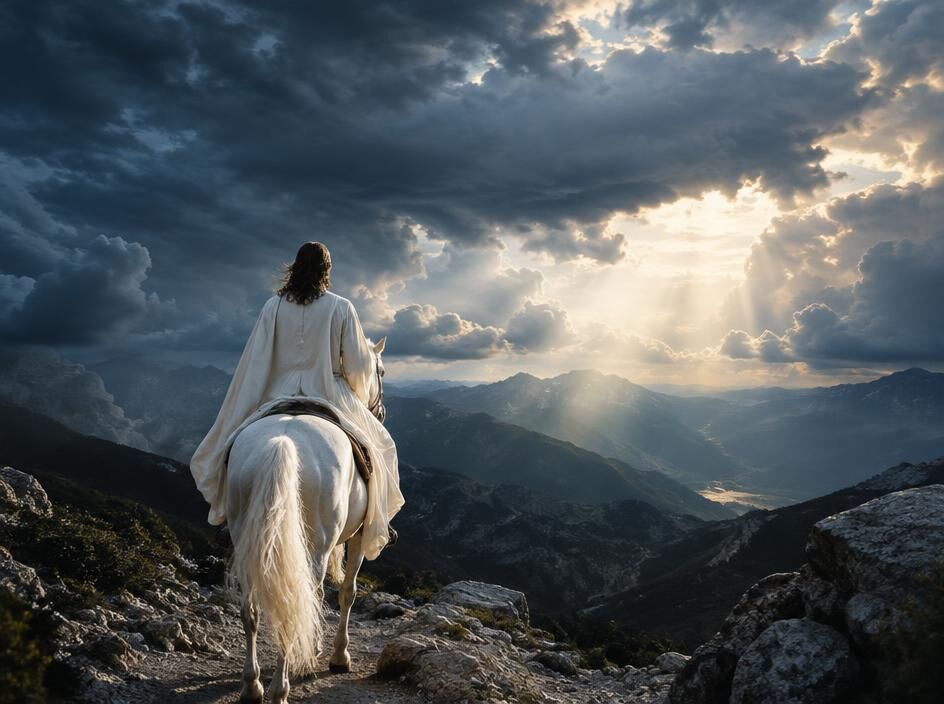
John sees heaven open and a rider on a white horse, with the title "KING OF KINGS AND LORD OF LORDS" written on His robe and thigh. Who is this Rider, and what does His title mean? Revelation names Him as Jesus, the Faithful and True King, whose authority rises above every earthly ruler and whose judgment is righteous.
The vision also raises a hard question: How does judgment fit with God's promises? We'll stay close to what Scripture says, while treating uncertain details about the inscription with care. Let's look first at who John sees riding out of heaven. Read more about Jesus, the Faithful and True King.
The Rider Revealed in Revelation 19: Who Is Faithful and True?
After heaven celebrates Babylon's fall, the scene changes. John sees heaven opened, and a rider appears on a white horse. The vision moves from corrupt power collapsing to the righteous King coming to judge. Revelation 19:1–21 holds these moments together: worship rises over Babylon's defeat, then Jesus appears before the beast and its allies meet their end. You can read the full Revelation 19 passage.
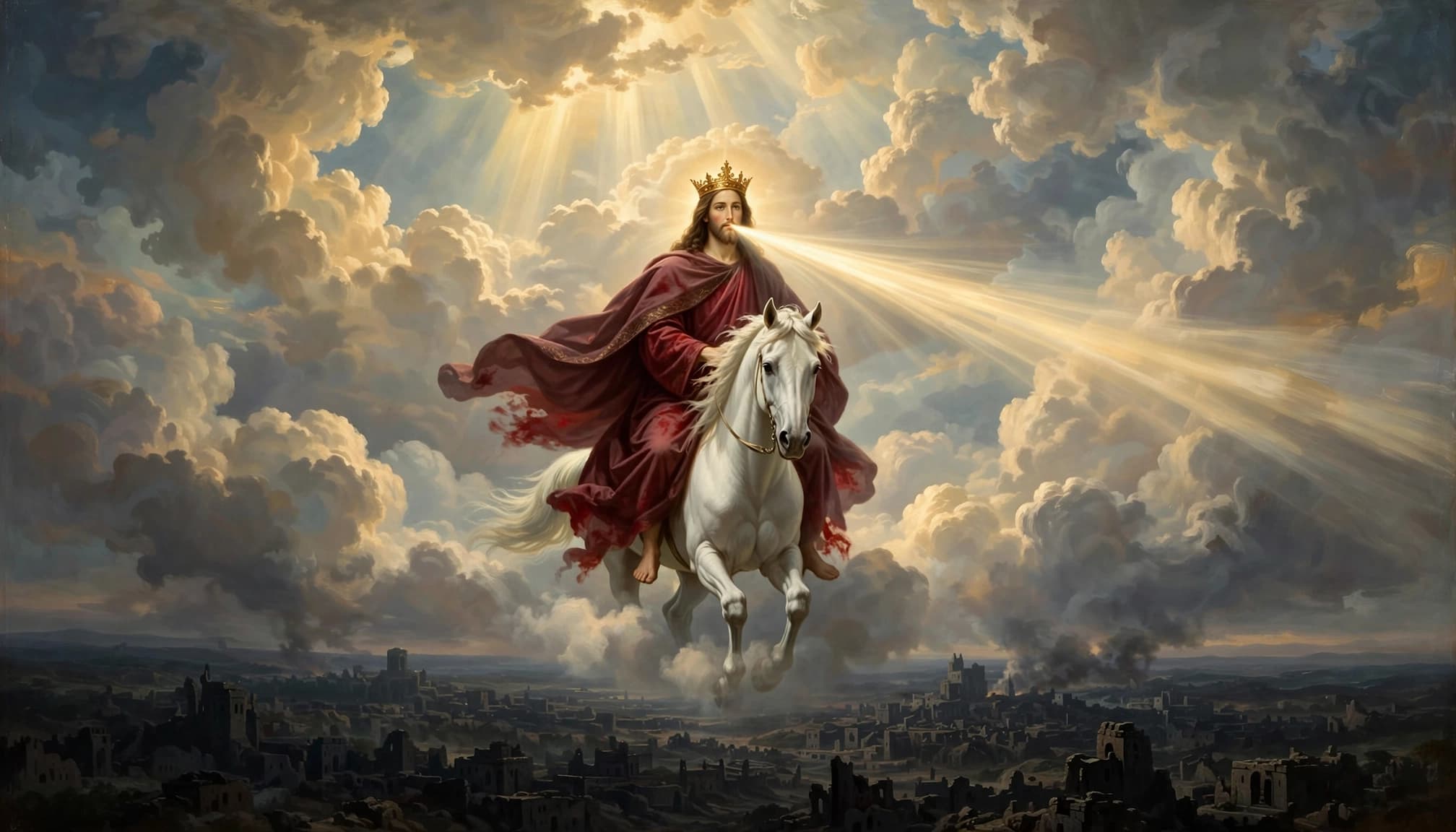
Why the vision begins with heaven opened
The timing matters. Just before the rider appears, heaven rejoices over Babylon's judgment. The city's corrupt power has fallen, and the celebration makes room for the next scene: the arrival of the One whose authority is righteous. John isn't changing subjects. He's showing us the answer to the rule Babylon claimed for itself.
Then heaven opens, and the rider comes into view. He judges and makes war in righteousness, and the verses that follow show the beast and the kings gathered with it facing His judgment. The sequence is clear: Babylon falls, the true King appears, and the forces opposing God are defeated.
This is why the rider's identity matters. John doesn't leave us to guess based on the white horse alone. He gives the rider names and titles: "Faithful and True," "The Word of God," and "KING OF KINGS AND LORD OF LORDS." Taken together, these titles identify Jesus. Revelation's vision moves from the Lamb worshiped in heaven to the same Jesus revealed as righteous ruler and judge.
We can also see the contrast with the beast. The beast claims authority and deceives, but its power is temporary. Jesus' rule is true, and His judgment is right. That contrast keeps the scene focused on God's justice, not human conquest.
What “Faithful and True” says about Jesus
"Faithful and True" tells us we can trust who Jesus is and what He does. His words are reliable, and His judgment is righteous. In Revelation 19, this title appears alongside the declaration that He judges in righteousness, so His authority never depends on deception or empty promises.
The title also connects with Revelation 3:14, where Jesus is called "the Faithful and True Witness." In that chapter, His witness is trustworthy even when people fail to see their own condition. (Read Revelation 3.) By Revelation 19, the title takes on the force of a royal announcement: the One who spoke truth now comes to judge the powers that opposed it.
The beast deceives the nations and gathers rulers against God. Jesus comes bearing the name that exposes the difference between false authority and true rule. His many crowns, His name as the Word of God, and the royal title on His robe and thigh all point to His supremacy. We don't need to settle every detail about why the inscription names both robe and thigh. John's central point is plain: Jesus is King above every king, and no power that opposes Him can claim the final word.
For more on what this royal title means, see our explanation of Jesus as King of Kings in Revelation 19.
How the King of Kings and Lord of Lords surpasses every ruler
In Revelation, royal titles are more than decoration. They tell us who holds authority when earthly rulers gather against God. The rider's title makes the point plainly: Jesus has the highest authority over every king, ruler, and power.
Why the title is written on His robe and thigh
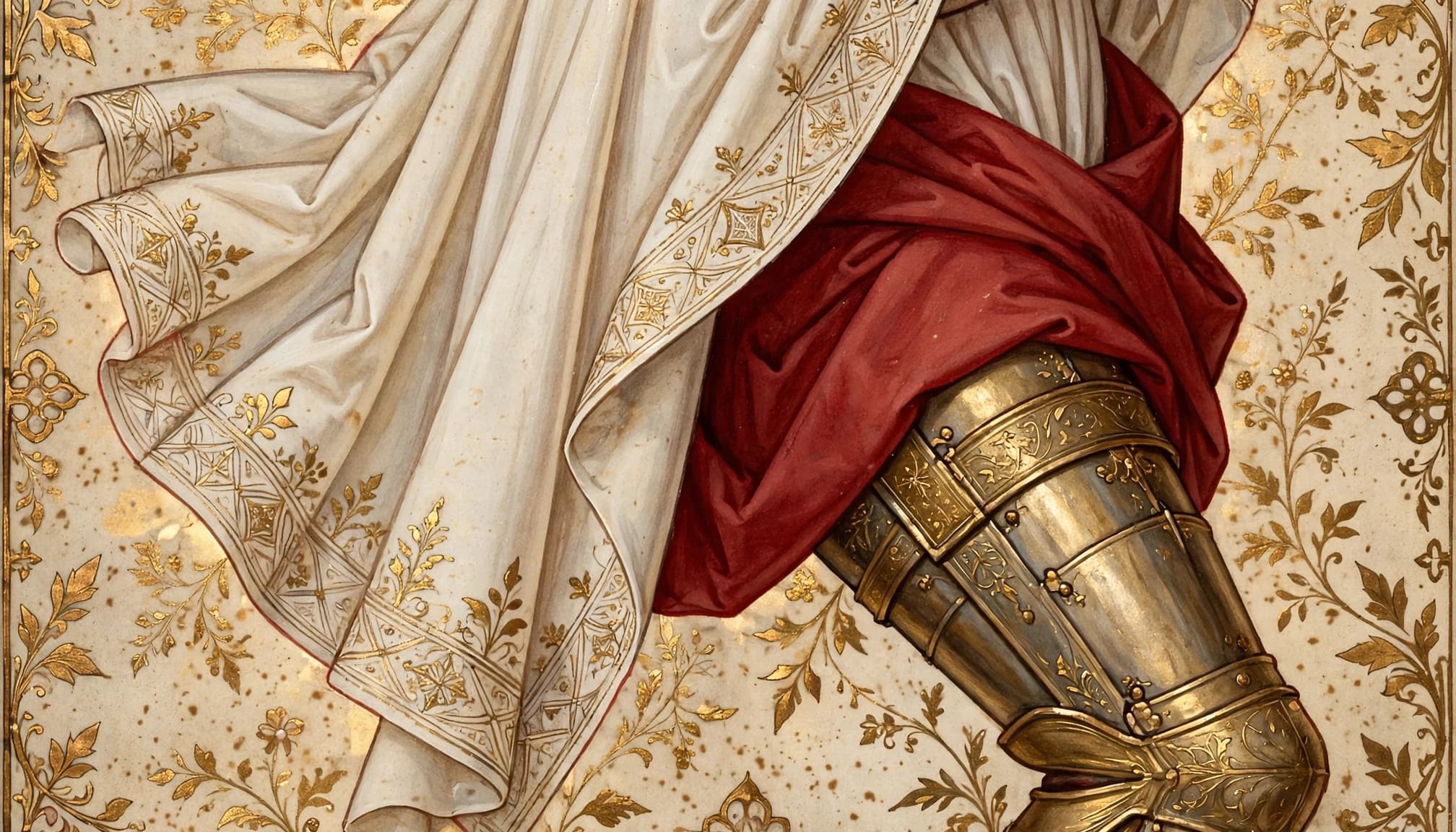
John says the rider has a name written on His robe and thigh: "KING OF KINGS AND LORD OF LORDS" (Revelation 19:16). The clearest meaning is public and unmistakable. The title identifies Him as the supreme King, whose rule rises above every earthly throne.
But how exactly was the name placed there? Some interpreters understand it as written on the robe over the thigh; others read the wording as referring to both the robe and the thigh. Scripture doesn't settle the physical arrangement, so we shouldn't claim more certainty than the verse gives us. The main point doesn't depend on that detail. The inscription proclaims who the rider is.
This title also answers the conflict in Revelation. The beast gathers rulers against God, but their united power cannot overthrow Jesus. The title is not a claim that earthly leaders share His final authority. Kings may govern for a time, but Jesus alone rules over all.
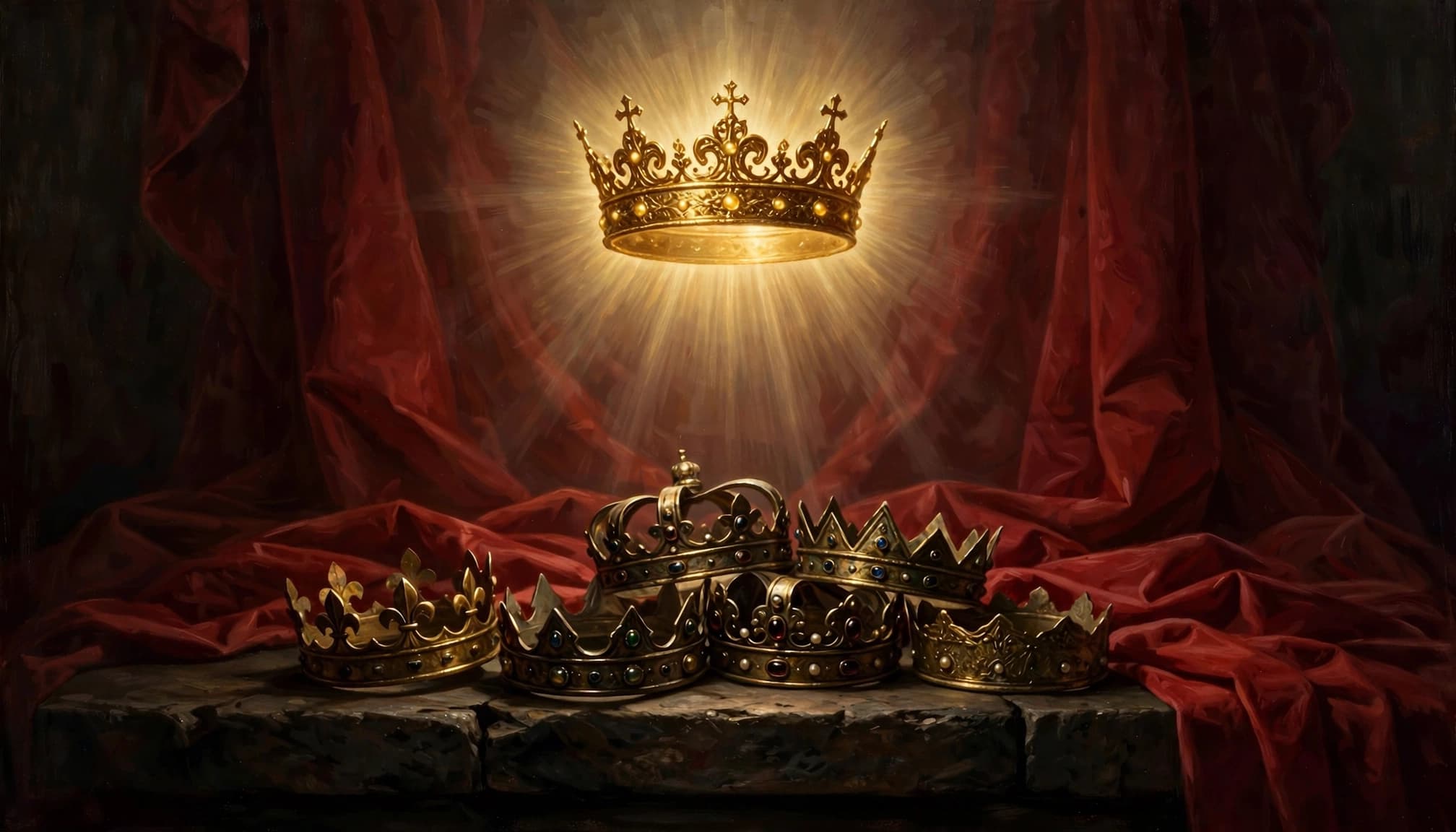
The rider’s many crowns and the limits of earthly power
Verse 12 describes many crowns on the rider's head. Revelation doesn't spell out their meaning in a separate explanation, so we read them within the book's imagery. The dragon and the beast also appear with crowns, images of power and authority. By contrast, the rider's many crowns picture a rule greater than their claims.
The difference matters. The beast can gather rulers and command allegiance, but it cannot make its authority ultimate. Jesus' crowns show that no rival power, however threatening, outranks Him. Revelation's vision presents the beast's rule as temporary and the rider's kingship as supreme.
We see the same declaration in Revelation 17:14, where the Lamb conquers the kings allied against Him because He is Lord of lords and King of kings. And 1 Timothy 6:15 uses the same royal title for the blessed and only Sovereign. Together, these passages keep our focus on God's authority, not on the influence any earthly ruler claims.
So when we read "King of Kings and Lord of Lords," we aren't reading a general compliment or a title shared among competing powers. We are hearing a clear declaration of Jesus' supremacy. He judges righteously, defeats the rulers who oppose Him, and holds authority no human kingdom can take away. For more on this theme, see our reflection on Christ's sovereignty over earthly rulers.
What the Rider’s Names and Images Reveal About Jesus
Revelation 19:11–15 gives us more than a dramatic picture of a rider on a white horse. John uses titles and images to show who Jesus is and how He judges: His word carries authority, His sight reaches every heart, and His rule defeats evil. These details echo earlier passages in Scripture, including prophecies about Jesus.
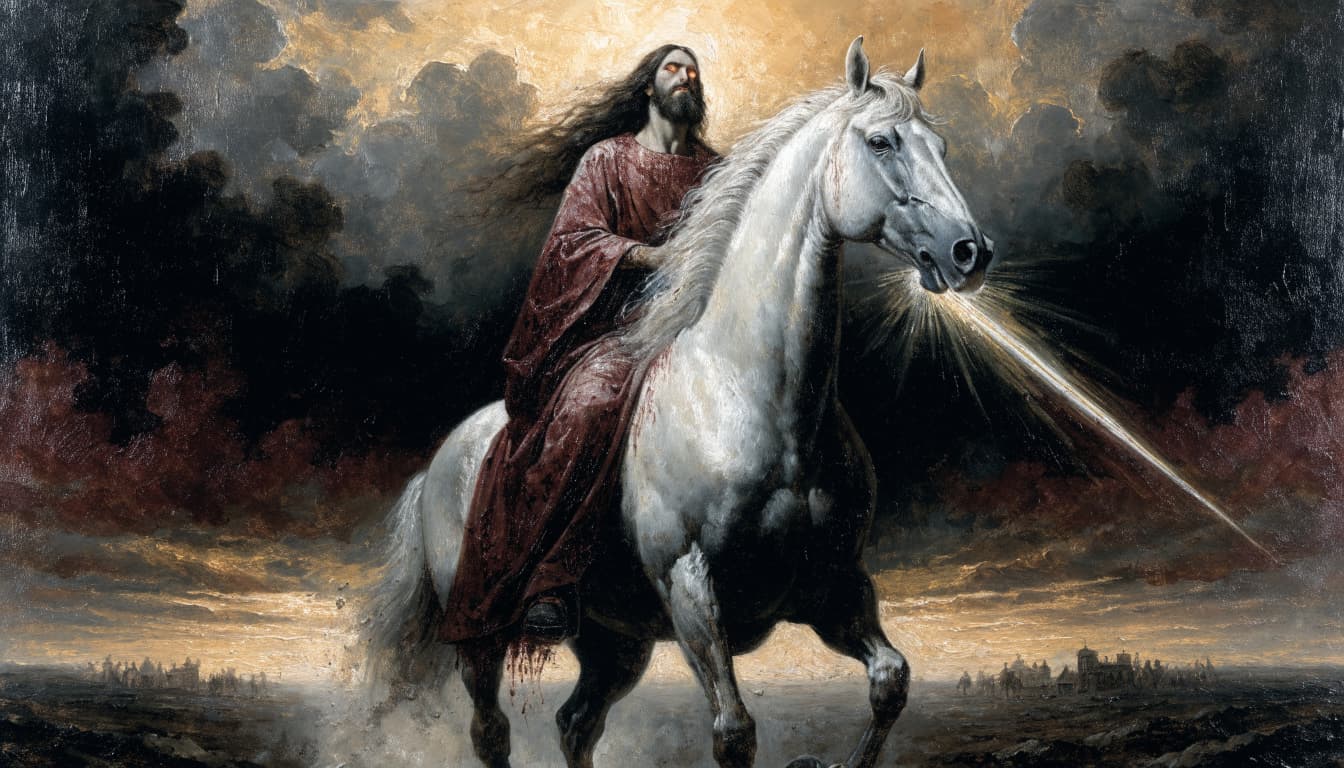
The Word of God speaks with final authority
John calls the rider "The Word of God." That title brings to mind John 1:1, where the Word is with God and is God. Revelation identifies the rider as Jesus, and this name points to His divine identity and authority. He doesn't speak as one more voice among competing rulers. His word is true, and His judgment stands.
John also sees a sharp sword coming from the rider's mouth. We shouldn't picture Jesus holding a literal weapon in His hand. The image connects His spoken word with effective judgment: He speaks, and His enemies face the consequence. Revelation 1:16 uses the same image of a sharp sword coming from Jesus' mouth. Together, these passages show that His authority doesn't depend on earthly weapons or political force. His word accomplishes what He declares.
Flaming eyes and a blood-marked robe
The rider's eyes are like a flame of fire. Revelation 1:14 uses a similar image for the glorified Jesus. Fire suggests a gaze that sees clearly and misses nothing. Jesus knows what lies beneath public appearances, and His judgment is based on truth, not deception. That matters in a vision where the beast has misled the nations.
John also describes the rider's robe as dipped in blood. Some readers understand this as the blood of those judged, connecting the image with Isaiah 63:1–3, where a divine warrior returns with garments stained after treading the winepress. That reading fits Revelation's scene of judgment, but the blood's meaning isn't stated outright. We should treat it as an interpretation, not a settled fact. The detail does, however, prepare us for the winepress image that follows.
The iron rod and winepress in prophetic context
The iron rod recalls Psalm 2:9, where God's appointed ruler holds authority over the nations. Revelation 19 uses that image to show Jesus ruling with strength and bringing rebellion to an end. The picture isn't of a ruler whose power can be challenged indefinitely. The nations answer to Him.
John then describes Jesus treading the winepress of the fierceness of God's wrath. This draws on prophetic judgment imagery, including the harvest and winepress in Revelation 14. The image is severe, but its point is clear: evil will not keep its hold forever. The iron rod shows Christ's authority; the winepress shows the defeat of those who oppose God. Together, these images present Jesus as the righteous King who judges evil and rules over the nations.
Why Jesus judges and makes war in righteousness
The words "makes war" can be difficult to read. Revelation doesn't ask us to celebrate violence or treat every human war as God's work. John presents Jesus' judgment as righteous, unlike the violence and self-serving rule of earthly powers. The scene points to God's promised justice, especially for people who suffer under oppression.
God’s promised ruler brings justice without corruption
Revelation's picture of Jesus judging in righteousness draws on a hope found throughout Scripture: God's appointed ruler will judge fairly and defend those who are vulnerable. Psalm 72 asks God to give the king His judgments, so he will judge the people with righteousness and the poor with justice. That is the kind of rule Revelation places before us.
Psalm 96:13 and Psalm 98:9 say the Lord comes to judge the earth with righteousness and equity. Isaiah 11:4 adds a sharp detail: the promised ruler judges the poor with righteousness and decides fairly for the meek. These passages don't picture justice as a ruler protecting His own interests. They show God setting things right, including for those whose needs powerful people ignore.
That promise helps us understand why Jesus' judgment matters. He sees what is true and judges without corruption. Revelation calls Him "Faithful and True," then says He judges in righteousness. His authority does not depend on deceit, favoritism, or the ability to force others into silence. For more on that hope, see Jesus as the righteous judge.
The beast’s defeat answers its false claims to power
Revelation 19:19–21 names the immediate opponents: the beast, the kings of the earth, and their assembled forces. The passage focuses on this hostile coalition, not on a general call for Christians or governments to wage war. Jesus' victory answers the beast's false claim to authority and the rulers who join its rebellion.
The contrast is plain. The beast gathers kings and forces around its power, while Jesus comes as the true King. The beast's authority is marked by opposition to God; Jesus judges with righteousness. John does not equate the two kinds of power, or present human conquest as a model for Christ's rule.
So what does the warfare language mean here? In the vision, Jesus brings the beast's violent opposition to an end. Evil does not get the final word, and those who have suffered under its rule are not forgotten. The scene is severe, but its focus is God's justice against the forces gathered against Him. We should read it in that context, rather than turn it into a slogan for human conflict or use it to excuse violence done in Jesus' name.
How Revelation 19 assures believers that God keeps His promises
Revelation 19 brings worship and victory together. Heaven praises God for judging evil, then John sees Jesus come as the faithful King. The message reaches beyond one dramatic vision: evil will not rule forever, and God will do what He has promised.
The Lamb and the warrior-judge are the same Jesus
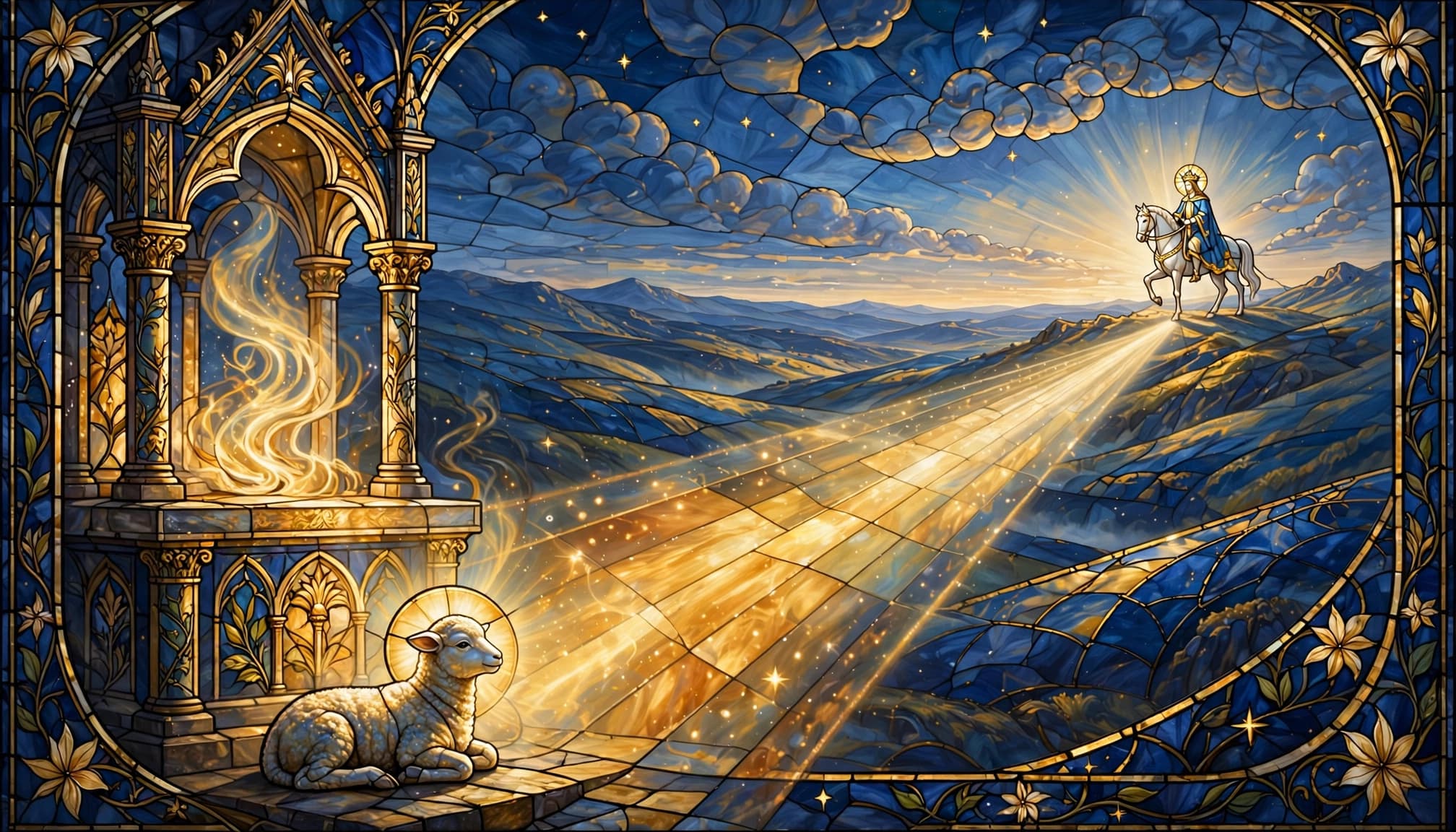
Before the rider appears, heaven praises God and celebrates the marriage supper of the Lamb (Revelation 19:1-10). Then John sees the rider, called "Faithful and True," who judges in righteousness (Revelation 19:11-16). These are not competing pictures of Jesus. The Lamb who is worshiped is the same Jesus who defeats the powers opposing God.
That matters because mercy and judgment can seem hard to hold together. Revelation doesn't ask us to pretend evil is harmless. Jesus' judgment is righteous, and His faithfulness means He will not abandon those who belong to Him. The rider's victory answers the violence and deception of the beast, not every question we might have about how God acts. For a further look at the chapter's vision of Christ's return, see this commentary on Revelation 19.
God's promises are not empty assurances that hardship will vanish now. They point to His final victory over evil and His faithfulness to His people. We find confidence in the One who is both the Lamb and the conquering King, not in our ability to predict every detail of what comes next. Read more about God's faithfulness in keeping His promises.
A vision that calls for faithfulness now
So what does Revelation 19 ask of you while you wait? Trust Jesus above temporary powers. Earthly rulers and systems can seem immovable, but they do not hold the final authority. Jesus does. The rider's title, "King of kings and Lord of lords," leaves no room for a rival to claim God's throne.
The vision also calls us to remain truthful and resist evil. We don't overcome deception by repeating it, or serve Jesus by imitating the cruelty Revelation condemns. We can speak truth, reject what harms our neighbors, and keep doing what is right even when it costs us. That kind of faithfulness may look small in the moment. It still belongs to the King whose word is true.
And when hardship wears you down, keep hope. Romans 8:18-25 connects suffering with patient hope, while Romans 8:26 reminds us that the Holy Spirit helps us in our weakness. From our Spirit-filled Pentecostal perspective, we trust the Spirit's work among believers as we pray, worship, and persevere. We don't claim every struggle will end on our schedule. We hold to what Scripture promises: God is at work, Jesus will reign, and evil will not have the last word.
Worship, then, is more than a response to victory after it arrives. It is how we keep our trust fixed on God while we wait. Heaven praises the Lamb before John's vision shows the beast defeated. We can do the same, remaining faithful today because the King is faithful.
Reading the robe-and-thigh inscription without claiming too much
The title on the rider's robe and thigh carries a clear message, even when the details of its placement remain open. We can read what John says with confidence, then leave room where the text itself leaves room.
What Revelation states clearly
John identifies the rider as "Faithful and True," says He judges and makes war in righteousness, calls Him "The Word of God," and gives Him the title "KING OF KINGS AND LORD OF LORDS." Those claims appear in Revelation 19:11, Revelation 19:13, and Revelation 19:16. The royal title is not hard to understand: Jesus has authority above every earthly ruler.
What John does not explain is the exact physical arrangement of the writing. The phrase can be read as a name written on the robe over the thigh, or as writing placed on both the robe and the thigh. The verse names both, but it doesn't tell us precisely how the inscription looked. We should avoid turning a brief detail into a certainty the text doesn't give us.
What remains a matter of interpretation
Readers have also proposed reasons for naming the thigh. Some suggest it was a visible place for a warrior's identifying mark or insignia. Others read the thigh as a symbol of strength and royal authority, or connect the image with the chapter's marriage imagery. These are interpretive proposals, not facts established by Revelation or proof of a specific ancient military practice. Discussion of the robe-and-thigh wording shows how differently readers have approached the detail.
We don't have to settle those questions to understand the verse. John gives the title, and its meaning is direct: the rider is King of kings and Lord of lords. The title declares Jesus' supremacy; the exact placement and intended physical arrangement remain unexplained.
That distinction keeps our reading grounded. We can speak clearly about what Scripture says, and be honest when it doesn't answer every question. For a broader look at the chapter's royal theme, see our discussion of prophecy pointing to Jesus as the coming King.
Conclusion
Revelation 19 presents Jesus as Faithful and True, the One who judges in righteousness and holds authority above every earthly ruler. The title on His robe and thigh makes that royal authority plain: no king stands above Him. Read more about Jesus as the Faithful and True judge.
We can rest in this vision's promise. God keeps His word, Jesus reigns, and believers can remain faithful with hope, even when earthly powers seem strong.
Prophecy Points to Jesus
Faithful and True: The Victory of Christ
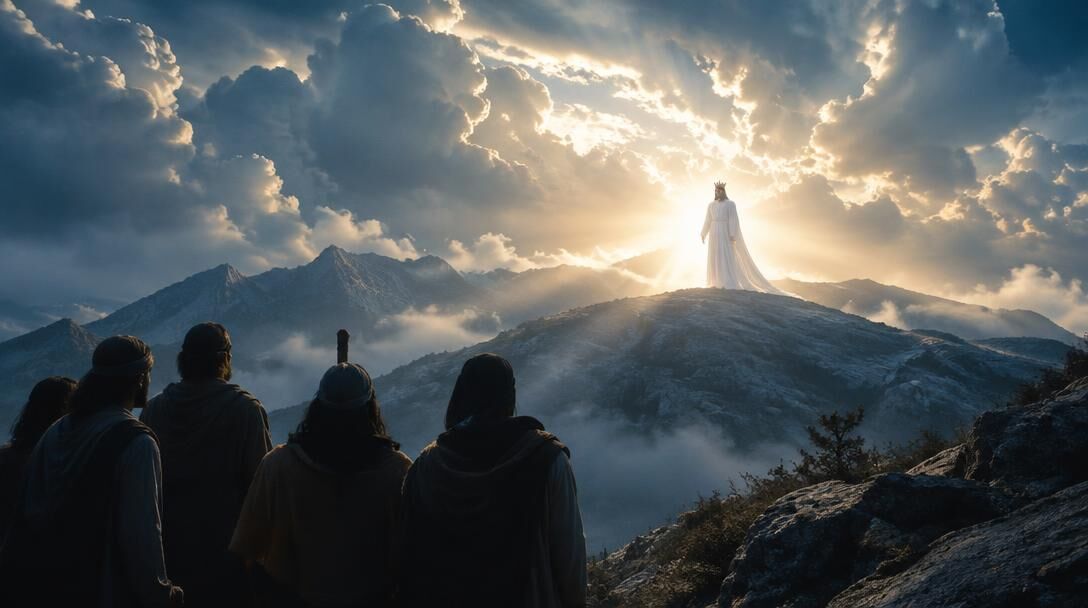
Revelation 19 opens heaven to reveal Jesus riding a white horse, called Faithful and True. He judges and wages war in righteousness—not as a flawed earthly ruler, but as the promised Messiah who brings God’s justice to completion. His name, King of Kings and Lord of Lords, declares his authority over every nation and power.
This vision brings the Bible’s prophetic hope into focus. The Savior who first came in humility returns in victory, fulfilling the promise that evil will not have the final word. Revelation 19 invites us to see the culmination of biblical prophecy in Jesus: the righteous Judge, the conquering King, and the One whose reign will endure.
Jesus Revealed in Revelation 19
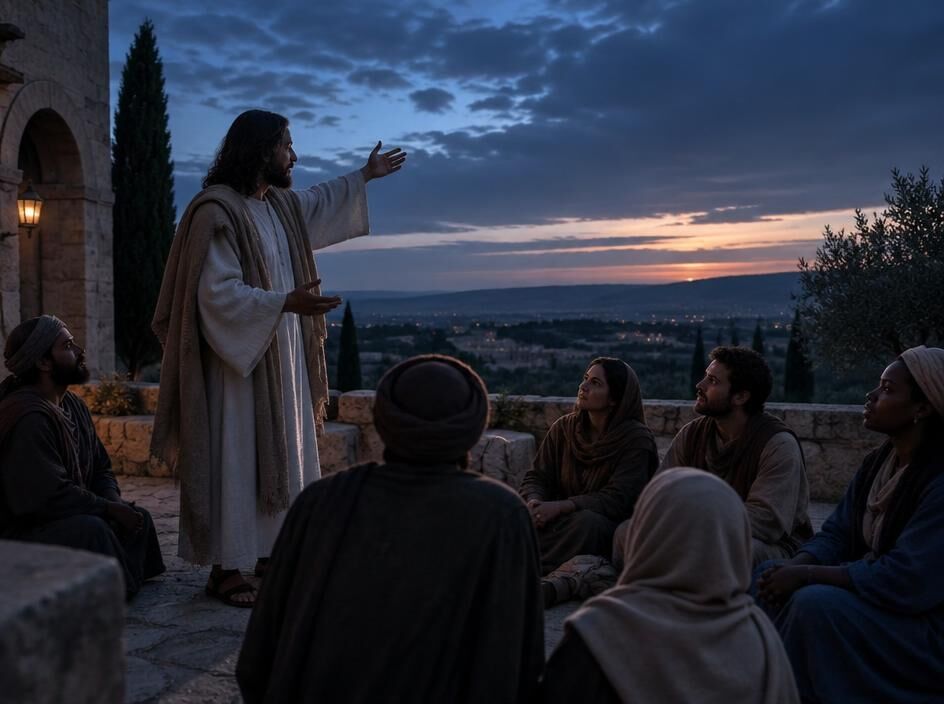
Faithful and True
Jesus comes as the righteous judge whose promises never fail and whose judgments are just.
The Word of God
His name reveals the living Word who speaks with authority and brings God’s purposes to fulfillment.

King of Kings
His robe bears the title that declares his authority over every ruler and kingdom.
“In righteousness he doth judge and make war. ... KING OF KINGS, AND LORD OF LORDS.” — Revelation 19:11, 16 (KJV)
John’s vision of Jesus Christ, the righteous Judge and reigning King
The Vision Unfolds in Revelation 19
Step 1
Heaven Opens
John sees heaven opened and Christ appearing on a white horse, called Faithful and True.
Step 2
The King Confronts Evil
The armies of heaven follow him as the beast and the kings of the earth gather against him.
Step 3
His Victory Declares His Reign
The beast and false prophet are defeated, and Christ’s title stands: King of Kings and Lord of Lords.
Revelation 19: Common Questions
Explore what this chapter reveals about the Lamb’s wedding feast, the rider on the white horse, and the justice of Christ.
Who is the rider on the white horse in Revelation 19?
The rider is Jesus Christ. He is called Faithful and True and the Word of God, and the chapter names Him King of Kings and Lord of Lords (Revelation 19:11–16).
What is the marriage supper of the Lamb?
It is the celebration of the Lamb’s union with His bride. Revelation 19:7–9 calls those invited to the marriage supper blessed and presents the bride clothed in fine linen.
Who is the bride in Revelation 19?
The bride represents God’s redeemed people, prepared for the Lamb. The fine linen she wears is described as the righteous deeds of the saints (Revelation 19:7–8).
Why is Jesus called Faithful and True?
These names show that Christ keeps His promises and judges with perfect truth. His victory is not based on deception or injustice (Revelation 19:11).
What does it mean that Christ judges and makes war in righteousness?
His judgment is just, not arbitrary. Revelation 19 portrays Jesus confronting evil and defeating those who oppose Him as the rightful King.
How does Revelation 19 connect to the chapters around it?
Revelation 17–18 depicts the downfall of Babylon, while Revelation 20 continues with Satan’s defeat and the final judgment. Reading them together helps place Christ’s return within the book’s larger vision.
Keep Reading the Story of Christ’s Victory
Read Revelation 17–20 alongside this chapter, and keep exploring how biblical prophecy points to Jesus—the Lamb, the righteous Judge, and the King of Kings.