
Revelation 19 Explained: Heaven’s Praise and Christ’s Victory
After Babylon's judgment in Revelation 17 and 18, chapter 19 turns our attention to Heaven's response. Praise rises, the Lamb's marriage supper is announced, and the Rider on the white horse appears to defeat the forces of evil.
There's a lot to take in, and Christians don't agree on every detail of the imagery or its timing. We'll keep the focus on what Revelation 19 says clearly, while noting where interpretation differs. Let's begin with the scenes of Revelation 19.
Revelation 19: From Heaven’s Praise to Christ’s Victory
After Babylon's judgment in Revelation 17 and 18, chapter 19 shifts our attention to Heaven's response and Christ's authority. The chapter moves through three scenes: praise and the Lamb's marriage supper in verses 1–10, the Rider on the white horse in verses 11–16, and the defeat of the beast and false prophet in verses 17–21. You can read the full text of Revelation 19 as we follow that movement.
Praise and the Lamb’s marriage supper
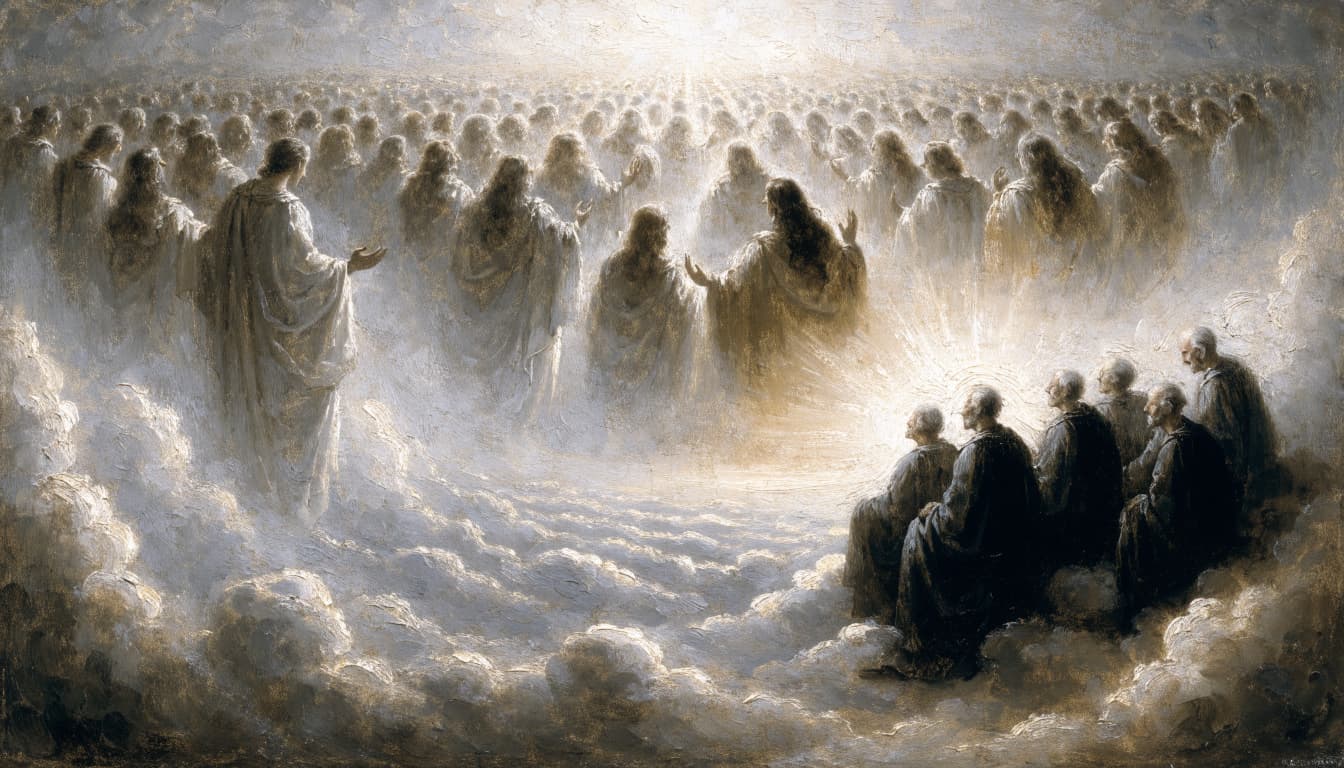
The first scene answers Babylon's fall with worship. A great multitude praises God for salvation, glory, and power, declaring His judgments true and just. The twenty-four elders and four living creatures join in worship, and a voice from the throne calls God's servants, small and great, to praise Him.
Then the sound of praise grows like rushing waters and loud thunder. The Lord God Almighty reigns, and the marriage of the Lamb has come. The bride is given fine linen, which the passage connects with the righteous deeds of God's people. The image points to the joy of belonging to Christ and sharing in His Kingdom.
John then falls before an angel, but the angel stops him and directs his worship to God. That moment matters. Even in a vision filled with heavenly beings, worship belongs to God alone.
The Rider appears in glory
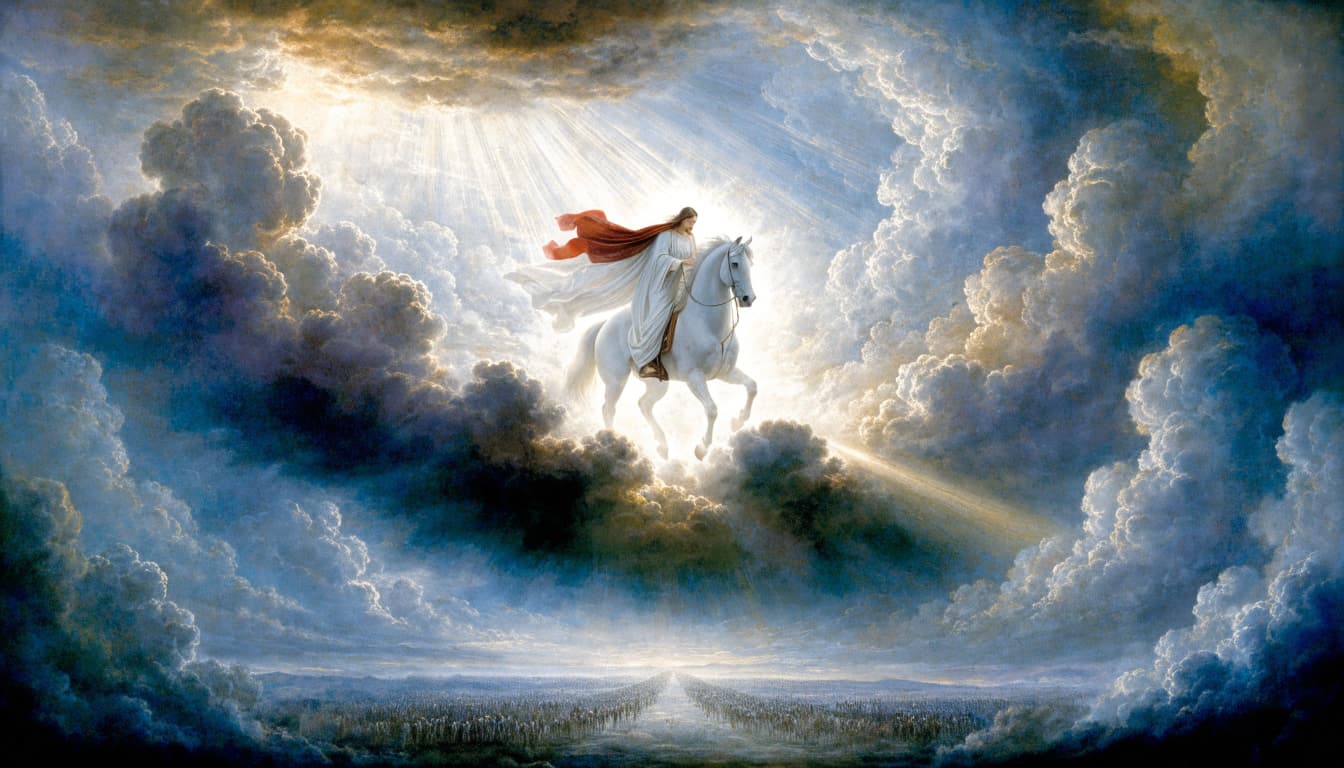
The scene changes when Heaven opens and a Rider appears on a white horse. He is called "Faithful and True," "The Word of God," and "KING OF KINGS AND LORD OF LORDS." These names make His identity and authority clear: this is Jesus, the righteous King who judges and makes war in righteousness.
A sharp sword comes from His mouth, and He rules the nations with an iron rod. The imagery is striking, but the point is direct: Christ's victory comes through His authority, and no earthly ruler stands above Him. For a closer look at Christ the righteous King in Revelation 19, pay attention to the titles John gives the Rider.
The chapter does not explain every detail, including the blood on the Rider's robe or the exact identity of the heavenly armies following Him. Christians interpret some of these images differently. We can hold those questions with care while keeping the central truth in view: Christ is faithful, true, and sovereign.
The beast and false prophet are defeated
In the final scene, an angel summons the birds to the great supper of God. This grim image contrasts with the Lamb's marriage supper. One announces fellowship and blessing for those who belong to Christ; the other pictures judgment on the forces gathered against Him.
The beast and the kings of the earth assemble to fight the Rider. The conflict does not stretch into a prolonged battle. The beast and false prophet are captured and thrown into the lake of fire, while the rest are defeated by the sword from the Rider's mouth.
Revelation 19 responds to Babylon's judgment by turning our eyes toward God's reign. Evil gathers against Christ, but it cannot overcome Him.
Hear Heaven Praise God in Revelation 19
Revelation 19 begins with Heaven answering Babylon's fall through worship. The repeated hallelujahs turn our attention to God's salvation, His justice, and the hope of belonging to the Lamb. We can follow the full chapter in Revelation 19.
What the Hallelujahs Say About God’s Justice
In verses 1–5, Heaven responds to Babylon's judgment with repeated praise. The great multitude praises God for salvation, glory, honor, and power, because His judgments are true and just. Babylon had corrupted the earth and shed the blood of God's servants. Heaven's praise declares that God saw their suffering and answered evil with righteous judgment.
That isn't a call for personal revenge. The passage gives judgment to God, whose decisions are true and just. The twenty-four elders and four living creatures answer, "Amen. Alleluia!" Then a voice from the throne calls all God's servants, "small and great," to praise Him. No servant is overlooked, and no one is too small to join in worship. We can read more about God's judgment of Babylon and care for His people.
Why the Lamb’s Marriage Supper Brings Hope
The praise rises like the sound of many waters and mighty thunder. Heaven declares that the Lord God Almighty reigns and that the Lamb's marriage has come. The image moves from judgment to joyful belonging: the Lamb is Christ, and the bride is commonly understood as His redeemed people.
The bride's fine linen is described as the righteous deeds of the saints. The passage says she is granted the linen, while also connecting it with faithful deeds. That keeps grace and faithful living together without making the image a simple wedding dress description. Then comes the blessing: those invited to the Lamb's marriage supper are blessed. Revelation gives us rich Biblical imagery here, but it doesn't settle every question about the bride, the guests, or the event's precise timing.
Why John Is Told to Worship God Alone
After the angel says the words are true, John falls at his feet to worship. The angel stops him: "Worship God." He is a fellow servant, not someone who should receive the worship that belongs to God. Even in a vision full of heavenly messengers, the direction stays clear.
The angel adds that "the testimony of Jesus is the spirit of prophecy." In other words, prophecy bears witness to Jesus. Its message points us toward Him, not toward the messenger who speaks it. Read Revelation 19:10 closely, and John's correction becomes part of the chapter's wider call: give God the worship, and keep the testimony of Jesus at the center.
Meet the Rider on the White Horse, the King of Kings
John's vision in Revelation 19:11-16 brings Christ into view as Heaven's righteous King. The images are vivid, but they point to a clear truth: Jesus is faithful, sovereign, and worthy to judge. We can read Revelation 19:11-16 as we look at the Rider's signs, His authority, and the heavenly army that follows Him.
What the Rider’s Names and Signs Reveal
The Rider appears on a white horse, a picture of victory and royal authority. His eyes are like a flame of fire, and many crowns rest on His head. John calls Him "Faithful and True," then says He judges and makes war in righteousness. These are not decorative details. They show us a King whose authority is joined to truth and whose judgment is right.
The vision also gives Him the name "The Word of God" and the title "KING OF KINGS AND LORD OF LORDS." Together, these titles identify Jesus and place every earthly ruler beneath His authority. We can read more about Jesus as King of Kings in Revelation 19.
John says the Rider has another name written that no one knows except Himself. The passage does not disclose that name, so we should not claim to explain it. His robe is also described as dipped or stained with blood, depending on the translation. The text does not say whose blood it is. Some interpretations connect it with Christ's sacrifice, while others see the blood as belonging to His enemies. We can acknowledge those readings without presenting either as certain.
How the Sword, Iron Rod, and Winepress Picture Judgment
A sharp sword comes from the Rider's mouth. He does not carry it in His hand. The image presents His word as the means of judgment, a picture of Christ speaking with authority and bringing evil to account.
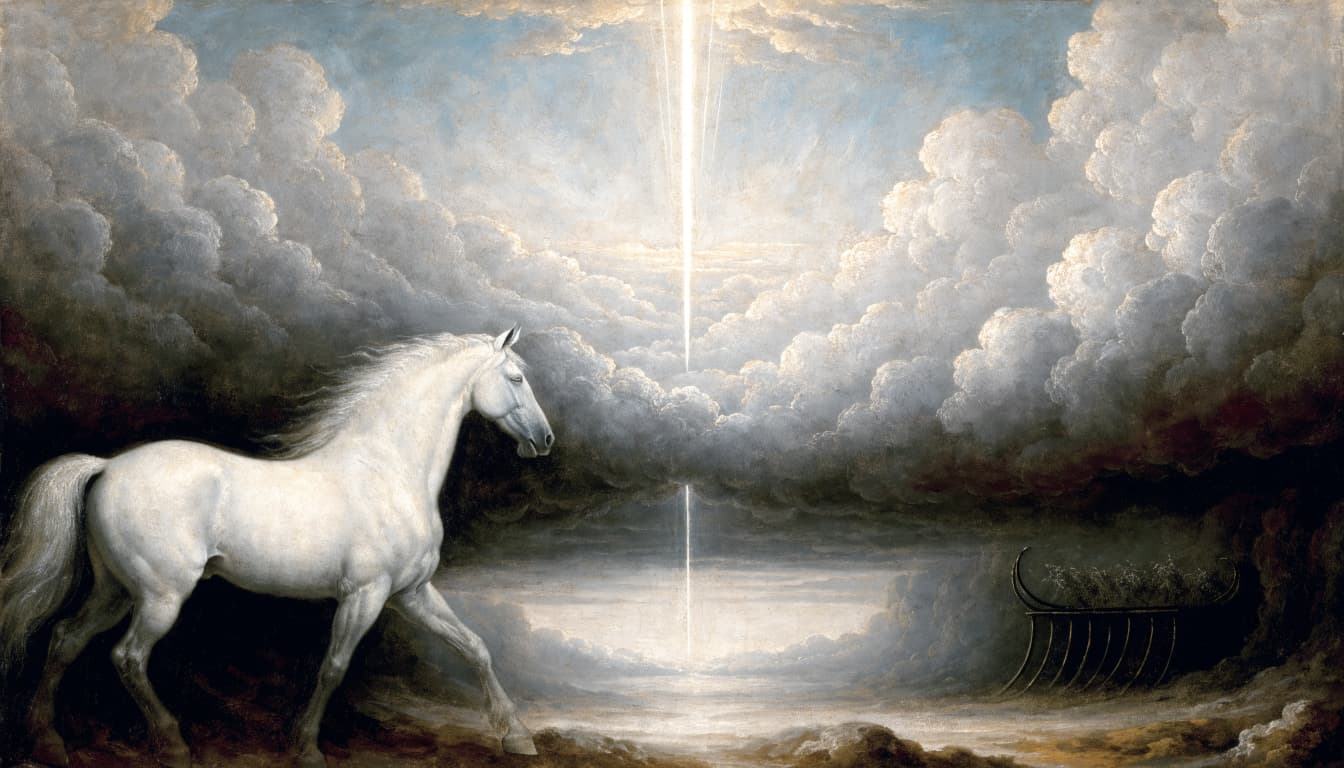
The iron rod recalls Psalm 2:9, where God's Anointed One rules the nations. Revelation draws on that royal image to show the strength of Christ's rule. The winepress, meanwhile, belongs to prophetic language for divine judgment. Isaiah describes the Lord treading the winepress in anger (Isaiah 63:1-6). Revelation uses a similar image to portray judgment as decisive and complete.
Who Follows Christ from Heaven?
The Rider is followed by the armies of Heaven, clothed in fine linen, white and pure. That clothing echoes the linen imagery earlier in the chapter, where the garment is connected with the righteous deeds of the saints. The vision places this army with Christ, but Revelation 19 does not clearly identify its members.
Some readers understand the company as angels; others see redeemed believers, or both. The passage names the heavenly armies without settling that question. We can keep the distinction clear: Christ is the central figure, and the armies follow Him. The scene's focus remains on His authority and victory, not on a detailed roster of Heaven's forces.
Witness the Defeat of Evil in Revelation 19
Revelation 19:17–21 moves quickly through a sobering vision of judgment. The birds are summoned, the beast and earthly kings gather, and Christ defeats the forces arrayed against Him. We can follow the sequence in Revelation 19:17–21, keeping in mind that John gives us a prophetic vision, not a detailed report of military tactics.
The Great Supper Is a Warning of Judgment
First, an angel standing in the sun calls to the birds, inviting them to gather for the "great supper of God." The invitation names kings, commanders, mighty men, horses and riders, and people of every status. The image is deliberately stark: those who gather against God face defeat, and the birds' feast pictures the shame and finality of their judgment.
That supper stands in sharp contrast with the Lamb's marriage supper earlier in the chapter. There, the invited are blessed and welcomed into joyful fellowship with Christ. Here, the image is a warning to those who oppose Him. One feast pictures belonging to the Lamb; the other pictures the defeat of His enemies.
John's imagery also echoes Ezekiel 39:17–21, where birds and wild animals are summoned to a great sacrificial feast after judgment on Gog. The connection places Revelation's scene within a familiar prophetic pattern. It doesn't turn the passage into a detailed battle report or tell us how each event unfolds on a human timeline. The emphasis is on the outcome: opposition to God will not prevail.
What Happens to the Beast, False Prophet, and Their Armies
Next, the beast, the kings of the earth, and their armies gather to make war against the Rider and His army. The scene sets up a confrontation, but John doesn't describe a long struggle. The beast and false prophet are captured, and both are thrown alive into the lake of fire burning with sulfur.
The false prophet's identity matters here. He performed signs and used them to deceive those who received the beast's mark and worshiped its image. That deception connects the final judgment with the warnings in Revelation 13, where the second beast performs signs and leads people toward worship of the first beast. Evil's power in this vision includes lies and false worship, not only political force.
The armies meet a different fate from their leaders. They are killed by the sword that comes from the Rider's mouth, and the birds gorge on their flesh. Revelation distinguishes their judgment from the beast and false prophet's sentence. We shouldn't merge the two outcomes or add details John doesn't give.
The vision's point is clear: the beast's authority, the false prophet's deception, and the gathered armies cannot stand against Christ. For a closer look at the great supper and the beast's defeat, we can keep that distinction in view: the leaders are thrown into the lake of fire, while the armies are defeated by the Rider's word.
How Revelation 19 Connects to the Rest of Scripture
Revelation 19 doesn't drop its images into the Bible without context. Its praise answers the judgment of Babylon in chapters 17 and 18, while its King, iron rod, and judgment feast echo earlier prophetic passages. These connections help us follow John's vision, though they don't explain every detail or settle the order of end-time events.
The Chapter’s Images Echo Earlier Prophetic Promises
The opening praise responds directly to Babylon's fall. Revelation 17 and 18 describe Babylon's corruption and judgment; then Heaven praises God for judging her and answering the cries of His servants. We see the connection in the chapter's movement, not in a separate explanation of every symbol. The emphasis is that God's judgment is true and just.
The Rider's iron rod points back to Psalm 2, where God gives His Anointed King authority over the nations. Revelation 19 uses that royal image to present Christ as the King who rules and judges with authority. You can read Psalm 2:7–9 alongside John's vision, and explore how Psalm 2 points to Christ's victory.
The great supper of God also recalls Ezekiel's vision of birds gathered for a feast after judgment. In Revelation 19, the birds' feast follows the defeat of the beast and the kings who oppose the Rider. This is a Biblical connection, not a direct explanation in Revelation 19 that every detail fulfills Ezekiel in the same way. John uses prophetic imagery to make the judgment's outcome unmistakable.
Where Christians May Read the Vision Differently
Christians agree that Revelation 19 proclaims Christ's victory, but they don't all place the events in the same order. Some understand the marriage supper as occurring before Christ's return; others place it differently within their view of end-times events. The chapter announces the supper, but it doesn't give a full timetable.
Readers also differ on what Babylon represents. Some see a particular historical power, while others understand Babylon as a recurring system opposed to God, or as a future power. The vision itself celebrates God's judgment without offering a single plain definition in this chapter.
The battle images raise similar questions. Revelation describes the Rider, His heavenly army, and the defeat of His enemies, but Christians differ on how literally to read the scene. We should keep those interpretations distinct from what the text says directly: Christ is called "Faithful and True," He judges in righteousness, and the beast and false prophet are defeated. The beast's deceptive signs in Revelation 13 prepare for this final judgment, though the connection doesn't settle every detail of the battle imagery.
From our independent Spirit-filled Pentecostal perspective, we affirm Christ's victory and the authority of Scripture. We can hold that conviction firmly while recognizing that Christians may disagree about the marriage supper's timing, Babylon's identity, and the sequence of end-time events.
What Revelation 19 Means for Faith and Hope Today
Revelation 19 gives us more than a picture of what lies ahead. It speaks to how we live now: worship God, remain faithful to Christ, and trust that evil will not have the final word. That hope does not promise a life without pain. It reminds us that suffering and injustice are not the end of the story.
Trust God’s justice without seeking revenge
Heaven praises God because His judgments are true and just (Revelation 19:2). That matters when wrongdoing seems to go unanswered or people who have suffered are ignored. The chapter assures us that God sees evil clearly and judges rightly, even when we cannot see justice fulfilled in our own time.
That assurance isn't permission to hate or take revenge. Judgment belongs to God, and Christ is the righteous King. We can tell the truth, protect people who are being harmed, and pursue what is right without appointing ourselves as final judge. For us, trusting God's justice means refusing to make peace with cruelty while leaving ultimate judgment in His hands.
Let Christ’s authority shape our faithfulness
The Rider is called "Faithful and True." His authority isn't built on deception, fear, or human approval. Revelation points us to Christ, not to a timetable that settles every debate. We may disagree about the details of the vision, but the chapter's central claim is clear: Jesus reigns, and no power that opposes Him will prevail.
So what does loyalty to the King look like today? It shows up in ordinary choices: speaking truthfully, treating others with compassion, and holding to our faith when doing so costs us something. Prophecy should direct our worship to God and strengthen our obedience to Jesus. We can read more about Jesus' testimony and the call to worship God as we consider that response.
Hold on to hope while suffering continues
Revelation 19 offers hope, not an easy explanation for every hardship. We won't always see justice arrive quickly, and faith doesn't mean pretending grief or fear aren't real. Christian hope rests in God's promised future, where Christ's reign is complete and evil does not endure forever.
Paul connects hope with patient endurance in Romans 8:18-25. That passage doesn't dismiss present suffering. It places suffering beside the glory God has promised, and calls believers to wait with hope.
We can answer Revelation 19 with worship, faithfulness, and steady hope in the Kingdom of God. When the news is painful or your own circumstances feel heavy, remember what this chapter declares: Christ is sovereign, God's judgment is just, and evil does not get the last word.
Conclusion
Revelation 19 brings its scenes together with a clear message. Heaven praises God, the Lamb's marriage supper offers hope, and Christ defeats the forces of evil. Some details remain debated, but the chapter presents Jesus as Faithful and True, the victorious King. We can explore Jesus, the Faithful and True Rider while keeping that central truth in view.
So when questions about the imagery or its timing remain, we don't have to lose sight of what Revelation declares. God reigns, Christ is victorious, and we can trust Him and remain faithful.
Revelation 19 Bible Study
Revelation 19 Explained: Heaven’s Praise and Christ’s Victory
From Heaven’s thunderous hallelujahs to the arrival of the Rider called Faithful and True, Revelation 19 reveals how God’s judgment, the Lamb’s wedding, and Jesus’ final victory fit together.
Hear Heaven’s praise and behold the victorious King
Revelation 19: The Lamb’s Wedding and the King’s Triumph
Heaven Praises God for His Righteous Judgment
Revelation 19 opens with a great multitude crying, “Hallelujah,” because salvation, glory, and power belong to God (Revelation 19:1). Their praise follows the fall of Babylon in Revelation 17–18. Babylon represents a corrupt, God-opposing order that seduces the nations and persecutes God’s servants. Heaven does not celebrate suffering for its own sake; it praises God because his judgments are “true and just” and because he has answered the blood of those who suffered under Babylon (Revelation 19:2).
The worship grows as the twenty-four elders and four living creatures fall before God, and a voice from the throne calls all his servants to praise him (Revelation 19:4–5). Then a multitude sounding like rushing waters and mighty thunder cries, “Hallelujah! For the Lord our God the Almighty reigns” (Revelation 19:6). The scene reminds readers that evil does not have the last word. God’s reign is the reason for heaven’s joy.
The Marriage Supper of the Lamb
Heaven’s celebration turns to a wedding: “The marriage of the Lamb has come, and his Bride has made herself ready” (Revelation 19:7). The Lamb is Jesus, whose sacrificial victory is central to Revelation (Revelation 5:6–10). His bride is pictured in fine linen, bright and pure. The passage explains that the linen represents “the righteous deeds of the saints” (Revelation 19:8). Yet the bride does not earn her place by clothing herself; it is “granted her” to wear the linen. Her faithful response is a gift-shaped answer to God’s grace.
An angel declares, “Blessed are those who are invited to the marriage supper of the Lamb” (Revelation 19:9). This banquet points to the joy of belonging to Christ and echoes biblical promises of God’s people gathered at his table (Isaiah 25:6–9; Matthew 22:1–14). When John falls at the angel’s feet, the angel stops him: “Worship God” (Revelation 19:10). Even amid astonishing visions, worship belongs to God alone. The angel adds that “the testimony of Jesus is the spirit of prophecy,” keeping the chapter’s focus on Christ rather than on speculation.
Christ Appears as the Victorious Rider
Heaven opens, and John sees a rider on a white horse called “Faithful and True” (Revelation 19:11). This is Jesus, who judges and makes war in righteousness. His eyes are like fire, many crowns rest on his head, and his robe is dipped in blood (Revelation 19:12–13). The imagery presents a king whose authority and knowledge cannot be challenged. His name, “The Word of God,” recalls the divine Word through whom God reveals himself (John 1:1, 14).
A sharp sword comes from the rider’s mouth, and on his robe and thigh is written “King of kings and Lord of lords” (Revelation 19:15–16). The sword emphasizes the power of his word; he defeats opposition by his sovereign command. The armies of heaven follow him, but the account places the decisive action in Christ’s hands. An angel announces judgment on the gathered enemies, and the beast and false prophet are captured and thrown into the lake of fire (Revelation 19:17–21). The stark scene contrasts sharply with the marriage supper: one is a feast of fellowship with the Lamb, the other a picture of judgment on rebellion.
What Revelation 19 Calls Us to See
Revelation 19 is not an invitation to set a date for Christ’s return. It calls us to trust the testimony of Jesus, worship God, and remain faithful while awaiting the Lamb’s promised triumph. The chapter moves from praise to a wedding to victory because all three belong together: God judges evil justly, receives his people with joy, and establishes the reign of Jesus Christ.
“Hallelujah! For the Lord our God the Almighty reigns. Let us rejoice and exult and give him the glory, for the marriage of the Lamb has come.” — Revelation 19:6–7
John the Apostle
Revelation 19:6–7, ESV
Revelation 19: From Heaven’s Praise to Christ’s Victory
Bible Prophecy Ministries exists to help readers see how fulfilled and future prophecy point to Jesus Christ. Our teaching follows the story of Scripture—from God’s promises to Israel and the prophets’ visions of a righteous King to the hope of Christ’s return—so that passages like Revelation 19 can be read in their Biblical context rather than in isolation.
The chapter opens with Heaven praising God for His just judgment and the coming marriage of the Lamb. Then Jesus appears as the rider on a white horse, called Faithful and True and the Word of God. His many crowns reveal His authority, while the sword from His mouth recalls the power of God’s word to judge and establish justice.
The title King of kings and Lord of lords brings the Bible’s promises of divine rule into focus: the crucified and risen Messiah will bring evil’s rebellion to an end. Our mission is to explain these images with care, connecting what Scripture says has happened to what it promises will happen, and keeping Christ—not speculation—at the center.
Frequently Asked Questions About Revelation 19
Explore the chapter’s celebration, symbolic imagery, and promise of Christ’s final victory.
What is the marriage supper of the Lamb?
It is the joyful celebration of the Lamb, Jesus Christ, and his prepared bride. The imagery portrays the full and lasting fellowship of Christ with his people after God’s saving promises are brought to completion.
Who is the bride in Revelation 19?
The bride represents God’s redeemed people. Her fine linen is described as the righteous deeds of the saints, showing a people made ready for the Lamb and called to live faithfully.
Who is the rider on the white horse?
The rider is Jesus Christ. Revelation calls him Faithful and True, the Word of God, and King of kings and Lord of lords. He comes to judge and make war in righteousness.
Why does Heaven say “Hallelujah” in this chapter?
Heaven praises God because His judgments are true and just, His rule is made known, and the marriage of the Lamb has come. The praise directs attention to God’s justice and the joy of His people.
What does the sword from Christ’s mouth mean?
The sword pictures the authority of Christ’s word. His victory is not presented as a contest between equal powers; He defeats rebellion by the decisive judgment of the King whose words are true.
What does Christ’s victory mean for believers today?
Revelation 19 offers hope that evil will not have the last word. Because Jesus is Faithful and True, believers can worship God, remain steadfast, and look toward the fulfillment of his promises.