
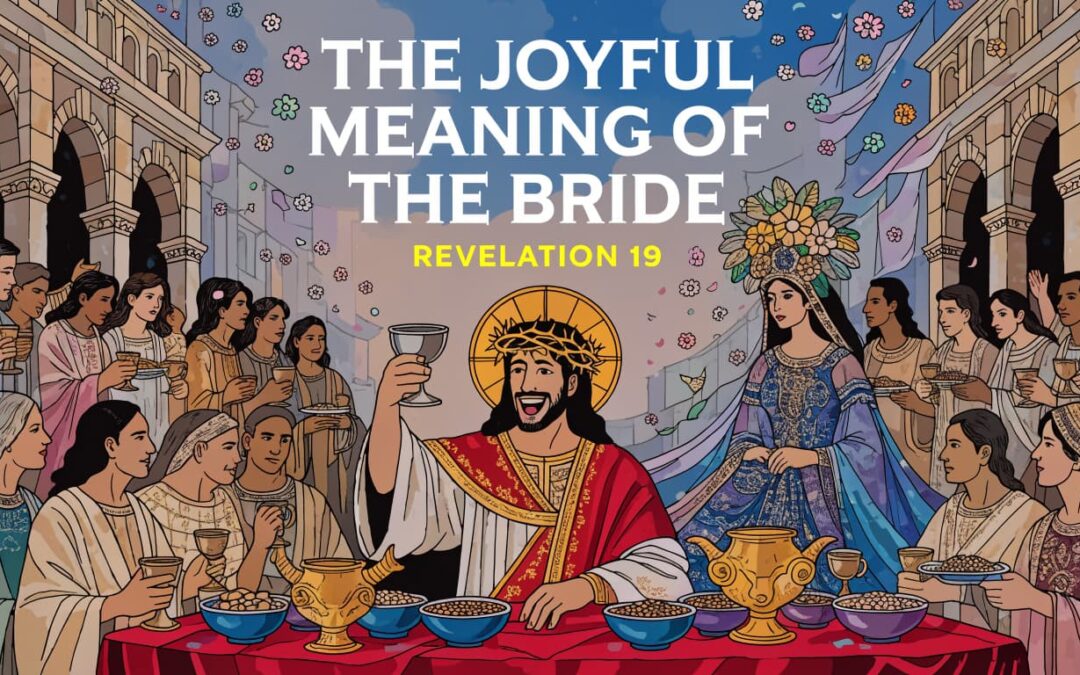
The Lamb’s Wedding Feast: Bride, Guests, and Prophecy in Revelation 19
In Revelation 19:6–10, heaven rejoices because God reigns, the Lamb is honored, and the wedding feast has come. This is the celebration of Christ's victory and the fulfillment of God's covenant purposes.
But what does John mean by the bride's readiness, the fine linen, and the blessing on those invited? We'll follow the vision in order, look at its Greek language and Old Testament background, and separate what Scripture says from interpretations about the bride, the guests, and prophetic timing. The bride's readiness is both a gift of grace and a call to faithful living. Let's begin with Revelation 19 explained.
The Lamb’s Wedding Feast, Explained in Revelation 19
Before the wedding feast appears, Revelation 19 announces judgment on evil and celebrates God's reign. The passage moves from heaven's praise to the Lamb's marriage, the bride's readiness, and the blessing on those invited. We should follow that order and avoid assigning the feast a precise location or timetable that these verses do not give. Read Revelation 19:6-10 as one unfolding vision.
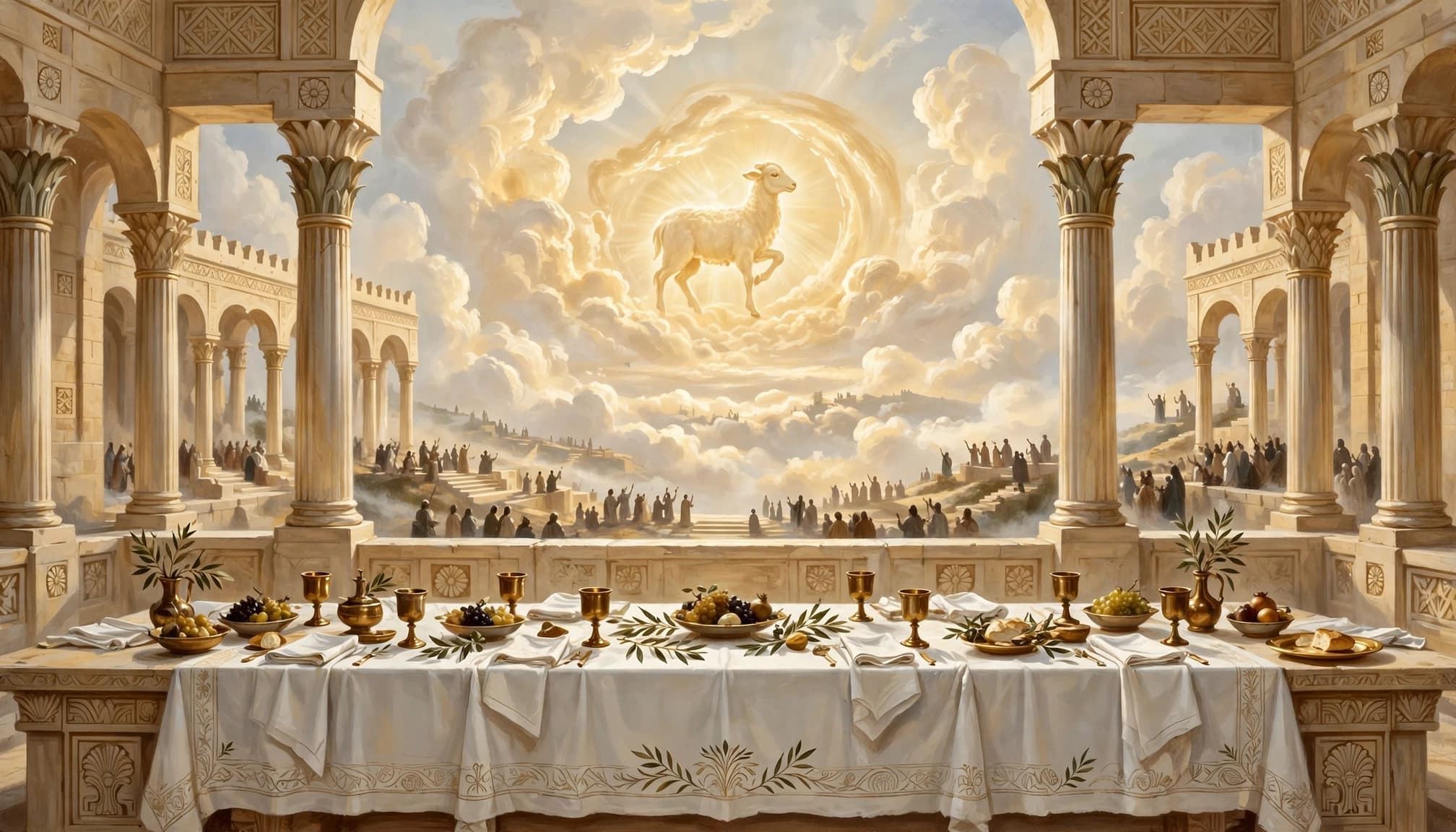
Heaven rejoices as the Lord God Almighty reigns
John hears a great multitude whose voice sounds like "many waters" and "mighty thunderings." Their praise is clear: "Alleluia! For the Lord God Omnipotent reigns!" The sound is vast, but the message is direct. God reigns, and evil does not have the final word.
That announcement sets the meaning of the wedding feast. The marriage isn't an isolated image dropped into the vision; it follows worship and God's victory. The multitude rejoices because His reign brings the celebration into view. We can read more about Jesus, the King of Kings in Revelation 19.
The bride is ready, and the Lamb is honored
The multitude calls the people of God to rejoice because the marriage of the Lamb has come, and His bride has made herself ready. The Greek word gámos means "marriage" or "wedding." The word arníon means "lamb," a title Revelation repeatedly uses for Jesus.
That pairing matters. Wedding language speaks of covenant love and belonging, while the Lamb's title recalls His sacrificial victory. The passage names the bride but does not identify her in detail here. Many Christians understand her as the redeemed people of God, drawing on bridal imagery elsewhere in Scripture. The main point in this scene is that the Lamb is honored, and the wedding has come.
Fine linen displays the saints’ righteous deeds
The bride is given bright, clean fine linen to wear. John then explains the image: the linen is "the righteous acts of the saints." The Greek dikaiṓmata refers to righteous deeds or acts. The word edóthē means "was given" or "was granted."
Both parts belong together. The bride has made herself ready, and the linen points to faithful deeds. Yet the garment is granted to her. We shouldn't turn this verse into a claim that people earn salvation through their effort. The image holds readiness and grace together: God gives, and His people respond in faithful living.
The invitation leads to worship, not angel worship
An angel tells John to write a blessing for those invited to the marriage supper. The Greek word deîpnon means "supper" or "feast." The passage distinguishes the bride from those invited, but it doesn't explain exactly who the guests are. Nor does it specify the feast's location or timing.
John then falls before the angel, who stops him and directs him to worship God. The angel calls himself a fellow servant of John and of those who hold to Jesus' testimony. He adds that "the testimony of Jesus is the spirit of prophecy." Prophecy points to Jesus and leads to worship of God, never worship of the messenger. Read Revelation 19:10 with that warning in view.
Old Testament wedding and feast promises behind the vision
Revelation's wedding feast draws on a broad Biblical pattern: God is covenant Husband, King, Redeemer, and host of a final banquet. These Old Testament passages help us hear the vision's echoes, but Revelation 19 does not identify them as direct quotations or say each promise is fulfilled there.
Isaiah’s banquet points toward victory over death
In Isaiah 25:6-9, the Lord prepares a rich feast for all peoples. The promise reaches beyond a meal: He removes the covering over the nations, swallows up death forever, wipes away tears, and saves His people. The banquet belongs to a vision of God's victory and the joy of those He rescues.
That makes Isaiah a strong thematic parallel to the Lamb's final celebration. Both passages bring God's people into a joyful feast after His decisive victory. Still, Isaiah does not call its banquet a wedding feast, and Revelation 19 does not say it is quoting Isaiah. We can recognize the shared pattern without collapsing the passages into one. For a closer look at Isaiah's feast and victory over death, see this commentary on Isaiah 25:6-9.
Hosea and Isaiah portray God as a faithful Husband
In Hosea 2:19-20, God promises to betroth Israel to Himself forever, in righteousness, justice, lovingkindness, mercy, and faithfulness. The marriage language speaks of covenant restoration after Israel's unfaithfulness. God remains the One who calls His people back.
Isaiah uses a related image. In Isaiah 54:5-8, the Lord is Zion's Maker and Husband. He compares Zion to a forsaken wife whom He calls back with compassion. These promises address Israel and Zion in their own setting. Their connection to the Lamb's bride is thematic: they show a faithful God restoring His covenant people.
Revelation 19 does not directly quote either passage, but their language helps us understand the Biblical depth behind its wedding image. We can follow how Jesus fulfills God's covenant promises without claiming the passages are identical.
Ezekiel and the royal wedding add covenant depth
In Ezekiel 16:8-14, God describes finding Jerusalem, caring for her, clothing her, adorning her, and making a covenant with her. The chapter then confronts Jerusalem's unfaithfulness. Yet in Ezekiel 16:59-63, God remembers His covenant and promises restoration. The movement from care, to betrayal, to covenant remembrance adds weight to the image of a bride made ready for the Lamb.
Psalm 45 adds the sound of a royal wedding song, with a king, a bride, and celebration. Christians may read this royal imagery in light of Christ, the King. But that is a canonical reading, not an identification Revelation makes explicitly. Together, these passages give us a wide Biblical backdrop: God reigns, redeems, keeps covenant, and welcomes His people to celebration.
Who is the bride, from Abraham to God’s people today?
Revelation 19 announces that the Lamb's bride is ready, but verse 7 does not define who she is. To follow the image, we need to trace the Bible's covenant pattern carefully. God's promise to Abraham, Israel's place in Scripture, the church's union with Christ, and the New Jerusalem vision all belong in view, without treating them as interchangeable.
The covenant promise begins with Abraham’s family
God called Abraham and promised to make him a great nation, bless him, and bless all the families of the earth through him (Genesis 12:1–3). In Genesis 17:1–8, He confirmed His covenant with Abraham and his descendants, promising them a lasting relationship and the land of Canaan.
That promise began with a particular family. Abraham's descendants became Israel, a covenant people with a distinct place in Biblical history. Genesis does not call them the Lamb's bride, so we should not read that title back into the passage.
Still, God's promise to bless the nations through Abraham forms part of the larger history that leads to Christ. Paul's explanation of how Abraham's blessing reaches the nations helps connect those promises without erasing their beginning with Abraham's family.
The New Testament connects Christ to His people as a bridegroom
Paul uses marriage to describe Christ's love for the church. In Ephesians 5:25–32, Christ gives Himself for the church, making her holy and presenting her to Himself. This is more than a wedding metaphor. It calls the church to holiness and to love shaped by Christ's own self-giving care.
Paul also says that those who belong to Christ are Abraham's seed and heirs according to promise (Galatians 3:26–29). The blessing promised through Abraham reaches people of every nation through faith in Jesus. We can therefore understand the common Christian view of the bride as the redeemed people joined to Christ. But unity in Christ does not mean Israel's place in Scripture disappears, or that every Biblical bride image refers to precisely the same group.
The bride appears again as the New Jerusalem
John sees the holy city, New Jerusalem, prepared "as a bride adorned for her husband" (Revelation 21:1–4). Later, an angel says, "Come, I will show you the bride, the Lamb's wife," then shows John the holy city (Revelation 21:9–10). Revelation uses both people and city imagery: the city is the dwelling place of God with His redeemed people, where He wipes away every tear. For more on this vision, see the new heaven and new earth.
So when we read the Lamb's wedding announcement in Revelation 19, the wider Biblical pattern points us toward God's redeemed people joined to Christ. The bride image gathers up covenant love, holiness, and God dwelling with His people, while Revelation 19:7 itself leaves her identity unstated.
Are the invited guests different from the bride?
Revelation names the bride in verse 7, then pronounces a blessing on those invited to the marriage supper in verse 9. That wording gives us two descriptions, but it doesn't answer every question about how they relate. We should keep the distinction in the text clear without turning an open question into a settled doctrine.
What Revelation says, and what it leaves open
In Revelation 19:7–9, the bride has made herself ready, and she is given bright, clean linen. Then an angel tells John to write that those invited to the Lamb's marriage supper are blessed. The passage calls one figure the bride and another group the invited ones.
Does that mean they must be separate groups? The verses don't say. They never identify the invited guests, and they don't explain whether the bride is also included among those celebrating. The wording distinguishes the images, but it doesn't spell out their full relationship.
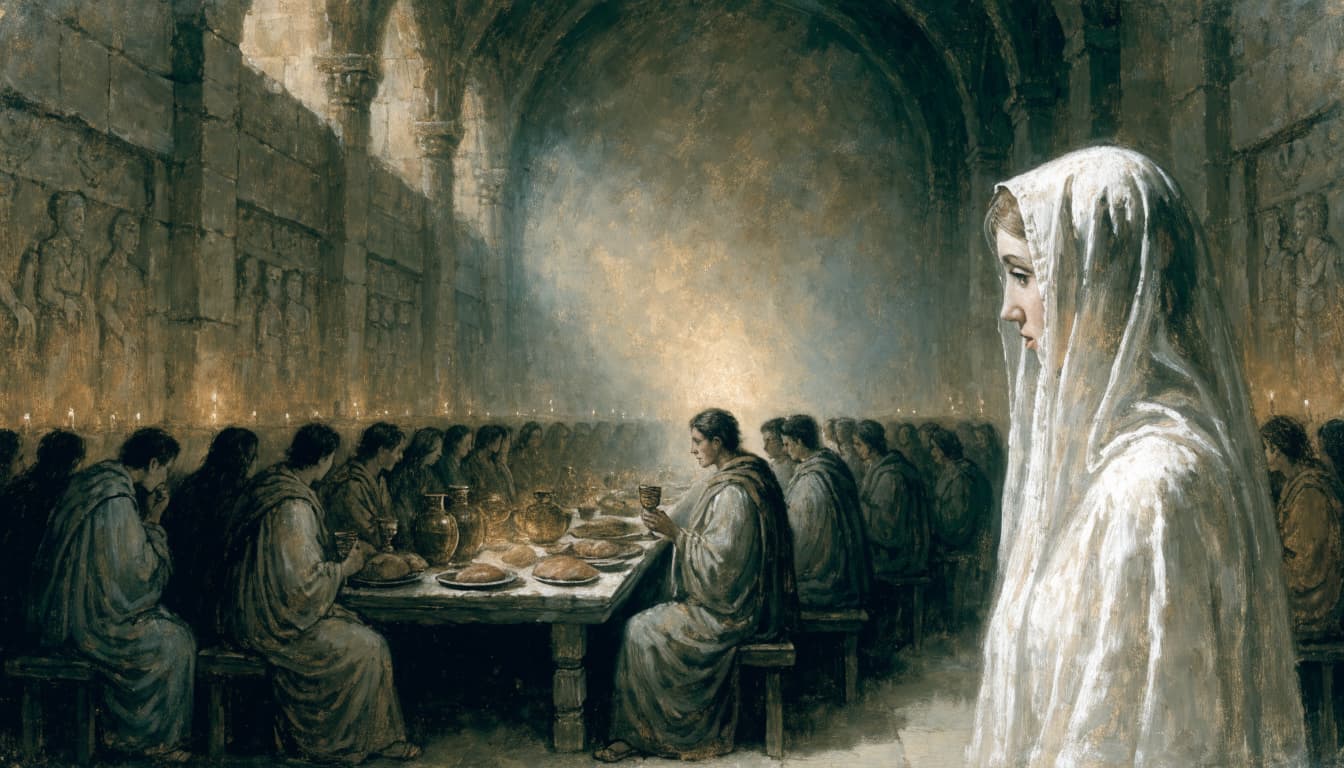
So we can say what John actually shows: the Lamb has a bride, and the invited guests receive a blessing. We can't say from these verses alone that the guests are Israel, the church, Old Testament saints, or tribulation saints. Those are proposed identifications, not names Revelation 19 gives them.
This matters because wedding imagery can work in more than one way. A bride and invited guests are distinct roles in the picture, yet the passage doesn't give us a diagram of every person at the feast. We should let the vision speak clearly where it does, and leave room where it doesn't.
How Christian interpretations account for the guests
Some Christians read the bride and guests as distinct groups. In certain futurist interpretations, the bride is the church, while the guests may be Old Testament saints or believers who come to faith during the tribulation. Some of these systems also place the feast at a particular point in an end-times sequence.
These readings connect Revelation 19 to a larger prophetic framework, but the passage itself doesn't identify those groups or set out that timetable. One dispensational reading of the marriage and supper offers an example of this approach.
Other Christians understand the bride and guests as complementary images of the redeemed. In that reading, the bride pictures God's people joined to Christ, while the invitation emphasizes their welcome and joy at the feast. The images highlight different parts of the same celebration rather than dividing believers into separate classes.
Both approaches try to account for the passage's wording and its place in the wider Biblical picture. We can recognize that the bride and invited ones are described differently without claiming Revelation settles whether they are entirely separate. For another look at who is invited to the Lamb's marriage supper, we can keep that distinction in view while holding our conclusions with care.
How earlier prophecies can reach a fuller fulfillment in Christ
When we read Revelation's wedding imagery alongside earlier prophecies, we need to keep two things in view: what those promises meant to their first hearers, and how the rest of Scripture develops their themes. Christ brings God's promises to their goal, but that doesn't erase the history in which those promises first spoke.
Read each prophecy first in its own historical setting
Hosea's promise of marriage is addressed to Israel. In Hosea 2:19-20, God promises to betroth Israel to Himself forever, in righteousness, justice, lovingkindness, mercy, and faithfulness. The words answer a real crisis: Israel has been unfaithful, and God promises covenant restoration.
That first meaning matters. Hosea's hearers could understand the promise as God's pledge to restore His relationship with His people. We shouldn't detach the image from Israel and immediately treat it as a direct prediction of the church or the Lamb's wedding in Revelation 19.
So how can Hosea's promise matter to Christians? The Bible carries covenant themes forward. Later Scripture presents Jesus as the One through whom God's saving purpose reaches its intended completion.
Hosea's words remain about God's promise to Israel, while their language of faithful covenant love helps us understand the wider Biblical picture of God and His people. We can read prophecy in its context without flattening its first setting or shutting down what Scripture later reveals.
Recognize echoes, patterns, and final hope without overclaiming
A direct fulfillment is a claim that a text or a later Biblical writer supports plainly. A type or echo is a recurring pattern: an earlier person, event, or image has meaning in its own history, then helps us recognize a fuller expression of God's work in Christ. For a concise discussion of typology in Biblical interpretation, the key is to respect both the earlier passage and its later use.
Revelation 19 draws together covenant, wedding, royal, and banquet images. Its announcement of the Lamb's marriage gives these themes a final, Christ-centered horizon. But the passage doesn't quote Hosea 2:19-20 or lay out a detailed theory of multiple fulfillment. Calling every similar image a second fulfillment would go further than the text does.
We can say that earlier covenant hopes find a fuller expression in Christ and the Kingdom, and that Scripture points toward God's final renewal. We should also say when a connection is an interpretation rather than an explicit statement. Christians may differ about the timing and sequence of events surrounding Revelation's feast; Revelation 19 itself doesn't settle those details. Our confidence belongs in what Scripture says clearly, and our care belongs in how we describe the rest.
The Bridegroom arrives, and God’s people celebrate with hope
John's vision moves from praise to a wedding feast. The great multitude announces that the Lord God Almighty reigns, then celebrates the marriage of the Lamb (Revelation 19:6–10). The order matters: God's people rejoice because evil will not rule forever, and Christ will bring His people into lasting fellowship with Him.
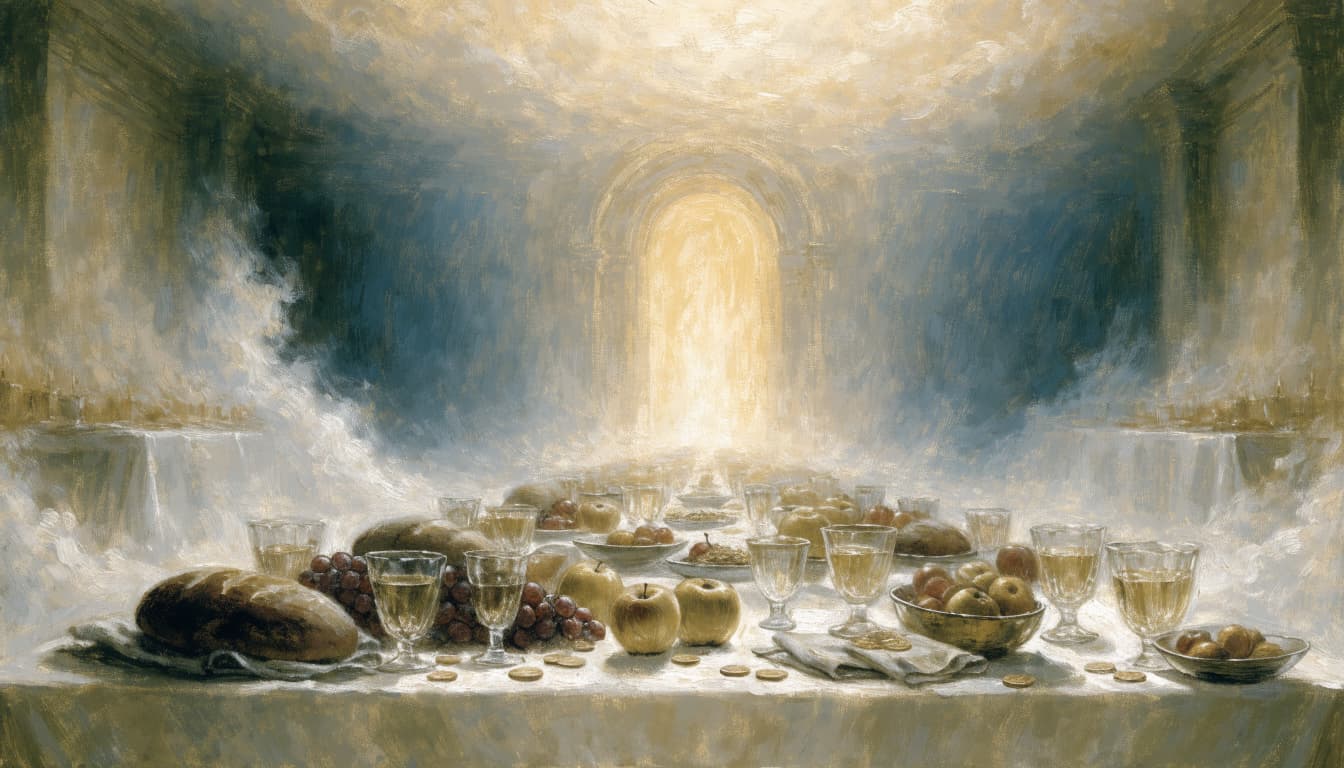
The feast points to covenant fulfillment, welcome, and joy before the King. Christians differ about its exact chronology and location. Revelation 19:6–10 alone doesn't settle whether the feast is in heaven, on earth, or connected to a particular millennial timeline.
We can hold those interpretations with care while holding firmly to the hope John does make clear: the Lamb is honored, His people are gathered, and God's reign is cause for celebration. For another perspective on the passage, see this teaching on the marriage supper.
The feast promises union with Christ and joy before the King
A wedding supper is more than a meal. It pictures a covenant relationship brought to its joyful fulfillment, with the bridegroom and His people together. For believers, that promise means life with Christ, free from the power of evil and marked by the joy of being with God. The vision doesn't invite us to guess at every detail of the banquet hall. It turns our eyes toward the One who welcomes His people.
That hope matters when faithfulness feels costly or the world seems to reward evil. Revelation's celebration assures us that evil does not have the last word. The Lamb who gave Himself for His people will reign, and those who belong to Him will share in His joy. We don't need to settle every prophetic timetable to receive that comfort. The promise itself gives us reason to worship, endure, and look ahead with hope.
Grace prepares the bride for faithful worship
The bride has made herself ready, yet the fine linen is granted to her. John explains that it represents the righteous deeds of the saints. Both truths belong together: God's grace gives, and the Spirit forms a people whose lives show faithfulness. Our obedience isn't the price of salvation. It is the fruit of belonging to Jesus, seen in everyday choices to tell the truth, serve others, and turn away from sin.
This is not a call to manufacture holiness by willpower alone. The Holy Spirit empowers believers to live in a way that honors God. Grace doesn't make faithful action unimportant; it makes obedience a response of love rather than an attempt to earn a place at the feast. A sermon on the bride's linen also explores how the passage holds readiness and God's gift together.
Then John falls before the angel, but the angel directs him to worship God. The command brings the vision back to its center: prophecy must point to Jesus, and God's servants must bear faithful witness to Him. We can read more about the testimony of Jesus in Revelation 19:10. The promised feast gives us hope, but the call in the passage is clear now: worship God and keep bearing witness to Jesus.
Conclusion
The Lamb's wedding feast gathers the hope we've traced through Scripture: the Lamb is honored, His bride is made ready by grace, and God's people are blessed to share in the celebration. The wording distinguishes the bride from those invited, but Revelation leaves their exact relationship open.
The Old Testament's covenant and banquet imagery reaches toward God's final joy with His people. As we await Christ, the angel's command keeps our worship in the right place: worship God, bear witness to Jesus, and remain ready for the Bridegroom.
Revelation 19 Explained
The Lamb’s Wedding Feast: Bride, Guests, and Prophecy
Who is the bride, who is invited, and why does heaven celebrate? Explore Revelation 19’s wedding imagery and its promise of union with Jesus Christ.
The Bride Made Ready
The Invited Guests
The Marriage Supper
The Returning King
Heaven Rejoices: The Marriage of the Lamb Has Come
In Revelation 19:6–9, heaven resounds with praise because the marriage of the Lamb has come and His bride has made herself ready. The Lamb is Jesus Christ, whose sacrifice makes this celebration possible. The bride’s fine linen represents the righteous deeds of the saints, placing faithful devotion beside God’s gracious provision.
Bride, Guests, and the Promise Ahead
The angel declares a blessing on those invited to the marriage supper of the Lamb. Scripture’s picture of a bride and invited guests calls readers to consider both belonging to Christ and the joy of His promised celebration. Set amid Revelation’s vision of judgment and Christ’s victorious return, the feast shows where prophecy is headed: not merely toward the end of evil, but toward restored fellowship with the King.
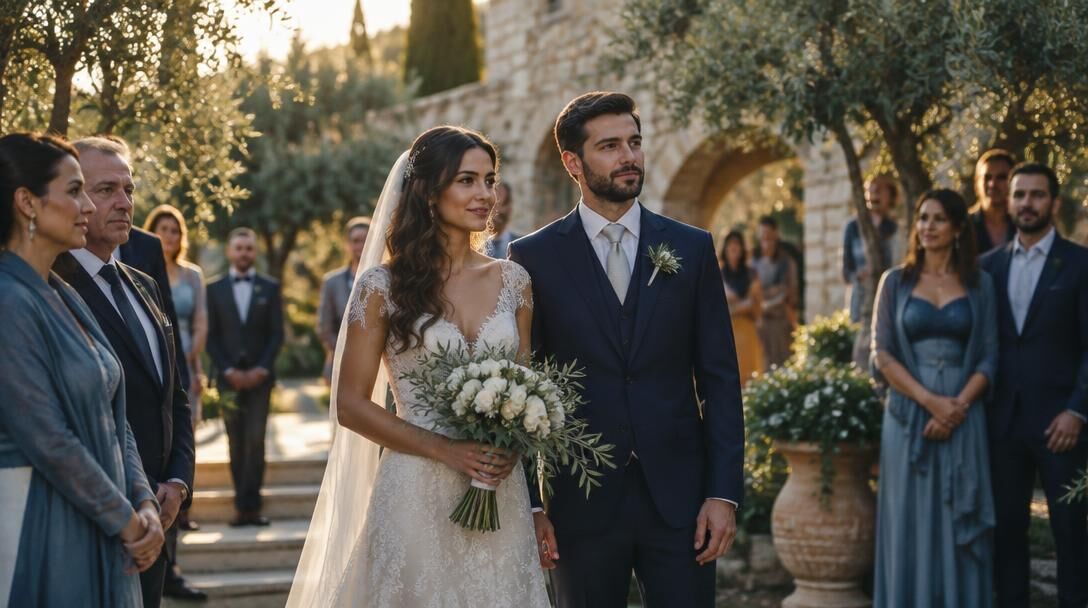
The Lamb, the Bride, and the Promise of Revelation 19
Revelation 19:7–9 announces the marriage of the Lamb and the readiness of His bride. The Lamb is Jesus Christ, identified in Revelation 5:6–10 as the One who was slain and redeemed people for God by His blood. John the Baptist likewise calls Jesus “the Lamb of God” (John 1:29).
The bride imagery draws on God’s covenant relationship with His people: Paul speaks of the church as promised to Christ (2 Corinthians 11:2), and Ephesians 5:25–32 compares Christ’s love for the church to a husband’s love for his wife. Revelation 21:2, 9–10 then portrays the bride as the New Jerusalem, adorned and filled with the redeemed. Together, these passages present the wedding as the fulfillment of Christ’s faithful love and His people’s promised life with Him.
Who Is Present at the Lamb’s Wedding Feast?
The Bride
Revelation 19:7–8 describes the bride as ready and clothed in fine linen. Many interpreters identify her with the church; Revelation 21 also presents the New Jerusalem as the bride, highlighting the redeemed people’s final home with God.
The Invited Guests
Revelation 19:9 calls those invited to the marriage supper blessed. Some interpretations distinguish these guests from the bride, while others understand the invitation as another picture of the same redeemed community.
The Bridegroom
Jesus is the Lamb at the center of the celebration. His sacrificial victory in Revelation 5:9 makes the wedding possible, and His return in Revelation 19:11–16 reveals Him as the conquering King.
Heaven’s Witnesses
The multitude praises God in Revelation 19:1–6, while an angel announces the blessing of the feast in verse 9. These voices surround the wedding announcement without being identified as the bride.
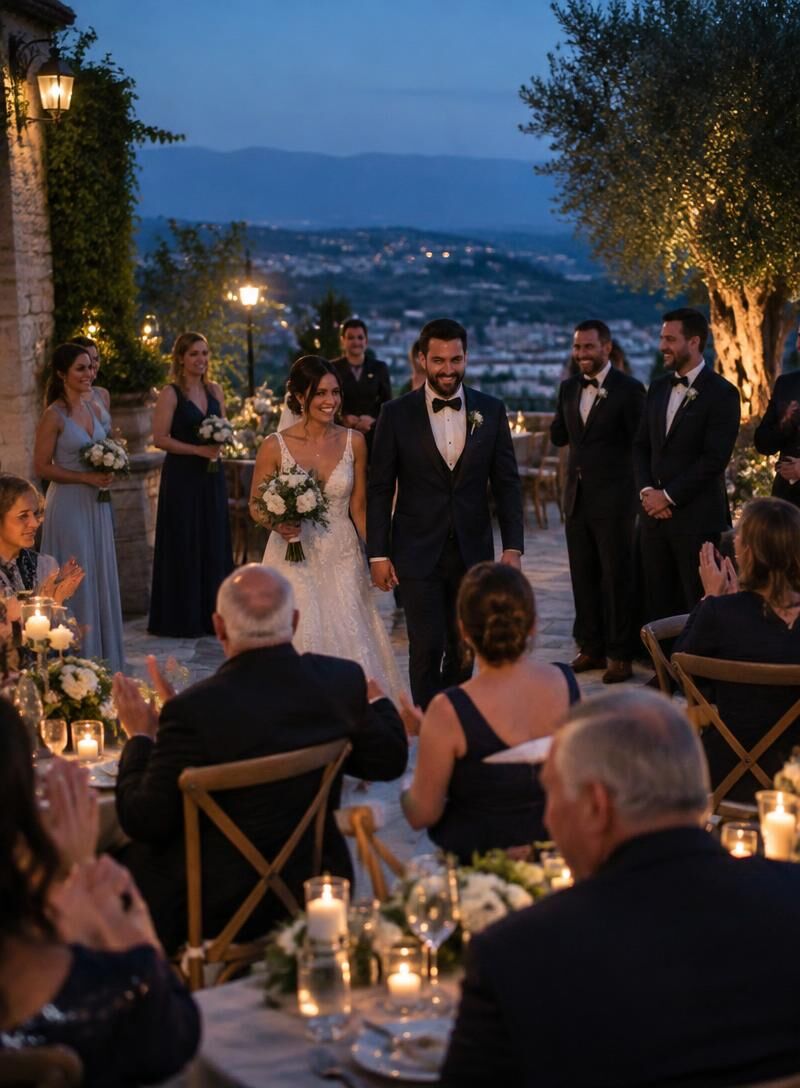
The Road to the Marriage Supper
Revelation moves from the Lamb’s redeeming work through judgment and heavenly praise to the announcement that His bride is ready. The visions that follow point toward Christ’s victory and God dwelling with His people.
Revelation 5
The Slain Lamb Is Worthy
Jesus appears as the Lamb who was slain. Heaven praises Him because His blood has redeemed people from every tribe and nation.
Revelation 18
Babylon Falls
The fall of Babylon marks the judgment of a corrupt world system. Its destruction sets the scene for heaven’s rejoicing in the next chapter.
Revelation 19:1–10
The Wedding Is Announced
A great multitude praises God, the bride is granted fine linen, and those invited to the Lamb’s marriage supper are called blessed.
Revelation 19–21
The King Returns; God Dwells with His People
Christ appears as the victorious rider in Revelation 19:11–16. Revelation 21 then unveils the New Jerusalem as the bride and declares that God will dwell with His people.
“Blessed are they which are called unto the marriage supper of the Lamb.”
Revelation 19:9 (KJV)
The Lamb’s Wedding Feast: Common Questions
Revelation 19 celebrates the Lamb’s marriage and invites us to consider who belongs to Him, who receives the invitation, and what this vision reveals about His return.
Who is the Lamb in Revelation 19?
The Lamb is Jesus Christ, whose sacrifice makes redemption possible. Revelation presents His wedding feast as a celebration of His victory and His bond with His people.
Who is the bride of the Lamb?
The bride represents the people united to Christ. Revelation 19:7–8 portrays her as prepared and clothed in fine linen, a picture of the righteous deeds of the saints.
Who are the guests invited to the marriage supper?
Revelation 19:9 calls those invited to the marriage supper blessed, but it does not explicitly identify every guest. Christians differ on how the guests relate to the bride; the invitation clearly emphasizes the joy of sharing in the Lamb’s triumph.
When does the Lamb’s wedding feast take place?
Revelation 19 announces the marriage supper before its vision of Christ’s victorious return. Interpretations differ on the feast’s exact timing, but the passage places its promise within the fulfillment of God’s final purposes.
What does the bride’s fine linen signify?
Revelation 19:8 says the fine linen represents the righteous deeds of the saints. Her readiness reflects a life shaped by faithfulness to Christ, made possible by God’s grace.
Why is the wedding feast important to Bible prophecy?
The feast shows that prophecy leads not only to judgment and victory but also to lasting fellowship with Jesus. Its promise calls readers to look toward His return with hope and readiness.