
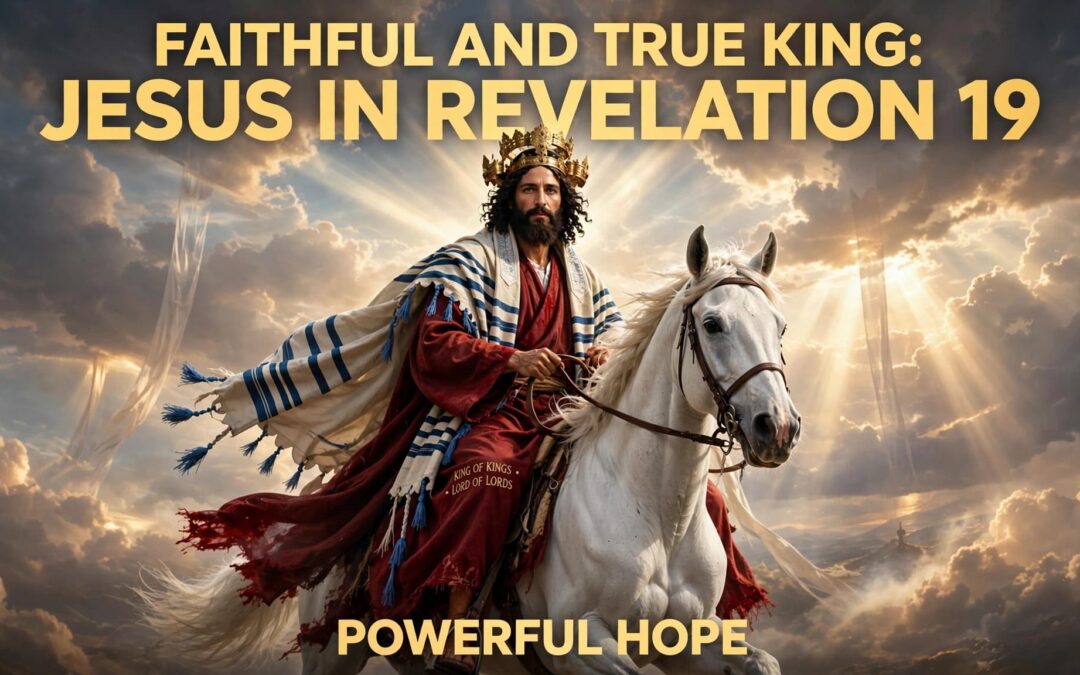
Revelation 19: Jesus, the Faithful and True King
Heaven opens, and Jesus appears on a white horse, called Faithful and True. In Revelation 19, Biblical prophecy comes into focus: He is the righteous Judge and victorious King whose authority reaches over every nation and power.
What do His titles tell us about Him? Which earlier prophecies shape this vision, and how does Jesus defeat evil? We see the same Savior who first came in humility returning in victory, with the promise that evil will not have the final word.
Let's look closely at Revelation 19 and Jesus as the Victorious King, then consider what His promised return means for our hope and faithfulness.
Prophecy Points to Jesus Faithful and True in Revelation 19
Revelation 19 moves from heaven's praise to a vision of Christ's return. The chapter opens with worship and the marriage supper of the Lamb, then John sees heaven opened and a white horse appear. Read Revelation 19 as one prophetic vision, while letting the passage speak for itself. Its images point to Jesus as the promised King, even as Christians differ on how the events fit into a prophetic timeline.
The vision moves from heaven’s praise to Christ’s return
In verses 1–10, heaven praises God for His judgment and celebrates the marriage supper of the Lamb. Then the scene shifts. John sees the heavens opened, a rider on a white horse, and heavenly armies following Him. The beast, the kings of the earth, and their armies gather to oppose the Rider. The contrast is stark: heaven rejoices, while the powers of the earth assemble against the King.
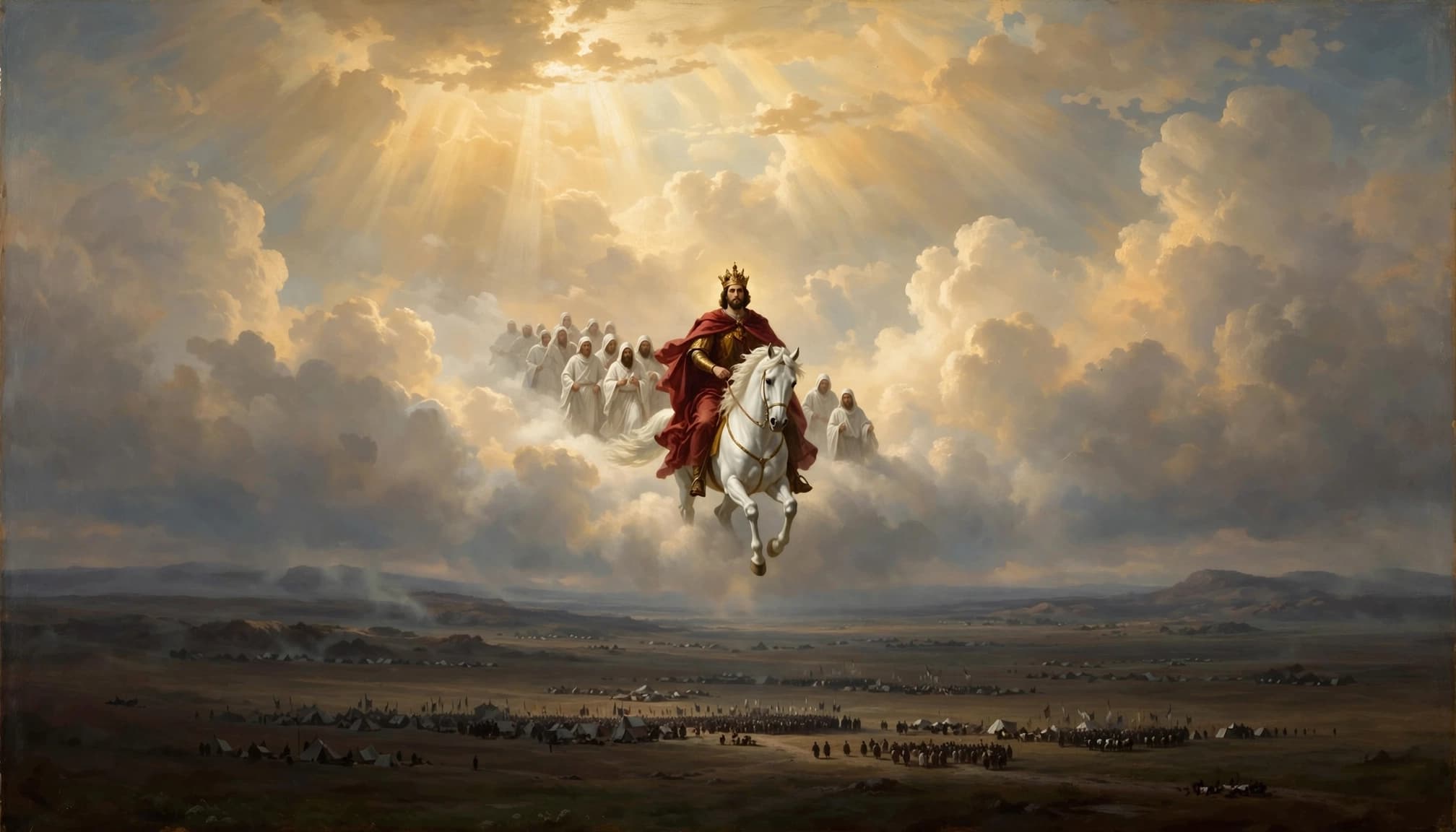
The passage describes the Rider's appearance and the defeat of His enemies, but it doesn't give us a simple schedule of every event surrounding His return. Christians read Revelation's visions through different interpretive approaches, and we should be careful not to treat every symbol as a plainly stated timeline. What the text does state is clear: the Rider judges in righteousness, His authority surpasses the gathered powers, and the beast and false prophet are defeated.
If you want to follow the chapter's imagery more closely, see our guide to Revelation 19 explained. Here, the key question is who John sees when heaven opens.
The rider’s titles identify the promised Messiah
John calls the Rider "Faithful and True," "The Word of God," and "King of kings and Lord of lords." The passage doesn't name Him "Jesus" in these verses, but its titles and actions identify Him as Christ. He judges with righteousness, rules the nations, and defeats the powers gathered against Him. This is no ordinary earthly ruler.
The vision also draws on earlier Biblical prophecies. Isaiah describes a Davidic ruler who judges with righteousness and strikes the earth with the rod of His mouth (Isaiah 11:4). Psalm 2 pictures God's Anointed ruling the nations with an iron rod (Psalm 2:9). Revelation brings these royal images together in the Rider's authority and victory.
We'll look more closely at what each title tells us about Jesus next. For now, the central point is that Revelation presents the returning King as the promised Messiah, whose rule is faithful, true, and beyond the reach of every opposing power.
What Faithful and True Reveals About Jesus
The names and actions in Revelation 19 show us who Jesus is: the righteous Judge, the living Word, and the King above every power. John does not explain every detail in the vision, and we should not force every image into a precise interpretation. But the passage is clear about Christ's character and authority. His victory rests on who He is.
His judgment is faithful, true, and righteous
John calls the Rider "Faithful and True" and says He judges and makes war "in righteousness" (Revelation 19:11-16). Those words belong together. Jesus is faithful to God's truth, and His judgment reflects that truth without corruption or favoritism.
Earthly rulers can fail. They may act from pride, protect their own interests, or judge unfairly. Jesus does not. His authority is not a cover for human ambition, and His judgment is not driven by injustice. Revelation presents Him as the One who sees clearly and judges rightly.
That matters when evil seems to go unanswered. The vision assures us that Christ's justice is neither careless nor compromised. We can trust the Judge because He is Faithful and True.
The Word of God rules by His command
John calls the Rider "The Word of God." A sharp sword comes from His mouth, and the passage connects that image with His judgment of the nations. The sword is not a conventional weapon in His hand. It comes from His mouth, a picture of the authority of His spoken word.
Jesus does not need to rely on the weapons or force that earthly rulers use. His word carries the authority to judge and defeat opposition. The vision does not describe a drawn-out struggle in which the outcome remains uncertain. Christ speaks with sovereign authority, and His enemies cannot overturn His command.
We should be careful not to claim that every symbol has one obvious explanation. Still, the sword's placement makes its central point plain: the King wins by the power of His word. His victory is certain because His authority cannot be resisted.
His royal titles declare authority over every power
The title "King of kings and Lord of lords" crowns the vision with a clear declaration. Jesus reigns above every earthly ruler, every nation, and every spiritual power. No authority stands higher than His, and no opposing force can claim the final word.
The title also gives us a needed perspective on human power. Nations and rulers may appear unstoppable for a time, but they remain under Christ's authority. His Kingdom is not one power among many, competing for equal standing. He is the supreme King.
We can read more about Jesus, the Faithful and True King while keeping our focus on John's central claim: the Rider's justice is righteous, His word rules, and His reign has no rival.
Old Testament Prophecies Behind the Victorious King
Revelation 19 does not introduce a new picture of Jesus out of nowhere. John draws on Old Testament prophecies of a righteous ruler, God's anointed King, and a divine warrior who judges evil. These connections help us see what His victory means.
Isaiah 11 foretells a righteous ruler who judges by His word
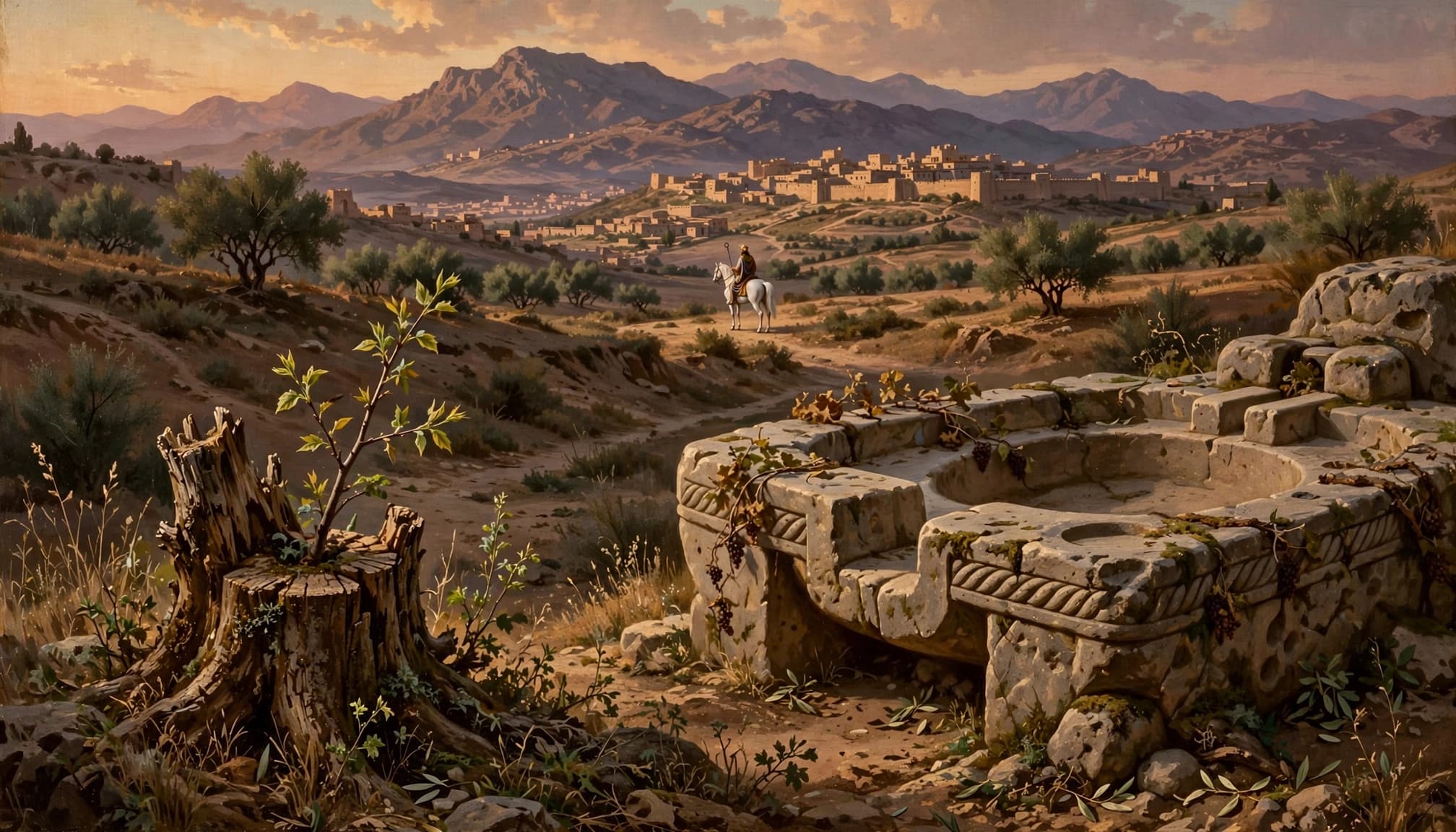
Isaiah pictures a shoot growing from Jesse's family line, a promise of a ruler from the house of David. The Spirit rests on Him, and He judges with righteousness rather than appearances or hearsay. Isaiah says this ruler strikes the earth with the rod of His mouth and puts the wicked to death with the breath of His lips (Isaiah 11:1-5; read the full prophecy in Isaiah 11).
John's Rider judges in righteousness, and a sharp sword comes from His mouth (Revelation 19:11-15). The images are not identical, but the echo is clear: the Messiah's word carries the authority to judge. His victory does not depend on human weapons or a contest with an uncertain outcome.
Psalm 2 shows the Messiah ruling the nations
Psalm 2 describes rulers and nations resisting the Lord and His Anointed. God establishes His King and gives Him authority over the nations, who are ruled with an iron rod (Psalm 2:7-9). Revelation uses that same royal image for Jesus, who rules the nations with an iron rod (Revelation 19:15).
The connection adds a direct answer to the gathered rulers who oppose Christ: their power is real, but it is not ultimate. Psalm 2's Anointed King is the Rider John sees, whose authority extends over hostile nations. We can explore how Revelation 19 fulfills God's covenant promises for more on this royal promise.
Isaiah 63 and Daniel 7 deepen the vision of judgment and dominion
Isaiah 63 portrays the Lord as a divine warrior coming from Edom with garments stained after treading the winepress of judgment (Isaiah 63:1-6). Revelation draws on this imagery when the Rider's robe is blood-marked and He treads the winepress of God's wrath (Revelation 19:13-15). The text does not explain whose blood marks the robe, so we should avoid claiming more than the passage says. The shared images do make the judgment theme unmistakable.
Daniel sees one "like a Son of Man" receive dominion, glory, and an everlasting Kingdom. The vision also shows beastly powers judged and stripped of authority (Daniel 7:13-14, 21-27). Revelation's beast and Christ's victory fit that contrast: oppressive powers fall, while the Son of Man's dominion endures. Christians differ on how to identify the specific beasts and how end-time events unfold. We can recognize Daniel's themes of judgment and everlasting rule without treating one debated interpretation as settled fact.
How Jesus Defeats the Beast and Brings Evil to an End
Revelation 19:17-21 brings the conflict to its sharpest point. The beast, the false prophet, the kings of the earth, and their armies gather against Christ, but the scene does not describe a drawn-out battle between equal powers. Jesus judges with the authority of His word, and rebellion cannot stand before Him.
The beast and false prophet represent organized opposition to God
The beast and false prophet have already appeared in Revelation as powers that deceive and draw people into opposition to God. In chapter 13, the false prophet uses signs to direct worship toward the beast. By chapter 19, their influence has helped gather the kings of the earth and their forces against the Rider. John does not identify them with any modern person or nation, so we should not force the symbols onto today's headlines.
The angel's call to the birds introduces the grim outcome of this rebellion. They are summoned to feast on the bodies of the defeated, a stark image of judgment and disgrace. The forces gathered against Christ may appear formidable, but their numbers do not change who holds authority. We can read more about Jesus' authority over the beast without turning the passage into a call for human beings to wage war.
Christ’s victory comes through the authority of His word
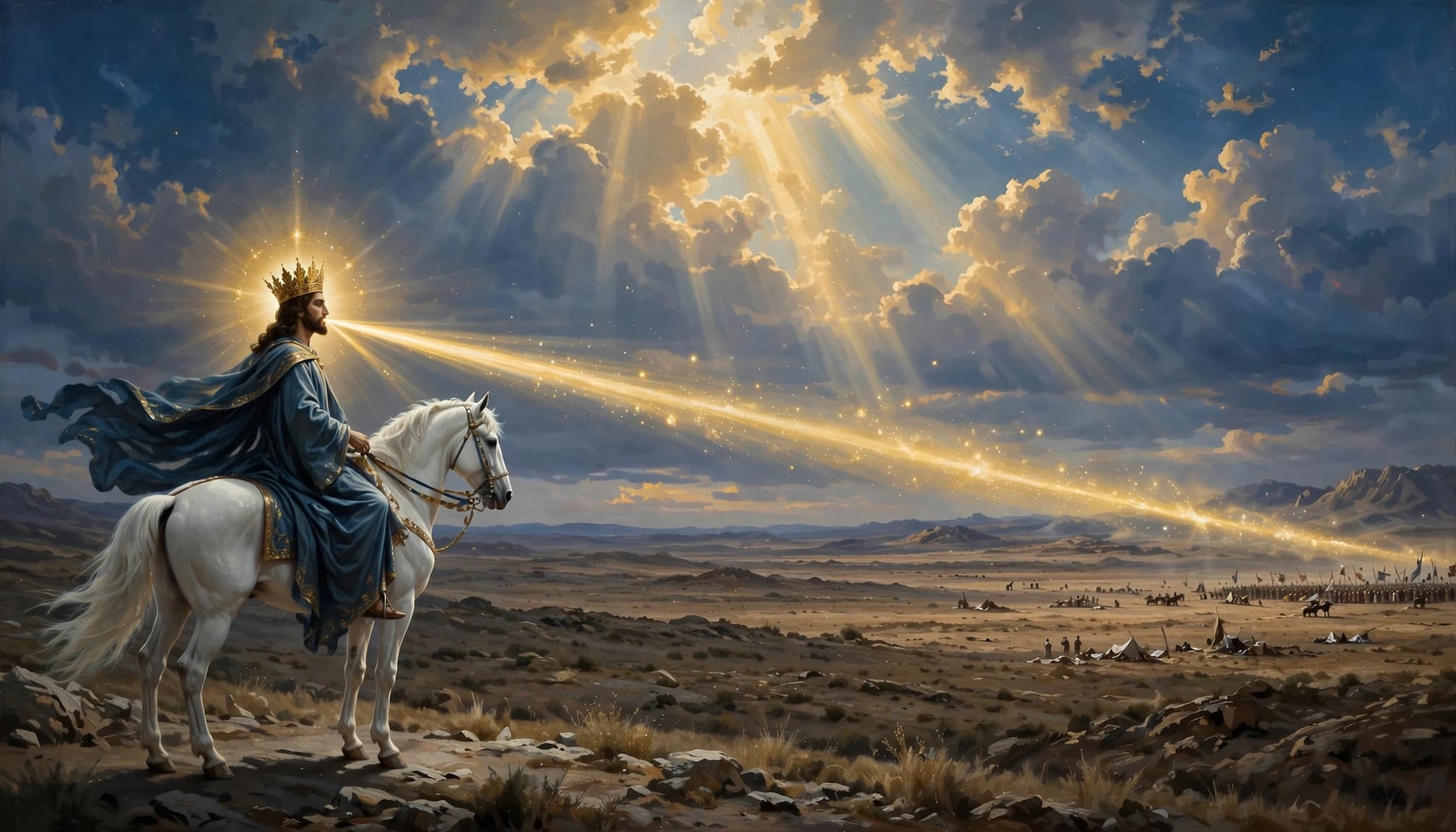
The Rider's sword comes from His mouth, not His hand. That detail matters. The image points to judgment carried out by His command, not to an ordinary military battle in which Jesus fights with a physical weapon. His word is authoritative, and His enemies cannot resist its judgment.
Earlier in Revelation 19, the Rider is called "The Word of God" and is shown ruling the nations. Now the sword from His mouth strikes the gathered forces. The scene gives no account of a prolonged contest or an uncertain result. Jesus speaks with the authority of the righteous King, and the opposition falls.
This is a sober picture, not an invitation to speculate about current conflicts or name today's political leaders as the beast. The text keeps our attention on Christ and His judgment. For a closer look at the passage's details, see this verse-by-verse exposition of Revelation 19:17-21.
The final judgment assures believers that evil will not prevail
Revelation 19 gives distinct outcomes. The beast and false prophet are captured and thrown alive into the lake of fire burning with sulfur. The remaining forces are killed by the sword from the Rider's mouth, and the birds consume their bodies. John does not say here that the gathered forces are thrown into the lake of fire, so we should preserve the distinction the passage makes.
The image is severe because rebellion against God is serious. The beast and false prophet have deceived others and gathered power against Christ; the kings and armies join that opposition. Yet none can overturn the King's judgment. Evil's apparent strength has a limit, and Christ brings this rebellion to an end.
For believers, this vision offers hope without making judgment seem light. We can trust that Jesus sees evil clearly and will not let it rule forever. Revelation 19 does not answer every question about the timing or nature of what follows, but it leaves no doubt about the outcome here: the beast, the false prophet, and the forces gathered against Christ do not prevail.
The Return of Christ and the Hope of His Everlasting Kingdom
Revelation 19 holds together two truths we can sometimes separate: Jesus came in humility, and He will return in glory. The same faithful Savior who gave Himself for us will reign over every power. That promise is central to Christian hope, even when believers differ on how Revelation's visions fit the timeline of history.
The humble Savior returns as the conquering King
At His first coming, Jesus entered the world in humility. He took the form of a servant and gave Himself for others, as Philippians 2:6-11 describes. John says, "the Word became flesh" (John 1:14). His humility was never weakness or a lack of authority. It revealed the character of the Savior who came to serve and save.
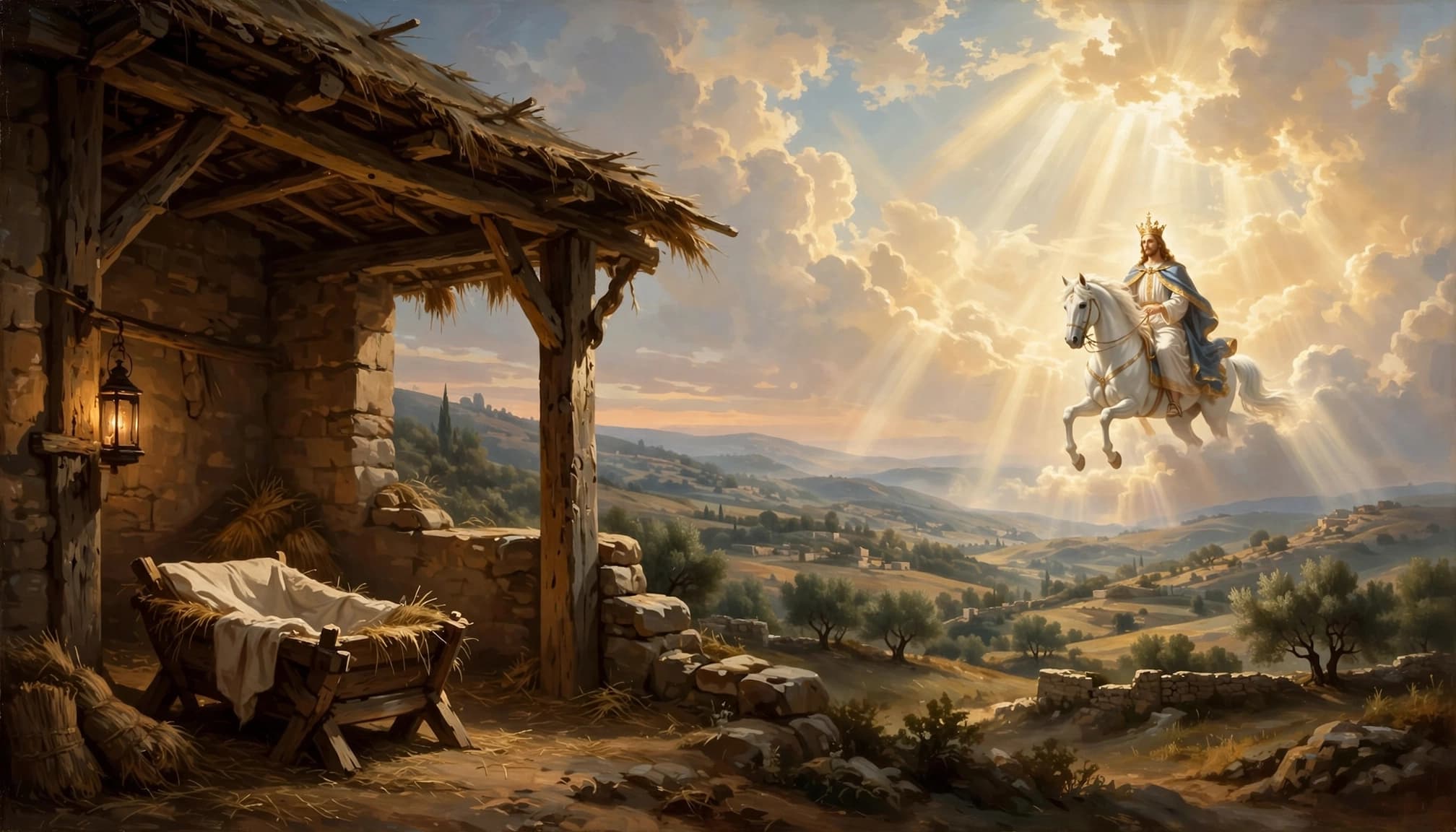
In Revelation 19:11-16, John sees that same Jesus revealed as the righteous King. He comes to judge, defeat evil, and establish His rule. The contrast is striking, but there's no contradiction. The One who bore suffering in faithfulness returns in victory, still true to who He is. His royal glory does not erase His humility; it shows the authority of the Savior who willingly gave Himself.
Christ’s reign stands above every earthly kingdom
"King of kings and Lord of lords" is more than a grand title. It declares that every earthly ruler remains beneath Christ's authority. No nation, government, or spiritual power can claim the highest place or overturn His reign. We can explore the hope of Jesus' everlasting Kingdom while keeping John's claim in view: Jesus is supreme over all.
For us, Christ's return is not simply a matter of arranging prophetic events in the right order. It is the hope that injustice, rebellion, and death will not have the final word. Jesus will complete His victory and reign without end. We don't need to pretend that suffering is small or that earthly powers have no influence. We can face both with confidence in the King who judges righteously and keeps His promises.
Christian views differ on the vision’s timeline
Christians interpret Revelation's visions in several ways. Futurists read much of the book as describing events still to come. Preterists understand many visions in relation to the first-century church and its conflicts. Historicists see Revelation as depicting events across the course of church history, while idealists emphasize recurring spiritual realities, including Christ's victory over evil. These approaches are broad categories, and Christians within each one may disagree. This overview of Revelation's interpretive approaches offers a brief introduction.
There's also disagreement about the millennium in Revelation 20. Premillennial Christians generally understand Christ's return in Revelation 19 as preceding the millennial reign. Amillennial Christians generally read the millennium symbolically and understand the vision as part of Revelation's portrayal of Christ's present reign and final victory. We can hold our convictions while speaking fairly about other believers who read the symbols differently.
These disagreements matter, but they don't change the passage's central promise. Jesus returns as the faithful King, evil is defeated, and His Kingdom endures.
What Revelation 19 Means for Faith Today
Revelation 19 gives us hope for daily life, not a reason to ignore the pain around us. Jesus is the righteous Judge, and His promised victory calls us to trust Him, resist evil, live holy lives, and keep sharing the Gospel. We don't know the timing of His return, but we can remain faithful while we wait.
Trust Christ when injustice seems to go unanswered
When someone is harmed and justice seems slow, "Jesus will judge" should never become a way to silence them or excuse wrongdoing. Revelation presents Christ as the One who sees clearly and judges righteously. We can bring pain to God honestly, seek help and protection, and support efforts to hold wrongdoers accountable. Trusting Jesus with final judgment doesn't mean standing aside when someone needs care.

Paul's instruction in Romans 12:17-21 helps us hold justice and mercy together. We must not repay evil with evil, yet we are called to do what is right and overcome evil with good. That can mean telling the truth, standing with someone who has been mistreated, or seeking lawful accountability without feeding revenge.
There's a difference between leaving final judgment to Jesus and pretending that harm doesn't matter. We can pursue justice in Godly ways while refusing hatred and retaliation. For more on this balance, see Jesus as the righteous Judge.
Remain faithful while waiting for the King
The certainty of Christ's victory gives us reason to persevere, but it doesn't give us permission to set dates or label every crisis as a sign of the end. Revelation 19 keeps our attention on Jesus, not on fear-driven predictions. We wait by following Him today: choosing holiness, serving others, and speaking truth with compassion.
The Holy Spirit helps us live that witness. Jesus promised His followers power to be His witnesses in Acts 1:8. From a Spirit-filled Pentecostal perspective, that promise is for more than bold words. The Spirit gives us strength to testify about Jesus, wisdom to respond faithfully, and love for the people in front of us. His power points people to Christ, the King, rather than to our own importance.
We don't have to know exactly when Jesus will return to share the Gospel faithfully. We can pray, serve our neighbors, and keep speaking about the hope we have in Him. That patient witness is part of the Gospel mission to all nations. Evil may seem loud for a season, but it will not have the final word. Jesus is Faithful and True, and we can remain faithful while we await Him.
Conclusion
Revelation 19 brings Biblical prophecy into focus through Jesus, the Rider called "Faithful and True." He judges in righteousness, and His titles declare that no earthly power outranks Him. We see the promised Messiah as both righteous Judge and victorious King.
The vision is not an ordinary account of warfare. It points us to Christ's authority and certain victory. We can read more about Jesus, the Faithful and True King and hold fast to the hope Revelation gives us: evil will not have the final word. Trust Him, and remain faithful while we await His reign.
The Rider on the White Horse
Revelation 19: Jesus, the Faithful and True King
Heaven opens, and Jesus appears as the victorious King who judges with justice and fulfills every promise of God.


The King Who Comes in Righteousness
Revelation 19 presents a breathtaking vision: heaven opens, and Jesus rides forth on a white horse. Called Faithful and True, He judges and makes war in righteousness. His name is the Word of God, and the title on His robe declares Him King of kings and Lord of lords.
At Bible Prophecy Ministries, we explore how Scripture’s past fulfillments and future promises center on Jesus. This passage reveals that His return is not a distant symbol of hope, but the promised triumph of the One whose word never fails.
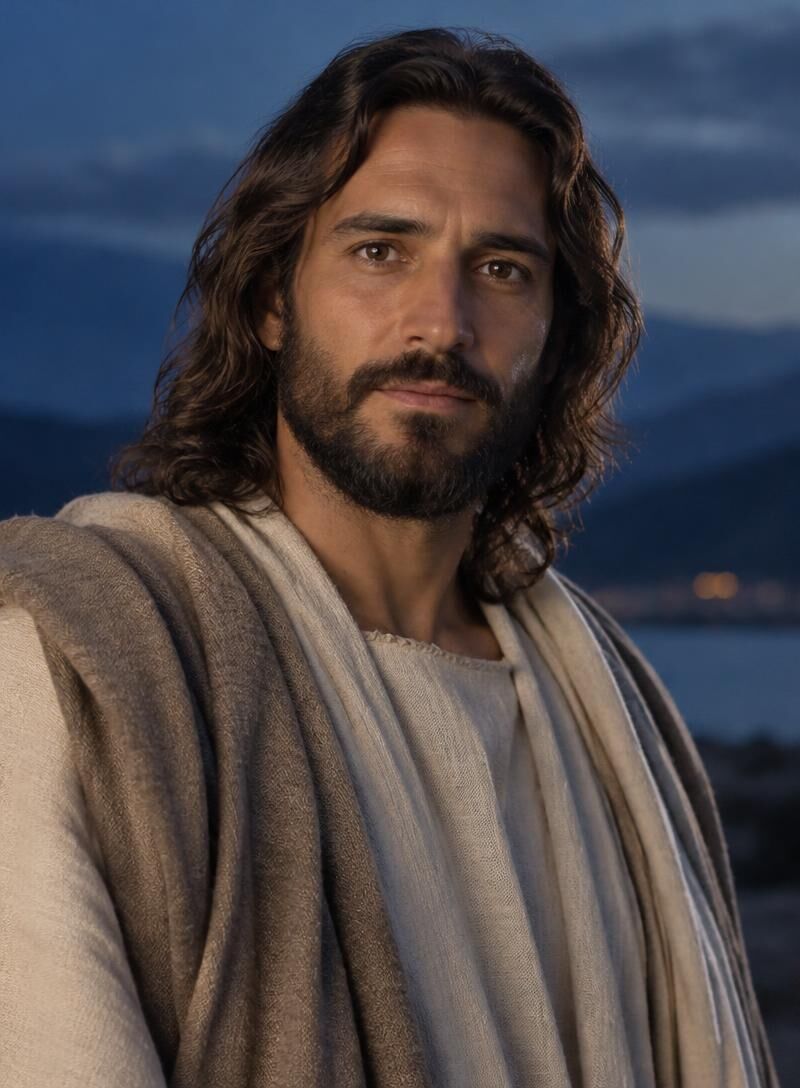
The Names of Jesus in Revelation 19
As heaven opens, Revelation 19 reveals the identity and authority of the returning Christ through names that show who He is and why His victory is certain.
Faithful and True
Jesus keeps every promise and judges with perfect justice. His return confirms that God’s prophetic word can be trusted.
The Word of God
This name identifies the Rider as the One who makes God known. The sword from His mouth pictures the power of His word to judge the nations.
King of Kings
Written on His robe and thigh, this title declares that no earthly ruler or empire can stand above Christ’s sovereign reign.
Lord of Lords
His authority extends over every power. When He defeats the beast and its armies, His victory establishes the supremacy this title proclaims.
Heaven Opens, and the King Rides Forth
Revelation 19:11–16 pictures heaven opened and Jesus riding a white horse, crowned with many diadems and followed by the armies of heaven. His eyes blaze like fire, His robe is dipped in blood, and a sharp sword proceeds from His mouth. These images present a righteous King who sees truly, speaks with authority, and comes to judge the nations.
The scene moves the chapter from heaven’s celebration to Christ’s decisive victory. The beast and the kings of the earth gather against Him, but their opposition cannot overturn His rule. For readers of Bible prophecy, this is not a contest with an uncertain outcome: the Faithful and True King fulfills God’s purposes and brings rebellious power to an end.
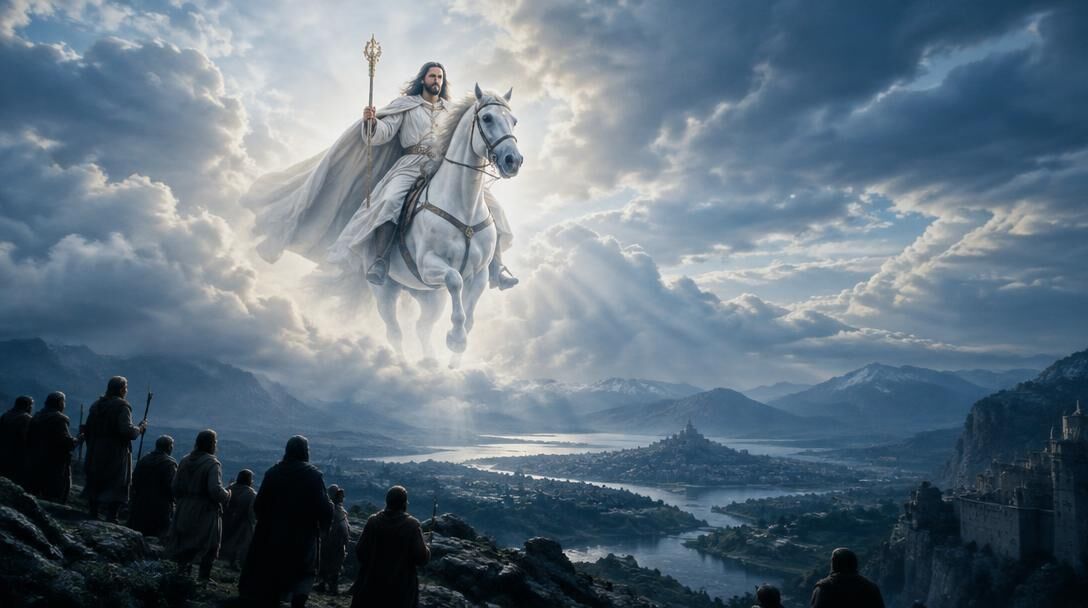
“On his robe and on his thigh he has a name written, King of kings and Lord of lords.” — Revelation 19:16 (ESV)
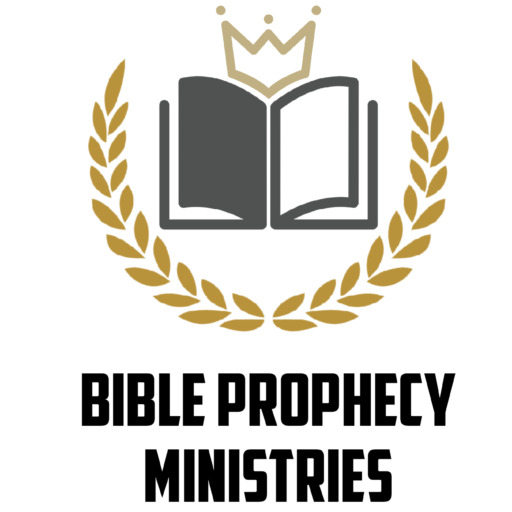
The Crowned Rider
This prophetic title identifies Jesus as the supreme ruler at His return, when the powers gathered against Him meet the King whose authority exceeds them all.
Questions About Revelation 19 and Christ’s Return
Why is Jesus called Faithful and True in Revelation 19?
This title reveals that Jesus keeps His promises and judges with perfect righteousness. His return fulfills God’s word and shows that His authority can be trusted.
What does the white horse symbolize?
The white horse portrays Christ as a victorious King. Revelation 19 uses this image to announce His triumph over evil, not to suggest that His victory is uncertain.
What is the meaning of the sword from Jesus’ mouth?
The sword represents the power of Christ’s word. He defeats His enemies by His sovereign command, showing that His judgment is both authoritative and just.
How does Revelation 19 describe the return of Christ?
Revelation 19 presents Jesus coming openly as King of kings and Lord of lords. He confronts rebellion, brings righteous judgment, and establishes the certainty of His victory.
How does Revelation 19 connect to the rest of Bible prophecy?
The chapter brings together prophetic themes of the Messiah’s reign, God’s judgment, and the defeat of evil. It points readers to Jesus as the one who fulfills Scripture’s promises.