
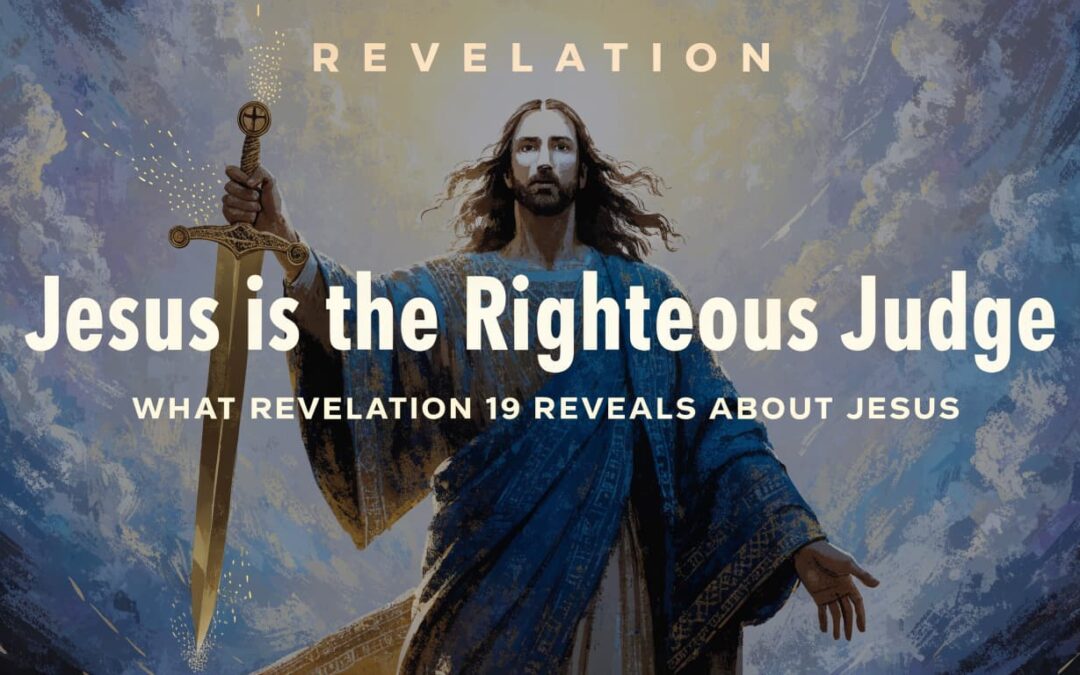
Revelation 19: Jesus, the Righteous Judge Who Keeps God’s Promises
Human judgments can be clouded by anger, bias, or incomplete knowledge. In Revelation 19, John sees Jesus, the faithful King whose judgment is perfectly just and who confronts evil without acting unfairly.
The Rider is called "Faithful and True" and "the Word of God," and John describes Him with images of royal authority and victory. We believe this vision points you to the King who keeps God's promises and gives Christian hope even when injustice seems to prevail.
Let's look at why John's names and images show that judgment belongs to Jesus, not to human revenge.
The Righteous Judge in Revelation 19 Confronts Evil Without Injustice
Revelation 19 does not introduce Jesus as a conqueror without context. John first hears heaven praise God for judging evil and caring for His people. Then the scene shifts, and the victorious King appears. The order matters: Christ's judgment answers evil; it is not permission for human anger to take over.
The vision follows praise, victory, and the Lamb’s wedding
In Revelation 19:1–10, heaven rejoices after Babylon's fall. The multitude praises God because His judgments are true and righteous, and because He has acted on behalf of His servants. Then John hears the announcement of the Lamb's wedding. Before we see the Rider, we see both God's justice against oppression and His care for those who belong to Him.
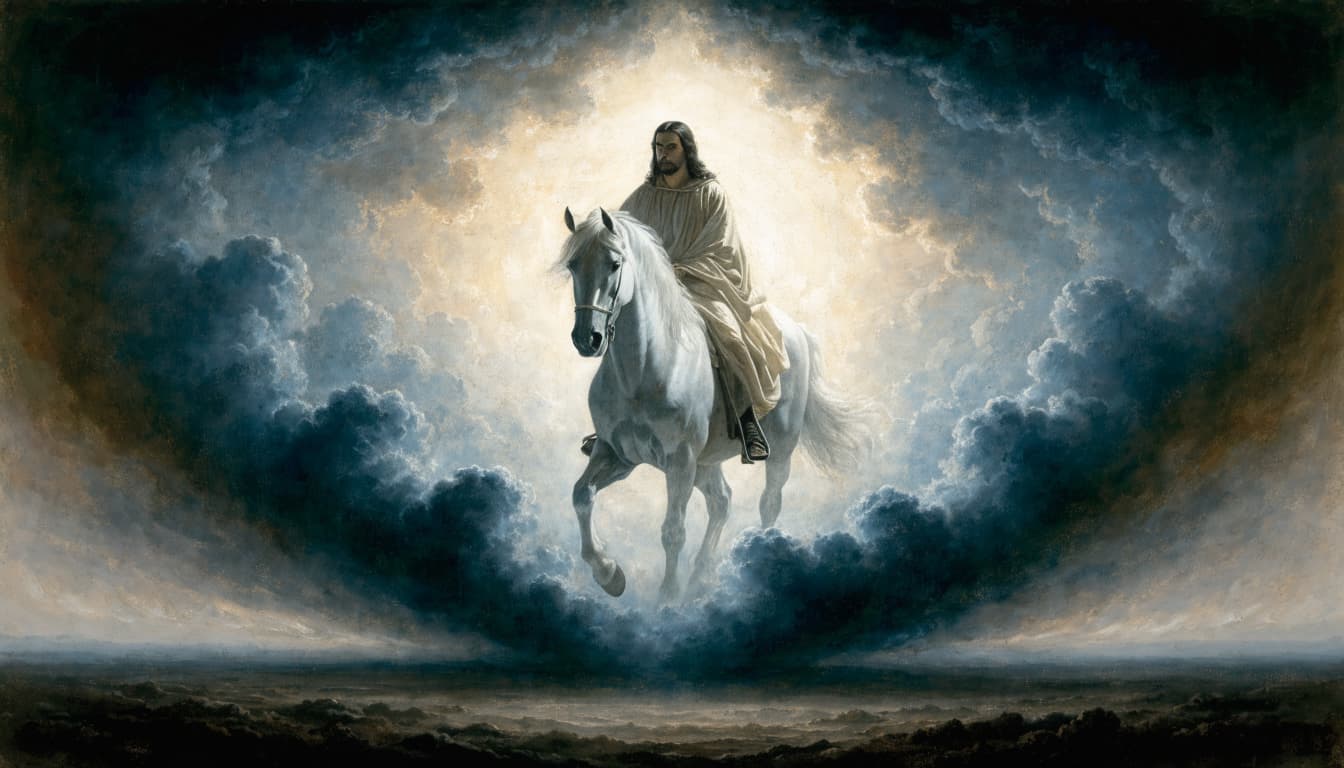
That setting helps us understand the Rider's appearance. He comes after praise for God's judgment and the Lamb's wedding celebration, and before the beast and false prophet face defeat. John's vision holds these truths together: God answers evil, and He keeps His promises to His people. The Lamb's wedding points to that promised care and joy; we can read more about the Lamb of God and the returning King.
John's vision of the Rider appears in Revelation 19:11–16. Jesus is called "Faithful and True," and the passage says He judges and makes war in righteousness. His authority belongs to Him. It does not come from a human crowd, a political movement, or a person convinced that anger makes them God's representative.
Righteous judgment is different from human revenge
The passage gives judgment to Christ, not to us. That distinction matters, especially when people use Jesus' name to defend cruelty or political force. John doesn't show human beings taking revenge and calling it holy. He sees the risen King, whose judgment is righteous and whose authority is complete.
Jesus' judgment is not impulsive, corrupt, or driven by selfish gain. The Rider is "Faithful and True," and His rule answers the injustice John has just shown us. Human judgment can be distorted by limited knowledge, fear, or the desire to protect our own interests. Christ's judgment is different because He knows fully and acts in righteousness.
The imagery is intense: a sharp sword comes from the Rider's mouth, and He rules the nations. These images point to His authority and judgment, not to a command for Christians to use violence in His name. Revelation places the outcome in Christ's hands. The passage does not authorize us to turn personal resentment into a mission from God.
So when evil seems to win, this vision doesn't tell us to seize the judge's seat. It tells us who holds it. We can oppose injustice and care for those who suffer without pretending our anger is the same as Christ's righteous judgment.
What Jesus’ Names Reveal About the Rider
John gives the Rider several names in Revelation 19:11–16. Each one tells us something about His character and authority. Together, they identify Jesus as the King who judges evil justly and keeps God's promises.
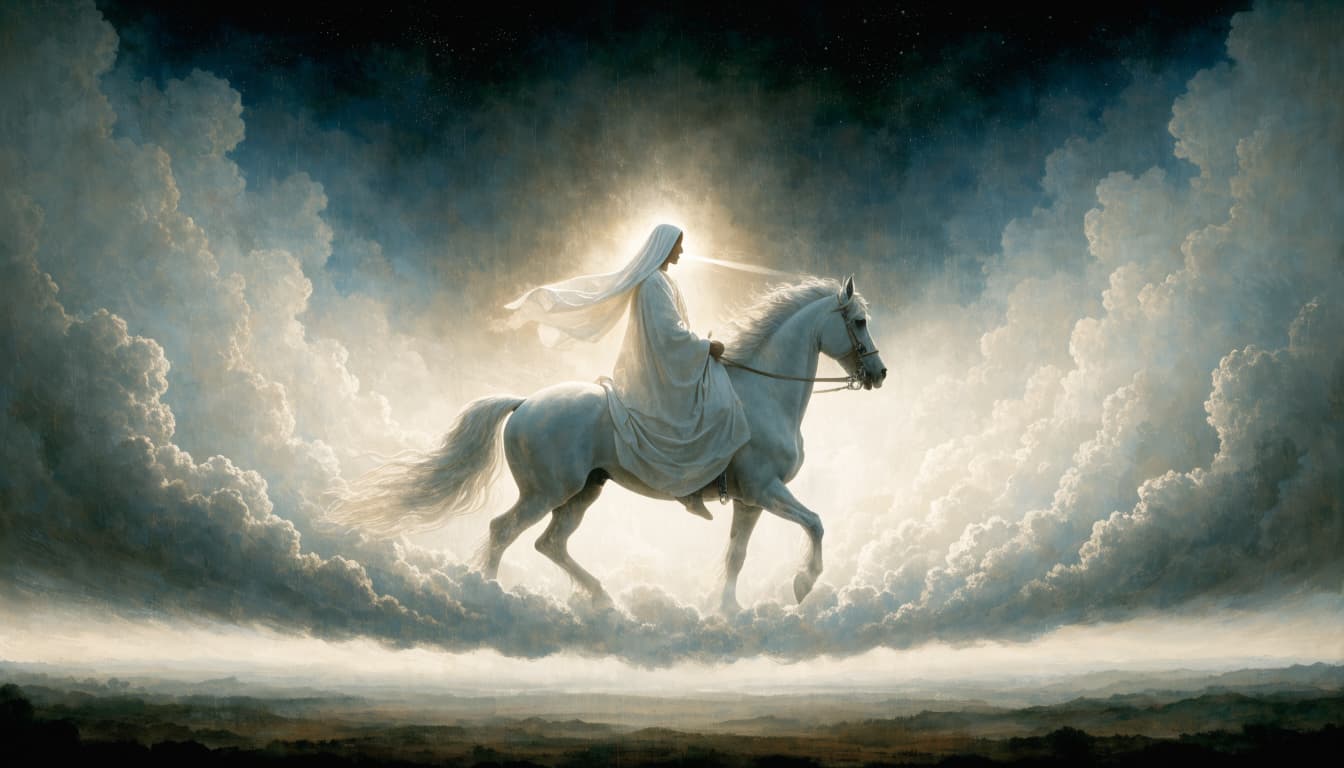
Faithful and True means He keeps every promise
The Rider is called "Faithful and True," and John immediately says He judges and makes war in righteousness. His character and His authority belong together. He can be trusted because He does what is right.
Revelation uses similar language for Jesus elsewhere. Revelation 1:5 calls Him the faithful witness, while Revelation 3:14 names Him the "Amen, the Faithful and True Witness." These titles point to the same dependable Jesus. He tells the truth, remains true to God, and fulfills what God has promised.
That doesn't mean believers will never face hardship. Revelation itself speaks to churches under pressure, and Jesus' faithfulness does not promise an easy path. It gives us reason to trust Him through suffering and to hope that evil won't have the final word. We don't have to pretend injustice is harmless; we can trust the Judge who sees it clearly.
The Word of God speaks with divine authority
John also calls the Rider "The Word of God." That name identifies Him with Jesus, the Word who was with God and was God, and who became flesh, as John 1:1–14 teaches. The Rider is no anonymous force sent to confront evil. He is Jesus, revealing God's truth and carrying out God's judgment.
Then John sees a sharp sword coming from His mouth. The image is striking, but it isn't a common weapon in a battlefield scene. The sword comes from His mouth because His word carries authority. He speaks truth, exposes evil, and judges with power no earthly ruler can claim.
That should shape how we read the vision. Jesus' authority doesn't depend on human anger or political strength. His word is enough to bring judgment, and His judgment is righteous.
King of kings and Lord of lords stands above every rival
John sees many crowns on the Rider's head, then gives Him the title "KING OF KINGS AND LORD OF LORDS." The many crowns picture a rule no rival can match. Earthly rulers may claim power, and spiritual enemies may oppose God, but none can outrank Jesus.
The vision points to God's Kingdom, where Christ's authority is fully revealed and evil is brought to an end. We don't need to guess at every detail of the timing to grasp the promise: Jesus reigns above every rival. That confidence also runs through prophecies pointing to Jesus as King.
John mentions another name written on the Rider, one no one knows except Himself. We should let that mystery remain. The passage gives us plenty to know: Jesus is faithful, He is the Word of God, and He is King above all kings.
How the Rider’s symbols portray holy authority
John's images in Revelation 19:11–16 work together to show Jesus as the victorious King and divine warrior. The white horse, fiery eyes, crowns, robe, and sword all point to His authority. They are prophetic symbols, not a description of ordinary military equipment.
The white horse and opened heaven signal victory
John sees heaven opened, then a Rider on a white horse. The scene announces divine intervention: Jesus comes as King to defeat evil and set things right. The horse's whiteness fits the vision's theme of victory and contrasts with the forces arrayed against Him.
We should be careful not to identify this Rider with every white-horse figure in Revelation. The rider in Revelation 6:2 is part of a different vision, and Christians disagree about whether that figure represents conquest, deception, or something else. The shared image invites comparison, but it doesn't prove both riders are the same. For another look at Jesus as the returning King in Revelation 19, we can keep the focus on what John states plainly: this Rider judges in righteousness.
Flaming eyes and many crowns show complete knowledge and rule
The Rider's eyes burn like fire. Daniel 10:6 uses similar imagery, and Revelation has already described Christ with fiery eyes (2:18). The image tells us that nothing escapes His sight. Jesus sees through appearances and judges truly, unlike human rulers whose knowledge is always limited.
Many crowns rest on His head, a picture of authority greater than any rival ruler's. Revelation's beasts and earthly powers may claim dominion, but their rule cannot outrank His. John later makes that point explicit with the title "KING OF KINGS AND LORD OF LORDS." We can read the crowns as royal imagery, not as a detail we need to turn into a literal inventory.
The robe, mouth-sword, iron rod, and winepress draw on Scripture
The sword comes from the Rider's mouth, connecting His judgment to His word. Isaiah describes God's righteous ruler judging the poor with equity and striking the earth with the rod of His mouth. Isaiah 11 gives the background: the Messiah judges rightly, and His authority defeats wickedness. The sword is not a call for Christians to take up weapons in Jesus' name.
The iron rod echoes Psalm 2:7–9, where God gives His anointed King authority over the nations. These images belong together: Jesus speaks with divine authority and rules as the righteous Messiah. He does not need human violence to establish His Kingdom.
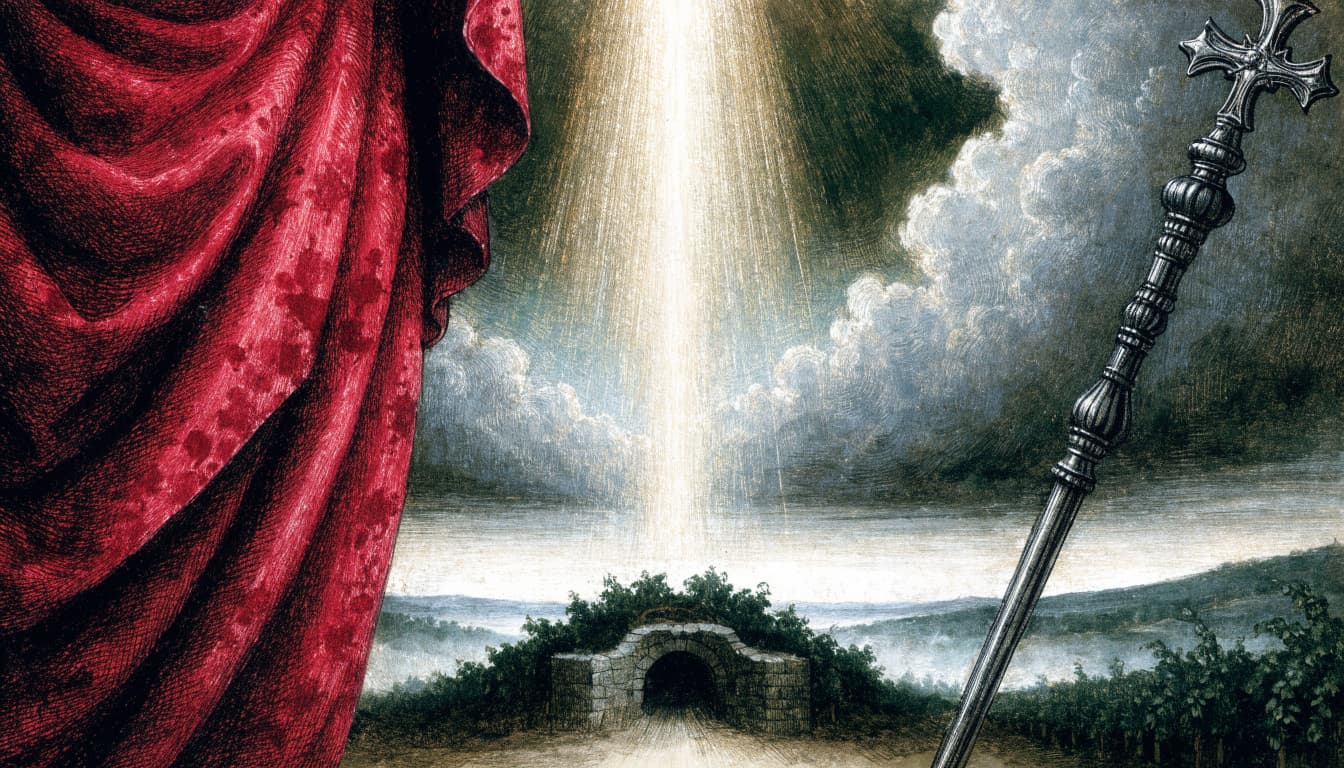
The blood-marked robe and winepress recall Isaiah 63:1–6, where the divine warrior comes with garments stained after judgment. Christians differ on whether the robe's blood points to the defeat of God's enemies or to Christ's own sacrifice. Isaiah's winepress image strongly emphasizes judgment, while the wider Christian witness also keeps the Lamb's sacrifice before us. Either way, John presents the outcome as Christ's work, not permission for human revenge. His symbols proclaim holy authority: Jesus sees clearly, speaks with power, and rules over every rival.
Why Jesus’ war is righteous, not unjust violence
The phrase "makes war in righteousness" can trouble us, and honestly, it should make us pause. Revelation does not ask us to celebrate cruelty or hand our anger a religious excuse. It shows Jesus answering evil with perfect justice, as Revelation 19:11-16 places judgment in the hands of the true King.
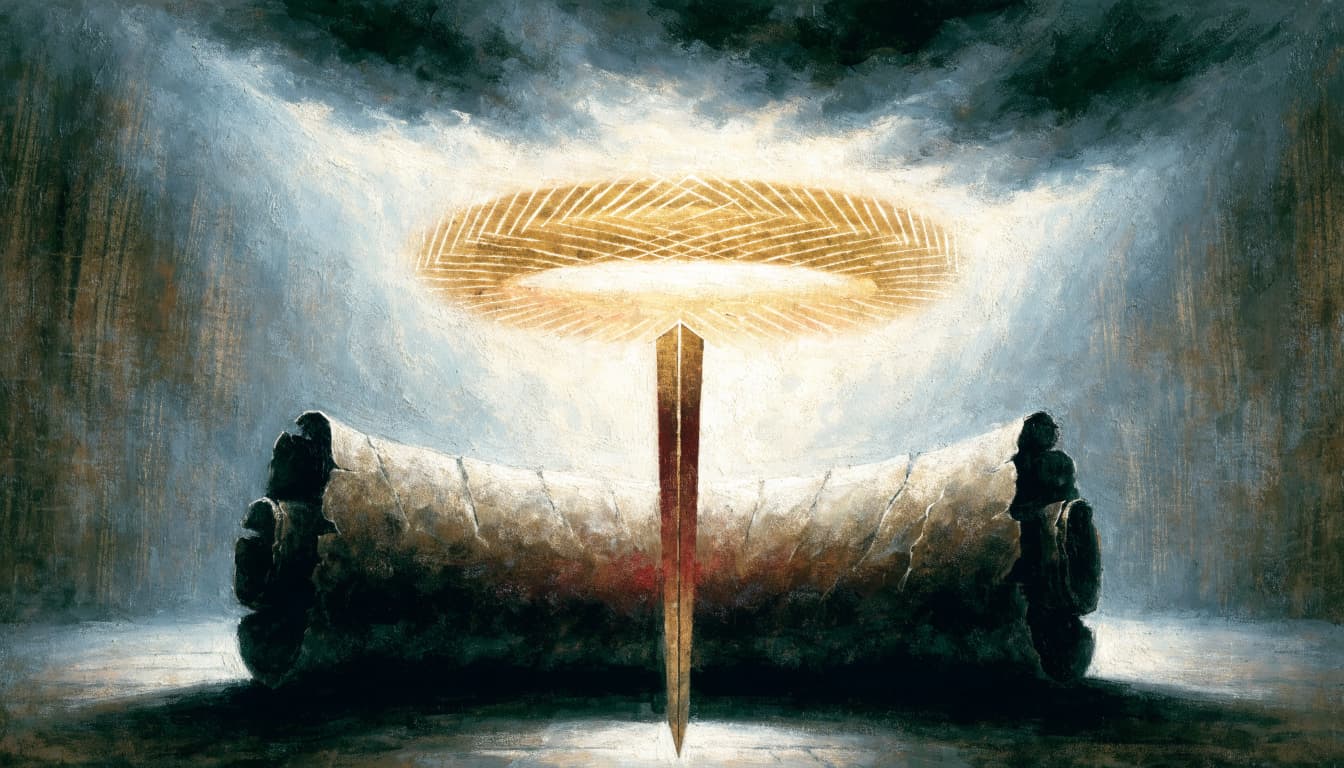
The vision places judgment in the hands of the true King
John calls the Rider "Faithful and True" before he says Jesus judges and makes war in righteousness. That order matters. Jesus' judgment flows from who He is: He knows the truth, sees every motive, and has the right authority to act. No human ruler can claim that kind of complete knowledge or moral purity.
We know how easily human justice can bend. Anger, fear, prejudice, self-interest, and incomplete evidence can distort even sincere efforts to correct wrongdoing. People may call their cause righteous, but that claim alone does not make it God's judgment. Revelation gives the final verdict to Jesus, not to a crowd, a nation, or anyone convinced that personal outrage speaks for God.
Isaiah describes the promised ruler judging the poor with righteousness and striking the wicked with the rod of His mouth (Isaiah 11:1-4). That vision helps us read John's scene: Christ confronts evil, protects what is good, and judges without bias or ignorance. We can resist injustice and care for those who suffer. But we cannot turn that responsibility into permission to take revenge in Jesus' name.
If this language weighs on you because people have used religion to excuse violence, your concern makes sense. Human beings can misuse God's name. Their actions do not define the righteous character John gives to Jesus. For a related look at Jesus as the righteous Judge in Revelation 19, we can keep the focus where John places it: on Christ's authority and character.
Apocalyptic images reveal truth without describing a normal battlefield
The sword from Jesus' mouth, the iron rod, and the winepress can sound like details from an earthly battle. But John uses images rooted in Scripture to reveal the certainty and force of Christ's victory. The sword comes from His mouth, pointing to judgment by His authoritative word, not a weapon for His followers to wield.
The iron rod echoes God's promise to His anointed King in Psalm 2:9. It pictures rule over rebellious powers. The winepress draws on prophetic images of God's judgment, including Isaiah 63:1-6. These symbols portray God's decisive response to evil; they do not offer Christians an ordinary military plan.
So what does "makes war in righteousness" mean for us? Jesus does not excuse injustice or leave evil untouched. He confronts it with full knowledge and rightful authority, while the vision's symbolic language points to His certain victory. We can take suffering seriously without claiming His judgment seat for ourselves.
How Revelation 19 fulfills the hope of a promised Messiah
Revelation 19 brings together promises Scripture has been building for generations: God's anointed King will rule the nations, judge fairly, and defeat evil. John's vision doesn't appear out of nowhere. It gathers the hope of the prophets and Psalms around Jesus, while leaving room for care when we interpret every image.
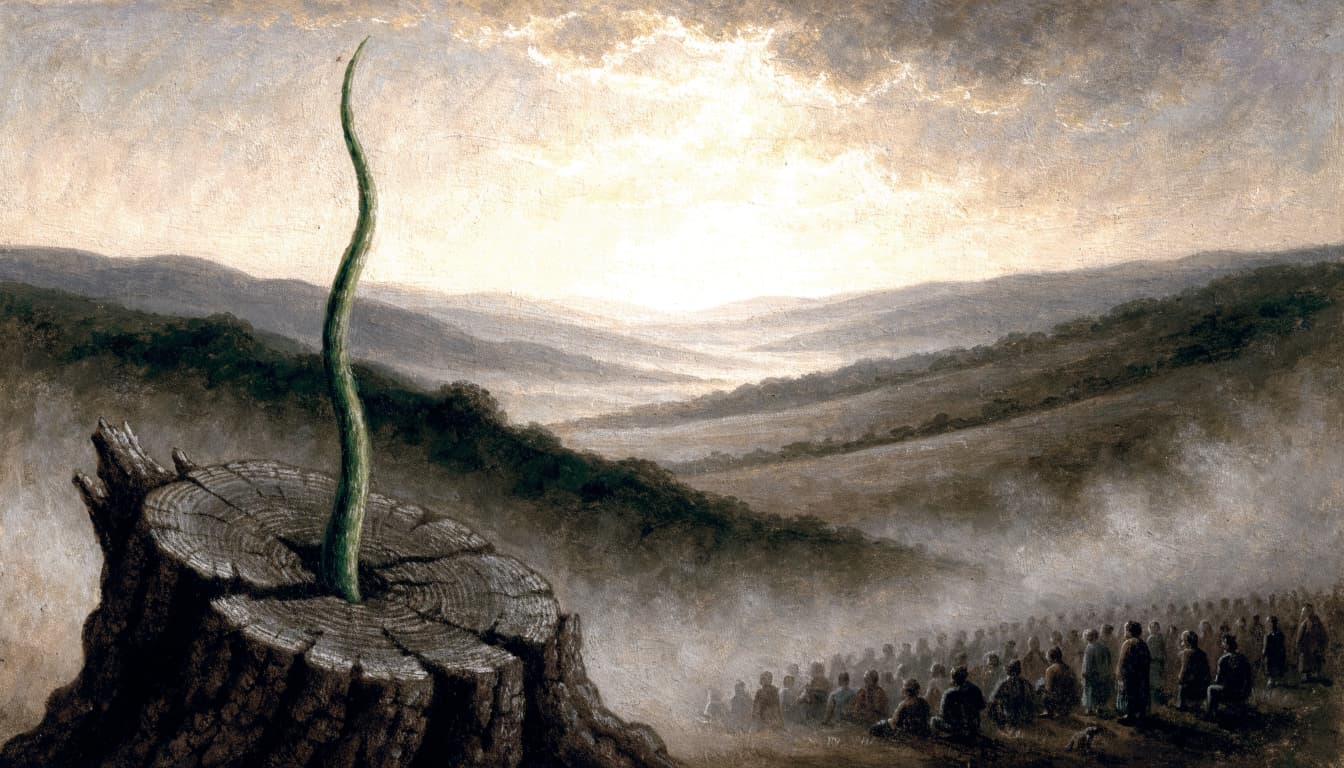
Isaiah and the Psalms point to a just royal deliverer
Isaiah pictures a ruler rising from Jesse's line, David's family. God's Spirit rests on Him, and He judges with righteousness. The poor receive fair judgment; the wicked face His authority. Isaiah describes that authority as the rod of His mouth, an image that helps explain the sword coming from the Rider's mouth in Revelation 19. Read Isaiah's vision of the righteous ruler alongside John's vision, and the connection becomes clear.
The details don't require us to claim that every image has only one possible interpretation. But John's picture of Jesus judging in righteousness fits Isaiah's hope for a Davidic King who confronts evil and protects the vulnerable. The same prophetic hope appears in Isaiah's promises about the Messiah.
Psalm 2 adds a royal promise: God establishes His anointed King and gives Him authority over the nations. Revelation 19 echoes that language when Jesus rules with an iron rod. The image points to a King whose reign cannot be overturned by rebellious earthly powers. It doesn't give people permission to imitate divine judgment or use force in Jesus' name.
Other Psalms widen the picture. Psalm 96:10–13 and Psalm 98:7–9 look toward God judging the world with righteousness and the peoples with fairness. That judgment is good news because God sees clearly. His rule doesn't favor the powerful or dismiss the suffering of the weak.
God’s promises give suffering believers a reason to hope
Why does this matter when evil seems strong, or justice seems painfully slow? Because Revelation 19 presents Jesus as the faithful King who will not abandon God's promises. The vision doesn't tell us that suffering is small or that every injustice is already resolved. It tells us that injustice will not have the final word.
Earthly powers can look permanent when they dominate the news, shape public life, or threaten people who seek to follow God. Psalm 2 already recognizes that nations may resist God's rule. Yet Revelation gathers that conflict under Jesus' authority. His Kingdom is not at the mercy of human rulers, and no rival power can make God's promise fail.
We can hold onto that hope without pretending we know every detail of how or when each image will be fulfilled. The passage directs our attention to Jesus: He judges rightly, reigns over the nations, and defeats evil. For believers facing pressure, that is solid ground. We can grieve what is wrong, keep doing what is good, and trust that the King who sees the truth will set things right.
How Christians understand the timing and meaning of the Rider’s victory
John sees heaven opened and the Rider appear after the praise over Babylon's fall and the Lamb's wedding announcement. Christians agree that Jesus is the righteous Judge in this vision, but they don't all understand the timing in the same way. The central message remains clear: evil will not outrank Christ or escape His judgment.
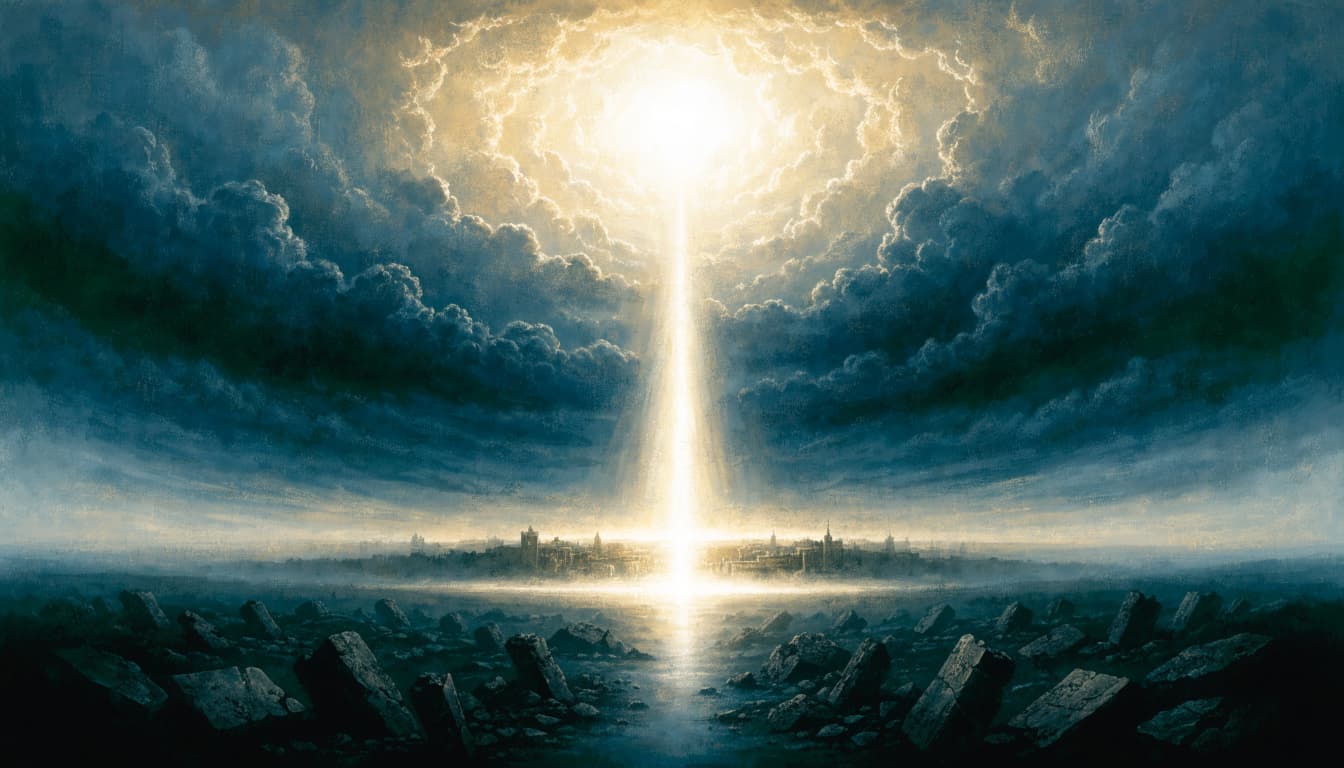
The common Christian reading sees Christ’s final return
Many Christians understand the Rider's arrival as a picture of Jesus' future return and decisive victory over evil. The opened heaven, the white horse, and the defeat of the beast's forces all point to God intervening fully in human history. In this reading, Revelation 19 offers hope that injustice, rebellion, and death will not have the final word.
That doesn't require us to build a detailed end-times schedule from these verses. Christians differ over how the events in Revelation fit together, and the passage itself doesn't answer every question about sequence or timing. We can hold to the promise of Christ's victory without treating debated details as settled. For another look at Jesus' visible second coming, we can keep our focus on what John makes plain: Jesus comes as King and judges in righteousness.
Other readings stress historical judgment or the gospel’s victory
Some Christians read Revelation's images as pointing chiefly to a historical judgment. In this view, the vision may describe God's judgment on a particular oppressive power in the past, while also anticipating Christ's ultimate victory. Others understand the Rider's conquest as a symbolic picture of the gospel overcoming opposition through the Church age.
These readings differ on when and how the vision is fulfilled. They don't erase John's picture of Jesus as the righteous Judge. Whether we understand the imagery as a future return, a past judgment, or Christ's ongoing victory through the Church, the Rider's authority belongs to Him. We can read Revelation 19:11-16 without forcing every symbol into a timetable. John's central assurance is that Jesus is faithful, judges rightly, and defeats the powers that oppose God.
Our differences about timing shouldn't distract us from that hope. The vision calls us to trust Christ's judgment rather than claim it for ourselves, and to remain faithful while we wait for God to set things right. The promise of Christ's return in Scripture rests on Jesus Himself, not on our ability to settle every detail of Revelation.
Conclusion
John's vision gives us reason to trust Jesus as Faithful and True. He keeps God's promises, and His judgment is righteous. When evil seems to prevail, Revelation 19 reminds us that Jesus, the promised King in Revelation, will not leave injustice unanswered.
That hope also keeps us from claiming His authority for ourselves. We can oppose evil and care for those who suffer without turning to revenge. The Rider confronts evil with perfect justice, and His victory rests in God's hands. We can trust Jesus while we wait for Him to set things right.
The King Who Judges in Righteousness
Revelation 19 presents a striking vision of Jesus Christ returning from heaven as the rider on a white horse. He is called Faithful and True, and He judges and makes war in righteousness. This is not a picture of arbitrary power: the One who confronts evil is the same Savior whose words and works have consistently revealed God’s character. The passage calls Him the Word of God and King of kings and Lord of lords, showing that His authority exceeds every earthly throne.
For Bible Prophecy Ministries, this vision points to the heart of biblical prophecy: God’s purposes center on Jesus. Revelation 19 looks ahead to His victory over those who oppose Him, while assuring readers that injustice will not have the final word. The promises God has made are not forgotten or weakened by delay. In Christ, the righteous Judge, God brings His word to its appointed fulfillment and gives His people reason to remain faithful and hopeful.
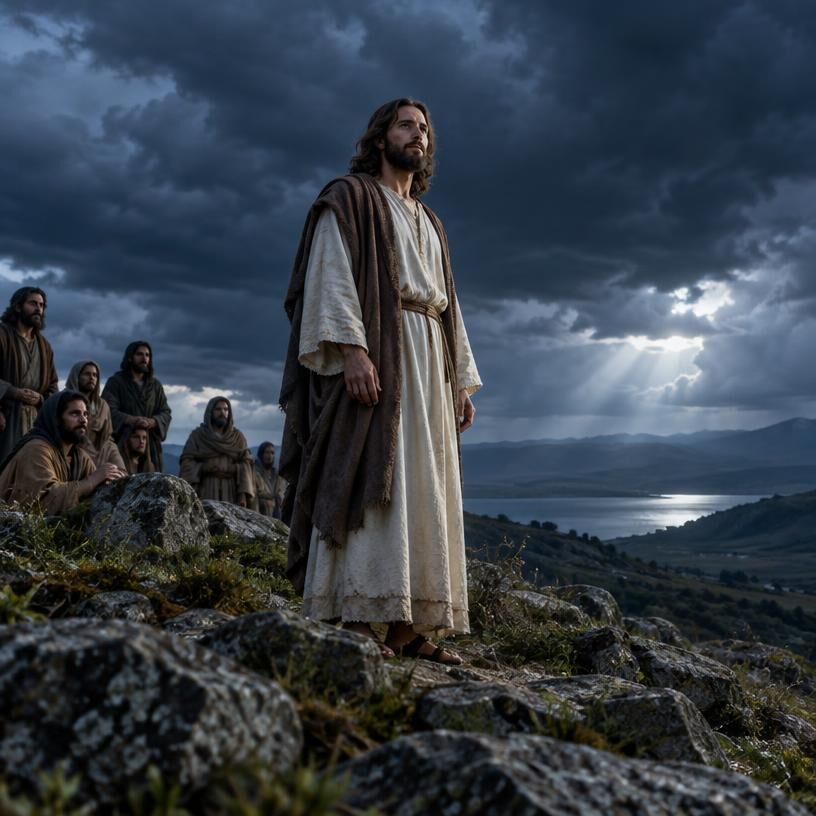
The Rider Who Judges in Righteousness
Revelation 19 opens heaven to reveal Jesus riding a white horse, called Faithful and True. He comes not as a conqueror driven by ambition, but as the righteous Judge who sees every deed and rules without corruption. Scripture says, “in righteousness he doth judge and make war” (Revelation 19:11). His judgment rests on truth, and His victory brings an end to the rebellion and injustice that have marked this world. The sharp sword from His mouth points to the authority of His word: what Christ declares, He will accomplish.
“And I saw heaven opened, and behold a white horse; and he that sat upon him was called Faithful and True, and in righteousness he doth judge and make war.” — Revelation 19:11 (KJV)
John’s vision of Jesus Christ
The Promise of His Return
God’s Word Reaches Its Appointed Fulfillment
Revelation 19 presents the return of Jesus as the fulfillment of a promise, not an unexpected turn in God’s plan. The One who came first in humility is revealed in glory as King of kings and Lord of lords. His appearing confirms that God has not forgotten His word or abandoned His people. The prophecies that point to Christ’s reign find their answer in Christ Himself.
This vision also shows why biblical prophecy calls for both hope and reverence. Evil will not have the final word: Jesus will judge with perfect righteousness and establish the victory God has promised. For those waiting on Him, Revelation 19 is a reminder that every promise of God remains trustworthy, even when its fulfillment is still ahead.
Questions About Christ’s Return in Revelation 19
Who is the rider on the white horse in Revelation 19?
The rider is Jesus Christ, called Faithful and True and the Word of God. He returns as the righteous Judge and King who fulfills God’s promises.
Why does Revelation 19 say Jesus judges and makes war?
His judgment is just, not arbitrary. The vision shows Christ confronting evil and establishing the righteousness God has promised.
What does the sword from Jesus’ mouth represent?
The sword points to the power of Christ’s word. His authority to judge comes from what he speaks, not from a weapon he carries.
What is the marriage supper of the Lamb?
It is a picture of joy and fellowship between Christ, the Lamb, and his people. It celebrates the fulfillment of God’s promise to bring them to himself.
What does the name “King of Kings and Lord of Lords” mean?
This title declares that Jesus’ authority is above every earthly ruler and power. His return reveals his reign to all.
See God’s Promises Through the Lens of Jesus
Revelation 19 invites us to look beyond its striking imagery and see the faithful Christ at its center. Explore more Bible prophecy teachings and reflect on how God’s promises find their fulfillment in Jesus.