
Stewardship and the Kingdom of God: From Israel’s Trust to Messiah’s Apostles and Israel’s Restoration
When we hear “stewardship,” we often think about money, budgets, and good habits. The Bible starts somewhere deeper. Stewardship is about managing what belongs to God, under God, for God.
That matters because the Kingdom of God is not a human project. It’s God’s rule breaking into real life, through real people, in real history.
So let’s walk the history. We’ll define stewardship in the Bible’s original language and context, track who carried responsibility for the Kingdom of God across time, explain when Israel held that trust, show why Jesus and the Bible’s writers are Jewish, make a clear Messiah case from Jewish Scripture, introduce the original apostles, and then follow the line from Pentecost to 70 AD and into Israel’s return in our day.
What stewardship means in the Bible (Hebrew and Greek) and why it matters for the Kingdom of God
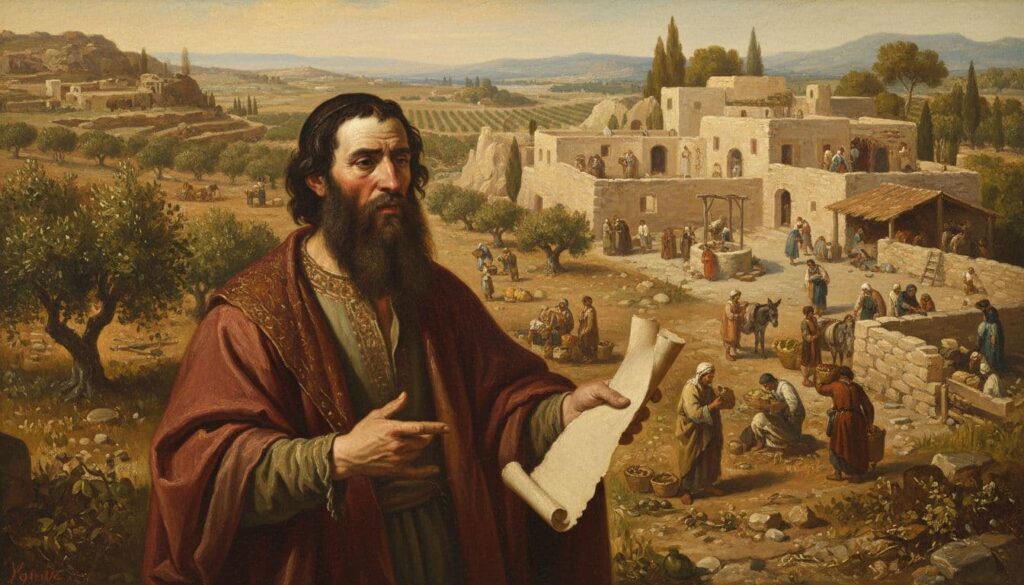 An ancient household steward oversees an estate, a helpful picture of Biblical stewardship.
In Scripture, a steward is a trusted manager, not the owner. In Hebrew life, the “house” (a household, estate, or clan) needed someone to run it when the owner was away. That person had authority, but it was borrowed authority.
Several Hebrew ideas circle this:
- Sochen (a trusted administrator or steward, seen in the kind of “royal steward” role we meet in texts like Isaiah 22).
- Ben bayit (literally “son of the house,” an insider who governs household affairs, a concept echoed in patriarch stories where a chief servant could act with the family’s authority).
- Ne’eman (faithful, trustworthy).
- Emunah (faithfulness, steady reliability).
The Greek New Testament uses the household-manager word group:
It’s built from oikos (house) + nomos (law, order). We’re talking about household order, not personal ownership. If you want a deeper word-study trail on oikonomia, this overview is useful: stewardship and oikonomia in Luke 16.
Stewardship matters because the Kingdom of God is God’s reign expressed among people. God uses stewards to guard truth, lead justly, preserve worship, and carry His message outward.
Stewardship is authority under the Owner, not personal ownership
A steward can make real decisions, but always answers to the owner. That is the tension, privilege and accountability together.
Think about Joseph. He managed Potiphar’s household with full authority, but none of it belonged to him. He could be trusted because he was faithful, and he could be judged if he wasn’t. That’s the Biblical test, not charisma, not popularity, not family name. Faithfulness.
That’s why Jesus says stewards must be found faithful (compare 1 Corinthians 4:1–2). In the Kingdom of God, we don’t “build our own platform.” We manage God’s trust.

The Kingdom of God is God’s rule, and stewards carry His rule to real life
The Kingdom of God is God reigning, God’s will being done, God’s promises moving forward. It includes covenant, justice, mercy, worship, and the good news that God is taking back what sin tried to steal.
Stewards make that visible. They teach God’s Word, protect His people from lies, keep worship aimed at the true God, and call communities back when they drift.
Stewards to Kingdom of God across Bible history (and when Israel carried that trust)
The Bible isn’t random highlights. It’s one long pattern: God owns the Kingdom of God, and He assigns stewardship in different seasons.
From Adam to the prophets, God keeps assigning stewards, with faithfulness as the test
- Adam and Eve: entrusted with creation care, fruitfulness, and obedience. The first stewardship was a garden and a command.
- Noah: entrusted with preserving humanity through judgment and starting again.
- Abraham, Isaac, Jacob: entrusted with covenant promises, blessing to the nations, and the seed-line history.
- Moses and the elders: entrusted with Torah, worship, leadership, and justice in community.
- Joshua and the judges: entrusted with covenant faithfulness in the land.
- David and the kings: entrusted with modeling righteous rule (even when they failed).
- Priests and prophets: entrusted with guarding worship and confronting drift.
The history keeps saying the same thing: stewardship can be honored or abused. God stays King either way.
When the Jews stewarded the Kingdom of God: covenant, Temple, Scripture, and mission to the nations
Israel’s stewardship becomes clear at Sinai. God calls them to be “a kingdom of priests and a holy nation” (Exodus 19:5–6). That means Israel was meant to represent God to the world, not hide Him. Did you know the real Mt Sinai has been found? It is in Saudi Arabia. See the video below:
What did that look like in practice?
Scripture entrusted: Paul says Israel was entrusted with “the oracles of God” (Romans 3:2). Israel carried the written Word, preserved it, and read it in worship.
Temple and worship: Israel guarded the system that taught holiness, sacrifice, and God’s nearness. The Temple didn’t create the Kingdom of God, but it was a major signpost.
Justice and mercy: Torah demanded fair courts, honest weights, care for the poor, and protection for the outsider.
Mission: Israel was called to be a light to the nations (Isaiah 49:6). The Kingdom of God was never meant to stay boxed in.
Stewardship can be lost without God’s promises failing. Kings, priests, and even whole generations failed. Yet God kept pressing the history toward Messiah.
Jesus is Jewish, the Bible writers were Jewish, and Jewish Scripture points to Jesus as Messiah
 Jesus is shown teaching in a first-century synagogue setting.
We can’t understand the Kingdom of God without admitting the obvious: Jesus is Jewish, and the message is rooted in Israel’s Scriptures.
Jesus was born under the Law, circumcised, raised in synagogue life, and debated Torah with Jewish teachers. He kept feasts, went to Jerusalem, and spoke as Israel’s promised King. The title “Messiah” is not a later Christian invention. It’s a Jewish expectation.
Most New Testament writers were Jewish: Matthew, John, Peter, James, Jude, and Paul. Luke is widely understood to be a Gentile, and Mark is debated, but the core witness comes through Jewish apostles and prophets. If we want a quick reminder of the church’s Jewish roots and how the earliest believers understood themselves, this overview helps: Jewish foundations of early Christianity.
Jesus’ Jewish identity and why that matters for the Kingdom of God message
Jesus did not show up as a rival to Israel’s God. He showed up as Israel’s Messiah, announcing the Kingdom of God promised to Abraham and David.
His parables, His healings, His exorcisms, and His authority claims make sense inside Jewish categories: covenant, Sabbath, purity, Temple, Son of David, Son of Man, and the hope of restoration.
A clear Messiah case from Jewish Scripture: promises Jesus fulfills
The apostles argued for Jesus from the Tanakh in synagogues. They didn’t start with philosophy. They started with Scripture.
Here are major lines, stated plainly:
1) Messiah from David’s line
God promised David a lasting throne (2 Samuel 7). The Gospels present Jesus as David’s heir, and the Kingdom of God as the true continuation of that promise.
2) Born in the right place
Micah 5:2 points to Bethlehem as the birthplace of the ruler whose “goings forth are from of old.”
3) A suffering servant who bears sin
Isaiah 53 describes a servant rejected, pierced, and bearing guilt. The early church read Jesus’ cross through that lens. For a readable survey of messianic prophecy connections, see: How the Old Testament’s Messianic prophecies point to Jesus.
4) A righteous king who brings God’s rule
Psalm 2 describes the LORD’s anointed king. Zechariah 9:9 pictures a humble king entering Jerusalem.
5) New covenant promise
Jeremiah 31:31–34 promises a new covenant with forgiven sin and God’s law written on hearts. Jesus explicitly tied His blood to the new covenant.
If we want a focused look at Psalm 2 and the Son-King theme inside Israel’s Scriptures, this resource is helpful: Son of God Foretold
From Jesus to Pentecost to 70 AD: how stewardship of the Kingdom of God moved to the Apostles and then went to the nations
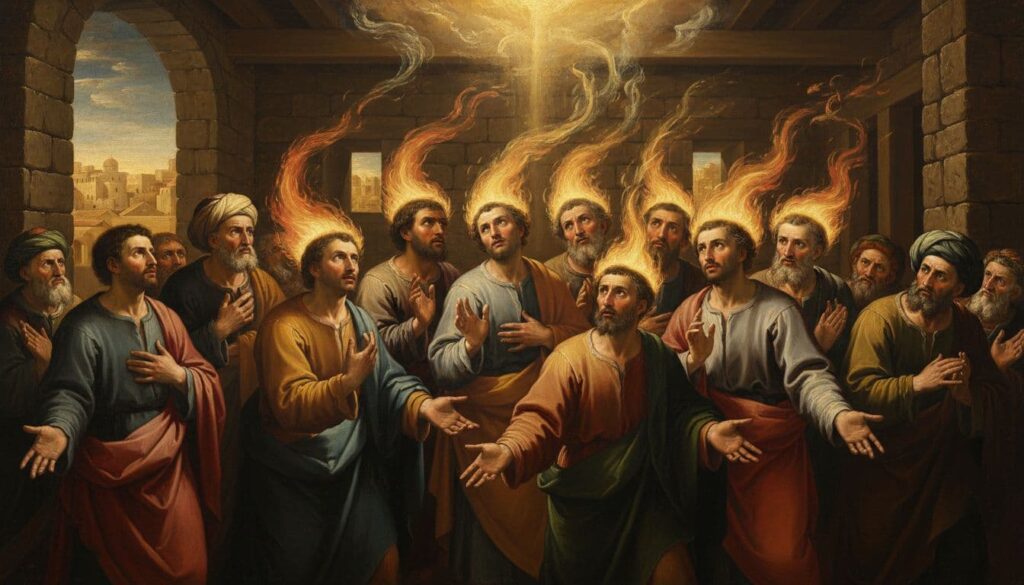 The apostles receive the Holy Spirit at Pentecost in Jerusalem.
Jesus stewarded the Kingdom of God on earth: the King serving as the faithful manager
Jesus proclaimed the Kingdom of God openly. He didn’t just talk about it, He demonstrated it: healing the sick, freeing the oppressed, forgiving sins, and calling Israel back to true worship.
He also showed what perfect stewardship looks like. He says He does what He sees the Father doing (John 5:19). He uses authority, but never as self-promotion. He serves, obeys, and finishes the Father’s work.
Even His confrontation in the Temple fits stewardship. He wasn’t attacking Judaism. He was correcting corruption in “My Father’s house.”
The cross is not a defeat of the Kingdom of God. It’s the victory of the King through sacrifice. The resurrection is God’s public declaration that Jesus is Lord.
Pentecost and the Apostles: who the original stewards were, and their life stories in brief
Pentecost is a handoff moment. The Holy Spirit empowers the apostles to steward the Kingdom of God message and the new covenant community.
Here’s what Scripture gives us about the Twelve (plus Matthias). We’ll keep to what we can say confidently from the text, and we’ll mark later tradition as tradition.
Peter (Simon): a Galilean fisherman, often first to speak, restored after denying Jesus, key preacher in Acts 2 and Acts 10.
Andrew: Peter’s brother, known for bringing people to Jesus (John 1, John 6).
James (son of Zebedee): part of Jesus’ inner circle, first apostle martyred (Acts 12).
John: James’ brother, close witness to key moments, later a major voice in the church’s memory of Jesus.
Philip: called directly by Jesus, involved in introducing Nathanael (John 1).
Bartholomew (often linked with Nathanael): described as an Israelite “with no deceit” (John 1).
Matthew (Levi): a tax collector, a living example of mercy and mission to the “unclean.”
Thomas: honest skeptic turned bold confessor, “My Lord and my God” (John 20).
James (son of Alphaeus): listed among the Twelve, less detailed in narrative, still a true witness.
Thaddaeus (also called Judas son of James): asks Jesus direct questions at the Last Supper (John 14).
Simon the Zealot: likely tied to nationalist zeal, showing Jesus gathers very different men.
Judas Iscariot: betrays Jesus and falls from his office.
Matthias: chosen in Acts 1 to replace Judas, restoring the Twelve as a complete witness group.
All of them were Jewish. All of them were tasked to proclaim the risen Messiah and teach obedience to Jesus. If you want a simple reference chart on the Twelve, Bible Gateway’s explainer is handy.
Paul matters too, even though he isn’t one of the Twelve. He’s called as an apostle to the Gentiles and becomes a major steward of the Kingdom of God mission outward.
Why many Jews did not share that stewardship, and what changed after 70 AD
This part is tender, and we should say it carefully. Ethnic identity and covenant response are not the same thing. In the New Testament, the call is the same for everyone: repent and believe in the Messiah.
Many Jewish people believed, starting at Pentecost. Many did not. Those who rejected Jesus did not steward the Kingdom of God message, because the Kingdom is centered in the King.
Pentecost is the day, recorded in Acts 2, when Jesus’ followers stopped waiting and started witnessing, because the Holy Spirit came to them in power. Jesus had talked about the Kingdom of God as God’s reign breaking in, not just a future hope, and after His resurrection He told them to wait for “power from on high” so they wouldn’t try to run the mission on willpower alone.
When the Holy Spirit filled the room (wind, fire, real shock and awe), they spoke in other languages and the crowd heard the Gospel in their own speech, a public sign that God’s Kingdom was going global, not staying locked in one nation or one sacred building. This wasn’t the church getting a new idea, it was the church receiving Jesus’ own life and authority, because the Holy Spirit makes the risen King present with His people.
From that moment until today, we see the pattern: the Holy Spirit forms a new community, gives boldness to preach Jesus is Lord, convicts hearts, unites believers across cultures, and powers a life that looks like the King (repentance, generosity, justice, prayer, and hope). In plain terms, Pentecost is how we understand the handoff of the Kingdom of God from Jesus to His church. Jesus reigns at the Father’s right hand, and through the Holy Spirit He shares His Kingdom life with the early church, then sends them out to live it in public.
Pentecost still empowers us today because it wasn’t just a one-time spark in Acts 2, it was God putting His own Spirit in ordinary people, just like He said He would here, so the church today can actually live like the Kingdom is real, because it is real.
The Holy Spirit gives us boldness to speak about Jesus without hiding, wisdom to tell truth with love, and power to pray and expect God to act (not as hype, but as steady faith). The Holy Spirit also gives gifts, things like teaching, serving, healing, leadership, and prophecy, so the whole body of Christ can build up the whole body, not just the “platform” voices. That’s Kingdom stewardship in plain terms, we don’t own the mission, we manage what belongs to the King, our time, money, relationships, influence, and care for the vulnerable.
Pentecost pushes us toward unity across languages and backgrounds, because the Holy Spirit doesn’t form a club, He forms a people. When we forgive, share, pursue justice, and stay faithful in witness, we’re not trying to earn God’s presence, we’re responding to it. So yes, the church still gets empowered today, not to look impressive, but to look like Jesus in public and in private.
Jesus warned Jerusalem about coming judgment and told His followers how to respond when crisis signs arrived. Early Christian tradition says Jewish believers fled Jerusalem before 70 AD, often connected to the Flight to Pella tradition. A more detailed academic discussion is here.
Before Jerusalem fell in 70 AD, Jesus didn’t speak in vague hints, He gave clear warnings that stacked up like a checklist. We see it when He weeps over the city and predicts a siege, enemies would surround Jerusalem, crush it, and leave it torn down because it “didn’t know” its moment of visitation (Luke 19:41-44). Then he flat-out says the temple’s glory won’t last, “not one stone will be left on another” (Matt. 24:1-2; Mark 13:1-2; Luke 21:5-6).
In 70 AD, Rome destroyed Jerusalem and the Temple. The Kingdom of God did not burn with the stones. God’s reign is not chained to a building. The message went with Messiah’s people as they scattered across diaspora routes. For a focused overview of that 70 AD turning point, see: The Tragic Fall of Jerusalem and Birth of Palestine in 70 AD.
How God restored Israel and brought them back today (and how we speak about it wisely)
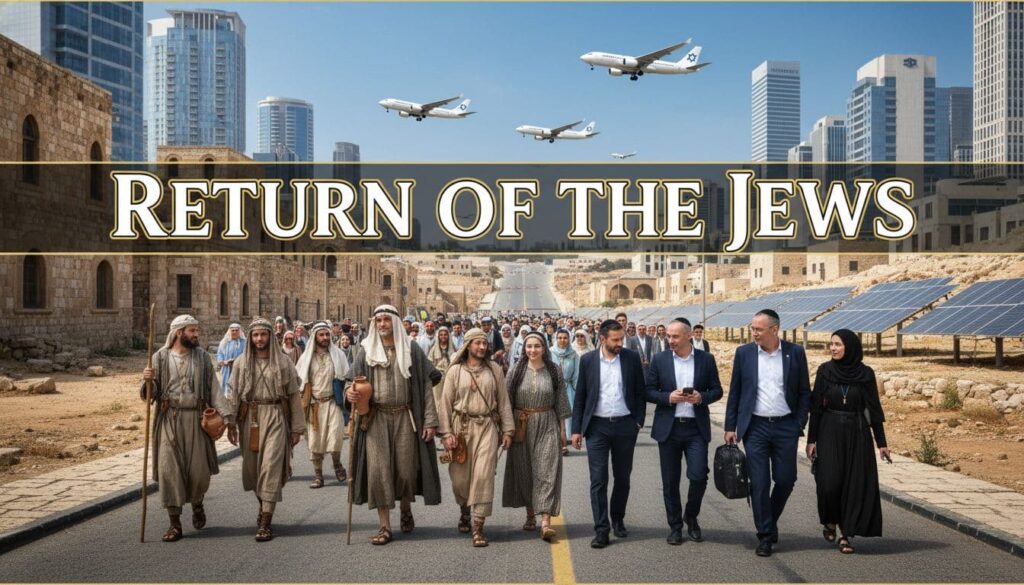
The Bible’s restoration language is real. The prophets speak of scattering and regathering (Deuteronomy 30, Ezekiel 36–37, Amos 9). The New Testament also insists God has not rejected Israel (Romans 11).
At the same time, Christians differ on end-times details. We can still say a few grounded things.
As of January 2026, the modern return of the Jews to the land is large-scale and historically unique, even while it’s not simple or “finished.” Recent reporting summarized in demographic updates shows:
- Israel’s population in late 2025 is about 10.178 million, with roughly 7.2 to 7.8 million Jews and others, and close to half of world Jewry living in Israel.
- Aliyah in 2025 was about 21,900 to 24,600 new immigrants, but there has also been high emigration, producing net negative migration in recent years.
So the return is real, but it’s also messy. That shouldn’t surprise us. Bible histories of return (like Ezra and Nehemiah) were messy too.
If we want a careful discussion of how different Christians interpret modern Israel’s relationship to prophecy, this perspective piece is useful: . A Jewish-focused ministry overview on the question is here.
Later, we will learn about the Kingdom of God going back to the Jews. It is the reason for their return to Israel…
Conclusion
Stewardship in the Bible means faithful management under the true Owner. The Kingdom of God has always belonged to the Lord, and across history He has assigned real responsibility to real people, including Israel’s covenant stewardship.
Jesus, Israel’s Jewish Messiah, fulfilled Jewish Scripture and stewarded the Kingdom of God perfectly on earth. At Pentecost, the Spirit empowered the apostles as new-covenant stewards, while unbelief meant many did not share that privilege, even as God’s promises to Israel remained.
Jewish believers carried the Kingdom of God message out before Jerusalem’s fall in 70 AD, and today we still see God’s faithfulness stirring questions about Israel’s restoration. Now it’s on us: will we steward the Kingdom of God with humility, Scripture-shaped truth, and courage, and will we follow the King who owns it all?
Return to homepage.